化工学报 ›› 2025, Vol. 76 ›› Issue (11): 5933-5950.DOI: 10.11949/0438-1157.20250249
• 分离工程 • 上一篇
广懿升1( ), 张新儒1,2, 王永洪1,2(), 李晋平1,2
收稿日期:2025-03-14
修回日期:2025-04-21
出版日期:2025-11-25
发布日期:2025-12-19
通讯作者:
王永洪
作者简介:广懿升(1999—),男,硕士研究生,gys0229@163.com
基金资助:
Yisheng GUANG1(), Xinru ZHANG1,2, Yonghong WANG1,2(), Jinping LI1,2
Received:2025-03-14
Revised:2025-04-21
Online:2025-11-25
Published:2025-12-19
Contact:
Yonghong WANG
摘要:
为了制备对2-苯乙醇(2-PE)具有强亲和性的杂化材料,利用1H,1H,2H,2H-全氟辛基三乙氧基硅烷(13F)通过硅醇缩合反应对β-环糊精金属有机框架(β-CD-MOFs)进行氟化改性,然后通过亲核取代和硅醇缩合反应将芦丁(LD)接枝到氟化的β-CD-MOFs上,合成了芦丁改性的β-CD-MOFs(L-13F-βMOFs)。将L-13F-βMOFs添加到聚二甲基硅氧烷(PDMS)基质中制备混合基质膜,用于2-PE渗透汽化分离。采用FTIR、XPS和SEM表征了填料的化学结构和形态结构。采用ATR-FTIR、溶剂吸收率和接触角对混合基质膜的化学组成、结晶结构和亲疏水性进行了表征。同时,优化了膜制备与分离工艺条件对渗透汽化性能的影响,并研究了三元体系中麦芽酚对2-PE分离性能的影响,以探索其竞争吸附和渗透。此外,探讨了混合基质膜对2-PE的分离机理。研究结果表明,当L-13F-βMOFs负载量为5%时,制备的混合基质膜表现出优异的分离性能,其总通量、分离因子和渗透汽化分离指数分别为1398 g·m-2·h-1、32.67和44270 g·m-2·h-1,分别是纯PDMS膜的1.69、2.74和4.95倍和添加β-CD-MOFs的PDMS混合基质膜的1.47、1.78和2.61倍。这是因为L-13F-βMOFs中含有的—Si—O—、苯环和F原子等基团与2-PE之间存在亲疏水、π-π和氢键相互作用提高了膜对2-PE的亲和性。当麦芽酚在原料液中浓度增加到1.2×10⁻³时,混合基质膜的2-PE通量和2-PE/水分离因子仅下降19%和21%,表明该膜对2-PE具有较好的分子辨识能力。在168 h的稳定性测试中,混合基质膜的分离性能未见明显变化,该膜在2-PE分离领域有很好的前景。
中图分类号:
广懿升, 张新儒, 王永洪, 李晋平. PDMS/芦丁改性β-CD-MOFs混合基质膜的制备及2-苯乙醇渗透汽化分离性能[J]. 化工学报, 2025, 76(11): 5933-5950.
Yisheng GUANG, Xinru ZHANG, Yonghong WANG, Jinping LI. Preparation and pervaporation performance of PDMS/rutin-modified β-CD-MOFs mixed matrix membranes for 2-phenylethanol separation[J]. CIESC Journal, 2025, 76(11): 5933-5950.
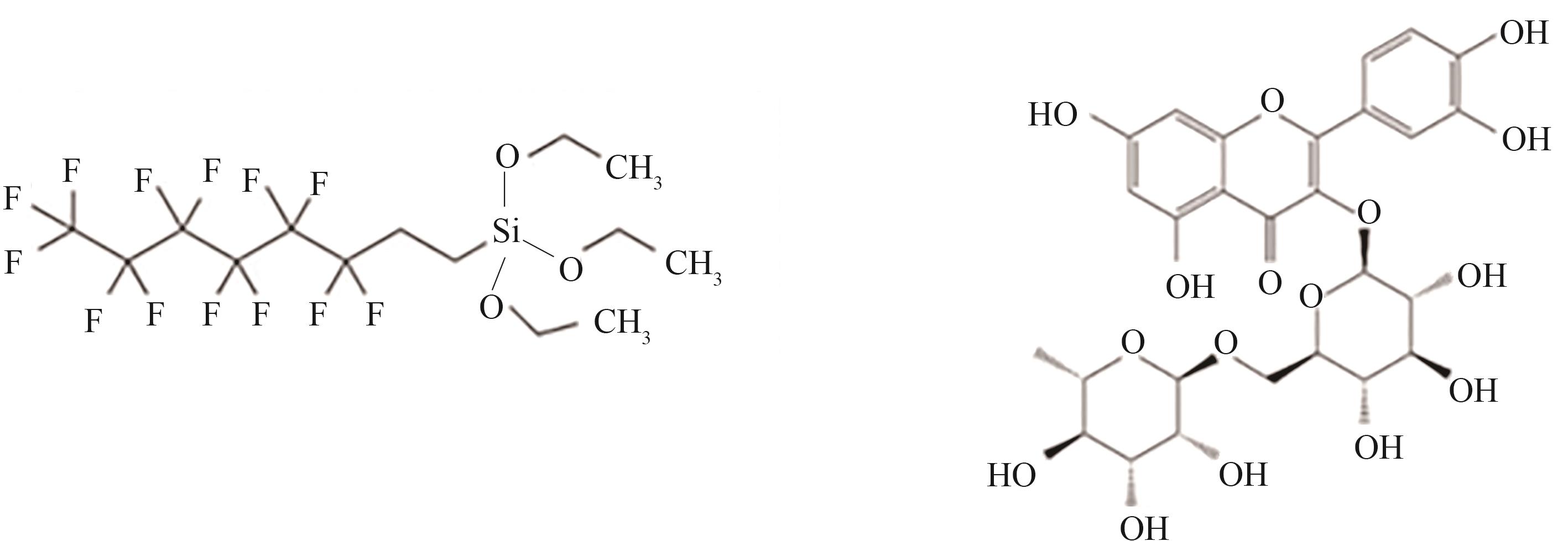
图1 1H,1H,2H,2H-全氟辛基三乙氧基硅烷和卢丁的化学结构
Fig.1 Chemical structure of 1H,1H,2H,2H-perfluorooctyltriethoxysilane and rutin
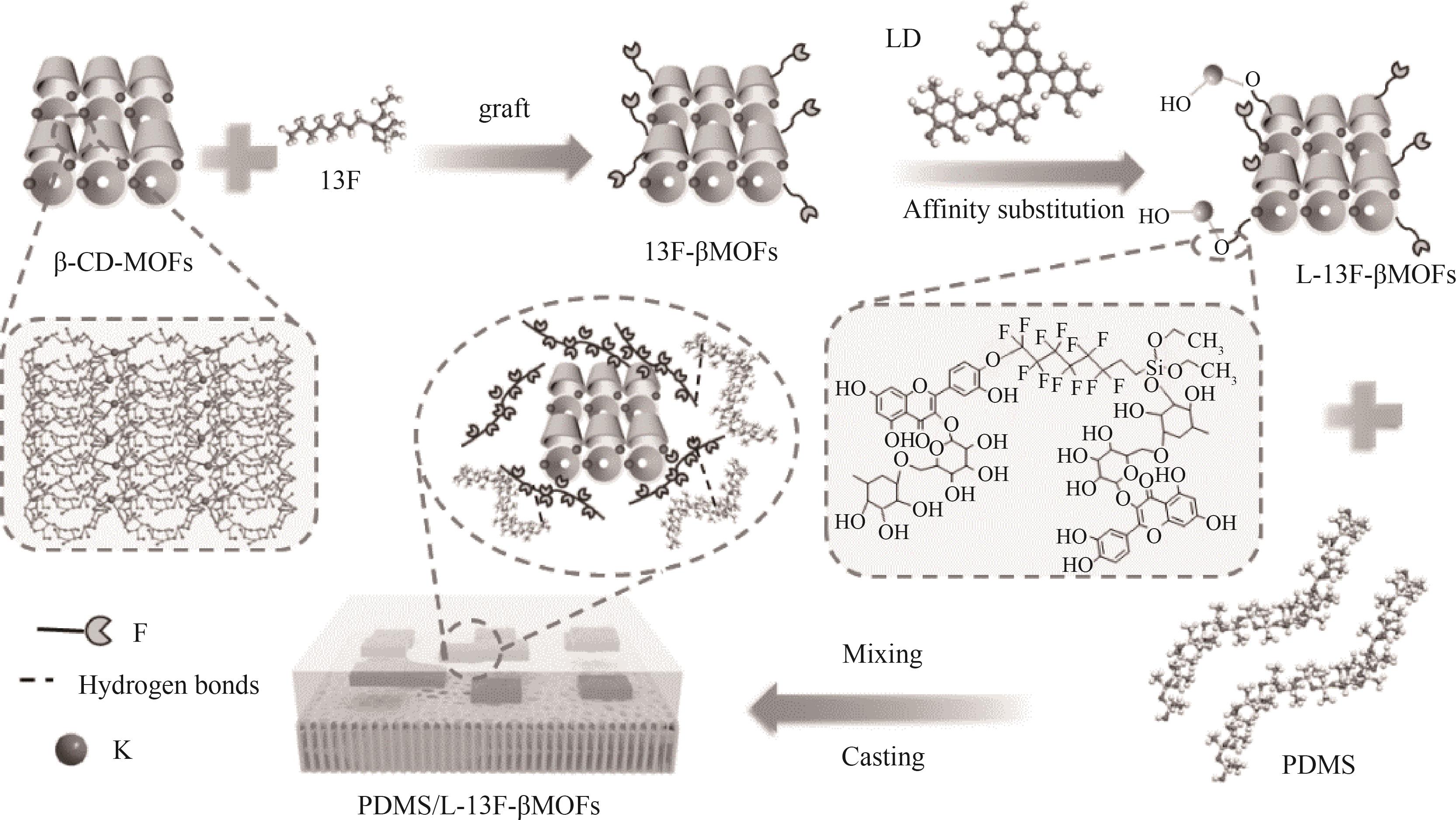
图2 PDMS/L-13F-βMOFs的制备示意图
Fig.2 Fabrication schematic of PDMS/L-13F-βMOFs
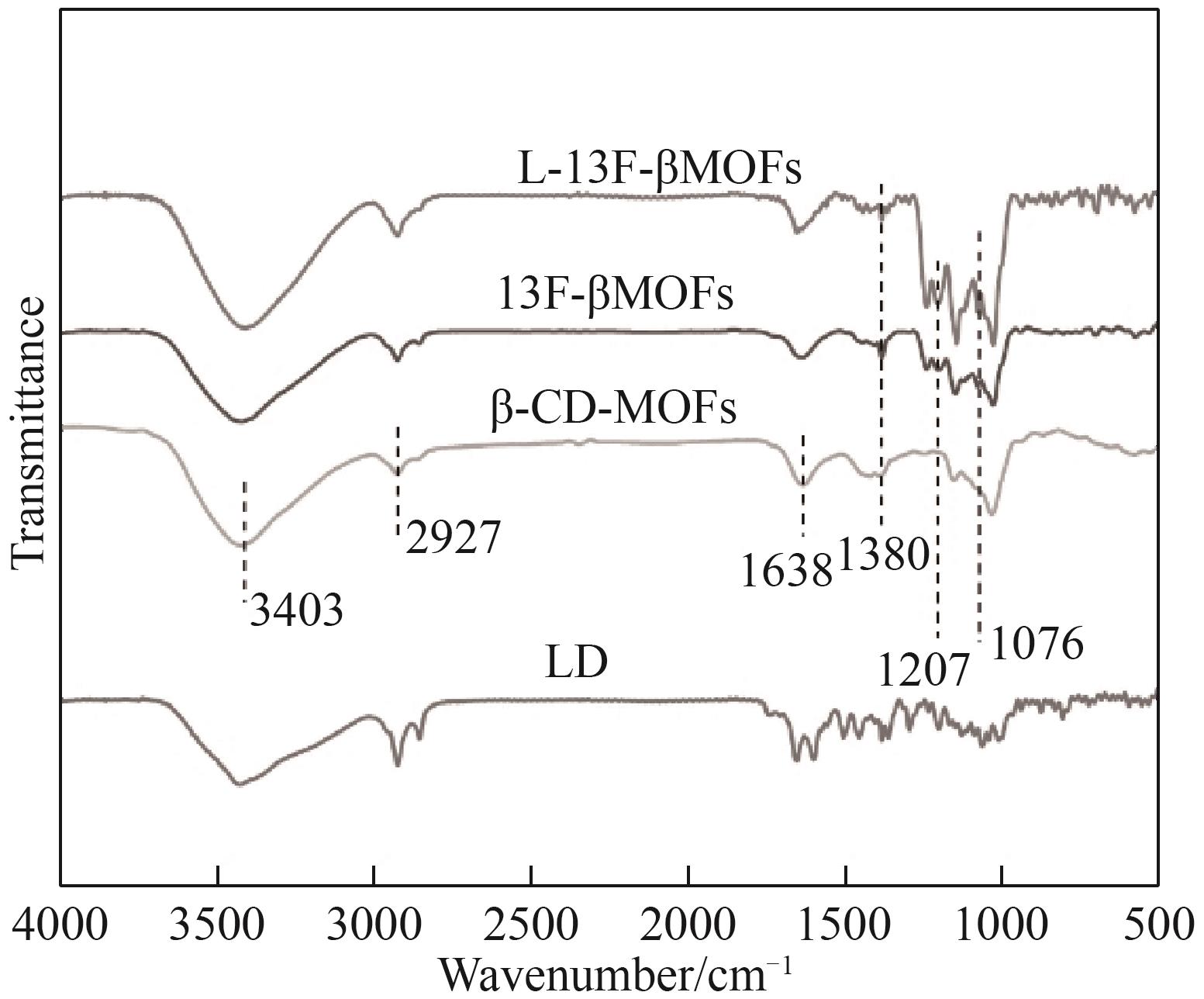
图3 LD、β-CD-MOFs、13F-βMOFs和L-13F-βMOFs的红外光谱
Fig.3 FTIR spectra of LD, β-CD-MOFs, 13F-βMOFs and L-13F-βMOFs
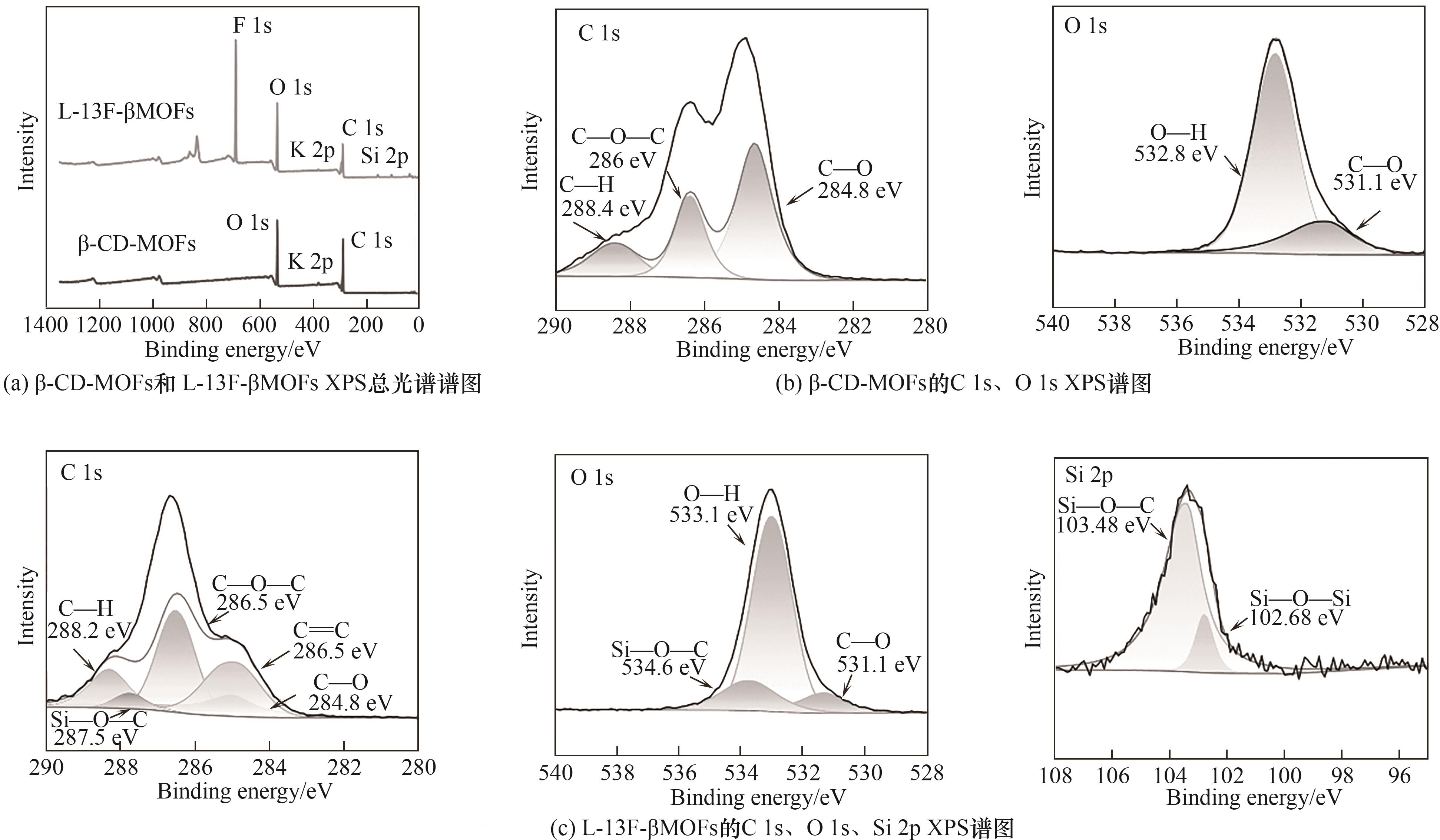
图4 β-CD-MOFs和L-13F-βMOFs的XPS谱图
Fig.4 XPS profiles of β-CD-MOFs and L-13F-βMOFs
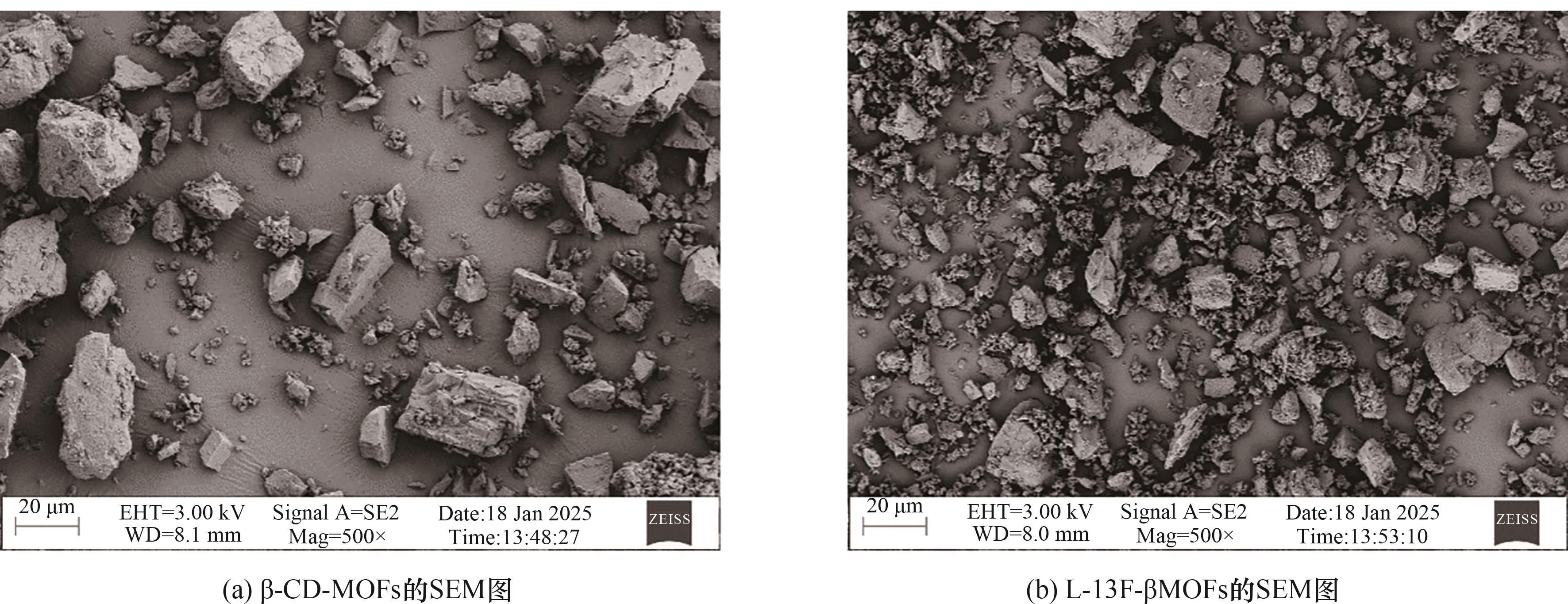
图5 β-CD-MOFs和L-13F-βMOFs的SEM图
Fig.5 SEM images of β-CD-MOFs and L-13F-βMOFs
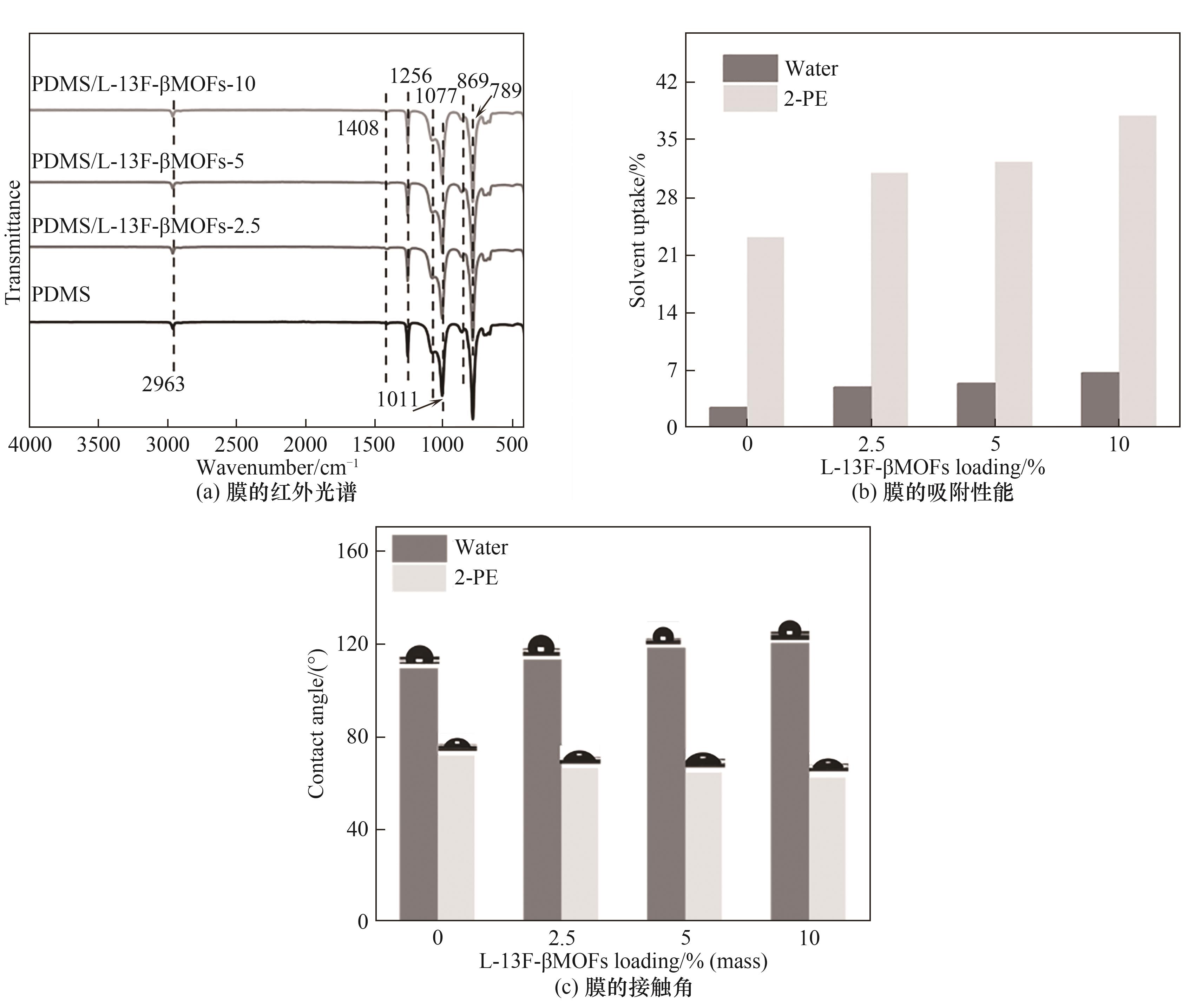
图6 膜的表征
Fig.6 Characterization of the membranes
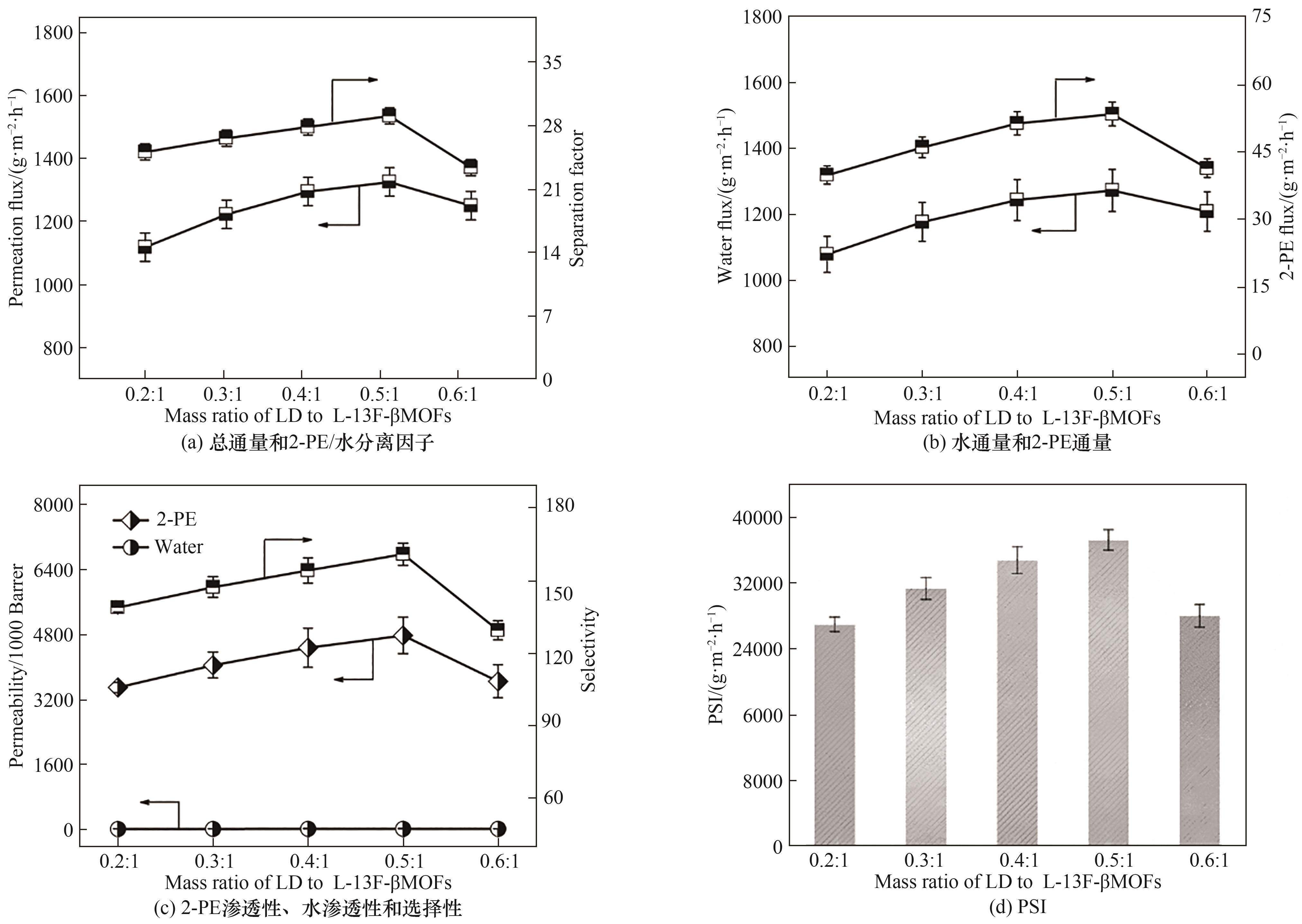
图7 LD用量对PDMS/L-13F-βMOFs渗透汽化性能的影响
Fig.7 Effect of the mass ratio of LD on the pervaporation performance of PDMS/L-13F-βMOFs
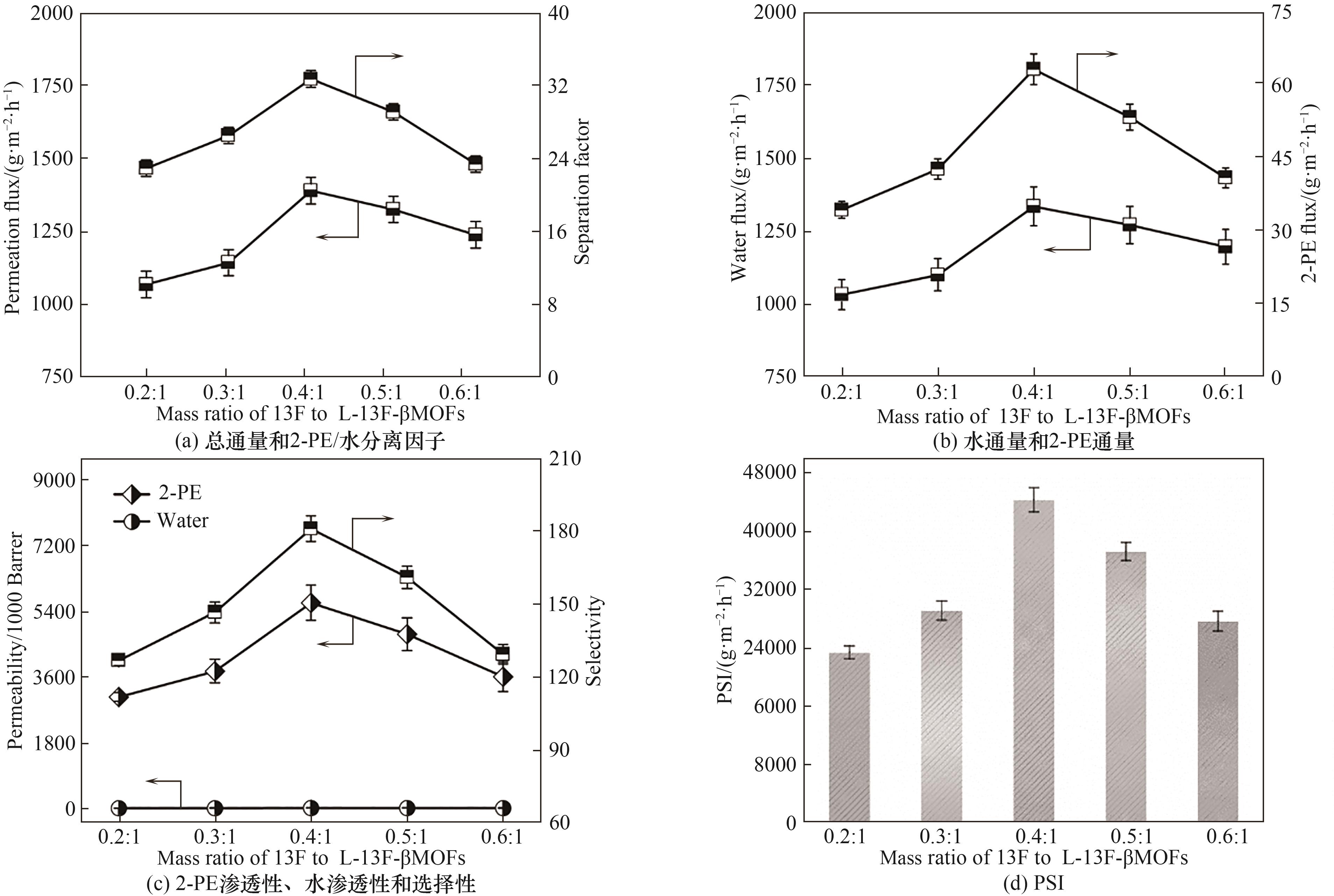
图8 13F用量对PDMS/L-13F-βMOFs渗透汽化性能的影响
Fig.8 Effect of the mass ratio of 13F on the pervaporation performance of PDMS/L-13F-βMOFs
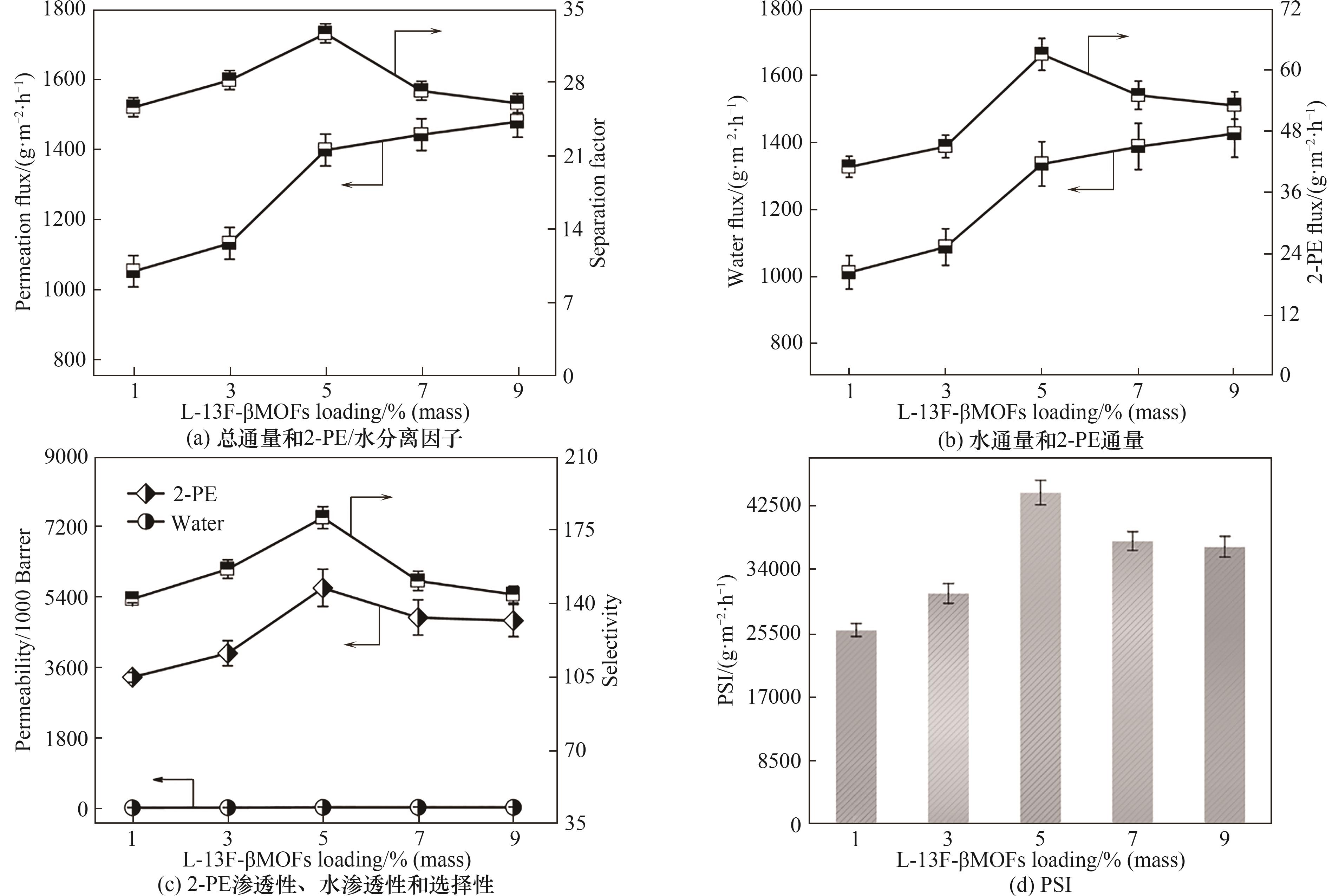
图9 L-13F-βMOFs负载量对PDMS/L-13F-βMOFs渗透汽化性能的影响
Fig.9 Effect of L-13F-βMOFs loading on pervaporation performance of PDMS/L-13F-βMOFs
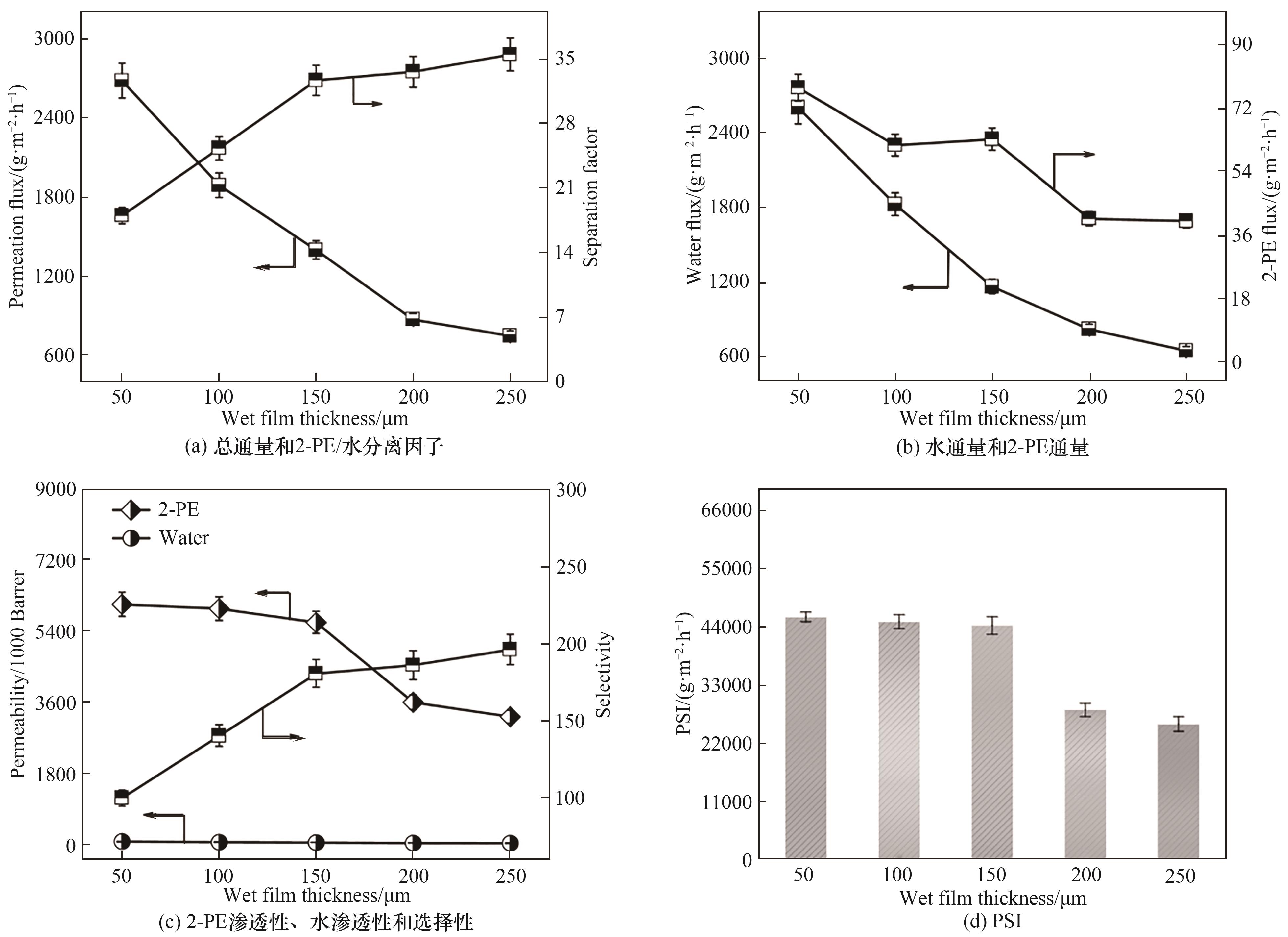
图10 湿膜厚度对PDMS/L-13F-βMOFs渗透汽化性能的影响
Fig.10 Effect of wet film thickness on pervaporation performance of PDMS/L-13F-βMOFs
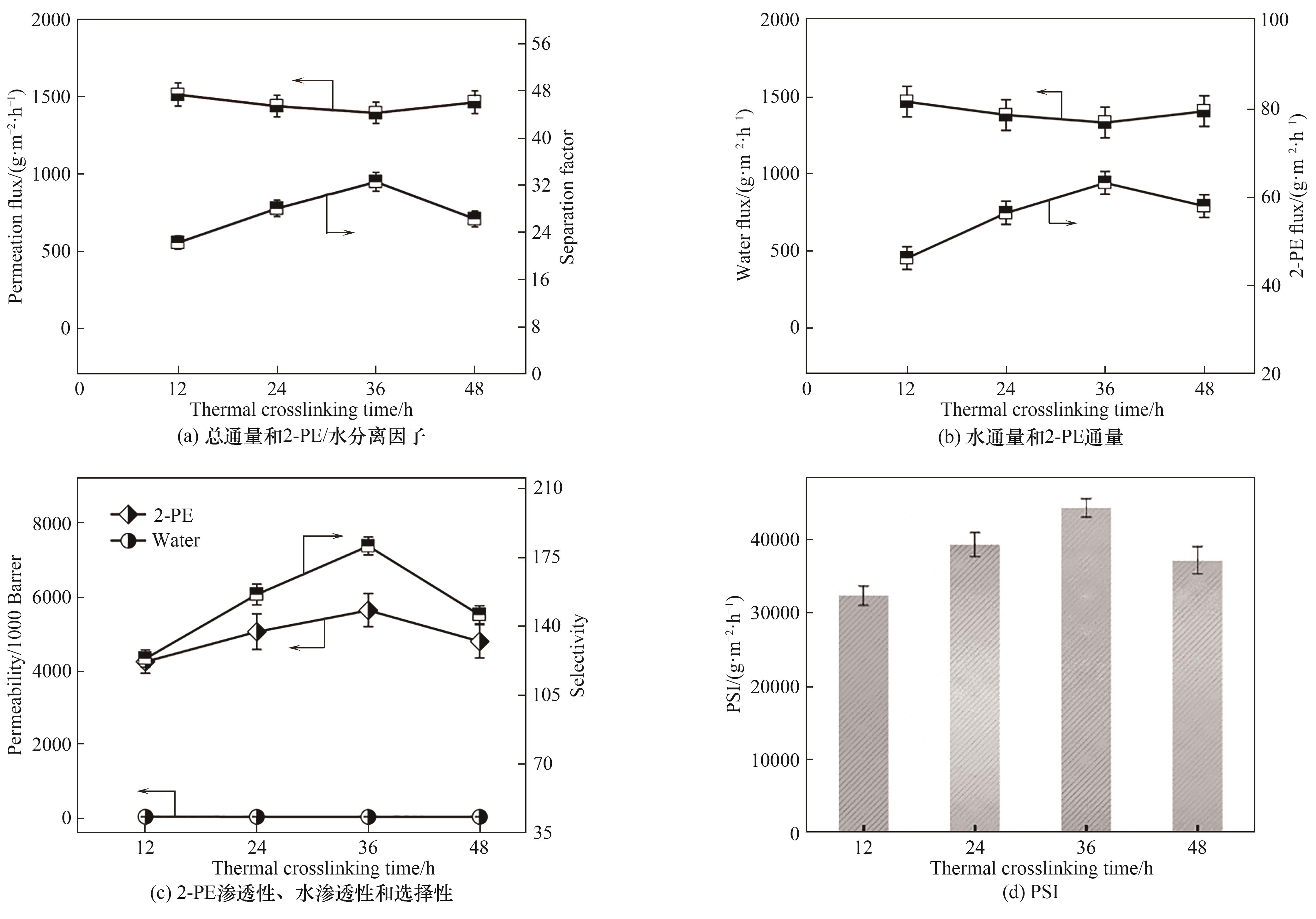
图11 交联时间对PDMS/L-13F-βMOFs渗透汽化性能的影响
Fig.11 Effect of crosslinking time on pervaporation performance of PDMS/L-13F-βMOFs
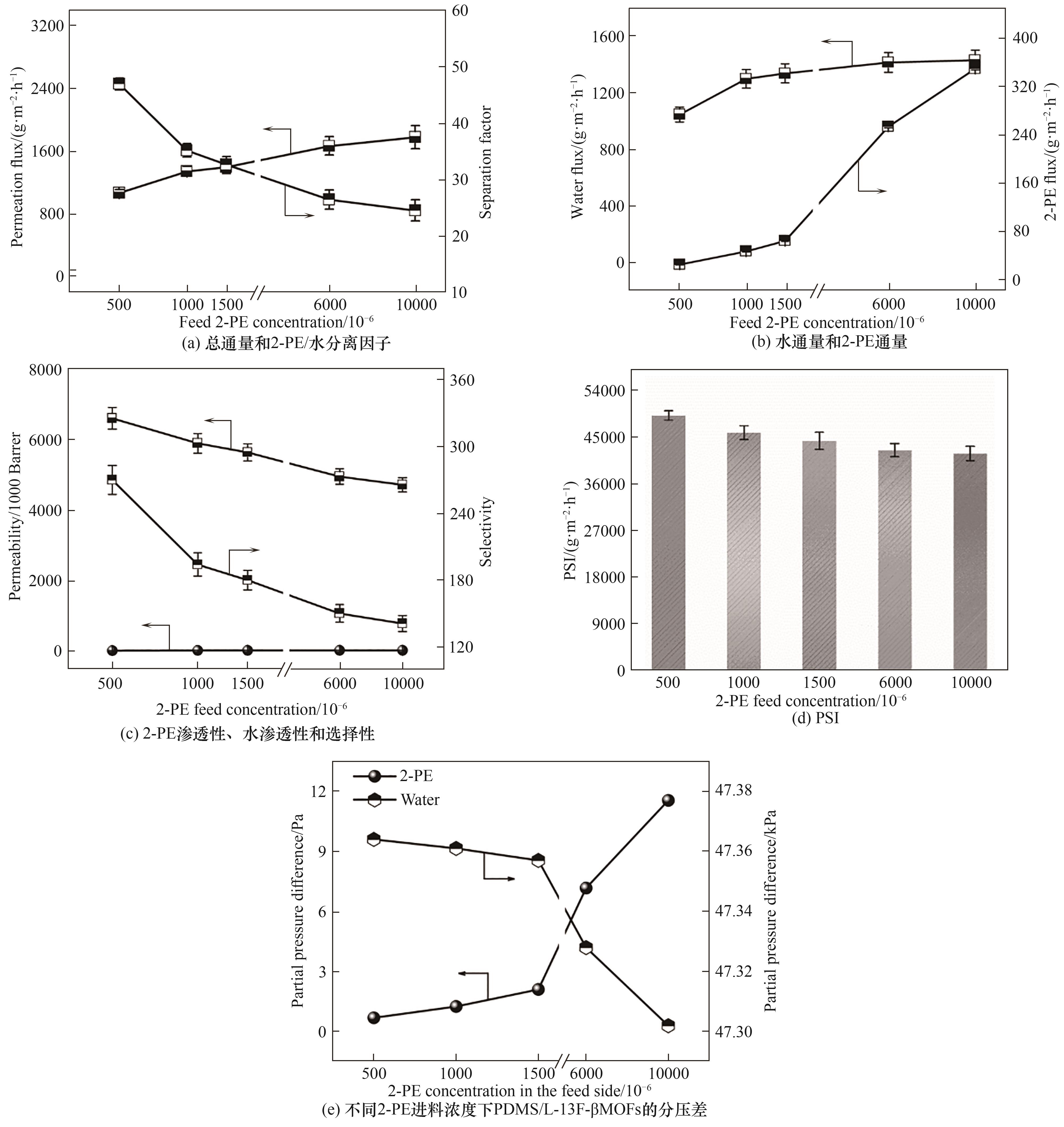
图12 进料液2-PE浓度对PDMS/L-13F-βMOFs渗透汽化性能的影响
Fig.12 Effect of 2-PE concentration on pervaporation performance of PDMS/L-13F-βMOFs
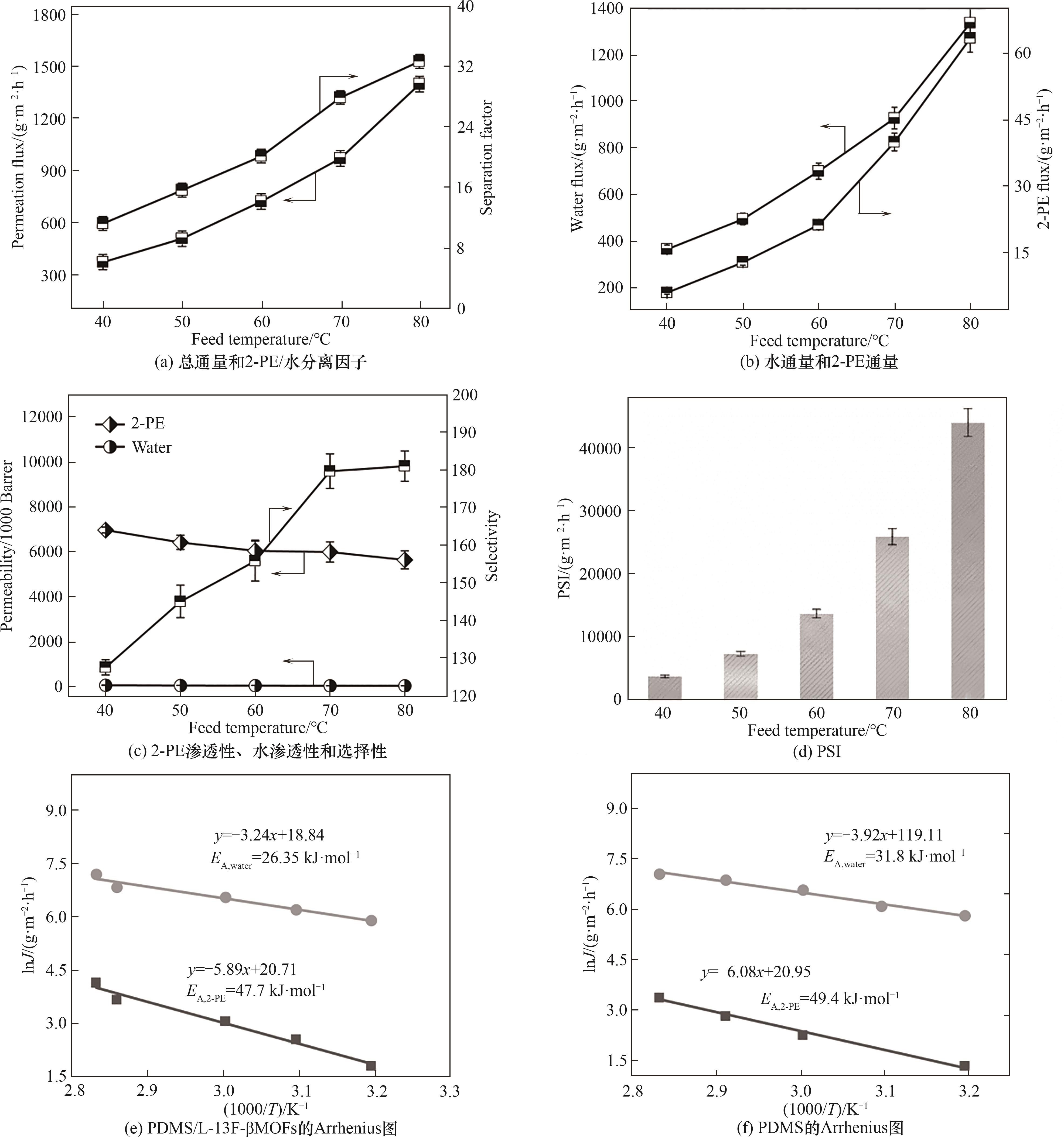
图13 进料液温度对PDMS/L-13F-βMOFs渗透汽化性能的影响
Fig.13 Effect of feed temperature on pervaporation performance of PDMS/L-13F-βMOFs
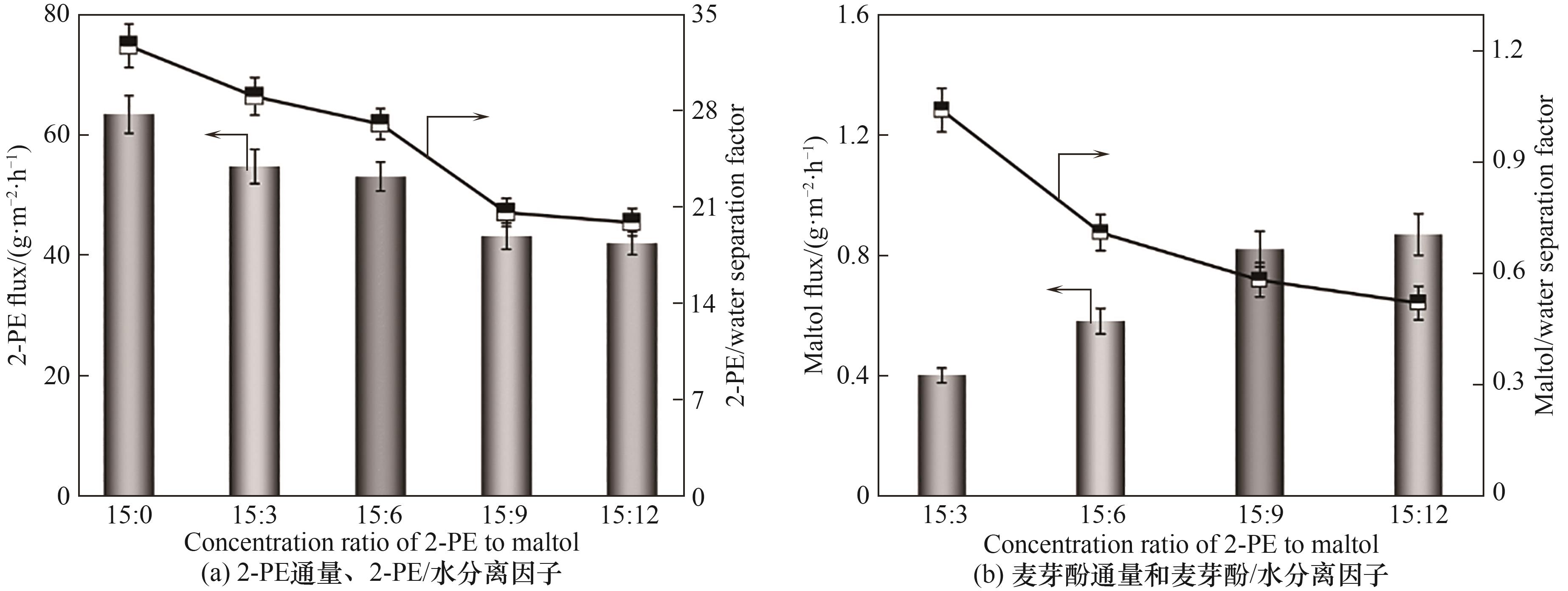
图14 三元体系下原料液中麦芽酚浓度对PDMS/L-13F-βMOFs渗透汽化性能的影响
Fig.14 Effect of maltol concentration on pervaporation performance of PDMS/L-13F-βMOFs
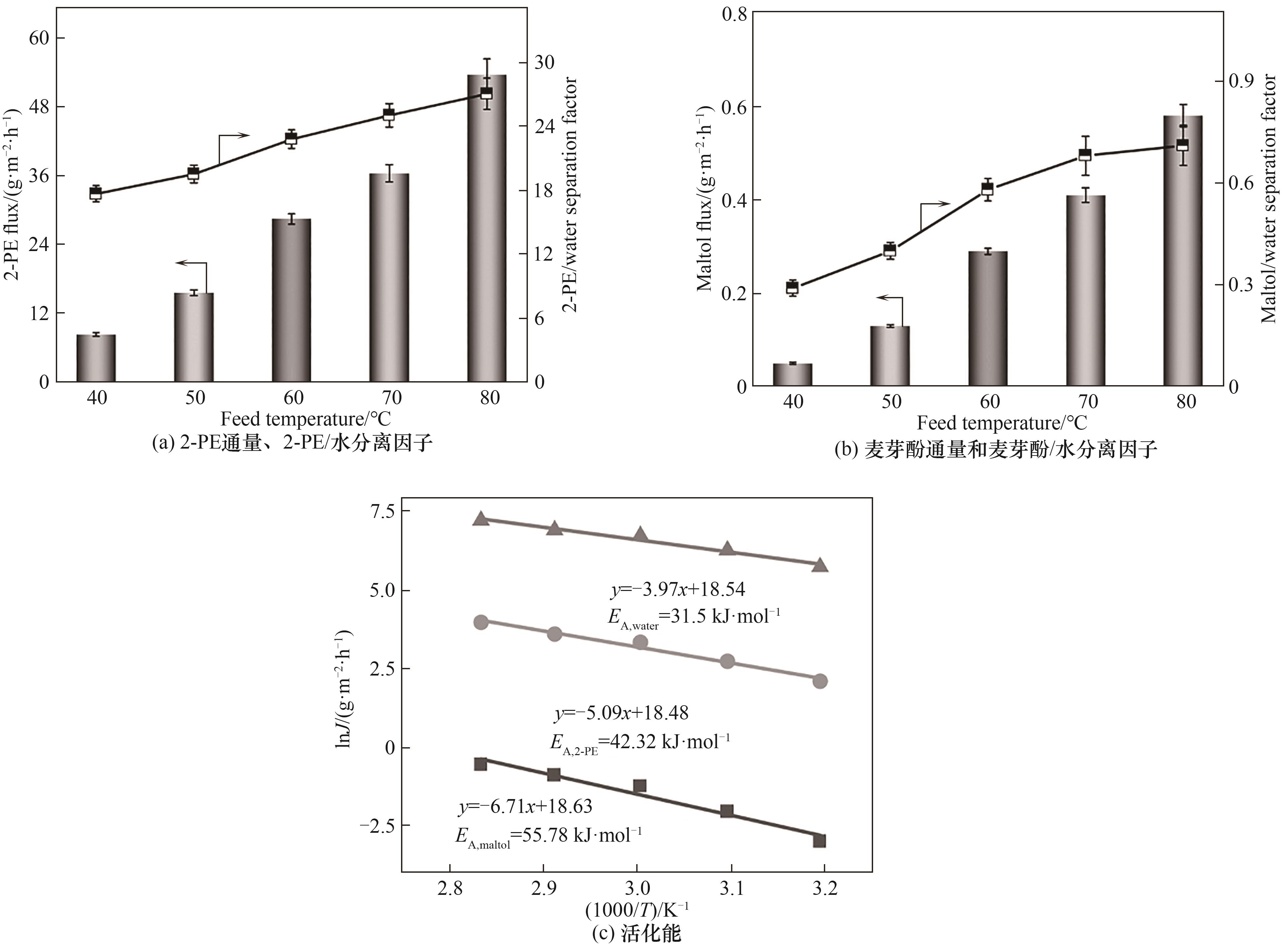
图15 三元体系下原料液温度对PDMS/L-13F-βMOFs渗透汽化性能的影响
Fig.15 Effect of feed temperature on pervaporation performance of PDMS/L-13F-βMOFs
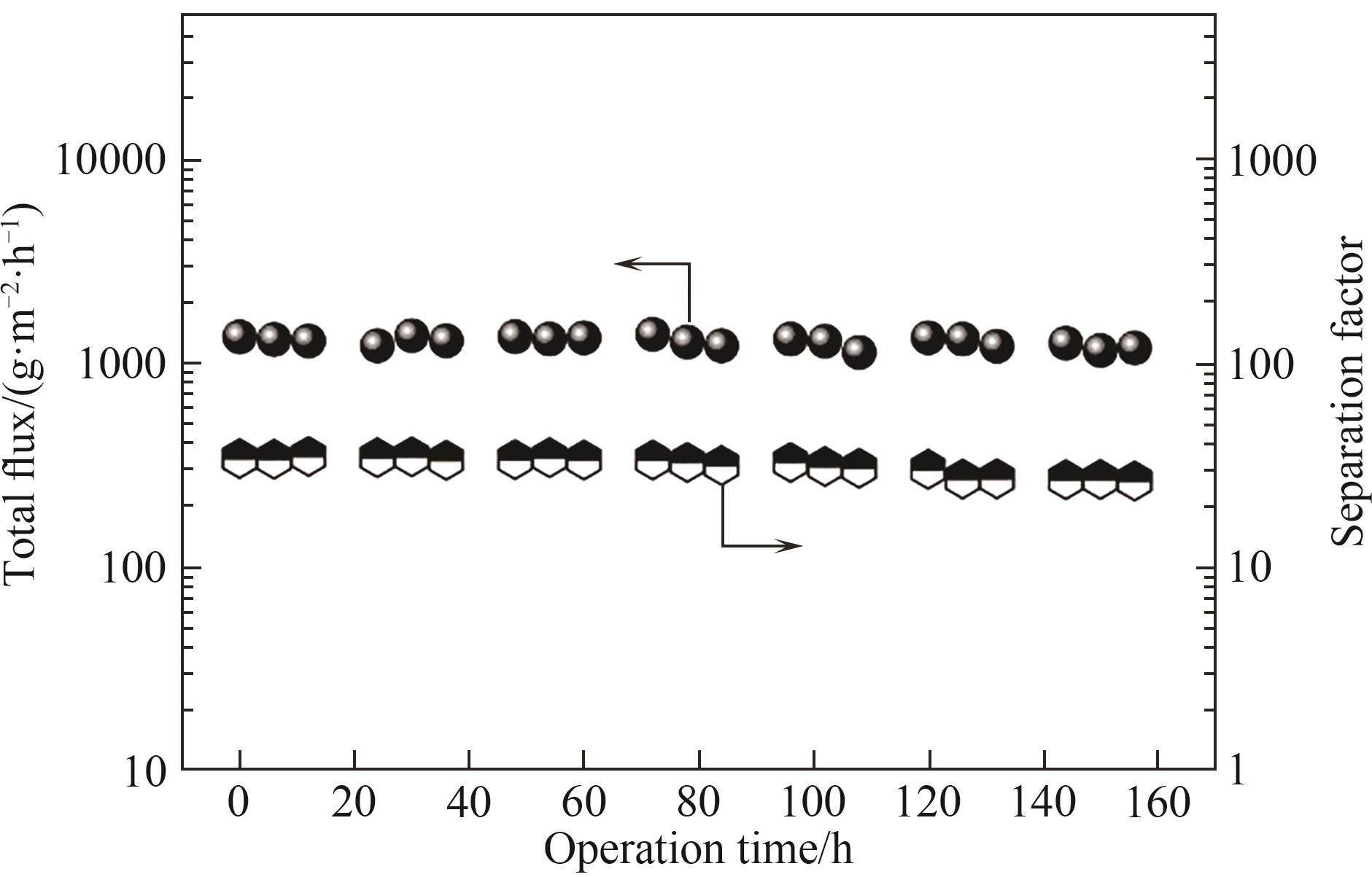
图16 PDMS/L-13F-βMOFs的稳定性测试
Fig.16 Stability testing of PDMS/L-13F-βMOFs
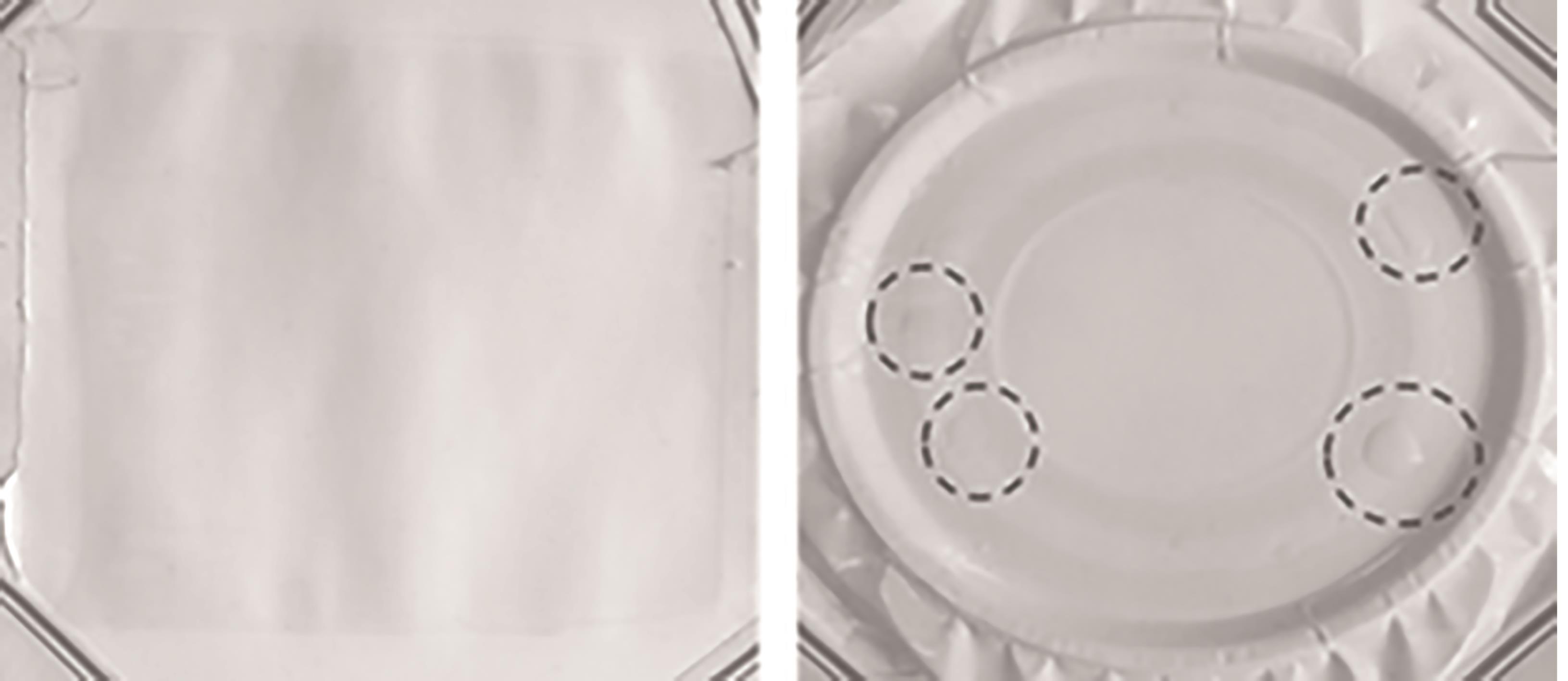
图17 稳定性测试前后PDMS/L-13F-βMOFs的光学照片
Fig.17 Optical photos of PDMS/L-13F-βMOFs before and after stability testing
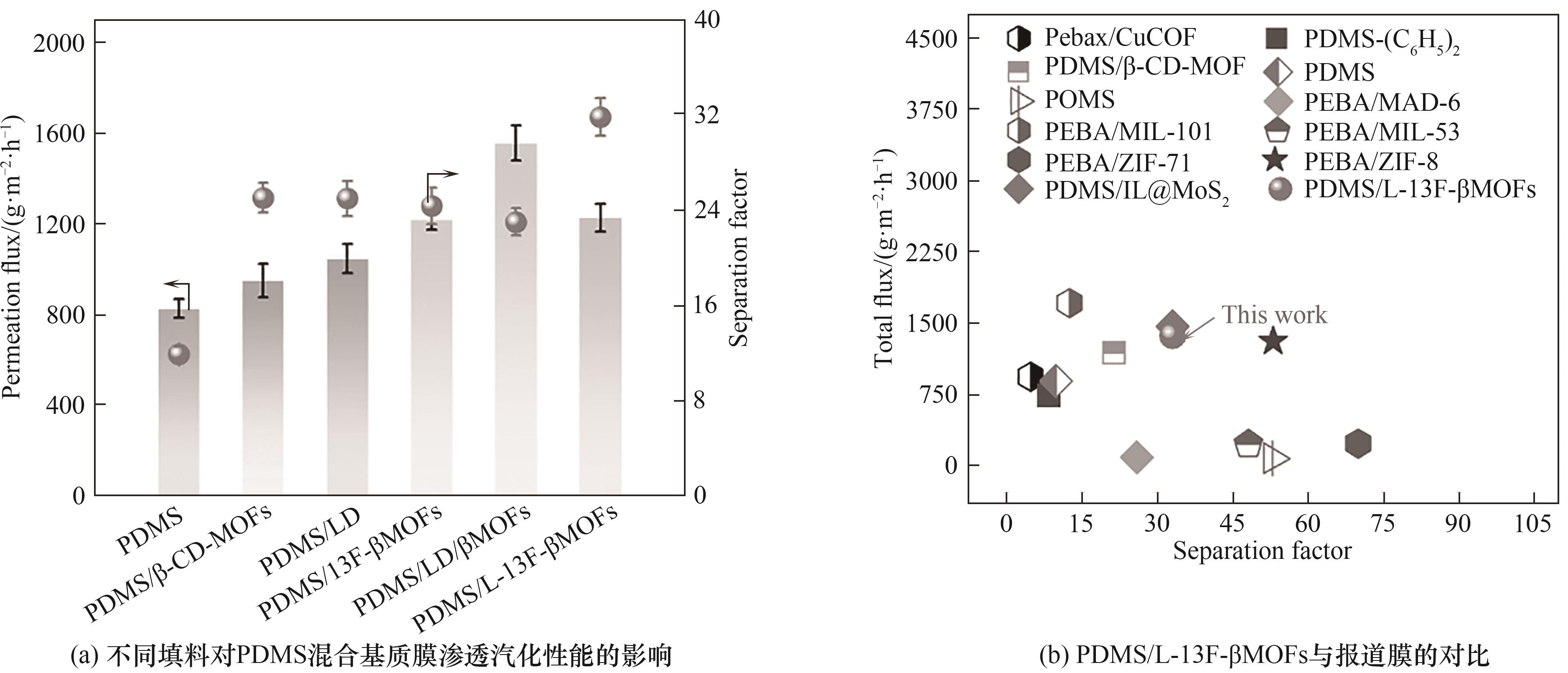
图18 膜的对比样及与报道膜的对比
Fig.18 Comparison samples and comparison with reported membranes
| [1] | Han Y Y, Meng J H, Zhu L, et al. Multi-mode enhancement and co-fermentation mechanism of 2-phenylethanol production by Kluyveromyces marxianus[J]. Food Bioscience, 2024, 59: 103916. |
| [2] | Shen J, Suo Y, Li S X, et al. Enhanced extraction of lanthanum and mass transfer characteristics in a rotating microchannel extractor[J]. Separation and Purification Technology, 2025, 354: 129070. |
| [3] | Liu C L, Zhong J H, Wei R R, et al. Process design and intensification of multicomponent azeotropes special distillation separation via molecular simulation and system optimization[J]. Chinese Journal of Chemical Engineering, 2024, 71: 24-44. |
| [4] | Hu H Q, Zhang Y, Fan M, et al. Complete kinetic model for esterification reaction of lauric acid with glycerol to synthesize glycerol monolaurate[J]. Chinese Journal of Chemical Engineering, 2024, 70: 211-221. |
| [5] | Feng S C, Du X B, Luo J Q, et al. A review on facilitated transport membranes based on π-complexation for carbon dioxide separation[J]. Separation and Purification Technology, 2023, 309: 122972. |
| [6] | Liu Y Q, Hu T T, Zhao J H, et al. Synthesis and application of PDMS/OP-POSS membrane for the pervaporative recovery of n-butyl acetate and ethyl acetate from aqueous media[J]. Journal of Membrane Science, 2019, 591: 117324. |
| [7] | Lai J Y, Wang T Y, Zou C L, et al. Highly-selective MOF-303 membrane for alcohol dehydration[J]. Journal of Membrane Science, 2022, 661: 120879. |
| [8] | Yang Y S, Li Z, Zhang K J, et al. Preparation of water-soluble altrenogest inclusion complex with β-cyclodextrin derivatives and in vitro sustained-release test[J]. Polymer, 2022, 249: 124803. |
| [9] | Xu L, Xing C Y, Ke D, et al. Amino-functionalized β-cyclodextrin to construct green metal-organic framework materials for CO2 capture[J]. ACS Applied Materials & Interfaces, 2020, 12(2): 3032-3041. |
| [10] | Zhao R N, Zhu B W, Xu Y, et al. Cyclodextrin-based metal-organic framework materials: classifications, synthesis strategies and applications in variegated delivery systems[J]. Carbohydrate Polymers, 2023, 319: 121198. |
| [11] | Hu Z M, Shao M, Zhang B, et al. Enhanced stability and controlled release of menthol using a β-cyclodextrin metal-organic framework[J]. Food Chemistry, 2022, 374: 131760. |
| [12] | Liu C B, Ma Z W, Zhang X R, et al. Separating 2-phenylethanol from aqueous solution by mixed matrix composite membranes based on beta-cyclodextrin metal organic frameworks[J]. Separation and Purification Technology, 2024, 330: 125463. |
| [13] | Zhang Y B, Zhang L, Wang N N, et al. Citric acid modified β-cyclodextrin for the synthesis of water-stable and recoverable CD-MOF with enhanced adsorption sites: efficient removal of Congo red and copper ions from wastewater[J]. Journal of Environmental Chemical Engineering, 2023, 11(6): 111413. |
| [14] | Mao H, Zhen H G, Ahmad A, et al. In situ fabrication of MOF nanoparticles in PDMS membrane via interfacial synthesis for enhanced ethanol permselective pervaporation[J]. Journal of Membrane Science, 2019, 573: 344-358. |
| [15] | Ding C, Zhang X R, Li C C, et al. ZIF-8 incorporated polyether block amide membrane for phenol permselective pervaporation with high efficiency[J]. Separation and Purification Technology, 2016, 166: 252-261. |
| [16] | Cao X T, Wang K A, Feng X S. Removal of phenolic contaminants from water by pervaporation[J]. Journal of Membrane Science, 2021, 623: 119043. |
| [17] | Wang Y H, Zhang L, Zhang X R, et al. Mixed matrix membranes consisting of PDMS and IL@MoS2 for enhancing 2-phenylethanol pervaporation separation[J]. Journal of Membrane Science, 2024, 706: 122947. |
| [18] | Demirci S, Khiev D, Can M, et al. Chemically cross-linked poly(β-cyclodextrin) particles as promising drug delivery materials[J]. ACS Applied Polymer Materials, 2021, 3(12): 6238-6251. |
| [19] | Zhang L L, Lu H L, Yu J, et al. Preparation of high-strength sustainable lignocellulose gels and their applications for antiultraviolet weathering and dye removal[J]. ACS Sustainable Chemistry & Engineering, 2019, 7(3): 2998-3009. |
| [20] | Wang H, Tang S H, Ni Y X, et al. Covalent cross-linking for interface engineering of high flux UiO-66-TMS/PDMS pervaporation membranes[J]. Journal of Membrane Science, 2020, 598: 117791. |
| [21] | Gong Q H, Xiang L, Ye B T, et al. Characterization of an antimony-resistant fungus Sarocladium kiliense ZJ-1 and its potential as an antimony bio-remediator[J]. Journal of Hazardous Materials, 2024, 462: 132676. |
| [22] | Cicek Ozkan B, Guner M. Adjustable dielectric and bioactivity characteristics of chitosan-based composites via crosslinking approach and incorporation of graphene[J]. International Journal of Biological Macromolecules, 2024, 270: 132125. |
| [23] | Zheng P Y, Li X Q, Wu J K, et al. Enhanced butanol selectivity of pervaporation membrane with fluorinated monolayer on polydimethylsiloxane surface[J]. Journal of Membrane Science, 2018, 548: 215-222. |
| [24] | Singh R P, Way J D, Dec S F. Silane modified inorganic membranes: effects of silane surface structure[J]. Journal of Membrane Science, 2005, 259(1/2): 34-46. |
| [25] | Nomède-Martyr N, Disa E, Guérin K, et al. Effect of fluorination on the stability of carbon nanofibres in organic solvents[J]. Comptes Rendus Chimie, 2018, 21(8): 791-799. |
| [26] | Currie E P K, Norde W, Cohen Stuart M A. Tethered polymer chains: surface chemistry and their impact on colloidal and surface properties[J]. Advances in Colloid and Interface Science, 2003, 100: 205-265. |
| [27] | Li S F, Li P, Cai D, et al. Boosting pervaporation performance by promoting organic permeability and simultaneously inhibiting water transport via blending PDMS with COF-300[J]. Journal of Membrane Science, 2019, 579: 141-150. |
| [28] | Castro-Muñoz R, Buera-González J, de la Iglesia Ó, et al. Towards the dehydration of ethanol using pervaporation cross-linked poly(vinyl alcohol)/graphene oxide membranes[J]. Journal of Membrane Science, 2019, 582: 423-434. |
| [29] | Mao H, Zhen H G, Ahmad A, et al. Highly selective and robust PDMS mixed matrix membranes by embedding two-dimensional ZIF-L for alcohol permselective pervaporation[J]. Journal of Membrane Science, 2019, 582: 307-321. |
| [30] | Zhu T Y, Xu S, Yu F, et al. ZIF-8@GO composites incorporated polydimethylsiloxane membrane with prominent separation performance for ethanol recovery[J]. Journal of Membrane Science, 2020, 598: 117681. |
| [31] | Amoli V, Kim J S, Jee E, et al. A bioinspired hydrogen bond-triggered ultrasensitive ionic mechanoreceptor skin[J]. Nature Communications, 2019, 10(1): 4019. |
| [32] | Li Y, Li S H, Xu L H, et al. Highly selective PDMS membranes embedded with ILs-decorated halloysite nanotubes for ethyl acetate pervaporation separation[J]. Separation and Purification Technology, 2022, 298: 121552. |
| [33] | Zuo C Y, Xu S N, Ding X B, et al. Transmission of sodium chloride in PDMS membrane during pervaporation based on polymer relaxation[J]. Journal of Membrane Science, 2022, 659: 120812. |
| [34] | Lin L G, Kong Y, Wang G, et al. Selection and crosslinking modification of membrane material for FCC gasoline desulfurization[J]. Journal of Membrane Science, 2006, 285(1/2): 144-151. |
| [35] | Zhan X, Ge R, Yao S Q, et al. Enhanced pervaporation performance of PEG membranes with synergistic effect of cross-linked PEG and porous MOF-508a[J]. Separation and Purification Technology, 2023, 304: 122347. |
| [36] | Mao H, Li S H, Xu L H, et al. Zeolitic imidazolate frameworks in mixed matrix membranes for boosting phenol/water separation: crystal evolution and preferential orientation[J]. Journal of Membrane Science, 2021, 638: 119611. |
| [37] | Zhan X, Wang M Y, Gao T, et al. A highly selective sorption process in POSS-g-PDMS mixed matrix membranes for ethanol recovery via pervaporation[J]. Separation and Purification Technology, 2020, 236: 116238. |
| [38] | Mao H, Li S H, Zhang A S, et al. Furfural separation from aqueous solution by pervaporation membrane mixed with metal organic framework MIL-53(Al) synthesized via high efficiency solvent-controlled microwave[J]. Separation and Purification Technology, 2021, 272: 118813. |
| [39] | Du C L, Du J R, Feng X S, et al. Green extraction of perilla volatile organic compounds by pervaporation[J]. Separation and Purification Technology, 2021, 261: 118281. |
| [40] | Li J W, Liao H Y, Sun Y, et al. Fabrication of MWCNTs/PDMS mixed matrix membranes for recovery of volatile aromatic compounds from brewed black tea[J]. Separation and Purification Technology, 2021, 259: 118101. |
| [41] | Du J, Liang S W, Wang M D, et al. Metal-covalent organic framework nanosheets engineered facilitated transport membranes for toluene/n-heptane separation[J]. Journal of Membrane Science, 2023, 683: 121840. |
| [42] | Pan Y, Guo D Y, Liu J Y, et al. PDMS with tunable side group mobility and its highly permeable membrane for removal of aromatic compounds[J]. Angewandte Chemie International Edition, 2022, 61(6): e202111810. |
| [43] | Liu L, Li Y B, Xu M, et al. 2D Co-UMOFNs filled PEBA composite membranes for pervaporation of phenol solution[J]. Separation and Purification Technology, 2022, 285: 120414. |
| [44] | Khan R, Ul Haq I, Mao H, et al. Enhancing the pervaporation performance of PEBA/PVDF membrane by incorporating MAF-6 for the separation of phenol from its aqueous solution[J]. Separation and Purification Technology, 2021, 256: 117804. |
| [45] | Zhang Z M, Gou E F, Zhao Z Y, et al. Hydrophobically functionalized MIL-101/PEBA/PVDF composite membranes for phenol recovery by pervaporation[J]. Separation and Purification Technology, 2023, 327: 124900. |
| [46] | Cao X T, Wang K A, Feng X S. Incorporating ZIF-71 into poly(ether-block-amide) (PEBA) to form mixed matrix membranes for enhanced separation of aromatic compounds from aqueous solutions by pervaporation[J]. Separation and Purification Technology, 2022, 300: 121924. |
| [1] | 臧子晴, 李修真, 谈莹莹, 刘晓庆. 分凝器对两级分离自复叠制冷循环特性影响研究[J]. 化工学报, 2025, 76(S1): 17-25. |
| [2] | 黄灏, 王文, 贺隆坤. LNG船薄膜型液货舱预冷过程模拟与分析[J]. 化工学报, 2025, 76(S1): 187-194. |
| [3] | 黄博, 黄灏, 王文, 贺隆坤. 薄膜型LNG船液货舱温度场计算分析[J]. 化工学报, 2025, 76(S1): 195-204. |
| [4] | 裴星亮, 叶翠平, 裴赢丽, 李文英. 碱改性MIL-53(Cr)选择性吸附分离二甲苯异构体[J]. 化工学报, 2025, 76(S1): 258-267. |
| [5] | 李银龙, 刘国强, 晏刚. 分馏与闪蒸分离耦合自复叠制冷循环性能分析[J]. 化工学报, 2025, 76(S1): 26-35. |
| [6] | 王钰, 冯英楠, 王涛, 赵之平. 原位生长构筑纳米复合纳滤膜:膜制备与应用[J]. 化工学报, 2025, 76(9): 4723-4736. |
| [7] | 张建民, 何美贵, 贾万鑫, 赵静, 金万勤. 聚氧化乙烯/冠醚共混膜及其二氧化碳分离性能[J]. 化工学报, 2025, 76(9): 4862-4871. |
| [8] | 郭旭, 贾继宁, 姚克俭. 基于优化CNN-BiLSTM神经网络的间歇精馏过程建模[J]. 化工学报, 2025, 76(9): 4613-4629. |
| [9] | 王杰, 林渠成, 张先明. 基于分解算法的混合气体多级膜分离系统全局优化[J]. 化工学报, 2025, 76(9): 4670-4682. |
| [10] | 李文龙, 常程, 吴小林, 姬忠礼. 油水聚结过滤材料中的液体分布特性及过程压降演化研究[J]. 化工学报, 2025, 76(9): 4850-4861. |
| [11] | 张荟钦, 赵泓竣, 付正军, 庄力, 董凯, 贾添智, 曹雪丽, 孙世鹏. 纳滤膜在离子型稀土浸出液提浓中的应用研究[J]. 化工学报, 2025, 76(8): 4095-4107. |
| [12] | 陈治宏, 吴佳伟, 楼小玲, 贠军贤. 化学品生物制造过程机器学习的研究进展[J]. 化工学报, 2025, 76(8): 3789-3804. |
| [13] | 蒋明虎, 汪帆, 邢雷, 赵立新, 李新亚, 陈丁玮. 井下含气对油水分离管柱流场特性及性能影响[J]. 化工学报, 2025, 76(7): 3361-3372. |
| [14] | 李姿睿, 齐凯, 王军, 夏国栋. 基于Janus纳米通道的脱盐过程分子动力学模拟研究[J]. 化工学报, 2025, 76(7): 3531-3538. |
| [15] | 王珺仪, 夏章讯, 景粉宁, 王素力. 基于重整气的高温聚合物电解质膜燃料电池电化学阻抗谱弛豫时间分布研究[J]. 化工学报, 2025, 76(7): 3509-3520. |
| 阅读次数 | ||||||
|
全文 |
|
|||||
|
摘要 |
|
|||||
 京公网安备 11010102001995号