化工学报 ›› 2025, Vol. 76 ›› Issue (10): 5437-5452.DOI: 10.11949/0438-1157.20250442
王鑫1( ), 苏宽2, 朱鸣3(), 韩文超3, 陈耀华3, 崔栋梁3, 程亮3, 陈叔平1()
收稿日期:2025-04-25
修回日期:2025-07-04
出版日期:2025-10-25
发布日期:2025-11-25
通讯作者:
朱鸣,陈叔平
作者简介:王鑫(1997—),男,博士研究生,wangx9730@163.com
基金资助:
Xin WANG1(), Kuan SU2, Ming ZHU3(), Wenchao HAN3, Yaohua CHEN3, Dongliang CUI3, Liang CHENG3, Shuping CHEN1()
Received:2025-04-25
Revised:2025-07-04
Online:2025-10-25
Published:2025-11-25
Contact:
Ming ZHU, Shuping CHEN
摘要:
超低温液体储存技术面临被动绝热方案热泄漏高与主动绝热方案能耗大的技术瓶颈。提出主动冷却屏(actively cooled thermal shield,ACTS)绝热与多层绝热(multi-layer insulation,MLI)耦合的热传递模型,以实现超低温容器热泄漏与冷却功耗的协同最小化。基于液氦容器搭建ACTS绝热性能实验装置,分析了MLI和ACTS的瞬态温度变化及热传递规律,验证了理论模型的精度。通过参数优化研究,揭示了ACTS温度、位置及数量对MLI温度梯度场、热通量分布及冷却能耗的影响机制。结果表明,ACTS通过温度梯度扩大了MLI的低温区,减小了低温容器与ACTS之间的温差;单ACTS的最佳温度和位置分别为73.6 K、0.425(位置0为冷端),温度临界值为150 K;双ACTS的最佳位置分别为0.2375、0.5875,其最佳温度为36.4、128.7 K,综合评价因子较单ACTS降低24.6%;三ACTS方案将热通量降低至0.0202 W/m2,相较于单/双ACTS分别降低44.6%、28.5%,验证了多个ACTS改善超低温容器绝热性能的显著优势。该研究为超低温容器主动绝热性能控制提供了理论依据与数据支撑。
中图分类号:
王鑫, 苏宽, 朱鸣, 韩文超, 陈耀华, 崔栋梁, 程亮, 陈叔平. 基于主动冷屏绝热的超低温容器保冷性能优化[J]. 化工学报, 2025, 76(10): 5437-5452.
Xin WANG, Kuan SU, Ming ZHU, Wenchao HAN, Yaohua CHEN, Dongliang CUI, Liang CHENG, Shuping CHEN. Optimization of thermal insulation performance of cryogenic vessel based on actively cooled thermal shield insulation[J]. CIESC Journal, 2025, 76(10): 5437-5452.
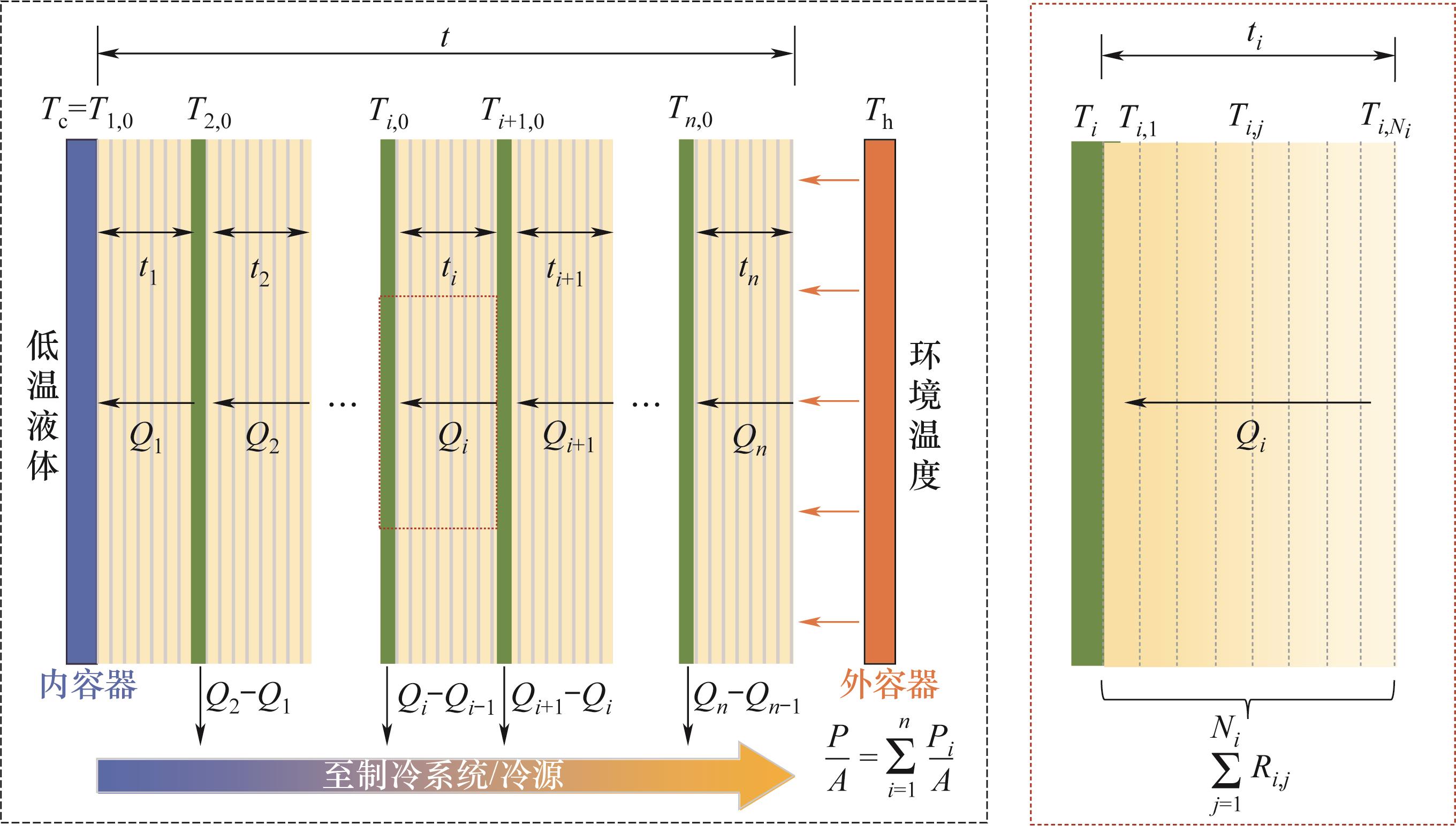
图1 传热示意图
Fig.1 Heat transfer schematic diagram
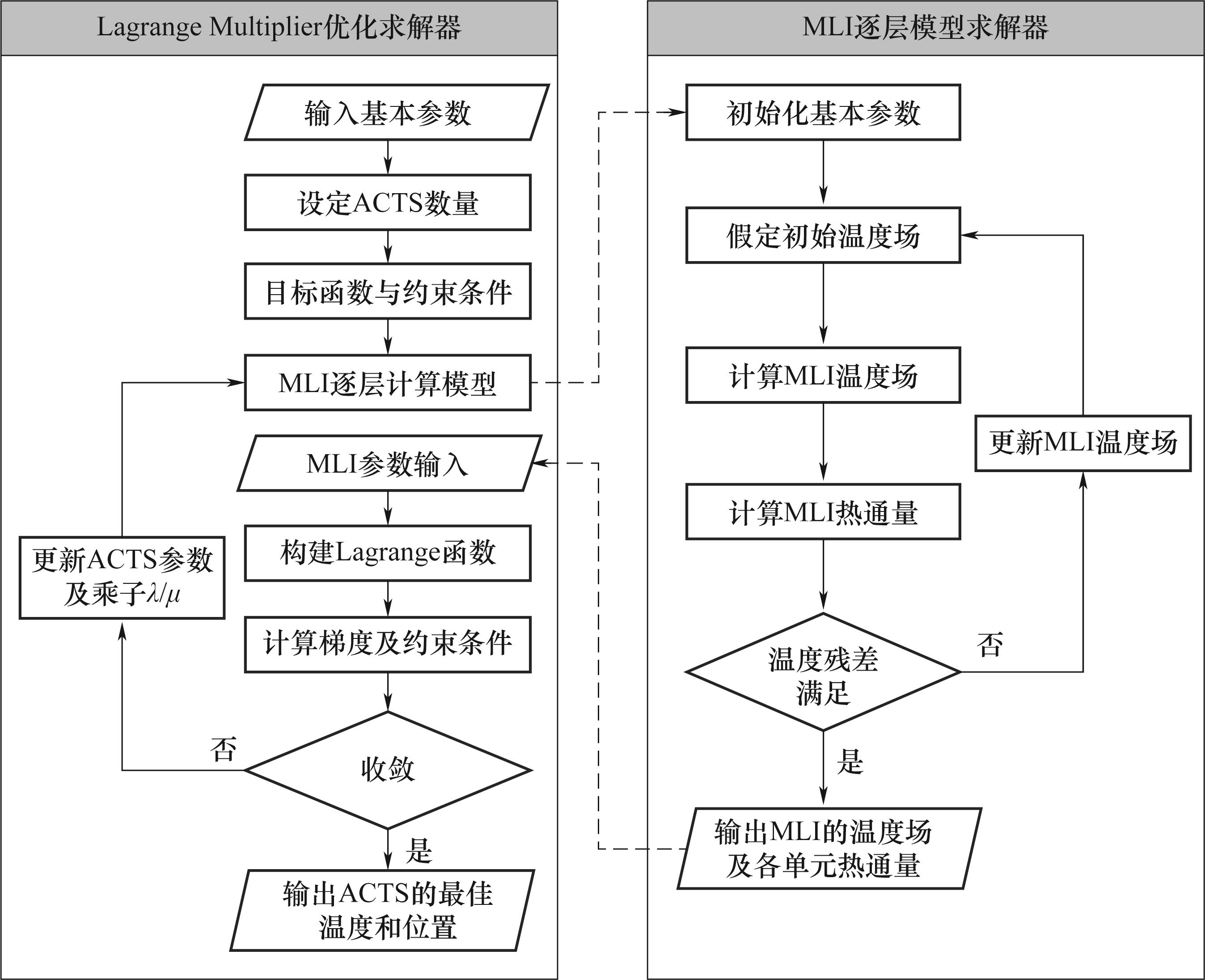
图2 程序流程图
Fig.2 Program flow chart
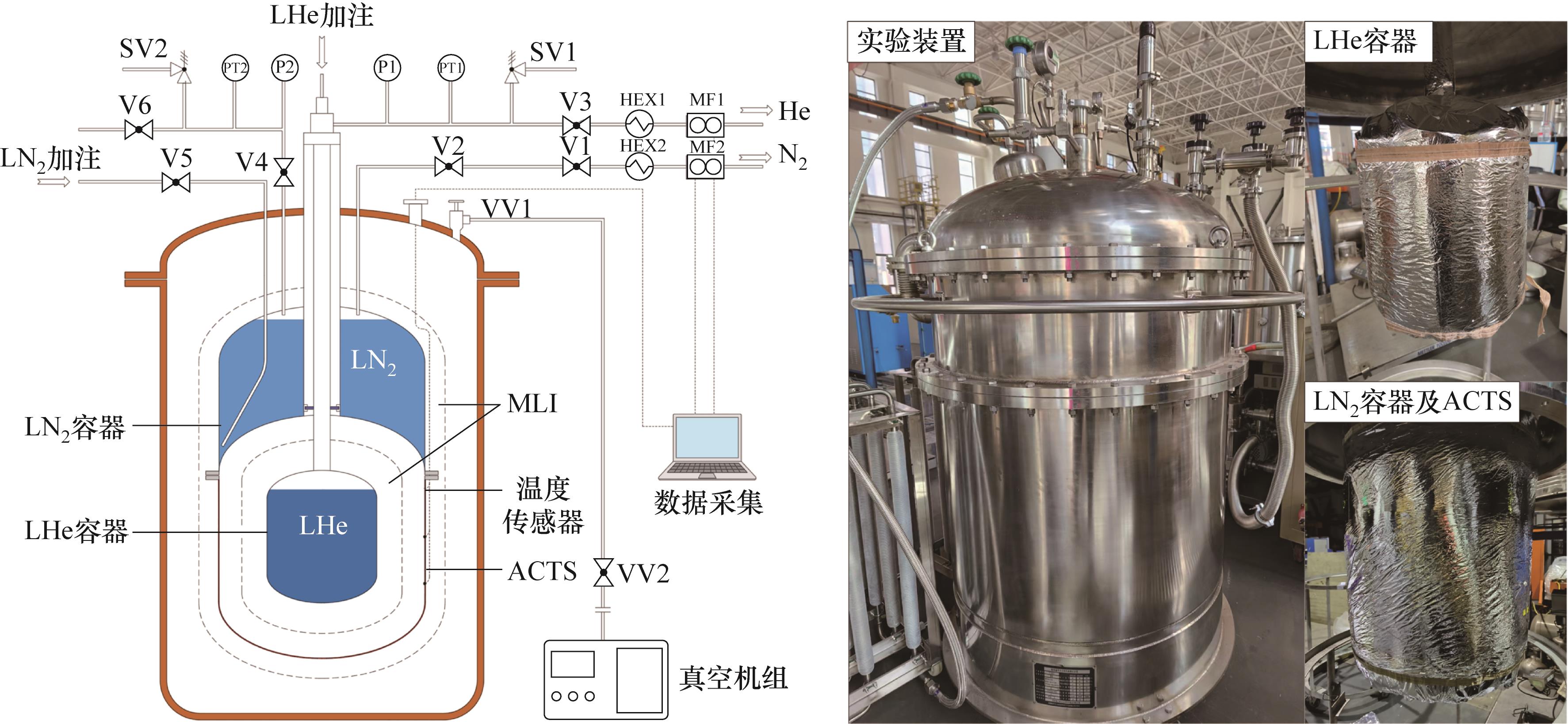
图3 实验装置及流程图
Fig.3 Experimental device and flow chart
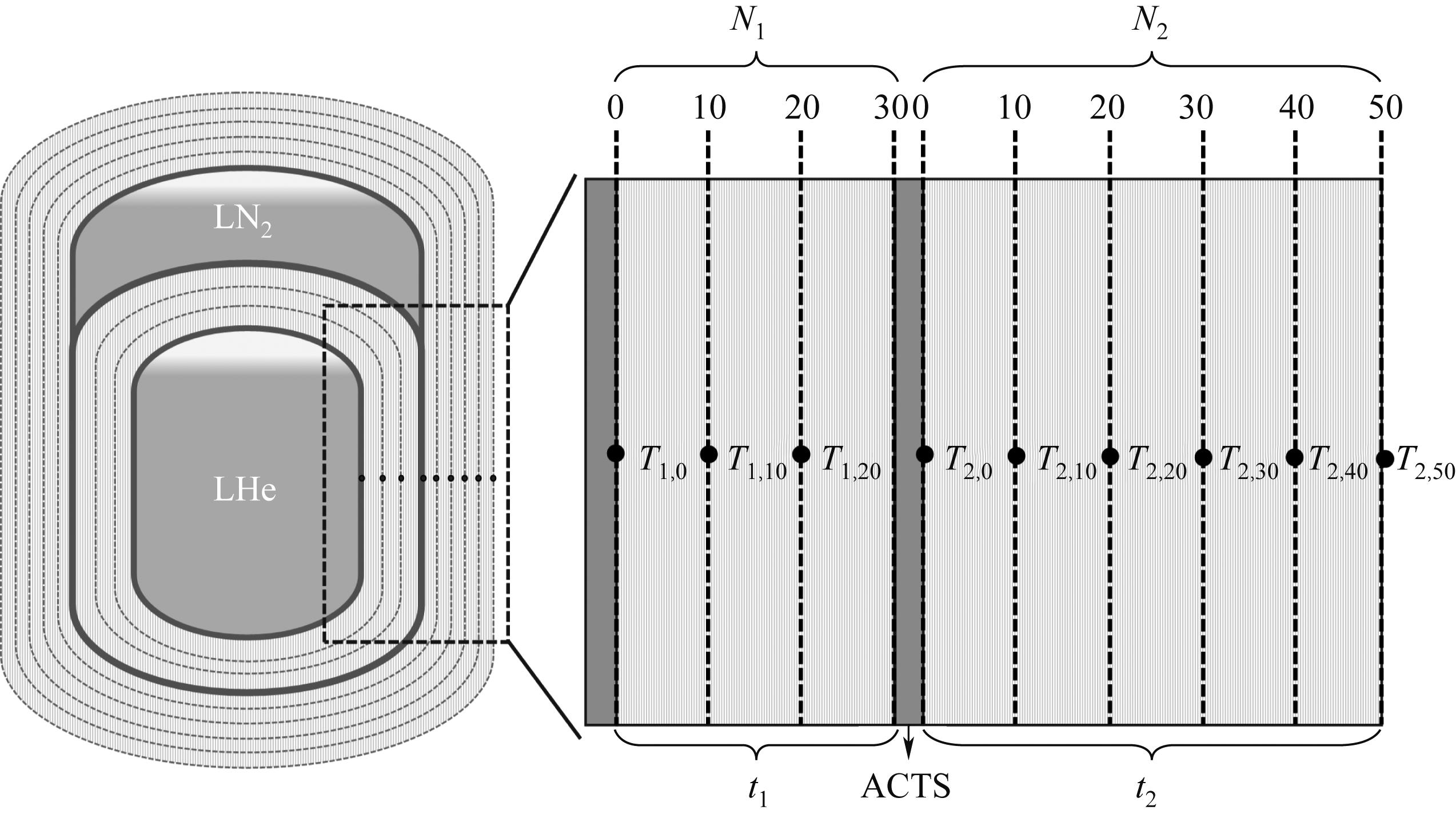
图4 温度测点
Fig.4 Temperature measuring point
| 项目 | 设备 | 品牌 | 类型 | 测量范围 | 测量精度 |
|---|---|---|---|---|---|
| 温度 | 二极管温度传感器 | Lake Shore | DT-670-SD | 1.4~500 K | ±12 mK, ±0.8% R |
| N2流量 | 气体质量流量计Ⅰ | ALICAT | M-Series | 0~10 SLPM | ±0.2% F.S., ±0.4% R |
| He流量 | 气体质量流量计Ⅱ | ALICAT | M-Series | 0~5 SLPM | ±0.2% F.S |
| MLI厚度 | 游标直径尺 | 在宇工具 | JC300 | 300~600 mm | ±0.04 mm |
表1 实验仪器的测量精度及范围
Table 1 Measurement accuracy and range of experimental instruments
| 项目 | 设备 | 品牌 | 类型 | 测量范围 | 测量精度 |
|---|---|---|---|---|---|
| 温度 | 二极管温度传感器 | Lake Shore | DT-670-SD | 1.4~500 K | ±12 mK, ±0.8% R |
| N2流量 | 气体质量流量计Ⅰ | ALICAT | M-Series | 0~10 SLPM | ±0.2% F.S., ±0.4% R |
| He流量 | 气体质量流量计Ⅱ | ALICAT | M-Series | 0~5 SLPM | ±0.2% F.S |
| MLI厚度 | 游标直径尺 | 在宇工具 | JC300 | 300~600 mm | ±0.04 mm |
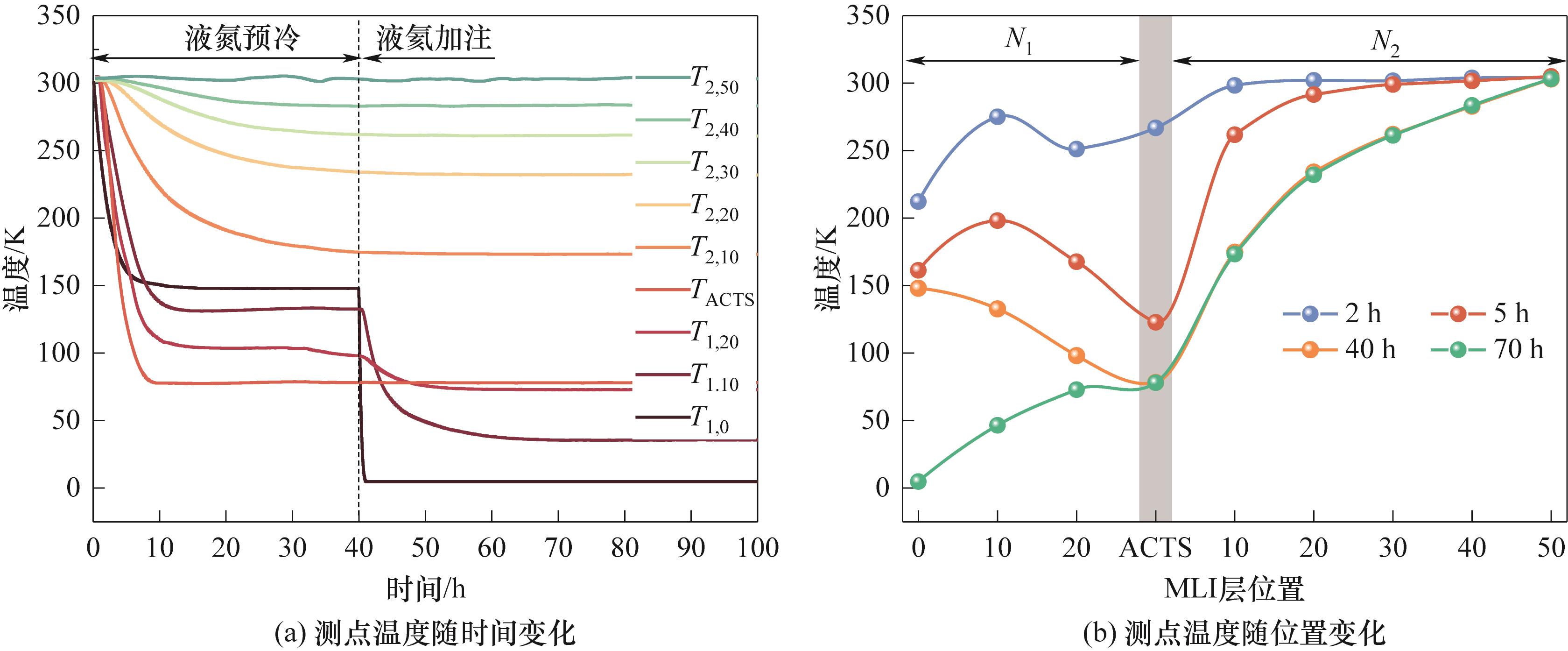
图5 测点温度曲线
Fig.5 Temperature curve of measuring point
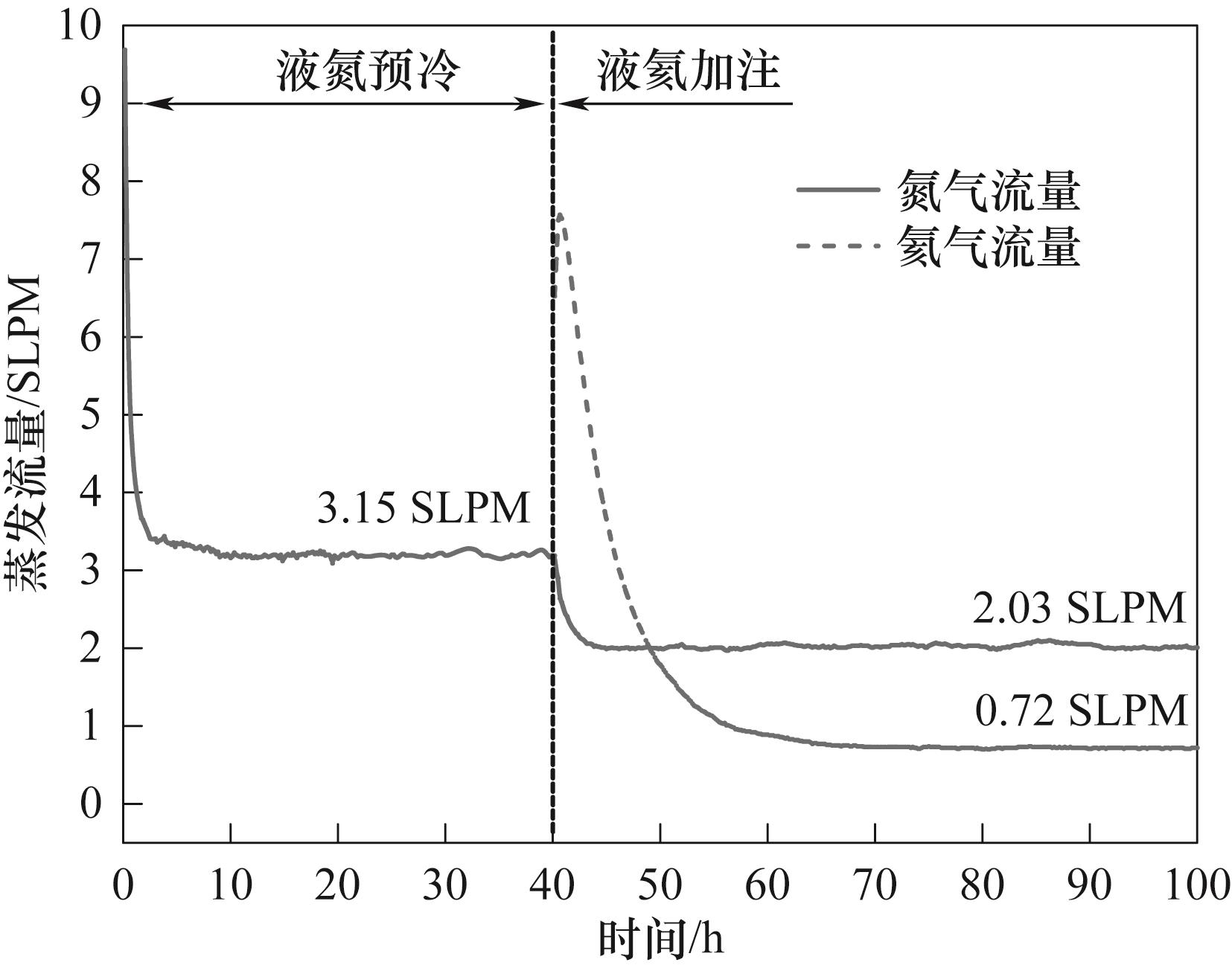
图6 蒸发流量曲线
Fig.6 Evaporation flow curve

图7 传热模型验证
Fig.7 Verification of heat transfer model
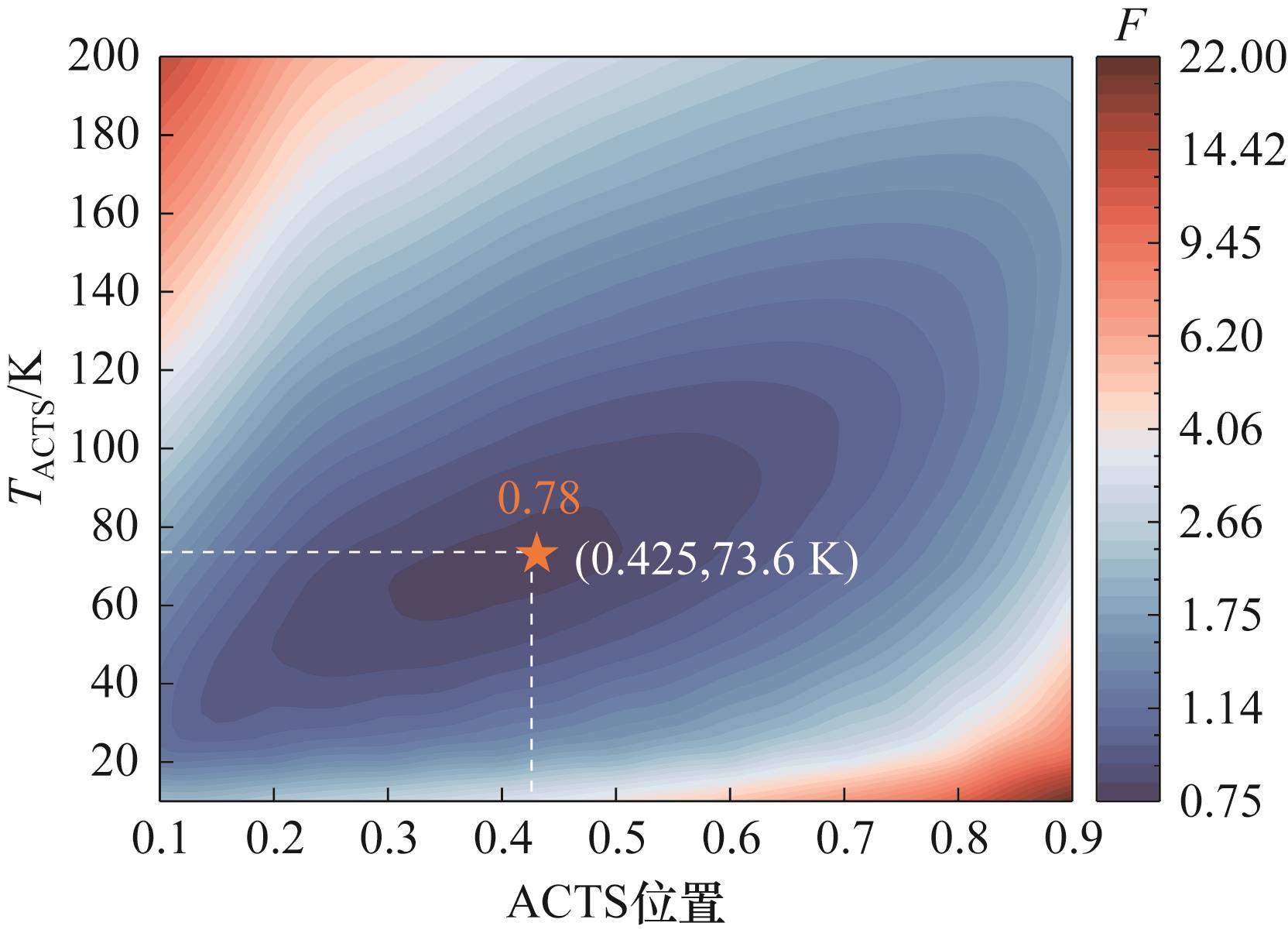
图8 单ACTS温度及位置对评价因子F的影响
Fig.8 Effect of single ACTS temperature and position on the evaluation factor
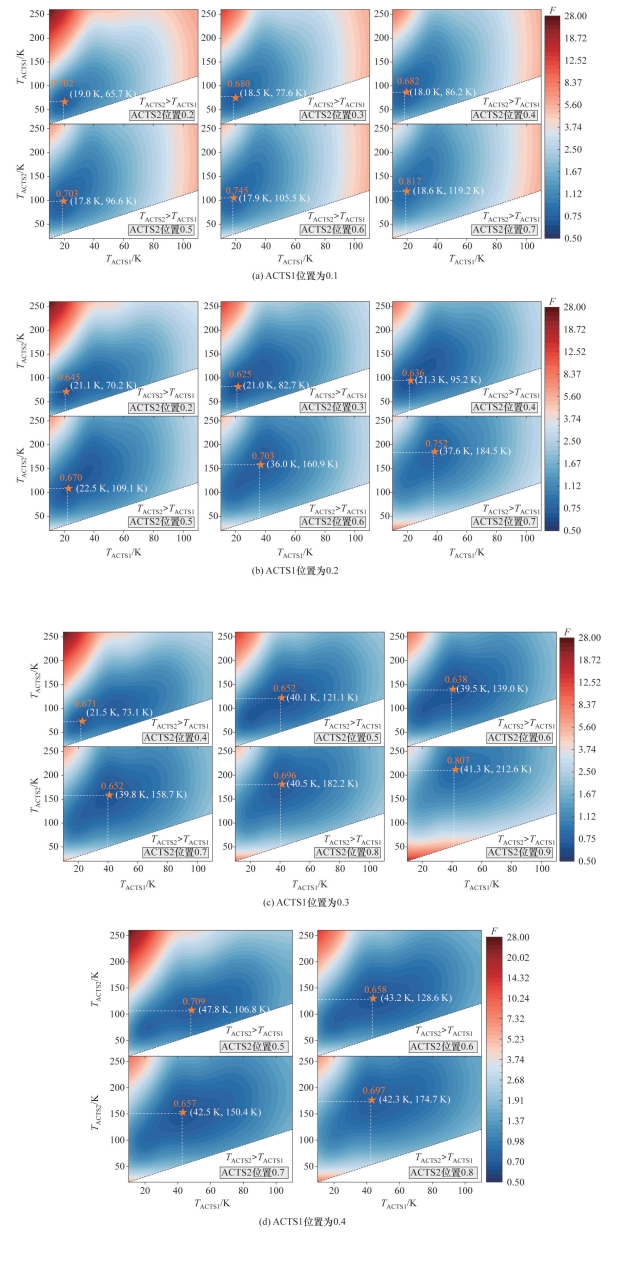
图9 双ACTS温度及位置对评价因子F的影响
Fig.9 Effect of dual ACTS temperature and position on the evaluation factor
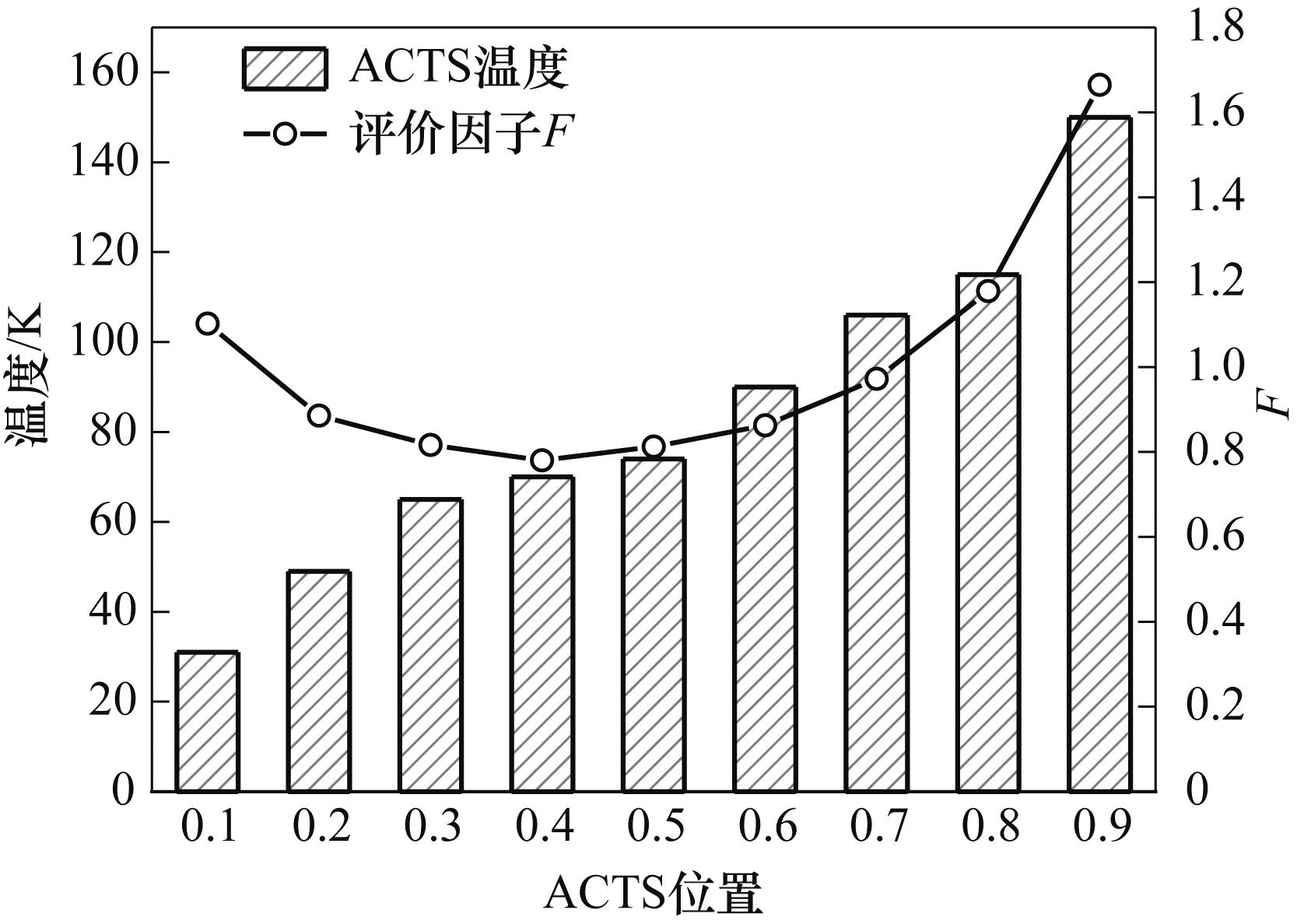
图10 单ACTS典型位置时的最优方案
Fig.10 Optimal solution for the typical position of single ACTS
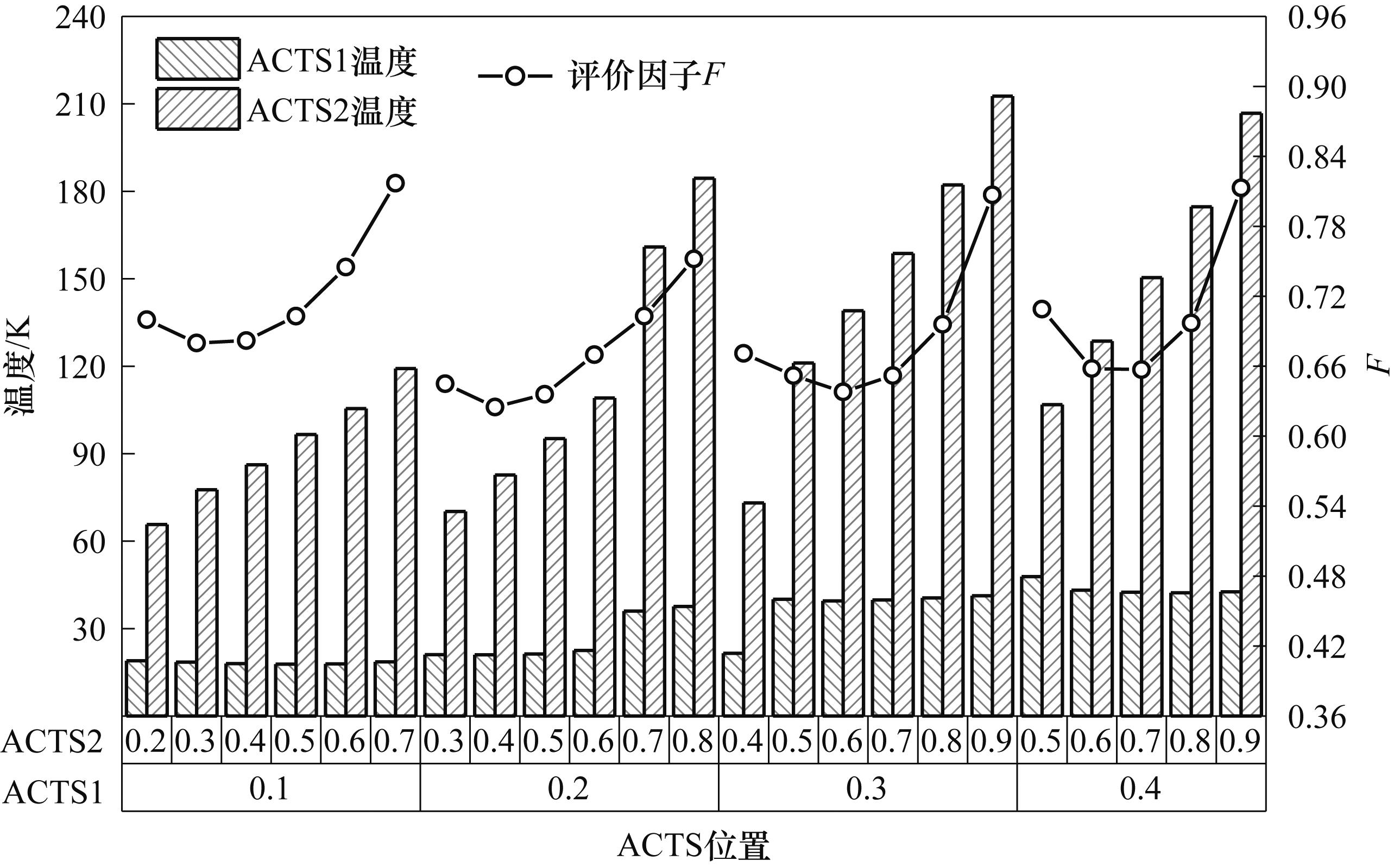
图11 双ACTS典型位置时的最优方案
Fig.11 Optimal solution for the typical position of dual ACTS
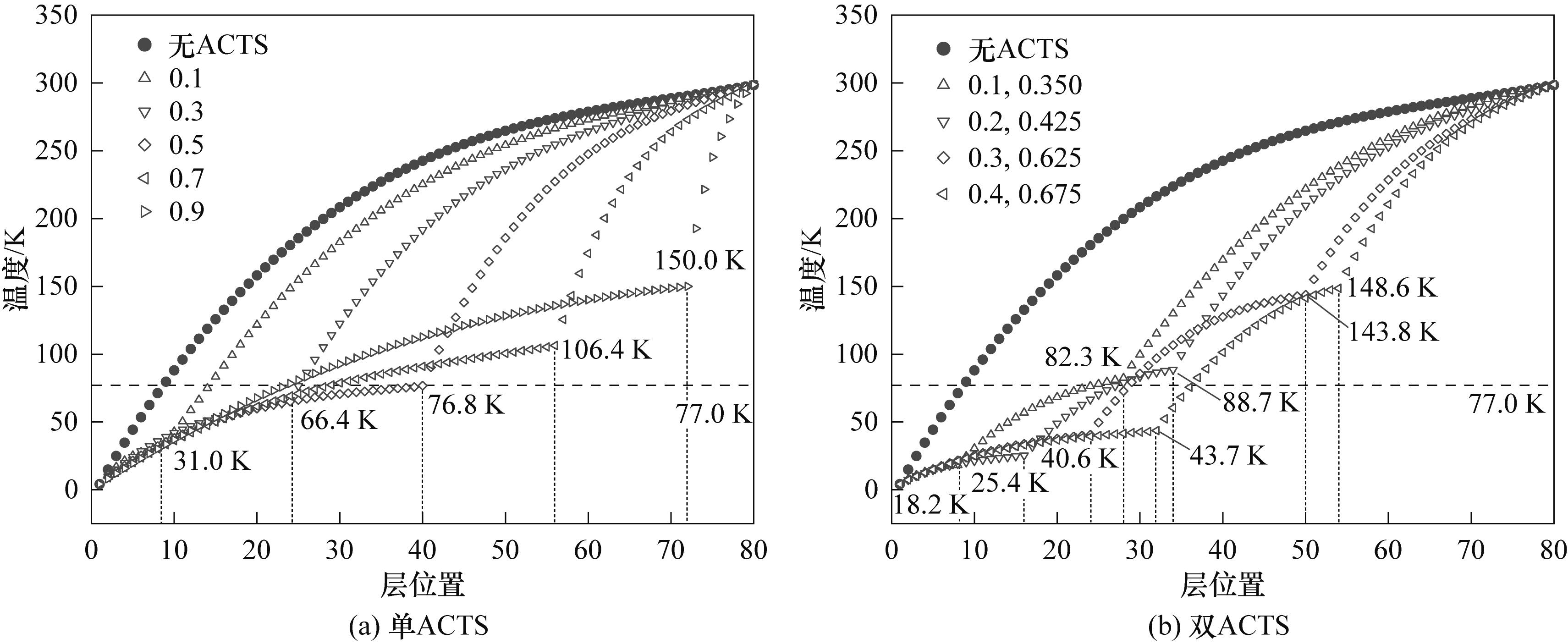
图12 ACTS对MLI温度的影响
Fig.12 Effect of ACTS on MLI temperature
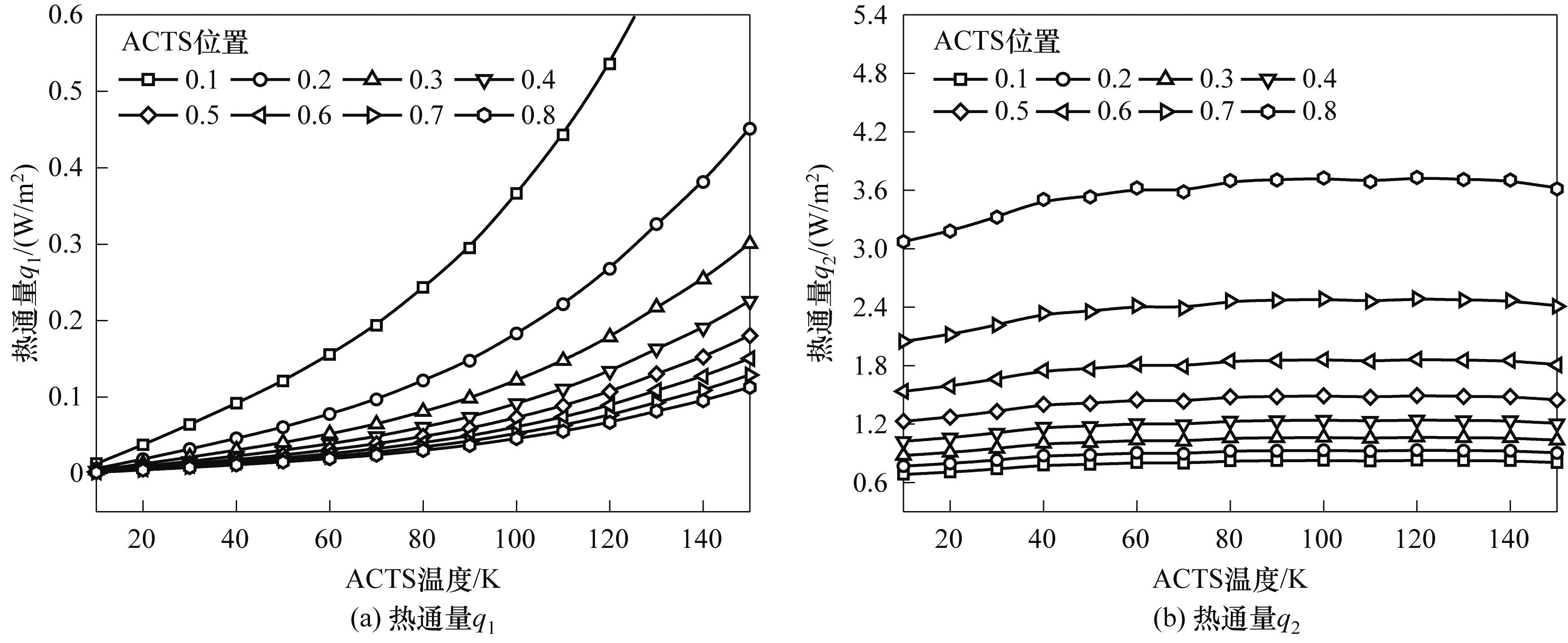
图13 单ACTS位置对MLI热通量影响
Fig.13 Effect of single ACTS position on MLI heat flux
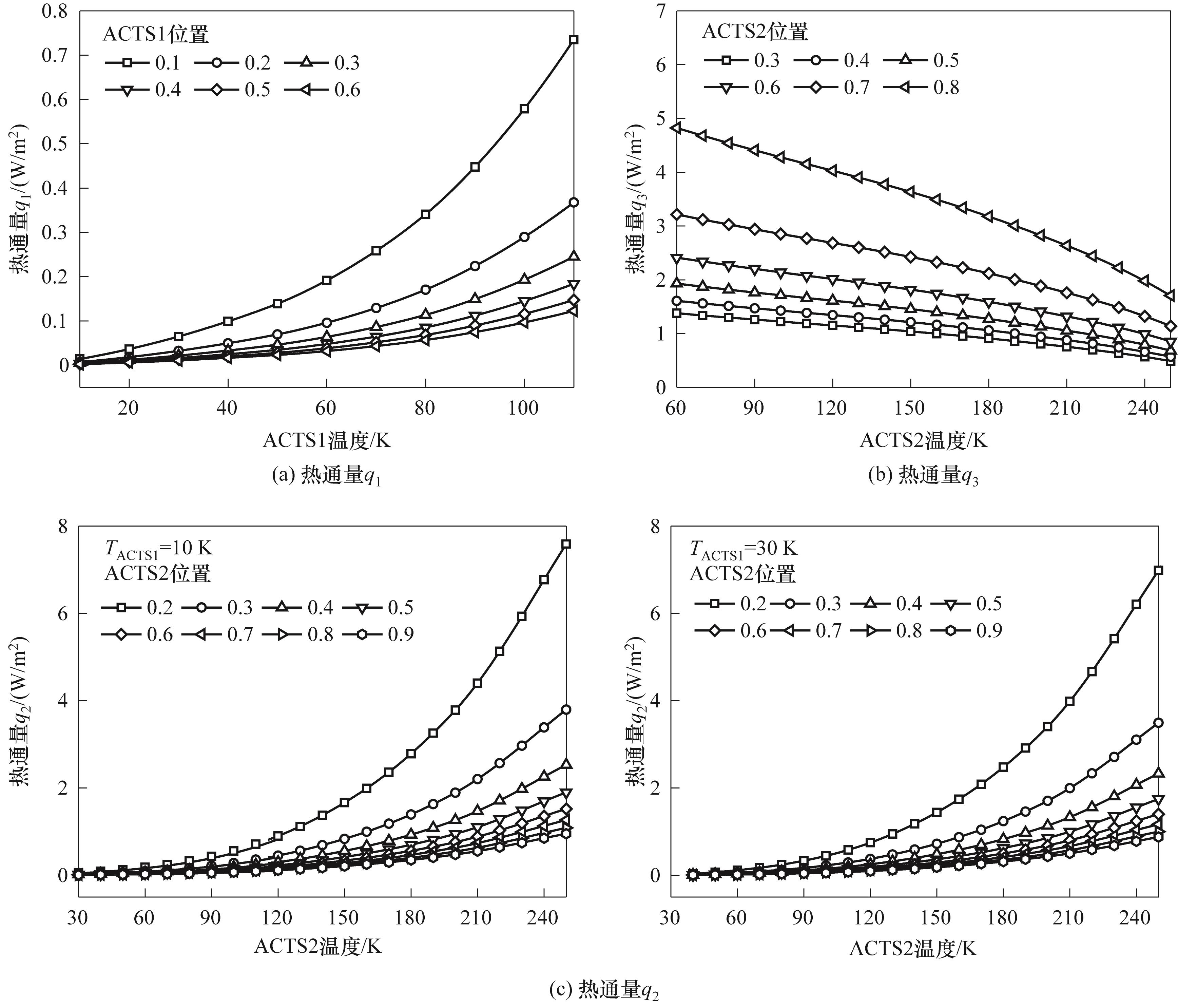
图14 双ACTS位置对MLI热通量影响
Fig.14 Effect of dual ACTS position on MLI heat flux
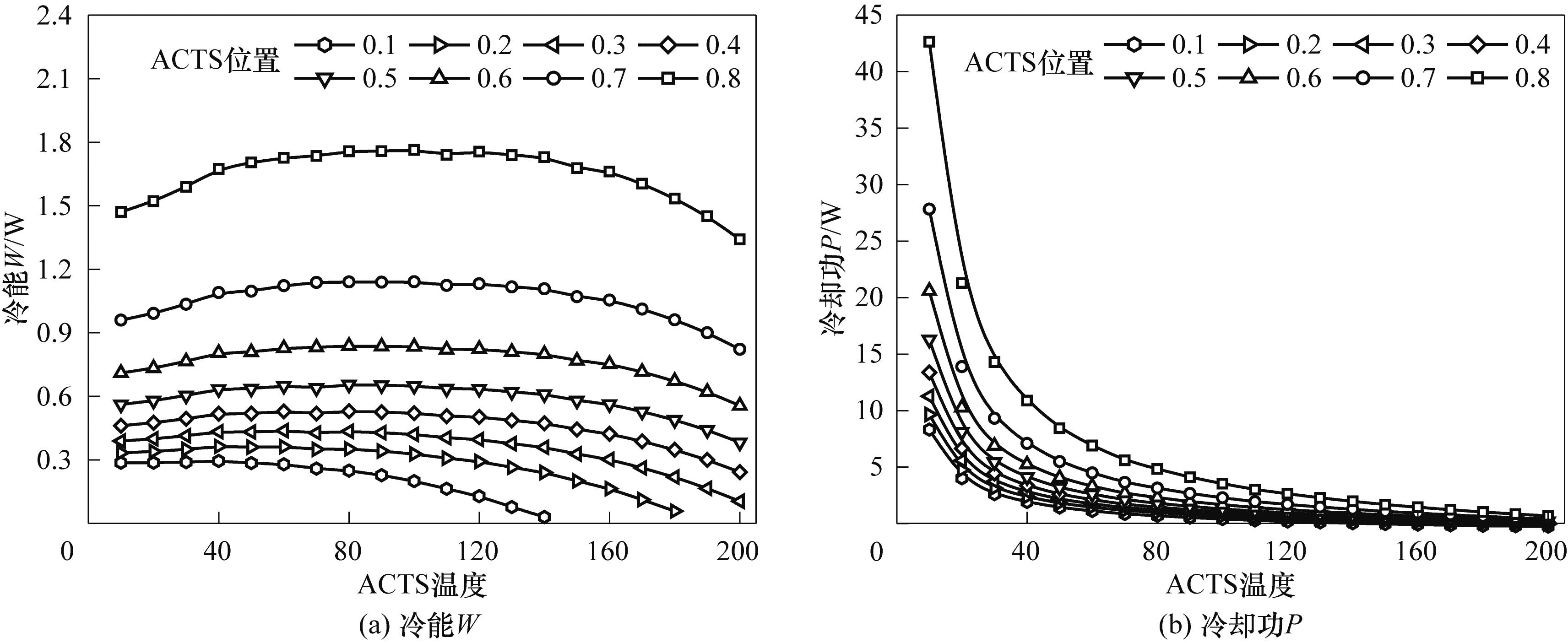
图15 单ACTS温度及位置对冷能和冷却功的影响
Fig.15 Effect of single ACTS temperature and position on cold energy and cooling power
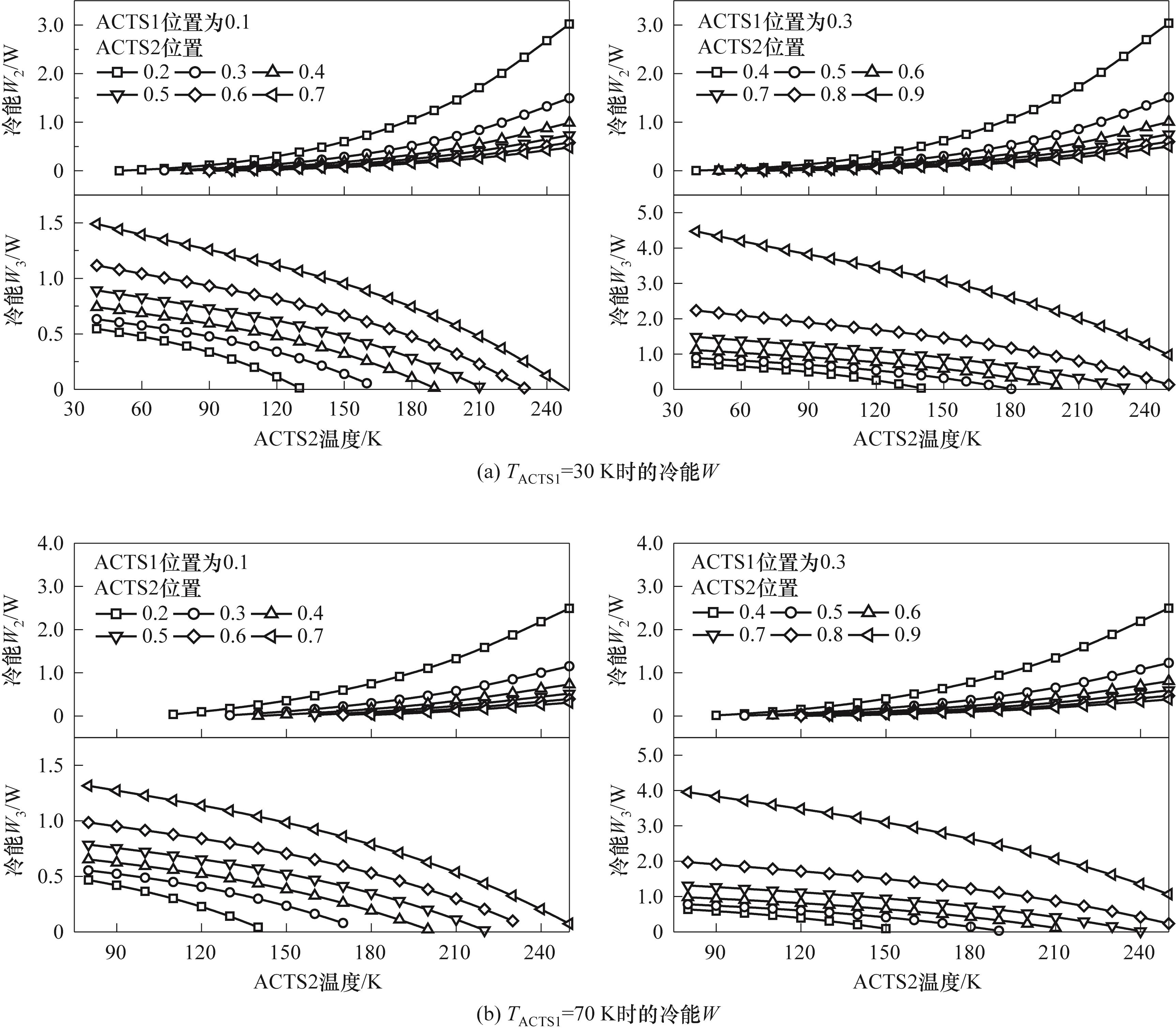
图16 双ACTS温度及位置对冷能的影响
Fig.16 Effect of dual ACTS temperature and position on cold energy
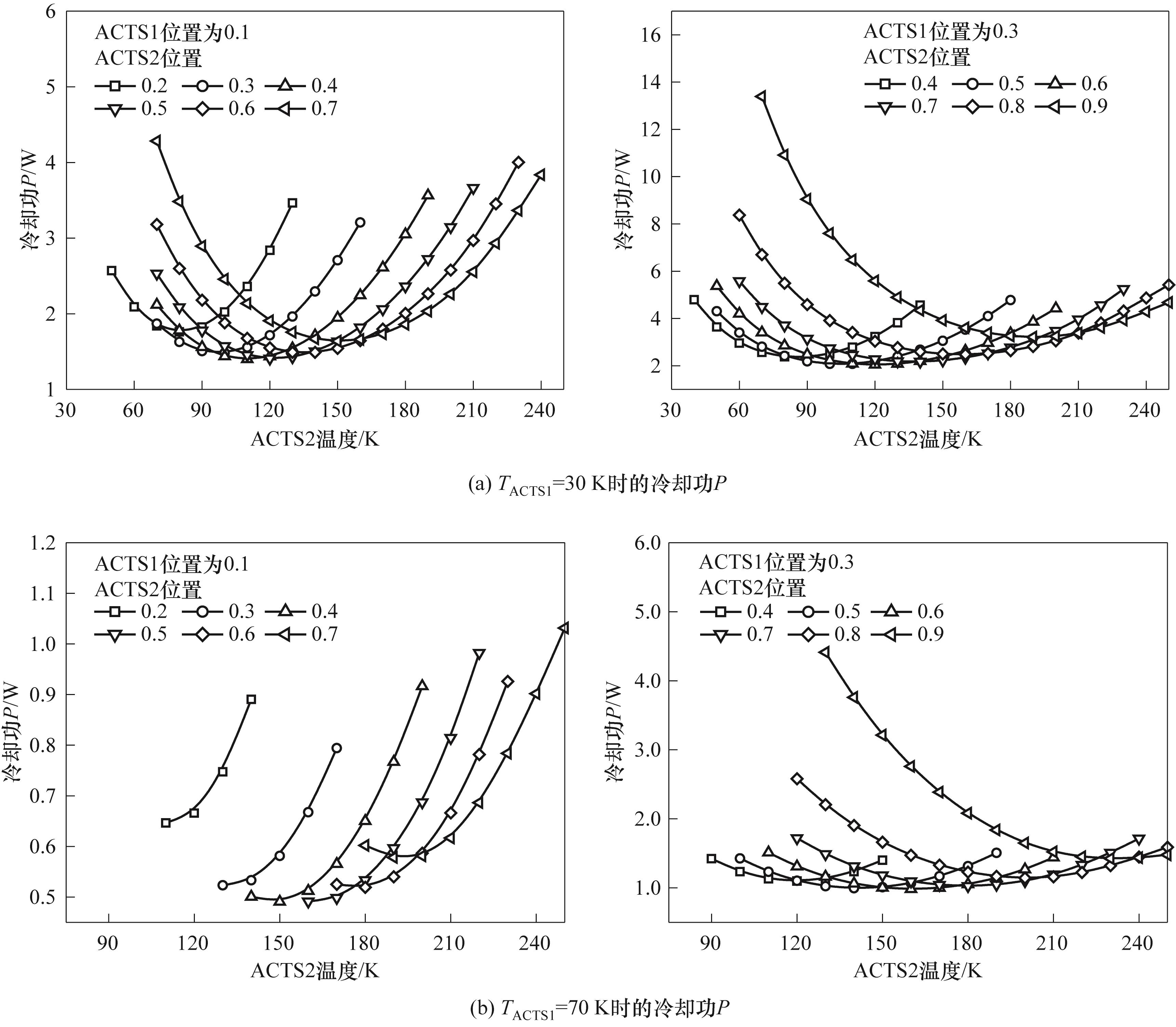
图17 双ACTS温度及位置对冷却功的影响
Fig.17 Effect of dual ACTS temperature and position on cooling power
| ACTS数量 | TACTS1/K | TACTS2/K | TACTS3/K | q1/(W/m2) | q2/(W/m2) | q3/(W/m2) | q4/(W/m2) | ACTS1 | ACTS2 | ACTS3 | P/W | F |
|---|---|---|---|---|---|---|---|---|---|---|---|---|
| 1 | 73.6 | — | — | 0.0365 | 1.132 | — | — | 0.4250 | — | — | 1.72 | 0.780 |
| 2 | 36.4 | 128.7 | — | 0.0261 | 0.366 | 1.573 | — | 0.2375 | 0.5875 | — | 1.74 | 0.626 |
| 3 | 21.2 | 88.6 | 187.3 | 0.0202 | 0.128 | 0.569 | 1.861 | 0.1125 | 0.4000 | 0.725 | 1.61 | 0.548 |
表2 不同ACTS数量时的最佳位置和温度
Table 2 Optimal position and temperature of ACTS in different quantities
| ACTS数量 | TACTS1/K | TACTS2/K | TACTS3/K | q1/(W/m2) | q2/(W/m2) | q3/(W/m2) | q4/(W/m2) | ACTS1 | ACTS2 | ACTS3 | P/W | F |
|---|---|---|---|---|---|---|---|---|---|---|---|---|
| 1 | 73.6 | — | — | 0.0365 | 1.132 | — | — | 0.4250 | — | — | 1.72 | 0.780 |
| 2 | 36.4 | 128.7 | — | 0.0261 | 0.366 | 1.573 | — | 0.2375 | 0.5875 | — | 1.74 | 0.626 |
| 3 | 21.2 | 88.6 | 187.3 | 0.0202 | 0.128 | 0.569 | 1.861 | 0.1125 | 0.4000 | 0.725 | 1.61 | 0.548 |
| [1] | Berstad D, Gardarsdottir S, Roussanaly S, et al. Liquid hydrogen as prospective energy carrier: a brief review and discussion of underlying assumptions applied in value chain analysis[J]. Renewable and Sustainable Energy Reviews, 2022, 154: 111772. |
| [2] | Yatsenko E A, Goltsman B M, Novikov Y V, et al. Review on modern ways of insulation of reservoirs for liquid hydrogen storage[J]. International Journal of Hydrogen Energy, 2022, 47(97): 41046-41054. |
| [3] | 陈晓露, 刘小敏, 王娟, 等. 液氢储运技术及标准化[J]. 化工进展, 2021, 40(9): 4806-4814. |
| Chen X L, Liu X M, Wang J, et al. Technology and standardization of liquid hydrogen storage and transportation[J]. Chemical Industry and Engineering Progress, 2021, 40(9): 4806-4814. | |
| [4] | Yin L, Yang H N, Ju Y L. Review on the key technologies and future development of insulation structure for liquid hydrogen storage tanks[J]. International Journal of Hydrogen Energy, 2024, 57: 1302-1315. |
| [5] | 蒋文兵, 黄永华, 耑锐, 等. 液氦贮存容器中热声振荡发生条件及抑制措施[J]. 真空与低温, 2018, 24(3): 193-199. |
| Jiang W B, Huang Y H, Zhuan R, et al. Trigger conditions and suppression measures of thermoacoustic oscillations in liquid helium vessels[J]. Vacuum and Cryogenics, 2018, 24(3): 193-199. | |
| [6] | Shu Q S, Demko J, Fesmire J, et al. Design, configuration, and thermal optimization of advanced cryostats[J]. IOP Conference Series: Materials Science and Engineering, 2024, 1301(1): 012041. |
| [7] | Morales-Ospino R, Celzard A, Fierro V. Strategies to recover and minimize boil-off losses during liquid hydrogen storage[J]. Renewable and Sustainable Energy Reviews, 2023, 182: 113360. |
| [8] | Wang H R, Wang B, Xu T C, et al. Thermal models for self-pressurization prediction of liquid hydrogen tanks: formulation, validation, assessment, and prospects[J]. Fuel, 2024, 365: 131247. |
| [9] | Li K, Wen J, Xin B P, et al. Transient-state modeling and thermodynamic analysis of self-pressurization liquid hydrogen tank considering effect of vacuum multi-layer insulation coupled with vapor-cooled shield[J]. Energy, 2024, 286: 129450. |
| [10] | Notardonato W U, Swanger A M, Fesmire J E, et al. Zero boil-off methods for large-scale liquid hydrogen tanks using integrated refrigeration and storage[J]. IOP Conference Series: Materials Science and Engineering, 2017, 278: 012012. |
| [11] | 汪彬, 王天祥, 黄永华, 等. 液氢贮箱热力学排气系统建模及控压特性[J]. 化工学报, 2016, 67(S2): 20-25. |
| Wang B, Wang T X, Huang Y H, et al. Modeling and pressure control characteristics of thermodynamic venting system in liquid hydrogen storage tank[J]. CIESC Journal, 2016, 67(S2): 20-25. | |
| [12] | Zheng J P, Chen L B, Wang J, et al. Thermodynamic analysis and comparison of four insulation schemes for liquid hydrogen storage tank[J]. Energy Conversion and Management, 2019, 186: 526-534. |
| [13] | Kanda M, Matsumoto K, Yamaguchi S. Heat transfer through multi-layer insulation (MLI)[J]. Physica C: Superconductivity and its Applications, 2021, 583: 1353799. |
| [14] | 蒋文兵, 胡聪, 孙培杰, 等. 蓄冷能力对液氢贮箱蒸气冷却屏瞬态特性的影响[J]. 工程热物理学报, 2023, 44(5): 1161-1168. |
| Jiang W B, Hu C, Sun P J, et al. Effect of cooling storage capacity on the transient characteristics of the vapor cooled shield for liquid hydrogen storage tank[J]. Journal of Engineering Thermophysics, 2023, 44(5): 1161-1168. | |
| [15] | Yang Y L, Jiang W B, Huang Y H. Experiment on transient thermodynamic behavior of a cryogenic storage tank protected by a composite insulation structure[J]. Energy, 2023, 270: 126929. |
| [16] | Jiang W B, Sun P J, Li P, et al. Transient thermal behavior of multi-layer insulation coupled with vapor cooled shield used for liquid hydrogen storage tank[J]. Energy, 2021, 231: 120859. |
| [17] | Zhang C G, Li C J, Jia W L, et al. Thermodynamic study on thermal insulation schemes for liquid helium storage tank[J]. Applied Thermal Engineering, 2021, 195: 117185. |
| [18] | Jiang W B, Zuo Z Q, Sun P J, et al. Thermal analysis of coupled vapor-cooling-shield insulation for liquid hydrogen-oxygen pair storage[J]. International Journal of Hydrogen Energy, 2022, 47(12): 8000-8014. |
| [19] | 李科, 文键, 忻碧平. 耦合蒸气冷却屏的真空多层绝热结构对液氢储罐自增压过程的影响机制研究[J]. 化工学报, 2023, 74(9): 3786-3796. |
| Li K, Wen J, Xin B P. Study on influence mechanism of vacuum multi-layer insulation coupled with vapor-cooled shield on self-pressurization process of liquid hydrogen storage tank[J]. CIESC Journal, 2023, 74(9): 3786-3796. | |
| [20] | Liang J J, Li C, Ma Y, et al. Study on transient thermal performance of coupled vapor-cooled shield insulation for liquid hydrogen tank during the on-orbit period[J]. Applied Thermal Engineering, 2025, 266: 125665. |
| [21] | Wang B, Huang Y H, Li P, et al. Optimization of variable density multilayer insulation for cryogenic application and experimental validation[J]. Cryogenics, 2016, 80: 154-163. |
| [22] | Xu Z L, Tan H B, Wu H. Performance comparison of multilayer insulation coupled with vapor cooled shield and different para-ortho hydrogen conversion types[J]. Applied Thermal Engineering, 2023, 234: 121250. |
| [23] | Lv H Y, Zhang Z X, Chen L, et al. Thermodynamic analysis of vapor-cooled shield with para-to-ortho hydrogen conversion in composite multilayer insulation structure for liquid hydrogen tank[J]. International Journal of Hydrogen Energy, 2024, 50: 1448-1462. |
| [24] | Jiang W B, Zuo Z Q, Huang Y H, et al. Coupling optimization of composite insulation and vapor-cooled shield for on-orbit cryogenic storage tank[J]. Cryogenics, 2018, 96: 90-98. |
| [25] | Jiang W B, Yang Y L, Hu C, et al. Experimental study on composite insulation with foam, multilayer and vapor cooled shield for cryogen storage under different vacuum conditions[J]. Cryogenics, 2023, 129: 103604. |
| [26] | Leng Y K, Zhang S Q, Wang X Y, et al. Comparative study on thermodynamic performance of liquid hydrogen storage insulation system incorporating vapor-cooled shield with para-ortho hydrogen conversion by one-dimensional and quasi-two-dimensional model[J]. Energy Conversion and Management, 2024, 321:119068. |
| [27] | Zheng J P, Chen L B, Cui C, et al. Experimental study on composite insulation system of spray on foam insulation and variable density multilayer insulation[J]. Applied Thermal Engineering, 2018, 130: 161-168. |
| [28] | Barone G, Roccella S, Martelli E, et al. DTT thermal shield: preliminary thermal analysis[J]. Fusion Engineering and Design, 2020, 158: 111725. |
| [29] | Kamiya K, Natsume K, Fukui K, et al. Summary of thermal analyses to determine the refrigeration power for the JT-60SA helium refrigerator[J]. Cryogenics, 2019, 99: 51-60. |
| [30] | Lebrun P. Superfluid helium cryogenics for the large hadron collider project at CERN[J]. Cryogenics, 1994, 34: 1-8. |
| [31] | Plachta D W. Hybrid thermal control testing of a cryogenic propellant tank[R]. Canada: Advances in Cryogenic Engineering, 1999. |
| [32] | Nilles M J, Lehmann G A. Thermal contact conductance and thermal shield design for superconducting magnet systems[M]//Advances in Cryogenic Engineering. Boston, MA: Springer US, 1994: 397-402. |
| [33] | Scott R B. Thermal design of large storage vessels for liquid hydrogen and helium[J]. Journal of Research of the National Bureau of Standards, 1957, 58(6): 317. |
| [34] | Zhang M, Zhong H Y, Ren Y, et al. Thermal analysis of the EAST Tokamak[J]. Fusion Engineering and Design, 2021, 168: 112352. |
| [35] | Claudet S, Brodzinski K, Darras V, et al. Helium inventory management and losses for LHC cryogenics: strategy and results for run 1[J]. Physics Procedia, 2015, 67: 66-71. |
| [36] | 李均方, 张瑞春, 陈吉刚. 液氦储罐发展现状及关键技术[J]. 低温与特气, 2021, 39(5): 8-10, 18. |
| Li J F, Zhang R C, Chen J G. Current situation and key technology of liquid helium storage tank[J]. Low Temperature and Specialty Gases, 2021, 39(5): 8-10, 18. |
| [1] | 沙鑫权, 胡然, 丁磊, 蒋珍华, 吴亦农. 空间用单机两级有阀线性压缩机研制及测试[J]. 化工学报, 2025, 76(S1): 114-122. |
| [2] | 苏伟, 赵大海, 金旭, 刘忠彦, 李静, 张小松. 吸湿液滴与混合润湿性表面协同抑霜特性研究[J]. 化工学报, 2025, 76(S1): 140-151. |
| [3] | 燕子腾, 詹飞龙, 丁国良. 空调用套管式分流器结构设计及分流效果验证[J]. 化工学报, 2025, 76(S1): 152-159. |
| [4] | 袁琳慧, 王瑜. 单服务器浸没射流式液冷系统散热性能[J]. 化工学报, 2025, 76(S1): 160-169. |
| [5] | 臧子晴, 李修真, 谈莹莹, 刘晓庆. 分凝器对两级分离自复叠制冷循环特性影响研究[J]. 化工学报, 2025, 76(S1): 17-25. |
| [6] | 赵子祥, 段钟弟, 孙浩然, 薛鸿祥. 大温差两相流动诱导水锤冲击的数值模型[J]. 化工学报, 2025, 76(S1): 170-180. |
| [7] | 黄博, 黄灏, 王文, 贺隆坤. 薄膜型LNG船液货舱温度场计算分析[J]. 化工学报, 2025, 76(S1): 195-204. |
| [8] | 汪思远, 刘国强, 熊通, 晏刚. 窗式空调器轴流风机的风速非均匀分布特性及其对冷凝器流路优化设计的影响规律[J]. 化工学报, 2025, 76(S1): 205-216. |
| [9] | 李银龙, 刘国强, 晏刚. 分馏与闪蒸分离耦合自复叠制冷循环性能分析[J]. 化工学报, 2025, 76(S1): 26-35. |
| [10] | 石一帆, 柯钢, 陈浩, 黄孝胜, 叶芳, 李成娇, 郭航. 大型高低温环境实验室温度控制仿真[J]. 化工学报, 2025, 76(S1): 268-280. |
| [11] | 孔繁臣, 张硕, 唐明生, 邹慧明, 胡舟航, 田长青. 二氧化碳直线压缩机气体轴承模拟[J]. 化工学报, 2025, 76(S1): 281-288. |
| [12] | 孔俊龙, 毕扬, 赵耀, 代彦军. 储能电池直冷热管理系统的模拟实验[J]. 化工学报, 2025, 76(S1): 289-296. |
| [13] | 朱腾飞, 刘晔. 低GWP制冷剂在新能源汽车空调应用性能分析[J]. 化工学报, 2025, 76(S1): 343-350. |
| [14] | 吴迪, 胡斌, 姜佳彤. R1233zd(E)高温热泵实验研究与应用分析[J]. 化工学报, 2025, 76(S1): 377-383. |
| [15] | 何婷, 张开, 林文胜, 陈利琼, 陈家富. 沼气超临界压力低温脱碳-液化耦合流程研究[J]. 化工学报, 2025, 76(S1): 418-425. |
| 阅读次数 | ||||||
|
全文 |
|
|||||
|
摘要 |
|
|||||
 京公网安备 11010102001995号