化工学报 ›› 2025, Vol. 76 ›› Issue (3): 1120-1132.DOI: 10.11949/0438-1157.20240813
侯亚祺( ), 张玮(), 张鸿, 高飞雨, 胡嘉华
收稿日期:2024-07-17
修回日期:2024-09-23
出版日期:2025-03-25
发布日期:2025-03-28
通讯作者:
张玮
作者简介:侯亚祺(2000—),男,硕士研究生,1016451082@qq.com
基金资助:
Yaqi HOU(), Wei ZHANG(), Hong ZHANG, Feiyu GAO, Jiahua HU
Received:2024-07-17
Revised:2024-09-23
Online:2025-03-25
Published:2025-03-28
Contact:
Wei ZHANG
摘要:
在利用格子Boltzmann方法(LBM)模拟低毛细数的弹状流流动时,由于气泡发展过程复杂,模型控制参数选择难度大,当所选参数不当时,会产生错误的非物理现象,从而降低计算精度。通过机器学习建立LBM多相流过程模型,采用粒子群算法优化机器学习模型的超参数,进一步优化LBM建模过程中的控制参数,建立了LBM-机器学习-粒子群算法耦合多相流数值模拟模型。基于该模型研究了T型微通道内弹状流流动参数对气泡演化过程稳定性的影响。模拟结果表明,所建LBM多相流模型能预测复杂条件下气泡伸长率,在此基础上通过伸长率分析找到了最优气液两相进口流速关系,有效解决了低毛细数下弹状流流动不稳定性问题,显著提高了模拟计算精度与计算效率。
中图分类号:
侯亚祺, 张玮, 张鸿, 高飞雨, 胡嘉华. 基于机器学习与粒子群算法的LBM多相流模型优化[J]. 化工学报, 2025, 76(3): 1120-1132.
Yaqi HOU, Wei ZHANG, Hong ZHANG, Feiyu GAO, Jiahua HU. Optimization of LBM multiphase flow models based on machine learning and particle swarm algorithm[J]. CIESC Journal, 2025, 76(3): 1120-1132.
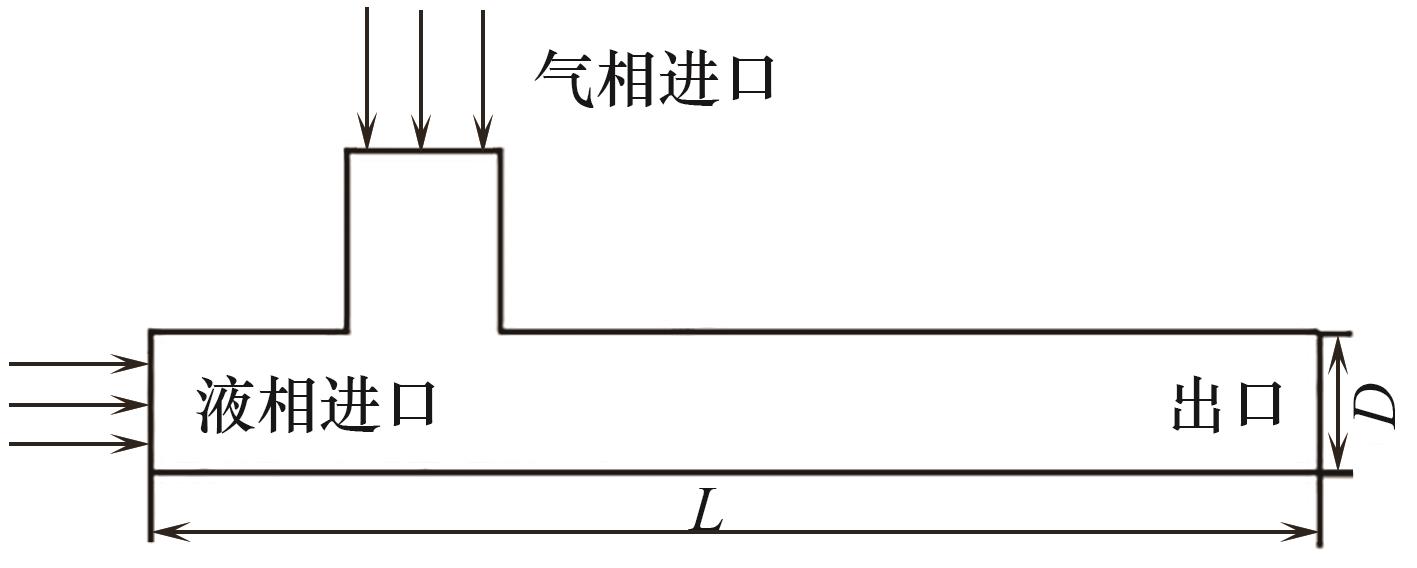
图1 微通道模型
Fig.1 Microchannel model
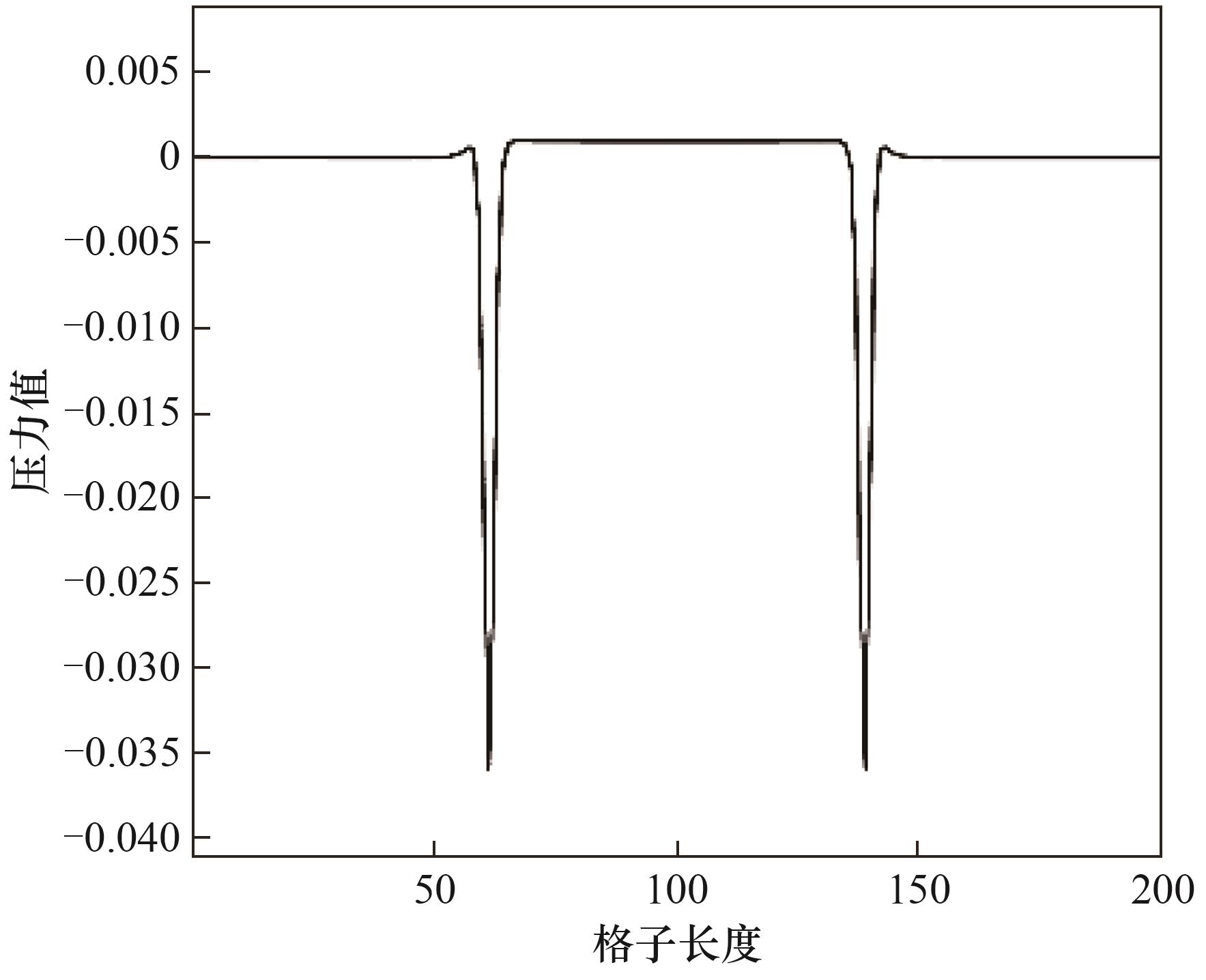
图2 沿液滴中心线压力分布
Fig.2 Pressure distribution along the droplet center line
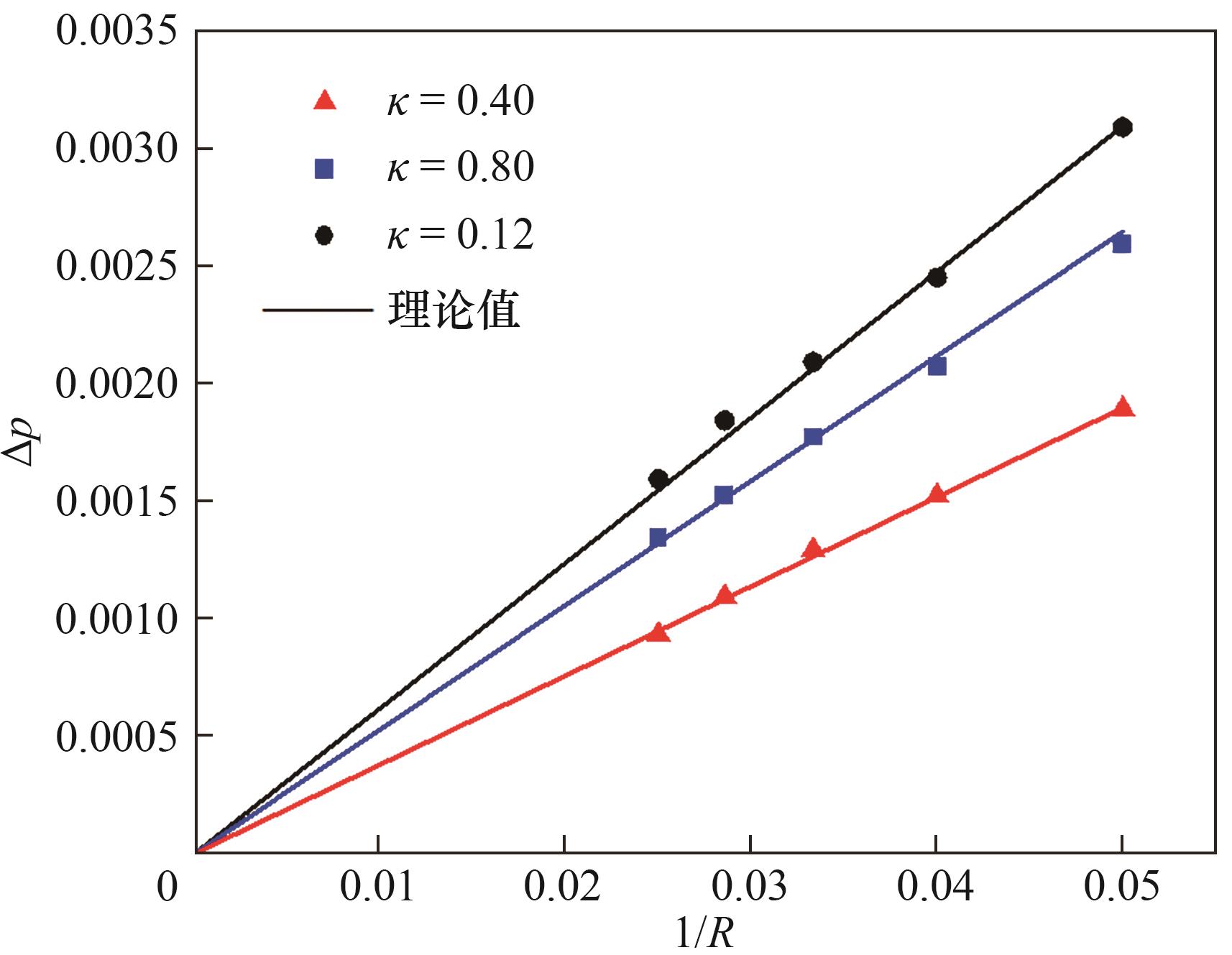
图3 拉普拉斯定律验证
Fig.3 Verification of Laplace’s law
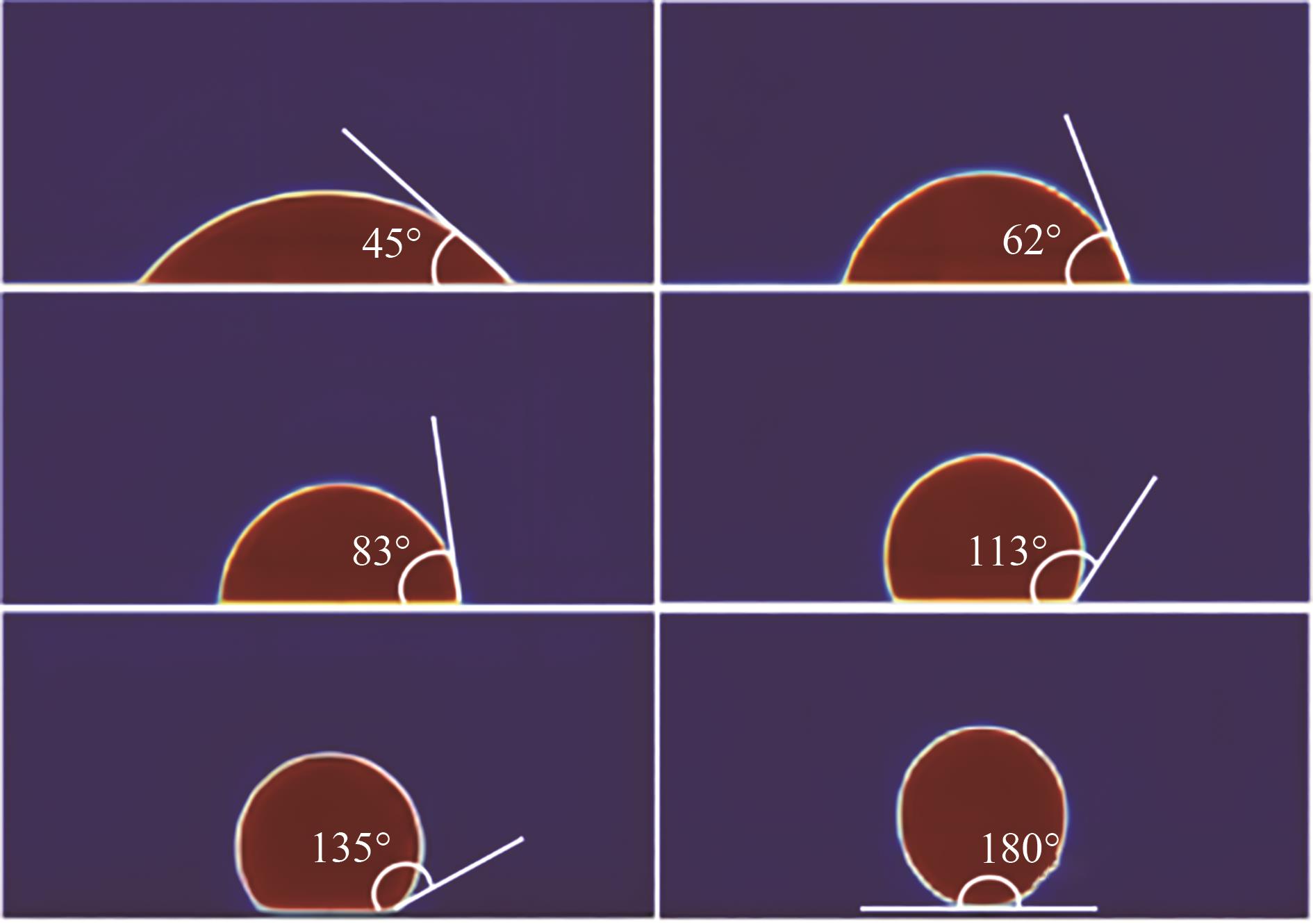
图4 接触角验证
Fig.4 Contact angle verification
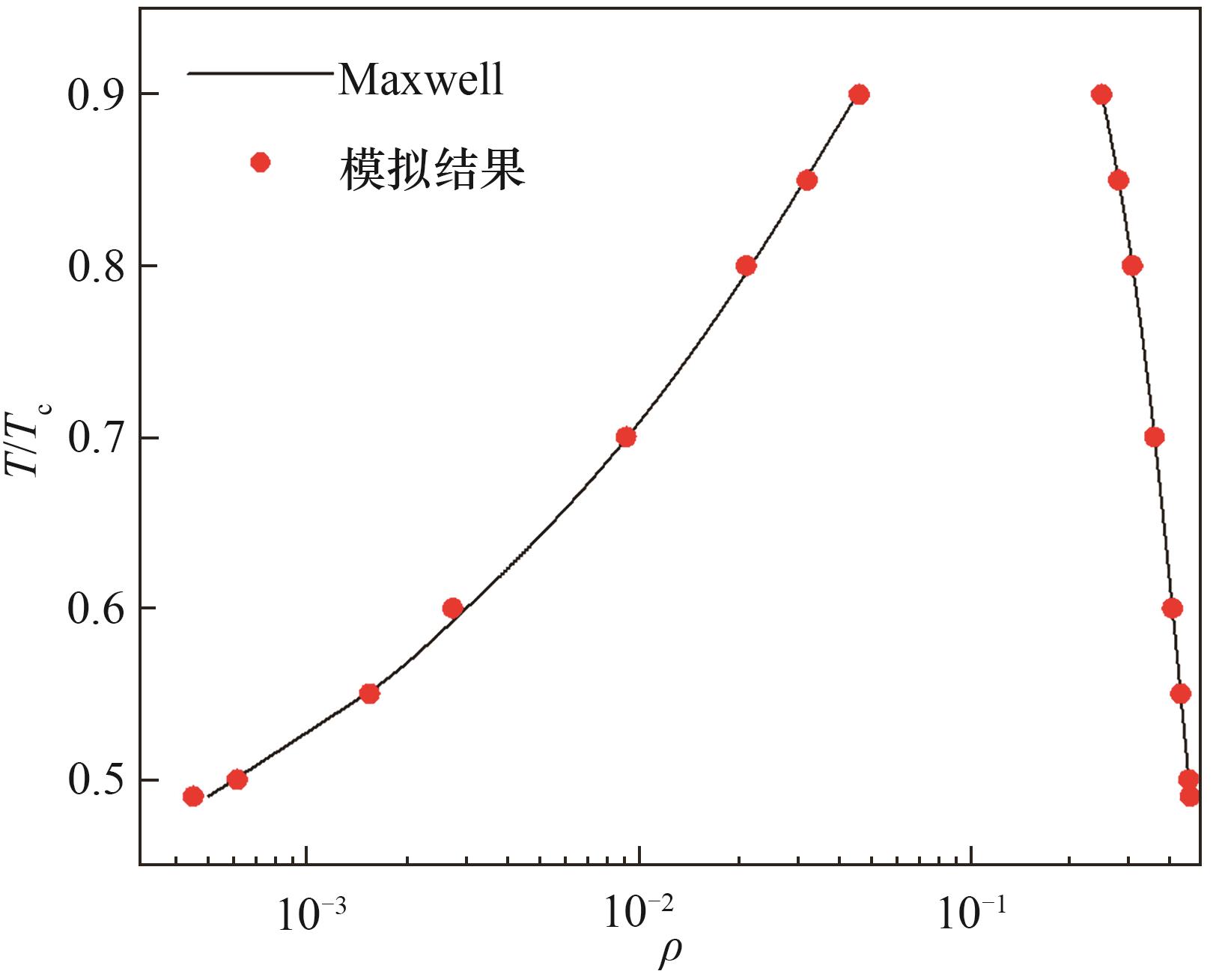
图5 热力学一致性
Fig.5 Thermodynamic consistency
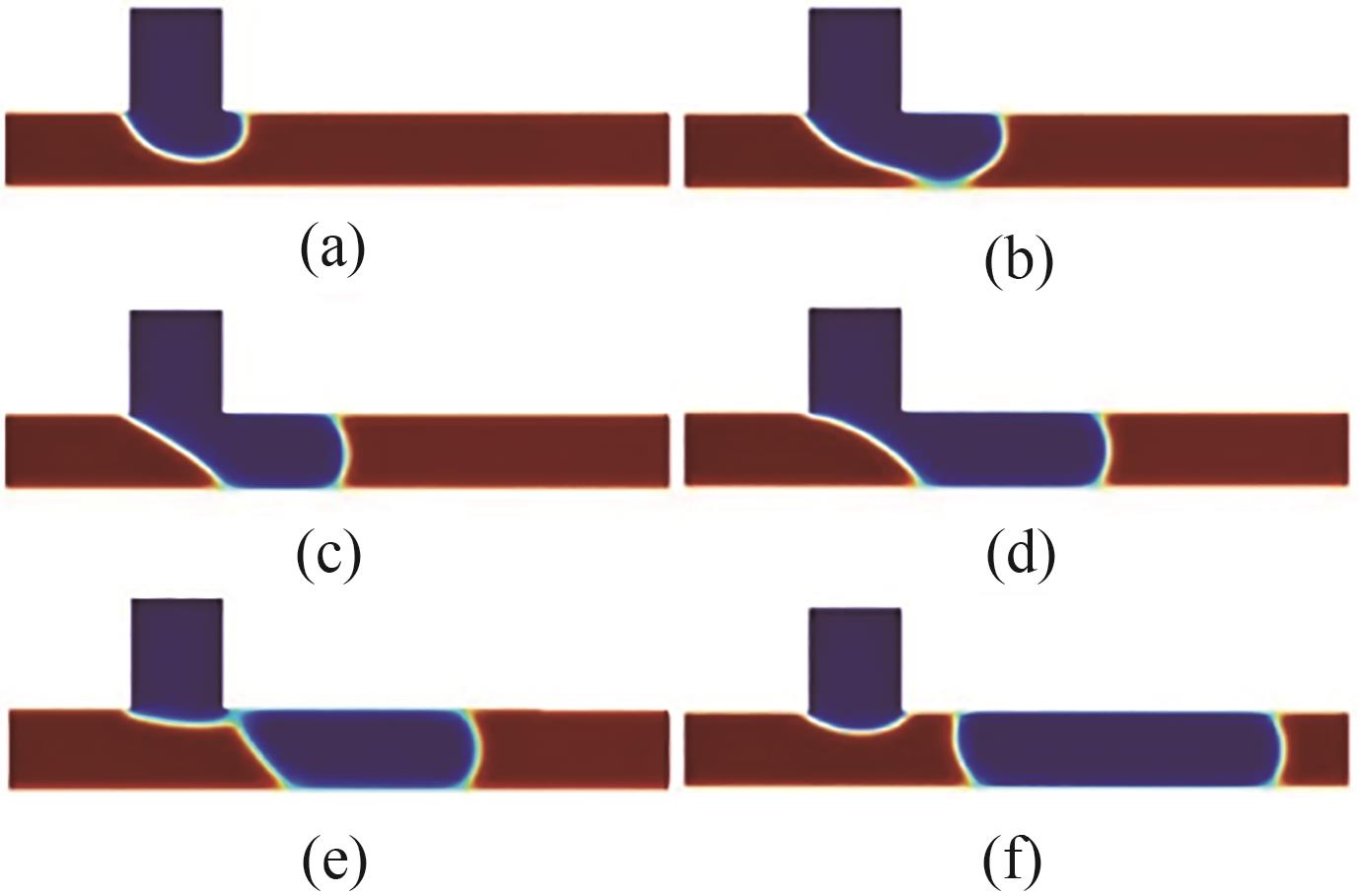
图6 气泡形成过程
Fig.6 Bubble formation process
| 特性 | BP神经网络 | SVR | GPR | 随机森林 |
|---|---|---|---|---|
| 非线性建模能力 | 强 | 强 | 强 | 强 |
| 学习与泛化能力 | 强 | 强 | 强 | 强 |
| 适用性 | 分类、回归、聚类等 | 回归、高维数据处理 | 回归、不确定性量化 | 回归、高维数据处理 |
| 训练时间 | 长 | 较长 | 较长 | 较短 |
| 局部最优 | 易陷入 | 可能 | 较少 | 较少 |
| 参数敏感性 | 高 | 高 | 中等 | 低 |
| 适用数据规模 | 大规模 | 中等规模 | 小规模 | 大规模 |
| 不确定性估计 | 不提供 | 不提供 | 提供 | 不提供 |
| 计算复杂度 | 中等 | 高 | 高 | 高 |
表1 三种机器学习特点对比
Table 1 Comparison of three machine learning features
| 特性 | BP神经网络 | SVR | GPR | 随机森林 |
|---|---|---|---|---|
| 非线性建模能力 | 强 | 强 | 强 | 强 |
| 学习与泛化能力 | 强 | 强 | 强 | 强 |
| 适用性 | 分类、回归、聚类等 | 回归、高维数据处理 | 回归、不确定性量化 | 回归、高维数据处理 |
| 训练时间 | 长 | 较长 | 较长 | 较短 |
| 局部最优 | 易陷入 | 可能 | 较少 | 较少 |
| 参数敏感性 | 高 | 高 | 中等 | 低 |
| 适用数据规模 | 大规模 | 中等规模 | 小规模 | 大规模 |
| 不确定性估计 | 不提供 | 不提供 | 提供 | 不提供 |
| 计算复杂度 | 中等 | 高 | 高 | 高 |
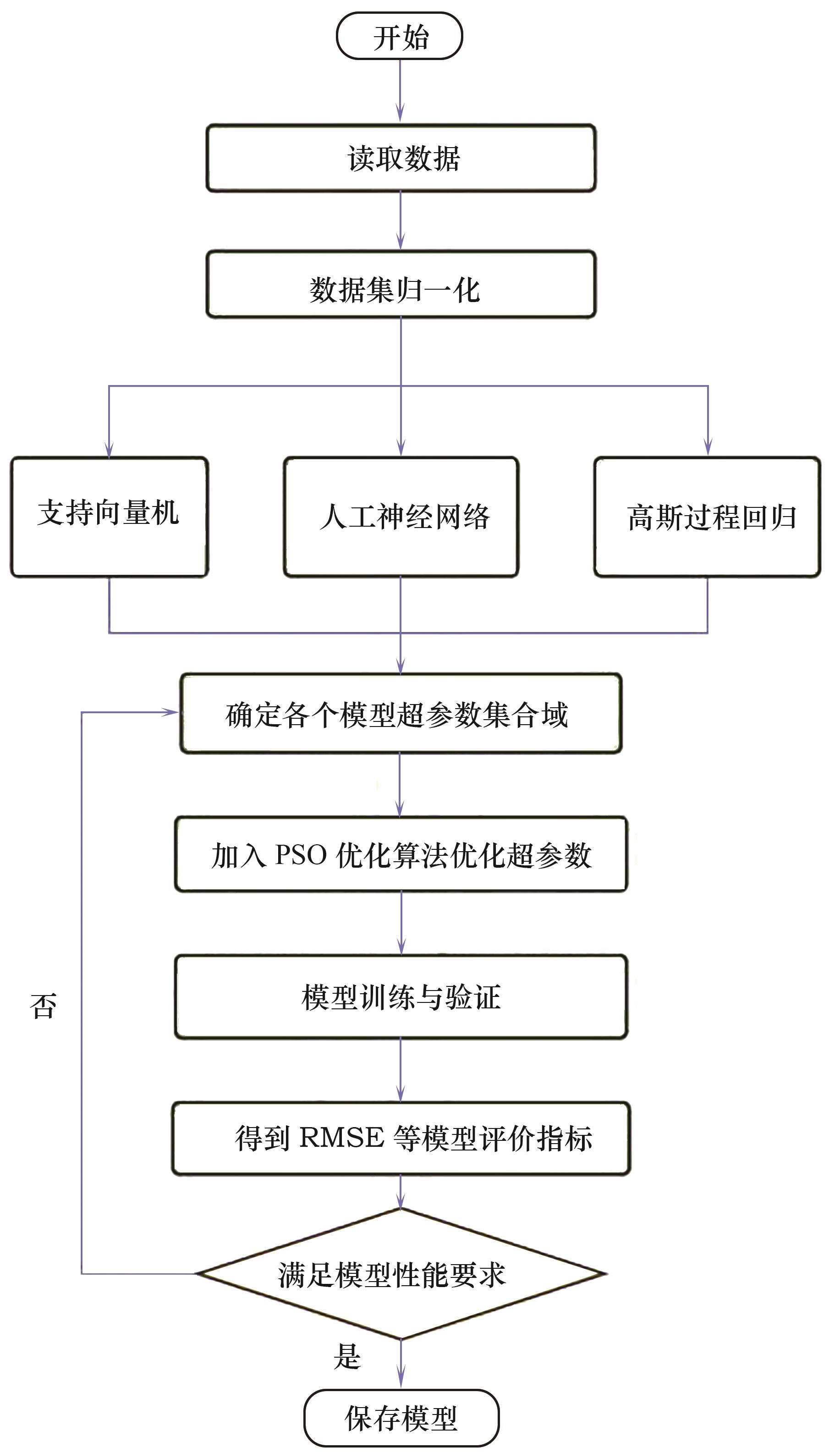
图7 机器学习建模流程
Fig.7 Machine learning modelling flowchart
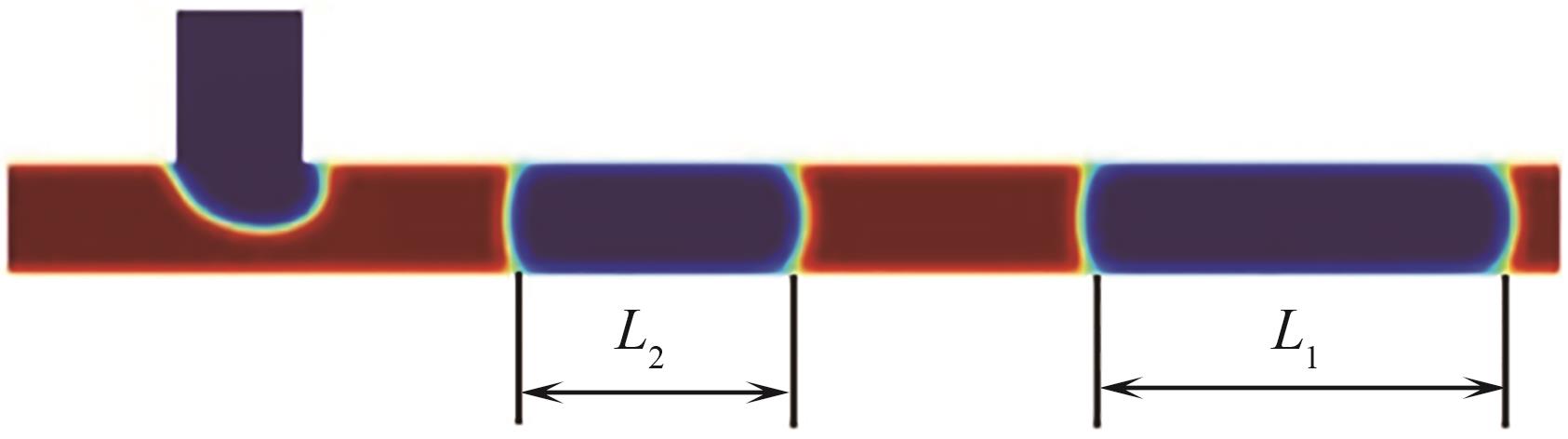
图8 气泡长度示意图
Fig.8 Schematic of bubble length
| 序号 | 连续相速度 | 分散相速度 | gama值 | 连续相黏度 | 分散相黏度 | 伸长率/% |
|---|---|---|---|---|---|---|
| 1 | 0.0015 | 0.0015 | 0.12 | 2.20 | 0.6 | 62.6 |
| 2 | 0.0020 | 0.0020 | 0.12 | 2.20 | 0.6 | 74.5 |
| 3 | 0.0025 | 0.0025 | 0.12 | 2.20 | 0.6 | 70.2 |
| 4 | 0.0030 | 0.0030 | 0.12 | 2.20 | 0.6 | 67.8 |
| 5 | 0.0035 | 0.0035 | 0.12 | 2.20 | 0.6 | 56.4 |
| 6 | 0.0040 | 0.0040 | 0.12 | 2.20 | 0.6 | 45.5 |
| 7 | 0.0045 | 0.0045 | 0.12 | 2.20 | 0.6 | 38.2 |
| ... | ||||||
| 9 | 0.0550 | 0.0550 | 0.12 | 2.20 | 0.6 | -17.9 |
| 10 | 0.0060 | 0.0060 | 0.12 | 2.20 | 0.6 | -10.3 |
| 133 | 0.0035 | 0.0035 | 0.12 | 1.25 | 0.8 | 155.7 |
| 134 | 0.0050 | 0.0050 | 0.16 | 2.20 | 0.6 | 140.3 |
| 135 | 0.0050 | 0.0050 | 0.17 | 2.20 | 0.6 | 243.1 |
| 136 | 0.0040 | 0.0040 | 0.14 | 2.20 | 0.6 | 116.0 |
| 137 | 0.0050 | 0.0050 | 0.15 | 2.20 | 0.6 | 95.5 |
表2 T型微通道气液两相流部分LBM模拟数据
Table 2 Partial simulation data of T-channel gas-liquid two-phase flow
| 序号 | 连续相速度 | 分散相速度 | gama值 | 连续相黏度 | 分散相黏度 | 伸长率/% |
|---|---|---|---|---|---|---|
| 1 | 0.0015 | 0.0015 | 0.12 | 2.20 | 0.6 | 62.6 |
| 2 | 0.0020 | 0.0020 | 0.12 | 2.20 | 0.6 | 74.5 |
| 3 | 0.0025 | 0.0025 | 0.12 | 2.20 | 0.6 | 70.2 |
| 4 | 0.0030 | 0.0030 | 0.12 | 2.20 | 0.6 | 67.8 |
| 5 | 0.0035 | 0.0035 | 0.12 | 2.20 | 0.6 | 56.4 |
| 6 | 0.0040 | 0.0040 | 0.12 | 2.20 | 0.6 | 45.5 |
| 7 | 0.0045 | 0.0045 | 0.12 | 2.20 | 0.6 | 38.2 |
| ... | ||||||
| 9 | 0.0550 | 0.0550 | 0.12 | 2.20 | 0.6 | -17.9 |
| 10 | 0.0060 | 0.0060 | 0.12 | 2.20 | 0.6 | -10.3 |
| 133 | 0.0035 | 0.0035 | 0.12 | 1.25 | 0.8 | 155.7 |
| 134 | 0.0050 | 0.0050 | 0.16 | 2.20 | 0.6 | 140.3 |
| 135 | 0.0050 | 0.0050 | 0.17 | 2.20 | 0.6 | 243.1 |
| 136 | 0.0040 | 0.0040 | 0.14 | 2.20 | 0.6 | 116.0 |
| 137 | 0.0050 | 0.0050 | 0.15 | 2.20 | 0.6 | 95.5 |
| 项目 | 连续相流速 | 分散相流速 | 连续相黏度 | gama值 | 伸长率 | |
|---|---|---|---|---|---|---|
| 连续相流速 | 相关系数 | 1.000 | 0.454 | 0.124 | 0.157 | -0.288 |
| 显著性 | — | 0 | 0.148 | 0.067 | 0.001 | |
| 分散相流速 | 相关系数 | 0.454 | 1.000 | -0.077 | 0.092 | -0.509 |
| 显著性 | 0 | — | 0.368 | 0.287 | 0 | |
| 连续相黏度 | 相关系数 | -0.124 | -0.077 | 1.000 | 0.033 | 0.189 |
| 显著性 | 0.148 | 0.368 | — | 0.703 | 0.027 | |
| gama值 | 相关系数 | 0.157 | 0.092 | 0.033 | 1.000 | 0.373 |
| 显著性 | 0.067 | 0.287 | 0.703 | — | 0 | |
| 伸长率 | 相关系数 | -0.288 | -0.509 | 0.189 | 0.373 | 1.000 |
| 显著性 | 0.001 | 0.002 | 0.027 | 0 | — | |
| 分散相黏度 | 相关系数 | 0.066 | 0.084 | -0.34 | -0.059 | -0.015 |
| 显著性 | 0.443 | 0.331 | 0 | 0.492 | 0.860 | |
表3 Spearman相关性分析
Table 3 Spearman correlation analysis
| 项目 | 连续相流速 | 分散相流速 | 连续相黏度 | gama值 | 伸长率 | |
|---|---|---|---|---|---|---|
| 连续相流速 | 相关系数 | 1.000 | 0.454 | 0.124 | 0.157 | -0.288 |
| 显著性 | — | 0 | 0.148 | 0.067 | 0.001 | |
| 分散相流速 | 相关系数 | 0.454 | 1.000 | -0.077 | 0.092 | -0.509 |
| 显著性 | 0 | — | 0.368 | 0.287 | 0 | |
| 连续相黏度 | 相关系数 | -0.124 | -0.077 | 1.000 | 0.033 | 0.189 |
| 显著性 | 0.148 | 0.368 | — | 0.703 | 0.027 | |
| gama值 | 相关系数 | 0.157 | 0.092 | 0.033 | 1.000 | 0.373 |
| 显著性 | 0.067 | 0.287 | 0.703 | — | 0 | |
| 伸长率 | 相关系数 | -0.288 | -0.509 | 0.189 | 0.373 | 1.000 |
| 显著性 | 0.001 | 0.002 | 0.027 | 0 | — | |
| 分散相黏度 | 相关系数 | 0.066 | 0.084 | -0.34 | -0.059 | -0.015 |
| 显著性 | 0.443 | 0.331 | 0 | 0.492 | 0.860 | |
| 参数 | 选取范围 | 最终取值 |
|---|---|---|
| 隐藏层节点数 | [ | 3 |
| 激活函数类型 | sigmoid、relu、tanh | sigmoid |
| 惩罚系数c | [0.001,0.01,0.1] | 0.001 |
表4 粒子群优化后BP模型超参数
Table 4 Hyperparameters of the BP model after particle swarm optimisation
| 参数 | 选取范围 | 最终取值 |
|---|---|---|
| 隐藏层节点数 | [ | 3 |
| 激活函数类型 | sigmoid、relu、tanh | sigmoid |
| 惩罚系数c | [0.001,0.01,0.1] | 0.001 |
| 隐藏层节点 | 权重 | ||||
|---|---|---|---|---|---|
| 输入层 节点1 | 输入层 节点2 | 输入层 节点3 | 输入层 节点4 | 输入层 节点5 | |
| 1 | 2.9297 | 0.4736 | 0.2100 | 1.3039 | 1.0948 |
| 2 | 0.6342 | 1.0059 | 1.0432 | 0.1369 | 0.3695 |
| 3 | 0.5965 | 0.8656 | 0.8292 | 0.1283 | 1.8448 |
表5 粒子群优化后初始权重:输入层到隐藏层
Table 5 Initial weights after particle swarm optimisation: input layer to hidden layer
| 隐藏层节点 | 权重 | ||||
|---|---|---|---|---|---|
| 输入层 节点1 | 输入层 节点2 | 输入层 节点3 | 输入层 节点4 | 输入层 节点5 | |
| 1 | 2.9297 | 0.4736 | 0.2100 | 1.3039 | 1.0948 |
| 2 | 0.6342 | 1.0059 | 1.0432 | 0.1369 | 0.3695 |
| 3 | 0.5965 | 0.8656 | 0.8292 | 0.1283 | 1.8448 |
| 隐藏层节点1 | 隐藏层节点2 | 隐藏层节点3 | 输出层节点 |
|---|---|---|---|
| 0.4067 | 1.4686 | 0.5064 | -0.4521 |
表6 粒子群优化后初始权重:隐藏层到输出层
Table 6 Initial weights after particle swarm optimisation: hidden to output layers
| 隐藏层节点1 | 隐藏层节点2 | 隐藏层节点3 | 输出层节点 |
|---|---|---|---|
| 0.4067 | 1.4686 | 0.5064 | -0.4521 |
| 参数 | PSO-SVR | 最终取值 |
|---|---|---|
| 选取范围 | ||
| 核函数类型 | 线性、多项式、径向基函数、sigmoid | 径向基函数 |
| gama | [0.0001,0.001,0.01,0.1] | 0.001 |
| 惩罚系数c | [0.001,0.01,0.1] | 0.01 |
表7 粒子群优化后SVR模型超参数
Table 7 Hyperparameters of the SVR model after particle swarm optimisation
| 参数 | PSO-SVR | 最终取值 |
|---|---|---|
| 选取范围 | ||
| 核函数类型 | 线性、多项式、径向基函数、sigmoid | 径向基函数 |
| gama | [0.0001,0.001,0.01,0.1] | 0.001 |
| 惩罚系数c | [0.001,0.01,0.1] | 0.01 |
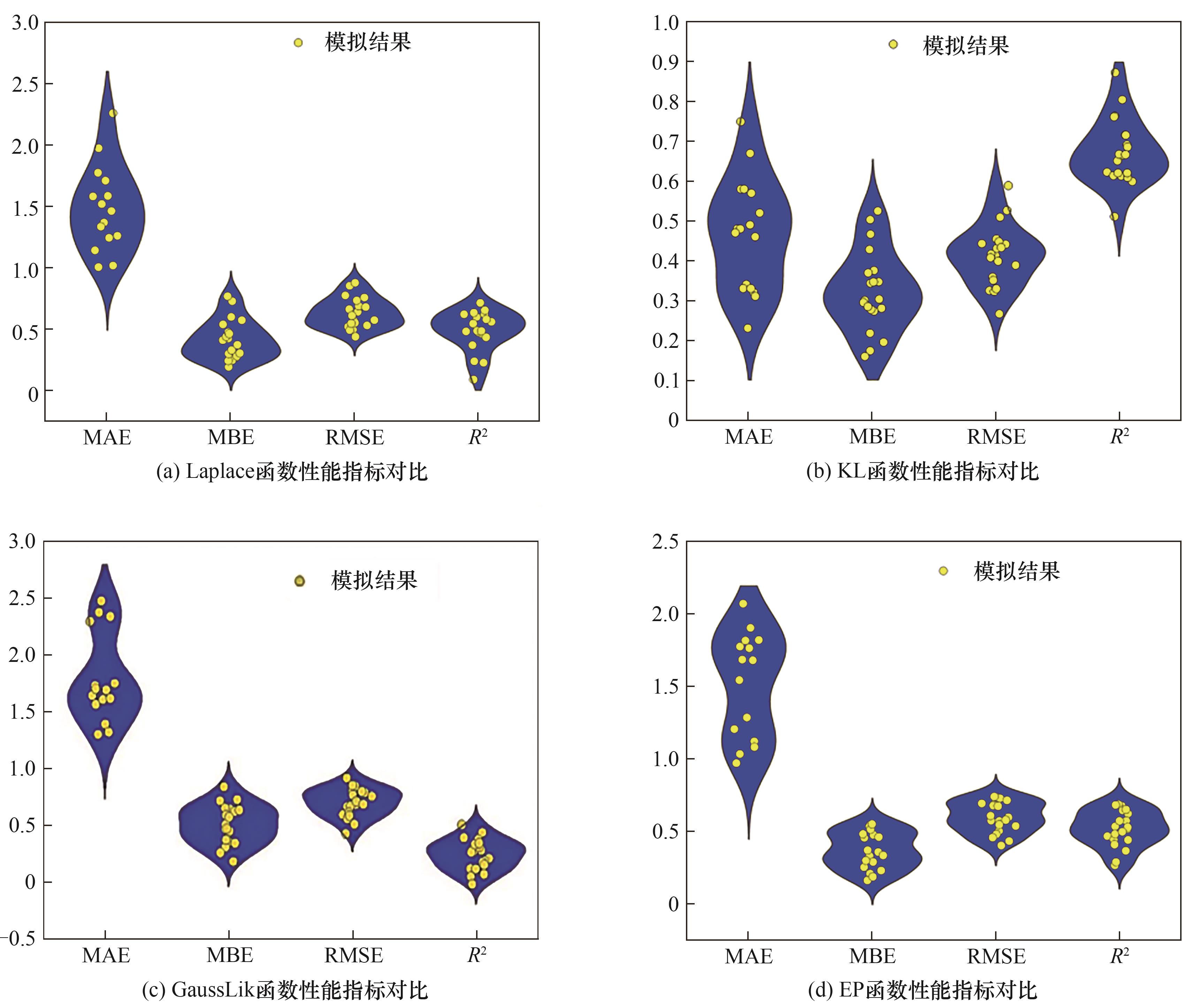
图9 推断函数性能指标对比
Fig.9 Comparison of performance metrics of inferred functions
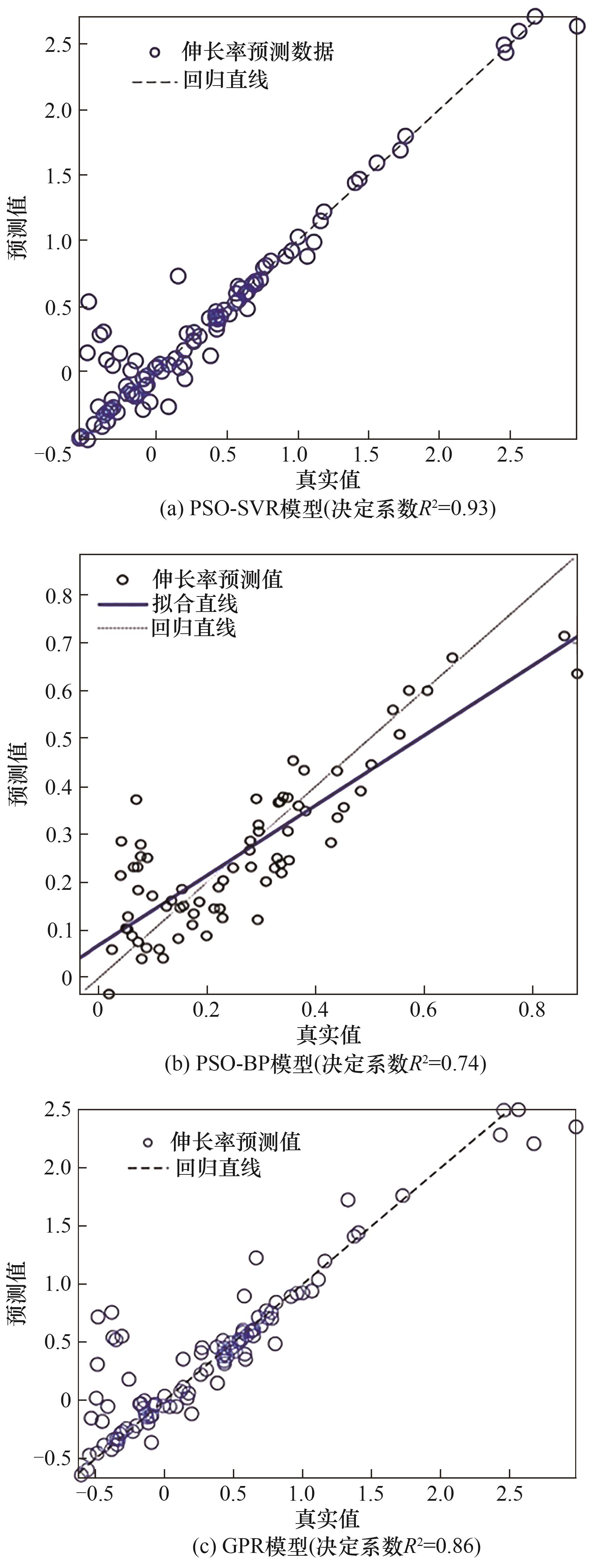
图10 三种机器模型训练集伸长率预测值与真实值对比
Fig.10 Plot of predicted versus true values of elongation for the training set of the three machine models
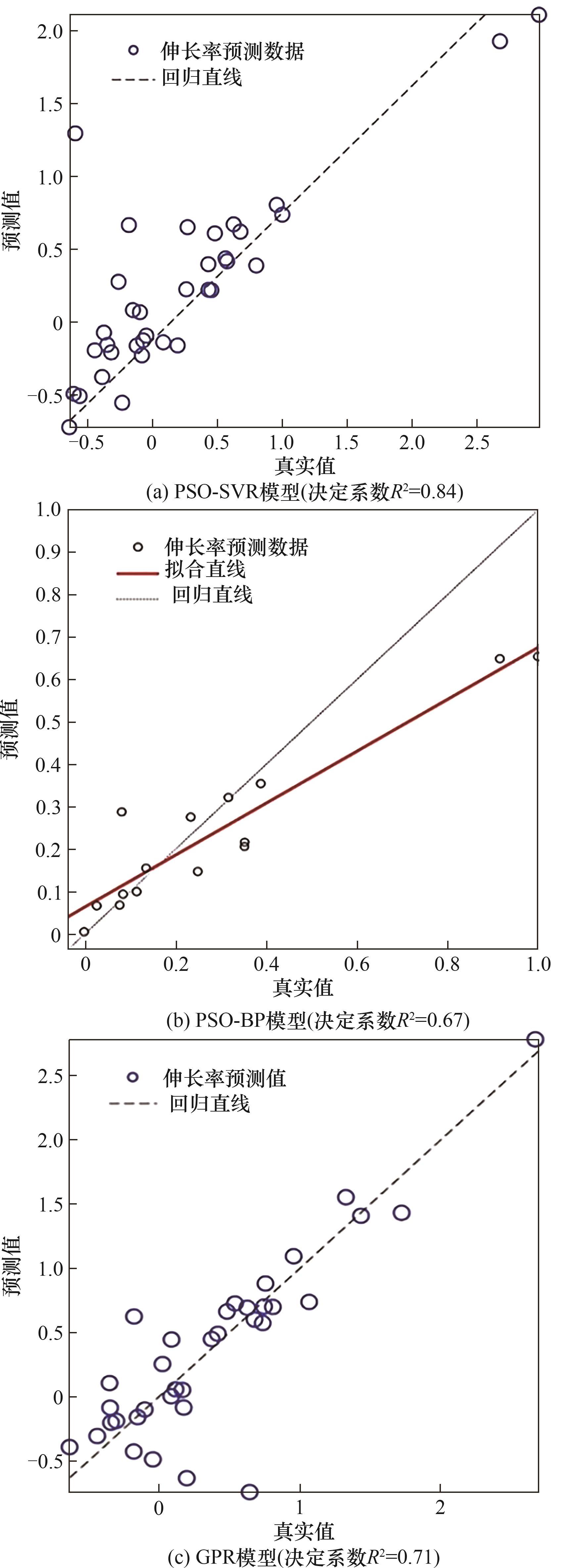
图11 三种机器模型测试集伸长率预测值与真实值对比
Fig.11 Plot of predicted versus true elongation values for the three machine model test sets
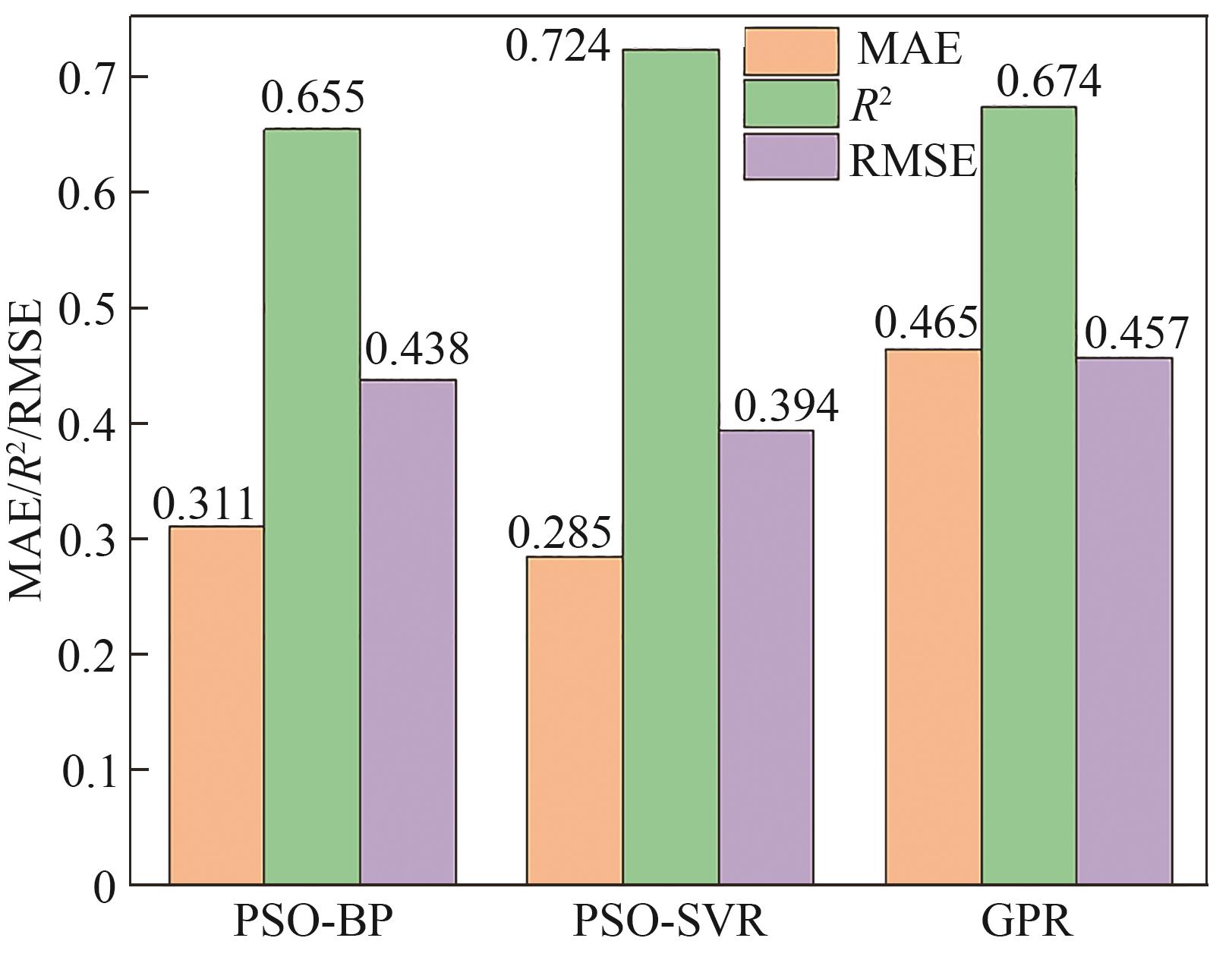
图12 三种机器学习模型性能对比
Fig.12 Performance comparison of three machine learning models
| 组别 | 连续相速度 | 分散相 速度 | gama值 | 连续相黏度 | 分散相黏度 | 伸长率θ/% |
|---|---|---|---|---|---|---|
| 第一组 | 0.0047 | 0.0047 | 0.11 | 1.80 | 0.75 | 10.95 |
| 第二组 | 0.0035 | 0.0045 | 0.11 | 1.80 | 0.75 | -2.12 |
| 第三组 | 0.0046 | 0.0046 | 0.12 | 1.55 | 0.60 | -9.43 |
| 第四组 | 0.0050 | 0.0050 | 0.13 | 1.55 | 0.60 | 15.38 |
| 第五组 | 0.0047 | 0.0047 | 0.11 | 1.80 | 0.75 | -5.20 |
表8 五组随机模型参数表
Table 8 Table of parameters of the five-group stochastic model
| 组别 | 连续相速度 | 分散相 速度 | gama值 | 连续相黏度 | 分散相黏度 | 伸长率θ/% |
|---|---|---|---|---|---|---|
| 第一组 | 0.0047 | 0.0047 | 0.11 | 1.80 | 0.75 | 10.95 |
| 第二组 | 0.0035 | 0.0045 | 0.11 | 1.80 | 0.75 | -2.12 |
| 第三组 | 0.0046 | 0.0046 | 0.12 | 1.55 | 0.60 | -9.43 |
| 第四组 | 0.0050 | 0.0050 | 0.13 | 1.55 | 0.60 | 15.38 |
| 第五组 | 0.0047 | 0.0047 | 0.11 | 1.80 | 0.75 | -5.20 |
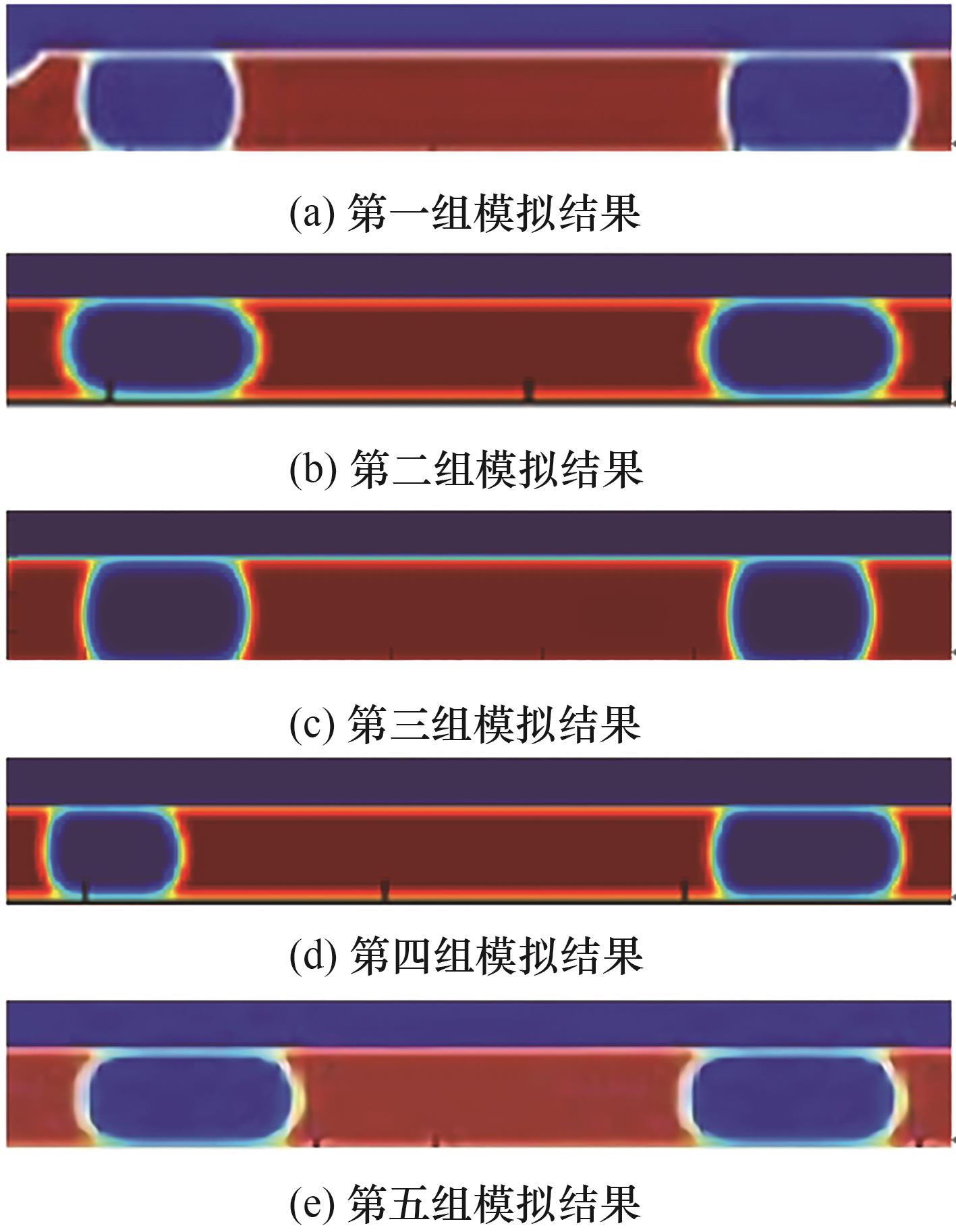
图13 随机模型参数下气泡长度变化情况
Fig.13 Variation of bubble length under stochastic model parameters
| 组别 | PSO-SVR | GPR | PSO-BP | LBM模拟伸长率/% | |||
|---|---|---|---|---|---|---|---|
| 预测伸长率θ/% | 误差值/% | 预测伸长率θ/% | 误差值/% | 预测伸长率θ/% | 误差值/% | ||
| 第一组 | 9.91 | 1.04 | 6.37 | 4.58 | -6.25 | 17.20 | 10.95 |
| 第二组 | -4.47 | 2.35 | 6.70 | 8.82 | -12.60 | 10.48 | -2.12 |
| 第三组 | -8.30 | 1.13 | -4.30 | 5.13 | -2.39 | 7.04 | -9.43 |
| 第四组 | 14.72 | 0.66 | 7.50 | 7.88 | 6.79 | 8.59 | 15.38 |
| 第五组 | -7.25 | 2.05 | -9.40 | 4.20 | -8.51 | 3.31 | -5.20 |
表9 PSO-SVR、GPR、PSO-BP模型预测伸长率与模拟真实伸长率对比
Table 9 PSO-BP, PSO-SVR, GPR model predicted elongation vs simulated true elongation
| 组别 | PSO-SVR | GPR | PSO-BP | LBM模拟伸长率/% | |||
|---|---|---|---|---|---|---|---|
| 预测伸长率θ/% | 误差值/% | 预测伸长率θ/% | 误差值/% | 预测伸长率θ/% | 误差值/% | ||
| 第一组 | 9.91 | 1.04 | 6.37 | 4.58 | -6.25 | 17.20 | 10.95 |
| 第二组 | -4.47 | 2.35 | 6.70 | 8.82 | -12.60 | 10.48 | -2.12 |
| 第三组 | -8.30 | 1.13 | -4.30 | 5.13 | -2.39 | 7.04 | -9.43 |
| 第四组 | 14.72 | 0.66 | 7.50 | 7.88 | 6.79 | 8.59 | 15.38 |
| 第五组 | -7.25 | 2.05 | -9.40 | 4.20 | -8.51 | 3.31 | -5.20 |
| 组别 | 连续相 速度 | 分散相 速度 | gama值 | 连续相黏度 | 分散相黏度 | 伸长率 预测值θ/% |
|---|---|---|---|---|---|---|
| 1 | 0.0023 | 0.0048 | 0.12 | 2.2 | 0.6 | 0.078 |
表10 PSO-SVR预测下的LBM最优模型参数
Table 10 Optimal model parameters for LBM under PSO-SVR prediction
| 组别 | 连续相 速度 | 分散相 速度 | gama值 | 连续相黏度 | 分散相黏度 | 伸长率 预测值θ/% |
|---|---|---|---|---|---|---|
| 1 | 0.0023 | 0.0048 | 0.12 | 2.2 | 0.6 | 0.078 |

图14 随机模型参数下气泡长度变化情况
Fig.14 Variation of bubble length under stochastic model parameters
| 1 | 尧超群, 乐军, 赵玉潮, 等. 微通道内气-液弹状流动及传质特性研究进展[J]. 化工学报, 2015, 66(8): 2759-2766. |
| Yao C Q, Le J, Zhao Y C, et al. Review on flow and mass transfer characteristics of gas-liquid slug flowin microchannels[J]. CIESC Journal, 2015, 66(8): 2759-2766. | |
| 2 | Zaloha P, Kristal J, Jiricny V, et al. Characteristics of liquid slugs in gas-liquid Taylor flow in microchannels[J]. Chemical Engineering Science, 2012, 68(1): 640-649. |
| 3 | Peng D Y, Xin F, Zhang L X, et al. Experiments and modeling on bubble uniformity of Taylor flow in T-junction microchannel[J]. Chemical Engineering Science, 2015, 128: 11-20. |
| 4 | Gupta R, Fletcher D F, Haynes B S. On the CFD modelling of Taylor flow in microchannels[J]. Chemical Engineering Science, 2009, 64(12): 2941-2950. |
| 5 | Jeong H H, Yadavali S, Issadore D, et al. Liter-scale production of uniform gas bubbles via parallelization of flow-focusing generators[J]. Lab on a Chip, 2017, 17(15): 2667-2673. |
| 6 | Dangla R, Kayi S C, Baroud C N. Droplet microfluidics driven by gradients of confinement[J]. Proceedings of the National Academy of Sciences of the United States of America, 2013, 110(3): 853-858. |
| 7 | Chen L, Kang Q J, Mu Y T, et al. A critical review of the pseudopotential multiphase lattice Boltzmann model: methods and applications[J]. International Journal of Heat and Mass Transfer, 2014, 76: 210-236. |
| 8 | Molaeimanesh G R, Saeidi Googarchin H, Qasemian Moqaddam A. Lattice Boltzmann simulation of proton exchange membrane fuel cells-a review on opportunities and challenges[J]. International Journal of Hydrogen Energy, 2016, 41(47): 22221-22245. |
| 9 | Qian D Y, Lawal A. Numerical study on gas and liquid slugs for Taylor flow in a T-junction microchannel[J]. Chemical Engineering Science, 2006, 61(23): 7609-7625. |
| 10 | Jang H S, Park D S. Microfabrication of microchannels for fuel cell plates[J]. Sensors, 2010, 10(1): 167-175. |
| 11 | Yuan M, Feng H B, Zhang W, et al. Gas-liquid sulfonation in T-shaped microchannel for DBSA synthesis and process optimization with response surface method[J]. Chemical Engineering and Processing-Process Intensification, 2022, 174: 108890. |
| 12 | Takebayashi Y, Sue K, Yoda S, et al. Direct carbonylation of nitrobenzene to phenylisocyanate using gas-iquid slug flow in microchannel[J]. Chemical Engineering Journal, 2012, 180: 250-254. |
| 13 | Pahinkar D G, Garimella S, Robbins T R. Feasibility of using adsorbent-coated microchannels for pressure swing adsorption: parametric studies on depressurization[J]. Industrial & Engineering Chemistry Research, 2015, 54(41): 10103-10114. |
| 14 | Shafizadeh A, Shahbeig H, Nadian M H, et al. Machine learning predicts and optimizes hydrothermal liquefaction of biomass[J]. Chemical Engineering Journal, 2022, 445: 136579. |
| 15 | Bandi P, Manelil NP, Maiya MP, et al. CFD driven prediction of mean radiant temperature inside an automobile cabin using machine learning[J]. Thermal Science and Engineering Progress, 2023, 37: 101619. |
| 16 | Qian Y H, D'Humières D, Lallemand P. Lattice BGK models for Navier-Stokes equation[J]. EPL (Europhysics Letters), 1992, 17: 479. |
| 17 | Guo Z L, Zheng C G, Shi B C. Discrete lattice effects on the forcing term in the lattice Boltzmann method[J]. Physical Review. E, Statistical, Nonlinear, and Soft Matter Physics, 2002, 65(4 Pt 2B): 046308. |
| 18 | Yuan P, Schaefer L. Equations of state in a lattice Boltzmann model[J]. Physics of Fluids, 2006, 18(4): 042101. |
| 19 | Li Q, Luo K H, Li X J. Forcing scheme in pseudopotential lattice Boltzmann model for multiphase flows[J]. Physical Review. E, Statistical, Nonlinear, and Soft Matter Physics, 2012, 86(1 Pt 2): 016709. |
| 20 | Li Q, Luo K H, Li X J. Lattice Boltzmann modeling of multiphase flows at large density ratio with an improved pseudopotential model[J]. Physical Review E, 2013, 87(5): 053301. |
| 21 | Krüger T, Kusumaatmaja H, Kuzmin A, et al. The Lattice Boltzmann Method: Principles and Practice[M]. Switzerland: Springer, 2017. |
| 22 | Ziegler D P. Boundary conditions for lattice Boltzmann simulations[J]. Journal of Statistical Physics, 1993, 71(5): 1171-1177. |
| 23 | Li Q, Luo K H, Kang Q J, et al. Contact angles in the pseudopotential lattice Boltzmann modeling of wetting[J]. Physical Review. E, Statistical, Nonlinear, and Soft Matter Physics, 2014, 90(5): 053301. |
| 24 | Garstecki P, Fuerstman M J, Stone H A, et al. Formation of droplets and bubbles in a microfluidic T-junction-scaling and mechanism of break-up[J]. Lab on a Chip, 2006, 6(3): 437-446. |
| 25 | Warnier M J F, de Croon M H J M, Rebrov E V, et al. Pressure drop of gas-liquid Taylor flow in round micro-capillaries for low to intermediate Reynolds numbers[J]. Microfluidics and Nanofluidics, 2010, 8(1): 33-45. |
| 26 | Ganapathy H, Al-Hajri E, Ohadi M M. Phase field modeling of Taylor flow in mini/microchannels (part Ⅰ): Bubble formation mechanisms and phase field parameters[J]. Chemical Engineering Science, 2013, 94: 138-149. |
| 27 | Dai L, Cai W, Xin F. Numerical study on bubble formation of a gas-liquid flow in a T-junction microchannel[J]. Chemical Engineering & Technology, 2009, 32(12): 1984-1991. |
| 28 | Awad M, Khanna R. Support Vector Regression[M]//Efficient Learning Machines. Berkeley, CA: Apress, 2015: 67-80. |
| 29 | Masampally V S, Pareek A, Runkana V. Cascade Gaussian process regression framework for biomass prediction in a fed-batch reactor[C]//2018 IEEE Symposium Series on Computational Intelligence (SSCI). Bangalore, India: IEEE, 2018: 128-135. |
| 30 | 刘毅, 王海清, 李平. 局部最小二乘支持向量机回归在线建模方法及其在间歇过程的应用[J]. 化工学报, 2007, 58(11): 2846-2851. |
| Liu Y, Wang H Q, Li P. Local least squares support vector regression with application toonline modeling for batch processes[J]. Journal of Chemical Industry and Engineering (China), 2007, 58(11): 2846-2851. | |
| 31 | Yi G, Shi J Q, Choi T. Penalized Gaussian process regression and classification for high-dimensional nonlinear data[J]. Biometrics, 2011, 67(4): 1285-1294. |
| 32 | 刘东飞, 张帆, 刘铮, 等. 机器学习势及其在分子模拟中的应用综述[J]. 化工学报, 2024, 75(4): 1241-1255. |
| Liu D F, Zhang F, Liu Z, et al. A review of machine learning potentials and their applications tomolecular simulation[J]. CIESC Journal, 2024, 75(4): 1241-1255. |
| [1] | 周印洁, 吉思蓓, 何松阳, 吉旭, 贺革. 机器学习辅助高通量筛选金属有机骨架用于富碳天然气中分离CO2[J]. 化工学报, 2025, 76(3): 1093-1101. |
| [2] | 冯海军, 章冰璇, 周健. 图神经网络模型预测和解释离子液体毒性的研究[J]. 化工学报, 2025, 76(1): 93-106. |
| [3] | 文一如, 付佳, 刘大欢. 基于机器学习的MOFs材料研究进展:能源气体吸附分离[J]. 化工学报, 2024, 75(4): 1370-1381. |
| [4] | 刘东飞, 张帆, 刘铮, 卢滇楠. 机器学习势及其在分子模拟中的应用综述[J]. 化工学报, 2024, 75(4): 1241-1255. |
| [5] | 陈宇翔, 刘传磊, 龚子君, 赵起越, 郭冠初, 姜豪, 孙辉, 沈本贤. 机器学习辅助乙硫醇高效吸收溶剂分子设计[J]. 化工学报, 2024, 75(3): 914-923. |
| [6] | 曾玉娇, 肖炘, 杨刚, 张意博, 郑光明, 李防, 汪凤玲. 基于机理与数据混合驱动的湿法磷酸生产过程代理建模与优化[J]. 化工学报, 2024, 75(3): 936-944. |
| [7] | 王茂先, 孙启典, 付哲, 华放, 纪晔, 程易. 分子水平动力学模型和机器学习方法相结合研究废弃塑料热解[J]. 化工学报, 2024, 75(11): 4320-4332. |
| [8] | 丁叶薇, 康文博, 宋昱潼, 樊钦习, 吉远辉. 吲哚美辛纳米药物筛选及自组装机制的理论研究[J]. 化工学报, 2024, 75(11): 4141-4151. |
| [9] | 刘根, 孙仲顺, 张博, 张榕江, 吴志强, 杨伯伦. 机器学习驱动的生物质热解模型建立及挥发分化学链重整制氢工艺优化[J]. 化工学报, 2024, 75(11): 4333-4347. |
| [10] | 阮见, 李双, 温正慧. 自动化与智能化在流动化学中的应用[J]. 化工学报, 2024, 75(11): 4120-4140. |
| [11] | 刘尚豪, 贾胜坤, 罗祎青, 袁希钢. 基于梯度提升决策树的三组元精馏流程结构最优化[J]. 化工学报, 2023, 74(5): 2075-2087. |
| [12] | 郑群, 魏旭钊, 董乐贤, 张纪豪, 雷励斌. 基于弹性网正则化的电化学阻抗谱弛豫时间分布重构方法的研究[J]. 化工学报, 2023, 74(12): 4979-4987. |
| [13] | 任嘉辉, 刘豫, 刘朝, 刘浪, 李莹. 基于分子指纹和拓扑指数的工质临界温度理论预测[J]. 化工学报, 2022, 73(4): 1493-1500. |
| [14] | 刘文萱, 张嘉毅, 陆奇, 张皓晨. 基于机器学习的二氧化碳电化学还原制备甲酸盐研究[J]. 化工学报, 2021, 72(12): 6262-6273. |
| [15] | 石向成, 赵志坚, 巩金龙. 遗传算法在催化体系的全局结构优化中的应用[J]. 化工学报, 2021, 72(1): 27-41. |
| 阅读次数 | ||||||
|
全文 |
|
|||||
|
摘要 |
|
|||||
 京公网安备 11010102001995号