• •
陈宇翔( ), 赵忠盖(), 刘飞
收稿日期:2025-08-15
修回日期:2025-12-15
出版日期:2026-01-07
通讯作者:
赵忠盖
作者简介:陈宇翔(2001—),男,硕士研究生,15189978117@163.com
基金资助:
Yuxiang CHEN(), Zhonggai ZHAO(), Fei LIU
Received:2025-08-15
Revised:2025-12-15
Online:2026-01-07
Contact:
Zhonggai ZHAO
摘要:
模拟移动床色谱分离是一种高效的新型分离技术,但是其分离过程中由于填料的老化、吸附剂活性的下降等会导致吸附特性发生变化。如何使得分离过程长期稳定是一个非常具有挑战性的问题。自适应模型能够适应过程条件的变化,确保模型输出如纯度,产率等始终反映当前的系统状态。为应对吸附剂老化,提出一种基于核极限学习自适应神经模糊推理系统(KELM-ANFIS)的模拟移动床自适应建模方法,模型采用滑动窗口策略进行在线数据采样,前件参数通过梯度下降法,后件参数则使用增量学习法进行参数更新,实现了离线训练与在线更新的结合,有效避免了频繁的离线重新建模,显著节约了时间和人力成本。实验结果与自适应KELM、 自适应ELANFIS 等模型对比,验证了所提方法在吸附剂老化下的分离性能预测上的显著优越性,为模拟移动床在实际工况下的操作工艺优化提供了高效的自适应工具。
中图分类号:
陈宇翔, 赵忠盖, 刘飞. 基于KELM-ANFIS的模拟移动床自适应建模[J]. 化工学报, DOI: 10.11949/0438-1157.20250918.
Yuxiang CHEN, Zhonggai ZHAO, Fei LIU. Adaptive modeling of simulated moving bed based on KELM-ANFIS[J]. CIESC Journal, DOI: 10.11949/0438-1157.20250918.
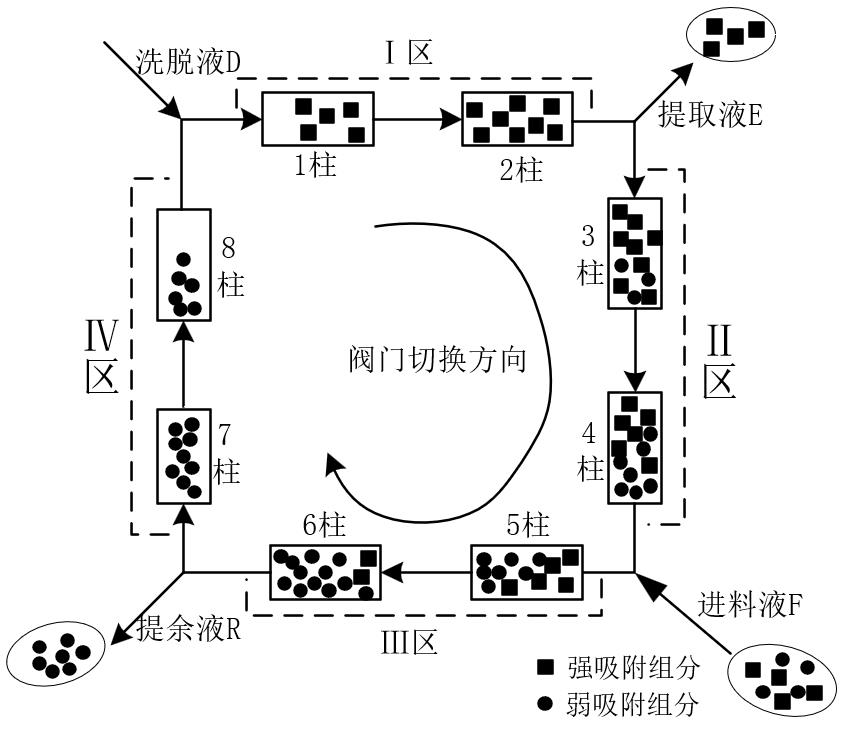
图1 模拟移动床分离过程示意图
Fig.1 Schematic diagram of the simulated moving bed separation process
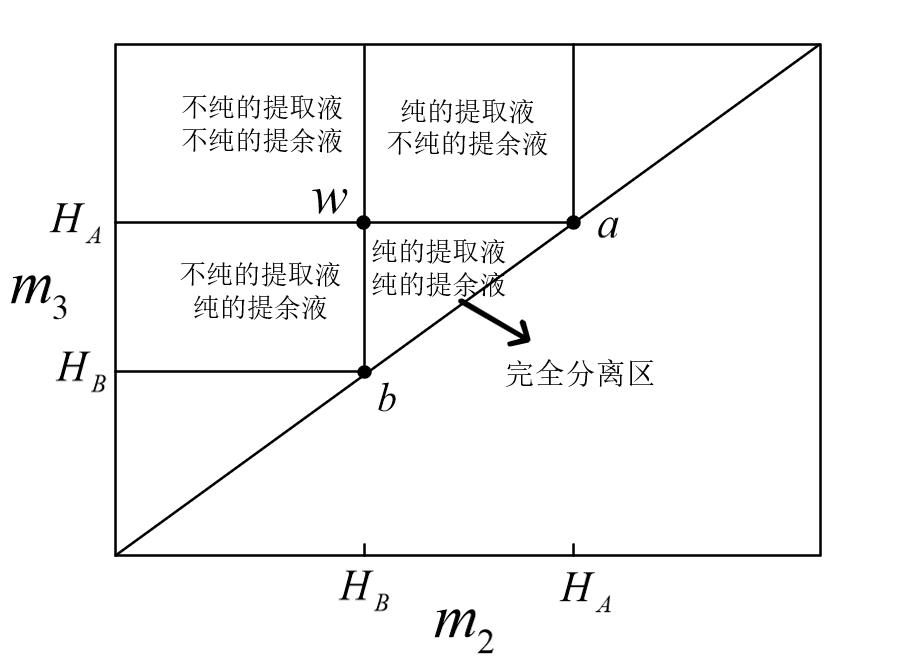
图2 基于平衡理论的纯度区域划分图
Fig.2 Purity zone division based on equilibrium theory
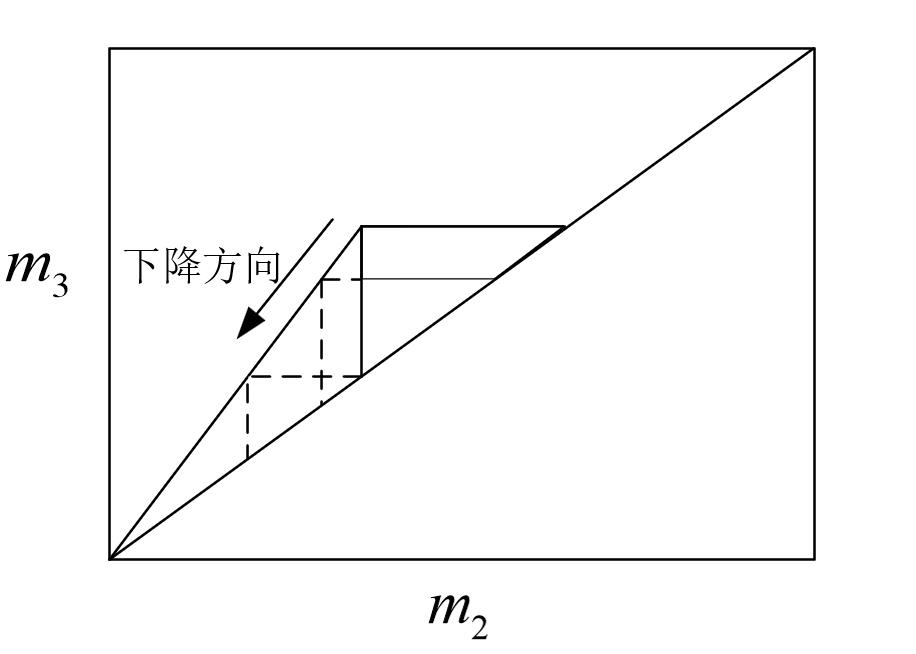
图3 吸附剂老化下的平衡理论完全分离区变化趋势图
Fig.3 Trend diagram of changes in the equilibrium theory complete separation zone under adsorbent aging
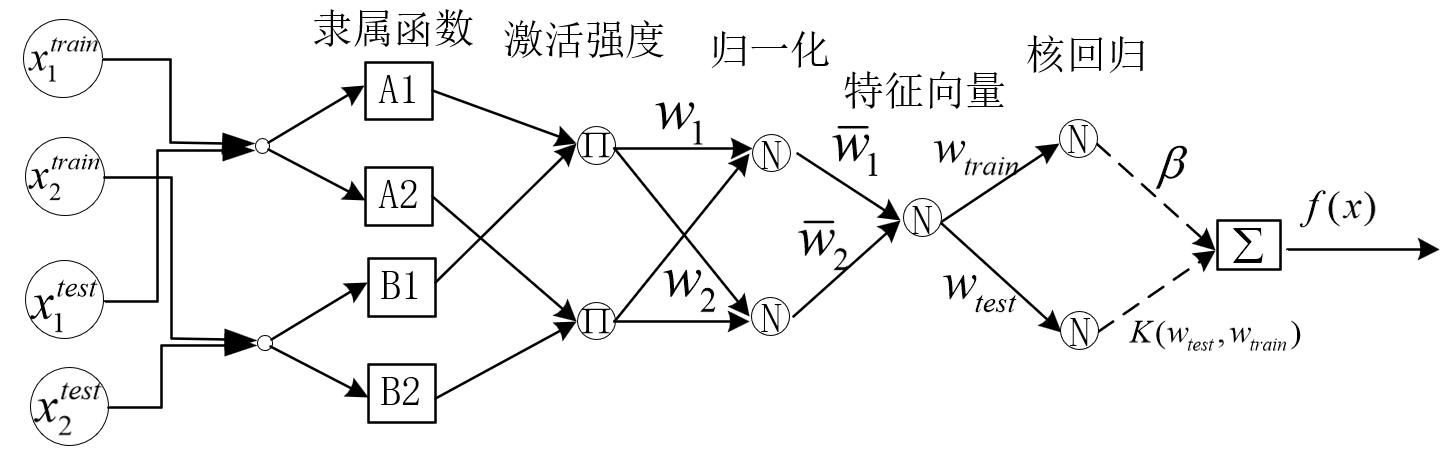
图4 KELM-ANFIS的结构图
Fig.4 Structure diagram of KELM-ANFIS
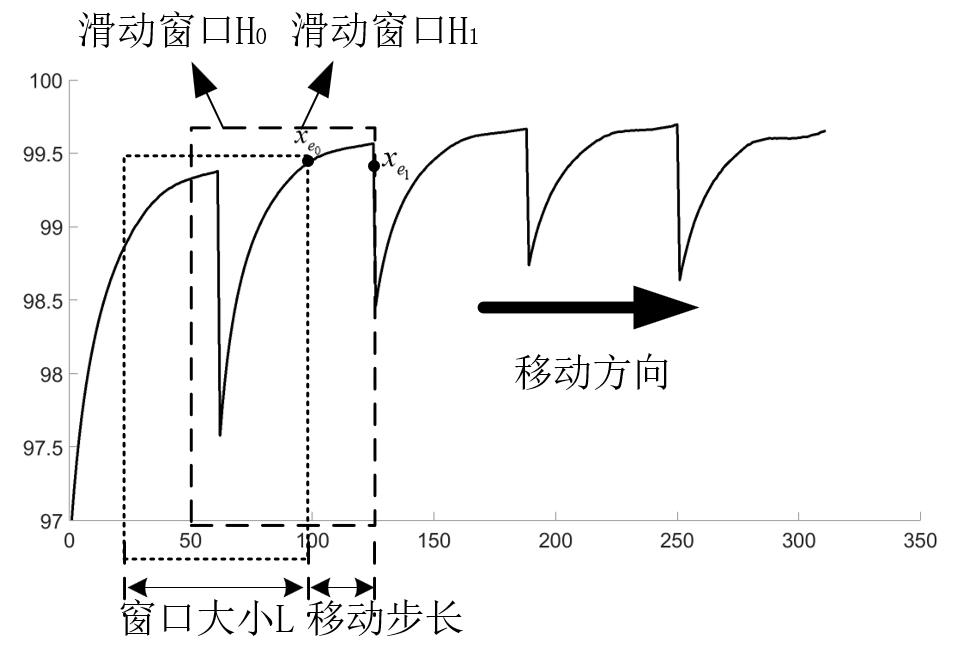
图5 滑动窗口移动过程示意图
Fig.5 Schematic diagram of the sliding window movement process
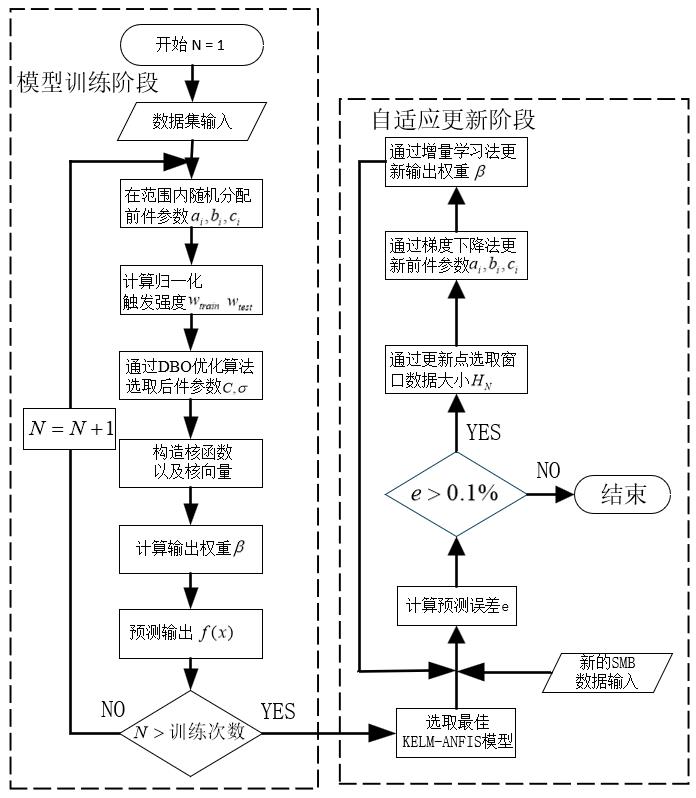
图6 自适应KELM-ANFIS模型的流程图
Fig.6 Flowchart of the adaptive KELM-ANFIS model
| 模型参数 | 工艺参数 | ||
|---|---|---|---|
| 柱分布结构 | 2-2-2-2 | 提取液进料浓度 | 0.5 g/ml |
| 分离组分数 | 2 | 提余液进料浓度 | 0.5 g/ml |
| 柱长 | 53.6 cm | 进料液流量 | 0.02 ml/s |
| 柱直径 | 2.6 cm | 洗脱液流量 | 0.0414 ml/s |
| 孔隙率 | 0.38 | 提取液流量 | 0.0348 ml/s |
| 轴向扩散系数 | 0.0381 cm2/s | 提余液流量 | 0.0266 ml/s |
| 提取液亨利系数 | 0.54 | 循环液流量 | 0.0981 ml/s |
| 提余液亨利系数 | 0.28 | 切换时间 | 1552 s |
表1 模拟移动床模型参数及工艺参数
Table 1 Simulated moving bed model parameters and process parameters
| 模型参数 | 工艺参数 | ||
|---|---|---|---|
| 柱分布结构 | 2-2-2-2 | 提取液进料浓度 | 0.5 g/ml |
| 分离组分数 | 2 | 提余液进料浓度 | 0.5 g/ml |
| 柱长 | 53.6 cm | 进料液流量 | 0.02 ml/s |
| 柱直径 | 2.6 cm | 洗脱液流量 | 0.0414 ml/s |
| 孔隙率 | 0.38 | 提取液流量 | 0.0348 ml/s |
| 轴向扩散系数 | 0.0381 cm2/s | 提余液流量 | 0.0266 ml/s |
| 提取液亨利系数 | 0.54 | 循环液流量 | 0.0981 ml/s |
| 提余液亨利系数 | 0.28 | 切换时间 | 1552 s |
| 输入参数 | 范围 | 步长 |
|---|---|---|
| 0.26-0.56 | 0.004 | |
| 0.26-0.56 | 0.004 |
表2 数据集输入的范围和步长
Table 2 Range and step size of dataset input
| 输入参数 | 范围 | 步长 |
|---|---|---|
| 0.26-0.56 | 0.004 | |
| 0.26-0.56 | 0.004 |
| 亨利系数 | 初始值 | 步长 |
|---|---|---|
| 0.54 | 5e-5 | |
| 0.28 | 2.6e-5 |
表3 亨利系数变化的初始值和步长
Table 3 Initial value and step size of Henry coefficient change
| 亨利系数 | 初始值 | 步长 |
|---|---|---|
| 0.54 | 5e-5 | |
| 0.28 | 2.6e-5 |
| 性能指标 | RMSE | SSE | MAPE | MAE | |
|---|---|---|---|---|---|
| 提取液纯度 | BP神经网络 | 0.0385 | 0.2980 | 78.99% | 0.0320 |
| ELANFIS | 0.0245 | 0.1209 | 45.83% | 0.0173 | |
| KELM | 0.0142 | 0.0407 | 26.04% | 0.0095 | |
| KELM-ANFIS | 0.0049 | 0.0047 | 5.220% | 0.0025 | |
| 提余液纯度 | BP神经网络 | 0.0202 | 0.0819 | 4.543% | 0.0119 |
| ELANFIS | 0.0123 | 0.0306 | 3.266% | 0.0097 | |
| KELM | 0.0051 | 0.0052 | 2.157% | 0.0042 | |
| KELM-ANFIS | 0.0008 | 0.0001 | 0.118% | 0.0003 | |
| 产率 | BP神经网络 | 0.0330 | 0.2183 | 36.15% | 0.0308 |
| ELANFIS | 0.0077 | 0.0119 | 9.703% | 0.0060 | |
| KELM | 0.0065 | 0.0085 | 5.476% | 0.0334 | |
| KELM-ANFIS | 0.0020 | 0.0008 | 1.543% | 0.0048 | |
表4 静态下的各模型性能指标
Table 4 Static performance metrics of various models
| 性能指标 | RMSE | SSE | MAPE | MAE | |
|---|---|---|---|---|---|
| 提取液纯度 | BP神经网络 | 0.0385 | 0.2980 | 78.99% | 0.0320 |
| ELANFIS | 0.0245 | 0.1209 | 45.83% | 0.0173 | |
| KELM | 0.0142 | 0.0407 | 26.04% | 0.0095 | |
| KELM-ANFIS | 0.0049 | 0.0047 | 5.220% | 0.0025 | |
| 提余液纯度 | BP神经网络 | 0.0202 | 0.0819 | 4.543% | 0.0119 |
| ELANFIS | 0.0123 | 0.0306 | 3.266% | 0.0097 | |
| KELM | 0.0051 | 0.0052 | 2.157% | 0.0042 | |
| KELM-ANFIS | 0.0008 | 0.0001 | 0.118% | 0.0003 | |
| 产率 | BP神经网络 | 0.0330 | 0.2183 | 36.15% | 0.0308 |
| ELANFIS | 0.0077 | 0.0119 | 9.703% | 0.0060 | |
| KELM | 0.0065 | 0.0085 | 5.476% | 0.0334 | |
| KELM-ANFIS | 0.0020 | 0.0008 | 1.543% | 0.0048 | |
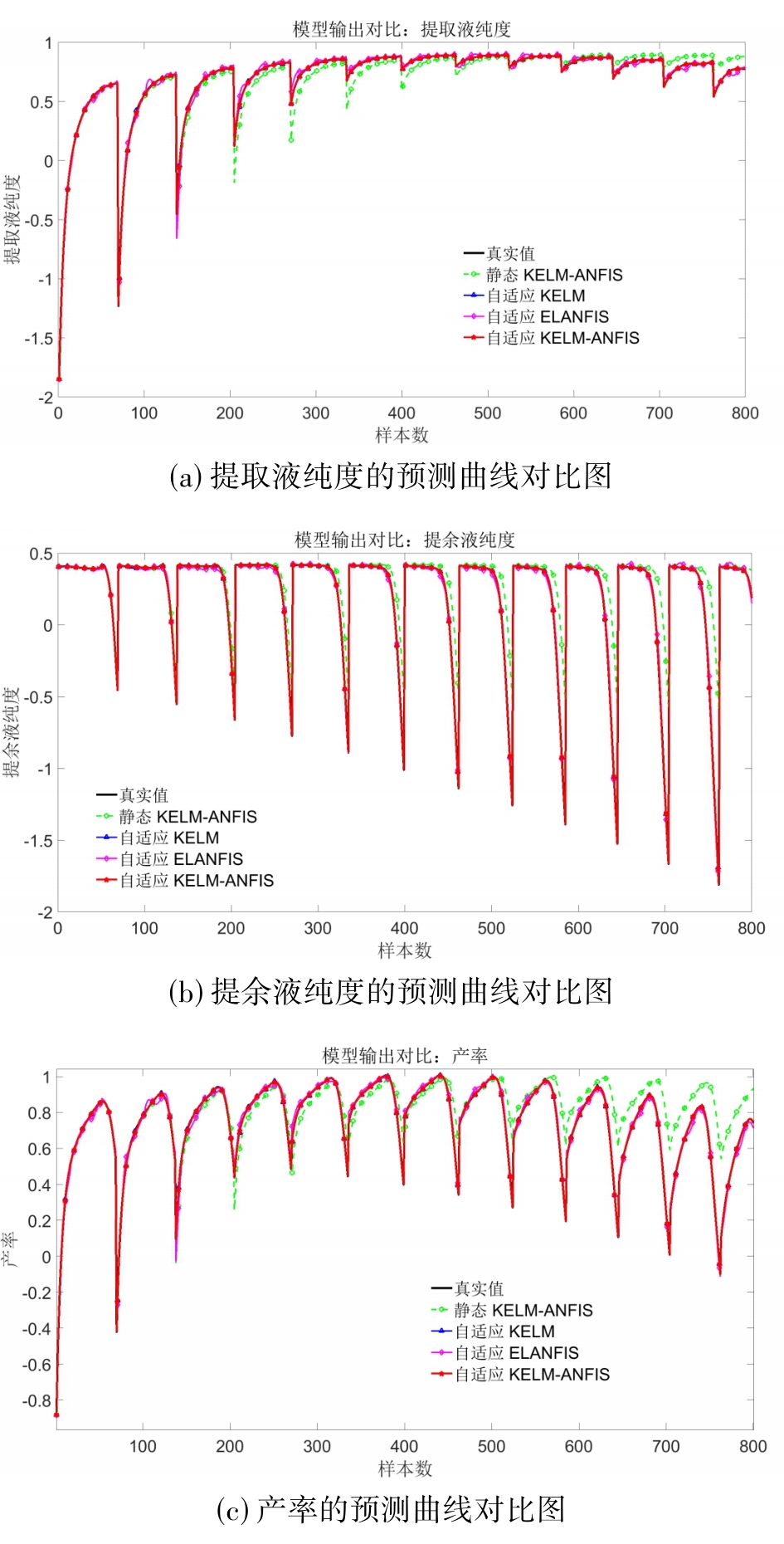
图7 亨利系数变化下的各模型输出曲线对比图
Fig.7 Comparison of output curves of various models under changes in Henry parameters
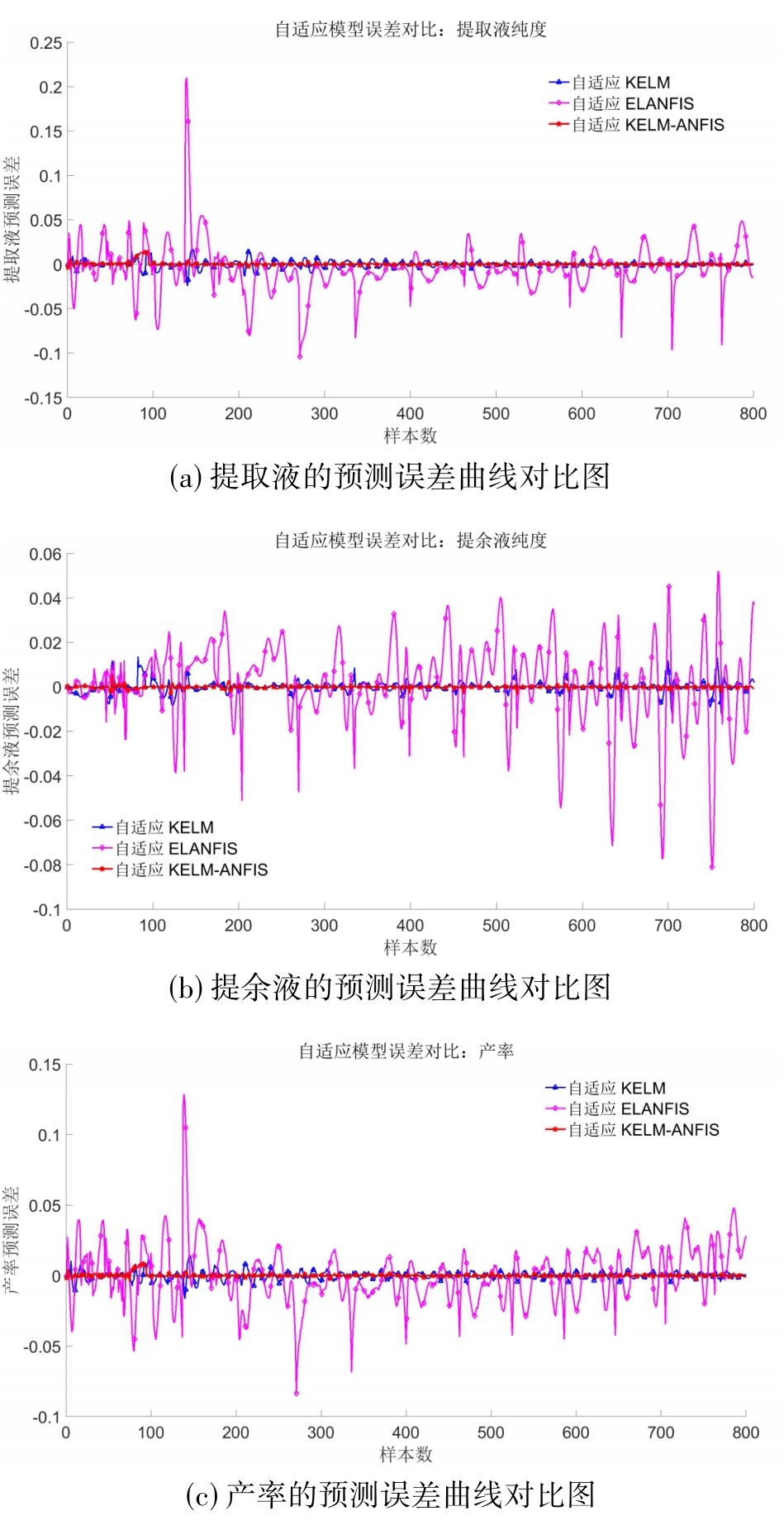
图8 亨利系数变化下的各模型预测输出误差曲线对比图
Fig.8 Comparison of the predicted output error curves of each model under the change of Henry coefficient
| 性能指标 | RMSE | SSE | MAPE | MAE | |
|---|---|---|---|---|---|
| 提取液纯度 | KELM-ANFIS | 0.0711 | 1.6232 | 12.31% | 0.0470 |
| 自适应ELANFIS | 0.0279 | 0.6225 | 6.32% | 0.0177 | |
| 自适应KELM | 0.0040 | 0.0130 | 0.70% | 0.0027 | |
| 自适应KELM-ANIFS | 0.0019 | 0.0029 | 0.29% | 0.0006 | |
| 提余液纯度 | KELM-ANFIS | 0.2526 | 1.9271 | 17.91% | 0.4212 |
| 自适应ELANFIS | 0.0186 | 0.2754 | 5.29% | 0.0133 | |
| 自适应KELM | 0.0027 | 0.0059 | 0.68% | 0.0017 | |
| 自适应KELM-ANIFS | 0.0005 | 0.0002 | 0.11% | 0.0003 | |
| 产率 | KELM-ANFIS | 0.1475 | 1.6466 | 14.94% | 0.0906 |
| 自适应ELANFIS | 0.0213 | 0.3626 | 3.53% | 0.0160 | |
| 自适应KELM | 0.0031 | 0.0077 | 0.40% | 0.0023 | |
| 自适应KELM-ANIFS | 0.0013 | 0.0013 | 0.14% | 0.0007 | |
表5 亨利系数改变下的各模型性能指标
Table 5 Performance indicators of each model under the change of Henry coefficient
| 性能指标 | RMSE | SSE | MAPE | MAE | |
|---|---|---|---|---|---|
| 提取液纯度 | KELM-ANFIS | 0.0711 | 1.6232 | 12.31% | 0.0470 |
| 自适应ELANFIS | 0.0279 | 0.6225 | 6.32% | 0.0177 | |
| 自适应KELM | 0.0040 | 0.0130 | 0.70% | 0.0027 | |
| 自适应KELM-ANIFS | 0.0019 | 0.0029 | 0.29% | 0.0006 | |
| 提余液纯度 | KELM-ANFIS | 0.2526 | 1.9271 | 17.91% | 0.4212 |
| 自适应ELANFIS | 0.0186 | 0.2754 | 5.29% | 0.0133 | |
| 自适应KELM | 0.0027 | 0.0059 | 0.68% | 0.0017 | |
| 自适应KELM-ANIFS | 0.0005 | 0.0002 | 0.11% | 0.0003 | |
| 产率 | KELM-ANFIS | 0.1475 | 1.6466 | 14.94% | 0.0906 |
| 自适应ELANFIS | 0.0213 | 0.3626 | 3.53% | 0.0160 | |
| 自适应KELM | 0.0031 | 0.0077 | 0.40% | 0.0023 | |
| 自适应KELM-ANIFS | 0.0013 | 0.0013 | 0.14% | 0.0007 | |
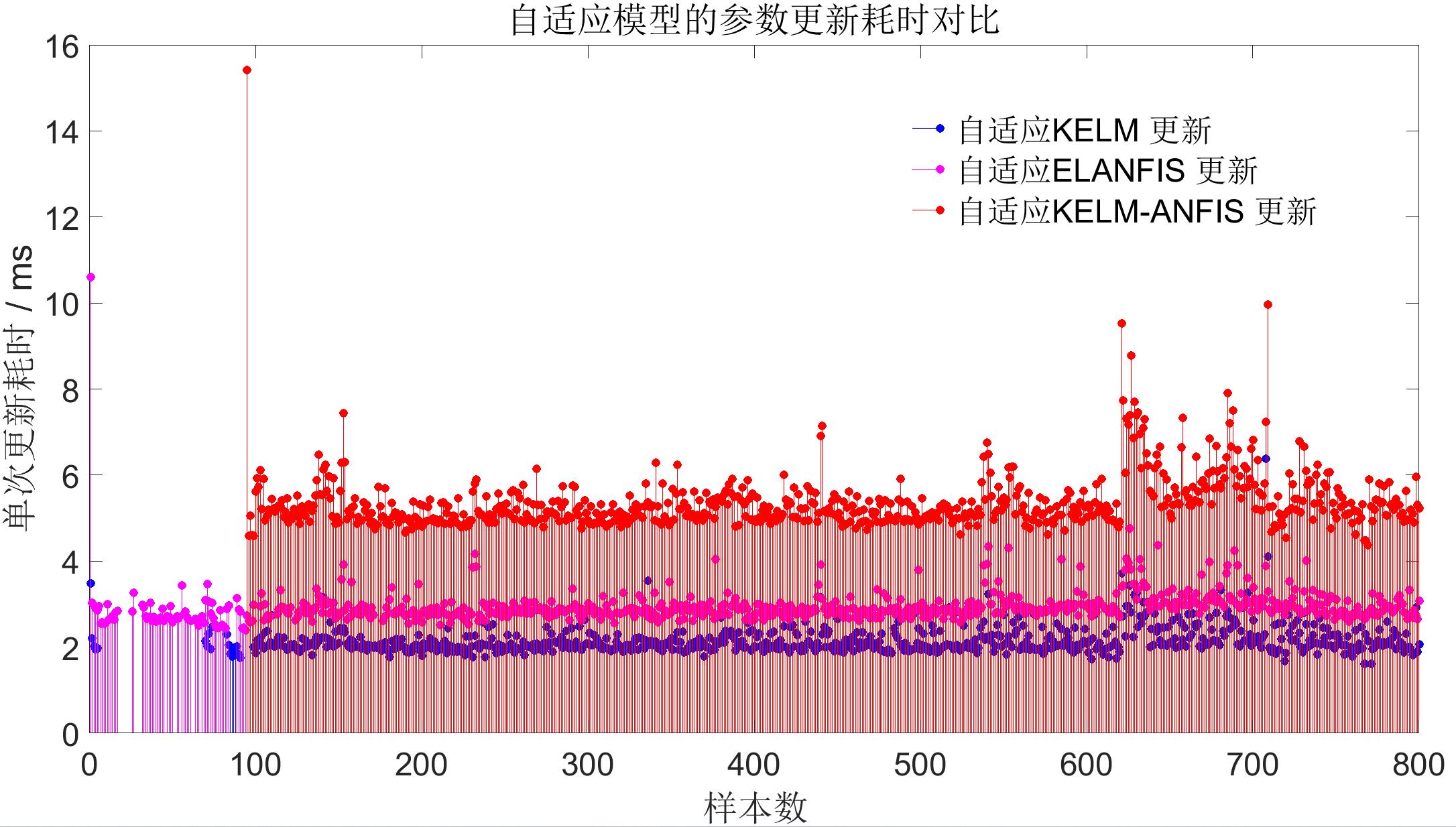
图9 各自适应模型参数更新耗时对比图
Fig.9 Comparison chart of parameter update time for various adaptive models
| [1] | Lim Y I, Jorgensen S B. A fast and accurate numerical method for solving simulated moving bed (SMB) chromatographic separation problems[J]. Chemical Engineering Science, 2004, 59(10): 1931-1947. |
| [2] | Ruthven D M, Ching C B. Counter-current and simulated counter-current adsorption separation processes[J]. Chemical Engineering Science, 1989, 44(5): 1011-1038. |
| [3] | Lee J, Shin N C, Lim Y, et al. Modeling and simulation of a simulated moving bed for adsorptive para-xylene separation[J]. Korean Journal of Chemical Engineering, 2010, 27(2): 609-618. |
| [4] | Rodrigues A. Simulated moving bed technology: principles, design and process applications[M]. Butterworth-Heinemann, 2015. |
| [5] | Aniceto J P S, Silva C M. Simulated moving bed strategies and designs: from established systems to the latest developments[J]. Separation & Purification Reviews, 2015, 44(1): 41-73. |
| [6] | 孙磊.模拟移动床分离过程的建模及预测控制策略研究[D].浙江大学,2007. |
| Sun L. Research on modeling and predictive control approach of simulated moving bed separation process[D]. Zhejiang University, 2007. | |
| [7] | Van Duc Long N, Le T H, Kim J I, et al. Separation of D-psicose and D-fructose using simulated moving bed chromatography[J]. Journal of Separation Science, 2009, 32(11): 1987-1995. |
| [8] | Kim K M, Han K W, Kim S I, et al. Simulated moving bed with a product column for improving the separation performance[J]. Journal of Industrial and Engineering Chemistry, 2020, 88: 328-338. |
| [9] | Ribeiro A E, Gomes P S, Pais L S, et al. Chiral separation of ketoprofen enantiomers by preparative and simulated moving bed chromatography[J]. Separation Science and Technology, 2011, 46(11): 1726-1739. |
| [10] | Azevedo D C S, Rodrigues A E. Design of a simulated moving bed in the presence of mass‐transfer resistances[J]. AIChE Journal, 1999, 45(5): 956-966. |
| [11] | Migliorini C, Mazzotti M, Morbidelli M. Simulated moving-bed units with extra-column dead volume[J]. AIChE Journal, 1999, 45(7): 1411-1421. |
| [12] | 顾金生, 蒋慰孙, 顾幸生. 模拟移动床 Parex 过程动态模型[J]. 华东理工大学学报, 1997, 23(6): 725-730. |
| Gu J S, Jiang W S, Gu X S. Dynamic model for simulating the Parex process of a moving bed[J]. Journal of East China University of Science and Technology, 1997, 23(6): 725-730. | |
| [13] | Klatt K U, Hanisch F, Dünnebier G. Model-based control of a simulated moving bed chromatographic process for the separation of fructose and glucose[J]. Journal of Process Control, 2002, 12(2): 203-219. |
| [14] | 盖旭东,佟泽民,杨春育. C_8芳烃吸附分离系统动态混合池模型[J]. 石油炼制与化工, 1994, 25(12): 45-48. |
| Gai X D, Tong Z M, Yang C Y. A dynamic approach to the adsorption separation process of c, aromatics[J]. Petroleum Processing and Petrochemicals, 1994, 25(12): 45-48. | |
| [15] | Lim Y I, Lee J, Bhatia S K, et al. Improvement of para-xylene SMB process performance on an industrial scale[J]. Industrial & Engineering Chemistry Research, 2010, 49(7): 3316-3327. |
| [16] | Suzaki P Y R, Munaro M T, Triques C C, et al. Phenomenological mathematical modeling of heavy metal biosorption in fixed-bed columns[J]. Chemical Engineering Journal, 2017, 326: 389-400. |
| [17] | Kim Y, Cho S, Jang K, et al. Effect of radial distribution of injected flow on simulated moving bed performance[J]. Journal of Chromatography A, 2022, 1662: 462703. |
| [18] | Aniceto J P S, Cardoso S P, Silva C M. General optimization strategy of simulated moving bed units through design of experiments and response surface methodologies[J]. Computers & Chemical Engineering, 2016, 90: 161-170. |
| [19] | 郑震玮.基于机器学习的模拟移动床分离过程优化[D].厦门大学,2021. |
| Zheng Z W. Optimization of simulated moving bed separation process based on machine learning[D]. Xiamen University, 2021. | |
| [20] | Yan Z, Wang J S, Wang S Y, et al. Model predictive control method of simulated moving bed chromatographic separation process based on subspace system identification[J]. Mathematical Problems in Engineering, 2019, 2019(1): 2391891. |
| [21] | 李凌, 袁德成, 井元伟. 模拟移动床过程的软测量建模仿真研究[J]. 计算机与应用化学, 2014, 31(11): 1298-1302. |
| Li L, Yuan D C, Jing Y W. Simulation research on soft-sensor modeling of Simulated Moving Bed process[J]. Computers and Applied Chemistry, 2014, 31(11): 1298-1302. | |
| [22] | Yao C, Zheng Z, Chen K, et al. Using a machine learning model for the optimal design of simulated moving bed processes and its application to separate rebaudioside A and stevioside[J]. Journal of Chemical Technology & Biotechnology, 2021, 96(9): 2558-2568. |
| [23] | Wang D, Wang J S, Wang S Y, et al. Soft sensing modeling of the SMB chromatographic separation process based on the adaptive neural fuzzy inference system[J]. Journal of Sensors, 2019, 2019(1): 1312709. |
| [24] | Huang G B, Zhu Q Y, Siew C K. Extreme learning machine: theory and applications[J]. Neurocomputing, 2006, 70(1-3): 489-501. |
| [25] | Huang G B, Zhou H, Ding X, et al. Extreme learning machine for regression and multiclass classification[J]. IEEE Transactions on Systems, Man, and Cybernetics, Part B (Cybernetics), 2011, 42(2): 513-529. |
| [26] | Wu K, Xu C, Yan J, et al. Error-distribution-free kernel extreme learning machine for traffic flow forecasting[J]. Engineering Applications of Artificial Intelligence, 2023, 123: 106411. |
| [27] | Mueller I, Seidel-Morgenstern A, Hamel C. Simulated-moving-bed technology for purification of the prebiotics galacto-oligosaccharides[J]. Separation and Purification Technology, 2021, 271: 118829. |
| [28] | Sun Y C, Wang J S, Xing C, et al. Bidirectional online sequence extreme learning machine and switching strategy for soft-sensor model of SMB chromatography separation process[J]. Soft Computing, 2025, 29(2): 485-507. |
| [29] | Mazzotti M, Storti G, Morbidelli M. Optimal operation of simulated moving bed units for nonlinear chromatographic separations[J]. Journal of Chromatography A, 1997, 769(1): 3-24. |
| [30] | Gomes P S, Minceva M, Rodrigues A E. Operation of an industrial SMB unit for p-xylene separation accounting for adsorbent ageing problems[J]. Separation Science and Technology, 2008, 43(8): 1974-2002. |
| [31] | 魏朋, 陈珺, 王志国, 等. 基于平衡理论的模拟移动床工艺参数鲁棒寻优[J]. 化工学报, 2022, 73(2): 792-800. |
| Wei P, Chen J, Wang Z G, et al. Robust optimization of process parameters of simulated moving bed based on equilibrium theory[J]. CIESC Journal, 2022, 73(2): 792-800. | |
| [32] | Sá Gomes P, Minceva M, Rodrigues A E. Operation strategies for simulated moving bed in the presence of adsorbent ageing[J]. Separation Science and Technology, 2007, 42(16): 3555-3591. |
| [1] | 臧子晴, 李修真, 谈莹莹, 刘晓庆. 分凝器对两级分离自复叠制冷循环特性影响研究[J]. 化工学报, 2025, 76(S1): 17-25. |
| [2] | 裴星亮, 叶翠平, 裴赢丽, 李文英. 碱改性MIL-53(Cr)选择性吸附分离二甲苯异构体[J]. 化工学报, 2025, 76(S1): 258-267. |
| [3] | 李银龙, 刘国强, 晏刚. 分馏与闪蒸分离耦合自复叠制冷循环性能分析[J]. 化工学报, 2025, 76(S1): 26-35. |
| [4] | 吴梓航, 徐震原, 游锦方, 潘权稳, 王如竹. 基于吸附式储冷技术的深井钻探设备冷却系统[J]. 化工学报, 2025, 76(S1): 309-317. |
| [5] | 黄国瑞, 赵耀, 谢明熹, 陈尔健, 代彦军. 一种新型数据中心余热回收系统实验与分析[J]. 化工学报, 2025, 76(S1): 409-417. |
| [6] | 张建民, 何美贵, 贾万鑫, 赵静, 金万勤. 聚氧化乙烯/冠醚共混膜及其二氧化碳分离性能[J]. 化工学报, 2025, 76(9): 4862-4871. |
| [7] | 郭旭, 贾继宁, 姚克俭. 基于优化CNN-BiLSTM神经网络的间歇精馏过程建模[J]. 化工学报, 2025, 76(9): 4613-4629. |
| [8] | 王杰, 林渠成, 张先明. 基于分解算法的混合气体多级膜分离系统全局优化[J]. 化工学报, 2025, 76(9): 4670-4682. |
| [9] | 李文龙, 常程, 吴小林, 姬忠礼. 油水聚结过滤材料中的液体分布特性及过程压降演化研究[J]. 化工学报, 2025, 76(9): 4850-4861. |
| [10] | 田宇红, 杜壮壮, 徐慧芳, 祝自强, 王宇聪. ZIF-8基多孔液体制备及其SO2吸附性能[J]. 化工学报, 2025, 76(8): 4284-4296. |
| [11] | 张荟钦, 赵泓竣, 付正军, 庄力, 董凯, 贾添智, 曹雪丽, 孙世鹏. 纳滤膜在离子型稀土浸出液提浓中的应用研究[J]. 化工学报, 2025, 76(8): 4095-4107. |
| [12] | 史松伟, 赵诚, 刘帅, 应雨轩, 严密. 富铁飞灰耦合Fe-Zn/Al2O3脱除沼气H2S研究[J]. 化工学报, 2025, 76(8): 4239-4247. |
| [13] | 陈治宏, 吴佳伟, 楼小玲, 贠军贤. 化学品生物制造过程机器学习的研究进展[J]. 化工学报, 2025, 76(8): 3789-3804. |
| [14] | 蒋明虎, 汪帆, 邢雷, 赵立新, 李新亚, 陈丁玮. 井下含气对油水分离管柱流场特性及性能影响[J]. 化工学报, 2025, 76(7): 3361-3372. |
| [15] | 唐羽丰, 陶春珲, 王永正, 李印辉, 段然, 赵泽一, 马和平. 超高比表面积碳基多孔吸附剂制备及其Kr气存储性能研究[J]. 化工学报, 2025, 76(7): 3339-3349. |
| 阅读次数 | ||||||
|
全文 |
|
|||||
|
摘要 |
|
|||||
 京公网安备 11010102001995号