CIESC Journal ›› 2025, Vol. 76 ›› Issue (12): 6669-6679.DOI: 10.11949/0438-1157.20250648
• Energy and environmental engineering • Previous Articles Next Articles
Yifan JIA1( ), Haiyan GUO1(), Kerui REN1, Dianyong GUAN1, Yuming LI2
Received:2025-06-16
Revised:2025-08-07
Online:2026-01-23
Published:2025-12-31
Contact:
Haiyan GUO
贾一凡1(), 郭海燕1(), 任柯睿1, 关典勇1, 李玉明2
通讯作者:
郭海燕
作者简介:贾一凡(1998—)女,硕士研究生,jia18366733680@163.com
CLC Number:
Yifan JIA, Haiyan GUO, Kerui REN, Dianyong GUAN, Yuming LI. Enhanced endogenous denitrifying phosphorus removal in AOAO-SNEDPR system[J]. CIESC Journal, 2025, 76(12): 6669-6679.
贾一凡, 郭海燕, 任柯睿, 关典勇, 李玉明. AOAO-SNEDPR系统强化内源反硝化除磷研究[J]. 化工学报, 2025, 76(12): 6669-6679.
Add to citation manager EndNote|Ris|BibTeX
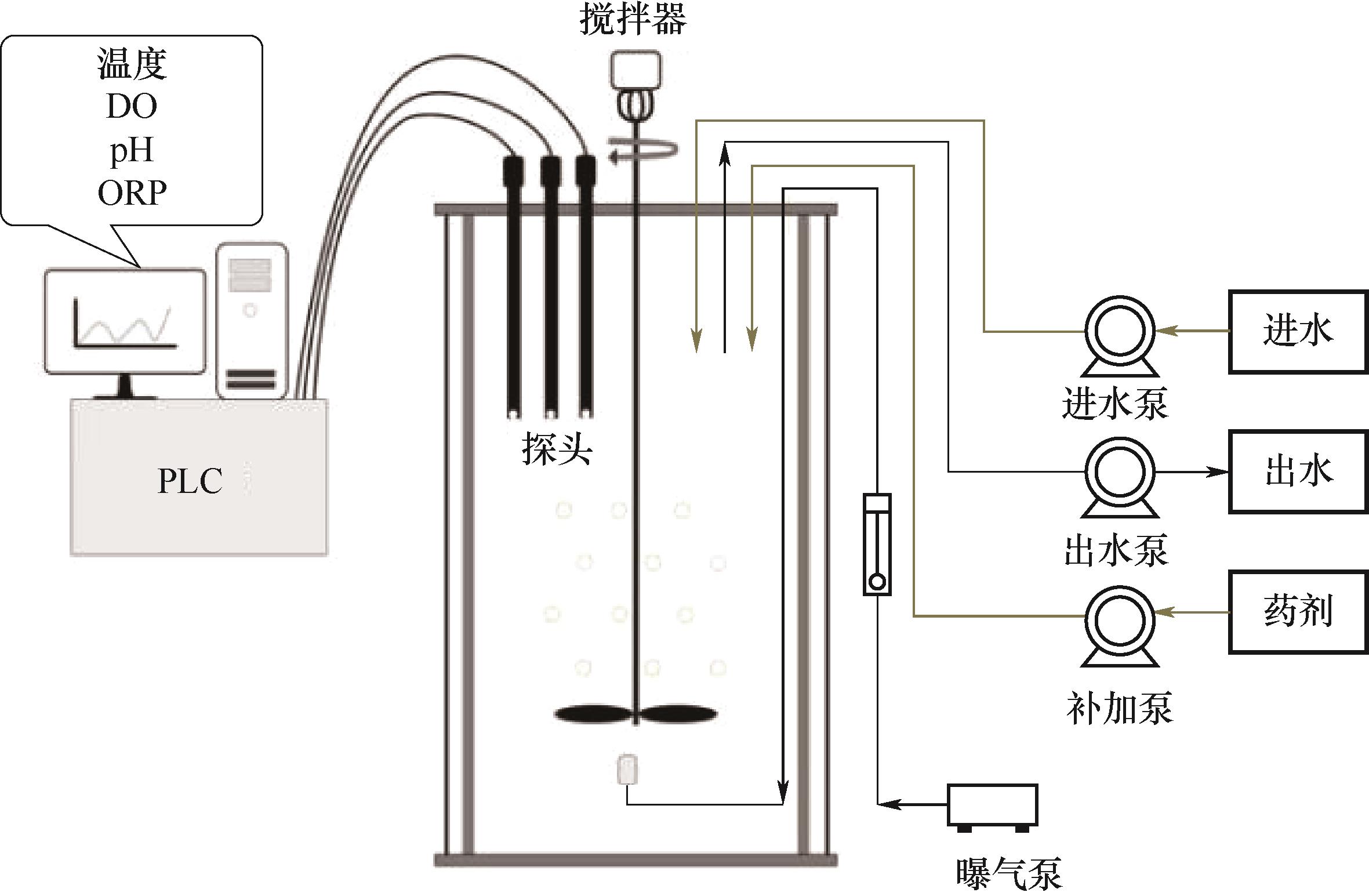
Fig.1 Experimental setup of the SBR
| 阶段 | COD/(mg/L) | C/P | ||
|---|---|---|---|---|
| Ⅰ(1~21 d) | 52.37 | 312.05 | 3.07 | 100 |
| Ⅱ(22~57 d) | 53.11 | 322.13 | 6.17 | 50 |
| Ⅲ(58~79 d) | 50.46 | 319.84 | 9.15 | 33 |
| Ⅳ(80~119 d) | 51.65 | 308.85 | 14.94 | 20 |
Table 1 Influent wastewater quality of the reactor during different experimental phases
| 阶段 | COD/(mg/L) | C/P | ||
|---|---|---|---|---|
| Ⅰ(1~21 d) | 52.37 | 312.05 | 3.07 | 100 |
| Ⅱ(22~57 d) | 53.11 | 322.13 | 6.17 | 50 |
| Ⅲ(58~79 d) | 50.46 | 319.84 | 9.15 | 33 |
| Ⅳ(80~119 d) | 51.65 | 308.85 | 14.94 | 20 |
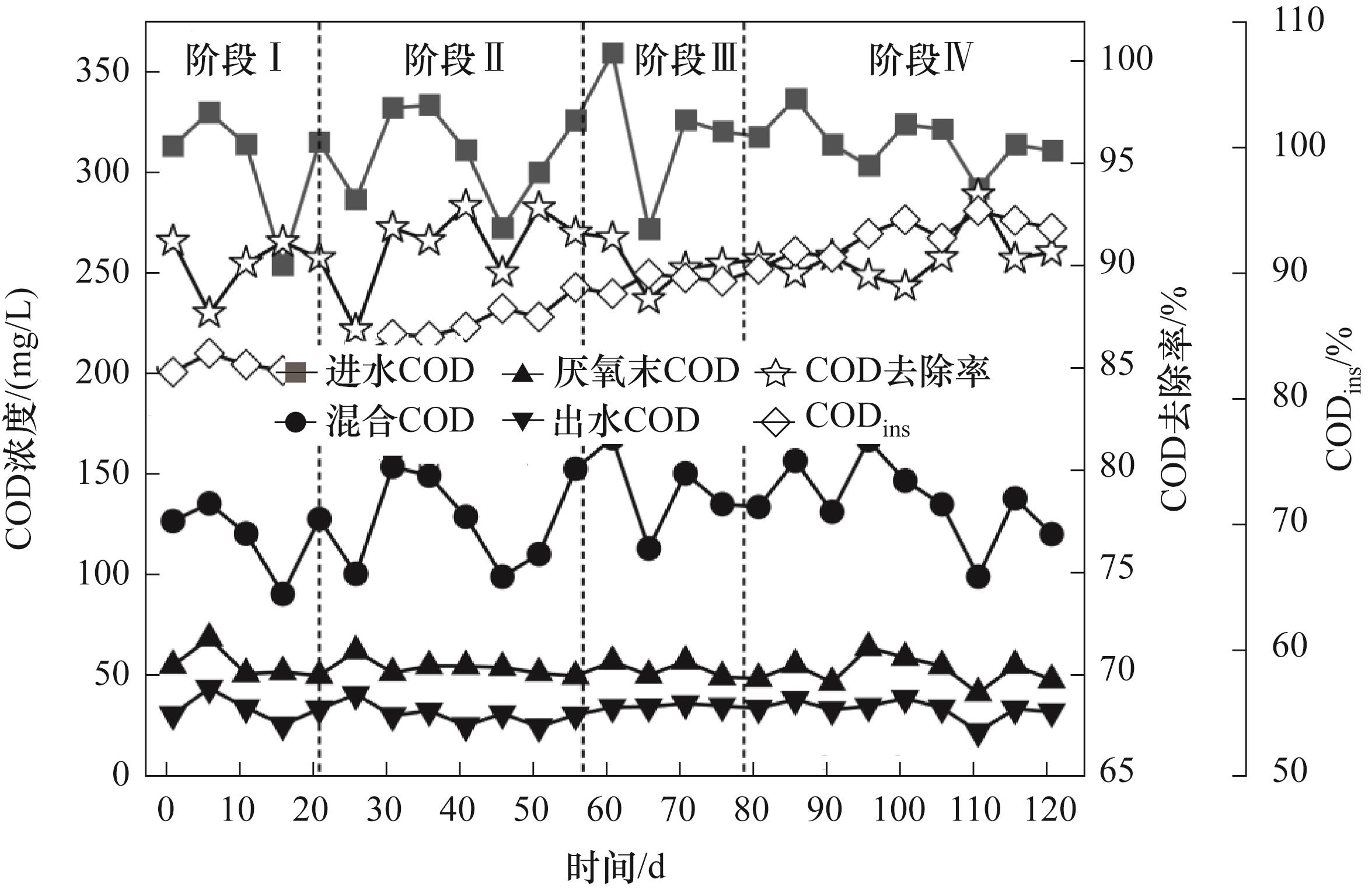
Fig.2 Changes in COD concentration and removal efficiency
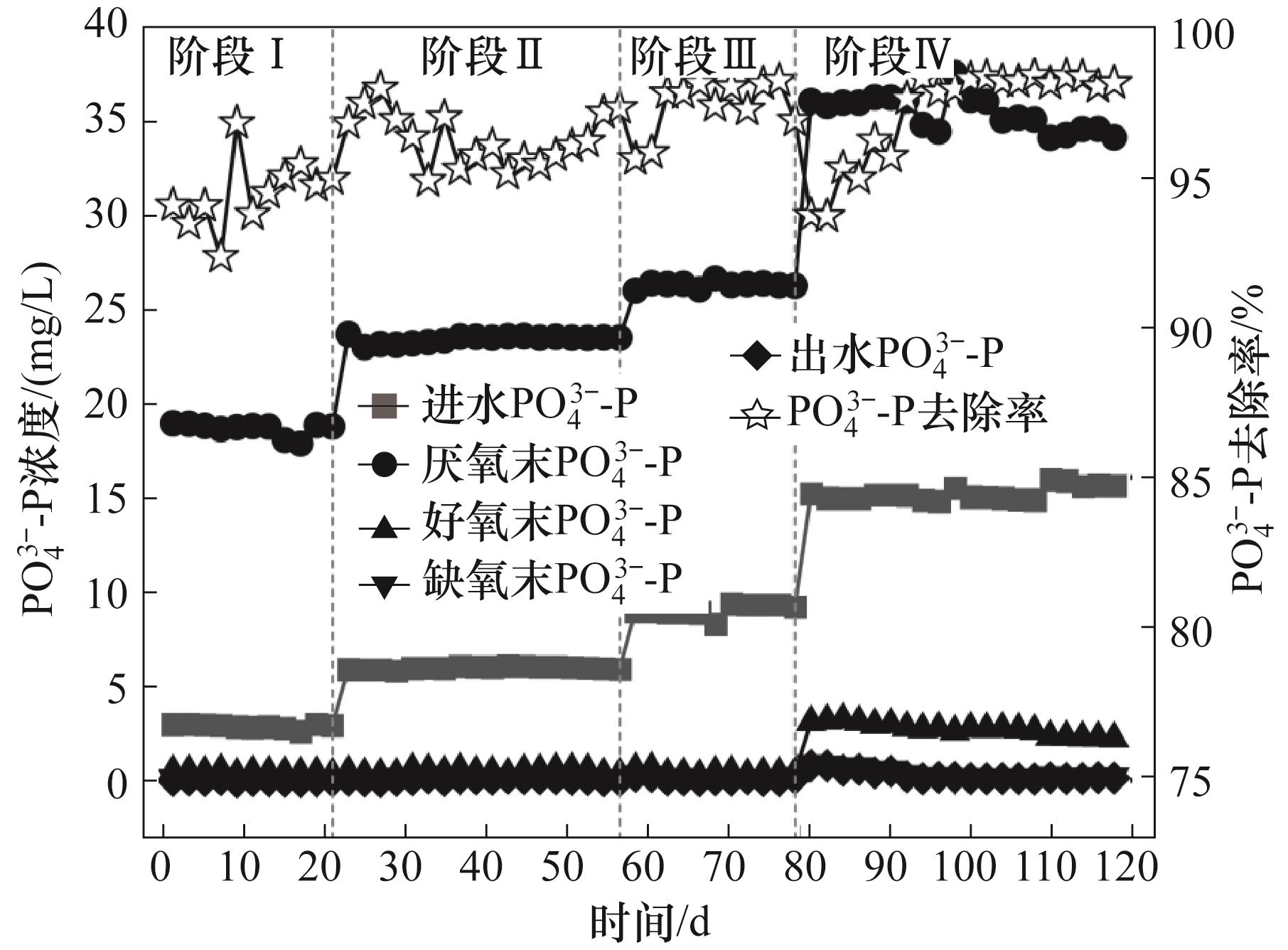
Fig.3 Changes in PO43--P concentration and removal efficiency
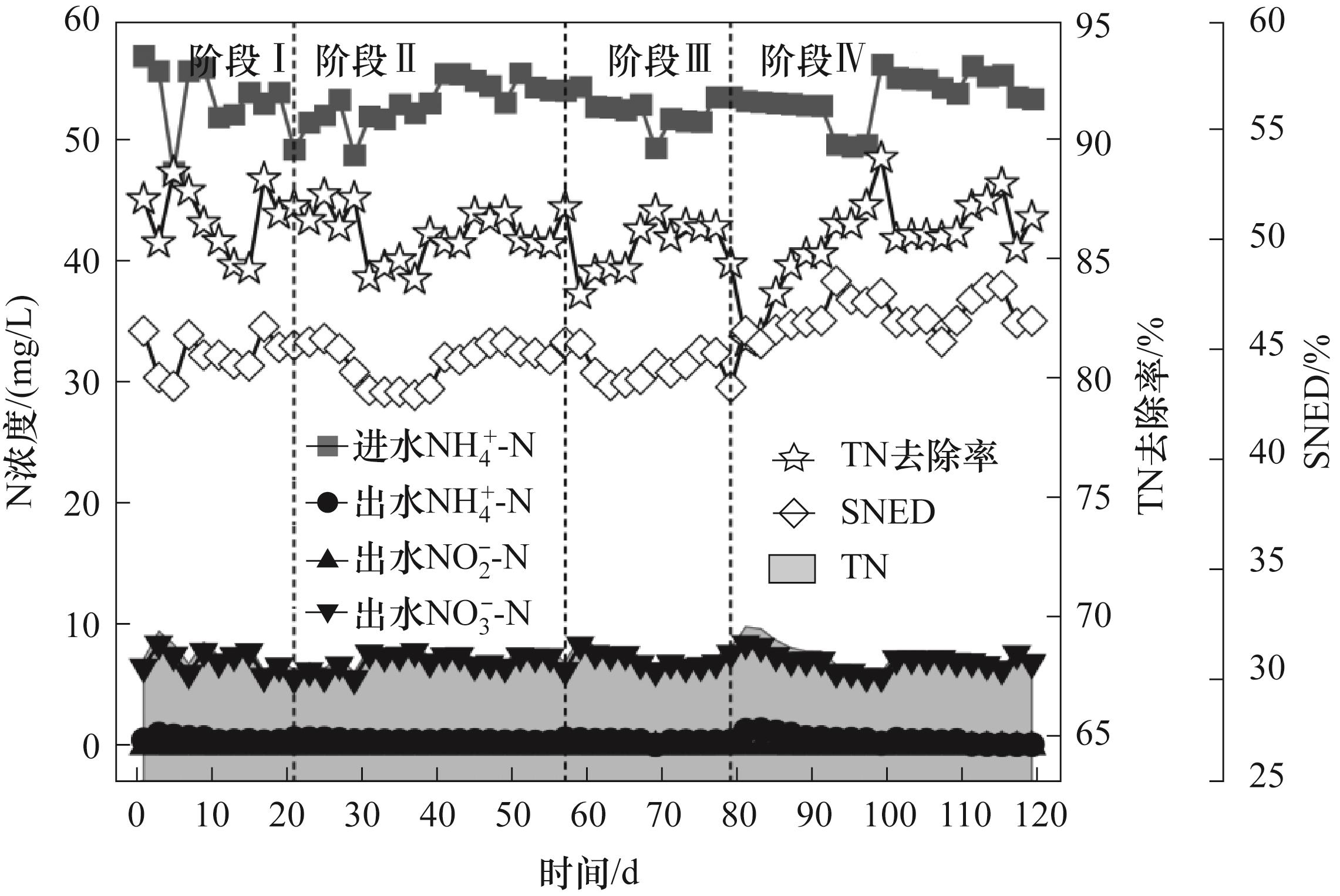
Fig.4 Changes in nitrogen concentration and TN removal efficiency
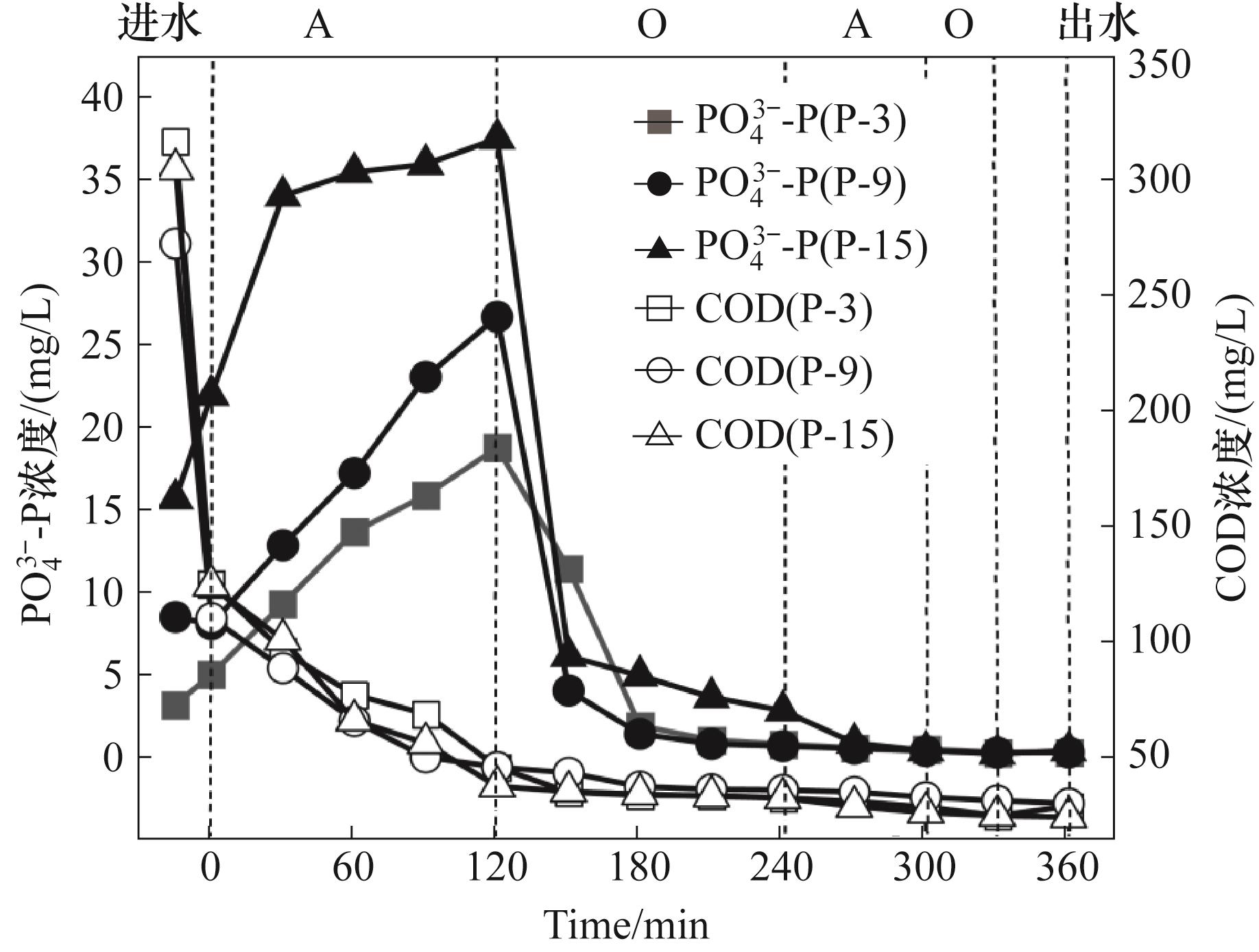
Fig.5 Variations of PO43--P and COD concentrations in the reactor during typical cycles under different influent PO43--P concentrations
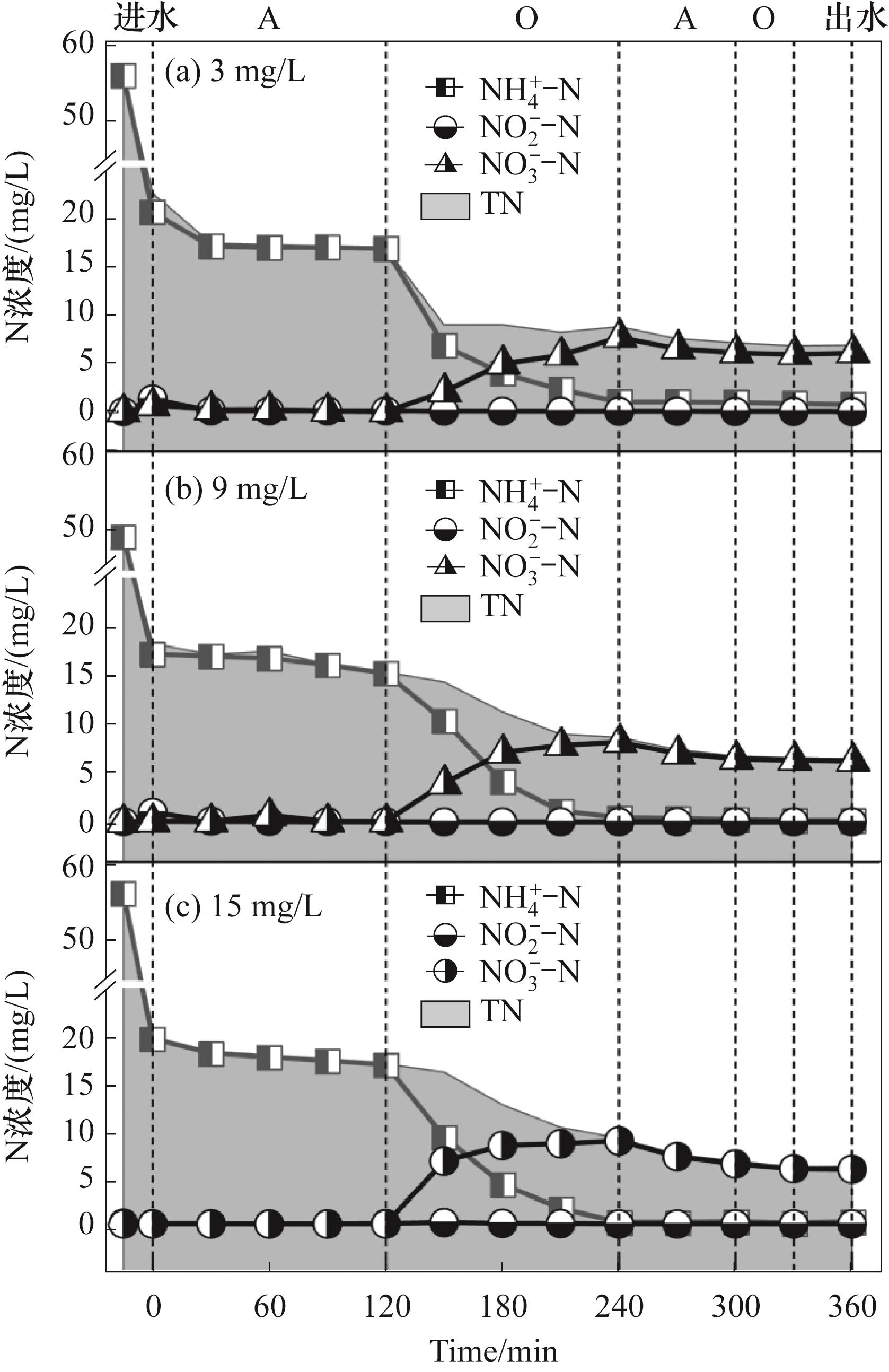
Fig.6 Variations of nitrogen species and TN in the reactor during typical cycles under different influent PO43--P concentrations
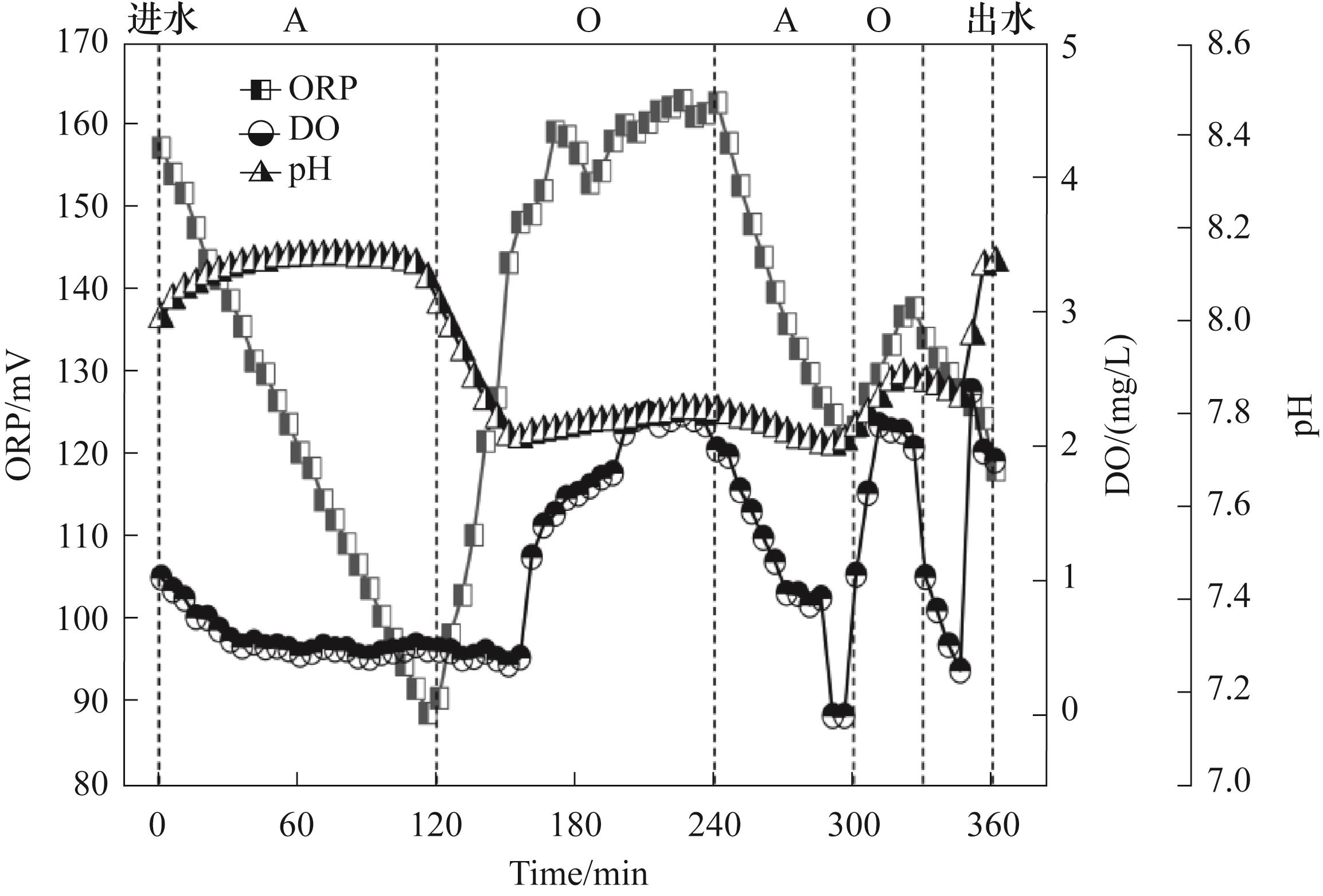
Fig.7 Variations of DO, ORP and pH in the reactor during typical cycles
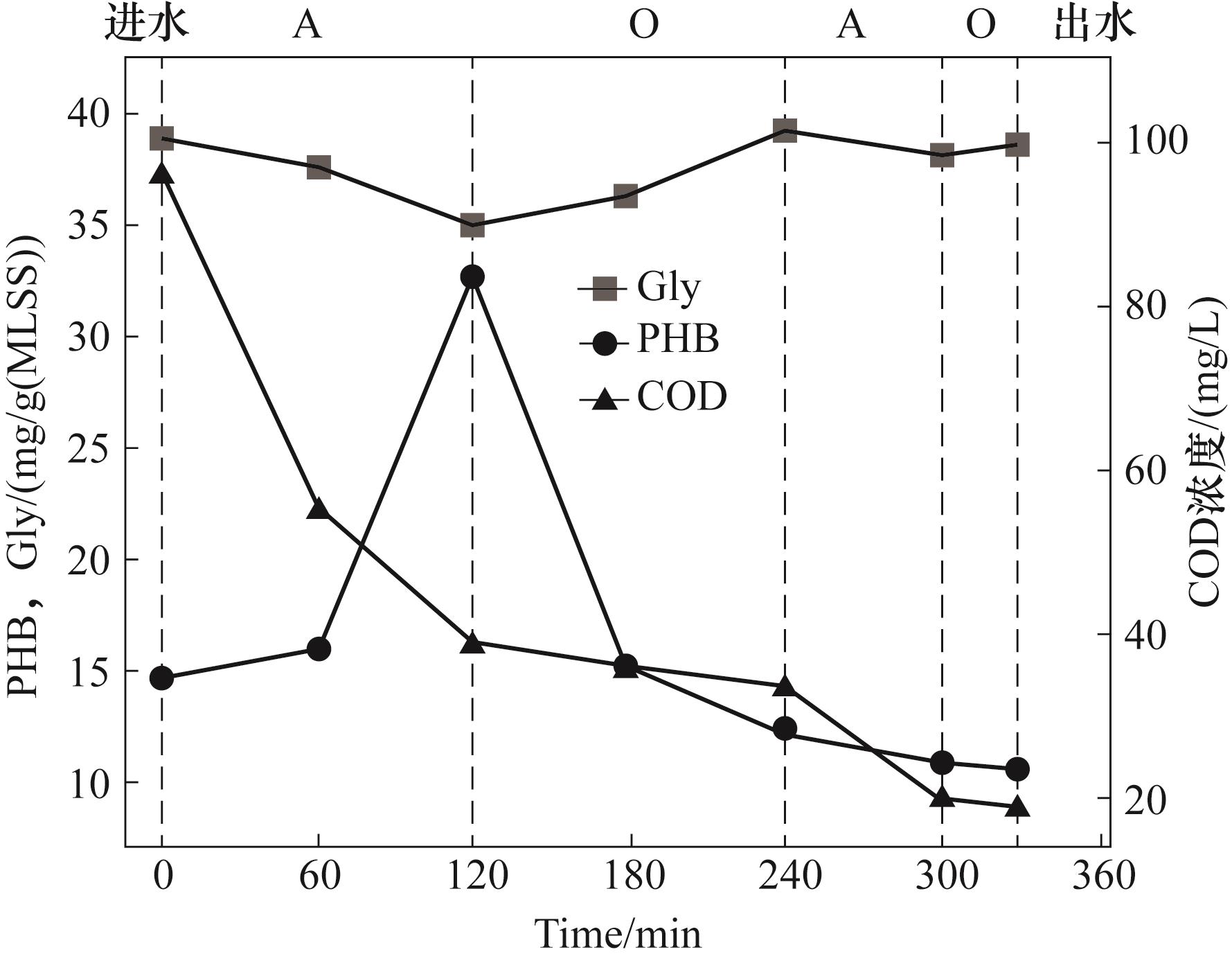
Fig.8 Carbon source transformation in sludge during typical cycles of the reactor
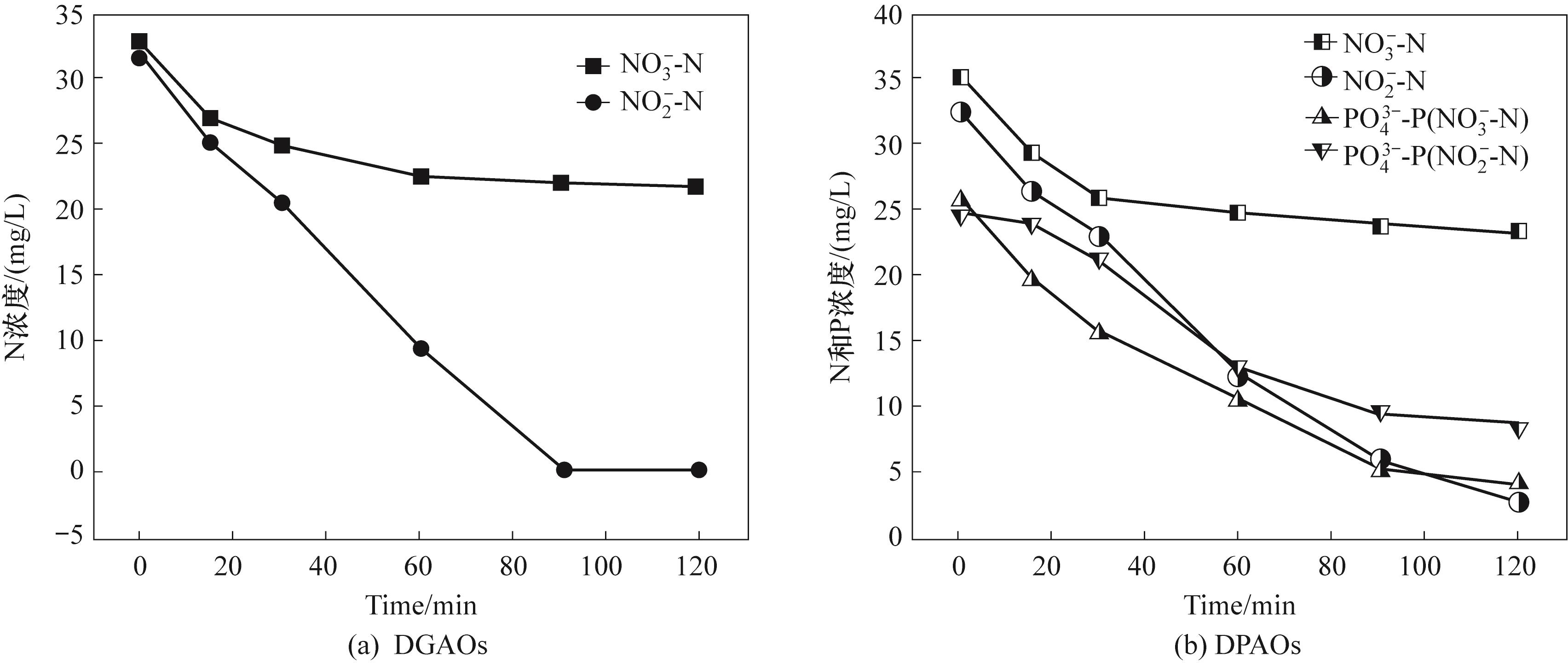
Fig.9 Activity determination of DGAOs and DPAOs under different electron acceptor conditions
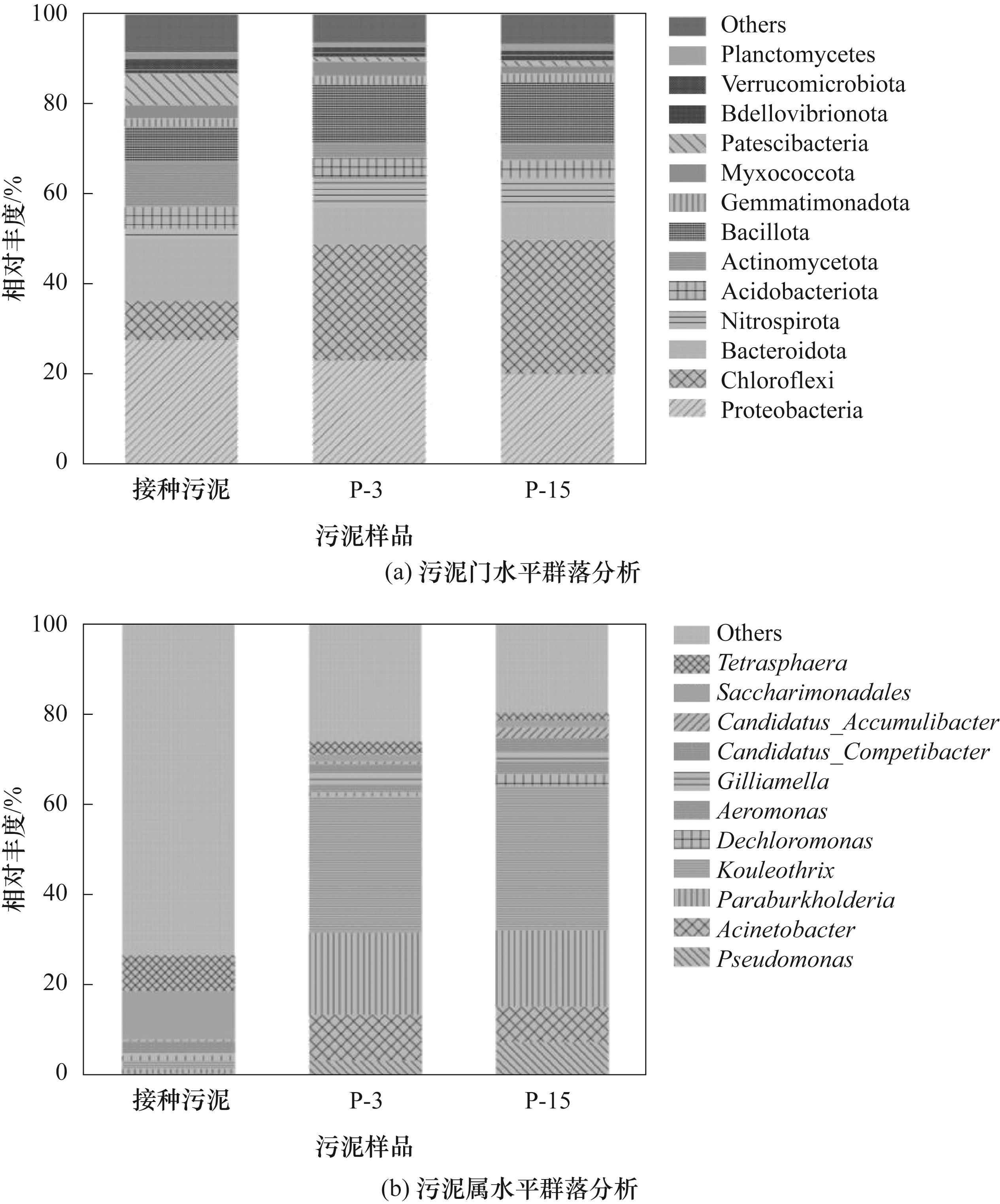
Fig.10 Variations in microbial community structure of the sludge
| [1] | Luo Y H, Yi K, Zhang X Y, et al. Simultaneous partial nitrification, denitrification, and phosphorus removal in sequencing batch reactors via controlled reduced aeration and short-term sludge retention time decrease[J]. Journal of Environmental Management, 2023, 344: 118598. |
| [2] | 戴娴, 王晓霞, 彭永臻, 等. 进水C/N对富集聚磷菌的SNDPR系统脱氮除磷的影响[J]. 中国环境科学, 2015, 35(9): 2636-2643. |
| Dai X, Wang X X, Peng Y Z, et al. Effect of influent C/N ratio on nitrogen and phosphorus removal in an SNDPR system enriched with polyphosphate accumulating organisms[J]. China Environmental Science, 2015, 35(9): 2636-2643. | |
| [3] | Campo R, Sguanci S, Caffaz S, et al. Efficient carbon, nitrogen and phosphorus removal from low C/N real domestic wastewater with aerobic granular sludge[J]. Bioresource Technology, 2020, 305: 122961. |
| [4] | Huang X, Zhu J, Duan W Y, et al. Biological nitrogen removal and metabolic characteristics in a full-scale two-staged anoxic-oxic (A/O) system to treat optoelectronic wastewater[J]. Bioresource Technology, 2020, 300: 122595. |
| [5] | Wang X X, Wang S Y, Zhao J, et al. A novel stoichiometries methodology to quantify functional microorganisms in simultaneous (partial) nitrification-endogenous denitrification and phosphorus removal (SNEDPR)[J]. Water Research, 2016, 95: 319-329. |
| [6] | Yuan C S, Wang B, Peng Y Z, et al. Enhanced nutrient removal of simultaneous partial nitrification, denitrification and phosphorus removal (SPNDPR) in a single-stage anaerobic/micro-aerobic sequencing batch reactor for treating real sewage with low carbon/nitrogen[J]. Chemosphere, 2020, 257: 127097. |
| [7] | Wang X X, Zhao J, Yu D S, et al. Stable nitrite accumulation and phosphorous removal from nitrate and municipal wastewaters in a combined process of endogenous partial denitrification and denitrifying phosphorus removal (EPDPR)[J]. Chemical Engineering Journal, 2019, 355: 560-571. |
| [8] | 戴娴, 彭永臻, 王晓霞, 等. 不同厌氧时间对富集聚磷菌的SNDPR系统处理性能的影响[J]. 中国环境科学, 2016, 36(1): 92-99. |
| Dai X, Peng Y Z, Wang X X, et al. Effect of different anaerobic durations on the performance of an SNDPR system enriched with polyphosphate-accumulating organisms[J]. China Environmental Science, 2016, 36(1): 92-99. | |
| [9] | 王晓霞, 王淑莹, 赵骥, 等. 厌氧/好氧SNEDPR系统处理低C/N比污水的优化运行[J]. 中国环境科学, 2016, 36(9): 2672-2680. |
| Wang X X, Wang S Y, Zhao J, et al. Optimized operation of an anaerobic/aerobic SNEDPR system for low C/N ratio wastewater treatment[J]. China Environmental Science, 2016, 36(9): 2672-2680. | |
| [10] | 王晓霞, 王淑莹, 赵骥, 等. SPNED-PR系统内PAOs-GAOs的竞争关系及其氮磷去除特性[J]. 中国环境科学, 2018, 38(2): 551-559. |
| Wang X X, Wang S Y, Zhao J, et al. Competitive relationship between PAOs and GAOs in SPNED-PR system and its nitrogen and phosphorus removal characteristics[J]. China Environmental Science, 2018, 38(2): 551-559. | |
| [11] | 任丽芳, 巩有奎, 孙洪伟. 碳氮比对AOA-SBR同步脱氮除磷性能及N2O释放的影响[J]. 环境工程, 2024, 42(5): 1-9. |
| Ren L F, Gong Y K, Sun H W. Effects of carbon to nitrogen ratio on simultaneous nitrogen and phosphorus removal performance and N2O emission in AOA-SBR system[J]. Environmental Engineering, 2024, 42(5): 1-9. | |
| [12] | 张杰, 杨杰, 李冬, 等. AOA-O模式下好氧颗粒污泥同步硝化内源反硝化除磷[J]. 中国环境科学, 2023, 43(10): 5226-5234. |
| Zhang J, Yang J, Li D, et al. Simultaneous nitrification, endogenous denitrification and phosphorus removal by aerobic granular sludge under AOA-O mode[J]. China Environmental Science, 2023, 43(10): 5226-5234. | |
| [13] | 国家环境保护总局. 水和废水监测分析方法[M]. 4版. 北京: 中国环境科学出版社, 2002. |
| State Environmental Protection Administration (SEPA). Water and Wastewater Monitoring and Analysis Methods [M]. 4th ed. Beijing: China Environmental Science Press, 2002. | |
| [14] | 刘俊梅, 王璐, 李琢伟, 等. 产聚β-羟基丁酸酯(PHB)菌种的筛选及16S rDNA鉴定[J]. 粮油加工, 2014, 4(17): 71-75. |
| Liu J M, Wang L, Li Z W, et al. Screening and 16S rDNA identification of p o l y - β - h y d r o x y b u t y r a t e (PHB)-producing bacterial strains[J]. Cereals and Oils Processing, 2014, 4(17): 71-75. | |
| [15] | Luan Y N, Yin Y, Guo Z H, et al. Achieving simultaneous nitrification and endogenous denitrifying phosphorus removal in anaerobic/intermittently-aerated moving bed biofilm reactor for low carbon-to-nitrogen ratio wastewater treatment[J]. Bioresource Technology, 2024, 394: 130178. |
| [16] | Wang X X, Wang S Y, Xue T L, et al. Treating low carbon/nitrogen (C/N) wastewater in simultaneous nitrification-endogenous denitrification and phosphorous removal (SNDPR) systems by strengthening anaerobic intracellular carbon storage[J]. Water Research, 2015, 77: 191-200. |
| [17] | 都叶奇, 于德爽, 甄建园, 等. 进水C/N对SNEDPR系统脱氮除磷的影响[J]. 环境科学, 2019, 40(2): 816-822. |
| Du Y Q, Yu D S, Zhen J Y, et al. Effect of influent C/N ratio on nitrogen and phosphorus removal in SNEDPR system[J]. Environmental Science, 2019, 40(2): 816-822. | |
| [18] | 李冬, 李悦, 李雨朦, 等. 好氧颗粒污泥同步硝化内源反硝化脱氮除磷[J]. 中国环境科学, 2022, 42(3): 1113-1119. |
| Li D, Li Y, Li Y M, et al. Simultaneous nitrification, endogenous denitrification and phosphorus removal by aerobic granular sludge[J]. China Environmental Science, 2022, 42(3): 1113-1119. | |
| [19] | 韩芸, 许松, 董涛, 等. 碳源类型、温度及电子受体对生物除磷的影响[J]. 环境科学, 2015, 36(2): 590-596. |
| Han Y, Xu S, Dong T, et al. Effects of carbon source type, temperature and electron acceptor on biological phosphorus removal[J]. Environmental Science, 2015, 36(2): 590-596. | |
| [20] | Hou H H, Duan L, Zhou B H, et al. The performance and degradation mechanism of sulfamethazine from wastewater using IFAS-MBR[J]. Chinese Chemical Letters, 2020, 31(2): 543-546. |
| [21] | Chen P, Wu J K, Lu X W, et al. Denitrifying phosphorus removal and microbial community characteristics of two-sludge DEPHANOX system: effects of COD/TP ratio[J]. Biochemical Engineering Journal, 2021, 172: 108059. |
| [22] | Wang R F, Yang C Z, Hu H, et al. The impact of the varying nutrient concentrations on the enhanced biological phosphorus removal performance and functional phosphorus-accumulating and denitrifying genes in an anaerobic-aerobic-anoxic sequencing batch reactor[J]. Environmental Technology & Innovation, 2021, 21: 101256. |
| [23] | 王亚东, 王少坡, 郑莎莎, 等. 生物除磷系统的聚磷微生物种群及其检测方法[J]. 环境工程, 2015, 33(2): 21-26. |
| Wang Y D, Wang S P, Zheng S S, et al. Polyphosphate-accumulating organisms populations and their detection methods in biological phosphorus removal systems[J]. Environmental Engineering, 2015, 33(2): 21-26. | |
| [24] | 刘旭, 王继华, 车琦, 等. AOA-SBR系统运行效能及高效聚磷菌的特性研究[J]. 环境科学研究, 2019, 32(8): 1427-1436. |
| Liu X, Wang J H, Che Q, et al. Operational performance of AOA-SBR system and characteristics of high-efficiency phosphate-accumulating organisms[J]. Research of Environmental Sciences, 2019, 32(8): 1427-1436. | |
| [25] | Nittami T, Kasakura R, Kobayashi T, et al. Exploring the operating factors controlling Kouleothrix (type 1851), the dominant filamentous bacterial population, in a full-scale A2O plant[J]. Scientific Reports, 2020, 10: 6809. |
| [26] | 王丽谦. 低碳市政污水好氧颗粒污泥培养及脱氮除磷性能研究[D]. 北京: 北京化工大学, 2020. |
| Wang L Q. Cultivation of aerobic granular sludge and its nitrogen & phosphorus removal performance in low-carbon municipal wastewater treatment[D]. Beijing: Beijing University of Chemical Technology, 2020. | |
| [27] | He Q L, Chen L, Zhang S J, et al. Hydrodynamic shear force shaped the microbial community and function in the aerobic granular sequencing batch reactors for low carbon to nitrogen (C/N) municipal wastewater treatment[J]. Bioresource Technology, 2019, 271: 48-58. |
| [28] | Xu X C, Qiu L Y, Wang C, et al. Achieving mainstream nitrogen and phosphorus removal through simultaneous partial nitrification, anammox, denitrification, and denitrifying phosphorus removal (SNADPR) process in a single-tank integrative reactor[J]. Bioresource Technology, 2019, 284: 80-89. |
| [29] | 李冬, 高鑫, 张杰, 等. 长/短HRT交替培养同步硝化反硝化除磷颗粒[J]. 哈尔滨工业大学学报, 2023, 55(2): 9-18. |
| Li D, Gao X, Zhang J, et al. Alternating long/short HRT cultivation for simultaneous nitrification, denitrification and phosphorus removal granules[J]. Journal of Harbin Institute of Technology, 2023, 55(2): 9-18. | |
| [30] | Fan Z W, Zeng W, Wang B G, et al. Transcriptional responses of Candidatus Accumulibacter clades to environmental dynamics in enhanced biological phosphorus removal[J]. Bioresource Technology, 2020, 306: 123108. |
| [1] | Xinjie GAO, Zaizhou XU, Yongzhen PENG, Yuwei HUANG, Jing DING, Zeming AN, Chuanxin WANG. Enhance nitrogen removal via endogenous denitrification in a sludge double recirculation-anaerobic/aerobic/anoxic process [J]. CIESC Journal, 2022, 73(11): 5098-5105. |
| [2] | SUN Yawen, ZHANG Jianhua, PENG Yongzhen, WANG Shuying. Effect of additional carbon sources on nitrogen and phosphorus removal characteristics in A2/O-BCO process [J]. CIESC Journal, 2018, 69(8): 3626-3634. |
| [3] | JIA Shuyuan, WANG Shuying, ZHAO Ji, LI Xiyao, ZHANG Qiong, PENG Yongzhen. Effect of endogenous denitrification rate of domesticated GAOs on NO2--N and NO3--N [J]. CIESC Journal, 2017, 68(12): 4731-4738. |
| [4] | WANG Meixiang, ZHAO Weihua, WANG Shuying, ZHANG Yong, PENG Yongzhen, PAN Cong, HUANG Yu. Startup and stability of A2N2 double sludge system denitrifying phosphorus removal process [J]. CIESC Journal, 2016, 67(7): 2987-2997. |
| [5] | WANG Meixiang, ZHAO Weihua, HUANG Yu, PAN Cong, PENG Yongzhen, WANG Shuying. Effect of nitrification duration distribution ratio in N-SBR unit on performance of A2N2 system operation [J]. CIESC Journal, 2016, 67(12): 5259-5267. |
| [6] | ZHANG Weitang, XUE Xiaofei, PANG Hongtao, ZHANG Jie, LI Dong, PENG Yongzhen. Effect of C/N on performance of AAO-BAF process [J]. CIESC Journal, 2015, 66(5): 1925-1930. |
| [7] | WANG Cong, WANG Shuying, ZHANG Miao, PENG Yongzhen, ZENG Wei. Analysis of COD, N and P in denitrifying phosphorus removal under multivariate condition [J]. CIESC Journal, 2015, 66(4): 1467-1475. |
| [8] | ZHANG Jianhua, PENG Yongzhen, ZHANG Miao, WANG Shuying, WANG Cong. Effect of different electron acceptor ratios on removal of nitrogen and phosphorus and conversion and utilization of internal carbon source [J]. CIESC Journal, 2015, 66(12): 5045-5053. |
| [9] | ZHANG Yong, WANG Shuying, ZHAO Weihua, SUN Shihao, PENG Yongzhen, ZENG Wei. Start-up of pilot-scale AAO-BAF two-sludge system [J]. CIESC Journal, 2015, 66(10): 4228-4235. |
| [10] | ZHANG Weitang, XUE Tonglai, PENG Yongzhen, LIU Qingsong, XIN Zhenxing, WANG Shuying. Performance of denitrifying-phosphorus-removal system (AAO-BAF) during secondary start-up [J]. CIESC Journal, 2014, 65(2): 658-663. |
| [11] | LUO Yahong, LI Dong, BAO Linlin, XU Da, CAI Yan'an, ZHANG Jie. Shortcut nitrification and denitrifying phosphorus removal in improved A2/O technique with long SRT [J]. CIESC Journal, 2014, 65(12): 4985-4996. |
| [12] | MIAO Zhijia, XUE Guisong, WENG Dongchen, CAO Guihua, PENG Yongzhen. Effect of nitrite on denitrifying phosphorous removal metabolism and N2O production by PAOs [J]. CIESC Journal, 2013, 64(6): 2201-2207. |
| [13] | LIU Peng,CHEN Yinguang. Progress of new biological nutrient removal technologies [J]. Chemical Industry and Engineering Progree, 2013, 32(10): 2491-2496. |
| [14] | LI Simin, DU Guoshuai, TANG Fengbing. Treatment of low C/N wastewater by combined A2/O process with multipoint feeding [J]. CIESC Journal, 2013, 64(10): 3805-3811. |
| [15] | LIU Wei, YANG Dianhai, XU Li, JIA Chuan, LU Wenjian, BOSIRE O.I., SHEN Changming. Effect of return sludge pre-concentration on biological phosphorus removal in a novel oxidation ditch [J]. Chin.J.Chem.Eng., 2012, 20(4): 747-753. |
| Viewed | ||||||
|
Full text |
|
|||||
|
Abstract |
|
|||||