• •
汤松臻1( ), 张飞杨1, 晏稷1, 张牧樵2, 郭明1()
收稿日期:2025-11-03
修回日期:2025-12-31
出版日期:2026-01-21
通讯作者:
郭明
作者简介:汤松臻(1991—),男,博士,教授,sztang@zzu.edu.cn
基金资助:
Songzhen TANG1(), Feiyang ZHANG1, Ji YAN1, Muqiao ZHANG2, Ming GUO1()
Received:2025-11-03
Revised:2025-12-31
Online:2026-01-21
Contact:
Ming GUO
摘要:
针对超高热通量电子设备的散热需求,开展数值模拟研究了一种改型微通道热沉的流动与传热特性,分析了通道高度和宽度对其综合性能的影响。建立了遗传算法优化的最小二乘支持向量回归预测模型,采用多目标粒子群算法对热沉的几何构型进行优化,并借助灰色关联分析-多准则妥协解排序法与熵权TOPSIS方法筛选出全局最优设计。研究结果表明:相较于本文设定的原始歧管式微通道热沉基准模型(几何参数:hm1=25 μm、hm2=25 μm、wm1=200 μm、wm2=200 μm),优化方案通过增强二次涡流效应有效降低了峰值温度,使得Nusselt数(Nu)提升20.2%,压降(Δp)下降10.2%。本文所提出的优化策略为高热通量管理提供了新思路,在保证性能显著提升的同时,较大幅度降低了传统参数化方法所需的计算成本,可为新型高效微通道热沉的研发提供理论指导。
中图分类号:
汤松臻, 张飞杨, 晏稷, 张牧樵, 郭明. 基于机器学习的改型歧管式微通道热沉流动传热特性多目标优化[J]. 化工学报, DOI: 10.11949/0438-1157.20251212.
Songzhen TANG, Feiyang ZHANG, Ji YAN, Muqiao ZHANG, Ming GUO. Multi objective optimization of flow and heat transfer characteristics of modified manifold microchannel heat sink based on machine learning[J]. CIESC Journal, DOI: 10.11949/0438-1157.20251212.
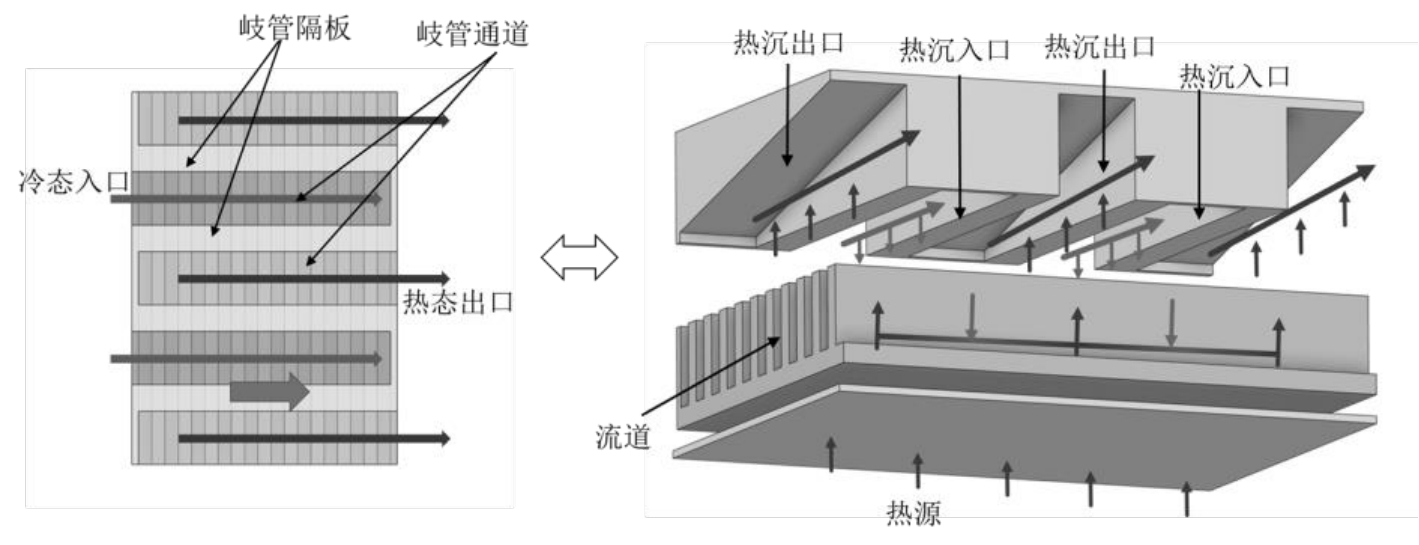
图1 改型MMCHS的结构示意图
Fig. 1 Schematic diagram of the modified MMCHS external structure
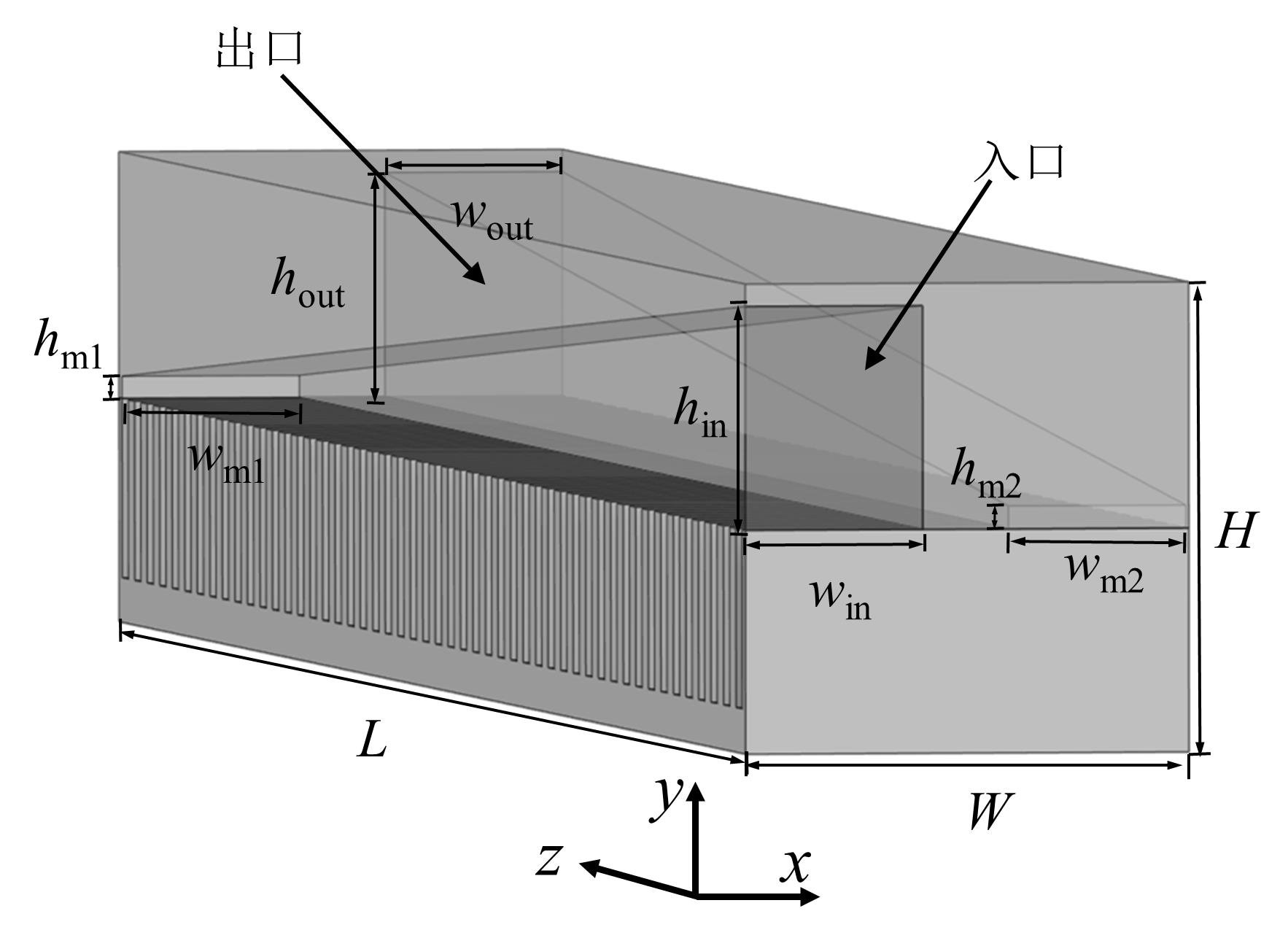
图2 本研究MMCHS结构抽取的流体域
Fig. 2 The fluid domain extracted from the MMCHS structure in this study
| 名称 | 数值(μm) | 名称 | 数值(μm) |
|---|---|---|---|
| L | 5000 | H | 525 |
| W | 500 | hin | 250 |
| win | 200 | hout | 250 |
| wout | 200 | hm1 | 25 |
| wm1 | 200 | hm2 | 25 |
| wm2 | 200 | - | - |
表1 模型MMCHS参数总结
Table 1 Summary of model MMCHS geometric parameters
| 名称 | 数值(μm) | 名称 | 数值(μm) |
|---|---|---|---|
| L | 5000 | H | 525 |
| W | 500 | hin | 250 |
| win | 200 | hout | 250 |
| wout | 200 | hm1 | 25 |
| wm1 | 200 | hm2 | 25 |
| wm2 | 200 | - | - |
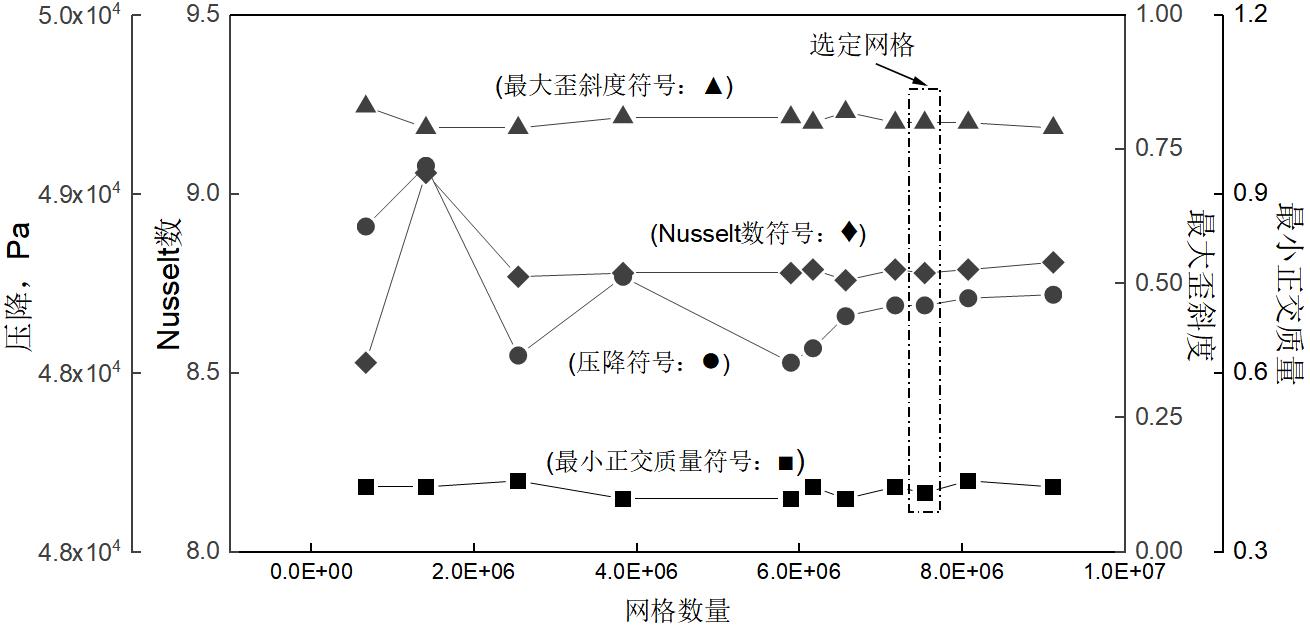
图3 MMCHS网格无关性分析
Fig. 3 MMCHS grid independence test
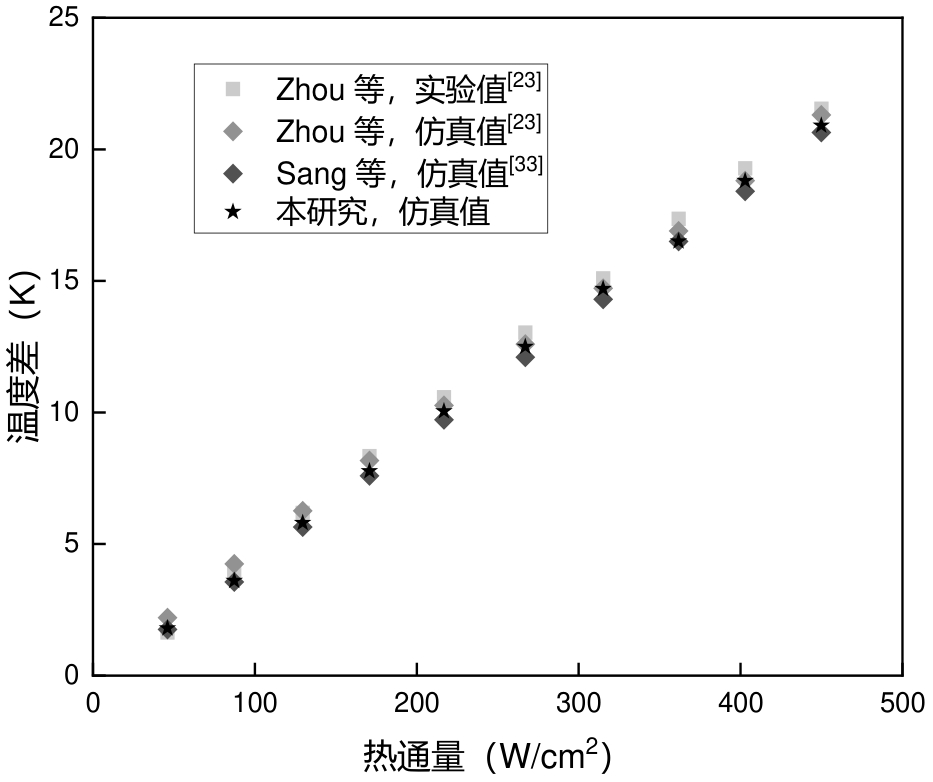
图4 微通道内平均温度的实验验证[23, 33]。
Fig. 4 Experimental verification of average temperature within microchannels.
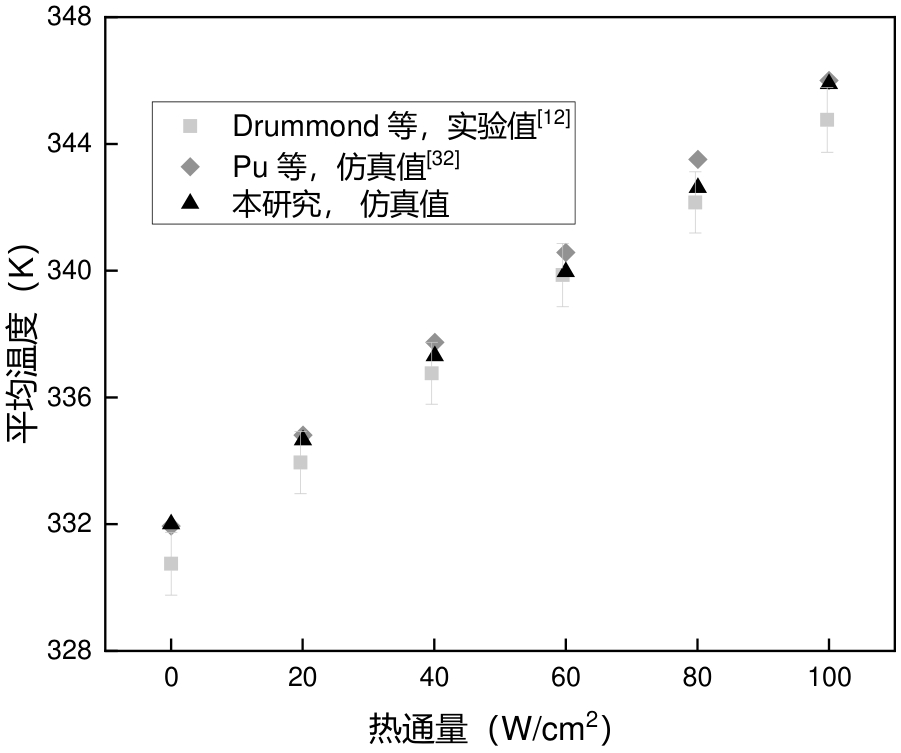
图5 微通道内温度差值的文献验证[12, 32]。
Fig. 5 Literature verification of temperature difference within microchannels.
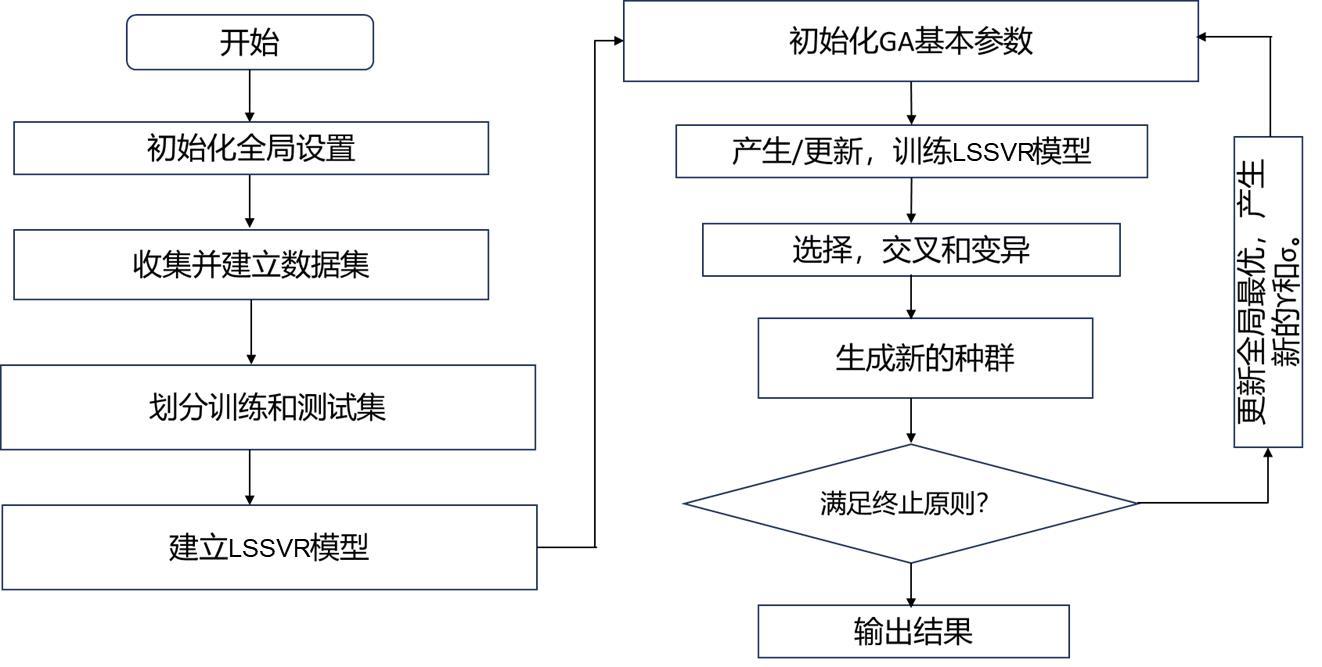
图6 GA优化LSSVR模型流程图
Fig. 6 Flowchart of GA optimized LSSVR model
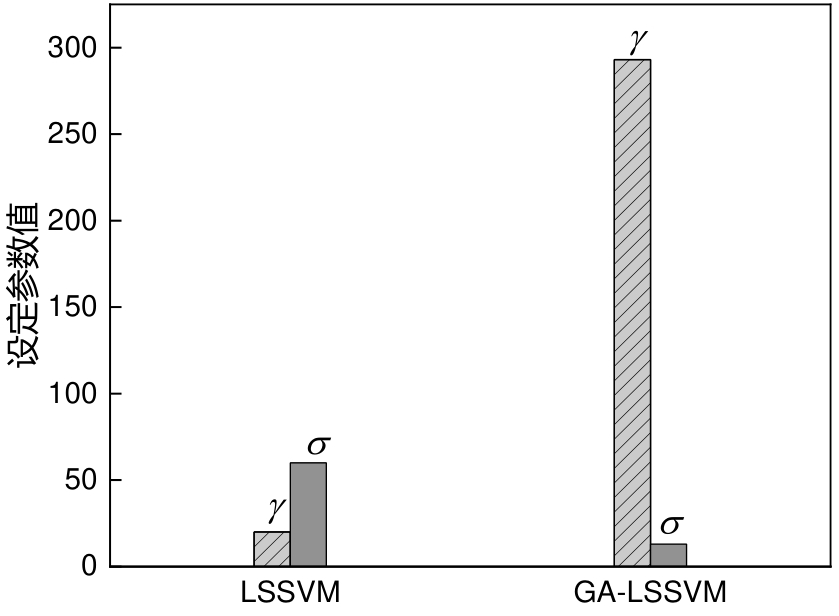
图7 数据驱动LSSVR模型超参数优化结果
Fig. 7 Hyperparameter optimization results for data-driven LSSVR model
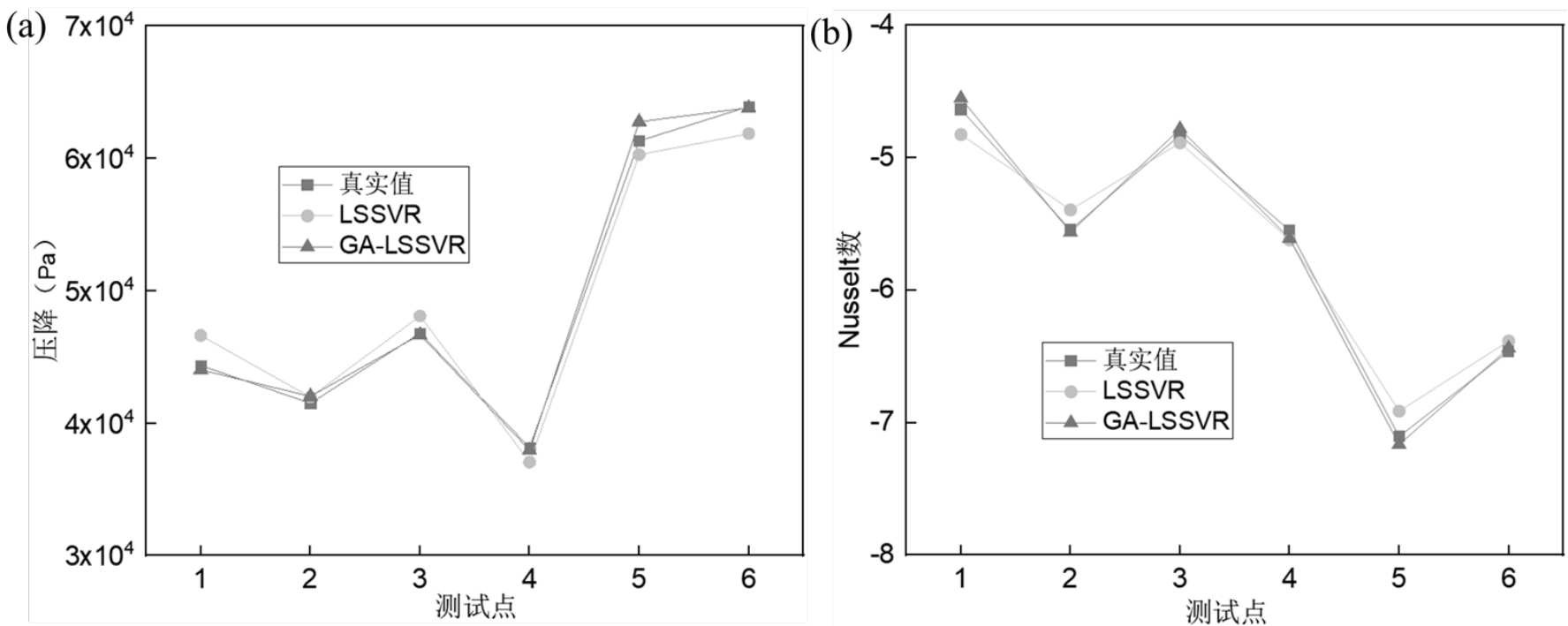
图8 LSSVR和GA-LSSVR模型测试集预测精度比较
Fig. 8 Comparison of prediction accuracy between LSSVR and GA-LSSVR models based on test data
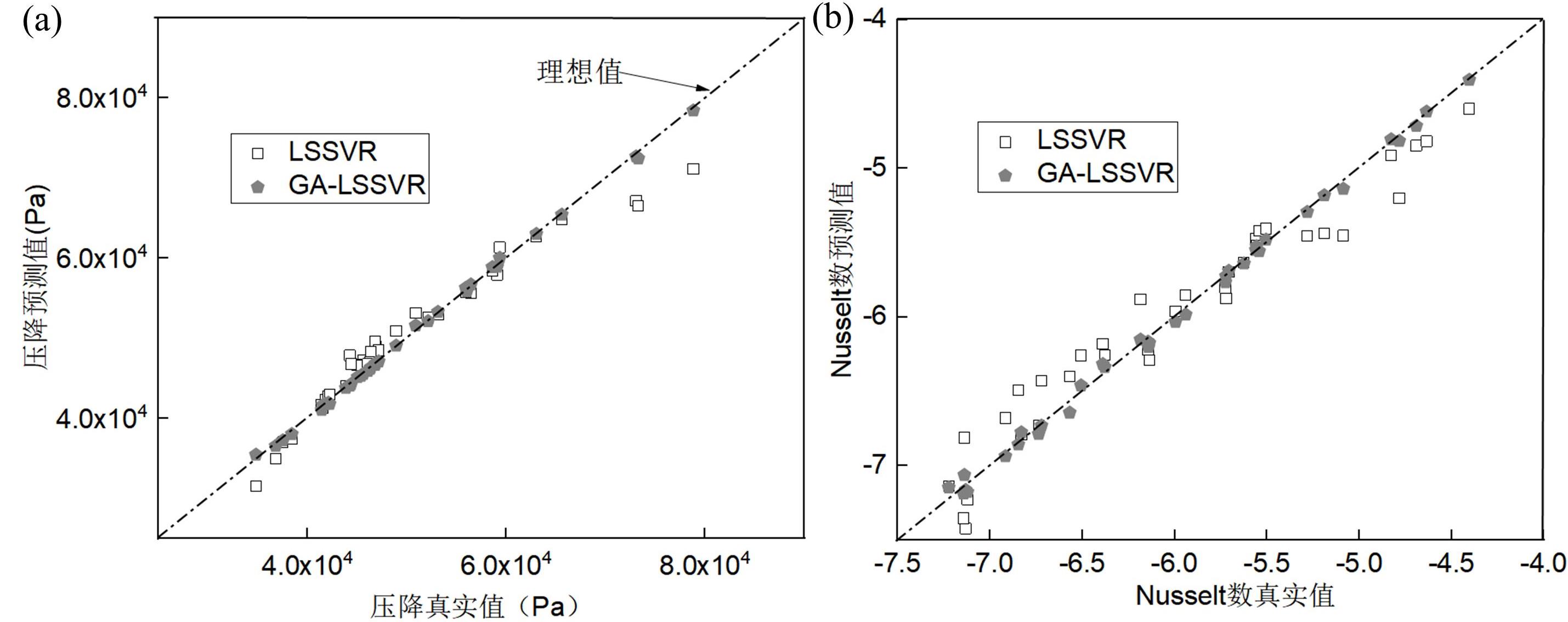
图9 LSSVR和GA-LSSVR模型训练集预测值与真实值比对
Fig. 9 Comparison between the real value and predicted value of the training set of LSSVR and GA-LSSVR models
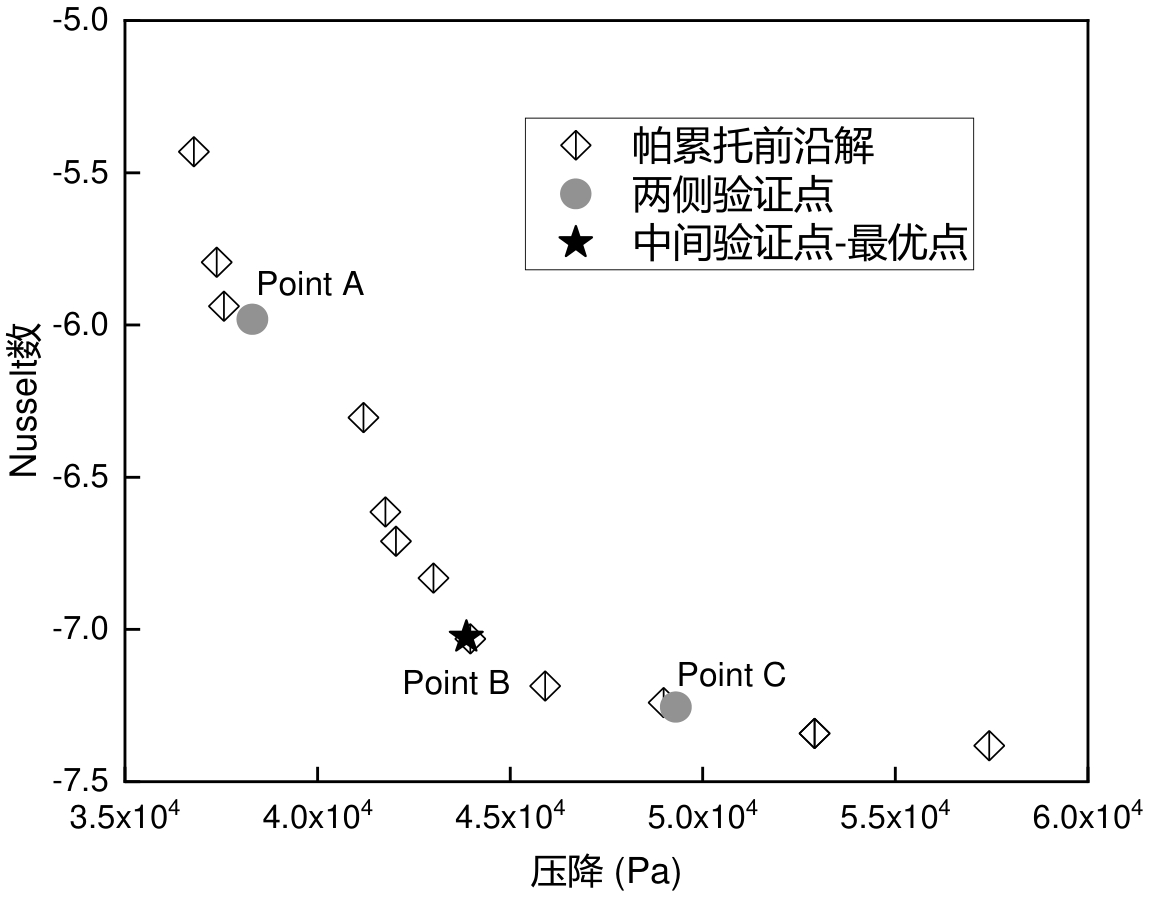
图10 MOPSO算法求解所得帕累托前沿解
Fig. 10 The MOPSO algorithm solves for the Pareto front solution
| 模型参数 | 原模型 | A点 | B点 | C点 | |
|---|---|---|---|---|---|
| hm1 (μm) | 25 | 78.57 | 29.75 | 20 | |
| hm2 (μm) | 25 | 95.49 | 99.59 | 95.46 | |
| wm1 (μm) | 200 | 122.66 | 75.94 | 40.33 | |
| wm2 (μm) | 200 | 219.63 | 219.88 | 207.86 | |
| Δp | 预测值 | - | 38310 | 43866 | 49304 |
| 真实值 | 48373 | 38289 | 43903 | 49144 | |
| 误差(%) | - | 0.05 | 0.08 | 0.33 | |
| Nu | 预测值 | - | 5.981 | 7.025 | 7.255 |
| 真实值 | 5.841 | 5.961 | 7.018 | 7.181 | |
| 误差(%) | - | 0.34 | 0.1 | 1.03 | |
表2 选取的验证点比对情况总结
Table 2 Summary of selected validation points
| 模型参数 | 原模型 | A点 | B点 | C点 | |
|---|---|---|---|---|---|
| hm1 (μm) | 25 | 78.57 | 29.75 | 20 | |
| hm2 (μm) | 25 | 95.49 | 99.59 | 95.46 | |
| wm1 (μm) | 200 | 122.66 | 75.94 | 40.33 | |
| wm2 (μm) | 200 | 219.63 | 219.88 | 207.86 | |
| Δp | 预测值 | - | 38310 | 43866 | 49304 |
| 真实值 | 48373 | 38289 | 43903 | 49144 | |
| 误差(%) | - | 0.05 | 0.08 | 0.33 | |
| Nu | 预测值 | - | 5.981 | 7.025 | 7.255 |
| 真实值 | 5.841 | 5.961 | 7.018 | 7.181 | |
| 误差(%) | - | 0.34 | 0.1 | 1.03 | |
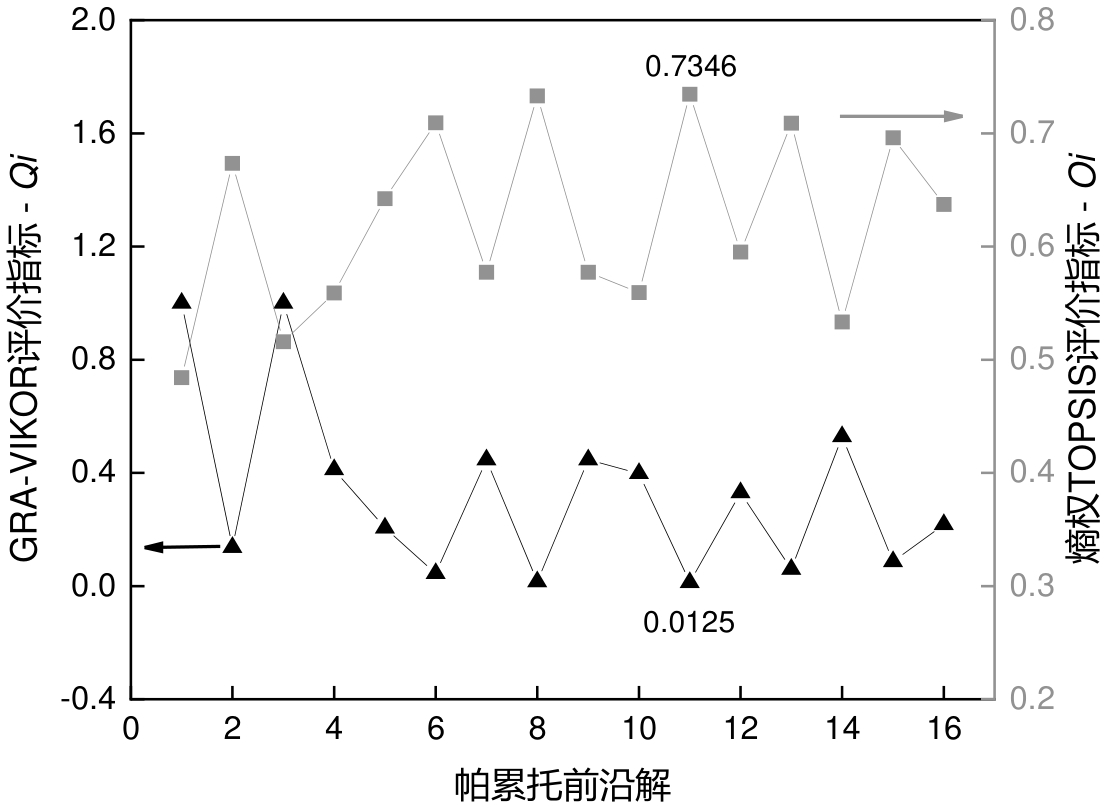
图11 熵权TOPSIS和GRA-VIKOR的多准则决策用于帕累托前沿解
Fig. 11 Multi-criteria decision making of Entropy Weighted TOPSIS and GRA-VIKOR for Pareto front solution points
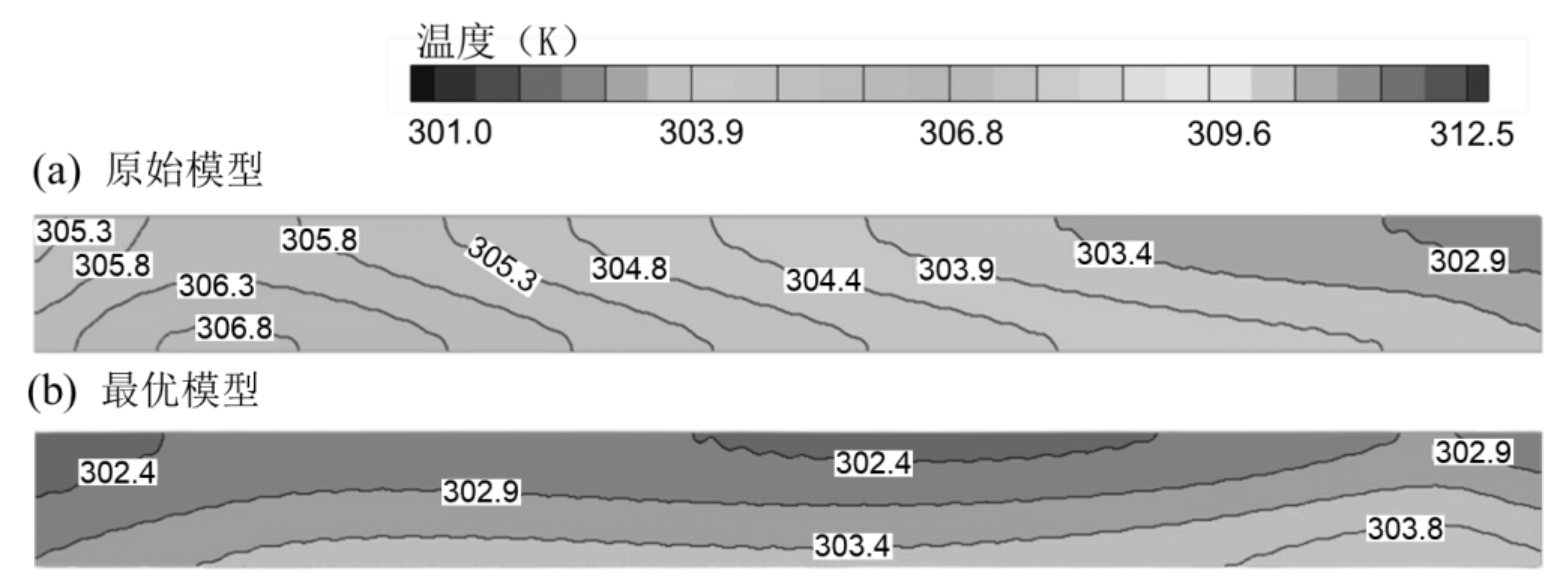
图12 MMCHS底部温度分布
Fig. 12 Temperature distribution at the bottom of MMCHS
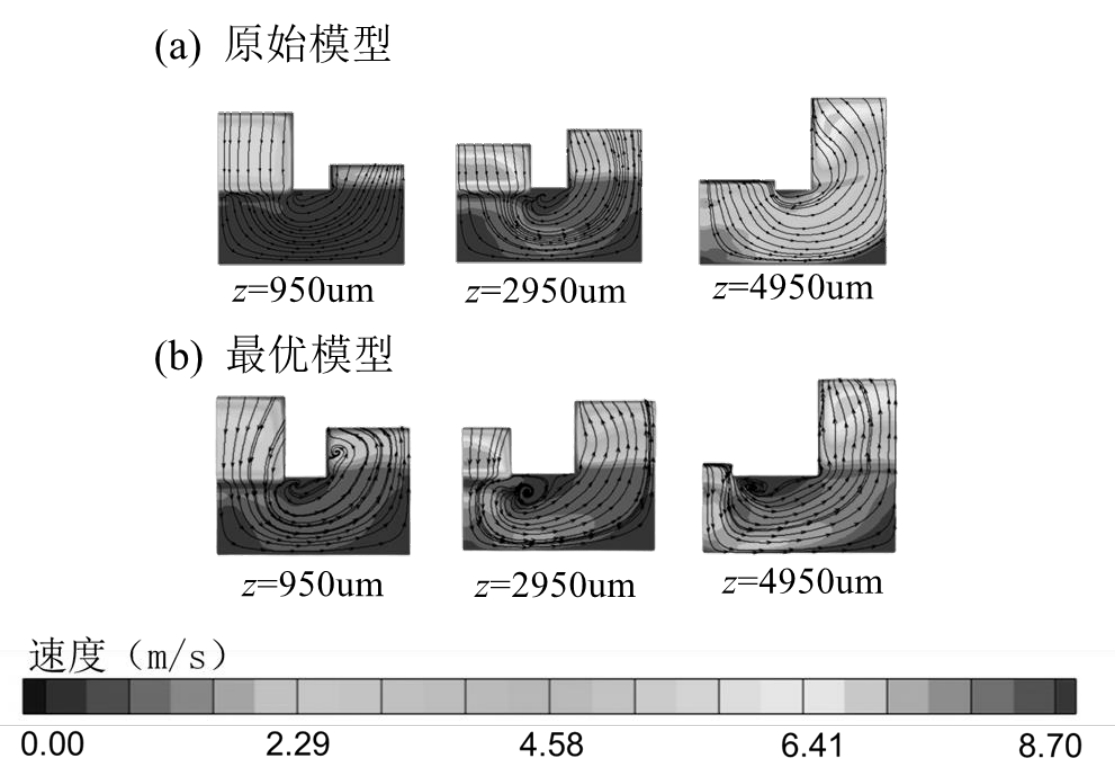
图13 不同微通道纵切面速度分布
Fig. 13 Velocity distribution of microchannel in various cut planes
| [1] | Pedram M, Nazarian S. Thermal modeling, analysis, and management in VLSI circuits: principles and methods[J]. Proceedings of the IEEE, 2006, 94(8): 1487-1501. |
| [2] | Agostini B, Fabbri M, Park J E, et al. State of the art of high heat flux cooling technologies[J]. Heat Transfer Engineering, 2007, 28(4): 258-281. |
| [3] | Tuckerman D B, Pease R F W. High-performance heat sinking for VLSI[J]. IEEE Electron Device Letters, 1981, 2(5): 126-129. |
| [4] | Sharma C S, Tiwari M K, Zimmermann S, et al. Energy efficient hotspot-targeted embedded liquid cooling of electronics[J]. Applied Energy, 2015, 138: 414-422. |
| [5] | He Z Q, Yan Y F, Zhang Z E. Thermal management and temperature uniformity enhancement of electronic devices by micro heat sinks: a review[J]. Energy, 2021, 216: 119223. |
| [6] | Jiang M X, Pan Z L. Optimization of microchannel heat sink based on multi-objective particle swarm optimization algorithm for integrated circuit chips cooling[J]. Numerical Heat Transfer, Part B: Fundamentals, 2025, 86(4): 840-858. |
| [7] | Li J B, Zhang T Y, Li Z D, et al. Multi-objective parameter optimization design of tapered-type manifold/variable cross-section microchannel heat sink[J]. Applied Thermal Engineering, 2024, 251: 123587. |
| [8] | Fakhri M, Rezaee B, Pakzad H, et al. Facile, scalable, and low-cost superhydrophobic coating for frictional drag reduction with anti-corrosion property[J]. Tribology International, 2023, 178: 108091. |
| [9] | Chen H P, Zhang T S, Gao Q, et al. Thermal management enhancement of electronic chips based on novel technologies[J]. Energy, 2025, 316: 134575. |
| [10] | Chen C W, Li F, Wang X Y, et al. Improvement of flow and heat transfer performance of manifold microchannel with porous fins[J]. Applied Thermal Engineering, 2022, 206: 118129. |
| [11] | Chen C W, Zhang J Z, Wang X Y, et al. Optimizing hydrothermal performance of manifold microchannels: a study on geometric dimensionless parameters[J]. International Communications in Heat and Mass Transfer, 2025, 164: 108979. |
| [12] | Drummond K P, Back D, Sinanis M D, et al. A hierarchical manifold microchannel heat sink array for high-heat-flux two-phase cooling of electronics[J]. International Journal of Heat and Mass Transfer, 2018, 117: 319-330. |
| [13] | Kang H Z, Mei X S, Xu K D, et al. Investigation of heat transfer performance of the manifold microchannel heat sink with different interface configurations[J]. International Communications in Heat and Mass Transfer, 2024, 159: 107807. |
| [14] | Yang J S, Cheng K Y, Zhang K, et al. Numerical study on thermal and hydraulic performances of a hybrid manifold microchannel with bifurcations for electronics cooling[J]. Applied Thermal Engineering, 2023, 232: 121099. |
| [15] | Siddiqui M U, Siddiqui O K, Al-Sarkhi A, et al. A novel heat exchanger design procedure for photovoltaic panel cooling application: an analytical and experimental evaluation[J]. Applied Energy, 2019, 239: 41-56. |
| [16] | Lin Y H, Luo Y, Li W, et al. Single-phase and two-phase flow and heat transfer in microchannel heat sink with various manifold arrangements[J]. International Journal of Heat and Mass Transfer, 2021, 171: 121118. |
| [17] | Pan Y H, Zhao R, Nian Y L, et al. Numerical study on heat transfer characteristics of a pin–fin staggered manifold microchannel heat sink[J]. Applied Thermal Engineering, 2023, 219: 119436. |
| [18] | Cheng J P, Xu H S, Tang Z G, et al. Multi-objective optimization of manifold microchannel heat sink with corrugated bottom impacted by nanofluid jet[J]. International Journal of Heat and Mass Transfer, 2023, 201: 123634. |
| [19] | Harpole G M, Eninger J E. Micro-channel heat exchanger optimization[C]//1991 Proceedings, Seventh IEEE Semiconductor Thermal Measurement and Management Symposium. February 12-14, 1991, Phoenix, AZ, USA. IEEE, 2002: 59-63. |
| [20] | Rabiee A, Ahmadian-Elmi M, Hajmohammadi M R, et al. Multi-objective optimization of rectangular microchannel heat sink based on entropy generation and hydro-thermal performance using NSGA-II algorithm[J]. International Communications in Heat and Mass Transfer, 2023, 149: 107140. |
| [21] | Zhao S Q, Yan L M, Goyal V, et al. Artificial neural network-based optimization of baffle geometries for maximized heat transfer efficiency in microchannel heat sinks[J]. Case Studies in Thermal Engineering, 2023, 49: 103331. |
| [22] | Sui Z G, Lin H S, Sun Q, et al. Multi-objective optimization of efficient liquid cooling-based battery thermal management system using hybrid manifold channels[J]. Applied Energy, 2024, 371: 123766. |
| [23] | Sang S M, Liu P, Jin Y, et al. Multi-factor impact mechanism of the hydrothermal performance of manifold microchannel heat sinks based on multi-method collaborative optimization[J]. International Communications in Heat and Mass Transfer, 2025, 164: 108931. |
| [24] | Shanmugam M, Sirisha Maganti L. Multi-objective optimization of parallel microchannel heat sink with inlet/outlet U, I, Z type manifold configuration by RSM and NSGA-II[J]. International Journal of Heat and Mass Transfer, 2023, 201: 123641. |
| [25] | Fu L Z, Zhao M C, Wu P, et al. Geometric multi-objective optimization of a microchannel-pinfin hybrid heat sink[J]. International Journal of Thermal Sciences, 2025, 211: 109711. |
| [26] | Hajialibabaei M, Saghir M Z, Dincer I, et al. Optimization of heat dissipation in novel design wavy channel heat sinks for better performance[J]. Energy, 2024, 297: 131155. |
| [27] | Sarangi S, Bodla K K, Garimella S V, et al. Manifold microchannel heat sink design using optimization under uncertainty[J]. International Journal of Heat and Mass Transfer, 2014, 69: 92-105. |
| [28] | Chen B Q, Zhang C Y, Xu Y Q, et al. Performance improvement of Z-type manifold microchannel heat sink with novel fin-arrangements[J]. Heat Transfer Engineering, 2025, 46(8): 661-676. |
| [29] | Yang M, Cao B Y. Multi-objective optimization of a hybrid microchannel heat sink combining manifold concept with secondary channels[J]. Applied Thermal Engineering, 2020, 181: 115592. |
| [30] | 史晓军, 李珊, 魏亚东, 等. 纳米流体矩形微通道热沉结构参数多目标优化[J]. 西安交通大学学报, 2018, 52(5): 56-61, 132. |
| Shi X J, Li S, Wei Y D, et al. Multi-objective optimization on the geometrical parameters of a nanofluid-cooled rectangular microchannel heat sink[J]. Journal of Xi'an Jiaotong University, 2018, 52(5): 56-61, 132. | |
| [31] | Zhang J Z, Xu J J, Chen J X, et al. Multi objective optimization of manifold microchannel heat sink with staggered microchannels[J]. International Communications in Heat and Mass Transfer, 2024, 159: 108106. |
| [32] | Pu X J, Zhao Z C, Sun M K, et al. Numerical study on temperature distribution uniformity and cooling performance of manifold microchannel heat sink[J]. Applied Thermal Engineering, 2024, 237: 121779. |
| [33] | Zhou J H, Chen X M, Zhao Q, et al. Flow thermohydraulic characterization of hierarchical-manifold microchannel heat sink with uniform flow distribution[J]. Applied Thermal Engineering, 2021, 198: 117510. |
| [34] | Suykens J A K, Vandewalle J. Least squares support vector machine classifiers[J]. Neural Processing Letters, 1999, 9(3): 293-300. |
| [35] | Ding S F, Su C Y, Yu J Z. An optimizing BP neural network algorithm based on genetic algorithm[J]. Artificial Intelligence Review, 2011, 36(2): 153-162. |
| [36] | Xu G, Luo K, Jing G X, et al. On convergence analysis of multi-objective particle swarm optimization algorithm[J]. European Journal of Operational Research, 2020, 286(1): 32–38. |
| [37] | Liu D S, Tan K C, Huang S Y, et al. On solving multiobjective Bin packing problems using evolutionary particle swarm optimization[J]. European Journal of Operational Research, 2008, 190(2): 357-382. |
| [38] | Luo Y Q, Yuan X G, Liu Y J. An improved PSO algorithm for solving non-convex NLP/MINLP problems with equality constraints[J]. Computers & Chemical Engineering, 2007, 31(3): 153-162. |
| [39] | Baranidharan B, Liu J, Mahapatra G S, et al. Group decision on rationalizing disease analysis using novel distance measure on Pythagorean fuzziness[J]. Complex & Intelligent Systems, 2024, 10(3): 4373-4395. |
| [40] | Tajally A, Babakhani B, Jeyzanibrahimzade E, et al. Sustainable supplier selection and order allocation problem considering the agility and resilience dimensions: a novel multi-stage data-driven decision-making approach[J]. International Journal of Systems Science: Operations & Logistics, 2025, 12(1): 2458756. |
| [41] | Cheng X, Zhao H, Zhang Y Q, et al. A study on site selection of pumped storage power plants based on C-OWA-AHP and VIKOR-GRA: a case study in China[J]. Journal of Energy Storage, 2023, 72: 108623. |
| [42] | Theilig K, Vollmer M, Lang W, et al. Multi-criteria decision-making for energy building renovation: Comparing exterior wall structures with the AHP, ANP, utility analysis, and TOPSIS[J]. Building and Environment, 2025, 280: 113075. |
| [1] | 袁琳慧, 王瑜. 单服务器浸没射流式液冷系统散热性能[J]. 化工学报, 2025, 76(S1): 160-169. |
| [2] | 赵子祥, 段钟弟, 孙浩然, 薛鸿祥. 大温差两相流动诱导水锤冲击的数值模型[J]. 化工学报, 2025, 76(S1): 170-180. |
| [3] | 黄博, 黄灏, 王文, 贺隆坤. 薄膜型LNG船液货舱温度场计算分析[J]. 化工学报, 2025, 76(S1): 195-204. |
| [4] | 汪思远, 刘国强, 熊通, 晏刚. 窗式空调器轴流风机的风速非均匀分布特性及其对冷凝器流路优化设计的影响规律[J]. 化工学报, 2025, 76(S1): 205-216. |
| [5] | 孙云龙, 徐肖肖, 黄永方, 郭纪超, 陈卫卫. 水平光滑管内CO2流动沸腾的非绝热可视化研究[J]. 化工学报, 2025, 76(S1): 230-236. |
| [6] | 石一帆, 柯钢, 陈浩, 黄孝胜, 叶芳, 李成娇, 郭航. 大型高低温环境实验室温度控制仿真[J]. 化工学报, 2025, 76(S1): 268-280. |
| [7] | 孔繁臣, 张硕, 唐明生, 邹慧明, 胡舟航, 田长青. 二氧化碳直线压缩机气体轴承模拟[J]. 化工学报, 2025, 76(S1): 281-288. |
| [8] | 孔俊龙, 毕扬, 赵耀, 代彦军. 储能电池直冷热管理系统的模拟实验[J]. 化工学报, 2025, 76(S1): 289-296. |
| [9] | 何婷, 张开, 林文胜, 陈利琼, 陈家富. 沼气超临界压力低温脱碳-液化耦合流程研究[J]. 化工学报, 2025, 76(S1): 418-425. |
| [10] | 任现超, 谷雅秀, 段少斌, 贾文竹, 李汉林. 翅片式椭圆套管蒸发式冷凝器传热传质性能实验研究[J]. 化工学报, 2025, 76(S1): 75-83. |
| [11] | 王俊鹏, 冯佳琪, 张恩搏, 白博峰. 曲折式与阵列式迷宫阀芯结构内流动与空化特性研究[J]. 化工学报, 2025, 76(S1): 93-105. |
| [12] | 于宏鑫, 王宁波, 郭焱华, 邵双全. 动态蓄冰系统的板式换热器流动换热模拟研究[J]. 化工学报, 2025, 76(S1): 106-113. |
| [13] | 沙鑫权, 胡然, 丁磊, 蒋珍华, 吴亦农. 空间用单机两级有阀线性压缩机研制及测试[J]. 化工学报, 2025, 76(S1): 114-122. |
| [14] | 吴馨, 龚建英, 李祥宇, 王宇涛, 杨小龙, 蒋震. 超声波激励疏水表面液滴运动的实验研究[J]. 化工学报, 2025, 76(S1): 133-139. |
| [15] | 燕子腾, 詹飞龙, 丁国良. 空调用套管式分流器结构设计及分流效果验证[J]. 化工学报, 2025, 76(S1): 152-159. |
| 阅读次数 | ||||||
|
全文 |
|
|||||
|
摘要 |
|
|||||
 京公网安备 11010102001995号