• •
吉鲁东1( ), 朱春梦1,2, 柳楠1, 郭建豪1, 赵云鹏1, 石孝刚1, 蓝兴英1()
收稿日期:2025-11-11
修回日期:2026-01-19
出版日期:2026-01-21
通讯作者:
蓝兴英
作者简介:吉鲁东(2000—),男,硕士研究生,2024210539@student.cup.edu.cn
基金资助:
Ludong JI1(), Chunmeng ZHU1,2, Nan LIU1, Jianhao GUO1, Yunpeng ZHAO1, Xiaogang SHI1, Xingying LAN1()
Received:2025-11-11
Revised:2026-01-19
Online:2026-01-21
Contact:
Xingying LAN
摘要:
为应对化工过程因动态特性、强非线性与复杂时空耦合导致传统故障检测模型精度低且动态适应性差的难题,提出一种基于动态残差补偿的工业时序数据故障检测模型(Dynamic Residual Compensation-based Detection Model, DRCDM)。DRCDM利用卷积神经网络-双向长短期记忆网络(CNN-BiLSTM)挖掘时序数据的时空依赖关系并进行初步预测,随后构建包含原始数据统计量、基础模型预测值和历史残差的动态统计量的增强元特征集,再驱动XGBoost对预测偏差实时建模与修正。在田纳西-伊斯曼(TE)过程及某280万吨/年催化裂化(FCC)装置运行数据的实验表明,动态残差补偿能够有效实现偏差的实时修正,显著提升DRCDM故障检测的准确性和可靠性。
中图分类号:
吉鲁东, 朱春梦, 柳楠, 郭建豪, 赵云鹏, 石孝刚, 蓝兴英. 基于动态残差补偿的工业时序数据故障检测模型[J]. 化工学报, DOI: 10.11949/0438-1157.20251250.
Ludong JI, Chunmeng ZHU, Nan LIU, Jianhao GUO, Yunpeng ZHAO, Xiaogang SHI, Xingying LAN. Industrial time series data fault detection model based on dynamic residual correction[J]. CIESC Journal, DOI: 10.11949/0438-1157.20251250.
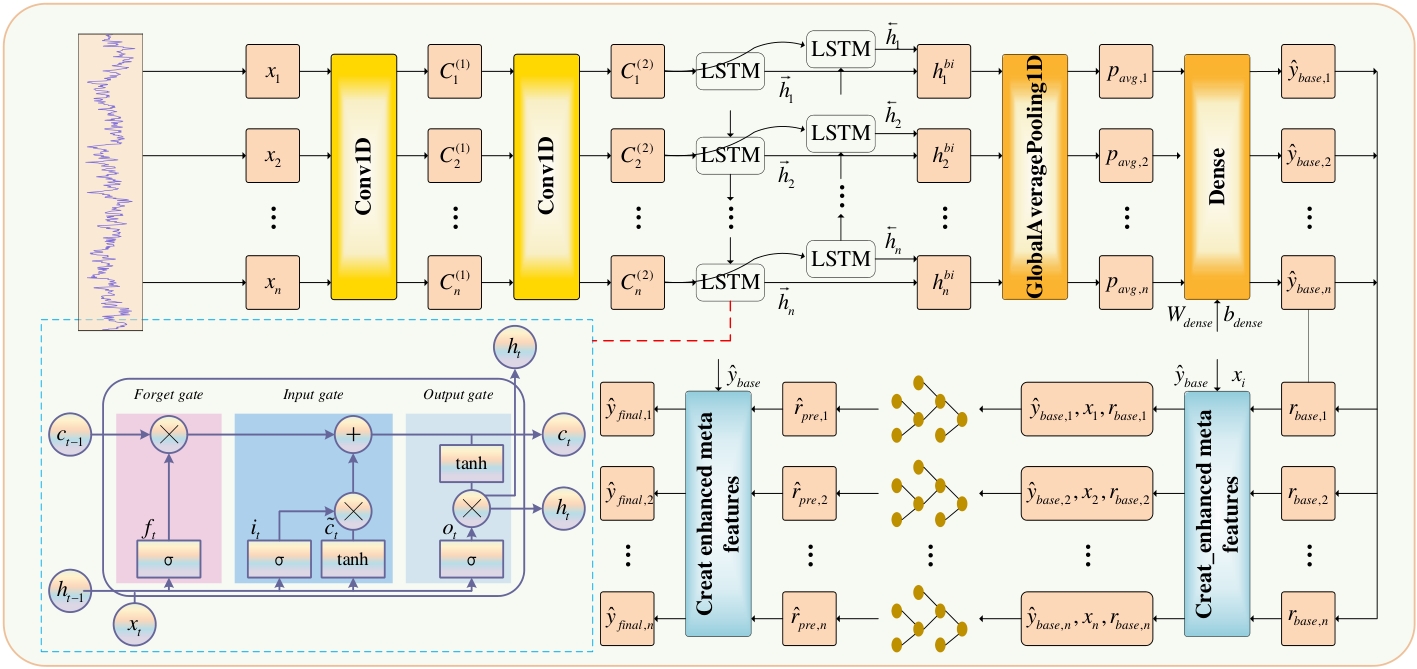
图1 DRCDM架构
Fig.1 DRCDM architecture
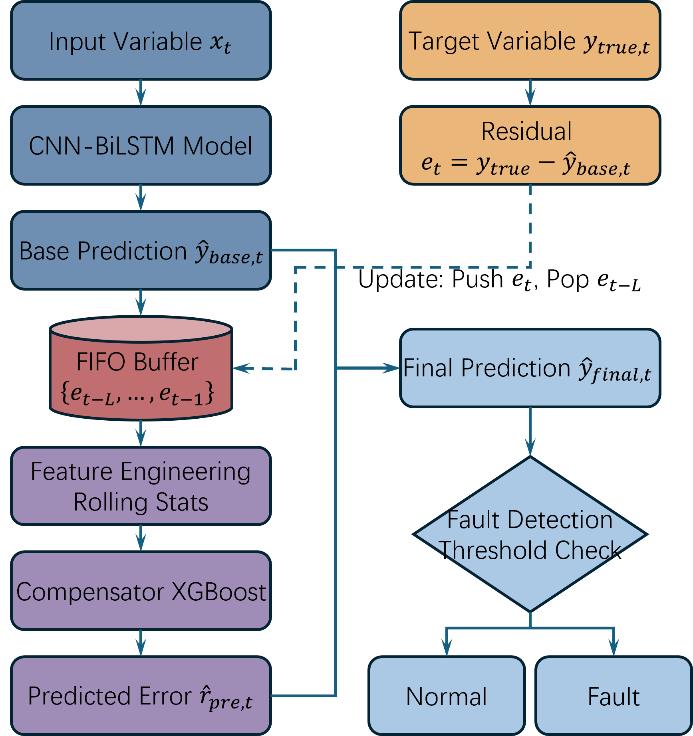
图2 在线更新机制
Fig.2 Online update mechanism
| Model | Parameter |
|---|---|
| CNN | (Conv1D) Filter=128, Kernel=3, Activation=Relu |
| Dropout=0.2 | |
| (Conv1D) Filter=64, Kernel=3, Activation=Relu | |
| BiLSTM | BiLSTM=64 |
| Dropout=0.2 | |
| XGBoost | N_estimators=[100, 200, 300] |
| Max_depth=[ | |
| Learning_rate=[0.01, 0.05, 0.1] | |
| Subsampl=[0.8, 1.0] | |
| Colsample_bytree=[0.8, 1.0] |
表1 模型参数设置
Table 1 Parameters of DRCDM
| Model | Parameter |
|---|---|
| CNN | (Conv1D) Filter=128, Kernel=3, Activation=Relu |
| Dropout=0.2 | |
| (Conv1D) Filter=64, Kernel=3, Activation=Relu | |
| BiLSTM | BiLSTM=64 |
| Dropout=0.2 | |
| XGBoost | N_estimators=[100, 200, 300] |
| Max_depth=[ | |
| Learning_rate=[0.01, 0.05, 0.1] | |
| Subsampl=[0.8, 1.0] | |
| Colsample_bytree=[0.8, 1.0] |
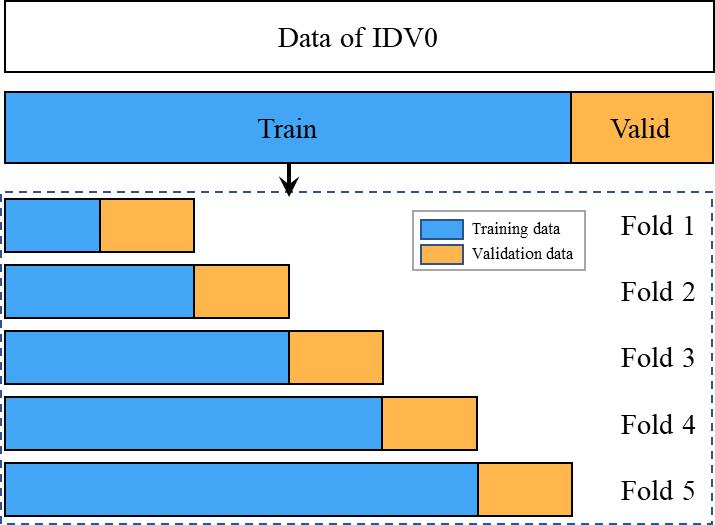
图3 时序交叉策略
Fig.3 Timing cross-validation strategy
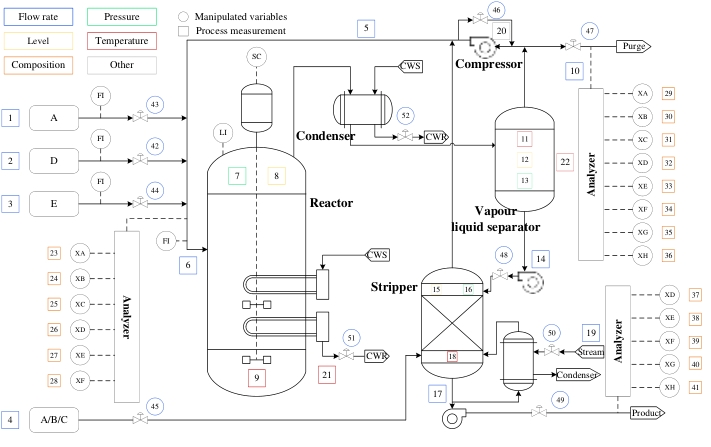
图4 TE工艺流程
Fig.4 The TE process
| 故障编号 | 故障描述 | 故障类型 |
|---|---|---|
| IDV1 | A/C进料的比率,B成分不变(流4) | 阶跃 |
| IDV2 | B成分变化,A/C进料比率不变(流4) | 阶跃 |
| IDV3 | D的进料温度变化(流2) | 阶跃 |
| IDV4 | 反应器冷却水入口温度变化 | 阶跃 |
| IDV5 | 冷凝器冷却水入口温度变化 | 阶跃 |
| IDV6 | A进料损失(流1) | 阶跃 |
| IDV7 | C存在压力损失-可用性降低(流4) | 阶跃 |
| IDV8 | A、B、C进料成分变化(流4) | 随机变量 |
| IDV9 | D的进料温度变化(流2) | 随机变量 |
| IDV10 | C的进料温度变化(流4) | 随机变量 |
| IDV11 | 反应器冷却水入口温度变化 | 随机变量 |
| IDV12 | 冷凝器冷却水入口温度变化 | 随机变量 |
| IDV13 | 反应动力学变化 | 缓慢偏移 |
| IDV14 | 反应器冷却水阀门 | 阀粘滞 |
| IDV15 | 冷凝器冷却水阀门 | 阀粘滞 |
表2 TE过程的工艺故障
Table 2 Faults of TE process
| 故障编号 | 故障描述 | 故障类型 |
|---|---|---|
| IDV1 | A/C进料的比率,B成分不变(流4) | 阶跃 |
| IDV2 | B成分变化,A/C进料比率不变(流4) | 阶跃 |
| IDV3 | D的进料温度变化(流2) | 阶跃 |
| IDV4 | 反应器冷却水入口温度变化 | 阶跃 |
| IDV5 | 冷凝器冷却水入口温度变化 | 阶跃 |
| IDV6 | A进料损失(流1) | 阶跃 |
| IDV7 | C存在压力损失-可用性降低(流4) | 阶跃 |
| IDV8 | A、B、C进料成分变化(流4) | 随机变量 |
| IDV9 | D的进料温度变化(流2) | 随机变量 |
| IDV10 | C的进料温度变化(流4) | 随机变量 |
| IDV11 | 反应器冷却水入口温度变化 | 随机变量 |
| IDV12 | 冷凝器冷却水入口温度变化 | 随机变量 |
| IDV13 | 反应动力学变化 | 缓慢偏移 |
| IDV14 | 反应器冷却水阀门 | 阀粘滞 |
| IDV15 | 冷凝器冷却水阀门 | 阀粘滞 |
| 编号 | 运行时长/h | 样本数量 |
|---|---|---|
| IDV0(正常) | 24.0 | 480 |
| IDV6 | 14.1 | 282 |
| IDV1-5,7-15 | 48.0 | 960 |
表3 TE过程仿真数据收集
Table 3 Data of TE process
| 编号 | 运行时长/h | 样本数量 |
|---|---|---|
| IDV0(正常) | 24.0 | 480 |
| IDV6 | 14.1 | 282 |
| IDV1-5,7-15 | 48.0 | 960 |
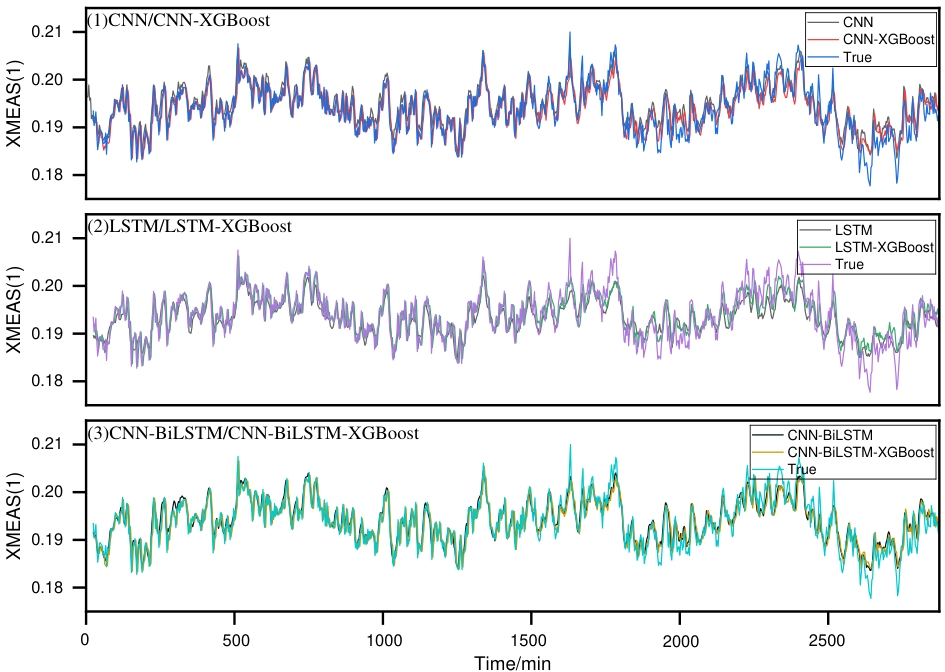
图5 六种模型预测结果
Fig.5 The prediction results of the six models
| Model | R2 | RMSE | MAE |
|---|---|---|---|
| CNN | 0.83 | 0.0021 | 0.0017 |
| CNN-XGBoost | 0.89 | 0.0016 | 0.0010 |
| LSTM | 0.74 | 0.0026 | 0.0020 |
| LSTM-XGBoost | 0.87 | 0.0018 | 0.0011 |
| CNN-BiLSTM | 0.88 | 0.0018 | 0.0014 |
| CNN-BiLSTM-XGBoost | 0.91 | 0.0016 | 0.0010 |
表4 六种模型预测性能指标结果
Table 4 The prediction performance indicators results of the six models
| Model | R2 | RMSE | MAE |
|---|---|---|---|
| CNN | 0.83 | 0.0021 | 0.0017 |
| CNN-XGBoost | 0.89 | 0.0016 | 0.0010 |
| LSTM | 0.74 | 0.0026 | 0.0020 |
| LSTM-XGBoost | 0.87 | 0.0018 | 0.0011 |
| CNN-BiLSTM | 0.88 | 0.0018 | 0.0014 |
| CNN-BiLSTM-XGBoost | 0.91 | 0.0016 | 0.0010 |
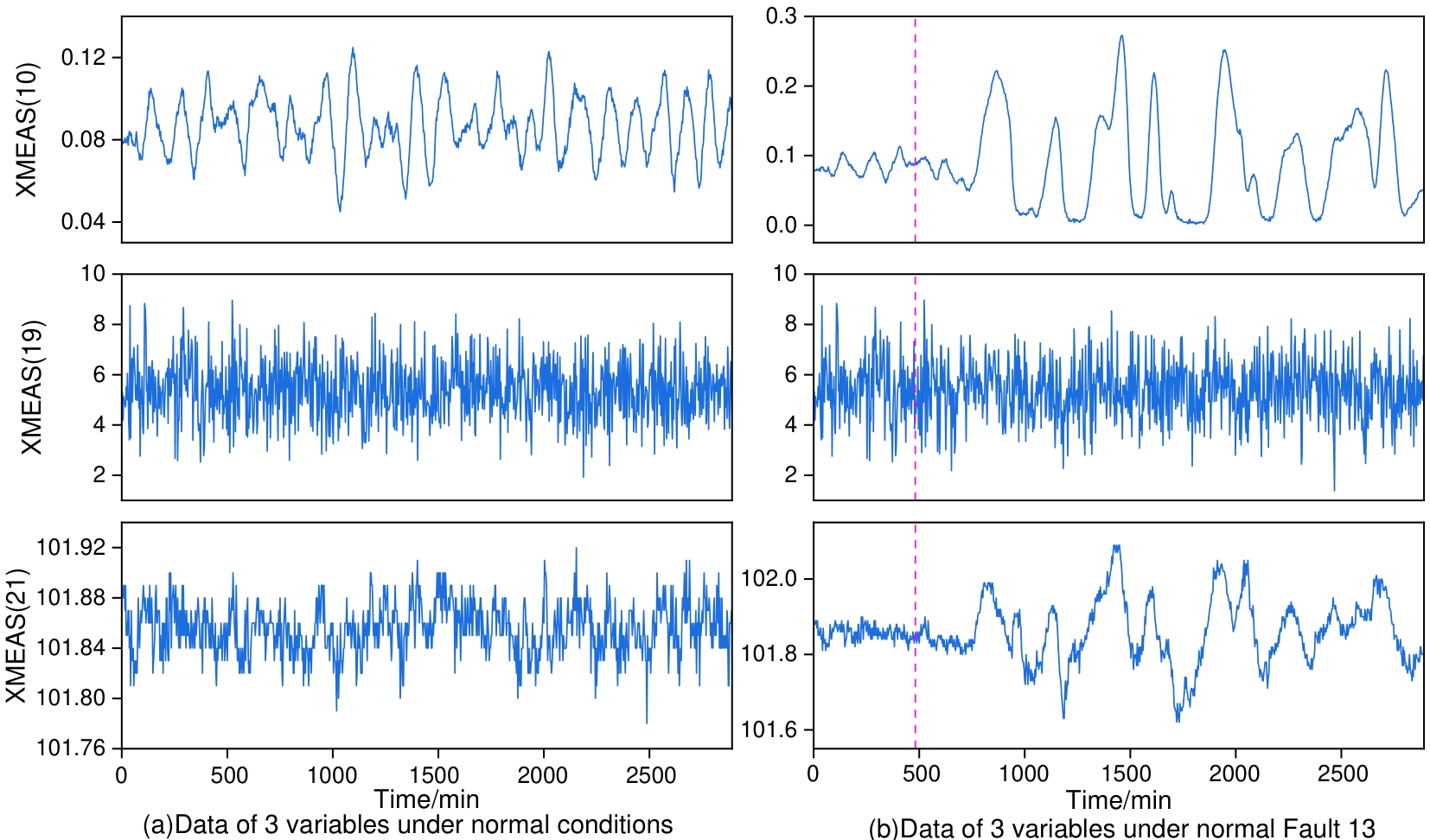
图6 IDV0与IDV13工况下三个变量的动态轨迹
Fig.6 The dynamic trajectories of the three variables under IDV0 and IDV 13 conditions
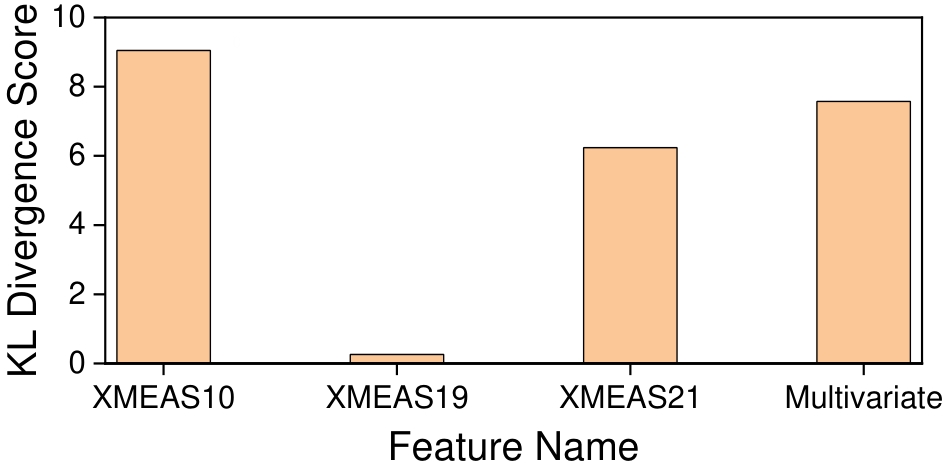
图7 三个变量的概率分布偏移程度
Fig.7 The degree of deviation of probability distribution of the three variables
| F1-score/% | FDR/% | FAR/% | Delay/min | 单次推断时间/ms | ||
|---|---|---|---|---|---|---|
| IDV3 | Single-variable | 69.33 | 53.06 | 0 | 54 | 0.0998 |
| Multi-variable | 56.45 | 39.33 | 0 | 63 | 0.1393 | |
| IDV9 | Single-variable | 56.58 | 39.45 | 0 | 60 | 0.1022 |
| Multi-variable | 62.96 | 45.94 | 0 | 57 | 0.1373 | |
| DIV13 | Single-variable | 95.23 | 90.89 | 0 | 132 | 0.1027 |
| Multi-variable | 94.81 | 90.14 | 0 | 129 | 0.1375 | |
| IDV15 | Single-variable | 27.56 | 15.98 | 0 | 30 | 0.1036 |
| Multi-variable | 49.58 | 32.96 | 0 | 30 | 0.3546 | |
表5 四种故障的单变量和多变量策略检测对比
Table 5 Comparison of univariate and multivariate strategy detection of four faults
| F1-score/% | FDR/% | FAR/% | Delay/min | 单次推断时间/ms | ||
|---|---|---|---|---|---|---|
| IDV3 | Single-variable | 69.33 | 53.06 | 0 | 54 | 0.0998 |
| Multi-variable | 56.45 | 39.33 | 0 | 63 | 0.1393 | |
| IDV9 | Single-variable | 56.58 | 39.45 | 0 | 60 | 0.1022 |
| Multi-variable | 62.96 | 45.94 | 0 | 57 | 0.1373 | |
| DIV13 | Single-variable | 95.23 | 90.89 | 0 | 132 | 0.1027 |
| Multi-variable | 94.81 | 90.14 | 0 | 129 | 0.1375 | |
| IDV15 | Single-variable | 27.56 | 15.98 | 0 | 30 | 0.1036 |
| Multi-variable | 49.58 | 32.96 | 0 | 30 | 0.3546 | |
| 目标CV水平 | 理论最小样本量 | 当前样本量 |
|---|---|---|
| <10% | 50 | 62 |
| <5% | 200 | 62 |
| <2% | 1250 | 62 |
表6 TE过程的阈值估计样本量分析结果
Table 6 Threshold estimation sample size analysis results for TE process
| 目标CV水平 | 理论最小样本量 | 当前样本量 |
|---|---|---|
| <10% | 50 | 62 |
| <5% | 200 | 62 |
| <2% | 1250 | 62 |
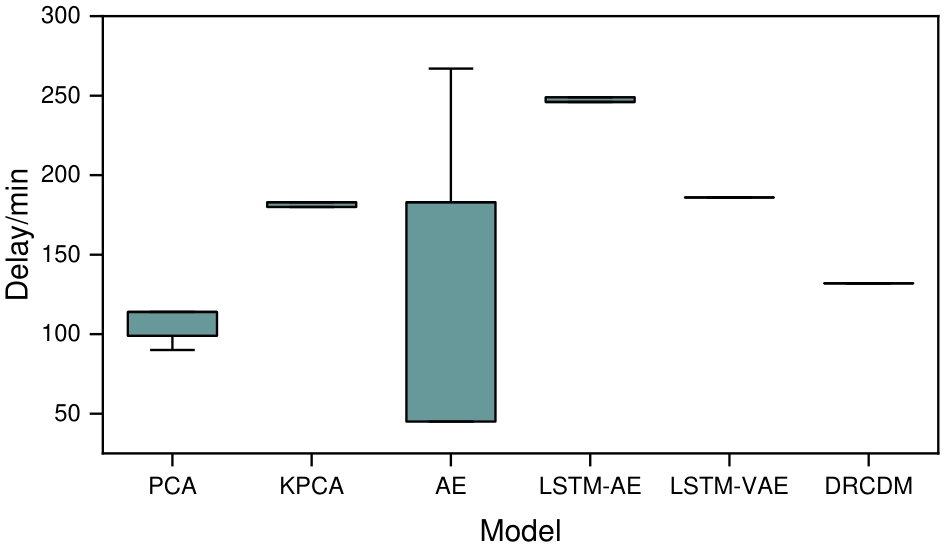
图8 六个模型的IDV13检测延迟分布箱线图
Fig.8 The IDV13 detection delay distribution box plots of the six models
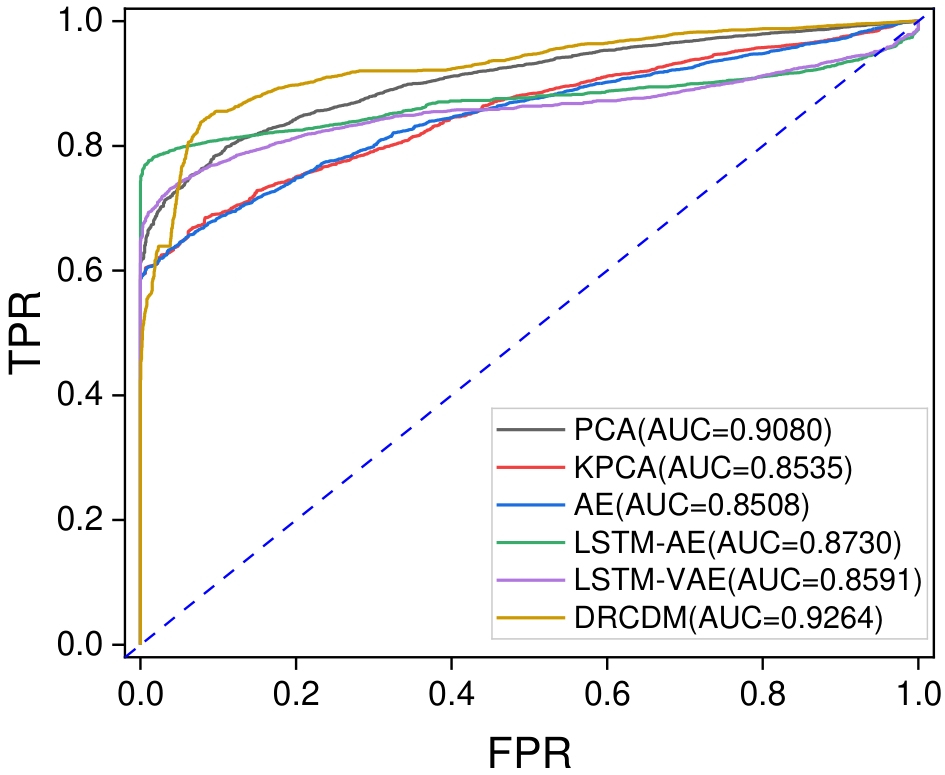
图9 六种模型的ROC/AUC分析
Fig.9 ROC/AUC analysis of the six models
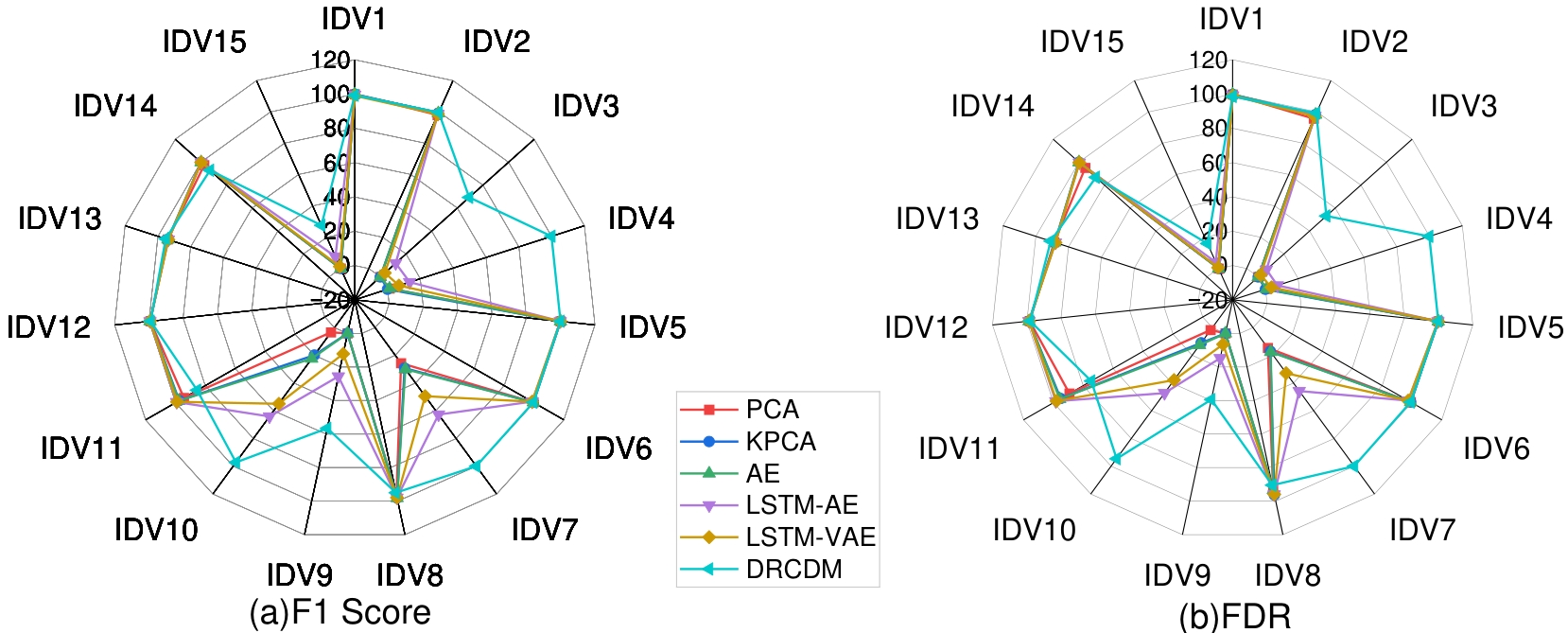
图10 六种模型的TE故障检测结果
Fig.10 The TE fault detection results of the six models
| Model | ADD/min | 单次推理时间/ms |
|---|---|---|
| PCA | 151.8 | 0.0028 |
| KPCA | 96.0 | 0.0649 |
| AE | 96.0 | 0.0760 |
| LSTM-AE | 85.5 | 0.1148 |
| LSTM-VAE | 107.1 | 0.1077 |
| DRCDM | 33.6 | 0.0989 |
表7 六种模型的平均检测延迟与单次推理时间
Table 7 The average detection delay and single inference time of the six models
| Model | ADD/min | 单次推理时间/ms |
|---|---|---|
| PCA | 151.8 | 0.0028 |
| KPCA | 96.0 | 0.0649 |
| AE | 96.0 | 0.0760 |
| LSTM-AE | 85.5 | 0.1148 |
| LSTM-VAE | 107.1 | 0.1077 |
| DRCDM | 33.6 | 0.0989 |
| Model | F1-score 95% CI/% | P-value |
|---|---|---|
| PCA | 71.76[70.96,72.47] | 0 |
| KPCA | 73.35[72.58,74.06] | 0 |
| AE | 73.53[72.77,74.24] | 0 |
| LSTM-AE | 78.66[78.01,79.32] | 0 |
| LSTM-VAE | 76.36[75.62,77.03] | 0 |
| DRCDM | 89.94[89.48,90.35] | - |
表8 基于Bootstrap重采样的六个模型F1-score
Table 8 The F1-scores of the six models based on Bootstrap resampling
| Model | F1-score 95% CI/% | P-value |
|---|---|---|
| PCA | 71.76[70.96,72.47] | 0 |
| KPCA | 73.35[72.58,74.06] | 0 |
| AE | 73.53[72.77,74.24] | 0 |
| LSTM-AE | 78.66[78.01,79.32] | 0 |
| LSTM-VAE | 76.36[75.62,77.03] | 0 |
| DRCDM | 89.94[89.48,90.35] | - |
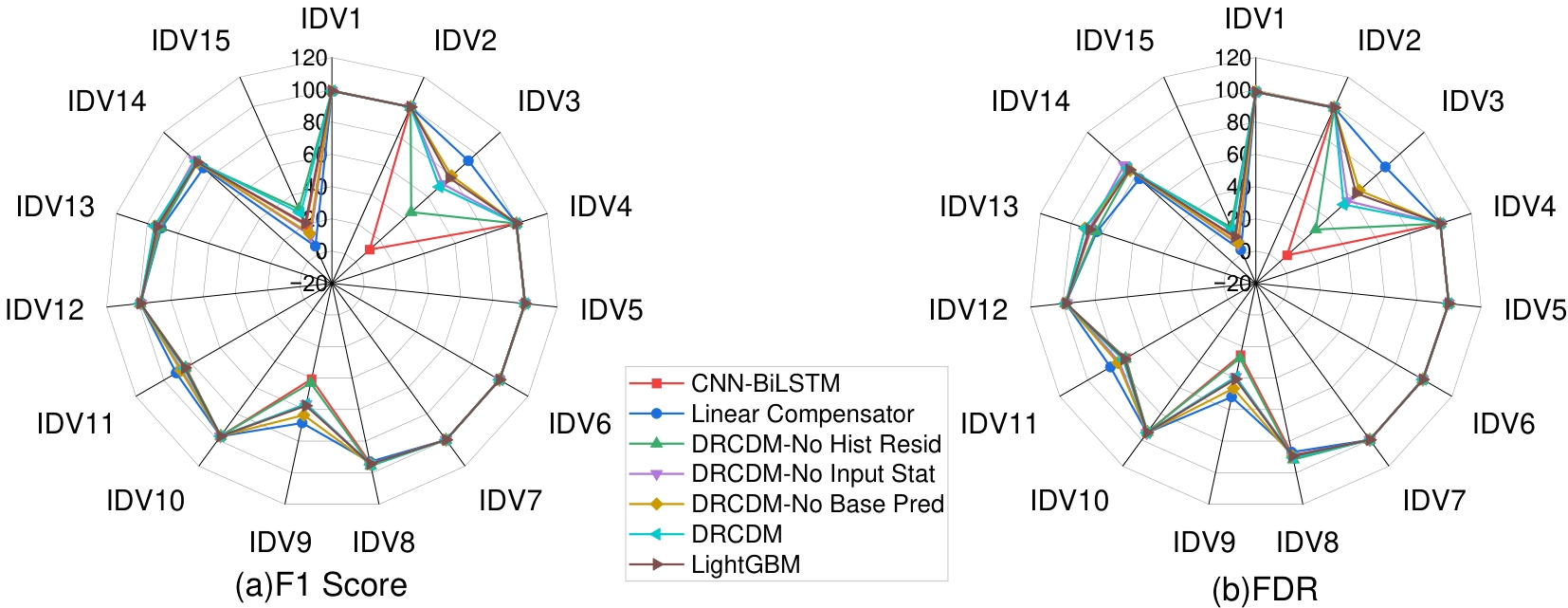
图11 消融实验对比结果
Fig.11 The comparative results of ablation experiments
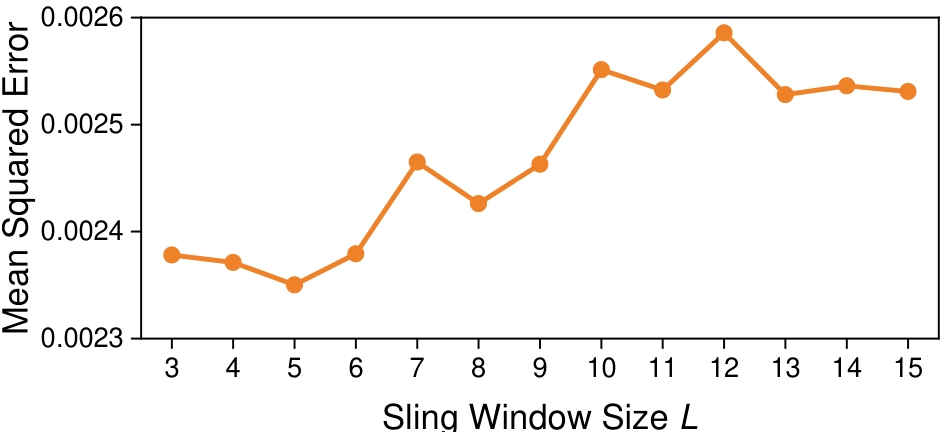
图12 滚动窗口大小对模型预测误差的影响
Fig.12 Influence of rolling window size on model prediction error
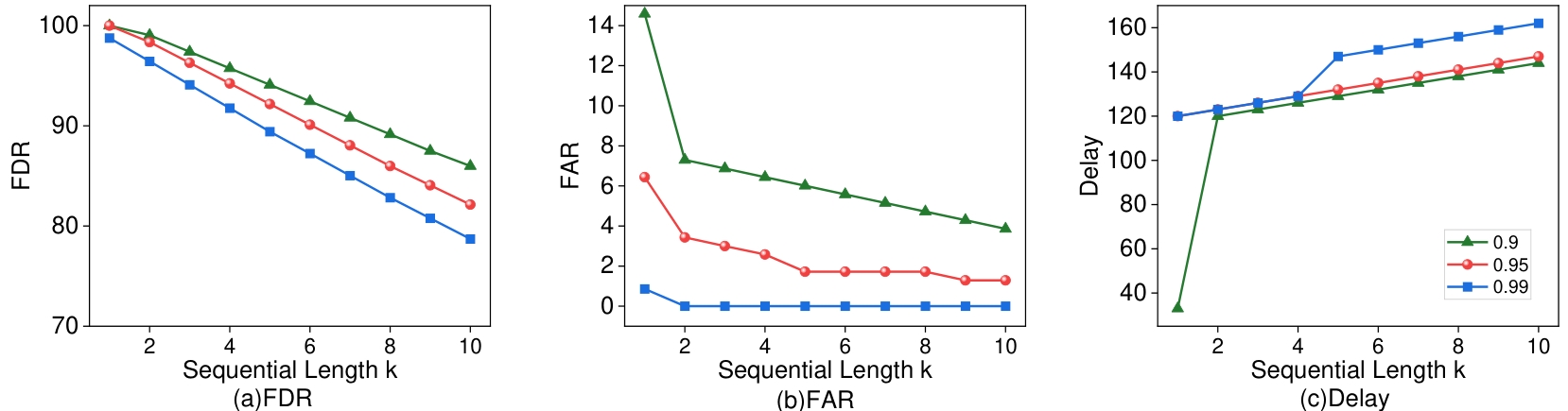
图13 序贯长度k及置信水平CI对FDR、FAR及检测延迟的影响
Fig.13 The effect of sequential length k and confidence level CI on FDR, FAR and detection delay
| 目标CV水平 | 理论最小样本量 | 当前样本量 |
|---|---|---|
| <10% | 30 | 2097 |
| <5% | 120 | 2097 |
| <2% | 747 | 2097 |
表9 FCC工艺的阈值估计样本量分析结果
Table 9 Threshold estimation sample size analysis results for FCC process
| 目标CV水平 | 理论最小样本量 | 当前样本量 |
|---|---|---|
| <10% | 30 | 2097 |
| <5% | 120 | 2097 |
| <2% | 747 | 2097 |
| Model | FAR/% | 单次推理时间/ms |
|---|---|---|
| PCA | 35.98 | 0.0004 |
| KPCA | 11.86 | 0.0373 |
| AE | 8.84 | 0.0184 |
| LSTM-AE | 21.99 | 0.1009 |
| LSTM-VAE | 3.39 | 0.0794 |
| DRCDM | 1.12 | 0.0657 |
| ADWIN Adaptive Baseline | 1.95 | 0.5641 |
| Incremental XGBoost | 1.76 | 4.0403 |
表10 基于FCC运行数据的模型检测结果
Table 10 The test results based on FCC operation data
| Model | FAR/% | 单次推理时间/ms |
|---|---|---|
| PCA | 35.98 | 0.0004 |
| KPCA | 11.86 | 0.0373 |
| AE | 8.84 | 0.0184 |
| LSTM-AE | 21.99 | 0.1009 |
| LSTM-VAE | 3.39 | 0.0794 |
| DRCDM | 1.12 | 0.0657 |
| ADWIN Adaptive Baseline | 1.95 | 0.5641 |
| Incremental XGBoost | 1.76 | 4.0403 |
| [1] | Bai Y M, Xiang S Y, Cheng F F, et al. A dynamic-inner LSTM prediction method for key alarm variables forecasting in chemical process[J]. Chinese Journal of Chemical Engineering, 2023, 55: 266-276. |
| [2] | Xiang S Y, Bai Y M, Zhao J S. Medium-term prediction of key chemical process parameter trend with small data[J]. Chemical Engineering Science, 2022, 249: 117361. |
| [3] | Jia F, Lei Y G, Guo L, et al. A neural network constructed by deep learning technique and its application to intelligent fault diagnosis of machines[J]. Neurocomputing, 2018, 272: 619-628. |
| [4] | 冯子芸, 王治红, 戴一阳. 基于随机森林的不可靠数据化工过程故障诊断方法[J]. 石油学报(石油加工), 2021, 37(1): 121-129. |
| Feng Z Y, Wang Z H, Dai Y Y. Random forest based fault diagnosis method for chemical process with unreliable data[J]. Acta Petrolei Sinica (Petroleum Processing Section), 2021, 37(1): 121-129. | |
| [5] | Wang Q L, Han J Q, Chen F, et al. Real-time risk prediction of chemical processes based on attention-based Bi-LSTM[J]. Chinese Journal of Chemical Engineering, 2024, 75: 131-141. |
| [6] | 杨余, 杨鑫, 王英, 等. 基于mini-1D-CNN模型的TE过程故障诊断[J]. 中国安全科学学报, 2023, 33(2): 173-178. |
| Yang Y, Yang X, Wang Y, et al. Research on TE process fault diagnosis based on mini-1D-CNN model[J]. China Safety Science Journal, 2023, 33(2): 173-178. | |
| [7] | 张坤, 肖慧, 徐哈宁, 等. 基于主成分分析和长短期记忆网络的滑坡地表位移监测数据缺失插补算法[J]. 科学技术与工程, 2023, 23(26): 11129-11135. |
| Zhang K, Xiao H, Xu H N, et al. Missing interpolation algorithm of landslide surface displacement monitoring data based on principal component analysis and long short term memory network[J]. Science Technology and Engineering, 2023, 23(26): 11129-11135. | |
| [8] | 孔祥玉, 陈雅琳, 罗家宇, 等. 基于偏最小二乘的多特性复杂过程监测方法[J]. 华南理工大学学报(自然科学版), 2022, 50(6): 100-110. |
| Kong X Y, Chen Y L, Luo J Y, et al. Multi-feature complex process monitoring method based on partial least squares[J]. Journal of South China University of Technology (Natural Science Edition), 2022, 50(6): 100-110. | |
| [9] | 曹岚, 周成功, 袁斌霞, 等. 基于梯度提升回归树-自训练贝叶斯优化支持向量机的光伏阵列故障诊断方法[J]. 太阳能学报, 2025, 46(6): 289-297. |
| Cao L, Zhou C G, Yuan B X, et al. Fault diagnosis methods of photovoltaic arrays based on gradient boosting regression tree-self-training Bayesian optimized support vector machine[J]. Acta Energiae Solaris Sinica, 2025, 46(6): 289-297. | |
| [10] | 严爱军, 王英杰, 王殿辉. Tennessee-Eastman过程的学习型案例推理故障诊断方法[J]. 控制理论与应用, 2017, 34(9): 1179-1184. |
| Yan A J, Wang Y J, Wang D H. Fault diagnosis method using learning case-based reasoning for Tennessee-Eastman process[J]. Control Theory & Applications, 2017, 34(9): 1179-1184. | |
| [11] | Perera Y S, Ratnaweera D A A C, Dasanayaka C H, et al. The role of artificial intelligence-driven soft sensors in advanced sustainable process industries: a critical review[J]. Engineering Applications of Artificial Intelligence, 2023, 121: 105988. |
| [12] | Liu N, Zhu C M, Li Y H, et al. Hybrid deep learning framework with spatiotemporal pattern extraction for decant oil solid content soft sensor development in fluid catalytic cracking units[J]. Petroleum Science, 2025, 22(7): 3042-3055. |
| [13] | Zhang Z P, Zhao J S. A deep belief network based fault diagnosis model for complex chemical processes[J]. Computers & Chemical Engineering, 2017, 107: 395-407. |
| [14] | Xu Y Y, Li Y, Wang Y J, et al. Improved few-shot learning method for transformer fault diagnosis based on approximation space and belief functions[J]. Expert Systems with Applications, 2021, 167: 114105. |
| [15] | Guidotti R, Monreale A, Ruggieri S, et al. A survey of methods for explaining black box models[J]. ACM Computing Surveys, 2019, 51(5): 1-42. |
| [16] | Zhou Z, Yu H W, Yang L, et al. Fault diagnosis method for chemical processes based on variable correlation-guided convolutional neural networks[J]. The Canadian Journal of Chemical Engineering, 2025, 103(10): 4874-4889. |
| [17] | 许洪光, 李凤英, 郭茜. 机器学习算法改进及在化工故障诊断中的应用[J]. 粘接, 2022, 49(5): 85-89, 94. |
| Xu H G, Li F Y, Guo Q /X). Improvement of machine learning algorithm and its application in chemical fault diagnosis[J]. Adhesion, 2022, 49(5): 85-89, 94. | |
| [18] | 李娜. 基于改进的LSTM网络的石油化工传感器故障预测研究[J]. 安全、健康和环境, 2025, 25(6): 40-48. |
| Li N. Research on fault prediction of petrochemical sensors based on the improved LSTM network[J]. Safety Health & Environment, 2025, 25(6): 40-48. | |
| [19] | Sun L, You F Q. Machine learning and data-driven techniques for the control of smart power generation systems: an uncertainty handling perspective[J]. Engineering, 2021, 7(9): 1239-1247. |
| [20] | Bayram F, Ahmed B S, Kassler A. From concept drift to model degradation: an overview on performance-aware drift detectors[J]. Knowledge-Based Systems, 2022, 245: 108632. |
| [21] | Gorinevsky D. Fault isolation in data-driven multivariate process monitoring[J]. IEEE Transactions on Control Systems Technology, 2015, 23(5): 1840-1852. |
| [22] | Lu C, Fei J Y, Meng X Z, et al. Thermal error prediction and compensation of digital twin laser cutting based on T-XGBoost[J]. Sensors, 2022, 22(18): 7022. |
| [23] | 魏国家, 赵冠, 赵巍, 等. 数字孪生框架下五轴铣削轮廓误差预测与补偿研究[J]. 机械设计与制造, 2025, 10(10): 1-9. |
| Wei G J, Zhao G, Zhao W, et al. Experimental Study on Contour Error Prediction and Dynamic Compensation Method for Five-Axis Milling Based on Digital Twin[J]. Machinery Design & Manufacture, 2025, 10(10): 1-9. [24] Thoma S. Model based compensation of dynamic path deviations in 5-axis machine tools[J]. 2015. | |
| [25] | Li T Y, Hua M, Wu X. A hybrid CNN-LSTM model for forecasting particulate matter (PM2.5)[J]. IEEE Access, 2020, 8: 26933-26940. |
| [26] | 谢世元, 郭志远, 强惠敏, 等. 基于XGBoost算法的船舶目的地预测模型[J]. 计算机工程与设计, 2025, 46(6): 1766-1771. |
| Xie S Y, Guo Z Y, Qiang H M, et al. Vessel destination prediction model based on XGBoost algorithm[J]. Computer Engineering and Design, 2025, 46(6): 1766-1771. | |
| [27] | 宋贽, 王晗, 张久军. 网络投诉反馈视角下汽车质量缺陷的动态监测与预警研究[J]. 运筹与管理, 2025: 1-8. |
| Song Z, Wang H, Zhang J J. Dynamic Monitoring and Early Warning Research on Automobile Quality Defects from the Perspective of Online Complaint Feedback[J]. Operations Research and Management Science, 2025: 1-8. | |
| [28] | 姜旭峰, 陈勇旭, 宋宝宝, 等. 基于油液在线监测数据的海警船状态异常报警策略研究[J]. 润滑与密封, 2025: 1-11. |
| Jiang X F, Chen Y X, Song B B, et al. Research on abnormal state alarm strategy of coast guard ship based on oil online monitoring data [J]. Lubrication Engineering, 2025: 1-11. | |
| [29] | Downs J J, Vogel E F. A plant-wide industrial process control problem[J]. Computers & Chemical Engineering, 1993, 17(3): 245-255. |
| [30] | Bai Y M, Zhao J S. A novel transformer-based multi-variable multi-step prediction method for chemical process fault prognosis[J]. Process Safety and Environmental Protection, 2023, 169: 937-947. |
| [31] | Bi X T, Zhao J S. A novel orthogonal self-attentive variational autoencoder method for interpretable chemical process fault detection and identification[J]. Process Safety and Environmental Protection, 2021, 156: 581-597. |
| [32] | Bathelt A, Ricker N L, Jelali M. Revision of the Tennessee Eastman process model[J]. IFAC-PapersOnLine, 2015, 48(8): 309-314. |
| [1] | 王冉, 王焕, 熊晓云, 关慧敏, 郑云锋, 陈彩琳, 秦玉才, 宋丽娟. FCC催化剂传质强化活性位利用效率的可视化分析[J]. 化工学报, 2024, 75(9): 3198-3209. |
| [2] | 张逸豪, 王振雷. 基于最大信息系数的分组支持向量数据描述故障检测[J]. 化工学报, 2023, 74(9): 3865-3878. |
| [3] | 邵远哲, 赵忠盖, 刘飞. 基于共同趋势模型的非平稳过程质量相关故障检测方法[J]. 化工学报, 2023, 74(6): 2522-2537. |
| [4] | 宋冰, 郑城风, 侍洪波, 陶阳, 谭帅. 基于VAE-OCCA的质量相关故障检测方法研究[J]. 化工学报, 2023, 74(4): 1630-1638. |
| [5] | 宋冰, 郭涛, 侍洪波, 谭帅, 陶阳, 马浴阳. 基于双子空间并行回归的化工过程质量相关故障检测方法[J]. 化工学报, 2023, 74(11): 4600-4610. |
| [6] | 杨明辉, 刘晓月, 邓晓刚, 廖明燕, 侯春望. 基于加权概率CVDA的动态化工系统微小故障检测[J]. 化工学报, 2022, 73(9): 3963-3972. |
| [7] | 雍加望, 赵倩倩, 冯能莲. 基于非线性动态模型的质子交换膜燃料电池故障诊断[J]. 化工学报, 2022, 73(9): 3983-3993. |
| [8] | 郭金玉, 王哲, 李元. 基于核熵独立成分分析的故障检测方法[J]. 化工学报, 2022, 73(8): 3647-3658. |
| [9] | 王琨, 侍洪波, 谭帅, 宋冰, 陶阳. 局部时差约束邻域保持嵌入算法在故障检测中的应用[J]. 化工学报, 2022, 73(7): 3109-3119. |
| [10] | 郭金玉, 李文涛, 李元. 在线压缩KECA的自适应算法在故障检测中的应用[J]. 化工学报, 2021, 72(8): 4227-4238. |
| [11] | 李元, 杨东昇, 赵丽颖, 张成. 层次变分高斯混合模型与主多项式分析的故障检测策略[J]. 化工学报, 2021, 72(3): 1616-1626. |
| [12] | 王晓慧, 王延江, 邓晓刚, 张政. 基于加权深度支持向量数据描述的工业过程故障检测[J]. 化工学报, 2021, 72(11): 5707-5716. |
| [13] | 邓明月, 刘建昌, 许鹏, 谭树彬, 商亮亮. 基于KECA的非线性工业过程故障检测与诊断新方法[J]. 化工学报, 2020, 71(5): 2151-2163. |
| [14] | 吴乐, 王竞, 王玉琪, 郑岚. 生物质油与蜡油在FCC装置共炼的多目标优化[J]. 化工学报, 2020, 71(5): 2182-2189. |
| [15] | 韩宇, 李俊芳, 高强, 田宇, 禹国刚. 基于故障判别增强KECA算法的故障检测[J]. 化工学报, 2020, 71(3): 1254-1263. |
| 阅读次数 | ||||||
|
全文 |
|
|||||
|
摘要 |
|
|||||
 京公网安备 11010102001995号