化工学报 ›› 2025, Vol. 76 ›› Issue (9): 4694-4708.DOI: 10.11949/0438-1157.20250203
刘奕扬( ), 邢志祥(), 刘烨铖, 彭明, 李玉洋, 李云浩, 沈宁舟
收稿日期:2025-03-03
修回日期:2025-03-26
出版日期:2025-09-25
发布日期:2025-10-23
通讯作者:
邢志祥
作者简介:刘奕扬(2000—),男,硕士研究生,s22200837007@smail.cczu.edu.cn
基金资助:
Yiyang LIU(), Zhixiang XING(), Yecheng LIU, Ming PENG, Yuyang LI, Yunhao LI, Ningzhou SHEN
Received:2025-03-03
Revised:2025-03-26
Online:2025-09-25
Published:2025-10-23
Contact:
Zhixiang XING
摘要:
随着氢能作为清洁能源广泛应用,其安全性问题日益受到重视。氢气由于具有低密度、高扩散性及宽可燃范围等危险特性,泄漏后易形成大范围可燃云团,遇点火源可能引发火灾或爆炸,对公共安全构成严重威胁。针对这一安全问题,对液氢泄漏扩散规律进行安全研究,可以预防和减少氢泄漏事故,保护人民生命财产安全。本研究采用计算流体动力学(computational fluid dynamics,CFD)软件Fluent,结合Lee模型和流体体积多相流(volume of fluid,VOF)模型,模拟液氢泄漏及气化过程。研究发现,风速增加会延长下风向扩散距离,降低垂直高度。并基于可燃气云扩散规律,针对氢气传感器的局限性,提出利用温度传感器监测环境温度变化来预测氢气浓度的新方法。通过分析泄漏初期温度与氢气浓度间的数学关系,建立数学模型,验证模型在0.8 m高度平面上布置的温度传感器能够快速响应泄漏事件,从而提高加氢站的安全管理水平。
中图分类号:
刘奕扬, 邢志祥, 刘烨铖, 彭明, 李玉洋, 李云浩, 沈宁舟. 加氢站液氢泄漏扩散特性与安全监测数值模拟研究[J]. 化工学报, 2025, 76(9): 4694-4708.
Yiyang LIU, Zhixiang XING, Yecheng LIU, Ming PENG, Yuyang LI, Yunhao LI, Ningzhou SHEN. Numerical simulation study on the leakage diffusion characteristics and safety monitoring of liquid hydrogen in hydrogen refueling stations[J]. CIESC Journal, 2025, 76(9): 4694-4708.

图1 加氢站几何结构模型
Fig.1 Geometric structure model of hydrogen refueling station
| 工况 | 风速/(m/s) | 环境温度/K | 环境压力/Pa | 泄漏温度/K | 泄漏质量率/(kg/s) | 总泄漏质量/kg |
|---|---|---|---|---|---|---|
| 1 | 1 | 300 | 101325 | 19.576 | 9.52 | 571.2 |
| 2 | 3 | 300 | 101325 | 19.576 | 9.52 | 571.2 |
| 3 | 5 | 300 | 101325 | 19.576 | 9.52 | 571.2 |
| 4 | 7 | 300 | 101325 | 19.576 | 9.52 | 571.2 |
| 5 | 9 | 300 | 101325 | 19.576 | 9.52 | 571.2 |
表1 不同风速下的液氢释放条件
Table 1 Liquid hydrogen release conditions at different wind speeds
| 工况 | 风速/(m/s) | 环境温度/K | 环境压力/Pa | 泄漏温度/K | 泄漏质量率/(kg/s) | 总泄漏质量/kg |
|---|---|---|---|---|---|---|
| 1 | 1 | 300 | 101325 | 19.576 | 9.52 | 571.2 |
| 2 | 3 | 300 | 101325 | 19.576 | 9.52 | 571.2 |
| 3 | 5 | 300 | 101325 | 19.576 | 9.52 | 571.2 |
| 4 | 7 | 300 | 101325 | 19.576 | 9.52 | 571.2 |
| 5 | 9 | 300 | 101325 | 19.576 | 9.52 | 571.2 |
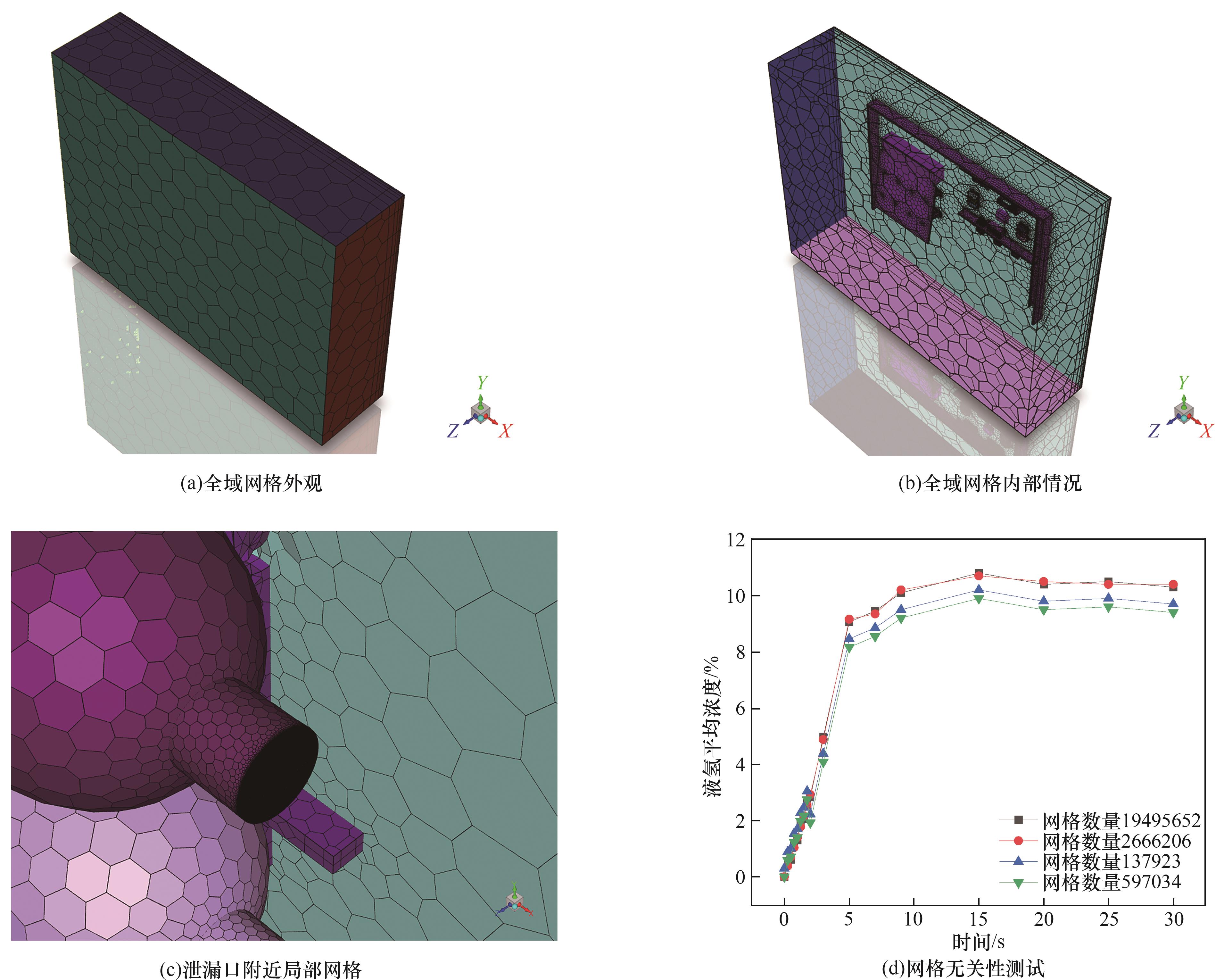
图2 网格无关性验证
Fig.2 Grid independence verification
| 参数 | 解决方法 |
|---|---|
| 压力-速度耦合 | PISO scheme |
| 梯度空间离散化 | 最小二乘单元基础 |
| 压力空间离散化 | 体积力加权(Body-Force-Weighted) |
| 其他参数空间离散化 | QUICK |
| 瞬态公式 | 二阶隐式 |
| 收敛标准 | 连续性方程、动量方程及能量方程均设置为10-6 |
| 时间步长 | 0.005 s |
表2 液氢泄漏模拟的求解参数设置
Table 2 Solution parameter settings for liquid hydrogen leak simulation
| 参数 | 解决方法 |
|---|---|
| 压力-速度耦合 | PISO scheme |
| 梯度空间离散化 | 最小二乘单元基础 |
| 压力空间离散化 | 体积力加权(Body-Force-Weighted) |
| 其他参数空间离散化 | QUICK |
| 瞬态公式 | 二阶隐式 |
| 收敛标准 | 连续性方程、动量方程及能量方程均设置为10-6 |
| 时间步长 | 0.005 s |
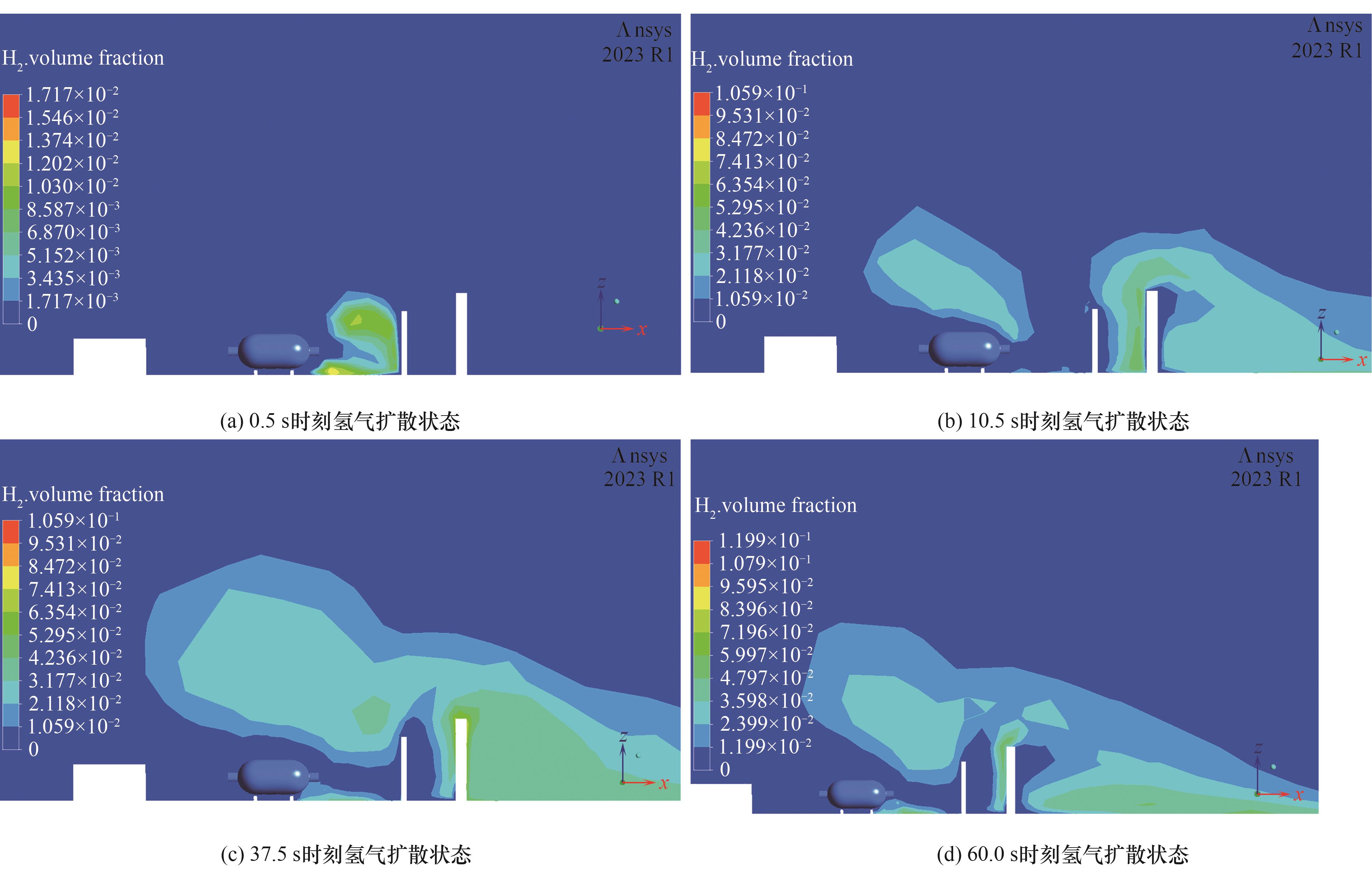
图3 氢气扩散过程
Fig.3 Hydrogen diffusion process
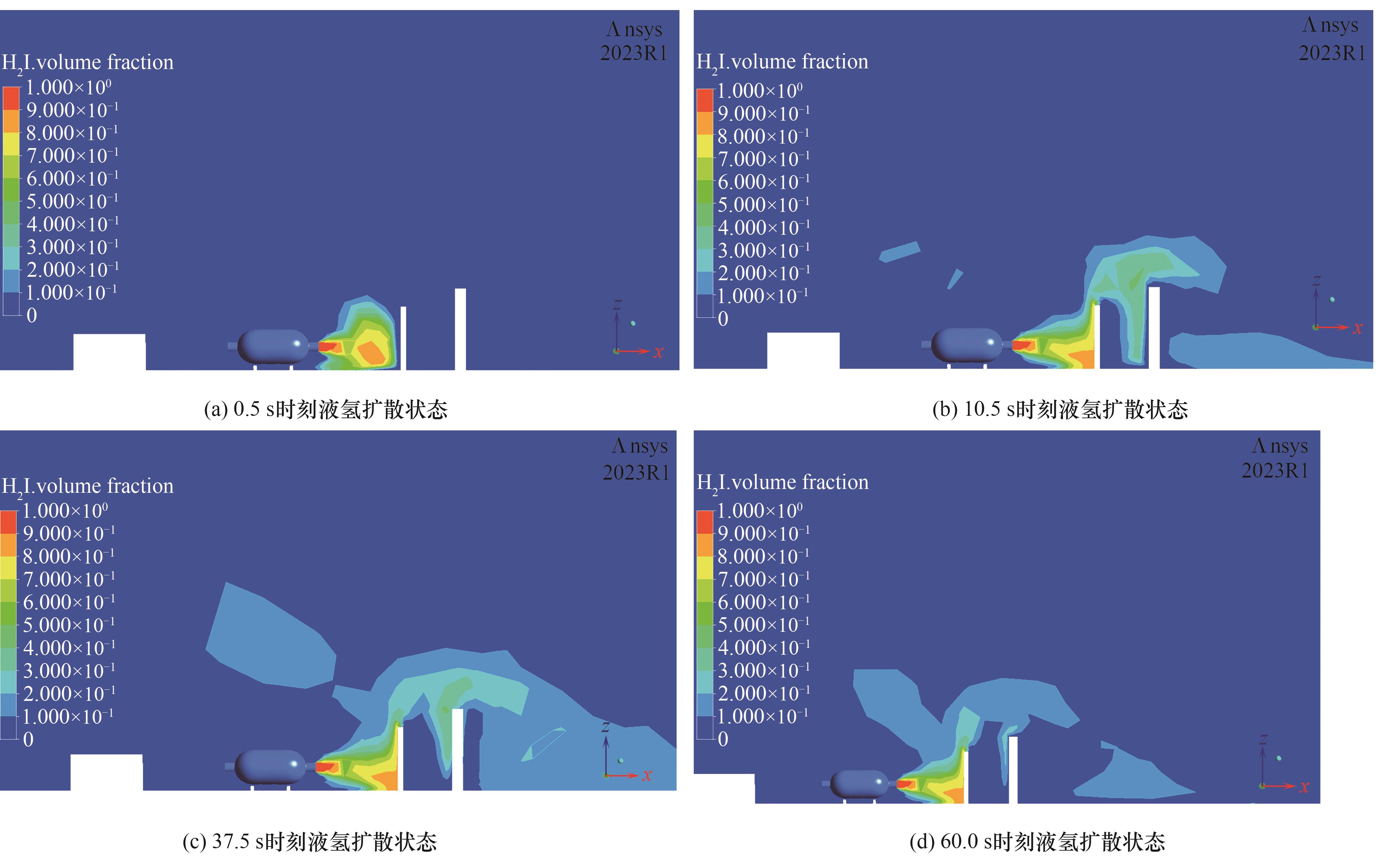
图4 液氢扩散过程
Fig.4 Liquid hydrogen diffusion process
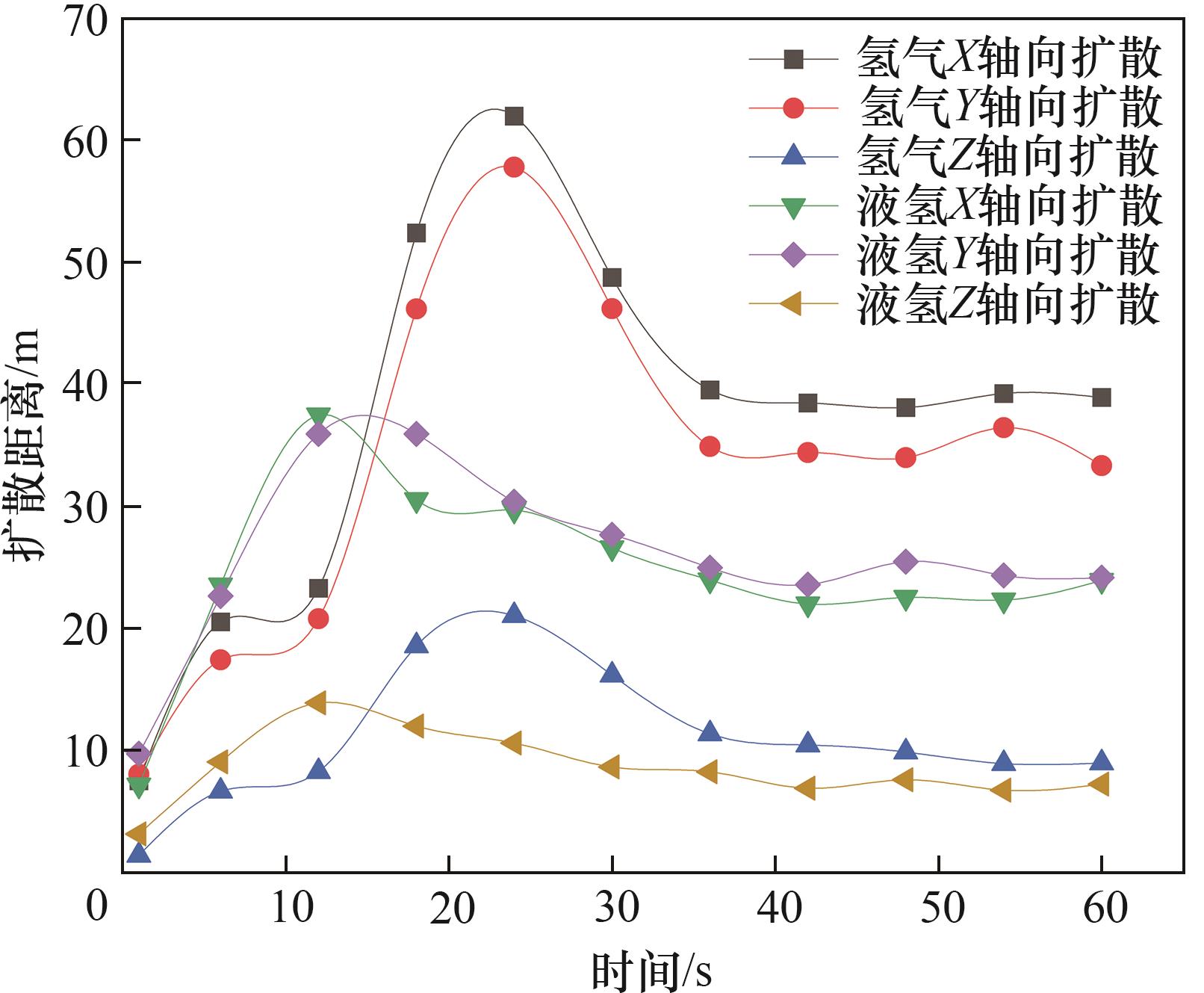
图5 扩散距离随时间变化
Fig.5 Diffusion distance vs time
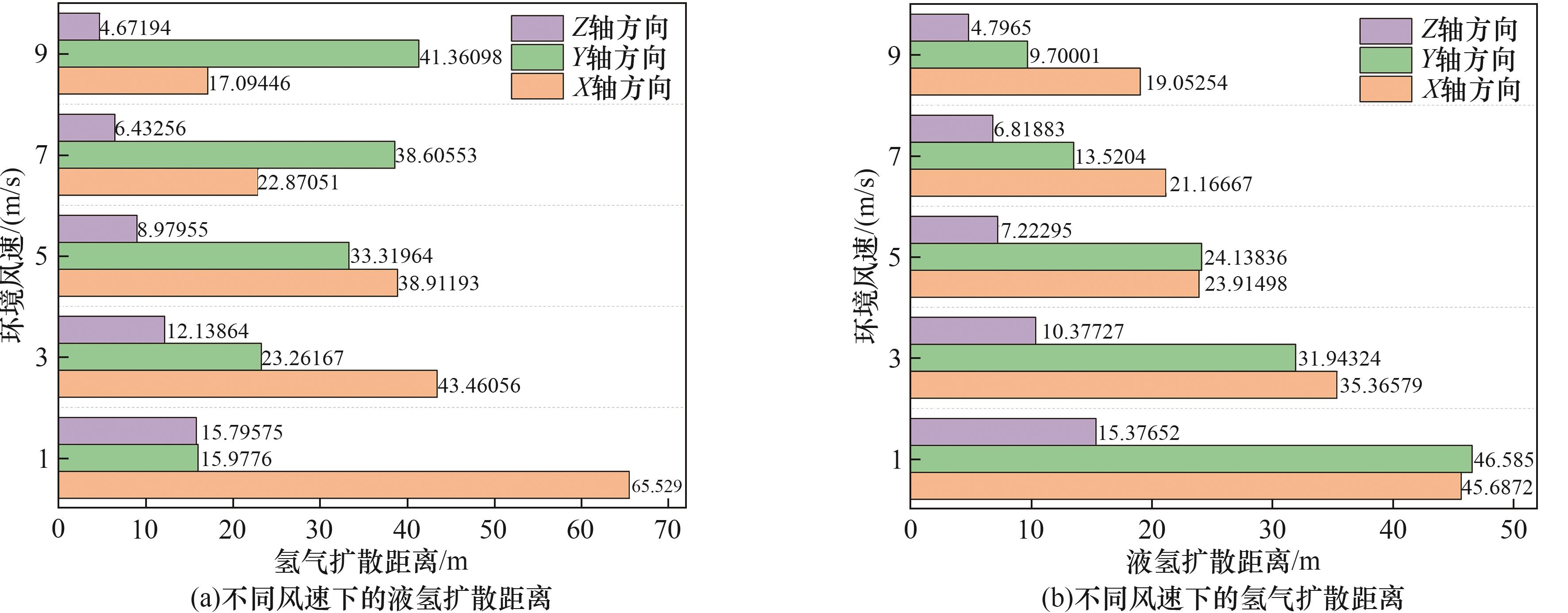
图6 氢气、液氢在不同风速下的扩散距离
Fig.6 Diffusion distance of hydrogen and liquid hydrogen at different wind speeds
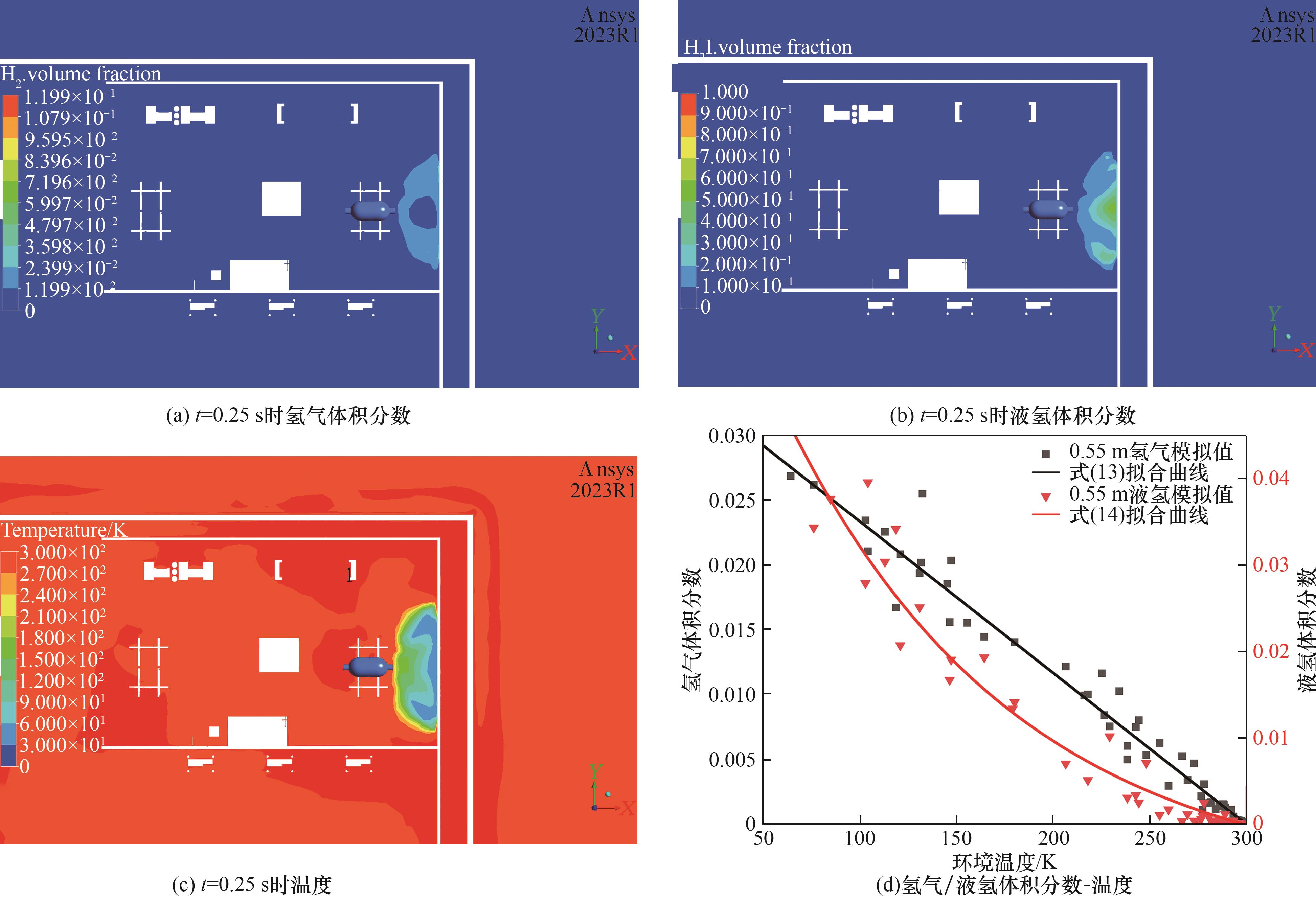
图7 温度与液态/气态氢的关系
Fig.7 Relationship between temperature and liquid/gaseous hydrogen
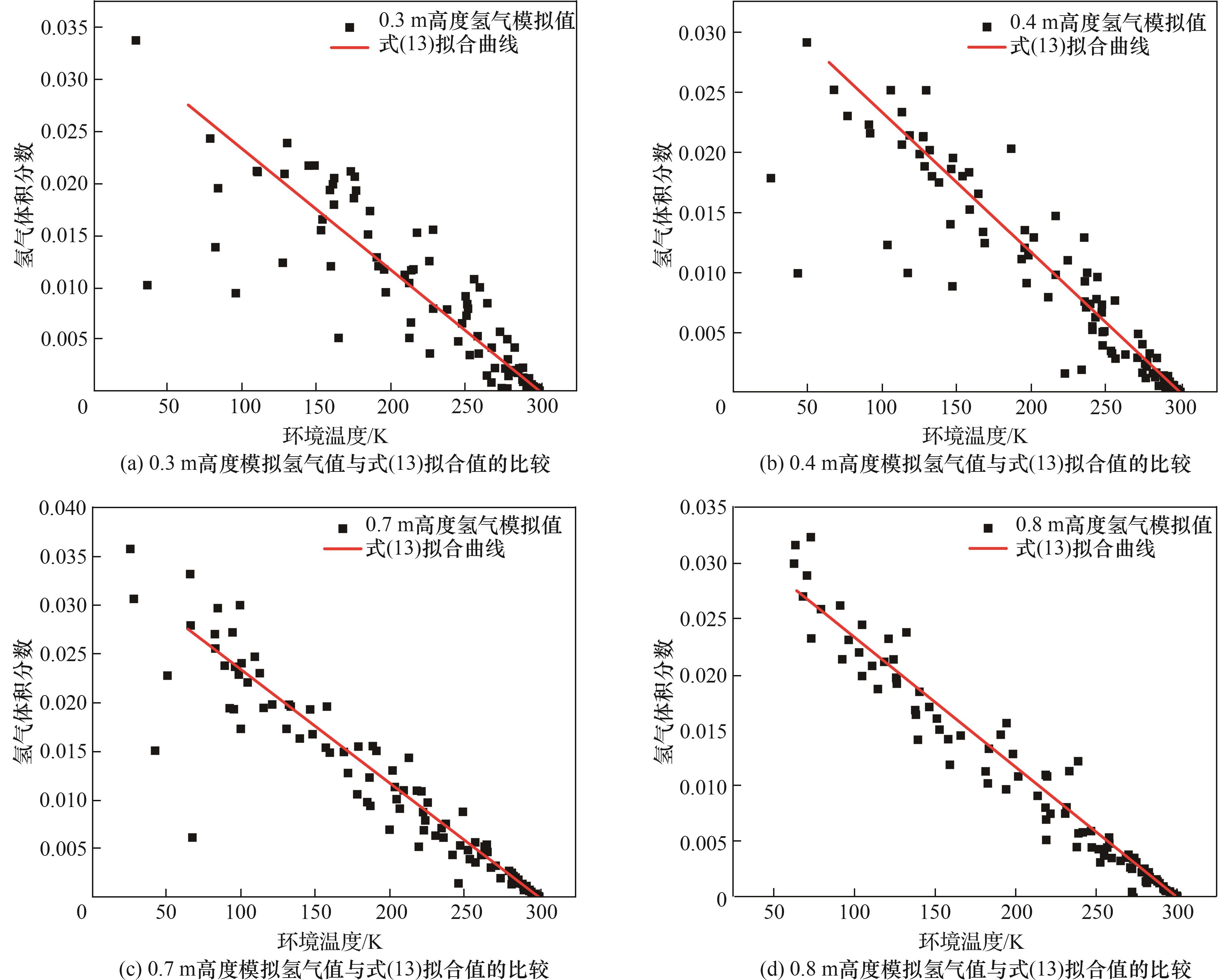
图8 氢气拟合关系式与模拟值的比较验证
Fig.8 Comparison and verification of hydrogen fitting relationship and simulation values
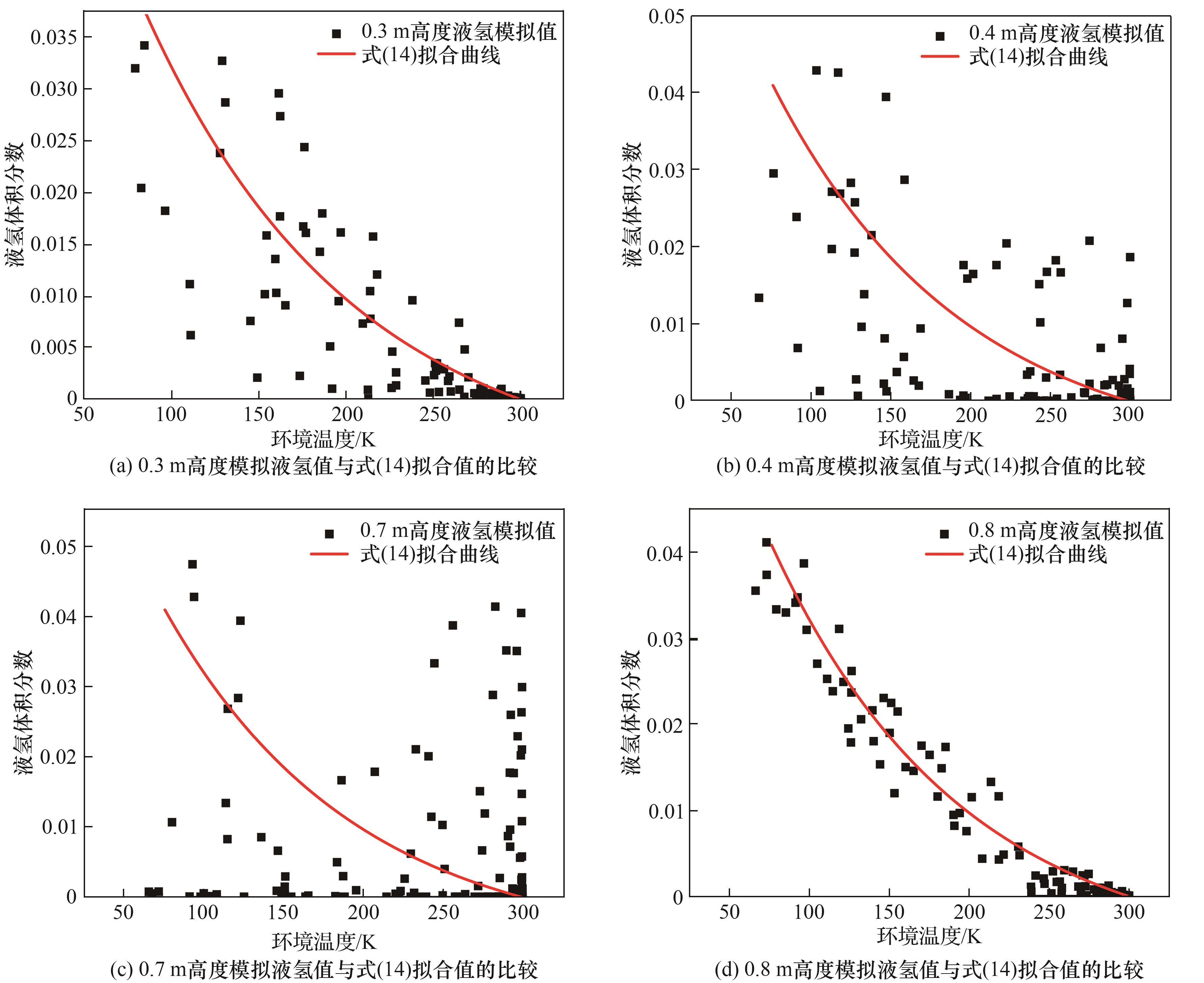
图9 液氢拟合关系式与模拟值的比较验证
Fig.9 Comparison and verification of liquid hydrogen fitting relationship and simulation values
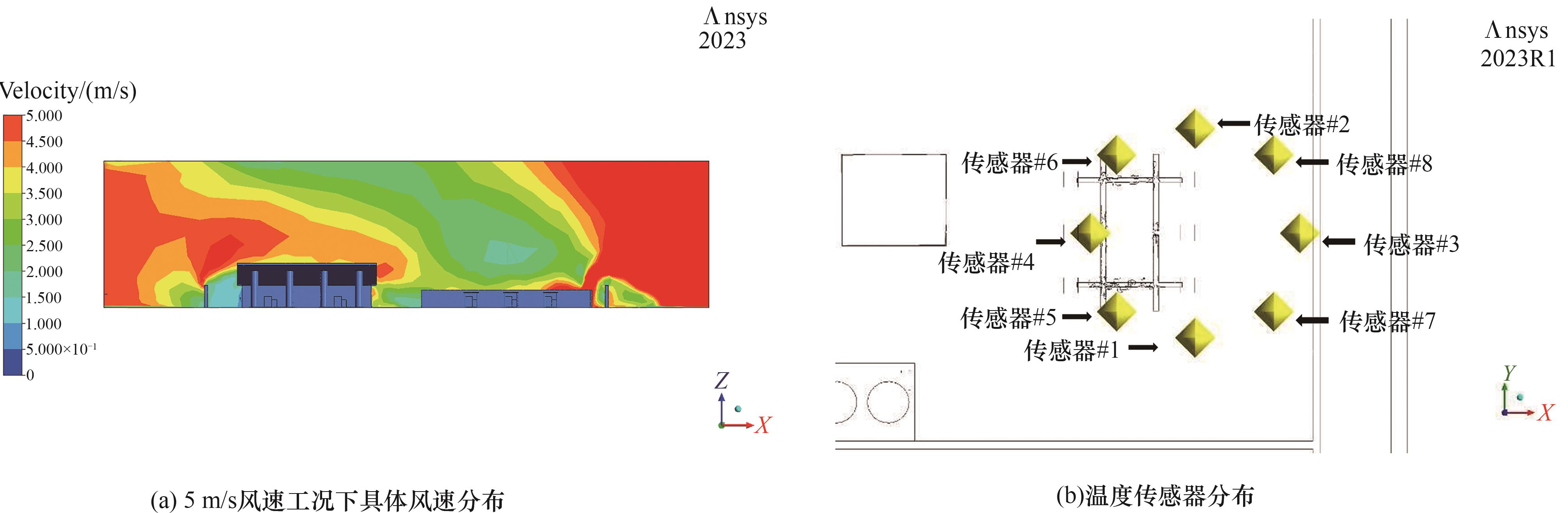
图10 温度传感器位置选择
Fig.10 Selection of temperature sensor locations
| 传感器编号 | X轴坐标 | Y轴坐标 | Z轴坐标 | 传感器编号 | X轴坐标 | Y轴坐标 | Z轴坐标 |
|---|---|---|---|---|---|---|---|
| 传感器#1 | 72.5 m | 31.125 m | 0.8 m | 传感器#5 | 69.5 m | 32.125 m | 0.8 m |
| 传感器#2 | 72.5 m | 39.125 m | 0.8 m | 传感器#6 | 69.5 m | 38.125 m | 0.8 m |
| 传感器#3 | 76.5 m | 35.125 m | 0.8 m | 传感器#7 | 75.5 m | 32.125 m | 0.8 m |
| 传感器#4 | 68.5 m | 35.125 m | 0.8 m | 传感器#8 | 75.5 m | 38.125 m | 0.8 m |
表3 传感器位置分布表
Table 3 Distribution of sensor locations
| 传感器编号 | X轴坐标 | Y轴坐标 | Z轴坐标 | 传感器编号 | X轴坐标 | Y轴坐标 | Z轴坐标 |
|---|---|---|---|---|---|---|---|
| 传感器#1 | 72.5 m | 31.125 m | 0.8 m | 传感器#5 | 69.5 m | 32.125 m | 0.8 m |
| 传感器#2 | 72.5 m | 39.125 m | 0.8 m | 传感器#6 | 69.5 m | 38.125 m | 0.8 m |
| 传感器#3 | 76.5 m | 35.125 m | 0.8 m | 传感器#7 | 75.5 m | 32.125 m | 0.8 m |
| 传感器#4 | 68.5 m | 35.125 m | 0.8 m | 传感器#8 | 75.5 m | 38.125 m | 0.8 m |
| 序号 | 传感器编号 | 温度/K | ||||
|---|---|---|---|---|---|---|
| 1 m/s | 3 m/s | 5 m/s | 7 m/s | 9 m/s | ||
| 1 | #1 | 297.71069 | 297.50644 | 299.57645 | 297.01297 | 296.77554 |
| 2 | #2 | 297.95734 | 298.37772 | 299.51477 | 299.11505 | 299.41852 |
| 3 | #3 | 34.83273 | 34.77265 | 34.39214 | 34.65065 | 34.5325 |
| 4 | #4 | 299.95398 | 299.9968 | 299.87085 | 299.89569 | 299.9389 |
| 5 | #5 | 299.99759 | 299.99698 | 299.99799 | 299.9971 | 299.9968 |
| 6 | #6 | 299.99716 | 299.99744 | 299.9964 | 299.99793 | 299.99759 |
| 7 | #7 | 30.59479 | 31.77259 | 35.54715 | 35.91454 | 38.64581 |
| 8 | #8 | 27.87232 | 27.87064 | 28.02964 | 28.68729 | 29.52563 |
表4 0.5 s时刻各温度传感器的响应值
Table 4 Response values of temperature sensors at 0.5 s
| 序号 | 传感器编号 | 温度/K | ||||
|---|---|---|---|---|---|---|
| 1 m/s | 3 m/s | 5 m/s | 7 m/s | 9 m/s | ||
| 1 | #1 | 297.71069 | 297.50644 | 299.57645 | 297.01297 | 296.77554 |
| 2 | #2 | 297.95734 | 298.37772 | 299.51477 | 299.11505 | 299.41852 |
| 3 | #3 | 34.83273 | 34.77265 | 34.39214 | 34.65065 | 34.5325 |
| 4 | #4 | 299.95398 | 299.9968 | 299.87085 | 299.89569 | 299.9389 |
| 5 | #5 | 299.99759 | 299.99698 | 299.99799 | 299.9971 | 299.9968 |
| 6 | #6 | 299.99716 | 299.99744 | 299.9964 | 299.99793 | 299.99759 |
| 7 | #7 | 30.59479 | 31.77259 | 35.54715 | 35.91454 | 38.64581 |
| 8 | #8 | 27.87232 | 27.87064 | 28.02964 | 28.68729 | 29.52563 |
| 序号 | 工况 | 式(13)计算浓度 | 氢气模拟浓度 | 相对误差 | 式(14)计算氢浓度 | 液氢模拟浓度 | 相对误差 |
|---|---|---|---|---|---|---|---|
| 1 | 1 m/s风速 | 0.03146 | 0.02972 | 5.85% | 0.06340 | 0.06121 | 3.578% |
| 2 | 3 m/s风速 | 0.03132 | 0.03172 | 1.26% | 0.06271 | 0.07007 | 6.22% |
| 3 | 5 m/s风速 | 0.03088 | 0.02840 | 8.73% | 0.06052 | 0.06338 | 4.51% |
| 4 | 7 m/s风速 | 0.03084 | 0.03337 | 7.58% | 0.06031 | 0.05685 | 6.09% |
| 5 | 9 m/s风速 | 0.03052 | 0.0294 | 3.81% | 0.05877 | 0.05535 | 6.18% |
表5 传感器#7液氢/气氢计算值与模拟值的对比
Table 5 Comparison of calculated and simulated values of liquid hydrogen and gaseous hydrogen for sensor #7
| 序号 | 工况 | 式(13)计算浓度 | 氢气模拟浓度 | 相对误差 | 式(14)计算氢浓度 | 液氢模拟浓度 | 相对误差 |
|---|---|---|---|---|---|---|---|
| 1 | 1 m/s风速 | 0.03146 | 0.02972 | 5.85% | 0.06340 | 0.06121 | 3.578% |
| 2 | 3 m/s风速 | 0.03132 | 0.03172 | 1.26% | 0.06271 | 0.07007 | 6.22% |
| 3 | 5 m/s风速 | 0.03088 | 0.02840 | 8.73% | 0.06052 | 0.06338 | 4.51% |
| 4 | 7 m/s风速 | 0.03084 | 0.03337 | 7.58% | 0.06031 | 0.05685 | 6.09% |
| 5 | 9 m/s风速 | 0.03052 | 0.0294 | 3.81% | 0.05877 | 0.05535 | 6.18% |
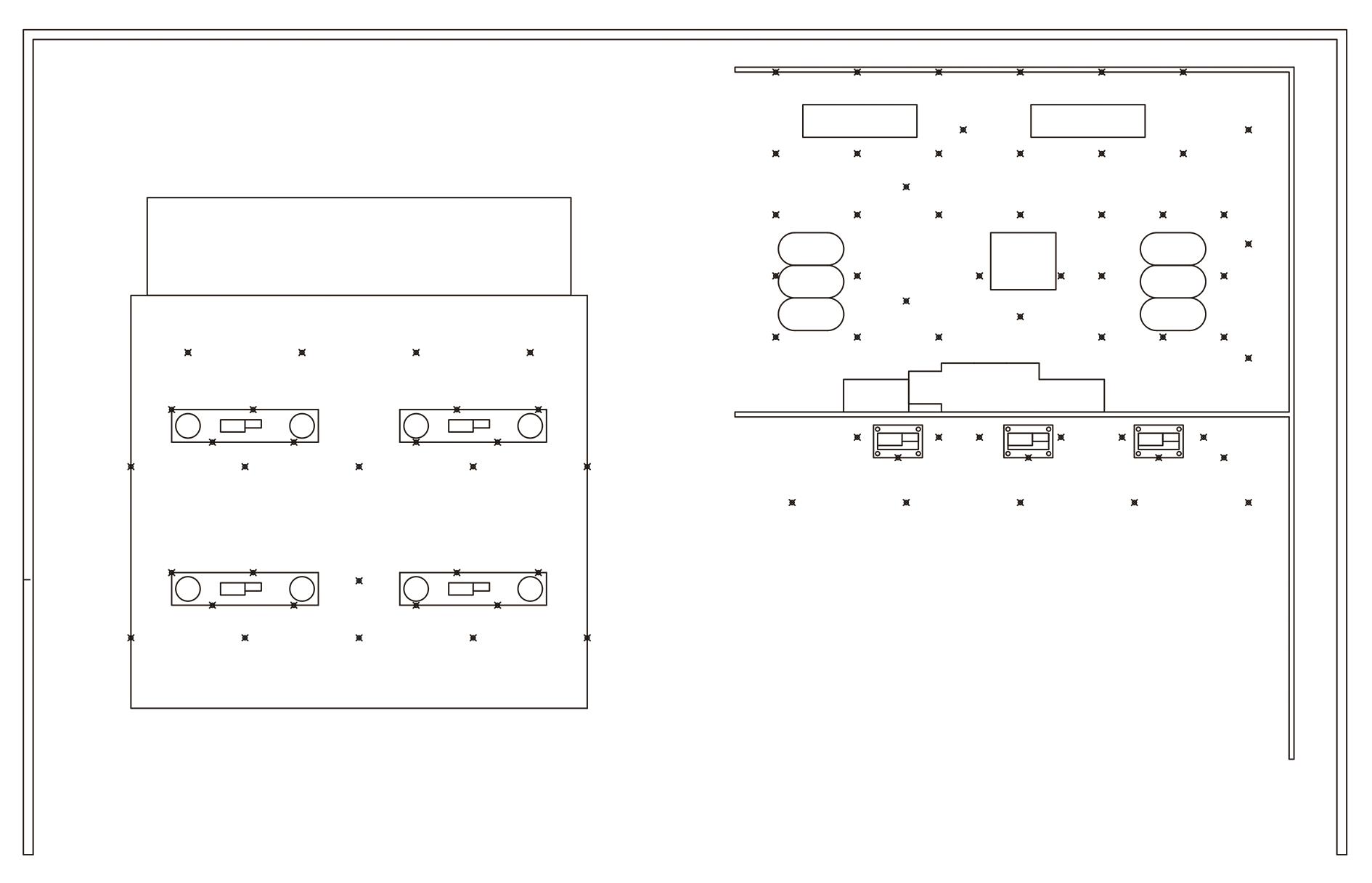
图11 加氢站温度传感器全局布置方法
Fig.11 Global arrangement of temperature sensor in hydrogenation station
| [1] | Witcofski R D, Chirivella J E. Experimental and analytical analyses of the mechanisms governing the dispersion of flammable clouds formed by liquid hydrogen spills[J]. International Journal of Hydrogen Energy, 1984, 9(5): 425-435. |
| [2] | Statharas J C, Venetsanos A G, Bartzis J G, et al. Analysis of data from spilling experiments performed with liquid hydrogen[J]. Journal of Hazardous Materials, 2000, 77(1/2/3): 57-75. |
| [3] | Hooker P, Willoughby D, Hall J, et al. Experimental releases of liquid hydrogen[C]// International Conference on Hydrogen Safety, San Francisco, 2011. |
| [4] | Xiao J S, He P, Li X F, et al. Computational fluid dynamics model based artificial neural network prediction of flammable vapor clouds formed by liquid hydrogen releases[J]. International Journal of Energy Research, 2022, 46(8): 11011-11026. |
| [5] | Zhou C L, Yang Z, Chen G H, et al. Optimizing hydrogen refueling station layout based on consequences of leakage and explosion accidents[J]. International Journal of Hydrogen Energy, 2024, 54: 817-836. |
| [6] | Xiao J J, Breitung W, Kuznetsov M, et al. GASFLOW-MPI: a new 3-D parallel all-speed CFD code for turbulent dispersion and combustion simulations(part Ⅰ): Models, verification and validation[J]. International Journal of Hydrogen Energy, 2017, 42(12): 8346-8368. |
| [7] | Mao X B, Ying R S, Yuan Y P, et al. Simulation and analysis of hydrogen leakage and explosion behaviors in various compartments on a hydrogen fuel cell ship[J]. International Journal of Hydrogen Energy, 2021, 46(9): 6857-6872. |
| [8] | Wang F N, Xiao J J, Kuznetsov M, et al. Deterministic risk assessment of hydrogen leak from a fuel cell truck in a real-scale hydrogen refueling station[J]. International Journal of Hydrogen Energy 2024, 50: 1103-1118. |
| [9] | 厉劲风, 方凯, 许好好, 等.大空间液氢射流泄漏扩散特性[J]. 化工学报, 2022, 73(11): 5177-5185. |
| Li J F, Fang K, Xu H H, et al. Diffusion features of jet leakage with liquid hydrogen in large space[J]. CIESC Journal, 2022, 73(11): 5177-5185. | |
| [10] | Qian J Y, Liu C, Qiu C, et al. Liquid hydrogen cavitation analysis inside an oblique globe valve[J]. Flow Measurement and Instrumentation, 2024, 97: 102599. |
| [11] | Qian J Y, Li X J, Gao Z X, et al. A numerical study of hydrogen leakage and diffusion in a hydrogen refueling station[J]. International Journal of Hydrogen Energy, 2020, 45(28): 14428-14439. |
| [12] | Giannissi S G, Venetsanos A G. A comparative CFD assessment study of cryogenic hydrogen and LNG dispersion[J]. International Journal of Hydrogen Energy, 2019, 44(17): 9018-9030. |
| [13] | Giannissi S G, Venetsanos A G. Study of key parameters in modeling liquid hydrogen release and dispersion in open environment[J]. International Journal of Hydrogen Energy, 2018, 43(1): 455-467. |
| [14] | Giannissi S G, Tolias I C, Melideo D, et al. On the CFD modelling of hydrogen dispersion at low-Reynolds number release in closed facility[J]. International Journal of Hydrogen Energy, 2021, 46(57): 29745-29761. |
| [15] | Giannissi S G, Venetsanos A G, Markatos N, et al. CFD modeling of hydrogen dispersion under cryogenic release conditions[J]. International Journal of Hydrogen Energy, 2014, 39(28): 15851-15863. |
| [16] | Tang X, Pu L, Shao X Y, et al. Dispersion behavior and safety study of liquid hydrogen leakage under different application situations[J]. International Journal of Hydrogen Energy, 2020, 45(55): 31278-31288. |
| [17] | SKlavounos S, Rigas F. Fuel gas dispersion under cryogenic release conditions[J]. Energy & Fuels, 2005, 19(6): 2535-2544. |
| [18] | Pu L, Shao X Y, Zhang S Q, et al. Plume dispersion behaviour and hazard identification for large quantities of liquid hydrogen leakage[J]. Asia- Pacific Journal of Chemical Engineering, 2019, 14(2): e2299. |
| [19] | Kim E, Park J, Cho J H, et al. Simulation of hydrogen leak and explosion for the safety design of hydrogen fueling station in Korea[J]. International Journal of Hydrogen Energy, 2013, 38(3): 1737-1743. |
| [20] | Tanaka T, Azuma T, Evans J, et al. Experimental study on hydrogen explosions in a full-scale hydrogen filling station model[J]. International Journal of Hydrogen Energy, 2007, 32(13): 2162-2170. |
| [21] | Shirvill L C, Roberts T A, Royle M, et al. Safety studies on high-pressure hydrogen vehicle refuelling stations: releases into a simulated high-pressure dispensing area[J]. International Journal of Hydrogen Energy, 2012, 37(8): 6949-6964. |
| [22] | Kikukawa S. Consequence analysis and safety verification of hydrogen fueling stations using CFD simulation[J]. International Journal of Hydrogen Energy, 2008, 33(4): 1425-1434. |
| [23] | 张颖, 宿禹祺, 陈俊帅, 等. 氢气传感器研究的进展与展望[J]. 科学通报, 2023, 68(S1): 204-219. |
| Zhang Y, Su Y Q, Chen J S, et al. Progress and prospects of research on hydrogen sensors[J]. Chinese Science Bulletin, 2023, 68(S1): 204-219. | |
| [24] | Bellegoni M, Ovidi F, Tempesti L, et al. Optimization of gas detectors placement in complex industrial layouts based on CFD simulations[J]. Journal of Loss Prevention in the Process Industries, 2022, 80: 104859. |
| [25] | Dong J K, Du W L, Wang B, et al. Impact analysis of multi-sensor layout on the source term estimation of hazardous gas leakage[J]. Journal of Loss Prevention in the Process Industries, 2021, 73: 104579. |
| [26] | Dong J K, Wang B, Wang X J, et al. Optimization of sensor deployment sequences for hazardous gas leakage monitoring and source term estimation[J]. Chinese Journal of Chemical Engineering, 2023, 56: 169-179. |
| [27] | Jiang Y, Zhou Q, Xiao S Y, et al. Optimized deployment method and performance evaluation of gas sensor network based on field experiment[J]. Journal of Ambient Intelligence and Humanized Computing, 2021, 12(1): 729-744. |
| [28] | Idris A M, Rusli R, Nasif M S, et al. A fuzzy multi-objective optimisation model of risk-based gas detector placement methodology for explosion protection in oil and gas facilities[J]. Process Safety and Environmental Protection, 2022, 161: 571-582. |
| [29] | Gao Y, Liu H, Hou Y P. Effects of leakage location and ventilation condition on hydrogen leakage during shipping of fuel cell vehicles[J]. International Journal of Hydrogen Energy, 2024, 54: 1532-1543. |
| [30] | 中华人民共和国住房和城乡建设部. 加氢站技术规范: [S]. 北京: 中国计划出版社, 2021. |
| Ministry of Housing and Urban-Rural Development of the People's Republic of China. Technical code for bydrogen fuelling station: [S]. Beijing: China Planning Press, 2021. | |
| [31] | Xu B, Chang R, Li P, et al. Reflective optical fiber sensor based on light polarization modulation for hydrogen sensing[J]. Josa B, 2019, 36(12): 3471-3478. |
| [32] | Kobayashi H, Naruo Y, Maru Y, et al. Experiment of cryo-compressed (90-MPa) hydrogen leakage diffusion[J]. International Journal of Hydrogen Energy, 2018, 43(37): 17928-17937. |
| [33] | 中华人民共和国住房和城乡建设部. 石油化工可燃气体和有毒气体检测报警设计标准: [S]. 北京: 中国计划出版社, 2019. |
| Ministry of Housing and Urban-Rural Development of the People's Republic of China. Standard for design of combustible gas and toxic gas detection and alarm for petrochemical industry: [S]. Beijing: China Planning Press, 2019. | |
| [34] | 石文. 《加氢站技术规范GB 50516—2010(2021年版)》正式发布[J]. 石油库与加油站, 2021, 30(2): 8. |
| Shi W. Technical Specification for Hydrogen Refueling stations GB 50516—2010 (2021 edition) was officially released[J]. Oil depots and gas stations 2021, 30(2): 8. |
| [1] | 燕子腾, 詹飞龙, 丁国良. 空调用套管式分流器结构设计及分流效果验证[J]. 化工学报, 2025, 76(S1): 152-159. |
| [2] | 彭建斌, 李明, 谢军龙, 陈建业. 液氢接收终端液氢泄漏扩散及爆炸超压研究[J]. 化工学报, 2025, 76(S1): 453-461. |
| [3] | 段浩磊, 陈浩远, 梁坤峰, 王林, 陈彬, 曹勇, 张晨光, 李硕鹏, 朱登宇, 何亚茹, 杨大鹏. 纯电动车热管理系统低GWP工质替代方案性能分析与综合评价[J]. 化工学报, 2025, 76(S1): 54-61. |
| [4] | 丁昊, 王林, 刘豪. R290/R245fa汽液相平衡混合规则对比研究[J]. 化工学报, 2025, 76(S1): 9-16. |
| [5] | 王俊鹏, 冯佳琪, 张恩搏, 白博峰. 曲折式与阵列式迷宫阀芯结构内流动与空化特性研究[J]. 化工学报, 2025, 76(S1): 93-105. |
| [6] | 赵子祥, 段钟弟, 孙浩然, 薛鸿祥. 大温差两相流动诱导水锤冲击的数值模型[J]. 化工学报, 2025, 76(S1): 170-180. |
| [7] | 黄灏, 王文, 贺隆坤. LNG船薄膜型液货舱预冷过程模拟与分析[J]. 化工学报, 2025, 76(S1): 187-194. |
| [8] | 汪思远, 刘国强, 熊通, 晏刚. 窗式空调器轴流风机的风速非均匀分布特性及其对冷凝器流路优化设计的影响规律[J]. 化工学报, 2025, 76(S1): 205-216. |
| [9] | 曹庆泰, 郭松源, 李建强, 蒋赞, 汪彬, 耑锐, 吴静怡, 杨光. 负过载下多孔隔板对液氧贮箱蓄液性能的影响研究[J]. 化工学报, 2025, 76(S1): 217-229. |
| [10] | 孙九春, 桑运龙, 王海涛, 贾浩, 朱艳. 泥水盾构仓体内射流对泥浆输送特性影响研究[J]. 化工学报, 2025, 76(S1): 246-257. |
| [11] | 何婷, 黄舒阳, 黄坤, 陈利琼. 基于余热利用的天然气化学吸收脱碳-高温热泵耦合流程研究[J]. 化工学报, 2025, 76(S1): 297-308. |
| [12] | 王一飞, 李玉星, 欧阳欣, 赵雪峰, 孟岚, 胡其会, 殷布泽, 郭雅琦. 基于裂尖减压特性的CO2管道断裂扩展数值计算[J]. 化工学报, 2025, 76(9): 4683-4693. |
| [13] | 邹家庆, 张肇钰, 张建国, 张博宇, 刘定胜, 毛庆, 王挺, 李建军. 碱水制氢电解槽极板通道中气泡的生成及演化性质[J]. 化工学报, 2025, 76(9): 4786-4799. |
| [14] | 黄正宗, 刘科成, 李泽方, 曾平生, 刘永富, 闫红杰, 刘柳. 锌精馏炉砖砌式换热室数值模拟与场协同优化[J]. 化工学报, 2025, 76(9): 4425-4439. |
| [15] | 段炼, 周星睿, 袁文君, 陈飞. 连续相速度脉动对微通道内聚合物液滴生成和形貌的影响规律[J]. 化工学报, 2025, 76(9): 4578-4585. |
| 阅读次数 | ||||||
|
全文 |
|
|||||
|
摘要 |
|
|||||
 京公网安备 11010102001995号