• •
索寒生( ), 韩嘉航(), 韩丽君, 宁宇
收稿日期:2025-09-03
修回日期:2025-11-14
出版日期:2025-11-25
通讯作者:
韩嘉航
作者简介:索寒生(1976—),男,博士,教授级高级工程师,hansheng.suo@pcitc.com
Hansheng SUO(), Jiahang HAN(), Lijun HAN, Yu NING
Received:2025-09-03
Revised:2025-11-14
Online:2025-11-25
Contact:
Jiahang HAN
摘要:
石化污水生物处理因进水波动大与调控滞后,出水易不达标。传统数值模拟成本高、泛化弱;纯数据驱动模型又因采样稀疏而难以构建。现有方法均无法满足实时预测与优化控制需求,亟需新策略。针对上述挑战,并弥补PINNs在污水处理领域损失函数设计与算法收敛性方面的研究空白,本研究提出一种融合反应机理与数据驱动的混合建模方法。首先,为构建一个更为精细且平滑的机理框架,本研究以经典生物化学反应模型为基础,通过消融实验系统地引入并量化了操作条件pH的关键影响。在此基础上,创新性地采用循环神经网络嵌入的物理信息神经网络(RNN-PINN)进行求解。该算法将描述生化反应动力学的微分控制方程作为硬约束,融入神经网络的训练过程,实现了对复杂动态系统的高效、高精度求解。研究结果证明,RNN-PINN模型在求解精度(相对误差<1%)上与传统的欧拉法和四阶龙格-库塔法相当,但在鲁棒性、迁移能力及时间外推性能上表现更优,尤其能在多变初始条件下保持稳定预测。此外,本研究从实验与理论双重角度对该算法的收敛性进行了深入分析。这些发现共同验证了RNN-PINN在石化污水生物处理建模中的高精度、强泛化能力与良好收敛性,为解决工业场景中采样数据稀疏的预测难题提供了有效的解决方案。
中图分类号:
索寒生, 韩嘉航, 韩丽君, 宁宇. 基于物理信息神经网络的石化污水处理过程智能预测研究[J]. 化工学报, DOI: 10.11949/0438-1157.20250987.
Hansheng SUO, Jiahang HAN, Lijun HAN, Yu NING. Physics-informed neural networks for intelligent prediction of petrochemical wastewater treatment processes[J]. CIESC Journal, DOI: 10.11949/0438-1157.20250987.
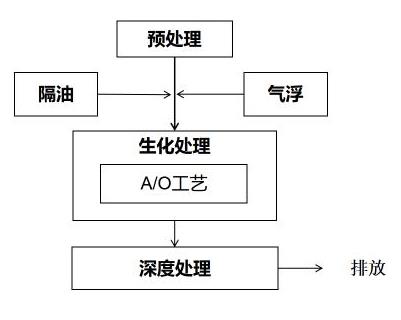
图1 石化行业污水处理流程
Fig.1 Wastewater Treatment Process in the Petrochemical Industry
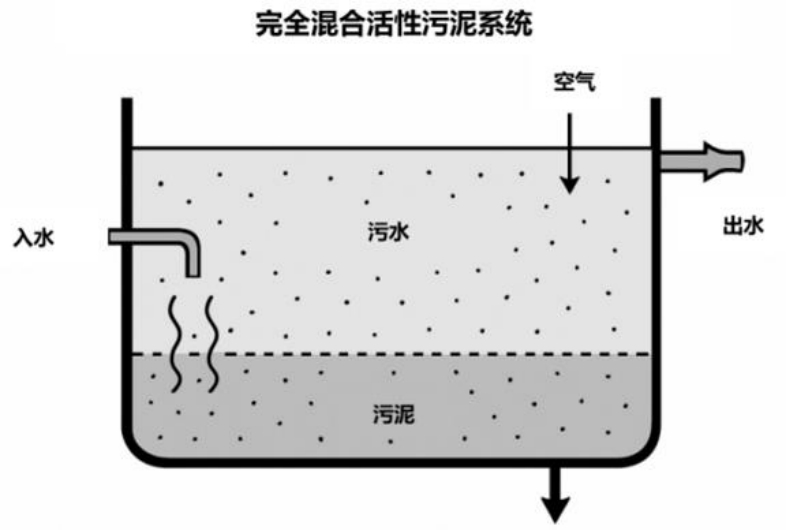
图2 生物处理反应器示意图
Fig.2 Schematic Diagram of Biochemical Treatment Reactor
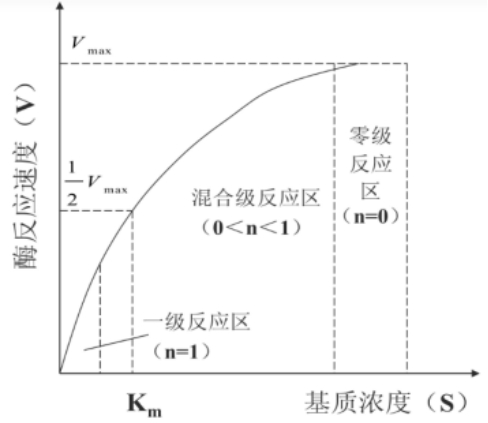
图3 微生物比增长速率变化趋势图
Fig.3 Figure of the Specific Growth Rate Trend of Microorganisms
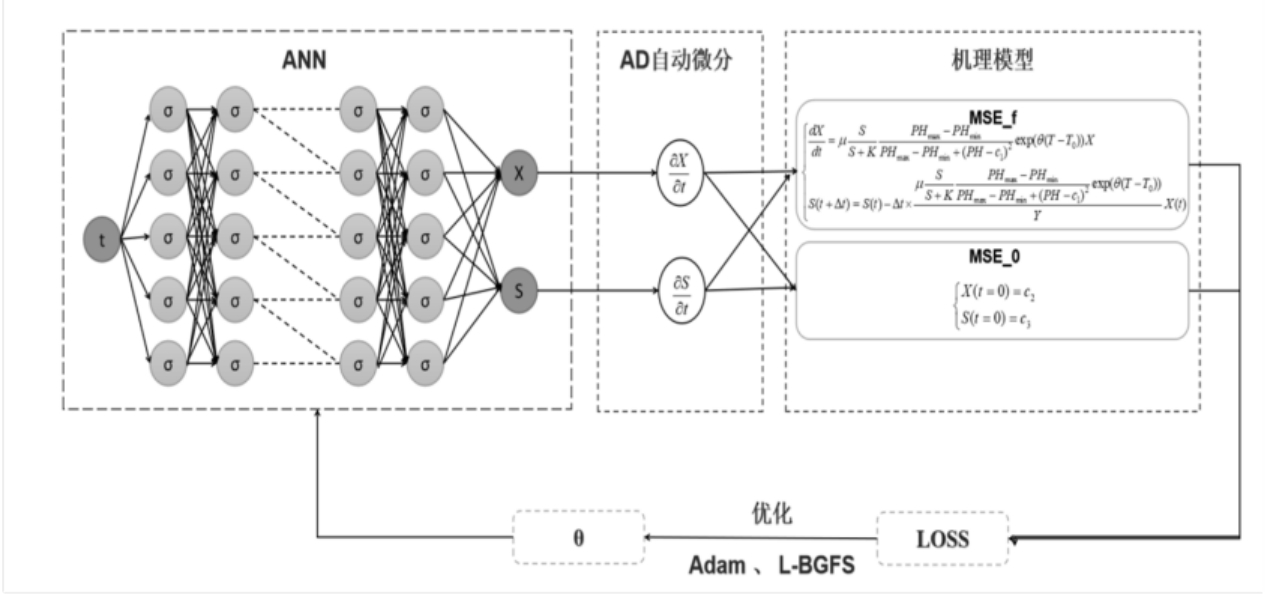
图4 物理信息神经网络架构示意图
Fig.4 Schematic Diagram of Physics-Informed Neural Network Architecture
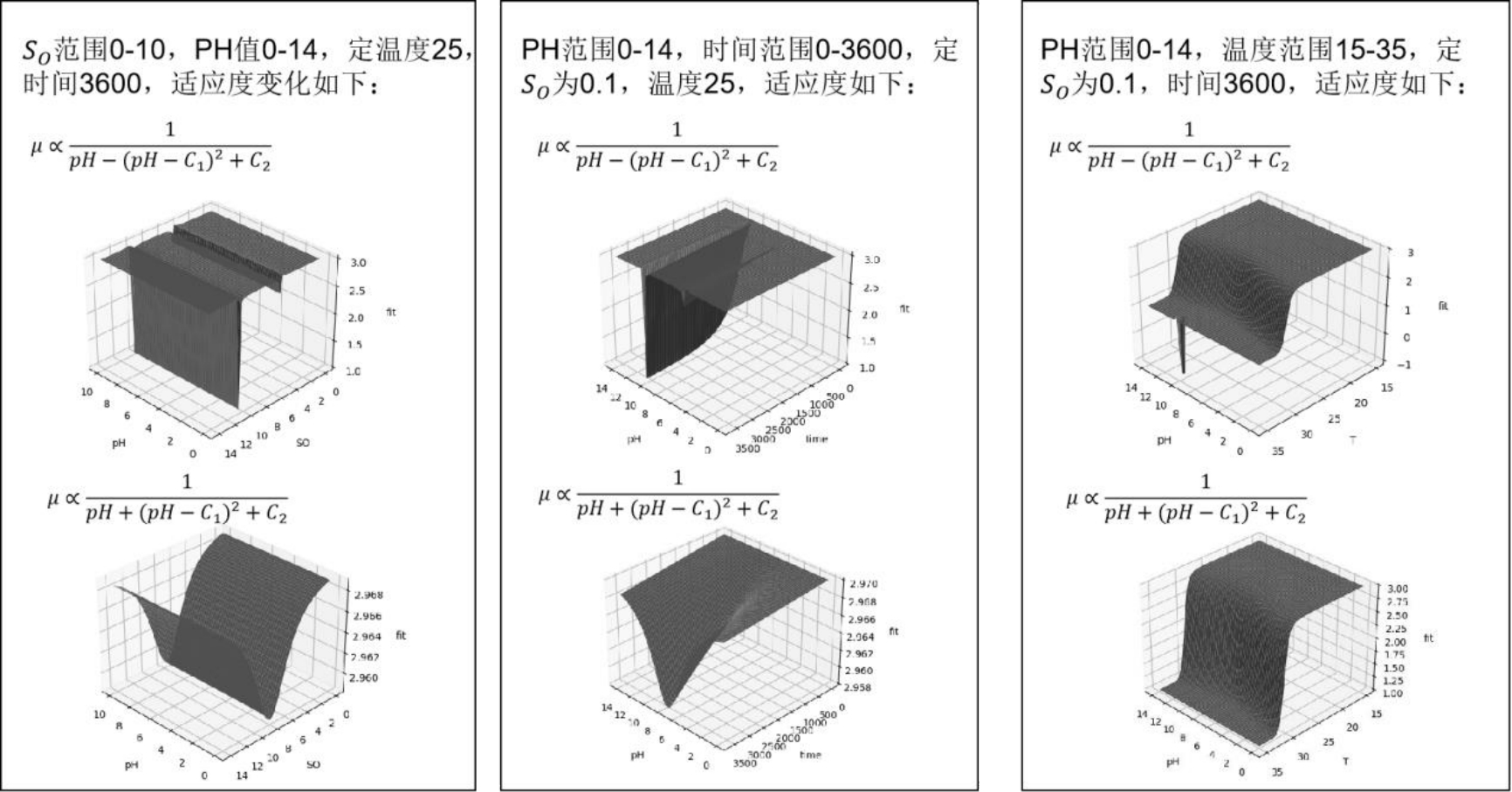
图5 传统数值算法的消融实验结果
Fig.5 Results of Ablation Experiments for Traditional Numerical Algorithms
| 参数/变量 | 取值范围 |
|---|---|
| 溶解氧浓度 | 0.0-10.0mg/L |
| 反应温度 | 15.0-35.0 |
| 0.0-14.0 | |
| 菌种浓度 | |
| 污染物浓度 |
表1 污水生物处理反应过程的物理约束
Table 1 Physical Constraints of Biological Wastewater Treatment Reaction Processes
| 参数/变量 | 取值范围 |
|---|---|
| 溶解氧浓度 | 0.0-10.0mg/L |
| 反应温度 | 15.0-35.0 |
| 0.0-14.0 | |
| 菌种浓度 | |
| 污染物浓度 |
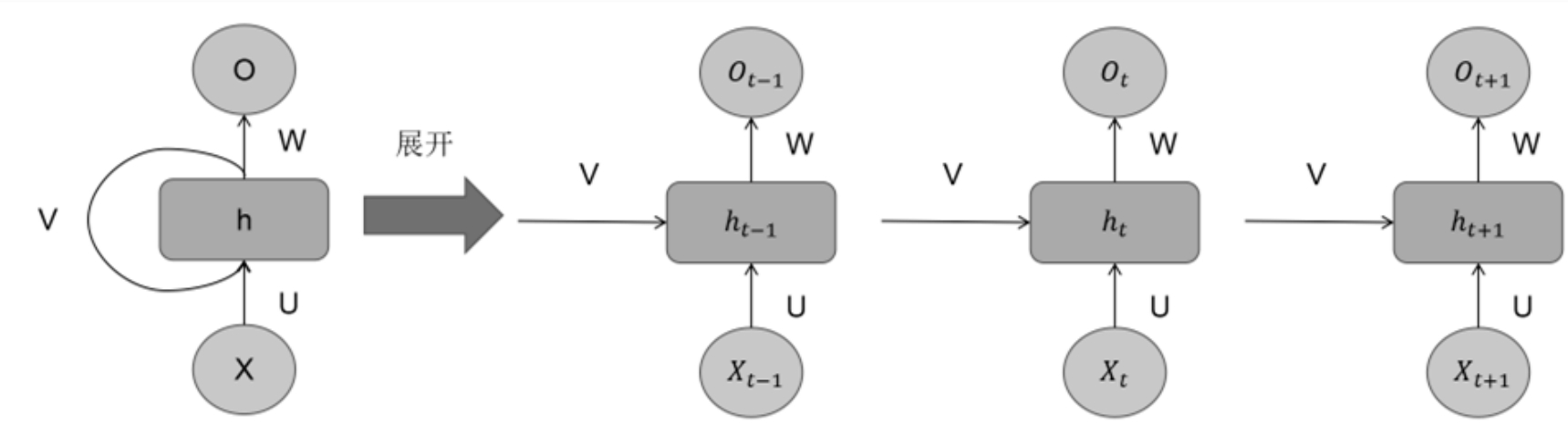
图6 循环神经网络架构示意图
Fig.6 Schematic Diagram of Recurrent Neural Network Architecture
| 超参数名 | 数值 | 准确性 |
|---|---|---|
| 隐藏层神经单元个数 | 100 | 89.35% |
| 150 | 98.21% | |
| 200 | 99.81% | |
| 神经网络层数 | 1 | 99.77% |
| 2 | 99.81% | |
| 3 | 99.82% |
表2 超参数网格搜索结果
Table 2 Hyperparameter Grid Search Results
| 超参数名 | 数值 | 准确性 |
|---|---|---|
| 隐藏层神经单元个数 | 100 | 89.35% |
| 150 | 98.21% | |
| 200 | 99.81% | |
| 神经网络层数 | 1 | 99.77% |
| 2 | 99.81% | |
| 3 | 99.82% |
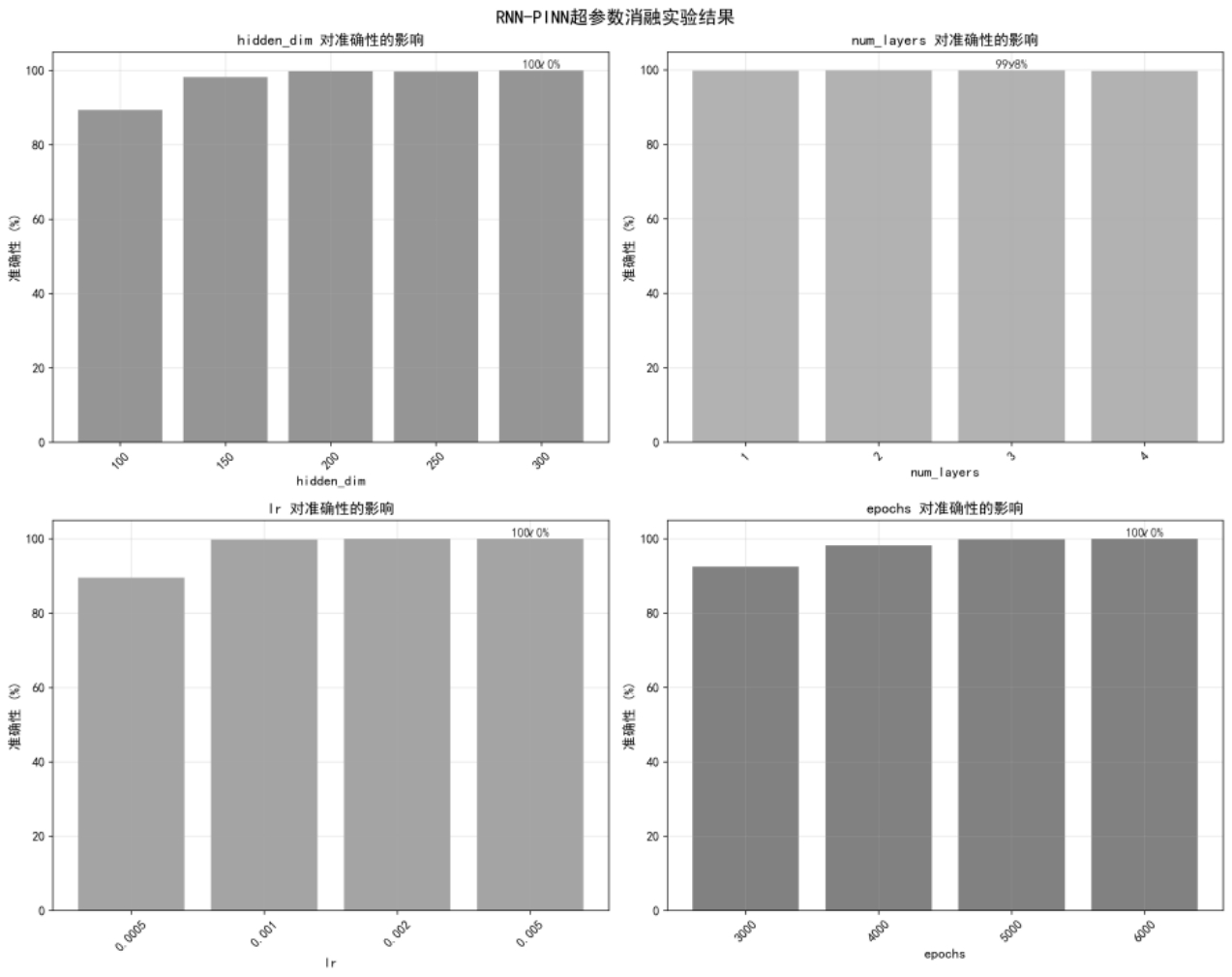
图7 超参数消融实验结果
Fig.7 Ablation Study Results on Hyperparameters.
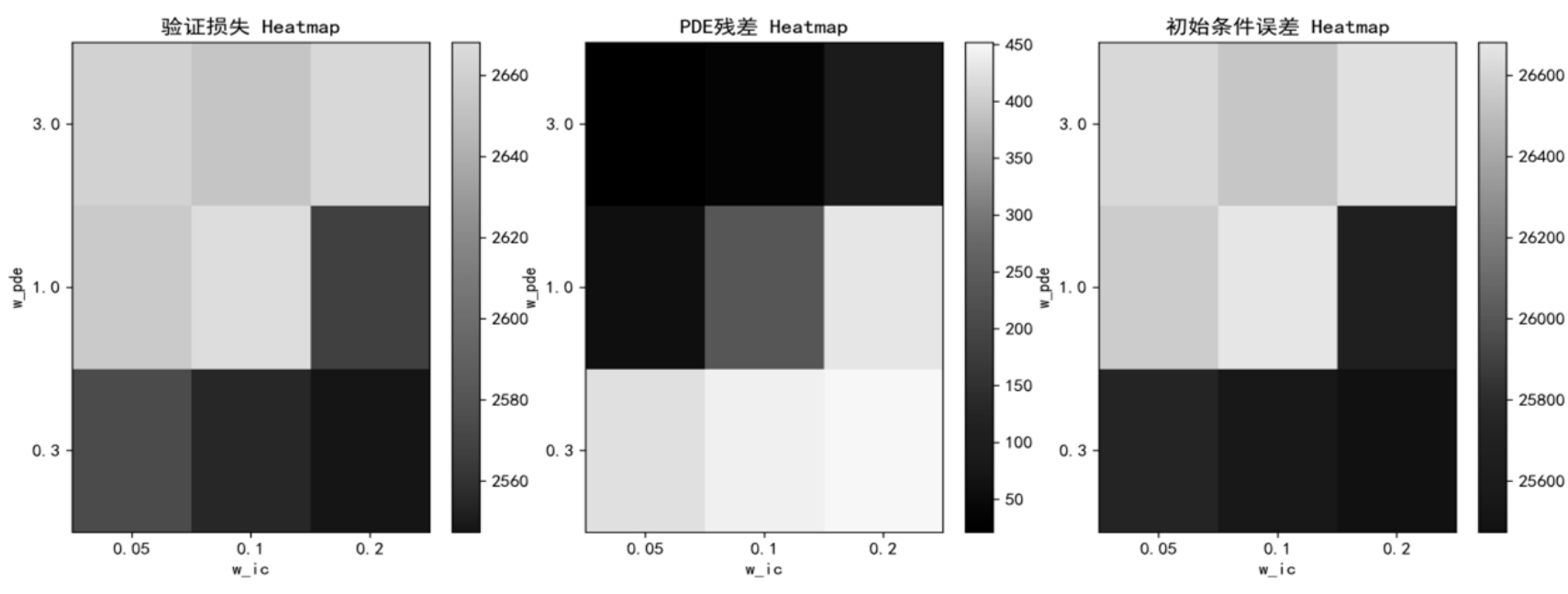
图8 损失函数权重敏感性分析结果
Fig.8 Model Training Convergence Process with Data Downsampling and Early Stopping.
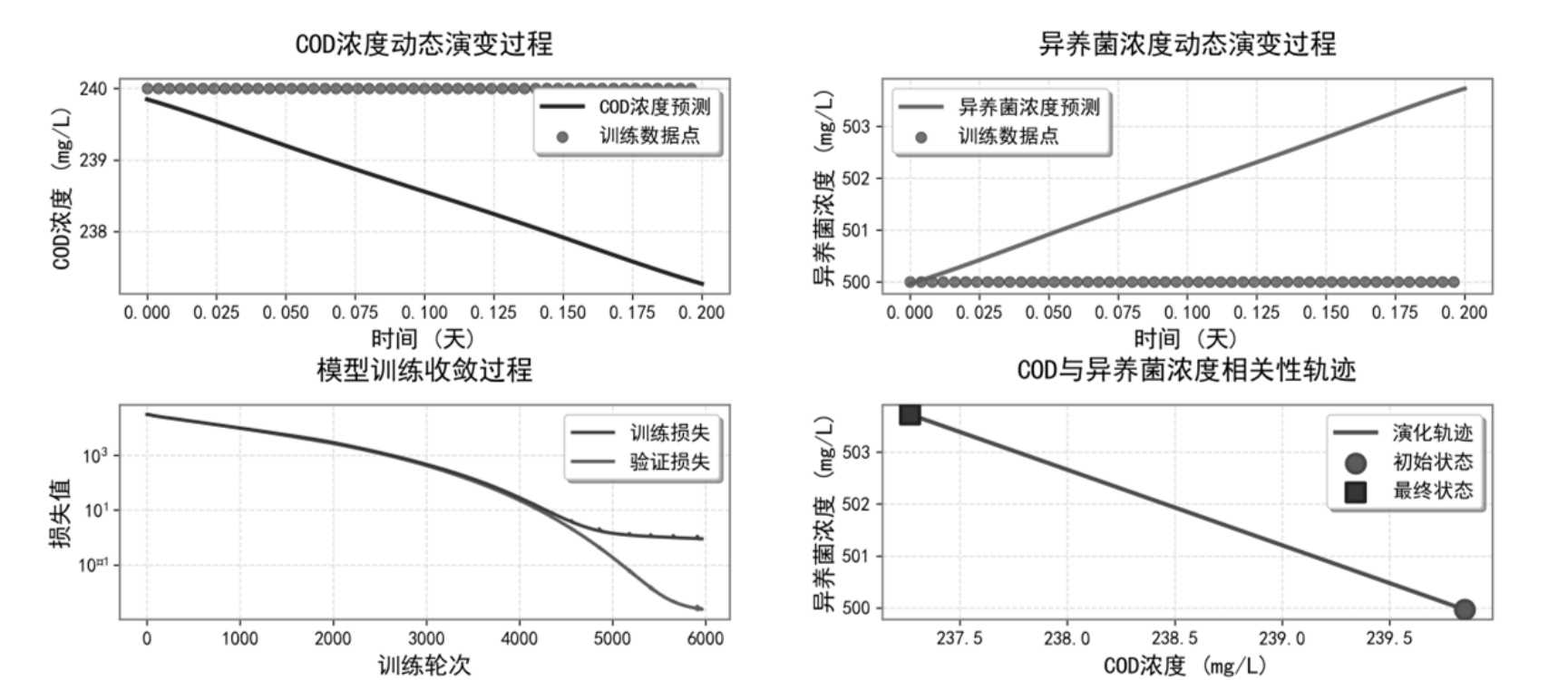
图9 数据降采样及基于早停的训练收敛过程
Fig.9 Model Training Convergence Process with Data Downsampling and Early Stopping.
| 参数 | 数值 |
|---|---|
| 污染物(COD)初始浓度 | 240.0mg/L |
| 菌种(异养菌)初始浓度 | 500.0mg/L |
| 反应时间 | 0.2h |
| 初始温度 | 25.0 |
| 初始pH值 | 7.8 |
| 溶解氧( | 1.0mg/L |
表3 工艺参数取值表
Table 3 Values of Process Parameters
| 参数 | 数值 |
|---|---|
| 污染物(COD)初始浓度 | 240.0mg/L |
| 菌种(异养菌)初始浓度 | 500.0mg/L |
| 反应时间 | 0.2h |
| 初始温度 | 25.0 |
| 初始pH值 | 7.8 |
| 溶解氧( | 1.0mg/L |

图10 传统数值算法与RNN-PINN算法模拟结果对比注:Traditional Numerical Algorithms and RNN-PINN Algorithms
Fig.10 Comparison of Simulation Results between
| 算法 | 计算效率 (推理时间:秒) | 准确性 | 方法特点 |
|---|---|---|---|
| 欧拉方法 | 0.0010 | 100% | 简单快速,精度较低 |
四阶龙格库塔方法 (基准) | 0.0040 | 100% | 高精度,计算量大 |
| RNN-PINN方法 | 0.0020 | 99.81% | 高精度,满足物理约束,快速推理 |
表4 算法结果及性能对比表
Table 4 Comparison of Algorithm Results and Performance
| 算法 | 计算效率 (推理时间:秒) | 准确性 | 方法特点 |
|---|---|---|---|
| 欧拉方法 | 0.0010 | 100% | 简单快速,精度较低 |
四阶龙格库塔方法 (基准) | 0.0040 | 100% | 高精度,计算量大 |
| RNN-PINN方法 | 0.0020 | 99.81% | 高精度,满足物理约束,快速推理 |
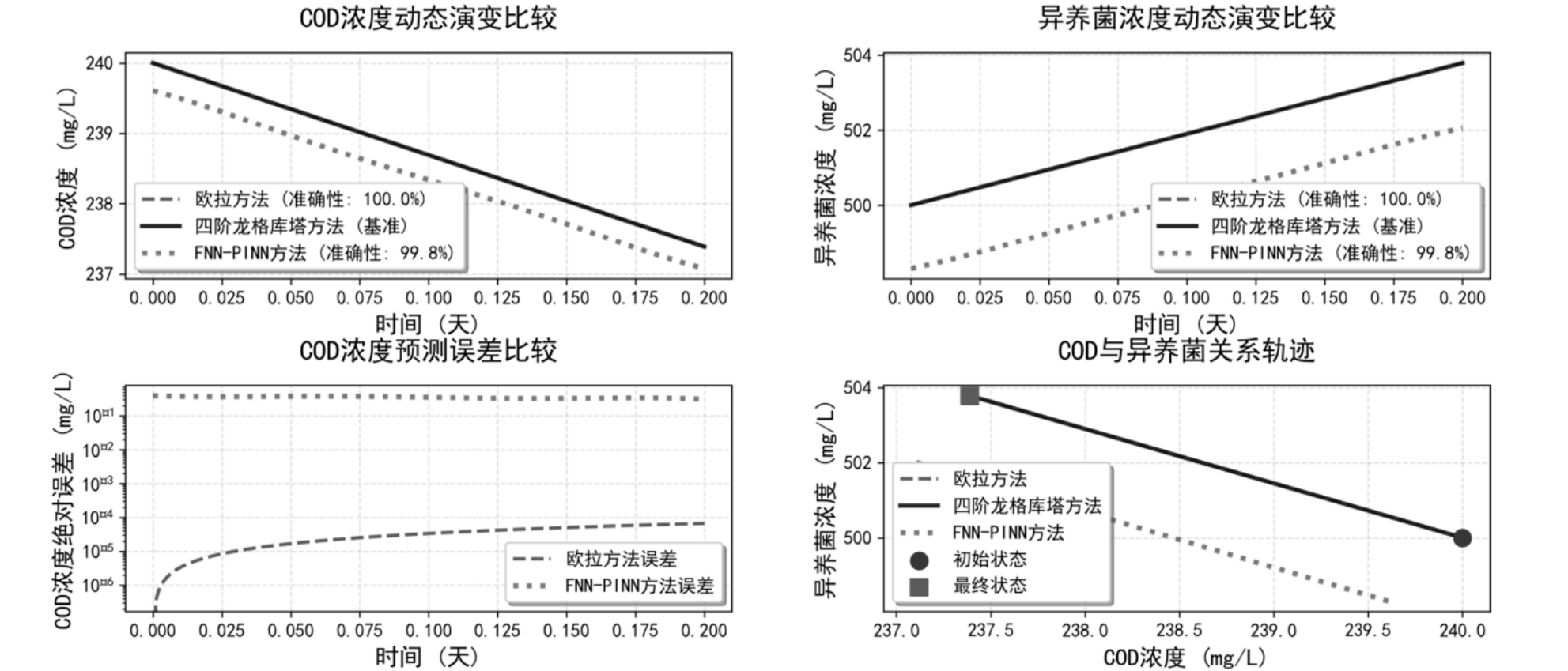
Fig.11 Comparison of Simulation Results between注:Traditional Numerical Algorithms and FNN-PINN Algorithms
| 名称 | 计算效率 (推理时间:秒) | 准确性 | 方法特点 |
|---|---|---|---|
| FNN-PINN方法 | 0.0009 | 99.76% | 高精度,满足物理约束,快速推理 |
表5 FNN-PINN算法结果及性能表
Table 5 Table of FNN-PINN Algorithm Results and Performance
| 名称 | 计算效率 (推理时间:秒) | 准确性 | 方法特点 |
|---|---|---|---|
| FNN-PINN方法 | 0.0009 | 99.76% | 高精度,满足物理约束,快速推理 |
| 预测场景 | 准确性 | MSE | 推理时间(秒) | |
|---|---|---|---|---|
| 平均迁移准确性: 94.87% | ||||
| 短期预测 (0-0.1天) | 99.81% | 0.96 | 0.999944 | 0.0018 |
| 中期预测 (0-0.3天) | 99.79% | 1.26 | 0.999928 | 0.0016 |
| 长期预测 (0-0.5天) | 99.50% | 6.91 | 0.999615 | 0.0028 |
| 不同初值1 (COD=200) | 89.95% | 779.16 | 0.965980 | 0.0032 |
| 不同初值2 (COD=280) | 92.60% | 806.52 | 0.935560 | 0.0018 |
| 不同初值3(异养菌=400) | 87.69% | 4837.26 | 0.273108 | 0.0018 |
表6 各测试场景下模型结果评价指标值
Table 6 Model Evaluation Metrics across Test Scenarios
| 预测场景 | 准确性 | MSE | 推理时间(秒) | |
|---|---|---|---|---|
| 平均迁移准确性: 94.87% | ||||
| 短期预测 (0-0.1天) | 99.81% | 0.96 | 0.999944 | 0.0018 |
| 中期预测 (0-0.3天) | 99.79% | 1.26 | 0.999928 | 0.0016 |
| 长期预测 (0-0.5天) | 99.50% | 6.91 | 0.999615 | 0.0028 |
| 不同初值1 (COD=200) | 89.95% | 779.16 | 0.965980 | 0.0032 |
| 不同初值2 (COD=280) | 92.60% | 806.52 | 0.935560 | 0.0018 |
| 不同初值3(异养菌=400) | 87.69% | 4837.26 | 0.273108 | 0.0018 |
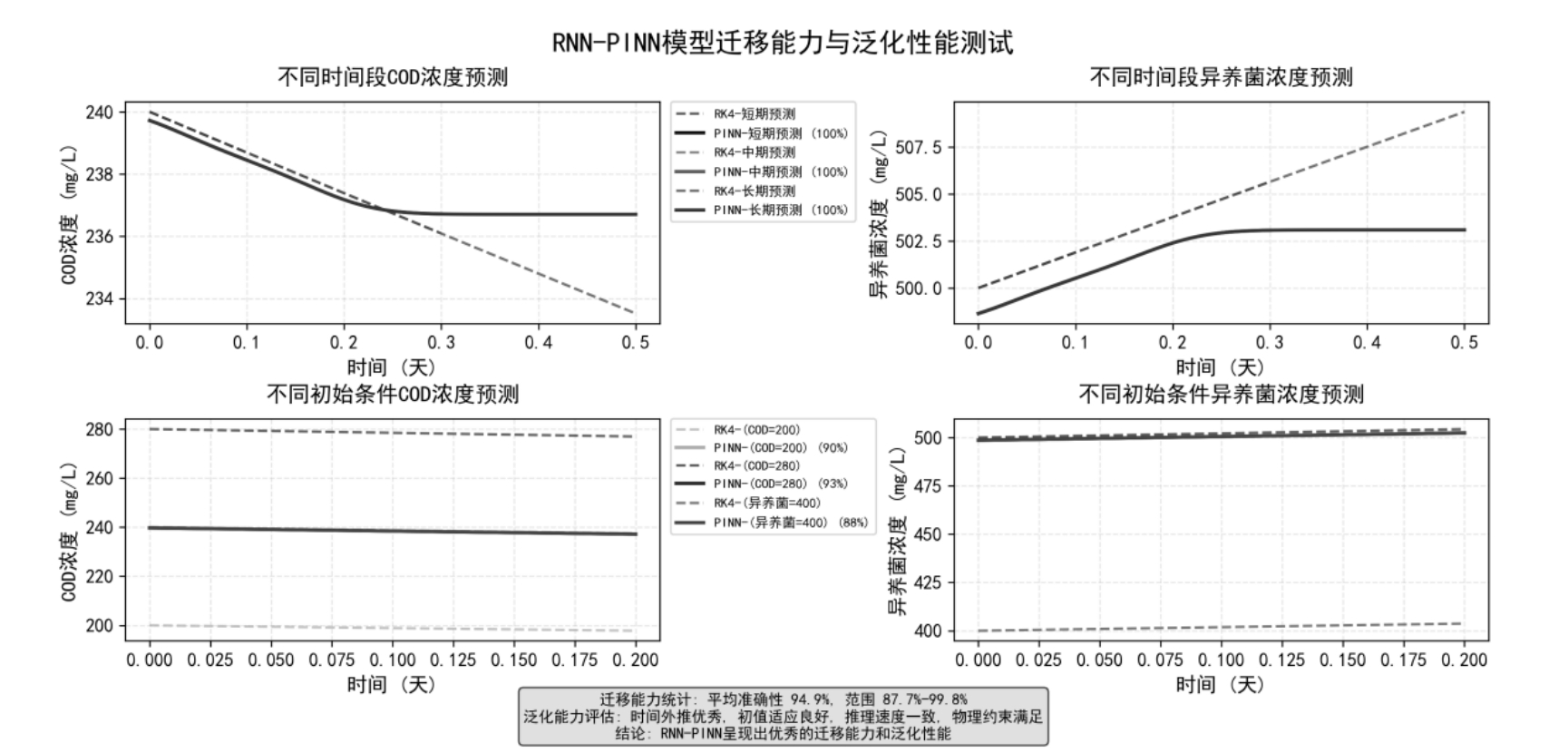
图12 RNN-PINN迁移能力与泛化能力测试
Fig.12 Evaluation of the Transferability and Generalization Capabilities of the RNN-PINN Model
| [1] | Chaudhary M, Jain N, Barman L, et al. Design and principles of adsorbent-based reactors for modular wastewater treatment[M]//Modular Treatment Approach for Drinking Water and Wastewater. Amsterdam: Elsevier, 2022: 129-148. |
| [2] | Zhang Jilei, Liu Yanning, Li Zhiping, et al. (2022). A comprehensive review on the application of artificial intelligence in wastewater treatment[J]. Science of the Total Environment, 839, 156889. |
| [3] | 金家龙. 石化含盐废水深度处理工艺的研究[D]. 南京: 南京农业大学, 2019. |
| Jin J L. Study on advanced treatment technology of petrochemical salt wastewater[D]. Nanjing: Nanjing Agricultural University, 2019. | |
| [4] | 管磊, 信硕. 石化行业污水处理技术研究[J]. 化学工程与装备, 2016(4): 259-260. |
| Guan L, Xin S. Research on wastewater treatment technology in the petrochemical industry[J]. Chemical Engineering & Equipment, 2016(4): 259-260. | |
| [5] | 张晶. 石化行业的污水处理探析[J]. 中国新技术新产品, 2015(18): 162-163. |
| Zhang J. Analysis of wastewater treatment in the petrochemical industry[J]. New Technology & New Products of China, 2015(18): 162-163. | |
| [6] | 温会涛. 高效生物处理技术在污水处理中的应用与优化[J]. 石化技术, 2025, 32(8): 152-154. |
| Wen H T. Application and optimization of efficient biological treatment technology in wastewater treatment[J]. Petrochemical Industry Technology, 2025, 32(8): 152-154. | |
| [7] | 李叶彤. 新型可见光催化剂g-C3N4/AgVO3/GO耦合生物处理协同降解盐酸土霉素的研究[D]. 长沙: 中南林业科技 学, 2025. |
| Li Y T. Study on the synergistic degradation of thiamphenicol by a novel visible light catalyst g-C3N4/AgVO3/GO coupled with biological treatment[D]. Changsha: Central South University of Forestry & Technology, 2025. | |
| [8] | 黄学平, 吴留兴, 辛攀, 等. 基于3种机器学习模型的污水处理厂出水总氮预测分析[J]. 能源研究与管理, 2023(2): 100-105, 126. |
| Huang X P, Wu L X, Xin P, et al. Predictive analysis of effluent total nitrogen from sewage treatment plants based on three machine learning models[J]. Energy Research and Management, 2023(2): 100-105, 126. | |
| [9] | 于涛, 丁伟强, 李金洋, 等. 机器学习在污水厂总氮智能监测中的应用[J]. 北方建筑, 2025(4): 57-63. |
| Yu T, Ding W Q, Li J Y, et al. Application of machine learning in intelligent monitoring of total nitrogen in wastewater treatment plants[J]. Northern Architecture, 2025(4): 57-63. | |
| [10] | Sato T. Application of a novel numerical simulation to biochemical reaction systems[J]. Frontiers in Cell and Developmental Biology, 2024, 12: 1351974. |
| [11] | Li H, Cao Y, Petzold L R, et al. Algorithms and software for stochastic simulation of biochemical reacting systems[J]. Biotechnology Progress, 2008, 24(1): 56-61. |
| [12] | Karniadakis G E, Kevrekidis I G, Lu L, et al. Physics-informed machine learning[J]. Nature Reviews Physics, 2021, 3(6): 422-440. |
| [13] | El-Din A G, Smith D W, El-Din M G. Application of artificial neural networks in wastewater treatment[J]. Journal of Environmental Engineering and Science, 2004, 3(): S81-S95. |
| Jafar R, Awad A, Jafar K, et al. Predicting effluent quality in full-scale wastewater treatment plants using shallow and deep artificial neural networks[J]. Sustainability, 2022, 14(23): 15598. | |
| [14] | Xu R Z, Cao J S, Luo J Y, et al. Data-driven neural networks for biological wastewater resource recovery: Development and challenges[J]. Journal of Cleaner Production, 2024, 476: 143781. |
| [15] | Muniappan A, Tirth V, Almujibah H, et al. Deep convolutional neural network with sine cosine algorithm based wastewater treatment systems[J]. Environmental Research, 2023, 219: 114910. |
| [16] | Alevizos V, Gerolimos N, Yue Z L, et al. Advanced graph–physics hybrid framework (AGPHF) for holistic integration of AI-driven graph- and physics- methodologies to promote resilient wastewater management in dynamic real-world conditions[J]. Applied Sciences, 2025, 15(18): 9905. |
| [17] | Sravan J S, Matsakas L, Sarkar O. Advances in biological wastewater treatment processes: focus on low-carbon energy and resource recovery in biorefinery context[J]. Bioengineering, 2024, 11(3): 281. |
| [18] | Brecht R, Cardoso-Bihlo E, Bihlo A. Physics-informed neural networks for tsunami inundation modeling[J]. Journal of Computational Physics, 2025, 536: 114066. |
| [19] | Koshelev K B, Strijhak S V. Application of physics-informed neural network on the example of modeling hydrodynamic processes that allow an analytical solution[J]. Proceedings of the Institute for System Programming of the RAS, 2023, 35(5): 245-258. |
| [20] | Wongburi P, Park J K. Prediction of wastewater treatment plant effluent water quality using recurrent neural network (RNN) models[J]. Water, 2023, 15(19): 3325. |
| [21] | Navidi S, Thelen A, Li T K, et al. Physics-informed machine learning for battery degradation diagnostics: a comparison of state-of-the-art methods[J]. Energy Storage Materials, 2024, 68: 103343. |
| [22] | Wan P F, Liu Y, Zhang Q D, et al. Enhanced degradation of extracellular polymeric substances by yeast in activated sludge to achieve sludge reduction[J]. Bioresource Technology, 2023, 377: 128915. |
| [23] | Wang Y M, Feng Y Y, Xu X R, et al. Local fractional modeling of microorganism physiology arising in wastewater treatment: Lawrence–McCarty model in cantor sets[J]. Fractal and Fractional, 2025, 9(7): 413. |
| [24] | Wang S., Wang K., Zhang H., et al. (2023). A review on the application of physics-informed neural networks for water quality prediction[J]. Environmental Science & Technology, 57(10), 3449-3459. |
| [25] | Gao Y., Liu X., Wang J., et al. (2023). Physics-informed neural networks for solving time-dependent advection-diffusion equations[J]. Computers & Mathematics with Applications, 122, 119-129. |
| [26] | Raissi M, Perdikaris P, Karniadakis G E. Physics-informed neural networks: a deep learning framework for solving forward and inverse problems involving nonlinear partial differential equations[J]. Journal of Computational Physics, 2019, 378: 686-707. |
| [28] | 张照阳, 王青旺. 信息表征-损失优化改进的物理信息神经网络求解偏微分方程[J]. 物理学报, 2025, 74(18): 391-405. |
| Zhang Z Y, Wang Q W. allaPINNs: a physics-informed neural network with improvement of information representation and loss | |
| optimization for solving partial differential equations[J]. Acta Physica Sinica, 2025, 74(18): 391-405. | |
| [29] | 周涛涛, 刘迎正, 郑文培, 等. 基于物理信息神经网络的油气管道内腐蚀预测方法[J]. 中国腐蚀与防护学报, 2025, |
| 45(5): 1320-1330.Zhou T T, Liu Y Z, Zheng W P, et al. Pipeline corrosion prediction method based on physics-informed neural networks[J]. Journal of Chinese Society for Corrosion and Protection, 2025, 45(5): 1320-1330. | |
| [30] | 黄瑞龙, 旷圆圆, ULLAH Arif, 等. 物理信息神经网络融合优化算法对非线性薛定谔方程求解分析[J/OL]. 量子电子 2025: 1-15. (2025-08-29). |
| Huang R L, Kuang Y Y, Arif U, et al. Analysis of solving the nonlinear schr?dinger equation using physics-informed neural networks with integrated optimization algorithm[J/OL]. Chinese Journal of Quantum Electronics, 2025: 1-15. (2025-08-29). | |
| [31] | 陆勇军. 求解波动方程的物理信息神经网络数值法[J]. 新乡学院学报, 2025, 42(6): 17-22. |
| Lu Y J. Physical information neural network numerical solution for solving wave equations[J]. Journal of Xinxiang University, 2025, 42(6): 17-22. | |
| [32] | Lawrence L M, McCarty P L. The activated sludge process[J]. Progress in Water Technology, 1970, 1: 9-47.] |
| [33] | 王慧, 张晓健, 王超, 等. (2023). 基于物理信息神经网络的污水处理过程建模与预测[J]. 中国给水排水, 39(2), 81-85 |
| Wang H, Zhang X J, Wang C, et al. Modeling and prediction of wastewater treatment process based on physics-informed neural networks[J]. China Water & Wastewater, 2023, 39(2): 81-85. | |
| [34] | 韩文, 王金南, 张树杰, 等. (2022). 人工智能在污水处理领域的应用研究进展[J]. 中国环保产业, (11), 34-38. |
| Han W, Wang J N, Zhang S J, et al. Research progress on the application of artificial intelligence in the field of wastewater treatment[J]. China Environmental Protection Industry, 2022, (11): 34-38. | |
| [35] | 周福妹. 人工智能技术在污水治理中应用研究[J]. 中国高新科技, 2024(16): 19-21. |
| Zhou F M. Application research of artificial intelligence technology in wastewater treatment[J]. China High-Tech, 2024(16): 19-21. | |
| [36] | 孙昕远. 人工神经网络在厌氧废水处理中的应用与展望[J]. 环境污染与防治, 2024, 46(8): 1192-1199. |
| Sun X Y. Application of artificial neural network in anaerobic wastewater treatment: recent advances and prospects[J]. Environmental Pollution & Control, 2024, 46(8): 1192-1199. | |
| [37] | 王田力, 陈伊宁, 李昂, 等. 人工智能在废水处理领域研究的发展态势分析[J]. 安全与环境学报, 2024, 24(5): 1985-1996. |
| Wang T L, Chen Y N, Li A, et al. Analysis of the development trend of artificial intelligence in the field of wastewater treatment[J]. Journal of Safety and Environment, 2024, 24(5): 1985-1996. | |
| [38] | Diukarev, V, Starukhin Y. Proposed Methods for Preventing Overfitting in Machine Learning and Deep Learning[J]. Asian Journal of Research in Computer Science,2024, 17(10):85–94. |
| [1] | 段浩磊, 陈浩远, 梁坤峰, 王林, 陈彬, 曹勇, 张晨光, 李硕鹏, 朱登宇, 何亚茹, 杨大鹏. 纯电动车热管理系统低GWP工质替代方案性能分析与综合评价[J]. 化工学报, 2025, 76(S1): 54-61. |
| [2] | 王俊鹏, 冯佳琪, 张恩搏, 白博峰. 曲折式与阵列式迷宫阀芯结构内流动与空化特性研究[J]. 化工学报, 2025, 76(S1): 93-105. |
| [3] | 赵子祥, 段钟弟, 孙浩然, 薛鸿祥. 大温差两相流动诱导水锤冲击的数值模型[J]. 化工学报, 2025, 76(S1): 170-180. |
| [4] | 黄灏, 王文, 贺隆坤. LNG船薄膜型液货舱预冷过程模拟与分析[J]. 化工学报, 2025, 76(S1): 187-194. |
| [5] | 汪思远, 刘国强, 熊通, 晏刚. 窗式空调器轴流风机的风速非均匀分布特性及其对冷凝器流路优化设计的影响规律[J]. 化工学报, 2025, 76(S1): 205-216. |
| [6] | 曹庆泰, 郭松源, 李建强, 蒋赞, 汪彬, 耑锐, 吴静怡, 杨光. 负过载下多孔隔板对液氧贮箱蓄液性能的影响研究[J]. 化工学报, 2025, 76(S1): 217-229. |
| [7] | 孙九春, 桑运龙, 王海涛, 贾浩, 朱艳. 泥水盾构仓体内射流对泥浆输送特性影响研究[J]. 化工学报, 2025, 76(S1): 246-257. |
| [8] | 何婷, 黄舒阳, 黄坤, 陈利琼. 基于余热利用的天然气化学吸收脱碳-高温热泵耦合流程研究[J]. 化工学报, 2025, 76(S1): 297-308. |
| [9] | 杨开源, 陈锡忠. 颗粒破碎的离散元及有限离散元模拟方法比较[J]. 化工学报, 2025, 76(9): 4398-4411. |
| [10] | 陈昇, 李子争, 苗超, 白学刚, 李飞, 刘家璇, 李天天, 杨爽, 吕蓉蓉, 王江云. 大尺度密集场景高危氯气非均匀湍流扩散特性三维CFD模拟[J]. 化工学报, 2025, 76(9): 4630-4643. |
| [11] | 张茹, 朱传强, 张栋, 黄政, 肖雨果, 李明, 李长明. 采用高分子非催化还原脱硝的垃圾焚烧工艺伴生固废含氮污染物特征研究[J]. 化工学报, 2025, 76(9): 4944-4959. |
| [12] | 王一飞, 李玉星, 欧阳欣, 赵雪峰, 孟岚, 胡其会, 殷布泽, 郭雅琦. 基于裂尖减压特性的CO2管道断裂扩展数值计算[J]. 化工学报, 2025, 76(9): 4683-4693. |
| [13] | 刘奕扬, 邢志祥, 刘烨铖, 彭明, 李玉洋, 李云浩, 沈宁舟. 加氢站液氢泄漏扩散特性与安全监测数值模拟研究[J]. 化工学报, 2025, 76(9): 4694-4708. |
| [14] | 黄正宗, 刘科成, 李泽方, 曾平生, 刘永富, 闫红杰, 刘柳. 锌精馏炉砖砌式换热室数值模拟与场协同优化[J]. 化工学报, 2025, 76(9): 4425-4439. |
| [15] | 段炼, 周星睿, 袁文君, 陈飞. 连续相速度脉动对微通道内聚合物液滴生成和形貌的影响规律[J]. 化工学报, 2025, 76(9): 4578-4585. |
| 阅读次数 | ||||||
|
全文 |
|
|||||
|
摘要 |
|
|||||
 京公网安备 11010102001995号