CIESC Journal ›› 2025, Vol. 76 ›› Issue (9): 4512-4523.DOI: 10.11949/0438-1157.20250169
• Special Column: Modeling and Simulation in Process Engineering • Previous Articles Next Articles
Chunmeng ZHU1,2( ), Zeng LI2, Nan LIU2, Yunpeng ZHAO2, Xiaogang SHI2, Xingying LAN2()
Received:2025-02-24
Revised:2025-04-09
Online:2025-10-23
Published:2025-09-25
Contact:
Xingying LAN
朱春梦1,2(), 李增2, 柳楠2, 赵云鹏2, 石孝刚2, 蓝兴英2()
通讯作者:
蓝兴英
作者简介:朱春梦(1998—),女,博士研究生,2021311106@student.cup.edu.cn
基金资助:CLC Number:
Chunmeng ZHU, Zeng LI, Nan LIU, Yunpeng ZHAO, Xiaogang SHI, Xingying LAN. Fault detection of catalyst loss in FCC disengager based on autoencoder and multi-scale symbolic transfer entropy[J]. CIESC Journal, 2025, 76(9): 4512-4523.
朱春梦, 李增, 柳楠, 赵云鹏, 石孝刚, 蓝兴英. 基于自编码器和多尺度符号转移熵的FCC沉降器跑剂故障检测[J]. 化工学报, 2025, 76(9): 4512-4523.
Add to citation manager EndNote|Ris|BibTeX
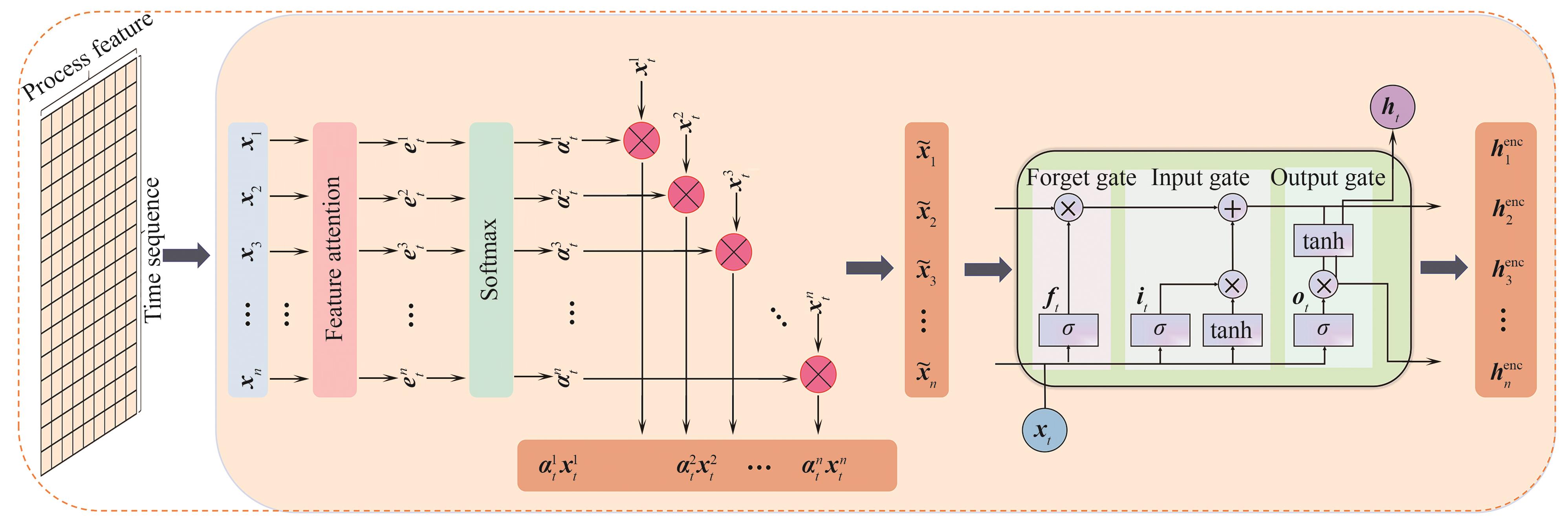
Fig.1 Encoder architecture with integrated AM and LSTM
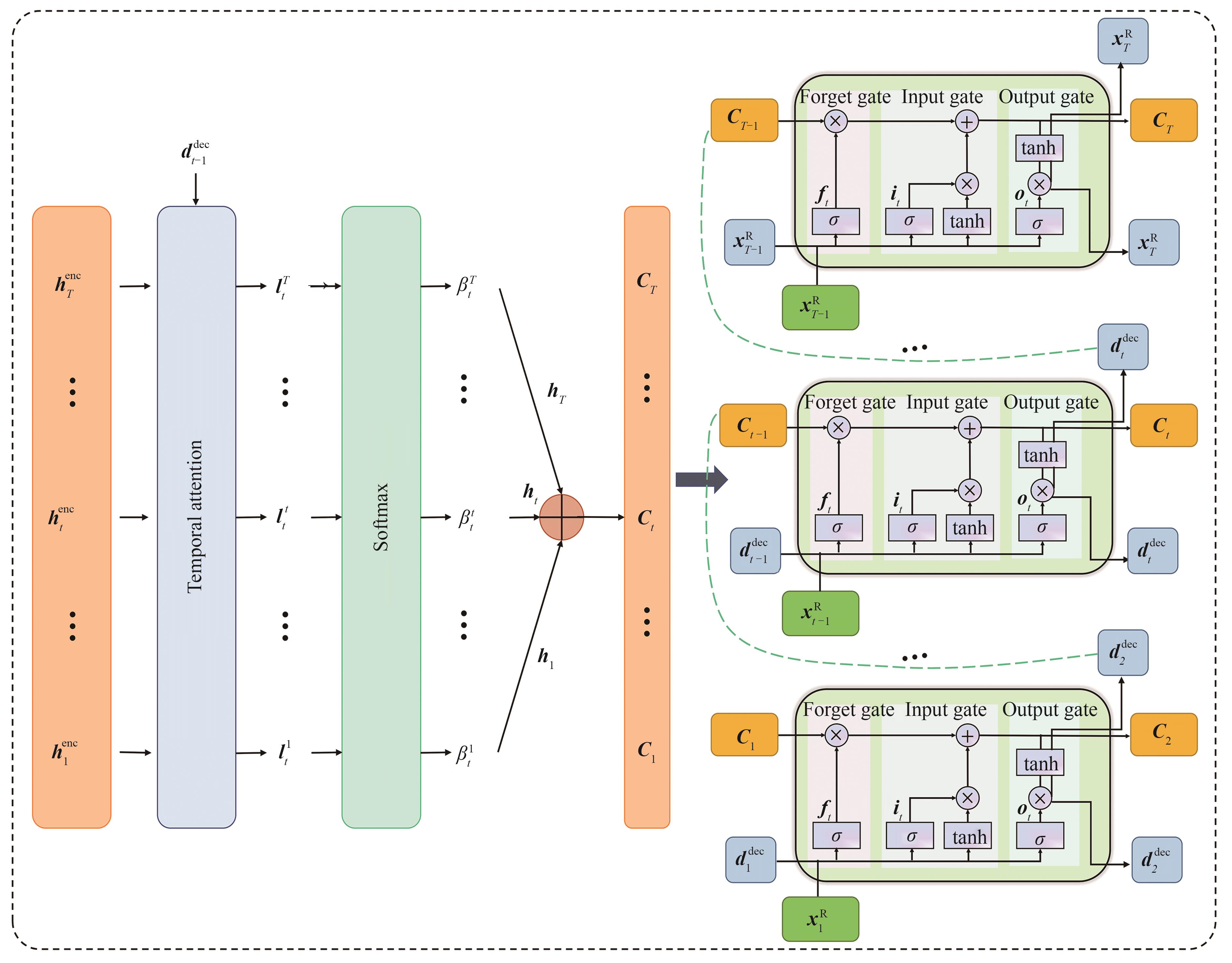
Fig.2 Decoder architecture with integrated AM and LSTM
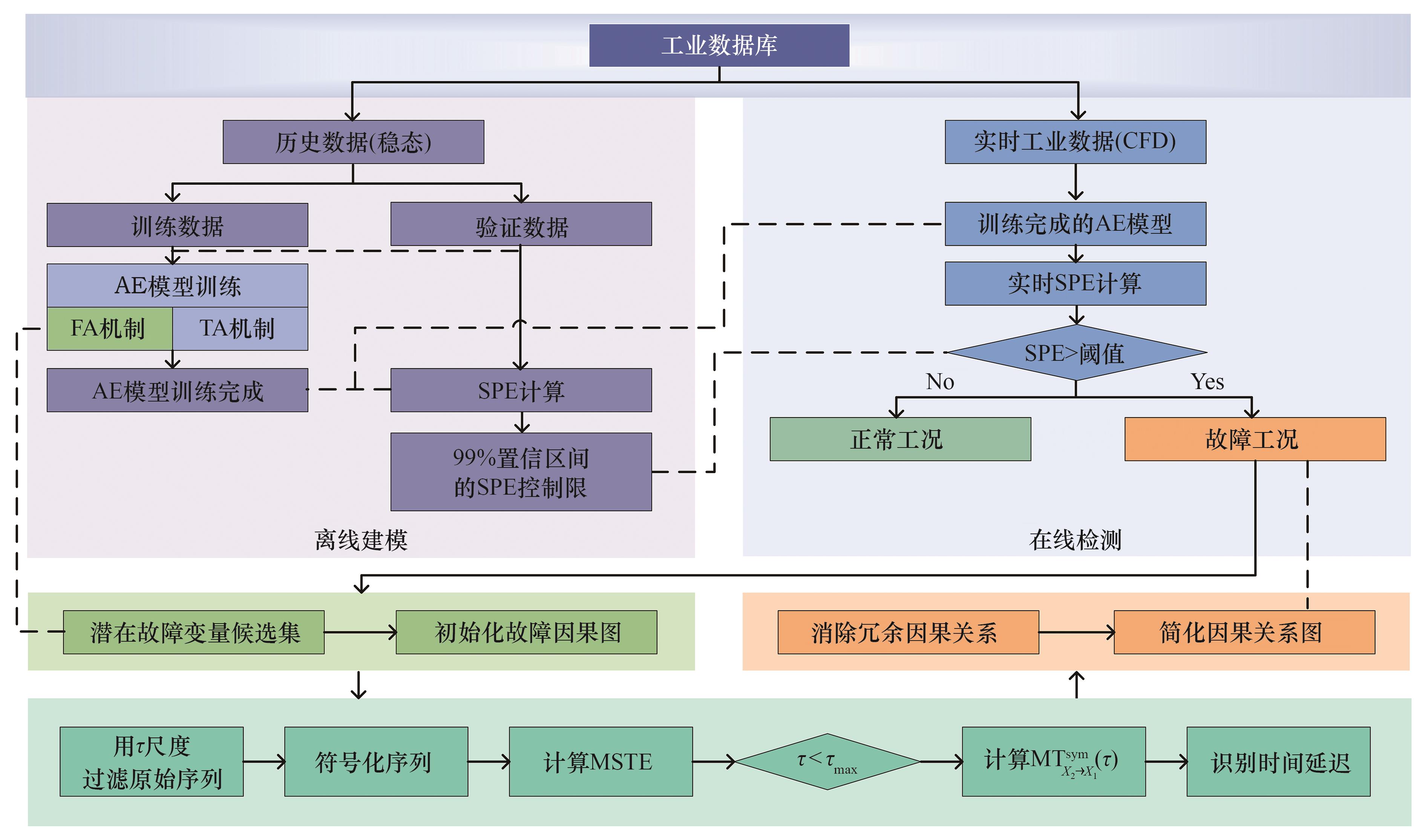
Fig.3 Fault detection flowchart with integrated CFD, AE and MSTE
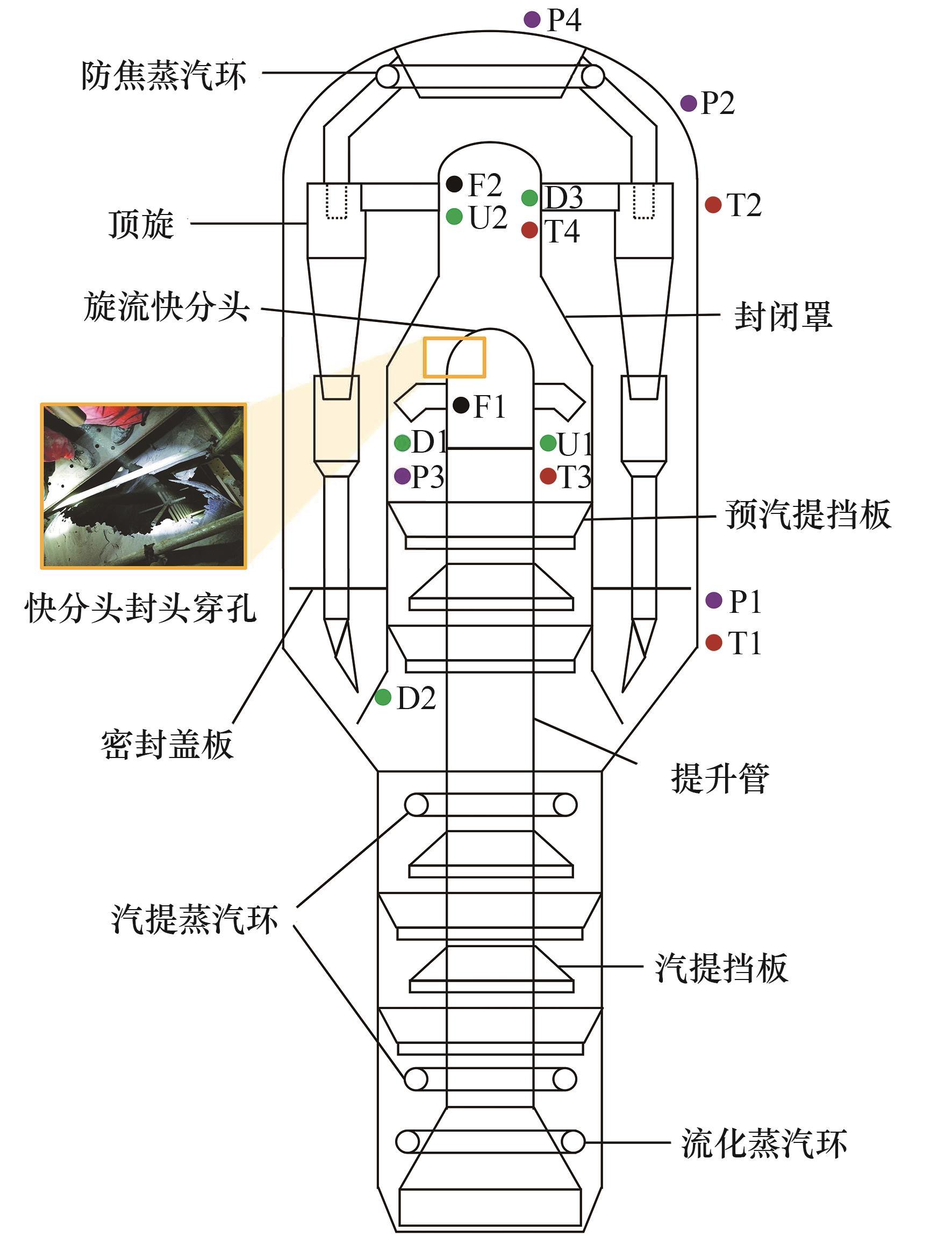
Fig.4 Structure and variable distribution of FCC disengager system
| 工业变量 | 变量描述 | 单位 |
|---|---|---|
| F1 | 顶旋入口催化剂流量 | kg·s-1 |
| F2 | 催化剂跑损量 | kg·s-1 |
| P1 | 下部稀相空间压力 | kPa |
| P2 | 上部稀相空间压力 | kPa |
| P3 | 快分出口压力 | kPa |
| P4 | 顶旋压降 | kPa |
| D1 | 快分出口催化剂浓度(固含率) | — |
| D2 | 隔离罩槽口催化剂浓度(固含率) | — |
| D3 | 顶旋入口催化剂浓度(固含率) | — |
| U1 | 快分出口线速 | m·s-1 |
| U2 | 顶旋入口线速 | m·s-1 |
| T1 | 下部稀相空间温度 | K |
| T2 | 沉降器顶部温度 | K |
| T3 | 快分出口温度 | K |
| T4 | 顶旋入口温度 | K |
Table 1 Process variables in the FCC disengager system
| 工业变量 | 变量描述 | 单位 |
|---|---|---|
| F1 | 顶旋入口催化剂流量 | kg·s-1 |
| F2 | 催化剂跑损量 | kg·s-1 |
| P1 | 下部稀相空间压力 | kPa |
| P2 | 上部稀相空间压力 | kPa |
| P3 | 快分出口压力 | kPa |
| P4 | 顶旋压降 | kPa |
| D1 | 快分出口催化剂浓度(固含率) | — |
| D2 | 隔离罩槽口催化剂浓度(固含率) | — |
| D3 | 顶旋入口催化剂浓度(固含率) | — |
| U1 | 快分出口线速 | m·s-1 |
| U2 | 顶旋入口线速 | m·s-1 |
| T1 | 下部稀相空间温度 | K |
| T2 | 沉降器顶部温度 | K |
| T3 | 快分出口温度 | K |
| T4 | 顶旋入口温度 | K |
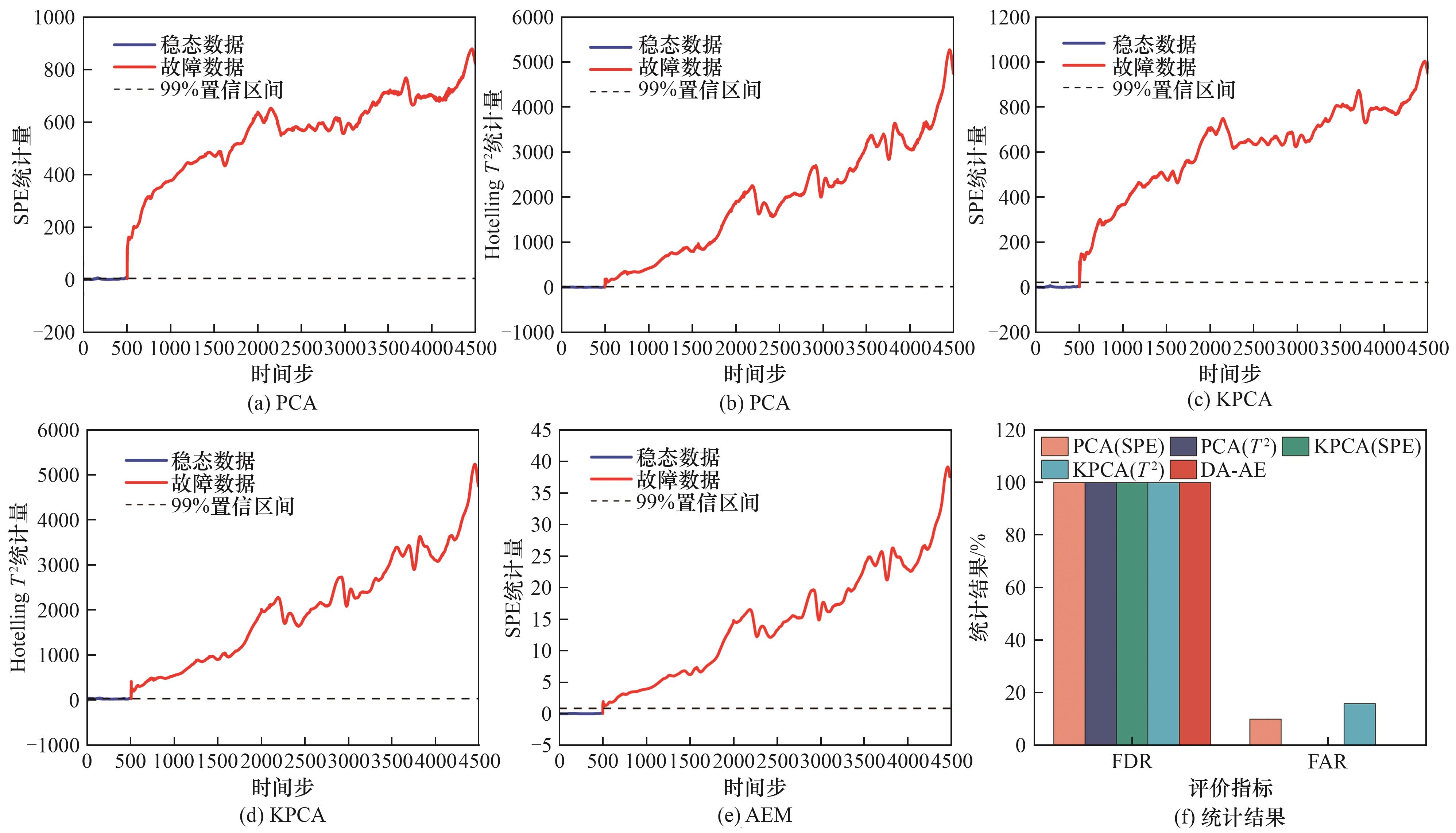
Fig.5 Fault detection results for high-fidelity datasets
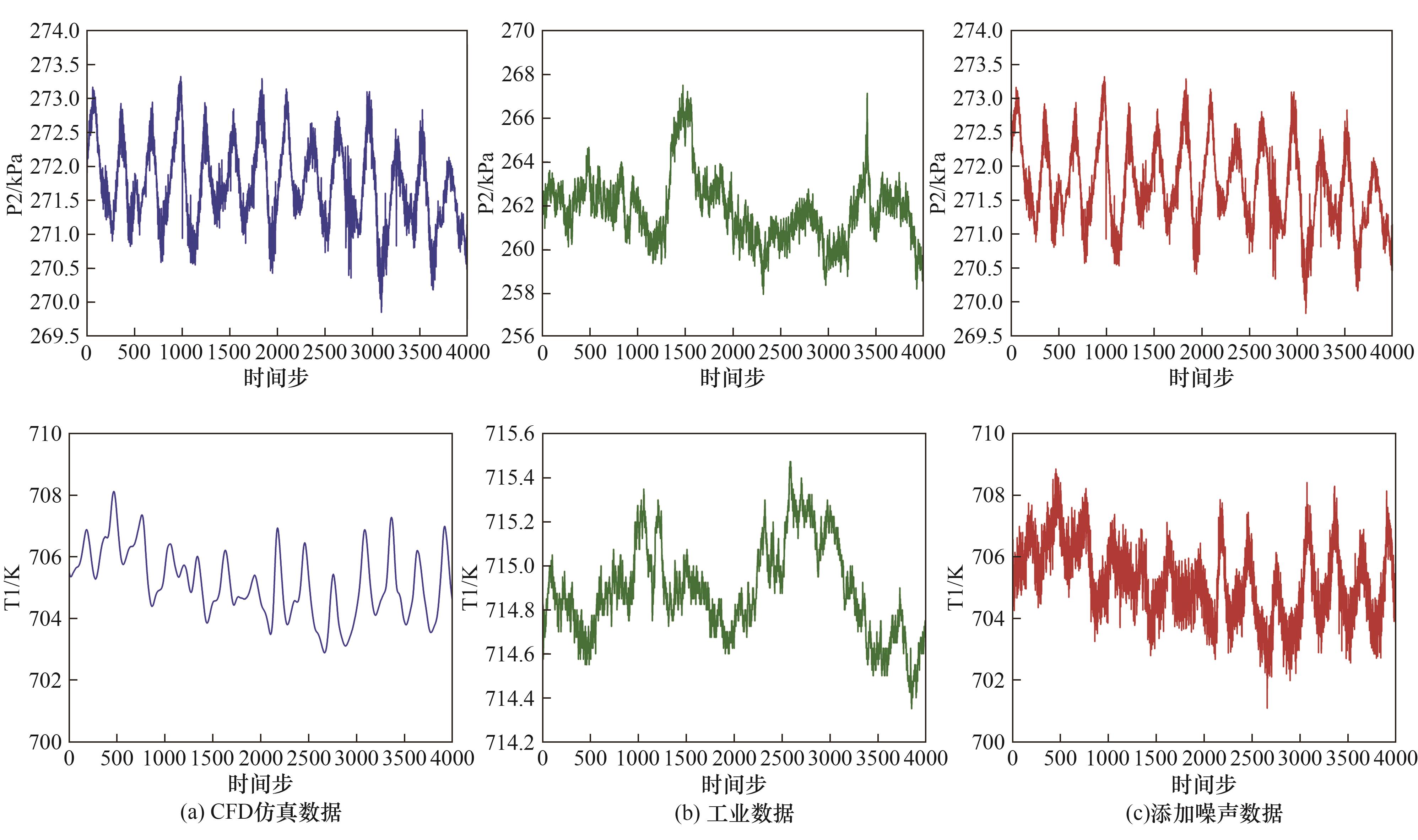
Fig.6 Forms of data presentation

Fig.7 Fault detection results with data noise added
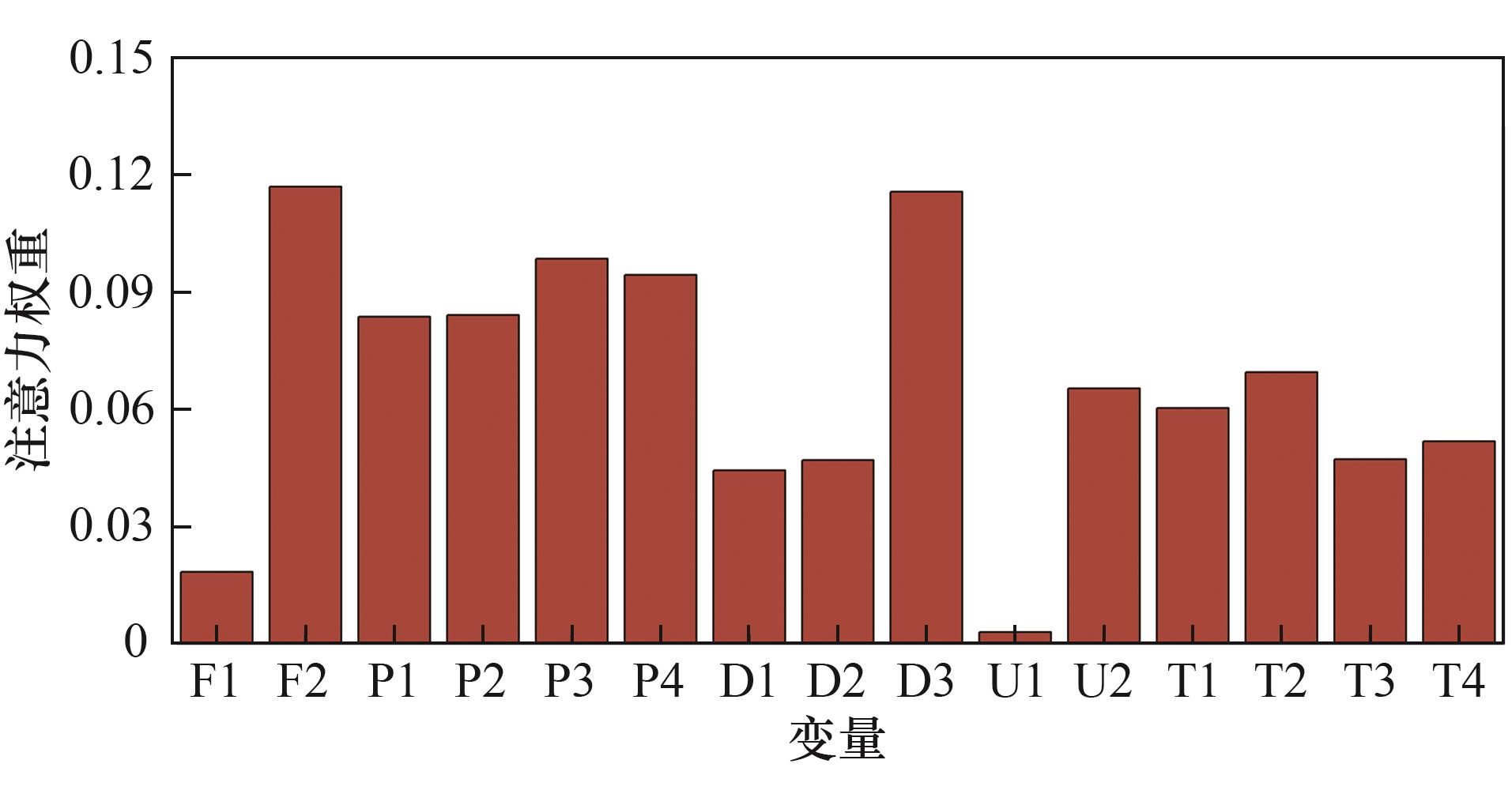
Fig.8 Fault contribution diagram based on the FA mechanism
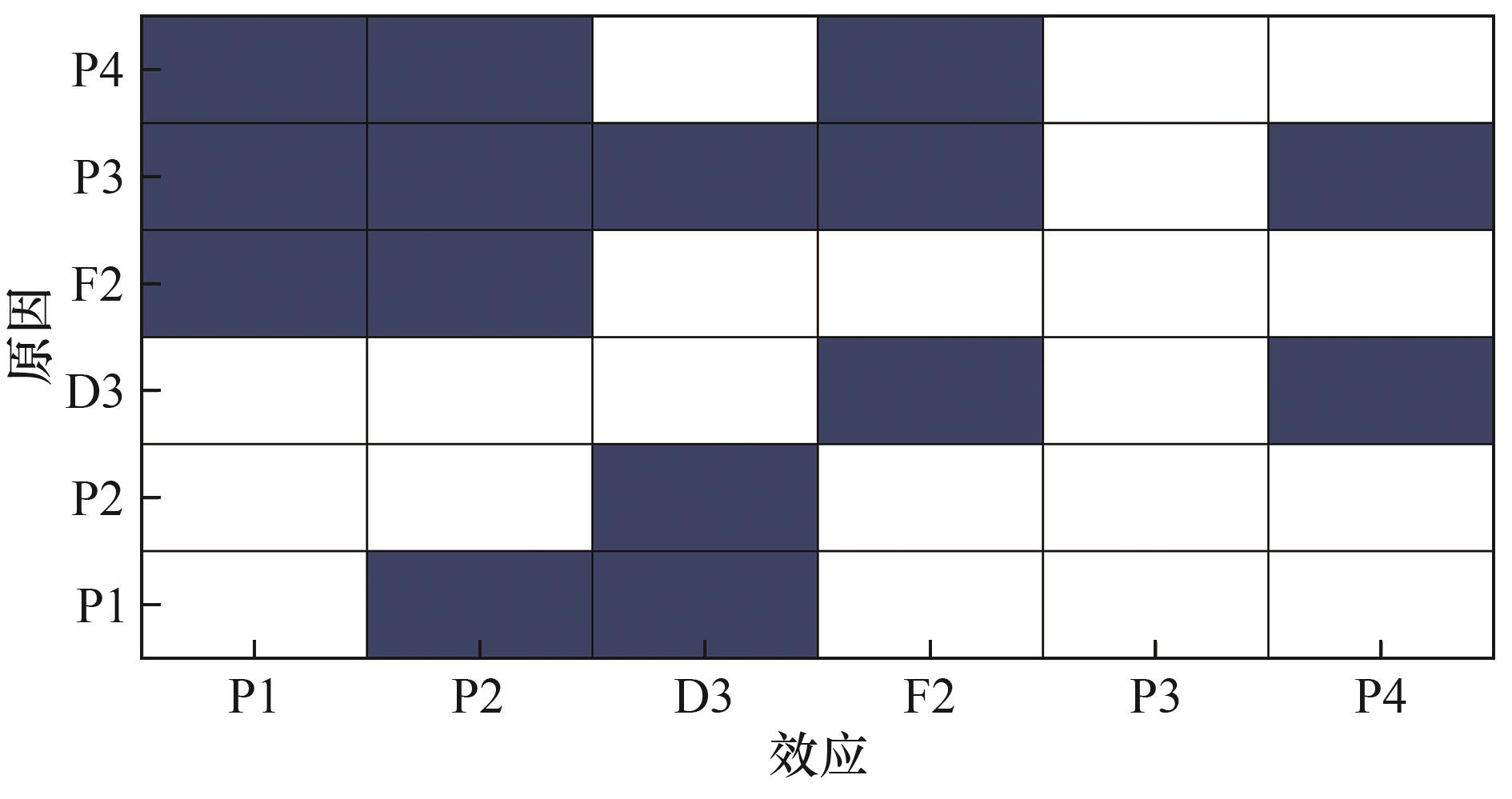
Fig.9 The causality generated by MSTE
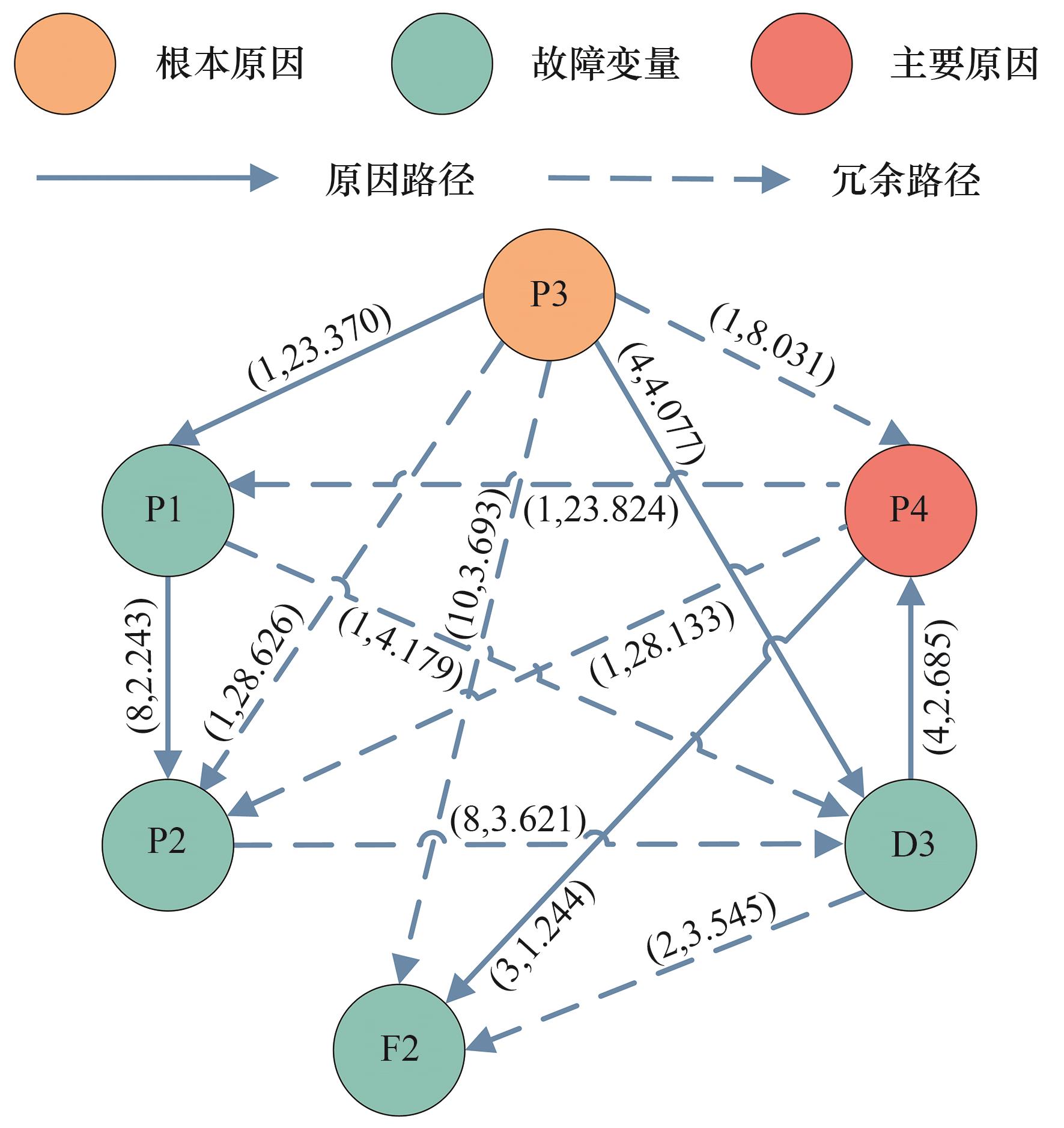
Fig.10 Causal diagram with time delay of vortex quick-separation perforation fault generated by MSTE
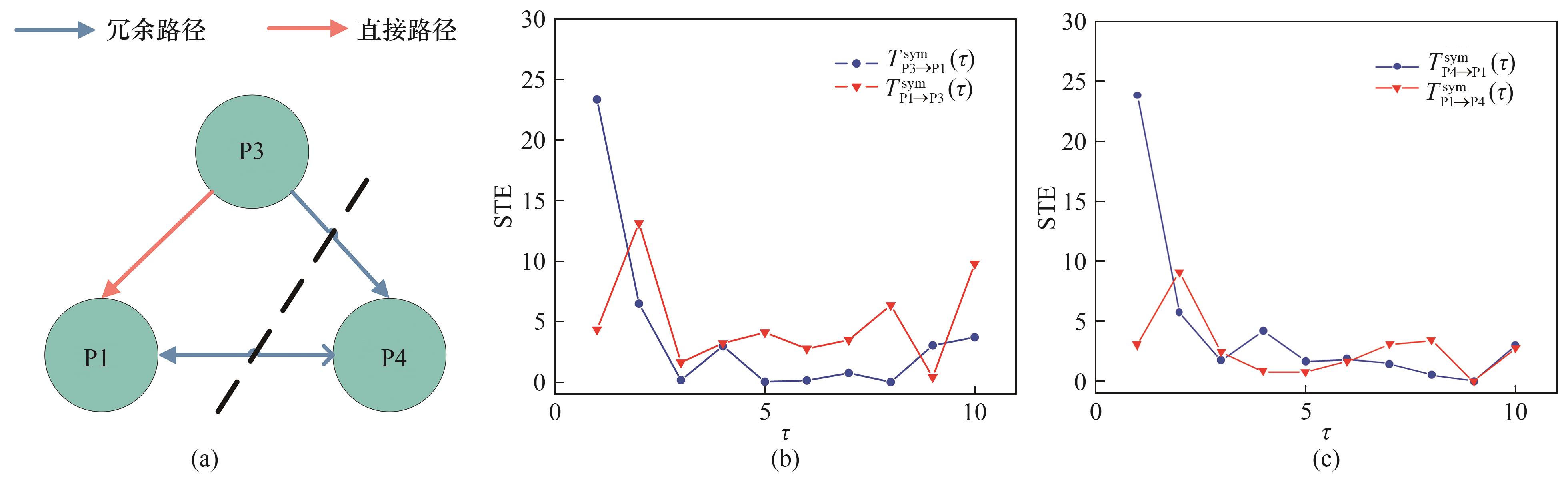
Fig.11 MSTE changes with τ in FCC disengager system for variables P3 and P1 or for variables P4 and P1
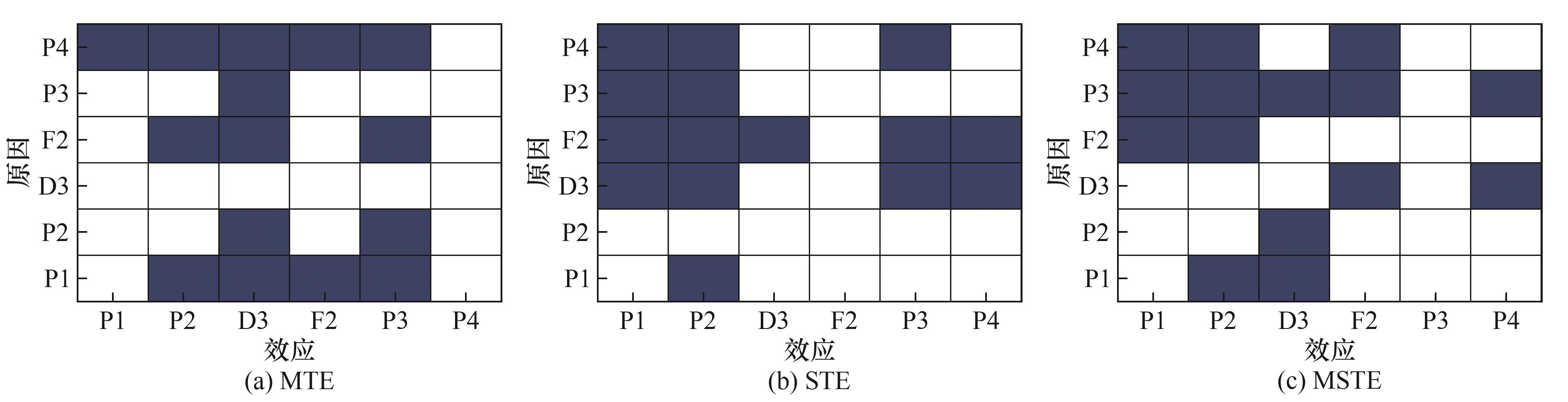
Fig.12 The causality generated by MTE, STE and MSTE
| [1] | 许友好, 李浩天, 刘昌呈. “双碳”目标下石油炼制技术研发策略与工业实践[J]. 石油炼制与化工, 2024, 55(1): 171-179. |
| Xu Y H, Li H T, Liu C C. Development strategy and industrial practice of petroleum refining technology under the goal of “carbon peak and carbon neutrality"[J]. Petroleum Processing and Petrochemicals, 2024, 55(1): 171-179. | |
| [2] | Liu N, Wang J, Sun S L, et al. Optimized principal component analysis and multi-state Bayesian network integrated method for chemical process monitoring and variable state prediction[J]. Chemical Engineering Journal, 2022, 430: 132617. |
| [3] | 宋冰, 郭涛, 侍洪波, 等. 基于双子空间并行回归的化工过程质量相关故障检测方法[J]. 化工学报, 2023, 74(11): 4600-4610. |
| Song B, Guo T, Shi H B, et al. A chemical process quality-related fault detection method based on twin-space parallel regression[J]. CIESC Journal, 2023, 74(11): 4600-4610. | |
| [4] | Hinton G E, Salakhutdinov R R. Reducing the dimensionality of data with neural networks[J]. Science, 2006, 313(5786): 504-507. |
| [5] | Park D, Hoshi Y, Kemp C C. A multimodal anomaly detector for robot-assisted feeding using an LSTM-based variational autoencoder[J]. IEEE Robotics and Automation Letters, 2018, 3(3): 1544-1551. |
| [6] | Li W X, Shang Z W, Zhang J, et al. A novel unsupervised anomaly detection method for rotating machinery based on memory augmented temporal convolutional autoencoder[J]. Engineering Applications of Artificial Intelligence, 2023, 123: 106312. |
| [7] | Yao Y Y, Ma J H, Ye Y M. Regularizing autoencoders with wavelet transform for sequence anomaly detection[J]. Pattern Recognition, 2023, 134: 109084. |
| [8] | Zeng L, Jin Q W, Lin Z M, et al. Dual-attention LSTM autoencoder for fault detection in industrial complex dynamic processes[J]. Process Safety and Environmental Protection, 2024, 185: 1145-1159. |
| [9] | Zhang Z W, Wu L F. Graph neural network-based bearing fault diagnosis using Granger causality test[J]. Expert Systems with Applications, 2024, 242: 122827. |
| [10] | Zhao C H, Chen X. Data-driven nonstationary industrial process monitoring[M]//Reference Module in Materials Science and Materials Engineering. Amsterdam: Elsevier, 2024. |
| [11] | Staniek M, Lehnertz K. Symbolic transfer entropy[J]. Physical Review Letters, 2008, 100(15): 158101. |
| [12] | Alobaid F, Almohammed N, Massoudi Farid M, et al. Progress in CFD simulations of fluidized beds for chemical and energy process engineering[J]. Progress in Energy and Combustion Science, 2022, 91: 100930. |
| [13] | 何洋, 王利民, 唐春丽, 等. H型翅片管湿烟气对流冷凝传热的数值模拟研究[J]. 化工学报, 2019, 70(12): 4556-4564. |
| He Y, Wang L M, Tang C L, et al. Numerical simulation of convection condensation heat transfer of H-fixed tubes with wet flue gas[J]. CIESC Journal, 2019, 70(12): 4556-4564. | |
| [14] | 周国峰, 王利民, 王小伟, 等. 基于时驱硬球算法与格子玻尔兹曼方法的颗粒流体系统直接数值模拟[J]. 科学通报, 2011, 56(16): 1246-1256. |
| Zhou G F, Wang L M, Wang X W, et al. Direct numerical simulation scheme for particle-fluid systems based on a time-driven hard-sphere and the lattice Boltzmann method[J]. Chinese Science Bulletin, 2011, 56(16): 1246-1256. | |
| [15] | Tang Y N, Liu C, Kuang S B, et al. CFD modeling investigation of oxy-fuel combustion application in an industrial-scale FCC regenerator[J]. Journal of the Energy Institute, 2024, 117: 101796. |
| [16] | Zhao Y P, Li C L, Shi X G, et al. Simulation analysis of CO2 in situ enrichment technology of fluidized catalytic cracking regenerator[J]. Powder Technology, 2024, 434: 119386. |
| [17] | Lan X Y, Shi X G, Wang C X, et al. Process intensification of multiphase flow and reaction system: perspectives[J]. Chemical Engineering and Processing-Process Intensification, 2024, 204: 109938. |
| [18] | Zhang H L, Zhu A Q, Xu J, et al. Gas-solid reactor optimization based on EMMS-DPM simulation and machine learning[J]. Particuology, 2024, 89: 131-143. |
| [19] | Aminmahalati A, Fazlali A, Safikhani H. Multi-objective optimization of CO boiler combustion chamber in the RFCC unit using NSGA Ⅱ algorithm[J]. Energy, 2021, 221: 119859. |
| [20] | 高学金, 姚玉卓, 韩华云, 等. 基于注意力动态卷积自编码器的发酵过程故障监测[J]. 化工学报, 2023, 74(6): 2503-2521. |
| Gao X J, Yao Y Z, Han H Y, et al. Fault monitoring of fermentation process based on attention dynamic convolutional autoencoder[J]. CIESC Journal, 2023, 74(6): 2503-2521. | |
| [21] | Sun R R, Wang Y Q. Key-performance-indicator-related fault detection based on deep orthonormal subspace analysis[J]. IEEE Transactions on Industrial Informatics, 2024, 20(5): 7249-7258. |
| [22] | Yu J H, Gao X, Li B F, et al. A filter-augmented auto-encoder with learnable normalization for robust multivariate time series anomaly detection[J]. Neural Networks, 2024, 170: 478-493. |
| [23] | 邵远哲, 赵忠盖, 刘飞. 基于共同趋势模型的非平稳过程质量相关故障检测方法[J]. 化工学报, 2023, 74(6): 2522-2537. |
| Shao Y Z, Zhao Z G, Liu F. Quality-related non-stationary process fault detection method by common trends model[J]. CIESC Journal, 2023, 74(6): 2522-2537. | |
| [24] | Runge J, Bathiany S, Bollt E, et al. Inferring causation from time series in Earth system sciences[J]. Nature Communications, 2019, 10(1): 2553. |
| [25] | 刘梦溪, 卢春喜, 时铭显. 催化裂化后反应系统快分的研究进展[J]. 化工学报, 2016, 67(8): 3133-3145. |
| Liu M X, Lu C X, Shi M X. Advances in quick separators of post-riser system in FRCC unit[J]. CIESC Journal, 2016, 67(8): 3133-3145. | |
| [26] | 马明亮, 卢朝鹏, 赵静. 催化裂化装置旋风分离器运行情况分析及对策[J]. 石油与天然气化工, 2020, 49(6): 34-39. |
| Ma M L, Lu Z P, Zhao J. Operation situation analysis and countermeasures of the cyclone separator for catalytic cracking unit[J]. Chemical Engineering of Oil & Gas, 2020, 49(6): 34-39. | |
| [27] | Hu X, Zhang T Y, Geng Z Q, et al. Noise adaptive filtering model integrating spatio-temporal feature for soft sensor[J]. Expert Systems with Applications, 2024, 239: 122453. |
| [28] | Hao X C, Wang Y Z, Zhang Z P, et al. Root cause analysis of faults in cement pre-decomposition system using kernel principal component analysis and multi-scale symbolic transfer entropy[J]. Chemical Engineering Science, 2024, 286: 119681. |
| [29] | Duan S Y, Zhao C H, Wu M. Multiscale partial symbolic transfer entropy for time-delay root cause diagnosis in nonstationary industrial processes[J]. IEEE Transactions on Industrial Electronics, 2023, 70(2): 2015-2025. |
| [30] | Faes L, Nollo G, Porta A. Compensated transfer entropy as a tool for reliably estimating information transfer in physiological time series[J]. Entropy, 2013, 15(1): 198-219. |
| [31] | Zhao X J, Sun Y P, Li X M, et al. Multiscale transfer entropy: measuring information transfer on multiple time scales[J]. Communications in Nonlinear Science and Numerical Simulation, 2018, 62: 202-212. |
| [1] | Yilei ZHOU, Zhi LI, Xin PENG. Design of self-optimizing control structure for continuous catalytic reforming reaction process based on surrogate model [J]. CIESC Journal, 2025, 76(9): 4499-4511. |
| [2] | Yifei WANG, Yuxing LI, Xin OUYANG, Xuefeng ZHAO, Lan MENG, Qihui HU, Buze YIN, Yaqi GUO. Numerical calculation of CO2 pipeline fracture propagation based on crack tip decompression characteristics [J]. CIESC Journal, 2025, 76(9): 4683-4693. |
| [3] | Yiyang LIU, Zhixiang XING, Yecheng LIU, Ming PENG, Yuyang LI, Yunhao LI, Ningzhou SHEN. Numerical simulation study on the leakage diffusion characteristics and safety monitoring of liquid hydrogen in hydrogen refueling stations [J]. CIESC Journal, 2025, 76(9): 4694-4708. |
| [4] | Zhenning FAN, Haining LIANG, Maoli FANG, Yifan HE, Shuai YU, Xingqing YAN, Jiaran AN, Fanfan QIAO, Jianliang YU. Research and comparison of throttling and venting characteristics of CO2 pipelines in different phase states [J]. CIESC Journal, 2025, 76(7): 3742-3751. |
| [5] | Jinjiang WANG, Zhenjie LU, Weizheng AN, Fengyun YANG, Xiaogang QIN. Research and prospect of early warning and diagnosis technology for ORC power generation system process [J]. CIESC Journal, 2025, 76(7): 3137-3152. |
| [6] | Yulun WU, Zhenlei WANG, Xin WANG. Contrastive learning based on method for identifying operating conditions of ethylene cracking furnace [J]. CIESC Journal, 2025, 76(6): 2733-2742. |
| [7] | Hanchuan ZHANG, Chao SHANG, Wenxiang LYU, Dexiang HUANG, Yaning ZHANG. Operating conditions pattern recognition and yield prediction for FCCU based on unsupervised time series clustering [J]. CIESC Journal, 2025, 76(6): 2781-2790. |
| [8] | Min XIONG, Dongmei LIU, Zhichao WANG, Li ZHOU, Xu JI. Optimization and adjustment of operating parameters for green ammonia production under variable load conditions [J]. CIESC Journal, 2025, 76(6): 2791-2801. |
| [9] | Wenliang LI, Cheng JI, Chen LIANG, Sichen WU, Shilin CHEN, Wei SUN, Chi ZHAI. On-line soft measurement of penicillin concentration based on TDMN [J]. CIESC Journal, 2025, 76(6): 2848-2858. |
| [10] | Fuyu WANG, Xuanyi ZHOU. Leakage estimation in a chemical tank farm with unsteady adjoint equation and genetic algorithm [J]. CIESC Journal, 2025, 76(6): 3104-3114. |
| [11] | Yifei WANG, Jingjie REN, Mingshu BI, Haotian YE. Multi-objective optimization of cyclohexane oxidation process parameters based on inherent safety and economic performance [J]. CIESC Journal, 2025, 76(6): 2722-2732. |
| [12] | Min JIANG, Xiangyu SHAO, Ligang ZHENG, Jianliang GAO, Gang LEI. Effect of membrane pressure on the venting explosion process of premixed hydrogen-air gases [J]. CIESC Journal, 2025, 76(6): 2770-2780. |
| [13] | Haotian AN, Zhangye HAN, Muyao LU, Awu ZHOU, Jianrong LI. Promoting industrial application of MOF: scale-up preparation and shaping [J]. CIESC Journal, 2025, 76(5): 2011-2025. |
| [14] | Junliang HUO, Zhiguo TANG, Zongjun QIU, Yuhua FENG, Xu JIANG, Leyi WANG, Yu YANG, Fanfan QIAO, Yifan HE, Jianliang YU. Experimental research on risk of freezing and plugging during CO2 pipeline venting under throttling effect [J]. CIESC Journal, 2025, 76(4): 1898-1908. |
| [15] | Xinmei ZHANG, Ao ZHANG, Dehua QIU, Xiaoshuang LIU, Chen CHEN. Dynamic domino effect assessment method based on thermal response mechanism of pool fire in tank farm [J]. CIESC Journal, 2025, 76(4): 1885-1897. |
| Viewed | ||||||
|
Full text |
|
|||||
|
Abstract |
|
|||||


