CIESC Journal ›› 2025, Vol. 76 ›› Issue (S1): 237-245.DOI: 10.11949/0438-1157.20241354
• Fluid dynamics and transport phenomena • Previous Articles
Jichao GUO( ), Xiaoxiao XU(), Yunlong SUN
Received:2024-11-25
Revised:2024-12-13
Online:2025-06-26
Published:2025-06-25
Contact:
Xiaoxiao XU
郭纪超(), 徐肖肖(), 孙云龙
通讯作者:
徐肖肖
作者简介:郭纪超(2000—),男,硕士研究生,202210131098@stu.cqu.edu.cn
基金资助:CLC Number:
Jichao GUO, Xiaoxiao XU, Yunlong SUN. Airflow simulation and optimization based on
郭纪超, 徐肖肖, 孙云龙. 基于植物工厂中的CO2浓度气流模拟及优化研究[J]. 化工学报, 2025, 76(S1): 237-245.
Add to citation manager EndNote|Ris|BibTeX
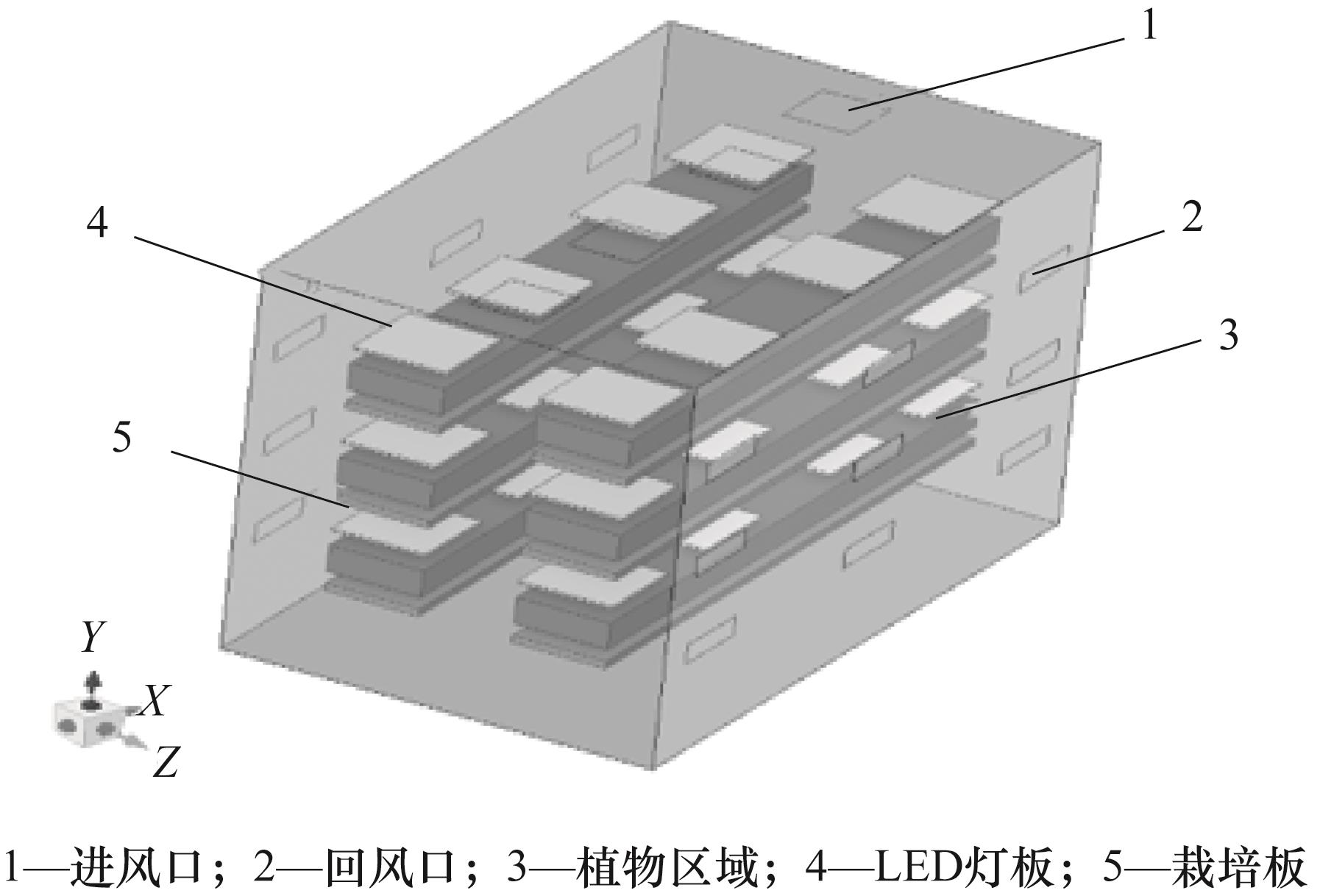
Fig.1 Geometry model of plant factory

Fig.2 Structured mesh of plant factory
| 边界条件 | 参数 |
|---|---|
| 进风口 | 入口速度 1.70 m/s,温度 22.5℃, CO2摩尔分数 0.033% |
| 出风口 | 出口压力 101325 Pa,温度 22.5℃, CO2摩尔分数 0.033% |
| LED灯板 | 恒温壁面 32℃ |
| 植物区域 | 多孔介质区域, |
| 栽培板 | 绝热壁面 |
| 壁面 | 绝热壁面 |
Table 1 Boundary conditions
| 边界条件 | 参数 |
|---|---|
| 进风口 | 入口速度 1.70 m/s,温度 22.5℃, CO2摩尔分数 0.033% |
| 出风口 | 出口压力 101325 Pa,温度 22.5℃, CO2摩尔分数 0.033% |
| LED灯板 | 恒温壁面 32℃ |
| 植物区域 | 多孔介质区域, |
| 栽培板 | 绝热壁面 |
| 壁面 | 绝热壁面 |
| 方程 | 源项 |
|---|---|
| 质量方程: | |
动量方程: | |
能量方程: 组分输运方程: |
Table 2 Governing equations
| 方程 | 源项 |
|---|---|
| 质量方程: | |
动量方程: | |
能量方程: 组分输运方程: |
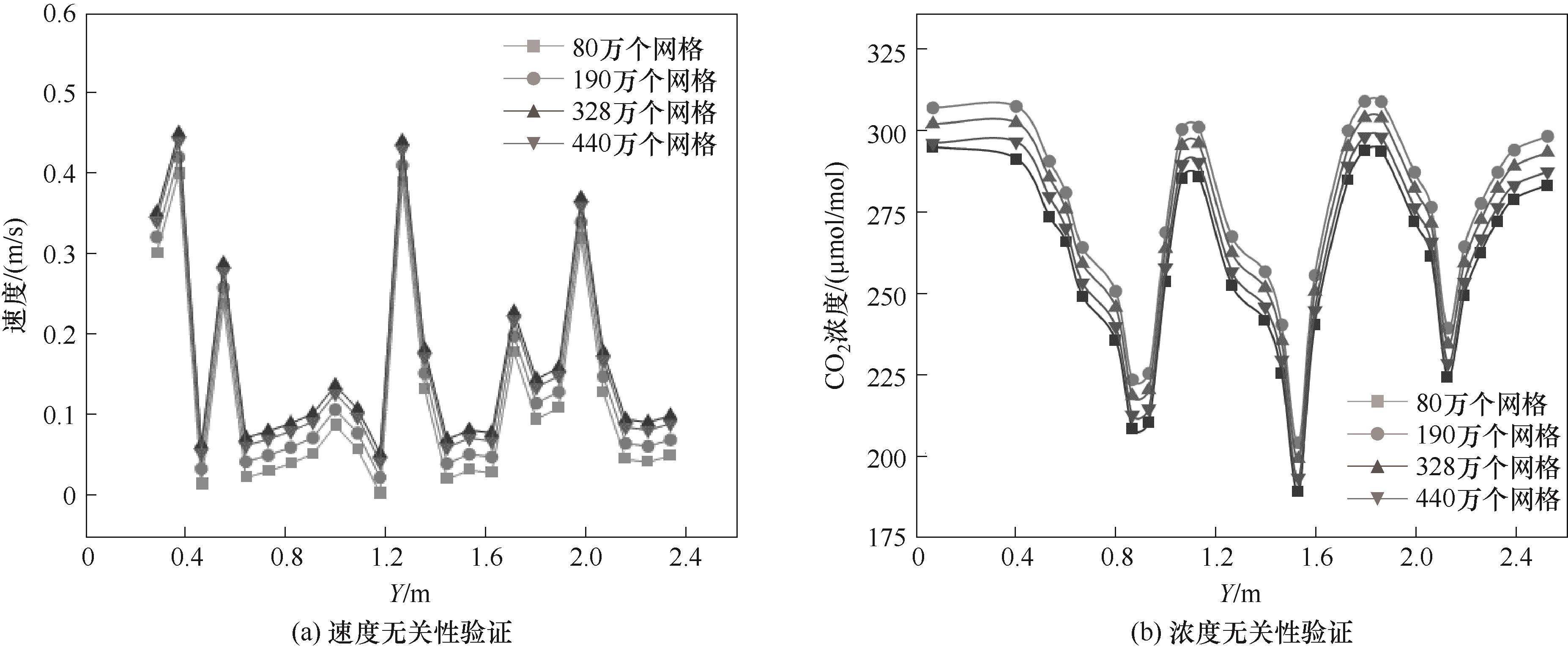
Fig.3 Mesh independence validation
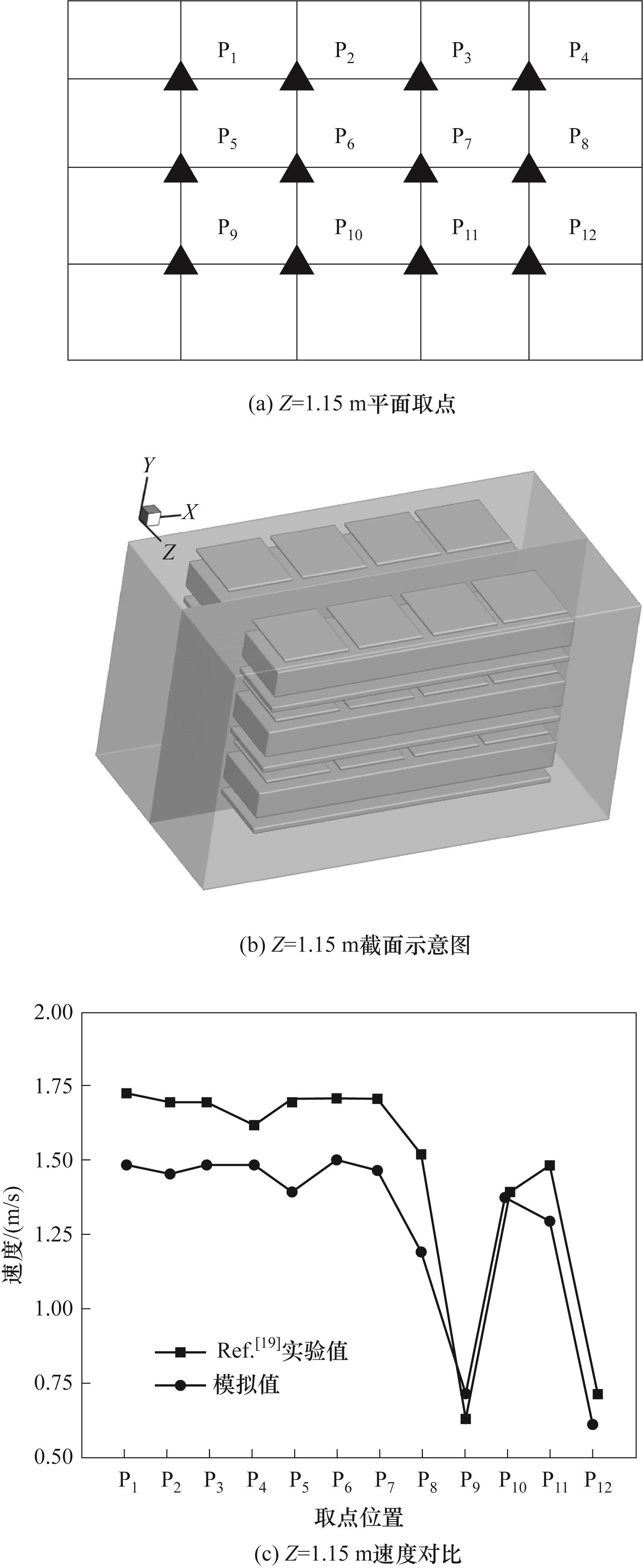
Fig.4 Experiment and simulationn comparison of velocity in cross-section Z=1.15m
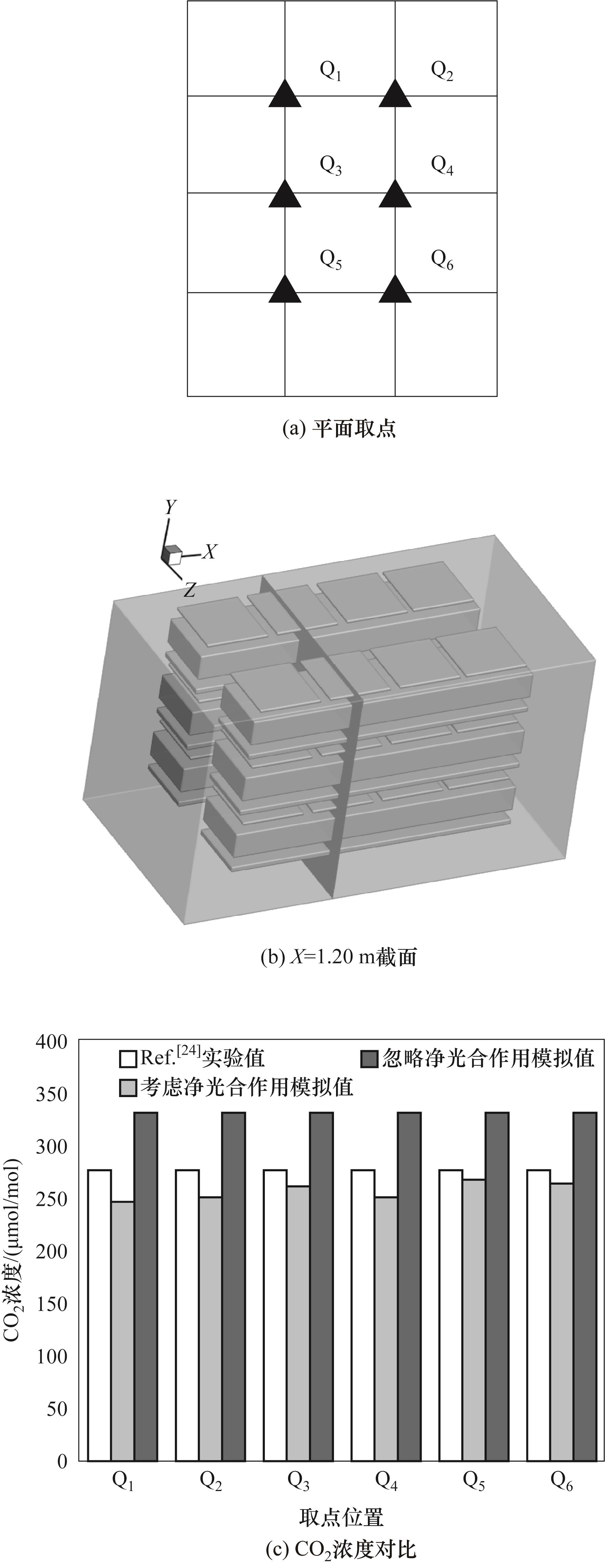
Fig.5 Experiment and simulation comparison of CO2 concentration in cross-section X=1.20 m

Fig.6 CO2 concentration distribution contours (cross-section X=1.20, 2.40 m)

Fig.7 Contours of CO2 concentrations at different times (cross-section X=1.20 m)
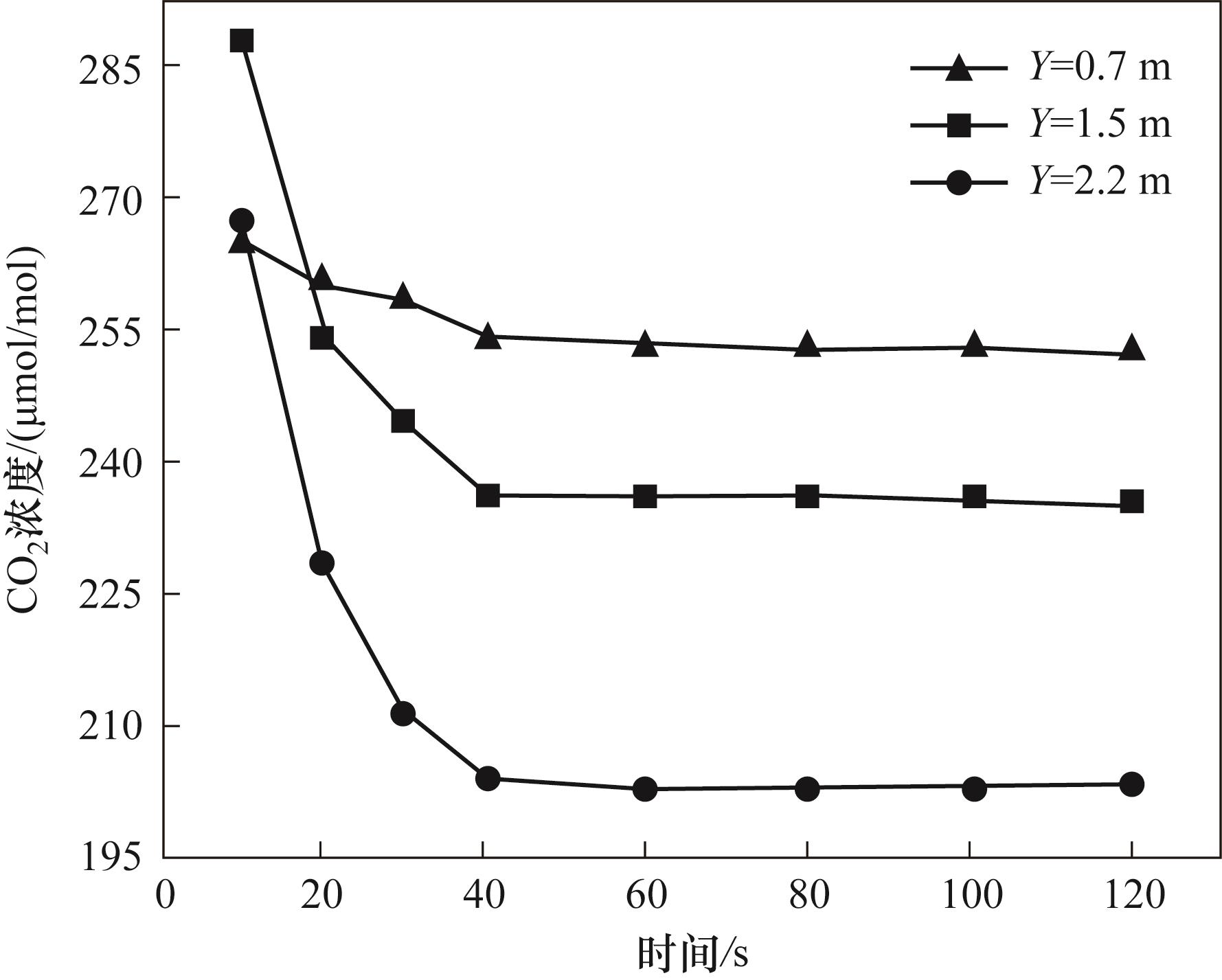
Fig.8 Schematic diagram of CO2 concentration over time in different planes
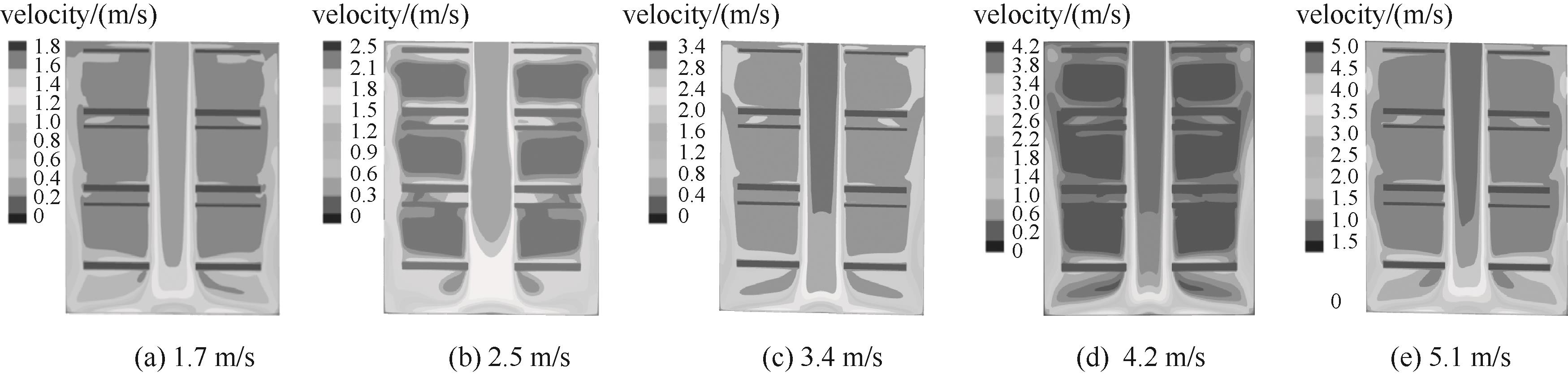
Fig.9 Velocity distribution contours of plane X=1.0 m at different velocities
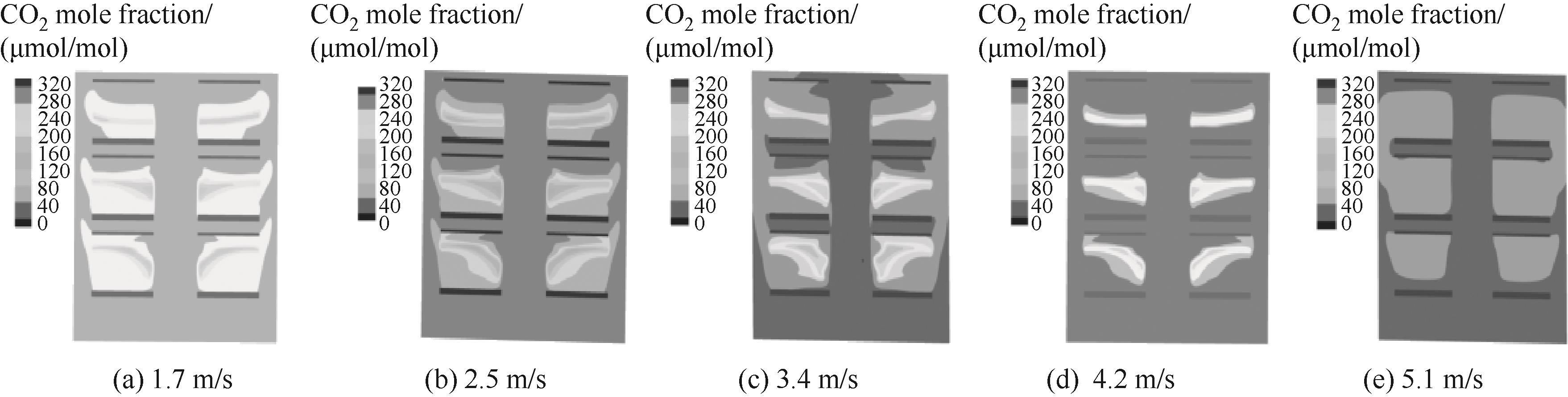
Fig.10 CO2 Concentration distribution contours of plane X=1.0 m at different velocities
| 送风速度/(m/s) | 进出口压降/Pa | 送风口面积/m2 | 能耗/W |
|---|---|---|---|
| 1.7 | 2.73 | 0.64 | 3.83 |
| 2.5 | 5.69 | 0.64 | 11.74 |
| 3.4 | 9.60 | 0.64 | 26.95 |
| 4.2 | 14.88 | 0.64 | 51.59 |
| 5.1 | 20.93 | 0.64 | 88.12 |
Table 3 Pressure drop and energy consumption at different supply speeds
| 送风速度/(m/s) | 进出口压降/Pa | 送风口面积/m2 | 能耗/W |
|---|---|---|---|
| 1.7 | 2.73 | 0.64 | 3.83 |
| 2.5 | 5.69 | 0.64 | 11.74 |
| 3.4 | 9.60 | 0.64 | 26.95 |
| 4.2 | 14.88 | 0.64 | 51.59 |
| 5.1 | 20.93 | 0.64 | 88.12 |
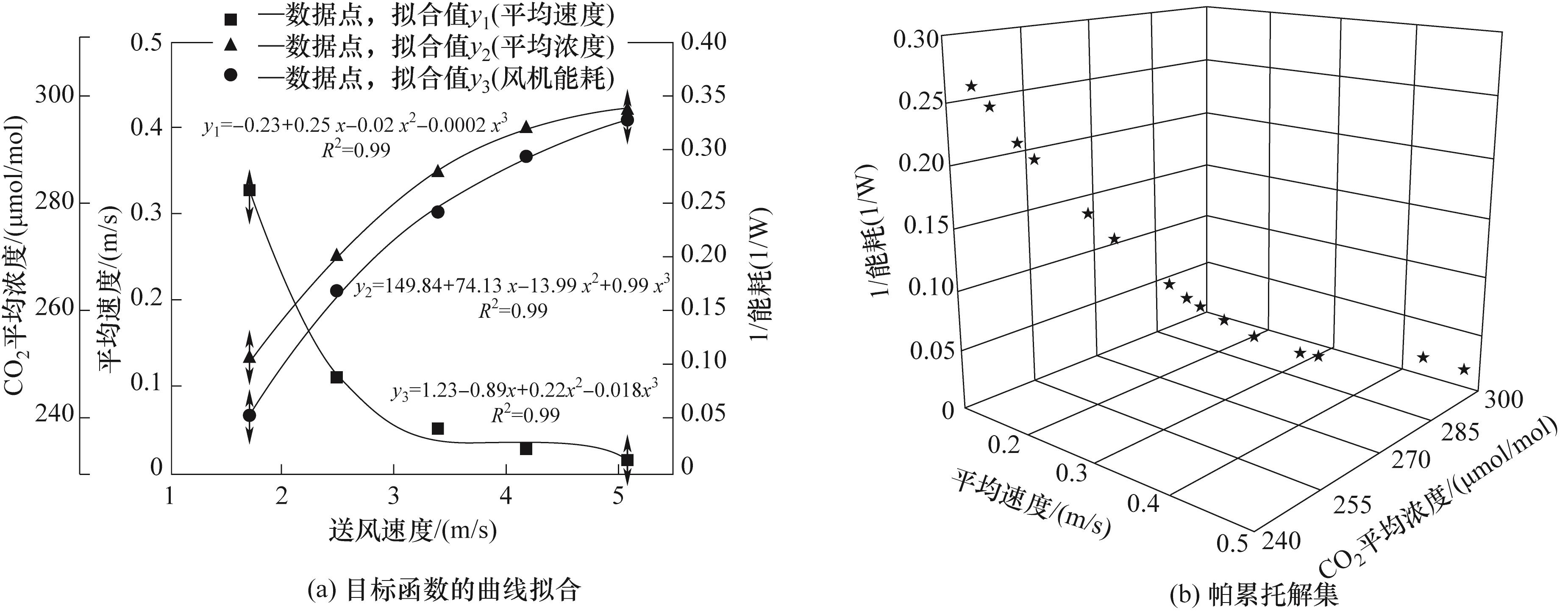
Fig.11 Multi-objective optimization solves the optimal air supply speed
| 1 | Graamans L, Baeza E, van den Dobbelsteen A, et al. Plant factories versus greenhouses: comparison of resource use efficiency[J]. Agricultural Systems, 2018, 160: 31-43. |
| 2 | Kozai T. Resource use efficiency of closed plant production system with artificial light: concept, estimation and application to plant factory[J]. Proceedings of the Japan Academy. Series B, Physical and Biological Sciences, 2013, 89(10): 447-461. |
| 3 | Zhang R, Liu T, Ma J S. Plant factory: a new method for reducing carbon emissions[C]//AIP Conference Proceedings. Penang, Malaysia. Author(s), 2017, 1820: 1-5. |
| 4 | Ramin S, Fatemeh K, et al. Advances in greenhouse automation and controlled environment agriculture: a transition to plant factories and urban agriculture[J]. International Journal of Agricultural and Biological Engineering,, 2018, 11(1): 1-22. |
| 5 | Ahamed M S, Sultan M, Monfet D, et al. A critical review on efficient thermal environment controls in indoor vertical farming[J]. Journal of Cleaner Production, 2023, 425: 138923. |
| 6 | Chen H Y, Dong X, Lei J, et al. Life cycle assessment of carbon capture by an intelligent vertical plant factory within an industrial park[J]. Sustainability, 2024, 16(2): 697. |
| 7 | Wang A R, Lv J R, Wang J, et al. CO2 enrichment in greenhouse production: towards a sustainable approach[J]. Frontiers in Plant Science, 2022, 13: 1029901. |
| 8 | Zhang Y, Kacira M. Analysis of climate uniformity in indoor plant factory system with computational fluid dynamics (CFD)[J]. Biosystems Engineering, 2022, 220: 73-86. |
| 9 | 张倩茹, 张旭, 叶蔚, 等. 大空间重气泄漏下速度场、浓度场特性分析[J]. 化工学报, 2020, 71(S1): 57-67. |
| Zhang Q R, Zhang X, Ye W, et al. Analysis of velocity and concentration field characteristics of heavy gas leakage in large space[J]. CIESC Journal, 2020, 71(S1): 57-67. | |
| 10 | 利一锋, 许国强. 空调教室CO2分布规律及通风量研究[J]. 制冷, 2018, 37(2): 24-29. |
| Li Y F, Xu G Q. Study on the distribution of CO2 and ventilation in air-conditioned classrooms[J]. Refrigeration, 2018, 37(2): 24-29. | |
| 11 | 金梧凤, 贾利芝, 张燕. 空调送风速度和送风角度对可燃性冷媒R32泄漏扩散规律的影响[J]. 化工学报, 2015, 66(6): 2351-2358. |
| Jin W F, Jia L Z, Zhang Y. Effect of air supply velocity and angle on R32 leakage and diffusion[J]. CIESC Journal, 2015, 66(6): 2351-2358. | |
| 12 | 徐刚, 庞丽萍. 特种车辆舱室送风系统布局仿真优化[J]. 化工学报, 2020, 71(S1): 335-340. |
| Xu G, Pang L P. Simulation and optimization of air supply system layout for special vehicle cabin[J]. CIESC Journal, 2020, 71(S1): 335-340. | |
| 13 | Zhang Y, Yasutake D, Hidaka K, et al. CFD analysis for evaluating and optimizing spatial distribution of CO2 concentration in a strawberry greenhouse under different CO2 enrichment methods[J]. Computers and Electronics in Agriculture, 2020, 179: 105811. |
| 14 | Boulard T, Roy J C, Pouillard J B, et al. Modelling of micrometeorology, canopy transpiration and photosynthesis in a closed greenhouse using computational fluid dynamics[J]. Biosystems Engineering, 2017, 158: 110-133. |
| 15 | Roy J, Boulard T, et al. Experimental and CFD results on the CO2 distribution in a semi closed greenhouse[C]// Proceedings of the International Symposium on New Technologies for Environment Control, Energy-Saving and Crop Production in Greenhouse and Plant 1037, F, 2013. |
| 16 | 余海波. 植物工厂条件下光强和气流对生菜生长和叶烧病的影响及调控优化[D]. 长春: 吉林大学, 2023. |
| Yu H B. The effects of light intensity and airflow on lettuce growth and leaf burn under plant factory conditions and their regulation optimization[D]. Changchun: Jilin University, 2023 | |
| 17 | 李子扬, 郑楠, 方嘉宾, 等. 再压缩S-CO2布雷顿循环性能分析及多目标优化[J]. 化工学报, 2024, 75(6): 2143-2156. |
| Li Z Y, Zheng N, Fang J B, et al. Performance analysis and multi-objective optimization of recompression S-CO2 Brayton cycle[J]. CIESC Journal, 2024, 75(6): 2143-2156. | |
| 18 | 李霏, 杨翠丽, 李文静, 等. 基于均匀分布NSGAⅡ算法的污水处理多目标优化控制[J]. 化工学报, 2019, 70(5):1868-1878. |
| Li F, Yang C L, Li W J, et al. Optimal control of wastewater treatment process using NSGAII algorithm based on multi-objective uniform distribution[J]. CIESC Journal, 2019, 70(5): 1868-1878. | |
| 19 | 刘焕. 基于CFD的人工光型植物工厂通风模拟与优化研究[D]. 北京: 中国农业科学院, 2018. |
| Liu H. Simulation and optimization of ventilation in artificial light plant factory based on CFD[D]. Beijing: Chinese Academy of Agricultural Sciences, 2018. | |
| 20 | Fatnassi H, Bournet P E, Boulard T, et al. Use of computational fluid dynamic tools to model the coupling of plant canopy activity and climate in greenhouses and closed plant growth systems: a review[J]. Biosystems Engineering, 2023, 230: 388-408. |
| 21 | Nebbali R, Roy J C, Boulard T. Dynamic simulation of the distributed radiative and convective climate within a cropped greenhouse[J]. Renewable Energy, 2012, 43: 111-129. |
| 22 | Ozgumus T, Mobedi M, Ozkol U. Determination of kozeny constant based on porosity and pore to throat size ratio in porous medium with rectangular rods[J]. Engineering Applications of Computational Fluid Mechanics, 2014, 8(2): 308-318. |
| 23 | Determining optimal CO2 concentration of greenhouse tomato based on PSO-SVM[J]. Applied Engineering in Agriculture, 2017, 33(2): 157-166. |
| 24 | Yu H B, Zhang L, Yu H Y, et al. Sustainable development optimization of a plant factory for reducing tip burn disease[J]. Sustainability, 2023, 15(6): 5607. |
| 25 | 郑阳光. CO2管道泄漏扩散实验及数值模拟研究[D]. 大连: 大连理工大学, 2017. |
| Zheng Y G. Experimental and numerical simulation study on leakage and diffusion of CO2 pipeline[D]. Dalian: Dalian University of Technology, 2017. | |
| 26 | Zhang Y, Kacira M, An L L. A CFD study on improving air flow uniformity in indoor plant factory system[J]. Biosystems Engineering, 2016, 147: 193-205. |
| 27 | Zhou J Q, Kim C N. Numerical investigation of indoor CO2 concentration distribution in an apartment[J]. Indoor and Built Environment, 2011, 20(1): 91-100. |
| 28 | Bijad E, Delavar M A, Sedighi K. CFD simulation of effects of dimension changes of buildings on pollution dispersion in the built environment[J]. Alexandria Engineering Journal, 2016, 55(4): 3135-3144. |
| 29 | Lee C M, Chen R S. Optimal self-tuning PID controller based on low power consumption for a server fan cooling system[J]. Sensors, 2015, 15(5): 11685-11700. |
| 30 | Li M Q, Yang S X, Liu X H. Shift-based density estimation for Pareto-based algorithms in many-objective optimization[J]. IEEE Transactions on Evolutionary Computation, 2014, 18(3): 348-365. |
| [1] | Zhaoxue ZHANG, Zhengyu LI, Wenhui CUI, Qian WANG, Zhiping WANG, Linghui GONG. Research on cascade recovery and utilization of cold energy in liquid hydrogen energy storage based on liquid neon - liquid nitrogen [J]. CIESC Journal, 2025, 76(4): 1731-1741. |
| [2] | Wen CHAN, Wan YU, Gang WANG, Huashan SU, Fenxia HUANG, Tao HU. Thermodynamic and economic analyses and dual-objective optimization of Allam cycle with improved regenerator layout [J]. CIESC Journal, 2025, 76(4): 1680-1692. |
| [3] | Junliang HUO, Zhiguo TANG, Zongjun QIU, Yuhua FENG, Xu JIANG, Leyi WANG, Yu YANG, Fanfan QIAO, Yifan HE, Jianliang YU. Experimental research on risk of freezing and plugging during CO2 pipeline venting under throttling effect [J]. CIESC Journal, 2025, 76(4): 1898-1908. |
| [4] | Luochang WU, Zeyu YANG, Jianguo YAN, Xutao ZHU, Yang CHEN, Zichen WANG. Experimental study on convection heat transfer characteristics of supercritical carbon dioxide flowing in mini square channels [J]. CIESC Journal, 2025, 76(4): 1583-1594. |
| [5] | Yichen ZHANG, Wenbiao ZHANG, Haoyang LI, Xiaoyang NING. Flow measurement of gas-liquid two-phase CO2 using Venturi tube based on dual differential pressure model [J]. CIESC Journal, 2025, 76(4): 1493-1503. |
| [6] | Dongliang XU, Binbin ZHAO, Yimei SUN, Tingting LIU, Xiaoran LIU, Minggong CHEN. Simulation and optimal design of RPB based on modified porous medium model [J]. CIESC Journal, 2025, 76(4): 1569-1582. |
| [7] | Yao FU, Yingjuan SHAO, Wenqi ZHONG. Experimental study on cyclic heat storage performance of TiO2-doped calcium based materials under pressurized carbonation [J]. CIESC Journal, 2025, 76(3): 1180-1190. |
| [8] | Heng ZHANG, Dianlu KUI, Hong CHANG, Zhigang ZHAN. Effect of mechanical stress on the interfacial transport properties of gas diffusion layers [J]. CIESC Journal, 2025, 76(2): 637-644. |
| [9] | Zheng GONG, Xiulu GAO, Ling ZHAO, Dongdong HU. Preparation and shape memory properties of PBAT/PLA foams by supercritical CO2 [J]. CIESC Journal, 2025, 76(2): 888-896. |
| [10] | Ping LIU, Yusheng QIU, Shijing LI, Ruiqi SUN, Chen SHEN. Heat transfer and flow characteristics of nanofluids in microchannels [J]. CIESC Journal, 2025, 76(1): 184-197. |
| [11] | Chuangde ZHANG, Li CHEN. Pore-scale study of effects of preferential path on multiphase reactive transport process in porous media [J]. CIESC Journal, 2025, 76(1): 161-172. |
| [12] | Xinyu DONG, Longfei BIAN, Yiyi YANG, Yuxuan ZHANG, Lu LIU, Teng WANG. Study on flow and heat transfer mechanism of supercritical CO2 in inclined upward tube under cooling conditions [J]. CIESC Journal, 2024, 75(S1): 195-205. |
| [13] | Yanlin CHEN, Aiguo ZHOU, Jiale ZHENG, Chuanruo YANG, Tianshu GE. Effects of support materials on amine-impregnated DAC adsorbents [J]. CIESC Journal, 2024, 75(S1): 217-222. |
| [14] | Yushuang LI, Xincheng WANG, Boyao WEN, Zhengyuan LUO, Bofeng BAI. Two-phase flow of emulsion flooding and its influencing factors in porous media [J]. CIESC Journal, 2024, 75(S1): 56-66. |
| [15] | Guanyu REN, Yifei ZHANG, Xinze LI, Wenjing DU. Numerical study on flow and heat transfer characteristics of airfoil printed circuit heat exchangers [J]. CIESC Journal, 2024, 75(S1): 108-117. |
| Viewed | ||||||
|
Full text |
|
|||||
|
Abstract |
|
|||||