• •
章凯1( ), 冯晓东2, 孟祥铠1(), 江锦波1, 赵文静1, 彭旭东1
收稿日期:2025-12-29
修回日期:2026-01-27
出版日期:2026-02-02
通讯作者:
孟祥铠
作者简介:章凯(2002—),男,硕士研究生,kaidi001155@gmail.com
基金资助:
Kai ZHANG1(), Xiaodong FENG2, Xiangkai MENG1(), Jinbo JIANG1, Wenjing ZHAO1, Xudong PENG1
Received:2025-12-29
Revised:2026-01-27
Online:2026-02-02
Contact:
Xiangkai MENG
摘要:
针对参数化优化方法在机械密封端面槽型优化上的局限性,以涡轮泵用深冷低粘气氧润滑机械密封端面为优化对象,提出了一种适用于气体润滑密封型槽设计的拓扑优化方法并构建相应的拓扑优化模型,基于有限元方法开展了多工况和几何参数下的槽型拓扑优化设计。研究表明,该方法具有较好的鲁棒性且对初始拓扑结构不敏感,获得的型槽拓扑结构与基于反应扩散方程的拓扑优化方法获得的液体润滑端面型槽结构相似。最终优化槽型与槽坝比、槽深比、设计域周向角以及密封压力、转速相关,推荐的槽坝比为0.7-0.8,槽深比为3.0-3.5。在相同周向角和槽深比条件下,拓扑优化型槽相较于传统螺旋槽展现出更优的综合密封性能:气膜开启力平均提升3.78%–5.64%,泄漏率平均降低3.95%–10.22%。为高性能气体润滑端面密封设计提供了可靠的理论依据与参数指导。
章凯, 冯晓东, 孟祥铠, 江锦波, 赵文静, 彭旭东. 气体润滑机械密封端面型槽的拓扑优化[J]. 化工学报, DOI: 10.11949/0438-1157.20251475.
Kai ZHANG, Xiaodong FENG, Xiangkai MENG, Jinbo JIANG, Wenjing ZHAO, Xudong PENG. End face groove topology optimization of for gas-lubricated mechanical seals[J]. CIESC Journal, DOI: 10.11949/0438-1157.20251475.
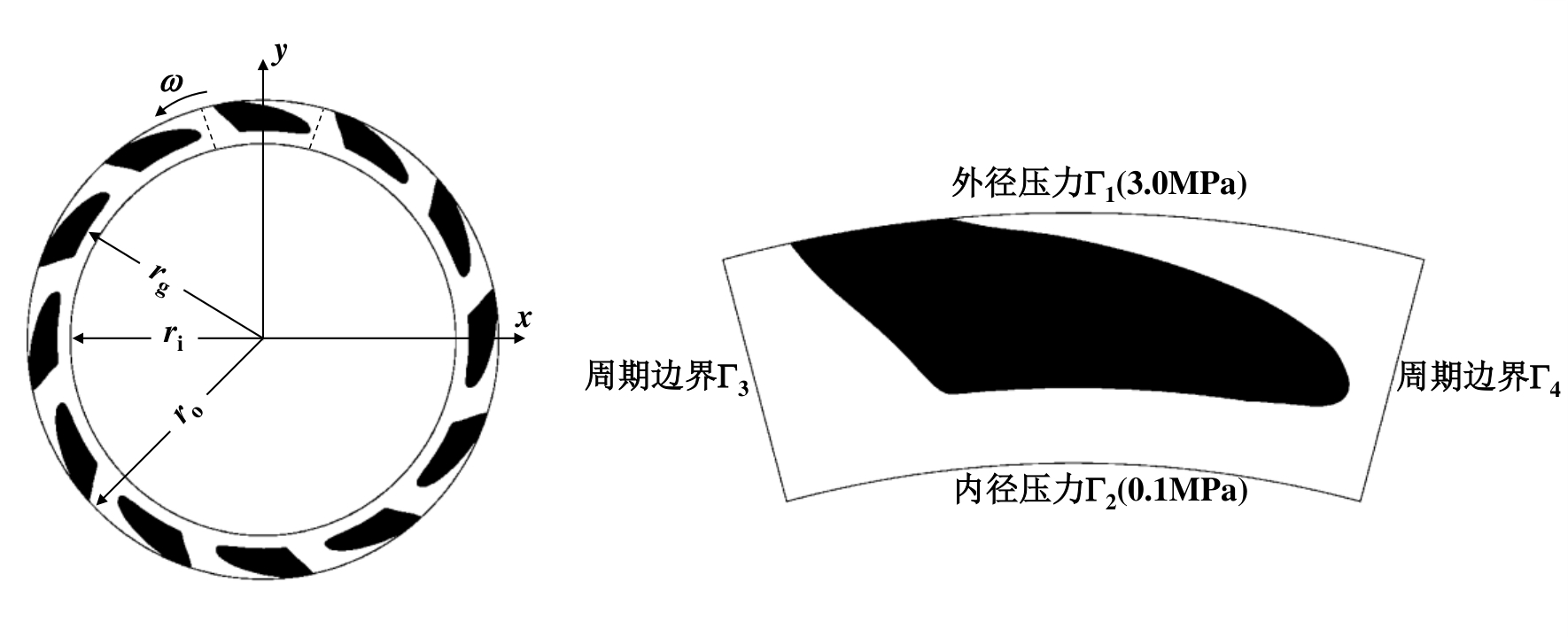
图1 几何模型注:(a) 几何模型 (b)计算区域
Fig.1 Geometrical model
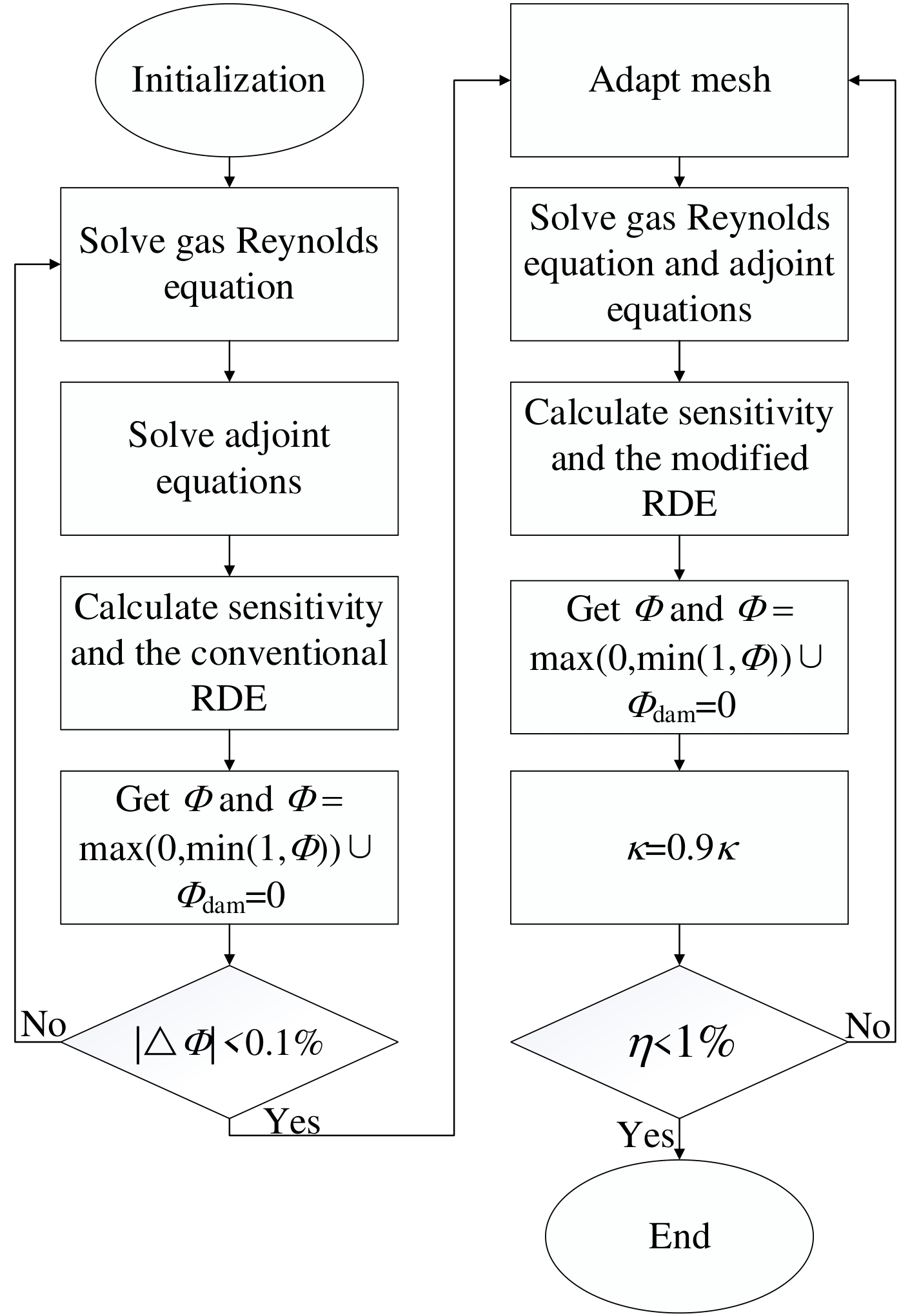
图2 数值计算流程
Fig.2 Numerical procedure
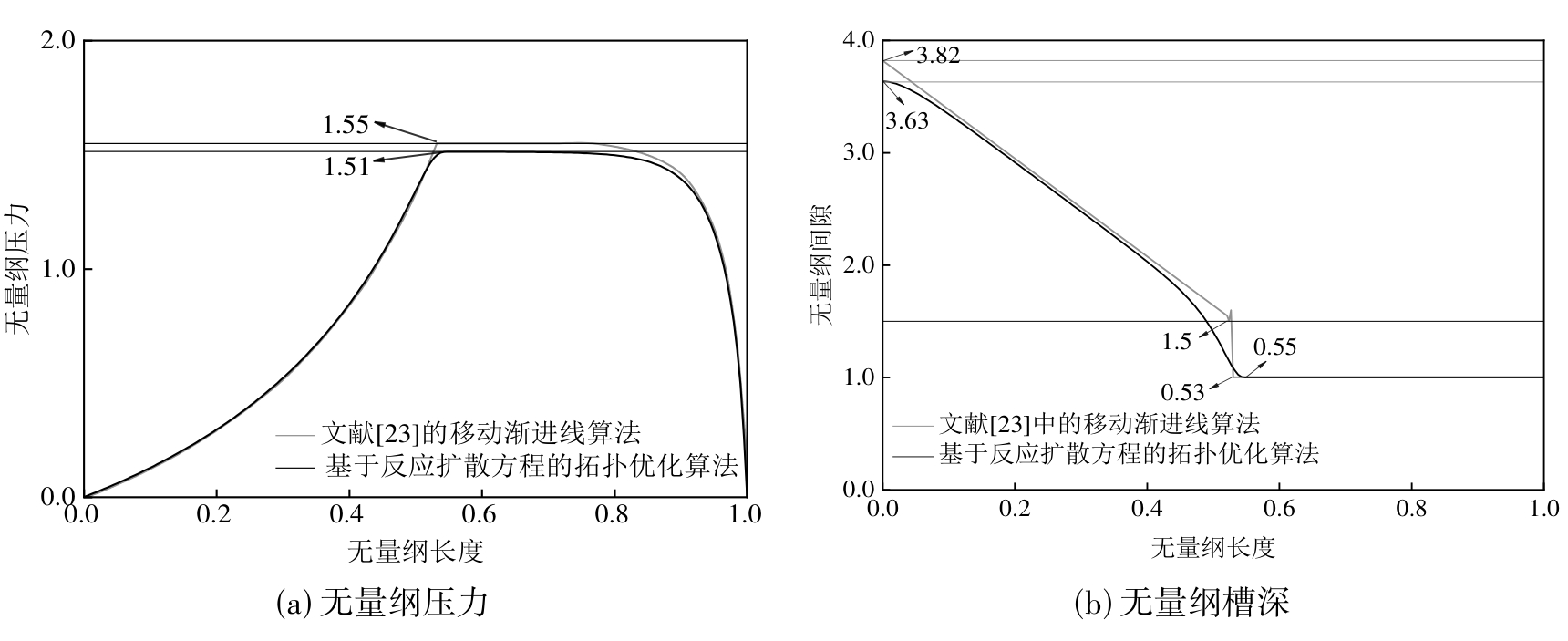
图3 优化方法验证
Fig.3 Optimization method validation
| 参数 | 数值 | 参数 | 数值 |
|---|---|---|---|
| 外径半径ro/mm | 55 | 外径压力ps/MPa | 3.0 |
| 内径半径ri/mm | 45 | 内径压力pa/MPa | 0.1 |
| 气膜膜厚ho/μm | 2.0 | 转速n/(r | 30 000 |
| 槽深hg/μm | 6.0 | 动力粘度μ/(Pa | 1.25×10⁻⁵ |
| 槽坝比ζ | 0.7 | 温度T/K | 160 |
| 周向角α/rad | π/6 | 气体常数R/(J | 260 |
表1 型槽计算参数
Table 1 Calculation parameters of grooves
| 参数 | 数值 | 参数 | 数值 |
|---|---|---|---|
| 外径半径ro/mm | 55 | 外径压力ps/MPa | 3.0 |
| 内径半径ri/mm | 45 | 内径压力pa/MPa | 0.1 |
| 气膜膜厚ho/μm | 2.0 | 转速n/(r | 30 000 |
| 槽深hg/μm | 6.0 | 动力粘度μ/(Pa | 1.25×10⁻⁵ |
| 槽坝比ζ | 0.7 | 温度T/K | 160 |
| 周向角α/rad | π/6 | 气体常数R/(J | 260 |
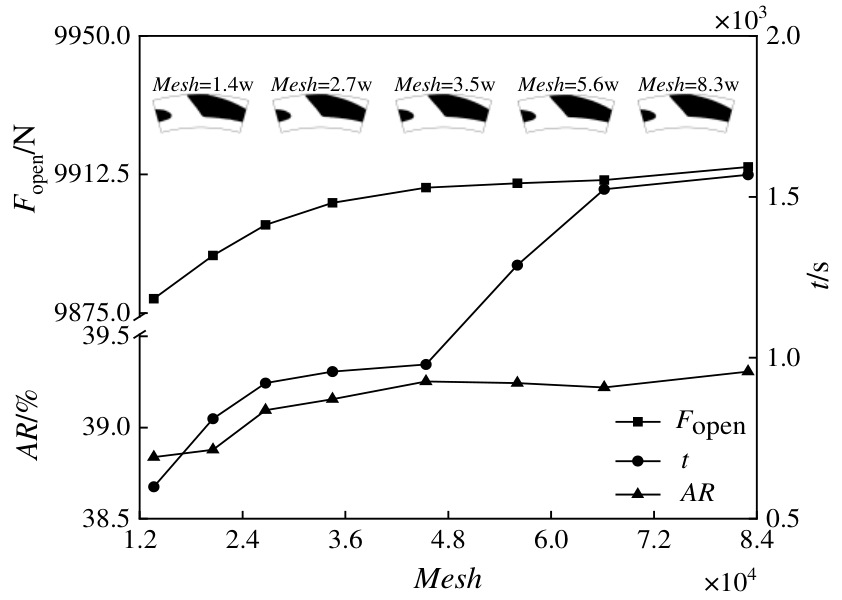
图4 网格数的影响
Fig.4 Influence of mesh number
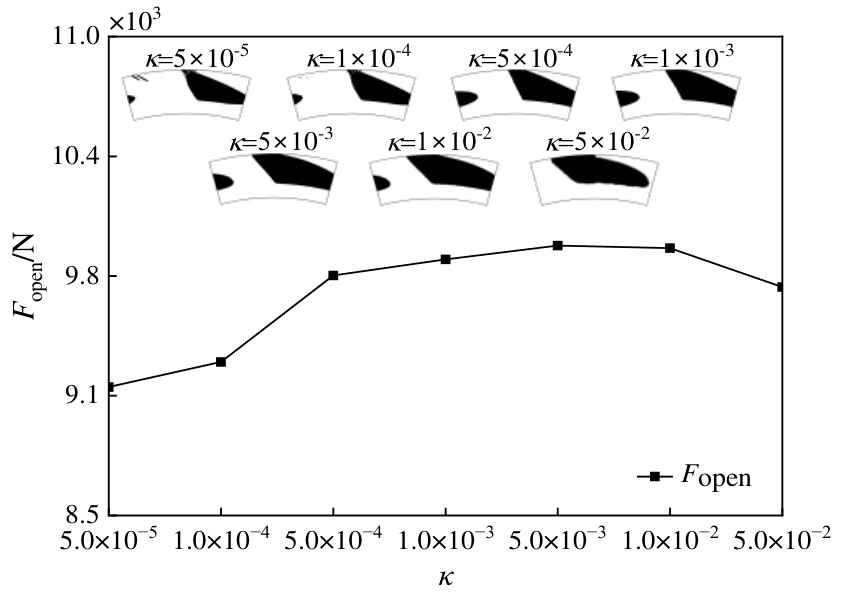
图5 扩散系数的影响
Fig.5 Effect of the diffusion coefficient
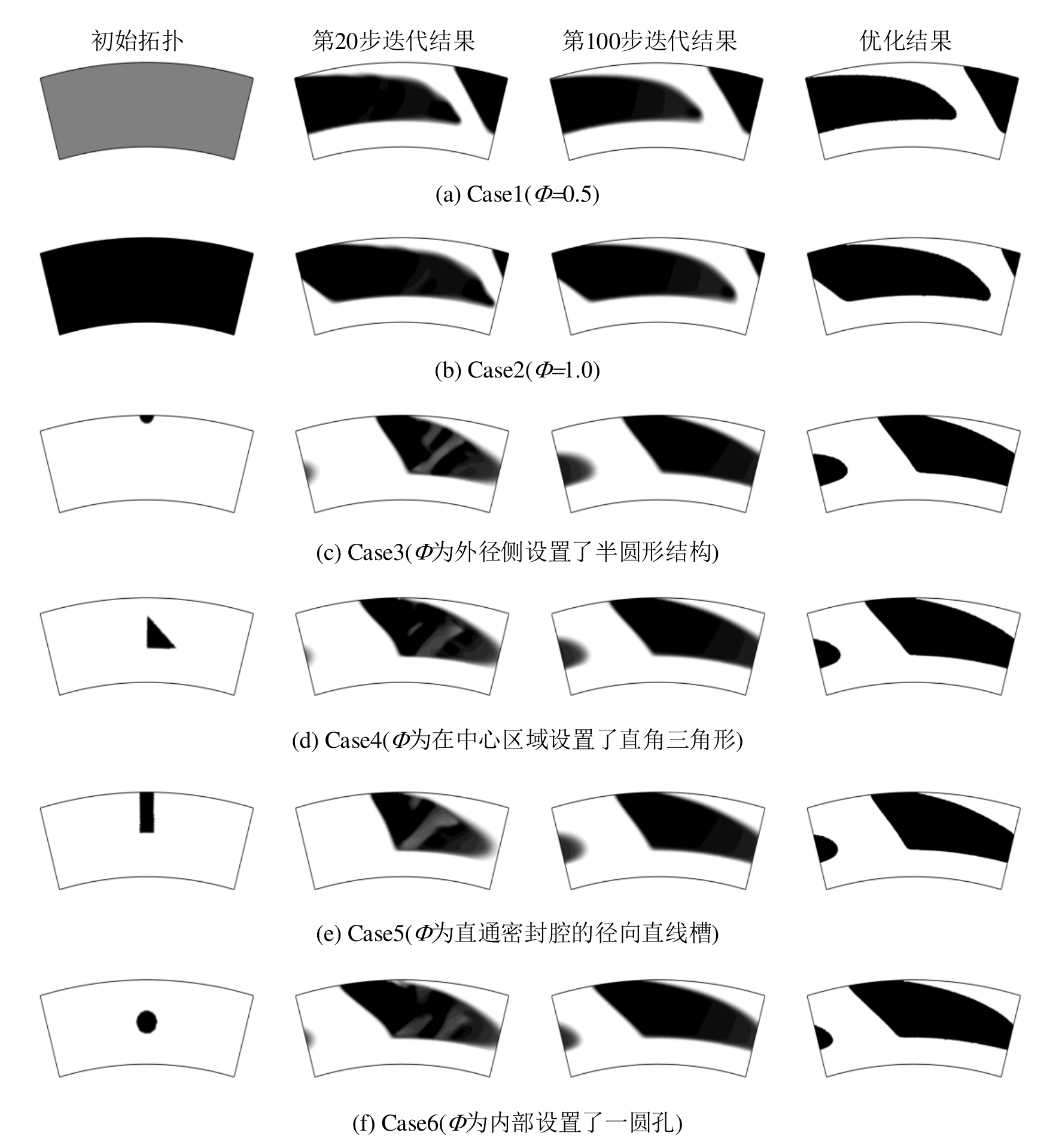
图6 不同初始拓扑的优化过程
Fig.6 Optimization process with different initial topologies
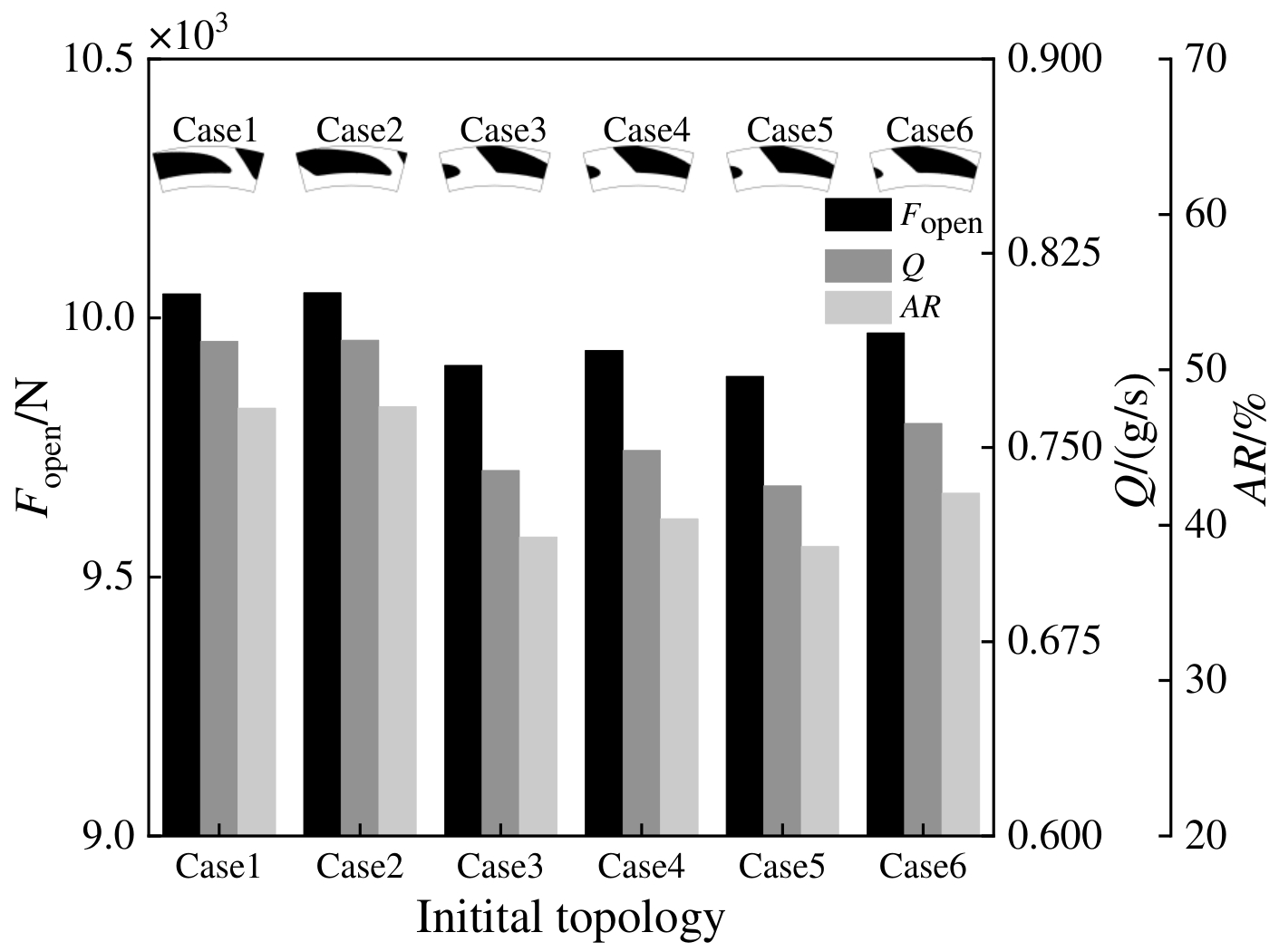
图7 初始拓扑结构的影响
Fig.7 Effect of the initial topology
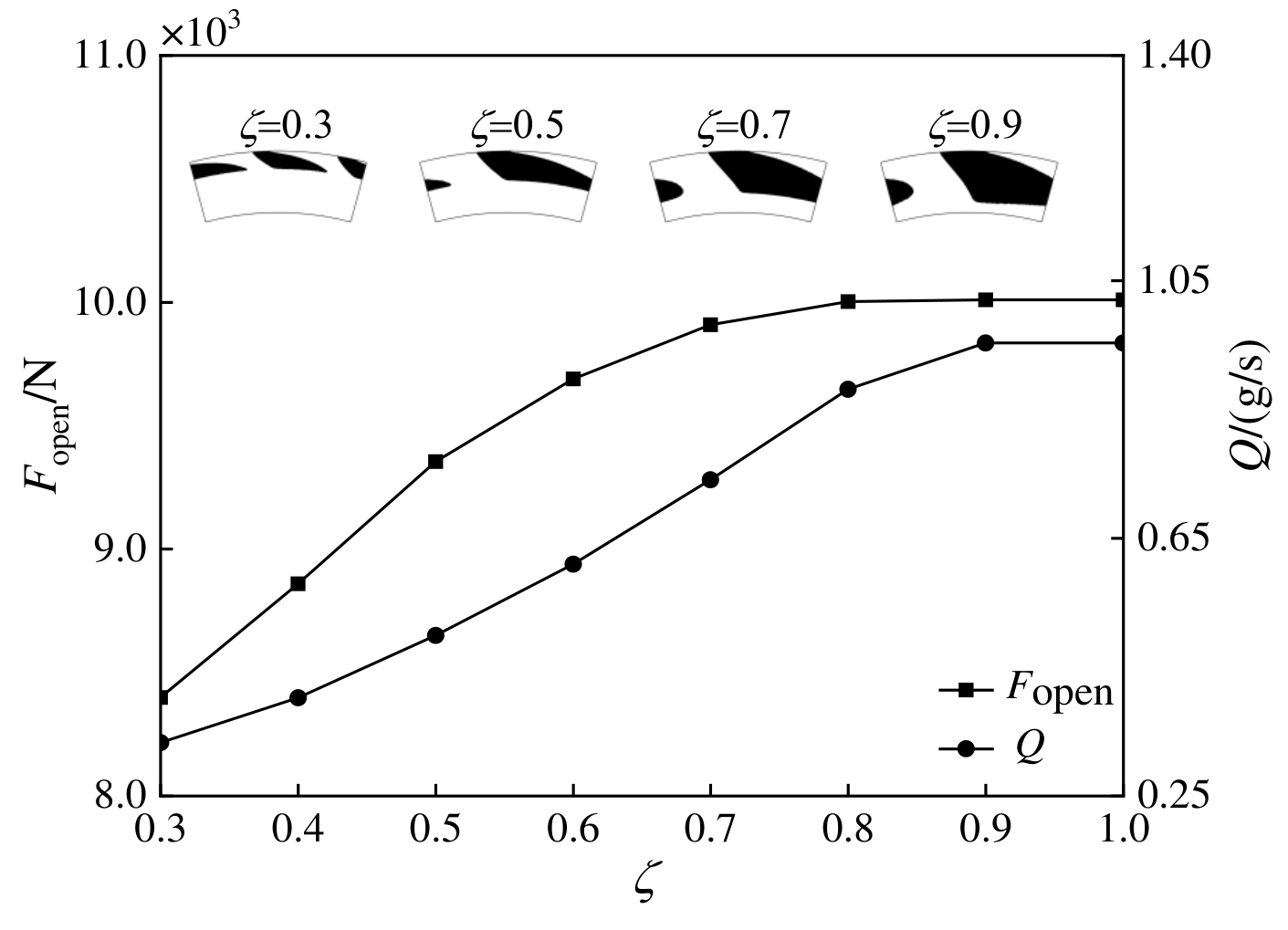
图8 槽坝比的影响
Fig.8 Effect of the groove-to-ridge ratio

图9 不同槽坝比下密封端面的膜压分布
Fig.9 Film Pressure distribution of the seal groove profile under different dam-groove ratios
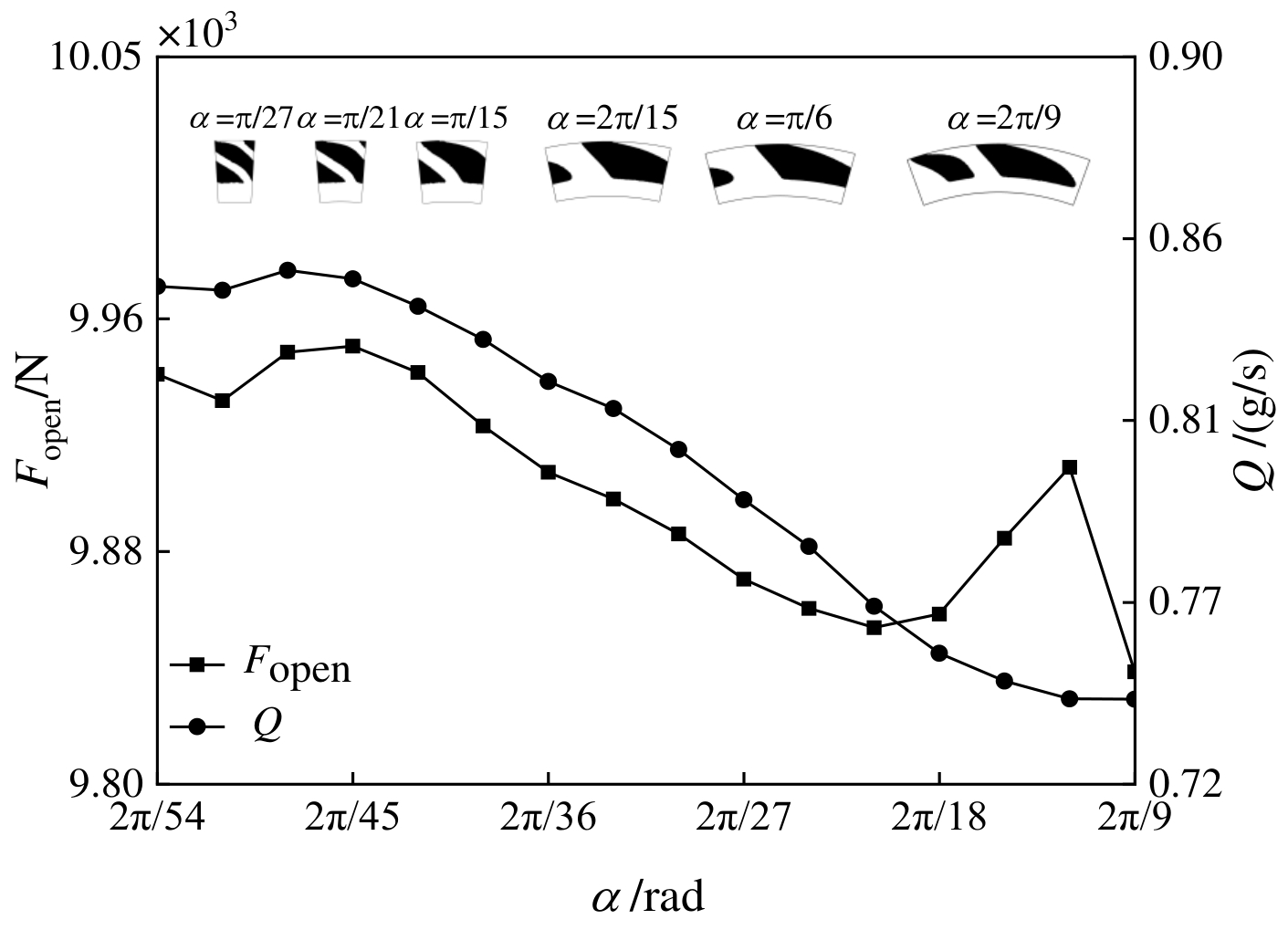
图10 周向角的影响
Fig.10 Effect of the circumferential angles
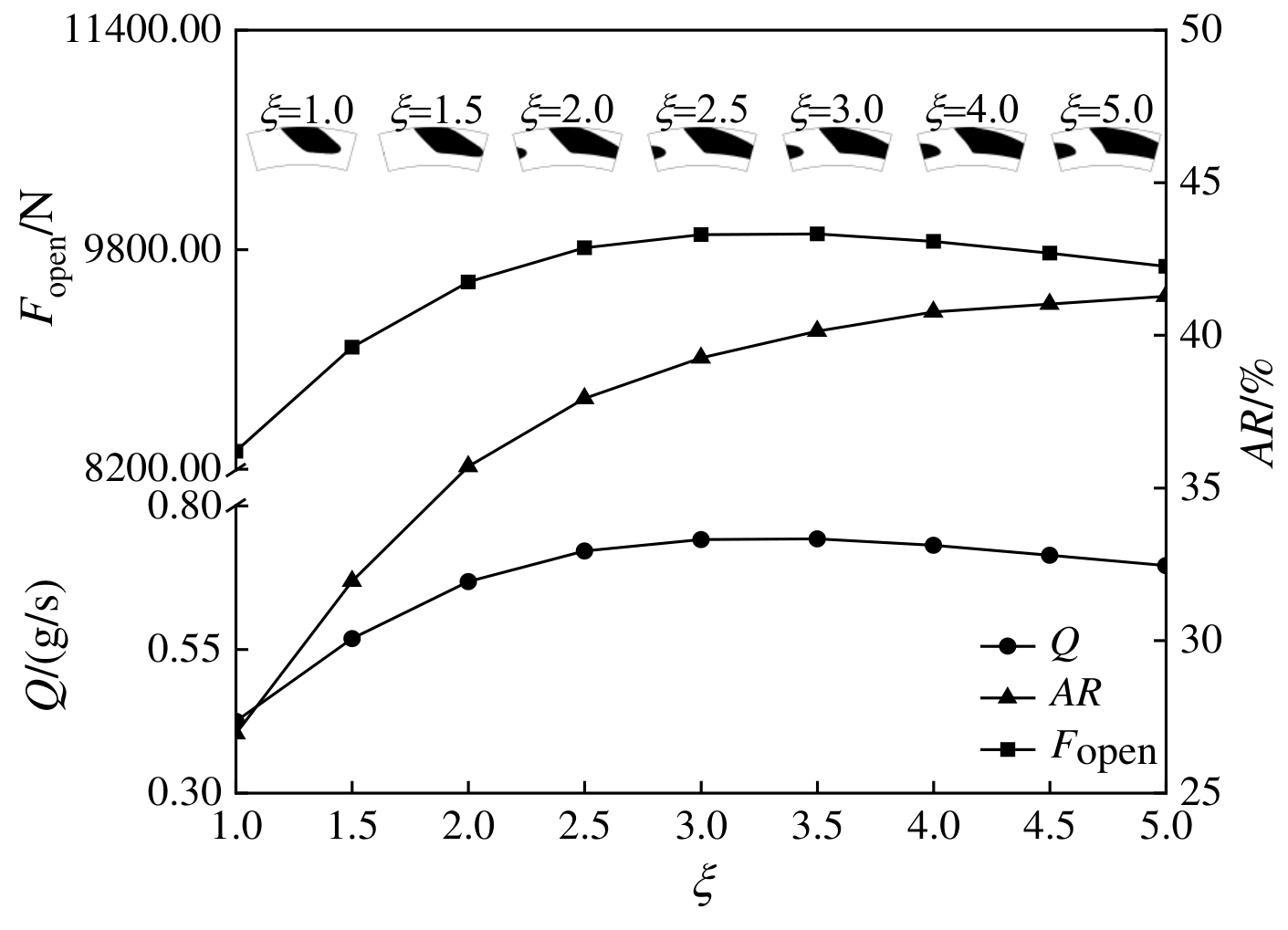
图11 槽深比的影响
Fig. 11 Effect of the groove depth ratio
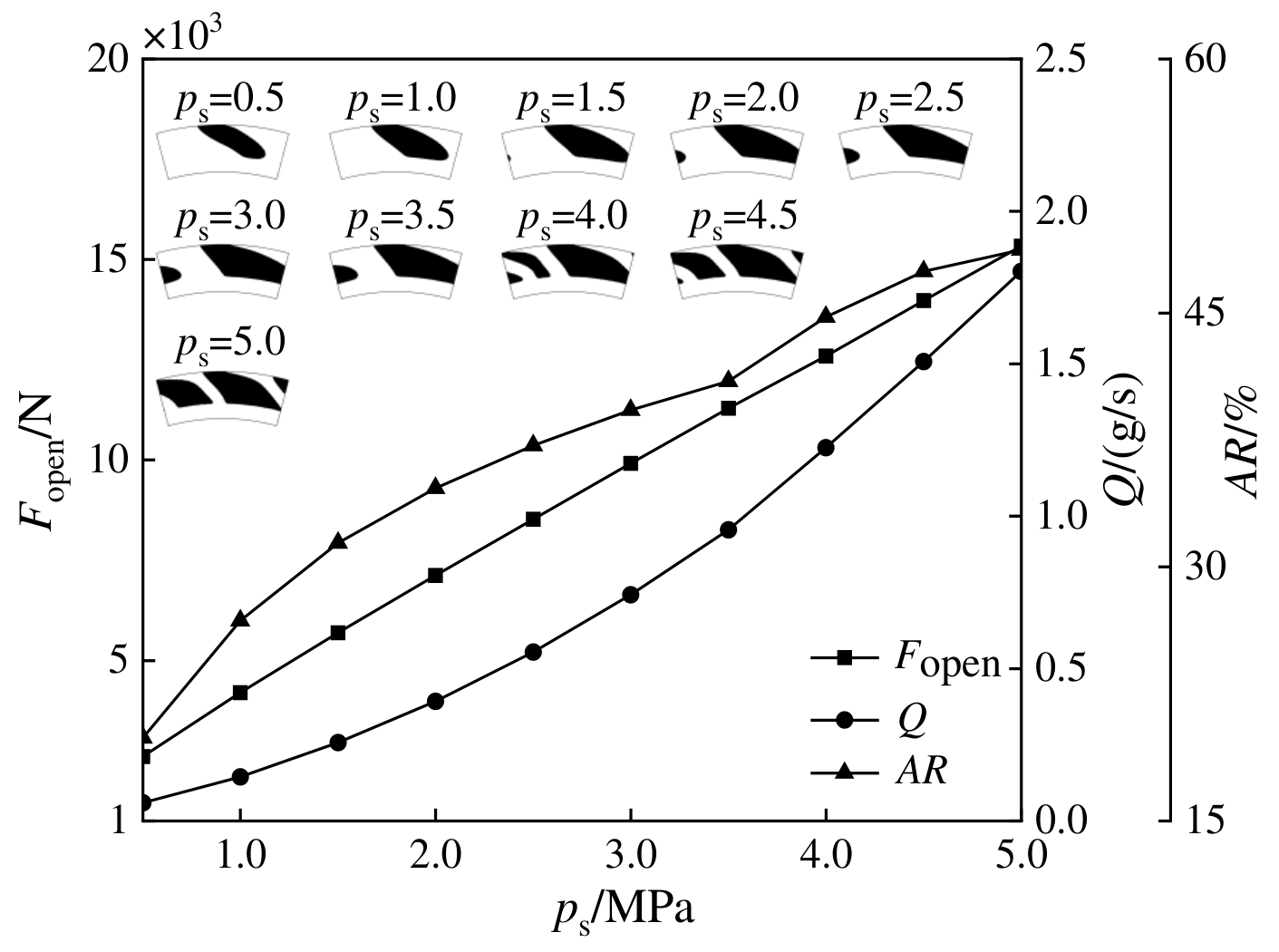
图12 密封压力的影响
Fig. 12 Effect of the sealing pressure
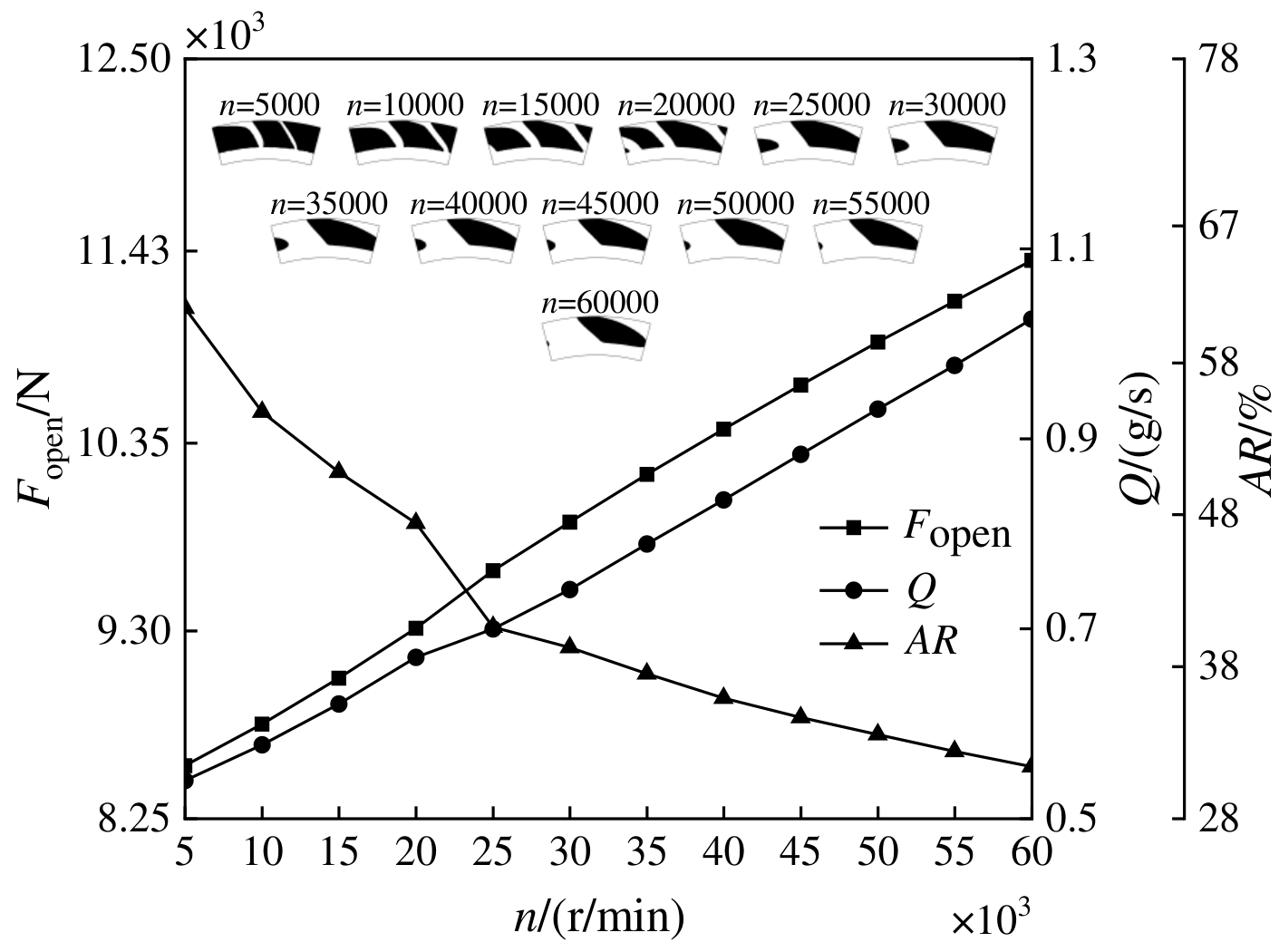
图13 转速的影响
Fig. 13 Effect of the rotational speed
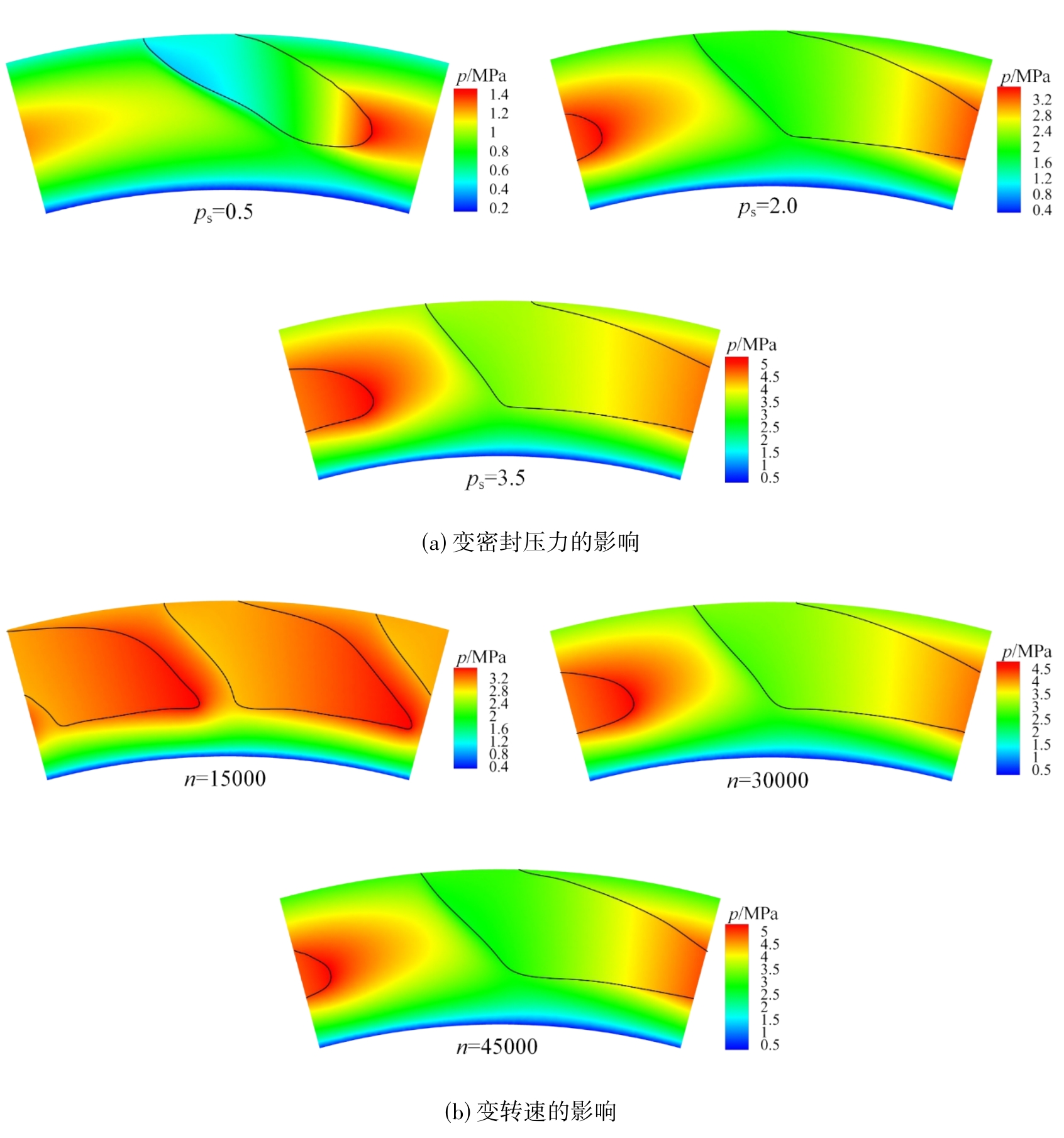
图14 变工况条件下的端面压力分布云图
Fig.14 Pressure distribution contours on the sealing face under varying operating conditions
参数 编号 | 槽坝比ζ | 槽深比ξ | 周向角α/rad | 开启力Fopen/N | 气膜刚度K/(N | 泄漏率Q/(g | 摩擦功耗Wf/W |
|---|---|---|---|---|---|---|---|
| 1 | 0.7 | 2.0 | π/6 | 9 563.64 | 2.16×10⁹ | 0.668 | 404.48 |
| 2 | 0.7 | 2.0 | 2π/15 | 9 638.54 | 2.07×10⁹ | 0.695 | 399.85 |
| 3 | 0.7 | 2.0 | π/9 | 9 665.93 | 2.01×10⁹ | 0.714 | 397.31 |
| 4 | 0.7 | 2.5 | π/6 | 9 813.09 | 2.07×10⁹ | 0.722 | 395.95 |
| 5 | 0.7 | 2.5 | 2π/15 | 9 831.36 | 1.93×10⁹ | 0.735 | 393.77 |
| 6 | 0.7 | 2.5 | π/9 | 9 829.04 | 1.84×10⁹ | 0.748 | 392.29 |
| 7 | 0.7 | 3.0 | π/6 | 9 908.90 | 1.86×10⁹ | 0.741 | 389.92 |
| 8 | 0.7 | 3.0 | 2π/15 | 9 884.49 | 1.70×10⁹ | 0.746 | 388.52 |
| 9 | 0.7 | 3.0 | π/9 | 9 858.46 | 1.59×10⁹ | 0.752 | 387.73 |
| 10 | 0.7 | 3.5 | π/6 | 9 913.79 | 1.63×10⁹ | 0.742 | 384.69 |
| 11 | 0.7 | 3.5 | 2π/15 | 9 852.57 | 1.46×10⁹ | 0.738 | 383.83 |
| 12 | 0.7 | 3.5 | π/9 | 9 807.01 | 1.33×10⁹ | 0.740 | 383.46 |
| 13 | 0.8 | 2.0 | π/6 | 9 630.18 | 2.19×10⁹ | 0.753 | 399.81 |
| 14 | 0.8 | 2.0 | 2π/15 | 9 691.87 | 2.09×10⁹ | 0.793 | 394.24 |
| 15 | 0.8 | 2.0 | π/9 | 9 715.03 | 2.02×10⁹ | 0.822 | 391.09 |
| 16 | 0.8 | 2.5 | π/6 | 9 892.54 | 2.07×10⁹ | 0.838 | 389.44 |
| 17 | 0.8 | 2.5 | 2π/15 | 9 905.99 | 1.93×10⁹ | 0.868 | 385.60 |
| 18 | 0.8 | 2.5 | π/9 | 9 901.31 | 1.85×10⁹ | 0.893 | 383.49 |
| 19 | 0.8 | 3.0 | π/6 | 10 002.60 | 1.85×10⁹ | 0.881 | 381.17 |
| 20 | 0.8 | 3.0 | 2π/15 | 9 974.56 | 1.70×10⁹ | 0.899 | 378.60 |
| 21 | 0.8 | 3.0 | π/9 | 9 954.29 | 1.60×10⁹ | 0.918 | 376.69 |
| 22 | 0.8 | 3.5 | π/6 | 10 024.40 | 1.62×10⁹ | 0.900 | 373.51 |
| 23 | 0.8 | 3.5 | 2π/15 | 9 962.18 | 1.45×10⁹ | 0.906 | 372.22 |
| 24 | 0.8 | 3.5 | π/9 | 9 922.17 | 1.35×10⁹ | 0.916 | 371.14 |
表2 组合参数型槽优化参数
Table 2 Optimization parameters for the groove with combined parameters
参数 编号 | 槽坝比ζ | 槽深比ξ | 周向角α/rad | 开启力Fopen/N | 气膜刚度K/(N | 泄漏率Q/(g | 摩擦功耗Wf/W |
|---|---|---|---|---|---|---|---|
| 1 | 0.7 | 2.0 | π/6 | 9 563.64 | 2.16×10⁹ | 0.668 | 404.48 |
| 2 | 0.7 | 2.0 | 2π/15 | 9 638.54 | 2.07×10⁹ | 0.695 | 399.85 |
| 3 | 0.7 | 2.0 | π/9 | 9 665.93 | 2.01×10⁹ | 0.714 | 397.31 |
| 4 | 0.7 | 2.5 | π/6 | 9 813.09 | 2.07×10⁹ | 0.722 | 395.95 |
| 5 | 0.7 | 2.5 | 2π/15 | 9 831.36 | 1.93×10⁹ | 0.735 | 393.77 |
| 6 | 0.7 | 2.5 | π/9 | 9 829.04 | 1.84×10⁹ | 0.748 | 392.29 |
| 7 | 0.7 | 3.0 | π/6 | 9 908.90 | 1.86×10⁹ | 0.741 | 389.92 |
| 8 | 0.7 | 3.0 | 2π/15 | 9 884.49 | 1.70×10⁹ | 0.746 | 388.52 |
| 9 | 0.7 | 3.0 | π/9 | 9 858.46 | 1.59×10⁹ | 0.752 | 387.73 |
| 10 | 0.7 | 3.5 | π/6 | 9 913.79 | 1.63×10⁹ | 0.742 | 384.69 |
| 11 | 0.7 | 3.5 | 2π/15 | 9 852.57 | 1.46×10⁹ | 0.738 | 383.83 |
| 12 | 0.7 | 3.5 | π/9 | 9 807.01 | 1.33×10⁹ | 0.740 | 383.46 |
| 13 | 0.8 | 2.0 | π/6 | 9 630.18 | 2.19×10⁹ | 0.753 | 399.81 |
| 14 | 0.8 | 2.0 | 2π/15 | 9 691.87 | 2.09×10⁹ | 0.793 | 394.24 |
| 15 | 0.8 | 2.0 | π/9 | 9 715.03 | 2.02×10⁹ | 0.822 | 391.09 |
| 16 | 0.8 | 2.5 | π/6 | 9 892.54 | 2.07×10⁹ | 0.838 | 389.44 |
| 17 | 0.8 | 2.5 | 2π/15 | 9 905.99 | 1.93×10⁹ | 0.868 | 385.60 |
| 18 | 0.8 | 2.5 | π/9 | 9 901.31 | 1.85×10⁹ | 0.893 | 383.49 |
| 19 | 0.8 | 3.0 | π/6 | 10 002.60 | 1.85×10⁹ | 0.881 | 381.17 |
| 20 | 0.8 | 3.0 | 2π/15 | 9 974.56 | 1.70×10⁹ | 0.899 | 378.60 |
| 21 | 0.8 | 3.0 | π/9 | 9 954.29 | 1.60×10⁹ | 0.918 | 376.69 |
| 22 | 0.8 | 3.5 | π/6 | 10 024.40 | 1.62×10⁹ | 0.900 | 373.51 |
| 23 | 0.8 | 3.5 | 2π/15 | 9 962.18 | 1.45×10⁹ | 0.906 | 372.22 |
| 24 | 0.8 | 3.5 | π/9 | 9 922.17 | 1.35×10⁹ | 0.916 | 371.14 |
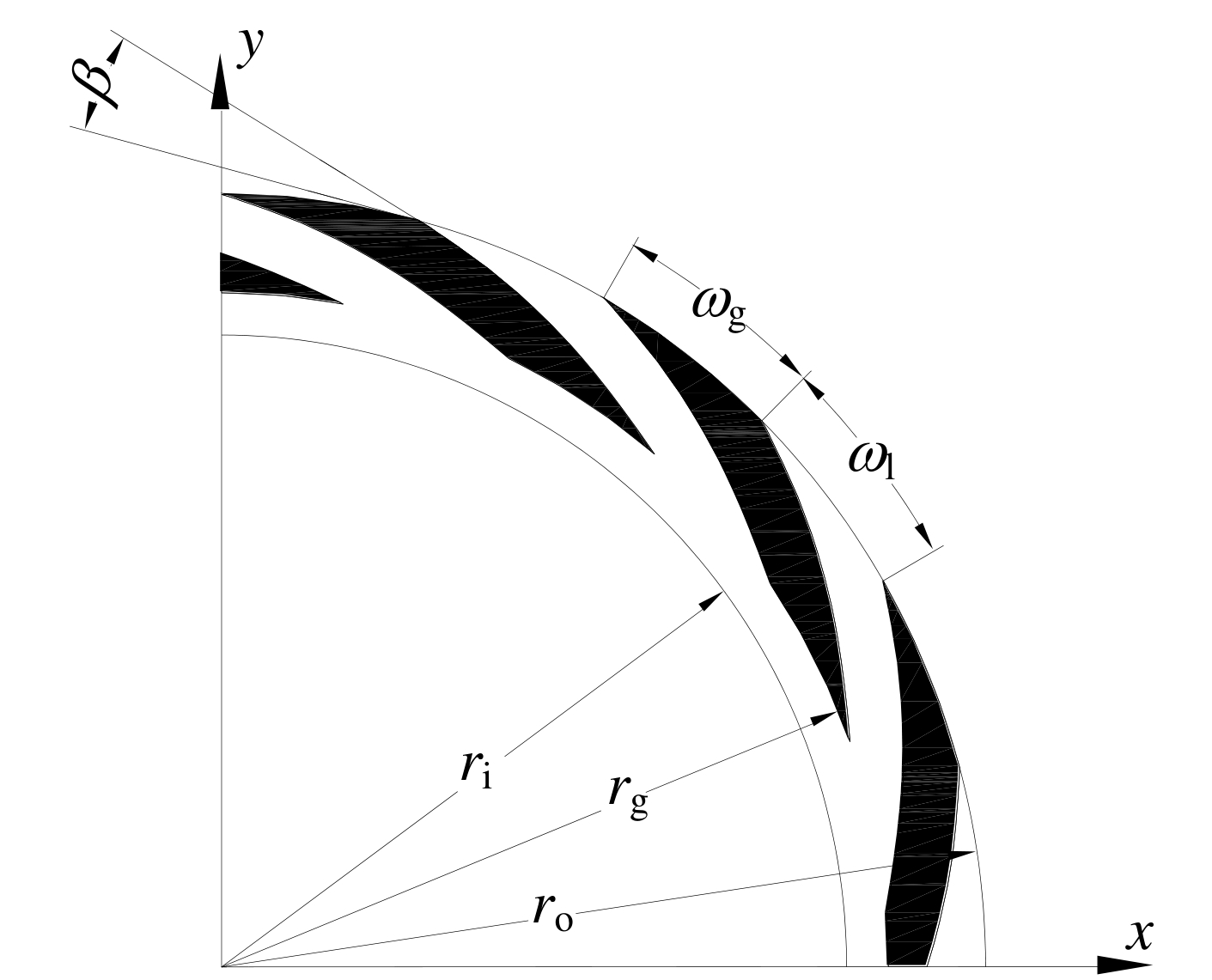
图15 螺旋槽机械密封端面
Fig.15 Spiral groove mechanical seal face
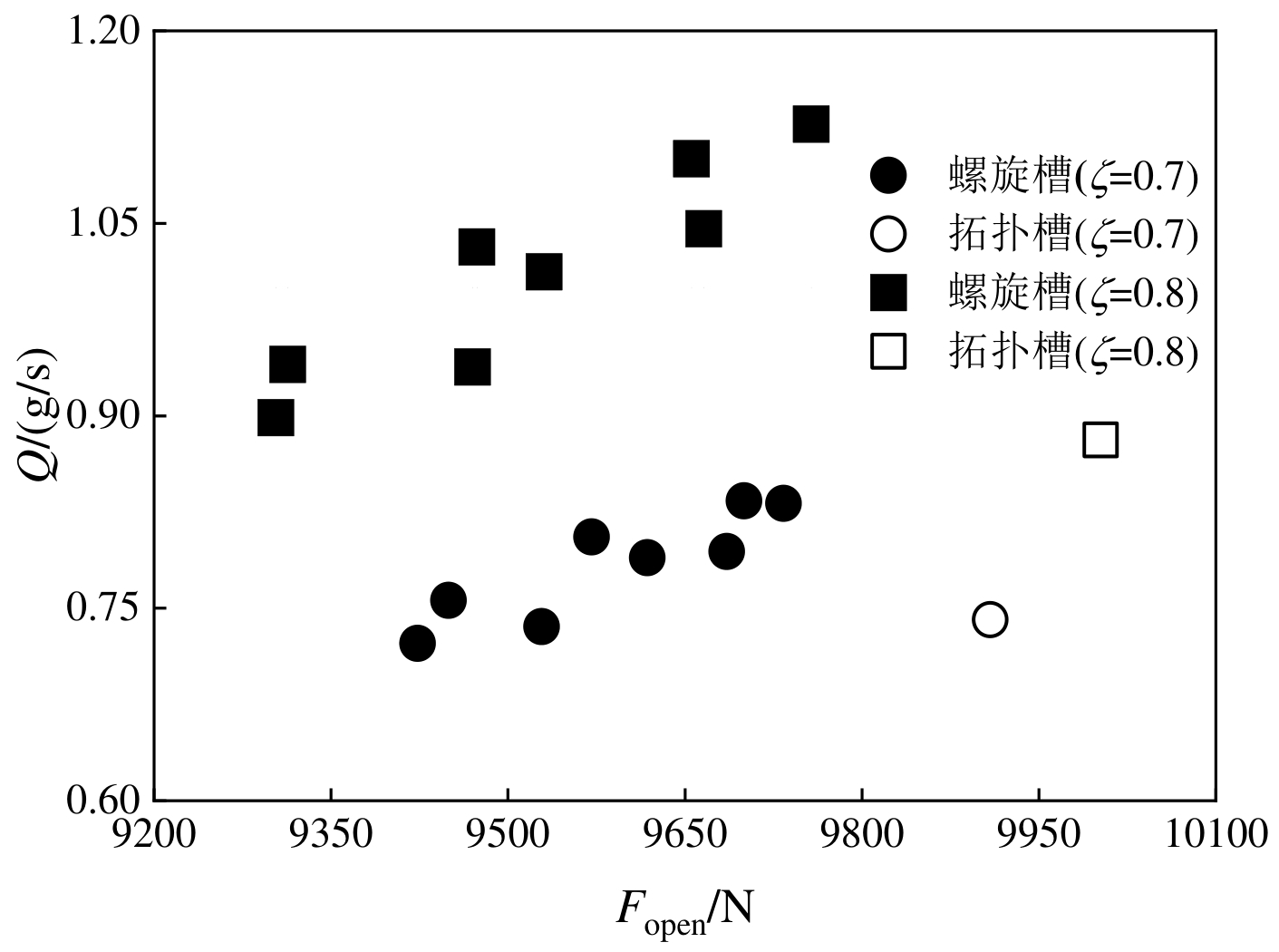
图16 拓扑优化槽与螺旋槽对比
Fig.16 Topological vs. spiral groove comparison
| [1] | 刘忠, 刘莹, 刘向锋. 双螺旋槽端面密封结构参数的优化设计[J]. 中国科学(E辑: 技术科学), 2007, 37(7): 898-903. |
| Liu Z, Liu Y, Liu X F. Optimal design of structural parameters of double spiral groove end seal[J]. Science in China (Series E (Technological Sciences)), 2007, 37(7): 898-903. | |
| [2] | 王建磊, 门川皓, 赵伟刚, 等. 动静压机械密封的结构设计及端面槽型优化研究[J]. 机械工程学报, 2021, 57(9): 108-117. |
| Wang J L, Men C H, Zhao W G, et al. Research on structural design and end face slot of optimization of hydrodynamic and hydrostatic mechanical seal[J]. Journal of Mechanical Engineering, 2021, 57(9): 108-117. | |
| [3] | 於雷, 祝海林, 吴少华, 等. 上游泵送螺旋槽机械密封优化设计[J]. 机床与液压, 2021, 49(2): 83-86, 100. |
| Yu L, Zhu H L, Wu S H, et al. Optimal design for mechanical seal of upstream pumping spiral groove[J]. Machine Tool & Hydraulics, 2021, 49(2): 83-86, 100. | |
| [4] | 李建克, 刘晨阳, 雷龙生, 等. 基于公理设计理论的高工况螺旋槽机械密封优化方法[J]. 西北工业大学学报, 2023, 41(4): 704-711. |
| Li J K, Liu C Y, Lei L S, et al. Optimization method of high parameter spiral groove mechanical seal based on axiomatic design theory[J]. Journal of Northwestern Polytechnical University, 2023, 41(4): 704-711. | |
| [5] | 郑国运, 谢星, 姜大连, 等. 螺旋槽机械密封端面槽型优化与熵产分析[J]. 润滑与密封, 2025, 50(8): 186-192. |
| Zheng G Y, Xie X, Jiang D L, et al. Structural optimization and entropy production analysis of spiral groove mechanical seals[J]. Lubrication Engineering, 2025, 50(8): 186-192. | |
| [6] | 王竞墨. 干气密封T型槽动力学分析及槽底微纹理优化设计[D]. 兰州: 兰州理工大学, 2023. |
| Wang J M. Dynamic analysis of dry gas seal T-groove and optimization design of groove bottom micro-texture[D]. Lanzhou: Lanzhou University of Technology, 2023. | |
| [7] | 陈汇龙, 桂铠, 赵斌娟, 等. 上游泵送机械密封多目标多工况优化研究[J]. 润滑与密封, 2020, 45(8): 19-25. |
| Chen H L, Gui K, Zhao B J, et al. Research on multi-objective and multi-condition optimization of upstream pumping mechanical seal[J]. Lubrication Engineering, 2020, 45(8): 19-25. | |
| [8] | 唐杰, 殷玉枫, 张鑫. 基于SA-CFPSO算法的螺旋槽径向气体轴承槽型参数优化[J]. 润滑与密封, 2024, 49(12): 169-175. |
| Tang J, Yin Y F, Zhang X. Groove parameter optimization of spiral groove journal gas bearing based on SA-CFPSO algorithm[J]. Lubrication Engineering, 2024, 49(12): 169-175. | |
| [9] | Michell A G M. LVIII. The limits of economy of material in frame-structures[J]. The London, Edinburgh, and Dublin Philosophical Magazine and Journal of Science, 1904, 8(47): 589-597. |
| [10] | Bendsøe M P. Optimal shape design as a material distribution problem[J]. Structural Optimization, 1989, 1(4): 193-202. |
| [11] | Wang M Y, Wang X M, Guo D M. A level set method for structural topology optimization[J]. Computer Methods in Applied Mechanics and Engineering, 2003, 192(1/2): 227-246. |
| [12] | Xie Y M, Steven G P. A simple evolutionary procedure for structural optimization[J]. Computers & Structures, 1993, 49(5): 885-896. |
| [13] | Waseem A, Temizer İ, Kato J, et al. Homogenization-based design of surface textures in hydrodynamic lubrication[J]. International Journal for Numerical Methods in Engineering, 2016, 108(12): 1427-1450. |
| [14] | Waseem A, Temizer İ, Kato J, et al. Micro-texture design and optimization in hydrodynamic lubrication via two-scale analysis[J]. Structural and Multidisciplinary Optimization, 2017, 56(2): 227-248. |
| [15] | Tu Z R, Meng X K, Ma Y, et al. Shape optimization of hydrodynamic textured surfaces for enhancing load-carrying capacity based on level set method[J]. Tribology International, 2021, 162: 107136. |
| [16] | 魏鹏, 蒋子润. 引入水平集带的参数化水平集结构拓扑优化方法[J]. 华南理工大学学报(自然科学版), 2021, 49(10): 87-94, 122. |
| Wei P, Jiang Z R. Parameterized level set structural topology optimization method by introducing level set band[J]. Journal of South China University of Technology (Natural Science Edition), 2021, 49(10): 87-94, 122. | |
| [17] | Wei P, Wang W W, Yang Y, et al. Level set band method: a combination of density-based and level set methods for the topology optimization of continuums[J]. Frontiers of Mechanical Engineering, 2020, 15(3): 390-405. |
| [18] | Codrignani A, Savio D, Pastewka L, et al. Optimization of surface textures in hydrodynamic lubrication through the adjoint method[J]. Tribology International, 2020, 148: 106352. |
| [19] | van Ostayen R A J. Film height optimization of dynamically loaded hydrodynamic slider bearings[J]. Tribology International, 2010, 43(10): 1786-1793. |
| [20] | Zhang W S, Tian H H, Zhu B, et al. Multi-set MMV topology optimization approach for sliding surface texture design[J]. International Journal for Numerical Methods in Engineering, 2025, 126(1): e7612. |
| [21] | Kalliorinne K, Larsson R, Almqvist A. Application of topological optimisation methodology to hydrodynamic thrust bearings[J]. Proceedings of the Institution of Mechanical Engineers, Part J: Journal of Engineering Tribology, 2021, 235(8): 1669-1679. |
| [22] | Kalliorinne K, Almqvist A. Application of topological optimisation methodology to finitely wide slider bearings operating under incompressible flow[J]. Proceedings of the Institution of Mechanical Engineers, Part J: Journal of Engineering Tribology, 2021, 235(4): 698-710. |
| [23] | Kalliorinne K, Pérez-Ràfols F, Fabricius J, et al. Application of topological optimisation methodology to infinitely wide slider bearings operating under compressible flow[J]. Proceedings of the Institution of Mechanical Engineers, Part J: Journal of Engineering Tribology, 2020, 234(7): 1035-1050. |
| [24] | 屠治荣. 液体润滑机械密封端面织构与型槽的拓扑优化[D]. 杭州: 浙江工业大学, 2022. |
| Tu Z R. Topological optimization of end texture and groove of liquid lubricated mechanical seal[D]. Hangzhou: Zhejiang University of Technology, 2022. | |
| [25] | Meng X K, Tu Z R, Ma Y, et al. Topology optimization of liquid lubricating zero-leakage mechanical face seals[J]. Tribology International, 2022, 169: 107490. |
| [26] | Choi J S, Yamada T, Izui K, et al. Topology optimization using a reaction–diffusion equation[J]. Computer Methods in Applied Mechanics and Engineering, 2011, 200(29/30/31/32): 2407-2420. |
| [27] | Seong H K, Shin H, Yoo J, et al. Reaction-diffusion equation based topology optimization combined with the modified conjugate gradient method[J]. Finite Elements in Analysis and Design, 2018, 140: 84-95. |
| [28] | Takezawa A, Nishiwaki S, Kitamura M. Shape and topology optimization based on the phase field method and sensitivity analysis[J]. Journal of Computational Physics, 2010, 229(7): 2697-2718. |
| [29] | Maute K, Ramm E. Adaptive topology optimization[J]. Structural Optimization, 1995, 10(2): 100-112. |
| [30] | Lau S Y, Hughes W F, Basu P, et al. A simplified model for two phase face seal design[J]. Tribology Transactions, 1990, 33(3): 315-324. |
| [31] | 王楠. 规则微孔端面非接触气体机械密封动态特性研究[D]. 杭州: 浙江工业大学, 2009. |
| Wang N. Investigation of the dynamic behavior of a gas-lubricated noncontacting mechanical seal with regular dimpled faces[D]. Hangzhou: Zhejiang University of Technology, 2009. | |
| [32] | Sigmund O, Maute K. Topology optimization approaches[J]. Structural and Multidisciplinary Optimization, 2013, 48(6): 1031-1055. |
| [33] | Lim H, Yoo J, Choi J S. Topological nano-aperture configuration by structural optimization based on the phase field method[J]. Structural and Multidisciplinary Optimization, 2014, 49(2): 209-224. |
| [34] | Hou Z X, Meng X K, Zhao W J, et al. Study on LOX phase change characteristics of T-grooved mechanical face seals[J]. Journal of the Brazilian Society of Mechanical Sciences and Engineering, 2025, 47(8): 371. |
| [35] | Meng X K, Bai S X, Peng X D. An efficient adaptive finite element method algorithm with mass conservation for analysis of liquid face seals[J]. Journal of Zhejiang University SCIENCE A, 2014, 15(3): 172-184. |
| [36] | Kim C W, Seong H K, Yoo J. Study on the clear boundary determination from results of the phase field design method[J]. International Journal of Precision Engineering and Manufacturing, 2019, 20(9): 1553-1561. |
| [1] | 赵子祥, 段钟弟, 孙浩然, 薛鸿祥. 大温差两相流动诱导水锤冲击的数值模型[J]. 化工学报, 2025, 76(S1): 170-180. |
| [2] | 黄灏, 王文, 贺隆坤. LNG船薄膜型液货舱预冷过程模拟与分析[J]. 化工学报, 2025, 76(S1): 187-194. |
| [3] | 汪思远, 刘国强, 熊通, 晏刚. 窗式空调器轴流风机的风速非均匀分布特性及其对冷凝器流路优化设计的影响规律[J]. 化工学报, 2025, 76(S1): 205-216. |
| [4] | 曹庆泰, 郭松源, 李建强, 蒋赞, 汪彬, 耑锐, 吴静怡, 杨光. 负过载下多孔隔板对液氧贮箱蓄液性能的影响研究[J]. 化工学报, 2025, 76(S1): 217-229. |
| [5] | 孙九春, 桑运龙, 王海涛, 贾浩, 朱艳. 泥水盾构仓体内射流对泥浆输送特性影响研究[J]. 化工学报, 2025, 76(S1): 246-257. |
| [6] | 孔繁臣, 张硕, 唐明生, 邹慧明, 胡舟航, 田长青. 二氧化碳直线压缩机气体轴承模拟[J]. 化工学报, 2025, 76(S1): 281-288. |
| [7] | 何婷, 黄舒阳, 黄坤, 陈利琼. 基于余热利用的天然气化学吸收脱碳-高温热泵耦合流程研究[J]. 化工学报, 2025, 76(S1): 297-308. |
| [8] | 段浩磊, 陈浩远, 梁坤峰, 王林, 陈彬, 曹勇, 张晨光, 李硕鹏, 朱登宇, 何亚茹, 杨大鹏. 纯电动车热管理系统低GWP工质替代方案性能分析与综合评价[J]. 化工学报, 2025, 76(S1): 54-61. |
| [9] | 王俊鹏, 冯佳琪, 张恩搏, 白博峰. 曲折式与阵列式迷宫阀芯结构内流动与空化特性研究[J]. 化工学报, 2025, 76(S1): 93-105. |
| [10] | 杨开源, 陈锡忠. 颗粒破碎的离散元及有限离散元模拟方法比较[J]. 化工学报, 2025, 76(9): 4398-4411. |
| [11] | 陈昇, 李子争, 苗超, 白学刚, 李飞, 刘家璇, 李天天, 杨爽, 吕蓉蓉, 王江云. 大尺度密集场景高危氯气非均匀湍流扩散特性三维CFD模拟[J]. 化工学报, 2025, 76(9): 4630-4643. |
| [12] | 刘奕扬, 邢志祥, 刘烨铖, 彭明, 李玉洋, 李云浩, 沈宁舟. 加氢站液氢泄漏扩散特性与安全监测数值模拟研究[J]. 化工学报, 2025, 76(9): 4694-4708. |
| [13] | 黄正宗, 刘科成, 李泽方, 曾平生, 刘永富, 闫红杰, 刘柳. 锌精馏炉砖砌式换热室数值模拟与场协同优化[J]. 化工学报, 2025, 76(9): 4425-4439. |
| [14] | 段炼, 周星睿, 袁文君, 陈飞. 连续相速度脉动对微通道内聚合物液滴生成和形貌的影响规律[J]. 化工学报, 2025, 76(9): 4578-4585. |
| [15] | 王一飞, 李玉星, 欧阳欣, 赵雪峰, 孟岚, 胡其会, 殷布泽, 郭雅琦. 基于裂尖减压特性的CO2管道断裂扩展数值计算[J]. 化工学报, 2025, 76(9): 4683-4693. |
| 阅读次数 | ||||||
|
全文 |
|
|||||
|
摘要 |
|
|||||
 京公网安备 11010102001995号