化工学报 ›› 2025, Vol. 76 ›› Issue (S1): 205-216.DOI: 10.11949/0438-1157.20241268
• 流体力学与传递现象 • 上一篇
汪思远( ), 刘国强(), 熊通, 晏刚
收稿日期:2024-11-11
修回日期:2024-12-17
出版日期:2025-06-25
发布日期:2025-06-26
通讯作者:
刘国强
作者简介:汪思远(1999—),男,硕士研究生,1341300740@qq.com
Siyuan WANG(), Guoqiang LIU(), Tong XIONG, Gang YAN
Received:2024-11-11
Revised:2024-12-17
Online:2025-06-25
Published:2025-06-26
Contact:
Guoqiang LIU
摘要:
窗式空调器室外侧的轴流风机产生的风速分布不均匀会导致冷凝器内制冷剂分布不均,从而恶化换热性能,需分析风速分布特性并调整流路设计与之相匹配。以窗式空调器冷凝器为研究对象,建立了轴流风机非均匀风场的数值模型,对非均匀风速分布进行了三维数值模拟。将风速仿真结果离散为18×10的网格分布,作为边界条件代入CoilDesigner软件中分析风速分布对冷凝器性能的影响,实验验证模型的换热量偏差小于2%。仿真结果表明,风速分布的不均匀性随风机转速的增大而增大,转速从1200 r/min增至2000 r/min时,风速的极差与方差分别增加了1.95 m/s与0.460 m2/s2。通过分析非均匀风速分布对冷凝器换热性能的影响,发现冷凝器在轴流风场的中心静区传热系数较小而在底部加速区传热系数较大,在流路设计过程中需要增大布置在中心静区的支路换热面积,使不同支路热负荷相当,并用制冷剂流量较大的管路匹配传热系数更大的底部加速区。最后,设计并仿真了20种流路布置方案来探究轴流风机非均匀风速分布下管路配置对冷凝器性能的影响规律。与原流路相比,延长中心静区管长,并将汇合段置于底部加速区,支路汇合点置于背风侧,换热量可以提升1.8%,压降可以降低26.1%。
中图分类号:
汪思远, 刘国强, 熊通, 晏刚. 窗式空调器轴流风机的风速非均匀分布特性及其对冷凝器流路优化设计的影响规律[J]. 化工学报, 2025, 76(S1): 205-216.
Siyuan WANG, Guoqiang LIU, Tong XIONG, Gang YAN. Characteristics of non-uniform wind velocity distribution in window air conditioner axial fans and their impact on optimizing condenser circuit optimization[J]. CIESC Journal, 2025, 76(S1): 205-216.
| 参数 | 数值 |
|---|---|
| 轴流风机直径/mm | 320 |
| 旋转区域直径/mm | 322 |
| 旋转区域厚度/mm | 9 |
| 多孔介质尺寸(长×宽×高)/mm | 400×53.5×380 |
| 流场入口区域长度/mm | 1920 |
| 流场出口区域长度/mm | 70 |
表1 风场仿真设计参数
Table 1 Parameters of wind velocity
| 参数 | 数值 |
|---|---|
| 轴流风机直径/mm | 320 |
| 旋转区域直径/mm | 322 |
| 旋转区域厚度/mm | 9 |
| 多孔介质尺寸(长×宽×高)/mm | 400×53.5×380 |
| 流场入口区域长度/mm | 1920 |
| 流场出口区域长度/mm | 70 |
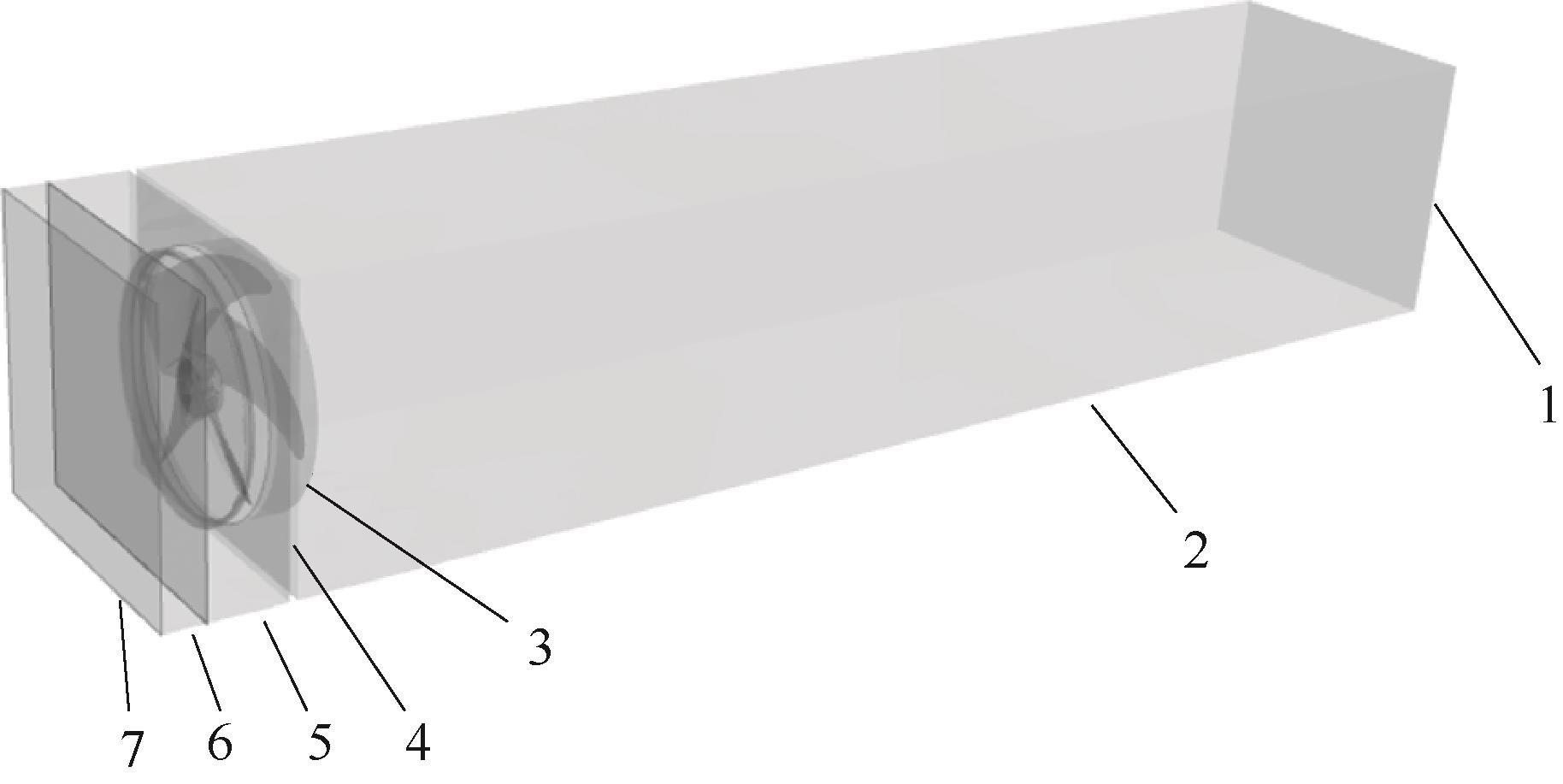
图1 计算区域示意图1—入口边界;2—流场入口区域;3—旋转区域;4—流场隔断;5—流场出口区域;6—多孔介质冷凝器区域;7—出口边界
Fig.1 Schematic diagram of the calculation area
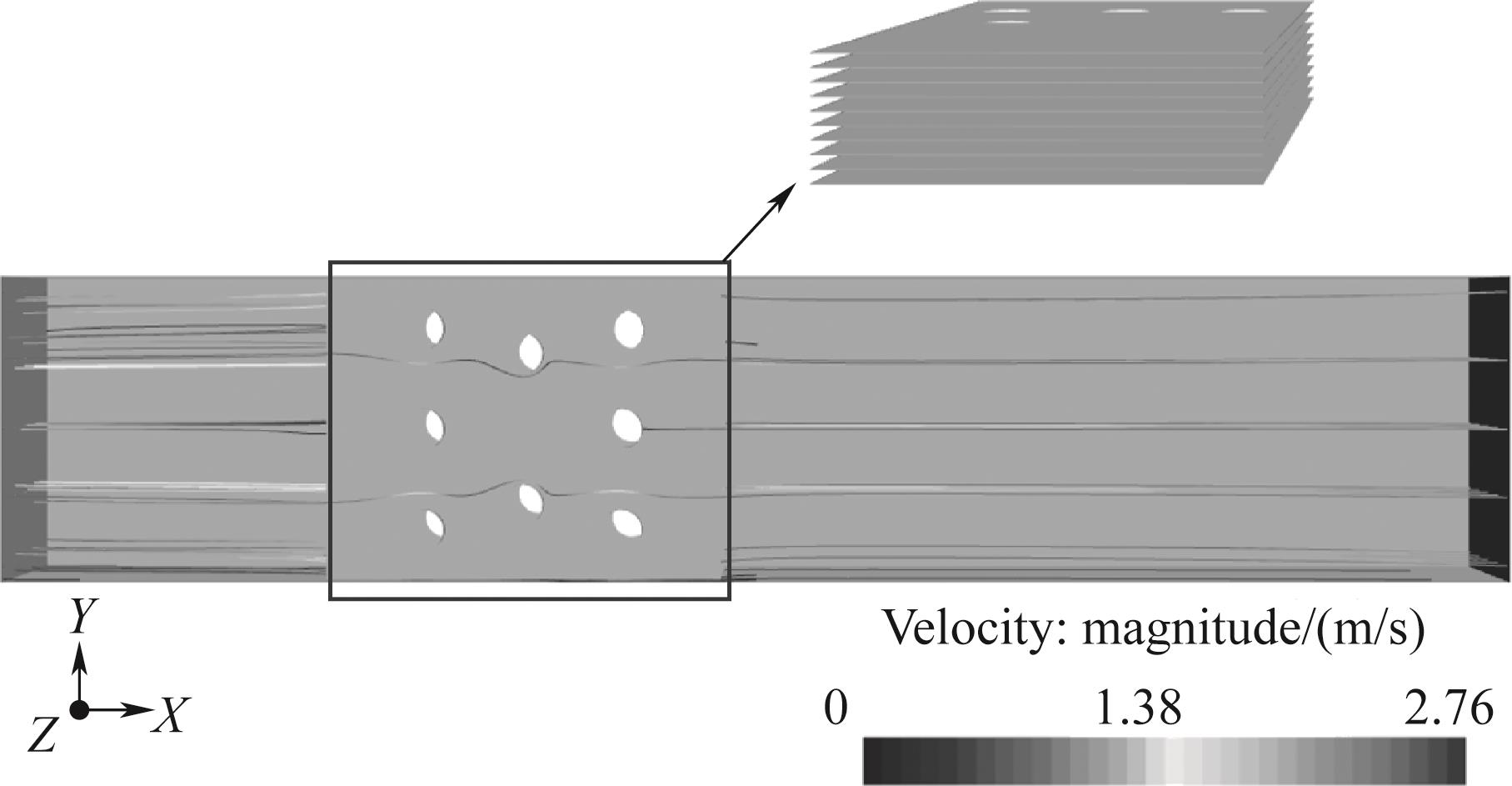
图2 冷凝器局部翅片模型
Fig.2 Condenser local fin model
| 参数 | 数值 |
|---|---|
| 翅片数 | 10 |
| 翅片厚度/mm | 0.095 |
| 翅片间距/mm | 1.3 |
| 管水平间距/mm | 19 |
| 管竖直间距/mm | 14.5 |
| 管外径/mm | 5 |
表2 局部冷凝器翅片结构参数
Table 2 Structural parameters of local condenser fins
| 参数 | 数值 |
|---|---|
| 翅片数 | 10 |
| 翅片厚度/mm | 0.095 |
| 翅片间距/mm | 1.3 |
| 管水平间距/mm | 19 |
| 管竖直间距/mm | 14.5 |
| 管外径/mm | 5 |
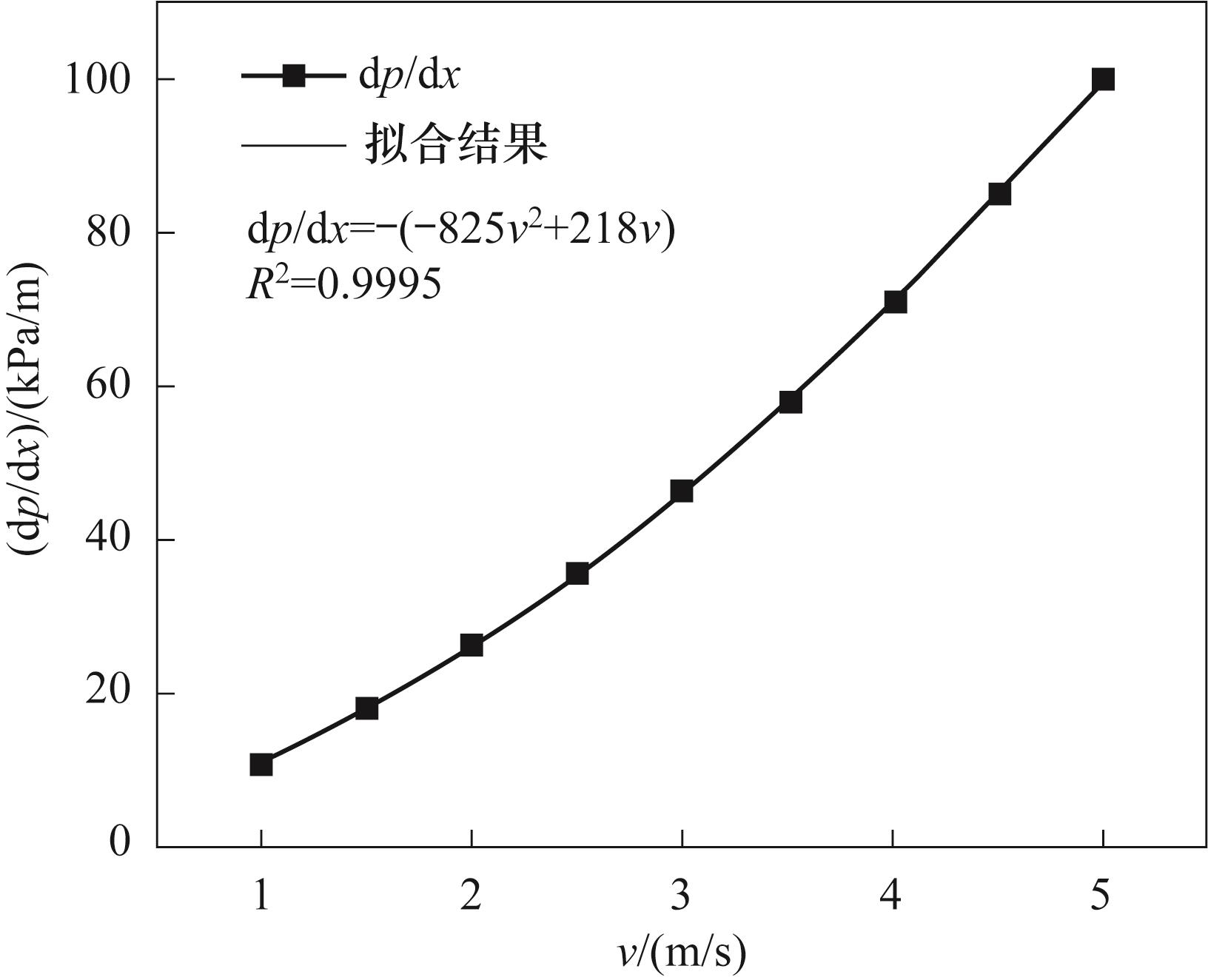
图3 多孔介质单位厚度压降随速度变化曲线
Fig.3 Pressure drop per unit thickness versus velocity curves for porous media
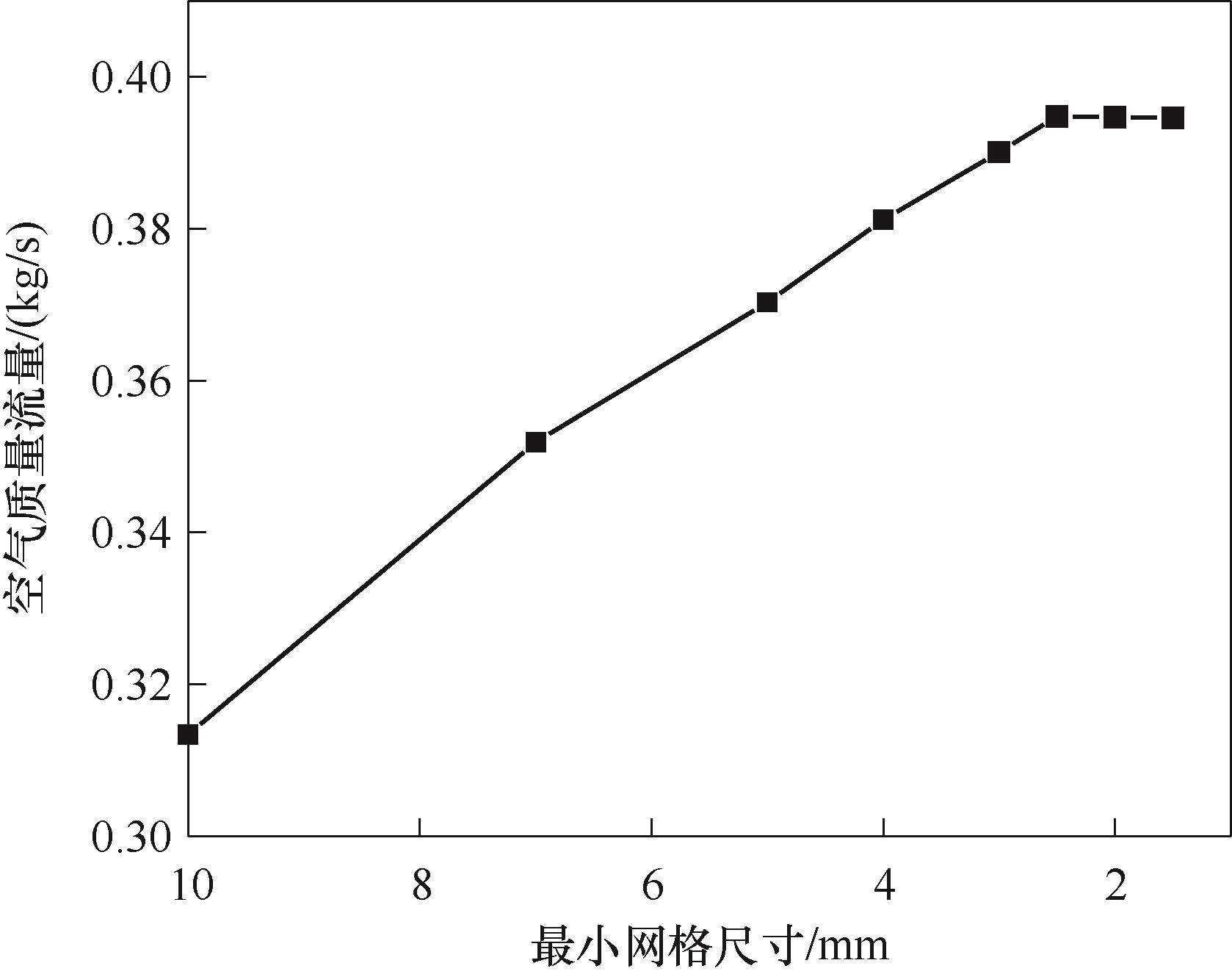
图4 网格无关性验证
Fig.4 Grid-independent validation
| 项目 | 参数 |
|---|---|
| 管路材料 | 铜 |
| 翅片材料 | 铝 |
| 管路排列方式 | 叉排 |
| 管类型 | 光管 |
| 管外径/mm | 5 |
| 管壁厚度/mm | 0.45 |
| 水平管间距/mm | 19 |
| 竖直管间距/mm | 14.5 |
| 管排数 | 3 |
| 每排管数 | 18 |
| 管长/m | 0.4 |
| 翅片类型 | 平直翅片 |
| 翅片间距/mm | 1.3 |
| 翅片厚度/mm | 0.095 |
表3 冷凝器规格参数
Table 3 Dimensions and structural parameters of the condenser
| 项目 | 参数 |
|---|---|
| 管路材料 | 铜 |
| 翅片材料 | 铝 |
| 管路排列方式 | 叉排 |
| 管类型 | 光管 |
| 管外径/mm | 5 |
| 管壁厚度/mm | 0.45 |
| 水平管间距/mm | 19 |
| 竖直管间距/mm | 14.5 |
| 管排数 | 3 |
| 每排管数 | 18 |
| 管长/m | 0.4 |
| 翅片类型 | 平直翅片 |
| 翅片间距/mm | 1.3 |
| 翅片厚度/mm | 0.095 |
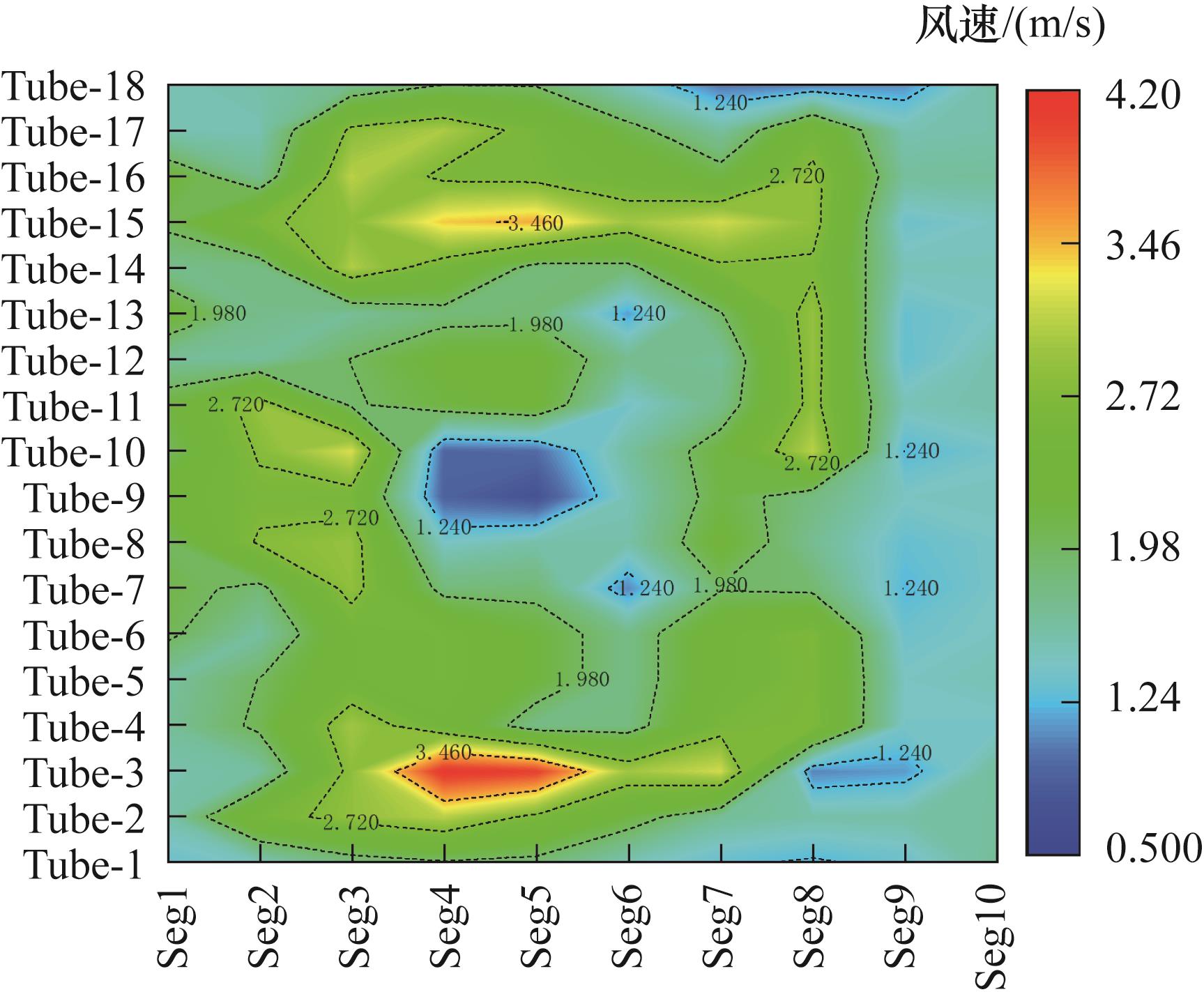
图5 冷凝器入口边界单元平均风速云图
Fig.5 Cell-averaged wind velocity contour at the entrance boundary
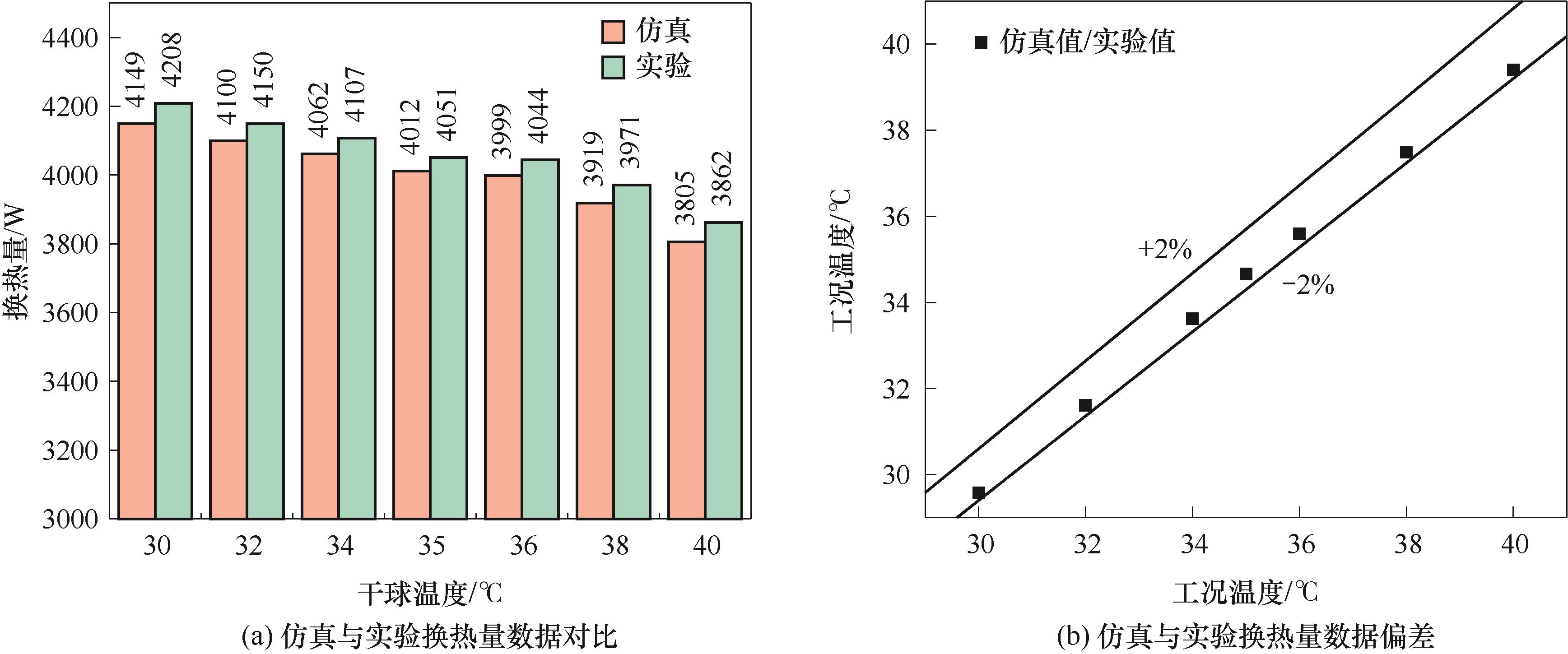
图6 仿真结果验证
Fig.6 Verification of simulation results

图7 不同风机转速下风速分布云图
Fig.7 Contours of the wind velocity at different turbine speeds
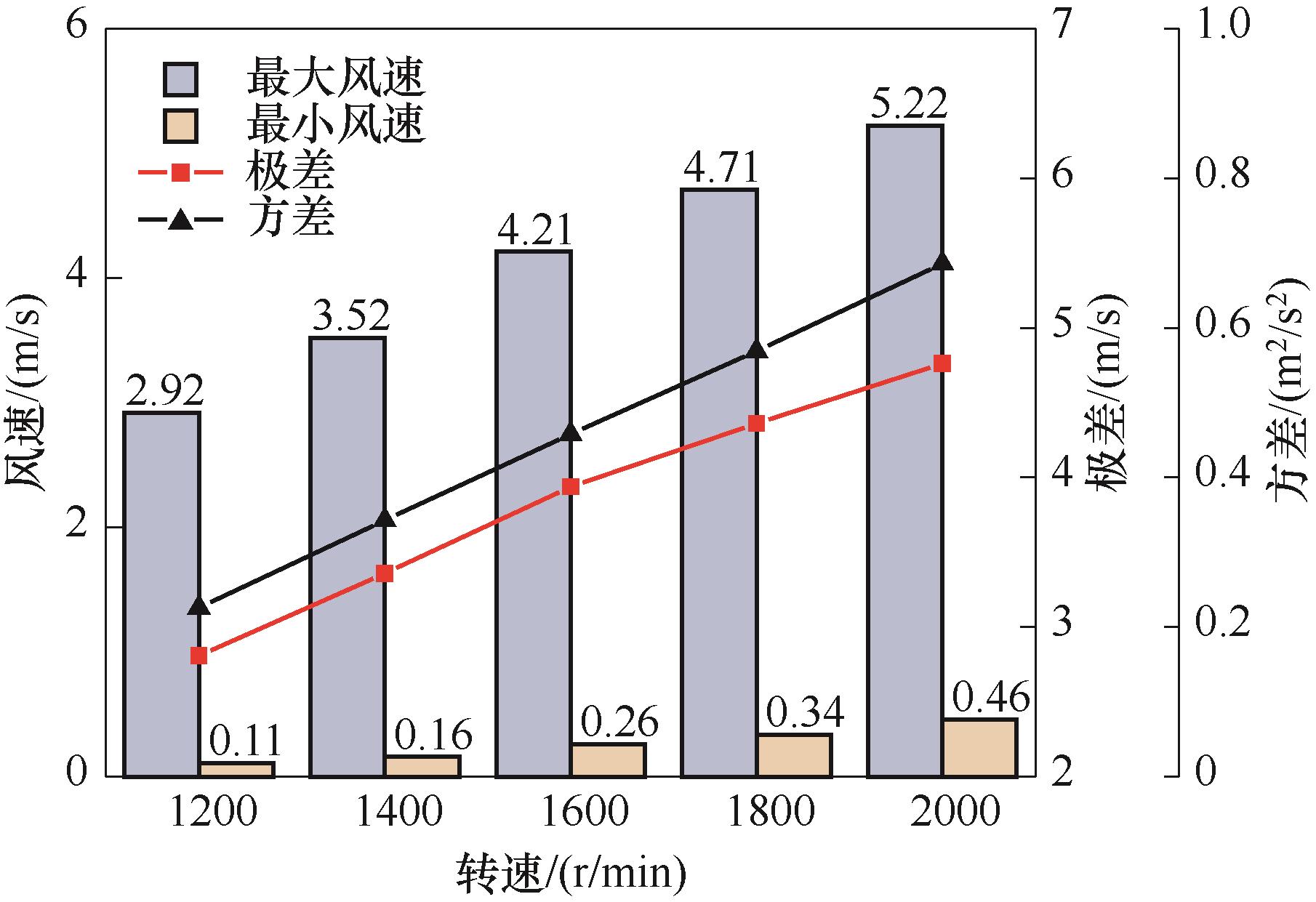
图8 不同转速下风速均匀性分析
Fig.8 Analysis of wind velocity uniformity at different turbine speeds
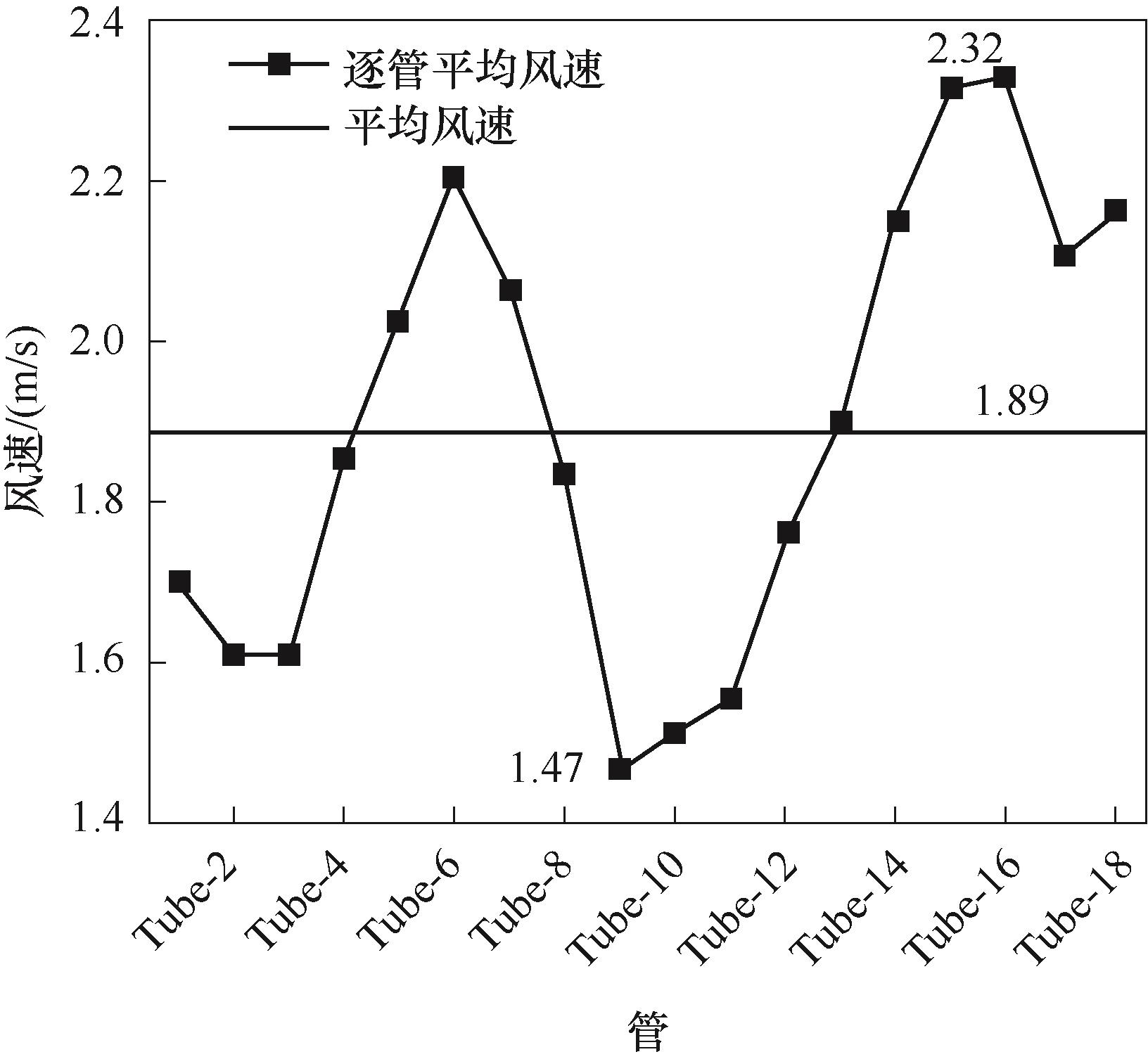
图9 逐管平均风速与面平均风速对比
Fig.9 Comparison of tube-by-tube average wind velocity and surface average wind velocity
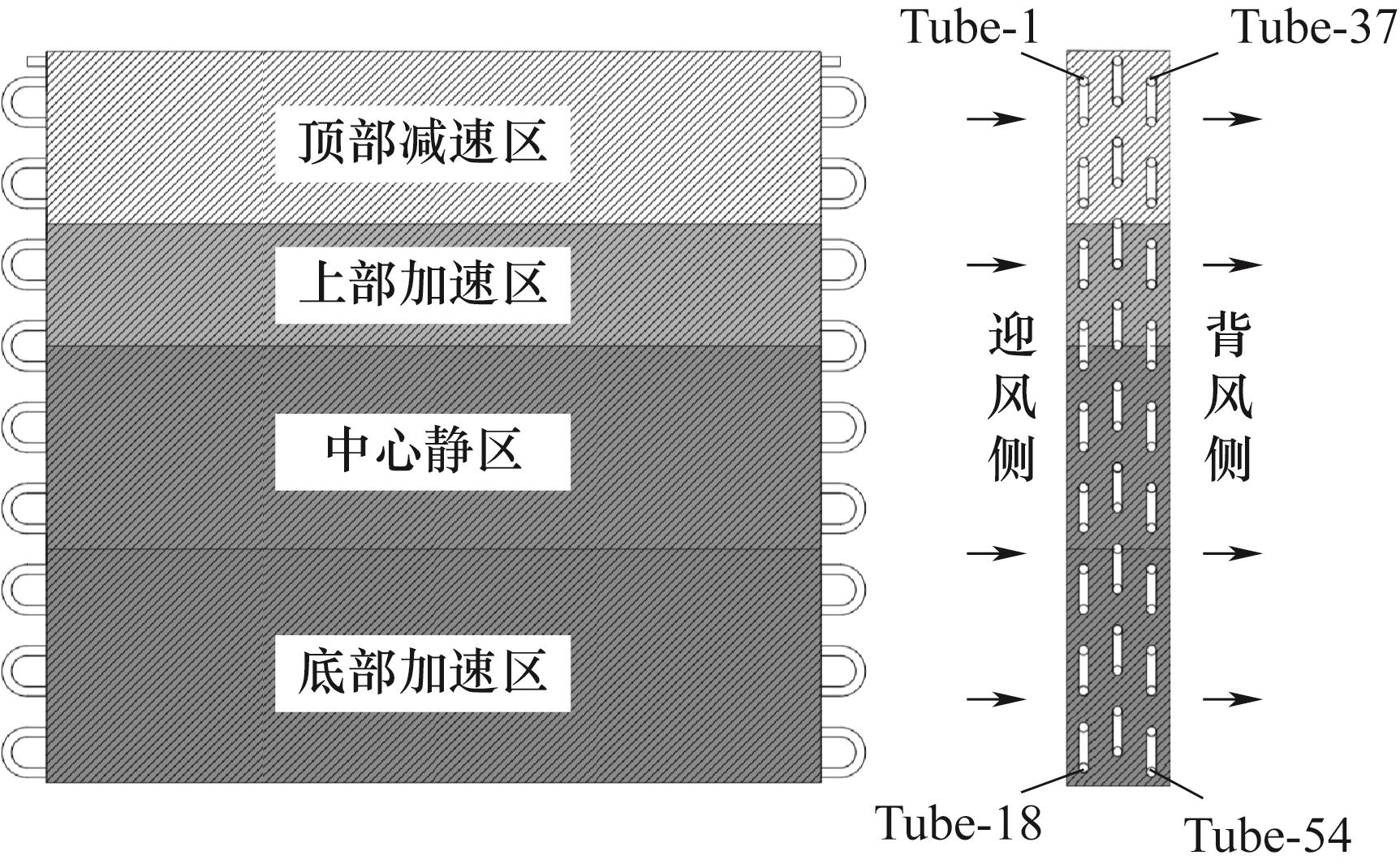
图10 冷凝器风速分区
Fig.10 Condenser wind velocity partitioning
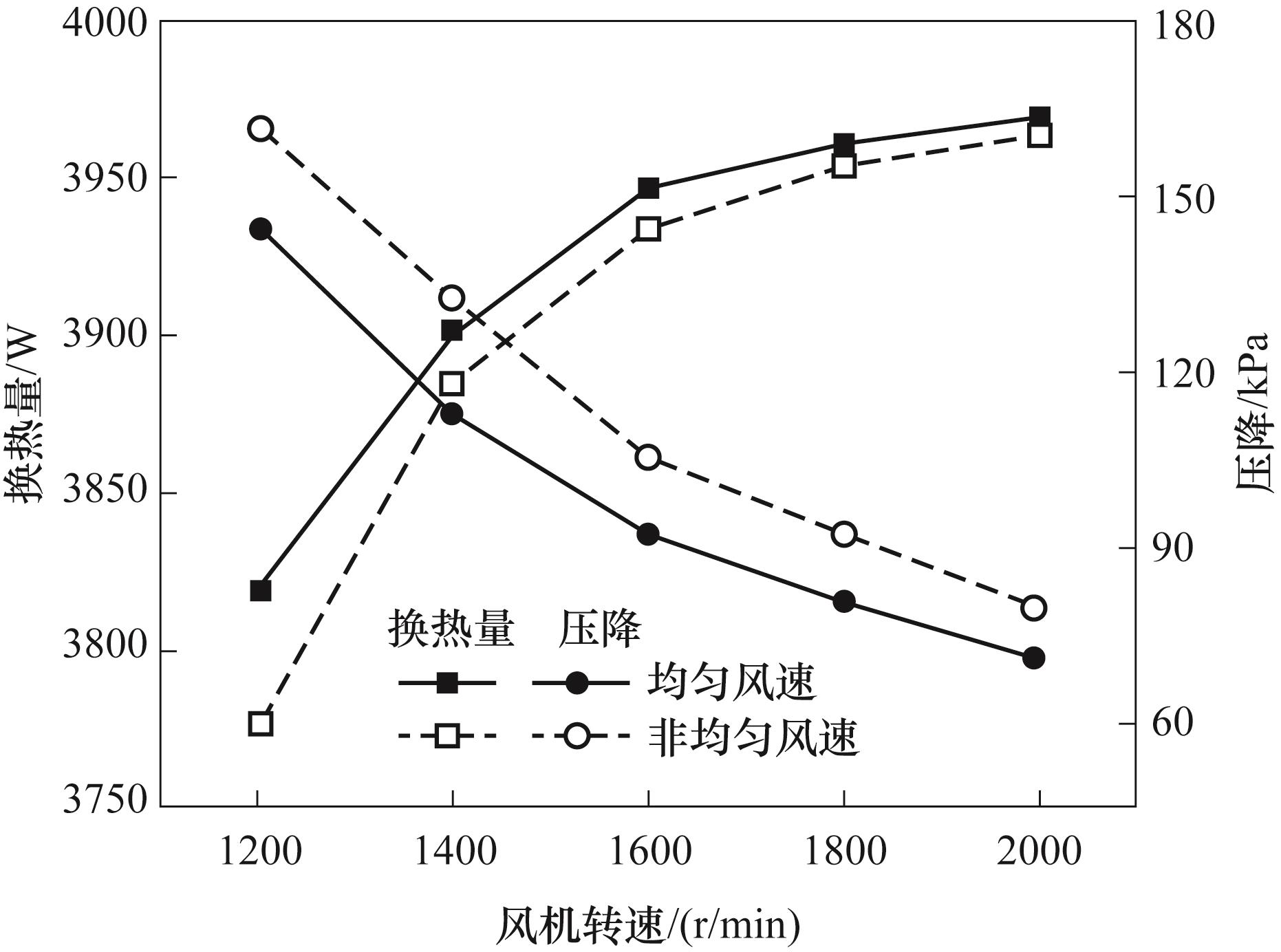
图11 均匀与非均匀风速的换热量与压降对比
Fig.11 Comparison of heat transfer and pressure drop for uniform and non-uniform wind velocity
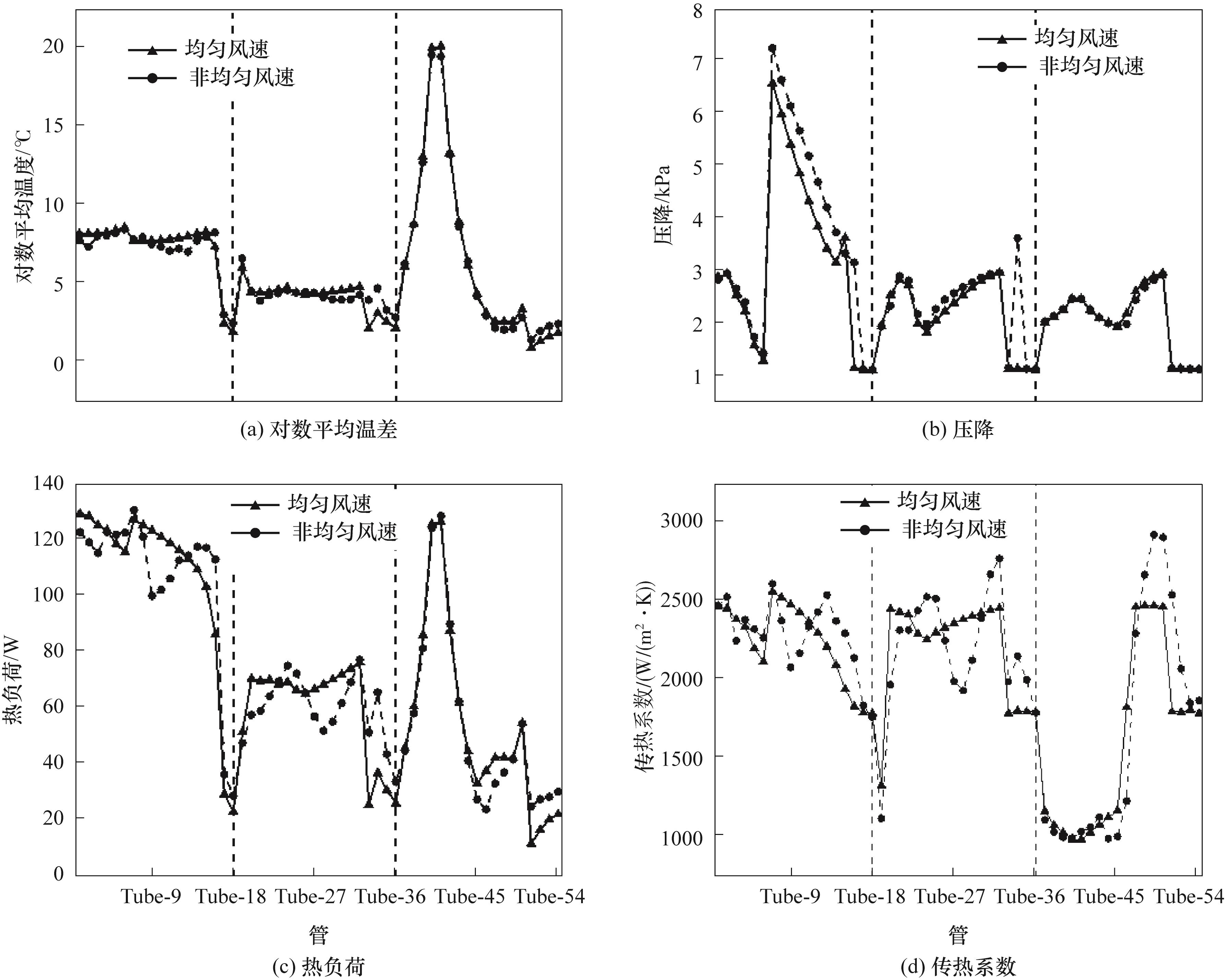
图12 均匀与非均匀风速下管间性能对比
Fig.12 Comparison of tube-by-tube performance at uniform and non-uniform wind velocity
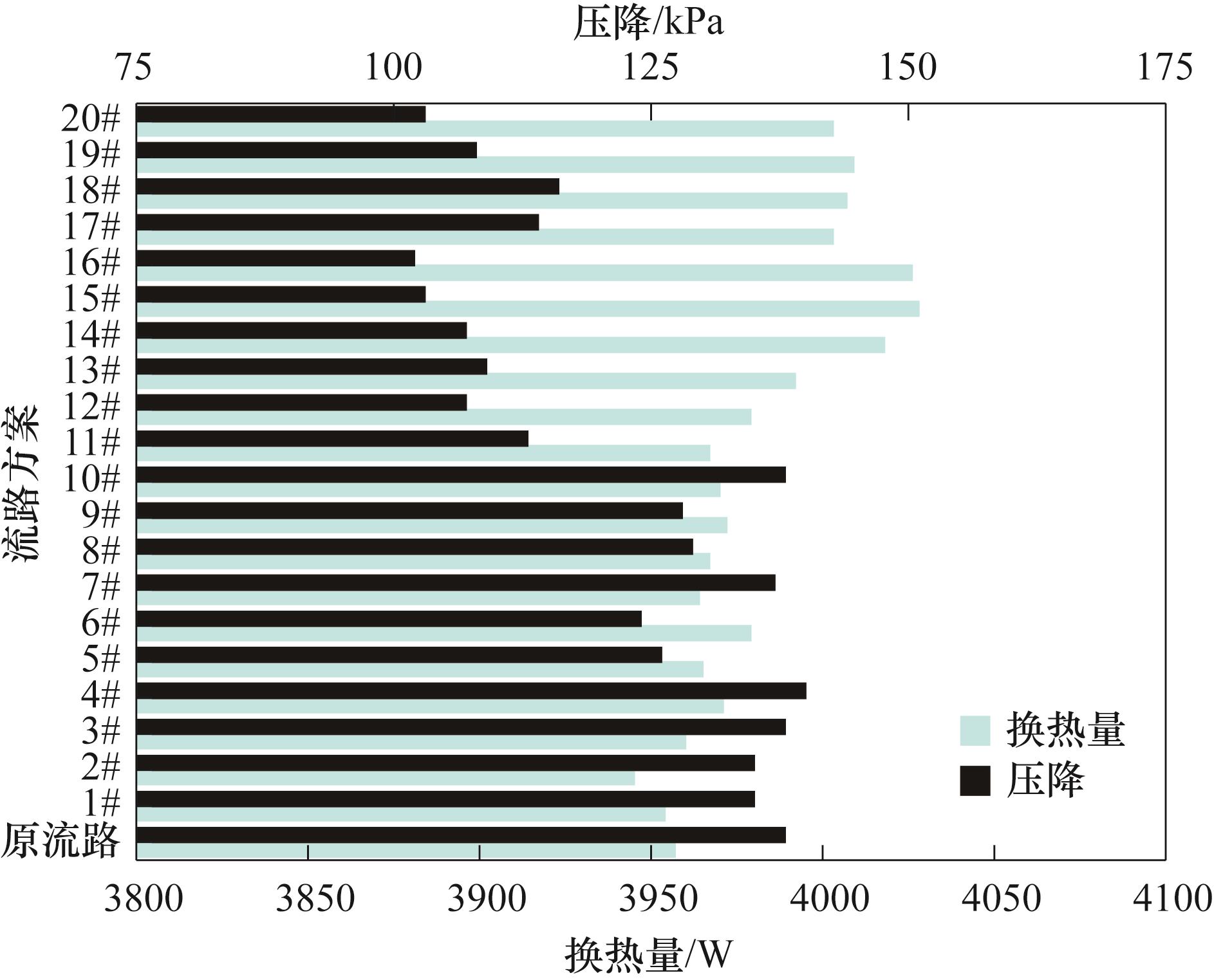
图13 各流路布置方案性能对比
Fig.13 Performance comparison of various circuitry arrangement schemes
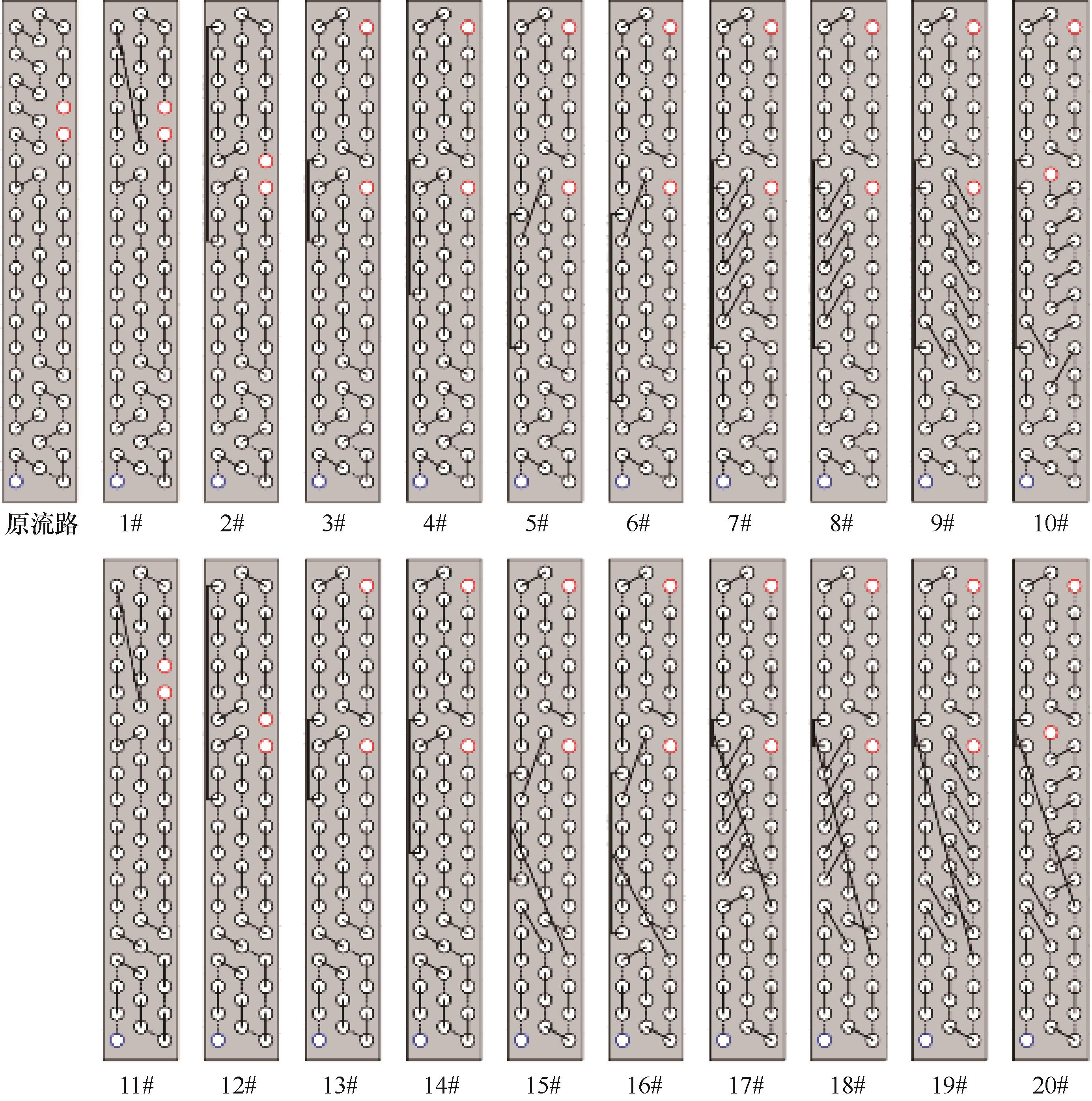
图14 流路布置方案
Fig.14 Circuitry arrangement scheme
| 1 | Zhou S H, Zhan F L, Ding G L. Experimental investigation on two-phase flow noise characteristics of R410A through electronic expansion valve of multi-split air conditioner[J]. International Journal of Refrigeration, 2023, 146: 327-340. |
| 2 | Shen B, Fricke B. Development of high efficiency window air conditioner using propane under limited charge[J]. Applied Thermal Engineering, 2020, 166: 114662. |
| 3 | 钟玉金. 整体式空调器冷凝水应用研究[J]. 家用电器, 2017(6): 50-52. |
| Zhong Y J. Study on application of condensate water for the packaged air-conditioner[J]. Home Appliance, 2017(6): 50-52. | |
| 4 | 艾肯家电网. 出口空调:出口量:窗机及移动式空调[EB/OL]. [2018-12-31]. . |
| Aircon. Export airconditioning: Export volume: Window units and protable air conditioners[EB/OL]. [2018-12-31]. . | |
| 5 | 蒋翔, 朱冬生, 张景卫, 等. 异形管蒸发式冷凝器的性能与工业应用[J]. 化工进展, 2008, 27(9): 1477-1482. |
| Jiang X, Zhu D S, Zhang J W, et al. Performance and industrial application of evaporative condenser with special-shape steel tubes[J]. Chemical Industry and Engineering Progress, 2008, 27(9): 1477-1482. | |
| 6 | 吴锋明, 李帅旗, 何世辉, 等. 大温升蒸汽压缩式热泵系统优化研究进展[J]. 化工进展, 2024, 43(3): 1178-1198. |
| Wu F M, Li S Q, He S H, et al. Research progress on optimization of large temperature-lift vapor compression heat pump system[J]. Chemical Industry and Engineering Progress, 2024, 43(3): 1178-1198. | |
| 7 | 杨垚, 李早阳, 王君岚, 等. 环境风影响下换流变压器空冷换热系统换热能力衰减特性研究[J]. 西安交通大学学报, 2024, 58(12): 78-88. |
| Yang Y, Li Z Y, Wang J L, et al. Study on heat exchange capacity attenuation characteristics of air-cooled heat exchange system of converter transformer under windy conditions[J]. Journal of Xi'an Jiaotong University, 2024, 58(12): 78-88. | |
| 8 | 田凤国, 朱田, 孔德正, 等. 非均匀布风流化床内大颗粒停留时间特性[J]. 化工学报, 2020, 71(4): 1520-1527. |
| Tian F G, Zhu T, Kong D Z, et al. Residence time of large particles in fluidized beds with non-uniform gas introducing[J]. CIESC Journal, 2020, 71(4): 1520-1527. | |
| 9 | 鹿世化, 刘卫华, 余跃进, 等. 翅片管换热器内部空气流场的数值模拟与实验研究[J]. 化工学报, 2010, 61(6): 1367-1372. |
| Lu S H, Liu W H, Yu Y J, et al. Numerical and experimental investigation of interior airflow in fin-and-tube heat exchanger[J]. CIESC Journal, 2010, 61(6): 1367-1372. | |
| 10 | 雷建奇, 祝贺, 陈剑佩, 等. 翼型轴流桨推力系数实验及CFD模拟[J]. 化工进展, 2010, 29(3): 430-435. |
| Lei J Q, Zhu H, Chen J P, et al. Experimental study and CFD simulation for thrust coefficient of hydrofoil impellers[J]. Chemical Industry and Engineering Progress, 2010, 29(3): 430-435. | |
| 11 | Domanski P A. Simulation of an evaporator with nonuniform one-dimensional air distribution[J]. ASHRAE Transactions, 1991, 97: 136029526. |
| 12 | Lee W J, Jeong J H. Heat transfer performance variations of condensers due to non-uniform air velocity distributions[J]. International Journal of Refrigeration, 2016, 69: 85-95. |
| 13 | Lee W J, Kim H J, Jeong J H. Method for determining the optimum number of circuits for a fin-tube condenser in a heat pump[J]. International Journal of Heat and Mass Transfer, 2016, 98: 462-471. |
| 14 | 刘君康, 王宏超, 熊通, 等. 热泵空调翅片管换热器流路优化研究进展[J]. 化工进展, 2023, 42(1): 107-117. |
| Liu J K, Wang H C, Xiong T, et al. Review on research status of circuit optimization of finned tube heat exchanger in heat pump and air conditioning[J]. Chemical Industry and Engineering Progress, 2023, 42(1): 107-117. | |
| 15 | 吴恒, 李银龙, 晏刚, 等. 蒸气压缩制冷/热泵系统中的气液分离技术[J]. 化工进展, 2023,42(3): 1129-1142. |
| Wu H, Li Y L, Yan G, et al. Vapor-liquid separation technology in refrigeration/heat pump systems[J]. Chemical Industry and Engineering Progress, 2023, 42(3): 1129-1142. | |
| 16 | Wang C C, Liu M S, Leu J S. Influence of circuitry arrangement on the pressure drops of two-row finned tube evaporators[J]. Journal of Energy Resources Technology, 2001, 123(1): 100-103. |
| 17 | Ye H Y, Lee K S. Refrigerant circuitry design of fin-and-tube condenser based on entropy generation minimization[J]. International Journal of Refrigeration, 2012, 35(5): 1430-1438. |
| 18 | 邓斌, 陶文铨, 林澜. 冷凝器流程布置方案的研究与探讨[J]. 制冷学报, 2006, 27(2): 31-38. |
| Deng B, Tao W Q, Lin L. Study on refrigerant circuitry design for condensers[J]. Journal of Refrigeration, 2006, 27(2): 31-38. | |
| 19 | 高晶丹, 吴伟, 丁国良, 等. 空调器用小管径翅片管蒸发器的优化设计方法[J]. 化工学报, 2012, 63(S2): 42-48. |
| Gao J D, Wu W, Ding G L, et al. Optimal design method of small-diameter finned tube evaporator for air conditioner[J]. CIESC Journal, 2012, 63(S2): 42-48. | |
| 20 | 赵兰萍, 郭本涛, 杨志刚. 车用热泵内部冷凝器结构对性能的影响[J]. 化工学报, 2021, 72(9): 4616-4628. |
| Zhao L P, Guo B T, Yang Z G. Effect of structure on the performance of inner condenser for heat pump of EV[J]. CIESC Journal, 2021, 72(9): 4616-4628. | |
| 21 | 贺常相, 樊超超, 韩丙龙, 等. 基于提升变频房间空调器APF的室外换热器流路设计[J]. 制冷与空调, 2019, 19(6): 92-98. |
| He C X, Fan C C, Han B L, et al. Flow path design of outdoor heat exchanger for improving APF of variable speed room air conditioner[J]. Refrigeration and Air-Conditioning, 2019, 19(6): 92-98. | |
| 22 | Chwalowski M, Didion D, Domanski P. Verification of evaporator computer models and analysis of performance of an evaporator coil[J]. ASHRAE transactions, 1989, 95: 1229-1236. |
| 23 | Domanski P A, Yashir D, Michalski R S. An Optimized design of finned-tube evaporators using the learnable evolution model[J]. HVAC&R Research, 2011, 10(2): 201-211. |
| 24 | Domanski P A, Yashar D, Kim M. Performance of a finned-tube evaporator optimized for different refrigerants and its effect on system efficiency[J]. International Journal of Refrigeration, 2005, 28(6): 820-827. |
| 25 | 张春路, 高洁. 非均匀风速下翅片管换热器冷剂流路稳健设计[J]. 同济大学学报(自然科学版), 2014, 42(1): 103-108. |
| Zhang C L, Gao J. Robust design of fin-and-tube heat exchanger's refrigerant circuitry subject to different air maldistributions[J]. Journal of Tongji University (Natural Science), 2014, 42(1): 103-108. | |
| 26 | 柳成文, 王冬青, 龚建英. 风速分布不均匀性对空气源热泵风侧换热器性能的影响[J]. 制冷与空调, 2008, 8(3): 87-90. |
| Liu C W, Wang D Q, Gong J Y. Effect of airflow maldistribution on the performance of air side heat exchanger of air source heat pump[J]. Refrigeration and Air-Conditioning, 2008, 8(3): 87-90. | |
| 27 | 黄东, 孙敏超, 贾杰楠, 等. 风速分布对单流路双排管蒸发器性能影响的模拟研究[J]. 西安交通大学学报, 2009, 43(5): 36-39, 65. |
| Huang D, Sun M C, Jia J N, et al. Simulation of effect of air velocity distribution on performance of two-row finned tube evaporator with one flow path[J]. Journal of X i ' a n Jiaotong University, 2009, 43(5): 36-39, 65. | |
| 28 | 李权旭, 孙敏超, 黄东, 风速分布对双排管两流路蒸发器性能影响的模拟研究 [J]. 西安交通大学学报, 2010, 44(5): 50-55. |
| Li Q X, Sun M C, Huang D. Simulation of effect of air velocity distribution on performance of two-row finned tube evaporator with two circuits[J]. Journal of Xi'an Jiaotong Univerisity, 2010, 44(5): 50-55. | |
| 29 | 黄东, 吴蓓. 风速非均匀分布对蒸发器性能的影响[J]. 西安交通大学学报, 2010, 44(9): 6-10. |
| Huang D, Wu B. Effect of non-uniform air velocity distribution on evaporator performance[J]. Journal of Xi'an Jiaotong University, 2010, 44(9): 6-10. | |
| 30 | 王强, 刘燕龙, 刘祖一, 等. 不均匀风速分布下翅片管换热器的优化分析与实验[J]. 制冷学报, 2016, 37(6): 13-19. |
| Wang Q, Liu Y L, Liu Z Y, et al. An optimized design and experimental research on finned-tube evaporator with nonuniform air distribution[J]. Journal of Refrigeration, 2016, 37(6): 13-19. | |
| 31 | Li C Y, Zhi C S, Li J B, et al. Sensitivity analysis of velocity field influence on condensers' performance and parallel circuit design based on actual air velocity distribution[J]. Case Studies in Thermal Engineering, 2024, 58: 104447. |
| 32 | 屈帅丞, 李阳, 江俊. 基于CFD模拟的翅片管束多孔介质模型建立方法及流场模拟[J]. 应用力学学报, 2020, 37(2): 494-499, 922. |
| Qu S C, Li Y, Jiang J. CFD based method for porous medium model of finned tube bundles and flow field simulation[J]. Chinese Journal of Applied Mechanics, 2020, 37(2): 494-499, 922. | |
| 33 | 王志国, 冯艳, 杨文哲, 等. 基于REV的孔隙型多孔介质导热分析模型[J]. 化工学报, 2020, 71(S2): 118-126. |
| Wang Z G, Feng Y, Yang W Z, et al. Thermal conductivity analysis model of porous media based on REV[J]. CIESC Journal, 2020, 71(S2): 118-126. | |
| 34 | 张行, 庞丽萍, 王莹. 某型运输机飞行状态下冷凝器风道性能[J]. 化工学报, 2020, 71(S1): 166-171. |
| Zhang H, Pang L P, Wang Y. Performance of condenser air duct in flight state of a transport aircraft[J]. CIESC Journal, 2020, 71(S1): 166-171. | |
| 35 | He S P, Wang M J, Tian W X, et al. Development of an OpenFOAM solver for numerical simulations of shell-and-tube heat exchangers based on porous media model[J]. Applied Thermal Engineering, 2022, 210: 118389. |
| 36 | Du J, Zhao H T. Numerical simulation of a plate-fin heat exchanger with offset fins using porous media approach[J]. Heat and Mass Transfer, 2018, 54(3): 745-755. |
| 37 | Jiang H B, Aute V, Radermacher R. CoilDesigner: a general-purpose simulation and design tool for air-to-refrigerant heat exchangers[J]. International Journal of Refrigeration, 2006, 29(4): 601-610. |
| 38 | 李徐佳, 高殿荣, 杨占兵, 等. 锂电池极片干燥箱风速场均匀特性研究[J]. 机械设计, 2011, 28(8): 77-81. |
| Li X J, Gao D R, Yang Z B, et al. Study of uniform characteristics of wind velocity field of dryer for lithium battery pole piece[J]. Journal of Machine Design, 2011, 28(8): 77-81. | |
| 39 | 梁俊杰, 田怀璋, 陈林辉, 等. 制冷剂在蒸发器中的流量分配及分液管设计[J]. 石油化工设备, 2004, 33(1): 30-33. |
| Liang J J, Tian H Z, Chen L H, et al. Mass flow distribution of refrigerant in the evaporator and design method of the distribute tube[J]. Petro-chemical Equipment, 2004, 33(1): 30-33. | |
| 40 | 张智, 金培耕, 涂旺荣, 等. 制冷剂流路对冷凝器换热特性的影响[J]. 暖通空调, 2002, 32(5): 61-63. |
| Zhang Z, Jin P G, Tu W R, et al. Effect of circuit arrangement on the heat exchange performance of air cooled condensers[J]. HV&A, 2002, 32(5): 61-63. | |
| 41 | 何俊, 陶乐仁, 虞中旸. 变制冷剂流量制冷系统的不稳定性分析[J]. 化工进展, 2017, 36(12): 4356-4362. |
| He J, Tao L R, Yu Z Y. Analysis of the instability of refrigerant system with variable refrigerant flow[J]. Chemical Industry and Engineering Progress, 2017, 36(12): 4356-4362. | |
| 42 | Bach C K, Groll E A, Braun J E, et al. Mitigation of air flow maldistribution in evaporators[J]. Applied Thermal Engineering, 2014, 73(1): 879-887. |
| 43 | 陶于兵, 何雅玲, 唐连伟, 等. 管翅式换热器管路布置优化设计的数值研究[J]. 化工进展, 2007, 26(6): 893-898. |
| Tao Y B, He Y L, Tang L W, et al. Numerical study on optimization design of circuit arrangement for tube-fin heat exchanger[J]. Chemical Industry and Engineering Progress, 2007, 26(6): 893-898. | |
| 44 | 赵夫峰, 张浩, 曾小朗, 片宽对两排翅片管式换热器性能的影响 [J]. 制冷与空调, 2017, 17(4): 21-24. |
| Zhao F F, Zhang H, Zeng X L. Influence of fin width on performance of two row finned-tube heat exchanger[J]. Refrigeration and Air-Conditioning, 2017, 17(4): 21-24. | |
| 45 | Aganda A A, Coney J E R, Sheppard C G W. Airflow maldistribution and the performance of a packaged air conditioning unit evaporator[J]. Applied Thermal Engineering, 2000, 20(6): 515-528. |
| 46 | 唐亚林. 室外换热器流路对变频空调APF的影响[J]. 家电科技, 2014(6): 60-61. |
| Tang Y L. Outdoor heat exchanger passage impact on the APF[J]. China Appliance Technology, 2014(6): 60-61. | |
| 47 | Wang C C, Jang J Y, Lai C C, et al. Effect of circuit arrangement on the performance of air-cooled condensers[J]. International Journal of Refrigeration, 1999, 22(4): 275-282. |
| [1] | 燕子腾, 詹飞龙, 丁国良. 空调用套管式分流器结构设计及分流效果验证[J]. 化工学报, 2025, 76(S1): 152-159. |
| [2] | 袁琳慧, 王瑜. 单服务器浸没射流式液冷系统散热性能[J]. 化工学报, 2025, 76(S1): 160-169. |
| [3] | 赵子祥, 段钟弟, 孙浩然, 薛鸿祥. 大温差两相流动诱导水锤冲击的数值模型[J]. 化工学报, 2025, 76(S1): 170-180. |
| [4] | 黄灏, 王文, 贺隆坤. LNG船薄膜型液货舱预冷过程模拟与分析[J]. 化工学报, 2025, 76(S1): 187-194. |
| [5] | 黄博, 黄灏, 王文, 贺隆坤. 薄膜型LNG船液货舱温度场计算分析[J]. 化工学报, 2025, 76(S1): 195-204. |
| [6] | 郭明钢, 杨晓航, 代岩, 米盼盼, 马世鑫, 贺高红, 肖武, 崔福军. 贫氦管输天然气提氦多元化产品耦合工艺优化设计[J]. 化工学报, 2025, 76(5): 2251-2261. |
| [7] | 王光磊, 刘晓玲, 徐震, 李琳. 面向压缩空气储能的气-水直接接触换热特性[J]. 化工学报, 2025, 76(4): 1595-1603. |
| [8] | 齐聪, 岳林菲. 交织网状小通道热沉的传热特性[J]. 化工学报, 2025, 76(4): 1534-1544. |
| [9] | 孙睿, 王军锋, 许浩洁, 李步发, 徐雅弦. 喷雾冷却技术及其强化传热机制研究进展[J]. 化工学报, 2025, 76(4): 1404-1421. |
| [10] | 刘璐, 万开, 王文玥, 王太, 汤建成, 王少恒. 基于氦膨胀制冷的正仲氢转化耦合流动换热研究[J]. 化工学报, 2025, 76(4): 1513-1522. |
| [11] | 许成城, 邵索拉, 魏文建, 郑旭. 多工况下直凝式蓄热型铝制辐射板换热器供暖性能研究[J]. 化工学报, 2025, 76(4): 1545-1558. |
| [12] | 彭德其, 刘奎霖, 武洋, 俞天兰, 谭卓伟, 吴淑英, 陈莹, 唐明成, 彭建国. 振动往复螺旋强化传热性能及结晶垢微观形貌分析研究[J]. 化工学报, 2025, 76(4): 1559-1568. |
| [13] | 翟祥瑞, 张伟, 张倩倩, 曲玖哲, 杨绪飞, 邓雅军, 宇波. 基于外场扰动的固液相变储能主动强化换热技术[J]. 化工学报, 2025, 76(4): 1432-1446. |
| [14] | 范佳媛, 曾文慧, 任志超, 张文涛, 吕霜. 多熔点相变乳液的制备及性能强化研究[J]. 化工学报, 2025, 76(4): 1863-1874. |
| [15] | 陈仲卿, 刘家旭, 王艳语, 井红权, 侯翠红, 屈凌波. K-B-Al体系对磷矿熔融特性及玻璃结构的影响[J]. 化工学报, 2025, 76(3): 1323-1333. |
| 阅读次数 | ||||||
|
全文 |
|
|||||
|
摘要 |
|
|||||
 京公网安备 11010102001995号