CIESC Journal ›› 2025, Vol. 76 ›› Issue (7): 3686-3695.DOI: 10.11949/0438-1157.20241489
• Material science and engineering, nanotechnology • Previous Articles Next Articles
Liang QIAO1( ), Shang LI2, Xinliang LIU3, Ming WANG1, Pei ZHANG2, Yingfei HOU1()
Received:2024-12-23
Revised:2025-02-12
Online:2025-08-13
Published:2025-07-25
Contact:
Yingfei HOU
乔亮1(), 李尚2, 刘新亮3, 王明1, 张沛2, 侯影飞1()
通讯作者:
侯影飞
作者简介:乔亮(1999—),男,硕士研究生,1551373854@qq.com
基金资助:CLC Number:
Liang QIAO, Shang LI, Xinliang LIU, Ming WANG, Pei ZHANG, Yingfei HOU. Synthesis and molecular simulation of terpolymer viscosity reducer for heavy oil[J]. CIESC Journal, 2025, 76(7): 3686-3695.
乔亮, 李尚, 刘新亮, 王明, 张沛, 侯影飞. 三元共聚物稠油降黏剂的合成及分子模拟研究[J]. 化工学报, 2025, 76(7): 3686-3695.
Add to citation manager EndNote|Ris|BibTeX
| 原 油 | 黏度/(mPa·s) | 饱和分/%(质量) | 芳香分/%(质量) | 胶质/%(质量) | 沥青质/%(质量) |
|---|---|---|---|---|---|
| 胜利稠油 | 9828 | 22.47 | 25.21 | 32.78 | 12.69 |
| 辽河稠油 | 7392 | 23.69 | 27.47 | 27.25 | 14.97 |
Table 1 Physical properties of heavy oil
| 原 油 | 黏度/(mPa·s) | 饱和分/%(质量) | 芳香分/%(质量) | 胶质/%(质量) | 沥青质/%(质量) |
|---|---|---|---|---|---|
| 胜利稠油 | 9828 | 22.47 | 25.21 | 32.78 | 12.69 |
| 辽河稠油 | 7392 | 23.69 | 27.47 | 27.25 | 14.97 |
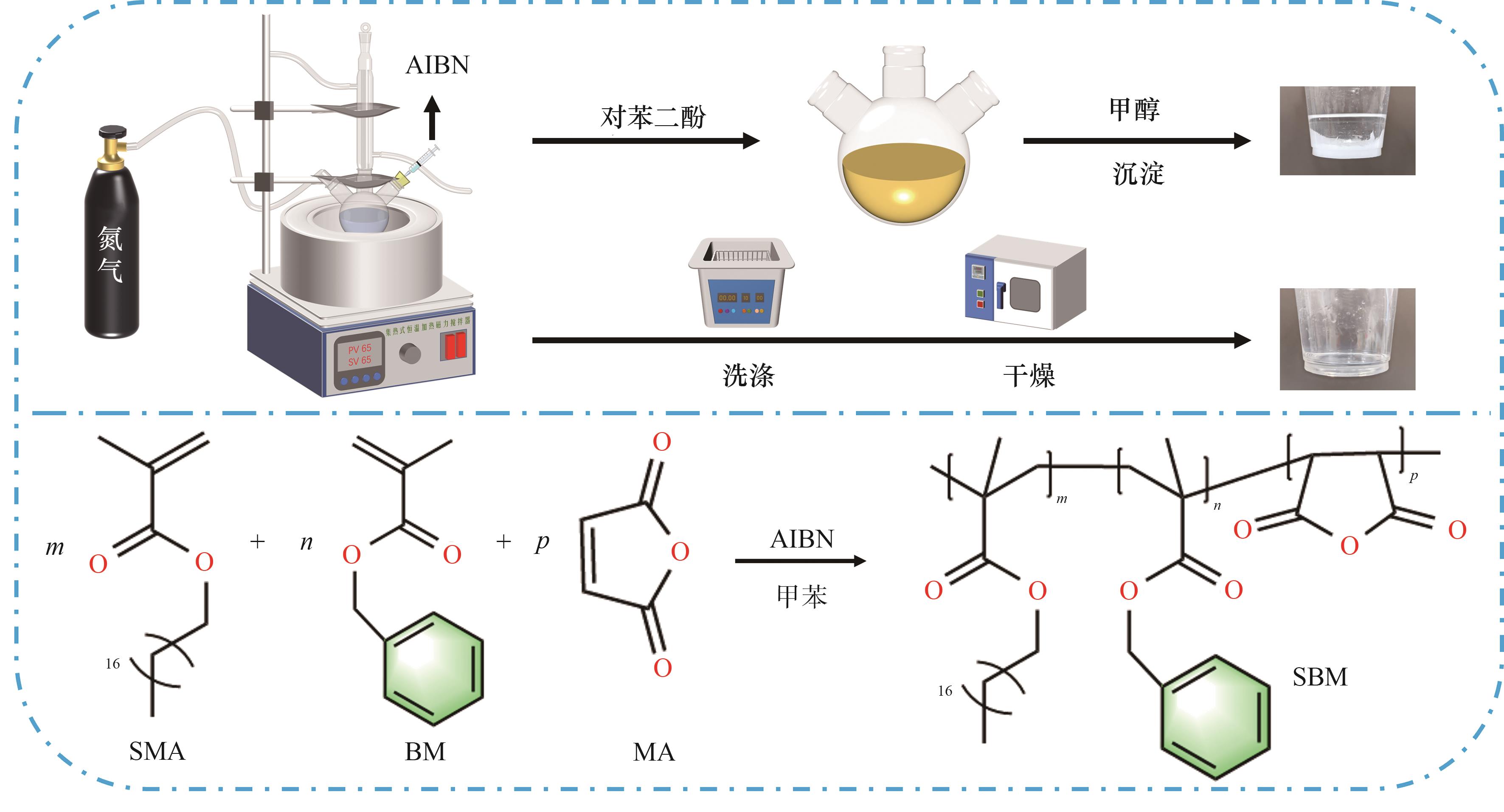
Fig.1 Synthesis flow diagram and reaction route of SBM

Fig.2 Schematic diagram of simulation box model and molecular structure
| 系统 | 饱和分 | 芳香分 | 胶质 | 沥青质1 | 沥青质2 | SBM |
|---|---|---|---|---|---|---|
| Oil1 | 60 | 80 | 80 | 20 | — | — |
| Oil1+SBM | 60 | 80 | 80 | 20 | — | 20 |
| Oil2 | 60 | 80 | 80 | — | 30 | — |
| Oil2+SBM | 60 | 80 | 80 | — | 30 | 20 |
Table 2 Molecular composition of each simulated heavy oil system
| 系统 | 饱和分 | 芳香分 | 胶质 | 沥青质1 | 沥青质2 | SBM |
|---|---|---|---|---|---|---|
| Oil1 | 60 | 80 | 80 | 20 | — | — |
| Oil1+SBM | 60 | 80 | 80 | 20 | — | 20 |
| Oil2 | 60 | 80 | 80 | — | 30 | — |
| Oil2+SBM | 60 | 80 | 80 | — | 30 | 20 |
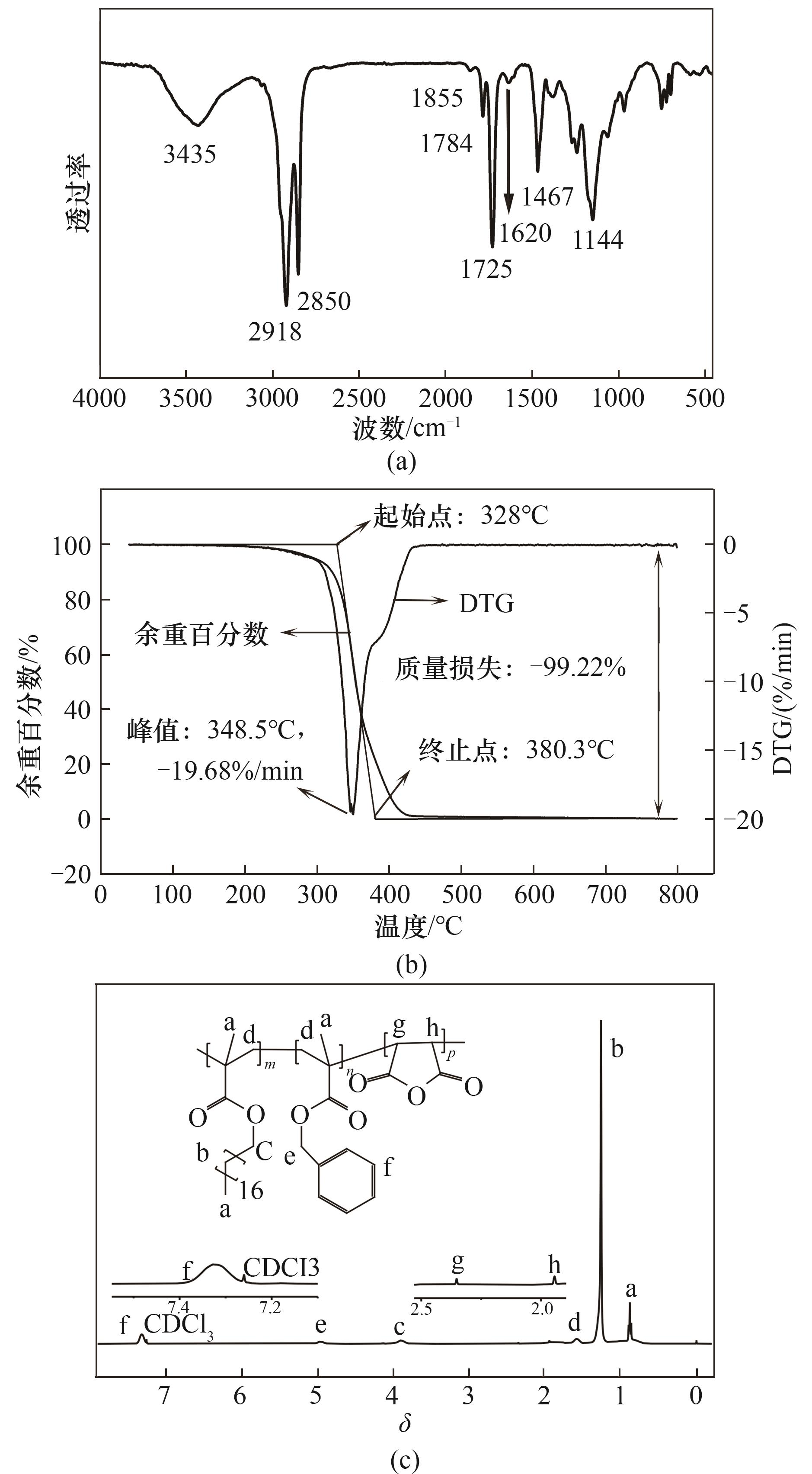
Fig.3 FTIR spectra (a), TGA curves (b) and 1H NMR spectra (c) of SBM
| 原 油 | 表观降黏率/% | 净降黏率/% |
|---|---|---|
| 胜利稠油 | 66.67 | 27.34 |
| 辽河稠油 | 58.60 | 21.78 |
Table 3 Effect of SBM addition on different heavy oil
| 原 油 | 表观降黏率/% | 净降黏率/% |
|---|---|---|
| 胜利稠油 | 66.67 | 27.34 |
| 辽河稠油 | 58.60 | 21.78 |
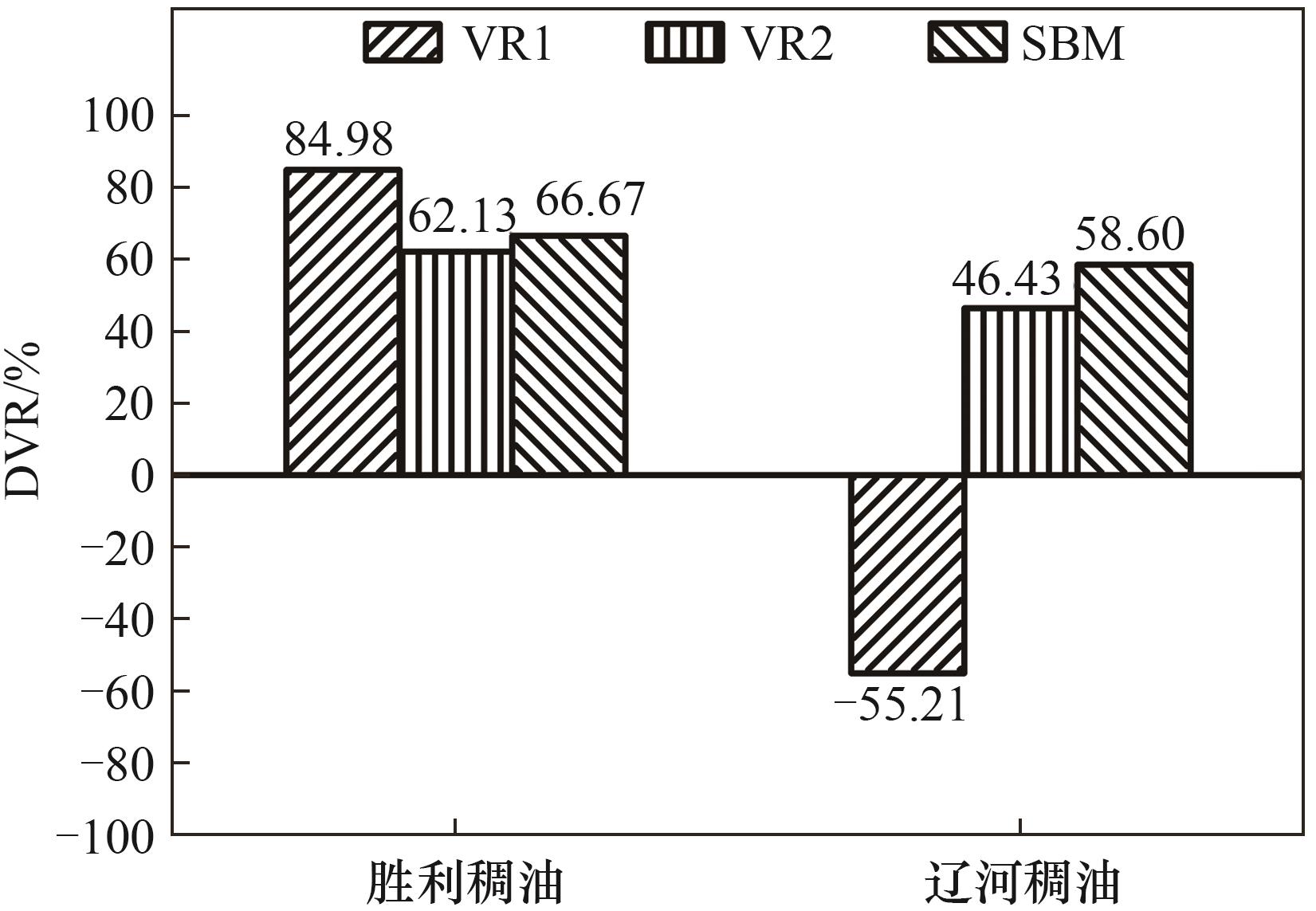
Fig.4 Viscosity reduction effect of different viscosity reducers
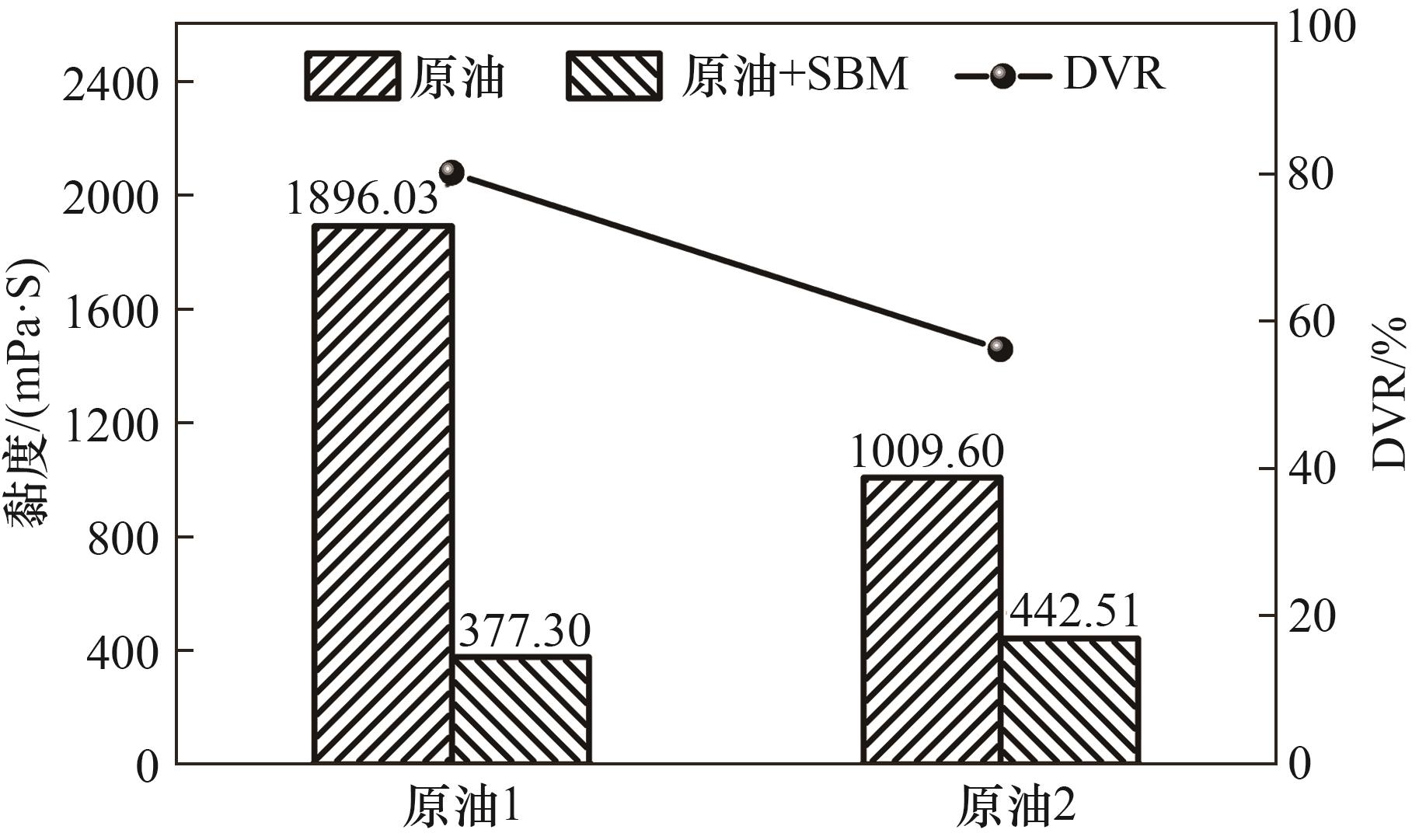
Fig.5 Viscosity changes and corresponding viscosity reduction rate of each system before and after addition of SBM
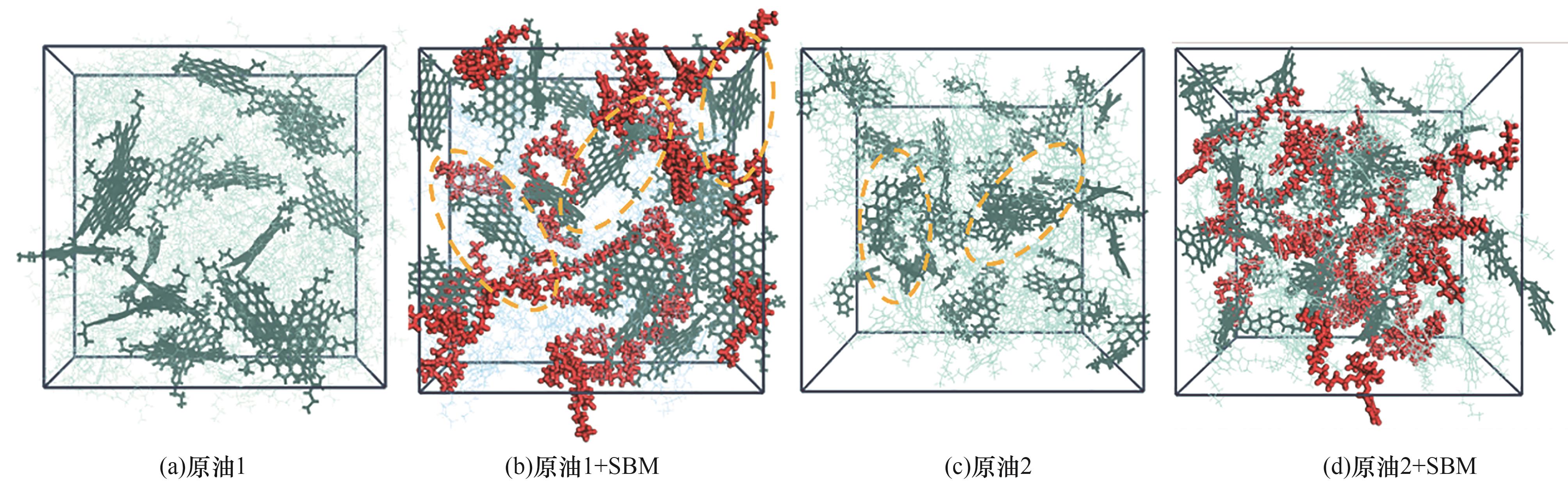
Fig.6 Snapshots of each system (only SBM, asphaltenes and resins are shown)

Fig.7 Total interaction energy between asphaltene and resin in each system

Fig.8 Changes in number of hydrogen bonds before and after addition of SBM in each system
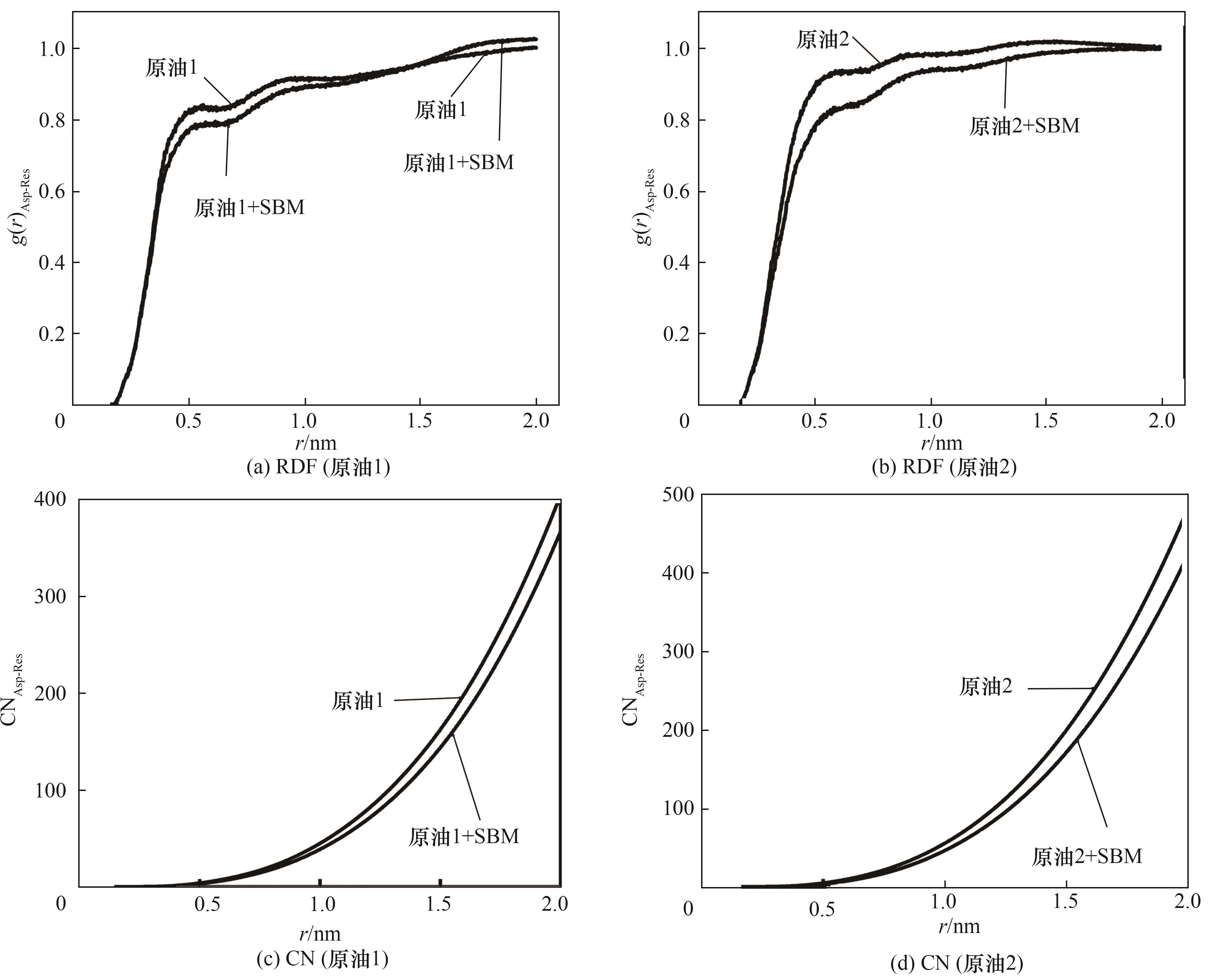
Fig.9 RDF curves and CN between asphaltene and resin in each system
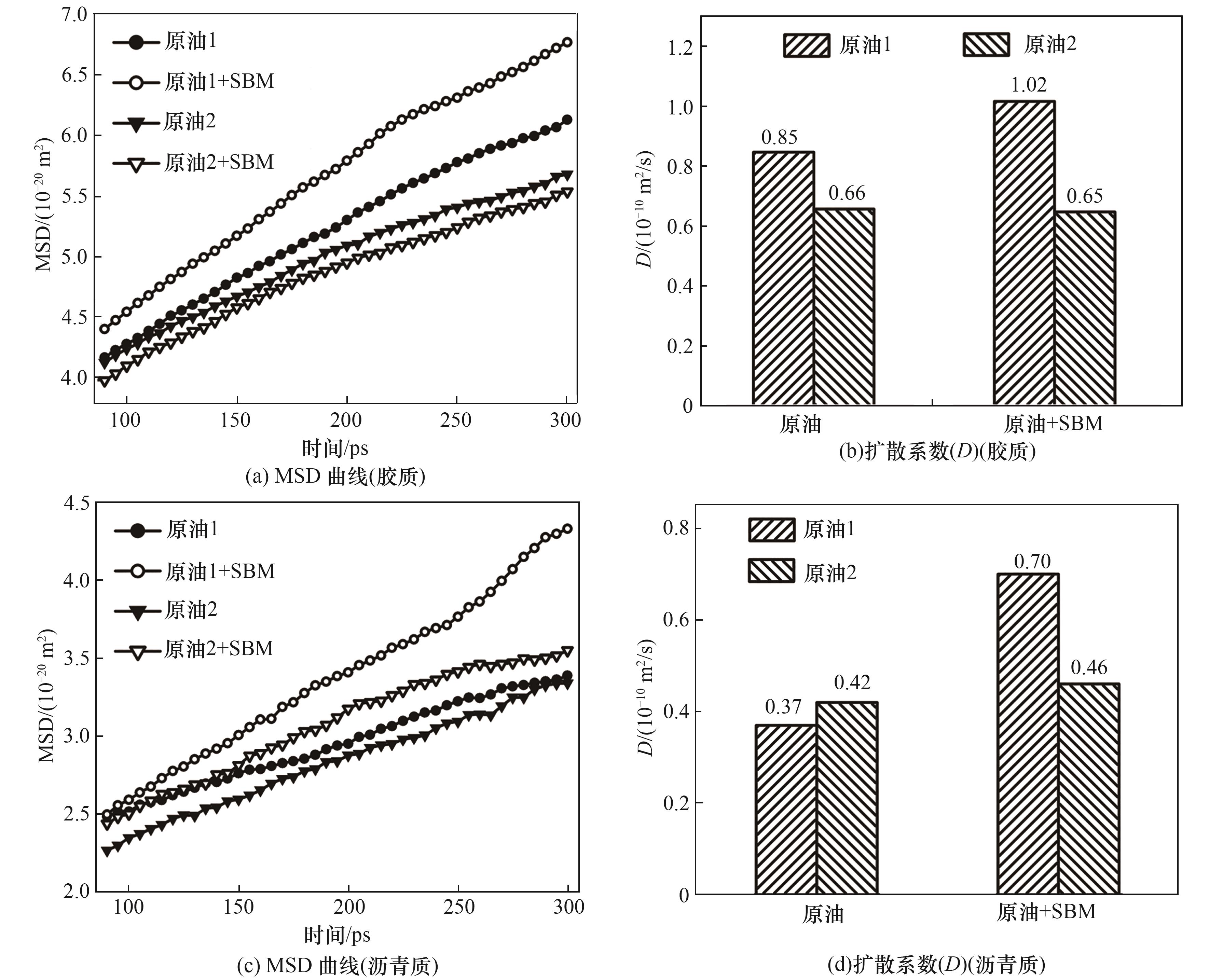
Fig.10 MSD curves and diffusion coefficients in each simulated system
| [1] | Boodlal D, Alexander D, John E, et al. A heavy oil reserve analysis for Trinidad and Tobago[J]. Arabian Journal of Geosciences, 2022, 15(7): 673. |
| [2] | Sun J, Guo L J, Yin X Y, et al. Investigation on drag reduction of aqueous foam for transporting thermally produced high viscosity oil[J]. Journal of Petroleum Science and Engineering, 2022, 210: 110062. |
| [3] | Mao J C, Kang Z, Yang X J, et al. Synthesis and performance evaluation of a nanocomposite pour-point depressant and viscosity reducer for high-pour-point heavy oil[J]. Energy & Fuels, 2020, 34(7): 7965-7973. |
| [4] | Adeyanju O A, Oyekunle L O. Experimental study of water-in-oil emulsion flow on wax deposition in subsea pipelines[J]. Journal of Petroleum Science and Engineering, 2019, 182: 106294. |
| [5] | Sánchez S, Ascanio G, Sánchez-Minero F, et al. Conjugate thermal-hydrodynamic model for the study of heavy oil transport[J]. Journal of Petroleum Science and Engineering, 2019, 179: 997-1011. |
| [6] | Li S Y, Hu Z H, Lu C, et al. Microscopic visualization of greenhouse-gases induced foamy emulsions in recovering unconventional petroleum fluids with viscosity additives[J]. Chemical Engineering Journal, 2021, 411: 128411. |
| [7] | Pei H H, Shu Z, Zhang G C, et al. Experimental study of nanoparticle and surfactant stabilized emulsion flooding to enhance heavy oil recovery[J]. Journal of Petroleum Science and Engineering, 2018, 163: 476-483. |
| [8] | Zhao D W, Wang J, Gates I D. Thermal recovery strategies for thin heavy oil reservoirs[J]. Fuel, 2014, 117: 431-441. |
| [9] | Yang Y, Liu W C, Yu J F, et al. Technology progress in high-frequency electromagnetic in situ thermal recovery of heavy oil and its prospects in low-carbon situations[J]. Energies, 2024, 17(18): 4715. |
| [10] | Chen S H, AlSofi A M, Wang J X, et al. A polycyclic-aromatic hydrocarbon-based water-soluble formulation for heavy oil viscosity reduction and oil displacement[J]. Energy & Fuels, 2023, 37(16): 11864-11880. |
| [11] | Wang T Y, Wang C H, Ma H, et al. Preparation of temperature-sensitive SiO2-PSBMA for reducing the viscosity of heavy oil[J]. Energy & Fuels, 2023, 37(3): 1896-1906. |
| [12] | Lei T M, Cao J, Li A F, et al. Synthesis and oil displacement performance evaluation of a novel functional polymer for heavy oil recovery[J]. Journal of Molecular Liquids, 2024, 402: 124746. |
| [13] | Chen M F, Wang Y F, Chen W H, et al. Synthesis and evaluation of multi-aromatic ring copolymer as viscosity reducer for enhancing heavy oil recovery[J]. Chemical Engineering Journal, 2023, 470: 144220. |
| [14] | Mao J C, Liu J W, Peng Y K, et al. Quadripolymers as viscosity reducers for heavy oil[J]. Energy & Fuels, 2018, 32(1): 119-124. |
| [15] | Mao J C, Liu J W, Wang H B, et al. Novel terpolymers as viscosity reducing agent for Tahe super heavy oil[J]. RSC Advances, 2017, 7(31): 19257-19261. |
| [16] | Sun J H, Zhang F S, Wu Y W, et al. Overview of emulsified viscosity reducer for enhancing heavy oil recovery[J]. IOP Conference Series: Materials Science and Engineering, 2019, 479: 012009. |
| [17] | Chen X Y, Wang N, Xia S Q. Research progress and development trend of heavy oil emulsifying viscosity reducer: a review[J]. Petroleum Science and Technology, 2021, 39(15/16): 550-563. |
| [18] | Saad M A, Kamil M, Abdurahman N H, et al. An overview of recent advances in state-of-the-art techniques in the demulsification of crude oil emulsions[J]. Processes, 2019, 7(7): 470. |
| [19] | Ahmadi M, Chen Z X. Challenges and future of chemical assisted heavy oil recovery processes[J]. Advances in Colloid and Interface Science, 2020, 275: 102081. |
| [20] | Lv X B, Fan W Y, Wang Q T, et al. Synthesis, characterization, and mechanism of copolymer viscosity reducer for heavy oil[J]. Energy & Fuels, 2019, 33(5): 4053-4061. |
| [21] | Yu J, Quan H P, Huang Z Y, et al. Interaction between hydrophobic chitosan derivative and asphaltene in heavy oil to reduce viscosity of heavy oil[J]. International Journal of Biological Macromolecules, 2023, 247: 125573. |
| [22] | Zhang A P, Quan H P, Yu J, et al. Hydroxyl-functionalized carbon nanoparticles alter the asphaltene aggregate structure and reduce the viscosity of heavy oil[J]. ACS Applied Nano Materials, 2024, 7(18): 21925-21935. |
| [23] | Ahmadi M, Chen Z X. Spotlight onto surfactant-steam-bitumen interfacial behavior via molecular dynamics simulation[J]. Scientific Reports, 2021, 11(1): 19660. |
| [24] | Quan H P, Li P F, Duan W M, et al. A series of methods for investigating the effect of a flow improver on the asphaltene and resin of crude oil[J]. Energy, 2019, 187: 115872. |
| [25] | Liu D, Song Q, Tang J S, et al. Interaction between saturates, aromatics and resins during pyrolysis and oxidation of heavy oil[J]. Journal of Petroleum Science and Engineering, 2017, 154: 543-550. |
| [26] | da Costa L M, Stoyanov S R, Gusarov S, et al. Density functional theory investigation of the contributions of π-π stacking and hydrogen-bonding interactions to the aggregation of model asphaltene compounds[J]. Energy & Fuels, 2012, 26(5): 2727-2735. |
| [27] | Gray M R, Tykwinski R R, Stryker J M, et al. Supramolecular assembly model for aggregation of petroleum asphaltenes[J]. Energy & Fuels, 2011, 25(7): 3125-3134. |
| [28] | Sjöblom J, Simon S, Xu Z H. Model molecules mimicking asphaltenes[J]. Advances in Colloid and Interface Science, 2015, 218: 1-16. |
| [29] | Li Z, Han T K, Li J W, et al. Pathway of oil-soluble additives to reduce heavy crude oil viscosity depends on the molecular characteristics of asphaltene[J]. Energy & Fuels, 2024, 38(6): 4990-4997. |
| [30] | Wang C H, Gao L Y, Liu M H, et al. Self-crystallization behavior of paraffin and the mechanism study of SiO2 nanoparticles affecting paraffin crystallization[J]. Chemical Engineering Journal, 2023, 452: 139287. |
| [31] | Xu J P, Wang N, Xue S, et al. Insights into the mechanism during viscosity reduction process of heavy oil through molecule simulation[J]. Fuel, 2022, 310: 122270. |
| [32] | Wang C H, Gao L Y, Liu M H, et al. Viscosity reduction mechanism of surface-functionalized Fe3O4 nanoparticles in different types of heavy oil[J]. Fuel, 2024, 360: 130535. |
| [33] | Wang C H, Gao L Y, Liu M H, et al. Viscosity reduction mechanism of functionalized silica nanoparticles in heavy oil-water system[J]. Fuel Processing Technology, 2022, 237: 107454. |
| [34] | Guan D, Feng S, Zhang L Z, et al. Mesoscale simulation for heavy petroleum system using structural unit and dissipative particle dynamics (SU-DPD) frameworks[J]. Energy & Fuels, 2019, 33(2): 1049-1060. |
| [35] | Zhang L Z, Chen P C, Pan S, et al. Structure-dynamic function relations of asphaltenes[J]. Energy & Fuels, 2021, 35(17): 13610-13632. |
| [36] | Ahmadi M, Chen Z X. Comprehensive molecular scale modeling of anionic surfactant-asphaltene interactions[J]. Fuel, 2021, 288: 119729. |
| [37] | Ahmadi M, Chen Z X. Molecular interactions between asphaltene and surfactants in a hydrocarbon solvent: application to asphaltene dispersion[J]. Symmetry, 2020, 12(11): 1767. |
| [38] | 李熠宇. 海上稠油降黏剂分子模拟及合成研究[D]. 青岛: 中国石油大学(华东), 2020. |
| Li Y Y. Molecular simulation and synthesis of viscosity reducer for heavy marine oils[D]. Qingdao: China University of Petroleum (East China), 2020. | |
| [39] | Li Z, Zhu B J, Han T K, et al. Different mechanisms of two oil-soluble additives to reduce heavy crude oil viscosity[J]. Journal of Molecular Liquids, 2024, 414: 126196. |
| [1] |
Jichao GUO, Xiaoxiao XU, Yunlong SUN.
Airflow simulation and optimization based on |
| [2] | Xin WU, Jianying GONG, Xiangyu LI, Yutao WANG, Xiaolong YANG, Zhen JIANG. Experimental study on the droplet motion on the hydrophobic surface under ultrasonic excitation [J]. CIESC Journal, 2025, 76(S1): 133-139. |
| [3] | Zirui LI, Kai QI, Jun WANG, Guodong XIA. Molecular dynamics study of ion rejection process based on Janus nanochannel [J]. CIESC Journal, 2025, 76(7): 3531-3538. |
| [4] | Zhengzheng GUO, Yidan ZHAO, Fuqiang WANG, Lu PEI, Yanling JIN, Fang REN, Penggang REN. Construction and electromagnetic wave absorption properties of MoS2/RGO/NiFe2O4 composites with heterogeneous architecture [J]. CIESC Journal, 2025, 76(7): 3719-3732. |
| [5] | Pengguo XU, Ziheng MENG, Ganyu ZHU, Huiquan LI, Chenye WANG, Zhenhua SUN, Guocai TIAN. Study on deep carbonization process and kinetics of crude lithium carbonate with CO2 microbubbles [J]. CIESC Journal, 2025, 76(7): 3325-3338. |
| [6] | Zhaoming MAI, Yingtao WU, Wei WANG, Haibao MU, Zuohua HUANG, Chenglong TANG. Study on nonlinear ignition characteristics and dilution gas effect of n-dodecane methane dual fuel [J]. CIESC Journal, 2025, 76(6): 3115-3124. |
| [7] | Bilin LIANG, Qian YU, Siqi JIA, Fang LI, Qiming LI. Structural modulation and gas separation performance of Ni-MOF-74 metal-organic framework membranes [J]. CIESC Journal, 2025, 76(6): 2714-2721. |
| [8] | Naisheng GUO, Xiaobo ZHU, Shuang WANG, Ping CHEN, Zhaoyang CHU, Zhichen WANG. Research progress on high and low temperature performance and influencing factors of polyurethane modified asphalt [J]. CIESC Journal, 2025, 76(6): 2505-2523. |
| [9] | Jun HE, Yong LI, Nan ZHAO, Xiaojun HE. Study on the properties of carbon with Se doping cobalt sulfide in lithium-sulfur batteries [J]. CIESC Journal, 2025, 76(6): 2995-3008. |
| [10] | Qingping ZHAO, Min ZHANG, Hui ZHAO, Gang WANG, Yongfu QIU. Hydrogen bond effect and kinetic studies on hydroesterification of ethylene to methyl propionate [J]. CIESC Journal, 2025, 76(6): 2701-2713. |
| [11] | Yaohui ZHANG, Yujie BAN, Weishen YANG. Vapor-phase synthesis and post-synthetic modification of metal-organic framework membranes [J]. CIESC Journal, 2025, 76(5): 2070-2086. |
| [12] | Zijuan LI, Xiaoyan TAN, Yongsheng WU, Chenyi YANG, Hong CHEN, Xiaogang BI, Jie LIU, Faquan YU. Molecular simulation study on CO2/N2 separation via 3D-contorted catalytic arene-norbornene annulation polymer membrane [J]. CIESC Journal, 2025, 76(5): 2348-2357. |
| [13] | Bing ZHANG, Jianhui LI, Xinrong MA, Yang CHEN, Jinping LI, Libo LI. Research progress of MOF preparation by steam-assisted method [J]. CIESC Journal, 2025, 76(5): 2026-2041. |
| [14] | Jialang HU, Mingyuan JIANG, Lyuming JIN, Yonggang ZHANG, Peng HU, Hongbing JI. Machine learning-assisted high-throughput computational screening of MOFs and advances in gas separation research [J]. CIESC Journal, 2025, 76(5): 1973-1996. |
| [15] | Yanqiu LU, Yang DI, Wenbo SHI, Congcong YIN, Yong WANG. Research progress of smart responsive membranes based on novel porous organic polymers [J]. CIESC Journal, 2025, 76(5): 2101-2118. |
| Viewed | ||||||
|
Full text |
|
|||||
|
Abstract |
|
|||||