化工学报 ›› 2025, Vol. 76 ›› Issue (10): 5249-5261.DOI: 10.11949/0438-1157.20250247
冯旭刚1,2( ), 唐雷1, 安硕1, 杨克1, 王璐3, 唐得志1, 王正兵1(), 柳传武4
收稿日期:2025-03-14
修回日期:2025-06-23
出版日期:2025-10-25
发布日期:2025-11-25
通讯作者:
王正兵
作者简介:冯旭刚(1979—),男,博士,教授,fxg773@ahut.edu.cn
基金资助:
Xugang FENG1,2(), Lei TANG1, Shuo AN1, Ke YANG1, Lu WANG3, Dezhi TANG1, Zhengbing WANG1(), Chuanwu LIU4
Received:2025-03-14
Revised:2025-06-23
Online:2025-10-25
Published:2025-11-25
Contact:
Zhengbing WANG
摘要:
针对污水处理内部机理错综复杂,出水水质难以实时检测和有效控制的问题,提出了一种基于数据分解与改进蜣螂优化(DBO)TCN-BiGRU/BiLSTM的出水水质组合预测模型。采用相关性分析法在进水变量中选出与出水指标强相关的变量,作为预测模型的辅助输入特征;通过变分模态分解(VMD)对出水水质序列进行分解,简化为若干子序列,并计算每个子序列的样本熵,将其按照复杂度划分为高、低两类,据此构建出TCN-BiLSTM和TCN-BiGRU两种混合预测模型;引入Tent混沌映射和柯西变异策略改进的DBO算法对组合模型进行优化。对比实验结果表明,在出水总氮(TN)和化学需氧量(COD)的预测中,相较于CNN-LSTM、VMD-TCN-BiGRU、VMD-TCN-BiLSTM和VMD-TCN-BiGRU/BiLSTM模型,所提出的模型平均RMSE和MAE分别降低35.22%~52.41%和39.38%~55.53%,平均R2提高2.91%~7.55%,模型预测精度明显提高,且对于实测数据中的非线性复杂性问题表现出色,具有良好的工程应用价值。
中图分类号:
冯旭刚, 唐雷, 安硕, 杨克, 王璐, 唐得志, 王正兵, 柳传武. 基于数据分解与蜣螂优化TCN-BiGRU/BiLSTM污水处理水质预测[J]. 化工学报, 2025, 76(10): 5249-5261.
Xugang FENG, Lei TANG, Shuo AN, Ke YANG, Lu WANG, Dezhi TANG, Zhengbing WANG, Chuanwu LIU. Water quality prediction in wastewater treatment based on data decomposition and dung beetle optimized TCN-BiGRU/BiLSTM[J]. CIESC Journal, 2025, 76(10): 5249-5261.
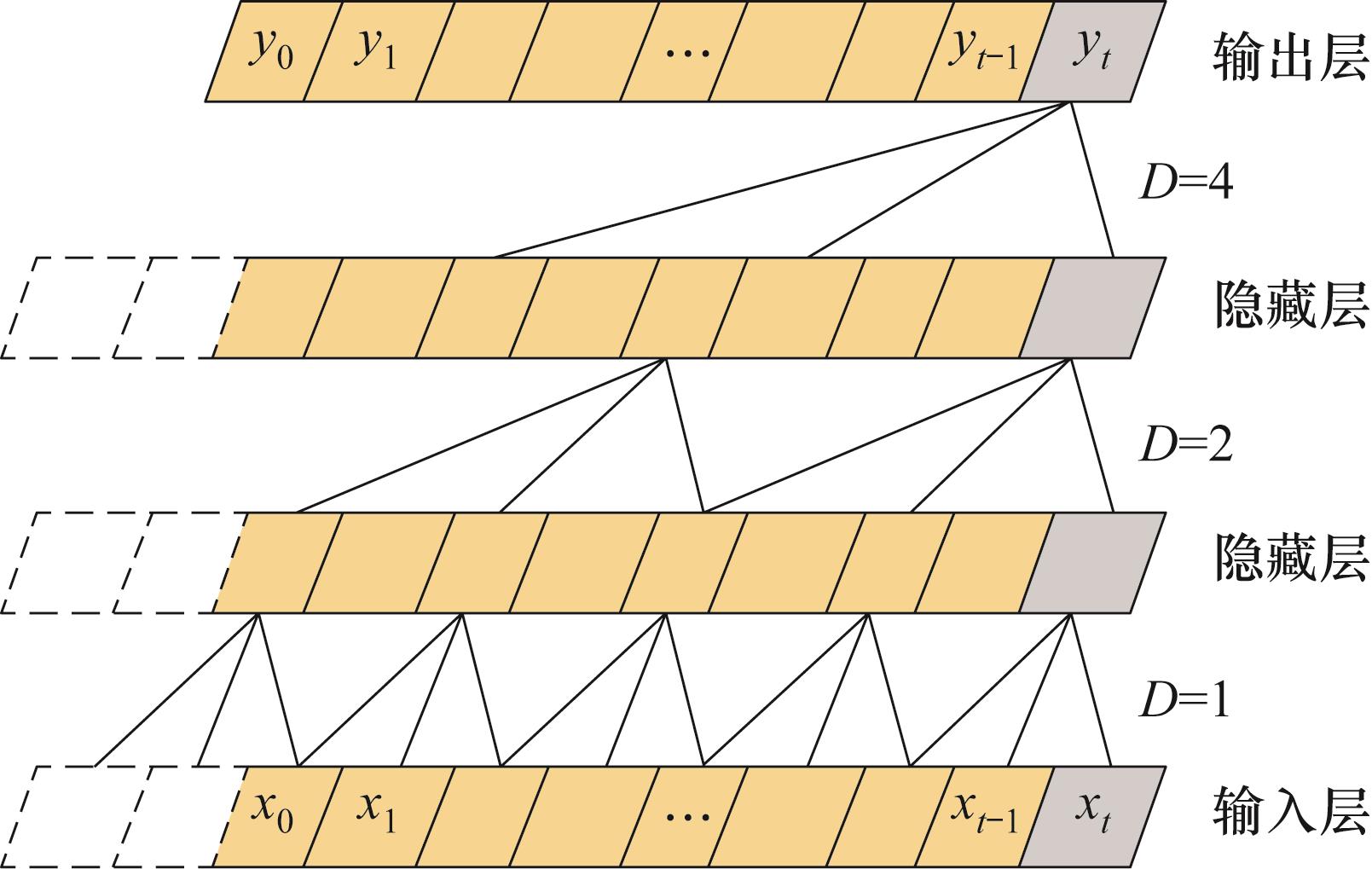
图1 膨胀因果卷积原理图
Fig.1 Schematic diagram of DCC
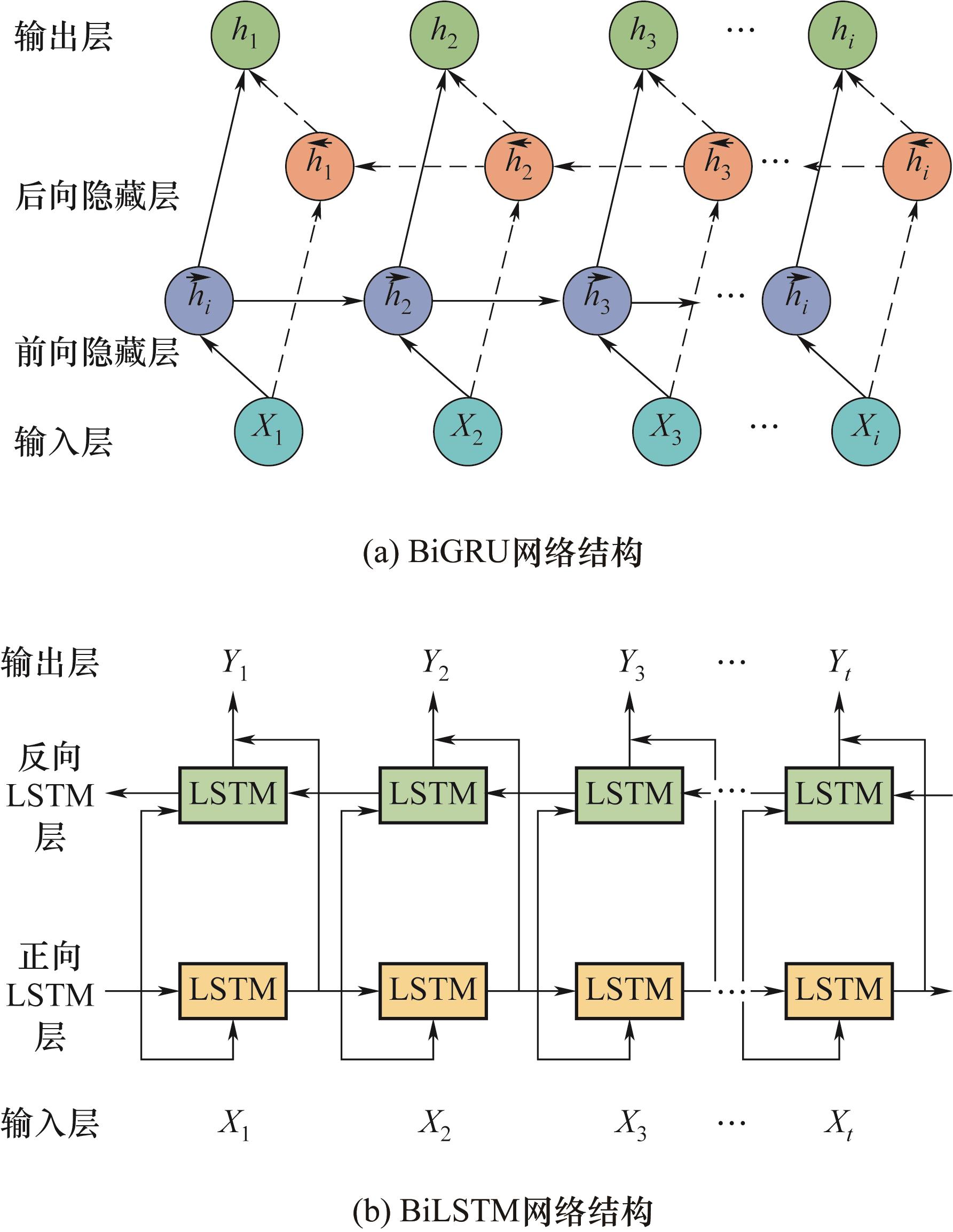
图2 BiGRU和BiLSTM网络结构
Fig.2 Structure of the BiGRU and BiLSTM network

图3 改进DBO算法流程
Fig.3 Flowchart of the improved DBO algorithm
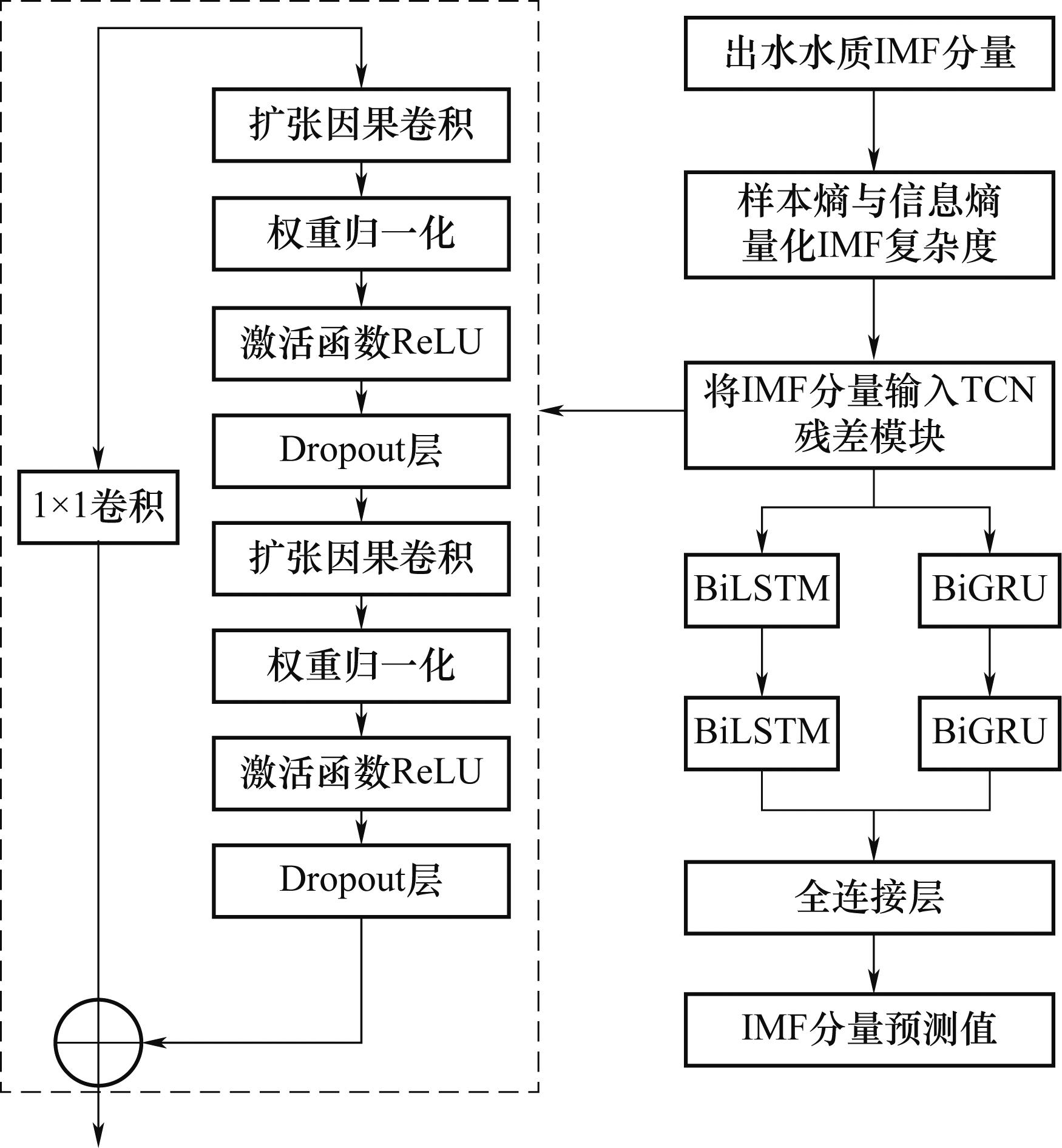
图4 TCN-BiLSTM/BiGRU结构流程
Fig.4 Architecture of the TCN-BiLSTM/BiGRU network
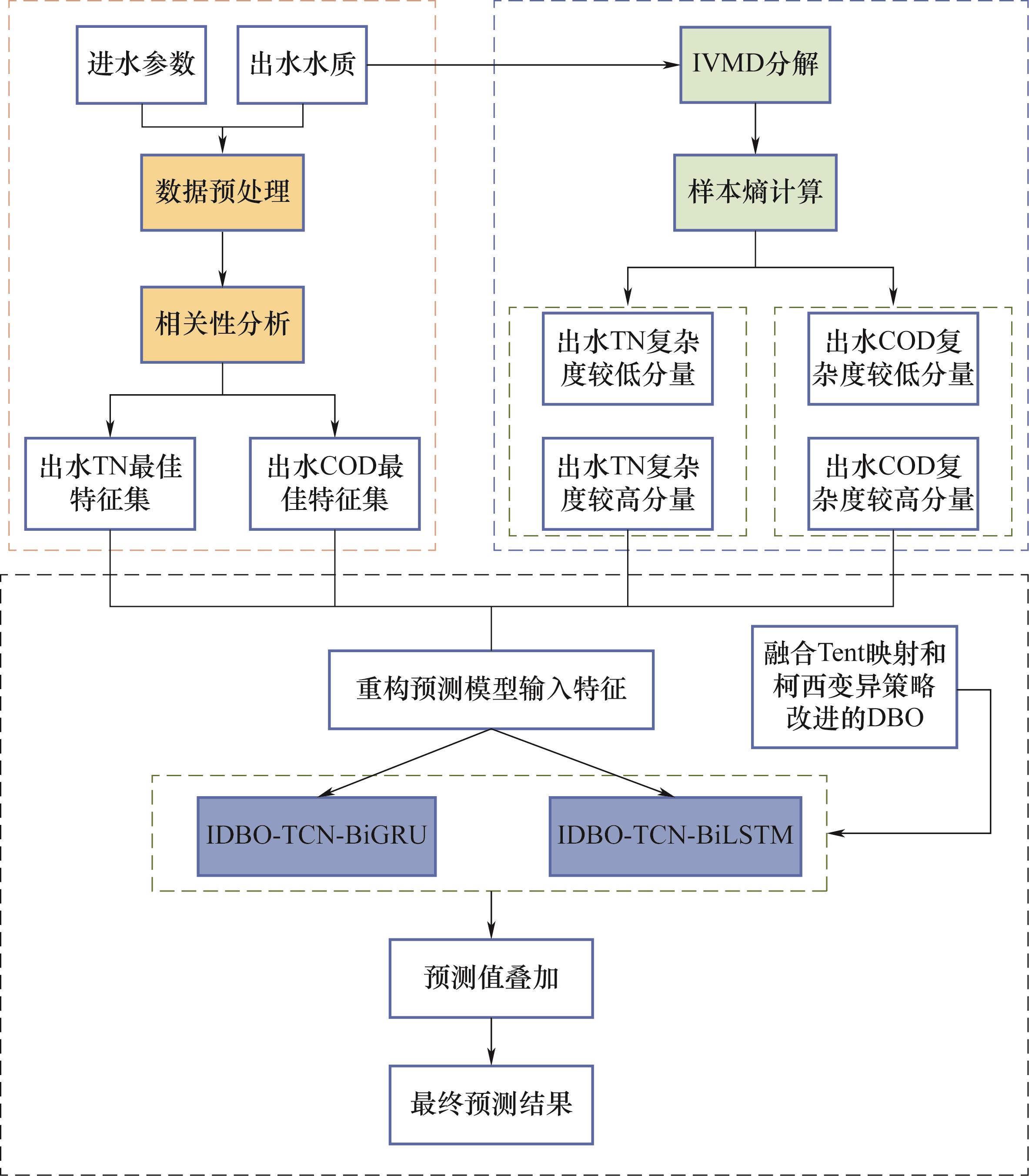
图5 出水水质预测模型流程
Fig.5 Process of effluent water quality prediction model
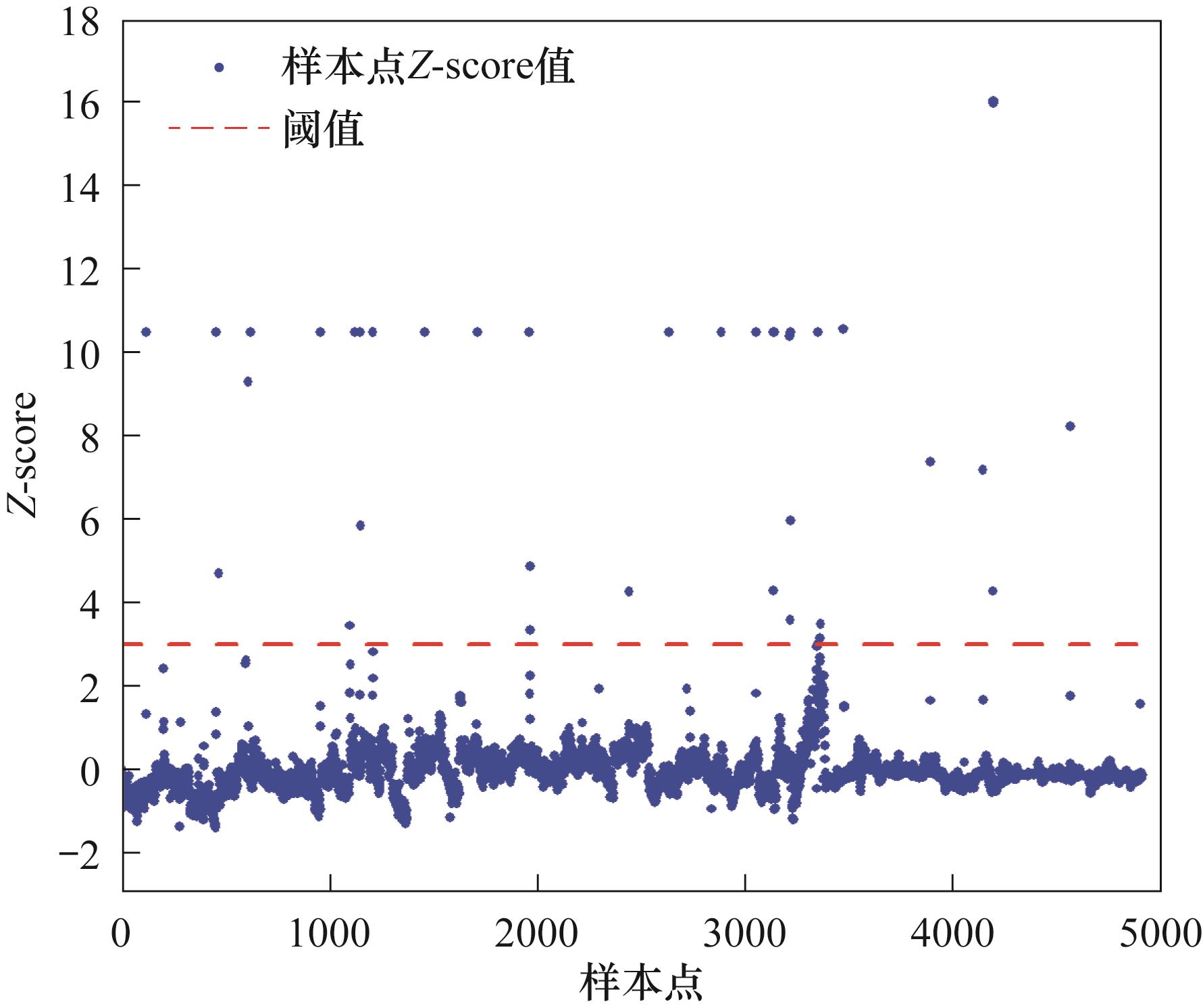
图6 Z-score法判定异常值
Fig.6 The Z-score method determines outliers
| 参数 | 出水COD | 出水TN |
|---|---|---|
| 进水流量 | 0.0246 | 0.0182 |
| 进水COD | 0.1986 | -0.0177 |
| 进水NH3 | -0.0178 | -0.1251 |
| 进水TP | 0.2478 | 0.8195 |
| 进水TN | 0.1722 | 0.4840 |
| 高效池出水TP | 0.0463 | -0.0868 |
| 溶解氧 | 0.1349 | 0.0358 |
| 硝态氮 | 0.0496 | -0.0146 |
| 提升流量 | 0.0043 | -0.0299 |
| 硝化液回流 | 0.0859 | 0.0112 |
| 污泥回流 | 0.0266 | 0.0098 |
| 出水流量 | -0.0105 | -0.0292 |
| 当前加药量 | -0.0121 | 0.0019 |
表1 PCC相关性分析结果
Table 1 Results of PCC correlation analysis
| 参数 | 出水COD | 出水TN |
|---|---|---|
| 进水流量 | 0.0246 | 0.0182 |
| 进水COD | 0.1986 | -0.0177 |
| 进水NH3 | -0.0178 | -0.1251 |
| 进水TP | 0.2478 | 0.8195 |
| 进水TN | 0.1722 | 0.4840 |
| 高效池出水TP | 0.0463 | -0.0868 |
| 溶解氧 | 0.1349 | 0.0358 |
| 硝态氮 | 0.0496 | -0.0146 |
| 提升流量 | 0.0043 | -0.0299 |
| 硝化液回流 | 0.0859 | 0.0112 |
| 污泥回流 | 0.0266 | 0.0098 |
| 出水流量 | -0.0105 | -0.0292 |
| 当前加药量 | -0.0121 | 0.0019 |
| 参数 | 出水COD | 出水TN |
|---|---|---|
| 进水流量 | -0.0556 | 0.0251 |
| 进水COD | 0.1414 | 0.0225 |
| 进水NH3 | 0.0248 | -0.0448 |
| 进水TP | 0.0907 | 0.2182 |
| 进水TN | 0.1185 | 0.2384 |
| 高效池出水TP | 0.1822 | -0.0343 |
| 溶解氧 | 0.3215 | 0.0705 |
| 硝态氮 | 0.0274 | -0.0099 |
| 提升流量 | -0.0646 | 0.0038 |
| 硝化液回流 | 0.0994 | 0.0145 |
| 污泥回流 | -0.0521 | 0.0162 |
| 出水流量 | -0.0513 | -0.0200 |
| 当前加药量 | 0.2004 | -0.0059 |
表2 SCC相关性分析结果
Table 2 Results of SCC correlation analysis
| 参数 | 出水COD | 出水TN |
|---|---|---|
| 进水流量 | -0.0556 | 0.0251 |
| 进水COD | 0.1414 | 0.0225 |
| 进水NH3 | 0.0248 | -0.0448 |
| 进水TP | 0.0907 | 0.2182 |
| 进水TN | 0.1185 | 0.2384 |
| 高效池出水TP | 0.1822 | -0.0343 |
| 溶解氧 | 0.3215 | 0.0705 |
| 硝态氮 | 0.0274 | -0.0099 |
| 提升流量 | -0.0646 | 0.0038 |
| 硝化液回流 | 0.0994 | 0.0145 |
| 污泥回流 | -0.0521 | 0.0162 |
| 出水流量 | -0.0513 | -0.0200 |
| 当前加药量 | 0.2004 | -0.0059 |
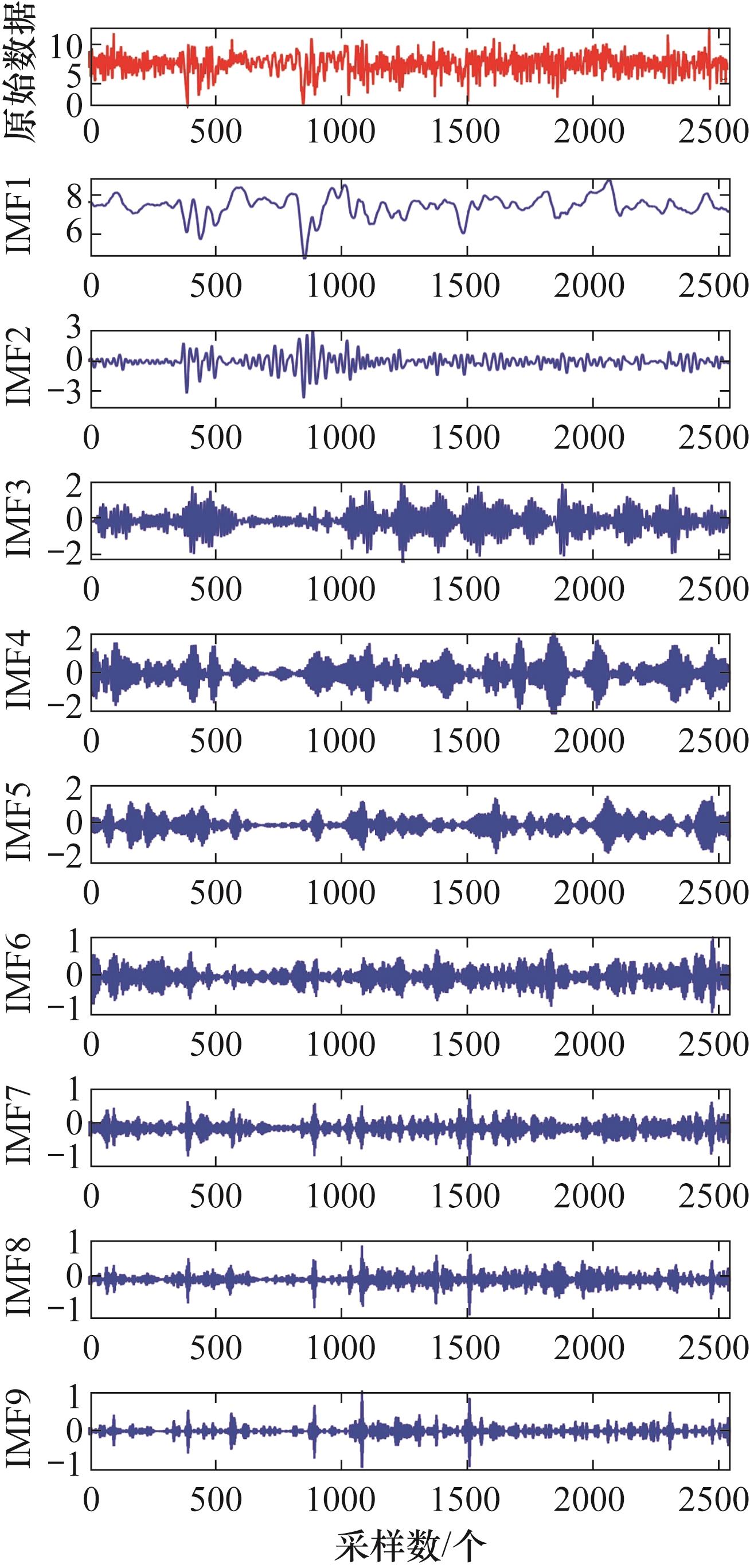
图7 出水TN分解序列
Fig.7 Effluent TN decomposition sequence

图8 出水COD分解序列
Fig.8 Effluent COD decomposition sequence
| 出水TN | 样本熵 | 出水COD | 样本熵 |
|---|---|---|---|
| IMF1 | 0.1438 | IMF1 | 0.0446 |
| IMF2 | 0.4795 | IMF2 | 0.2601 |
| IMF3 | 0.5517 | IMF3 | 0.5427 |
| IMF4 | 0.5161 | IMF4 | 0.5920 |
| IMF5 | 0.4250 | IMF5 | 0.5774 |
| IMF6 | 0.4354 | IMF6 | 0.5716 |
| IMF7 | 0.6852 | IMF7 | 0.7001 |
| IMF8 | 0.6992 | IMF8 | 0.7165 |
| IMF9 | 0.5653 | IMF9 | 0.6845 |
| — | — | IMF10 | 0.6040 |
表3 样本熵结果
Table 3 Sample entropy results
| 出水TN | 样本熵 | 出水COD | 样本熵 |
|---|---|---|---|
| IMF1 | 0.1438 | IMF1 | 0.0446 |
| IMF2 | 0.4795 | IMF2 | 0.2601 |
| IMF3 | 0.5517 | IMF3 | 0.5427 |
| IMF4 | 0.5161 | IMF4 | 0.5920 |
| IMF5 | 0.4250 | IMF5 | 0.5774 |
| IMF6 | 0.4354 | IMF6 | 0.5716 |
| IMF7 | 0.6852 | IMF7 | 0.7001 |
| IMF8 | 0.6992 | IMF8 | 0.7165 |
| IMF9 | 0.5653 | IMF9 | 0.6845 |
| — | — | IMF10 | 0.6040 |
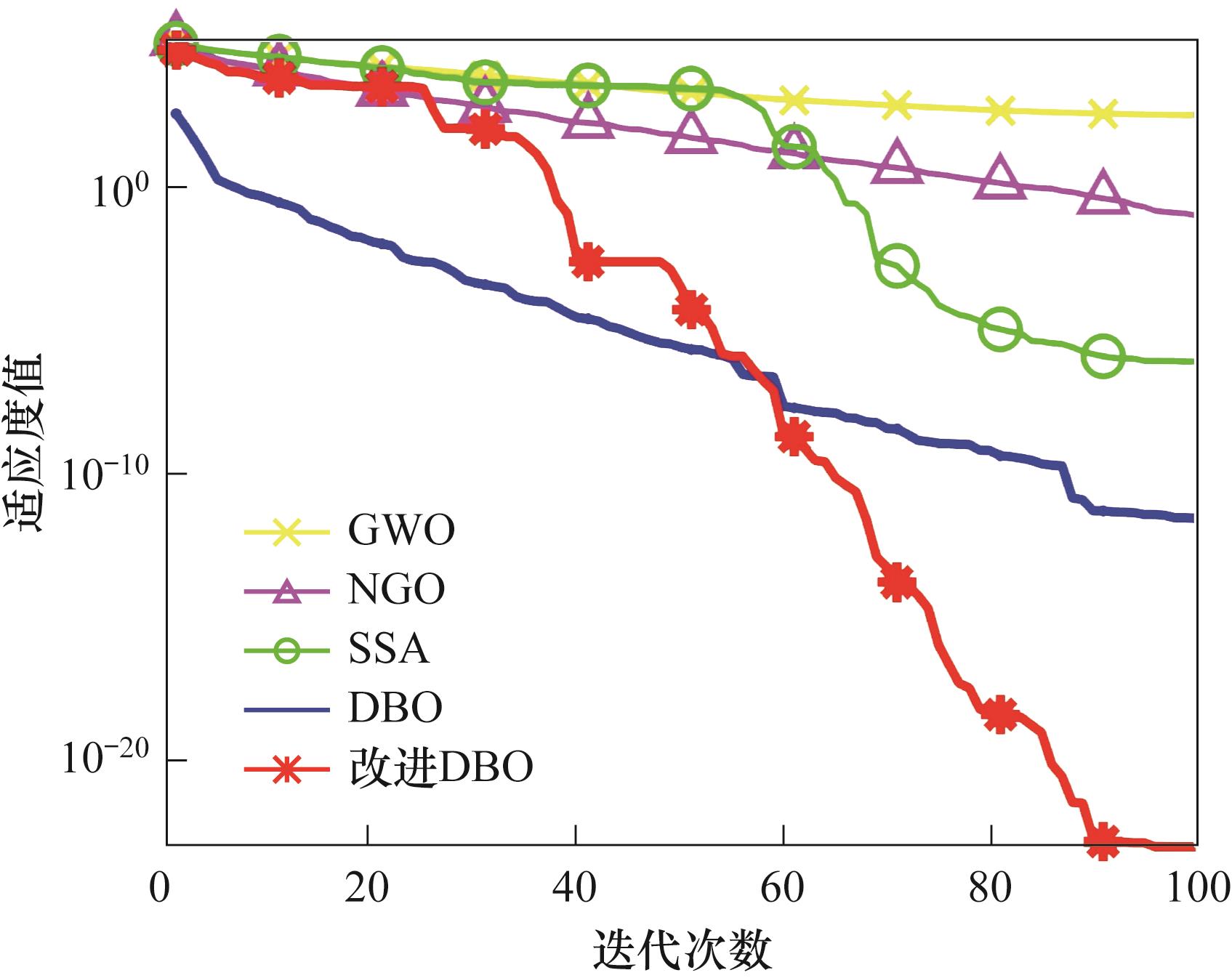
图9 单峰测试函数各模型寻优结果
Fig.9 Optimization results of each model on unimodal test functions
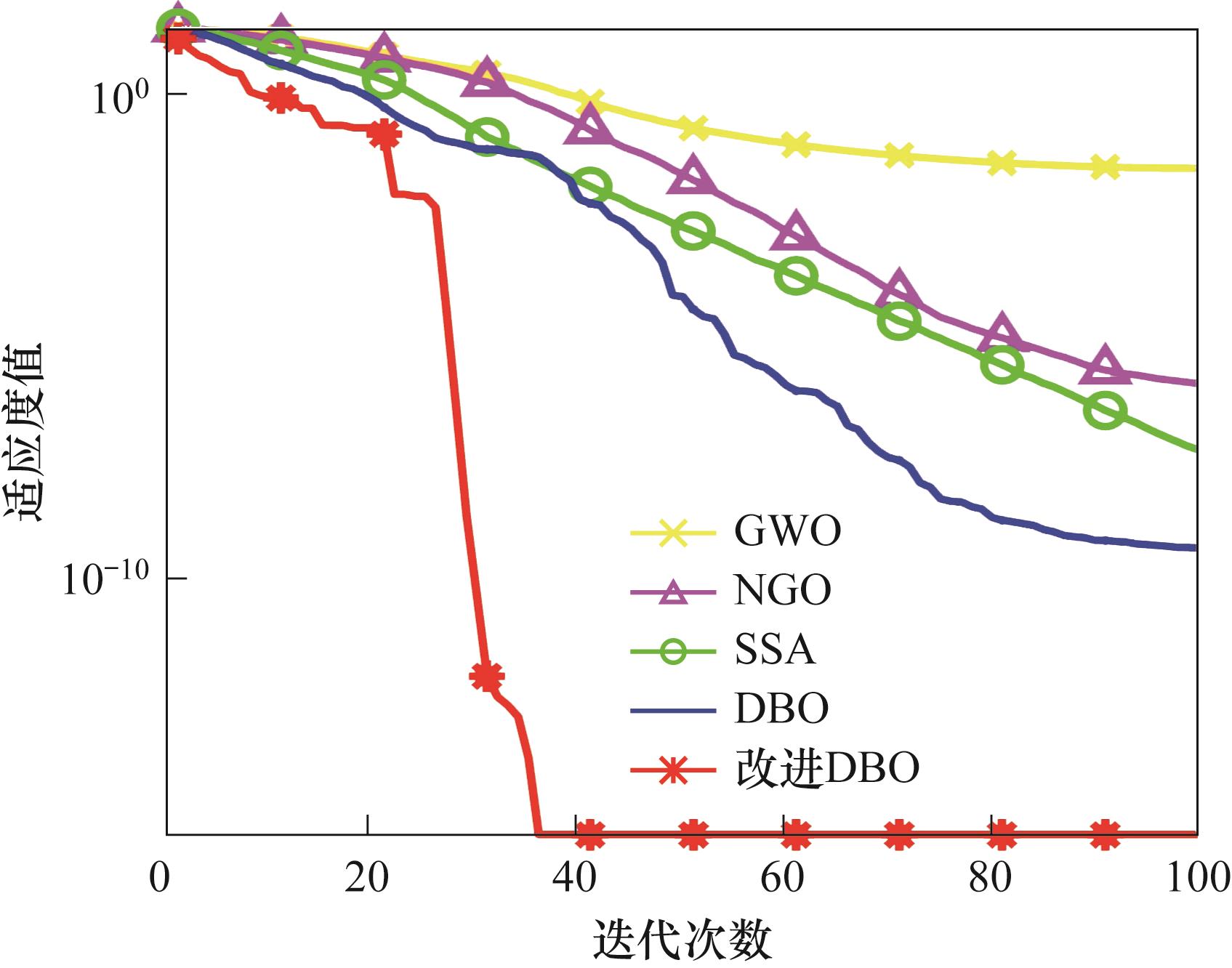
图10 多峰测试函数各模型寻优结果
Fig.10 Optimization results of each model on multimodal test functions
| 测试函数 | 指标 | GWO | NGO | SSA | DBO | 改进DBO |
|---|---|---|---|---|---|---|
| F1(x) | 最优值 | 48.0223 | 7.8662×10⁻³ | 3.7741×10⁻²⁵ | 1.316×10-167 | 0 |
| 平均值 | 312.5071 | 1.2333×10⁻¹ | 6.1839×10⁻⁶ | 4.435×10⁻¹² | 3.3856×10⁻²³ | |
| 标准差 | 191.9652 | 1.725×10⁻¹ | 2.4195×10⁻⁵ | 2.2499×10⁻¹¹ | 1.8543×10⁻²² | |
| F2(x) | 最优值 | 8.2864×10⁻³ | 1.5513×10⁻⁹ | 1.7879×10⁻⁸ | 4.4409×10⁻¹⁶ | 4.4409×10⁻¹⁶ |
| 平均值 | 2.4754×10⁻² | 4.3754×10⁻⁷ | 4.3552×10⁻⁸ | 1.4×10⁻⁹ | 4.4409×10⁻¹⁶ | |
| 标准差 | 8.4283×10⁻³ | 6.9835×10⁻⁷ | 2.4538×10⁻⁸ | 4.9398×10⁻⁹ | 0 |
表4 各算法测试结果对比
Table 4 Comparison of test results of each algorithm
| 测试函数 | 指标 | GWO | NGO | SSA | DBO | 改进DBO |
|---|---|---|---|---|---|---|
| F1(x) | 最优值 | 48.0223 | 7.8662×10⁻³ | 3.7741×10⁻²⁵ | 1.316×10-167 | 0 |
| 平均值 | 312.5071 | 1.2333×10⁻¹ | 6.1839×10⁻⁶ | 4.435×10⁻¹² | 3.3856×10⁻²³ | |
| 标准差 | 191.9652 | 1.725×10⁻¹ | 2.4195×10⁻⁵ | 2.2499×10⁻¹¹ | 1.8543×10⁻²² | |
| F2(x) | 最优值 | 8.2864×10⁻³ | 1.5513×10⁻⁹ | 1.7879×10⁻⁸ | 4.4409×10⁻¹⁶ | 4.4409×10⁻¹⁶ |
| 平均值 | 2.4754×10⁻² | 4.3754×10⁻⁷ | 4.3552×10⁻⁸ | 1.4×10⁻⁹ | 4.4409×10⁻¹⁶ | |
| 标准差 | 8.4283×10⁻³ | 6.9835×10⁻⁷ | 2.4538×10⁻⁸ | 4.9398×10⁻⁹ | 0 |
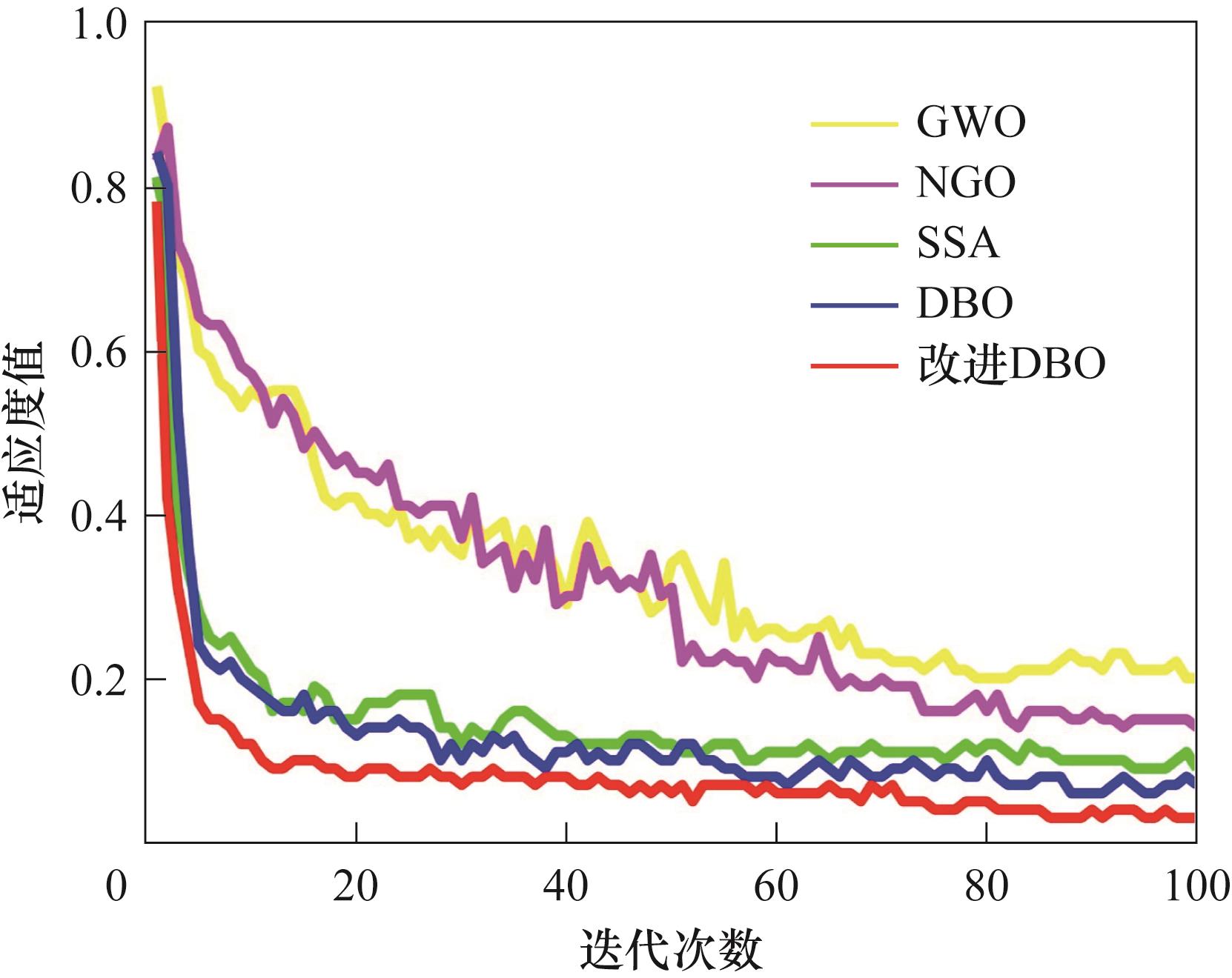
图11 模型寻优结果迭代次数对比
Fig.11 Comparison of iteration counts for optimization results among various models

图12 出水TN序列预测
Fig.12 The prediction of effluent TN concentration sequence
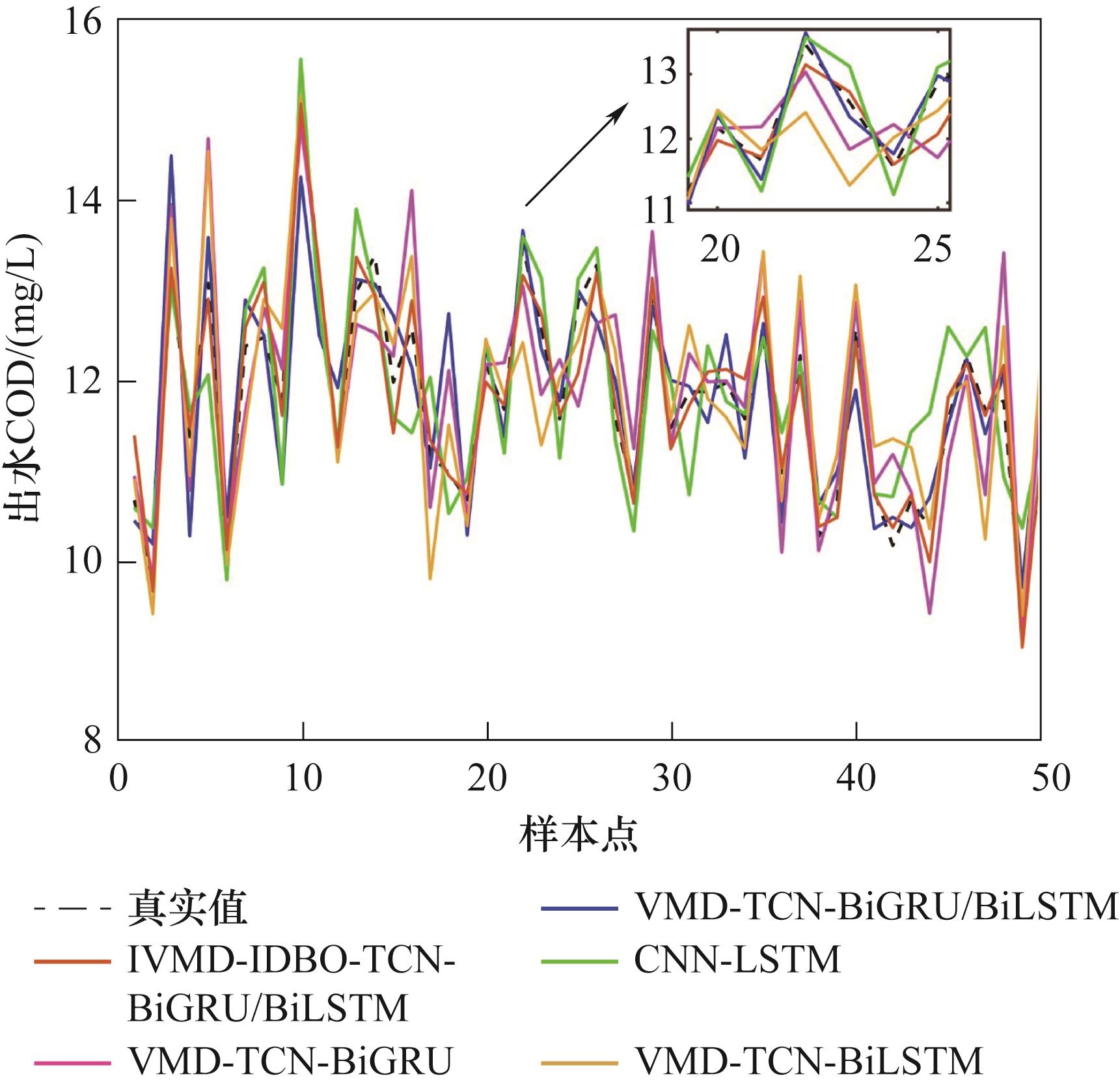
图13 出水COD序列预测
Fig.13 The prediction of effluent COD concentration sequence
| 预测输出 | 模型 | RMSE/(mg/L) | MAE/(mg/L) | R2 |
|---|---|---|---|---|
| 出水TN | CNN-LSTM | 0.42492 | 0.31627 | 0.91645 |
| VMD-TCN-BiGRU | 0.41342 | 0.31322 | 0.92091 | |
| VMD-TCN-BiLSTM | 0.39015 | 0.30686 | 0.92956 | |
| VMD-TCN-BiGRU/BiLSTM | 0.37527 | 0.28248 | 0.93483 | |
| IVMD-IDBO-TCN-BiGRU/BiLSTM | 0.22311 | 0.15872 | 0.97696 | |
| 出水COD | CNN-LSTM | 0.82814 | 0.65546 | 0.91116 |
| VMD-TCN-BiGRU | 0.78279 | 0.62071 | 0.92101 | |
| VMD-TCN-BiLSTM | 0.73040 | 0.57513 | 0.93123 | |
| VMD-TCN-BiGRU/BiLSTM | 0.60840 | 0.48086 | 0.95228 | |
| IVMD-IDBO-TCN-BiGRU/BiLSTM | 0.39410 | 0.29148 | 0.97999 |
表5 5种模型预测出水TN和COD结果测试集指标对比
Table 5 Comparison of test set metrics for TN and COD prediction results from five models
| 预测输出 | 模型 | RMSE/(mg/L) | MAE/(mg/L) | R2 |
|---|---|---|---|---|
| 出水TN | CNN-LSTM | 0.42492 | 0.31627 | 0.91645 |
| VMD-TCN-BiGRU | 0.41342 | 0.31322 | 0.92091 | |
| VMD-TCN-BiLSTM | 0.39015 | 0.30686 | 0.92956 | |
| VMD-TCN-BiGRU/BiLSTM | 0.37527 | 0.28248 | 0.93483 | |
| IVMD-IDBO-TCN-BiGRU/BiLSTM | 0.22311 | 0.15872 | 0.97696 | |
| 出水COD | CNN-LSTM | 0.82814 | 0.65546 | 0.91116 |
| VMD-TCN-BiGRU | 0.78279 | 0.62071 | 0.92101 | |
| VMD-TCN-BiLSTM | 0.73040 | 0.57513 | 0.93123 | |
| VMD-TCN-BiGRU/BiLSTM | 0.60840 | 0.48086 | 0.95228 | |
| IVMD-IDBO-TCN-BiGRU/BiLSTM | 0.39410 | 0.29148 | 0.97999 |
| 预测对象 | 模型 | RMSE/(mg/L) | MAE/(mg/L) | R2 |
|---|---|---|---|---|
| 出水COD | model1 | 0.71046 | 0.546 | 0.93497 |
| model2 | 0.5985 | 0.4817 | 0.95382 | |
| model3 | 0.56179 | 0.44734 | 0.95971 | |
| model* | 0.39410 | 0.29148 | 0.97999 | |
| 出水TN | model1 | 0.38107 | 0.29535 | 0.93192 |
| model2 | 0.32722 | 0.25276 | 0.94989 | |
| model3 | 0.28058 | 0.22293 | 0.96322 | |
| model* | 0.22311 | 0.15872 | 0.97696 |
表6 消融实验预测评价指标
Table 6 Prediction evaluation indicators for ablation experiments
| 预测对象 | 模型 | RMSE/(mg/L) | MAE/(mg/L) | R2 |
|---|---|---|---|---|
| 出水COD | model1 | 0.71046 | 0.546 | 0.93497 |
| model2 | 0.5985 | 0.4817 | 0.95382 | |
| model3 | 0.56179 | 0.44734 | 0.95971 | |
| model* | 0.39410 | 0.29148 | 0.97999 | |
| 出水TN | model1 | 0.38107 | 0.29535 | 0.93192 |
| model2 | 0.32722 | 0.25276 | 0.94989 | |
| model3 | 0.28058 | 0.22293 | 0.96322 | |
| model* | 0.22311 | 0.15872 | 0.97696 |
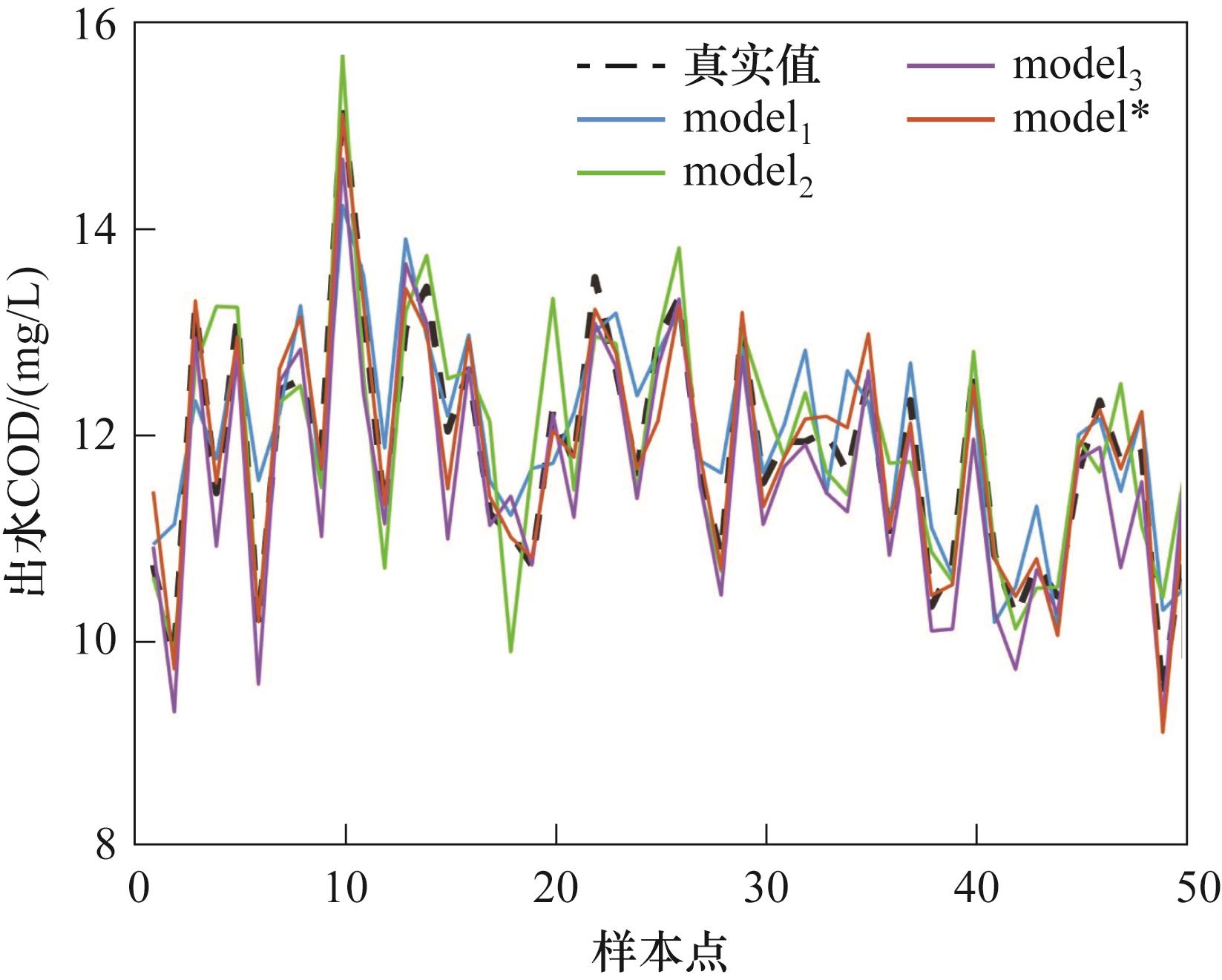
图14 出水COD预测消融实验对比曲线
Fig.14 Comparison curves of effluent COD prediction ablation experiments
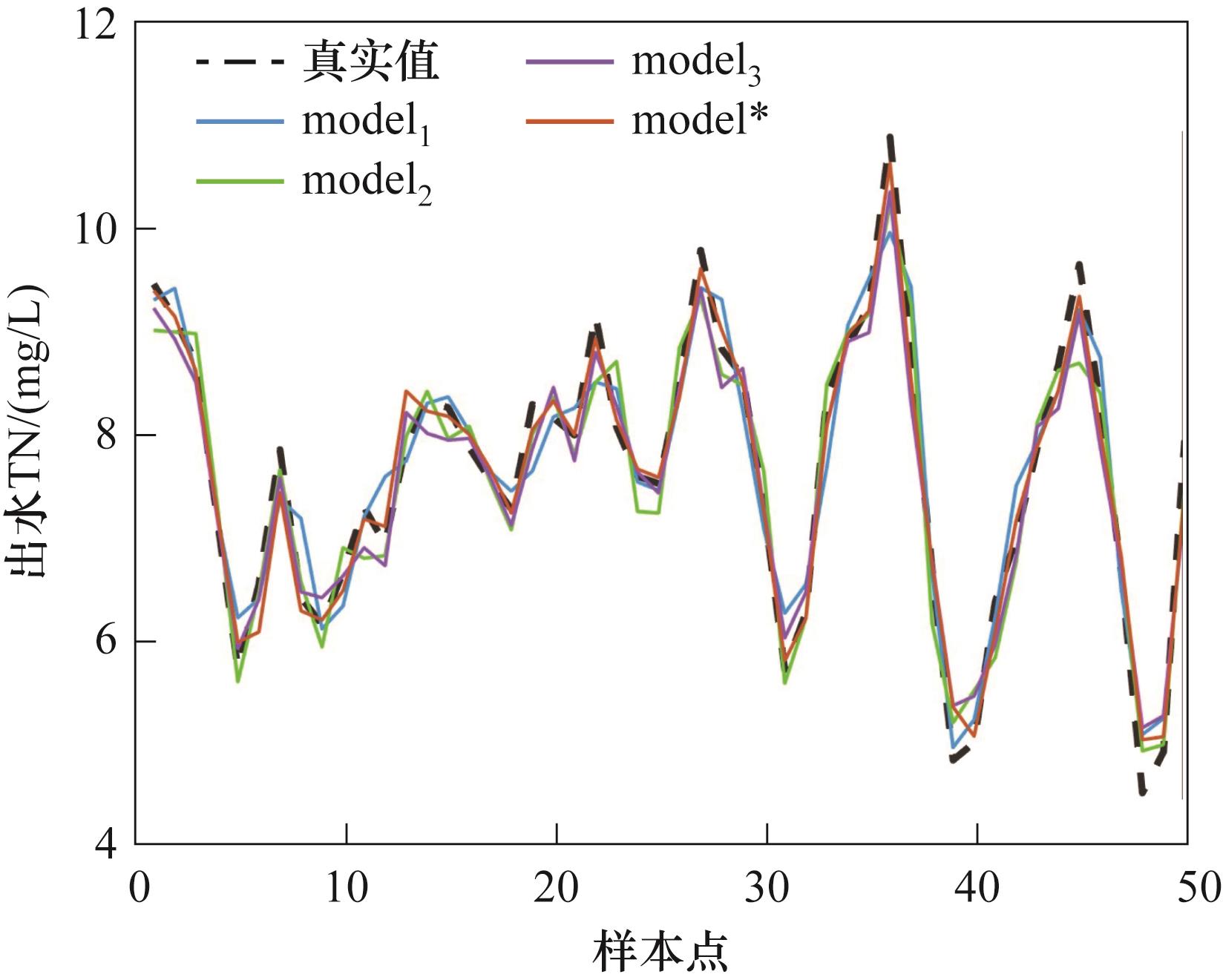
图15 出水TN预测消融实验对比曲线
Fig.15 Comparison curves of effluent TN prediction ablation experiments
| [1] | Deng T A, Chau K W, Duan H F. Machine learning based marine water quality prediction for coastal hydro-environment management[J]. Journal of Environmental Management, 2021, 284: 112051. |
| [2] | Ly Q V, Truong V H, Ji B X, et al. Exploring potential machine learning application based on big data for prediction of wastewater quality from different full-scale wastewater treatment plants[J]. Science of the Total Environment, 2022, 832: 154930. |
| [3] | 陶虎春, 佟浩, 王健, 等. 碳氮比对A/O-MBR工艺中污水脱氮除磷的影响研究[J]. 北京大学学报(自然科学版), 2022, 58(4): 680-686. |
| Tao H C, Tong H, Wang J, et al. Effects of carbon-to-nitrogen ratio on nitrogen and phosphate removal in A/O-MBR wastewater treatment process[J]. Acta Scientiarum Naturalium Universitatis Pekinensis, 2022, 58(4): 680-686. | |
| [4] | 李爱民, 范猛, 秦光铎, 等. 卷积神经网络模型的遥感反演水质参数COD[J]. 光谱学与光谱分析, 2023, 43(2): 651-656. |
| Li A M, Fan M, Qin G D, et al. Water quality parameter COD retrieved from remote sensing based on convolutional neural network model[J]. Spectroscopy and Spectral Analysis, 2023, 43(2): 651-656. | |
| [5] | 张东, 葛文彪, 赵爱萍, 等. 城镇生活污水处理厂出水硝酸盐浓度及同位素组成的影响因素[J]. 环境科学, 2023, 44(6): 3301-3308. |
| Zhang D, Ge W B, Zhao A P, et al. Factors affecting nitrate concentrations and nitrogen and oxygen isotope values of effluents from waste water treatment plant[J]. Environmental Science, 2023, 44(6): 3301-3308. | |
| [6] | 郭鑫, 李文静, 乔俊飞. 基于自组织模块化神经网络的污水处理过程出水参数预测[J]. 化工学报, 2024, 75(9): 3242-3254. |
| Guo X, Li W J, Qiao J F. Prediction of effluent parameters in wastewater treatment process using self-organizing modular neural network[J]. CIESC Journal, 2024, 75(9): 3242-3254. | |
| [7] | 张翔宇, 范业弘, 朱晗彬, 等. 城镇中小规模污水处理厂碳排放分析及碳削减对策[J]. 环境科学, 2025, 46(1): 107-117. |
| Zhang X Y, Fan Y H, Zhu H B, et al. Carbon emission analysis and carbon reduction strategy of small and medium-scale municipal wastewater treatment plants in cities and towns[J]. Environmental Science, 2025, 46(1): 107-117. | |
| [8] | 柴伟, 郭龙航, 池彬彬. 污水处理厂出水水质变量区间预测建模[J]. 化工学报, 2019, 70(9): 3449-3457. |
| Chai W, Guo L H, Chi B B. Interval model for predicting effluent quality variables of wastewater treatment plants[J]. CIESC Journal, 2019, 70(9): 3449-3457. | |
| [9] | 肖红军, 刘乙奇, 黄道平. 面向污水处理的动态变分贝叶斯混合因子故障诊断[J]. 控制理论与应用, 2016, 33(11): 1519-1526. |
| Xiao H J, Liu Y Q, Huang D P. Dynamic fault diagnosis via variational Bayesian mixture factor analysis with application to wastewater treatment[J]. Control Theory & Applications, 2016, 33(11): 1519-1526. | |
| [10] | Wang R, Yu Y D, Chen Y W, et al. Model construction and application for effluent prediction in wastewater treatment plant: data processing method optimization and process parameters integration[J]. Journal of Environmental Management, 2022, 302: 114020. |
| [11] | 许玉格, 刘莉, 罗飞. 基于自优化的多属性高斯核函数相关向量机方法[J]. 华南理工大学学报(自然科学版), 2017, 45(1): 88-94. |
| Xu Y G, Liu L, Luo F. A self-optimal relevance vector machine with multiple-attribute Gaussian kernel functions[J]. Journal of South China University of Technology (Natural Science Edition), 2017, 45(1): 88-94. | |
| [12] | Jana D K, Bhunia P, Das Adhikary S, et al. Optimization of effluents using artificial neural network and support vector regression in detergent industrial wastewater treatment[J]. Cleaner Chemical Engineering, 2022, 3: 100039. |
| [13] | Lotfi K, Bonakdari H, Ebtehaj I, et al. Predicting wastewater treatment plant quality parameters using a novel hybrid linear-nonlinear methodology[J]. Journal of Environmental Management, 2019, 240: 463-474. |
| [14] | El-Rawy M, Abd-Ellah M K, Fathi H, et al. Forecasting effluent and performance of wastewater treatment plant using different machine learning techniques[J]. Journal of Water Process Engineering, 2021, 44: 102380. |
| [15] | Farhi N, Kohen E, Mamane H, et al. Prediction of wastewater treatment quality using LSTM neural network[J]. Environmental Technology & Innovation, 2021, 23: 101632. |
| [16] | Xie Y F, Chen Y Q, Wei Q, et al. A hybrid deep learning approach to improve real-time effluent quality prediction in wastewater treatment plant[J]. Water Research, 2024, 250: 121092. |
| [17] | Liu T X, Liu W, Liu Z H, et al. Ensemble water quality forecasting based on decomposition, sub-model selection, and adaptive interval[J]. Environmental Research, 2023, 237: 116938. |
| [18] | 张京新, 何皎洁, 蔡庆旺, 等. 基于二次分解和BiLSTM的污水厂出水COD浓度预测[J]. 化工学报, 2025, 76(6): 2859-2871. |
| Zhang J X, He J J, Cai Q W, et al. Prediction of COD concentration in effluent of sewage plant based on secondary decomposition and BiLSTM[J]. CIESC Journal, 2025, 76(6): 2859-2871. | |
| [19] | Hwangbo S, Al R, Chen X M, et al. Integrated model for understanding N2O emissions from wastewater treatment plants: a deep learning approach[J]. Environmental Science & Technology, 2021, 55(3): 2143-2151. |
| [20] | 雷富强, 成政, 薛正雨, 等. 基于改进蜣螂优化算法的巷战搜救路径规划[J]. 计算机工程与应用, 2025: 61(19): 324-339. |
| Lei F Q, Cheng Z, Xue Z Y, et al. Path planning of street fighting search and rescue based on improved dung beetle optimization algorithm[J]. Computer Engineering and Applications, 2025: 61(19): 324-339. | |
| [21] | 史彭珍, 魏霞, 张春梅, 等. 基于VMD-BOA-LSSVM-AdaBoost的短期风电功率预测[J]. 太阳能学报, 2024, 45(1): 226-233. |
| Shi P Z, Wei X, Zhang C M, et al. Short-term wind power prediction based on VMD-BOA-LSSVM-AdaBoost[J]. Acta Energiae Solaris Sinica, 2024, 45(1): 226-233. | |
| [22] | 王君瑞, 吴新举, 赵东琦, 等. 基于WOA-VMD与PSO-SVM的锂离子电池内短路故障诊断方法[J]. 工程科学学报, 2023, 45(12): 2162-2172. |
| Wang J R, Wu X J, Zhao D Q, et al. Research on internal short-circuit fault diagnosis methods for lithium-ion batteries based on WOA-VMD and PSO-SVM[J]. Chinese Journal of Engineering, 2023, 45(12): 2162-2172. | |
| [23] | 宋江涛, 崔双喜, 樊小朝, 等. 基于SGMD-SE与优化TCN-BiLSTM/BiGRU的超短期风功率预测[J]. 太阳能学报, 2024, 45(10): 588-596. |
| Song J T, Cui S X, Fan X C, et al. Ultra-short-term wind power prediction based on SGMD-SE and optimized TCN-BiLSTM/BiGRU[J]. Acta Energiae Solaris Sinica, 2024, 45(10): 588-596. | |
| [24] | 温廷新, 郭晓赛. 基于特征组合的ECA-TCN光伏发电功率预测模型[J]. 太阳能学报, 2024, 45(12): 94-100. |
| Wen T X, Guo X S. A photovoltaic power prediction model based on feature combination and ECA-TCN[J]. Acta Energiae Solaris Sinica, 2024, 45(12):94-100. | |
| [25] | 王文川, 顾淼. 基于SGMD-SE-AVOA-LSTM耦合模型的月径流预测[J]. 应用基础与工程科学学报, 2024, 32(6): 1755-1771. |
| Wang W C, Gu M. Monthly runoff prediction based on SGMD-SE-AVOA-LSTM coupling model[J]. Journal of Basic Science and Engineering, 2024, 32(6): 1755-1771. | |
| [26] | 李东阳, 权紫轩, 张彪, 等. 基于SSA-LSTM的海洋条件下稳压器液位回归预测研究[J]. 核动力工程, 2025, 46(2): 293-299. |
| Li D Y, Quan Z X, Zhang B, et al. Study on regression prediction of regulator liquid level under ocean conditions based on SSA-LSTM[J]. Nuclear Power Engineering, 2025, 46(2): 293-299. | |
| [27] | Zhong K Y, Li Y E, Huan W W, et al. A novel near infrared spectroscopy analytical strategy for soil nutrients detection based on the DBO-SVR method[J]. Spectrochimica Acta Part A: Molecular and Biomolecular Spectroscopy, 2024, 315: 124259. |
| [28] | 吴亚中, 陈璐, 马强, 等. 多策略增强的蜣螂优化算法及其工程应用[J]. 华中科技大学学报(自然科学版), 2025, 53(2): 95-103. |
| Wu Y Z, Chen L, Ma Q, et al. Multi-strategy enhanced dung beetle optimizer algorithm and its engineering application[J]. Journal of Huazhong University of Science and Technology (Natural Science Edition), 2025, 53(2): 95-103. | |
| [29] | Xue J K, Shen B. Dung beetle optimizer: a new meta-heuristic algorithm for global optimization[J]. The Journal of Supercomputing, 2023, 79(7): 7305-7336. |
| [30] | 吐松江·卡日, 雷柯松, 马小晶, 等. 基于LSTM-Attention和CNN-BiGRU误差修正的光伏功率预测[J]. 太阳能学报, 2024, 45(12): 85-93. |
| Kari·Tusongjiang, Lei K S, Ma X J, et al. photovoltaic power prediction based on LSTM-Attention and CNN-BiGRU error correction[J]. Acta Energiae Solaris Sinica, 2024, 45(12): 85-93. | |
| [31] | 陈勇刚, 刘康妮, 王帅. 基于BiGRU-Attention改进的航空设备故障知识图谱构建[J]. 航空学报, 2024, 45(18): 168-181. |
| Chen Y G, Liu K N, Wang S. Fault knowledge graph construction for aviation equipment based on BiGRU-Attention improvement[J]. Acta Aeronautica et Astronautica Sinica, 2024, 45(18): 168-181. | |
| [32] | 张殿华, 李贺, 武文腾, 等. 基于Stacking集成学习的热轧带钢凸度诊断模型[J]. 中南大学学报(自然科学版), 2024, 55(10): 3673-3682. |
| Zhang D H, Li H, Wu W T, et al. Crown diagnosis model of hot-rolled strip crown based onStacking ensemble learning[J]. Journal of Central South University (Science and Technology), 2024, 55(10): 3673-3682. |
| [1] | 沙鑫权, 胡然, 丁磊, 蒋珍华, 吴亦农. 空间用单机两级有阀线性压缩机研制及测试[J]. 化工学报, 2025, 76(S1): 114-122. |
| [2] | 燕子腾, 詹飞龙, 丁国良. 空调用套管式分流器结构设计及分流效果验证[J]. 化工学报, 2025, 76(S1): 152-159. |
| [3] | 密晓光, 孙国刚, 程昊, 张晓慧. 印刷电路板式天然气冷却器性能仿真模型和验证[J]. 化工学报, 2025, 76(S1): 426-434. |
| [4] | 汪思远, 刘国强, 熊通, 晏刚. 窗式空调器轴流风机的风速非均匀分布特性及其对冷凝器流路优化设计的影响规律[J]. 化工学报, 2025, 76(S1): 205-216. |
| [5] | 郭纪超, 徐肖肖, 孙云龙. 基于植物工厂中的CO2浓度气流模拟及优化研究[J]. 化工学报, 2025, 76(S1): 237-245. |
| [6] | 石一帆, 柯钢, 陈浩, 黄孝胜, 叶芳, 李成娇, 郭航. 大型高低温环境实验室温度控制仿真[J]. 化工学报, 2025, 76(S1): 268-280. |
| [7] | 孔繁臣, 张硕, 唐明生, 邹慧明, 胡舟航, 田长青. 二氧化碳直线压缩机气体轴承模拟[J]. 化工学报, 2025, 76(S1): 281-288. |
| [8] | 何婷, 张开, 林文胜, 陈利琼, 陈家富. 沼气超临界压力低温脱碳-液化耦合流程研究[J]. 化工学报, 2025, 76(S1): 418-425. |
| [9] | 田鹏, 张忠林, 任超, 孟国超, 郝晓刚, 刘叶刚, 侯起旺, ABUDULA Abuliti, 官国清. 基于自热再生的一种低温甲醇洗工艺建模与优化[J]. 化工学报, 2025, 76(9): 4601-4612. |
| [10] | 郭旭, 贾继宁, 姚克俭. 基于优化CNN-BiLSTM神经网络的间歇精馏过程建模[J]. 化工学报, 2025, 76(9): 4613-4629. |
| [11] | 王杰, 林渠成, 张先明. 基于分解算法的混合气体多级膜分离系统全局优化[J]. 化工学报, 2025, 76(9): 4670-4682. |
| [12] | 娄岚浩, 杨立鹏, 杨晓光. 锂离子电池电化学机理模型参数辨识研究综述[J]. 化工学报, 2025, 76(9): 4369-4382. |
| [13] | 曹潇风, 张华海, 王江云, 王利民. 锥形气体层流元件结构设计及流动特性研究[J]. 化工学报, 2025, 76(9): 4440-4448. |
| [14] | 周轶磊, 李智, 彭鑫. 基于代理模型的连续重整反应过程自优化控制结构设计[J]. 化工学报, 2025, 76(9): 4499-4511. |
| [15] | 赵婧, 董书辰, 李高洋, 黄友科, 石浩森, 缪舒文, 谭辰妍, 朱唐琦, 李永帅, 潘慧, 凌昊. 基于电化学模型的电池性能模拟与优化[J]. 化工学报, 2025, 76(9): 4922-4932. |
| 阅读次数 | ||||||
|
全文 |
|
|||||
|
摘要 |
|
|||||
 京公网安备 11010102001995号