CIESC Journal ›› 2025, Vol. 76 ›› Issue (6): 2626-2637.DOI: 10.11949/0438-1157.20241128
• Fluid dynamics and transport phenomena • Previous Articles Next Articles
Xiaotong XIANG( ), Xudong DUAN, Simin WANG()
Received:2024-10-12
Revised:2024-11-22
Online:2025-07-09
Published:2025-06-25
Contact:
Simin WANG
向晓彤(), 段旭东, 王斯民()
通讯作者:
王斯民
作者简介:向晓彤(2002—),男,硕士研究生,xiangxiaotong27@stu.xjtu.edu.cn
基金资助:CLC Number:
Xiaotong XIANG, Xudong DUAN, Simin WANG. Research on performance of PEM electrolyzer driven by multi-objective optimization[J]. CIESC Journal, 2025, 76(6): 2626-2637.
向晓彤, 段旭东, 王斯民. 多目标优化驱动的PEM电解槽性能研究[J]. 化工学报, 2025, 76(6): 2626-2637.
Add to citation manager EndNote|Ris|BibTeX
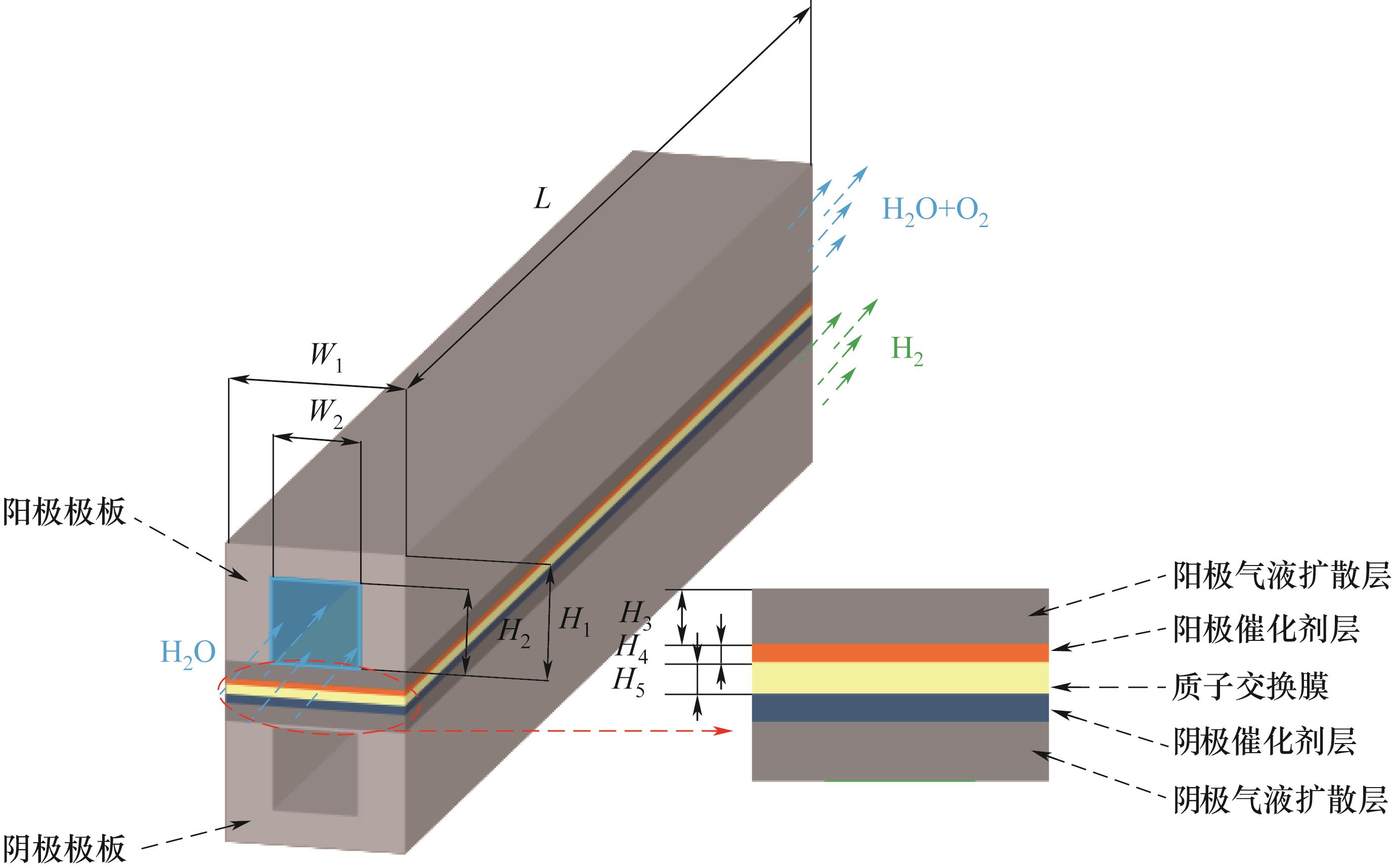
Fig.1 Structure diagram of PEM electrolyzer
| 结构参数 | 数值 |
|---|---|
| 电解槽长度L/mm | 52[ |
| 电解槽宽度W1/mm | 3[ |
| 双极板高度H1/mm | 3 |
| 流道高度H2/mm | 1[ |
| 流道宽度W2/mm | 1[ |
| 气液扩散层厚度H3/mm | 0.3[ |
| 催化剂层厚度H4/mm | 0.005[ |
| 质子交换膜厚度H5/mm | 0.127[ |
| 电解活性面积A/m2 | 1.56×10⁻⁴ |
Table 1 Structural parameters of PEM electrolyzer
| 结构参数 | 数值 |
|---|---|
| 电解槽长度L/mm | 52[ |
| 电解槽宽度W1/mm | 3[ |
| 双极板高度H1/mm | 3 |
| 流道高度H2/mm | 1[ |
| 流道宽度W2/mm | 1[ |
| 气液扩散层厚度H3/mm | 0.3[ |
| 催化剂层厚度H4/mm | 0.005[ |
| 质子交换膜厚度H5/mm | 0.127[ |
| 电解活性面积A/m2 | 1.56×10⁻⁴ |

Fig.2 Multi-objective optimization flow chart
| 物理参数 | 数值 |
|---|---|
| 液态水温度T/K | 333.15[ |
| 液态水质量流量 | 4×10⁻⁴[ |
| 阴阳极流道出口背压P/Pa | 101325[ |
| 操作压力 | 101325[ |
| 电解电压 | 1.73 |
| 开路电压/V | 1.2 |
| 阳极参考交换电流密度 | 1×10⁻⁶[ |
| 阴极参考交换电流密度 | 100 |
| 阳极活化能 | 62836[ |
| 阴极活化能 | 24359[ |
| 电荷转移系数 | 0.5[ |
Table 2 Physical parameters of PEM electrolyzer
| 物理参数 | 数值 |
|---|---|
| 液态水温度T/K | 333.15[ |
| 液态水质量流量 | 4×10⁻⁴[ |
| 阴阳极流道出口背压P/Pa | 101325[ |
| 操作压力 | 101325[ |
| 电解电压 | 1.73 |
| 开路电压/V | 1.2 |
| 阳极参考交换电流密度 | 1×10⁻⁶[ |
| 阴极参考交换电流密度 | 100 |
| 阳极活化能 | 62836[ |
| 阴极活化能 | 24359[ |
| 电荷转移系数 | 0.5[ |
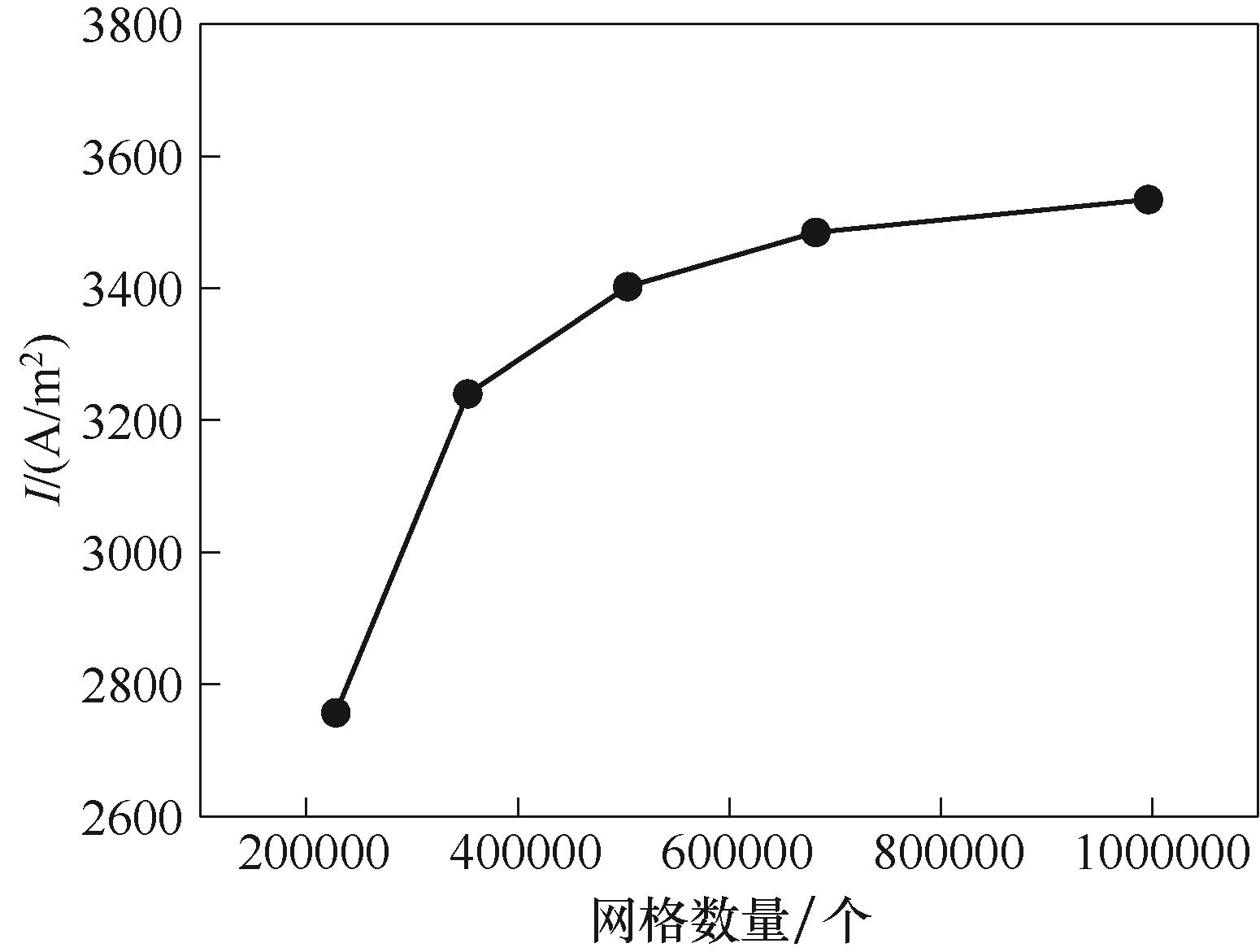
Fig.3 Grid independence analysis curve
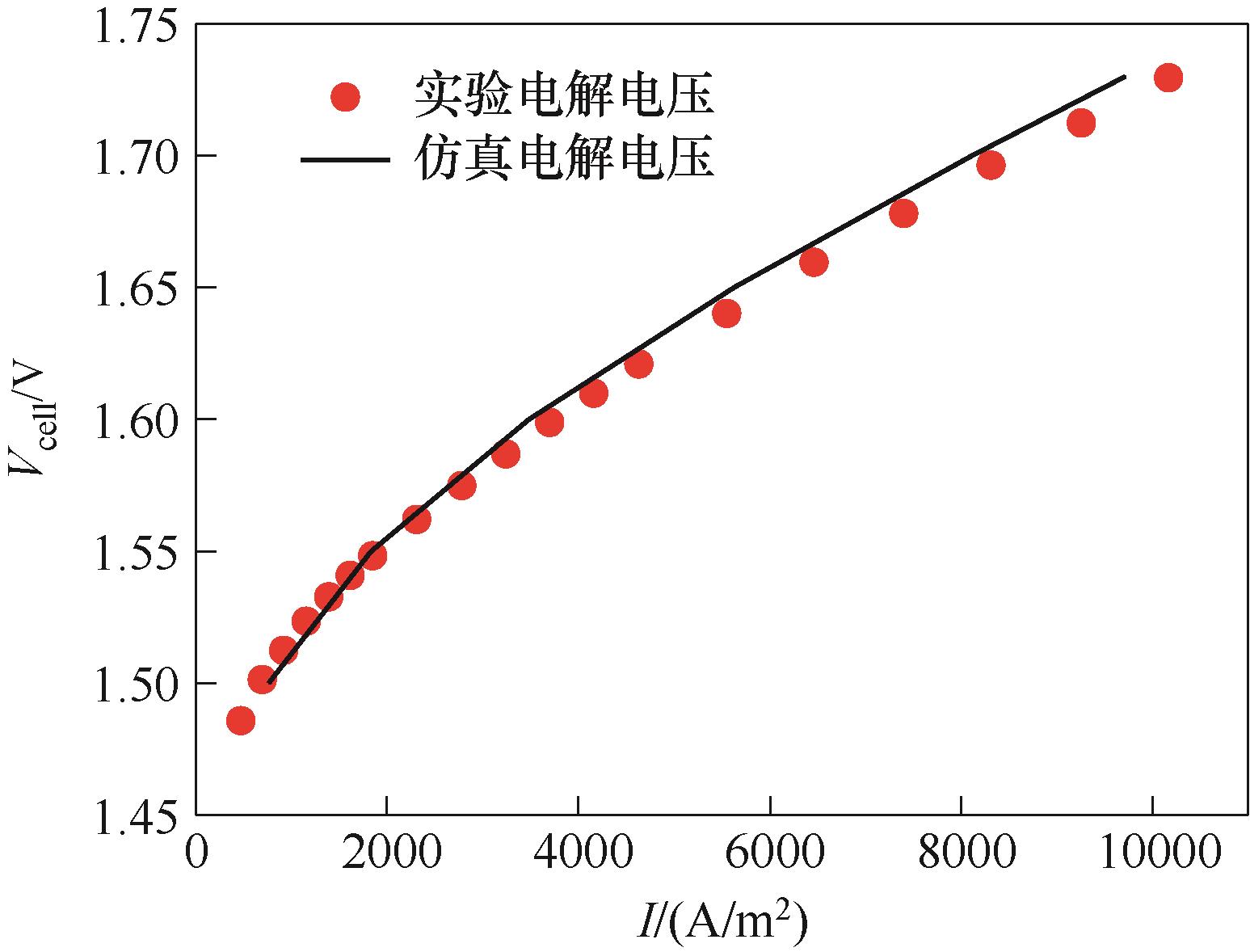
Fig.4 Polarization curve verification

Fig.5 The performance of electrolytic cell varies with the height of the flow channel

Fig.6 The performance of electrolytic cell varies with the width of the flow channel
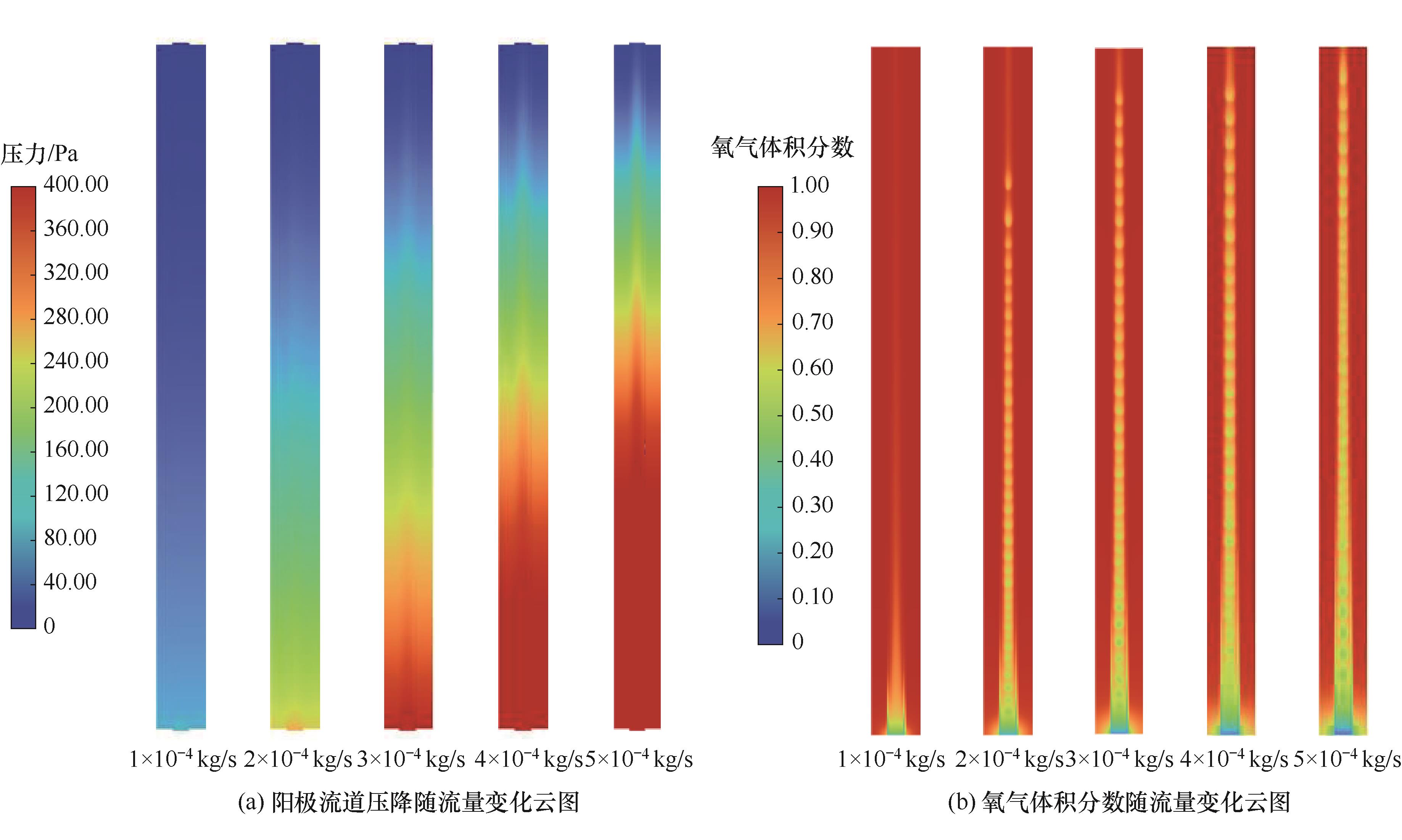
Fig.7 Flow characteristics of electrolytic cell with flow
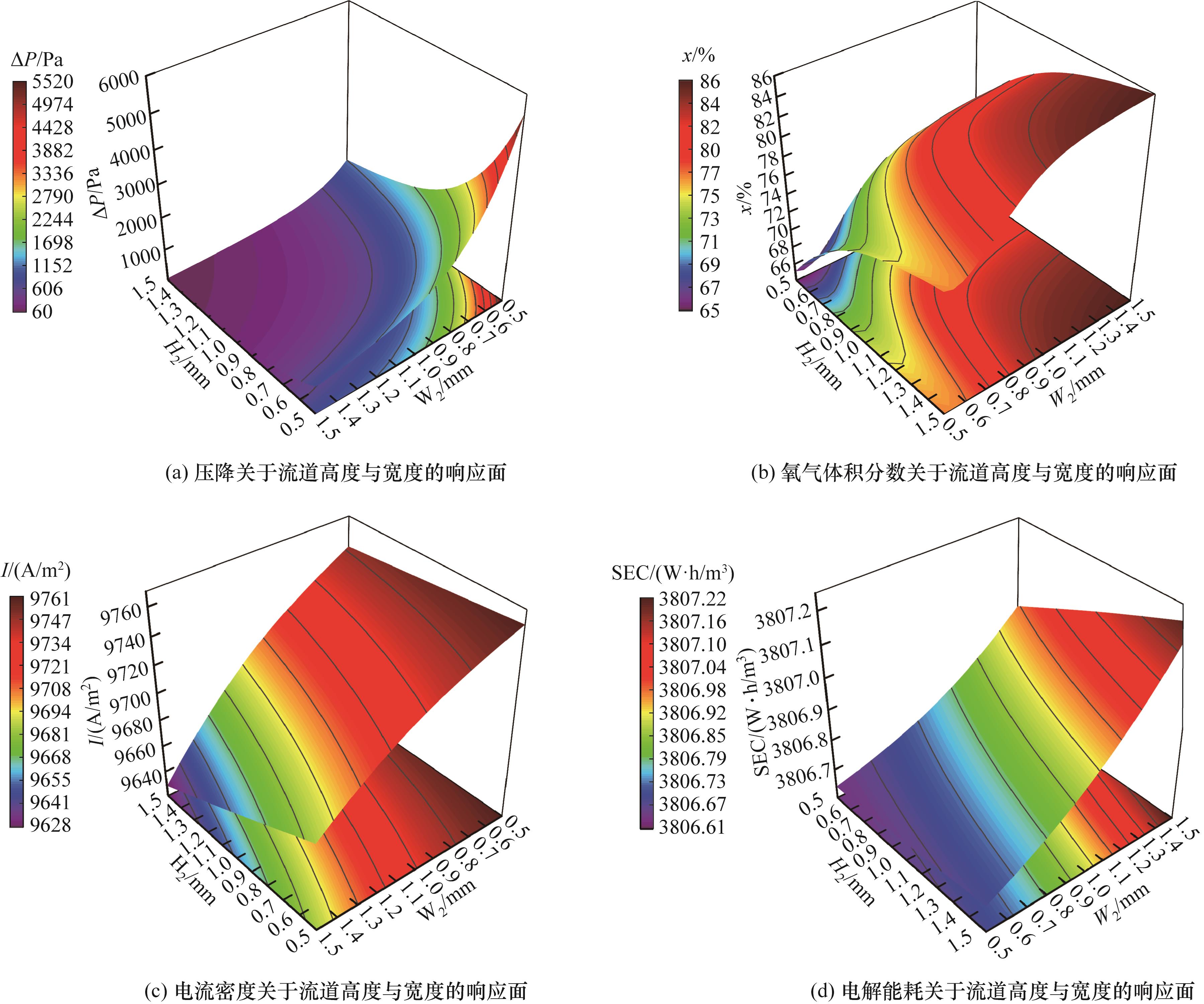
Fig.8 Response surface of the optimized target with respect to the design variable when the flow rate is 3×10⁻⁴ kg/s
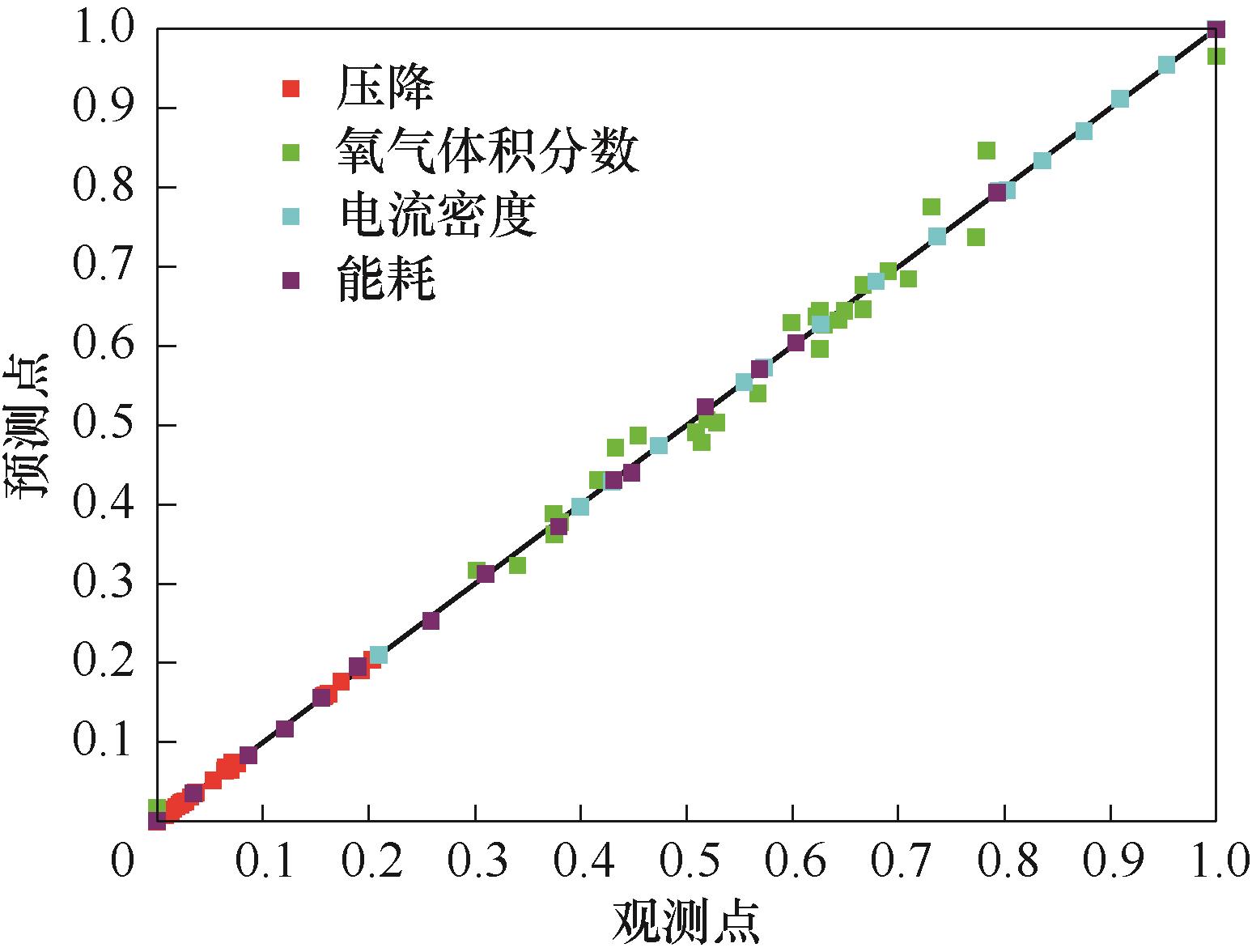
Fig.9 Response surface fitting accuracy
| 项目 | 流道高度H2/mm | 流道宽度W2/mm | 水流量Qm /(kg/s) | 压降ΔP/Pa | 体积分数x/% | 电流密度I/(A/m2) | 能耗SEC/(W·h/m3) |
|---|---|---|---|---|---|---|---|
| 理论最优解1 | 1.4602 | 0.7642 | 3.0259×10⁻⁴ | 409.40 | 80.41 | 9728.20 | 3806.80 |
| 理论最优解2 | 1.4679 | 0.7644 | 3.0390×10⁻⁴ | 408.64 | 80.42 | 9728.10 | 3806.80 |
| 理论最优解3 | 1.4650 | 0.7784 | 3.1595×10⁻⁴ | 408.59 | 80.40 | 9726.90 | 3806.80 |
| 预测响应解 | 1.50 | 0.80 | 3×10⁻⁴ | 351.18 | 81.31 | 9724.30 | 3806.80 |
| 实际计算解 | 1.50 | 0.80 | 3×10⁻⁴ | 328.84 | 81.74 | 9724.64 | 3806.79 |
| 相对误差/% | — | — | — | 6.36 | 0.53 | 0.0035 | 0.00026 |
Table 3 Optimization results and verification
| 项目 | 流道高度H2/mm | 流道宽度W2/mm | 水流量Qm /(kg/s) | 压降ΔP/Pa | 体积分数x/% | 电流密度I/(A/m2) | 能耗SEC/(W·h/m3) |
|---|---|---|---|---|---|---|---|
| 理论最优解1 | 1.4602 | 0.7642 | 3.0259×10⁻⁴ | 409.40 | 80.41 | 9728.20 | 3806.80 |
| 理论最优解2 | 1.4679 | 0.7644 | 3.0390×10⁻⁴ | 408.64 | 80.42 | 9728.10 | 3806.80 |
| 理论最优解3 | 1.4650 | 0.7784 | 3.1595×10⁻⁴ | 408.59 | 80.40 | 9726.90 | 3806.80 |
| 预测响应解 | 1.50 | 0.80 | 3×10⁻⁴ | 351.18 | 81.31 | 9724.30 | 3806.80 |
| 实际计算解 | 1.50 | 0.80 | 3×10⁻⁴ | 328.84 | 81.74 | 9724.64 | 3806.79 |
| 相对误差/% | — | — | — | 6.36 | 0.53 | 0.0035 | 0.00026 |
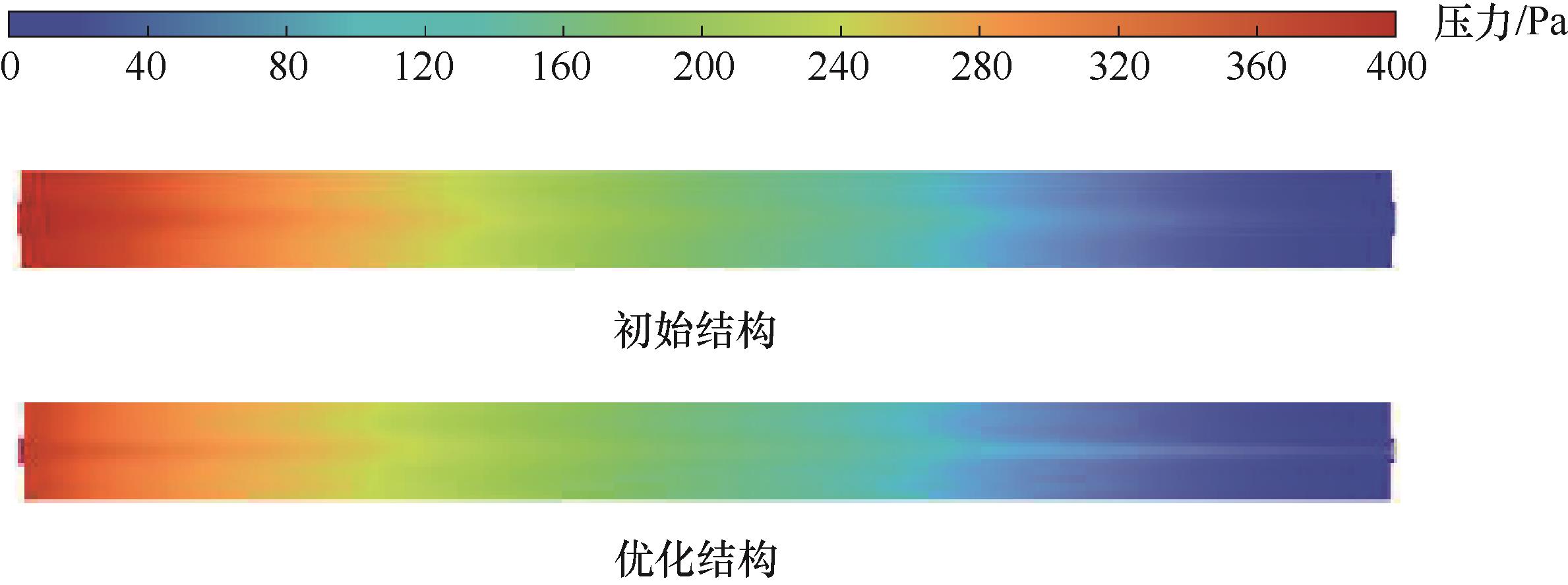
Fig.10 Initial structure and optimized structure pressure drop cloud image
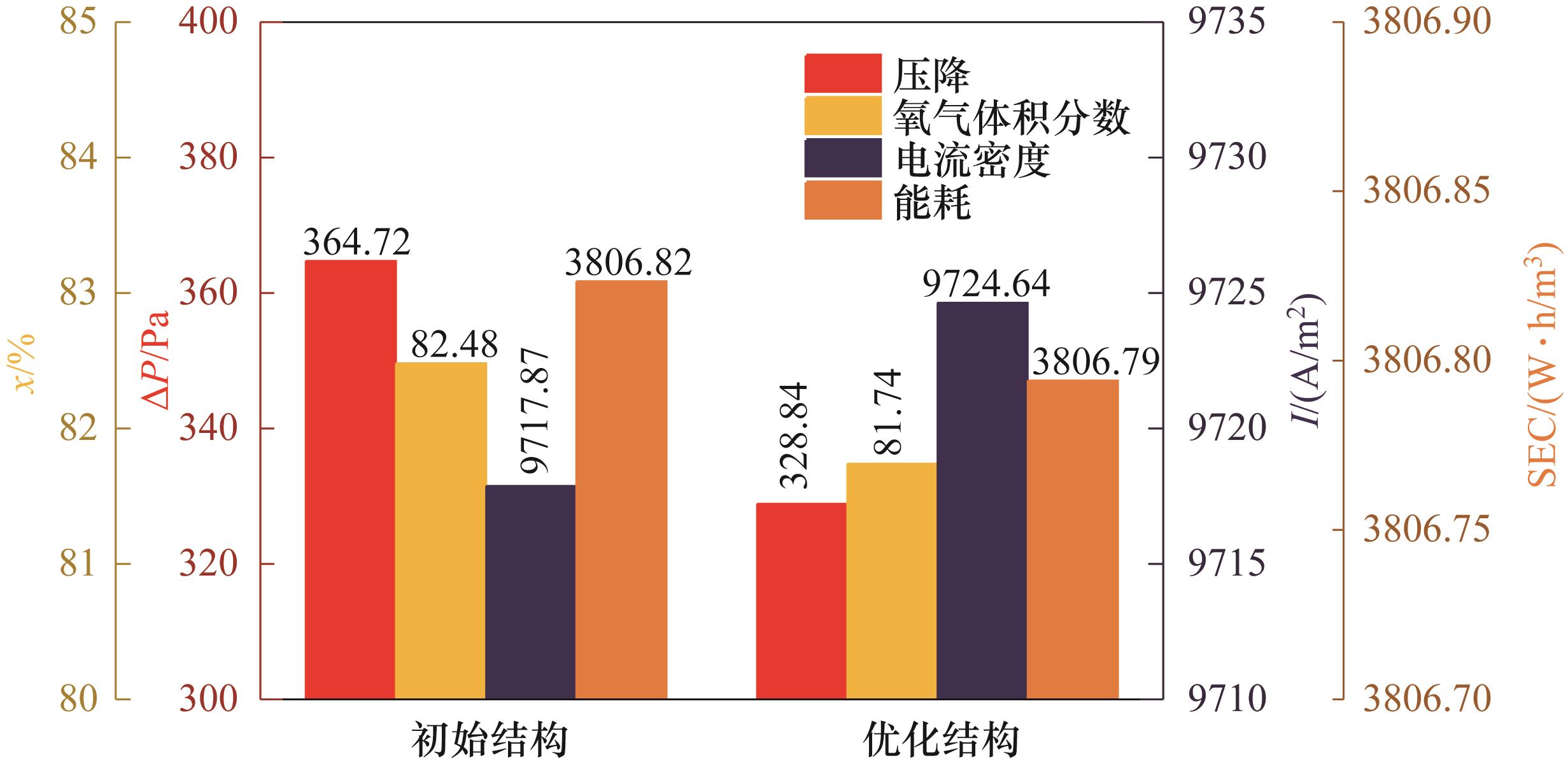
Fig.11 Initial structure and optimized structure performance histogram
| [1] | 张翛然, 王亚会, 聂铭歧, 等. 碳中和背景下海外氢能源发展新思路及对我国的启示[J]. 新能源科技, 2023(1): 18-22. |
| Zhang X R, Wang Y H, Nie M Q, et al. New ideas of overseas hydrogen energy development in the context of carbon neutrality and its enlightenment to China[J]. New Energy Technology, 2023(1): 18-22. | |
| [2] | 侯梅芳, 潘松圻, 刘翰林. 世界能源转型大势与中国油气可持续发展战略[J]. 天然气工业, 2021, 41(12): 9-16. |
| Hou M F, Pan S Q, Liu H L. World energy trend and China's oil and gas sustainable development strategies[J]. Natural Gas Industry, 2021, 41(12): 9-16. | |
| [3] | 杜祥琬. “十三五”中国能源低碳转型的关键期[J]. 中国电力, 2017, 50(2): 1-4. |
| Du X W. The 13th five-year period: a key period of China's energy low-carbon transition[J]. Electric Power, 2017, 50(2): 1-4. | |
| [4] | 杨洋. 氢气制备技术研究进展及应用前景[J]. 中国高新科技, 2023(16): 20-22. |
| Yang Y. Research progress of hydrogen preparation technology and application prospect[J]. China High-Tech, 2023(16): 20-22. | |
| [5] | 万燕鸣, 熊亚林, 王雪颖. 全球主要国家氢能发展战略分析[J]. 储能科学与技术, 2022, 11(10): 3401-3410. |
| Wan Y M, Xiong Y L, Wang X Y. Strategic analysis of hydrogen energy development in major countries[J]. Energy Storage Science and Technology, 2022, 11(10): 3401-3410. | |
| [6] | 朱彤. 我国氢能产业发展的特点、问题与定位[J]. 中国发展观察, 2021(S3): 112-117. |
| Zhu T. Characteristics, problems and orientation of the development of hydrogen energy industry in China[J]. China Development Observation, 2021(S3): 112-117. | |
| [7] | 魏凤, 任小波, 高林, 等. 碳中和目标下美国氢能战略转型及特征分析[J]. 中国科学院院刊, 2021, 36(9): 1049-1057. |
| Wei F, Ren X B, Gao L, et al. Analysis on transformation and characteristics of American hydrogen energy strategy under carbon neutralization goal[J]. Bulletin of Chinese Academy of Sciences, 2021, 36(9): 1049-1057. | |
| [8] | 李子烨, 劳力云, 王谦. 制氢技术发展现状及新技术的应用进展[J]. 现代化工, 2021, 41(7): 86-89. |
| Li Z Y, Lao L Y, Wang Q. Development status of hydrogen production technologies and application advances of new technologies[J]. Modern Chemical Industry, 2021, 41(7): 86-89. | |
| [9] | 何青, 孟照鑫, 沈轶, 等. “双碳” 目标下我国氢能政策分析与思考[J]. 热力发电, 2021, 50(11): 27-36. |
| He Q, Meng Z X, Shen Y, et al. Analysis and thinking of hydrogen energy policies in China under “double carbon” target[J]. Thermal Power Generation, 2021, 50(11): 27-36. | |
| [10] | 胡兵, 徐立军, 何山, 等. 碳达峰与碳中和目标下PEM电解水制氢研究进展[J]. 化工进展, 2022, 41(9): 4595-4604. |
| Hu B, Xu L J, He S, et al. Researching progress of hydrogen production by PEM water electrolysis under the goal of carbon peak and carbon neutrality[J]. Chemical Industry and Engineering Progress, 2022, 41(9): 4595-4604. | |
| [11] | 瞿国华. 我国氢能产业发展和氢资源探讨[J]. 当代石油石化, 2020, 28(4): 4-9. |
| Qu G H. China's hydrogen energy industry development and hydrogen resources[J]. Petroleum & Petrochemical Today, 2020, 28(4): 4-9. | |
| [12] | 郭博文, 罗聃, 周红军. 可再生能源电解制氢技术及催化剂的研究进展[J]. 化工进展, 2021, 40(6): 2933-2951. |
| Guo B W, Luo D, Zhou H J. Research progress of hydrogen production technology and catalyst from renewable energy electrolysis[J]. Chemical Industry and Engineering Progress, 2021, 40(6): 2933-2951. | |
| [13] | 赵永志, 蒙波, 陈霖新, 等. 氢能源的利用现状分析[J]. 化工进展, 2015, 34(9): 3248-3255. |
| Zhao Y Z, Meng B, Chen L X, et al. Utilization status of hydrogen energy[J]. Chemical Industry and Engineering Progress, 2015, 34(9): 3248-3255. | |
| [14] | 孙浩, 吴维宁, 陈丽杰, 等. 新能源电解水制氢技术发展研究综述[J/OL]. 电源学报, . |
| Sun H, Wu W N, Chen L J, et al. Review on the development of new energy water electrolysis technology for hydrogen production[J/OL]. Journal of Power Supply, . | |
| [15] | 刘芸. 绿色能源氢能及其电解水制氢技术进展[J]. 电源技术, 2012, 36(10): 1579-1581. |
| Liu Y. Progress of green energy hydrogen energy and technology of hydrogen production by water electrolysis[J]. Chinese Journal of Power Sources, 2012, 36(10): 1579-1581. | |
| [16] | 张显峰, 唐乾, 刘伟, 等. PEM电解制氢技术问题及现状分析[J]. 山东化工, 2024, 53(4): 105-109. |
| Zhang X F, Tang Q, Liu W, et al. Technical problems and current situation analysis of PEM electrolysis hydrogen production[J]. Shandong Chemical Industry, 2024, 53(4): 105-109. | |
| [17] | Yuan S, Zhao C F, Cai X Y, et al. Bubble evolution and transport in PEM water electrolysis: mechanism, impact, and management[J]. Progress in Energy and Combustion Science, 2023, 96: 101075. |
| [18] | Nie J H, Chen Y. Numerical modeling of three-dimensional two-phase gas-liquid flow in the flow field plate of a PEM electrolysis cell[J]. International Journal of Hydrogen Energy, 2010, 35(8): 3183-3197. |
| [19] | Nie J H, Chen Y, Cohen S, et al. Numerical and experimental study of three-dimensional fluid flow in the bipolar plate of a PEM electrolysis cell[J]. International Journal of Thermal Sciences, 2009, 48(10): 1914-1922. |
| [20] | Lin R, Lu Y, Xu J, et al. Investigation on performance of proton exchange membrane electrolyzer with different flow field structures[J]. Applied Energy, 2022, 326: 120011. |
| [21] | Ruiz D D, Sasmito A P, Shamim T. Numerical investigation of the high temperature PEM electrolyzer: effect of flow channel configurations[J]. ECS Transactions, 2013, 58(2): 99-112. |
| [22] | Su X, Zhang Q, Xu L J, et al. A novel combined flow field design and performance analysis of proton exchange membrane electrolysis cell[J]. International Journal of Hydrogen Energy, 2024, 61: 444-459. |
| [23] | Toghyani S, Afshari E, Baniasadi E. Metal foams as flow distributors in comparison with serpentine and parallel flow fields in proton exchange membrane electrolyzer cells[J]. Electrochimica Acta, 2018, 290: 506-519. |
| [24] | 何泽兴, 史成香, 陈志超, 等. 质子交换膜电解水制氢技术的发展现状及展望[J]. 化工进展, 2021, 40(9): 4762-4773. |
| He Z X, Shi C X, Chen Z C, et al. Development status and prospects of proton exchange membrane water electrolysis[J]. Chemical Industry and Engineering Progress, 2021, 40(9): 4762-4773. | |
| [25] | 穆瑞, 马晓锋, 翁武斌, 等. 螺旋流场设计对PEM电解槽性能影响的模拟研究[J]. 新能源进展, 2023, 11(4): 295-302. |
| Mu R, Ma X F, Weng W B, et al. Simulation study on the effect of spiral flow field design on the performance of PEM electrolytic cells[J]. Advances in New and Renewable Energy, 2023, 11(4): 295-302. | |
| [26] | Xie Y, Zhang L Y, Ying P J, et al. Intensified field-effect of hydrogen evolution reaction[J]. Progress in Chemistry, 2021, 33(9): 1571-1585. |
| [27] | Olesen A C, Rømer C, Kær S K. A numerical study of the gas-liquid, two-phase flow maldistribution in the anode of a high pressure PEM water electrolysis cell[J]. International Journal of Hydrogen Energy, 2016, 41(1): 52-68. |
| [28] | Su X, Xu L J, Zhu D, et al. Electrochemical performance study of proton exchange membrane electrolyzer considering the effect of bubble coverage[J]. International Journal of Hydrogen Energy, 2023, 48(70): 27079-27094. |
| [29] | 王华, 马晓锋, 何勇, 等. 流场结构对PEM电解槽性能影响模拟[J]. 洁净煤技术, 2023, 29(3): 78-84. |
| Wang H, Ma X F, He Y, et al. Simulation of the effect of flow channel structure on the performance of PEM electrolyzer[J]. Clean Coal Technology, 2023, 29(3): 78-84. | |
| [30] | Su C, Chen Z D, Zhan H W, et al. Optimal design and performance analysis of anode flow channels in proton exchange membrane water electrolyzers[J]. Applied Thermal Engineering, 2024, 248: 123201. |
| [31] | 刘洋, 邱殿凯, 彭林法, 等. 电解制氢设备性能优化及流道设计[J]. 机械设计与研究, 2023, 39(5): 142-146. |
| Liu Y, Qiu D K, Peng L F, et al. Study on performance enhancement and flow channel design of electrolytic hydrogen production equipment[J]. Machine Design & Research, 2023, 39(5): 142-146. | |
| [32] | Chen J X, Lv H, Shen X J, et al. Multi-objective optimization design and sensitivity analysis of proton exchange membrane electrolytic cell[J]. Journal of Cleaner Production, 2024, 434: 140045. |
| [33] | Ito H, Maeda T, Nakano A, et al. Effect of flow regime of circulating water on a proton exchange membrane electrolyzer[J]. International Journal of Hydrogen Energy, 2010, 35(18): 9550-9560. |
| [34] | Ito H, Maeda T, Nakano A, et al. Influence of pore structural properties of current collectors on the performance of proton exchange membrane electrolyzer[J]. Electrochimica Acta, 2013, 100: 242-248. |
| [35] | Xu Y F, Zhang G B, Wu L Z, et al. A 3-D multiphase model of proton exchange membrane electrolyzer based on open-source CFD[J]. Digital Chemical Engineering, 2021, 1: 100004. |
| [36] | Wang X Y, Wang Z M, Feng Y C, et al. Three-dimensional multiphase modeling of a proton exchange membrane electrolysis cell with a new interdigitated-jet hole flow field[J]. Science China Technological Sciences, 2022, 65(5): 1179-1192. |
| [37] | Wang Z M, Xu C, Wang X Y, et al. Numerical investigation of water and temperature distributions in a proton exchange membrane electrolysis cell[J]. Science China Technological Sciences, 2021, 64(7): 1555-1566. |
| [38] | 闫文标. 基于FLUENT三种多相流模型的选择及应用说明[J]. 云南化工, 2020, 47(4): 43-44. |
| Yan W B. Selection and application of three multiphase flow models based on FLUENT[J]. Yunnan Chemical Technology, 2020, 47(4): 43-44. | |
| [39] | 王斯民, 孙利娟, 宋晨, 等. 螺旋扁管折流杆换热器壳侧性能多目标优化研究[J]. 化工学报, 2019, 70(9): 3353-3362. |
| Wang S M, Sun L J, Song C, et al. Multi-objective optimization on shell-side performance of rod-baffle heat exchangers with twisted oval tubes[J]. CIESC Journal, 2019, 70(9): 3353-3362. | |
| [40] | Kim H, Park M, Lee K S. One-dimensional dynamic modeling of a high-pressure water electrolysis system for hydrogen production[J]. International Journal of Hydrogen Energy, 2013, 38(6): 2596-2609. |
| [1] | Ziteng YAN, Feilong ZHAN, Guoliang DING. Structural design and effect verification of casing-type distributor used in air-conditioners [J]. CIESC Journal, 2025, 76(S1): 152-159. |
| [2] | Zixiang ZHAO, Zhongdi DUAN, Haoran SUN, Hongxiang XUE. Numerical modelling of water hammer induced by two phase flow with large temperature difference [J]. CIESC Journal, 2025, 76(S1): 170-180. |
| [3] | Hao HUANG, Wen WANG, Longkun HE. Simulation and analysis on precooling process of membrane LNG carriers [J]. CIESC Journal, 2025, 76(S1): 187-194. |
| [4] | Siyuan WANG, Guoqiang LIU, Tong XIONG, Gang YAN. Characteristics of non-uniform wind velocity distribution in window air conditioner axial fans and their impact on optimizing condenser circuit optimization [J]. CIESC Journal, 2025, 76(S1): 205-216. |
| [5] | Qingtai CAO, Songyuan GUO, Jianqiang LI, Zan JIANG, Bin WANG, Rui ZHUAN, Jingyi WU, Guang YANG. Numerical study on influence of perforated plate on retention performance of liquid oxygen tank under negative gravity [J]. CIESC Journal, 2025, 76(S1): 217-229. |
| [6] | Jiuchun SUN, Yunlong SANG, Haitao WANG, Hao JIA, Yan ZHU. Study on influence of jet flow on slurry transport characteristics in slurry chamber of shield tunneling machines [J]. CIESC Journal, 2025, 76(S1): 246-257. |
| [7] | Ting HE, Shuyang HUANG, Kun HUANG, Liqiong CHEN. Research on the coupled process of natural gas chemical absorption decarbonization and high temperature heat pump based on waste heat utilization [J]. CIESC Journal, 2025, 76(S1): 297-308. |
| [8] | Haolei DUAN, Haoyuan CHEN, Kunfeng LIANG, Lin WANG, Bin CHEN, Yong CAO, Chenguang ZHANG, Shuopeng LI, Dengyu ZHU, Yaru HE, Dapeng YANG. Performance analysis and comprehensive evaluation of thermal management system schemes with low GWP refrigerants [J]. CIESC Journal, 2025, 76(S1): 54-61. |
| [9] | Junpeng WANG, Jiaqi FENG, Enbo ZHANG, Bofeng BAI. Study on flow and cavitation characteristic in zigzag and array labyrinth valve core structures [J]. CIESC Journal, 2025, 76(S1): 93-105. |
| [10] | Haohao ZHANG, Li GUO, Xinyi LI, Jinyi CHEN, Chao HUA, Ping LU. Research progress on optimal design and dynamic control of dividing wall column [J]. CIESC Journal, 2025, 76(6): 2434-2450. |
| [11] | Jiangyue GUO, Shoujin CHANG, Haitao HU. Numerical simulation for flow condensation of methanol in horizontal tube [J]. CIESC Journal, 2025, 76(6): 2580-2588. |
| [12] | Xing BAO, Xueyan GUO. Effects of cylindrical particle structure modification on the flow and heat transfer characteristics in packed beds [J]. CIESC Journal, 2025, 76(6): 2603-2615. |
| [13] | Yifei WANG, Jingjie REN, Mingshu BI, Haotian YE. Multi-objective optimization of cyclohexane oxidation process parameters based on inherent safety and economic performance [J]. CIESC Journal, 2025, 76(6): 2722-2732. |
| [14] | Minggang GUO, Xiaohang YANG, Yan DAI, Panpan MI, Shixin MA, Gaohong HE, Wu XIAO, Fujun CUI. Optimal design of integration process for helium extraction from helium-poor pipeline natural gas with diversified products [J]. CIESC Journal, 2025, 76(5): 2251-2261. |
| [15] | Lu LIU, Kai WAN, Wenyue WANG, Tai WANG, Jiancheng TANG, Shaoheng WANG. Study on orthohydrogen and parahydrogen conversion coupled flow and heat transfer based on helium expansion refrigeration [J]. CIESC Journal, 2025, 76(4): 1513-1522. |
| Viewed | ||||||
|
Full text |
|
|||||
|
Abstract |
|
|||||