CIESC Journal ›› 2025, Vol. 76 ›› Issue (S1): 444-452.DOI: 10.11949/0438-1157.20241247
• Material science and engineering, nanotechnology • Previous Articles
Shengmei ZHANG1( ), Ming LI1, Ying ZHANG1(), Xi YI1, Yiting YANG1, Yali LIU2
Received:2024-11-04
Revised:2024-11-18
Online:2025-06-26
Published:2025-06-25
Contact:
Ying ZHANG
张圣美1(), 李明1, 张莹1(), 易茜1, 杨依婷1, 刘雅莉2
通讯作者:
张莹
作者简介:张圣美(1999—),女,硕士研究生,17860843983@163.com
基金资助:CLC Number:
Shengmei ZHANG, Ming LI, Ying ZHANG, Xi YI, Yiting YANG, Yali LIU. Effects of emulsifier and reacting temperature on characteristics of phase change microcapsules[J]. CIESC Journal, 2025, 76(S1): 444-452.
张圣美, 李明, 张莹, 易茜, 杨依婷, 刘雅莉. 乳化剂和温度对相变微胶囊性能的影响分析[J]. 化工学报, 2025, 76(S1): 444-452.
Add to citation manager EndNote|Ris|BibTeX
| 样品标记 | HLB | 反应温度/℃ |
|---|---|---|
| M13006 | 13.00 | 60 |
| M19756 | 19.75 | 60 |
| M26504 | 26.50 | 40 |
| M26505 | 26.50 | 50 |
| M26506 | 26.50 | 60 |
| M26507 | 26.50 | 70 |
| M26508 | 26.50 | 80 |
| M33256 | 33.25 | 60 |
| M40006 | 40.00 | 60 |
Table 1 The technological parameters of m-PCMs
| 样品标记 | HLB | 反应温度/℃ |
|---|---|---|
| M13006 | 13.00 | 60 |
| M19756 | 19.75 | 60 |
| M26504 | 26.50 | 40 |
| M26505 | 26.50 | 50 |
| M26506 | 26.50 | 60 |
| M26507 | 26.50 | 70 |
| M26508 | 26.50 | 80 |
| M33256 | 33.25 | 60 |
| M40006 | 40.00 | 60 |
| 组别 | 乳化剂比例(SDS∶OP-10) | HLB |
|---|---|---|
| 1 | 0∶1 | 13.00 |
| 2 | 0.25∶0.75 | 19.75 |
| 3 | 0.5∶0.5 | 26.50 |
| 4 | 0.75∶0.25 | 33.25 |
| 5 | 1∶0 | 40.00 |
Table 2 The compound emulsifier ratio and HLB value of m-PCMs
| 组别 | 乳化剂比例(SDS∶OP-10) | HLB |
|---|---|---|
| 1 | 0∶1 | 13.00 |
| 2 | 0.25∶0.75 | 19.75 |
| 3 | 0.5∶0.5 | 26.50 |
| 4 | 0.75∶0.25 | 33.25 |
| 5 | 1∶0 | 40.00 |
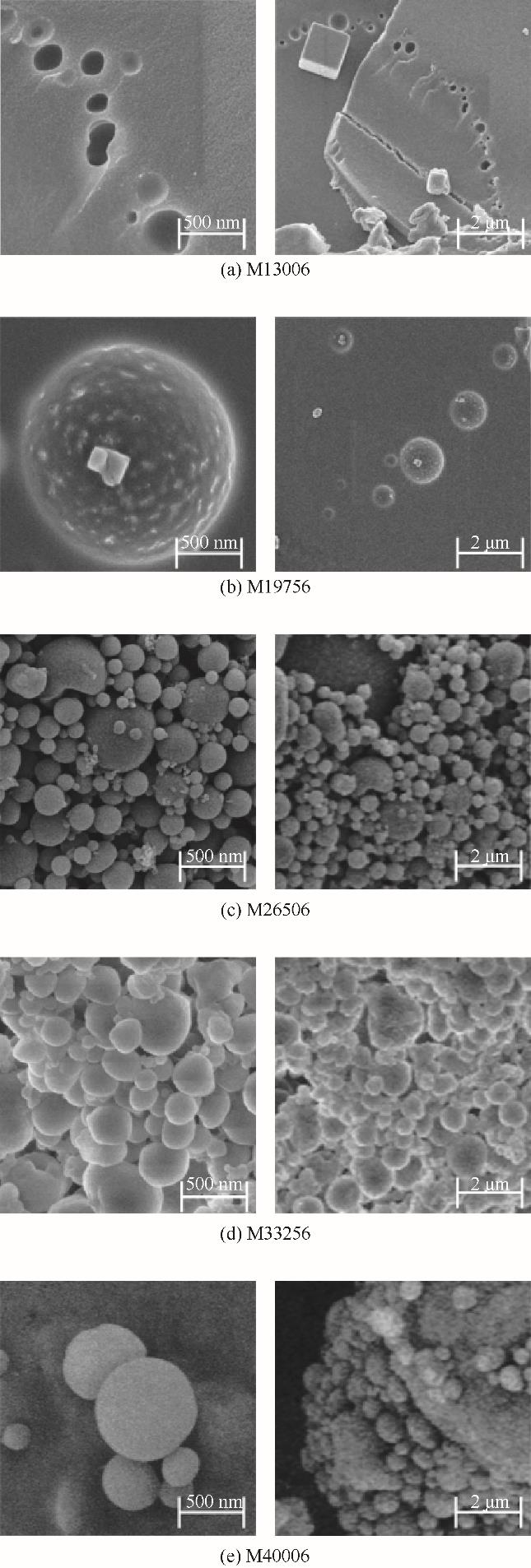
Fig.1 SEM images of m-PCMs prepared with 60℃ and different HLB values
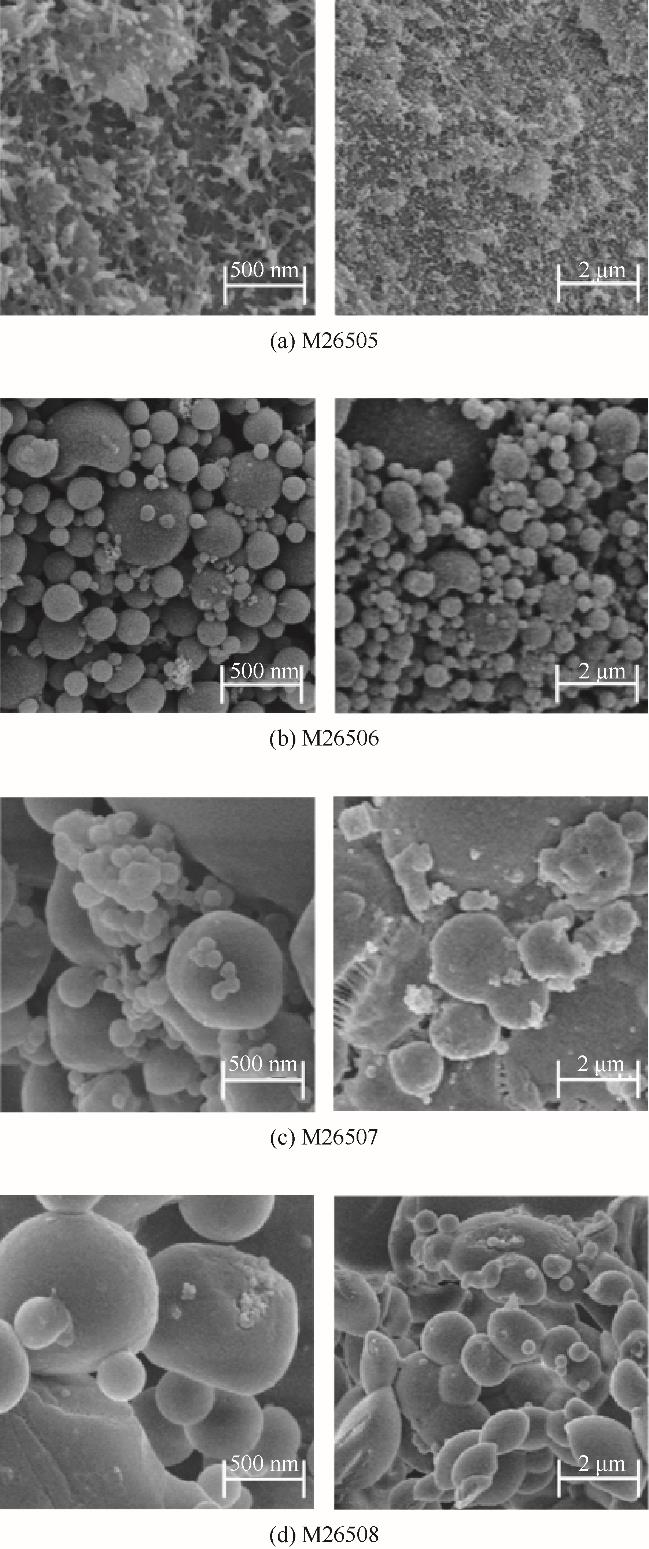
Fig.2 SEM images of m-PCMs prepared with HLB value of 26.50 and different reacting temperatures
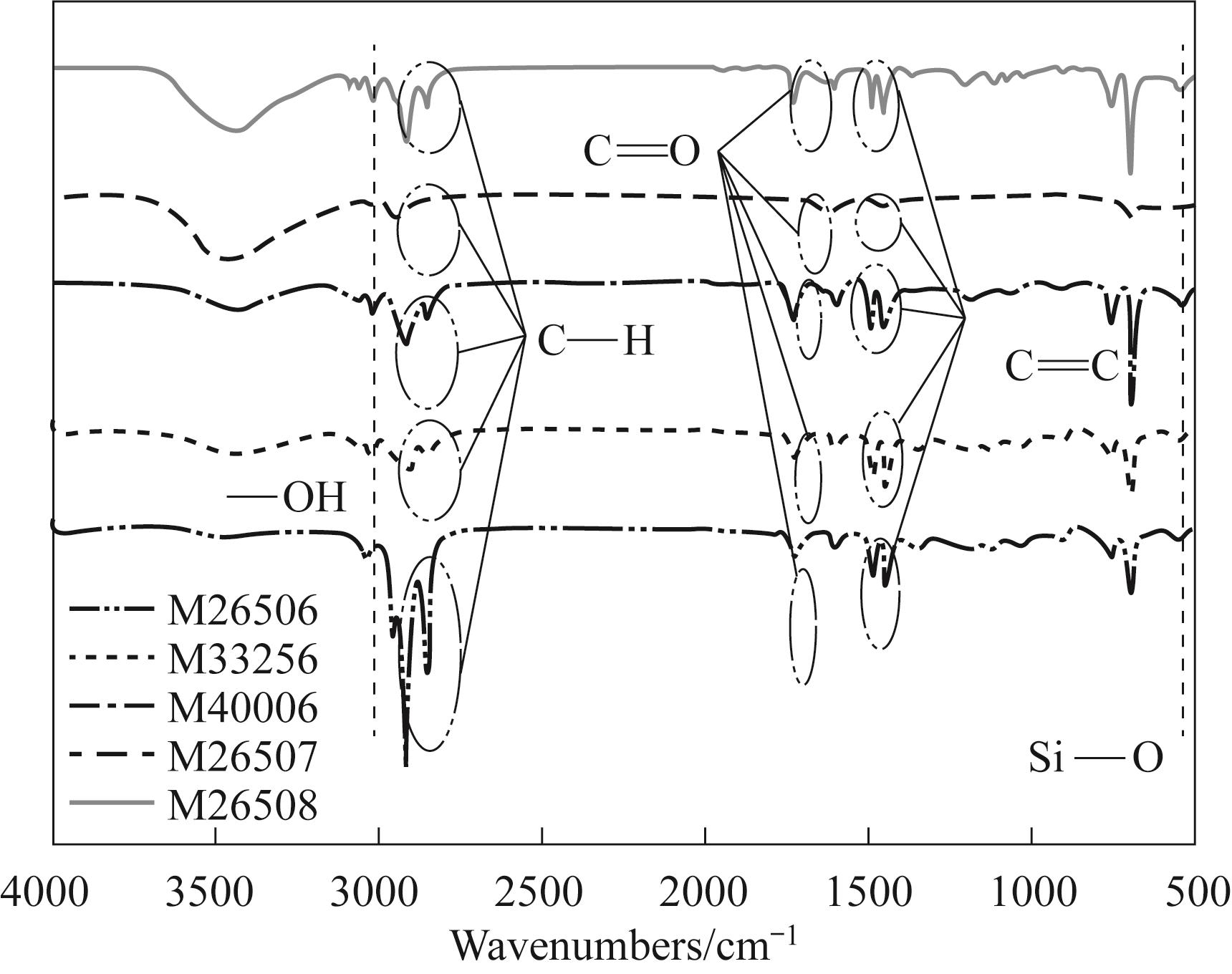
Fig.3 FTIR images of m-PCMs prepared with different conditions
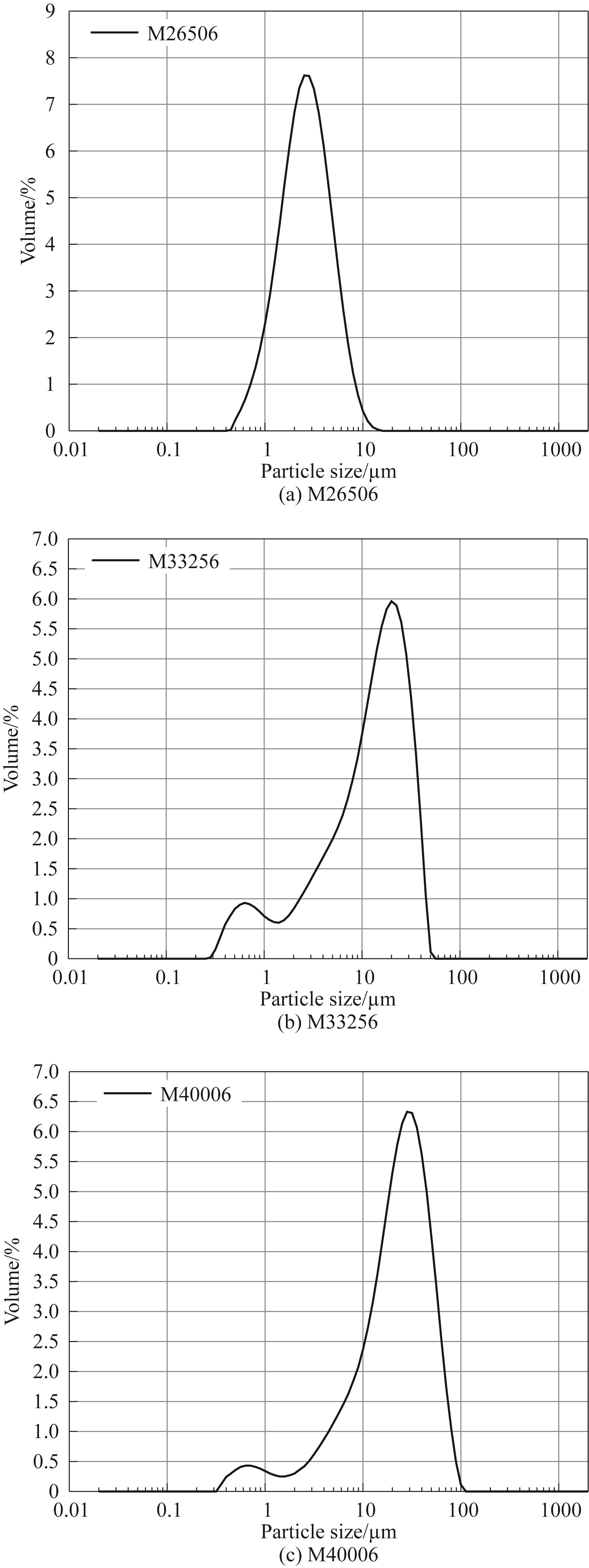
Fig.4 Particle size distributions of m-PCMs prepared with 60℃ and different HLB values
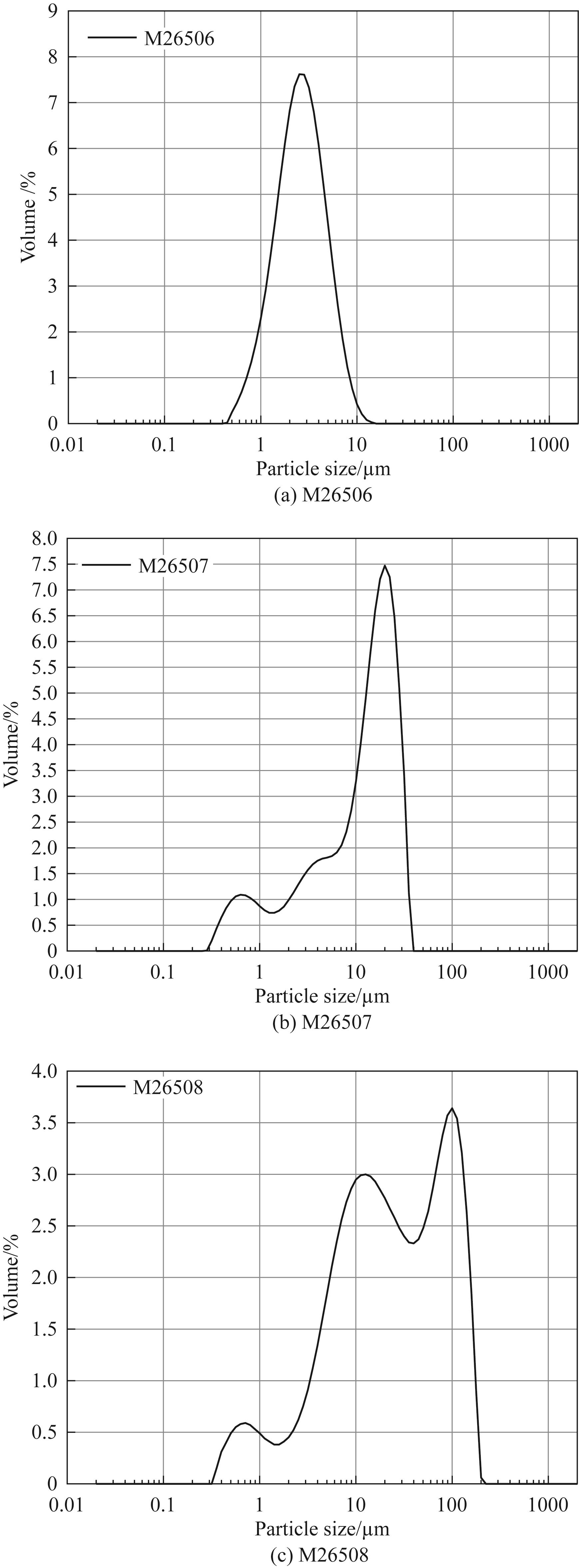
Fig.5 Particle size distributions of m-PCMs prepared with HLB value of 26.50 and different reacting temperatures
| 样品 | d0.1/μm | d0.5/μm | d0.9/μm |
|---|---|---|---|
| M26506 | 1.227 | 2.735 | 5.738 |
| M33256 | 1.708 | 4.262 | 32.675 |
| M40006 | 5.236 | 24.690 | 55.226 |
| M26507 | 1.263 | 14.286 | 28.052 |
| M26508 | 3.575 | 23.491 | 120.633 |
Table 3 Particle size distributions of m-PCMs prepared with different conditions
| 样品 | d0.1/μm | d0.5/μm | d0.9/μm |
|---|---|---|---|
| M26506 | 1.227 | 2.735 | 5.738 |
| M33256 | 1.708 | 4.262 | 32.675 |
| M40006 | 5.236 | 24.690 | 55.226 |
| M26507 | 1.263 | 14.286 | 28.052 |
| M26508 | 3.575 | 23.491 | 120.633 |
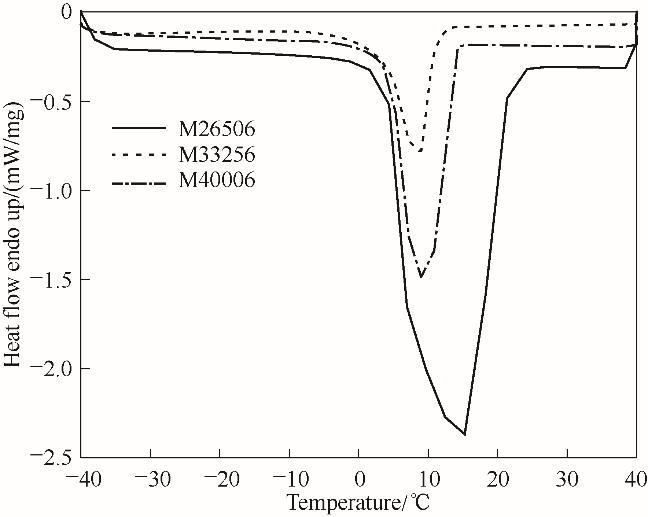
Fig.6 DSC curves of m-PCMs prepared at 60℃ with different HLB values
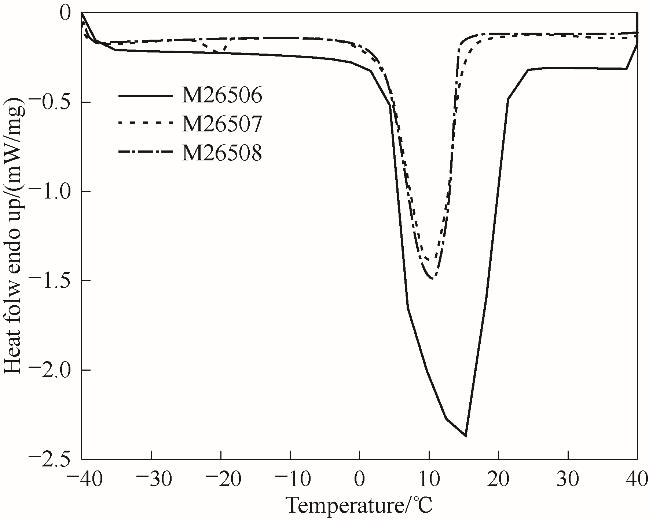
Fig.7 DSC curves of m-PCMs prepared with HLB value of 26.50 and different reacting temperatures
| 样品 | 熔融过程 | Ren/% | |
|---|---|---|---|
| 熔融温度Tm/℃ | 熔融潜热Hm/(J/g) | ||
| M26506 | 9.04 | 148.12 | 69.85 |
| M33256 | 4.36 | 50.39 | 23.76 |
| M40006 | 4.51 | 105.24 | 49.63 |
| M26507 | 4.17 | 111.83 | 52.74 |
| M26508 | 3.80 | 110.88 | 52.29 |
Table 4 The phase change characteristics of m-PCMs prepared with different conditions
| 样品 | 熔融过程 | Ren/% | |
|---|---|---|---|
| 熔融温度Tm/℃ | 熔融潜热Hm/(J/g) | ||
| M26506 | 9.04 | 148.12 | 69.85 |
| M33256 | 4.36 | 50.39 | 23.76 |
| M40006 | 4.51 | 105.24 | 49.63 |
| M26507 | 4.17 | 111.83 | 52.74 |
| M26508 | 3.80 | 110.88 | 52.29 |
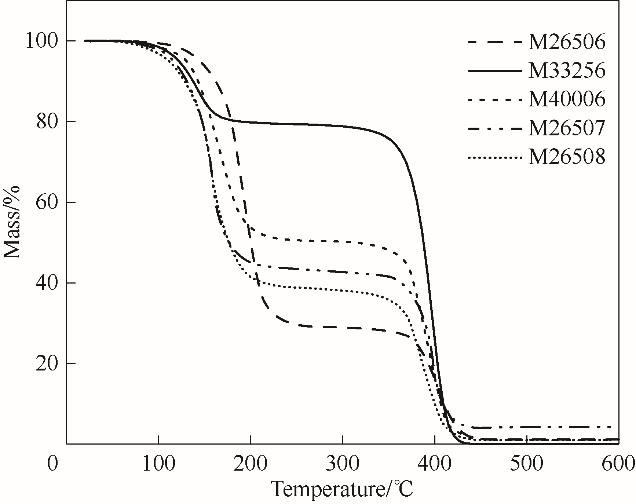
Fig.8 TGA curves of m-PCMs prepared with different conditions
| 样品 | 第一阶段质量损失 | 第二阶段质量损失 | ||||
|---|---|---|---|---|---|---|
| 开始温度/℃ | 结束温度/℃ | 损失质量占比/% | 开始温度/℃ | 结束温度/℃ | 损失质量占比/% | |
| M26506 | 112.20 | 248.00 | 69.67 | 310.00 | 455.80 | 26.88 |
| M33256 | 78.98 | 203.32 | 20.14 | 290.20 | 468.13 | 79.80 |
| M40006 | 105.57 | 221.14 | 47.43 | 332.23 | 444.68 | 48.24 |
| M26507 | 88.09 | 233.09 | 55.33 | 338.04 | 454.86 | 37.90 |
| M26508 | 72.22 | 225.59 | 60.01 | 327.50 | 439.40 | 36.21 |
Table 5 The thermal stabilities of m-PCMs prepared with different conditions
| 样品 | 第一阶段质量损失 | 第二阶段质量损失 | ||||
|---|---|---|---|---|---|---|
| 开始温度/℃ | 结束温度/℃ | 损失质量占比/% | 开始温度/℃ | 结束温度/℃ | 损失质量占比/% | |
| M26506 | 112.20 | 248.00 | 69.67 | 310.00 | 455.80 | 26.88 |
| M33256 | 78.98 | 203.32 | 20.14 | 290.20 | 468.13 | 79.80 |
| M40006 | 105.57 | 221.14 | 47.43 | 332.23 | 444.68 | 48.24 |
| M26507 | 88.09 | 233.09 | 55.33 | 338.04 | 454.86 | 37.90 |
| M26508 | 72.22 | 225.59 | 60.01 | 327.50 | 439.40 | 36.21 |
| 1 | 钱宇, 陈耀熙, 史晓斐, 等. 太阳能波动特性大数据分析与风光互补耦合制氢系统集成[J]. 化工学报, 2022, 73(5): 2101-2110, 2290. |
| Qian Y, Chen Y X, Shi X F, et al. Big data analysis of solar energy fluctuation characteristics and integration of wind-photovoltaic to hydrogen system[J]. CIESC Journal, 2022, 73(5): 2101-2110, 2290. | |
| 2 | 李振, 张博, 王丽伟. PEG-EG固-固相变材料的制备和性能研究[J]. 化工学报, 2023, 74(6): 2680-2688, 2717. |
| Li Z, Zhang B, Wang L W. Development and properties of PEG-EG solid-solid phase change materials[J]. CIESC Journal, 2023, 74(6): 2680-2688, 2717. | |
| 3 | 朱冰清. 农产品冷链专用相变蓄冷剂研制与初步应用[D]. 杭州: 浙江大学, 2015. |
| Zhu B Q. Development and preliminary application of special phase change cold storage agent for cold chain of agricultural products[D]. Hangzhou: Zhejiang University, 2015. | |
| 4 | Xiong T, Shah K W, Kua H W. Thermal performance enhancement of cementitious composite containing polystyrene/n-octadecane microcapsules: an experimental and numerical study[J]. Renewable Energy, 2021, 169: 335-357. |
| 5 | Li J, Zhu X Y, Wang H C, et al. Synthesis and properties of multifunctional microencapsulated phase change material for intelligent textiles[J]. Journal of Materials Science, 2021, 56(3): 2176-2191. |
| 6 | Sarbu I, Sebarchievici C. A comprehensive review of thermal energy storage[J]. Sustainability, 2018, 10(1): 191. |
| 7 | Meng B B, Zhang X L, Hua W S, et al. Development and application of phase change material in fresh e-commerce cold chain logistics: a review[J]. Journal of Energy Storage, 2022, 55: 105373. |
| 8 | Zhao Y, Zhang X L, Xu X F, et al. Research progress of phase change cold storage materials used in cold chain transportation and their different cold storage packaging structures[J]. Journal of Molecular Liquids, 2020, 319: 114360. |
| 9 | 李兴仁. 低温相变蓄冷材料及其蓄冷特性的实验研究[D]. 重庆: 重庆大学, 2004. |
| Li X R. Experimental study on low temperature phase change cold storage material and its cold storage characteristics[D]. Chongqing: Chongqing University, 2004. | |
| 10 | 卜令帅, 屈治国, 徐洪涛, 等. 相变微胶囊悬浮液储能系统放冷特性实验研究[J]. 化工学报, 2021, 72(8): 4064-4072. |
| Bu L S, Qu Z G, Xu H T, et al. Experimental study of cooling discharging characteristics of the energy storage system filled with MPCM slurry[J]. CIESC Journal, 2021, 72(8): 4064-4072. | |
| 11 | Chang Z J, Wang K, Wu X H, et al. Review on the preparation and performance of paraffin-based phase change microcapsules for heat storage[J]. Journal of Energy Storage, 2022, 46: 103840. |
| 12 | Li F, Zhou S Q, Chen S, et al. Low-temperature organic phase change material microcapsules for asphalt pavement: preparation, characterisation and application[J]. Journal of Microencapsulation, 2018, 35(7/8): 635-642. |
| 13 | Pasarkar N P, Yadav M, Mahanwar P A. A review on the micro-encapsulation of phase change materials: classification, study of synthesis technique and their applications[J]. Journal of Polymer Research, 2022, 30(1): 13. |
| 14 | 刘昌会, 肖桐, 刘庆祎, 等. 多孔二氧化钛强化的相变材料储热机理研究[J]. 化工学报, 2024, 75(2): 706-714. |
| Liu C H, Xiao T, Liu Q Y, et al. Investigation of the thermal storage mechanism of porous TiO2 enhanced phase change materials[J]. CIESC Journal, 2024, 75(2): 706-714. | |
| 15 | 郝旭波, 牛宝联, 郭昊天, 等. 相变微胶囊改性及其在光热转换中的应用[J]. 化工进展, 2023, 42(2): 854-871. |
| Hao X B, Niu B L, Guo H T, et al. Modification of microencapsulated phase change material and its utilization in photothermal conversion[J]. Chemical Industry and Engineering Progress, 2023, 42(2): 854-871. | |
| 16 | Giro-Paloma J, Martínez M, Cabeza L F, et al. Types, methods, techniques, and applications for microencapsulated phase change materials (MPCM): a review[J]. Renewable and Sustainable Energy Reviews, 2016, 53: 1059-1075. |
| 17 | Zhang J J, Zhao T B, Chai Y Q, et al. Preparation and characterization of high content paraffin wax microcapsules and micro/nanocapsules with poly methyl methacrylate shell by suspension-like polymerization[J]. Chinese Journal of Chemistry, 2017, 35(4): 497-506. |
| 18 | Jiang Z N, Shu J J, Ge Z Q, et al. Preparation and performance of magnetic phase change microcapsules with organic-inorganic double shell[J]. Solar Energy Materials and Solar Cells, 2022, 240: 111716. |
| 19 | Huang Y C, Stonehouse A, Abeykoon C. Encapsulation methods for phase change materials—A critical review[J]. International Journal of Heat and Mass Transfer, 2023, 200: 123458. |
| 20 | 朱蝶, 胡蓝, 汪师帅. 乳化剂分类、作用及在食品工业中应用[J]. 现代食品, 2019, 25(9): 7-10, 13. |
| Zhu D, Hu L, Wang S S. Emulsifier classification, action and application in the food industry[J]. Modern Food, 2019, 25(9): 7-10, 13. |
| [1] | Ruixue CUI, Yuhan ZHANG, Fang SUN. Synthesis and photoinitiation property of a cinnamyl formamide disulfide compound [J]. CIESC Journal, 2025, 76(3): 1305-1311. |
| [2] | Shunnian XU, Xiao FENG, Dejun SHI, Zhiguo SUN, Chenwei ZHANG, Gang WANG, Jinsen GAO, Chunming XU. Research on direct hydro-upgrading of crude oils and the dissociation of asphaltene supramolecules [J]. CIESC Journal, 2025, 76(2): 812-824. |
| [3] | Yanjiao XU, Linjin LOU, Zhuoqin FAN, Haomiao ZHANG, Jingdai WANG, Yongrong YANG. Research progress on modification technology of methylaluminoxane [J]. CIESC Journal, 2025, 76(2): 454-465. |
| [4] | Shaoji WANG, Kuangrong HAO, Lei CHEN. Research on temperature forecasting of polyester fiber esterification process based on federated learning [J]. CIESC Journal, 2025, 76(1): 283-295. |
| [5] | Su TANG, Zi'ao ZHENG, Hanze WEI, Xiaoling XU, Xiaoqiang ZHAI. Preparation and thermal conductivity reinforcement of PMMA/PEG600/CNT composite shaped phase change materials [J]. CIESC Journal, 2024, 75(S1): 309-320. |
| [6] | Liping ZHANG, Xiaorong MENG, Jinfeng SONG, Jinjing DU. Preparation of VO2@KH550/570@PS composite film and its thermally induced phase change properties [J]. CIESC Journal, 2024, 75(9): 3348-3359. |
| [7] | Yuhang HE, Dan XIE, Yangcheng LYU. Research progress of cationic polymerization in microreactor [J]. CIESC Journal, 2024, 75(4): 1302-1316. |
| [8] | Lisheng WU, Jie LIU, Tiantian WANG, Zhenghong LUO, Yinning ZHOU. Progress in dynamically crosslinked polyolefins derived from ring-opening metathesis polymerization [J]. CIESC Journal, 2024, 75(4): 1118-1136. |
| [9] | Xiaokai CHENG, Wei LI, Jingdai WANG, Yongrong YANG. Advances in nickel catalyzed controlled/living radical polymerization reactions [J]. CIESC Journal, 2024, 75(4): 1105-1117. |
| [10] | Na PAN, Chang TIAN, Lankun HUAI, Yuyu LIU, Fenfen ZHANG, Xiaomei GAO, Wei LIU, Liangguo YAN, Yanxia ZHAO. Synthesis and application of polymerized Al-Ti based flocculant [J]. CIESC Journal, 2024, 75(3): 1009-1018. |
| [11] | Wenkai CHENG, Jinyu YAN, Jiajun WANG, Lianfang FENG. Research progress of horizontal kneading reactor and its application in polymerization industry [J]. CIESC Journal, 2024, 75(3): 768-781. |
| [12] | Wenjie CONG, Jiawen HUANG, Xiaoqiang FAN, Yao YANG, Jingdai WANG, Yongrong YANG. Structure optimization method for high-pressure LDPE tubular reactor [J]. CIESC Journal, 2024, 75(10): 3557-3567. |
| [13] | Qiang ZHANG, Xianfei WANG, Kai WANG, Guangsheng LUO, Zhongkai LU. Advances in metal-free catalysts in copolymerization of epoxides and cyclic anhydrides [J]. CIESC Journal, 2024, 75(1): 60-73. |
| [14] | Ao ZHANG, Yingwu LUO. Low modulus, high elasticity and high peel adhesion acrylate pressure sensitive adhesives [J]. CIESC Journal, 2023, 74(7): 3079-3092. |
| [15] | Xueting ZHANG, Jijiang HU, Jing ZHAO, Bogeng LI. Preparation of high molecular weight polypropylene glycol in microchannel reactor [J]. CIESC Journal, 2023, 74(3): 1343-1351. |
| Viewed | ||||||
|
Full text |
|
|||||
|
Abstract |
|
|||||