Xiaoyun LV1( ), Biaolin JIANG1(), Guo YUAN1, Huaicheng BEI1, Jie WANG1, Penghao SUN1, Xianyu SONG1(), Chuxiang ZHOU2(), Shuangliang ZHAO3
Received:2025-10-21
Revised:2025-12-18
Published:2025-12-19
Contact:
Biaolin JIANG, Xianyu SONG, Chuxiang ZHOU
吕笑云1(), 姜骉麟1(), 袁果1, 贝怀诚1, 王洁1, 孙鹏豪1, 宋先雨1(), 周楚翔2(), 赵双良3
通讯作者:
姜骉麟,宋先雨,周楚翔
作者简介:吕笑云(1999—),女,研究生,xyl7177@163.com
基金资助:CLC Number:
Xiaoyun LV, Biaolin JIANG, Guo YUAN, Huaicheng BEI, Jie WANG, Penghao SUN, Xianyu SONG, Chuxiang ZHOU, Shuangliang ZHAO. Adaptive evidential deep learning framework for predicting PFAS environmental transport properties[J]. CIESC Journal, DOI: 10.11949/0438-1157.20251172.
吕笑云, 姜骉麟, 袁果, 贝怀诚, 王洁, 孙鹏豪, 宋先雨, 周楚翔, 赵双良. 融合自适应证据的深度学习框架预测PFAS环境迁移性质[J]. 化工学报, DOI: 10.11949/0438-1157.20251172.
Add to citation manager EndNote|Ris|BibTeX
| 序号 | 特征名称 | 说明 | 重要性(shaply值) |
|---|---|---|---|
| 1 | 氟原子数 | 分子中氟原子总数 | 2.39 |
| 2 | 氟化度 | 氟原子数/重原子数,归一化氟化水平 | 2.296 |
| 3 | C-F键数量 | 碳氟键总数,表征氟化程度 | 1.838 |
| 4 | 全氟碳链最大长度 | 最长连续全氟碳链长度,表征主链结构 | 1.041 |
| 5 | 氧原子数 | 分子中氧原子数量,常见于含氧PFAS或降解产物 | 0.899 |
| 6 | 碳氟比 | 碳原子数/氟原子数,反映骨架与氟化平衡 | 0.790 |
| 7 | 疏水性 | 分配系数logP,反映疏水/亲水特性 | 0.778 |
| 8 | 分子量 | 相对分子质量(缩放/100),表示分子规模 | 0.649 |
| 9 | 可旋转键数 | 自由旋转单键数量,表征分子柔性 | 0.531 |
| 10 | CF2基数量 | 二氟亚甲基数量,反映链段氟化模式 | 0.525 |
| 11 | 芳香环数量 | 芳香环计数,区分芳香性PFAS | 0.500 |
| 12 | 支化全氟基存在性 | 是否存在支化全氟结构,1表示存在 | 0.460 |
| 13 | 平均氟化程度 | 每个碳原子的平均氟原子数,反映氟化密度 | 0.390 |
| 14 | 醚键数量 | 含氧醚键(-O-)数量,识别含醚PFAS | 0.390 |
| 15 | 碳原子数 | 分子中碳原子总数,衡量骨架规模 | 0.293 |
| 16 | CF3基数量 | 分子中三氟甲基数量,典型端基结构 | 0.216 |
| 17 | 磺酸基存在性 | 是否含-SO3H基团(PFOS类),1表示存在 | 0.175 |
| 18 | 羧酸基存在性 | 是否含-COOH基团(PFOA类),1表示存在 | 0.154 |
| 19 | 磷酸基存在性 | 是否含-COOH基团(PFOA类),1表示存在 | 0.017 |
| 20 | PFAS可能性指标 | 启发式判别,快速筛选潜在PFAS | 0.000 |
Table 1 Molecular feature set of PFAS for predictive modeling
| 序号 | 特征名称 | 说明 | 重要性(shaply值) |
|---|---|---|---|
| 1 | 氟原子数 | 分子中氟原子总数 | 2.39 |
| 2 | 氟化度 | 氟原子数/重原子数,归一化氟化水平 | 2.296 |
| 3 | C-F键数量 | 碳氟键总数,表征氟化程度 | 1.838 |
| 4 | 全氟碳链最大长度 | 最长连续全氟碳链长度,表征主链结构 | 1.041 |
| 5 | 氧原子数 | 分子中氧原子数量,常见于含氧PFAS或降解产物 | 0.899 |
| 6 | 碳氟比 | 碳原子数/氟原子数,反映骨架与氟化平衡 | 0.790 |
| 7 | 疏水性 | 分配系数logP,反映疏水/亲水特性 | 0.778 |
| 8 | 分子量 | 相对分子质量(缩放/100),表示分子规模 | 0.649 |
| 9 | 可旋转键数 | 自由旋转单键数量,表征分子柔性 | 0.531 |
| 10 | CF2基数量 | 二氟亚甲基数量,反映链段氟化模式 | 0.525 |
| 11 | 芳香环数量 | 芳香环计数,区分芳香性PFAS | 0.500 |
| 12 | 支化全氟基存在性 | 是否存在支化全氟结构,1表示存在 | 0.460 |
| 13 | 平均氟化程度 | 每个碳原子的平均氟原子数,反映氟化密度 | 0.390 |
| 14 | 醚键数量 | 含氧醚键(-O-)数量,识别含醚PFAS | 0.390 |
| 15 | 碳原子数 | 分子中碳原子总数,衡量骨架规模 | 0.293 |
| 16 | CF3基数量 | 分子中三氟甲基数量,典型端基结构 | 0.216 |
| 17 | 磺酸基存在性 | 是否含-SO3H基团(PFOS类),1表示存在 | 0.175 |
| 18 | 羧酸基存在性 | 是否含-COOH基团(PFOA类),1表示存在 | 0.154 |
| 19 | 磷酸基存在性 | 是否含-COOH基团(PFOA类),1表示存在 | 0.017 |
| 20 | PFAS可能性指标 | 启发式判别,快速筛选潜在PFAS | 0.000 |
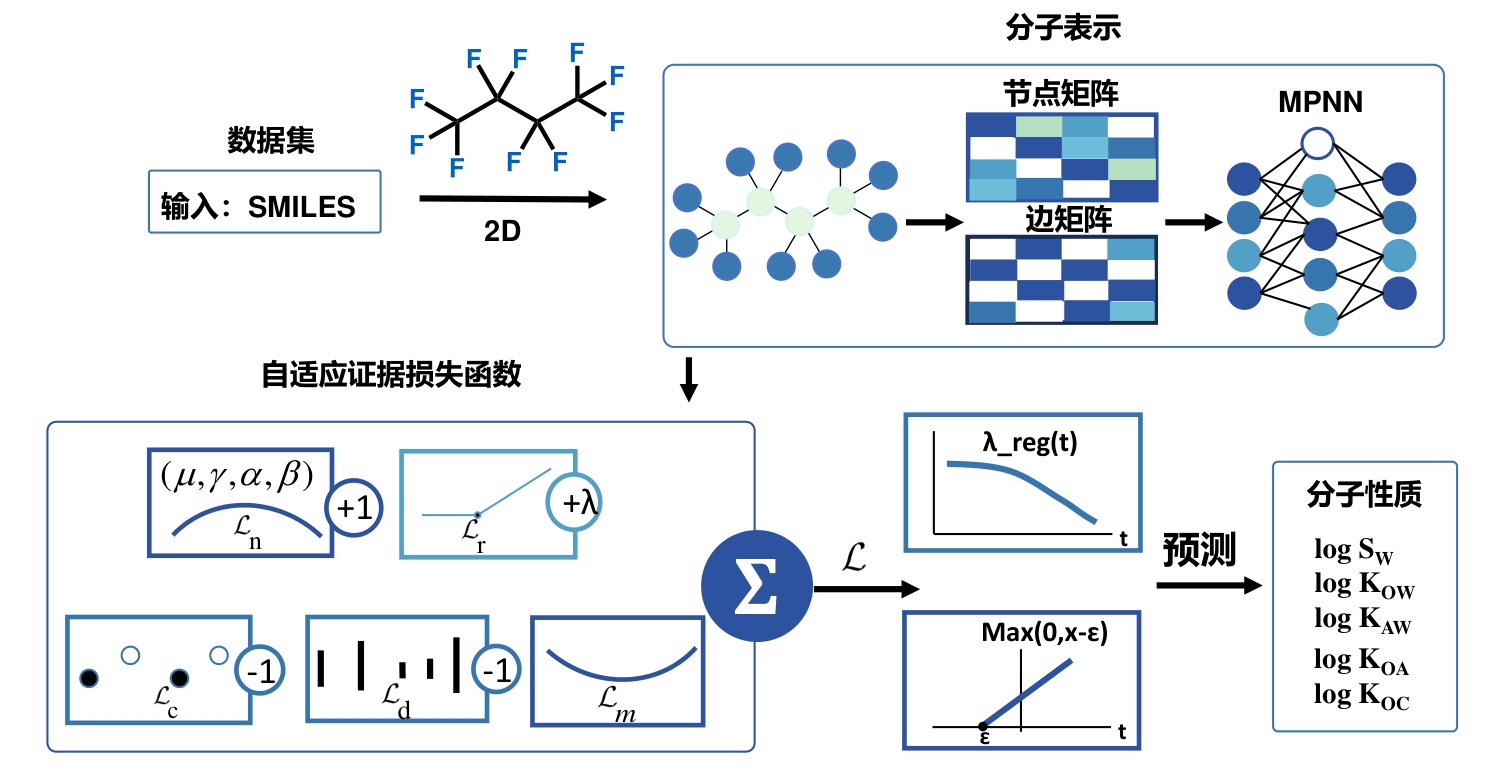
Fig.1 Framework of adaptive evidential deep learning for PFAS prediction
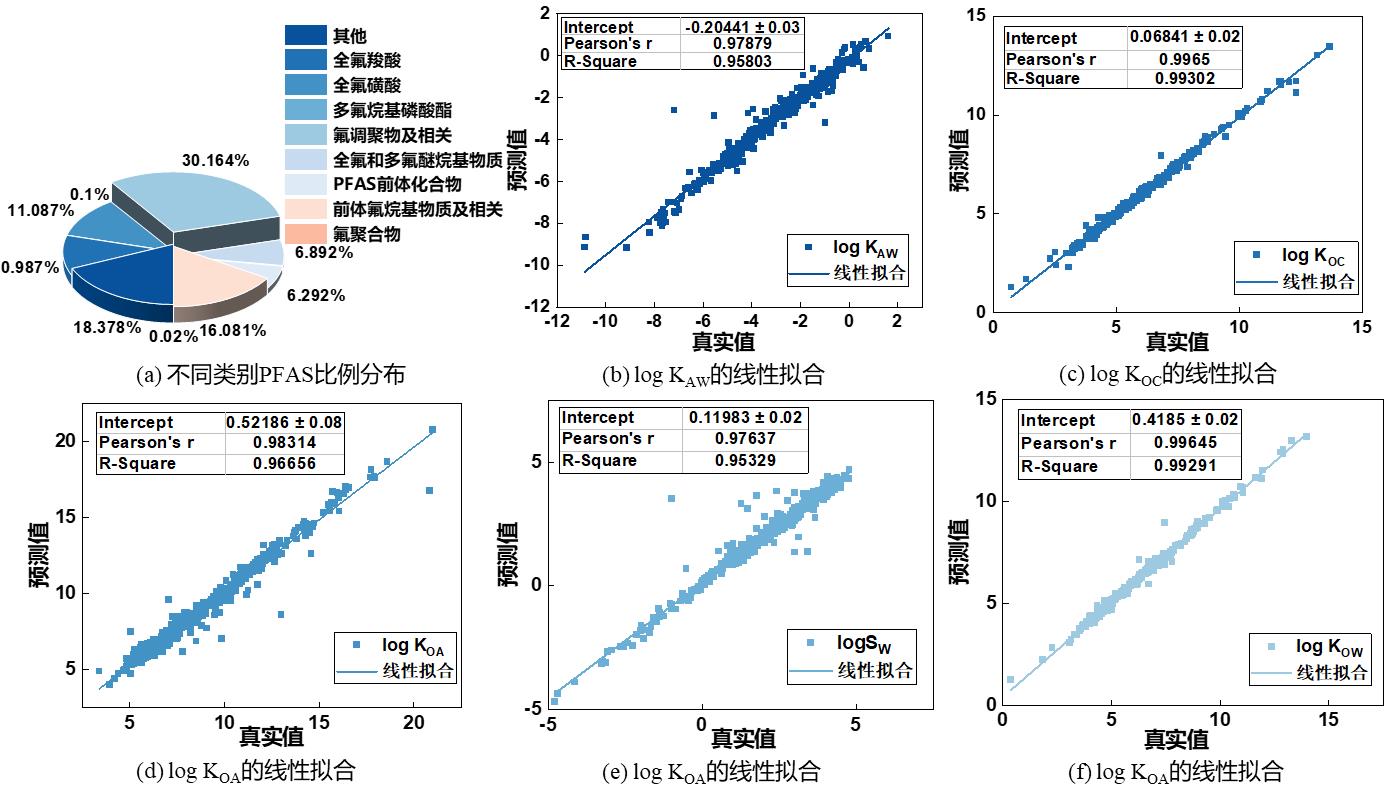
Fig.2 Compositional distribution of PFAS dataset and validation of predictive models for physicochemical properties
| 性质 | 模型 | RMSE |
|---|---|---|
| logKAW | 决策树 | 1.543 +/- 0.215 |
| 随机森林 | 1.095 +/- 0.245 | |
| 极端梯度提升 | 1.043 +/- 0.240 | |
| 自适应证据深度学习模型 | 0.705 +/- 0.185 | |
| logKOA | 决策树 | 1.666 +/- 0.225 |
| 随机森林 | 1.165 +/- 0.215 | |
| 极端梯度提升 | 1.077 +/- 0.234 | |
| 自适应证据深度学习模型 | 0.805 +/- 0.207 | |
| logKOC | 决策树 | 0.711+/- 0.060 |
| 随机森林 | 0.308 +/- 0.060 | |
| 极端梯度提升 | 0.314 +/- 0.055 | |
| 自适应证据深度学习模型 | 0.180 +/- 0.031 | |
| logKOW | 决策树 | 0.733 +/- 0.065 |
| 随机森林 | 0.335 +/- 0.056 | |
| 极端梯度提升 | 0.326 +/- 0.054 | |
| 自适应证据深度学习模型 | 0.327 +/- 0.072 | |
| logKSW | 决策树 | 1.094 +/- 0.664 |
| 随机森林 | 0.842 +/- .3020 | |
| 极端梯度提升 | 0.705 +/- 0.185 | |
| 自适应证据深度学习模型 | 0.655 +/- 0.189 |
Table 2 Comparison of predictive performance between adaptive evidential deep learning model and traditional machine learning methods
| 性质 | 模型 | RMSE |
|---|---|---|
| logKAW | 决策树 | 1.543 +/- 0.215 |
| 随机森林 | 1.095 +/- 0.245 | |
| 极端梯度提升 | 1.043 +/- 0.240 | |
| 自适应证据深度学习模型 | 0.705 +/- 0.185 | |
| logKOA | 决策树 | 1.666 +/- 0.225 |
| 随机森林 | 1.165 +/- 0.215 | |
| 极端梯度提升 | 1.077 +/- 0.234 | |
| 自适应证据深度学习模型 | 0.805 +/- 0.207 | |
| logKOC | 决策树 | 0.711+/- 0.060 |
| 随机森林 | 0.308 +/- 0.060 | |
| 极端梯度提升 | 0.314 +/- 0.055 | |
| 自适应证据深度学习模型 | 0.180 +/- 0.031 | |
| logKOW | 决策树 | 0.733 +/- 0.065 |
| 随机森林 | 0.335 +/- 0.056 | |
| 极端梯度提升 | 0.326 +/- 0.054 | |
| 自适应证据深度学习模型 | 0.327 +/- 0.072 | |
| logKSW | 决策树 | 1.094 +/- 0.664 |
| 随机森林 | 0.842 +/- .3020 | |
| 极端梯度提升 | 0.705 +/- 0.185 | |
| 自适应证据深度学习模型 | 0.655 +/- 0.189 |
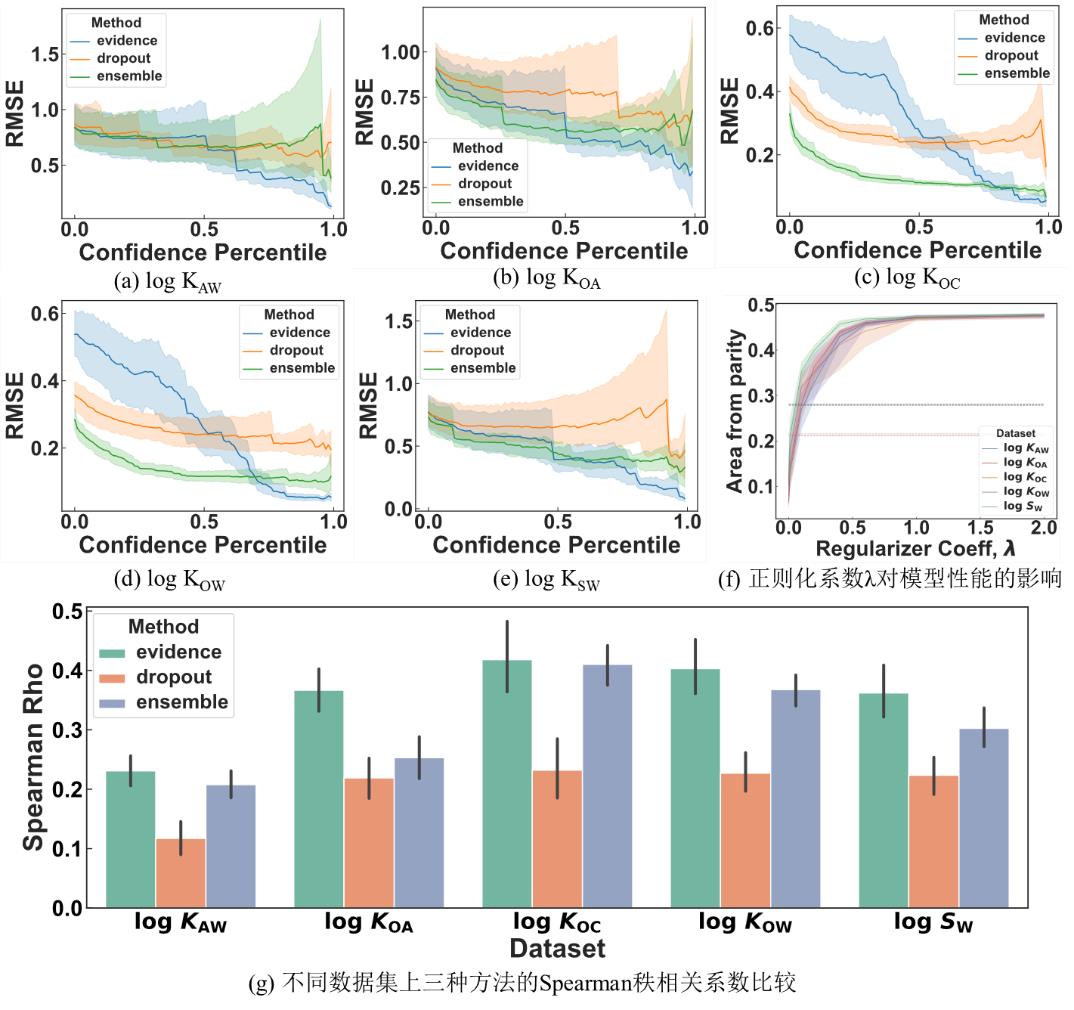
Fig.3 Comparison of predictive performance across three uncertainty estimation methods on multiple datasets
| 性质 | 损失函数 | 实验编号 | 特征类型 | RMSE |
|---|---|---|---|---|
| logKAW | NLP损失 | 1 | Morgan_count | 0.837 +/- 0.162 |
| 2 | Morgan | 0.904 +/- 0.129 | ||
| 3 | PFAS | 0.710+/- 0.194 | ||
| 4 | PFAS_combined | 0.839 +/- 0.165 | ||
| 自适应损失 | 5 | Morgan_count | 0.828 +/- 0.159 | |
| 6 | Morgan | 0.902 +/- 0.143 | ||
| 7 | PFAS | 0.705 +/- 0.185 | ||
| 8 | PFAS_combined | 0.828 +/- 0.193 | ||
| logKOA | NLP损失 | 1 | Morgan_count | 0.918 +/- 0.163 |
| 2 | Morgan | 1.013 +/- 0.131 | ||
| 3 | PFAS | 0.761 +/- 0.208 | ||
| 4 | PFAS_combined | 0.865 +/- 0.174 | ||
| 自适应损失 | 5 | Morgan_count | 0.887 +/- 0.138 | |
| 6 | Morgan | 1.038 +/- 0.131 | ||
| 7 | PFAS | 0.805 +/- 0.207 | ||
| 8 | PFAS_combined | 0.873 +/- 0.136 | ||
| logKOC | NLP损失 | 1 | Morgan_count | 0.252 +/- 0.033 |
| 2 | Morgan | 0.459 +/- 0.050 | ||
| 3 | PFAS | 0.186 +/- 0.054 | ||
| 4 | PFAS_combined | 0.243 +/- 0.045 | ||
| 自适应损失 | 5 | Morgan_count | 0.363 +/- 0.037 | |
| 6 | Morgan | 0.466 +/- 0.044 | ||
| 7 | PFAS | 0.180 +/- 0.031 | ||
| 8 | PFAS_combined | 0.246 +/- 0.043 | ||
| logKOW | NLP损失 | 1 | Morgan_count | 0.475 +/- 0.084 |
| 2 | Morgan | 0.422 +/- 0.065 | ||
| 3 | PFAS | 0.350 +/- 0.087 | ||
| 4 | PFAS_combined | 0.484 +/- 0.102 | ||
| 自适应损失 | 5 | Morgan_count | 0.349 +/- 0.042 | |
| 6 | Morgan | 0.439 +/- 0.062 | ||
| 7 | PFAS | 0.327 +/- 0.072 | ||
| 8 | PFAS_combined | 0.347 +/- 0.072 | ||
| logKSW | NLP损失 | 1 | Morgan_count | 0.713 +/- 0.197 |
| 2 | Morgan | 0.821 +/- 0.138 | ||
| 3 | PFAS | 0.638 +/- 0.206 | ||
| 4 | PFAS_combined | 0.839 +/- 0.165 | ||
| 自适应损失 | 5 | Morgan_count | 0.700 +/- 0.184 | |
| 6 | Morgan | 0.809 +/- 0.146 | ||
| 7 | PFAS | 0.655 +/- 0.189 | ||
| 8 | PFAS_combined | 0.720 +/- 0.230 |
Table 3 RMSE for partition coefficient predictions using different loss functions and molecular representations
| 性质 | 损失函数 | 实验编号 | 特征类型 | RMSE |
|---|---|---|---|---|
| logKAW | NLP损失 | 1 | Morgan_count | 0.837 +/- 0.162 |
| 2 | Morgan | 0.904 +/- 0.129 | ||
| 3 | PFAS | 0.710+/- 0.194 | ||
| 4 | PFAS_combined | 0.839 +/- 0.165 | ||
| 自适应损失 | 5 | Morgan_count | 0.828 +/- 0.159 | |
| 6 | Morgan | 0.902 +/- 0.143 | ||
| 7 | PFAS | 0.705 +/- 0.185 | ||
| 8 | PFAS_combined | 0.828 +/- 0.193 | ||
| logKOA | NLP损失 | 1 | Morgan_count | 0.918 +/- 0.163 |
| 2 | Morgan | 1.013 +/- 0.131 | ||
| 3 | PFAS | 0.761 +/- 0.208 | ||
| 4 | PFAS_combined | 0.865 +/- 0.174 | ||
| 自适应损失 | 5 | Morgan_count | 0.887 +/- 0.138 | |
| 6 | Morgan | 1.038 +/- 0.131 | ||
| 7 | PFAS | 0.805 +/- 0.207 | ||
| 8 | PFAS_combined | 0.873 +/- 0.136 | ||
| logKOC | NLP损失 | 1 | Morgan_count | 0.252 +/- 0.033 |
| 2 | Morgan | 0.459 +/- 0.050 | ||
| 3 | PFAS | 0.186 +/- 0.054 | ||
| 4 | PFAS_combined | 0.243 +/- 0.045 | ||
| 自适应损失 | 5 | Morgan_count | 0.363 +/- 0.037 | |
| 6 | Morgan | 0.466 +/- 0.044 | ||
| 7 | PFAS | 0.180 +/- 0.031 | ||
| 8 | PFAS_combined | 0.246 +/- 0.043 | ||
| logKOW | NLP损失 | 1 | Morgan_count | 0.475 +/- 0.084 |
| 2 | Morgan | 0.422 +/- 0.065 | ||
| 3 | PFAS | 0.350 +/- 0.087 | ||
| 4 | PFAS_combined | 0.484 +/- 0.102 | ||
| 自适应损失 | 5 | Morgan_count | 0.349 +/- 0.042 | |
| 6 | Morgan | 0.439 +/- 0.062 | ||
| 7 | PFAS | 0.327 +/- 0.072 | ||
| 8 | PFAS_combined | 0.347 +/- 0.072 | ||
| logKSW | NLP损失 | 1 | Morgan_count | 0.713 +/- 0.197 |
| 2 | Morgan | 0.821 +/- 0.138 | ||
| 3 | PFAS | 0.638 +/- 0.206 | ||
| 4 | PFAS_combined | 0.839 +/- 0.165 | ||
| 自适应损失 | 5 | Morgan_count | 0.700 +/- 0.184 | |
| 6 | Morgan | 0.809 +/- 0.146 | ||
| 7 | PFAS | 0.655 +/- 0.189 | ||
| 8 | PFAS_combined | 0.720 +/- 0.230 |
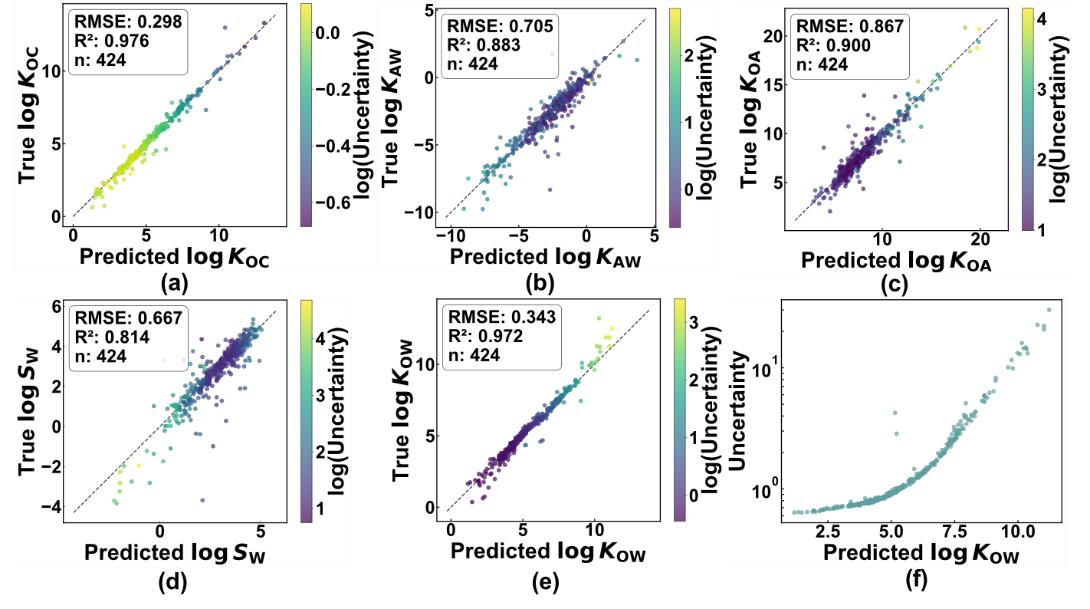
Fig.4 Generalization performance evaluation of adaptive evidential deep learning models on test sets
| [1] | 武宇辉, 杨悦锁, 赵传起,等. 水土环境中微生物胞外聚合物对污染物迁移和归宿影响的研究进展[J]. 化工学报, 2018, 69 (8): 3303-3317. |
| Wu Y H, Yang Y S, Zhao C Q, et al. A review on effects of extracellular polymeric substances on contaminants fate & transport in soil and water environment[J]. CIESC Journal, 2018, 69 (8): 3303-3317. | |
| [2] | 王艺, 陈川, 张子峰,等. 甲基硅氧烷在污水处理厂中的环境行为[J]. 化工学报, 2016, 67(1): 83-88. |
| Wang Y, Chen C, Zhang Z F, et al. Environmental behavior of siloxane in wastewater treatment plants[J]. CIESC Journal, 2016, 67(1): 83-88. | |
| [3] | 杨悦锁, 王园园, 宋晓明, 等. 土壤和地下水环境中胶体与污染物共迁移研究进展[J]. 化工学报, 2017, 68(1): 23-36. |
| Yang Y S, Wang Y Y, Song X M, et al. Co-transport of colloids and facilitated contaminants in subsurface environment[J]. CIESC Journal, 2017, 68(1): 23-36. | |
| [4] | Cousins I T, DeWitt J C, Glüge J, et al. The high persistence of PFAS is sufficient for their management as a chemical class[J]. Environmental Science: Processes & Impacts, 2020, 22(12): 2307-2312. |
| [5] | Hu J B, Yang X, Song X Y, et al. Elucidating environmental fate and toxicological mechanisms of ultrashort-and short-chain PFAS: Integrating machine learning, molecular modeling, and experimental validation[J]. Journal of Environmental Management, 2025, 390: 126277. |
| [6] | Hu J B, Yang X, Song X Y, et al. Bioaccumulation mechanisms of perfluoroalkyl substances (PFASs) in aquatic environments: Theoretical and experimental insights[J]. Journal of Hazardous Materials, 2024, 480: 136283. |
| [7] | Endo S. Intermolecular interactions, solute descriptors, and partition properties of neutral per- and polyfluoroalkyl substances (PFAS)[J]. Environmental Science & Technology, 2023, 57(45): 17534-17541. |
| [8] | Lampic A, Parnis J M. Property estimation of per- and polyfluoroalkyl substances: a comparative assessment of estimation methods[J]. Environmental Toxicology and Chemistry, 2020, 39(4): 775-786. |
| [9] | Di Guardo A, Gouin T, MacLeod M, et al. Environmental fate and exposure models: advances and challenges in 21st century chemical risk assessment[J]. Environmental Science: Processes & Impacts, 2018, 20(1): 58-71. |
| [10] | Tong X N, Mohapatra S, Zhang J J, et al. Source, fate, transport and modelling of selected emerging contaminants in the aquatic environment: Current status and future perspectives[J]. Water Research, 2022, 217: 118418. |
| [11] | Ateia M, Maroli A, Tharayil N, et al. The overlooked short- and ultrashort-chain poly- and perfluorinated substances: a review[J]. Chemosphere, 2019, 220: 866-882. |
| [12] | Endo S, Hammer J, Matsuzawa S. Experimental determination of air/water partition coefficients for 21 per- and polyfluoroalkyl substances reveals variable performance of property prediction models[J]. Environmental Science & Technology, 2023, 57(22): 8406-8413. |
| [13] | Stults J F, Choi Y J, Rockwell C, et al. Predicting concentration- and ionic-strength-dependent air–water interfacial partitioning parameters of PFASs using quantitative structure–property relationships (QSPRs)[J]. Environmental Science & Technology, 2023, 57(13): 5203-5215. |
| [14] | 陈家辉, 杨鑫泽, 陈顾中, 等. 以离子液体密度为例的分子性质预测模型建模方法探讨[J]. 化工学报, 2023, 74(2): 630-641. |
| Chen J H, Yang X Z, Chen G Z, et al. A critical discussion on developing molecular property prediction models: density of ionic liquids as example[J]. CIESC Journal, 2023, 74(2): 630-641. | |
| [15] | Raza A, Bardhan S, Xu L H, et al. A machine learning approach for predicting defluorination of per- and polyfluoroalkyl substances (PFAS) for their efficient treatment and removal[J]. Environmental Science & Technology Letters, 2019, 6(10): 624-629. |
| [16] | Xie J X, Liu S, Su L H, et al. Elucidating per- and polyfluoroalkyl substances (PFASs) soil-water partitioning behavior through explainable machine learning models[J]. Science of the Total Environment, 2024, 954: 176575. |
| [17] | Amini A, Schwarting W, Soleimany A, et al. Deep evidential regression[EB/OL]. 2020: arXiv: 1910.02600. |
| [18] | Charpentier B, Zügner D, Günnemann S. Posterior network: uncertainty estimation without OOD samples via density-based pseudo-counts[EB/OL]. 2020: arXiv: 2006.09239. |
| [19] | 陈治宏, 吴佳伟, 楼小玲, 等. 化学品生物制造过程机器学习的研究进展[J]. 化工学报, 2025, 76(8): 3789-3804. |
| Chen Z H, Wu J W, Lou X L, et al. Recent advances in machine learning for biomanufacturing of chemicals[J]. CIESC Journal, 2025, 76(8): 3789-3804. | |
| [20] | Mudlaff M, Sosnowska A, Gorb L, et al. Environmental impact of PFAS: Filling data gaps using theoretical quantum chemistry and QSPR modeling[J]. Environment International, 2024, 185: 108568. |
| [21] | Skinnider M A. Invalid SMILES are beneficial rather than detrimental to chemical language models[J]. Nature Machine Intelligence, 2024, 6(4): 437-448. |
| [22] | Ha Y J, Lee G S, Yoo M, et al. Feasibility study of multi-site split learning for privacy-preserving medical systems under data imbalance constraints in COVID-19, X-ray, and cholesterol dataset[J]. Scientific Reports, 2022, 12: 1534. |
| [23] | Nakamura T, Sakaue S, Fujii K, et al. Selecting molecules with diverse structures and properties by maximizing submodular functions of descriptors learned with graph neural networks[J]. Scientific Reports, 2022, 12: 1124. |
| [24] | Mercado R, Bjerrum E J, Engkvist O. Exploring graph traversal algorithms in graph-based molecular generation[J]. Journal of Chemical Information and Modeling, 2022, 62(9): 2093-2100. |
| [25] | 王芳, 马素霞, 田营, 等. 基于LSTM动态修正一维机理模型的CFB机组NOx排放浓度预测方法[J]. 化工学报, 2025, 76(7): 3416-3425. |
| Wang F, Ma S X, Tian Y, et al. NO x emission prediction method of CFB unit based on 1D mechanism model dynamicly corrected with LSTM[J]. CIESC Journal, 2025, 76(7): 3416-3425. | |
| [26] | Meinert N, Lavin A. Multivariate deep evidential regression[EB/OL]. 2021: arXiv: 2104.06135. |
| [27] | Soleimany A P, Amini A, Goldman S, et al. Evidential deep learning for guided molecular property prediction and discovery[J]. ACS Central Science, 2021, 7(8): 1356-1367. |
| [28] | Guo C, Pleiss G, Sun Y, et al. On calibration of modern neural networks[C]//Proceedings of the 34th International Conference on Machine Learning - Volume 70. August 6 - 11, 2017, Sydney, NSW, Australia. ACM, 2017: 1321-1330. |
| [29] | 任嘉辉, 刘豫, 刘朝, 等. 基于分子指纹和拓扑指数的工质临界温度理论预测[J]. 化工学报, 2022, 73(4): 1493-1500. |
| Ren J H, Liu Y, Liu C, et al. Critical temperature prediction of working fluids using molecular fingerprints and topological indices[J]. CIESC Journal, 2022, 73(4): 1493-1500. | |
| [30] | Feinstein J, Sivaraman G, Picel K, et al. Uncertainty-informed deep transfer learning of perfluoroalkyl and polyfluoroalkyl substance toxicity[J]. Journal of Chemical Information and Modeling, 2021, 61(12): 5793-5803. |
| [31] | Li H, Nan Y, Del Ser J, et al. Region-based evidential deep learning to quantify uncertainty and improve robustness of brain tumor segmentation[J]. Neural Computing and Applications, 2023, 35(30): 22071-22085. |
| [32] | Kendall A, Gal Y. What uncertainties do we need in Bayesian deep learning for computer vision? [C]//Proceedings of the 31st International Conference on Neural Information Processing Systems. December 4 - 9, 2017, Long Beach, California, USA. ACM, 2017: 5580-5590. |
| [1] | Jianbin PENG, Ming LI, Junlong XIE, Jianye CHEN. Numerical investigation of liquid hydrogen leakage and explosion overpressure at liquid hydrogen receiving terminal [J]. CIESC Journal, 2025, 76(S1): 453-461. |
| [2] | Sheng CHEN, Zizheng LI, Chao MIAO, Xuegang BAI, Fei LI, Jiaxuan LIU, Tiantian LI, Shuang YANG, Rongrong LYU, Jiangyun WANG. Three-dimensional CFD simulation of non-uniform diffusion characteristic of high-risk chlorine gas in large-scale dense scene [J]. CIESC Journal, 2025, 76(9): 4630-4643. |
| [3] | Guangzheng ZHOU, Zihan ZHONG, Yanqun HUANG, Xuezhong WANG. Intelligent monitoring of crystallization processes based on in situ imaging and image analysis [J]. CIESC Journal, 2025, 76(9): 4351-4368. |
| [4] | Yiyang LIU, Zhixiang XING, Yecheng LIU, Ming PENG, Yuyang LI, Yunhao LI, Ningzhou SHEN. Numerical simulation study on the leakage diffusion characteristics and safety monitoring of liquid hydrogen in hydrogen refueling stations [J]. CIESC Journal, 2025, 76(9): 4694-4708. |
| [5] | Shuyu WANG, Zhiliang XUE, Jing ZHU, Xin FU, Yonggang ZHOU, Yiming HU, Qunxing HUANG. Experimental study on mass and morphological character during scrap tire pyrolysis [J]. CIESC Journal, 2025, 76(7): 3459-3467. |
| [6] | Peng YANG, Wanli YOU, Zhongqian LING, Xianyang ZENG, Yunchao LI, Jiayi LIN, Lijian WANG, Dingkun YUAN. Experimental study on performance of compact three-chamber RTO system for treating waste gas containing ethyl acetate [J]. CIESC Journal, 2025, 76(7): 3585-3595. |
| [7] | Liang GUO, Ye CHEN, Qiming JIA, Xiujuan XIE. Simulated and experimental investigations on self-pressurization of liquid helium storage tank [J]. CIESC Journal, 2025, 76(7): 3561-3571. |
| [8] | Hao DUAN, Wenchao WANG, Dong LIU, Xiaojun YIN, Erjiang HU, Ke ZENG. Effects of methanol energy substitution ratio on performance of a methanol/diesel dual direct injection engine [J]. CIESC Journal, 2025, 76(7): 3552-3560. |
| [9] | Tao WANG, Guangming LI, Qiuxia HU, Jing XU. Optimization of warpage process for two-color injection products based on temporal evolution particle swarm optimization algorithm [J]. CIESC Journal, 2025, 76(7): 3403-3415. |
| [10] | Hanchuan ZHANG, Chao SHANG, Wenxiang LYU, Dexiang HUANG, Yaning ZHANG. Operating conditions pattern recognition and yield prediction for FCCU based on unsupervised time series clustering [J]. CIESC Journal, 2025, 76(6): 2781-2790. |
| [11] | Wenliang LI, Cheng JI, Chen LIANG, Sichen WU, Shilin CHEN, Wei SUN, Chi ZHAI. On-line soft measurement of penicillin concentration based on TDMN [J]. CIESC Journal, 2025, 76(6): 2848-2858. |
| [12] | Fuyu WANG, Xuanyi ZHOU. Leakage estimation in a chemical tank farm with unsteady adjoint equation and genetic algorithm [J]. CIESC Journal, 2025, 76(6): 3104-3114. |
| [13] | Yiyun ZHANG, Hengzhi CHEN, Yang LI, Chang'an MU, Quanhai WANG. Effects of turbulence on radial gas diffusion in binary particle fluidized bed [J]. CIESC Journal, 2025, 76(6): 2559-2568. |
| [14] | Xinyi LI, Gongming WANG, Zipeng WANG, Junfei QIAO. Research on intelligent prediction of water quality in sewage treatment process based on event triggering [J]. CIESC Journal, 2025, 76(6): 2828-2837. |
| [15] | Jingxin ZHANG, Jiaojie HE, Qingwang CAI, Ziyi KANG, Yusi YANG, Tong WANG, Xiantao CAO, Liwei YANG. Prediction of COD concentration in wastewater treatment plant effluent based on secondary decomposition and BiLSTM [J]. CIESC Journal, 2025, 76(6): 2859-2871. |
| Viewed | ||||||
|
Full text |
|
|||||
|
Abstract |
|
|||||