CIESC Journal ›› 2025, Vol. 76 ›› Issue (10): 5225-5235.DOI: 10.11949/0438-1157.20250533
• Separation engineering • Previous Articles Next Articles
Lusheng HUANG( ), Zhijun XIAO, Yaqin SUN, Zhilong XIU()
Received:2025-05-13
Revised:2025-07-15
Online:2025-11-25
Published:2025-10-25
Contact:
Zhilong XIU
黄路生(), 肖志俊, 孙亚琴, 修志龙()
通讯作者:
修志龙
作者简介:黄路生(1998—),男,硕士,2546429367@qq.com
基金资助:CLC Number:
Lusheng HUANG, Zhijun XIAO, Yaqin SUN, Zhilong XIU. Preparation of phenylboronic acid-based adsorption resin and its application in the separation of bio-based 1,3-propanediol[J]. CIESC Journal, 2025, 76(10): 5225-5235.
黄路生, 肖志俊, 孙亚琴, 修志龙. 苯硼酸基吸附树脂的制备及其在生物基1,3-丙二醇分离中的应用[J]. 化工学报, 2025, 76(10): 5225-5235.
Add to citation manager EndNote|Ris|BibTeX
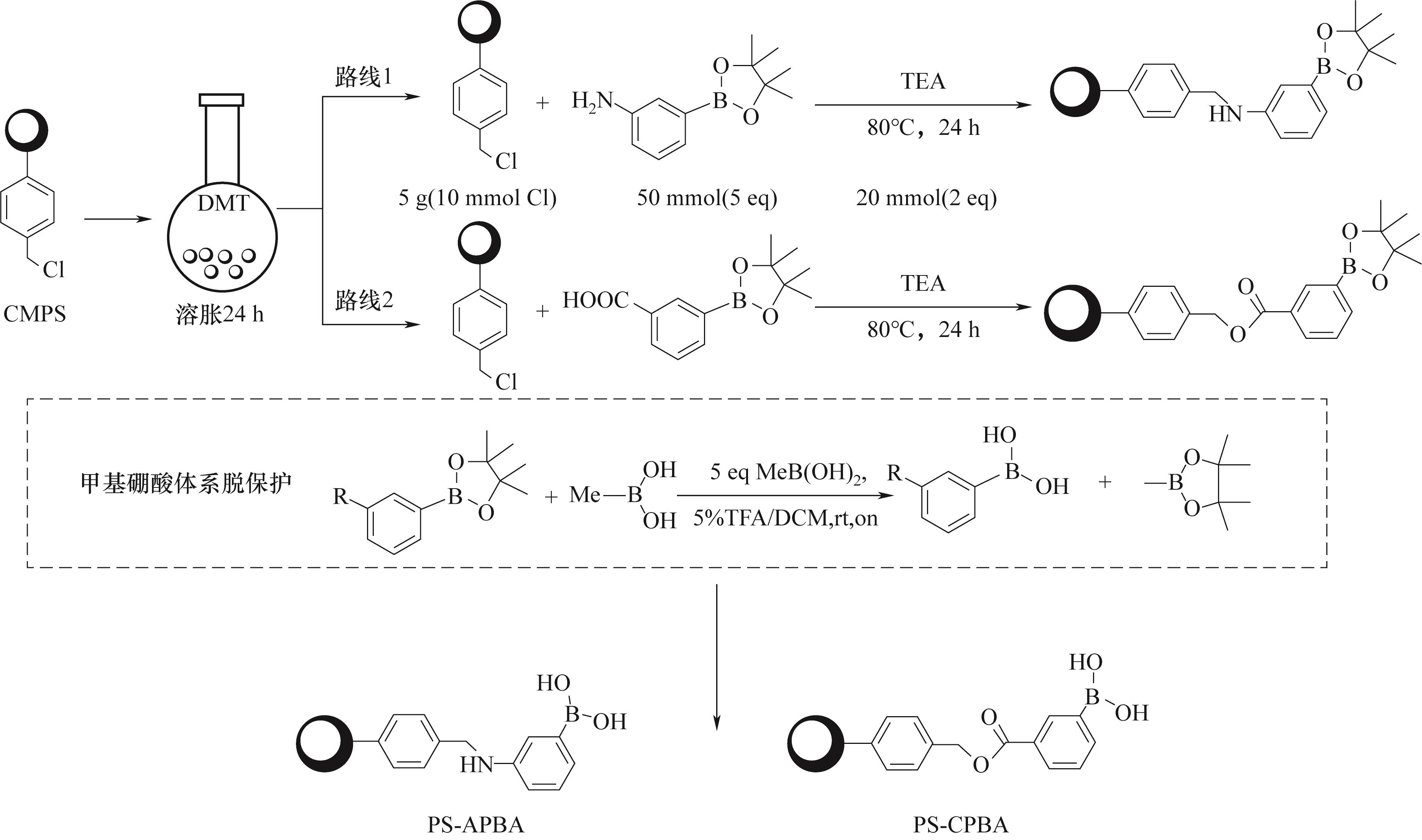
Fig.1 The synthesis of functional resins modified by phenylboronic acid
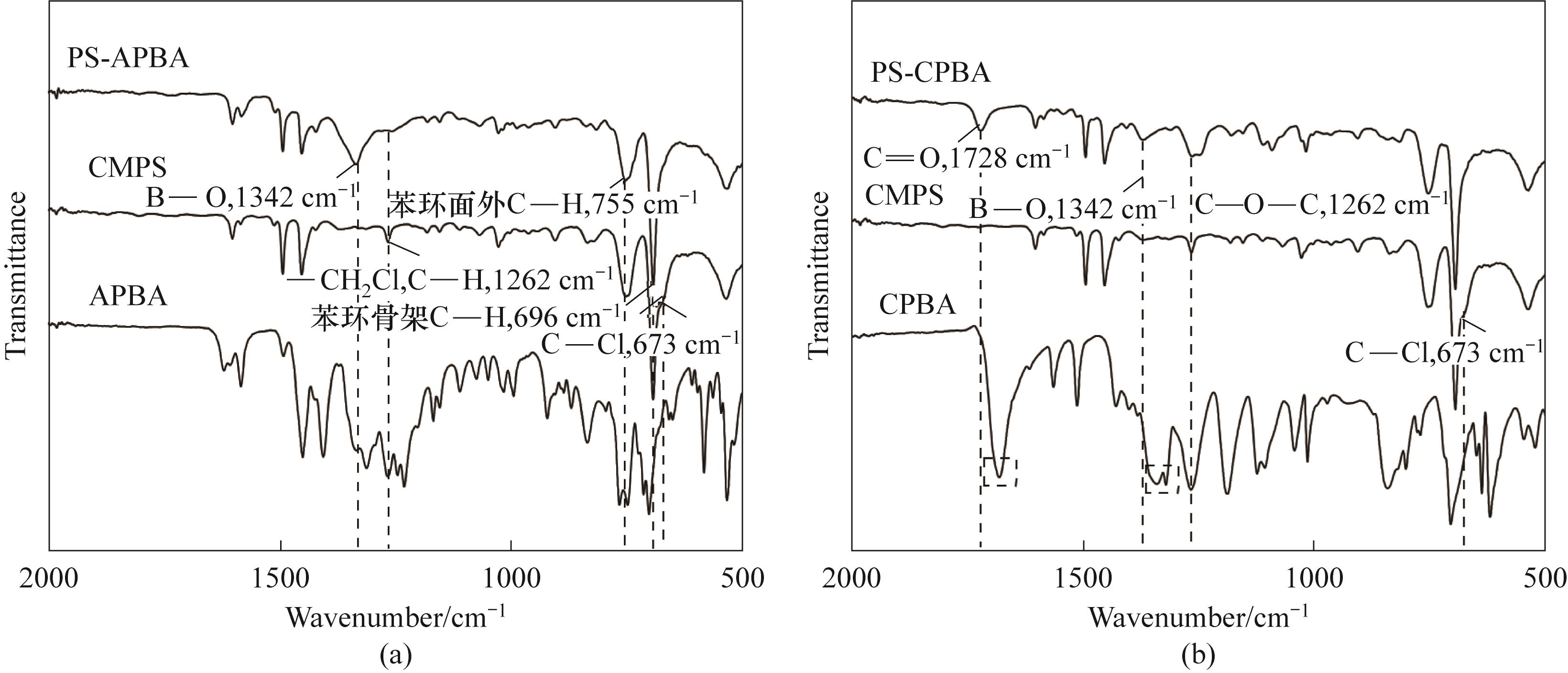
Fig.2 Infrared spectra of phenylboronic acid-based resins
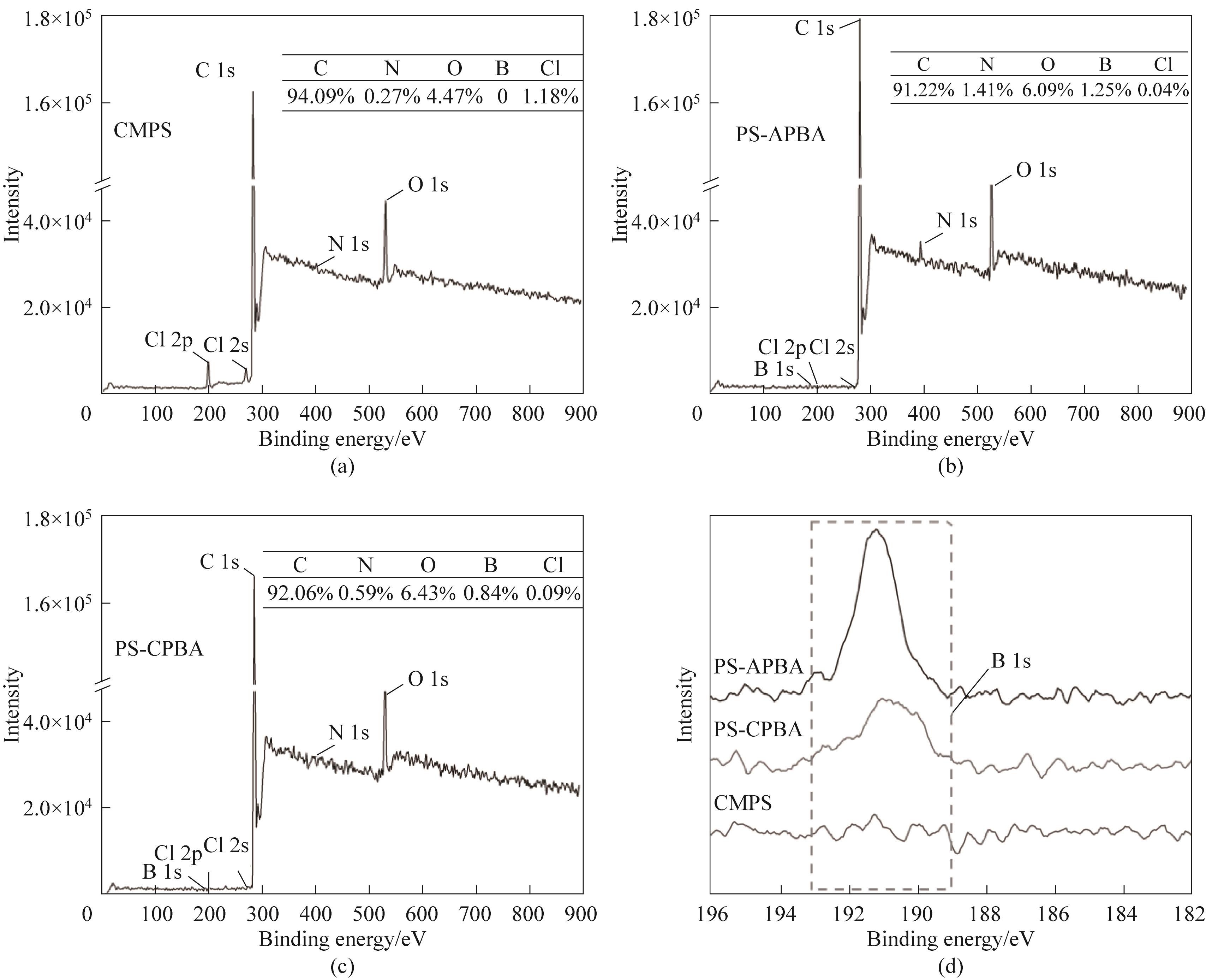
Fig.3 XPS full spectra of resins before and after modification as well as fine spectrum of B 1s
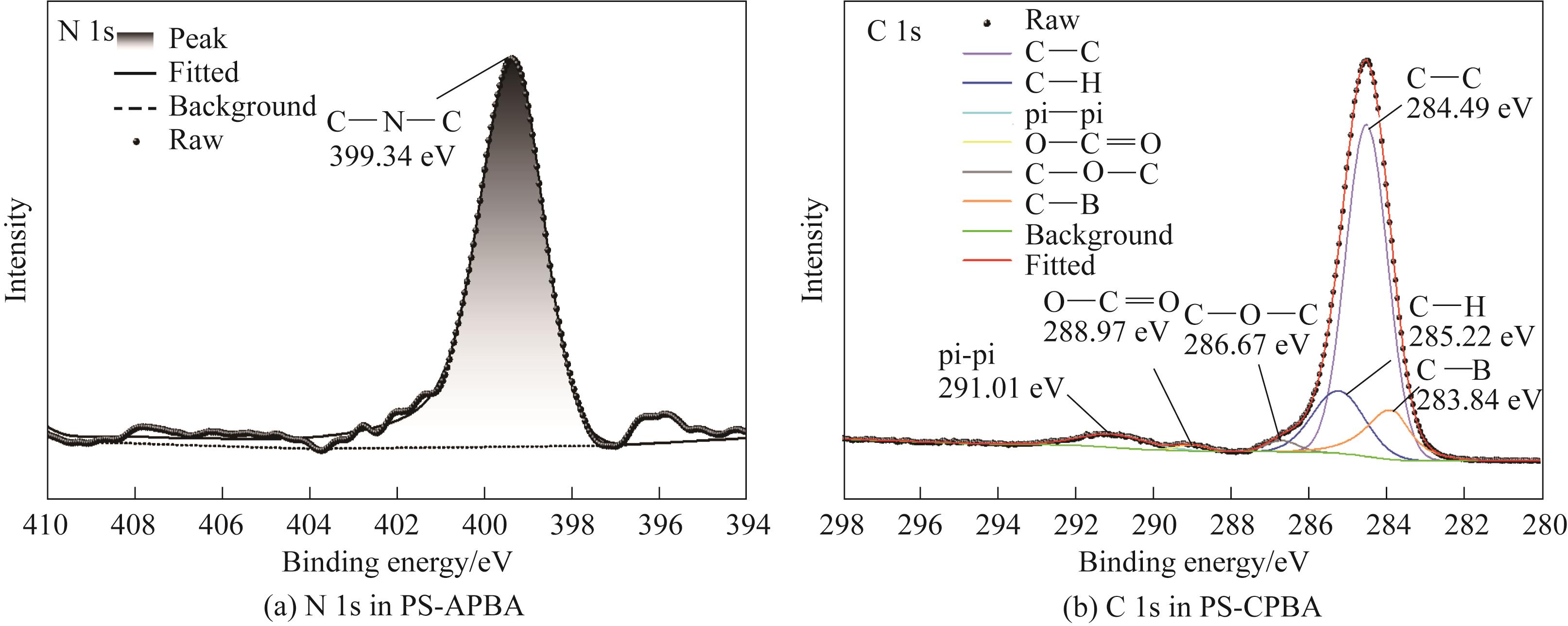
Fig.4 Fine spectra of N 1s and C 1s in phenylboronic acid-based resins
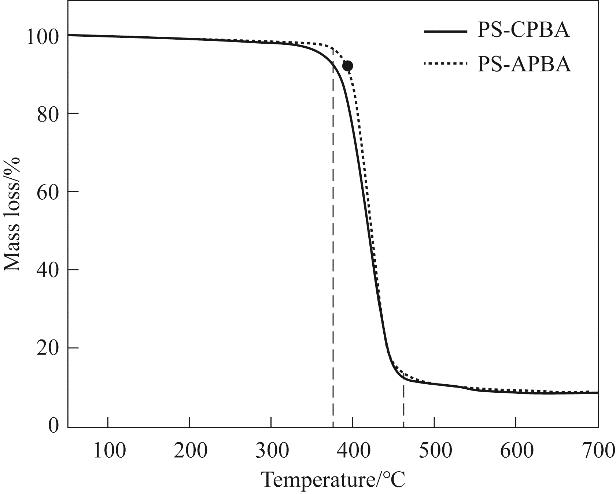
Fig.5 Thermogravimetric analysis of phenylboronic acid-based resins
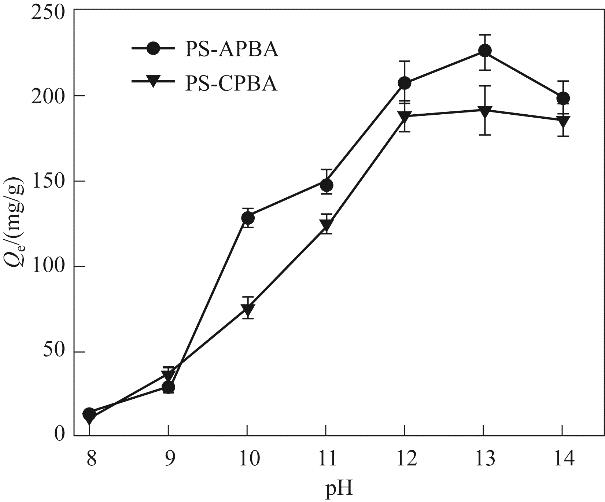
Fig.6 Effect of pH on the adsorption capacities of phenylboronic acid-based resins
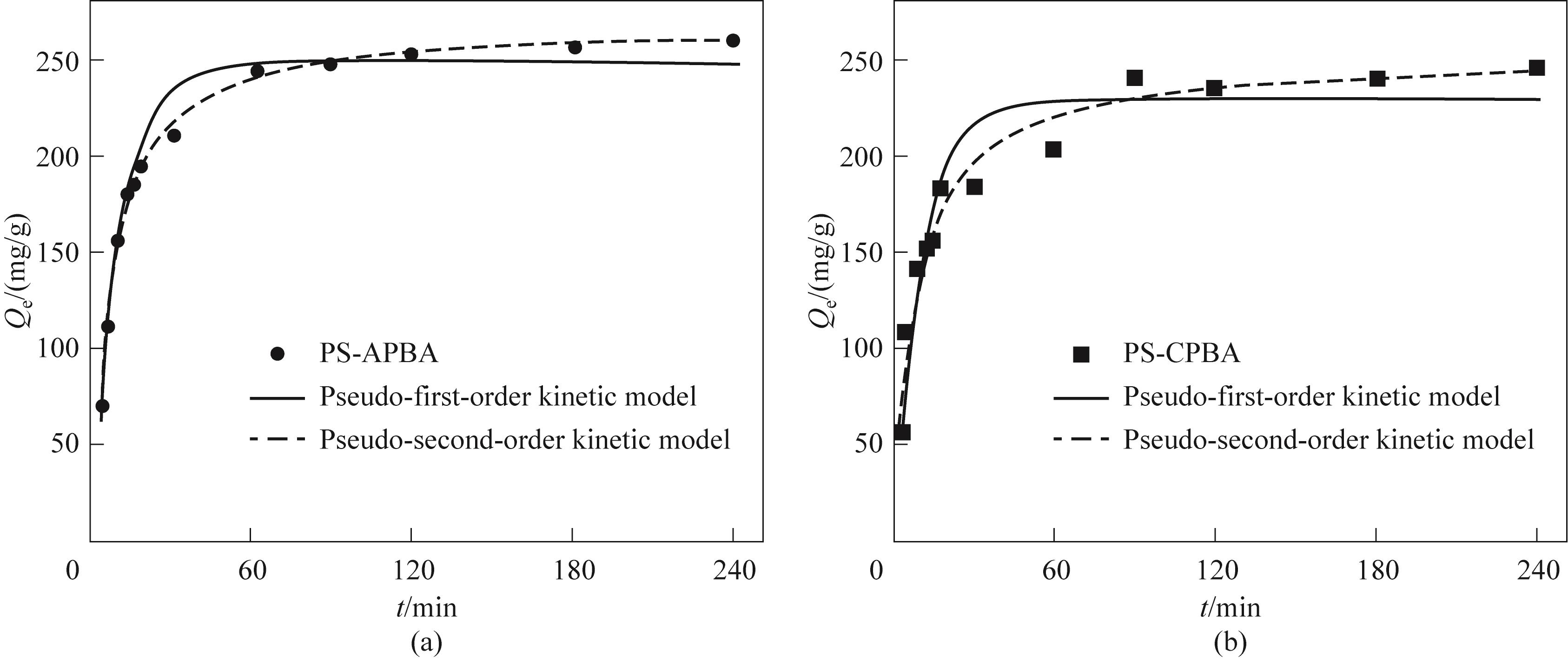
Fig.7 Adsorption curves and kinetic fitting of two phenylboronic acid-based resins for 1,3-propanediol
| 树脂 | 拟一级动力学模型 | 拟二级动力学模型 | ||||
|---|---|---|---|---|---|---|
| Qe/(mg/g) | k1/min-1 | R2 | Qe/(mg/g) | k2/(g/(mg·min)) | R2 | |
| PS-APBA | 247.9 | 0.09879 | 0.9702 | 268.6 | 5.264×10⁻⁴ | 0.9881 |
| PS-CPBA | 229.5 | 0.08974 | 0.9300 | 250.9 | 4.893×10⁻⁴ | 0.9731 |
Table 1 Fitting parameters of adsorption kinetics
| 树脂 | 拟一级动力学模型 | 拟二级动力学模型 | ||||
|---|---|---|---|---|---|---|
| Qe/(mg/g) | k1/min-1 | R2 | Qe/(mg/g) | k2/(g/(mg·min)) | R2 | |
| PS-APBA | 247.9 | 0.09879 | 0.9702 | 268.6 | 5.264×10⁻⁴ | 0.9881 |
| PS-CPBA | 229.5 | 0.08974 | 0.9300 | 250.9 | 4.893×10⁻⁴ | 0.9731 |
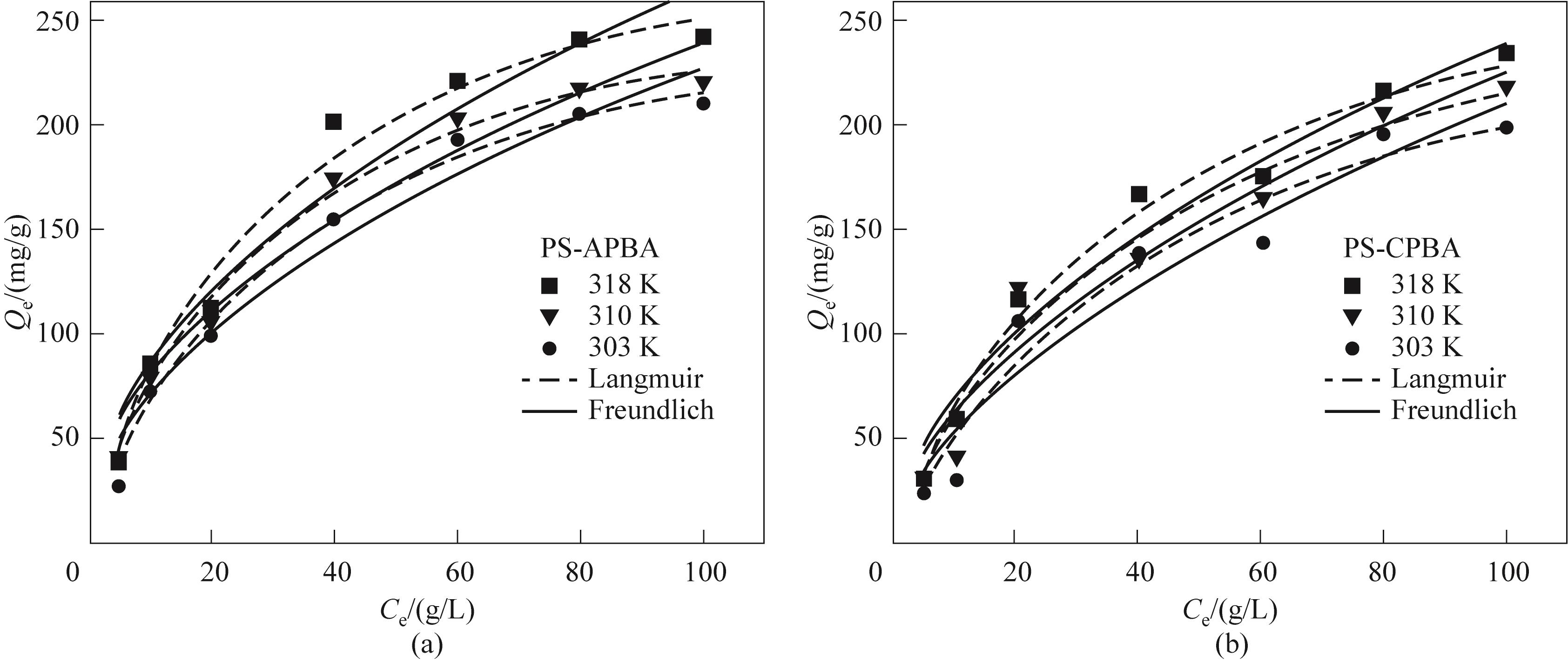
Fig.8 Adsorption isothermal curves and their fitting of two phenylboronic acid-based resins for 1,3-propanediol
| 树脂 | 温度/K | Langmuir model | Freundlich model | ||||
|---|---|---|---|---|---|---|---|
| Qm/ (mg/g) | KL/(L/g) | R2 | KF | n | R2 | ||
| PS-APBA | 303 | 285.3 | 0.03206 | 0.9851 | 24.40 | 2.052 | 0.9496 |
| 310 | 293.0 | 0.03585 | 0.9838 | 29.02 | 2.169 | 0.9502 | |
| 318 | 328.1 | 0.03451 | 0.9793 | 30.39 | 2.110 | 0.9305 | |
| PS-CPBA | 303 | 296.0 | 0.02146 | 0.9445 | 15.20 | 1.743 | 0.9335 |
| 310 | 303.4 | 0.02492 | 0.9526 | 18.99 | 1.848 | 0.9402 | |
| 318 | 314.9 | 0.02741 | 0.9825 | 21.97 | 1.910 | 0.9626 | |
Table 2 The fitting parameters for the adsorption isothermal curves of two resins using Langmuir and Freundlich models
| 树脂 | 温度/K | Langmuir model | Freundlich model | ||||
|---|---|---|---|---|---|---|---|
| Qm/ (mg/g) | KL/(L/g) | R2 | KF | n | R2 | ||
| PS-APBA | 303 | 285.3 | 0.03206 | 0.9851 | 24.40 | 2.052 | 0.9496 |
| 310 | 293.0 | 0.03585 | 0.9838 | 29.02 | 2.169 | 0.9502 | |
| 318 | 328.1 | 0.03451 | 0.9793 | 30.39 | 2.110 | 0.9305 | |
| PS-CPBA | 303 | 296.0 | 0.02146 | 0.9445 | 15.20 | 1.743 | 0.9335 |
| 310 | 303.4 | 0.02492 | 0.9526 | 18.99 | 1.848 | 0.9402 | |
| 318 | 314.9 | 0.02741 | 0.9825 | 21.97 | 1.910 | 0.9626 | |
| 树脂 | T/K | ∆H/(kJ/mol) | ∆S/(J/mol/K) | ∆G/(kJ/mol) |
|---|---|---|---|---|
| PS-APBA | 303 | 30.46 | 114.50 | -6.62 |
| 310 | -6.72 | |||
| 318 | -5.76 | |||
| PS-CPBA | 303 | 11.15 | 56.45 | -5.88 |
| 310 | -5.21 | |||
| 318 | -4.16 |
Table 3 Thermodynamic parameters of two resins for the adsorption of 1,3-propanediol
| 树脂 | T/K | ∆H/(kJ/mol) | ∆S/(J/mol/K) | ∆G/(kJ/mol) |
|---|---|---|---|---|
| PS-APBA | 303 | 30.46 | 114.50 | -6.62 |
| 310 | -6.72 | |||
| 318 | -5.76 | |||
| PS-CPBA | 303 | 11.15 | 56.45 | -5.88 |
| 310 | -5.21 | |||
| 318 | -4.16 |
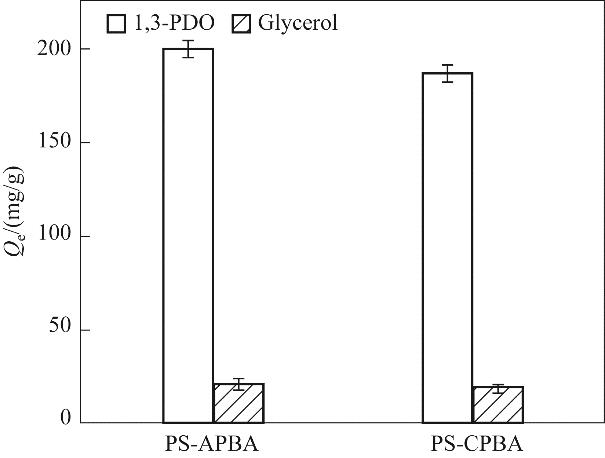
Fig.9 Two-component competitive adsorption of two phenylboronic acid-based resins
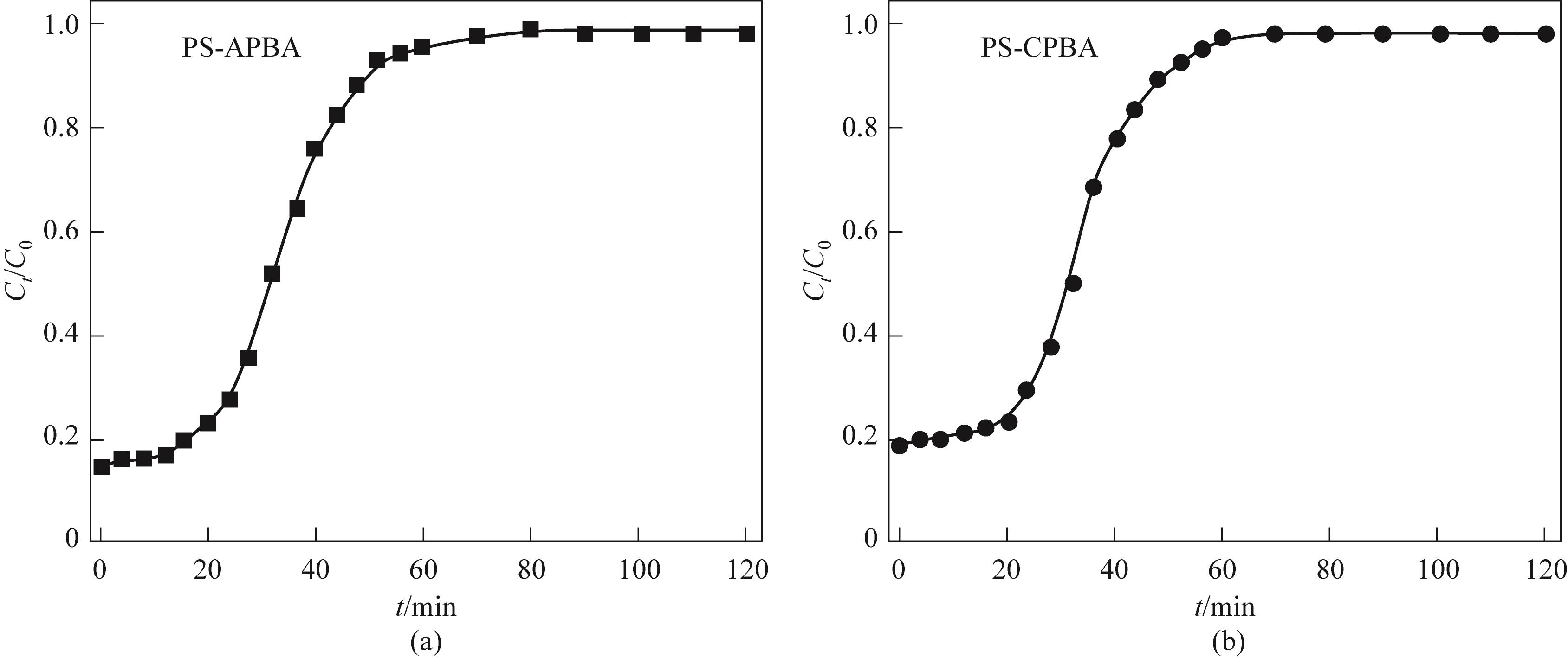
Fig.10 Breakthrough curve of phenylboronic acid-based resins for the concentrated fermentation broth of 1,3-propanediol
| 树脂 | Yoon-Nelson model | Thomas model | ||||
|---|---|---|---|---|---|---|
| kYN/min-1 | τ/min | R2 | kTh/(L/(mg·min)) | Qm/(mg/g) | R2 | |
| PS-APBA | 0.1104 | 30.91 | 0.9858 | 2.024×10⁻³ | 202.4 | 0.9769 |
| PS-CPBA | 0.1231 | 30.52 | 0.9936 | 1.887×10⁻³ | 196.3 | 0.9837 |
Table 4 The fitting parameters of Yoon-Nelson and Thomas models
| 树脂 | Yoon-Nelson model | Thomas model | ||||
|---|---|---|---|---|---|---|
| kYN/min-1 | τ/min | R2 | kTh/(L/(mg·min)) | Qm/(mg/g) | R2 | |
| PS-APBA | 0.1104 | 30.91 | 0.9858 | 2.024×10⁻³ | 202.4 | 0.9769 |
| PS-CPBA | 0.1231 | 30.52 | 0.9936 | 1.887×10⁻³ | 196.3 | 0.9837 |
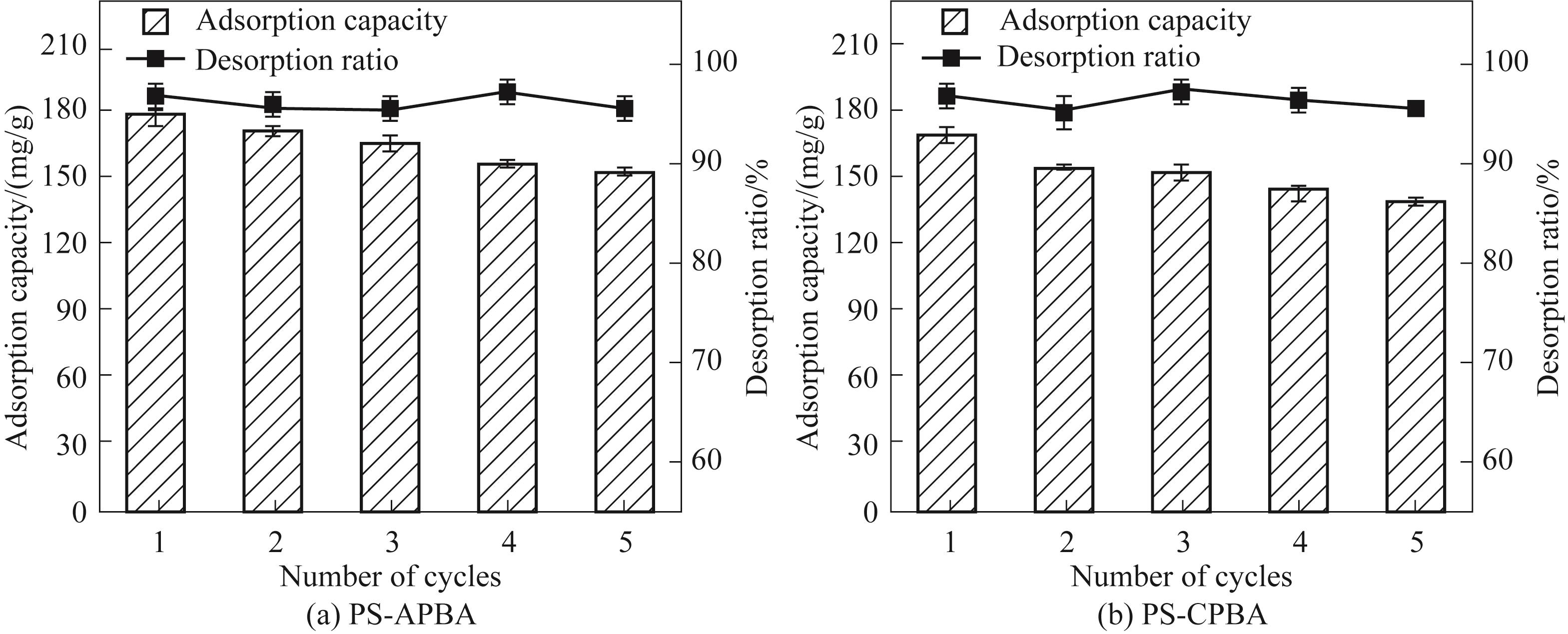
Fig.11 The adsorption and desorption cyclic performance of 1,3-propanediol by phenylboronic acid-based resins
| [1] | Sun Y Q, Shen J T, Yan L, et al. Advances in bioconversion of glycerol to 1,3-propanediol: prospects and challenges[J]. Process Biochemistry, 2018, 71: 134-146. |
| [2] | 王本雷, 李晨, 张新富, 等 1,3-丙二醇合成研究进展[J]. 现代化工, 2023, 43(6): 92-97, 102. |
| Wang B L, Li C, Zhang X F, et al. Progress in the synthesis of 1,3-propanediol[J]. Modern Chemical Industry, 2023, 43(6): 92-97, 102. | |
| [3] | Xiu Z L, Zeng A P. Present state and perspective of downstream processing of biologically produced 1,3-propanediol and 2,3-butanediol[J]. Applied Microbiology and Biotechnology 2008, 78(6): 917-926. |
| [4] | 修志龙, 苏志国. 生物基化学品分离提纯的难点和对策[J]. 生物产业技术, 2010(1): 34-39. |
| Xiu Z L, Su Z G. Difficulties and countermeasures of separation and purification of bio-based chemicals[J]. Bioindustry & Business, 2010(1): 34-39. | |
| [5] | Li Z G, Jiang B, Zhang D J, et al. Aqueous two-phase extraction of 1, 3-propanediol from glycerol-based fermentation broths[J]. Separation and Purification Technology, 2009, 66(3): 472-478. |
| [6] | Li Z G, Teng H, Xiu Z L. Extraction of 1, 3-propanediol from glycerol-based fermentation broths with methanol/phosphate aqueous two-phase system[J]. Process Biochemistry, 2011, 46(2): 586-591. |
| [7] | Fu H X, Sun Y Q, Xiu Z L. Continuous countercurrent salting-out extraction of 1,3-propanediol from fermentation broth in a packed column[J]. Process Biochemistry, 2013, 48(9): 1381-1386. |
| [8] | Li Z G, Sun Y Q, Zheng W L, et al. A novel and environment-friendly bioprocess of 1, 3-propanediol fermentation integrated with aqueous two-phase extraction by ethanol/sodium carbonate system[J]. Biochemical Engineering Journal, 2013, 80: 68-75. |
| [9] | Li Z, Yan L, Zhou J J, et al. Two-step salting-out extraction of 1,3-propanediol, butyric acid and acetic acid from fermentation broths[J]. Separation and Purification Technology, 2019, 209: 246-253. |
| [10] | Dai J Y, Sun Y Q, Xiu Z L. Ionic liquid-based salting-out extraction of bio-based chemicals [J]. Chinese Journal of Chemical Engineering, 2021, 30: 185-193. |
| [11] | Sui W B, Sun Y Q, Wang X L, et al. Synergistic extraction of 1, 3-propanediol from fermentation broths using multialcohol extractants[J]. ACS Sustainable Chemistry & Engineering, 2022, 10(36): 11891-11901. |
| [12] | Huang L S, Zhou X, Wu N S, et al. Selective extraction of 1,3-propanediol by phenylboronic acid-based ternary extraction system[J]. Journal of Chemical Technology & Biotechnology 2024, 99(7): 1530-1540. |
| [13] | Sui W B, Huang L S, Wang X L, et al. Extractive adsorption of 1,3 - propanediol on a novel polystyrene macroporous resin enclosing medium and long-chain alcohols as extractant[J]. Bioresources and Bioprocessing, 2023, 10(1): 28 |
| [14] | John Griffin G, Shu L. Solvent extraction and purification of sugars from hemicellulose hydrolysates using boronic acid carriers[J]. Journal of Chemical Technology & Biotechnology, 2004, 79(5): 505-511. |
| [15] | Drabo P, Tiso T, Heyman B, et al. Anionic extraction for efficient recovery of biobased 2,3-butanediol—a platform for bulk and fine chemicals[J]. ChemSusChem, 2017, 10(16): 3252-3259. |
| [16] | Matsumoto M, Shimizu K, Harada Y, et al. Effect of quaternary ammonium salts on the extraction of 1,3-propanediol with phenylboronic acid[J]. Solvent Extraction Research and Development, Japan, 2016, 23(2): 175-180. |
| [17] | Ishizuka K, Takahashi S, Anzai J I. Phenylboronic acid monolayer-modified electrodes sensitive to ribonucleosides[J]. Electrochemistry, 2006, 74(8): 688-690. |
| [18] | Sato F, Nakano H, Kamijo T, et al. Vancomycin sensing using a phenylboronic acid-modified nanopore pipette[J]. Electroanalysis, 2023, 35(11): e202300173. |
| [19] | Maurya A, Kesharwani N, Kachhap P, et al. Polymer-anchored mononuclear and binuclear CuⅡ Schiff-base complexes: impact of heterogenization on liquid phase catalytic oxidation of a series of alkenes[J]. Applied Organometallic Chemistry, 2019, 33(9): e5094. |
| [20] | Patil P, Yadav A, Chandam D, et al. [MerDABCO-BSA][HSO4]2: a novel polymer supported Brønsted acidic ionic liquid catalyst for the synthesis of biscoumarins and ortho-aminocarbonitriles[J]. Journal of Molecular Structure, 2022, 1259: 132622. |
| [21] | 李荣. 新型氯甲基聚苯乙烯树脂对钯的吸附性能研究[D]. 昆明: 云南大学, 2017. |
| Li R. Study on the adsorption performance of palladium by new-type chloromethyl polystyrene resin[D]. Kunming: Yunnan University, 2017. | |
| [22] | Wang X L, Sun Y Q, Pan D T, et al. Kinetics-based development of two-stage continuous fermentation of 1, 3-propanediol from crude glycerol by Clostridium butyricum [J]. Biotechnology for Biofuels and Bioproducts, 2024, 17(1): 38. |
| [23] | Roggi A, Guazzelli E, Resta C, et al. Vinylbenzyl chloride/styrene-grafted SBS copolymers via TEMPO-mediated polymerization for the fabrication of anion exchange membranes for water electrolysis[J]. Polymers, 2023, 15(8): 1826. |
| [24] | Hinkes S P A, Klein C D P. Virtues of volatility: a facile transesterification approach to boronic acids[J]. Organic Letters, 2019, 21(9): 3048-3052. |
| [25] | Gerente C, Lee V K C, Le Cloirec P, et al. Application of chitosan for the removal of metals from wastewaters by adsorption: mechanisms and models review[J]. Critical Reviews in Environmental Science and Technology, 2007, 37(1): 41-127. |
| [26] | Ho Y S, McKay G. Sorption of dye from aqueous solution by peat[J]. Chemical Engineering Journal, 1998, 70(2): 115-124. |
| [27] | Mall I D, Srivastava V C, Agarwal N K, et al. Adsorptive removal of malachite green dye from aqueous solution by bagasse fly ash and activated carbon-kinetic study and equilibrium isotherm analyses[J]. Colloids and Surfaces A: Physicochemical and Engineering Aspects, 2005, 264(1/2/3): 17-28. |
| [28] | Chatzopoulos D, Varma A, Irvine R L. Activated carbon adsorption and desorption of toluene in the aqueous phase[J]. AIChE Journal, 1993, 39(12): 2027-2041. |
| [29] | Zhang L Z, Tan W, Duan Z J, et al. Study on dynamic adsorption of p-nitrophenol by multi-walled carbon nanotubes dispersed cyclodextrin[J]. Environmental Science and Pollution Research, 2019, 26(33): 34110-34116. |
| [30] | Omitola O B, Abonyi M N, Akpomie K G, et al. Adams-Bohart, Yoon-Nelson, and Thomas modeling of the fix-bed continuous column adsorption of amoxicillin onto silver nanoparticle-maize leaf composite[J]. Applied Water Science, 2022, 12(5): 94. |
| [31] | Ye F Y, Yang R J, Hua X, et al. Adsorption characteristics of stevioside and rebaudioside A from aqueous solutions on 3-aminophenylboronic acid-modified poly(divinylbenzene-co-acrylic acid)[J]. Separation and Purification Technology, 2013, 118: 313-323. |
| [32] | Gan Q, Lu X Y, Yuan Y, et al. A magnetic, reversible pH-responsive nanogated ensemble based on Fe3O4 nanoparticles-capped mesoporous silica[J]. Biomaterials, 2011, 32(7): 1932-1942. |
| [33] | Mohapatra S, Panda N, Pramanik P. Boronic acid functionalized superparamagnetic iron oxide nanoparticle as a novel tool for adsorption of sugar[J]. Materials Science and Engineering C, 2009, 29(7): 2254-2260. |
| [34] | Peters J A. Interactions between boric acid derivatives and saccharides in aqueous media: structures and stabilities of resulting esters[J]. Coordination Chemistry Reviews, 2014, 268: 1-22. |
| [35] | Siegel D. Applications of reversible covalent chemistry in analytical sample preparation[J]. Analyst, 2012, 137(23): 5457-5482. |
| [36] | Zheng K X, Jiang L, Yu S T, et al. The design and synthesis of high efficiency adsorption materials for 1,3-propanediol: physical and chemical structure regulation[J]. RSC Advances, 2020, 10(62): 38085-38096. |
| [37] | Olatunde A M, Omorogie M O, Agbadaola M T, et al. Valorization and evaluation of Terminalia Ivorensis fibrous waste for its environmental sequestration potential for industrial anionic dyes in aqua system[J]. Journal of Natural Fibers, 2022, 19(13): 7305-7322. |
| [1] | Xingliang PEI, Cuiping YE, Yingli PEI, Wenying LI. Selective adsorption and separation of xylene isomers by alkali-modified MIL-53(Cr) [J]. CIESC Journal, 2025, 76(S1): 258-267. |
| [2] | Zihang WU, Zhenyuan XU, Jinfang YOU, Quanwen PAN, Ruzhu WANG. Cooling system for deep well drilling equipment based on adsorption cold storage technology [J]. CIESC Journal, 2025, 76(S1): 309-317. |
| [3] | Guorui HUANG, Yao ZHAO, Mingxi XIE, Erjian CHEN, Yanjun DAI. Experimental study on a novel waste heat recovery system based on desiccant coated exchanger in data center [J]. CIESC Journal, 2025, 76(S1): 409-417. |
| [4] | Yuhong TIAN, Zhuangzhuang DU, Huifang XU, Ziqiang ZHU, Yucong WANG. Preparation of ZIF-8 based porous liquid and its SO2 adsorption performance [J]. CIESC Journal, 2025, 76(8): 4284-4296. |
| [5] | Songwei SHI, Cheng ZHAO, Shuai LIU, Yuxuan YING, Mi YAN. Removal of biogas H2S using iron-rich fly ash coupled with Fe-Zn/Al2O3 [J]. CIESC Journal, 2025, 76(8): 4239-4247. |
| [6] | Yufeng TANG, Chunhui TAO, Yongzheng WANG, Yinhui LI, Ran DUAN, Zeyi ZHAO, Heping MA. Preparation of carbon based porous adsorbent with ultra high specific surface area and its Kr gas storage performance [J]. CIESC Journal, 2025, 76(7): 3339-3349. |
| [7] | Xinyan PENG, Yunhong LIU, Lingyu CHEN, Yuelan WEI, Shuqin CHEN, Zhudong HU. Preparation of hypercrosslinked polystyrene hemosorbents based on small-molecule external cross-linkers [J]. CIESC Journal, 2025, 76(6): 3093-3103. |
| [8] | Shenghua YANG, Yangjie SUN, Xiaojun XUE, Jie MI, Jiancheng WANG, Yu FENG. Research progress on gas pollutants removal by defective metal oxides [J]. CIESC Journal, 2025, 76(6): 2469-2482. |
| [9] | Jun HE, Yong LI, Nan ZHAO, Xiaojun HE. Study on the properties of carbon with Se doping cobalt sulfide in lithium-sulfur batteries [J]. CIESC Journal, 2025, 76(6): 2995-3008. |
| [10] | Yue ZHANG, Jiaxin LIU, Jing MA, Yi LIU. Recent progress on metal-organic framework membranes towards uranium separation from seawater [J]. CIESC Journal, 2025, 76(5): 2087-2100. |
| [11] | Zhichao XU, Zhendong YU, Haofeng WU, Peiwen WU, Hongxiang WU, Yanhong CHAO, Wenshuai ZHU, Zhichang LIU, Chunming XU. Preparation of acid-rich 13X molecular sieve and its ultra-deep adsorption removal of mercaptan in biodiesel [J]. CIESC Journal, 2025, 76(5): 2198-2208. |
| [12] | Ruijie MA, Zixuan HUANG, Xueqian GUAN, Guangjin CHEN, Bei LIU. Efficient ethane and methane separation using ZIF-8/DMPU slurry [J]. CIESC Journal, 2025, 76(5): 2262-2269. |
| [13] | Pengtao GUO, Ting WANG, Bo XUE, Yunpan YING, Dahuan LIU. Ultramicroporous MOF with multiple adsorption sites for CH4/N2 separation [J]. CIESC Journal, 2025, 76(5): 2304-2312. |
| [14] | Lei TANG, Zhenfei WANG, Congli LI, Jiahui YANG, Hao ZHENG, Qi SHI, Jinxiang DONG. CO working capacity and operating conditions of Co-MOF-74 and Mg-MOF-74 [J]. CIESC Journal, 2025, 76(5): 2279-2293. |
| [15] | Yan LI, Meili LEI, Xingang LI. Regulation strategy of sequential simulated moving bed structure based on separation performance [J]. CIESC Journal, 2025, 76(5): 2219-2229. |
| Viewed | ||||||
|
Full text |
|
|||||
|
Abstract |
|
|||||