CIESC Journal ›› 2025, Vol. 76 ›› Issue (7): 3185-3196.DOI: 10.11949/0438-1157.20241469
• Reviews and monographs • Previous Articles Next Articles
Wenjia LIU( ), Ruxue DU, Siqi WANG, Tingxian LI()
Received:2024-12-18
Revised:2025-04-01
Online:2025-08-13
Published:2025-07-25
Contact:
Tingxian LI
刘纹佳(), 杜如雪, 王思齐, 李廷贤()
通讯作者:
李廷贤
作者简介:刘纹佳(2000—),女,硕士研究生,liuwj12@sjtu.edu.cn
基金资助:CLC Number:
Wenjia LIU, Ruxue DU, Siqi WANG, Tingxian LI. Research status and application of functional phase change materials for electro-thermal conversion in thermal energy storage[J]. CIESC Journal, 2025, 76(7): 3185-3196.
刘纹佳, 杜如雪, 王思齐, 李廷贤. 电-热转换功能型相变储热材料的研究进展及应用[J]. 化工学报, 2025, 76(7): 3185-3196.
Add to citation manager EndNote|Ris|BibTeX
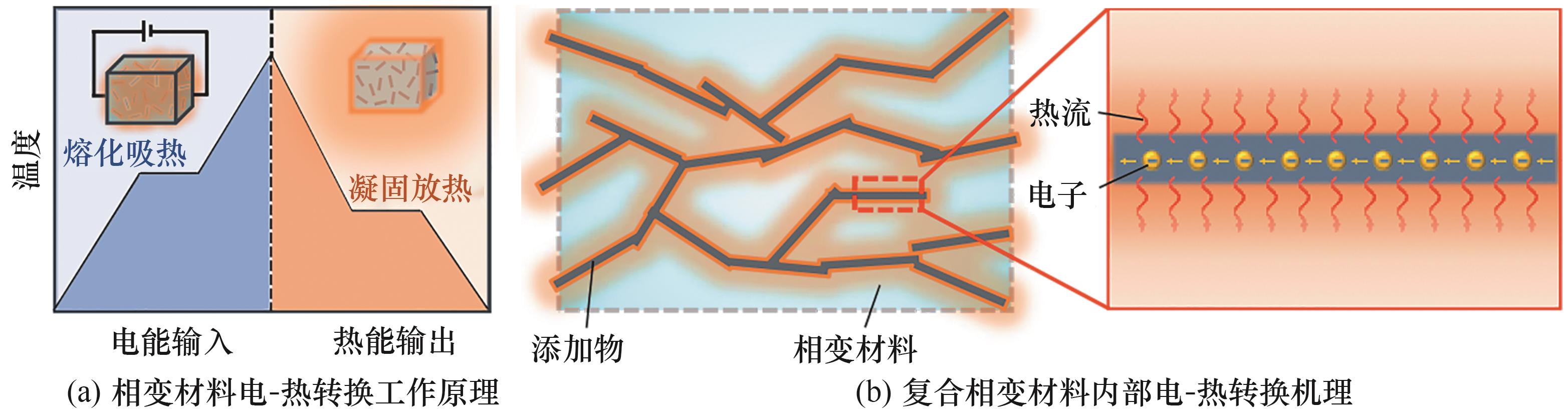
Fig.1 Schematic diagram of electro-thermal conversion and heat storage/release in PCMs
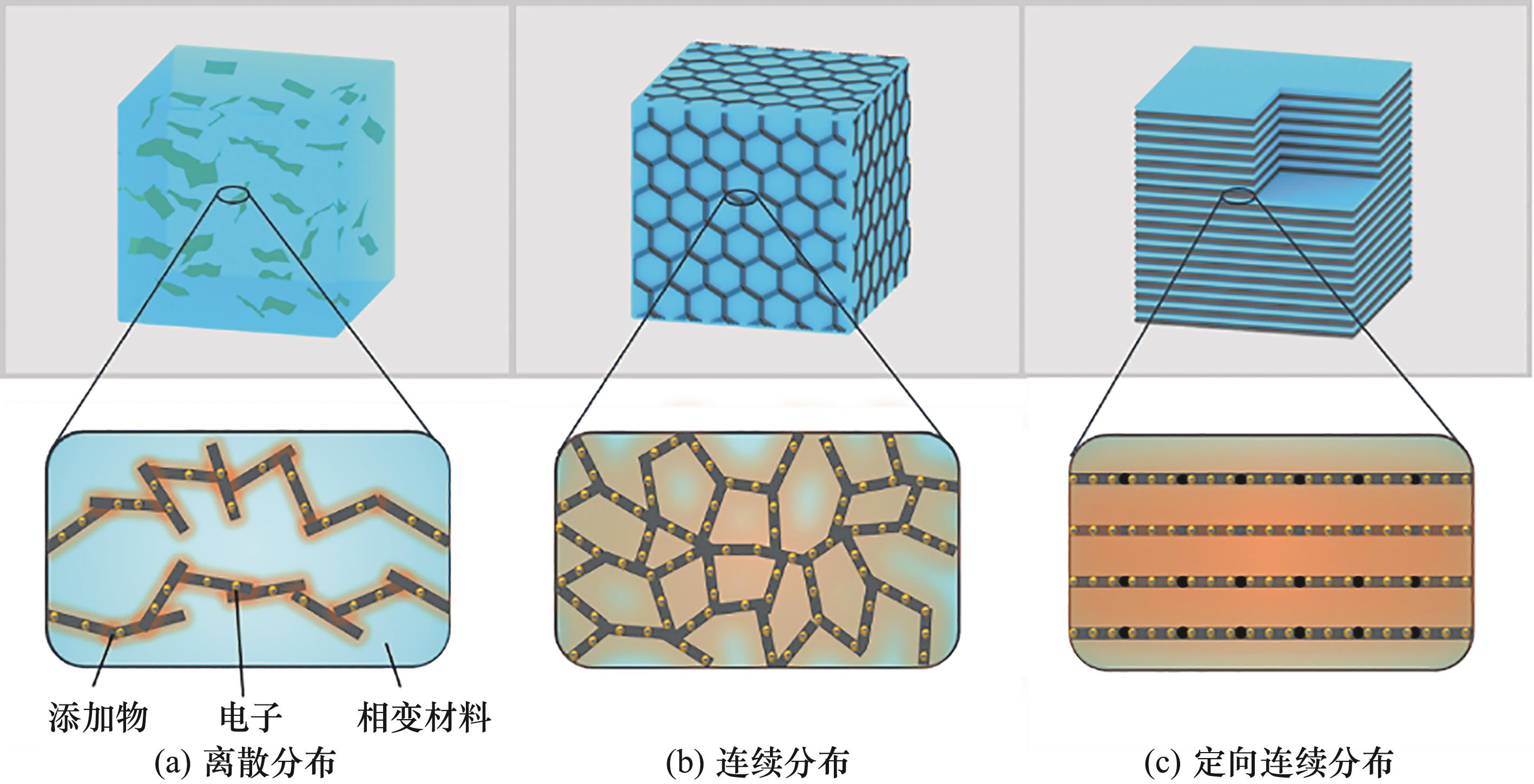
Fig.2 Three distribution forms of conductive additives in PCMs
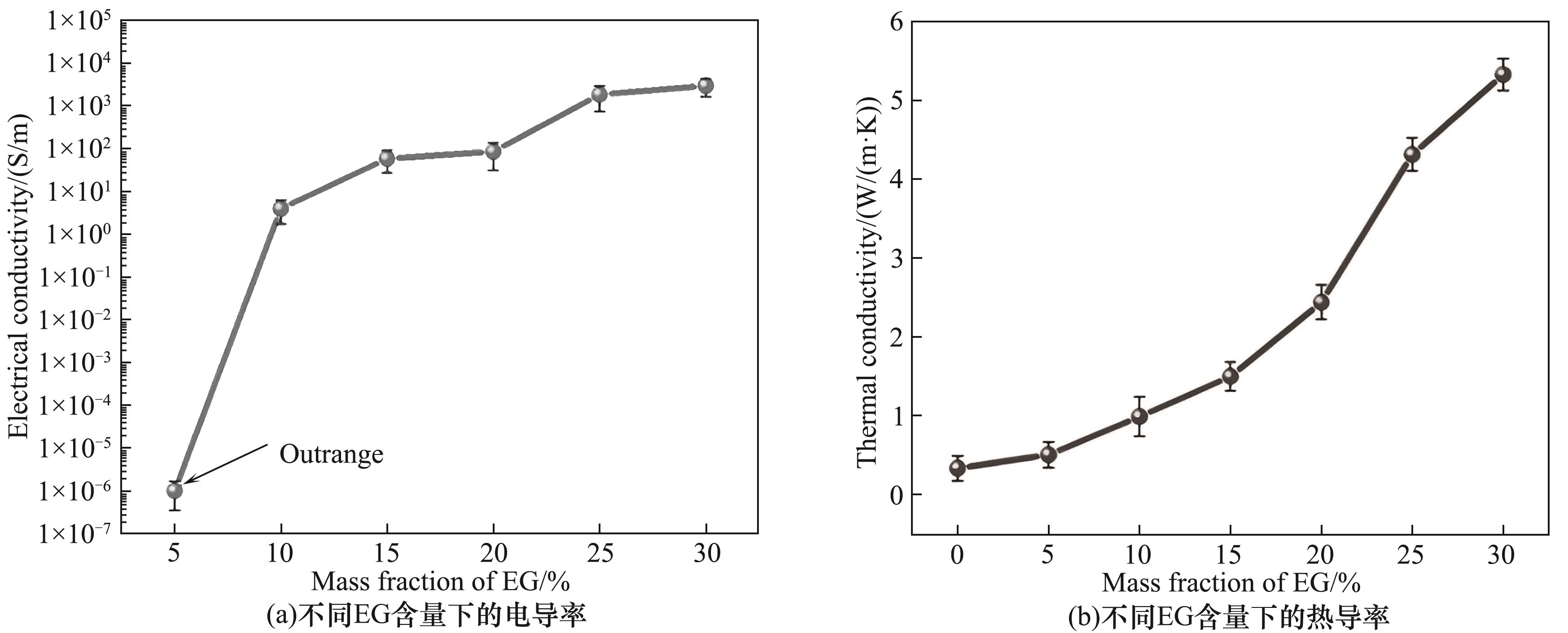
Fig.3 The enhancement of electrical and thermal conductivity in PCMs[21]
| 添加物 | 相变材料 | 负载比例/% | 熔化温度/℃ | 熔化焓值/(J/g) | 热导率/ (W/(m·K)) | 电导率/ (S/m) | 驱动电压/V | 工作电压/V | 电-热转换效率/% | 文献 |
|---|---|---|---|---|---|---|---|---|---|---|
| SWCNT | HDA | 34.9① | 26.9 | 52.0 | 0.47 | 718.0 | — | — | — | [ |
| MWCNT | HDA | 26.9① | 29.2 | 40.0 | 0.88 | 389.0 | — | — | — | [ |
| EG | PA | 70.0 | 41.0 | 159.9 | 1.49 | 92.0 | — | 100.0 | — | [ |
| PPy | PA | 41.3① | 54.1 | 74.3 | — | — | 4.7 | 5.0 | 82.9 | [ |
| PPy | PA | 56.6① | 53.9 | 101.9 | — | — | 4.7 | 5.0 | 75.7 | [ |
| EG | C20 | 85.0 | 36.4 | 199.4 | 3.56 | — | 1.9 | 2.1 | 65.7 | [ |
Table 1 Electro-thermal conversion performance of composite PCMs with dispersed distribution of conductive additives
| 添加物 | 相变材料 | 负载比例/% | 熔化温度/℃ | 熔化焓值/(J/g) | 热导率/ (W/(m·K)) | 电导率/ (S/m) | 驱动电压/V | 工作电压/V | 电-热转换效率/% | 文献 |
|---|---|---|---|---|---|---|---|---|---|---|
| SWCNT | HDA | 34.9① | 26.9 | 52.0 | 0.47 | 718.0 | — | — | — | [ |
| MWCNT | HDA | 26.9① | 29.2 | 40.0 | 0.88 | 389.0 | — | — | — | [ |
| EG | PA | 70.0 | 41.0 | 159.9 | 1.49 | 92.0 | — | 100.0 | — | [ |
| PPy | PA | 41.3① | 54.1 | 74.3 | — | — | 4.7 | 5.0 | 82.9 | [ |
| PPy | PA | 56.6① | 53.9 | 101.9 | — | — | 4.7 | 5.0 | 75.7 | [ |
| EG | C20 | 85.0 | 36.4 | 199.4 | 3.56 | — | 1.9 | 2.1 | 65.7 | [ |
| 添加物 | 比表面积/(m2/g) | 孔体积/ (cm3/g) | 相变材料 | 负载比例/% | 熔化温度/℃ | 熔化焓值/(J/g) | 热导率/ (W/(m·K)) | 电导率/ (S/m) | 工作电压/V | 电-热转换效率/% | 文献 |
|---|---|---|---|---|---|---|---|---|---|---|---|
| CF | 540.0 | 0.40 | PA | 86.7① | 57.1 | 120.2 | — | — | 3.6 | 74.0 | [ |
| CF | 540.0 | 0.40 | PEG | 89.1① | 62.8 | 163.9 | — | — | 3.6 | 85.0 | [ |
| CCA15 | — | — | PEG | 98.8① | 36.0 | 173.4 | — | 420.1 | 1.4 | 55.6 | [ |
| MCW-4 | 256.4 | 0.18 | SA | 96.6① | 66.6 | 198.9 | 0.83 | 358.0 | 2.5 | 89.3 | [ |
| CMGA1600 | — | — | PEG | 96.7 | 51.9 | 181.2 | 0.91 | — | 2.0 | 87.3 | [ |
| GO | 119.7 | 0.56 | LA | 74.8② | — | — | — | — | 2.2 | 51.0 | [ |
| MOF-C | 736.0 | 0.77 | LA | 79.7② | — | — | — | — | 2.2 | 75.0 | [ |
| MOF-C/GO | 160.0 | 0.69 | LA | 87.9② | — | 140 | 1.36 | — | 2.2 | 90.0 | [ |
| ZIF-67-C | 256.5 | 0.90 | C18 | 50.0 | 30.2 | 72.8 | — | — | 1.1 | 51.1 | [ |
| IRMOF-3-C | 1791.5 | 4.20 | C18 | 90.0 | 33.4 | 145.8 | — | 243.9 | — | — | [ |
ZIF-67 @IRMOF-3-C | 580.1 | 3.10 | C18 | 70.0 | 31.9 | 135.9 | — | 526.3 | 1.1 | 94.5 | [ |
Table 2 Electro-thermal conversion performance of composite PCMs with continuous distribution of conductive additives
| 添加物 | 比表面积/(m2/g) | 孔体积/ (cm3/g) | 相变材料 | 负载比例/% | 熔化温度/℃ | 熔化焓值/(J/g) | 热导率/ (W/(m·K)) | 电导率/ (S/m) | 工作电压/V | 电-热转换效率/% | 文献 |
|---|---|---|---|---|---|---|---|---|---|---|---|
| CF | 540.0 | 0.40 | PA | 86.7① | 57.1 | 120.2 | — | — | 3.6 | 74.0 | [ |
| CF | 540.0 | 0.40 | PEG | 89.1① | 62.8 | 163.9 | — | — | 3.6 | 85.0 | [ |
| CCA15 | — | — | PEG | 98.8① | 36.0 | 173.4 | — | 420.1 | 1.4 | 55.6 | [ |
| MCW-4 | 256.4 | 0.18 | SA | 96.6① | 66.6 | 198.9 | 0.83 | 358.0 | 2.5 | 89.3 | [ |
| CMGA1600 | — | — | PEG | 96.7 | 51.9 | 181.2 | 0.91 | — | 2.0 | 87.3 | [ |
| GO | 119.7 | 0.56 | LA | 74.8② | — | — | — | — | 2.2 | 51.0 | [ |
| MOF-C | 736.0 | 0.77 | LA | 79.7② | — | — | — | — | 2.2 | 75.0 | [ |
| MOF-C/GO | 160.0 | 0.69 | LA | 87.9② | — | 140 | 1.36 | — | 2.2 | 90.0 | [ |
| ZIF-67-C | 256.5 | 0.90 | C18 | 50.0 | 30.2 | 72.8 | — | — | 1.1 | 51.1 | [ |
| IRMOF-3-C | 1791.5 | 4.20 | C18 | 90.0 | 33.4 | 145.8 | — | 243.9 | — | — | [ |
ZIF-67 @IRMOF-3-C | 580.1 | 3.10 | C18 | 70.0 | 31.9 | 135.9 | — | 526.3 | 1.1 | 94.5 | [ |
| 添加物 | 相变材料 | 负载比例/% | 熔化温度/℃ | 熔化焓值/(J/g) | 热导率/ (W/(m·K)) | 电导率/ (S/m) | 驱动电压/V | 工作电压/V | 电-热转换效率/% | 文献 |
|---|---|---|---|---|---|---|---|---|---|---|
| AN-GAs | PA | 93.6 | 49.3 | 193.7 | 2.99 | 297 | 1.00 | 3.00 | 85.4 | [ |
| C-mGAs | PEG | 88.7① | — | 149.7 | 4.85 | — | 1.20 | 2.00 | 50.3 | [ |
| GNP | PE | 80.0 | 186.9 | 222.8 | 26.62 | 32300 | 0.22 | 0.34 | 92.8 | [ |
| EG | SA | 64.9① | 33.5 | 137.3 | — | — | 1.00 | 5.00 | 81.8 | [ |
| EG | SA | 59.6① | 39.0 | 126.1 | — | — | — | 5.00 | 84.0 | [ |
| EG | SA | 55.5① | 38.5 | 117.4 | 37.80 | — | — | 5.00 | 88.7 | [ |
| EG | TME | 80.0 | 80.8 | 132.5 | 12.82 | 411 | 2.00 | 3.60 | 91.6 | [ |
Table 3 Electro-thermal conversion performance of composite PCMs with aligned distribution of conductive additives
| 添加物 | 相变材料 | 负载比例/% | 熔化温度/℃ | 熔化焓值/(J/g) | 热导率/ (W/(m·K)) | 电导率/ (S/m) | 驱动电压/V | 工作电压/V | 电-热转换效率/% | 文献 |
|---|---|---|---|---|---|---|---|---|---|---|
| AN-GAs | PA | 93.6 | 49.3 | 193.7 | 2.99 | 297 | 1.00 | 3.00 | 85.4 | [ |
| C-mGAs | PEG | 88.7① | — | 149.7 | 4.85 | — | 1.20 | 2.00 | 50.3 | [ |
| GNP | PE | 80.0 | 186.9 | 222.8 | 26.62 | 32300 | 0.22 | 0.34 | 92.8 | [ |
| EG | SA | 64.9① | 33.5 | 137.3 | — | — | 1.00 | 5.00 | 81.8 | [ |
| EG | SA | 59.6① | 39.0 | 126.1 | — | — | — | 5.00 | 84.0 | [ |
| EG | SA | 55.5① | 38.5 | 117.4 | 37.80 | — | — | 5.00 | 88.7 | [ |
| EG | TME | 80.0 | 80.8 | 132.5 | 12.82 | 411 | 2.00 | 3.60 | 91.6 | [ |
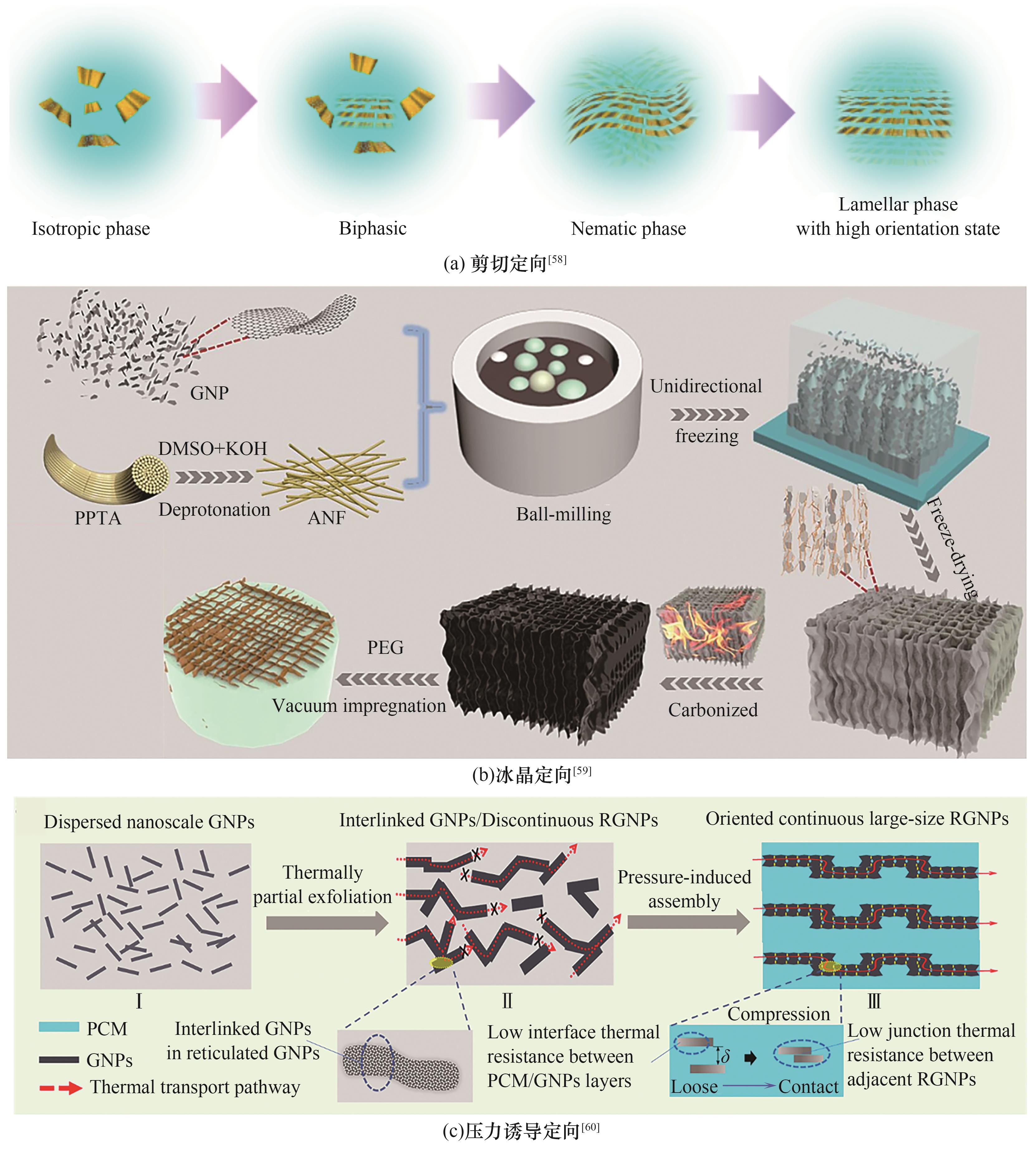
Fig.4 Three preparation methods for aligned distribution of additives

Fig.5 Electro-thermal properties of composite PCMs with three different distribution forms
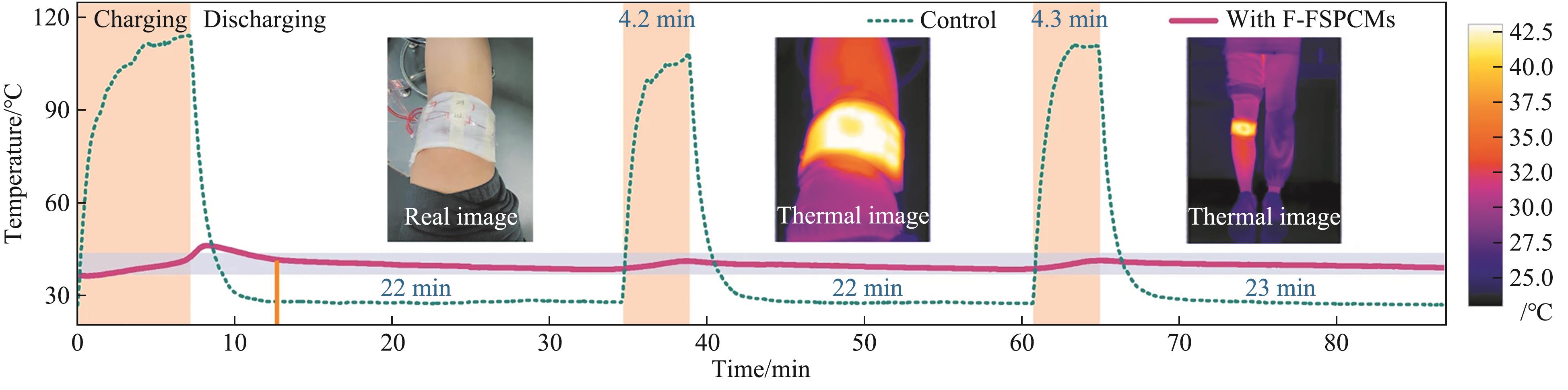
Fig.6 Temperature evolution of insulating device based on F-FSPCMs module acting on a knee during charging and discharging[70]
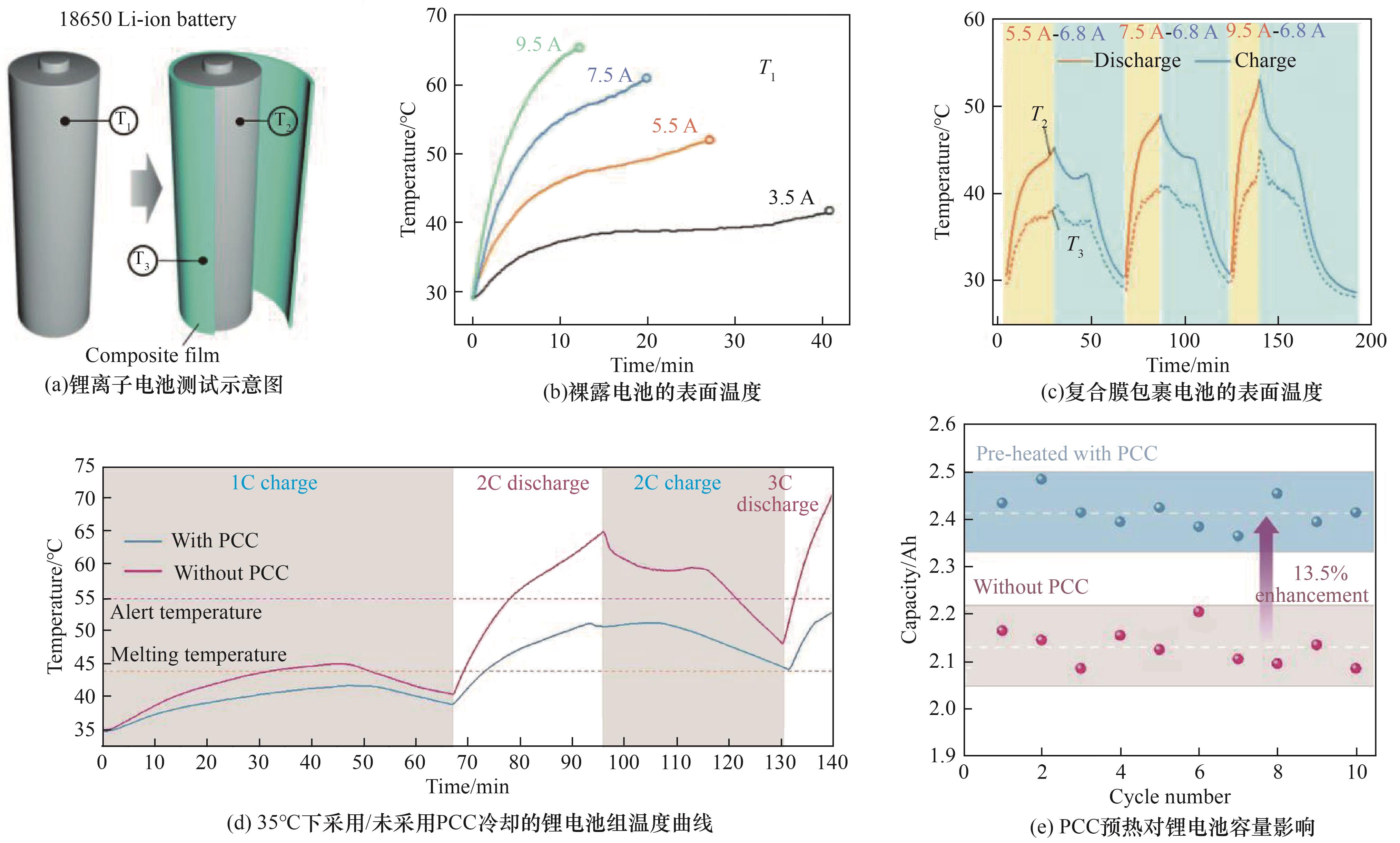
Fig.7 The application of phase change materials in battery thermal management[75-76]
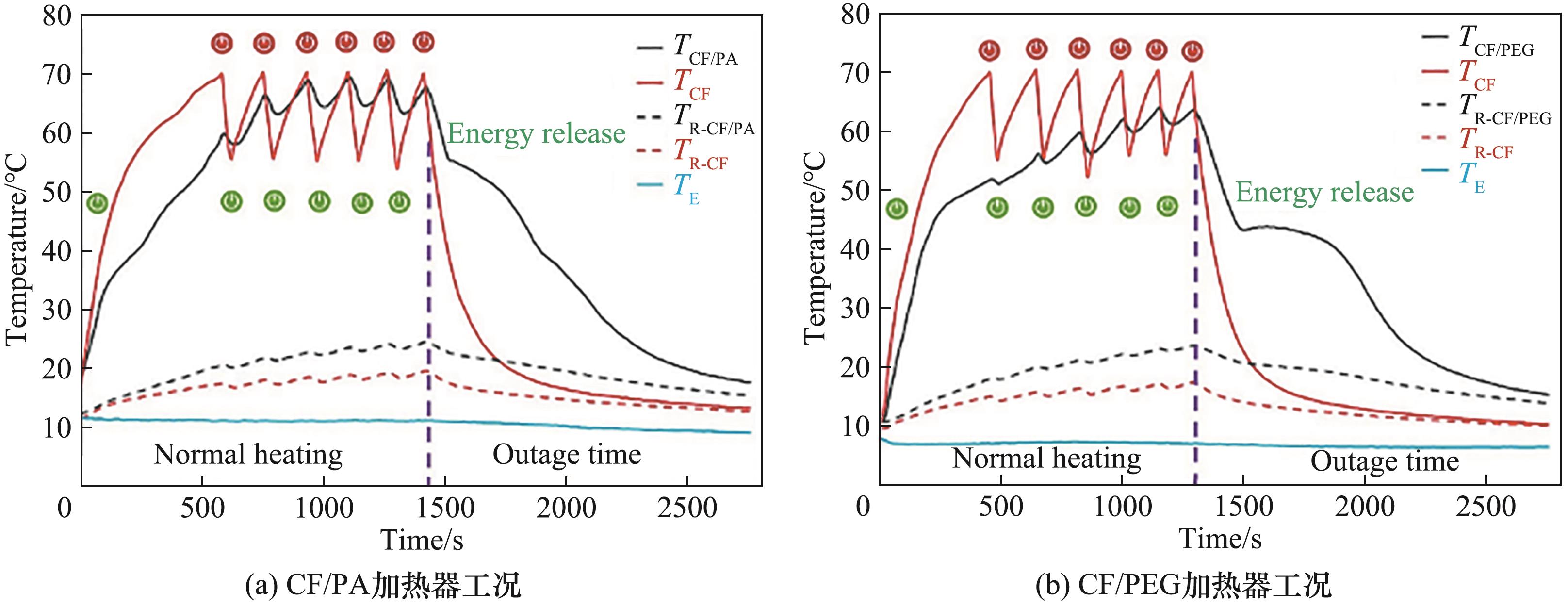
Fig.8 Temperature profile of the CF and CF/PCM heaters (TCF and TCF/PCM) and their room temperatures (TR-CF and TR-CF/PCM)[52]
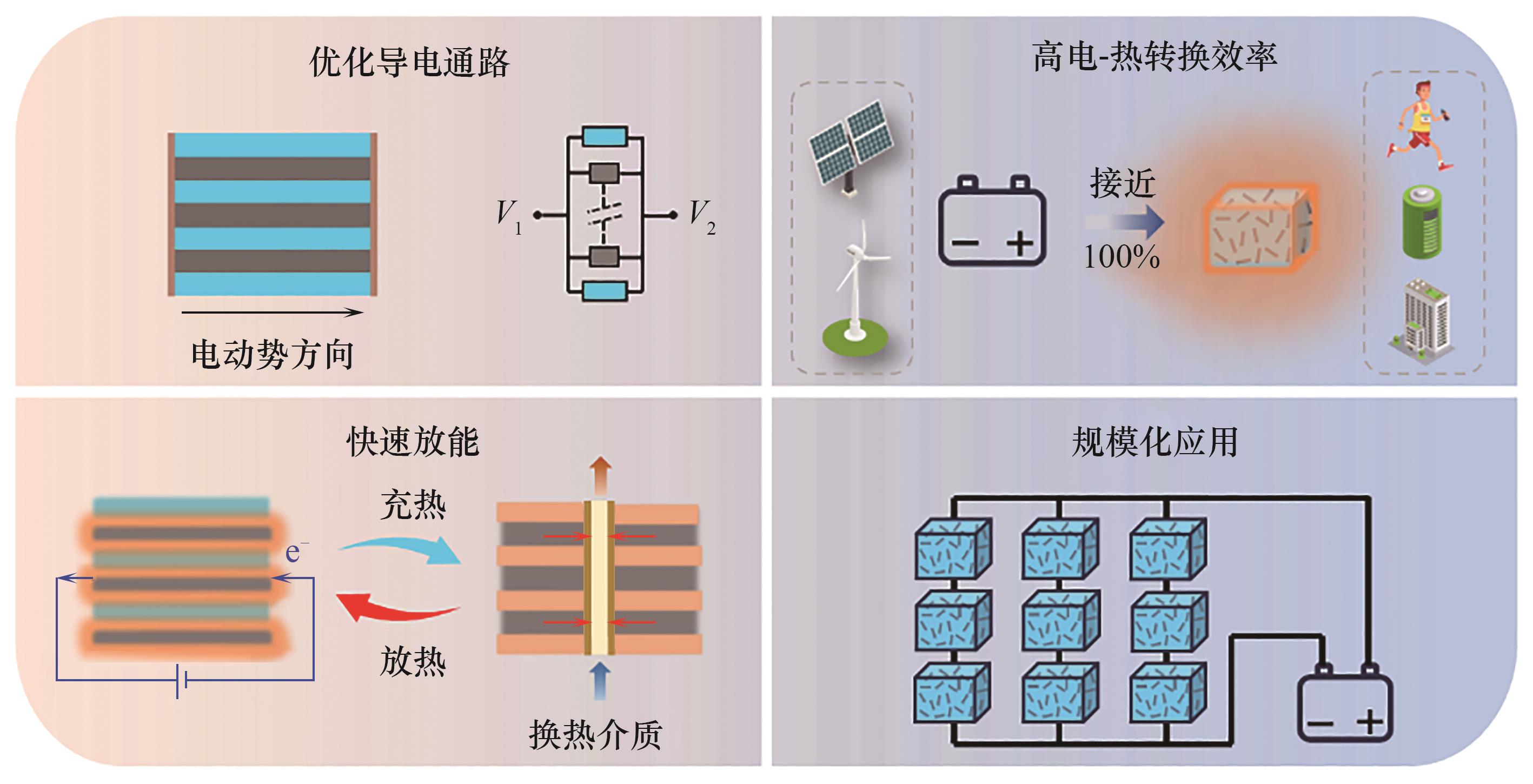
Fig.9 Design direction of PCMs for future electro-thermal energy conversion and storage
| [1] | Irena. Renewable capacity statistics 2024[R]. Abu Dhabi: International Renewable Energy Agency, 2024. |
| [2] | Gür T M. Review of electrical energy storage technologies, materials and systems: challenges and prospects for large-scale grid storage[J]. Energy & Environmental Science, 2018, 11(10): 2696-2767. |
| [3] | Iea. Renewables 2020[R]. Paris: International Energy Agency, 2020. |
| [4] | Nie B J, Palacios A, Zou B Y, et al. Review on phase change materials for cold thermal energy storage applications[J]. Renewable and Sustainable Energy Reviews, 2020, 134: 110340. |
| [5] | Chavan S, Rudrapati R, Manickam S. A comprehensive review on current advances of thermal energy storage and its applications[J]. Alexandria Engineering Journal, 2022, 61(7): 5455-5463. |
| [6] | Zhi M Y, Yue S, Zheng L L, et al. Recent developments in solid-solid phase change materials for thermal energy storage applications[J]. Journal of Energy Storage, 2024, 89: 111570. |
| [7] | Sharma A, Tyagi V V, Chen C R, et al. Review on thermal energy storage with phase change materials and applications[J]. Renewable and Sustainable Energy Reviews, 2009, 13(2): 318-345. |
| [8] | Chien A T, Cho S, Joshi Y, et al. Electrical conductivity and Joule heating of polyacrylonitrile/carbon nanotube composite fibers[J]. Polymer, 2014, 55(26): 6896-6905. |
| [9] | Horsfield A P, Bowler D R, Fisher A J, et al. Power dissipation in nanoscale conductors: classical, semi-classical and quantum dynamics[J]. Journal of Physics: Condensed Matter, 2004, 16(21): 3609-3622. |
| [10] | Zhang Y A, Umair M M, Zhang S F, et al. Phase change materials for electron-triggered energy conversion and storage: a review[J]. Journal of Materials Chemistry A, 2019, 7(39): 22218-22228. |
| [11] | Nguyen V T, Nguyen Q D, Min B K, et al. Ti3C2T x MXene/carbon nanotubes/waterborne polyurethane based composite ink for electromagnetic interference shielding and sheet heater applications[J]. Chemical Engineering Journal, 2022, 430: 133171. |
| [12] | Luo T W, Kong L L, Li L J, et al. A flexible wearable phase change composite with electro-/photo-thermal heating for personal thermal management and human body motion detection[J]. Chemical Engineering Journal, 2024, 486: 150443. |
| [13] | He Y F, Liu Q J, Tian M W, et al. Highly conductive and elastic multi-responsive phase change smart fiber and textile[J]. Composites Communications, 2023, 44: 101772. |
| [14] | Xiao Q Q, Xu Y, Li X Q, et al. Enhanced solar-thermal and electro-thermal storage performance of solid-solid composite phase change material[J]. Composites Communications, 2024, 45: 101818. |
| [15] | Liu Z P, Zou R Q, Lin Z Q, et al. Tailoring carbon nanotube density for modulating electro-to-heat conversion in phase change composites[J]. Nano Letters, 2013, 13(9): 4028-4035. |
| [16] | Cao R R, Chen S, Wang Y Z, et al. Functionalized carbon nanotubes as phase change materials with enhanced thermal, electrical conductivity, light-to-thermal, and electro-to-thermal performances[J]. Carbon, 2019, 149: 263-272. |
| [17] | Tao Z, Zou H Y, Li M, et al. Polypyrrole coated carbon nanotube aerogel composite phase change materials with enhanced thermal conductivity, high solar-/electro- thermal energy conversion and storage[J]. Journal of Colloid and Interface Science, 2023, 629: 632-643. |
| [18] | Liu Y, Liu H C, Qi H S. High efficiency electro- and photo-thermal conversion cellulose nanofiber-based phase change materials for thermal management[J]. Journal of Colloid and Interface Science, 2023, 629: 478-486. |
| [19] | Cao X Y, Yang L J, Cui J, et al. Fatty amine incorporated nickel foam bearing with CNTs nanoarray: a novel composite phase change material towards efficient light-to-thermal and electro-to-thermal conversion[J]. Colloids and Surfaces A: Physicochemical and Engineering Aspects, 2022, 651: 129516. |
| [20] | Xue F, Lu Y, Qi X D, et al. Melamine foam-templated graphene nanoplatelet framework toward phase change materials with multiple energy conversion abilities[J]. Chemical Engineering Journal, 2019, 365: 20-29. |
| [21] | Luo M Y, Lin X M, Ling Z Y, et al. An electric conductive wide-temperature flexible phase change material for all-climate battery thermal management[J]. Applied Thermal Engineering, 2024, 256: 124051. |
| [22] | Lv S S, Liu X L, Wang J G, et al. Flexible highly thermally conductive biphasic composite films for multifunctional solar/electro-thermal conversion energy storage and thermal management[J]. Journal of Cleaner Production, 2023, 426: 139004. |
| [23] | Pan C Y, He P, Chen N C, et al. Highly thermally conductive composite phase-change materials doped with two-dimensional heterogeneous nanohybrids for photo/electro-thermal energy storage[J]. Journal of Energy Storage, 2023, 57: 106225. |
| [24] | Hekimoğlu G, Sarı A, Gencel O, et al. Activated carbon/expanded graphite hybrid structure for development of nonadecane based composite PCM with excellent shape stability, enhanced thermal conductivity and heat charging-discharging performance[J]. Thermal Science and Engineering Progress, 2023, 44: 102081. |
| [25] | Tien Nguyen G, Tran Thi N, Nho N T, et al. A novel stearic acid/expanded graphite/Fe3O4 composite phase change material with effective photo/electro/magneto-triggered thermal conversion and storage for thermotherapy applications[J]. Journal of Science: Advanced Materials and Devices, 2024, 9(4): 100792. |
| [26] | Li C C, Zhang B, Liu Q X. n-Eicosane/expanded graphite as composite phase change materials for electro-driven thermal energy storage[J]. Journal of Energy Storage, 2020, 29: 101339. |
| [27] | Xiao Y Y, Bai D Y, Xie Z P, et al. Flexible copper foam-based phase change materials with good stiffness-toughness balance, electro-to-thermal conversion ability and shape memory function for intelligent thermal management[J]. Composites Part A: Applied Science and Manufacturing, 2021, 146: 106420. |
| [28] | Ma Y Q, Shen J F, Li T, et al. A "net-ball" structure fiber membrane with electro-/photo-thermal heating and phase change synchronous temperature regulation capacity via electrospinning[J]. Solar Energy Materials and Solar Cells, 2024, 276: 113078. |
| [29] | Zhao J J, Zhou J H, Li H, et al. Ti3C2T x MXene and cellulose-based aerogel phase change composite decorated laminated fabric with excellent electro/solar-thermal conversion and high latent heat[J]. Carbohydrate Polymers, 2023, 316: 121031. |
| [30] | Su J T, Lin J H, Cao Y, et al. Experimental investigation and numerical simulation on microwave thermal conversion storage properties of multi-level conductive porous phase change materials and its multifunctional applications[J]. Applied Thermal Engineering, 2024, 253: 123774. |
| [31] | Sun Q R, Zhang N, Zhang H Q, et al. Functional phase change composites with highly efficient electrical to thermal energy conversion[J]. Renewable Energy, 2020, 145: 2629-2636. |
| [32] | Aharony A, Stauffer D. Introduction to Percolation Theory [M].2nd ed. Oxford, England: Taylor & Francis, 1992. |
| [33] | Nan C W, Shen Y, Ma J. Physical properties of composites near percolation[J]. Annual Review of Materials Research, 2010, 40: 131-151. |
| [34] | Zhang Q, Huang J Q, Qian W Z, et al. The road for nanomaterials industry: a review of carbon nanotube production, post-treatment, and bulk applications for composites and energy storage[J]. Small, 2013, 9(8): 1237-1265. |
| [35] | Bocharov G S, Eletskii A V. Percolation conduction of carbon nanocomposites[J]. International Journal of Molecular Sciences, 2020, 21(20): 7634. |
| [36] | Kirkpatrick S. Percolation and conduction[J]. Reviews of Modern Physics, 1973, 45(4): 574-588. |
| [37] | 谢成西, 刘太奇, 赵荣, 等. 聚乙二醇/石墨烯复合相变电热膜的制备与性能[J]. 高分子材料科学与工程, 2024, 40(6): 47-55. |
| Xie C X, Liu T Q, Zhao R, et al. Preparation and performance of polyethylene glycol/graphene composite phase change electric heating film[J]. Polymer Materials Science & Engineering, 2024, 40(6): 47-55. | |
| [38] | Lou G H, Zhao Z Y, Wang Y G. Research progress on highly conductive polymer composites based on carbon-based nanofillers[J]. Polymer Composites, 2025. DOI:10.1002/pc.29640 . |
| [39] | Chen X, Cheng P, Tang Z D, et al. Carbon-based composite phase change materials for thermal energy storage, transfer, and conversion[J]. Advanced Science, 2021, 8(9): 2001274. |
| [40] | Du F M, Guthy C, Kashiwagi T, et al. An infiltration method for preparing single-wall nanotube/epoxy composites with improved thermal conductivity[J]. Journal of Polymer Science Part B: Polymer Physics, 2006, 44(10): 1513-1519. |
| [41] | Zhang H, Dou C, Pal L, et al. Review of electrically conductive composites and films containing cellulosic fibers or nanocellulose[J]. BioResources, 2019, 14(3): 7494-7542. |
| [42] | Fikri M A, Pandey A K, Samykano M, et al. Thermal conductivity, reliability, and stability assessment of phase change material (PCM) doped with functionalized multi-wall carbon nanotubes (FMWCNTs)[J]. Journal of Energy Storage, 2022, 50: 104676. |
| [43] | Ke K, Yue L, Shao H Q, et al. Boosting electrical and piezoresistive properties of polymer nanocomposites via hybrid carbon fillers: a review[J]. Carbon, 2021, 173: 1020-1040. |
| [44] | Lv J, Wang J J, Zhang T, et al. Preparation and characterization of Kevlar nanofiber based composite phase change material with photo/electro-thermal conversion properties[J]. Journal of Energy Storage, 2023, 61: 106771. |
| [45] | Hu F, Wu S Y, Sun Y G. Hollow-structured materials for thermal insulation[J]. Advanced Materials, 2019, 31(38): 1801001. |
| [46] | Maleki M, Karimian H, Shokouhimehr M, et al. Development of graphitic domains in carbon foams for high efficient electro/photo-to-thermal energy conversion phase change composites[J]. Chemical Engineering Journal, 2019, 362: 469-481. |
| [47] | Wang T J, Wang C M, Huang Z, et al. Electro- and photo-thermal energy conversion investigation of polyethylene glycol infiltrated porous carbon aerogels[J]. Journal of Energy Storage, 2023, 68: 107724. |
| [48] | Shuaib S S A, Yuan W Z. Hierarchical magnetic porous carbonized wood composite phase change materials for efficient solar-thermal, electrothermal, and magnetothermal conversion-storage[J]. Materials Today Communications, 2023, 37: 107486. |
| [49] | Liu Z P, He F F, Li Y S, et al. Enhanced solar/electric-to-thermal energy conversion capability of double skeleton based shape-stabilized phase change materials[J]. Solar Energy Materials and Solar Cells, 2023, 252: 112171. |
| [50] | Wang M, Zhang C, Wang J Z, et al. Carbon hybrid aerogel-based phase change material with reinforced energy storage and electro-thermal conversion performance for battery thermal management[J]. Journal of Energy Storage, 2022, 52: 104905. |
| [51] | Li A, Dong C, Dong W J, et al. Network structural CNTs penetrate porous carbon support for phase-change materials with enhanced electro-thermal performance[J]. Advanced Electronic Materials, 2020, 6(6): 1901428. |
| [52] | Maleki M, Sharifi N, Karimian H, et al. Electro-driven carbon foam/PCMs nanocomposites for sustainable energy management[J]. Journal of Energy Storage, 2023, 67: 107599. |
| [53] | Zhang Z Y, He Y, Ma H S, et al. Light/electro-thermal conversion of carbonized sweet potato 3D grid-supported PEG shape-stable phase change materials for thermal management applications[J]. Chemical Engineering Research and Design, 2024, 210: 130-139. |
| [54] | Liu X J, Lin F K, Leng G Q, et al. A high thermal conductive composite phase change film for flexible solar/electro-thermal energy conversion[J]. Journal of Energy Storage, 2023, 73: 108959. |
| [55] | Lin F K, Liu X J, Leng G Q, et al. Grid structure phase change composites with effective solar/electro-thermal conversion for multi-functional thermal application[J]. Carbon, 2023, 201: 1001-1010. |
| [56] | Liu R Z, Li A, Liu J Y, et al. Carbon-based hierarchical porous structure accelerates heterogeneous nucleation of PEG molecules for solar/electro-driven thermal energy storage[J]. Chemical Engineering Journal, 2023, 474: 145814. |
| [57] | Umair M M, Zhang Y A, Zhang S F, et al. A novel flexible phase change composite with electro-driven shape memory, energy conversion/storage and motion sensing properties[J]. Journal of Materials Chemistry A, 2019, 7(46): 26385-26392. |
| [58] | Li G Y, Zhang X T, Wang J, et al. From anisotropic graphene aerogels to electron- and photo-driven phase change composites[J]. Journal of Materials Chemistry A, 2016, 4(43): 17042-17049. |
| [59] | Gao J, Zhou B, Liu C Q, et al. Carbonization welding graphene architecture for thermally conductive phase change composites with solar/electric-to-heat conversion ability[J]. Chemical Engineering Journal, 2023, 475: 146087. |
| [60] | Li T X, Wu M Q, Wu S, et al. Highly conductive phase change composites enabled by vertically-aligned reticulated graphite nanoplatelets for high-temperature solar photo/electro-thermal energy conversion, harvesting and storage[J]. Nano Energy, 2021, 89: 106338. |
| [61] | Zhao Y Q, Zhang P F, Qiu Y, et al. Highly conductive solid-solid phase change composites and devices enhanced by aligned graphite networks for solar/electro-thermal energy storage[J]. DeCarbon, 2024, 5: 100051. |
| [62] | Kim J E, Han T H, Lee S H, et al. Graphene oxide liquid crystals[J]. Angewandte Chemie International Edition, 2011, 50(13): 3043-3047. |
| [63] | Zong Y Y, Gui D Y, Niu K M. Enhanced thermal and electrical conductivity in epoxy nanocomposites via liquid crystal-driven alignment of graphene[J]. Materials Today Communications, 2024, 38: 108067. |
| [64] | Cao M, Li Z, Lu J H, et al. Vertical array of graphite oxide liquid crystal by microwire shearing for highly thermally conductive composites[J]. Advanced Materials, 2023, 35(22): 2300077. |
| [65] | Kashfipour M A, Dent R S, Mehra N, et al. Directional xylitol crystal propagation in oriented micro-channels of boron nitride aerogel for isotropic heat conduction[J]. Composites Science and Technology, 2019, 182: 107715. |
| [66] | Wu S, Li T X, Tong Z, et al. High-performance thermally conductive phase change composites by large-size oriented graphite sheets for scalable thermal energy harvesting[J]. Advanced Materials, 2019, 31(49): 1905099. |
| [67] | Wang X S, Zang X L, Jiang Y Q, et al. A graphene-based smart thermal conductive system regulated by a reversible pressure-induced mechanism[J]. Nanoscale, 2019, 11(24): 11730-11735. |
| [68] | Peng L Q, Yu H T, Chen C, et al. Tailoring dense, orientation-tunable, and interleavedly structured carbon-based heat dissipation plates[J]. Advanced Science, 2023, 10(7): 2205962. |
| [69] | 李晓杰, 罗清海, 邓滔文, 等. 相变背心降温性能的实验研究[J]. 南华大学学报(自然科学版), 2024, 38(1): 38-45. |
| Li X J, Luo Q H, Deng T W, et al. Experimental study on cooling performance of phase change vest[J]. Journal of University of South China(Science and Technology), 2024, 38(1): 38-45. | |
| [70] | Jing Y G, Zhao Z C, Cao X L, et al. Ultraflexible, cost-effective and scalable polymer-based phase change composites via chemical cross-linking for wearable thermal management[J]. Nature Communications, 2023, 14(1): 8060. |
| [71] | Srivastava G, Nandan R, Das M K. Thermal runaway management of Li ion battery using PCM: a parametric study[J]. Energy Conversion and Management: X, 2022, 16: 100306. |
| [72] | Kadam G, Kongi P. Battery thermal management system based on PCM with addition of nanoparticles[J]. Materials Today: Proceedings, 2023, 72: 1543-1549. |
| [73] | Li K X, Yao X L, Li Z C, et al. Thermal management of Li-ion batteries with passive thermal regulators based on composite PCM materials[J]. Journal of Energy Storage, 2024, 89: 111661. |
| [74] | 刘邦金, 汪林威, 吴月月, 等. 锂离子电池热管理研究进展[J]. 化工学报, 2024, 75(12): 4413-4431. |
| Liu B J, Wang L W, Wu Y Y, et al. Advances in thermal management of lithium-ion batteries[J]. CIESC Journal, 2024, 75(12): 4413-4431. | |
| [75] | Wu S, Li T X, Wu M Q, et al. Highly thermally conductive and flexible phase change composites enabled by polymer/graphite nanoplatelet-based dual networks for efficient thermal management[J]. Journal of Materials Chemistry A, 2020, 8(38): 20011-20020. |
| [76] | Wu M Q, Li T X, Wang P F, et al. Dual-encapsulated highly conductive and liquid-free phase change composites enabled by polyurethane/graphite nanoplatelets hybrid networks for efficient energy storage and thermal management[J]. Small, 2022, 18(9): 2105647. |
| Viewed | ||||||
|
Full text |
|
|||||
|
Abstract |
|
|||||