CIESC Journal ›› 2025, Vol. 76 ›› Issue (9): 4613-4629.DOI: 10.11949/0438-1157.20250145
• Special Column: Modeling and Simulation in Process Engineering • Previous Articles Next Articles
Xu GUO( ), Jining JIA, Kejian YAO()
Received:2025-02-17
Revised:2025-04-14
Online:2025-10-23
Published:2025-09-25
Contact:
Kejian YAO
郭旭(), 贾继宁, 姚克俭()
通讯作者:
姚克俭
作者简介:郭旭(1999—),男,硕士研究生,zjutGuox@outlook.com
CLC Number:
Xu GUO, Jining JIA, Kejian YAO. Modeling of batch distillation process based on optimized CNN-BiLSTM neural network[J]. CIESC Journal, 2025, 76(9): 4613-4629.
郭旭, 贾继宁, 姚克俭. 基于优化CNN-BiLSTM神经网络的间歇精馏过程建模[J]. 化工学报, 2025, 76(9): 4613-4629.
Add to citation manager EndNote|Ris|BibTeX
| 参数 | 数值 |
|---|---|
| 色谱柱温度/℃ | 180 |
| 进样口温度/℃ | 180 |
| 热导池温度/℃ | 200 |
| 桥电流/mA | 110 |
| 氢气压力/MPa | 0.01 |
| 进样体积/μl | 1 |
| 色谱柱类型 | Porapak-Q |
Table 1 Operating parameters for FULI GC9790Ⅱ gas chromatograph
| 参数 | 数值 |
|---|---|
| 色谱柱温度/℃ | 180 |
| 进样口温度/℃ | 180 |
| 热导池温度/℃ | 200 |
| 桥电流/mA | 110 |
| 氢气压力/MPa | 0.01 |
| 进样体积/μl | 1 |
| 色谱柱类型 | Porapak-Q |
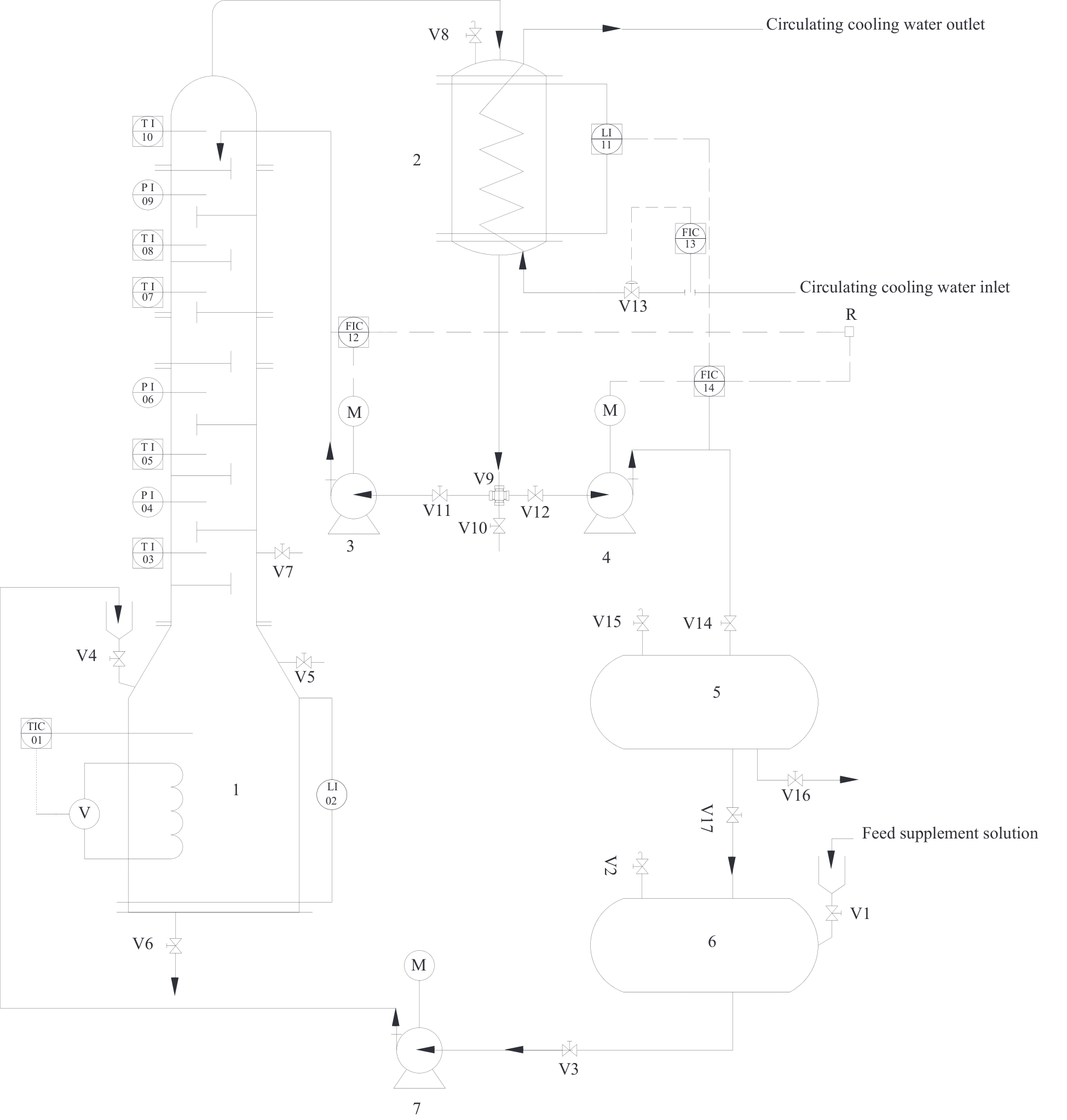
Fig.1 Process flow diagram for batch distillation1—reboiler; 2—reflux drum; 3—reflux pump; 4—distillate pump; 5—distillate storage tank; 6—feed storage tank; 7—feeding pump; V—electric heating switch; PI—pressure indicator; TI—temperature indicator; M—metering pump motor; V1—V17—control valves; LI—level indicator; R—reflux ratio controller; FIC—flow controller; TIC—temperature controller
| 批次 | 加热功率/kW | 原料乙醇质量分数 | 回流比 | 备注 |
|---|---|---|---|---|
| 1 | 1.75~2.50 | 0.429 | 1.0 | 调节加热功率使蒸汽率为5.6 L/h |
| 2 | 1.70~2.50 | 0.492 | 1.0 | |
| 3 | 1.65~2.50 | 0.589 | 1.0 | |
| 4 | 1.70~2.50 | 0.652 | 1.0 | 调节加热功率使蒸汽率为6.5 L/h |
| 5 | 1.73~2.50 | 0.490 | 1.5 | 调节加热功率使蒸汽率为5.6 L/h |
| 6 | 1.70~2.50 | 0.590 | 1.5 | |
| 7 | 1.75~2.25 | 0.650 | 1.5 | 调节加热功率使蒸汽率为6.5 L/h |
| 8 | 1.75~2.50 | 0.493 | 2.0 | 调节加热功率使蒸汽率为5.6 L/h |
| 9 | 1.70~2.50 | 0.592 | 2.0 | |
| 10 | 1.78~2.25 | 0.654 | 2.0 | 调节加热功率使蒸汽率为6.5 L/h |
| 11 | 1.77~2.50 | 0.486 | 2.5 | 调节加热功率使蒸汽率为5.6 L/h |
| 12 | 1.72~2.50 | 0.614 | 2.5 | |
| 13 | 1.75~2.25 | 0.685 | 2.5 | 调节加热功率使蒸汽率为6.5 L/h |
| 14 | 2.0~2.25 | 0.674 | 2.5 | 调节加热功率使蒸汽率为8.5 L/h |
| 15 | 1.65~2.50 | 0.683 | 2.5 | 调节加热功率使蒸汽率为5.6 L/h |
| 16 | 1.80~2.25 | 0.677 | 3.0 | 调节加热功率使蒸汽率为6.5 L/h |
| 17 | 1.75~2.50 | 0.726 | 3.5 | 调节加热功率使蒸汽率为6.5 L/h |
| 18 | 1.60~2.50 | 0.483 | 3.3 | 恒定回流比生产操作,调节加热功率使蒸汽率为5.0 L/h |
| 19 | 1.60~2.50 | 0.463 | 1.0 ~ 3.0 | 阶跃回流比生产操作,调节加热功率使蒸汽率为5.0 L/h |
Table 2 Explanation of operating conditions for each batch of data
| 批次 | 加热功率/kW | 原料乙醇质量分数 | 回流比 | 备注 |
|---|---|---|---|---|
| 1 | 1.75~2.50 | 0.429 | 1.0 | 调节加热功率使蒸汽率为5.6 L/h |
| 2 | 1.70~2.50 | 0.492 | 1.0 | |
| 3 | 1.65~2.50 | 0.589 | 1.0 | |
| 4 | 1.70~2.50 | 0.652 | 1.0 | 调节加热功率使蒸汽率为6.5 L/h |
| 5 | 1.73~2.50 | 0.490 | 1.5 | 调节加热功率使蒸汽率为5.6 L/h |
| 6 | 1.70~2.50 | 0.590 | 1.5 | |
| 7 | 1.75~2.25 | 0.650 | 1.5 | 调节加热功率使蒸汽率为6.5 L/h |
| 8 | 1.75~2.50 | 0.493 | 2.0 | 调节加热功率使蒸汽率为5.6 L/h |
| 9 | 1.70~2.50 | 0.592 | 2.0 | |
| 10 | 1.78~2.25 | 0.654 | 2.0 | 调节加热功率使蒸汽率为6.5 L/h |
| 11 | 1.77~2.50 | 0.486 | 2.5 | 调节加热功率使蒸汽率为5.6 L/h |
| 12 | 1.72~2.50 | 0.614 | 2.5 | |
| 13 | 1.75~2.25 | 0.685 | 2.5 | 调节加热功率使蒸汽率为6.5 L/h |
| 14 | 2.0~2.25 | 0.674 | 2.5 | 调节加热功率使蒸汽率为8.5 L/h |
| 15 | 1.65~2.50 | 0.683 | 2.5 | 调节加热功率使蒸汽率为5.6 L/h |
| 16 | 1.80~2.25 | 0.677 | 3.0 | 调节加热功率使蒸汽率为6.5 L/h |
| 17 | 1.75~2.50 | 0.726 | 3.5 | 调节加热功率使蒸汽率为6.5 L/h |
| 18 | 1.60~2.50 | 0.483 | 3.3 | 恒定回流比生产操作,调节加热功率使蒸汽率为5.0 L/h |
| 19 | 1.60~2.50 | 0.463 | 1.0 ~ 3.0 | 阶跃回流比生产操作,调节加热功率使蒸汽率为5.0 L/h |
| 序号 | 特征 | MIC | 特征 | MIC | ||
|---|---|---|---|---|---|---|
| X | Y1 | X | Y2 | |||
| 1 | 塔釜温度 | 馏出液乙醇浓度 | 0.3 | 塔釜温度 | 塔釜乙醇浓度 | 0.7 |
| 2 | 塔节一温度 | 馏出液乙醇浓度 | 0.3 | 塔节一温度 | 塔釜乙醇浓度 | 0.7 |
| 3 | 塔节三温度 | 馏出液乙醇浓度 | 0.5 | 塔节三温度 | 塔釜乙醇浓度 | 0.4 |
| 4 | 塔节五温度 | 馏出液乙醇浓度 | 0.7 | 塔节五温度 | 塔釜乙醇浓度 | 0.2 |
| 5 | 塔节六温度 | 馏出液乙醇浓度 | 0.5 | 塔节六温度 | 塔釜乙醇浓度 | 0.2 |
| 6 | 塔顶温度 | 馏出液乙醇浓度 | 0.4 | 塔顶温度 | 塔釜乙醇浓度 | 0.2 |
| 7 | 产品温度 | 馏出液乙醇浓度 | 0.4 | 产品温度 | 塔釜乙醇浓度 | 0.1 |
| 8 | 冷凝水流量 | 馏出液乙醇浓度 | 0.08 | 冷凝水流量 | 塔釜乙醇浓度 | 0.1 |
| 9 | 馏出液体积 | 馏出液乙醇浓度 | 0.2 | 馏出液体积 | 塔釜乙醇浓度 | 0.2 |
| 10 | 原料浓度 | 馏出液乙醇浓度 | 0.4 | 原料浓度 | 塔釜乙醇浓度 | 0.2 |
| 11 | 回流比 | 馏出液乙醇浓度 | 0.4 | 回流比 | 塔釜乙醇浓度 | 0.1 |
| 12 | 塔釜液位 | 馏出液乙醇浓度 | 0.2 | 塔釜液位 | 塔釜乙醇浓度 | 0.4 |
| 13 | 塔釜压力 | 馏出液乙醇浓度 | 0.4 | 塔釜压力 | 塔釜乙醇浓度 | 0.1 |
| 14 | 塔节二压力 | 馏出液乙醇浓度 | 0.4 | 塔节二压力 | 塔釜乙醇浓度 | 0.1 |
| 15 | 塔节四压力 | 馏出液乙醇浓度 | 0.5 | 塔节四压力 | 塔釜乙醇浓度 | 0.1 |
| 16 | 塔节七压力 | 馏出液乙醇浓度 | 0.4 | 塔节七压力 | 塔釜乙醇浓度 | 0.1 |
Table 3 MIC values of input variables for ethanol prediction in the distillate and tower bottom
| 序号 | 特征 | MIC | 特征 | MIC | ||
|---|---|---|---|---|---|---|
| X | Y1 | X | Y2 | |||
| 1 | 塔釜温度 | 馏出液乙醇浓度 | 0.3 | 塔釜温度 | 塔釜乙醇浓度 | 0.7 |
| 2 | 塔节一温度 | 馏出液乙醇浓度 | 0.3 | 塔节一温度 | 塔釜乙醇浓度 | 0.7 |
| 3 | 塔节三温度 | 馏出液乙醇浓度 | 0.5 | 塔节三温度 | 塔釜乙醇浓度 | 0.4 |
| 4 | 塔节五温度 | 馏出液乙醇浓度 | 0.7 | 塔节五温度 | 塔釜乙醇浓度 | 0.2 |
| 5 | 塔节六温度 | 馏出液乙醇浓度 | 0.5 | 塔节六温度 | 塔釜乙醇浓度 | 0.2 |
| 6 | 塔顶温度 | 馏出液乙醇浓度 | 0.4 | 塔顶温度 | 塔釜乙醇浓度 | 0.2 |
| 7 | 产品温度 | 馏出液乙醇浓度 | 0.4 | 产品温度 | 塔釜乙醇浓度 | 0.1 |
| 8 | 冷凝水流量 | 馏出液乙醇浓度 | 0.08 | 冷凝水流量 | 塔釜乙醇浓度 | 0.1 |
| 9 | 馏出液体积 | 馏出液乙醇浓度 | 0.2 | 馏出液体积 | 塔釜乙醇浓度 | 0.2 |
| 10 | 原料浓度 | 馏出液乙醇浓度 | 0.4 | 原料浓度 | 塔釜乙醇浓度 | 0.2 |
| 11 | 回流比 | 馏出液乙醇浓度 | 0.4 | 回流比 | 塔釜乙醇浓度 | 0.1 |
| 12 | 塔釜液位 | 馏出液乙醇浓度 | 0.2 | 塔釜液位 | 塔釜乙醇浓度 | 0.4 |
| 13 | 塔釜压力 | 馏出液乙醇浓度 | 0.4 | 塔釜压力 | 塔釜乙醇浓度 | 0.1 |
| 14 | 塔节二压力 | 馏出液乙醇浓度 | 0.4 | 塔节二压力 | 塔釜乙醇浓度 | 0.1 |
| 15 | 塔节四压力 | 馏出液乙醇浓度 | 0.5 | 塔节四压力 | 塔釜乙醇浓度 | 0.1 |
| 16 | 塔节七压力 | 馏出液乙醇浓度 | 0.4 | 塔节七压力 | 塔釜乙醇浓度 | 0.1 |

Fig.2 Temperature variation of model input data for batches 16 to 19
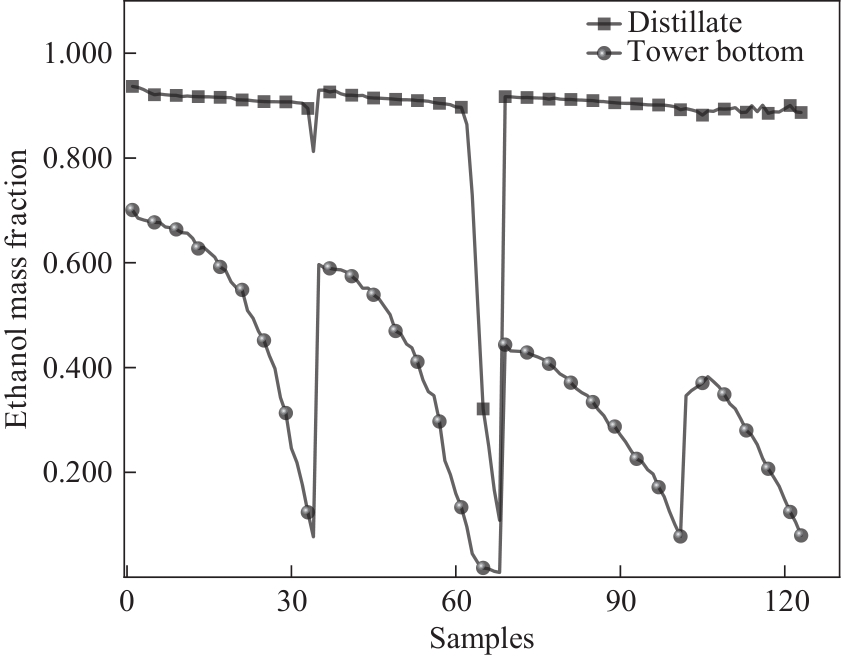
Fig.3 Mass fraction variation of model output data for batches 16 to 19
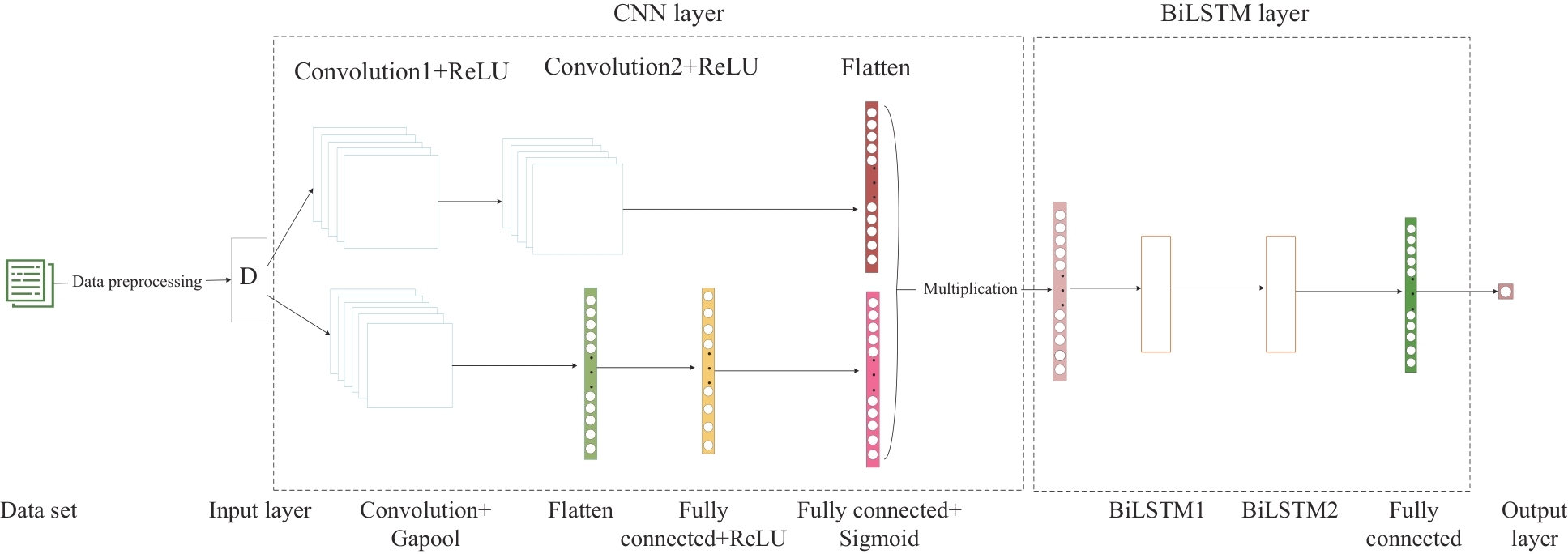
Fig.4 CNN-BiLSTM network architecture
| 模型 | 训练次数 | 学习速率 | 阈值 | 正则化参数 | 学习率下降因子 | 学习率下降开始迭代次数 | 最小输入批次 | 时间步长 |
|---|---|---|---|---|---|---|---|---|
| BP | 1000 | 0.001 | — | — | — | — | — | — |
| SVR | — | — | 0.0001 | 10 | — | — | — | — |
| LSTM | 1000 | 0.001 | — | — | 0.01 | 400 | 100 | 4 |
| BiLSTM | 1000 | 0.001 | — | — | 0.01 | 400 | 100 | 4 |
| CNN-BiLSTM | 1000 | 0.001 | — | — | 0.01 | 400 | 100 | 4 |
Table 4 Training parameters of different models
| 模型 | 训练次数 | 学习速率 | 阈值 | 正则化参数 | 学习率下降因子 | 学习率下降开始迭代次数 | 最小输入批次 | 时间步长 |
|---|---|---|---|---|---|---|---|---|
| BP | 1000 | 0.001 | — | — | — | — | — | — |
| SVR | — | — | 0.0001 | 10 | — | — | — | — |
| LSTM | 1000 | 0.001 | — | — | 0.01 | 400 | 100 | 4 |
| BiLSTM | 1000 | 0.001 | — | — | 0.01 | 400 | 100 | 4 |
| CNN-BiLSTM | 1000 | 0.001 | — | — | 0.01 | 400 | 100 | 4 |
| 折编号 | 训练集批次 | 验证集批次 | 验证集样本数 | 训练集总样本数 |
|---|---|---|---|---|
| 第1折 | 4~17 | 1~3 | 71 | 530 |
| 第2折 | 1~3 & 7~17 | 4~6 | 79 | 530 |
| 第3折 | 1~6 & 10~17 | 7~9 | 108 | 530 |
| 第4折 | 1~9 & 13~17 | 10~12 | 99 | 530 |
| 第5折 | 1~12 & 16~17 | 13~15 | 90 | 530 |
| 第6折 | 1~15 | 16~17 | 68 | 530 |
Table 5 Explanation of six-fold cross-validation on the training set
| 折编号 | 训练集批次 | 验证集批次 | 验证集样本数 | 训练集总样本数 |
|---|---|---|---|---|
| 第1折 | 4~17 | 1~3 | 71 | 530 |
| 第2折 | 1~3 & 7~17 | 4~6 | 79 | 530 |
| 第3折 | 1~6 & 10~17 | 7~9 | 108 | 530 |
| 第4折 | 1~9 & 13~17 | 10~12 | 99 | 530 |
| 第5折 | 1~12 & 16~17 | 13~15 | 90 | 530 |
| 第6折 | 1~15 | 16~17 | 68 | 530 |
| 算法 | ISAO算法 |
|---|---|
| 输入 | 种群个数N,维度dim,测试函数fobj,迭代总次数tmax,迭代次数t |
| 输出 | 适应度值 |
| Begin | 初始化:生成种群X |
| 1. | while (t<tmax)do |
| 2. | For N do |
| 3. | 通过SAO算法计算种群个体的位置并计算适应度值 |
| 4. | 规范种群个体的边界 |
| 5. | 通过本文提出的位置更新策略更新个体位置并评估其适应度值 |
| 6. | if 新适应度值小于旧适应度值 |
| 7. | 新适应度所对应的种群个体将替代旧种群个体 |
| 8. | End if |
| 9. | End for |
| 10. | 更新精英池 |
| 11. | t=t+1 |
| 12. | End while |
| End |
Table 6 Pseudocode of the ISAO algorithm[24]
| 算法 | ISAO算法 |
|---|---|
| 输入 | 种群个数N,维度dim,测试函数fobj,迭代总次数tmax,迭代次数t |
| 输出 | 适应度值 |
| Begin | 初始化:生成种群X |
| 1. | while (t<tmax)do |
| 2. | For N do |
| 3. | 通过SAO算法计算种群个体的位置并计算适应度值 |
| 4. | 规范种群个体的边界 |
| 5. | 通过本文提出的位置更新策略更新个体位置并评估其适应度值 |
| 6. | if 新适应度值小于旧适应度值 |
| 7. | 新适应度所对应的种群个体将替代旧种群个体 |
| 8. | End if |
| 9. | End for |
| 10. | 更新精英池 |
| 11. | t=t+1 |
| 12. | End while |
| End |

Fig.5 Training workflow of the CNN-BiLSTM model
| 项目 | 评价指标 | BP | SVR | LSTM | BiLSTM | CNN-BiLSTM |
|---|---|---|---|---|---|---|
| 馏出液乙醇质量分数 | RMSE | 0.125 | 0.127 | 0.108 | 0.106 | 0.0677 |
| MAE | 0.0535 | 0.0529 | 0.0454 | 0.0425 | 0.0321 | |
| R2 | 0.751 | 0.746 | 0.822 | 0.863 | 0.956 | |
| 塔釜乙醇质量分数 | RMSE | 0.0649 | 0.0954 | 0.0539 | 0.0472 | 0.0250 |
| MAE | 0.0326 | 0.0477 | 0.0221 | 0.0196 | 0.0163 | |
| R2 | 0.917 | 0.899 | 0.949 | 0.969 | 0.983 |
Table 7 The average value of evaluation metrics of the training set on six-fold cross-validation for different models
| 项目 | 评价指标 | BP | SVR | LSTM | BiLSTM | CNN-BiLSTM |
|---|---|---|---|---|---|---|
| 馏出液乙醇质量分数 | RMSE | 0.125 | 0.127 | 0.108 | 0.106 | 0.0677 |
| MAE | 0.0535 | 0.0529 | 0.0454 | 0.0425 | 0.0321 | |
| R2 | 0.751 | 0.746 | 0.822 | 0.863 | 0.956 | |
| 塔釜乙醇质量分数 | RMSE | 0.0649 | 0.0954 | 0.0539 | 0.0472 | 0.0250 |
| MAE | 0.0326 | 0.0477 | 0.0221 | 0.0196 | 0.0163 | |
| R2 | 0.917 | 0.899 | 0.949 | 0.969 | 0.983 |

Fig.6 Comparison of ethanol mass fraction prediction in the distillate by different models
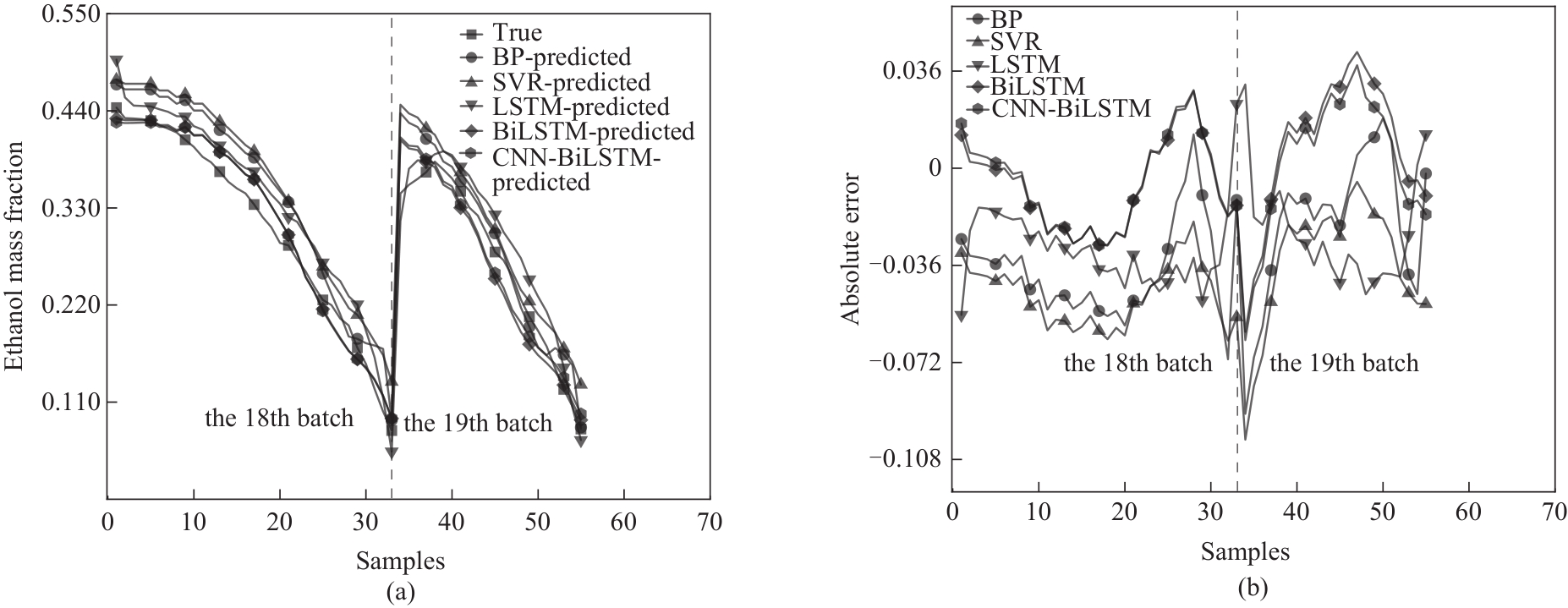
Fig.7 Comparison of ethanol mass fraction prediction in the tower bottom by different models
| 项目 | 批次 | 指标 | BP | SVR | LSTM | BiLSTM | CNN-BiLSTM |
|---|---|---|---|---|---|---|---|
| 馏出液乙醇质量分数 | 18 | RMSE | 0.00850 | 0.00850 | 0.00470 | 0.00470 | 0.00610 |
| 18 | MAE | 0.00670 | 0.00670 | 0.00380 | 0.00420 | 0.00530 | |
| 18 | R2 | 0.159 | 0.149 | 0.745 | 0.741 | 0.566 | |
| 19 | RMSE | 0.0207 | 0.0214 | 0.0139 | 0.0131 | 0.00540 | |
| 19 | MAE | 0.0198 | 0.0206 | 0.0130 | 0.0122 | 0.00460 | |
| 19 | R2 | -16.772 | -17.983 | -6.986 | -6.098 | 0.208 | |
| 塔釜乙醇质量分数 | 18 | RMSE | 0.0415 | 0.0486 | 0.0333 | 0.0173 | 0.0165 |
| 18 | MAE | 0.0385 | 0.0472 | 0.0315 | 0.0145 | 0.0141 | |
| 18 | R2 | 0.852 | 0.798 | 0.905 | 0.971 | 0.974 | |
| 19 | RMSE | 0.0338 | 0.0420 | 0.0307 | 0.0278 | 0.0258 | |
| 19 | MAE | 0.0251 | 0.0347 | 0.0283 | 0.0236 | 0.0216 | |
| 19 | R2 | 0.874 | 0.805 | 0.896 | 0.915 | 0.927 |
Table 8 Test results of two batches of test set data on different neural network models
| 项目 | 批次 | 指标 | BP | SVR | LSTM | BiLSTM | CNN-BiLSTM |
|---|---|---|---|---|---|---|---|
| 馏出液乙醇质量分数 | 18 | RMSE | 0.00850 | 0.00850 | 0.00470 | 0.00470 | 0.00610 |
| 18 | MAE | 0.00670 | 0.00670 | 0.00380 | 0.00420 | 0.00530 | |
| 18 | R2 | 0.159 | 0.149 | 0.745 | 0.741 | 0.566 | |
| 19 | RMSE | 0.0207 | 0.0214 | 0.0139 | 0.0131 | 0.00540 | |
| 19 | MAE | 0.0198 | 0.0206 | 0.0130 | 0.0122 | 0.00460 | |
| 19 | R2 | -16.772 | -17.983 | -6.986 | -6.098 | 0.208 | |
| 塔釜乙醇质量分数 | 18 | RMSE | 0.0415 | 0.0486 | 0.0333 | 0.0173 | 0.0165 |
| 18 | MAE | 0.0385 | 0.0472 | 0.0315 | 0.0145 | 0.0141 | |
| 18 | R2 | 0.852 | 0.798 | 0.905 | 0.971 | 0.974 | |
| 19 | RMSE | 0.0338 | 0.0420 | 0.0307 | 0.0278 | 0.0258 | |
| 19 | MAE | 0.0251 | 0.0347 | 0.0283 | 0.0236 | 0.0216 | |
| 19 | R2 | 0.874 | 0.805 | 0.896 | 0.915 | 0.927 |
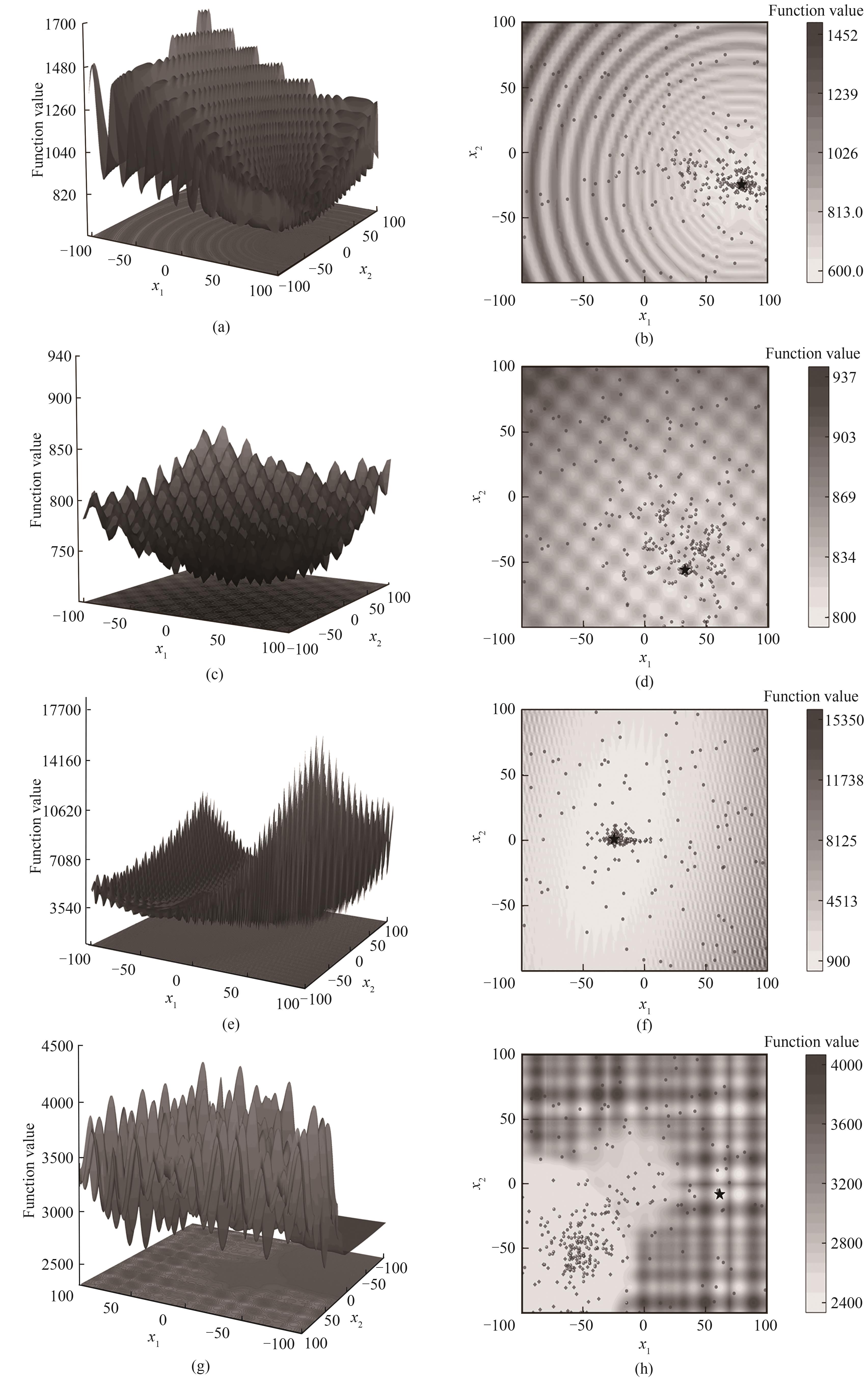
Fig.8 Convergence trajectories of the ISAO algorithm on four function graphs[30]
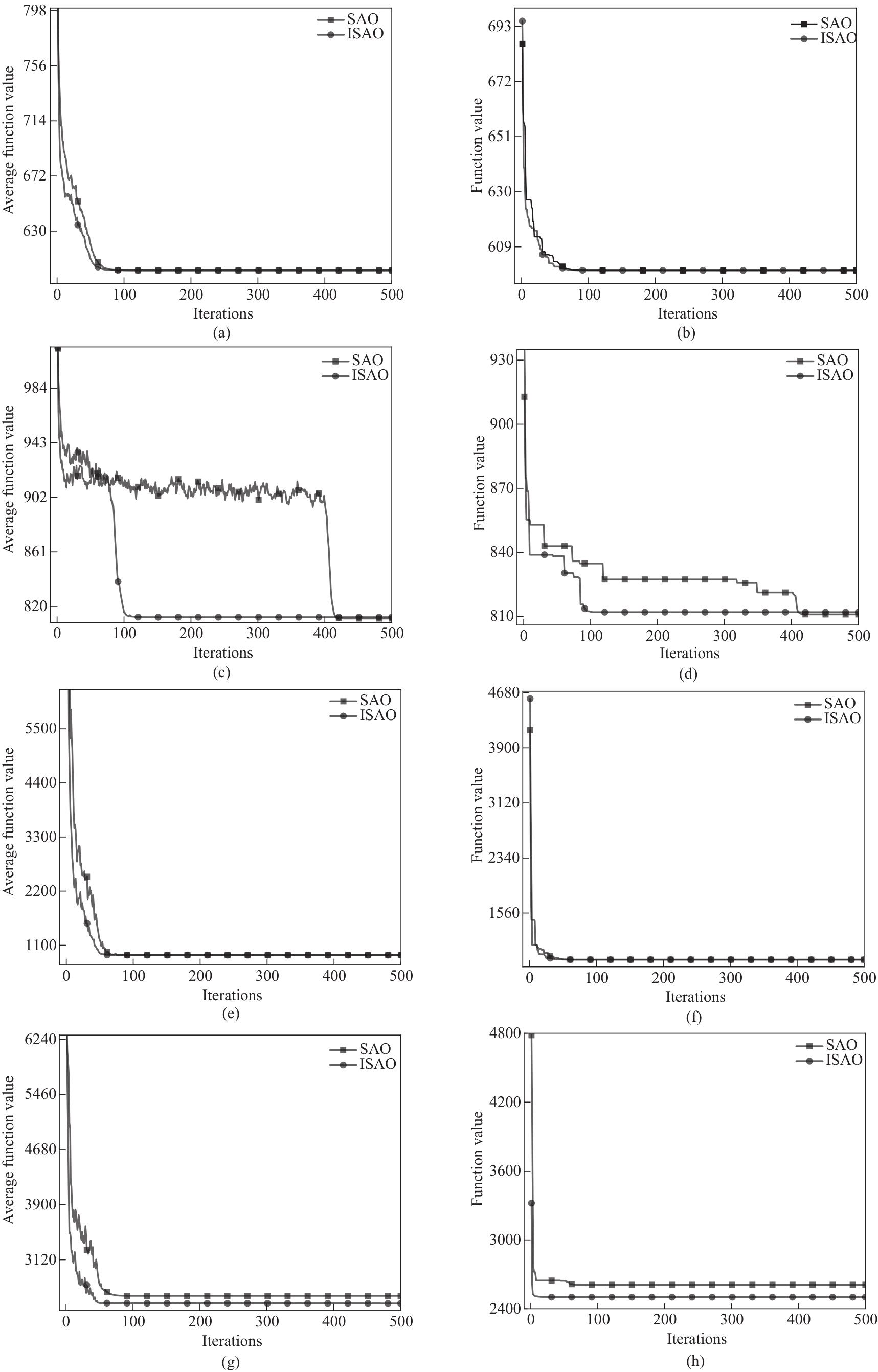
Fig.9 Comparison of convergence behavior between SAO and ISAO algorithms[30]

Fig.10 Convergence of ISAO and competitive algorithms on the CEC2022 test set[30]
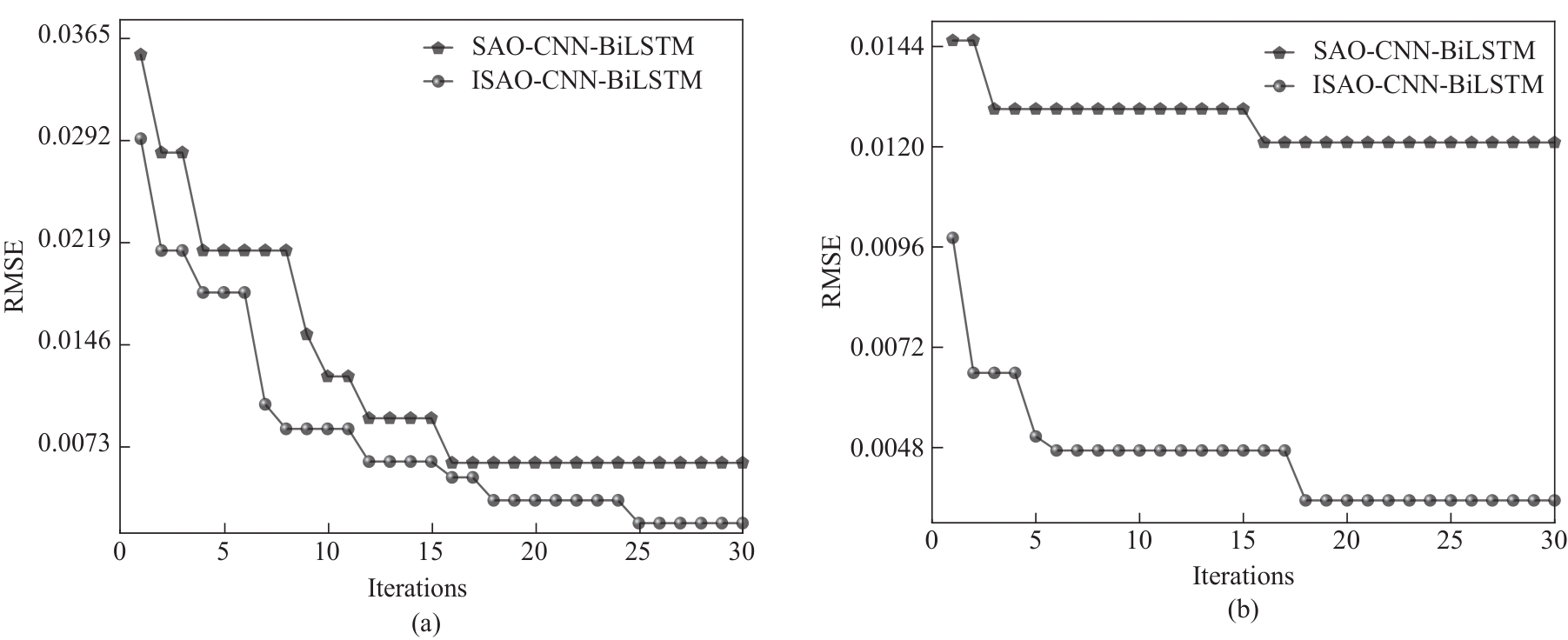
Fig.11 Convergence of the CNN-BiLSTM model with SAO and ISAO
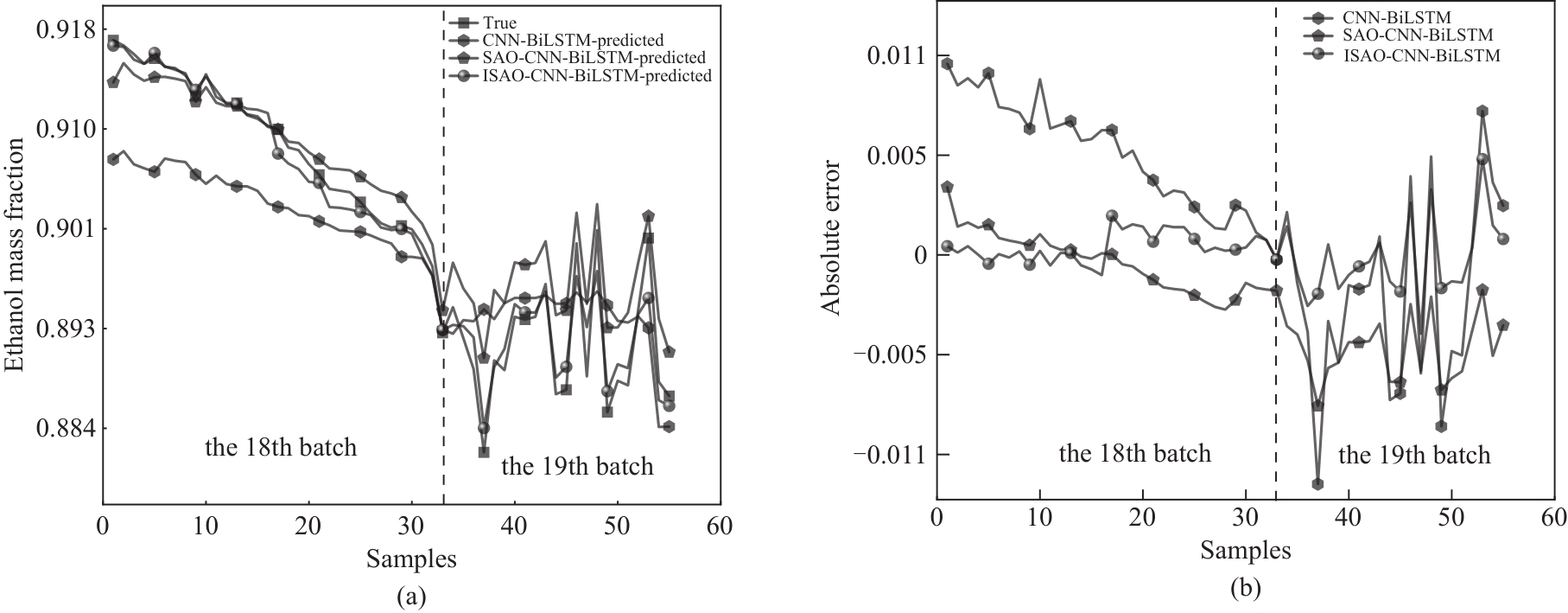
Fig.12 Comparison of ethanol mass fraction prediction in the distillate by different optimization models
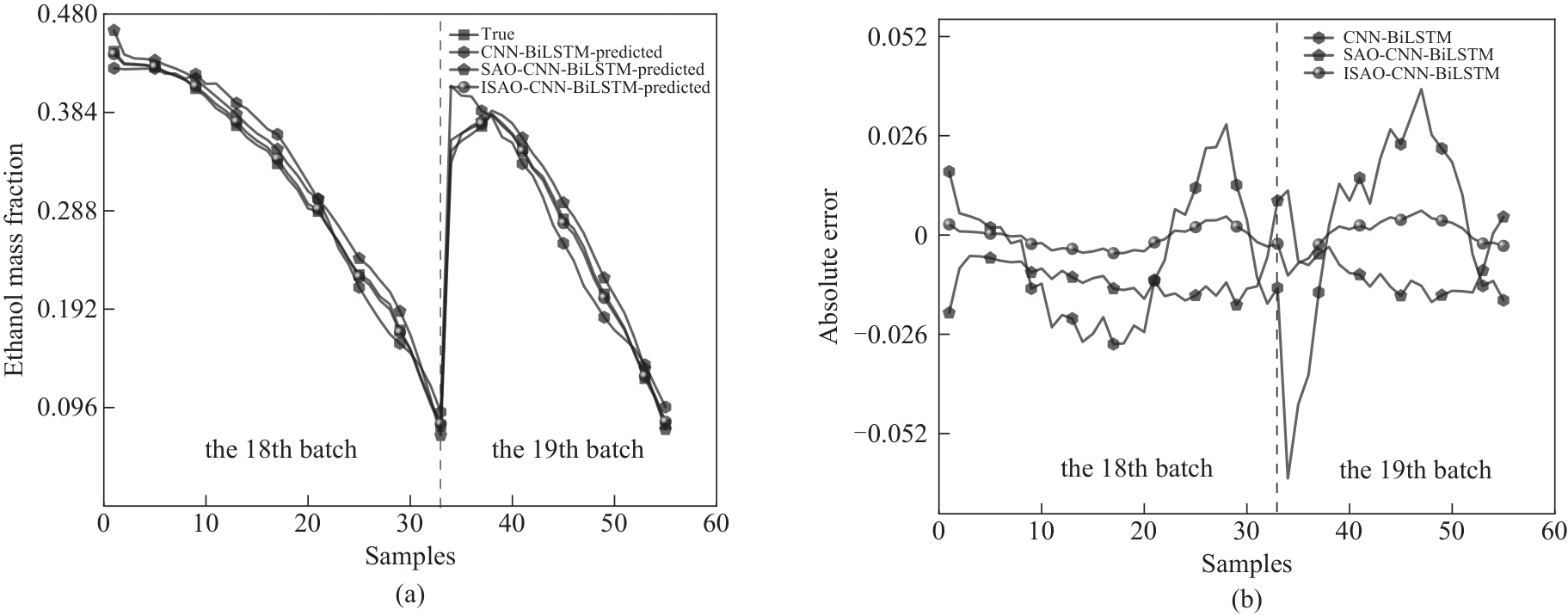
Fig.13 Comparison of ethanol mass fraction prediction in the tower bottom by different optimization models
| 项目 | 批次 | 指标 | CNN-BiLSTM | SAO-CNN-BiLSTM | ISAO-CNN-BiLSTM |
|---|---|---|---|---|---|
| 馏出液乙醇质量分数 | 18 | RMSE | 0.00610 | 0.00540 | 0.000900 |
| 18 | MAE | 0.00530 | 0.00440 | 0.000700 | |
| 18 | R2 | 0.255 | 0.566 | 0.981 | |
| 19 | RMSE | 0.0129 | 0.00170 | 0.00110 | |
| 19 | MAE | 0.0100 | 0.00120 | 0.00100 | |
| 19 | R2 | 0.193 | 0.811 | 0.998 | |
| 塔釜乙醇质量分数 | 18 | RMSE | 0.0165 | 0.0125 | 0.00290 |
| 18 | MAE | 0.0141 | 0.0118 | 0.00250 | |
| 18 | R2 | 0.974 | 0.986 | 0.999 | |
| 19 | RMSE | 0.0258 | 0.00940 | 0.00350 | |
| 19 | MAE | 0.0216 | 0.00710 | 0.00240 | |
| 19 | R2 | 0.927 | 0.985 | 0.998 |
Table 9 Comparison of model evaluation metrics
| 项目 | 批次 | 指标 | CNN-BiLSTM | SAO-CNN-BiLSTM | ISAO-CNN-BiLSTM |
|---|---|---|---|---|---|
| 馏出液乙醇质量分数 | 18 | RMSE | 0.00610 | 0.00540 | 0.000900 |
| 18 | MAE | 0.00530 | 0.00440 | 0.000700 | |
| 18 | R2 | 0.255 | 0.566 | 0.981 | |
| 19 | RMSE | 0.0129 | 0.00170 | 0.00110 | |
| 19 | MAE | 0.0100 | 0.00120 | 0.00100 | |
| 19 | R2 | 0.193 | 0.811 | 0.998 | |
| 塔釜乙醇质量分数 | 18 | RMSE | 0.0165 | 0.0125 | 0.00290 |
| 18 | MAE | 0.0141 | 0.0118 | 0.00250 | |
| 18 | R2 | 0.974 | 0.986 | 0.999 | |
| 19 | RMSE | 0.0258 | 0.00940 | 0.00350 | |
| 19 | MAE | 0.0216 | 0.00710 | 0.00240 | |
| 19 | R2 | 0.927 | 0.985 | 0.998 |
| [1] | 梁昕. 间歇精馏技术的优化综述[J]. 山东化工, 2016, 45(6): 41-42, 45. |
| Liang X. Summary of batch distillation technology optimization[J]. Shandong Chemical Industry, 2016, 45(6): 41-42, 45. | |
| [2] | Zavala-Loría J C, Narváez-García A. Batch Distillation: Thermodynamic Efficiency[M]. Rijeka: IntechOpen, 2012: 92-106. |
| [3] | 杨海荣, 薄翠梅, 陆爱晶, 等. 间歇精馏过程变回流比智能控制策略的研究[J]. 化工自动化及仪表, 2008, 35(1): 12-16. |
| Yang H R, Bo C M, Lu A J, et al. Study on variable reflux ratio intelligent control strategy for batch distillation process[J]. Control and Instruments in Chemical Industry, 2008, 35(1): 12-16. | |
| [4] | Karacan S. Application of a non-linear long range predictive control to a packed distillation column[J]. Chemical Engineering and Processing: Process Intensification, 2003, 42(12): 943-953. |
| [5] | Henson M A. Nonlinear model predictive control: current status and future directions[J]. Computers & Chemical Engineering, 1998, 23(2): 187-202. |
| [6] | 孙志军, 薛磊, 许阳明, 等. 深度学习研究综述[J]. 计算机应用研究, 2012, 29(8): 2806-2810. |
| Sun Z J, Xue L, Xu Y M, et al. Overview of deep learning[J]. Application Research of Computers, 2012, 29(8): 2806-2810. | |
| [7] | Karacan S, Hapoǧlu H, Alpbaz M. Application of optimal adaptive generalized predictive control to a packed distillation column[J]. Chemical Engineering Journal, 2001, 84(3): 389-396. |
| [8] | Alpbaz M, Karacan S, Cabbar Y, et al. Application of model predictive control and dynamic analysis to a pilot distillation column and experimental verification[J]. Chemical Engineering Journal, 2002, 88(1/2/3): 163-174. |
| [9] | 陈锐, 贾继宁, 姚克俭. 基于优化BP神经网络的非稳态精馏过程建模[J]. 化学工程, 2023, 51(10): 83-88. |
| Chen R, Jia J N, Yao K J. Modeling of unsteady distillation process based on optimized BP neural network[J]. Chemical Engineering (China), 2023, 51(10): 83-88. | |
| [10] | Gu J X, Wang Z H, Kuen J, et al. Recent advances in convolutional neural networks[J]. Pattern Recognition, 2018, 77: 354-377. |
| [11] | Zrira N, Kamal-Idrissi A, Farssi R, et al. Time series prediction of sea surface temperature based on BiLSTM model with attention mechanism[J]. Journal of Sea Research, 2024, 198: 102472 . |
| [12] | Wright L G, Onodera T, Stein M M, et al. Deep physical neural networks trained with backpropagation[J]. Nature, 2022, 601(7894): 549-555. |
| [13] | Kavousi-Fard A, Samet H, Marzbani F. A new hybrid modified firefly algorithm and support vector regression model for accurate short term load forecasting[J]. Expert Systems with Applications, 2014, 41(13): 6047-6056. |
| [14] | Zhang Q, Wang H, Dong J Yet al. Prediction of sea surface temperature using long short-term memory[J]. IEEE Geoscience and Remote Sensing Letters, 2017, 14(10): 1745-1749. |
| [15] | Deng L Y, Liu S Y. Snow ablation optimizer: a novel metaheuristic technique for numerical optimization and engineering design[J]. Expert Systems with Applications, 2023, 225: 120069. |
| [16] | Sun B, Li W, Huang Y. Performance of composite PPSO on single objective bound constrained numerical optimization problems of CEC 2022[C]//2022 IEEE Congress on Evolutionary Computation (CEC). Padua, Italy: IEEE, 2022: 1-8. |
| [17] | Hu G, Guo Y X, Wei G, et al. Genghis Khan shark optimizer: a novel nature-inspired algorithm for engineering optimization[J]. Advanced Engineering Informatics, 2023, 58: 102210. |
| [18] | 董益斌, 熊敬超, 王敬宇, 等. 融合激光雷达料位测算的锅炉燃烧优化模型预测控制 [J]. 化工学报, 2024, 75(3): 924-935. |
| Dong Y B, Xiong J C, Wang J Y, et al. LiDAR measurement based on model predictive control for boiler combustion optimization[J]. CIESC Journal, 2024, 75(3): 924-935. | |
| [19] | Wang Z C, Xu N N, Bao X G, et al. Spatio-temporal deep learning model for accurate streamflow prediction with multi-source data fusion[J]. Environmental Modelling & Software, 2024, 178: 106091. |
| [20] | Schmidt-Hieber J. Nonparametric regression using deep neural networks with ReLU activation function[J]. The Annals of Statistics, 2020, 48(4): 1875-1897. |
| [21] | Elfwing S, Uchibe E, Doya K. Sigmoid-weighted linear units for neural network function approximation in reinforcement learning[J]. Neural Networks, 2018, 107: 3-11. |
| [22] | 王贺琦, 王然, 刘诗琳, 等. 基于Tent映射的改进型人工蜂群算法[J]. 软件工程, 2022, 25(8): 15-19. |
| Wang H Q, Wang R, Liu S L, et al. Modified artificial bee colony algorithm based on tent mapping[J]. Software Engineering, 2022, 25(8): 15-19. | |
| [23] | 刘三阳, 张晓伟. 混合差分变异策略[J]. 智能系统学报, 2008, 3(6): 487-491. |
| Liu S Y, Zhang X W. A hybrid strategy for differential variation[J]. Caai Transactions on Intelligent Systems, 2008, 3(6): 487-491. | |
| [24] | 潘恒. 基于集成学习的个人信贷违约预测方法研究与应用[D]. 西安: 西安理工大学, 2024. |
| Pan H. Research and application of personal credit default prediction method based on integrated learning[D]. Xi'an: Xi'an University of Technology, 2024. | |
| [25] | Nadimi-Shahraki M H, Zamani H, Asghari Varzaneh Z, et al. A systematic review of the whale optimization algorithm: theoretical foundation, improvements, and hybridizations[J]. Archives of Computational Methods in Engineering, 2023, 30: 4113-4159. |
| [26] | Shehadeh H A. Chernobyl disaster optimizer (CDO): a novel meta-heuristic method for global optimization[J]. Neural Computing and Applications, 2023, 35(15): 10733-10749. |
| [27] | Trojovský P, Dehghani M. Subtraction-average-based optimizer: a new swarm-inspired metaheuristic algorithm for solving optimization problems[J]. Biomimetics, 2023, 8(2): 149. |
| [28] | Yue Y G, Cao L, Lu D W, et al. Review and empirical analysis of sparrow search algorithm[J]. Artificial Intelligence Review, 2023, 56(10): 10867-10919. |
| [29] | Wang D S, Tan D P, Liu L. Particle swarm optimization algorithm: an overview[J]. Soft Computing, 2018, 22(2): 387-408. |
| [30] | Xie J Y, He J C, Gao Z H, et al. An enhanced snow ablation optimizer for UAV swarm path planning and engineering design problems[J]. Heliyon, 2024, 10(18): e37819. |
| [1] | Biao FENG, Zhao ZHANG, Siqi LI, Bingrui WANG, Hongying WU, Miao SHI, Dan WANG, Suxia MA. Performance of flame retardant for environmentally friendly refrigerant R290 [J]. CIESC Journal, 2025, 76(S1): 462-468. |
| [2] | Hao DING, Lin WANG, Hao LIU. Comparative study on mixing rules of vapor-liquid equilibrium for R290/R245fa [J]. CIESC Journal, 2025, 76(S1): 9-16. |
| [3] | Ziqing ZANG, Xiuzhen LI, Yingying TAN, Xiaoqing LIU. Investigation on effect of fractionation on performance of two-stage separation-based auto-cascade refrigeration cycle [J]. CIESC Journal, 2025, 76(S1): 17-25. |
| [4] | Xingliang PEI, Cuiping YE, Yingli PEI, Wenying LI. Selective adsorption and separation of xylene isomers by alkali-modified MIL-53(Cr) [J]. CIESC Journal, 2025, 76(S1): 258-267. |
| [5] | Yinlong LI, Guoqiang LIU, Gang YAN. Perfromance assessment of auto-cascade cycle integrating fractionation and flash separation [J]. CIESC Journal, 2025, 76(S1): 26-35. |
| [6] | Jianmin ZHANG, Meigui HE, Wanxin JIA, Jing ZHAO, Wanqin JIN. Poly(ethylene oxide)/crown ether blend membrane and performance for CO2 separation [J]. CIESC Journal, 2025, 76(9): 4862-4871. |
| [7] | Jie WANG, Qucheng LIN, Xianming ZHANG. Global optimization of mixed gas multistage membrane separation system based on decomposition algorithm [J]. CIESC Journal, 2025, 76(9): 4670-4682. |
| [8] | Wenlong LI, Cheng CHANG, Xiaolin WU, Zhongli JI. Research on liquid distribution characteristics and pressure drop evolution in oil-water coalescing filters [J]. CIESC Journal, 2025, 76(9): 4850-4861. |
| [9] | Chunmeng ZHU, Zeng LI, Nan LIU, Yunpeng ZHAO, Xiaogang SHI, Xingying LAN. Fault detection of catalyst loss in FCC disengager based on autoencoder and multi-scale symbolic transfer entropy [J]. CIESC Journal, 2025, 76(9): 4512-4523. |
| [10] | Huiqin ZHANG, Hongjun ZHAO, Zhengjun FU, Li ZHUANG, Kai DONG, Tianzhi JIA, Xueli CAO, Shipeng SUN. Application of nanofiltration membrane in concentration of ionic rare earth leach solution [J]. CIESC Journal, 2025, 76(8): 4095-4107. |
| [11] | Zhihong CHEN, Jiawei WU, Xiaoling LOU, Junxian YUN. Recent advances in machine learning for biomanufacturing of chemicals [J]. CIESC Journal, 2025, 76(8): 3789-3804. |
| [12] | Minghu JIANG, Fan WANG, Lei XING, Lixin ZHAO, Xinya LI, Dingwei CHEN. Influence of gas-containing on flow field characteristics and separation performance in oil-water separation string [J]. CIESC Journal, 2025, 76(7): 3361-3372. |
| [13] | Fang WANG, Suxia MA, Ying TIAN, Zhongyuan LIU. NO x emission prediction method of CFB unit based on 1D mechanism model dynamicly corrected with LSTM [J]. CIESC Journal, 2025, 76(7): 3416-3425. |
| [14] | Jinjiang WANG, Zhenjie LU, Weizheng AN, Fengyun YANG, Xiaogang QIN. Research and prospect of early warning and diagnosis technology for ORC power generation system process [J]. CIESC Journal, 2025, 76(7): 3137-3152. |
| [15] | Zhao GAO, Xi WU, Dan XIA, Linzhou ZHANG. Development of thermodynamics and separation unit modules of petroleum refining molecular management platform [J]. CIESC Journal, 2025, 76(7): 3212-3225. |
| Viewed | ||||||
|
Full text |
|
|||||
|
Abstract |
|
|||||