CIESC Journal ›› 2025, Vol. 76 ›› Issue (6): 3029-3040.DOI: 10.11949/0438-1157.20241165
• Energy and environmental engineering • Previous Articles Next Articles
Haojie YANG( ), Chunyu LIU, Xuejiao LI, Liang YU(), Xingcai LYU
Received:2024-10-21
Revised:2024-12-04
Online:2025-07-09
Published:2025-06-25
Contact:
Liang YU
杨浩杰(), 刘春雨, 李雪娇, 于亮(), 吕兴才
通讯作者:
于亮
作者简介:杨浩杰(1999—),男,硕士研究生,122020910342@sjtu.edu.cn
基金资助:CLC Number:
Haojie YANG, Chunyu LIU, Xuejiao LI, Liang YU, Xingcai LYU. Study of stability limits and emission characteristics in premixed ammonia-methane-air swirling flames in low swirl configurations[J]. CIESC Journal, 2025, 76(6): 3029-3040.
杨浩杰, 刘春雨, 李雪娇, 于亮, 吕兴才. 低旋流配置下氨-甲烷-空气预混旋流火焰稳定性和排放特性[J]. 化工学报, 2025, 76(6): 3029-3040.
Add to citation manager EndNote|Ris|BibTeX

Fig.1 Schematic of the swirler configurations
| 参数 | LSI1 | LSI2 | HSI |
|---|---|---|---|
| 旋流数SN | 0.6 | 0.6 | 0.6 |
| 叶片角度θ/(°) | 40 | 40 | 40 |
| 叶片数Nb | 8 | 8 | 8 |
| 中心通孔个数Nh | 39 | 55 | — |
| 通孔直径d/mm | 2 | 2 | — |
| 旋流器内径Ri/mm | 10 | 12 | 7 |
| 旋流器外径Ro/mm | 16 | 16 | 16 |
| 非旋流与旋流气体的质量流量之比Rm /% | 25 | 49 | 0 |
Table 1 Geometric dimensions of the swirlers
| 参数 | LSI1 | LSI2 | HSI |
|---|---|---|---|
| 旋流数SN | 0.6 | 0.6 | 0.6 |
| 叶片角度θ/(°) | 40 | 40 | 40 |
| 叶片数Nb | 8 | 8 | 8 |
| 中心通孔个数Nh | 39 | 55 | — |
| 通孔直径d/mm | 2 | 2 | — |
| 旋流器内径Ri/mm | 10 | 12 | 7 |
| 旋流器外径Ro/mm | 16 | 16 | 16 |
| 非旋流与旋流气体的质量流量之比Rm /% | 25 | 49 | 0 |
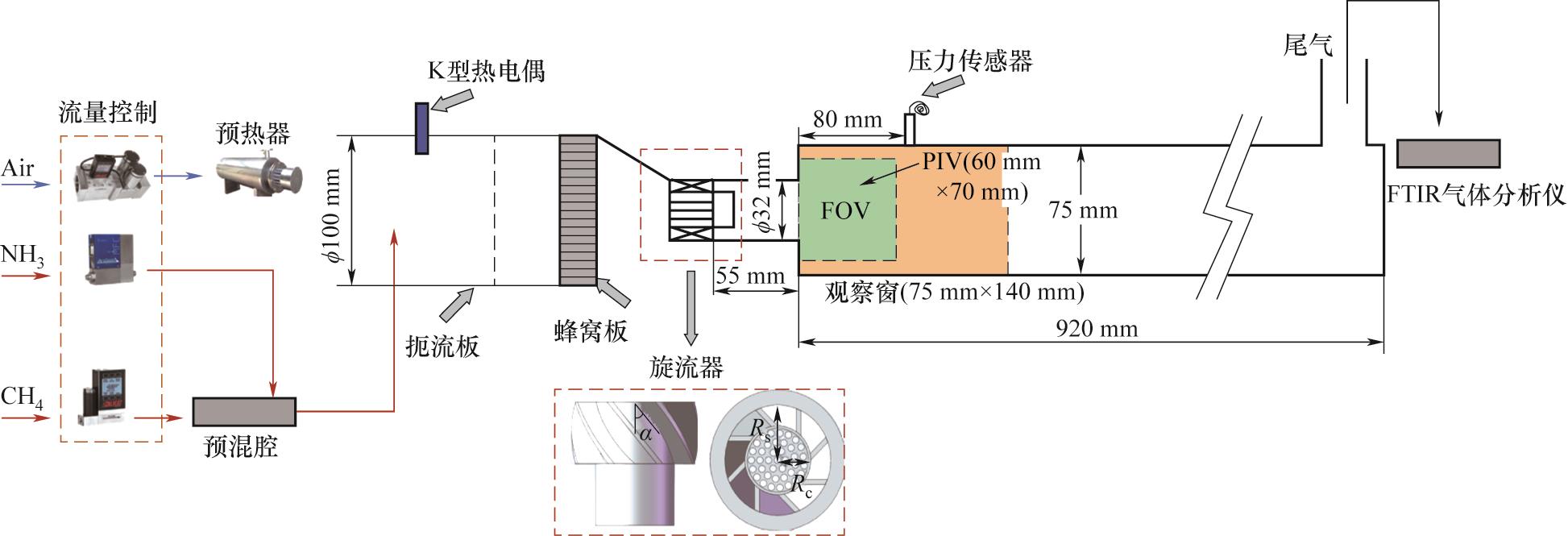
Fig.2 Schematic of experimental equipment
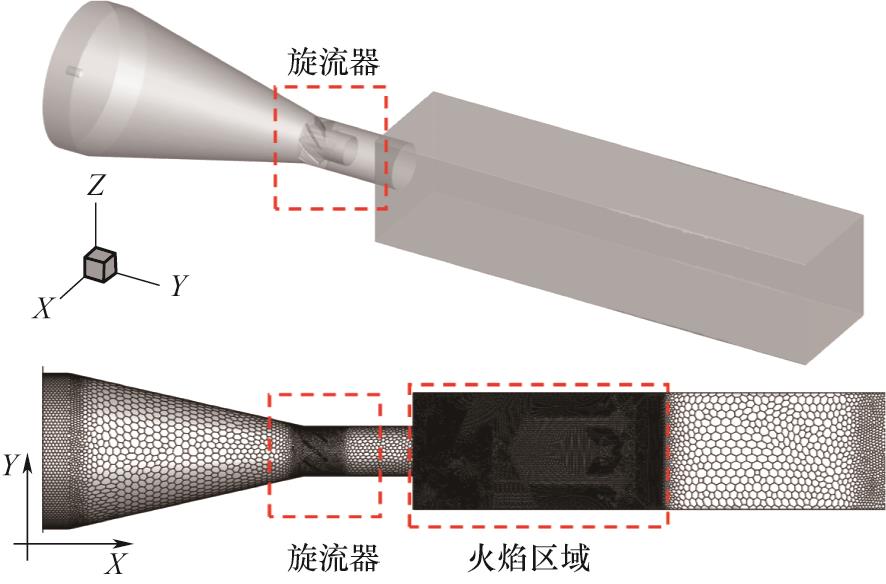
Fig.3 Schematic of model structure and mesh distribution

Fig.4 Mesh independence verification
| 参数 | 数值 |
|---|---|
| 热功率P | 20 kW |
| 甲烷流量Um | 16.1~33.5 SLPM |
| 氨气流量Ua | 0.0~44.8 SLPM |
| 空气流量Uair | 180~600 SLPM |
| 氨气体积分数 | 0~75% |
Table 2 Operating conditions
| 参数 | 数值 |
|---|---|
| 热功率P | 20 kW |
| 甲烷流量Um | 16.1~33.5 SLPM |
| 氨气流量Ua | 0.0~44.8 SLPM |
| 空气流量Uair | 180~600 SLPM |
| 氨气体积分数 | 0~75% |

Fig.5 Verification of the accuracy of the swirl flame simulation
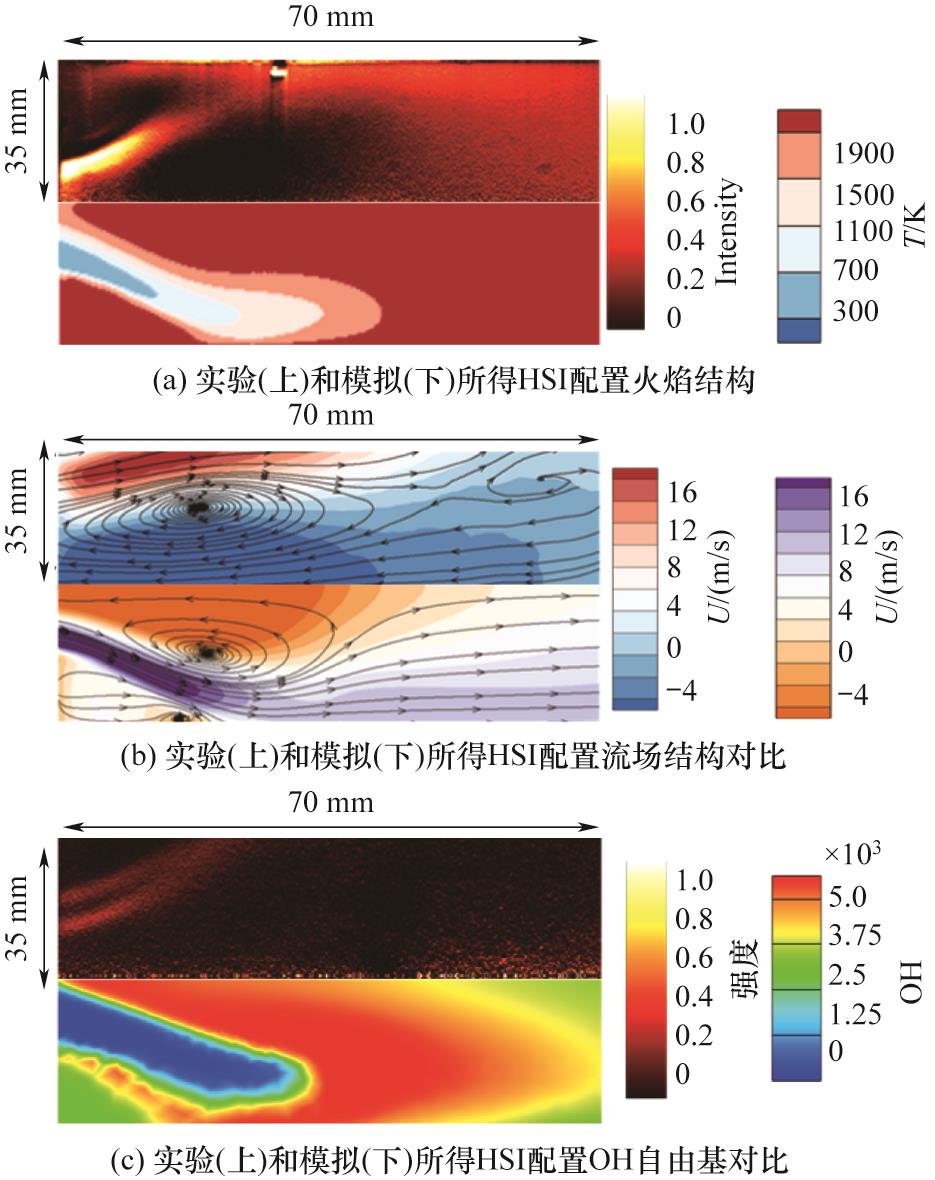
Fig.6 Model accuracy validation
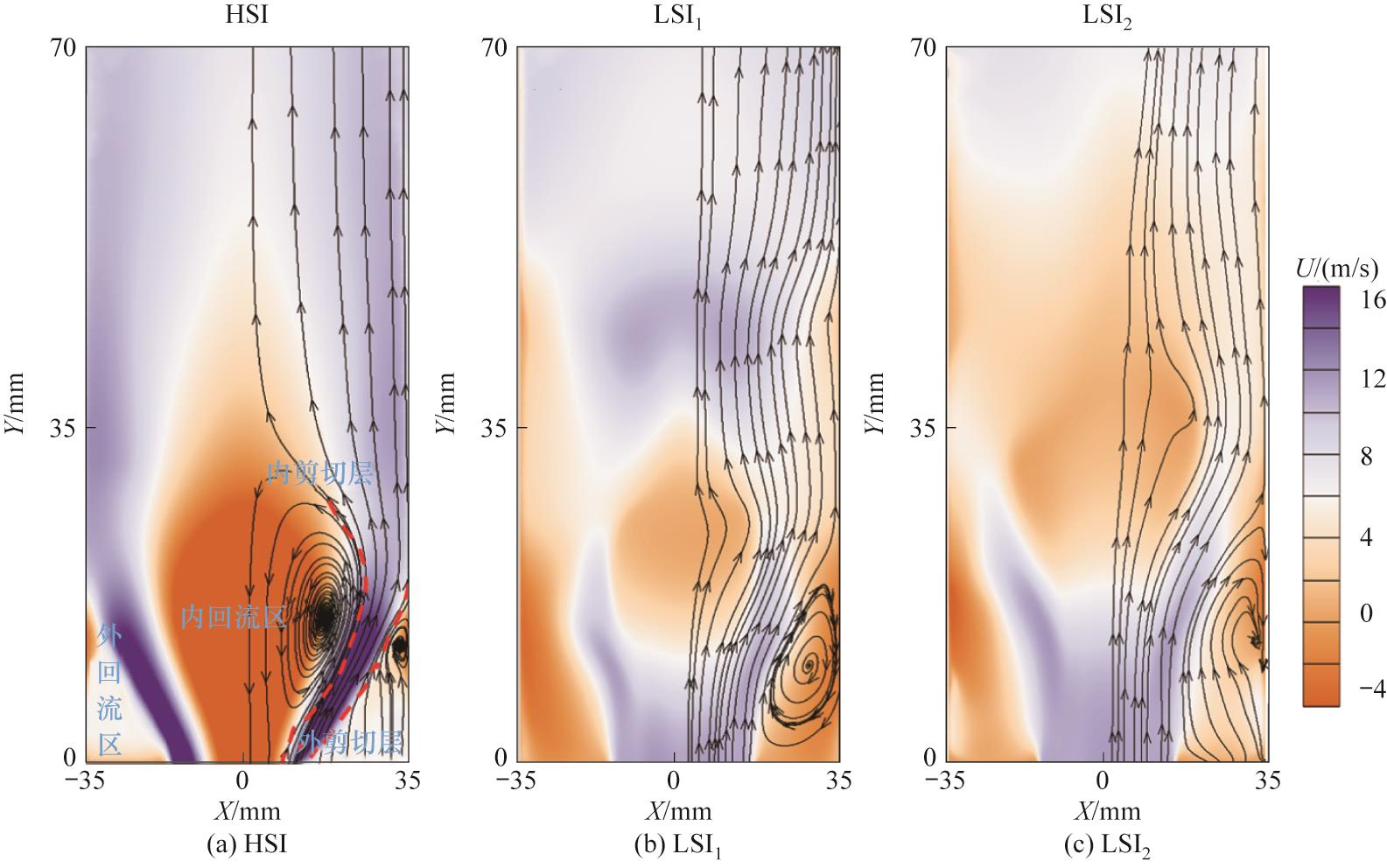
Fig.7 Numerical simulation of the flow field structure
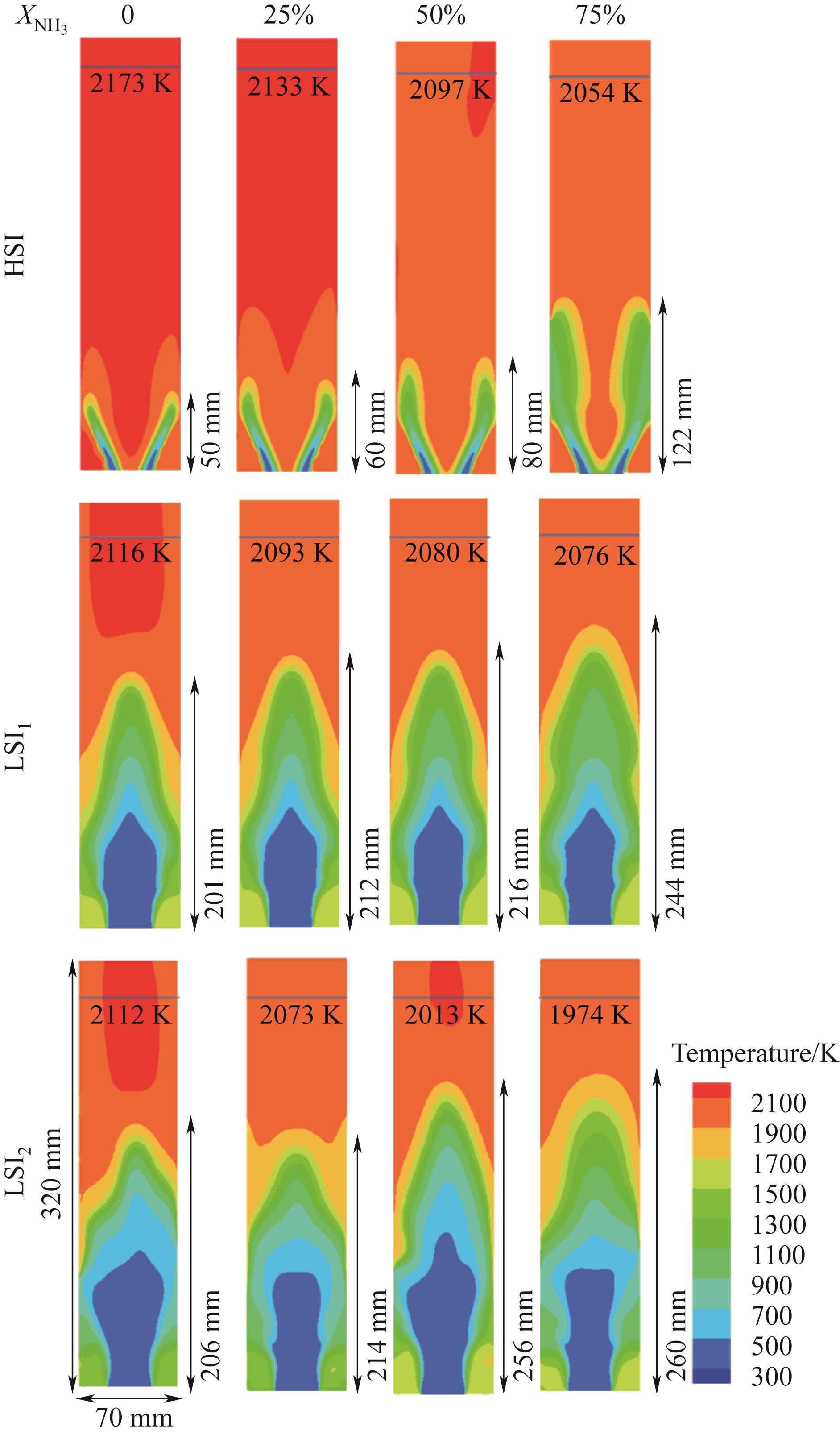
Fig.8 Numerical simulation temperature contour plots for different NH3 volume fractions

Fig.9 NH3-CH4-air flame stability limits for three different swirler configurations

Fig.10 Numerical simulation of NO mass fraction distribution for three swirler configurations(ηNH3=50% and φ = 0.9)
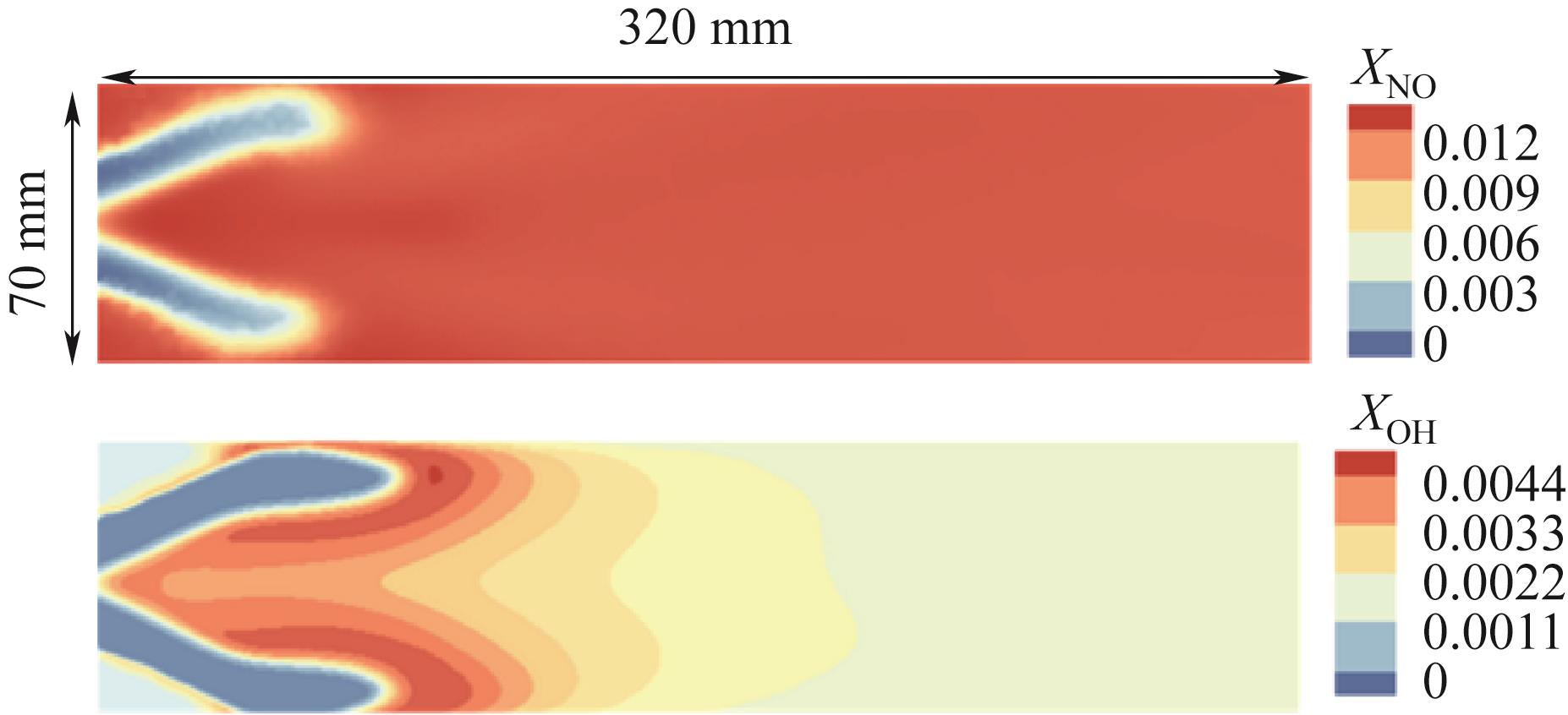
Fig.11 Average mass fraction distribution of NO and OH in HSI configuration(ηNH3=50% and φ = 0.9)
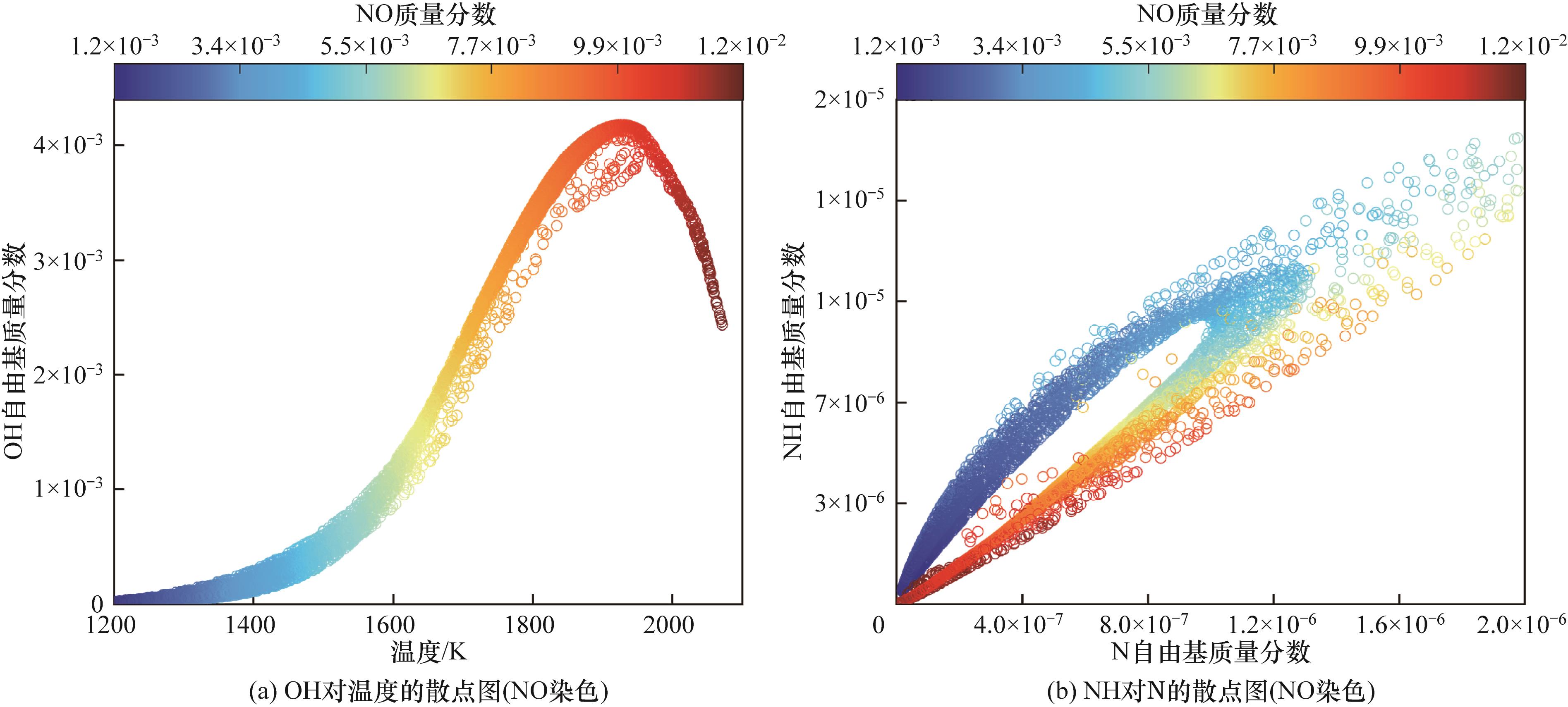
Fig.12 Scatter plots of OH-T and NH-N in flame zone
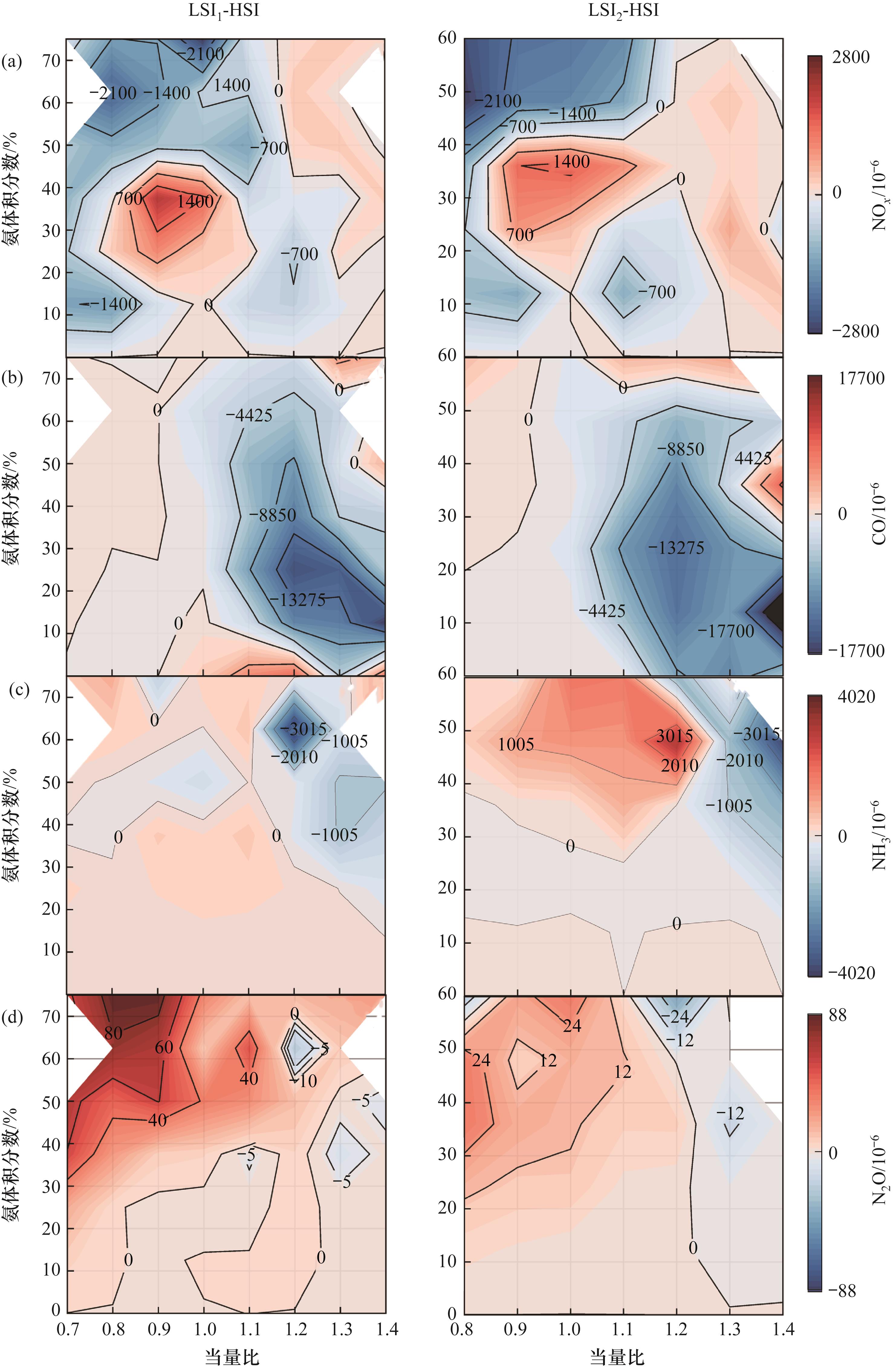
Fig.13 Plots of emissions as a function of φ and ηNH3 for three swirler configurations(HSI is used as the refence for subtraction)
| [1] | Medina A V, Hua X, Owen-Jones M, et al. Ammonia for power[J]. Progress in Energy and Combustion Science, 2018, 69: 63-102. |
| [2] | Hayakawa A, Goto T, Mimoto R, et al. Laminar burning velocity and Markstein length of ammonia/air premixed flames at various pressures[J]. Fuel, 2015, 159: 98-106. |
| [3] | Lesmana H, Zhu M M, Zhang Z Z, et al. An experimental investigation into the effect of spark gap and duration on minimum ignition energy of partially dissociated NH3 in air[J]. Combustion and Flame, 2022, 241: 112053. |
| [4] | Katoch A, Guiberti T F, de Campos D V, et al. Dual-fuel, dual-swirl burner for the mitigation of thermoacoustic instabilities in turbulent ammonia-hydrogen flames[J]. Combustion and Flame, 2022, 246: 112392. |
| [5] | Goldmann A, Dinkelacker F. Investigation of boundary layer flashback for non-swirling premixed hydrogen/ammonia/nitrogen/oxygen/air flames[J]. Combustion and Flame, 2022, 238: 111927. |
| [6] | De S, Mondal S, Bhattacharya A, et al. Dynamics of premixed flames near lean and rich blowout[J]. Combustion Science and Technology, 2024, 196(11): 1685-1701. |
| [7] | Li S H, Zhang X Y, Zhong D, et al. Effects of inert dilution on the lean blowout characteristics of syngas flames[J]. International Journal of Hydrogen Energy, 2016, 41(21): 9075-9086. |
| [8] | Li Y J, Zheng H T, Cai L. Numerical simulation on H2 rich blowout limit in bluff-body burner[J]. Industrial & Engineering Chemistry Research, 2013, 52(5): 2094-2102. |
| [9] | Valera-Medina A, Marsh R, Runyon J, et al. Ammonia-methane combustion in tangential swirl burners for gas turbine power generation[J]. Applied Energy, 2017, 185: 1362-1371. |
| [10] | Li S, Zhang S S, Zhou H, et al. Analysis of air-staged combustion of NH3/CH4 mixture with low NO x emission at gas turbine conditions in model combustors[J]. Fuel, 2019, 237: 50-59. |
| [11] | Kurata O, Iki N, Matsunuma T, et al. Performances and emission characteristics of NH3-air and NH3-CH4-air combustion gas-turbine power generations[J]. Proceedings of the Combustion Institute, 2017, 36(3): 3351-3359. |
| [12] | Ji L J, Wang J H, Hu G Y, et al. Experimental study on structure and blow-off characteristics of NH3/CH4 co-firing flames in a swirl combustor[J]. Fuel, 2022, 314: 123027. |
| [13] | Kim J H, Song J H, Ku J W, et al. Combustion characteristics of premixed ammonia-hydrogen/air flames in a swirl model combustor[J]. International Journal of Hydrogen Energy, 2024, 49: 1075-1086. |
| [14] | Okafor E C, Somarathne K D K A, Hayakawa A, et al. Towards the development of an efficient low-NO x ammonia combustor for a micro gas turbine[J]. Proceedings of the Combustion Institute, 2019, 37(4): 4597-4606. |
| [15] | Elbaz A M, Albalawi A M, Wang S X, et al. Stability and characteristics of NH3/CH4/air flames in a combustor fired by a double swirl stabilized burner[J]. Proceedings of the Combustion Institute, 2023, 39(4): 4205-4213. |
| [16] | Somarathne K D K A, Hayakawa A, Kobayashi H. Numerical investigation on the combustion characteristics of turbulent premixed ammonia/air flames stabilized by a swirl burner[J]. Journal of Fluid Science and Technology, 2016, 11(4): JFST0026. |
| [17] | Durox D, Moeck J P, Bourgouin J F, et al. Flame dynamics of a variable swirl number system and instability control[J]. Combustion and Flame, 2013, 160(9): 1729-1742. |
| [18] | Jeong H, Han M, Kang K, et al. An experimental study on the effect of a turbulence generating plate in low swirl combustor[J]. Journal of Mechanical Science and Technology, 2017, 31(12): 6077-6084. |
| [19] | Chan C K, Lau K S, Chin W K, et al. Freely propagating open premixed turbulent flames stabilized by swirl[J]. Symposium (International) on Combustion, 1992, 24(1): 511-518. |
| [20] | Littlejohn D, Cheng R K, Noble D R, et al. Laboratory investigations of low-swirl injectors operating with syngases[J]. Journal of Engineering for Gas Turbines and Power, 2010, 132(1): 011502. |
| [21] | Verbeek A A, Bouten T W F M, Stoffels G G M, et al. Fractal turbulence enhancing low-swirl combustion[J]. Combustion and Flame, 2015, 162(1): 129-143. |
| [22] | 毛晨林, 王平, Shrotriya Prashant, 等. 含氨燃料预混火焰的层流火焰速度及NO排放特性[J]. 化工学报, 2021, 72(10): 5330-5343. |
| Mao C L, Wang P, Shrotriya P, et al. Laminar flame speed and NO emission characteristics of premixed flames with different ammonia-containing fuels[J]. CIESC Journal, 2021, 72(10): 5330-5343. | |
| [23] | Pashchenko D. Ammonia fired gas turbines: recent advances and future perspectives[J]. Energy, 2024, 290: 130275. |
| [24] | Wu F H, Chen G B. Numerical study of hydrogen peroxide enhancement of ammonia premixed flames[J]. Energy, 2020, 209: 118118. |
| [25] | Xiao Y L, Cao Z B, Wang C W. Flame stability limits of premixed low-swirl combustion[J]. Advances in Mechanical Engineering, 2018, 10(9): 168781401879087. |
| [26] | Clemens N T, Mungal M G. A planar Mie scattering technique for visualizing supersonic mixing flows[J]. Experiments in Fluids, 1991, 11(2): 175-185. |
| [27] | Shih T H, Liou W W, Shabbir A, et al. A new k-ϵ eddy viscosity model for high Reynolds number turbulent flows[J]. Computers & Fluids, 1995, 24(3): 227-238. |
| [28] | Liu C Y, Gao C H, Huang Y, et al. Experimental and numerical study of combustion characteristics of ammonia-hydrogen-air swirling flame with/without secondary air injection[J]. Chinese Journal of Aeronautics, 2024, 37(4): 243-255. |
| [29] | Sun Y Z, Cai T, Shahsavari M, et al. RANS simulations on combustion and emission characteristics of a premixed NH3/H2 swirling flame with reduced chemical kinetic model[J]. Chinese Journal of Aeronautics, 2021, 34(12): 17-27. |
| [30] | Belal B Y, Li G S, Zhang Z H, et al. The effect of swirl burner design configuration on combustion and emission characteristics of lean pre-vaporized premixed flames[J]. Energy, 2021, 228: 120622. |
| [31] | Singh G, Chander S, Ray A. Heat transfer characteristics of natural gas/air swirling flame impinging on a flat surface[J]. Experimental Thermal and Fluid Science, 2012, 41: 165-176. |
| [32] | Oh J, Noh D, Lee E. The effect of CO addition on the flame behavior of a non-premixed oxy-methane jet in a lab-scale furnace[J]. Applied Energy, 2013, 112: 350-357. |
| [33] | Tao C F, Liu B, Dou Y L, et al. The experimental study of flame height and lift-off height of propane diffusion flames diluted by carbon dioxide[J]. Fuel, 2021, 290: 119958. |
| [34] | Hardalupas Y, Orain M. Local measurements of the time-dependent heat release rate and equivalence ratio using chemiluminescent emission from a flame[J]. Combustion and Flame, 2004, 139(3): 188-207. |
| [35] | Khateeb A A, Guiberti T F, Zhu X R, et al. Stability limits and NO emissions of technically-premixed ammonia-hydrogen-nitrogen-air swirl flames[J]. International Journal of Hydrogen Energy, 2020, 45(41): 22008-22018. |
| [36] | Guiberti T F, Durox D, Zimmer L, et al. Analysis of topology transitions of swirl flames interacting with the combustor side wall[J]. Combustion and Flame, 2015, 162(11): 4342-4357. |
| [37] | Li G, Jiang X, Zhu J Q, et al. Combustion control using a lobed swirl injector and a plasma swirler[J]. Applied Thermal Engineering, 2019, 152: 92-102. |
| [38] | Ariemma G B, Sorrentino G, Ragucci R, et al. Ammonia/methane combustion: stability and NO x emissions[J]. Combustion and Flame, 2022, 241: 112071. |
| [39] | Sayad P, Schönborn A, Klingmann J. Experimental investigation of the stability limits of premixed syngas-air flames at two moderate swirl numbers[J]. Combustion and Flame, 2016, 164: 270-282. |
| [40] | 肖申, 沈来宏, 牛欣, 等. 含氮模型化合物用于化学链燃烧的氮氧化物释放特性[J]. 化工学报, 2015, 66(11): 4588-4596. |
| Xiao S, Shen L H, Niu X, et al. NO x release in chemical looping combustion of N-containing model compounds[J]. CIESC Journal, 2015, 66(11): 4588-4596. | |
| [41] | 程康, 王平, 毛晨林, 等. 氨气-氢气富燃湍流旋转火焰的大涡模拟[J]. 燃烧科学与技术, 2023, 29(5): 561-568. |
| Cheng K, Wang P, Mao C L, et al. Large eddy simulation of rich ammonia-hydrogen turbulent swirling flame[J]. Journal of Combustion Science and Technology, 2023, 29(5): 561-568. | |
| [42] | Mashruk S, Okafor E C, Kovaleva M, et al. Evolution of N2O production at lean combustion condition in NH3/H2/air premixed swirling flames[J]. Combustion and Flame, 2022, 244: 112299. |
| [1] | Zeyu ZHANG, Ping WANG, Kailun DAI, Weijia QIAN, Subhajit Roy, Ruiyang SHUAI, Antonio Ferrante. Combustion characteristics and NO production of axially staged premixed NH3/CH4 turbulent swirling flames [J]. CIESC Journal, 2025, 76(2): 835-845. |
| [2] | Zhicheng DENG, Huan YANG, Simin WANG, Jiarui WANG. Microtube structure impacts on hydrogen-air mixing effect and combustion performance in micromix combustor [J]. CIESC Journal, 2025, 76(1): 335-347. |
| [3] | Xi MENG, Yan WANG, Zijian SUN, Junfei QIAO. Prediction of NO x emissions for municipal solid waste incineration processes using attention modular neural network [J]. CIESC Journal, 2024, 75(2): 593-603. |
| [4] | Runmiao GAO, Mengjie SONG, Enyuan GAO, Long ZHANG, Xuan ZHANG, Keke SHAO, Zekang ZHEN, Zhengyong JIANG. Review on greenhouse gas reduction related to refrigerants in cold chain [J]. CIESC Journal, 2023, 74(S1): 1-7. |
| [5] | Yongqian WANG, Ping WANG, Kang CHENG, Chenlin MAO, Wenfeng LIU, Zhicheng YIN, Antonio Ferrante. Stability and NO production of lean premixed ammonia/methane turbulent swirling flame [J]. CIESC Journal, 2022, 73(9): 4087-4094. |
| [6] | Huimin YUN, Jianjun DAI, Hui LI, Xiaotao BI. Economic and environmental assessment of biomass coupled coal-fired power generation [J]. CIESC Journal, 2021, 72(12): 6311-6327. |
| [7] | HAN Tianyi, YAO Yuan, XU Jun, QI Liqiang, LI Jintao, TENG Fei. Synergetic mechanism of hygroscopic agent, surfactant and catalyst on desulfurization of flue gas circulating fluidized bed [J]. CIESC Journal, 2018, 69(9): 4044-4050. |
| [8] | HUA Changchun, WANG Yajie, LI Junpeng, TANG Yinggan, LU Zhigang, Guan Xinping. Multi-objective optimization model for blast furnace production and ingredients based on NSGA-Ⅱ algorithm [J]. CIESC Journal, 2016, 67(3): 1040-1047. |
| [9] | WANG Hairong, LIANG Dong, HUANG Mozhi. Simulation and performance evaluation of CCHP using biomass as fuels [J]. CIESC Journal, 2015, 66(S2): 279-286. |
| [10] | SUN Hongzhi,WANG Qian,SONG Mingxiu,Abudoulajiang ? Nasi’er,WANG Fuyan,ZHU Weiqun. Progress in the chemical utilization of carbon dioxide [J]. Chemical Industry and Engineering Progree, 2013, 32(07): 1666-1672. |
| [11] | SUN Lanyi,CHANG Xingwu,TAN Yawen,LI Jun,LI Qingsong. Application of thermally coupled technology to azeotropic distillation system [J]. , 2010, 29(12): 2228-. |
| Viewed | ||||||
|
Full text |
|
|||||
|
Abstract |
|
|||||