CIESC Journal ›› 2025, Vol. 76 ›› Issue (10): 5464-5474.DOI: 10.11949/0438-1157.20250215
• Material science and engineering, nanotechnology • Previous Articles Next Articles
Yuhui WU1( ), Jialong ZHANG2, Yuanhe HOU2, Zhen LIU1()
Received:2025-03-04
Revised:2025-04-15
Online:2025-11-25
Published:2025-10-25
Contact:
Zhen LIU
吴宇辉1(), 张家龙2, 侯远赫2, 刘振1()
通讯作者:
刘振
作者简介:吴宇辉(1999—),男,硕士研究生,aa18760235839@163.com
CLC Number:
Yuhui WU, Jialong ZHANG, Yuanhe HOU, Zhen LIU. Study of radical intermediate cleavage on RAFT polymerization of methyl acrylate and methyl methacrylate[J]. CIESC Journal, 2025, 76(10): 5464-5474.
吴宇辉, 张家龙, 侯远赫, 刘振. 中间体自由基断裂对丙烯酸甲酯/甲基丙烯酸甲酯RAFT聚合的影响[J]. 化工学报, 2025, 76(10): 5464-5474.
Add to citation manager EndNote|Ris|BibTeX
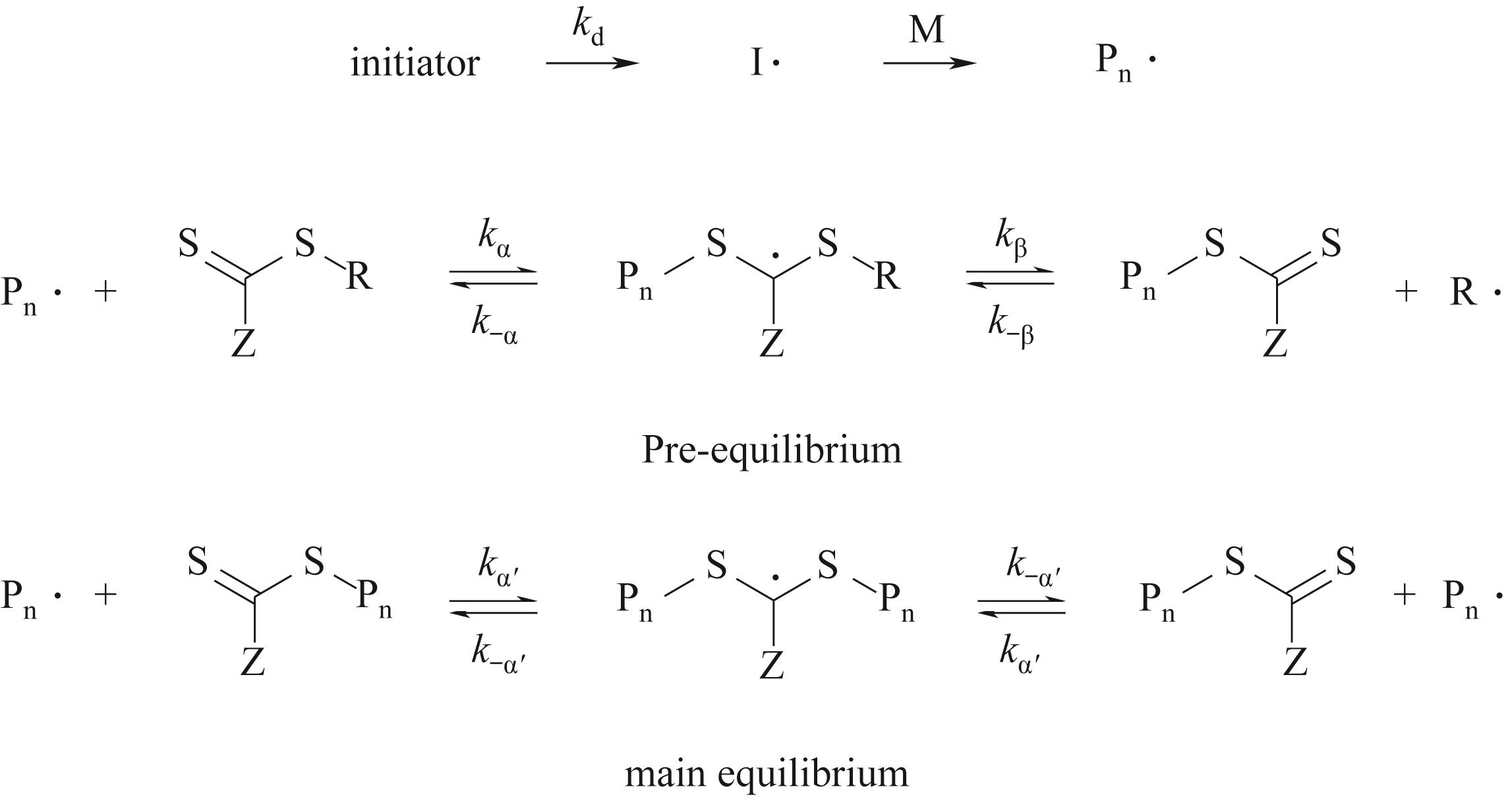
Fig.1 Cleavage pathways of radical intermediates during RAFT chain transfer reaction
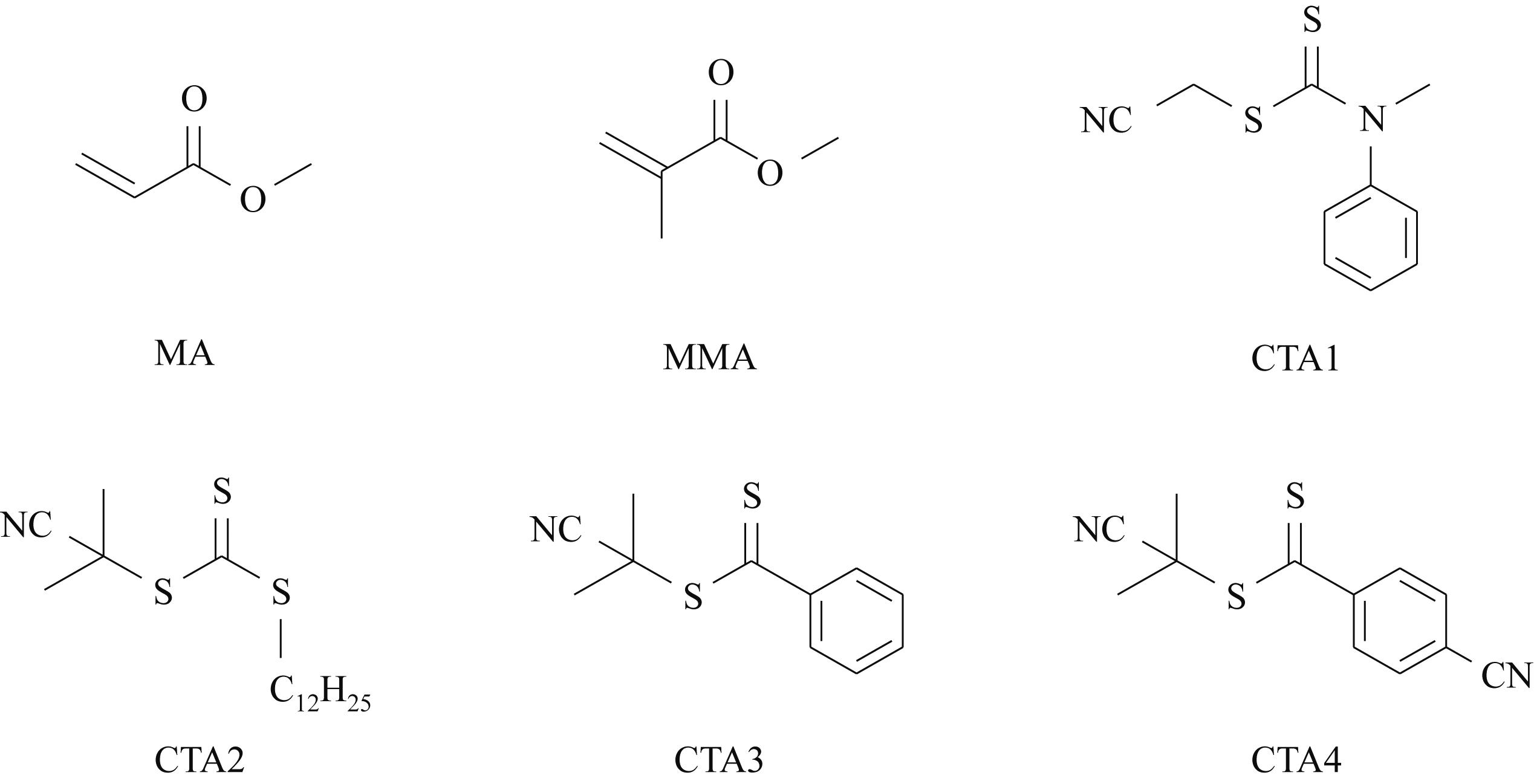
Fig.2 Structures of monomers (MA/MMA) and chain transfer agents (CTAs)
| Entry | Monomer | RAFT agent | Conv①/% | Mn,th② | Mn,GPC③ | Ð③ |
|---|---|---|---|---|---|---|
| 1 | MA | CTA1 | 92 | 8171 | 37800 | 1.76 |
| 2 | MA | CTA2 | 98 | 8811 | 9300 | 1.12 |
| 3 | MA | CTA3 | 40 | 3636 | 3400 | 1.12 |
| 4 | MA | CTA4 | 33 | 3086 | 2400 | 1.11 |
| 5 | MMA | CTA1 | 99 | 10134 | 53100 | 2.36 |
| 6 | MMA | CTA2 | 81 | 8455 | 7600 | 1.32 |
| 7 | MMA | CTA3 | 32 | 3425 | 3000 | 1.25 |
| 8 | MMA | CTA4 | 30 | 3250 | 2500 | 1.20 |
Table 1 Comparison of molecular weight for PMA/PMMA regulated by different CTAs
| Entry | Monomer | RAFT agent | Conv①/% | Mn,th② | Mn,GPC③ | Ð③ |
|---|---|---|---|---|---|---|
| 1 | MA | CTA1 | 92 | 8171 | 37800 | 1.76 |
| 2 | MA | CTA2 | 98 | 8811 | 9300 | 1.12 |
| 3 | MA | CTA3 | 40 | 3636 | 3400 | 1.12 |
| 4 | MA | CTA4 | 33 | 3086 | 2400 | 1.11 |
| 5 | MMA | CTA1 | 99 | 10134 | 53100 | 2.36 |
| 6 | MMA | CTA2 | 81 | 8455 | 7600 | 1.32 |
| 7 | MMA | CTA3 | 32 | 3425 | 3000 | 1.25 |
| 8 | MMA | CTA4 | 30 | 3250 | 2500 | 1.20 |
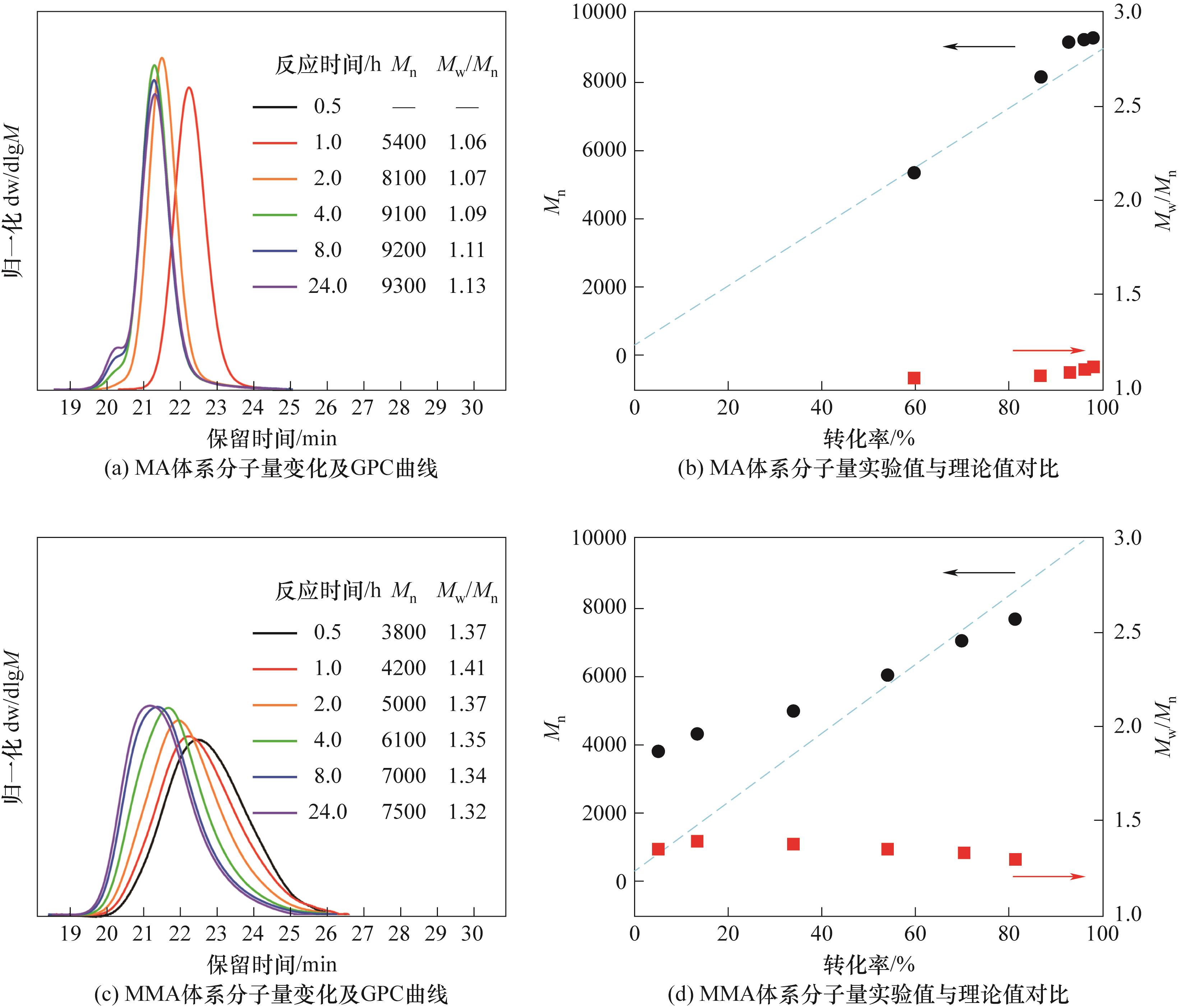
Fig.3 Molecular weights and polymerization kinetics for MA and MMA systems under CTA2 regulation
| Entry | Monomer | RAFT agent | ΔG-α①/(kJ·mol-1) | ΔGβ②/(kJ·mol-1) | ΔGpre-equilibrium③/(kJ·mol-1) | φ④ | C⑤ |
|---|---|---|---|---|---|---|---|
| 1 | MA | CTA 1 | 44.9 | 42.0 | 10.8 | 0.7384 | 9.81×10⁻⁴ |
| 2 | MA | CTA 2 | 57.6 | 44.6 | -32.4 | 0.9902 | 6.88×10 |
| 3 | MA | CTA 3 | 80.4 | 62.9 | -25.8 | 0.9980 | 4.46×10² |
| 4 | MA | CTA 4 | 82.4 | 62.6 | -30.1 | 0.9991 | 1.38×10³ |
| 5 | MMA | CTA 1 | 31.8 | 50.5 | 40.3 | 0.0013 | 5.08×10⁻³ |
| 6 | MMA | CTA 2 | 46.4 | 61.0 | 2.9 | 0.0117 | 4.49×10 |
| 7 | MMA | CTA 3 | 58.0 | 73.8 | 0.7 | 0.0058 | 2.64×10² |
| 8 | MMA | CTA 4 | 56.1 | 74.1 | 4.8 | 0.0004 | 7.20×10² |
Table 2 Relative Gibbs free energies of species in pre-equilibrium stage of MA and MMA with CTA1—CTA4
| Entry | Monomer | RAFT agent | ΔG-α①/(kJ·mol-1) | ΔGβ②/(kJ·mol-1) | ΔGpre-equilibrium③/(kJ·mol-1) | φ④ | C⑤ |
|---|---|---|---|---|---|---|---|
| 1 | MA | CTA 1 | 44.9 | 42.0 | 10.8 | 0.7384 | 9.81×10⁻⁴ |
| 2 | MA | CTA 2 | 57.6 | 44.6 | -32.4 | 0.9902 | 6.88×10 |
| 3 | MA | CTA 3 | 80.4 | 62.9 | -25.8 | 0.9980 | 4.46×10² |
| 4 | MA | CTA 4 | 82.4 | 62.6 | -30.1 | 0.9991 | 1.38×10³ |
| 5 | MMA | CTA 1 | 31.8 | 50.5 | 40.3 | 0.0013 | 5.08×10⁻³ |
| 6 | MMA | CTA 2 | 46.4 | 61.0 | 2.9 | 0.0117 | 4.49×10 |
| 7 | MMA | CTA 3 | 58.0 | 73.8 | 0.7 | 0.0058 | 2.64×10² |
| 8 | MMA | CTA 4 | 56.1 | 74.1 | 4.8 | 0.0004 | 7.20×10² |
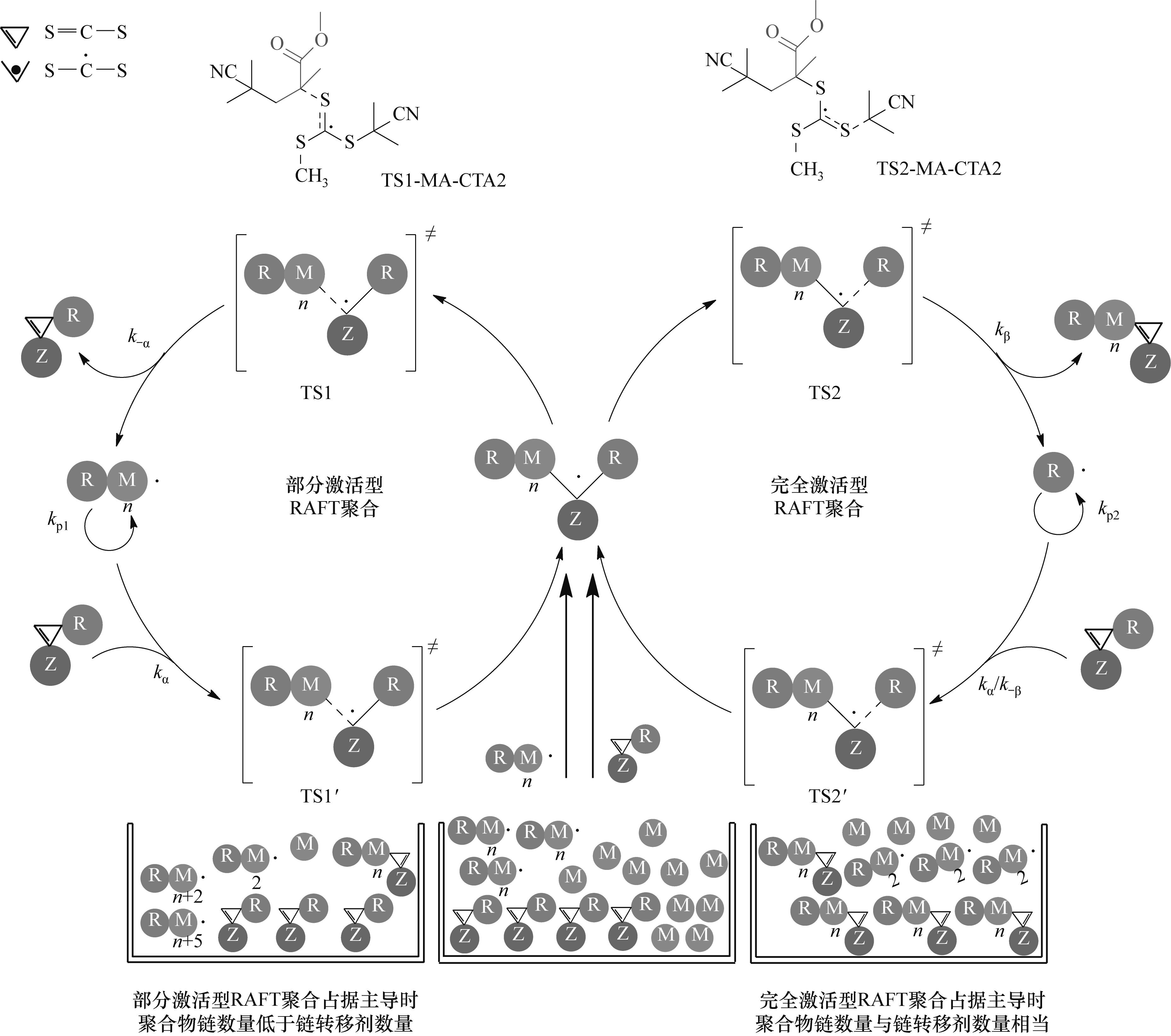
Fig.4 Schematic illustration of RAFT polymerization mechanisms governed by radical intermediate cleavage pathways
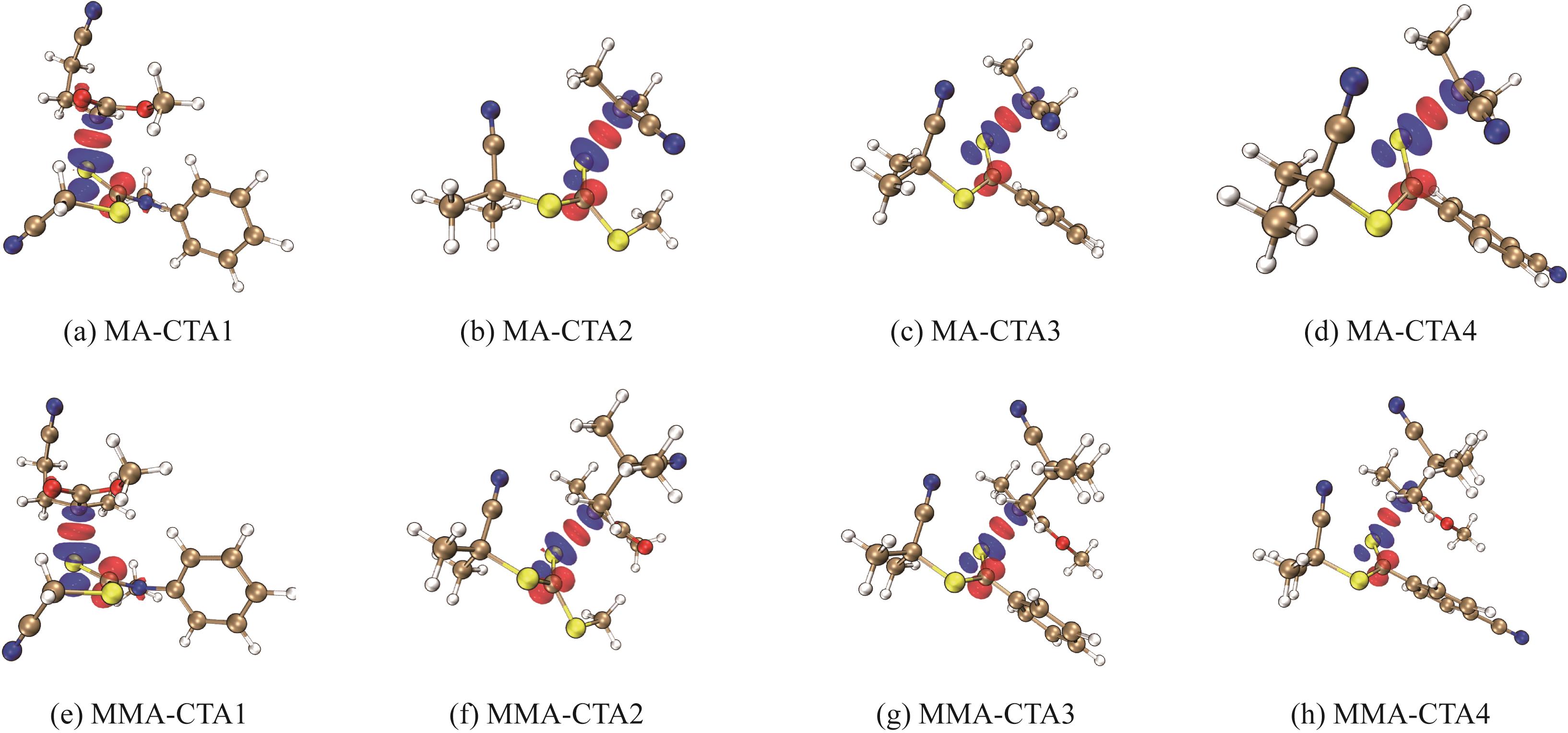
Fig.5 Primary orbital interactions in ETS-NOCV analysis(Transition state structure is divided into two fragments: CTA and attacking radical. Blue areas show decreased electron density while red areas show increased electron density)
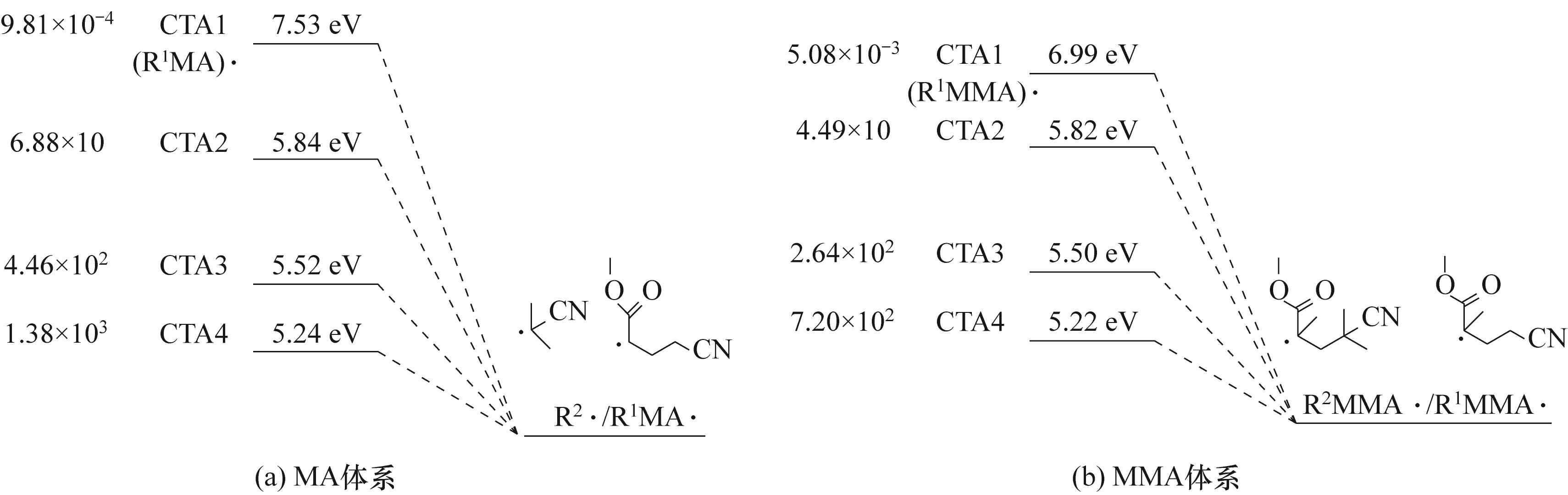
Fig.6 Energy gap between SOMO of radical and LUMO of CTA
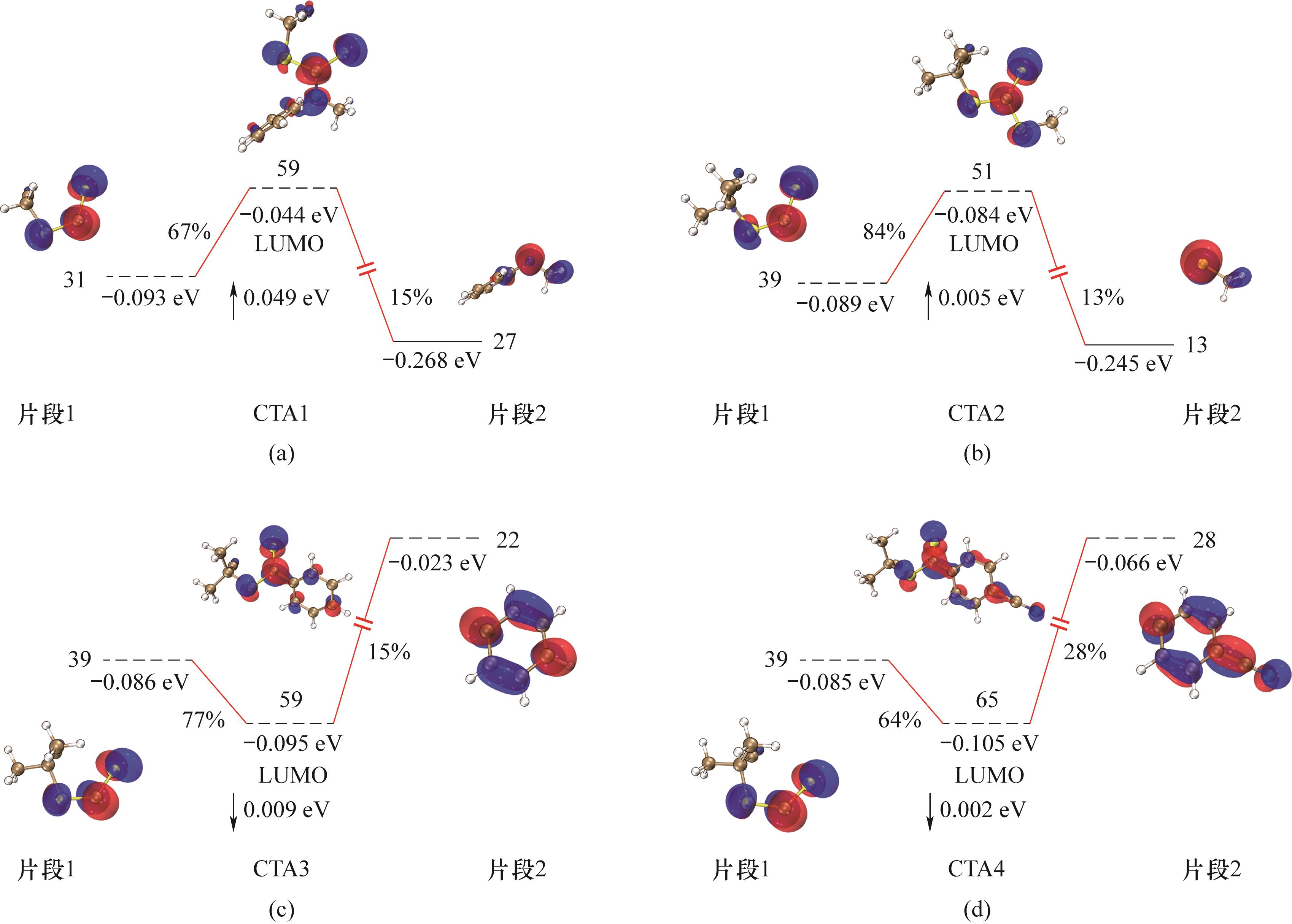
Fig.7 Orbital interactions of CTAs(CTA is divided into two fragments: Fragment 1 (R group and SC—S unit) and Fragment 2 (Z group). Blue labels indicate orbital serial numbers, and red percentage labels denote contribution of fragment orbitals to corresponding orbitals in complex. Fragment orbitals contributing less than 10% to orbital components of complex are not displayed. Solid bars represent occupied orbitals, while dashed bars represent unoccupied orbitals)
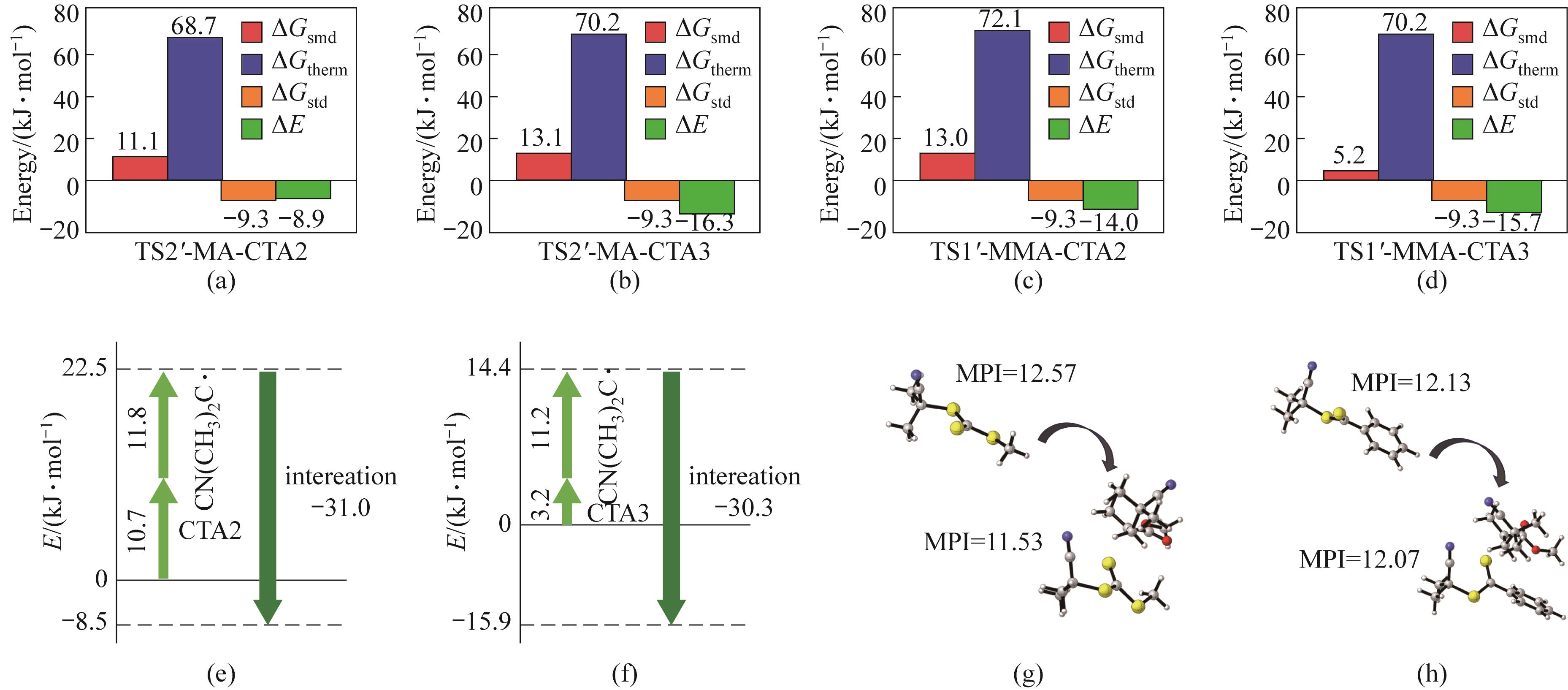
Fig.8 Energy decomposition analysis: (a)—(d) decomposition of relative Gibbs free energy (ΔG) into its contributing components; (e),(f) distortion-interaction analysis for ΔE of TS2′-MA-CTA2 and TS2′-MA-CTA3; (g),(h) MPI variation from CTA to transition state structure
| [1] | Hawker C J, Bosman A W, Harth E. New polymer synthesis by nitroxide mediated living radical polymerizations[J]. Chemical Reviews, 2001, 101(12): 3661-3688. |
| [2] | Matyjaszewski K, Poli R. Comparison of bond dissociation energies of dormant species relevant to degenerative transfer and atom transfer radical polymerization[J]. Macromolecules, 2005, 38(19): 8093-8100. |
| [3] | 罗英武. 复杂聚合物链结构的可控制备与新材料[J]. 化工学报, 2013, 64(2): 415-426. |
| Luo Y W. Controllable preparation of complex polymer chains and novel materials[J]. CIESC Journal, 2013, 64(2): 415-426. | |
| [4] | Destarac M. Industrial development of reversible-deactivation radical polymerization: is the induction period over?[J]. Polymer Chemistry, 2018, 9(40): 4947-4967. |
| [5] | Anastasaki A, Nikolaou V, Nurumbetov G, et al. Cu(0)-mediated living radical polymerization: a versatile tool for materials synthesis[J]. Chemical Reviews, 2016, 116(3): 835-877. |
| [6] | Braunecker W A, Matyjaszewski K. Controlled/living radical polymerization: features, developments, and perspectives[J]. Progress in Polymer Science, 2007, 32(1): 93-146. |
| [7] | Keddie D J, Moad G, Rizzardo E, et al. RAFT agent design and synthesis[J]. Macromolecules, 2012, 45(13): 5321-5342. |
| [8] | Gardiner J, Martinez-Botella I, Kohl T M, et al. 4-halogeno-3,5-dimethyl-1H-pyrazole-1-carbodithioates: versatile reversible addition fragmentation chain transfer agents with broad applicability[J]. Polymer International, 2017, 66(11): 1438-1447. |
| [9] | Chong Y K, Krstina J, Le T P T, et al. Thiocarbonylthio compounds [SC(ph)S-R] in free radical polymerization with reversible addition-fragmentation chain transfer (RAFT polymerization). Role of the free-radical leaving group (R)[J]. Macromolecules, 2003, 36(7): 2256-2272. |
| [10] | Nothling M D, Fu Q, Reyhani A, et al. Progress and perspectives beyond traditional RAFT polymerization[J]. Advanced Science, 2020, 7(20): 2001656. |
| [11] | Kerr A, Moriceau G, Przybyla M A, et al. Bis(trithiocarbonate) disulfides: from chain transfer agent precursors to iniferter control agents in RAFT polymerization[J]. Macromolecules, 2021, 54(14): 6649-6661. |
| [12] | Moad G, Mayadunne R T A, Rizzardo E, et al. Synthesis of novel architectures by radical polymerization with reversible addition fragmentation chain transfer (RAFT polymerization)[J]. Macromolecular Symposia, 2003, 192(1): 1-12. |
| [13] | Zhang W J, Hong C Y, Pan C Y. Efficient fabrication of photosensitive polymeric nano-objects via an ingenious formulation of RAFT dispersion polymerization and their application for drug delivery[J]. Biomacromolecules, 2017, 18(4): 1210-1217. |
| [14] | Harrisson S, Liu X, Ollagnier J N, et al. RAFT polymerization of vinyl esters: synthesis and applications[J]. Polymers, 2014, 6(5): 1437-1488. |
| [15] | Liu J N, Duong H, Whittaker M R, et al. Synthesis of functional core, star polymers via RAFT polymerization for drug delivery applications[J]. Macromolecular Rapid Communications, 2012, 33(9): 760-766. |
| [16] | 郑晋文, 王晓, 安泽胜. RAFT聚合诱导自组装制备不同嵌段序列氧化响应性聚合物囊泡[J]. 高分子学报, 2019, 50(11): 1167-1176. |
| Zheng J W, Wang X, An Z S. Synthesis of oxidation responsive vesicles with different block sequences via RAFT polymerization-induced self-assembly[J]. Acta Polymerica Sinica, 2019, 50(11): 1167-1176. | |
| [17] | 赵小燕, 单国荣. RAFT聚合制备PMPS-b-PNIPAM嵌段共聚物及温敏性纳米粒子[J]. 化工学报, 2019, 70(10): 4080-4088. |
| Zhao X Y, Shan G R. PMPS-b-PNIPAM copolymers synthesized by RAFT polymerization and their thermo-responsive nanoparticles[J]. CIESC Journal, 2019, 70(10): 4080-4088. | |
| [18] | Liu C, Hong C Y, Pan C Y. Polymerization techniques in polymerization-induced self-assembly (PISA)[J]. Polymer Chemistry, 2020, 11(22): 3673-3689. |
| [19] | Sun H, Kabb C P, Sims M B, et al. Architecture-transformable polymers: reshaping the future of stimuli-responsive polymers[J]. Progress in Polymer Science, 2019, 89: 61-75. |
| [20] | Moad G. RAFT polymerization to form stimuli-responsive polymers[J]. Polymer Chemistry, 2017, 8(1): 177-219. |
| [21] | Moad G, Rizzardo E, Thang S H. RAFT polymerization and some of its applications[J]. Chemistry - An Asian Journal, 2013, 8(8): 1634-1644. |
| [22] | York A W, Kirkland S E, McCormick C L. Advances in the synthesis of amphiphilic block copolymers via RAFT polymerization: stimuli-responsive drug and gene delivery[J]. Advanced Drug Delivery Reviews, 2008, 60(9): 1018-1036. |
| [23] | Penfold N J W, Yeow J, Boyer C, et al. Emerging trends in polymerization-induced self-assembly[J]. ACS Macro Letters, 2019, 8(8): 1029-1054. |
| [24] | Patton D L, Advincula R C. A versatile synthetic route to macromonomers via RAFT polymerization[J]. Macromolecules, 2006, 39(25): 8674-8683. |
| [25] | Nwoko T, Nguyen K, Saha N K, et al. Rate retardation trends in RAFT — an emerging monomer classification tool?[J]. Polymer Chemistry, 2024, 15(11): 1052-1061. |
| [26] | Bereś M A, Zhang B, Junkers T, et al. Kinetic investigation of photoiniferter-RAFT polymerization in continuous flow using inline NMR analysis[J]. Polymer Chemistry, 2024, 15(31): 3166-3175. |
| [27] | Zhang Z B, Zhu X L, Zhu J, et al. Thermal polymerization of methyl (meth)acrylate via reversible addition-fragmentation chain transfer (RAFT) process[J]. Polymer, 2006, 47(20): 6970-6977. |
| [28] | Boner S, Parkatzidis K, de Alwis Watuthanthrige N, et al. RAFT polymerization of renewable monomers with dithiobenzoates: effect of Z-group substituents and reaction conditions[J]. European Polymer Journal, 2024, 205: 112721. |
| [29] | Bradford K G E, Petit L M, Whitfield R, et al. Ubiquitous nature of rate retardation in reversible addition-fragmentation chain transfer polymerization[J]. Journal of the American Chemical Society, 2021, 143(42): 17769-17777. |
| [30] | Perrier S. 50th anniversary perspective: RAFT polymerization — a user guide[J]. Macromolecules, 2017, 50(19): 7433-7447. |
| [31] | Corrigan N, Jung K, Moad G, et al. Reversible-deactivation radical polymerization (controlled/living radical polymerization): from discovery to materials design and applications[J]. Progress in Polymer Science, 2020, 111: 101311. |
| [32] | Matioszek D, Mazières S, Brusylovets O, et al. Experimental and theoretical comparison of addition-fragmentation pathways of diseleno- and dithiocarbamate RAFT agents[J]. Macromolecules, 2019, 52(9): 3376-3386. |
| [33] | Moad C L, Moad G, Rizzardo E, et al. Chain transfer activity of ω-unsaturated methyl methacrylate oligomers[J]. Macromolecules, 1996, 29(24): 7717-7726. |
| [34] | Derboven P, van Steenberge P H M, Reyniers M F, et al. Chain transfer in degenerative RAFT polymerization revisited: a comparative study of literature methods[J]. Macromolecular Theory and Simulations, 2016, 25(2): 104-115. |
| [35] | Moad G, Moad C L. Use of chain length distributions in determining chain transfer constants and termination mechanisms[J]. Macromolecules, 1996, 29(24): 7727-7733. |
| [36] | Frisch M J, Trucks G W, Schlegel H B, et al. Gaussian 09, Revision D.01 [CP]. Wallingford: Gaussian Inc., CT, 2009. |
| [37] | Becke A D. Density-functional thermochemistry(Ⅲ): The role of exact exchange[J]. The Journal of Chemical Physics, 1993, 98(7): 5648-5652. |
| [38] | Lee C, Yang W, Parr R G. Development of the Colle-Salvetti correlation-energy formula into a functional of the electron density[J]. Physical Review B, 1988, 37(2): 785-789. |
| [39] | Grimme S, Antony J, Ehrlich S, et al. A consistent and accurate ab initio parametrization of density functional dispersion correction (DFT-D) for the 94 elements H-Pu[J]. The Journal of Chemical Physics, 2010, 132(15): 154104. |
| [40] | Hehre W J, Ditchfield R, Pople J A. Self-consistent molecular orbital methods(Ⅻ): Further extensions of Gaussian: type basis sets for use in molecular orbital studies of organic molecules[J]. The Journal of Chemical Physics, 1972, 56(5): 2257-2261. |
| [41] | Marenich A V, Cramer C J, Truhlar D G. Universal solvation model based on solute electron density and on a continuum model of the solvent defined by the bulk dielectric constant and atomic surface tensions[J]. The Journal of Physical Chemistry B, 2009, 113(18): 6378-6396. |
| [42] | Zhao Y, Truhlar D G. The M06 suite of density functionals for main group thermochemistry, thermochemical kinetics, noncovalent interactions, excited states, and transition elements: two new functionals and systematic testing of four M06-class functionals and 12 other functionals[J]. Theoretical Chemistry Accounts, 2008, 120(1): 215-241. |
| [43] | Pracht P, Bohle F, Grimme S. Automated exploration of the low-energy chemical space with fast quantum chemical methods[J]. Physical Chemistry Chemical Physics, 2020, 22(14): 7169-7192. |
| [44] | Lu T, Chen F W. Multiwfn: a multifunctional wavefunction analyzer[J]. Journal of Computational Chemistry, 2012, 33(5): 580-592. |
| [45] | Humphrey W, Dalke A, Schulten K. VMD: visual molecular dynamics[J]. Journal of Molecular Graphics, 1996, 14(1): 33-38. |
| [46] | Mitoraj M P, Michalak A, Ziegler T. A combined charge and energy decomposition scheme for bond analysis[J]. Journal of Chemical Theory and Computation, 2009, 5(4): 962-975. |
| [47] | Xiao M, Lu T. Generalized charge decomposition analysis (GCDA) method[J]. Journal of Advances in Physical Chemistry, 2015, 4(4): 111-124. |
| [48] | Bickelhaupt F M, Houk K N. Das distortion/interaction-activation-strain-modell zur analyse von reaktionsgeschwindigkeiten[J]. Angewandte Chemie, 2017, 129(34): 10204-10221. |
| [49] | Shao Y H, Gan Z T, Epifanovsky E, et al. Advances in molecular quantum chemistry contained in the Q-Chem 4 program package[J]. Molecular Physics, 2015, 113(2): 184-215. |
| [50] | Horn P R, Mao Y Z, Head-Gordon M. Probing non-covalent interactions with a second generation energy decomposition analysis using absolutely localized molecular orbitals[J]. Physical Chemistry Chemical Physics, 2016, 18(33): 23067-23079. |
| [51] | Liu Z Y, Lu T, Chen Q X. Intermolecular interaction characteristics of the all-carboatomic ring, cyclo[18] carbon: focusing on molecular adsorption and stacking[J]. Carbon, 2021, 171: 514-523. |
| [1] | Shengmei ZHANG, Ming LI, Ying ZHANG, Xi YI, Yiting YANG, Yali LIU. Effects of emulsifier and reacting temperature on characteristics of phase change microcapsules [J]. CIESC Journal, 2025, 76(S1): 444-452. |
| [2] | Mengjiao WANG, Kaixue HU, Xiangkai MENG, Jinbo JIANG, Xudong PENG. Influence of micro-texture size and areal density on surface of silicon carbide on tribological properties of sliding sealing surfaces [J]. CIESC Journal, 2025, 76(8): 4165-4176. |
| [3] | Ziheng WANG, Wenhuai LI, Wei ZHOU. Application of patterned electrodes in solid oxide fuel cell [J]. CIESC Journal, 2025, 76(7): 3153-3171. |
| [4] | Fangping XU, Hui YANG, Jun CHEN, Jianyong ZHU, Rongxiu LU. Soft sensor of rare earth element content with transfer learning and residual attention convolutional neural network [J]. CIESC Journal, 2025, 76(4): 1647-1660. |
| [5] | Rui SUN, Junfeng WANG, Haojie XU, Bufa LI, Yaxian XU. Research progress on heat transfer enhancement mechanism of spray cooling technology [J]. CIESC Journal, 2025, 76(4): 1404-1421. |
| [6] | Yue GAO, Ding LI, Yumiao GAO. Study on catalytic oxidation remediation technology of organic polluted site soil [J]. CIESC Journal, 2025, 76(3): 1297-1304. |
| [7] | Fang XU, Rui ZHANG, Da CUI, Qing WANG. Study of pyrolysis reaction mechanism of lignin revealed by ReaxFF-MD simulation [J]. CIESC Journal, 2025, 76(3): 1253-1263. |
| [8] | Guipei XU, Qian SUN, Jiewen LAI, Yifeng LU, Huifang DI, Hui HUANG, Zhenbing WANG. Research progress on failure mechanism of electrochemical double layer capacitors [J]. CIESC Journal, 2025, 76(3): 951-962. |
| [9] | Wenfeng FU, Zhenlei WANG, Xin WANG. An industrial process performance evaluation method based on unbalanced samples generated by DVAE-WAFFN-GAN [J]. CIESC Journal, 2025, 76(2): 769-786. |
| [10] | Qi ZHANG, Rui ZHANG, Tao ZHENG, Xin CAO, Zhichang LIU, Haiyan LIU, Chunming XU, Rong ZHANG, Xianghai MENG. Revealing CO2 capture by a novel dual-cation protic ionic liquid using molecular simulation [J]. CIESC Journal, 2025, 76(2): 797-811. |
| [11] | Yuxuan WU, Cheng CHANG, Xueping GU, Lianfang FENG, Cailiang ZHANG. Modeling of butadiene emulsion polymerization process for stereoisomerization [J]. CIESC Journal, 2025, 76(2): 879-887. |
| [12] | Yuanzhe WANG, Zhenyu LIU, Yuxin YAN, Siyu WANG, Lei SHI, Qingya LIU. Chemical reaction issues in the technological upgrading of direct coal liquefaction [J]. CIESC Journal, 2025, 76(10): 5522-5532. |
| [13] | Jiguang DONG, Shaolei XIE, Dong SHI, Lijuan LI, Chenyu ZHAO, Yujie HUANG, Chenglong SHI, Taoshan XU, Dawei CAO. Lithium extraction by n-octyl salicylate extraction system: influence of structural alterations in the synergist on extract performance [J]. CIESC Journal, 2025, 76(10): 5190-5202. |
| [14] | Xuezhong MA, Qingxiang XIE. Research on heat transfer enhancing mechanism and cooling performance of herringbone groove on rotor outer sidewall in high-speed contact mechanical seals [J]. CIESC Journal, 2025, 76(10): 5277-5289. |
| [15] | Yanzi WANG, Jia’nan DAI, Jing MA, Tengyue ZHANG, Zili LIANG. Oxygen vacancy characteristics and photocatalytic performance of rare earth elements (RE: Nd, Sm, Eu, Er, Tm) doped B-TiO₂ [J]. CIESC Journal, 2025, 76(10): 5162-5175. |
| Viewed | ||||||
|
Full text |
|
|||||
|
Abstract |
|
|||||