CIESC Journal ›› 2019, Vol. 70 ›› Issue (2): 607-616.DOI: 10.11949/j.issn.0438-1157.20181343
• Process system engineering • Previous Articles Next Articles
Yongfei XUE1( ),Yalin WANG1(),Bei SUN1,Qianzhong LI2,Jiazhou SUN1
Received:2018-11-15
Revised:2018-11-21
Online:2019-02-05
Published:2019-02-05
Contact:
Yalin WANG
薛永飞1(),王雅琳1(),孙备1,李钱钟2,孙家舟1
通讯作者:
王雅琳
作者简介:<named-content content-type="corresp-name">薛永飞</named-content>(1988—),男,博士研究生,<email>xueyongfei@csu.edu.cn</email>|王雅琳(1973—),女,博士,教授,<email>ylwang@csu.edu.cn</email>
基金资助:CLC Number:
Yongfei XUE, Yalin WANG, Bei SUN, Qianzhong LI, Jiazhou SUN. Improved state transfer algorithm-based kinetics parameter estimation for cascaded plug flow reactors[J]. CIESC Journal, 2019, 70(2): 607-616.
薛永飞, 王雅琳, 孙备, 李钱钟, 孙家舟. 基于改进状态转移算法的串级平推流反应器动力学参数估计[J]. 化工学报, 2019, 70(2): 607-616.
Add to citation manager EndNote|Ris|BibTeX
URL: https://hgxb.cip.com.cn/EN/10.11949/j.issn.0438-1157.20181343

Fig.1 Diagram of plug flow reactor for modeling
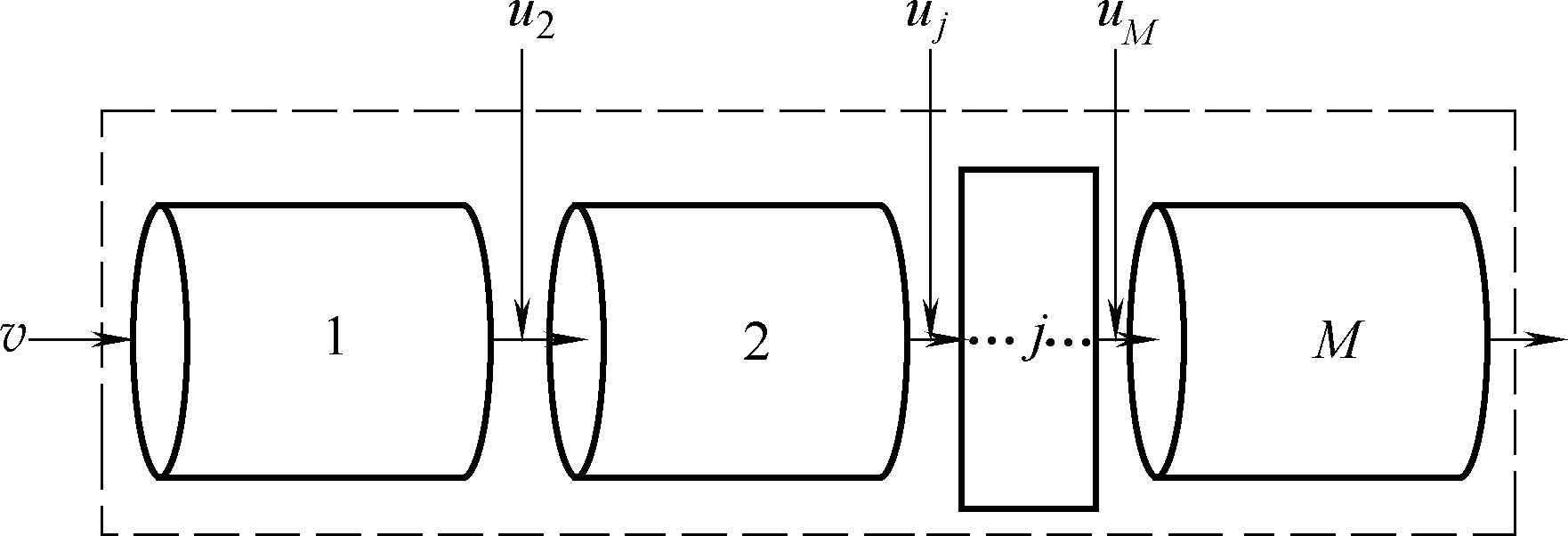
Fig.2 Cascaded plug flow reactors

Fig.3 Optimization result of Michalewicz function by standard STA
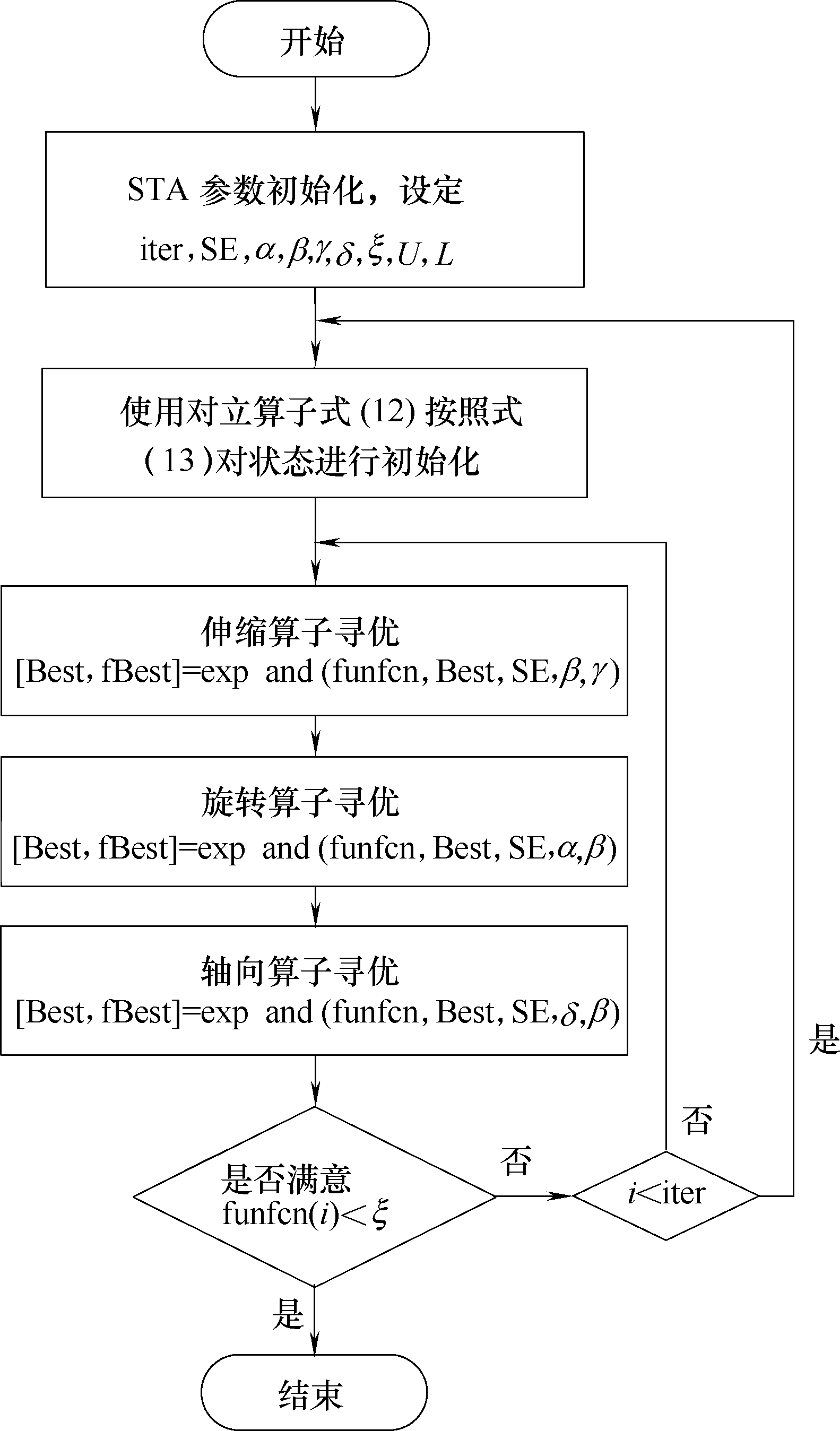
Fig.4 Kinetics parameters estimation of cascaded plug flow reactors based on improved STA
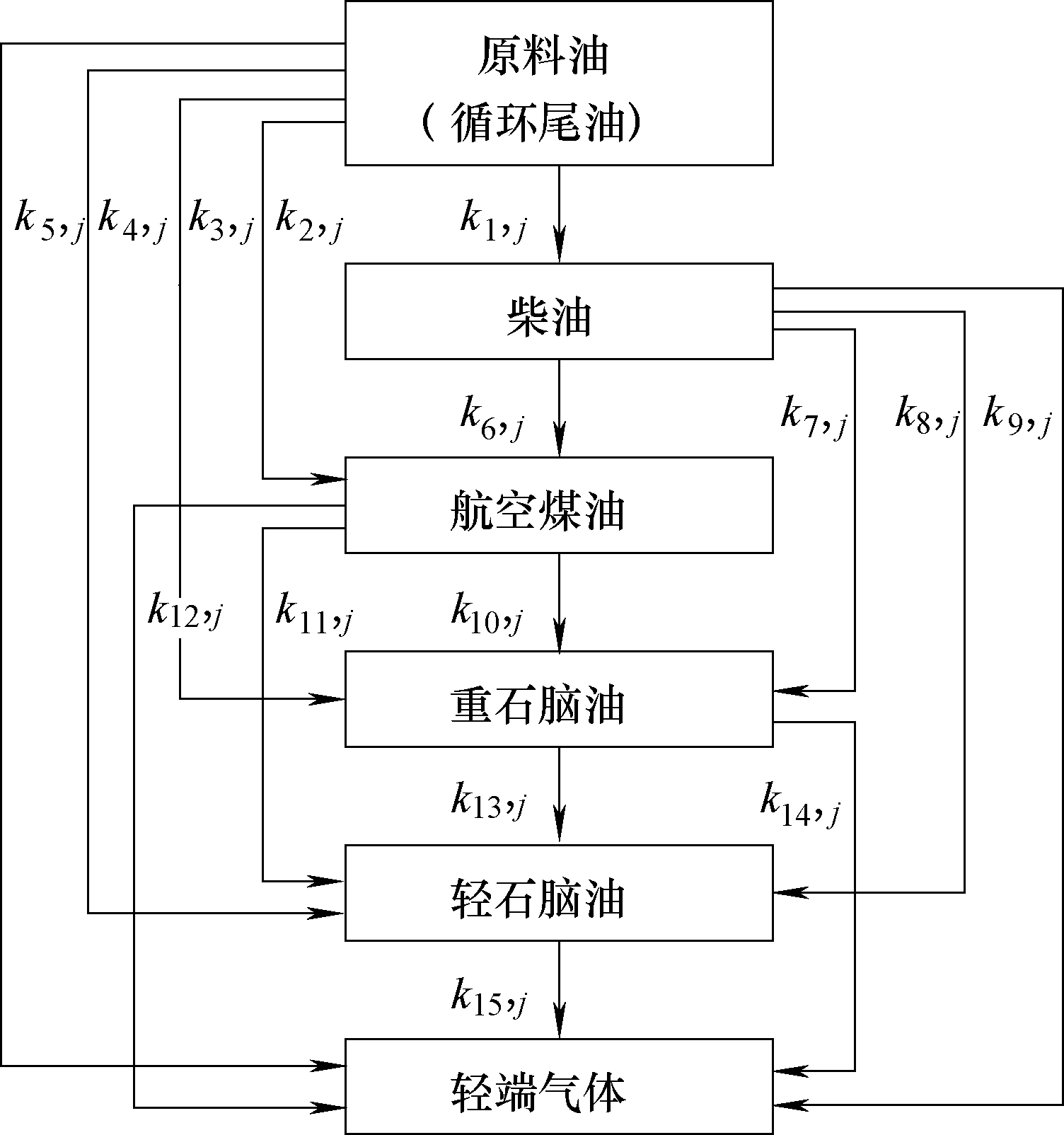
Fig.5 Reaction network of six lumped components in four hydrocracking reactors
| 物性名称 | 本文取值 |
|---|---|
| 第1反应器中混合物的比定压热容 | 3.14 kJ?kg-1?K-1 |
| 第2反应器中混合物的比定压热容 | 2.48 kJ?kg-1?K-1 |
| 第3反应器中混合物的比定压热容 | 2.47 kJ?kg-1?K-1 |
| 第4反应器中混合物的比定压热容 | 2.26 kJ?kg-1?K-1 |
| 反应器级间冷氢的比定压热容 | 14.32 kJ?kg-1?K-1 |
| 加氢裂化反应平均放热系数Hr | 418.4 kJ?kg-1 |
| 第1反应器中混合物的密度ρ1 | 905 kg·m-3 |
| 第2反应器中混合物的密度ρ2 | 833 kg·m-3 |
| 第3反应器中混合物的密度ρ3 | 809.8 kg·m-3 |
| 第4反应器中混合物的密度ρ4 | 737.1 kg·m-3 |
Table 1 Physical property data used for estimating kinetics parameters of hydrocracking
| 物性名称 | 本文取值 |
|---|---|
| 第1反应器中混合物的比定压热容 | 3.14 kJ?kg-1?K-1 |
| 第2反应器中混合物的比定压热容 | 2.48 kJ?kg-1?K-1 |
| 第3反应器中混合物的比定压热容 | 2.47 kJ?kg-1?K-1 |
| 第4反应器中混合物的比定压热容 | 2.26 kJ?kg-1?K-1 |
| 反应器级间冷氢的比定压热容 | 14.32 kJ?kg-1?K-1 |
| 加氢裂化反应平均放热系数Hr | 418.4 kJ?kg-1 |
| 第1反应器中混合物的密度ρ1 | 905 kg·m-3 |
| 第2反应器中混合物的密度ρ2 | 833 kg·m-3 |
| 第3反应器中混合物的密度ρ3 | 809.8 kg·m-3 |
| 第4反应器中混合物的密度ρ4 | 737.1 kg·m-3 |

Fig.6 Fitness function of improving STA
| 反应速率常数 | 活化能Ei/(J·mol-1) | 指前因子ki0/s-1 |
|---|---|---|
| k1 | 95700.39 95700.39 95700.39 95700.39 95700.39 95700.39 | 4585.95 |
| k2 | 2383.74 | |
| k3 | 2373.56 | |
| k4 | 417.33 | |
| k5 | 39.32 | |
| k6 | 97199.38 97199.38 97199.38 97199.38 | 473.33 |
| k7 | 96.48 | |
| k8 | 2.65×10⁻⁵ | |
| k9 | 0 | |
| k10 | 63753.57 63753.57 63753.57 | 0.20 |
| k11 | 0 | |
| k12 | 9.92×10⁻³ | |
| k13 | 97292.32 97292.32 | 44.70 |
| k14 | 0 | |
| k15 | 8018.36 | 11.70×10⁻³ |
Table 2 Estimation results of kinetics parameters for hydrocracking reaction
| 反应速率常数 | 活化能Ei/(J·mol-1) | 指前因子ki0/s-1 |
|---|---|---|
| k1 | 95700.39 95700.39 95700.39 95700.39 95700.39 95700.39 | 4585.95 |
| k2 | 2383.74 | |
| k3 | 2373.56 | |
| k4 | 417.33 | |
| k5 | 39.32 | |
| k6 | 97199.38 97199.38 97199.38 97199.38 | 473.33 |
| k7 | 96.48 | |
| k8 | 2.65×10⁻⁵ | |
| k9 | 0 | |
| k10 | 63753.57 63753.57 63753.57 | 0.20 |
| k11 | 0 | |
| k12 | 9.92×10⁻³ | |
| k13 | 97292.32 97292.32 | 44.70 |
| k14 | 0 | |
| k15 | 8018.36 | 11.70×10⁻³ |
| 项目 | 标准STA | 改进STA (平均值) | 性能提升 (平均值)/% |
|---|---|---|---|
| 寻优迭代次数 | 200 | 41.7 | 79.15 |
| 计算总耗时/s | 30477.12 | 6215.60 | 79.61 |
| fitness调用耗时/s | 30378.39 | 6108.06 | 79.89 |
| ode15 s调用耗时/s | 30416.73 | 6199.97 | 79.62 |
| 项目 | 标准STA | 改进STA (平均值) | 性能提升 (平均值)/% |
|---|---|---|---|
| 寻优迭代次数 | 200 | 41.7 | 79.15 |
| 计算总耗时/s | 30477.12 | 6215.60 | 79.61 |
| fitness调用耗时/s | 30378.39 | 6108.06 | 79.89 |
| ode15 s调用耗时/s | 30416.73 | 6199.97 | 79.62 |
| 参数名称 | 取值 | 参数名称 | 取值 |
|---|---|---|---|
| 伸缩算子γ | 1 | 迭代次数iter | 2.0×10² |
| 旋转算子α | (1/2)iterαmax | 误差满意阈值ξ | 3.0×10⁻² |
| 旋转算子初值αmax | 1 | 活化能Ei上限 | 1.3×10⁵ |
| 旋转算子终值αmin | 1.0×10⁻³ | 活化能Ei下限 | 6.0×10³ |
| 轴向算子δ | 1 | 指前因子ki0上限 | 7.0×10³ |
| 平移算子β | 1 | 指前因子ki0下限 | 0 |
| 状态个数SE | 30 | 所求问题状态维数 | 20 |
Table 4 Parameters setting of improved STA
| 参数名称 | 取值 | 参数名称 | 取值 |
|---|---|---|---|
| 伸缩算子γ | 1 | 迭代次数iter | 2.0×10² |
| 旋转算子α | (1/2)iterαmax | 误差满意阈值ξ | 3.0×10⁻² |
| 旋转算子初值αmax | 1 | 活化能Ei上限 | 1.3×10⁵ |
| 旋转算子终值αmin | 1.0×10⁻³ | 活化能Ei下限 | 6.0×10³ |
| 轴向算子δ | 1 | 指前因子ki0上限 | 7.0×10³ |
| 平移算子β | 1 | 指前因子ki0下限 | 0 |
| 状态个数SE | 30 | 所求问题状态维数 | 20 |

Fig.7 Prediction results on mass fraction of some key components at outlet of hydrocracking reactor
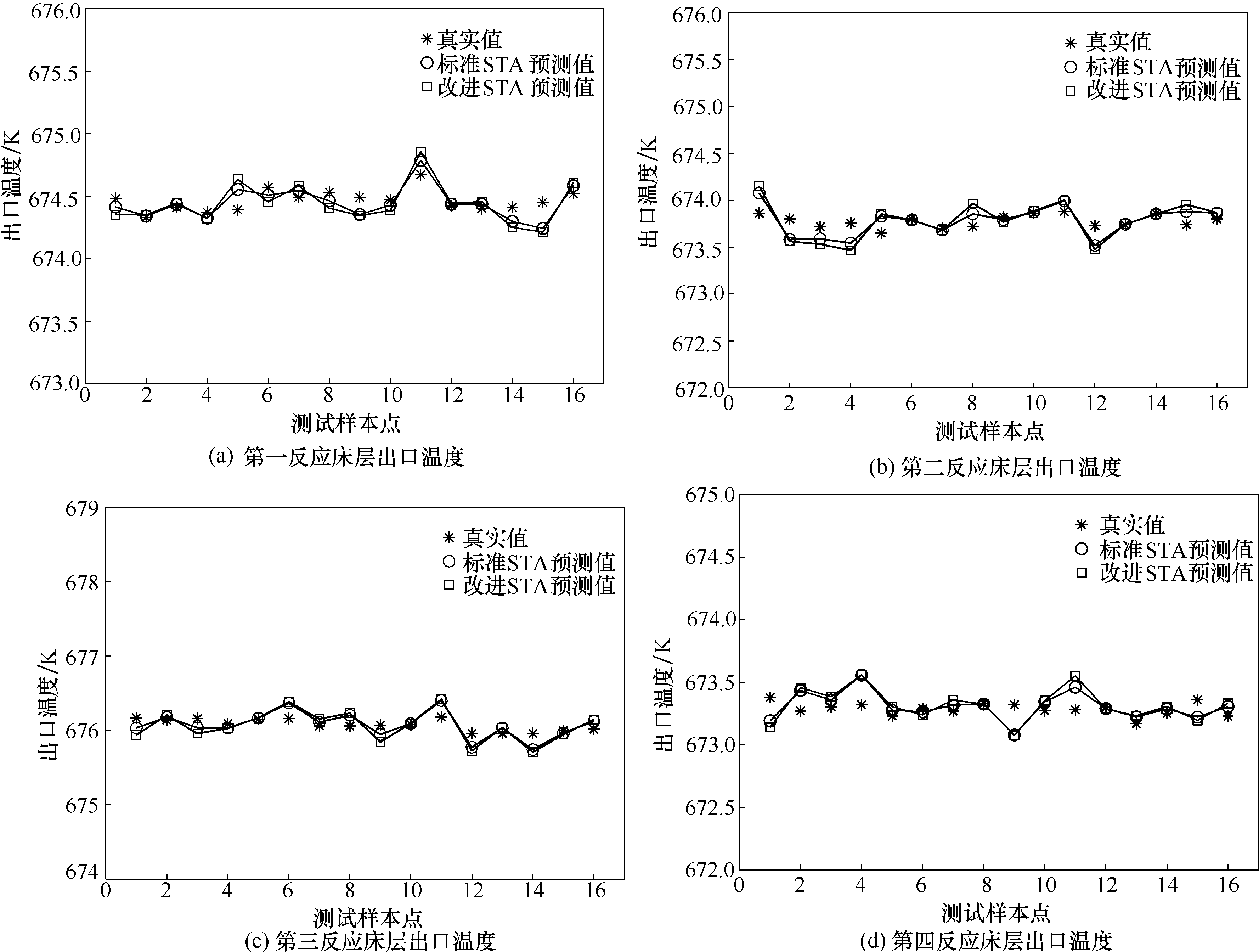
Fig.8 Prediction results of outlet temperature for cascaded hydrocracking reactors
| 预测项目 | 标准STA | 改进STA | ||
|---|---|---|---|---|
| MAE | MRE | MAE | MRE | |
| 尾油质量分数 | 0.001948 | 1.0627% | 0.002412 | 1.3155% |
| 柴油质量分数 | 0.001188 | 0.3069% | 0.001510 | 0.3899% |
| 航煤质量分数 | 0.000220 | 0.1089% | 0.000306 | 0.1513% |
| 重石质量分数 | 0.000455 | 0.2386% | 0.000629 | 0.3302% |
| 轻石质量分数 | 0.000260 | 1.6356% | 0.000339 | 2.1251% |
| 轻端质量分数 | 0.000280 | 1.3670% | 0.000378 | 1.8609% |
| 1反出口温度 | 0.076543 | 0.0113% | 0.111887 | 0.0166% |
| 2反出口温度 | 0.106760 | 0.0158% | 0.139421 | 0.0207% |
| 3反出口温度 | 0.109646 | 0.0162% | 0.143436 | 0.0212% |
| 4反出口温度 | 0.098496 | 0.0146% | 0.122468 | 0.0182% |
Table 5 Statistical error of 16 hydrocracking testing samples which are adjacent
| 预测项目 | 标准STA | 改进STA | ||
|---|---|---|---|---|
| MAE | MRE | MAE | MRE | |
| 尾油质量分数 | 0.001948 | 1.0627% | 0.002412 | 1.3155% |
| 柴油质量分数 | 0.001188 | 0.3069% | 0.001510 | 0.3899% |
| 航煤质量分数 | 0.000220 | 0.1089% | 0.000306 | 0.1513% |
| 重石质量分数 | 0.000455 | 0.2386% | 0.000629 | 0.3302% |
| 轻石质量分数 | 0.000260 | 1.6356% | 0.000339 | 2.1251% |
| 轻端质量分数 | 0.000280 | 1.3670% | 0.000378 | 1.8609% |
| 1反出口温度 | 0.076543 | 0.0113% | 0.111887 | 0.0166% |
| 2反出口温度 | 0.106760 | 0.0158% | 0.139421 | 0.0207% |
| 3反出口温度 | 0.109646 | 0.0162% | 0.143436 | 0.0212% |
| 4反出口温度 | 0.098496 | 0.0146% | 0.122468 | 0.0182% |
| 1 | SunB, GuiW H, WuT B, et al. An integrated prediction model of cobalt ion concentration based on oxidation-reduction potential[J]. Hydrometallurgy, 2013, 140: 102-110. |
| 2 | FuY, LiuX G. Nonlinear wave modeling and dynamic analysis of high-purity heat integrated air separation column[J]. Separation and Purification Technology, 2015, 151: 14-22. |
| 3 | SildirH, ArkunY, CakalB, et al. A dynamic non-isothermal model for a hydrocracking reactor: model development by the method of continuous lumping and application to an industrial unit[J]. Journal of Process Control, 2012, 22(10): 1956-1965. |
| 4 | SunB, GuiW H, WangY L, et al. A gradient optimization scheme for solution purification process[J]. Control Engineering Practice, 2015, 44: 89-103. |
| 5 | SunB, GuiW H, WangY L, et al. Intelligent optimal setting control of a cobalt removal process[J]. Journal of Process Control, 2014, 24(5): 586-599. |
| 6 | SildirH, ArkunY, CakalB, et al. Plant-wide hierarchical optimization and control of an industrial hydrocracking process[J]. Journal of Process Control, 2013, 23(9): 1229-1240. |
| 7 | LiY G, GuiW H, TeoK L, et al. Optimal control for zinc solution purification based on interacting CSTR models[J]. Journal of Process Control, 2012, 22(10): 1878-1889. |
| 8 | 李勇刚, 马蕾, 伍铁斌, 等. 多反应器级联的沉铁过程pH优化控制 [J]. 化工学报, 2018, 69(6): 2586-2593. |
| LiY G, MaL, WuT B, et al. pH optimization and control in iron removal process of multi-reactor cascade[J]. CIESC Journal, 2018, 69(6): 2586-2593. | |
| 9 | BrooksK. Steady-state multiplicity in an adiabatic continuous stirred tank reactor with vapor recycle[J]. AIChE Journal, 2013, 59(2): 553-559. |
| 10 | 许瑜飞, 钱锋, 杨明磊, 等. 改进鲸鱼优化算法及其在渣油加氢参数优化的应用[J]. 化工学报, 2018, 69(3): 891-899. |
| XuY F, QianF, YangM L, et al. Improved whale optimization algorithm and its application in optimization of residue hydrogenation parameters[J]. CIESC Journal, 2018, 69(3): 891-899. | |
| 11 | VrentasJ S, VrentasC M. Analysis of plug flow reactors with variable mass density[J]. AIChE Journal, 2014, 60(12): 4185-4189. |
| 12 | Del ValleY, VenayagamoorthyG K, MohagheghiS, et al. Particle swarm optimization: basic concepts, variants and applications in power systems[J]. IEEE Transactions on Evolutionary Computation, 2008, 12(2): 171-195. |
| 13 | WangY, LiB, WeiseT, et al. Self-adaptive learning based particle swarm optimization[J]. Information Sciences, 2011, 181(20): 4515-4538. |
| 14 | 周红标, 乔俊飞. 混合多目标骨干粒子群优化算法在污水处理过程优化控制中的应用[J]. 化工学报, 2017, 68(9): 3511-3521. |
| ZhouH B, QiaoJ F. Optimal control of wastewater treatment process using hybrid multi-objective barebones particle swarm optimization algorithm[J]. CIESC Journal, 2017, 68(9): 3511-3521. | |
| 15 | 韩红桂, 张璐, 乔俊飞. 基于多目标粒子群算法的污水处理智能优化控制[J]. 化工学报, 2017, 68(4): 1474-1481. |
| HanH G, ZhangL, QiaoJ F. Intelligent optimal control for wastewater treatment based on multi-objective particle swarm algorithm[J]. CIESC Journal, 2017, 68(4): 1474-1481. | |
| 16 | DebK, PratapA, AgarwalS, et al. A fast and elitist multiobjective genetic algorithm: NSGA-II[J]. IEEE Transactions on Evolutionary Computation, 2002, 6(2): 182-197. |
| 17 | ZhangR D, TaoJ L, GaoF R. A new approach of Takagi-Sugeno fuzzy modeling using an improved genetic algorithm optimization for oxygen content in a coke furnace[J]. Industrial & Engineering Chemistry Research, 2016, 55(22): 6465-6474. |
| 18 | WangY, LiH X, HuangT W, et al. Differential evolution based on covariance matrix learning and bimodal distribution parameter setting[J]. Applied Soft Computing, 2014, 18: 232-247. |
| 19 | 赵敏华, 胡毅, 李金, 等. 使用博弈差分算法的电站锅炉高效低污染燃烧均衡优化[J]. 化工学报, 2017, 68(6): 2455-2464. |
| ZhaoM H, HuY, LiJ, et al. Equilibrium optimization for high efficiency and low pollution combustion of power-generation boilers using game differential evolution algorithm[J]. CIESC Journal, 2017, 68(6): 2455-2464. | |
| 20 | OteizaP P, BrignoleN B. An evolutionary algorithm applied to inventory control for natural gasoline[J]. Industrial & Engineering Chemistry Research, 2016, 55(51): 13062-13073. |
| 21 | ZhouX J, YangC H, GuiW H. State transition algorithm[J]. Journal of Industrial and Management Optimization, 2012, 8(4): 1039-1056. |
| 22 | ZhouX J, ShiP, LimC C, et al. A dynamic state transition algorithm with application to sensor network localization[J]. Neurocomputing, 2018, 273: 237-250. |
| 23 | ZhouX J, GaoD Y, YangC H, et al. Discrete state transition algorithm for unconstrained integer optimization problems[J]. Neurocomputing, 2016, 173: 864-874. |
| 24 | HanJ, DongT X, ZhouX J, et al. State transition algorithm for constrained optimization problems[C]//Proceedings of the 33rd Chinese control conference. Nanjing, China: IEEE CPP, 2014: 7543-7548. |
| 25 | HanJ, YangC H, ZhouX J, et al. A two-stage state transition algorithm for constrained engineering optimization problems[J]. International Journal of Control Automation and Systems, 2018, 16(2): 522-534. |
| 26 | ZhouX J, YangC H, GuiW H. Nonlinear system identification and control using state transition algorithm[J]. Applied Mathematics and Computation, 2014, 226: 169-179. |
| 27 | 张凤雪, 阳春华, 周晓君, 等. 基于控制周期计算的锌液净化除铜过程优化控制[J]. 控制理论与应用, 2017, 34(10): 1388-1395. |
| ZhangF X, YangC H, ZhouX J, et al. Optimal control based on control period calculation for copper removal process of zinc solution purification[J]. Control Theory & Applications, 2017, 34(10): 1388-1395. | |
| 28 | AhandaniM A. Opposition-based learning in the shuffled bidirectional differential evolution algorithm[J]. Swarm and Evolutionary Computation, 2016, 26: 64-85. |
| 29 | RahnamayanS, TizhooshH R, SalamaM M A. Opposition-based differential evolution[J]. IEEE Transactions on Evolutionary Computation, 2008, 12(1): 64-79. |
| 30 | LiQ Y, JiangQ Y, CaoZ K, et al. Modeling and simulation for the hydrocracking reactor[C]//Proceedings of the 27th Chinese control conference. Kunming: IEEE CPP, 2008: 204-208. |
| 31 | 王松汉. 石油化工设计手册 [M]. 北京: 化学工业出版社, 2002. |
| WangS H. Petrochemical Design Manual[M]. Beijing: Chemical Industry Press, 2002. |
| [1] | Zhenghao JIN, Lijie FENG, Shuhong LI. Energy and exergy analysis of a solution cross-type absorption-resorption heat pump using NH3/H2O as working fluid [J]. CIESC Journal, 2023, 74(S1): 53-63. |
| [2] | Cheng CHENG, Zhongdi DUAN, Haoran SUN, Haitao HU, Hongxiang XUE. Lattice Boltzmann simulation of surface microstructure effect on crystallization fouling [J]. CIESC Journal, 2023, 74(S1): 74-86. |
| [3] | Linzheng WANG, Yubing LU, Ruizhi ZHANG, Yonghao LUO. Analysis on thermal oxidation characteristics of VOCs based on molecular dynamics simulation [J]. CIESC Journal, 2023, 74(8): 3242-3255. |
| [4] | Mengmeng ZHANG, Dong YAN, Yongfeng SHEN, Wencui LI. Effect of electrolyte types on the storage behaviors of anions and cations for dual-ion batteries [J]. CIESC Journal, 2023, 74(7): 3116-3126. |
| [5] | Chengze WANG, Kaili GU, Jinhua ZHANG, Jianxuan SHI, Yiwei LIU, Jinxiang LI. Sulfidation couples with aging to enhance the reactivity of zerovalent iron toward Cr(Ⅵ) in water [J]. CIESC Journal, 2023, 74(5): 2197-2206. |
| [6] | Jin YU, Binbin YU, Xinsheng JIANG. Study on quantification methodology and analysis of chemical effects of combustion control based on fictitious species [J]. CIESC Journal, 2023, 74(3): 1303-1312. |
| [7] | Yuanjing MAO, Zhi YANG, Songping MO, Hao GUO, Ying CHEN, Xianglong LUO, Jianyong CHEN, Yingzong LIANG. Estimation of SAFT-VR Mie equation of state parameters and thermodynamic properties of C6—C10 alcohols [J]. CIESC Journal, 2023, 74(3): 1033-1041. |
| [8] | Jieyuan ZHENG, Xianwei ZHANG, Jintao WAN, Hong FAN. Synthesis and curing kinetic analysis of eugenol-based siloxane epoxy resin [J]. CIESC Journal, 2023, 74(2): 924-932. |
| [9] | Chen CHEN, Qian YANG, Yun CHEN, Rui ZHANG, Dong LIU. Chemical kinetic study on coal volatiles combustion for various oxygen concentrations [J]. CIESC Journal, 2022, 73(9): 4133-4146. |
| [10] | Huan ZHOU, Mengli ZHANG, Qing HAO, Si WU, Jie LI, Cunbing XU. Process mechanism and dynamic behaviors of magnesium sulfate type carnallite converting into kainite [J]. CIESC Journal, 2022, 73(9): 3841-3850. |
| [11] | Yujun MA, Xiangjun LIU. Theoretical studies of water recovery from flue gas by using ceramic membrane [J]. CIESC Journal, 2022, 73(9): 4103-4112. |
| [12] | Jing YANG, Zhenkang LIN, Jun TANG, Cheng FAN, Kening SUN. A review of fault characteristics, fault diagnosis and identification for lithium-ion battery systems [J]. CIESC Journal, 2022, 73(8): 3394-3405. |
| [13] | Cong HE, Wenqi ZHONG, Guanwen ZHOU, Xi CHEN. Study on decomposition characteristics of cement raw meal in suspension furnace at high altitude [J]. CIESC Journal, 2022, 73(5): 2120-2129. |
| [14] | Min WANG, Jinlan CHENG, Xin LI, Jingjing LU, Chongxin YIN, Hongqi DAI. Delignification mechanism study of acid hydrotropes [J]. CIESC Journal, 2022, 73(5): 2206-2221. |
| [15] | Rongshan BI, Zhihui HAN, Shaohui TAO, Xiaoyan SUN, Shuguang XIANG. Recognizing historical operating conditions by determining the density peaks at kernel density estimation of heat diffusion [J]. CIESC Journal, 2022, 73(4): 1615-1622. |
| Viewed | ||||||
|
Full text |
|
|||||
|
Abstract |
|
|||||