CIESC Journal ›› 2025, Vol. 76 ›› Issue (5): 1973-1996.DOI: 10.11949/0438-1157.20241229
• Reviews and monographs • Previous Articles
Jialang HU( ), Mingyuan JIANG(), Lyuming JIN, Yonggang ZHANG, Peng HU(), Hongbing JI()
Received:2024-10-31
Revised:2024-12-12
Online:2025-06-13
Published:2025-05-25
Contact:
Peng HU, Hongbing JI
胡嘉朗(), 姜明源(), 金律铭, 张永刚, 胡鹏(), 纪红兵()
通讯作者:
胡鹏,纪红兵
作者简介:胡嘉朗(1999—),男,博士研究生,1803228068@qq.com基金资助:CLC Number:
Jialang HU, Mingyuan JIANG, Lyuming JIN, Yonggang ZHANG, Peng HU, Hongbing JI. Machine learning-assisted high-throughput computational screening of MOFs and advances in gas separation research[J]. CIESC Journal, 2025, 76(5): 1973-1996.
胡嘉朗, 姜明源, 金律铭, 张永刚, 胡鹏, 纪红兵. 机器学习辅助MOFs高通量计算筛选及气体分离研究进展[J]. 化工学报, 2025, 76(5): 1973-1996.
Add to citation manager EndNote|Ris|BibTeX
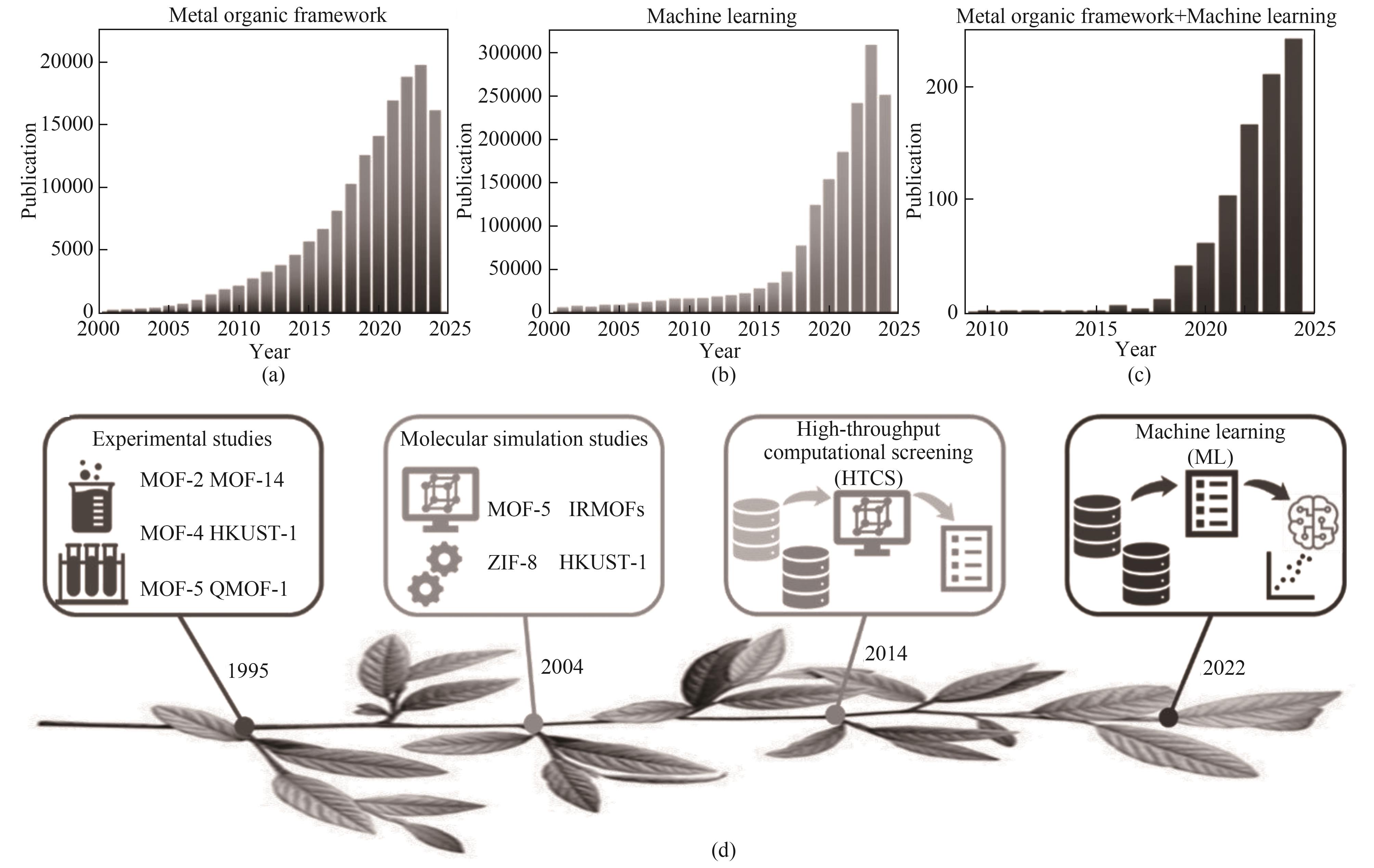
Fig.1 Chart of statistics of the literature and timeline: (a) The literature statistics when using “machine learning” as a keyword; (b) The literature statistics when using “metal organic framework” as a keyword; (c) The statistics of the literature when using “machine learning” and “metal organic framework” as keywords; (d) A timeline of major milestones in computational MOFs research[35, 42-44]
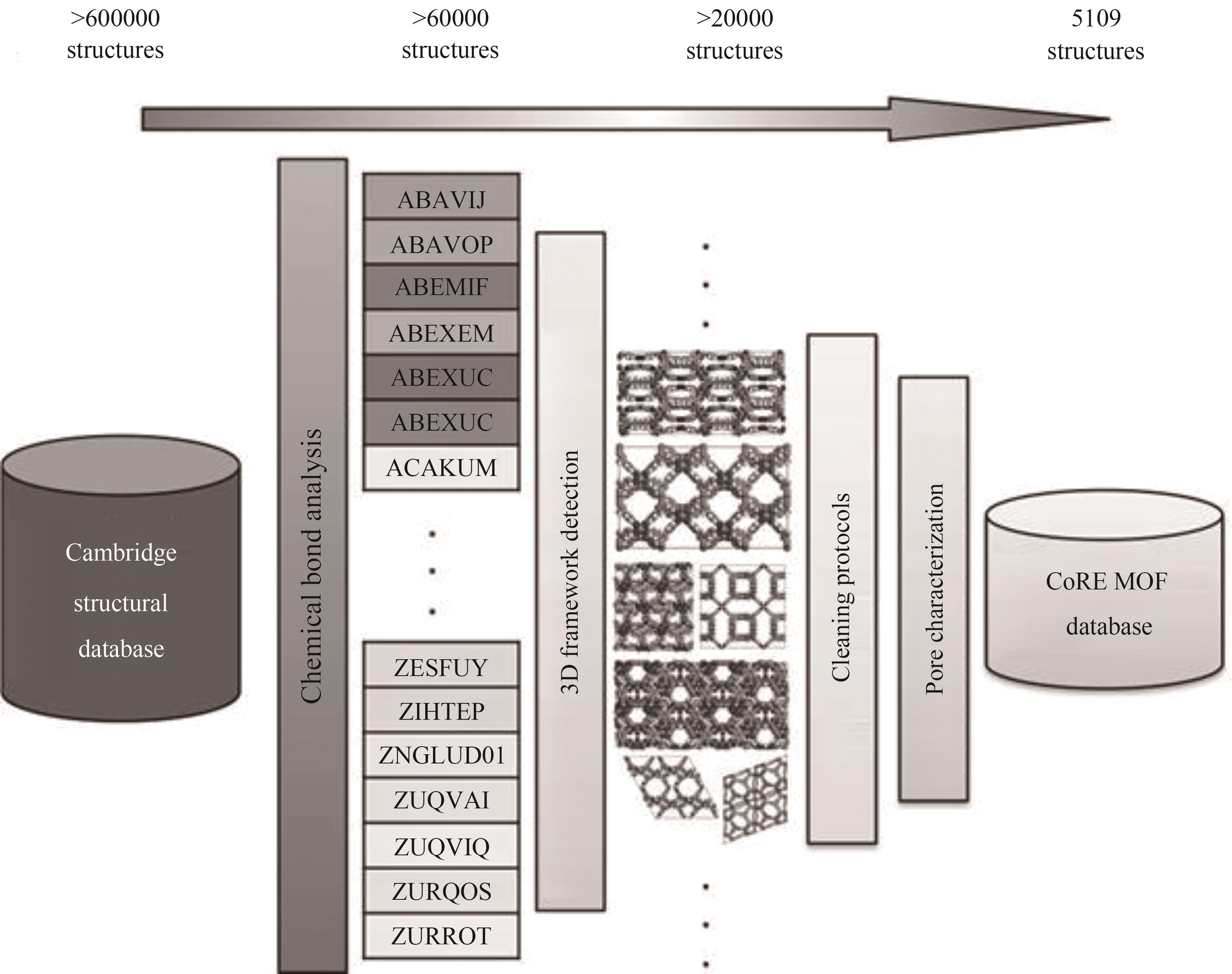
Fig.2 Schematic illustration of the CoRE MOF database construction[49]
| 方法 | 描述 | |
|---|---|---|
| 监督学习 | 集成方法 | 集成方法是一种机器学习策略,通过组合多个模型的预测结果来提高整体性能和泛化能力 |
| 神经网络 | 神经网络是一种模仿人脑神经元工作方式的机器学习算法,广泛用于分类、回归和生成任务 | |
| 朴素贝叶斯 | 朴素贝叶斯算法是一种基于贝叶斯定理的分类算法,假设特征之间相互独立 | |
| 支持向量机 | 支持向量机是一种用于分类和回归分析的监督学习算法 | |
| 随机森林 | 随机森林是一种使用多棵决策树进行分类和回归的集成学习算法 | |
| k-近邻 | k-近邻算法是一种基于实例的学习方法,通过计算样本之间的距离对数据进行分类 | |
| 决策树 | 决策树是一种具有树状结构的分类器,它根据一系列规则对数据进行分类 | |
| 极端梯度提升 | 极端梯度提升通过逐步添加弱学习器(通常是决策树)优化模型性能 | |
| 半监督学习 | 自训练算法 | 自训练算法主要用于利用未标记数据提升模型性能 |
| 基于图的半监督算法 | 基于图的半监督学习算法是一类利用图结构来表示数据及其标签信息的方法 | |
| 半监督支持向量机 | 半监督支持向量机是一种结合标记和未标记数据的分类方法,旨在通过最大化分类间隔来 提升学习效果 | |
| 无监督学习 | k均值聚类 | k均值聚类是一种常用的无监督学习算法,主要用于将数据集分成k个簇,使得每个簇内的 样本相似度高而不同簇之间的样本相似度低 |
| 层次聚类 | 层次聚类用于将数据点按照相似度进行分组,形成一个树状的层次结构(聚类树或树状图) | |
| 自编码器 | 自编码器是一种神经网络,主要用于数据降维和特征提取 | |
| 主成分分析 | 主成分分析是一种用于数据降维的算法,通过提取数据中的主成分来简化复杂数据集 | |
| 高斯混合模型 | 高斯混合模型是一种基于概率的聚类算法,适用于建模复杂数据分布 | |
| 强化学习 | Q学习 | Q学习基于价值迭代的方法,能够在不知道环境动态的情况下进行学习 |
| 时间差分学习 | 时间差分学习通过结合蒙特卡罗方法和动态规划的思想来更新价值估计 | |
Table 1 Classification of ML algorithms
| 方法 | 描述 | |
|---|---|---|
| 监督学习 | 集成方法 | 集成方法是一种机器学习策略,通过组合多个模型的预测结果来提高整体性能和泛化能力 |
| 神经网络 | 神经网络是一种模仿人脑神经元工作方式的机器学习算法,广泛用于分类、回归和生成任务 | |
| 朴素贝叶斯 | 朴素贝叶斯算法是一种基于贝叶斯定理的分类算法,假设特征之间相互独立 | |
| 支持向量机 | 支持向量机是一种用于分类和回归分析的监督学习算法 | |
| 随机森林 | 随机森林是一种使用多棵决策树进行分类和回归的集成学习算法 | |
| k-近邻 | k-近邻算法是一种基于实例的学习方法,通过计算样本之间的距离对数据进行分类 | |
| 决策树 | 决策树是一种具有树状结构的分类器,它根据一系列规则对数据进行分类 | |
| 极端梯度提升 | 极端梯度提升通过逐步添加弱学习器(通常是决策树)优化模型性能 | |
| 半监督学习 | 自训练算法 | 自训练算法主要用于利用未标记数据提升模型性能 |
| 基于图的半监督算法 | 基于图的半监督学习算法是一类利用图结构来表示数据及其标签信息的方法 | |
| 半监督支持向量机 | 半监督支持向量机是一种结合标记和未标记数据的分类方法,旨在通过最大化分类间隔来 提升学习效果 | |
| 无监督学习 | k均值聚类 | k均值聚类是一种常用的无监督学习算法,主要用于将数据集分成k个簇,使得每个簇内的 样本相似度高而不同簇之间的样本相似度低 |
| 层次聚类 | 层次聚类用于将数据点按照相似度进行分组,形成一个树状的层次结构(聚类树或树状图) | |
| 自编码器 | 自编码器是一种神经网络,主要用于数据降维和特征提取 | |
| 主成分分析 | 主成分分析是一种用于数据降维的算法,通过提取数据中的主成分来简化复杂数据集 | |
| 高斯混合模型 | 高斯混合模型是一种基于概率的聚类算法,适用于建模复杂数据分布 | |
| 强化学习 | Q学习 | Q学习基于价值迭代的方法,能够在不知道环境动态的情况下进行学习 |
| 时间差分学习 | 时间差分学习通过结合蒙特卡罗方法和动态规划的思想来更新价值估计 | |
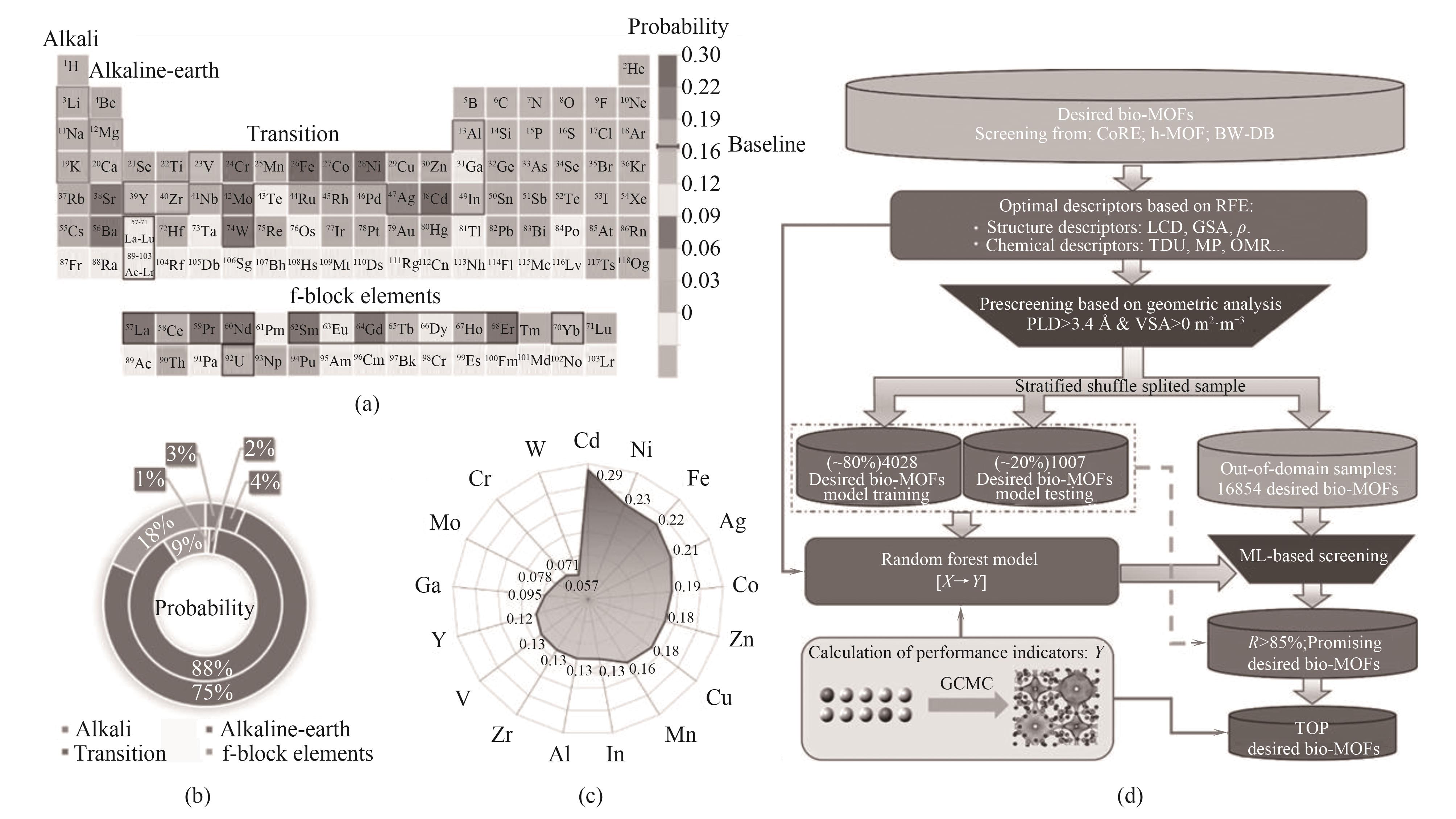
Fig.3 (a) Probabilities of different metals being in the selected MOF subset (based on WSRD); (b) Probability of different metal types being in the selected MOF subset. (the inner circle indicates the TOP1000 MOF set, and the outer circle indicates all MOFs); (c) Probability of different transition metals being in the selected subset[67]; (d) Flowchart of ML-assisted molecular simulation for high-throughput screening of high-performance desired bio-MOFs for O2/N2 adsorption separation[68]
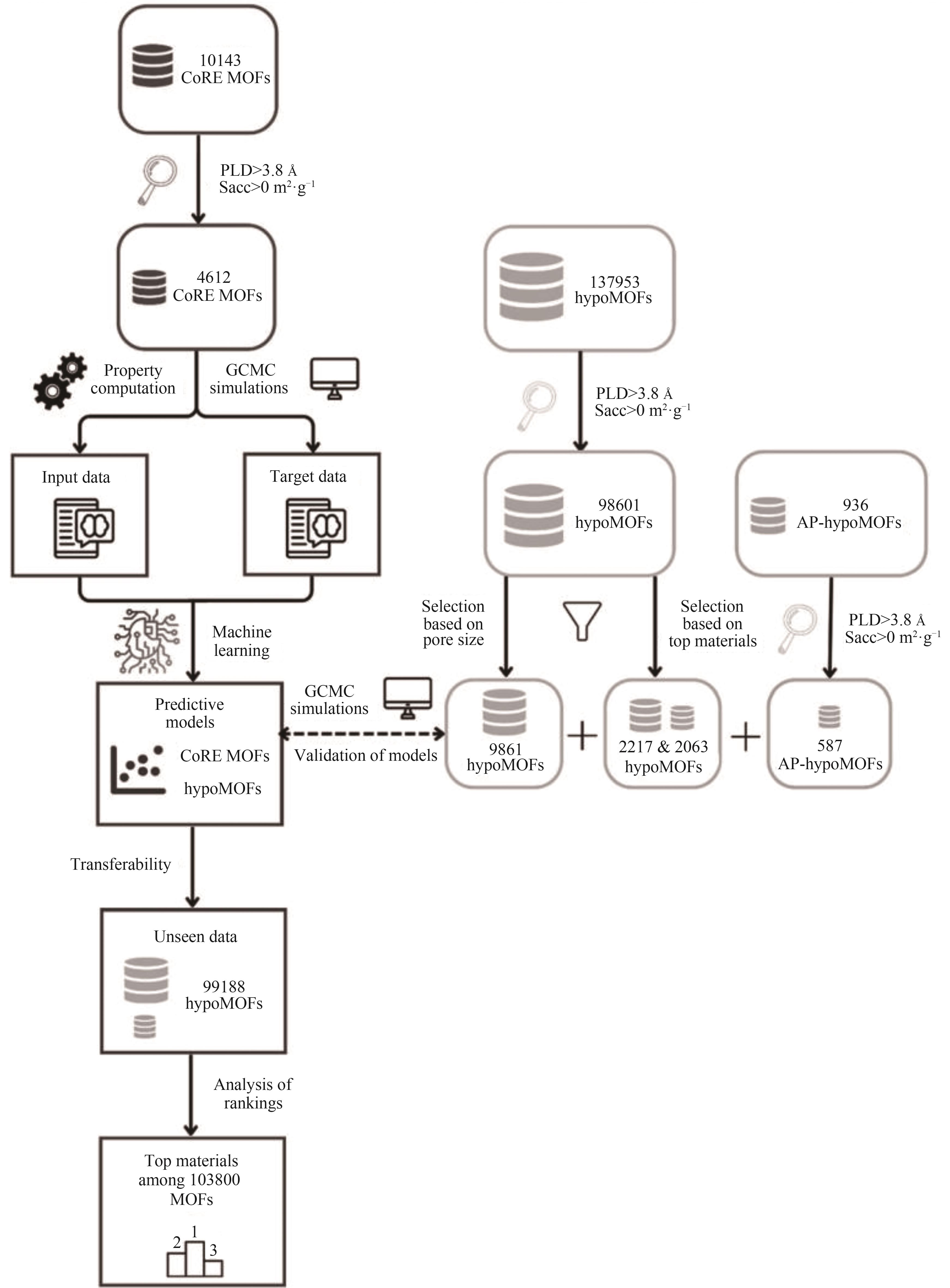
Fig.4 Flowchart of ML for the top MOF materials for CH4/N2 separation[72]
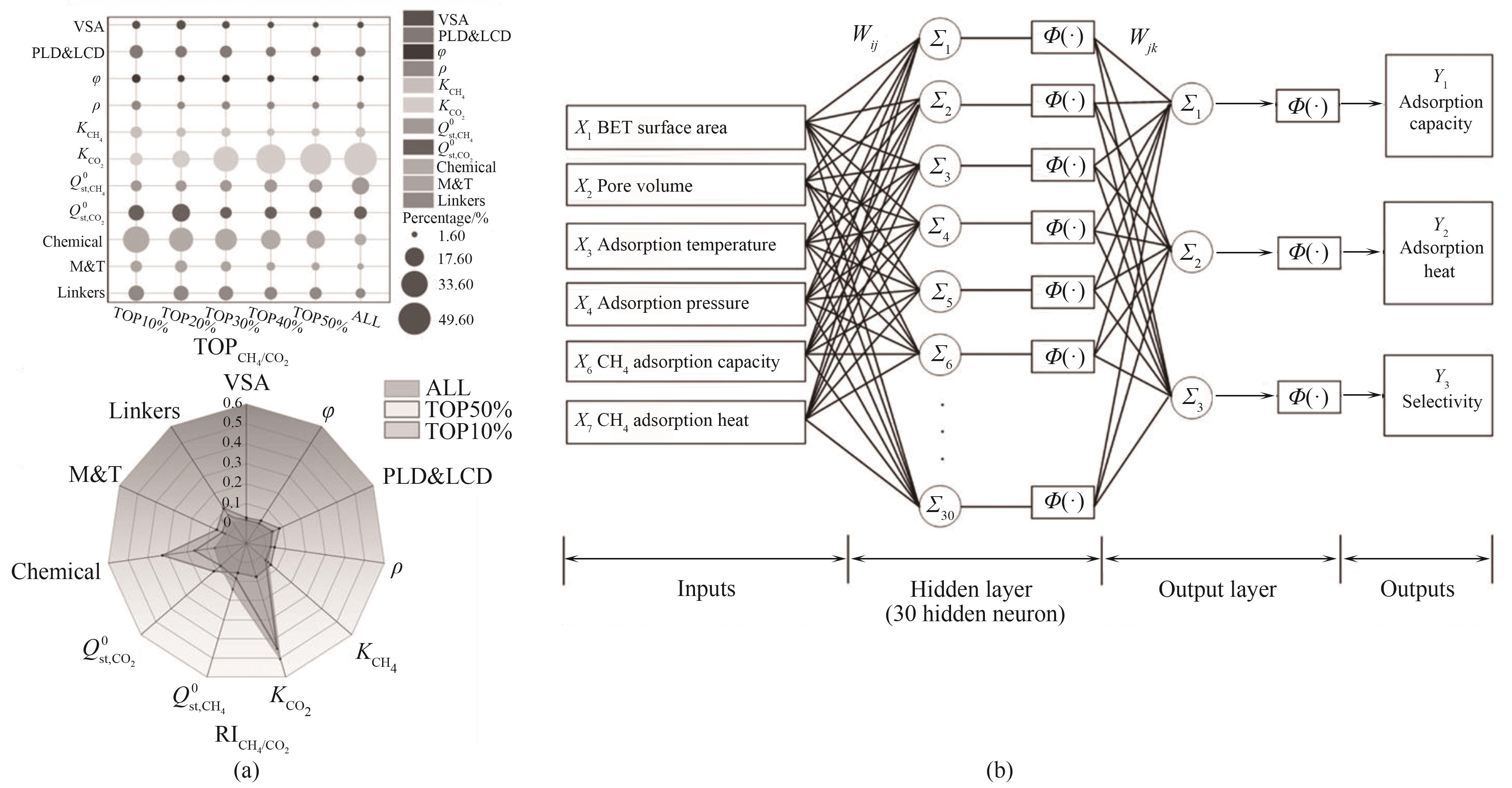
Fig.5 (a) RI of different descriptors for different levels of MOFs datasets at all levels in the CH4/CO2 system[76]; (b) Architecture of the artificial neural networks[77]
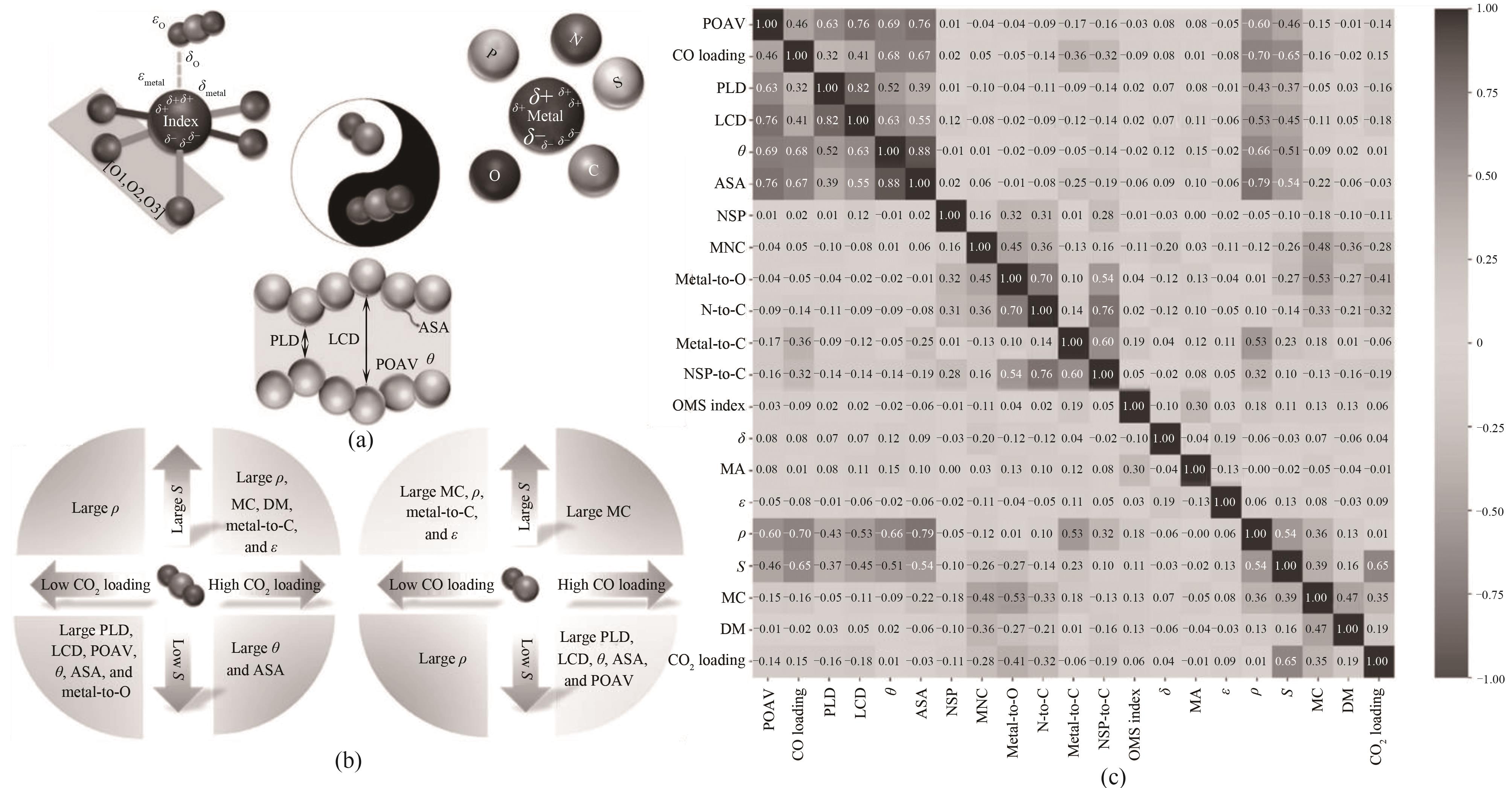
Fig.6 (a) Schematic illustrations of the chemical descriptors for training ML models to predict CO2/CO selectivities and adsorption uptakes; (b) Schematic illustration of the correlations among CO2/CO selectivity, features, and CO2 (left) or CO (right) loading; (c) Correlation heatmap between features and adsorption properties[85]
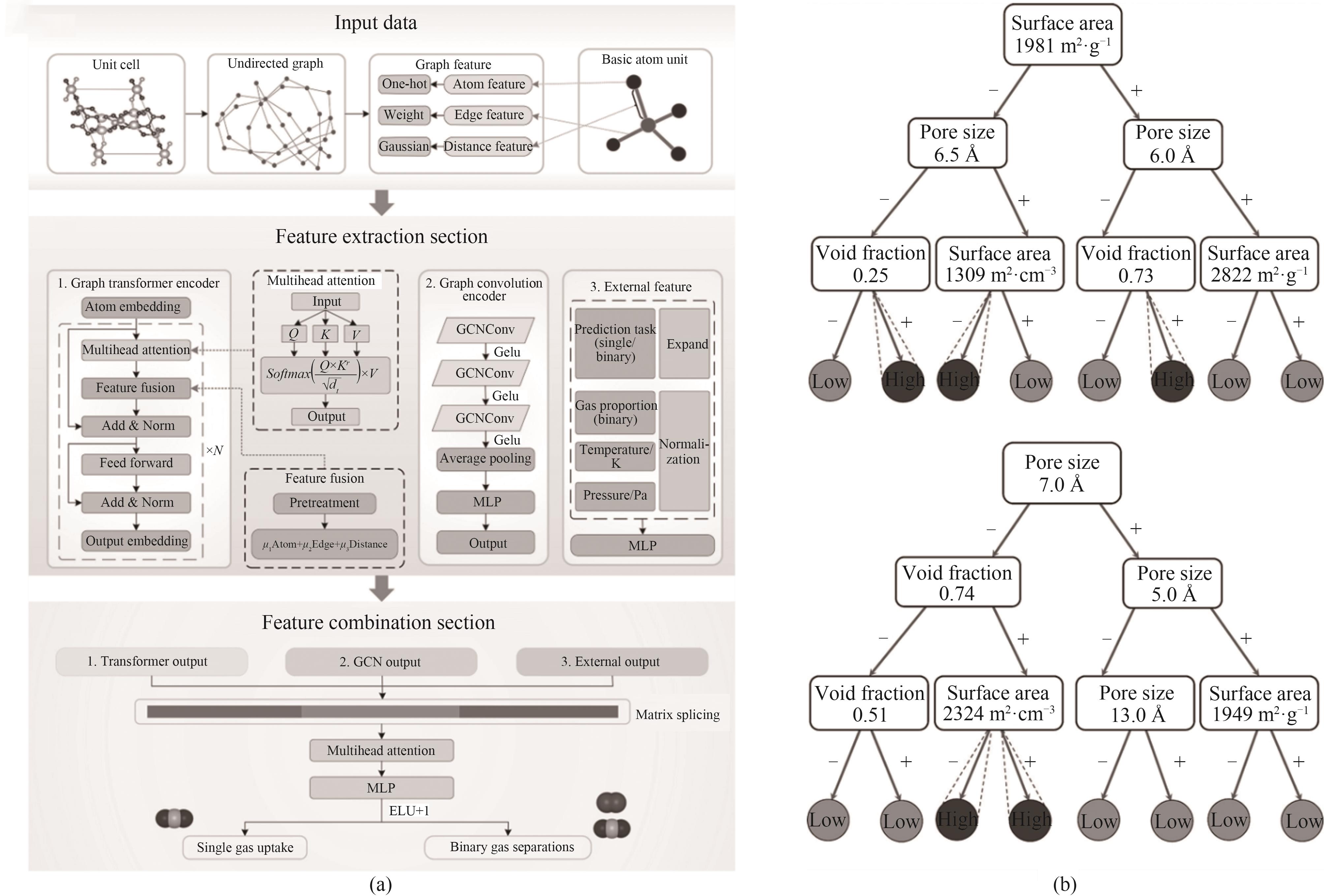
Fig.7 (a) Schematic illustrations of model structure framework for GC-Trans[89]; (b) Three-level DT classifiers of MOFs with high CO2 and N2 uptake capacities[90]

Fig.8 Schematic workflow of the ML-assisted discovery of the top-performing C3H8-selective MOFs from the CoRE MOF database[93]
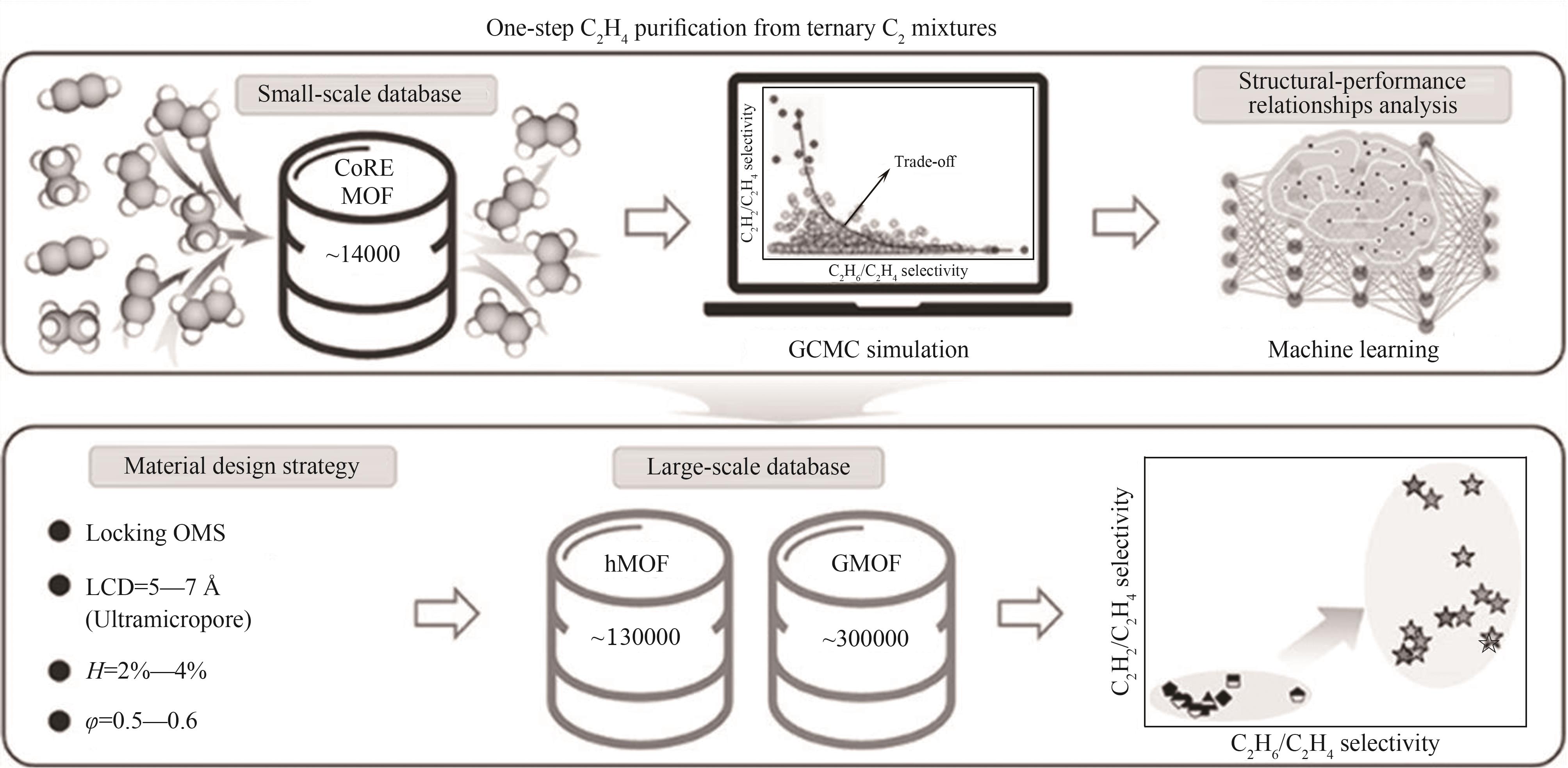
Fig.9 Schematic workflow of the ML-assisted discovery of the high-performing for one-step separation of C2H2/C2H4/C2H6[38]
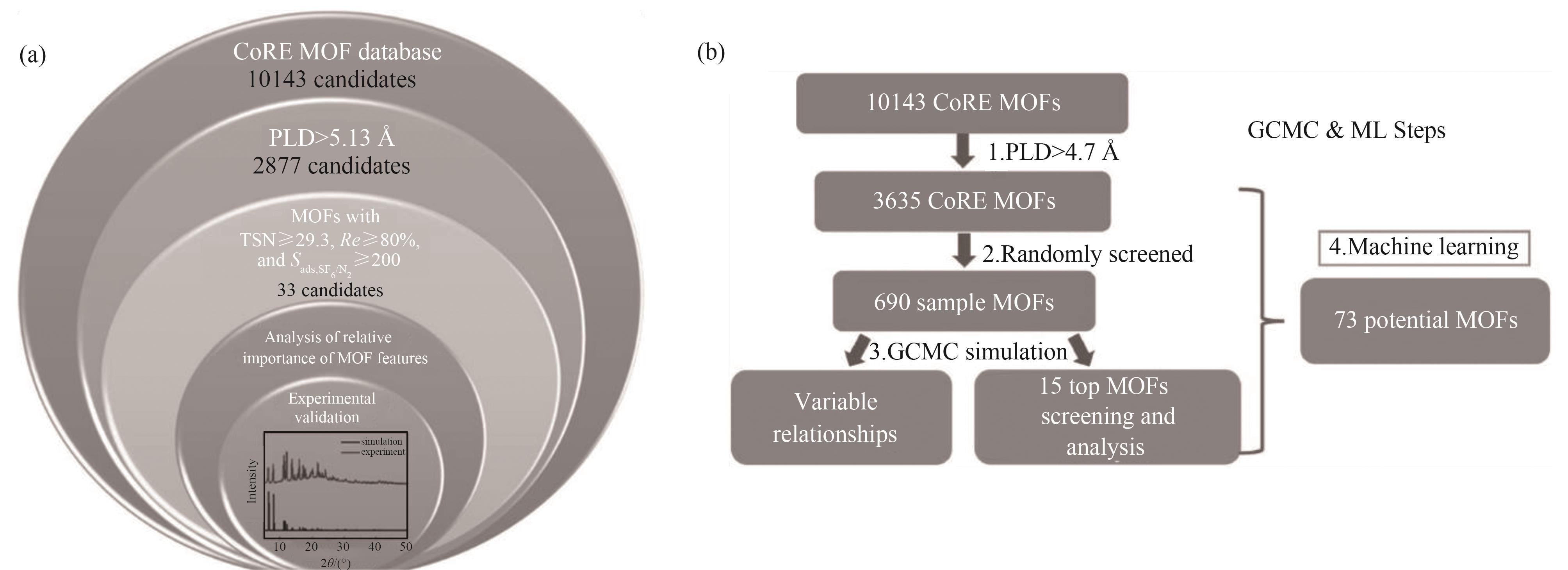
Fig.10 (a) Flowchart of ML for the top MOF materials for SF6/N2 separation[37]; (b) Schematic of GCMC and ML calculation steps[98]
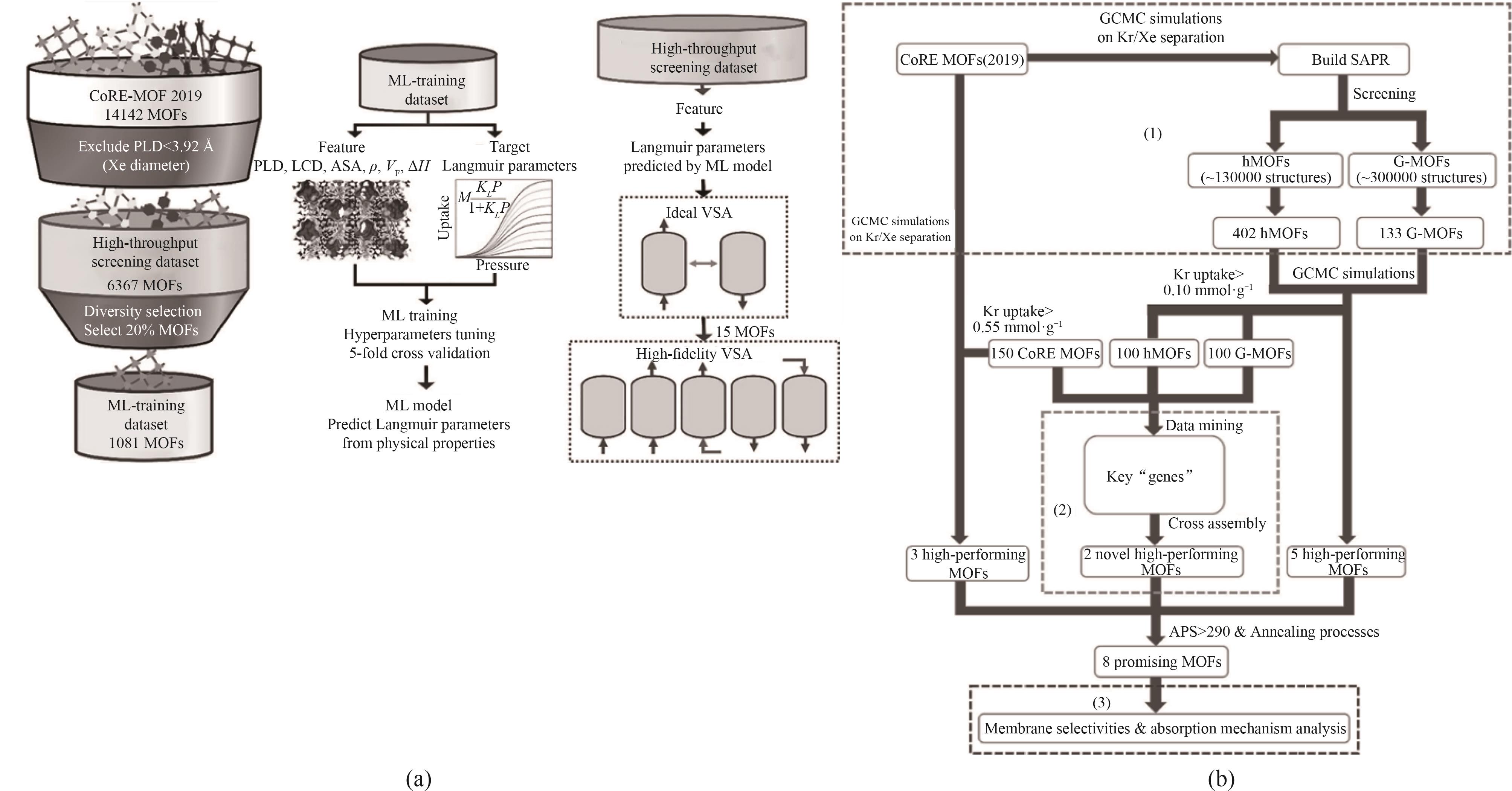
Fig.11 (a) Schematic of GCMC and ML calculation workflow[105]; (b) Workflow of screening and assembly for promising MOFs on Kr/Xe separation[106]

Fig.12 (a) Schematic of GCMC and ML calculation steps[115]; (b) Comparison of the separation performance for the identified MOF with various porous materials under the condition of 1.0 bar[116]
| 1 | Gomollón-Bel F. Ten chemical innovations that will change our world: IUPAC identifies emerging technologies in chemistry with potential to make our planet more sustainable[J]. Chemistry International, 2019, 41(2): 12-17. |
| 2 | Yaghi O M, Richardson D A, Li G, et al. Open-framework solids with diamond-like structures prepared from clusters and metal-organic building blocks[J]. MRS Online Proceedings Library, 1994, 371(1): 15-19. |
| 3 | Furukawa H, Cordova K E, O’Keeffe M, et al. The chemistry and applications of metal-organic frameworks[J]. Science, 2013, 341(6149): 1230444. |
| 4 | Deng H X, Grunder S, Cordova K E, et al. Large-pore apertures in a series of metal-organic frameworks[J]. Science, 2012, 336(6084): 1018-1023. |
| 5 | Cadiau A, Adil K, Bhatt P M, et al. A metal-organic framework-based splitter for separating propylene from propane[J]. Science, 2016, 353(6295): 137-140. |
| 6 | Zeng H, Xie M, Wang T, et al. Orthogonal-array dynamic molecular sieving of propylene/propane mixtures[J]. Nature, 2021, 595(7868): 542-548. |
| 7 | Krause S, Bon V, Senkovska I, et al. A pressure-amplifying framework material with negative gas adsorption transitions[J]. Nature, 2016, 532(7599): 348-352. |
| 8 | Lin J B, Nguyen T T T, Vaidhyanathan R, et al. A scalable metal-organic framework as a durable physisorbent for carbon dioxide capture[J]. Science, 2021, 374(6574): 1464-1469. |
| 9 | Lustig W P, Mukherjee S, Rudd N D, et al. Metal-organic frameworks: functional luminescent and photonic materials for sensing applications[J]. Chemical Society Reviews, 2017, 46(11): 3242-3285. |
| 10 | Sohel Rana S M, Faruk O, Robiul Islam M, et al. Recent advances in metal-organic framework-based self-powered sensors: a promising energy harvesting technology[J]. Coordination Chemistry Reviews, 2024, 507: 215741. |
| 11 | Han D L, Liu X M, Wu S L. Metal organic framework-based antibacterial agents and their underlying mechanisms[J]. Chemical Society Reviews, 2022, 51(16): 7138-7169. |
| 12 | Huang Q X, Liang J L, Chen Q W, et al. Metal-organic framework nanoagent induces cuproptosis for effective immunotherapy of malignant glioblastoma[J]. Nano Today, 2023, 51: 101911. |
| 13 | So M C, Wiederrecht G P, Mondloch J E, et al. Metal-organic framework materials for light-harvesting and energy transfer[J]. Chemical Communications, 2015, 51(17): 3501-3510. |
| 14 | Li S J, Wang C C, Dong K X, et al. MIL-101(Fe)/BiOBr S-scheme photocatalyst for promoting photocatalytic abatement of Cr(Ⅵ) and enrofloxacin antibiotic: performance and mechanism[J]. Chinese Journal of Catalysis, 2023, 51: 101-112. |
| 15 | Wang K Y, Zhang J Q, Hsu Y C, et al. Bioinspired framework catalysts: from enzyme immobilization to biomimetic catalysis[J]. Chemical Reviews, 2023, 123(9): 5347-5420. |
| 16 | Wang Q, Astruc D. State of the art and prospects in metal-organic framework (MOF)-based and MOF-derived nanocatalysis[J]. Chemical Reviews, 2020, 120(2): 1438-1511. |
| 17 | Wang G D, Krishna R, Li Y Z, et al. Boosting ethane/ethylene separation by MOFs through the amino-functionalization of pores[J]. Angewandte Chemie International Edition, 2022, 61(48): e202213015. |
| 18 | Gu X W, Wang J X, Wu E Y, et al. Immobilization of Lewis basic sites into a stable ethane-selective MOF enabling one-step separation of ethylene from a ternary mixture[J]. Journal of the American Chemical Society, 2022, 144(6): 2614-2623. |
| 19 | Liu X P, Hao C L, Li J, et al. An anionic metal-organic framework: metathesis of zinc(Ⅱ) with copper(Ⅱ) for efficient C3/C2 hydrocarbon and organic dye separation[J]. Inorganic Chemistry Frontiers, 2018, 5(11): 2898-2905. |
| 20 | Xiao Y C, Chen Y C, Wang W, et al. Simultaneous control of flexibility and rigidity in pore-space-partitioned metal-organic frameworks[J]. Journal of the American Chemical Society, 2023, 145(20): 10980-10986. |
| 21 | Chen L Y, Chen H R, Luque R, et al. Metal-organic framework encapsulated Pd nanoparticles: towards advanced heterogeneous catalysts[J]. Chemical Science, 2014, 5(10): 3708-3714. |
| 22 | Gu S F, Xiong X H, Gong L L, et al. Classified encapsulation of an organic dye and metal-organic complex in different molecular compartments for white-light emission and selective adsorption of C2H2 over CO2 [J]. Inorganic Chemistry, 2021, 60(11): 8211-8217. |
| 23 | Heo C Y, Díaz-Ramírez M L, Park S H, et al. Solvent-driven dynamics: crafting tailored transformations of Cu(Ⅱ)-based MOFs[J]. ACS Applied Materials & Interfaces, 2024, 16(7): 9068-9077. |
| 24 | Zhang Y Q, Liu L, Li W Z, et al. Solvent-induced In(Ⅲ)-MOFs with controllable interpenetration degree performing high-efficiency separation of CO2/N2 and CO2/CH4 [J]. Inorganic Chemistry, 2024, 63(17): 7705-7713. |
| 25 | Moghadam P Z, Li A, Wiggin S B, et al. Development of a Cambridge structural database subset: a collection of metal-organic frameworks for past, present, and future[J]. Chemistry of Materials, 2017, 29(7): 2618-2625. |
| 26 | The cambridge structural database[DB/OL]. [2024-10-17]. . |
| 27 | Sadeghi M, Esmaeilzadeh F, Mowla D, et al. Improving CO2 capture in UTSA-16(Zn) via alkali and alkaline earth metal introduction: GCMC and MD simulations study[J]. Separation and Purification Technology, 2024, 338: 126534. |
| 28 | Xiong X L, Chen G H, Xiao S T, et al. New discovery of metal-organic framework UTSA-280: ultrahigh adsorption selectivity of krypton over xenon[J]. The Journal of Physical Chemistry C, 2020, 124(27): 14603-14612. |
| 29 | Wang L, Liu S, Ji Z M, et al. Efficient CO2 capture over N2 in flexible MOFs: pressure driven breathing effect[J]. Chemical Engineering Science, 2024, 299: 120562. |
| 30 | Ji G J, Xiang T, Zhou X Q, et al. Molecular dynamics simulation of adsorption and separation of xylene isomers by Cu-HKUST-1[J]. RSC Advances, 2022, 12(54): 35290-35299. |
| 31 | Naderlou S, Vahedpour M, Franz D M. Functionalization strategy in 2D flexible Zn(BTTB)-MOF for improving storage and release of anticancer drugs: a comprehensive computational investigation[J]. Organometallics, 2024, 43(19): 2172-2190. |
| 32 | Naderlou S, Vahedpour M, Franz D M. Multi-scale computational investigation of Ag-doped two-dimensional Zn-based MOFs for storage and release of small NO and CO bioactive molecules[J]. Physical Chemistry Chemical Physics, 2023, 25(4): 2830-2845. |
| 33 | Boyd P G, Chidambaram A, García-Díez E, et al. Data-driven design of metal-organic frameworks for wet flue gas CO2 capture[J]. Nature, 2019, 576(7786): 253-256. |
| 34 | Alpaydin E. Introduction to Machine Learning[M]. Cambridge, Massachusetts, USA: MIT Press, 2014. |
| 35 | Du R L, Xin R Q, Wang H, et al. Machine learning: an accelerator for the exploration and application of advanced metal-organic frameworks[J]. Chemical Engineering Journal, 2024, 490: 151828. |
| 36 | Wang Z H, Zhou Y G, Zhou T, et al. Identification of optimal metal-organic frameworks by machine learning: structure decomposition, feature integration, and predictive modeling[J]. Computers & Chemical Engineering, 2022, 160: 107739. |
| 37 | He Y J, Cao X H, Zhang Z Q, et al. Discovery of high-performing metal-organic frameworks for efficient SF6/N2 separation: a combined computational screening, machine learning, and experimental study[J]. Industrial & Engineering Chemistry Research, 2023, 62(19): 7642-7649. |
| 38 | Yan T A, Zhang Z Q, Zhong C L. Machine learning assisted discovery of efficient MOFs for one-step C2H4 purification from ternary C2H2/C2H4/C2H6 mixtures[J]. Journal of Chemical and Engineering Data, 2024, 69(12):4483-4492. |
| 39 | 刘治鲁, 李炜, 刘昊, 等. 金属有机骨架的高通量计算筛选研究进展[J]. 化学学报, 2019, 77(4): 323-339. |
| Liu Z L, Li W, Liu H, et al. Research progress of high-throughput computational screening of metal-organic frameworks [J]. Acta Chimica Sinica, 2019, 77(4): 323-339. | |
| 40 | 赵晨, 曹蓉, 夏杰桢, 等. 机器学习筛选用于气体吸附分离和存储的金属有机骨架材料[J]. 化学通报, 2024, 87(3): 317-324, 316. |
| Zhao C, Cao R, Xia J Z, et al. Machine learning screening of MOF materials for gas adsorption separation[J]. Chemistry, 2024, 87(3): 317-324, 316. | |
| 41 | 文一如, 付佳, 刘大欢. 基于机器学习的MOFs材料研究进展: 能源气体吸附分离[J]. 化工学报, 2024, 75(4): 1370-1381. |
| Wen Y R, Fu J, Liu D H. Advances in machine learning-based materials research for MOFs: energy gas adsorption separation[J]. CIESC Journal, 2024, 75(4): 1370-1381. | |
| 42 | Xin R Q, Wang C H, Zhang Y C, et al. Efficient removal of greenhouse gases: machine learning-assisted exploration of metal-organic framework space[J]. ACS Nano, 2024, 18(30): 19403-19422. |
| 43 | Altintas C, Altundal O F, Keskin S, et al. Machine learning meets with metal organic frameworks for gas storage and separation[J]. Journal of Chemical Information and Modeling, 2021, 61(5): 2131-2146. |
| 44 | Demir H, Daglar H, Gulbalkan H C, et al. Recent advances in computational modeling of MOFs: from molecular simulations to machine learning[J]. Coordination Chemistry Reviews, 2023, 484: 215112. |
| 45 | Blaiszik B, Chard K, Pruyne J, et al. The materials data facility: data services to advance materials science research[J]. JOM, 2016, 68(8): 2045-2052. |
| 46 | Bobbitt N S, Shi K H, Bucior B J, et al. MOFX-DB: an online database of computational adsorption data for nanoporous materials[J]. Journal of Chemical & Engineering Data, 2023, 68(2): 483-498. |
| 47 | Wilmer C E, Leaf M, Lee C Y, et al. Large-scale screening of hypothetical metal-organic frameworks[J]. Nature Chemistry, 2011, 4(2): 83-89. |
| 48 | Watanabe T, Sholl D S. Accelerating applications of metal-organic frameworks for gas adsorption and separation by computational screening of materials[J]. Langmuir, 2012, 28(40): 14114-14128. |
| 49 | Chung Y G, Camp J, Haranczyk M, et al. Computation-ready, experimental metal-organic frameworks: a tool to enable high-throughput screening of nanoporous crystals[J]. Chemistry of Materials, 2014, 26(21): 6185-6192. |
| 50 | Altintas C, Avci G, Daglar H, et al. An extensive comparative analysis of two MOF databases: high-throughput screening of computation-ready MOFs for CH4 and H2 adsorption[J]. Journal of Materials Chemistry A, 2019, 7(16): 9593-9608. |
| 51 | Glasby L T, Gubsch K, Bence R, et al. DigiMOF: a database of metal-organic framework synthesis information generated via text mining[J]. Chemistry of Materials, 2023, 35(11): 4510-4524. |
| 52 | Domingues N P, Moosavi S M, Talirz L, et al. Using genetic algorithms to systematically improve the synthesis conditions of Al-PMOF[J]. Communications Chemistry, 2022, 5(1): 170. |
| 53 | Tshitoyan V, Dagdelen J, Weston L, et al. Unsupervised word embeddings capture latent knowledge from materials science literature[J]. Nature, 2019, 571(7763): 95-98. |
| 54 | First E L, Floudas C A. MOFomics: computational pore characterization of metal-organic frameworks[J]. Microporous and Mesoporous Materials, 2013, 165: 32-39. |
| 55 | Rosen A S, Iyer S M, Ray D, et al. Machine learning the quantum-chemical properties of metal-organic frameworks for accelerated materials discovery[J]. Matter, 2021, 4(5): 1578-1597. |
| 56 | Krallinger M, Rabal O, Lourenço A, et al. Information retrieval and text mining technologies for chemistry[J]. Chemical Reviews, 2017, 117(12): 7673-7761. |
| 57 | Luo Y, Bag S, Zaremba O, et al. MOF synthesis prediction enabled by automatic data mining and machine learning[J]. Angewandte Chemie International Edition, 2022, 61(19): e202200242. |
| 58 | Hai G T, Gao H Y, Zhao G X, et al. Difference between metal—S and metal—O bond orders: a descriptor of oxygen evolution activity for isolated metal atom-doped MoS2 nanosheets[J]. iScience, 2019, 20: 481-488. |
| 59 | Doitomi K, Hirao H. Hybrid computational approaches for deriving quantum mechanical insights into metal-organic frameworks[J]. Tetrahedron Letters, 2017, 58(24): 2309-2317. |
| 60 | Thai H T. Machine learning for structural engineering: a state-of-the-art review[J]. Structures, 2022, 38: 448-491. |
| 61 | Sarker I H. Machine learning: algorithms, real-world applications and research directions[J]. SN Computer Science, 2021, 2(3): 160. |
| 62 | Castle W F. Air separation and liquefaction: recent developments and prospects for the beginning of the new millennium[J]. International Journal of Refrigeration, 2002, 25(1): 158-172. |
| 63 | Mullangi D, Evans H A, Yildirim T, et al. Noncryogenic air separation using aluminum formate Al(HCOO)3 (ALF)[J]. Journal of the American Chemical Society, 2023, 145(17): 9850-9856. |
| 64 | Mofarahi M, Towfighi J, Fathi L. Oxygen separation from air by four-bed pressure swing adsorption[J]. Industrial & Engineering Chemistry Research, 2009, 48(11): 5439-5444. |
| 65 | Ferreira D, Boaventura M, Bárcia P, et al. Two-stage vacuum pressure swing adsorption using AgLiLSX zeolite for producing 99.5+% oxygen from air[J]. Industrial & Engineering Chemistry Research, 2016, 55(3): 722-736. |
| 66 | Orhan I B, Daglar H, Keskin S, et al. Prediction of O2/N2 selectivity in metal-organic frameworks via high-throughput computational screening and machine learning[J]. ACS Applied Materials & Interfaces, 2022, 14(1): 736-749. |
| 67 | Yan Y L, Shi Z N, Li H L, et al. Machine learning and in-silico screening of metal-organic frameworks for O2/N2 dynamic adsorption and separation[J]. Chemical Engineering Journal, 2022, 427: 131604. |
| 68 | He S Y, Cheng M, Liu C, et al. High-throughput virtual screening of biometal-organic frameworks for O2/N2 separation[J]. Industrial & Engineering Chemistry Research, 2024, 63(5): 2347-2360. |
| 69 | Saha D, Grappe H A, Chakraborty A, et al. Postextraction separation, on-board storage, and catalytic conversion of methane in natural gas: a review[J]. Chemical Reviews, 2016, 116(19): 11436-11499. |
| 70 | Hamedi H, Karimi I A, Gundersen T. Optimal cryogenic processes for nitrogen rejection from natural gas[J]. Computers & Chemical Engineering, 2018, 112: 101-111. |
| 71 | Guo P T, Ying Y P, Liu D H. One scalable and stable metal-organic framework for efficient separation of CH4/N2 mixture[J]. ACS Applied Materials & Interfaces, 2024, 16(6): 7338-7344. |
| 72 | Gulbalkan H C, Uzun A, Keskin S. Evaluating CH4/N2 separation performances of hundreds of thousands of real and hypothetical MOFs by harnessing molecular modeling and machine learning[J]. ACS Applied Materials & Interfaces, 2025, 17(12): 17691-17702. |
| 73 | Bluemling B, Mol A P J, Tu Q. The social organization of agricultural biogas production and use[J]. Energy Policy, 2013, 63: 10-17. |
| 74 | Ahmed S F, Mofijur M, Tarannum K, et al. Biogas upgrading, economy and utilization: a review[J]. Environmental Chemistry Letters, 2021, 19(6): 4137-4164. |
| 75 | Xie W P, Fu Q J, Yang L Z, et al. Methane storage and purification of natural gas in metal-organic frameworks[J]. ChemSusChem, 2025, 18(3): e202401382. |
| 76 | Li J F, Li Y, Situ Y Z, et al. Unraveling the separation mechanism of gas mixtures in MOFs by combining the breakthrough curve with machine learning and high-throughput calculation[J]. Chemical Engineering Science, 2024, 299: 120470. |
| 77 | Yulia F, Chairina I, Zulys A, et al. Multi-objective genetic algorithm optimization with an artificial neural network for CO2/CH4 adsorption prediction in metal-organic framework[J]. Thermal Science and Engineering Progress, 2021, 25: 100967. |
| 78 | Aghaji M Z, Fernandez M, Boyd P G, et al. Quantitative structure-property relationship models for recognizing metal organic frameworks (MOFs) with high CO2 working capacity and CO2/CH4 selectivity for methane purification[J]. European Journal of Inorganic Chemistry, 2016, 2016(27): 4505-4511. |
| 79 | Wang Y T, Jalife S, Robles A, et al. Efficient CO2/CO separation by pressure swing adsorption using an intrinsically nanoporous molecular crystal[J]. ACS Applied Nano Materials, 2022, 5(10): 14021-14026. |
| 80 | Korelskiy D, Grahn M, Ye P, et al. A study of CO2/CO separation by sub-micron b-oriented MFI membranes[J]. RSC Advances, 2016, 6(70): 65475-65482. |
| 81 | Kim H, Kim Y, Yoon M, et al. Highly selective carbon dioxide sorption in an organic molecular porous material[J]. Journal of the American Chemical Society, 2010, 132(35): 12200-12202. |
| 82 | Rashidi H, Rasouli P, Azimi H. A green vapor suppressing agent for aqueous ammonia carbon dioxide capture solvent: microcontactor mass transfer study[J]. Energy, 2022, 244: 122711. |
| 83 | He T, Si B, Gundersen T, et al. High ethane content enables efficient CO2 capture from natural gas by cryogenic distillation[J]. Separation and Purification Technology, 2025, 352: 128153. |
| 84 | Anderson R, Biong A, Gómez-Gualdrón D A. Adsorption isotherm predictions for multiple molecules in MOFs using the same deep learning model[J]. Journal of Chemical Theory and Computation, 2020, 16(2): 1271-1283. |
| 85 | Sung I T, Lin L C. In silico study of metal-organic frameworks for CO2/CO separation: molecular simulations and machine learning[J]. The Journal of Physical Chemistry C, 2023, 127(28): 13886-13899. |
| 86 | Li P L, Shen Y L, Wang D D, et al. Selective adsorption-based separation of flue gas and natural gas in zirconium metal-organic frameworks nanocrystals[J]. Molecules, 2019, 24(9): 1822. |
| 87 | Yaghi O M, O'Keeffe M, Ockwig N W, et al. Reticular synthesis and the design of new materials[J]. Nature, 2003, 423(6941): 705-714. |
| 88 | Siegelman R L, Kim E J, Long J R. Porous materials for carbon dioxide separations[J]. Nature Materials, 2021, 20(8): 1060-1072. |
| 89 | Zhao Y M, Zhao Y J, Gong Q H, et al. Graph transformer with convolution parallel networks for predicting single and binary component adsorption performance of metal-organic frameworks[J]. ACS Applied Materials & Interfaces, 2023, 15(42): 49527-49537. |
| 90 | Fernandez M, Barnard A S. Geometrical properties can predict CO2 and N2 adsorption performance of metal-organic frameworks (MOFs) at low pressure[J]. ACS Combinatorial Science, 2016, 18(5): 243-252. |
| 91 | Rege S U, Padin J, Yang R T. Olefin/paraffin separations by adsorption: π-complexation vs. kinetic separation[J]. AIChE Journal, 1998, 44(4): 799-809. |
| 92 | Liu D, Pei J Y, Zhang X, et al. Scalable green synthesis of robust ultra-microporous Hofmann clathrate material with record C3H6 storage density for efficient C3H6/C3H8 separation[J]. Angewandte Chemie International Edition, 2023, 62(12): e202218590. |
| 93 | Wang Y, Jiang Z J, Wang D R, et al. Machine learning-assisted discovery of propane-selective metal-organic frameworks[J]. Journal of the American Chemical Society, 2024, 146(10): 6955-6961. |
| 94 | Amghizar I, Vandewalle L A, van Geem K M, et al. New trends in olefin production[J]. Engineering, 2017, 3(2): 171-178. |
| 95 | Senkovska I, Barea E, Navarro J A R, et al. Adsorptive capturing and storing greenhouse gases such as sulfur hexafluoride and carbon tetrafluoride using metal-organic frameworks[J]. Microporous and Mesoporous Materials, 2012, 156: 115-120. |
| 96 | Wu Y, Yan T, Zhang W X, et al. Adsorption interface-induced H…F charge transfer in ultramicroporous metal-organic frameworks for perfluorinated gas separation[J]. Industrial & Engineering Chemistry Research, 2022, 61(36): 13603-13611. |
| 97 | Wen Y R, Fu J, Yan T A, et al. Combining machine learning and molecular simulation to explore MOF materials that contribute to CF4/N2 separation[J]. Inorganic Chemistry Communications, 2024, 168: 112927. |
| 98 | Xu H, Mguni L L, Yao Y L, et al. Machine learning-assisted high-throughput screening of MOFs for efficient adsorption and separation of CF4/N2 [J]. Journal of Cleaner Production, 2024, 461: 142634. |
| 99 | Bodys J W S, Campbell K C. Radioactive-kryptonation of metals by film evaporation[J]. The International Journal of Applied Radiation and Isotopes, 1973, 24(2): 107-113. |
| 100 | Denisova N, Gavare Z, Revalde G, et al. A study of capillary discharge lamps in Ar-Hg and Xe-Hg mixtures[J]. Journal of Physics D: Applied Physics, 2011, 44: 155201. |
| 101 | Bussiahn R, Gortchakov S, Lange H, et al. Experimental and theoretical investigations of a low-pressure He-Xe discharge for lighting purpose[J]. Journal of Applied Physics, 2004, 95(9): 4627-4634. |
| 102 | Peng T, Britton G L, Kim H, et al. Therapeutic time window and dose dependence of xenon delivered via echogenic liposomes for neuroprotection in stroke[J]. CNS Neuroscience & Therapeutics, 2013, 19(10): 773-784. |
| 103 | Rasmussen J H, Mosfeldt M, Pott F C, et al. Xenon for induction of anaesthesia[J]. Acta Anaesthesiologica Scandinavica, 2009, 53(4): 549-550. |
| 104 | Aprile E, Aalbers J, Agostini F, et al. Removing krypton from xenon by cryogenic distillation to the ppq level[J]. The European Physical Journal C, 2017, 77(5): 275. |
| 105 | Zhao G B, Chen Y, Chung Y G. High-throughput, multiscale computational screening of metal-organic frameworks for Xe/Kr separation with machine-learned parameters[J]. Industrial & Engineering Chemistry Research, 2023, 62(37): 15176-15189. |
| 106 | Du X M, Xiao S T, Wang X, et al. Combination of high-throughput screening and assembly to discover efficient metal-organic frameworks on Kr/Xe adsorption separation[J]. The Journal of Physical Chemistry B, 2023, 127(38): 8116-8130. |
| 107 | Liu M, Zhang L D, Little M A, et al. Barely porous organic cages for hydrogen isotope separation[J]. Science, 2019, 366(6465): 613-620. |
| 108 | Si Y N, He X, Jiang J, et al. Highly effective H2/D2 separation in a stable Cu-based metal-organic framework[J]. Nano Research, 2021, 14(2): 518-525. |
| 109 | Zhang L D, Jee S, Park J, et al. Exploiting dynamic opening of apertures in a partially fluorinated MOF for enhancing H2 desorption temperature and isotope separation[J]. Journal of the American Chemical Society, 2019, 141(50): 19850-19858. |
| 110 | Rae H K. Selecting heavy water processes[M]//Rae H K. ACS Symposium Series. Washington, D. C.: American Chemical Society, 1978: 1-26. |
| 111 | Li Y, Situ Y Z, Guan K X, et al. High dynamic separation performance of metal-organic frameworks for D2/H2: independent or competitive adsorption?[J]. AIChE Journal, 2024, 70(1): e18283. |
| 112 | Beenakker J J M, Borman V D, Krylov S Y. Molecular transport in subnanometer pores: zero-point energy, reduced dimensionality and quantum sieving[J]. Chemical Physics Letters, 1995, 232(4): 379-382. |
| 113 | Kim J Y, Oh H, Moon H R. Hydrogen isotope separation in confined nanospaces: carbons, zeolites, metal-organic frameworks, and covalent organic frameworks[J]. Advanced Materials, 2019, 31(20): e1805293. |
| 114 | Zhou M S, Vassallo A, Wu J Z. Toward the inverse design of MOF membranes for efficient D2/H2 separation by combination of physics-based and data-driven modeling[J]. Journal of Membrane Science, 2020, 598: 117675. |
| 115 | Wang F, Bi Z Y, Ding L F, et al. Large-scale computational screening of metal-organic frameworks for D2/H2 separation[J]. Chinese Journal of Chemical Engineering, 2023, 54: 323-330. |
| 116 | Chen Y L, Ying Y P, Situ Y Z, et al. Machine learning aided computational exploration of metal-organic frameworks with open Cu sites for the effective separation of hydrogen isotopes[J]. Separation and Purification Technology, 2024, 334: 126001. |
| 117 | Tsamardinos I, Fanourgakis G S, Greasidou E, et al. An automated machine learning architecture for the accelerated prediction of metal-organic frameworks performance in energy and environmental applications[J]. Microporous and Mesoporous Materials, 2020, 300: 110160. |
| 118 | Wang B, Pei W B, Xue B, et al. A multiobjective genetic algorithm to evolving local interpretable model-agnostic explanations for deep neural networks in image classification[J]. IEEE Transactions on Evolutionary Computation, 2024, 28(4): 903-917. |
| 119 | Hasan M, Roy P, Nitu A M. Cervical cancer classification using machine learning with feature importance and model explainability[C]//2022 4th International Conference on Electrical, Computer & Telecommunication Engineering (ICECTE). Rajshahi, Bangladesh: IEEE, 2022: 1-4. |
| 120 | Guo S Y, Huang X S, Situ Y Z, et al. Interpretable machine-learning and big data mining to predict gas diffusivity in metal-organic frameworks[J]. Advanced Science, 2023, 10(21): e2301461. |
| 121 | Guan Y F, Huang X S, Xu F Y, et al. Data-driven and machine learning to screen metal-organic frameworks for the efficient separation of methane[J]. Nanomaterials, 2024, 14(13): 1074. |
| 122 | Yadava K, Srivastava S, Yadav A. Molecular simulations and deep neural networks-based interpretable machine learning modelling of reverse adsorptive MOFs for ethane/ethylene separation[J]. The Canadian Journal of Chemical Engineering, 2025, 103(3): 1083-1098. |
| 123 | Ge Z W, Feng S, Ma C C, et al. Quantifying and comparing the effects of key chemical descriptors on metal-organic frameworks water stability with CatBoost and SHAP[J]. Microchemical Journal, 2024, 196: 109625. |
| 124 | Burger B, Maffettone P M, Gusev V V, et al. A mobile robotic chemist[J]. Nature, 2020, 583(7815): 237-241. |
| 125 | Chai M, Moradi S, Erfani E, et al. Application of machine learning algorithms to estimate enzyme loading, immobilization yield, activity retention, and reusability of enzyme-metal-organic framework biocatalysts[J]. Chemistry of Materials, 2021, 33(22): 8666-8676. |
| 126 | Ma Y, Leng Y J, Huo D Q, et al. A portable sensor for glucose detection in Huangshui based on blossom-shaped bimetallic organic framework loaded with silver nanoparticles combined with machine learning[J]. Food Chemistry, 2023, 429: 136850. |
| 127 | Wang Y, He L Q, Wang M J, et al. The drug loading capacity prediction and cytotoxicity analysis of metal-organic frameworks using stacking algorithms of machine learning[J]. International Journal of Pharmaceutics, 2024, 656: 124128. |
| 128 | Lin J L, Zhang H B, Asadi M, et al. Machine learning-driven discovery and structure-activity relationship analysis of conductive metal-organic frameworks[J]. Chemistry of Materials, 2024, 36(11): 5436-5445. |
| [1] | Feng ZHU, Yue ZHAO, Fengxiang MA, Wei LIU. Adsorption properties of modified UIO-66 for SF6/N2 gas mixture and its decomposition products [J]. CIESC Journal, 2025, 76(4): 1604-1616. |
| [2] | Yaqi HOU, Wei ZHANG, Hong ZHANG, Feiyu GAO, Jiahua HU. Optimization of LBM multiphase flow models based on machine learning and particle swarm algorithm [J]. CIESC Journal, 2025, 76(3): 1120-1132. |
| [3] | Yinjie ZHOU, Sibei JI, Songyang HE, Xu JI, Ge HE. Machine learning-assisted high-throughput screening approach for CO2 separation from CO2-rich natural gas using metal-organic frameworks [J]. CIESC Journal, 2025, 76(3): 1093-1101. |
| [4] | Siwen ZHANG, Haiming GU, Shanhui ZHAO. Molecular mechanism study on chemical looping gasification of cellulose over iron oxide nanocluster [J]. CIESC Journal, 2025, 76(1): 363-373. |
| [5] | Haijun FENG, Bingxuan ZHANG, Jian ZHOU. Predicting and interpreting the toxicity of ionic liquids using graph neural network [J]. CIESC Journal, 2025, 76(1): 93-106. |
| [6] | Xinyue WANG, Xiaohu XU, Haiyang ZHANG, Chunhua YIN. Study on encapsulation and properties vitamin A acetate/cyclodextrin [J]. CIESC Journal, 2024, 75(S1): 321-328. |
| [7] | Zheming WU, Biyun ZHANG, Renchao ZHENG. Engineering of nitrilase enantioselectivity for efficient synthesis of brivaracetam [J]. CIESC Journal, 2024, 75(7): 2633-2643. |
| [8] | Hansong QIN, Guoliang LI, Hao YAN, Xiang FENG, Yibin LIU, Xiaobo CHEN, Chaohe YANG. Theoretical study on the adsorption and diffusion behavior of methyl oleate catalytic cracking in hierarchical ZSM-5 zeolite [J]. CIESC Journal, 2024, 75(5): 1870-1881. |
| [9] | Yiru WEN, Jia FU, Dahuan LIU. Advances in machine learning-based materials research for MOFs: energy gas adsorption separation [J]. CIESC Journal, 2024, 75(4): 1370-1381. |
| [10] | Dongfei LIU, Fan ZHANG, Zheng LIU, Diannan LU. A review of machine learning potentials and their applications to molecular simulation [J]. CIESC Journal, 2024, 75(4): 1241-1255. |
| [11] | Zheng ZHANG, Wuqiong WANG, Yajing ZHANG, Kangjun WANG, Yuanhui JI. Research progress in theoretical calculation of pharmaceutical formulation design [J]. CIESC Journal, 2024, 75(4): 1429-1438. |
| [12] | Kang ZHOU, Jianxin WANG, Hai YU, Chaoliang WEI, Fengqi FAN, Xinhao CHE, Lei ZHANG. Foam rupture properties of mineral base oils based on molecular dynamics simulation [J]. CIESC Journal, 2024, 75(4): 1668-1678. |
| [13] | Yujiao ZENG, Xin XIAO, Gang YANG, Yibo ZHANG, Guangming ZHENG, Fang LI, Fengling WANG. Surrogate modeling and optimization of wet phosphoric acid production process based on mechanism and data hybrid driven [J]. CIESC Journal, 2024, 75(3): 936-944. |
| [14] | Yuxiang CHEN, Chuanlei LIU, Zijun GONG, Qiyue ZHAO, Guanchu GUO, Hao JIANG, Hui SUN, Benxian SHEN. Machine learning-assisted solvent molecule design for efficient absorption of ethanethiol [J]. CIESC Journal, 2024, 75(3): 914-923. |
| [15] | Fan WU, Xudong PENG, Jinbo JIANG, Xiangkai MENG, Yangyang LIANG. Study on adaptability of molecular dynamics in predicting density and viscosity of natural gas [J]. CIESC Journal, 2024, 75(2): 450-462. |
| Viewed | ||||||
|
Full text |
|
|||||
|
Abstract |
|
|||||


