| [1] |
Zhu D, Zhu B Q, et al. Global carbon emissions and decarbonization in 2024[J]. Nature Reviews Earth & Environment, 2025, 6(4): 231-233.
|
| [2] |
Liu X, Zhang Y, Smith J . et al. Globally interconnected solar-wind system addresses future energy variability[J]. Nature, 2025, 630: 123-130.
|
| [3] |
Meng Y C, Ye Z, Chen L, et al. Energy storage deployment and benefits in the Chinese electricity market considering renewable energy uncertainty and energy storage life cycle costs[J]. Processes, 2024, 12(1): 130.
|
| [4] |
Sharmoukh W. Redox flow batteries as energy storage systems: materials, viability, and industrial applications[J]. RSC Advances, 2025, 15(13): 10106-10143.
|
| [5] |
Huang Z B, Mu A L, Wu L X, et al. Comprehensive analysis of critical issues in all-vanadium redox flow battery[J]. ACS Sustainable Chemistry & Engineering, 2022, 10(24): 7786-7810.
|
| [6] |
Ashok A, Kumar A. A comprehensive review of metal-based redox flow batteries: progress and perspectives[J]. Green Chemistry Letters and Reviews, 2024, 17(1): 2302834.
|
| [7] |
Shi Y, Eze C K, Xiong B Y, et al. Recent development of membrane for vanadium redox flow battery applications: a review[J]. Applied Energy, 2019, 238: 202-224.
|
| [8] |
Jung B Y, Ryu C H, Hwang G J. Characteristics of the all-vanadium redox flow battery using ammonium metavanadate electrolyte[J]. Korean Journal of Chemical Engineering, 2022, 39(9): 2361-2367.
|
| [9] |
Zheng N B, Qiu X M, Jin S Q, et al. Preparation of V4+ electrolyte by nanofluid-based electrocatalytic reduction of V2O5 for vanadium redox flow batteries[J]. Electrochimica Acta, 2025, 513: 145532.
|
| [10] |
Du J Y, Lin H T, Zhang L Y, et al. Advanced materials for vanadium redox flow batteries: major obstacles and optimization strategies[J]. Advanced Functional Materials, 2025: 2501689.
|
| [11] |
国家市场监督管理总局, 国家标准化管理委员会. 全钒液流电池用电解液: [S]. 北京: 中国标准出版社, 2018.
|
|
State Administration for Market Regulation, Standardization Administration of the People's Republic of China. Electrolyte for vanadium flow battery: [S]. Beijing: Standards Press of China, 2018.
|
| [12] |
Maurice A A, Quintero A E, Vera M. A comprehensive guide for measuring total vanadium concentration and state of charge of vanadium electrolytes using UV-Visible spectroscopy[J]. Electrochimica Acta, 2024, 482: 144003.
|
| [13] |
胡超, 董玉明, 张伟, 等. 浓硫酸活化五氧化二钒制备高浓度全钒液流电池正极电解液[J]. 化工学报, 2023, 74(S1): 338-345.
|
|
Hu C, Dong Y M, Zhang W, et al. Preparation of high concentration positive electrolyte for all-vanadium flow battery by activating vanadium pentoxide with concentrated sulfuric acid[J]. CIESC Journal, 2023, 74(S1): 338-345.
|
| [14] |
Guo Y, Yang Y D, Li W J, et al. Novel process to prepare a vanadium electrolyte from a calcification roasting-acid leaching solution of vanadium slag[J]. Industrial & Engineering Chemistry Research, 2023, 62(40): 16411-16418.
|
| [15] |
Khaki B, Das P. Definition of multi-objective operation optimization of vanadium redox flow and lithium-ion batteries considering levelized cost of energy, fast charging, and energy efficiency based on current density[J]. Journal of Energy Storage, 2023, 64: 107246.
|
| [16] |
Hu C, Dong Y M, Zhang W, et al. Clean preparation of mixed trivalent and quadrivalent vanadium electrolyte for vanadium redox flow batteries by catalytic reduction with hydrogen[J]. Journal of Power Sources, 2023, 555: 232330.
|
| [17] |
Skyllas-Kazacos M, Kazacos G, Poon G, et al. Recent advances with UNSW vanadium-based redox flow batteries[J]. International Journal of Energy Research, 2010, 34(2): 182-189.
|
| [18] |
郭辉. 全钒液流电池用电解液的制备与性能研究[D]. 北京: 北京化工大学, 2022.
|
|
Guo H. Preparation and properties of electrolyte for vanadium flow battery[D]. Beijing: Beijing University of Chemical Technology, 2022.
|
| [19] |
Guo Y, Huang J, Feng J K. Research progress in preparation of electrolyte for all-vanadium redox flow battery[J]. Journal of Industrial and Engineering Chemistry, 2023, 118: 33-43.
|
| [20] |
叶涛, 王怡君, 唐子龙, 等. 全钒液流电池电解液容量衰减及草酸恢复研究[J]. 储能科学与技术, 2025, 14(3): 1177-1186.
|
|
Ye T, Wang Y J, Tang Z L, et al. Investigation of capacity fading in vanadium flow battery electrolytes and recovery via oxalic acid[J]. Energy Storage Science and Technology, 2025, 14(3): 1177-1186.
|
| [21] |
Wang Y H, Chen P, He H. Review: preparation and modification of all-vanadium redox flow battery electrolyte for green development[J]. Ionics, 2025, 31(1): 23-40.
|
| [22] |
河钟郁, 黄德炫. 钒电解液的制备方法以及包含钒电解液的电池: 117397075A[P]. 2024-01-12.
|
|
He Z Y, Huang D X. Preparation method of vanadium electrolyte and battery containing vanadium electrolyte: 117397075A[P]. 2024-01-12.
|
| [23] |
胡超. 全钒液流电池电解液的制备及其性能研究[D]. 秦皇岛: 燕山大学, 2023.
|
|
Hu C. Preparation and properties of electrolyte for vanadium flow battery[D]. Qinhuangdao: Yanshan University, 2023.
|
| [24] |
王程. 氨气气相还原短程制备钒电解液应用基础研究[D]. 北京: 中国科学院大学, 2024.
|
|
Wang C. Basic research on the application of ammonia gas phase reduction in the short-range preparation of vanadium electrolytes[D]. Beijing: Uniuersity of Chinese Academy of Sciences, 2024.
|
| [25] |
谢浩, 尹兴荣, 吴雄伟, 等. 用于全钒液流电池的钒电解液的制备方法及钒电解液和应用: 120089772A[P]. 2025-06-03.
|
|
Xie H, Ying X R, Wu X W, et al. Preparation method of vanadium electrolyte for all-vanadium redox flow batteries and application: 120089772A[P].2025-06-03.
|
| [26] |
Wang C, Li L J, Du H. Cleaner production of 3.5 valent vanadium electrolyte from ammonium metavanadate by ammonia reduction-sulfuric acid dissolution method[J]. Tungsten, 2024, 6(3): 555-560.
|
| [27] |
魏冬, 林友斌, 杨霖霖. 一种以多钒酸铵为原料制备全钒电解液的制备方法: 119674156A[P]. 2025-03-21.
|
|
Wei D, Lin Y B, Yang L L. Method for preparing all-vanadium electrolyte from ammonium polyvanadate: 119674156A[P]. 2025-03-21.
|
| [28] |
杨晓武, 李伟达, 袁爱武. 钒电解液的工业化制备技术分析[J]. 稀有金属与硬质合金, 2025, 53(3): 127-134.
|
|
Yang X W, Li W D, Yuan A W. Analysis of industrial preparation technology for vanadium electrolyte[J]. Rare Metals and Cemented Carbides, 2025, 53(3): 127-134.
|
| [29] |
Cao L Y, Skyllas-Kazacos M, Menictas C, et al. A review of electrolyte additives and impurities in vanadium redox flow batteries[J]. Journal of Energy Chemistry, 2018, 27(5): 1269-1291.
|
| [30] |
Kang U I. Preparation of vanadium (3.5+) electrolyte by hydrothermal reduction process using citric acid for vanadium redox flow battery[J]. Electrochem, 2024, 5(4): 470-481.
|
 ), 王程3, 王宝华4, 杜浩2,5, 祁健4, 王海旭6, 王少娜2(
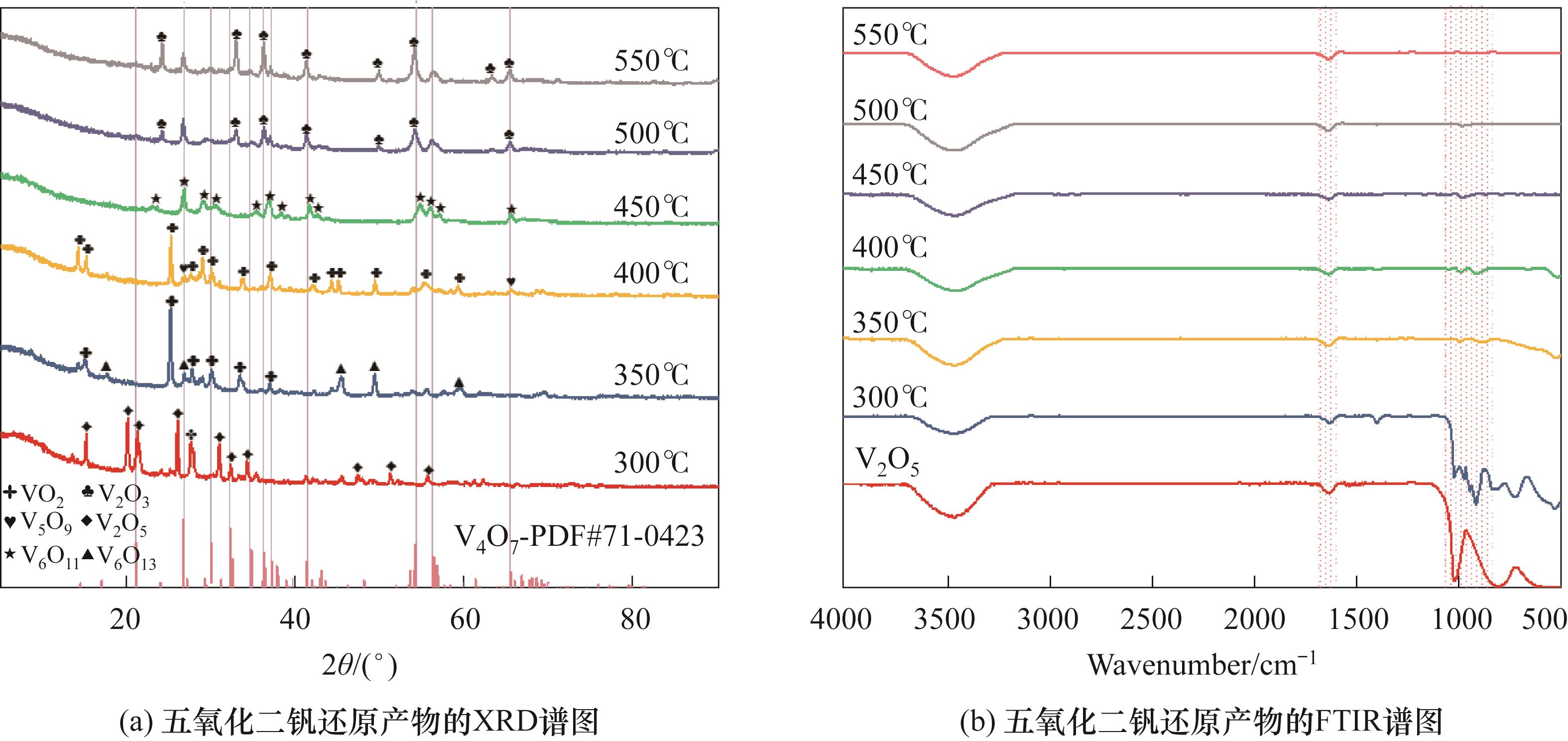
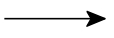 V6O13
V6O13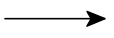 VO2
VO2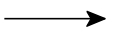 V4O7
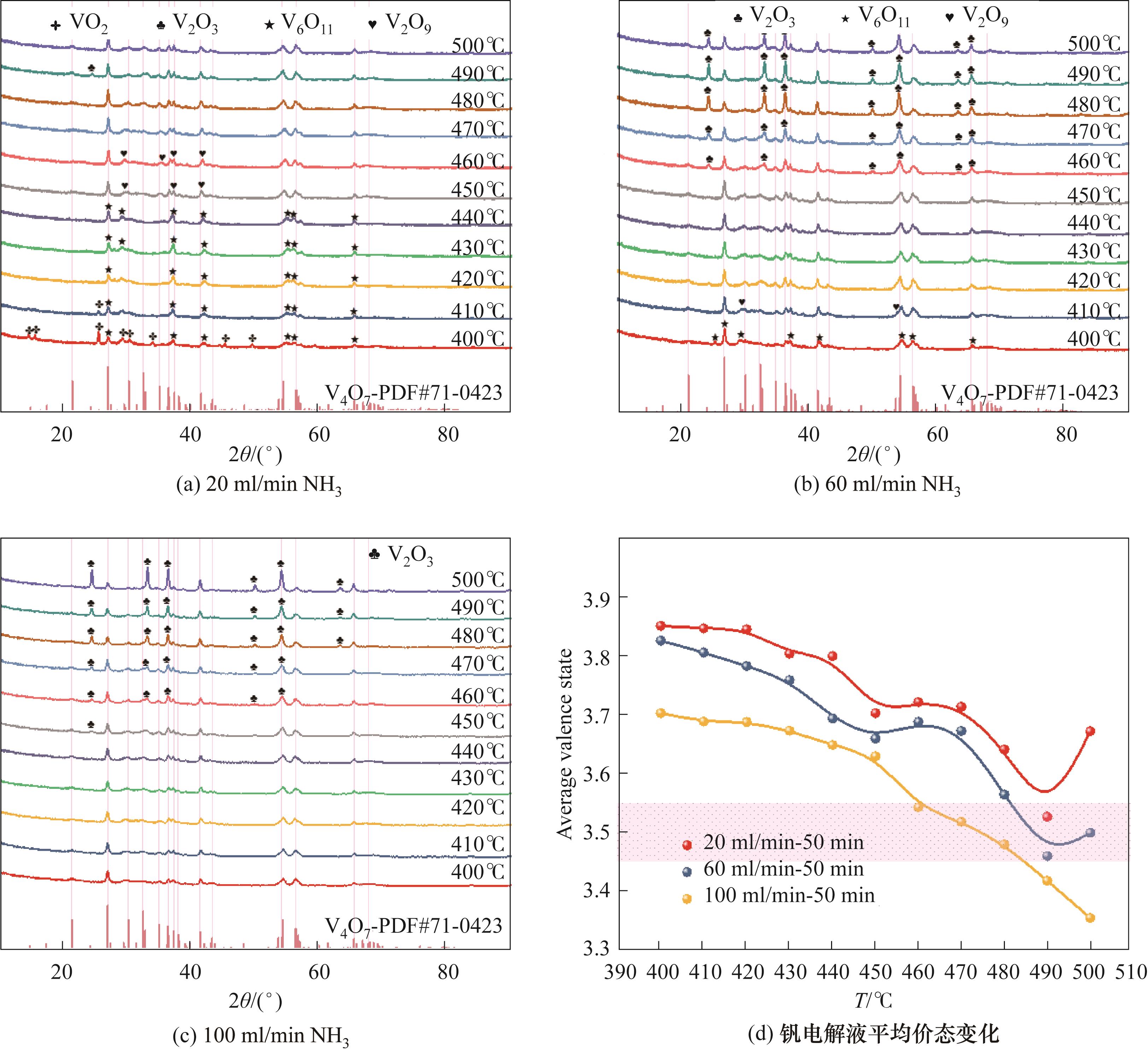
V4O7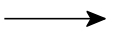 V2O3逐级还原原则,提高反应温度、氨气流量及延长反应时间均能促进五价钒的还原,在反应时间50 min、氨气流量100 ml/min条件下,在反应温度480℃、520℃和490℃分别还原偏钒酸铵、多钒酸铵和五氧化二钒,均可获得钒浓度1.75 mol/L以上、价态3.5±0.1的钒电解液,以偏钒酸铵和多钒酸铵为原料时电解液中钒浓度可达1.90 mol/L以上;对三种原料还原后获得的电解液性能分析表明,以偏钒酸铵为原料导电性最优(离子电导率19.17 S/m),分别较五氧化二钒(12.83 S/m)和多钒酸铵(11.02 S/m)体系提升了49.4%和74.0%。本论文提出的新工艺可避免3.5价钒电解液制备过程有机/化学还原剂残留,为全钒液流电池电解液制备技术的短流程发展提供了技术支撑。
 京公网安备 11010102001995号