Wenliang LI1( ), Hao ZHANG2, Mingrui CHEN1, Chen LIANG1, Chi ZHAI1()
Received:2025-08-26
Revised:2025-10-09
Published:2025-10-20
Contact:
Chi ZHAI
李文亮1(), 张浩2, 陈鸣睿1, 梁晨1, 翟持1()
通讯作者:
翟持
作者简介:李文亮(1999—),男,硕士研究生,2455364688@qq.com
基金资助:CLC Number:
Wenliang LI, Hao ZHANG, Mingrui CHEN, Chen LIANG, Chi ZHAI. Interpretative analysis of carbon deposition process of methanol to olefins catalyst based on NMI-GBR-SHAP[J]. CIESC Journal, DOI: 10.11949/0438-1157.20250952.
李文亮, 张浩, 陈鸣睿, 梁晨, 翟持. 基于NMI-GBR-SHAP的甲醇制烯烃催化剂积碳过程解释性分析[J]. 化工学报, DOI: 10.11949/0438-1157.20250952.
Add to citation manager EndNote|Ris|BibTeX
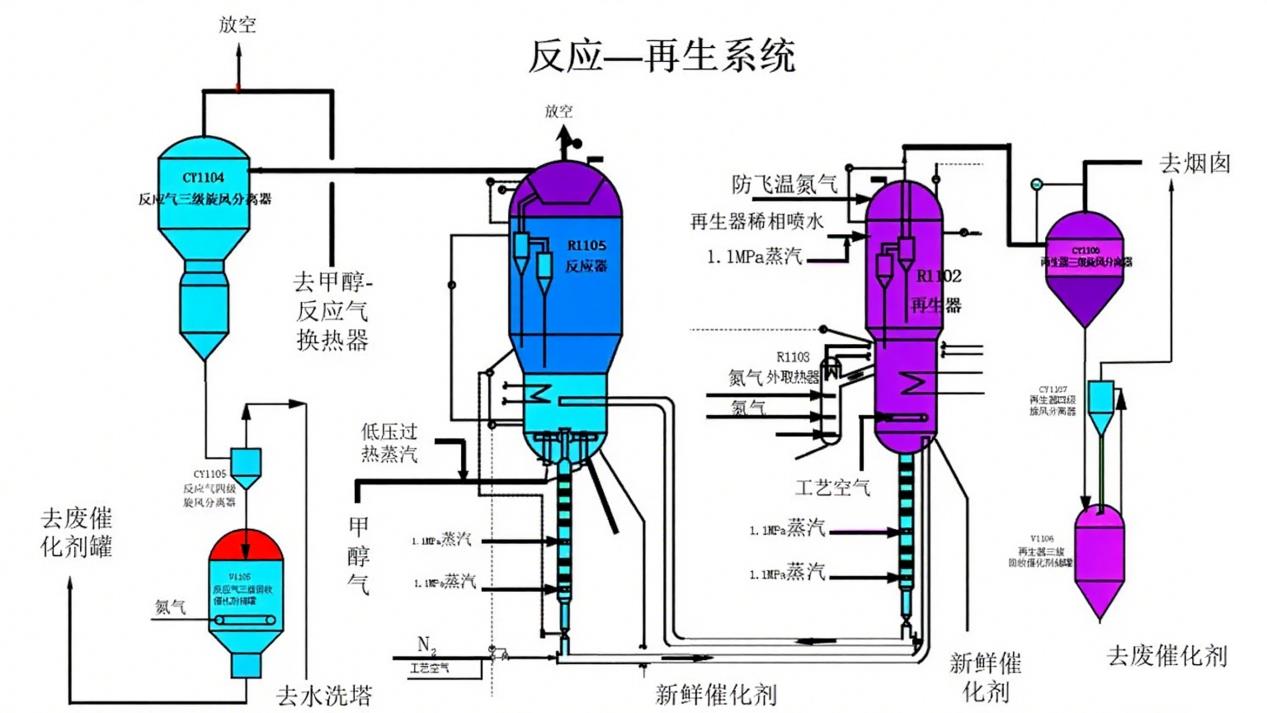
Fig.1 Schematic of the Methanol to Olefins process
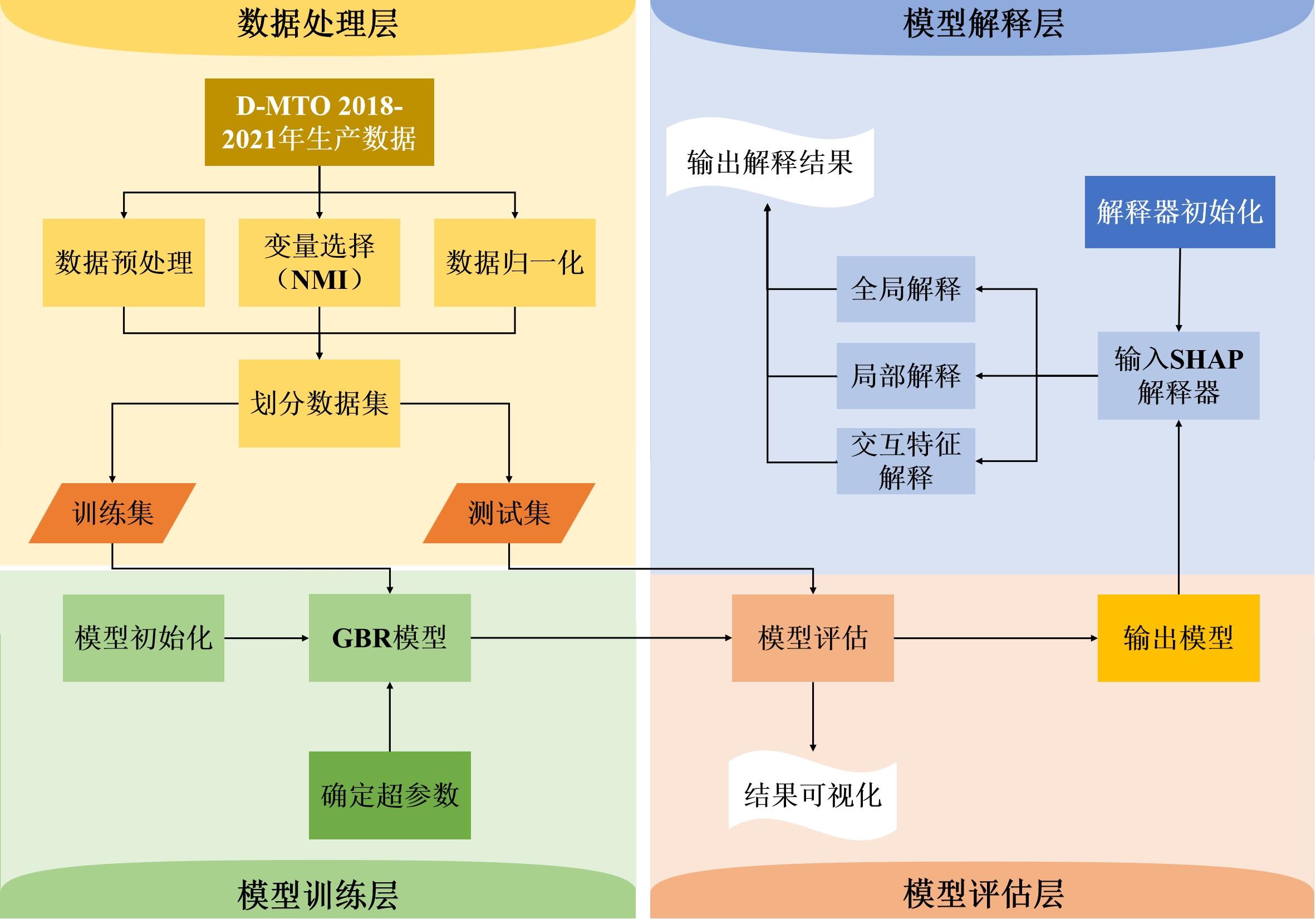
Fig.2 Framework of the NMI-GBR-SHAP model
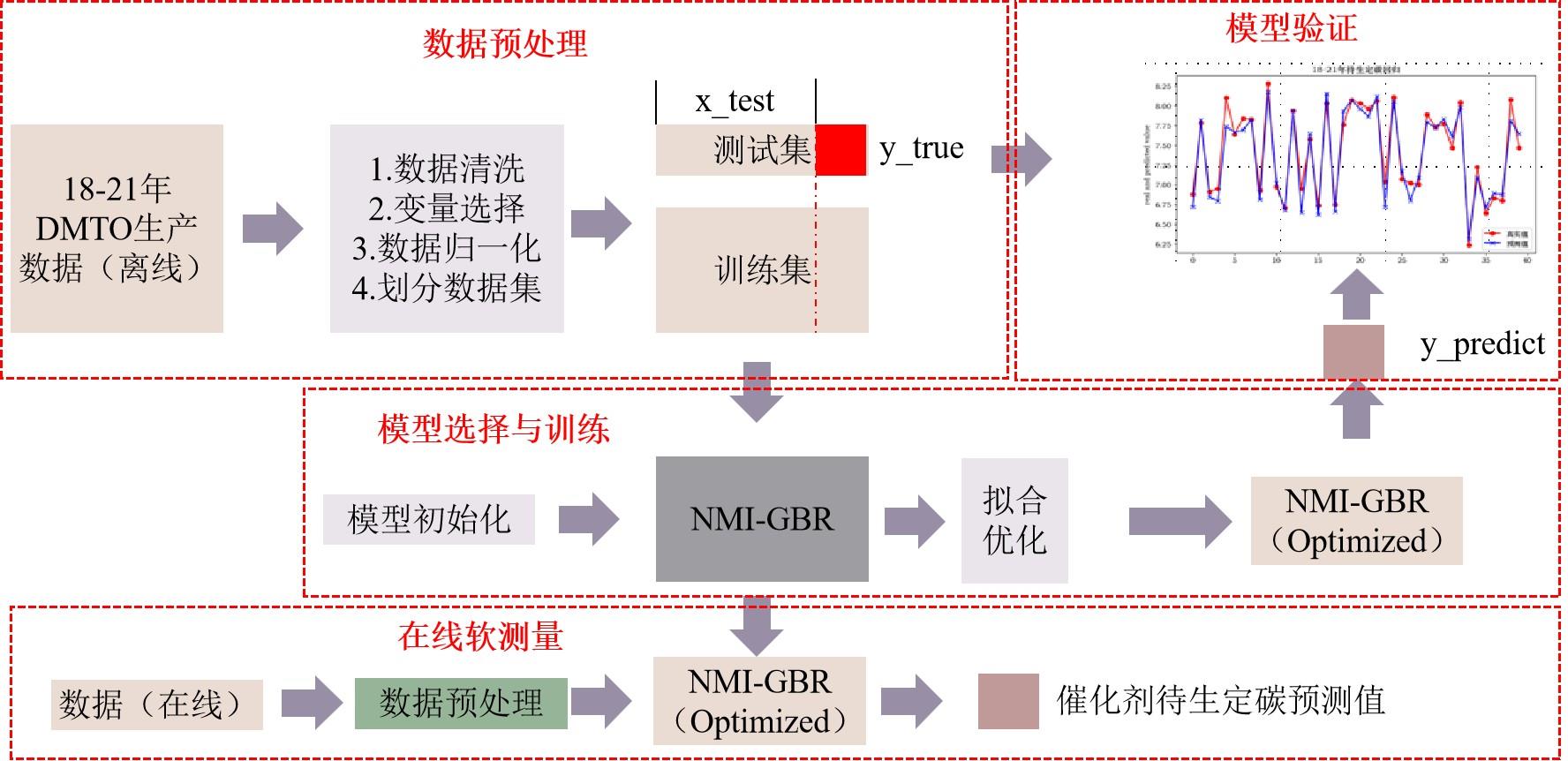
Fig.3 Flow chart of NMI-GBR modeling and on-line soft sensing of catalyst coke content
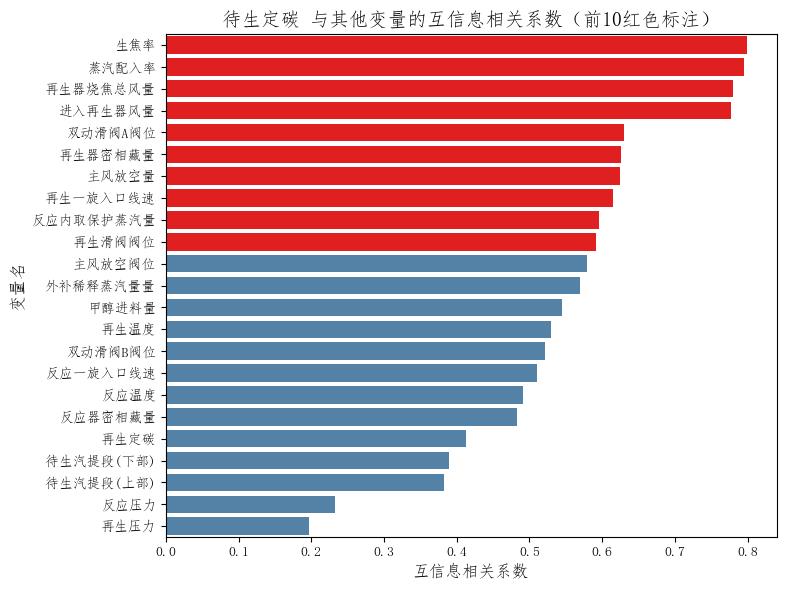
Fig.4 NMI values of various process variables with catalyst coke content
| 模型 | MAE | MSE | R2 |
|---|---|---|---|
| NMI-Bayesian | 0.2289 | 0.0903 | 0.6323 |
| NMI-PLSR | 0.2269 | 0.0880 | 0.6415 |
| NMI-SVR | 0.1286 | 0.0276 | 0.8874 |
| NMI-GBR | 0.1108 | 0.0201 | 0.9181 |
Table 1 Evaluation metrics
| 模型 | MAE | MSE | R2 |
|---|---|---|---|
| NMI-Bayesian | 0.2289 | 0.0903 | 0.6323 |
| NMI-PLSR | 0.2269 | 0.0880 | 0.6415 |
| NMI-SVR | 0.1286 | 0.0276 | 0.8874 |
| NMI-GBR | 0.1108 | 0.0201 | 0.9181 |
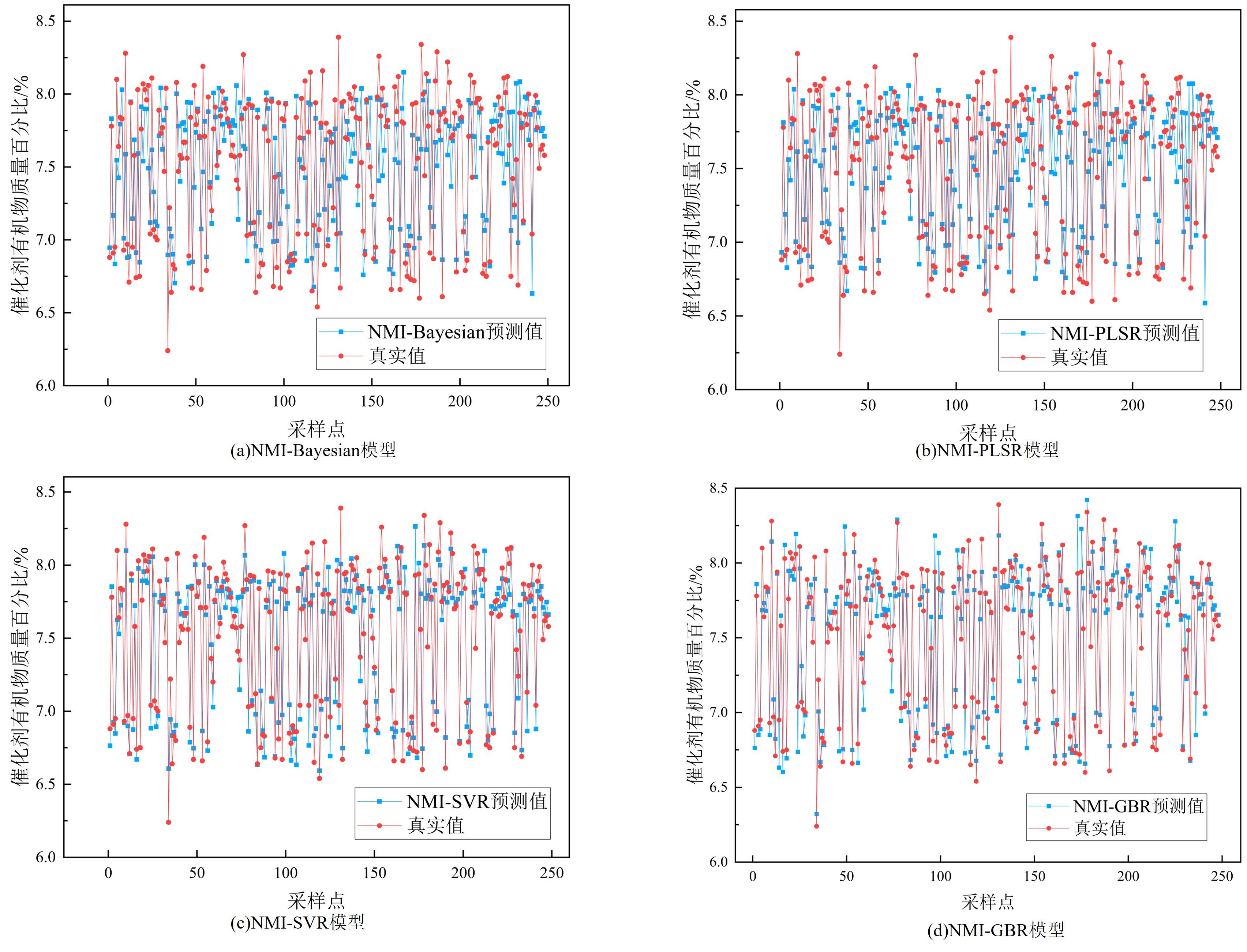
Fig.5 Comparison of coke content predictions from different models
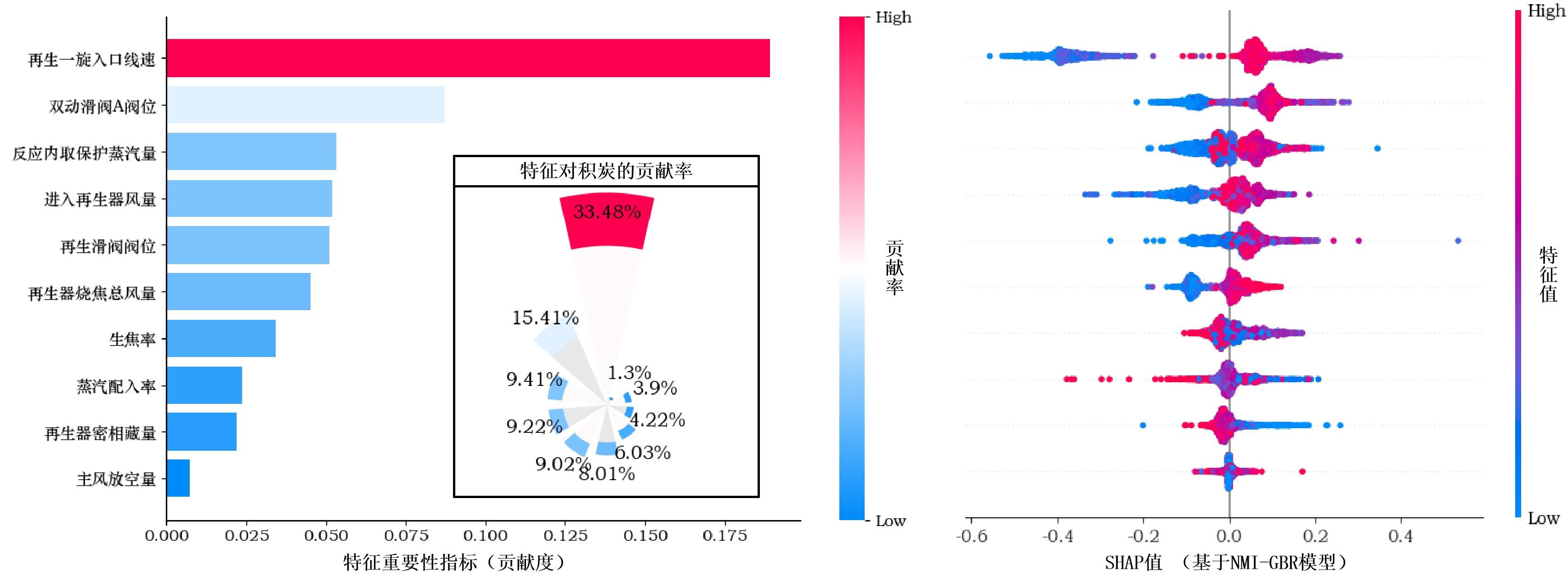
Fig.6 Global feature distribution of the MTO process
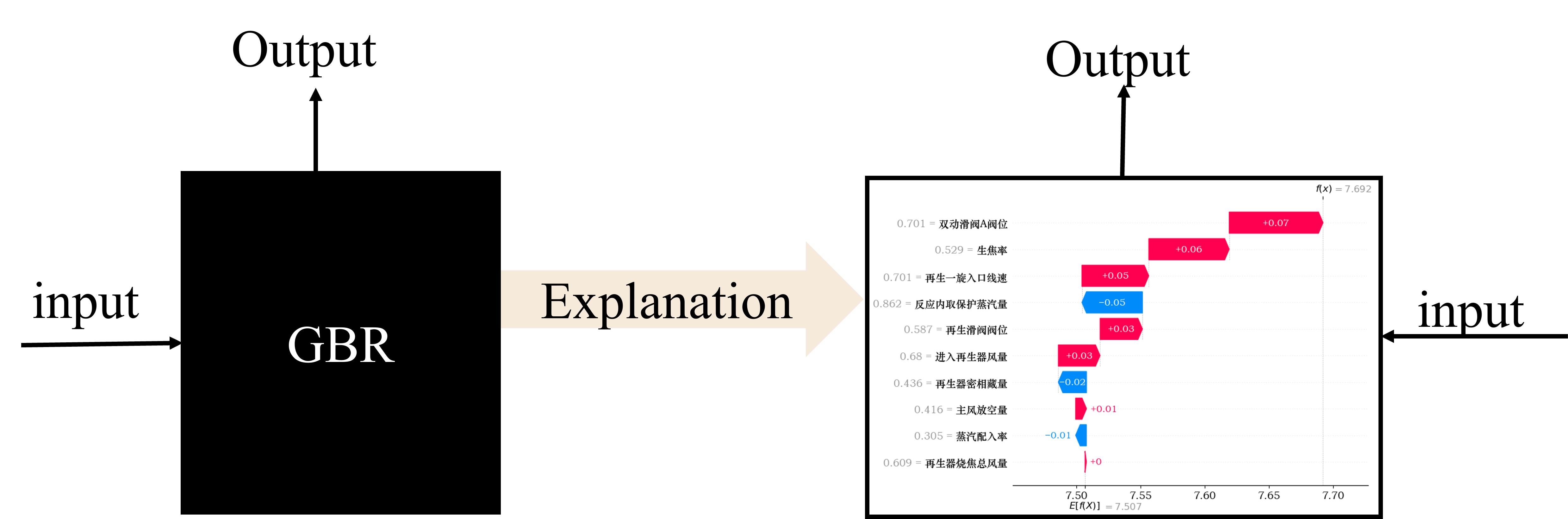
Fig.7 Local feature characteristics of the MTO process
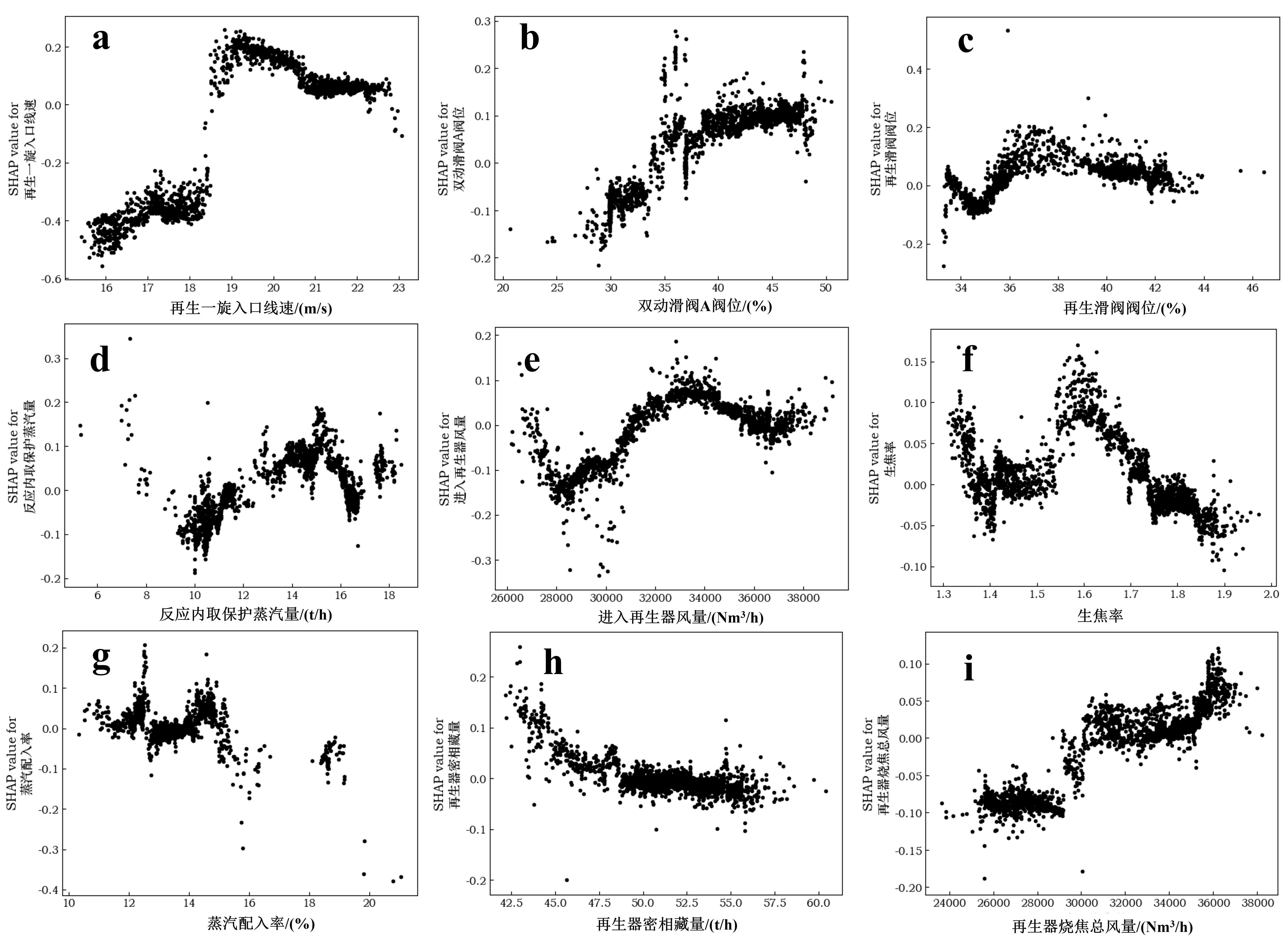
Fig.8 SHAP dependence of various variables
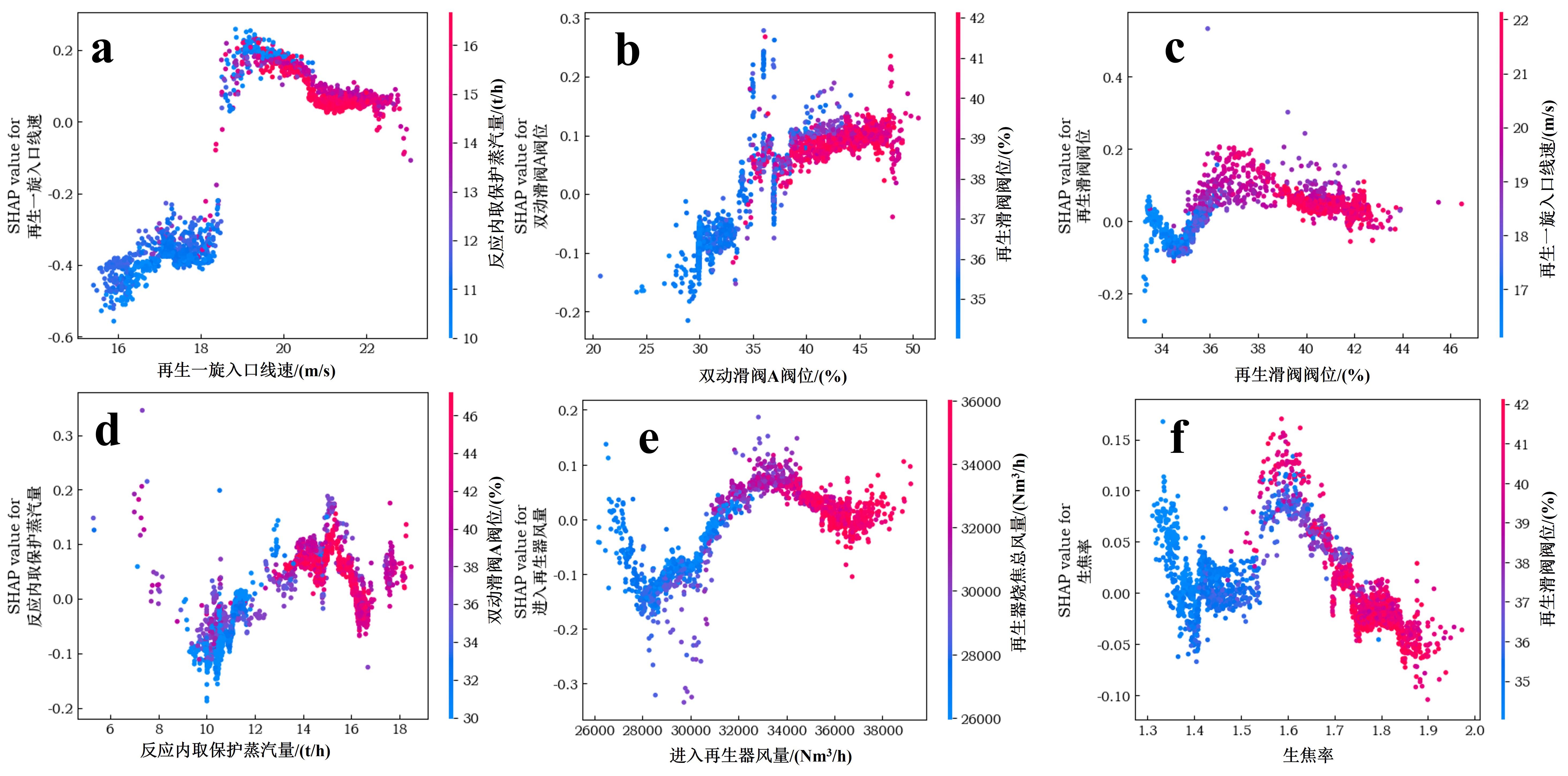
Fig.9 SHAP interaction contributions of key process-variable pairs to predicted catalyst coke deposition
| [1] | Lin S F, Li H, Tian P, et al. Methanol to olefins (MTO): understanding and regulating dynamic complex catalysis[J]. Journal of the American Chemical Society, 2025, 147(14): 11585-11607. |
| [2] | 季超,武鲁明,李滨,等. 甲醇制烯烃催化剂SAPO-34分子筛的改性研究进展[J]. 无机盐工业, 2022, 54(7): 1-9, 90. |
| Ji C, Wu L M, Li B, et al. Research progress on modification of SAPO-34 as catalyst for methanol to olefins[J]. Inorganic Chemicals Industry,2022, 54(7):1-9, 90. | |
| [3] | Zhou J B, Li X, Liu D P, et al. A hybrid spatial-temporal deep learning prediction model of industrial methanol-to-olefins process[J]. Frontiers of Chemical Science and Engineering, 2024, 18(4): 42. |
| [4] | Tian P, Wei Y X, Ye M, et al. Methanol to olefins (MTO): from fundamentals to commercialization[J]. ACS Catalysis, 2015, 5(3): 1922-1938. |
| [5] | Zhou J B, Gao M B, Zhang J L, et al. Directed transforming of coke to active intermediates in methanol-to-olefins catalyst to boost light olefins selectivity[J]. Nature Communications, 2021, 12: 17. |
| [6] | Yang L, Wang C, Zhang L N, et al. Stabilizing the framework of SAPO-34 zeolite toward long-term methanol-to-olefins conversion[J]. Nature Communications, 2021, 12: 4661. |
| [7] | Qi G Z, Xie Z K, Yang W M, et al. Behaviors of coke deposition on SAPO-34 catalyst during methanol conversion to light olefins[J]. Fuel Processing Technology, 2007, 88(5): 437-441. |
| [8] | Chen D, Grønvold A, Moljord K, et al. Methanol conversion to light olefins over SAPO-34: reaction network and deactivation kinetics[J]. Industrial & Engineering Chemistry Research, 2007, 46(12): 4116-4123. |
| [9] | Suvarna M, Pérez-Ramírez J. Embracing data science in catalysis research[J]. Nature Catalysis, 2024, 7(6): 624-635. |
| [10] | Adler A I, Painsky A. Feature importance in gradient boosting trees with cross-validation feature selection[J]. Entropy, 2022, 24(5): 687. |
| [11] | Lundberg S M, Lee S I. A unified approach to interpreting model predictions[C]//Proceedings of the 31st International Conference on Neural Information Processing Systems. December 4 - 9, 2017, Long Beach, California, USA. ACM, 2017: 4768-4777. |
| [12] | Lundberg S M, Erion G G, Lee S I. Consistent individualized feature attribution for tree ensembles[EB/OL]. 2018: arXiv: 1802.03888. |
| [13] | Alomari Y, Andó M. SHAP-based insights for aerospace PHM: Temporal feature importance, dependencies, robustness, and interaction analysis[J]. Results in Engineering, 2024, 21: 101834. |
| [14] | Ponce-Bobadilla A V, Schmitt V, Maier C S, et al. Practical guide to SHAP analysis: Explaining supervised machine learning model predictions in drug development[J]. Clinical and Translational Science, 2024, 17(11): e70056. |
| [15] | Jutte A, Ahmed F, Linssen J, et al. C-SHAP for time series: an approach to high-level temporal explanations[EB/OL]. 2025: arXiv: 2504.11159. |
| [16] | Veríssimo R F, Matias P H F, Barbosa M R, et al. Integrating machine learning and SHAP analysis to advance the rational design of benzothiadiazole derivatives with tailored photophysical properties[J]. Journal of Chemical Information and Modeling, 2025, 65(15): 7874-7886. |
| [17] | Vinchurkar T, Ock J, Farimani A B. Explainable data-driven modeling of adsorption energy in heterogeneous catalysis[EB/OL]. 2024: arXiv: 2405.20397. |
| [18] | Xu H B, Yan S W, Qin X G, et al. Interpretable intelligent fault diagnosis for heat exchangers based on SHAP and XGBoost[J]. Processes, 2025, 13(1): 219. |
| [19] | Luo Y P, Wang W Y, Zhang Y Y, et al. A transformer-based model for predicting and analyzing light olefin yields in methanol-to-olefins process[J]. Chinese Journal of Chemical Engineering, 2025, 83: 266-276. |
| [20] | Zhang Y, Jia S L, Huang H Y, et al. A novel algorithm for the precise calculation of the maximal information coefficient[J]. Scientific Reports, 2014, 4: 6662. |
| [21] | Li Y, Li N, Ren J Z, et al. An interpretable light attention–convolution–gate recurrent unit architecture for the highly accurate modeling of actual chemical dynamic processes[J]. Engineering, 2024, 39: 104-116. |
| [22] | Draper N R, Smith H. Applied Regression Analysis[M]. 3rd ed. New York: Wiley, 1998. |
| [23] | 李文亮, 纪成, 梁晨, 等. 基于TDMN的青霉素浓度在线软测量[J]. 化工学报, 2025, 76(6): 2848-2858. |
| Li W L, Ji C, Liang C, et al. On-line soft measurement of penicillin concentration based on TDMN[J]. CIESC Journal, 2025, 76(6): 2848-2858. | |
| [24] | Maes F, Collignon A, Vandermeulen D, et al. Multimodality image registration by maximization of mutual information[J]. IEEE Transactions on Medical Imaging, 1997, 16(2): 187-198. |
| [25] | 杨明平, 罗娟. 甲醇制低碳烯烃反应体系的热力学计算与分析[J]. 煤化工, 2008, 36(3): 44-48. |
| Yang M P, Luo J. Thermodynamic calculation and analysis of methanol to olefins(MTO)[J]. Coal Chemical Industry, 2008, 36(3): 44-48. | |
| [26] | 杨余. 基于数据驱动的DMTO工艺催化剂定碳软测量研究[D]. 重庆: 西南大学, 2023. |
| Yang Y. Research on soft sensing of catalyst carbon determination in DMTO process based on data-driven[D]. Chongqing: Southwest University,2023. | |
| [27] | Bentegri H, Rabehi M, Kherfane S, et al. Assessment of compressive strength of eco-concrete reinforced using machine learning tools[J]. Scientific Reports, 2025, 15: 5017. |
| [28] | Bi J, Hu F C, Wang Y J, et al. A method based on interpretable machine learning for recognizing the intensity of human engagement intention[J]. Scientific Reports, 2023, 13: 2537. |
| [29] | Yuan C, Zhang T M, Tang Y X, et al. Fault prediction method of large forging press based on a multi scale and multi model integrated method[J]. Scientific Reports, 2025, 15: 30675. |
| [30] | Colombo M, Seriès P. Bayes in the brain—on Bayesian modelling in neuroscience[J]. The British journal for the philosophy of science, 2012. |
| [1] | Xiaoyi QIAN, Lixin WANG, Xingyu JIANG, Tianhe SUN, Yi ZHAO, Yifei WANG. Fault propagation analysis of chemical process based on interactive monitoring and connectivity model [J]. CIESC Journal, 2025, 76(8): 4155-4164. |
| [2] | Liang GUO, Ye CHEN, Qiming JIA, Xiujuan XIE. Simulated and experimental investigations on self-pressurization of liquid helium storage tank [J]. CIESC Journal, 2025, 76(7): 3561-3571. |
| [3] | Tao WANG, Guangming LI, Qiuxia HU, Jing XU. Optimization of warpage process for two-color injection products based on temporal evolution particle swarm optimization algorithm [J]. CIESC Journal, 2025, 76(7): 3403-3415. |
| [4] | Hanchuan ZHANG, Chao SHANG, Wenxiang LYU, Dexiang HUANG, Yaning ZHANG. Operating conditions pattern recognition and yield prediction for FCCU based on unsupervised time series clustering [J]. CIESC Journal, 2025, 76(6): 2781-2790. |
| [5] | Xinyi LI, Gongming WANG, Zipeng WANG, Junfei QIAO. Research on intelligent prediction of water quality in sewage treatment process based on event triggering [J]. CIESC Journal, 2025, 76(6): 2828-2837. |
| [6] | Jingxin ZHANG, Jiaojie HE, Qingwang CAI, Ziyi KANG, Yusi YANG, Tong WANG, Xiantao CAO, Liwei YANG. Prediction of COD concentration in wastewater treatment plant effluent based on secondary decomposition and BiLSTM [J]. CIESC Journal, 2025, 76(6): 2859-2871. |
| [7] | Wenliang LI, Cheng JI, Chen LIANG, Sichen WU, Shilin CHEN, Wei SUN, Chi ZHAI. On-line soft measurement of penicillin concentration based on TDMN [J]. CIESC Journal, 2025, 76(6): 2848-2858. |
| [8] | Hanxiao ZHANG, Ruiqi WANG, Yating ZHANG. Prediction of scale factor of heat exchangers based on CNN-LSTM neural network [J]. CIESC Journal, 2025, 76(4): 1671-1679. |
| [9] | Dafen WANG, Lili TANG, Xinyan ZHANG, Chunyu NIE, Mingzhu LI, Jing WU. Multi-output tri-training heterogeneous soft sensor modeling based on time difference [J]. CIESC Journal, 2025, 76(3): 1143-1155. |
| [10] | Zongting WANG, Lili WANG, Xiaoyan SUN, Li XIA, Shaohui TAO, Shuguang XIANG. Simplified phase equilibrium correlation-based efficient and short-cut distillation column model [J]. CIESC Journal, 2025, 76(3): 1133-1142. |
| [11] | Ye YANG, Jiangang LU. Mooney viscosity prediction modeling based on fusion Transformer [J]. CIESC Journal, 2025, 76(1): 266-282. |
| [12] | Haijun FENG, Bingxuan ZHANG, Jian ZHOU. Predicting and interpreting the toxicity of ionic liquids using graph neural network [J]. CIESC Journal, 2025, 76(1): 93-106. |
| [13] | Yi ZHONG, Shiyu ZHOU, Lianchao JIU, Yuxiao LI, Haojiang WU, Zhiyong ZHOU. Research progress on direct remediation and regeneration of cathode materials from spent lithium iron phosphate batteries [J]. CIESC Journal, 2024, 75(S1): 1-13. |
| [14] | Nana SUN, Hongmei DONG, Wenhao GUO, Jian LIU, Jianbo HU, Shuang JIN. Rheological property influencing factors and a pressure drop prediction model for pipeline transportation in thick oil O/W emulsions stabilized by modified magnetic nanoparticles [J]. CIESC Journal, 2024, 75(S1): 143-157. |
| [15] | Xiaoyu JIANG, Huanting LUO, Rui HONG, Wenjing DU. Specific heat of diol coolant determined by modulated differential scanning calorimetry [J]. CIESC Journal, 2024, 75(S1): 40-46. |
| Viewed | ||||||
|
Full text |
|
|||||
|
Abstract |
|
|||||