化工学报 ›› 2025, Vol. 76 ›› Issue (6): 3104-3114.DOI: 10.11949/0438-1157.20240972
王富玉( ), 周晅毅()
收稿日期:2024-08-29
修回日期:2024-12-23
出版日期:2025-06-25
发布日期:2025-07-09
通讯作者:
周晅毅
作者简介:王富玉(1996—),男,博士研究生,wfy@tongji.edu.cn
基金资助:
Fuyu WANG(), Xuanyi ZHOU()
Received:2024-08-29
Revised:2024-12-23
Online:2025-06-25
Published:2025-07-09
Contact:
Xuanyi ZHOU
摘要:
利用非定常伴随方程进一步发展了基于固定探测器网络的遗传算法,并将其用于化工储罐区泄漏后泄漏位置和泄漏率的反演。首先基于计算流体动力学(CFD)模拟,利用非定常伴随方程建立源-探测器关系,然后利用遗传算法对泄漏进行反演。非定常伴随方程在准确建立源-探测器关系的同时,可以节省大量的CFD模拟计算量,且遗传算法的计算高效性可实现对泄漏的快速反演。在考虑了探测器的测量误差和阈值后,对10个泄漏源进行反演,结果表明各泄漏源的反演精度均较高。此外,还讨论了反演精度随泄漏时间的变化情况,表明所提方法可在复杂流动下快速准确地反演泄漏源。
中图分类号:
王富玉, 周晅毅. 结合非定常伴随方程和遗传算法的化工区反演[J]. 化工学报, 2025, 76(6): 3104-3114.
Fuyu WANG, Xuanyi ZHOU. Leakage estimation in a chemical tank farm with unsteady adjoint equation and genetic algorithm[J]. CIESC Journal, 2025, 76(6): 3104-3114.
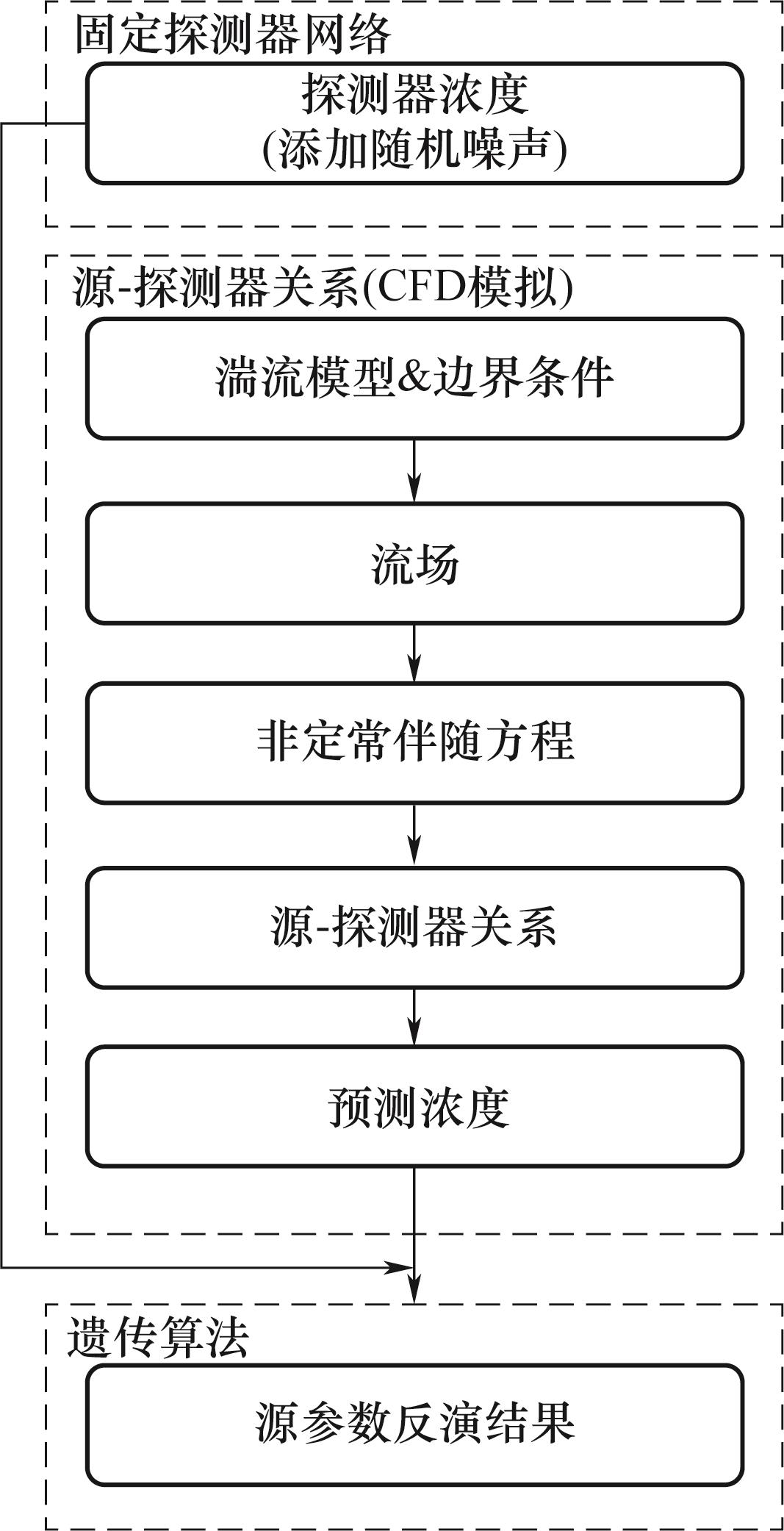
图1 利用本文方法对化工储罐区泄漏进行反演的过程
Fig.1 Process of using the proposed method to estimate the chemical tank farm leakage
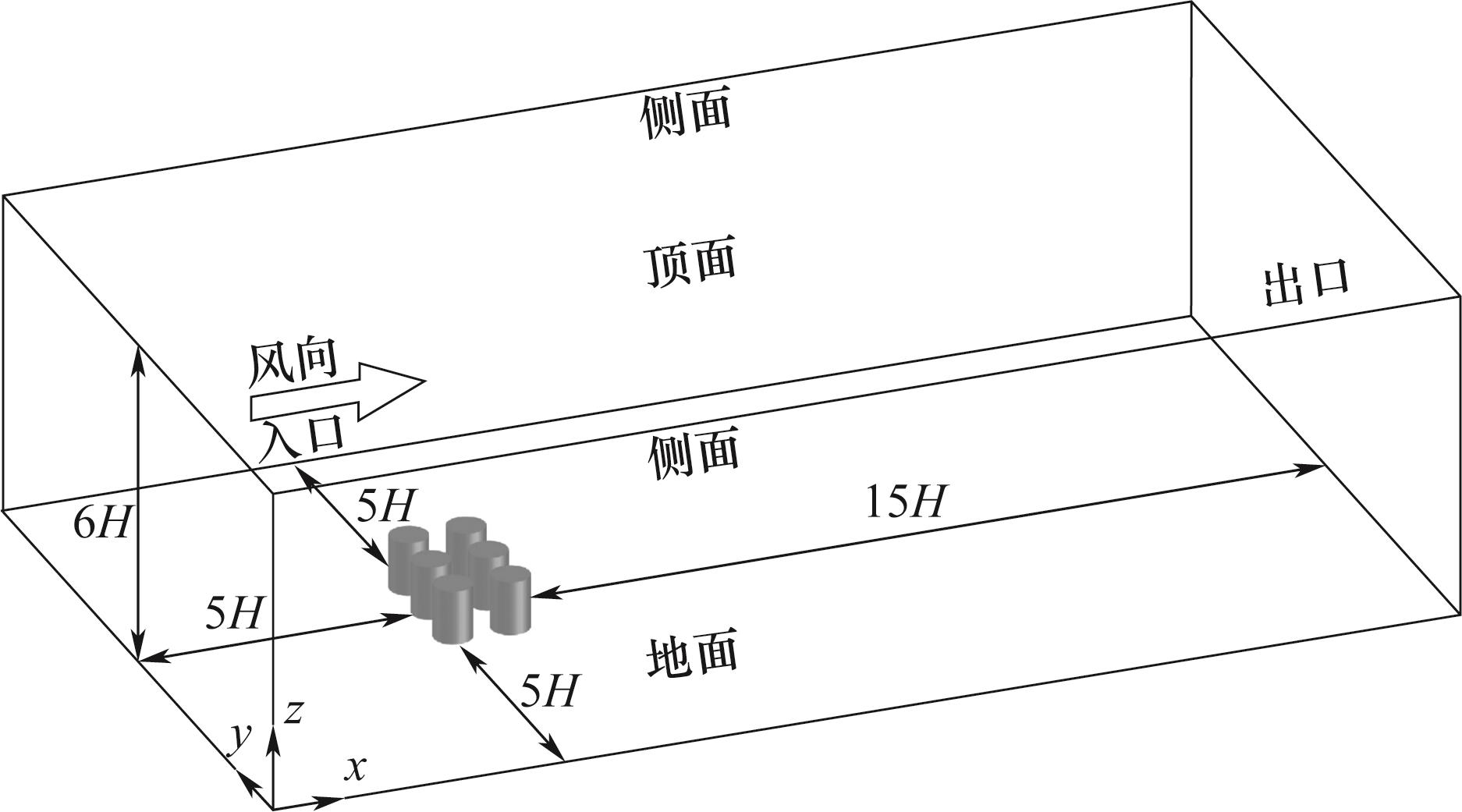
图2 计算域示意图
Fig.2 Schematic diagram of computational domain
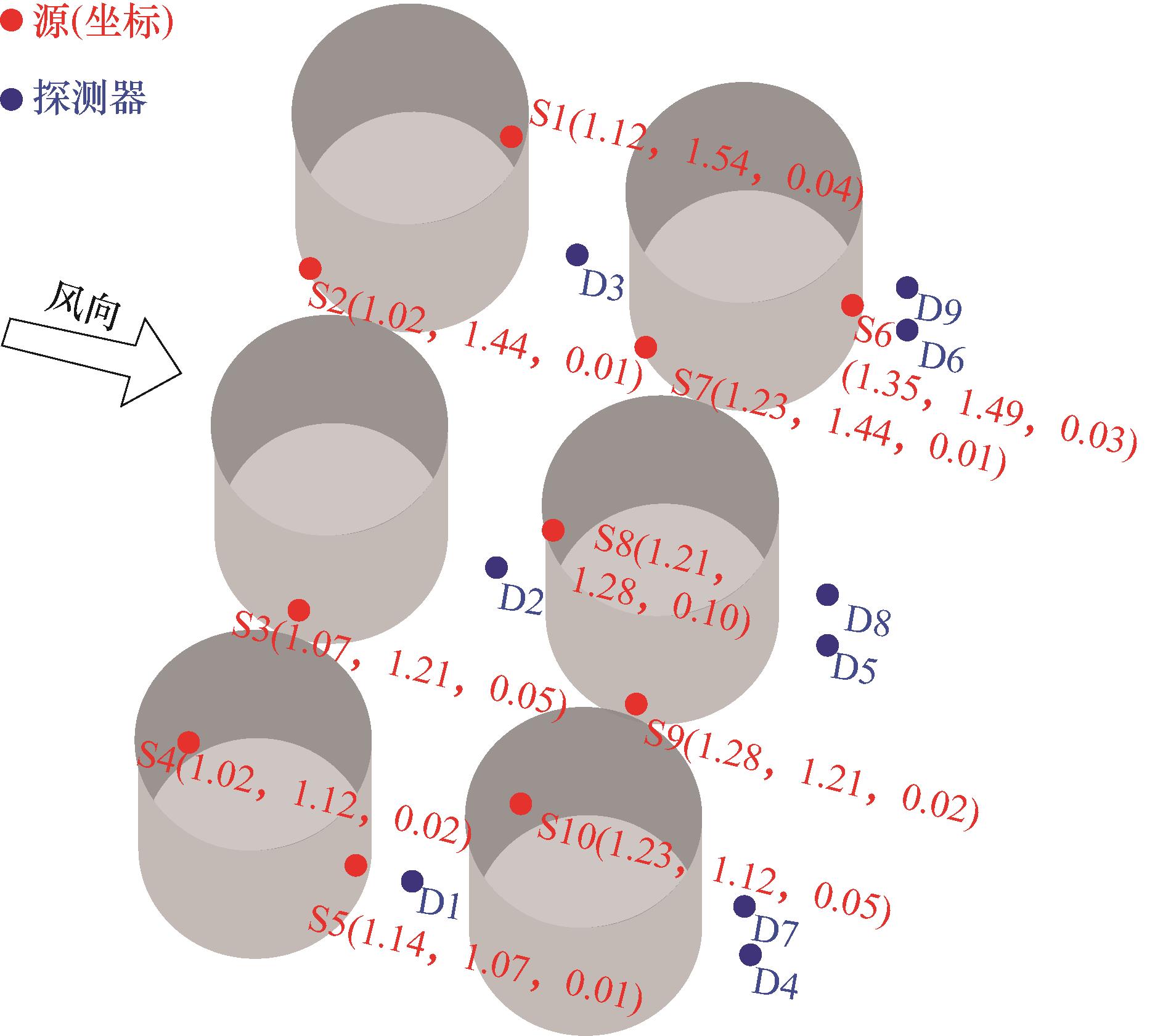
图3 未知泄漏源和探测器的分布
Fig.3 Distributions of unknown sources and detectors
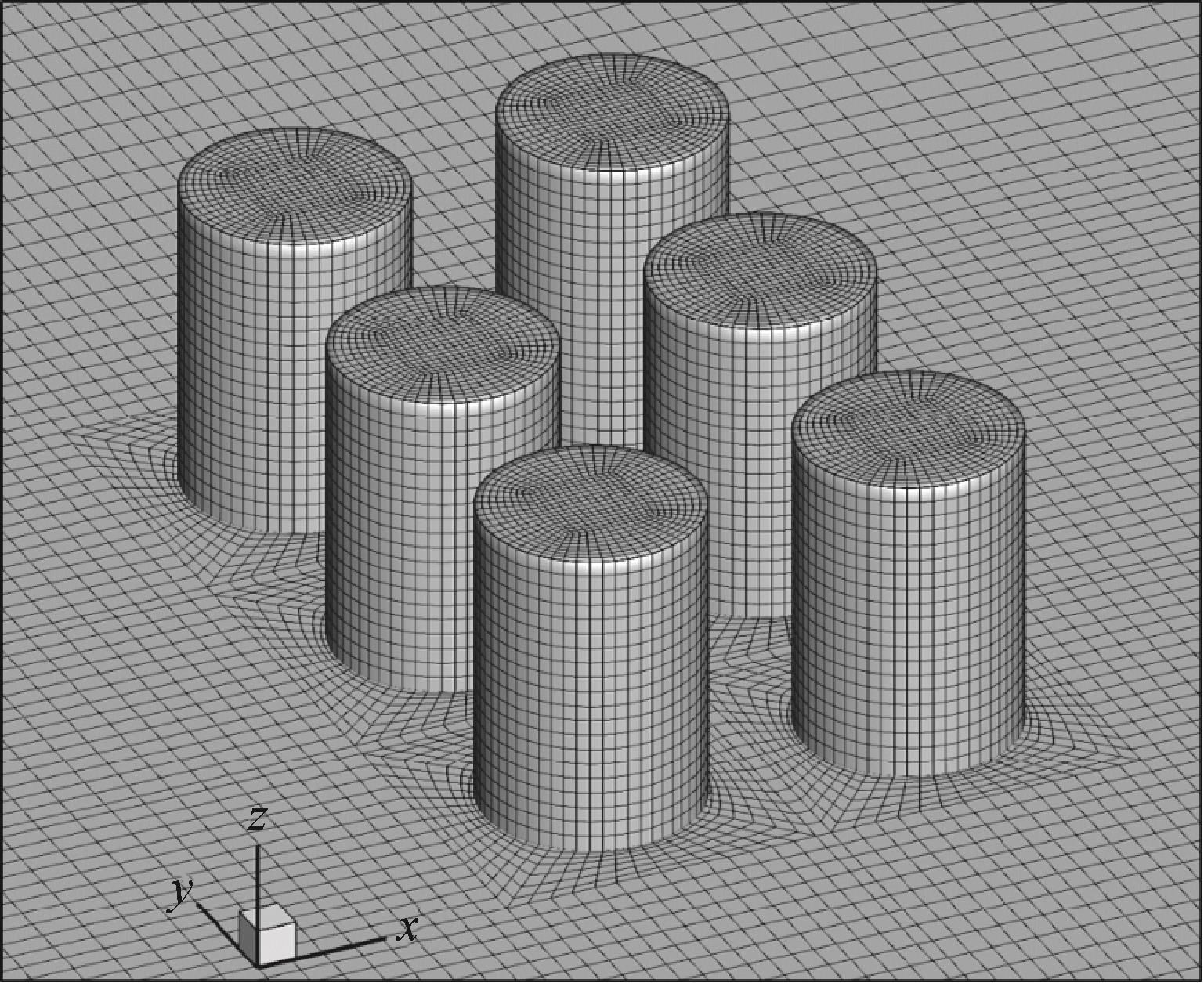
图4 网格划分
Fig.4 Grid system
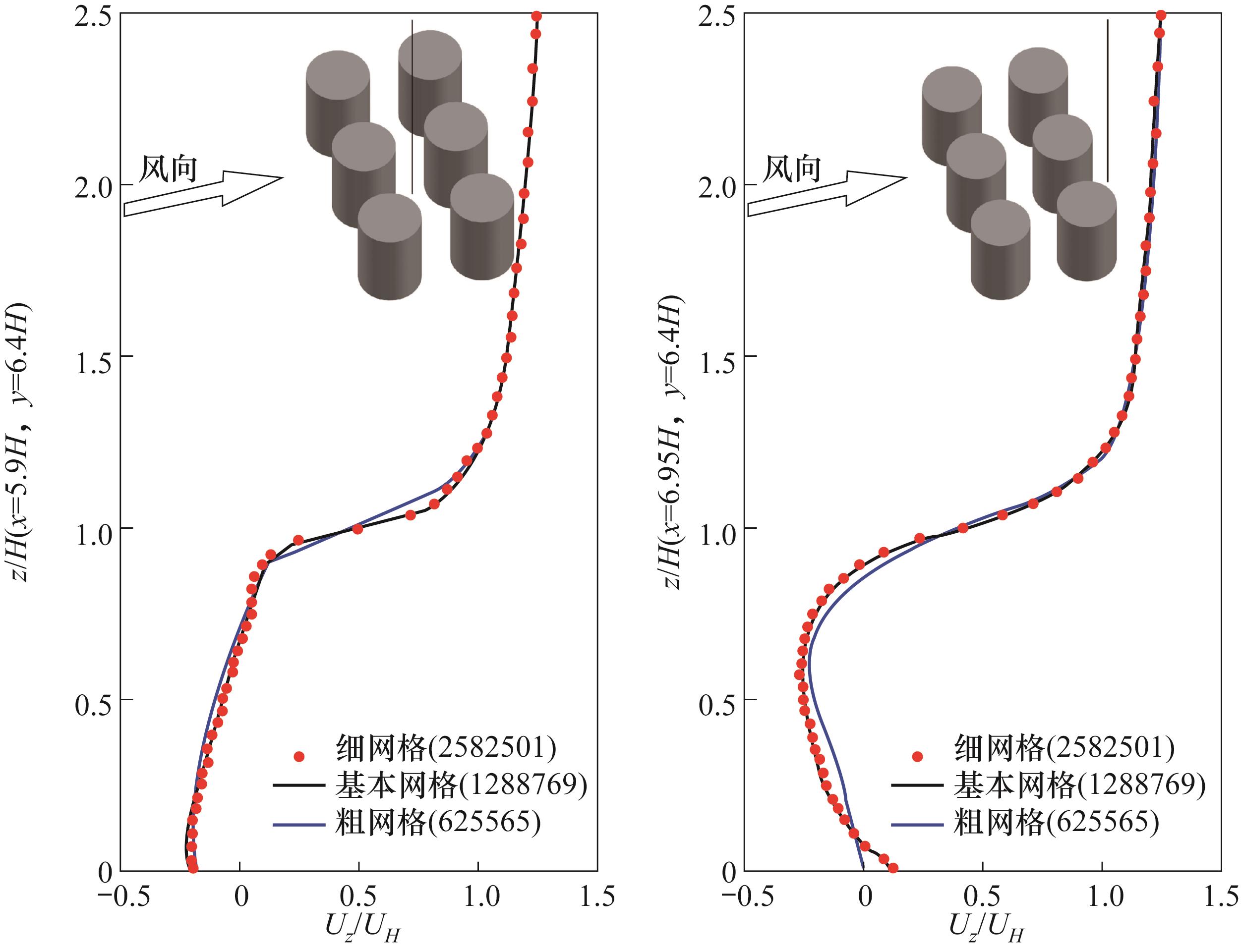
图5 网格无关性检验
Fig.5 Grid sensitivity test
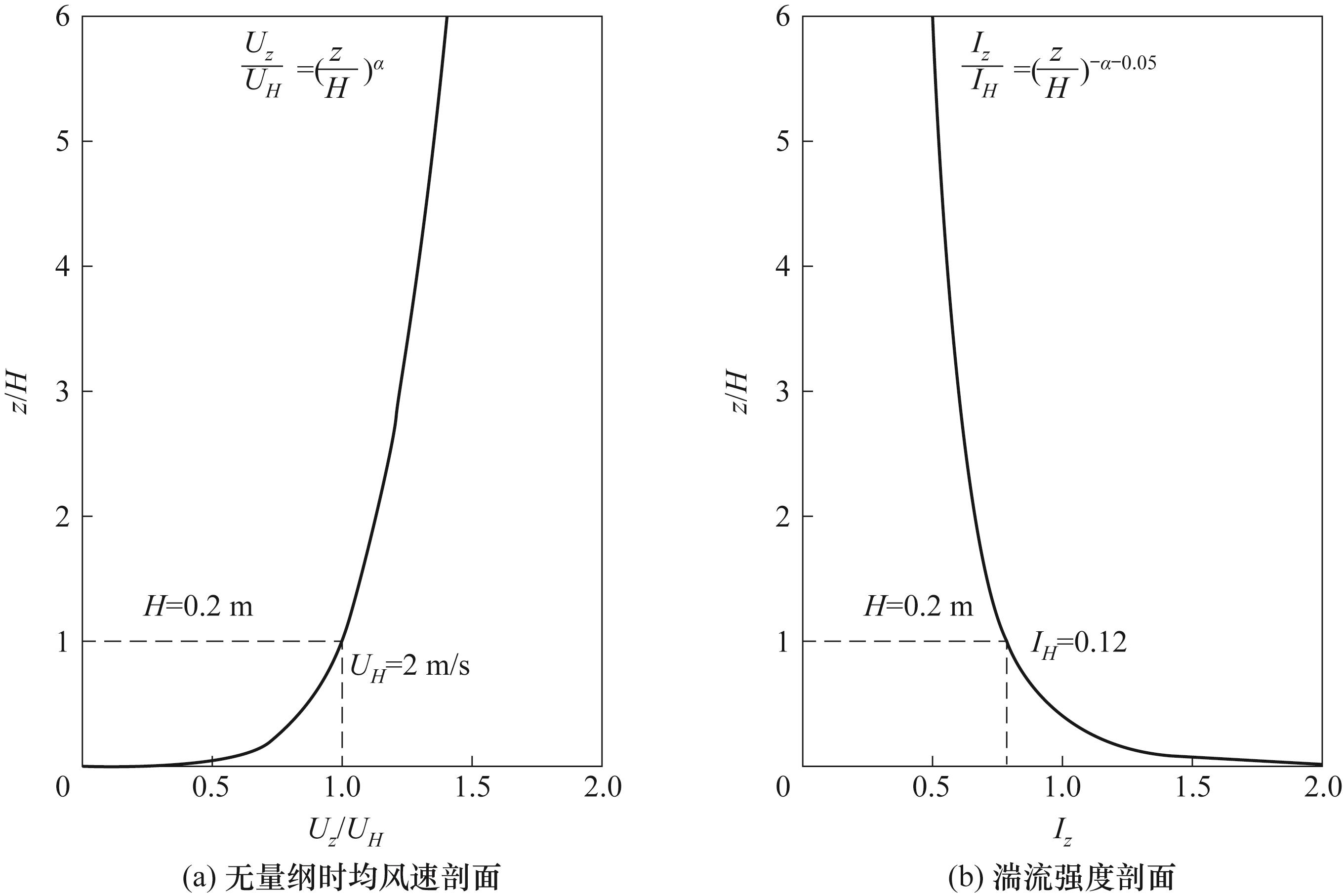
图6 入口剖面
Fig.6 Inflow profiles
| 项目 | 设置 | |
|---|---|---|
| 仿真模型 | 计算域 | 21.75H (x)×12.8H (y)×6H (z) |
| 网格数 | 1288769个 | |
| 求解设置 | 湍流模型 | 标准k-ε模型[ |
| 速度-压力耦合 | 压力耦合方程组的半隐式方法(semi-implicit method for pressure-linked equations, SIMPLE) | |
| 对流项离散格式 | 二阶迎风格式 | |
| 扩散项离散格式 | 二阶迎风格式 | |
| 近壁面处理 | 标准壁面函数 | |
| 边界条件 | 入口 | 速度入口[ |
| 出口 | 自由出流[ | |
| 顶面和侧面 | 对称 | |
| 地面和储罐 | 无滑移壁面[ | |
| 探测器(求解伴随方程) | 源强度为1[ | |
表1 求解设置及边界条件
Table 1 Solver settings and boundary conditions
| 项目 | 设置 | |
|---|---|---|
| 仿真模型 | 计算域 | 21.75H (x)×12.8H (y)×6H (z) |
| 网格数 | 1288769个 | |
| 求解设置 | 湍流模型 | 标准k-ε模型[ |
| 速度-压力耦合 | 压力耦合方程组的半隐式方法(semi-implicit method for pressure-linked equations, SIMPLE) | |
| 对流项离散格式 | 二阶迎风格式 | |
| 扩散项离散格式 | 二阶迎风格式 | |
| 近壁面处理 | 标准壁面函数 | |
| 边界条件 | 入口 | 速度入口[ |
| 出口 | 自由出流[ | |
| 顶面和侧面 | 对称 | |
| 地面和储罐 | 无滑移壁面[ | |
| 探测器(求解伴随方程) | 源强度为1[ | |
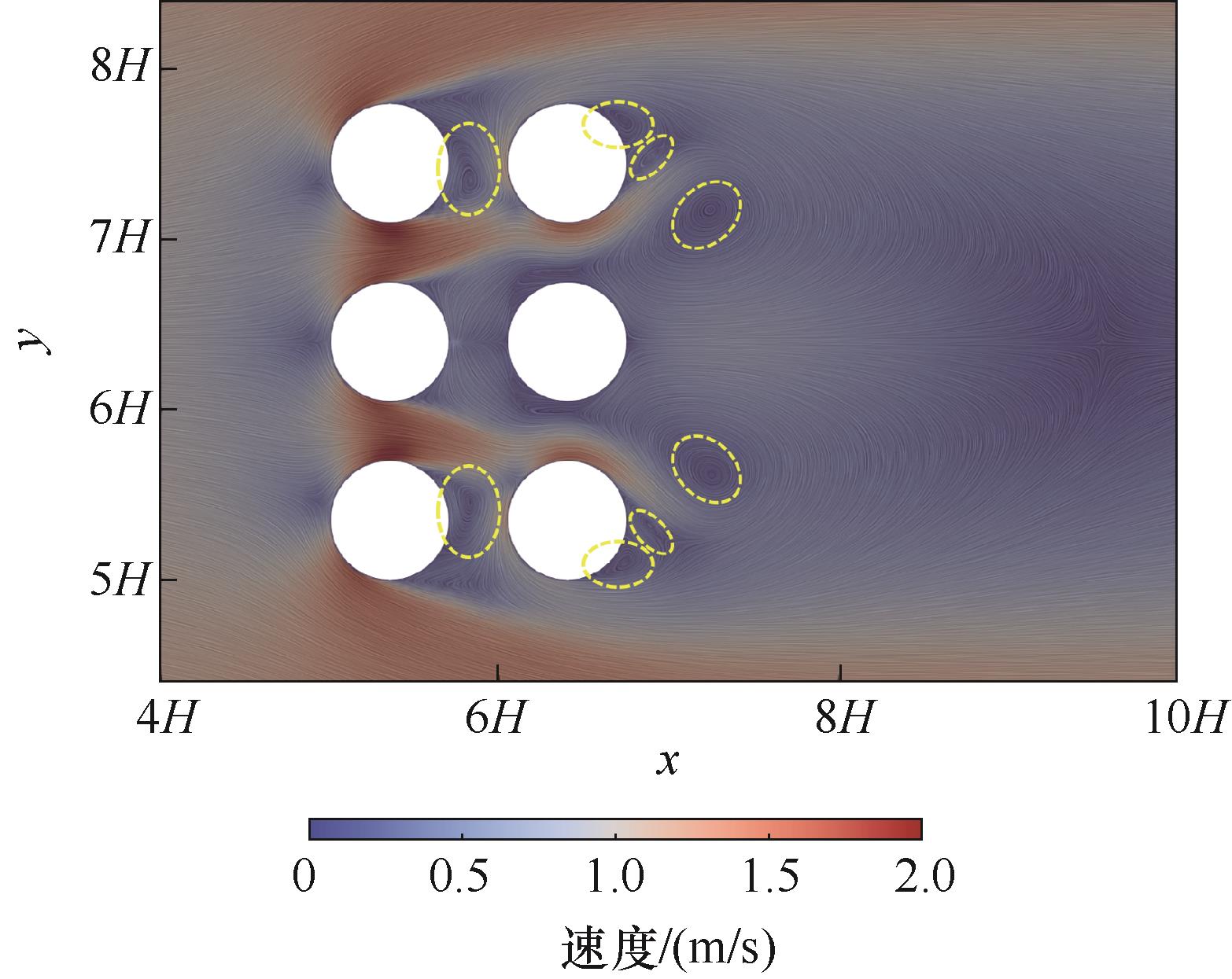
图7 时均流场(z = H/20)
Fig.7 Time-averaged flow field (z = H/20)

图8 S4的浓度分布和探测器浓度时程
Fig.8 Concentration distribution and detector concentrations over time of S4
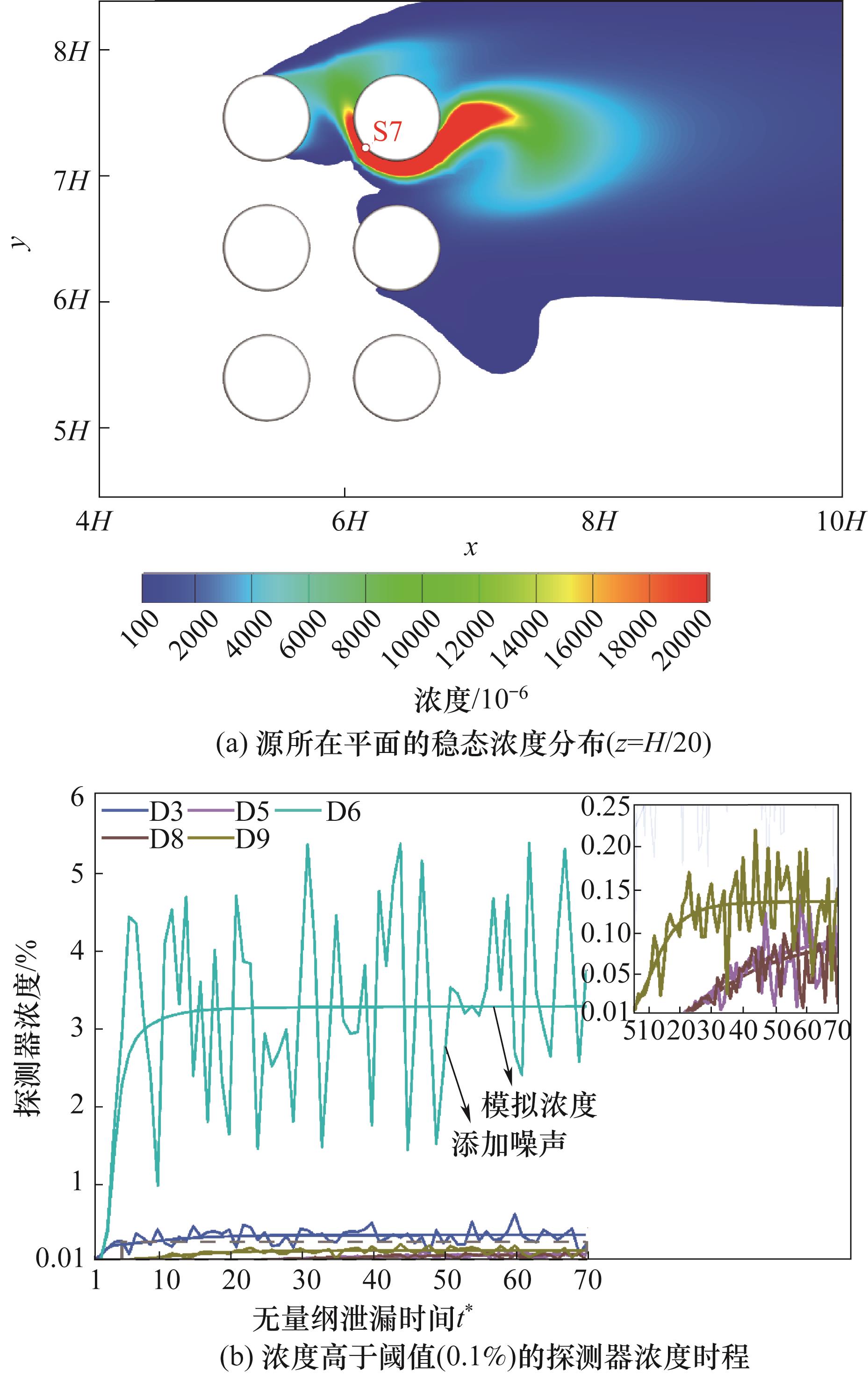
图9 S7的浓度分布和探测器浓度时程
Fig.9 Concentration distribution and detector concentrations over time of S7
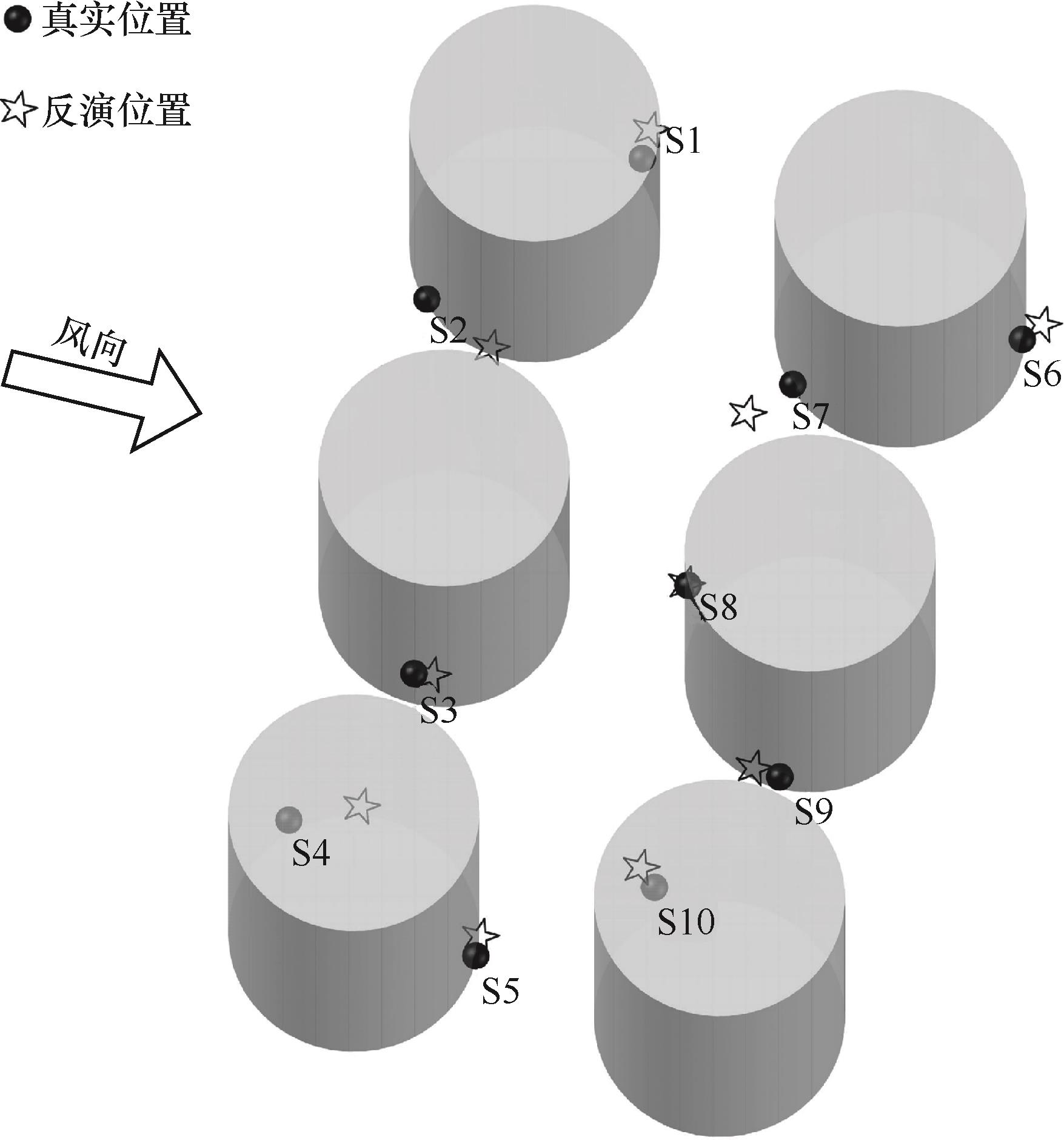
图10 泄漏位置反演结果
Fig.10 Estimated results of leakage locations
| 源 | ||||
|---|---|---|---|---|
| S1 | 1.12/1.12/0.04/0% | 1.54/1.55/0.04/0% | 0.04/0.06/0.03/21.25% | 3/2.7/0.6/0.9% |
| S2 | 1.02/1.06/0.06/0.17% | 1.44/1.42/0.02/0.02% | 0.01/0.01/0.01/5.08% | 3/3.7/0.9/3.9% |
| S3 | 1.07/1.08/0.03/0.01% | 1.21/1.21/0.01/0% | 0.05/0.05/0.01/0.50% | 3/4.4/0.5/15.3% |
| S4 | 1.02/1.06/0.07/0.12% | 1.12/1.14/0.01/0.03% | 0.02/0.01/0.01/12.26% | 3/4.1/0.8/10.5% |
| S5 | 1.14/1.14/0.02/0% | 1.07/1.08/0.02/0.01% | 0.01/0.02/0.02/26.23% | 3/4.2/1.0/11.4% |
| S6 | 1.35/1.36/0.07/0% | 1.49/1.50/0.04/0% | 0.03/0.03/0/1.20% | 3/2.2/1.0/9.1% |
| S7 | 1.23/1.21/0.08/0.03% | 1.44/1.42/0.04/0.02% | 0.01/0/0/100+ | 3/4.0/1.4/9.0% |
| S8 | 1.21/1.21/0.01/0% | 1.28/1.27/0.01/0% | 0.10/0.11/0.03/1.94% | 3/3.4/0.8/1.5% |
| S9 | 1.28/1.27/0.14/0.02% | 1.21/1.21/0.09/0% | 0.02/0.02/0.02/3.46% | 3/3.3/0.8/1.1% |
| S10 | 1.23/1.22/0.09/0.01% | 1.12/1.13/0.05/0.01% | 0.05/0.05/0/0.06% | 3/3.2/0.5/0.3% |
表2 反演结果(t*=70)
Table 2 Estimated results (t*=70)
| 源 | ||||
|---|---|---|---|---|
| S1 | 1.12/1.12/0.04/0% | 1.54/1.55/0.04/0% | 0.04/0.06/0.03/21.25% | 3/2.7/0.6/0.9% |
| S2 | 1.02/1.06/0.06/0.17% | 1.44/1.42/0.02/0.02% | 0.01/0.01/0.01/5.08% | 3/3.7/0.9/3.9% |
| S3 | 1.07/1.08/0.03/0.01% | 1.21/1.21/0.01/0% | 0.05/0.05/0.01/0.50% | 3/4.4/0.5/15.3% |
| S4 | 1.02/1.06/0.07/0.12% | 1.12/1.14/0.01/0.03% | 0.02/0.01/0.01/12.26% | 3/4.1/0.8/10.5% |
| S5 | 1.14/1.14/0.02/0% | 1.07/1.08/0.02/0.01% | 0.01/0.02/0.02/26.23% | 3/4.2/1.0/11.4% |
| S6 | 1.35/1.36/0.07/0% | 1.49/1.50/0.04/0% | 0.03/0.03/0/1.20% | 3/2.2/1.0/9.1% |
| S7 | 1.23/1.21/0.08/0.03% | 1.44/1.42/0.04/0.02% | 0.01/0/0/100+ | 3/4.0/1.4/9.0% |
| S8 | 1.21/1.21/0.01/0% | 1.28/1.27/0.01/0% | 0.10/0.11/0.03/1.94% | 3/3.4/0.8/1.5% |
| S9 | 1.28/1.27/0.14/0.02% | 1.21/1.21/0.09/0% | 0.02/0.02/0.02/3.46% | 3/3.3/0.8/1.1% |
| S10 | 1.23/1.22/0.09/0.01% | 1.12/1.13/0.05/0.01% | 0.05/0.05/0/0.06% | 3/3.2/0.5/0.3% |
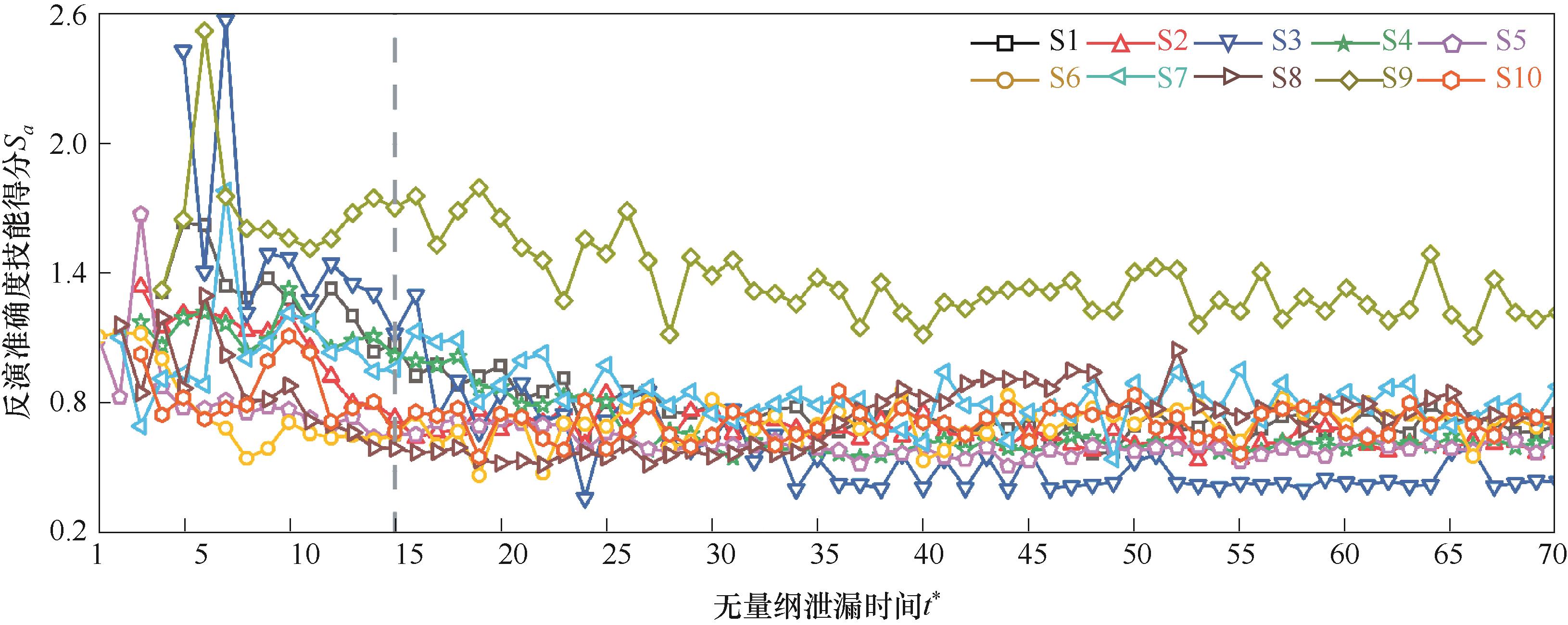
图11 准确度技能得分随泄漏时间的变化
Fig.11 Accuracy skill scores over time
| [11] | Li F, Liu X R, Liu J X, et al. Solutions to mitigate the impact of measurement noise on the air pollution source strength estimation in a multi-zone building[J]. Building Simulation, 2020, 13(6): 1329-1337. |
| [12] | Pudykiewicz J A. Application of adjoint tracer transport equations for evaluating source parameters[J]. Atmospheric Environment, 1998, 32(17): 3039-3050. |
| [13] | Hutchinson M, Oh H, Chen W H. A review of source term estimation methods for atmospheric dispersion events using static or mobile sensors[J]. Information Fusion, 2017, 36: 130-148. |
| [14] | Jia H Y, Kikumoto H. Line source estimation of environmental pollutants using super-Gaussian geometry model and Bayesian inference[J]. Environmental Research, 2021, 194: 110706. |
| [15] | Liu X, Zhai Z. Location identification for indoor instantaneous point contaminant source by probability-based inverse computational fluid dynamics modeling[J]. Indoor Air, 2008, 18(1): 2-11. |
| [16] | Wang H D, Lu S, Cheng J J, et al. Inverse modeling of indoor instantaneous airborne contaminant source location with adjoint probability-based method under dynamic airflow field[J]. Building and Environment, 2017, 117: 178-190. |
| [17] | Xue F, Kikumoto H, Li X F, et al. Bayesian source term estimation of atmospheric releases in urban areas using LES approach[J]. Journal of Hazardous Materials, 2018, 349: 68-78. |
| [18] | Ma D L, Deng J Q, Zhang Z X. Comparison and improvements of optimization methods for gas emission source identification[J]. Atmospheric Environment, 2013, 81: 188-198. |
| [19] | Li H, Zhang J W. Fast source term estimation using the PGA-NM hybrid method[J]. Engineering Applications of Artificial Intelligence, 2017, 62: 68-79. |
| [20] | Ma D L, Tan W, Wang Q S, et al. Application and improvement of swarm intelligence optimization algorithm in gas emission source identification in atmosphere[J]. Journal of Loss Prevention in the Process Industries, 2018, 56: 262-271. |
| [21] | 朱建杰, 周晅毅, 顾明. 基于贝叶斯推断的时变流场下污染源反演[J]. 同济大学学报(自然科学版), 2022, 50(6): 802-811. |
| Zhu J J, Zhou X Y, Gu M. Source inversion in time-variant flow field based on Bayesian inference[J]. Journal of Tongji University (Natural Science), 2022, 50(6): 802-811. | |
| [22] | 郭少冬, 杨锐, 苏国锋, 等. 基于伴随方程和MCMC方法的室内污染源反演模型研究[J]. 应用基础与工程科学学报, 2010, 18(4): 695-704. |
| Guo S D, Yang R, Su G F, et al. Investigation of the inversion modeling for indoor contaminant source based on the adjoint equation and MCMC method[J]. Journal of Basic Science and Engineering, 2010, 18(4): 695-704. | |
| [23] | Guo S D, Yang R, Zhang H, et al. Source identification for unsteady atmospheric dispersion of hazardous materials using Markov Chain Monte Carlo method[J]. International Journal of Heat and Mass Transfer, 2009, 52(17/18): 3955-3962. |
| [24] | Feng L, Ong Y S, Gupta A. Genetic algorithm and its advances in embracing memetics[M]//Evolutionary and Swarm Intelligence Algorithms. Cham: Springer International Publishing, 2018: 61-84. |
| [25] | Wang F Y, Zhou X Y, Kikumoto H. Improvement of optimization methods in indoor time-variant source parameters estimation combining unsteady adjoint equations and flow field information[J]. Building and Environment, 2022, 226: 109710. |
| [26] | Wang F Y, Zhou X Y, Kikumoto H, et al. Detector configuration optimization based on wind tunnel tests using normalized adjoint concentration gradient for urban spatial source parameters estimation[J]. Building and Environment, 2024, 248: 111094. |
| [27] | Wang Y, Huang H, Huang L D, et al. Source term estimation of hazardous material releases using hybrid genetic algorithm with composite cost functions[J]. Engineering Applications of Artificial Intelligence, 2018, 75: 102-113. |
| [28] | He Z Z, Qi H, Yao Y C, et al. Inverse estimation of the particle size distribution using the Fruit Fly Optimization Algorithm[J]. Applied Thermal Engineering, 2015, 88: 306-314. |
| [29] | Tominaga Y, Mochida A, Yoshie R, et al. AIJ guidelines for practical applications of CFD to pedestrian wind environment around buildings[J]. Journal of Wind Engineering and Industrial Aerodynamics, 2008, 96(10/11): 1749-1761. |
| [30] | Huang X T, Huang Y D, Xu N, et al. Thermal effects on the dispersion of rooftop stack emission in the wake of a tall building within suburban areas by wind-tunnel experiments[J]. Journal of Wind Engineering and Industrial Aerodynamics, 2020, 205: 104295. |
| [31] | Cui P Y, Zhang Y, Chen W Q, et al. Wind-tunnel studies on the characteristics of indoor/outdoor airflow and pollutant exchange in a building cluster[J]. Journal of Wind Engineering and Industrial Aerodynamics, 2021, 214: 104645. |
| [32] | Wang X M, Tan Y F, Zhang T T, et al. Diffusion process simulation and ventilation strategy for small-hole natural gas leakage in utility tunnels[J]. Tunnelling and Underground Space Technology, 2020, 97: 103276. |
| [1] | 金伟其, 吴月荣, 王霞, 等. 化工园区工业气体泄漏气云红外成像检测技术与国产化装备进展[J]. 化工学报, 2023, 74(S1): 32-44. |
| Jin W Q, Wu Y R, Wang X, et al. Progress in infrared imaging detection technology and domestic equipment for industrial gas leakage in chemical industry parks[J]. CIESC Journal, 2023, 74(S1): 32-44. | |
| [2] | 贾梅生, 陈国华, 胡昆. 化工园区多米诺事故风险评价与防控技术综述[J]. 化工进展, 2017, 36(4): 1534-1543. |
| Jia M S, Chen G H, Hu K. Review of risk assessment and pre-control of Domino effect in Chemical Industry Park[J]. Chemical Industry and Engineering Progress, 2017, 36(4): 1534-1543. | |
| [3] | Feng Q L, Zhang C X, Lu J Y, et al. Source localization in dynamic indoor environments with natural ventilation: an experimental study of a particle swarm optimization-based multi-robot olfaction method[J]. Building and Environment, 2019, 161: 106228. |
| [4] | Bourne J R, Pardyjak E R, Leang K K. Coordinated Bayesian-based bioinspired plume source term estimation and source seeking for mobile robots[J]. IEEE Transactions on Robotics, 2019, 35(4): 967-986. |
| [5] | 周晅毅, 王富玉, 杨流阔, 等. 基于Nelder-Mead算法的机器人主动嗅觉室内时变污染源定位[J]. 同济大学学报(自然科学版), 2022, 50(6): 812-820. |
| Zhou X Y, Wang F Y, Yang L K, et al. Locating indoor time-variant contaminant sources based on nelder-mead algorithm using robot active olfaction method[J]. Journal of Tongji University (Natural Science), 2022, 50(6): 812-820. | |
| [6] | Keats A, Yee E, Lien F S. Bayesian inference for source determination with applications to a complex urban environment[J]. Atmospheric Environment, 2007, 41(3): 465-479. |
| [7] | Tarantola A. Inverse Problem Theory and Methods for Model Parameter Estimation[M]. Beijing: Science Press, 2005. |
| [8] | Jia H Y, Kikumoto H. Sensor configuration optimization based on the entropy of adjoint concentration distribution for stochastic source term estimation in urban environment[J]. Sustainable Cities and Society, 2022, 79: 103726. |
| [9] | Cai H, Li X T, Chen Z L, et al. Rapid identification of multiple constantly-released contaminant sources in indoor environments with unknown release time[J]. Building and Environment, 2014, 81: 7-19. |
| [10] | Ma D L, Zhang Z X. Contaminant dispersion prediction and source estimation with integrated Gaussian-machine learning network model for point source emission in atmosphere[J]. Journal of Hazardous Materials, 2016, 311: 237-245. |
| [33] | Cui P Y, Chen W Q, Wang J Q, et al. Numerical studies on issues of Re-independence for indoor airflow and pollutant dispersion within an isolated building[J]. Building Simulation, 2022, 15(7): 1259-1276. |
| [34] | Ma H X, Zhou X Y, Tominaga Y, et al. CFD simulation of flow fields and pollutant dispersion around a cubic building considering the effect of plume buoyancies[J]. Building and Environment, 2022, 208: 108640. |
| [35] | Jia H Y, Kikumoto H. Source term estimation in complex urban environments based on Bayesian inference and unsteady adjoint equations simulated via large eddy simulation[J]. Building and Environment, 2021, 193: 107669. |
| [36] | Wu J S, Liu Z, Yuan S Q, et al. Source term estimation of natural gas leakage in utility tunnel by combining CFD and Bayesian inference method[J]. Journal of Loss Prevention in the Process Industries, 2020, 68: 104328. |
| [37] | Tominaga Y, Stathopoulos T. CFD simulations of near-field pollutant dispersion with different plume buoyancies[J]. Building and Environment, 2018, 131: 128-139. |
| [38] | Ma D L, Tan W, Wang Q S, et al. Location of contaminant emission source in atmosphere based on optimal correlated matching of concentration distribution[J]. Process Safety and Environmental Protection, 2018, 117: 498-510. |
| [1] | 彭建斌, 李明, 谢军龙, 陈建业. 液氢接收终端液氢泄漏扩散及爆炸超压研究[J]. 化工学报, 2025, 76(S1): 453-461. |
| [2] | 郭松源, 周晓庆, 缪五兵, 汪彬, 耑锐, 曹庆泰, 陈成成, 杨光, 吴静怡. 火箭上升段含多孔板液氧贮箱增压输运数值研究[J]. 化工学报, 2025, 76(S1): 62-74. |
| [3] | 郭纪超, 徐肖肖, 孙云龙. 基于植物工厂中的CO2浓度气流模拟及优化研究[J]. 化工学报, 2025, 76(S1): 237-245. |
| [4] | 孙九春, 桑运龙, 王海涛, 贾浩, 朱艳. 泥水盾构仓体内射流对泥浆输送特性影响研究[J]. 化工学报, 2025, 76(S1): 246-257. |
| [5] | 谷德银, 杨豪, 李昌树, 刘作华. 分形穿流桨搅拌槽内假塑性流体的混合行为[J]. 化工学报, 2025, 76(6): 2569-2579. |
| [6] | 蒋敏, 邵翔宇, 郑立刚, 高建良, 雷刚. 膜片压力对氢-空气混合气体泄爆过程的影响[J]. 化工学报, 2025, 76(6): 2770-2780. |
| [7] | 张亿韵, 陈恒志, 李洋, 慕长安, 王泉海. 湍流对双组分颗粒流化床气体径向扩散的影响[J]. 化工学报, 2025, 76(6): 2559-2568. |
| [8] | 王一非, 任婧杰, 毕明树, 叶昊天. 基于本质安全与经济性的环己烷氧化工艺参数多目标优化研究[J]. 化工学报, 2025, 76(6): 2722-2732. |
| [9] | 吴与伦, 王振雷, 王昕. 基于对比学习的乙烯裂解炉运行工况识别方法[J]. 化工学报, 2025, 76(6): 2733-2742. |
| [10] | 李琳, 王明媚, 宋二伟, 王雯雯, 张耀昌, 王二强. 异戊二烯-正戊烷分离工艺的热力学分析及优化[J]. 化工学报, 2025, 76(6): 2549-2558. |
| [11] | 安昊天, 韩章烨, 陆慕瑶, 周阿武, 李建荣. 推进MOF产业化应用:宏量制备与成型[J]. 化工学报, 2025, 76(5): 2011-2025. |
| [12] | 牛宏斌, 邱丽, 杨景轩, 张忠林, 郝晓刚, 赵忠凯, 阿布里提, 官国清. 筒体直径对旋风分离器性能的影响及其流场机制[J]. 化工学报, 2025, 76(5): 2367-2376. |
| [13] | 齐昊, 王玉杰, 李申辉, 邹琦, 刘轶群, 赵之平. 双金属Co/Zn-ZIFs中C3H6和C3H8吸附和扩散行为分子模拟研究[J]. 化工学报, 2025, 76(5): 2313-2326. |
| [14] | 张新梅, 张傲, 邱德华, 刘晓爽, 陈晨. 基于热响应机理的罐区池火灾动态多米诺效应评估方法[J]. 化工学报, 2025, 76(4): 1885-1897. |
| [15] | 徐东亮, 赵彬彬, 孙逸玫, 刘婷婷, 刘筱然, 陈明功. 基于修正多孔介质模型的RPB模拟与流场特性研究[J]. 化工学报, 2025, 76(4): 1569-1582. |
| 阅读次数 | ||||||
|
全文 |
|
|||||
|
摘要 |
|
|||||
 京公网安备 11010102001995号


