• •
刘晓宇1,2( ), 李奇辰1,2, 霍丽丽1,2(), 赵立欣1,2, 姚宗路1,2, 孙培豪1,2, 贾吉秀1,2, 朱本海1,2
收稿日期:2025-09-23
修回日期:2026-01-05
出版日期:2026-01-06
通讯作者:
霍丽丽
作者简介:刘晓宇(2000—),男,硕士研究生,lxy1635153121@163.com
基金资助:
Xiaoyu LIU1,2(), Qichen LI1,2, Lili HUO1,2(), Lixin ZHAO1,2, Zonglu YAO1,2, Peihao SUN1,2, Jixiu JIA1,2, Benhai ZHU1,2
Received:2025-09-23
Revised:2026-01-05
Online:2026-01-06
Contact:
Lili HUO
摘要:
为实现生物质热解产物的定向调控,构建了一种基于机器学习的产率预测与工艺优化模型。整合文献与实验数据,构建了包含578组有效数据的数据集,并利用箱线图与聚类算法对数据进行预处理与特征筛选,在此基础上采用贝叶斯优化方法对随机森林、梯度提升决策树等四种基模型进行调优,并通过堆叠(Stacking)集成策略构建了高精度的产率预测元模型,结果表明该模型生物炭、焦油和热解气产率预测的决定系数(R²)分别高达0.92、0.90和0.94,结合SHAP与GINI的特征重要性分析表明,生物炭产率主要受热解温度与碳含量影响,焦油产率取决于木质素与半纤维素含量,而热解气产率由半纤维素含量与热解温度共同主导,进一步通过偏依赖图分析揭示了产物生成的最佳工艺区间:低温慢速升温(450℃<T<550℃,HR<20℃/min)利于生物炭生成,中温短时(600℃<T<700℃,40min<RT<50min)利于焦油富集,而高温中速升温(T>750℃,15℃/min<HR<25℃/min)可最大化热解气产率,为生物质热解的智能化调控和产业化应用提供了高效的预测工具与理论基础。
中图分类号:
刘晓宇, 李奇辰, 霍丽丽, 赵立欣, 姚宗路, 孙培豪, 贾吉秀, 朱本海. 基于机器学习算法的生物质热解产物产率预测研究[J]. 化工学报, DOI: 10.11949/0438-1157.20251062.
Xiaoyu LIU, Qichen LI, Lili HUO, Lixin ZHAO, Zonglu YAO, Peihao SUN, Jixiu JIA, Benhai ZHU. Prediction of biomass pyrolysis product yield based on machine learning algorithms[J]. CIESC Journal, DOI: 10.11949/0438-1157.20251062.
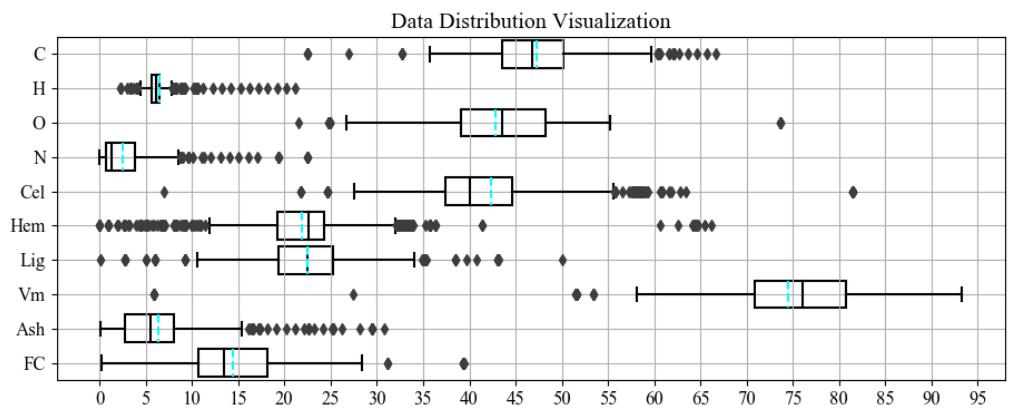
图1 数据分布箱线图
Fig.1 Box line diagram of data distribution
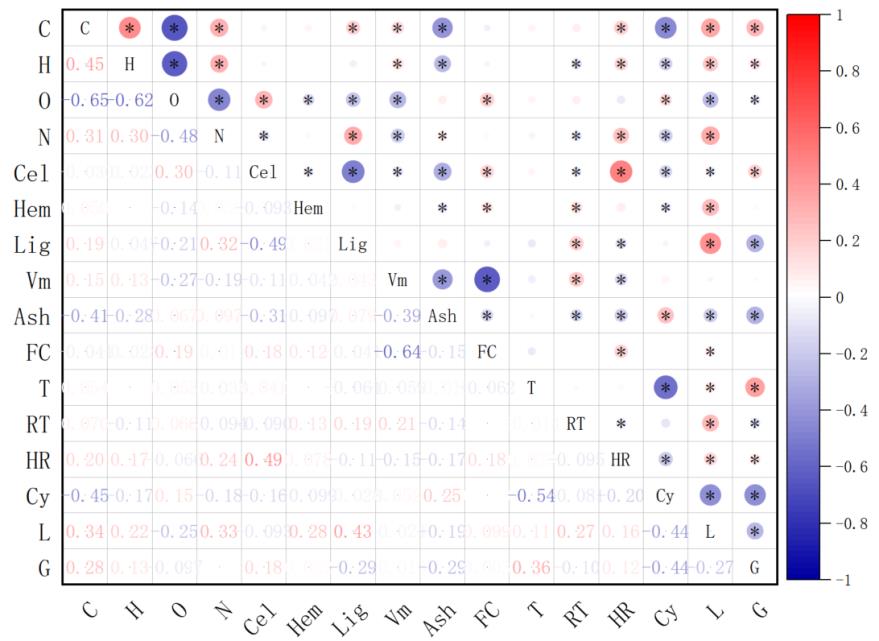
图2 皮尔森相关系数热力图
Fig. 2 Heat map of Pearson's correlation coefficient
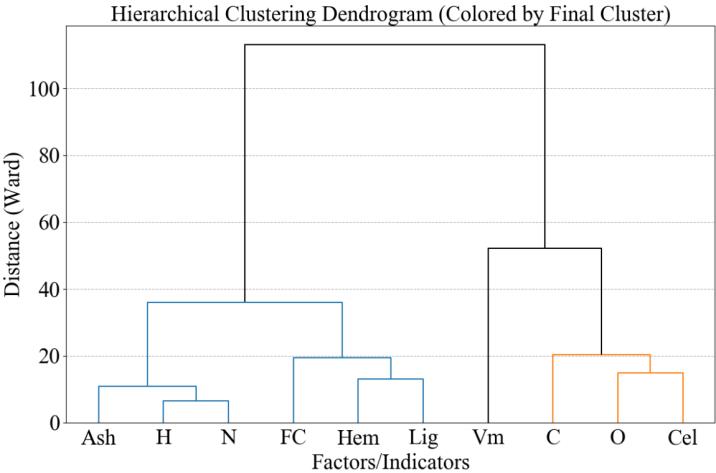
图3 聚类距离及结果
Fig. 3 Clustering distance and results
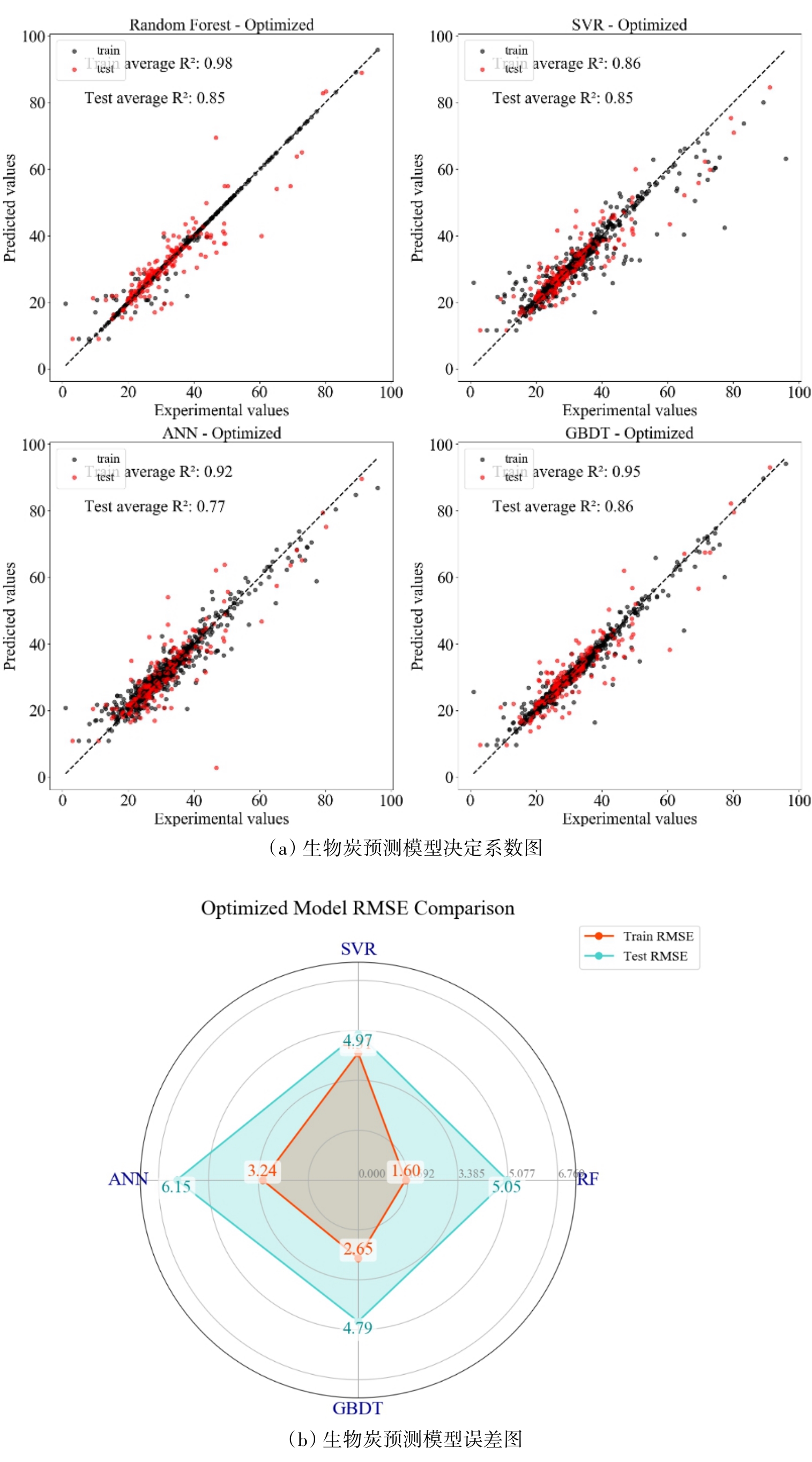
图4 生物炭产率预测精度
Fig.4 Biochar yield prediction accuracy
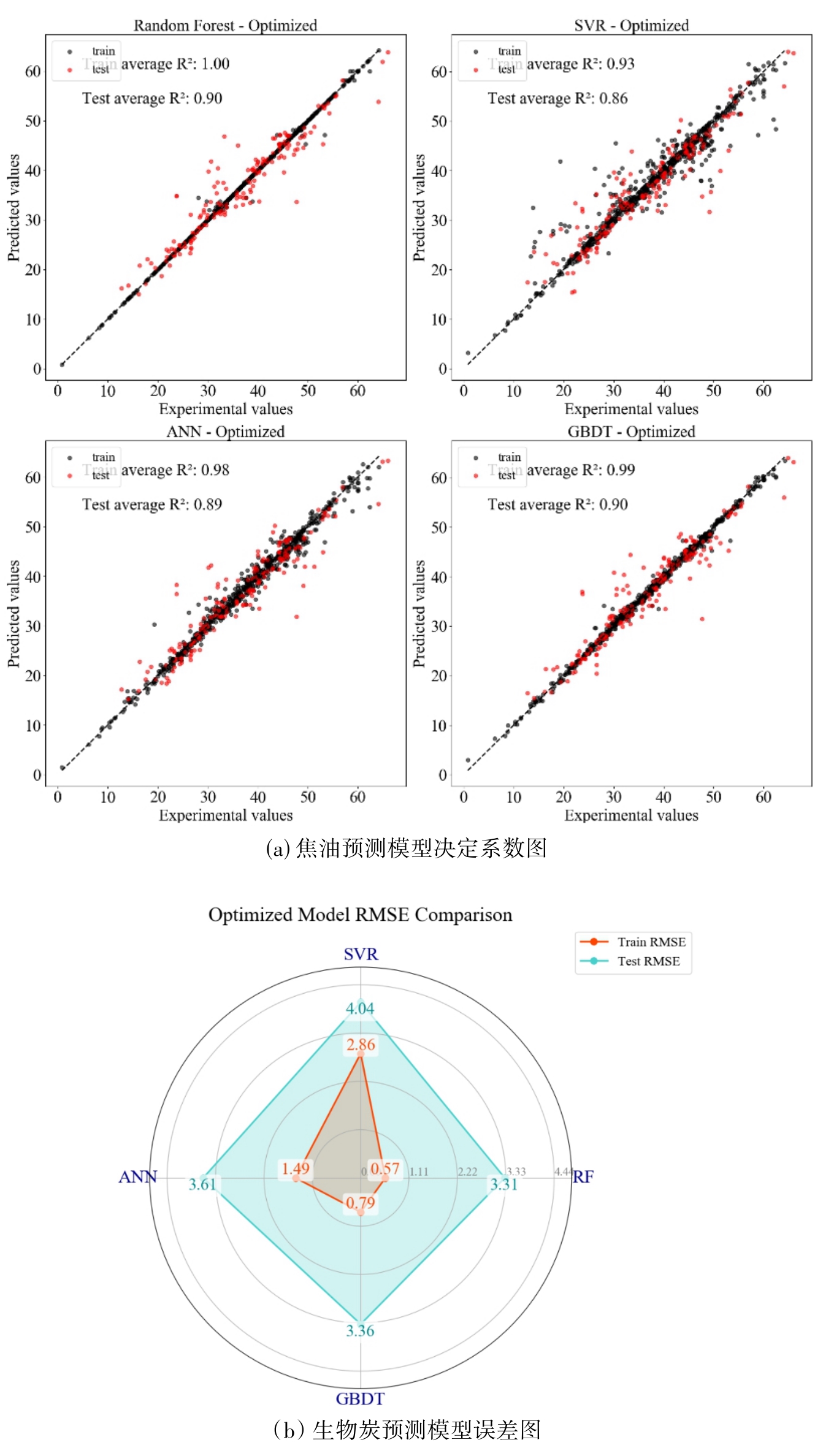
图5 焦油产率预测精度
Fig.5 Bio-oil yield prediction accuracy
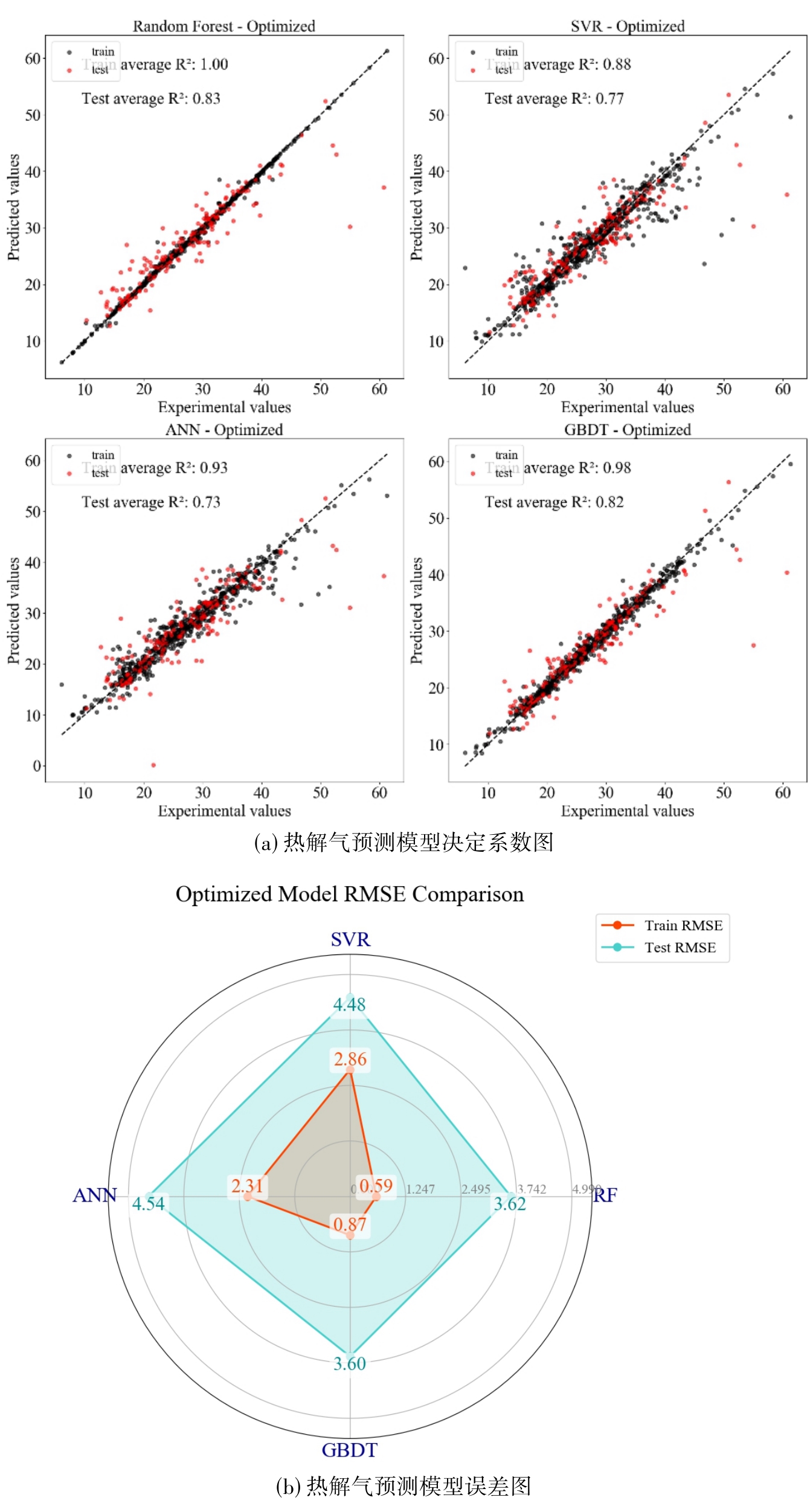
图6 热解气产率预测精度
Fig.6 Prolysis gas yield prediction accuracy
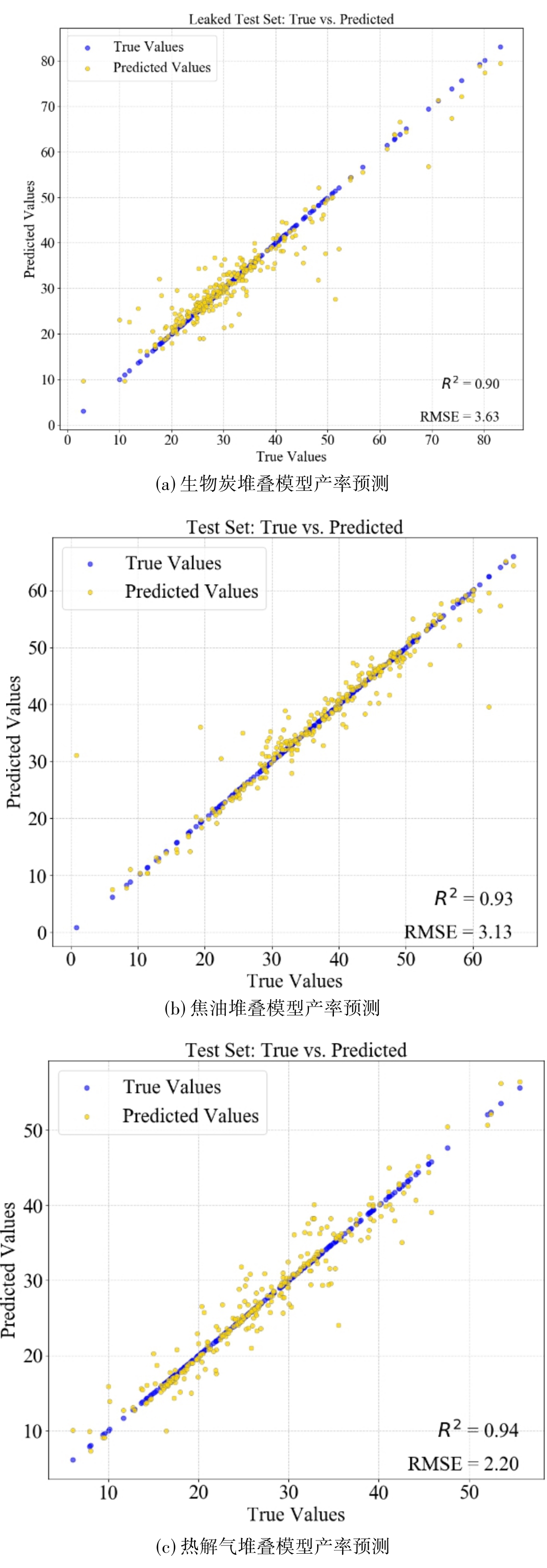
图7 热解产物堆叠模型预测精度
Fig.7 Accuracy of pyrolysis product stacking models
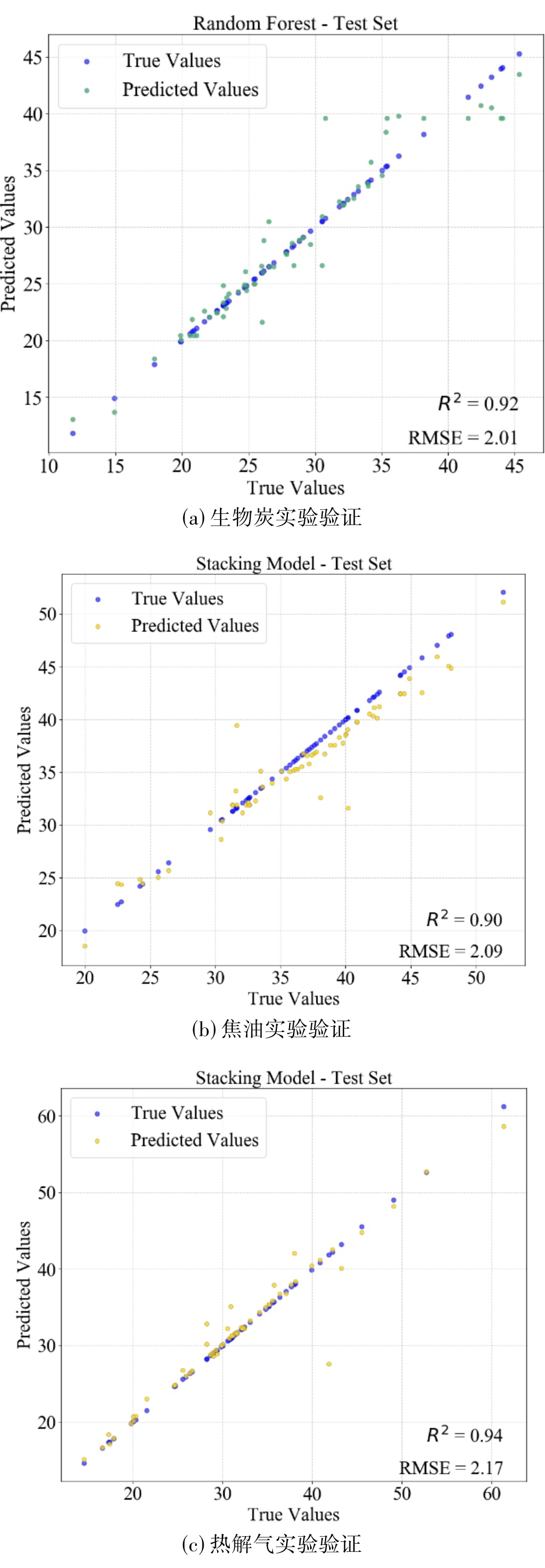
图8 实验验证对比图
Fig.8 Experimental verification comparison chart
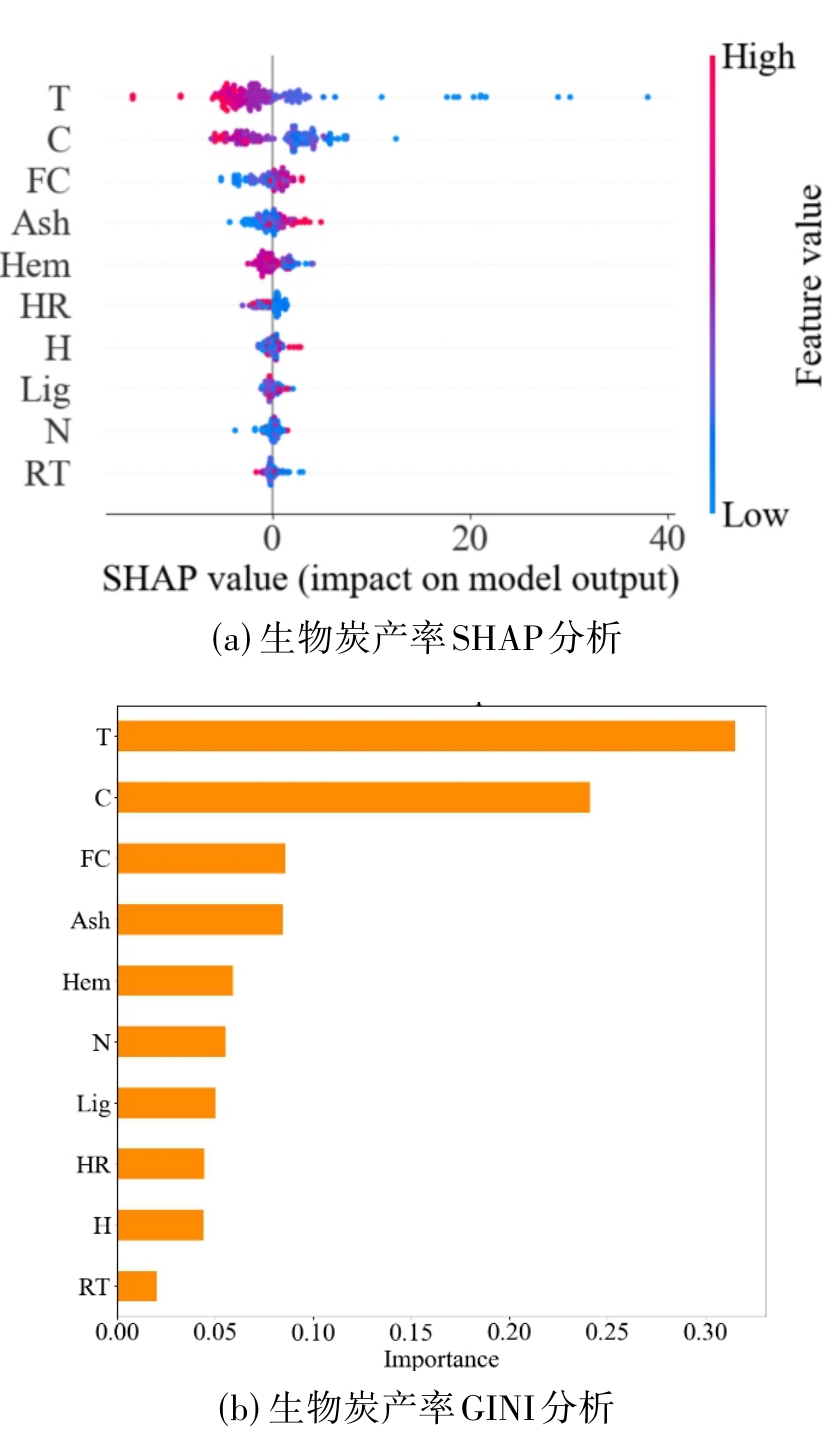
图9 生物炭产率特征重要性分析
Fig.9 Importance analysis of biochar yield characteristics
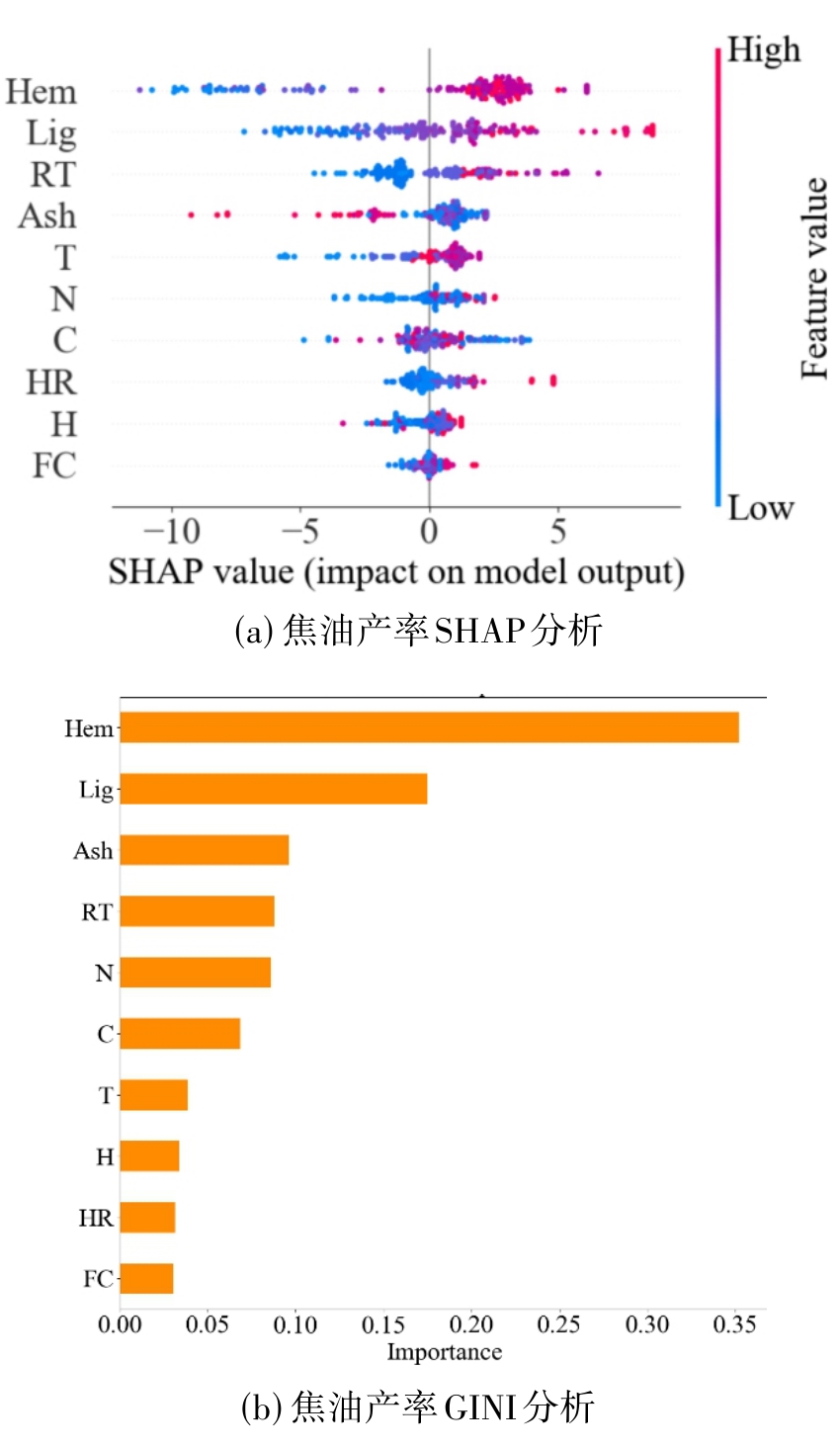
图10 焦油产率特征重要性分析
Fig.10 Importance analysis of tar yield characteristics
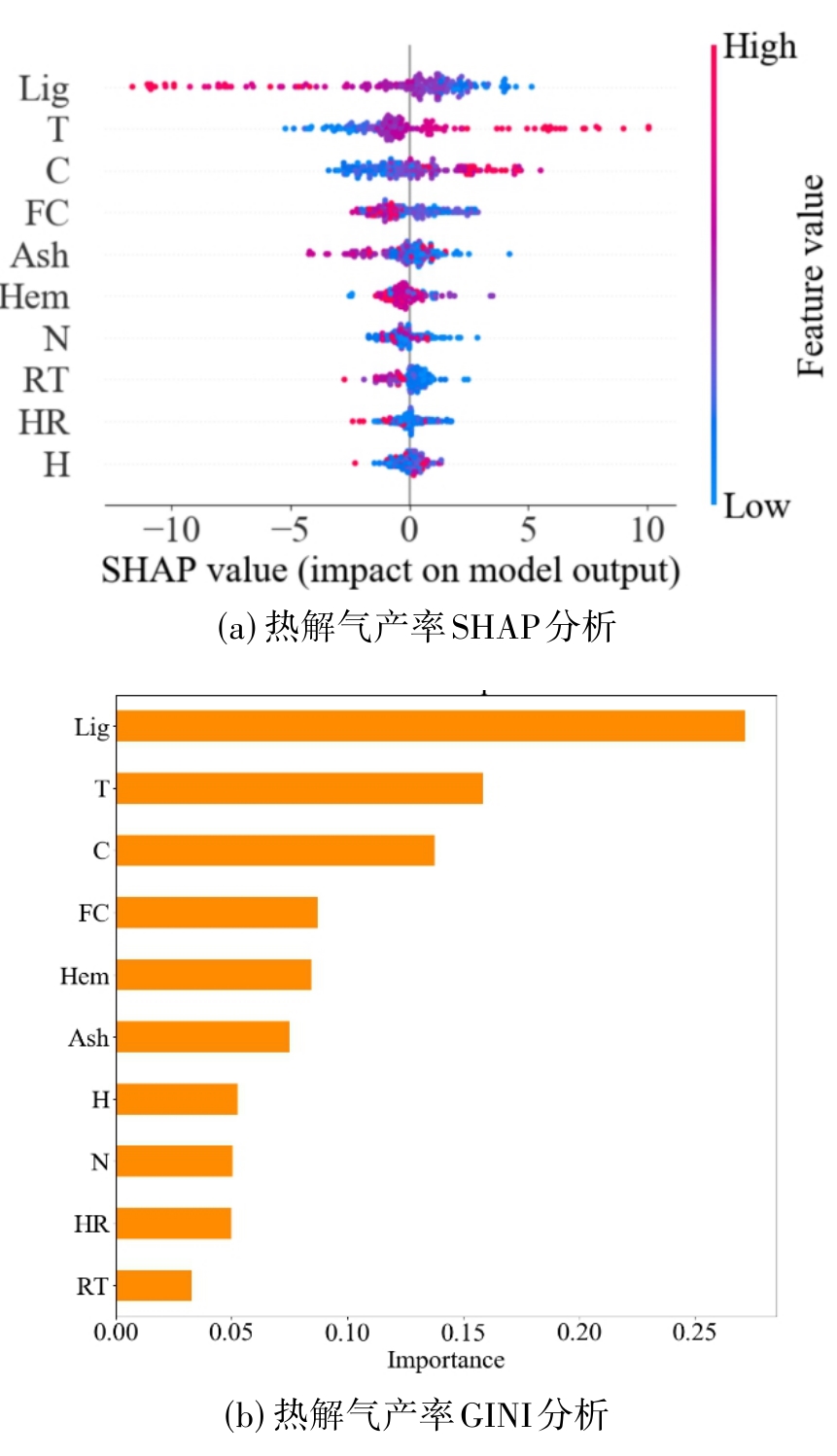
图11 热解气产率特征重要性分析
Fig. 11 Importance analysis of pyrolysis gas yield characteristics
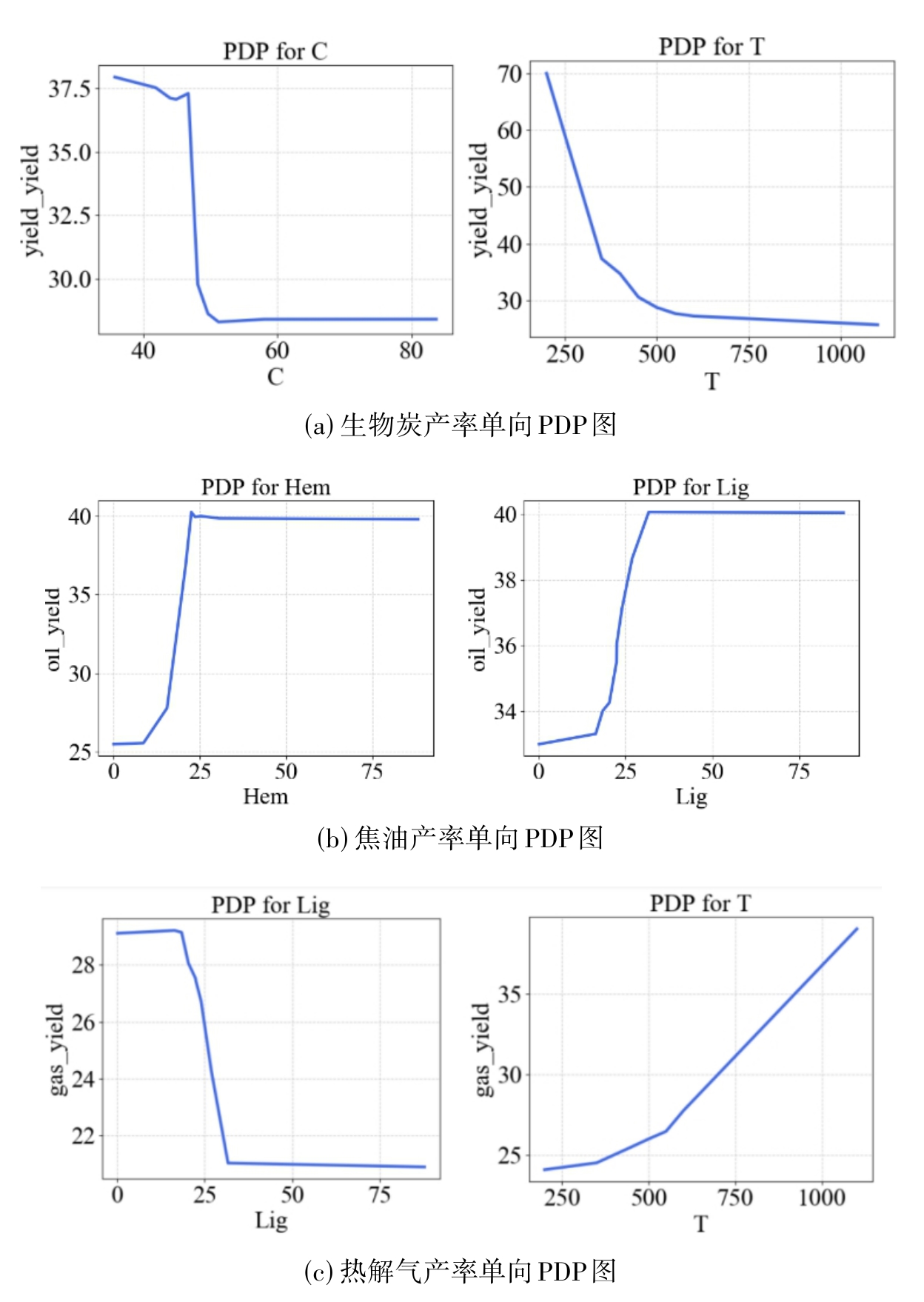
图12 热解产物产率单向偏依赖图
Fig.12 Unidirectional bias dependence diagram of pyrolysis product yield
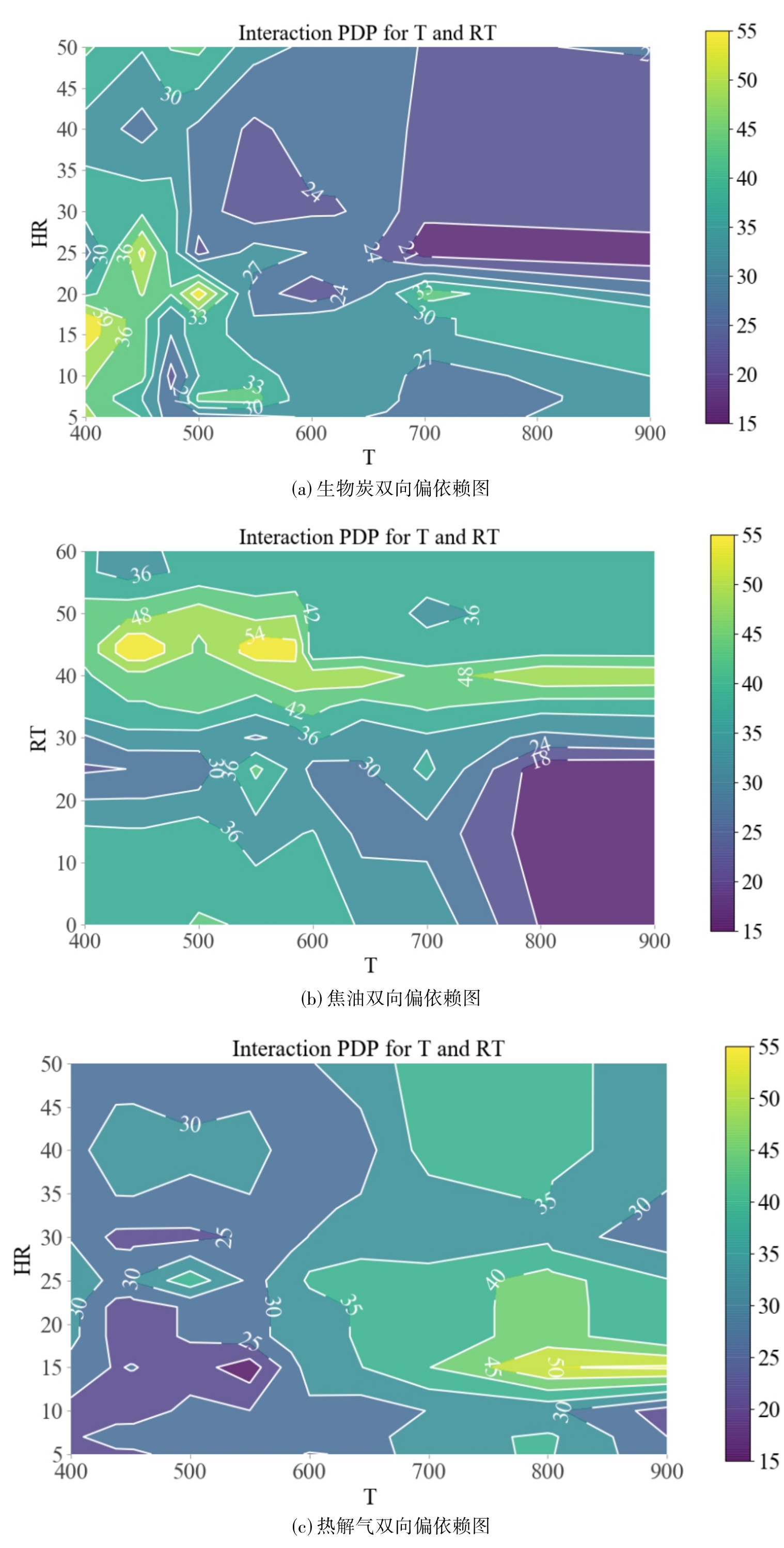
图13 热解产物双向偏依赖图
Fig.13 Bidirectional bias dependency diagram of pyrolysis products
| [1] | 陈王觅, 席北斗, 李鸣晓, 等. 热解系统碳排放削减技术研究进展[J]. 化工进展, 2024, 43(S1): 479-503. |
| Chen W M, Xi B D, Li M X, et al. Research progress on carbon emission reduction technology for pyrolysis system[J]. Chemical Industry and Engineering Progress, 2024, 43(S1): 479-503. | |
| [2] | Ma J J, Zhang S, Liu X J, et al. Machine learning prediction of biochar yield based on biomass characteristics[J]. Bioresource Technology, 2023, 389: 129820. |
| [3] | 胡二峰, 赵立欣, 吴娟, 等. 生物质热解影响因素及技术研究进展[J]. 农业工程学报, 2018, 34(14): 212-220. |
| Hu E F, Zhao L X, Wu J, et al. Research advance on influence factors and technologies of biomass pyrolysis[J]. Transactions of the Chinese Society of Agricultural Engineering, 2018, 34(14): 212-220. | |
| [4] | 吕宏虹, 宫艳艳, 唐景春, 等. 生物炭及其复合材料的制备与应用研究进展[J]. 农业环境科学学报, 2015, 34(8): 1429-1440. |
| Lü H H, Gong Y Y, Tang J C, et al. Advances in preparation and applications of biochar and its composites[J]. Journal of Agro-Environment Science, 2015, 34(8): 1429-1440. | |
| [5] | 翟旭航, 李霞, 元英进. 木质纤维素预处理及高值化技术研究进展[J]. 生物技术通报, 2021, 37(3): 162-174. |
| Zhai X H, Li X, Yuan Y J. Research progress of lignocellulose pretreatment and valorization method[J]. Biotechnology Bulletin, 2021, 37(3): 162-174. | |
| [6] | 马鸿志, 刘忆婵, 赵继华, 等. 机器学习在有机固体废物资源化的应用进展[J]. 工程科学学报, 2025, 47(3): 550-561. |
| Ma H Z, Liu Y C, Zhao J H, et al. Advances in machine learning applications to resource technology for organic solid waste[J]. Chinese Journal of Engineering, 2025, 47(3): 550-561. | |
| [7] | Chen X, Zhang H Y, Song Y, et al. Prediction of product distribution and bio-oil heating value of biomass fast pyrolysis[J]. Chemical Engineering and Processing - Process Intensification, 2018, 130: 36-42. |
| [8] | Dong Z X, Bai X P, Xu D C, et al. Machine learning prediction of pyrolytic products of lignocellulosic biomass based on physicochemical characteristics and pyrolysis conditions[J]. Bioresource Technology, 2023, 367: 128182. |
| [9] | 王敏欣, 师印光, 刘长波, 等. 机器学习模型预测煤热解产物分布研究[J]. 煤炭转化, 2024, 47(4): 11-22. |
| Wang M X, Shi Y G, Liu C B, et al. Prediction of coal pyrolysis product distribution using machine learning model[J]. Coal Conversion, 2024, 47(4): 11-22. | |
| [10] | Song Z T, Zhang X, Li X Q, et al. Machine learning assisted prediction of specific surface area and nitrogen content of biochar based on biomass type and pyrolysis conditions[J]. Journal of Analytical and Applied Pyrolysis, 2024, 183: 106823. |
| [11] | Victoria A H, Maragatham G. Automatic tuning of hyperparameters using Bayesian optimization[J]. Evolving Systems, 2021, 12(1): 217-223. |
| [12] | 谌思罕, 袁志龙, 王晔, 等. 基于机器学习的废塑料热解制燃料模型构建研究[J]. 能源环境保护, 2024, 38(5): 127-134. |
| Chen S H, Yuan Z L, Wang Y, et al. Study of model construction of fuel production from waste plasticpyrolysis based on machine learning[J]. Energy Environmental Protection, 2024, 38(5): 127-134. | |
| [13] | 刘根, 孙仲顺, 张博, 等. 机器学习驱动的生物质热解模型建立及挥发分化学链重整制氢工艺优化[J]. 化工学报, 2024, 75(11): 4333-4347. |
| Liu G, Sun Z S, Zhang B, et al. Establishment of machine learning-driven biomass pyrolysis model and optimization of volatiles chemical looping reforming hydrogen production process[J]. CIESC Journal, 2024, 75(11): 4333-4347. | |
| [14] | Shafizadeh A, Shahbeig H, Nadian M H, et al. Machine learning predicts and optimizes hydrothermal liquefaction of biomass[J]. Chemical Engineering Journal, 2022, 445: 136579. |
| [15] | Li H L, Ai Z J, Yang L H, et al. Machine learning assisted predicting and engineering specific surface area and total pore volume of biochar[J]. Bioresource Technology, 2023, 369: 128417. |
| [16] | Asheri A, Fathidoost M, Glavas V, et al. Data-driven multiscale simulation of solid-state batteries via machine learning[J]. Computational Materials Science, 2023, 226: 112186. |
| [17] | Burhenne L, Messmer J, Aicher T, et al. The effect of the biomass components lignin, cellulose and hemicellulose on TGA and fixed bed pyrolysis[J]. Journal of Analytical and Applied Pyrolysis, 2013, 101: 177-184. |
| [18] | Liu M, Li X R, Li J J, et al. Experimental study on the synergy between lignin and cellulose during co-torrefaction and its impact on the properties and structural characteristics of pyrolysis biochar[J]. Industrial Crops & Products, 2025, 224 :120383-120383. |
| [19] | Canché-Escamilla G, Guin-Aguillón L, Duarte-Aranda S, et al. Characterization of bio-oil and biochar obtained by pyrolysis at high temperatures from the lignocellulosic biomass of the henequen plant[J]. Journal of Material Cycles and Waste Management, 2022, 24(2): 751-762. |
| [20] | Shen D K, Xiao R, Gu S, et al. The pyrolytic behavior of cellulose in lignocellulosic biomass: a review[J]. RSC Advances, 2011, 1(9): 1641. |
| [21] | Khater E S, Bahnasawy A, Hamouda R, et al. Biochar production under different pyrolysis temperatures with different types of agricultural wastes[J]. Scientific Reports, 2024, 14: 2625. |
| [22] | Xu Q S, Du L, Deng R. Using machine learning to predict biochar yield and carbon content: Enhancing efficiency and sustainability in biomass conversion[J]. BioResources, 2024, 19(3): 6545-6558. |
| [23] | Keiluweit M, Nico P S, Johnson M G, et al. Dynamic molecular structure of plant biomass-derived black carbon (biochar)[J]. Environmental Science & Technology, 2010, 44(4): 1247-1253. |
| [24] | Altıkat A, Alma M H, Altıkat A, et al. A comprehensive study of biochar yield and quality concerning pyrolysis conditions: a multifaceted approach[J]. Sustainability, 2024, 16(2): 937. |
| [25] | Mousavi M V, Rezvani B, Hallajisani A. Enhanced bio-oil production from co-pyrolysis of cotton seed and polystyrene waste; fuel upgrading by metal-doped activated carbon catalysts[J]. Journal of the Energy Institute, 2025, 119: 102007. |
| [26] | Benjamin B U, He X H, Wang S, et al. Co-pyrolysis of biomass and waste plastics as a thermochemical conversion technology for high-grade biofuel production: Recent progress and future directions elsewhere worldwide[J]. Energy Conversion and Management, 2018, 163: 468-492. |
| [27] | Leng L J, Yang L H, Lei X N, et al. Machine learning predicting and engineering the yield, N content, and specific surface area of biochar derived from pyrolysis of biomass[J]. Biochar, 2022, 4(1): 63. |
| [28] | Fushimi C, Katayama S, Tsutsumi A. Elucidation of interaction among cellulose, lignin and xylan during tar and gas evolution in steam gasification[J]. Journal of Analytical and Applied Pyrolysis, 2009, 86(1): 82-89. |
| [29] | Bamdad H, Hawboldt K, MacQuarrie S. A review on common adsorbents for acid gases removal: Focus on biochar[J]. Renewable and Sustainable Energy Reviews, 2018, 81: 1705-1720. |
| [30] | Reyes L, Abdelouahed L, Mohabeer C, et al. Energetic and exergetic study of the pyrolysis of lignocellulosic biomasses, cellulose, hemicellulose and lignin[J]. Energy Conversion and Management, 2021, 244: 114459. |
| [31] | Lehmann J, Joseph S. Biochar for Environmental Management: Science, Technology and Implementation[M]. London: Routledge, 2015. |
| [32] | Tian H, Wei Y Y, Cheng S, et al. Optimizing the gasification reactivity of biochar: The composition, structure and kinetics of biochar derived from biomass lignocellulosic components and their interactions during gasification process[J]. Fuel, 2022, 324: 124709. |
| [33] | Brebu M, Vasile C. Thermal degradationof lignin - a review[J]. Cellulose Chemistry and Technology, 2010, 44(9):353-363. |
| [34] | Yin X X, Tao J Y, Wang J L, et al. Prediction of activation energy of lignocellulosic biomass pyrolysis through thermogravimetry-assisted machine learning[J]. Biomass and Bioenergy, 2025, 194: 107644. |
| [35] | Ali N, Saleem M, Shahzad K, et al. Bio-oil production from fast pyrolysis of cotton stalk in fluidized bed reactor[J]. Arabian Journal for Science and Engineering, 2015, 40(11): 3019-3027. |
| [36] | Jung S H, Kang B S, Kim J S. Production of bio-oil from rice straw and bamboo sawdust under various reaction conditions in a fast pyrolysis plant equipped with a fluidized bed and a char separation system[J]. Journal of Analytical and Applied Pyrolysis, 2008, 82(2): 240-247. |
| [37] | Yang S Y, Wu C Y, Chen K H. The physical characteristics of bio-oil from fast pyrolysis of rice straw[J]. Advanced Materials Research, 2011, 328/329/330: 881-886. |
| [38] | Yang S I, Wu M S, Wu C Y. Application of biomass fast pyrolysis part I: Pyrolysis characteristics and products[J]. Energy, 2014, 66: 162-171. |
| [39] | Duman G, Okutucu C, Ucar S, et al. The slow and fast pyrolysis of cherry seed[J]. Bioresource Technology, 2011, 102(2): 1869-1878. |
| [40] | Kim S J, Jung S H, Kim J S. Fast pyrolysis of palm kernel shells: Influence of operation parameters on the bio-oil yield and the yield of phenol and phenolic compounds[J]. Bioresource Technology, 2010, 101(23): 9294-9300. |
| [41] | Kim S W, Koo B S, Ryu J W, et al. Bio-oil from the pyrolysis of palm and Jatropha wastes in a fluidized bed[J]. Fuel Processing Technology, 2013, 108: 118-124. |
| [42] | Sulaiman F, Abdullah N. Optimum conditions for maximising pyrolysis liquids of oil palm empty fruit bunches[J]. Energy, 2011, 36(5): 2352-2359. |
| [43] | Heidari A, Stahl R, Younesi H, et al. Effect of process conditions on product yield and composition of fast pyrolysis of Eucalyptus grandis in fluidized bed reactor[J]. Journal of Industrial and Engineering Chemistry, 2014, 20(4): 2594-2602. |
| [44] | Koo W M, Jung S H, Kim J S. Production of bio-oil with low contents of copper and chlorine by fast pyrolysis of alkaline copper quaternary-treated wood in a fluidized bed reactor[J]. Energy, 2014, 68: 555-561. |
| [45] | Montoya J I, Valdés C, Chejne F, et al. Bio-oil production from Colombian bagasse by fast pyrolysis in a fluidized bed: an experimental study[J]. Journal of Analytical and Applied Pyrolysis, 2015, 112: 379-387. |
| [46] | Ali N, Saleem M, Shahzad K, et al. Effect of operating parameters on production of bio-oil from fast pyrolysis of maize stalk in bubbling fluidized bed reactor[J]. Polish Journal of Chemical Technology, 2016, 18(3): 88-96. |
| [47] | Salehi E, Abedi J, Harding T. Bio-oil from sawdust: effect of operating parameters on the yield and quality of pyrolysis products[J]. Energy & Fuels, 2011, 25(9): 4145-4154. |
| [48] | Kang B S, Lee K H, Park H J, et al. Fast pyrolysis of radiata pine in a bench scale plant with a fluidized bed: Influence of a char separation system and reaction conditions on the production of bio-oil[J]. Journal of Analytical and Applied Pyrolysis, 2006, 76(1/2): 32-37. |
| [49] | Pattiya A, Suttibak S. Production of bio-oil via fast pyrolysis of agricultural residues from cassava plantations in a fluidised-bed reactor with a hot vapour filtration unit[J]. Journal of Analytical and Applied Pyrolysis, 2012, 95: 227-235. |
| [50] | Park H J, Park Y K, Kim J S. Influence of reaction conditions and the char separation system on the production of bio-oil from radiata pine sawdust by fast pyrolysis[J]. Fuel Processing Technology, 2008, 89(8): 797-802. |
| [51] | Park H J, Park Y K, Dong J I, et al. Pyrolysis characteristics of Oriental white oak: Kinetic study and fast pyrolysis in a fluidized bed with an improved reaction system[J]. Fuel Processing Technology, 2009, 90(2): 186-195. |
| [52] | Agblevor F A, Besler S, Wiselogel A E. Fast pyrolysis of stored biomass feedstocks[J]. Energy & Fuels, 1995, 9(4): 635-640. |
| [53] | Fahmi R, Bridgwater A V, Donnison I, et al. The effect of lignin and inorganic species in biomass on pyrolysis oil yields, quality and stability[J]. Fuel, 2008, 87(7): 1230-1240. |
| [54] | Lee K H, Kang B S, Park Y K, et al. Influence of reaction temperature, pretreatment, and a char removal system on the production of bio-oil from rice straw by fast pyrolysis, using a fluidized bed[J]. Energy & Fuels, 2005, 19(5): 2179-2184. |
| [55] | Eom I Y, Kim J Y, Lee S M, et al. Comparison of pyrolytic products produced from inorganic-rich and demineralized rice straw (Oryza sativa L.) by fluidized bed pyrolyzer for future biorefinery approach[J]. Bioresource Technology, 2013, 128: 664-672. |
| [56] | Kim K H, Bai X L, Rover M, et al. The effect of low-concentration oxygen in sweep gas during pyrolysis of red oak using a fluidized bed reactor[J]. Fuel, 2014, 124: 49-56. |
| [57] | Mullen C A, Boateng A A, Goldberg N M, et al. Bio-oil and bio-char production from corn cobs and stover by fast pyrolysis[J]. Biomass and Bioenergy, 2010, 34(1): 67-74. |
| [58] | Pil B, Seok C, Seok C, et al. Fast pyrolysis of coffee grounds: Characteristics of product yields and biocrude oil quality[J]. Energy, 2012, 47(1): 17-24. |
| [59] | Kim J Y, Oh S, Hwang H, et al. Assessment of miscanthus biomass (Miscanthus sacchariflorus) for conversion and utilization of bio-oil by fluidized bed type fast pyrolysis[J]. Energy, 2014, 76: 284-291. |
| [60] | Pil B, Seok C, Weon C, et al. Fast pyrolysis of Miscanthus sinensis in fluidized bed reactors: Characteristics of product yields and biocrude oil quality[J]. Energy, 2013, 60: 44-52. |
| [61] | Park J W, Heo J, Ly H V, et al. Fast pyrolysis of acid-washed oil palm empty fruit bunch for bio-oil production in a bubbling fluidized-bed reactor[J]. Energy, 2019, 179: 517-527. |
| [62] | Ly H V, Lim D H, Sim J W, et al. Catalytic pyrolysis of tulip tree (Liriodendron) in bubbling fluidized-bed reactor for upgrading bio-oil using dolomite catalyst[J]. Energy, 2018, 162: 564-575. |
| [63] | Salehi E, Abedi J, Harding T G, et al. Bio-oil from sawdust: design, operation, and performance of a bench-scale fluidized-bed pyrolysis plant[J]. Energy & Fuels, 2013, 27(6): 3332-3340. |
| [1] | 密晓光, 孙国刚, 程昊, 张晓慧. 印刷电路板式天然气冷却器性能仿真模型和验证[J]. 化工学报, 2025, 76(S1): 426-434. |
| [2] | 郭纪超, 徐肖肖, 孙云龙. 基于植物工厂中的CO2浓度气流模拟及优化研究[J]. 化工学报, 2025, 76(S1): 237-245. |
| [3] | 李泽权, 蔡天宇, 刘家骏, 陈奇志, 肖沛文, 徐小飞, 赵双良. 木质素基絮凝剂的合成与应用[J]. 化工学报, 2025, 76(9): 4709-4722. |
| [4] | 赵婧, 董书辰, 李高洋, 黄友科, 石浩森, 缪舒文, 谭辰妍, 朱唐琦, 李永帅, 潘慧, 凌昊. 基于电化学模型的电池性能模拟与优化[J]. 化工学报, 2025, 76(9): 4922-4932. |
| [5] | 刘璐, 王文玥, 王腾, 王太, 董新宇, 汤建成, 王少恒. 基于双混合工质深冷的氢液化工艺优化与分析[J]. 化工学报, 2025, 76(9): 4933-4943. |
| [6] | 郭旭, 贾继宁, 姚克俭. 基于优化CNN-BiLSTM神经网络的间歇精馏过程建模[J]. 化工学报, 2025, 76(9): 4613-4629. |
| [7] | 吕龙义, 唐明磊, 郝鹏, 吴旻昊, 高文芳, 张光明. 导电材料强化高固厌氧消化性能及机制研究进展[J]. 化工学报, 2025, 76(9): 4737-4751. |
| [8] | 娄岚浩, 杨立鹏, 杨晓光. 锂离子电池电化学机理模型参数辨识研究综述[J]. 化工学报, 2025, 76(9): 4369-4382. |
| [9] | 李雪雯, 王治红, 高阳, 吴明鸥, 马文皓, 谭仁敏. 基于热泵技术的醇胺法脱硫再生系统多目标优化研究[J]. 化工学报, 2025, 76(9): 4563-4577. |
| [10] | 周光正, 钟子翰, 黄彦群, 王学重. 基于原位成像与图像分析技术的结晶过程智能监测[J]. 化工学报, 2025, 76(9): 4351-4368. |
| [11] | 刘奕扬, 邢志祥, 刘烨铖, 彭明, 李玉洋, 李云浩, 沈宁舟. 加氢站液氢泄漏扩散特性与安全监测数值模拟研究[J]. 化工学报, 2025, 76(9): 4694-4708. |
| [12] | 陈治宏, 吴佳伟, 楼小玲, 贠军贤. 化学品生物制造过程机器学习的研究进展[J]. 化工学报, 2025, 76(8): 3789-3804. |
| [13] | 高正, 汪辉, 屈治国. 数据驱动辅助高通量筛选阴离子柱撑金属有机框架储氢[J]. 化工学报, 2025, 76(8): 4259-4272. |
| [14] | 张景皓, 王亚君, 张永康. 基于NRBO-SLSTM的化工过程运行状态评价[J]. 化工学报, 2025, 76(8): 4145-4154. |
| [15] | 范夏雨, 孙建辰, 李可莹, 姚馨雅, 商辉. 机器学习驱动液态有机储氢技术的系统优化[J]. 化工学报, 2025, 76(8): 3805-3821. |
| 阅读次数 | ||||||
|
全文 |
|
|||||
|
摘要 |
|
|||||
 京公网安备 11010102001995号