化工学报 ›› 2025, Vol. 76 ›› Issue (S1): 281-288.DOI: 10.11949/0438-1157.20241171
• 表面与界面工程 • 上一篇
孔繁臣1,2,3( ), 张硕1,2,3, 唐明生1,3(), 邹慧明1,3, 胡舟航1,2,3, 田长青1,3
收稿日期:2024-10-22
修回日期:2024-11-06
出版日期:2025-06-25
发布日期:2025-06-26
通讯作者:
唐明生
作者简介:孔繁臣(1998—),男,博士研究生,kongfanchen20@mails.ucas.ac.cn
基金资助:
Fanchen KONG1,2,3(), Shuo ZHANG1,2,3, Mingsheng TANG1,3(), Huiming ZOU1,3, Zhouhang HU1,2,3, Changqing TIAN1,3
Received:2024-10-22
Revised:2024-11-06
Online:2025-06-25
Published:2025-06-26
Contact:
Mingsheng TANG
摘要:
直线压缩机性能优越,具有良好的容量调节能力,能够提升系统效率、适应多样化运行工况,在制冷、低温领域具有广泛的应用前景。气体轴承技术可实现直线压缩机的无油润滑和高可靠性。二氧化碳是一种环保制冷剂,低GWP、OGP为0且具有良好的性能。以二氧化碳为制冷剂,建立多孔质气体轴承模型,利用Fluent软件进行模拟计算,对多孔质材料厚度、气隙厚度、供气压力、偏心率对气体轴承耗气量和承载力的影响进行仿真分析,通过响应曲面法确定了最佳设计参数组合为气隙厚度10.0~11.1 μm、多孔质材料厚度为2.11~3.50 mm,为二氧化碳直线压缩机气体轴承的设计提供参考。
中图分类号:
孔繁臣, 张硕, 唐明生, 邹慧明, 胡舟航, 田长青. 二氧化碳直线压缩机气体轴承模拟[J]. 化工学报, 2025, 76(S1): 281-288.
Fanchen KONG, Shuo ZHANG, Mingsheng TANG, Huiming ZOU, Zhouhang HU, Changqing TIAN. Simulation of gas bearings in carbon dioxide linear compressors[J]. CIESC Journal, 2025, 76(S1): 281-288.
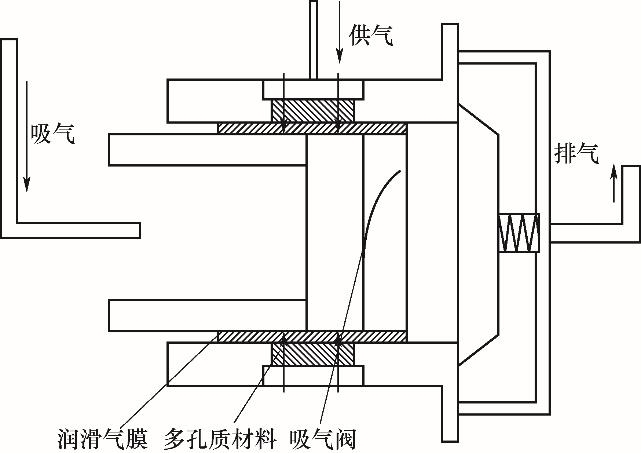
图1 用于直线压缩机的多孔气体轴承结构
Fig.1 Porous gas bearing structure for linear compressor
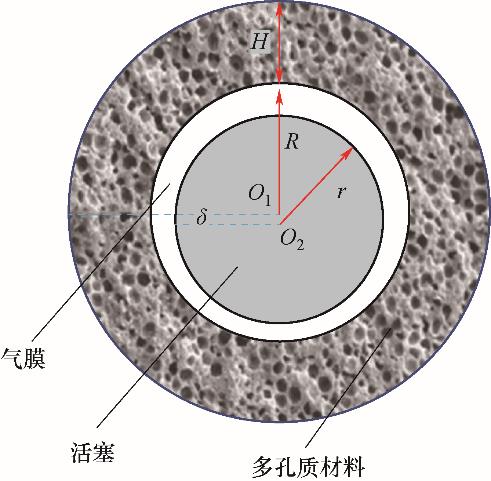
图2 多孔质气体轴承剖面结构及偏心状态
Fig.2 Porous gas bearing cross-section structure and eccentricity
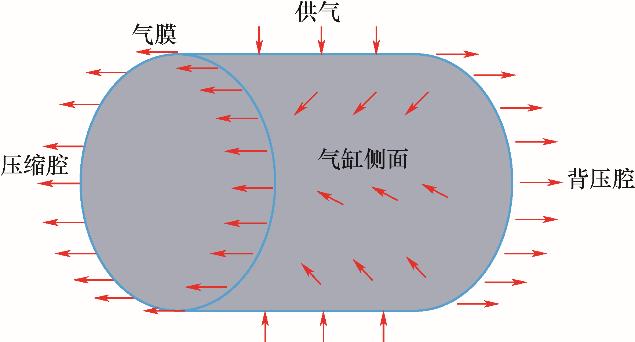
图3 多孔质气体轴承模型
Fig.3 Porous gas bearing model
| 参数 | 数值 |
|---|---|
| 活塞直径D/mm | 16 |
| 气缸长度L/mm | 30 |
| 多孔质材料厚度/mm | 3 |
| 气隙厚度/μm | 12 |
| 工质 | CO2 |
表1 活塞气缸结构
Table 1 Piston cylinder structure
| 参数 | 数值 |
|---|---|
| 活塞直径D/mm | 16 |
| 气缸长度L/mm | 30 |
| 多孔质材料厚度/mm | 3 |
| 气隙厚度/μm | 12 |
| 工质 | CO2 |
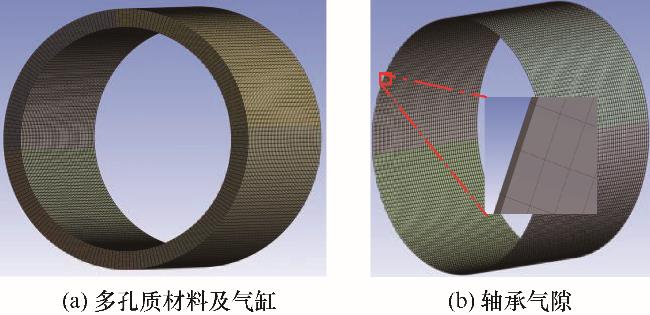
图4 多孔质气体轴承网格生成
Fig.4 Porous gas bearing mesh generation
网格划分 (r,θ,z) | 网格数量/个 | 耗气量/(10-4 kg/s) | 耗气量 误差/% |
|---|---|---|---|
| 10,120,120 | 144000 | 1.559 | 0.369 |
| 15,120,120 | 216000 | 1.555 | 0.128 |
| 20,120,120 | 288000 | 1.553 | — |
| 25,120,120 | 360000 | 1.552 | -0.061 |
| 30,120,120 | 432000 | 1.552 | -0.075 |
表2 网格无关性检查
Table 2 Grid independence check
网格划分 (r,θ,z) | 网格数量/个 | 耗气量/(10-4 kg/s) | 耗气量 误差/% |
|---|---|---|---|
| 10,120,120 | 144000 | 1.559 | 0.369 |
| 15,120,120 | 216000 | 1.555 | 0.128 |
| 20,120,120 | 288000 | 1.553 | — |
| 25,120,120 | 360000 | 1.552 | -0.061 |
| 30,120,120 | 432000 | 1.552 | -0.075 |
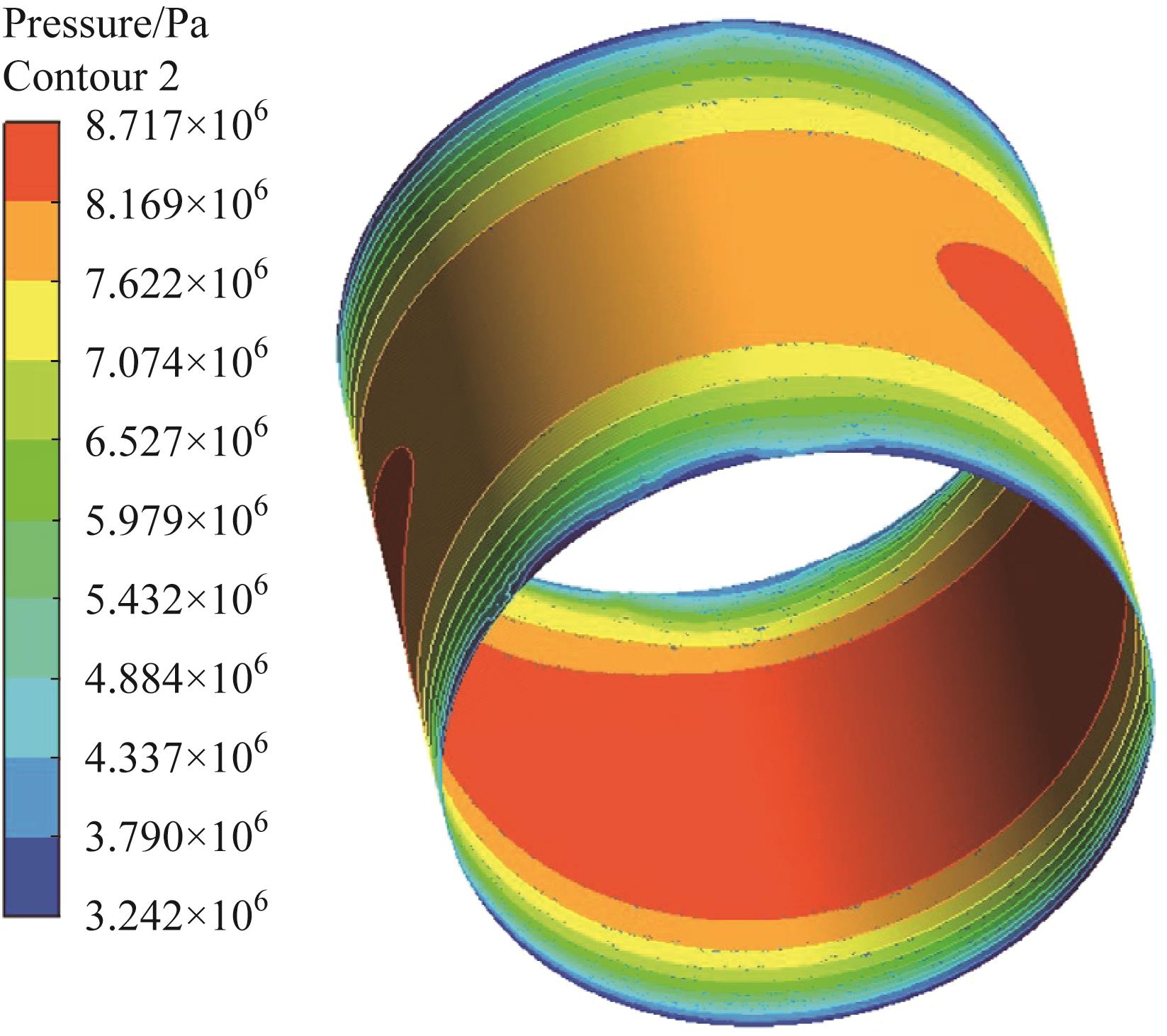
图5 气体轴承气隙压力分布云图
Fig.5 Gap pressure distribution cloud diagram of gas bearing
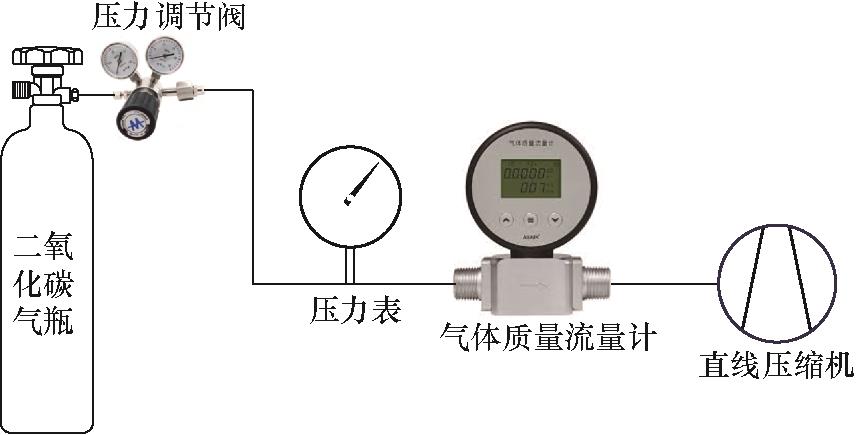
图6 实验测试装置
Fig.6 Experimental test equipment
| 测试样品 | 测试条件 |
|---|---|
二氧化碳直线压缩机 多孔质气缸活塞组合件 | 供气压力1.5, 2.0, 2.5, 3.0, 3.5 MPa |
表3 多孔质活塞气缸测试条件
Table 3 Porous piston cylinder test conditions
| 测试样品 | 测试条件 |
|---|---|
二氧化碳直线压缩机 多孔质气缸活塞组合件 | 供气压力1.5, 2.0, 2.5, 3.0, 3.5 MPa |
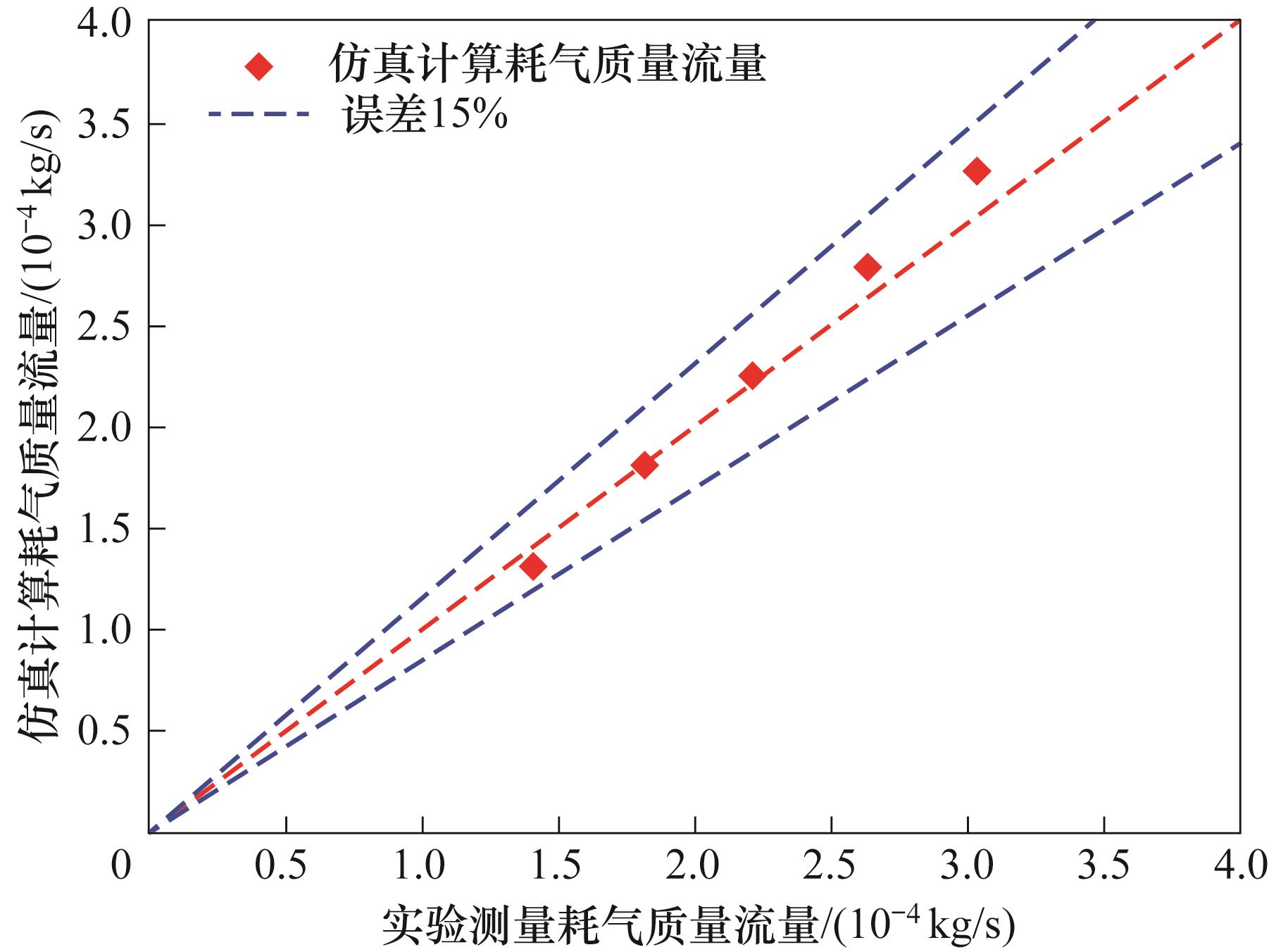
图7 仿真计算结果与实验结果的对比
Fig.7 Comparison of simulation results with experimental results
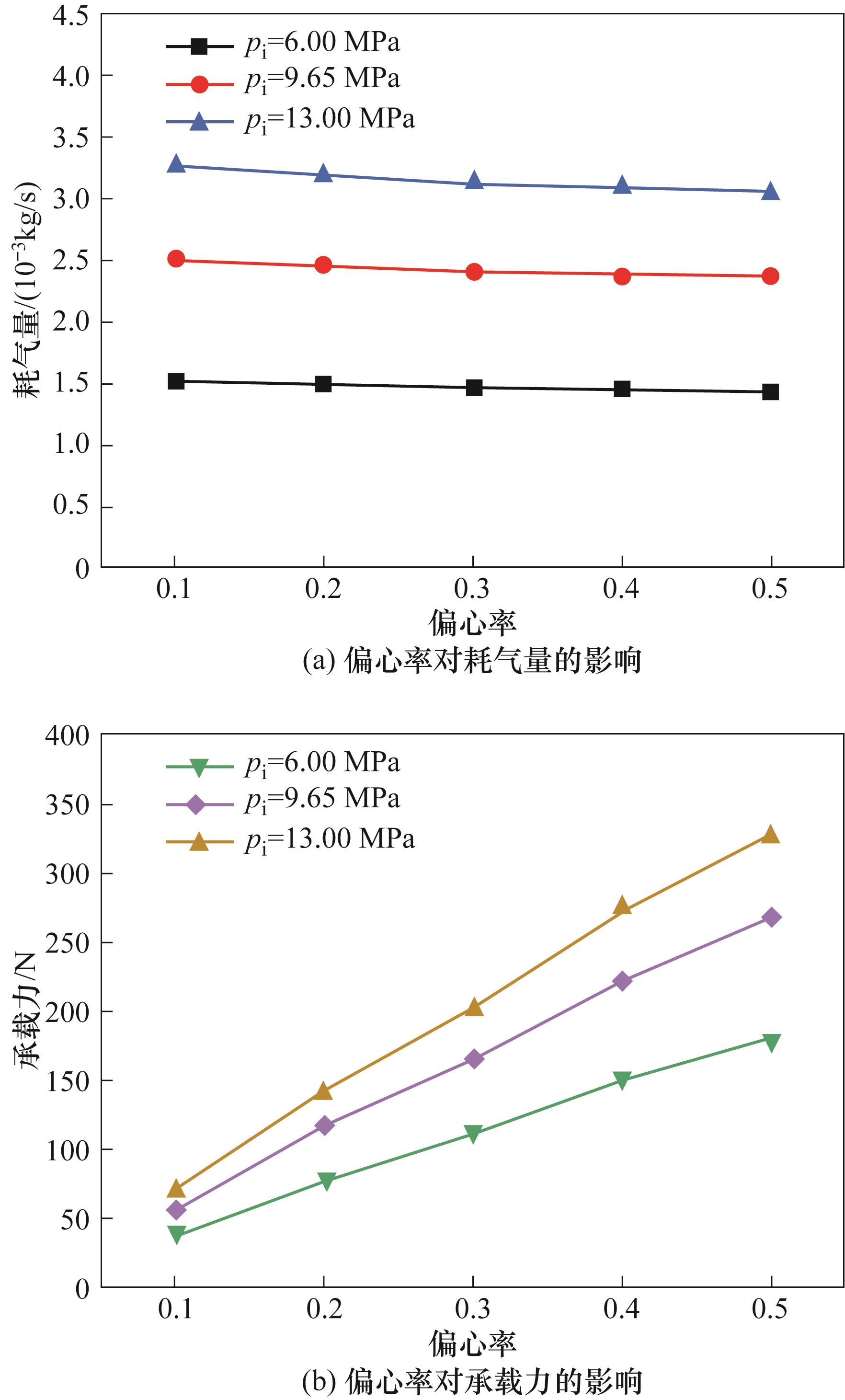
图8 偏心率对气体轴承的影响
Fig.8 Effect of eccentricity on gas bearings
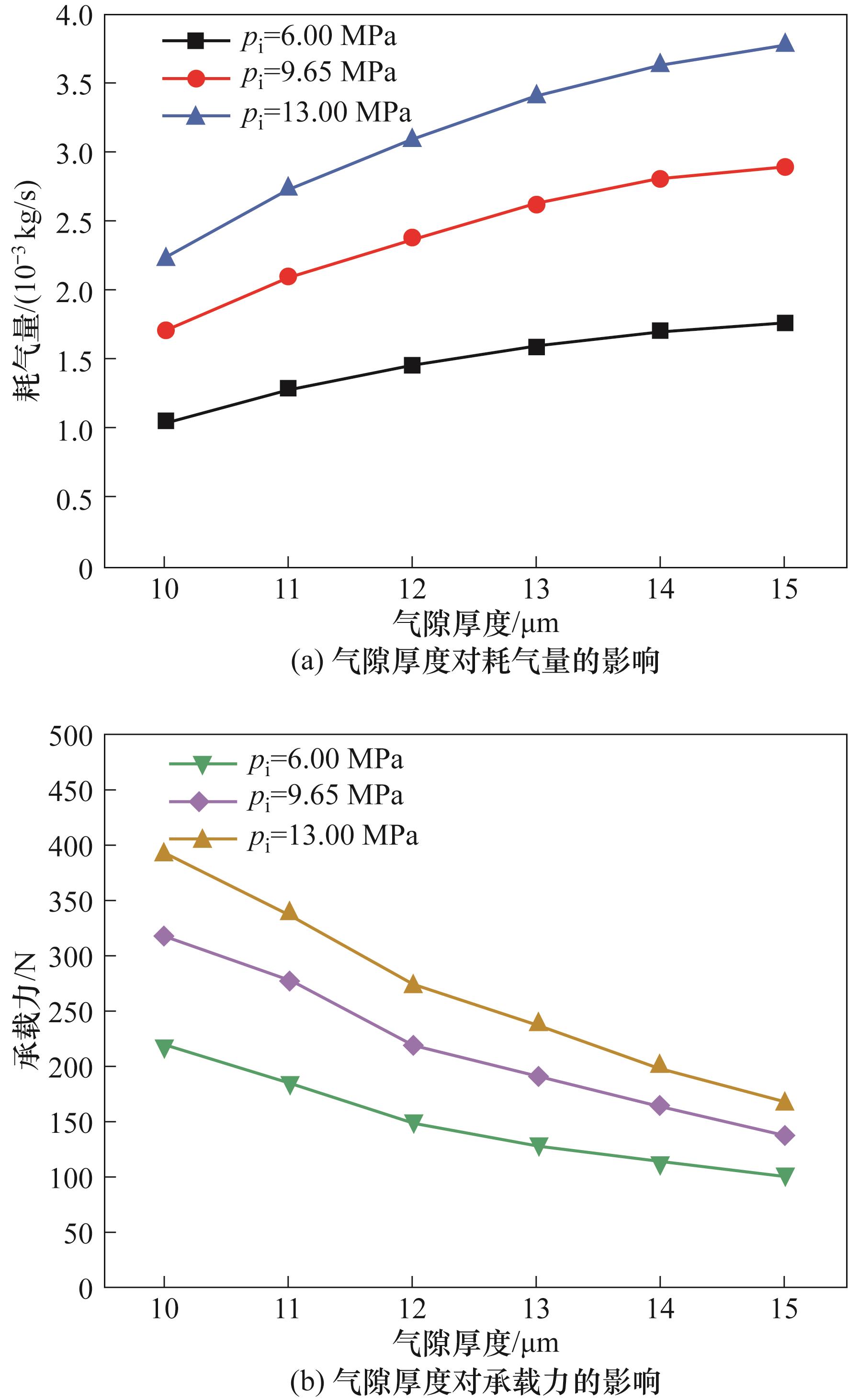
图9 气隙厚度对气体轴承的影响
Fig.9 Effect of air gap thickness on gas bearings
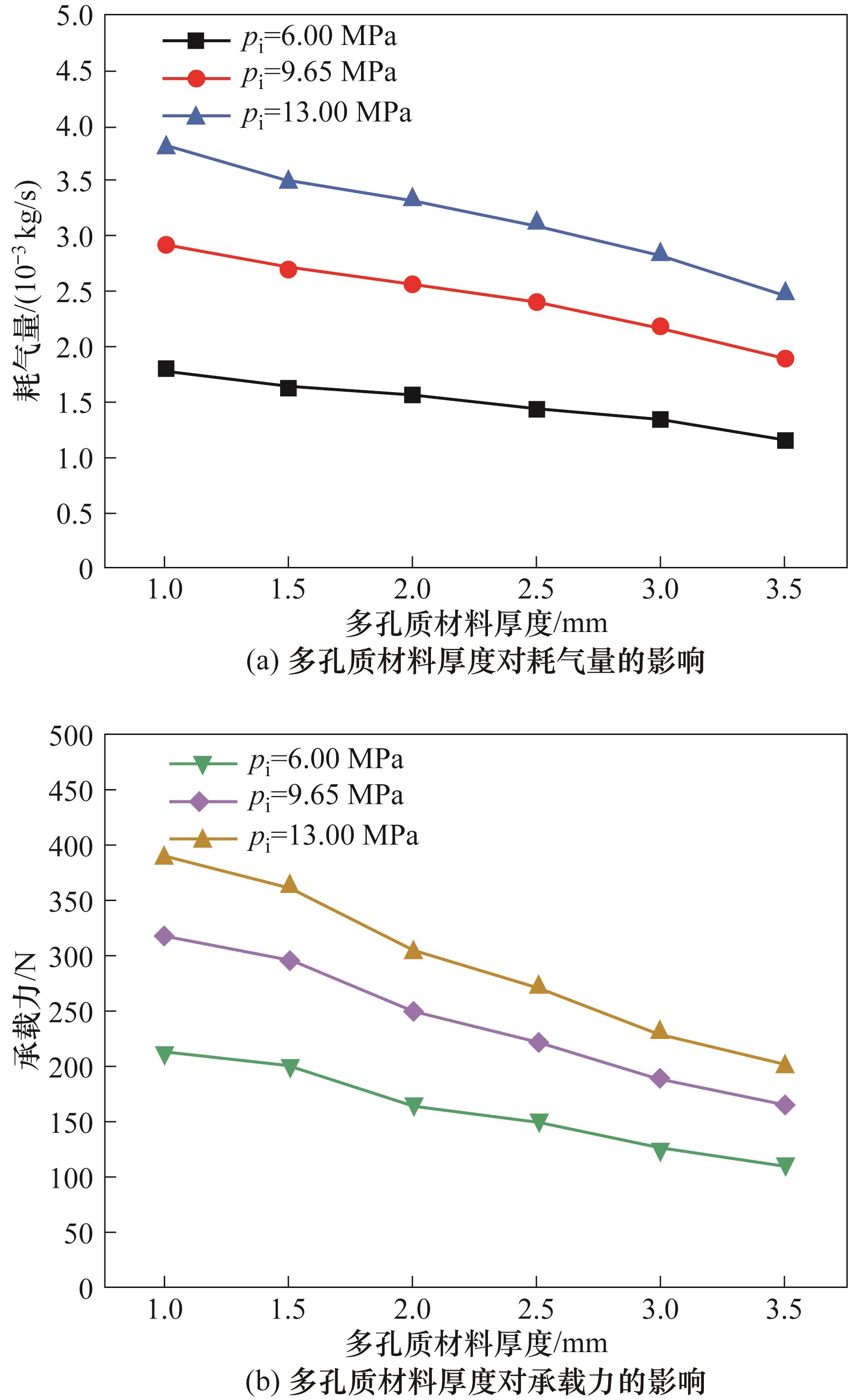
图10 多孔质材料厚度对气体轴承的影响
Fig.10 Effect of porous material thickness on gas bearings
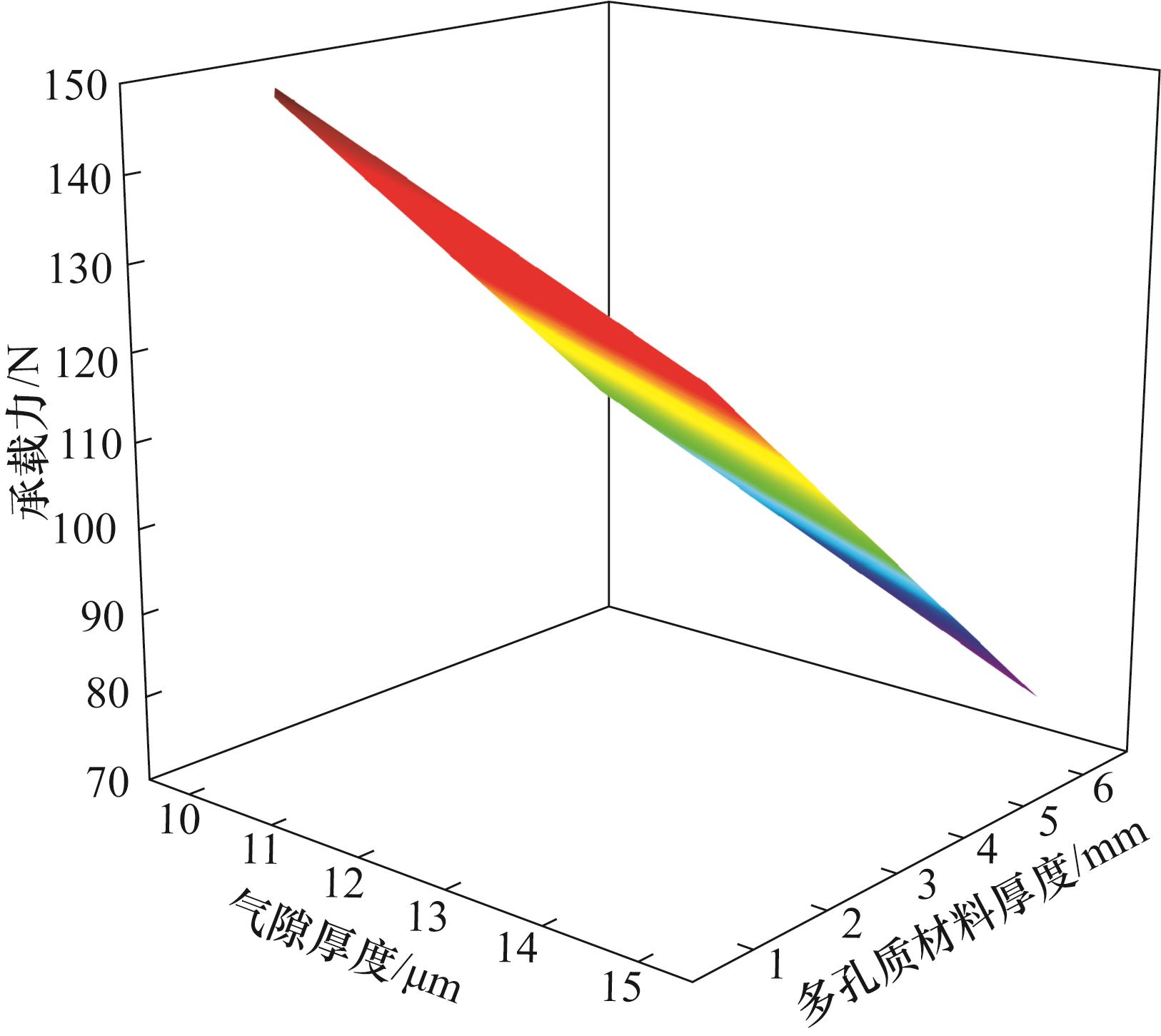
图11 气隙厚度和多孔质材料厚度对承载力的影响
Fig.11 Effect of air gap thickness and porous material thickness on bearing capacity
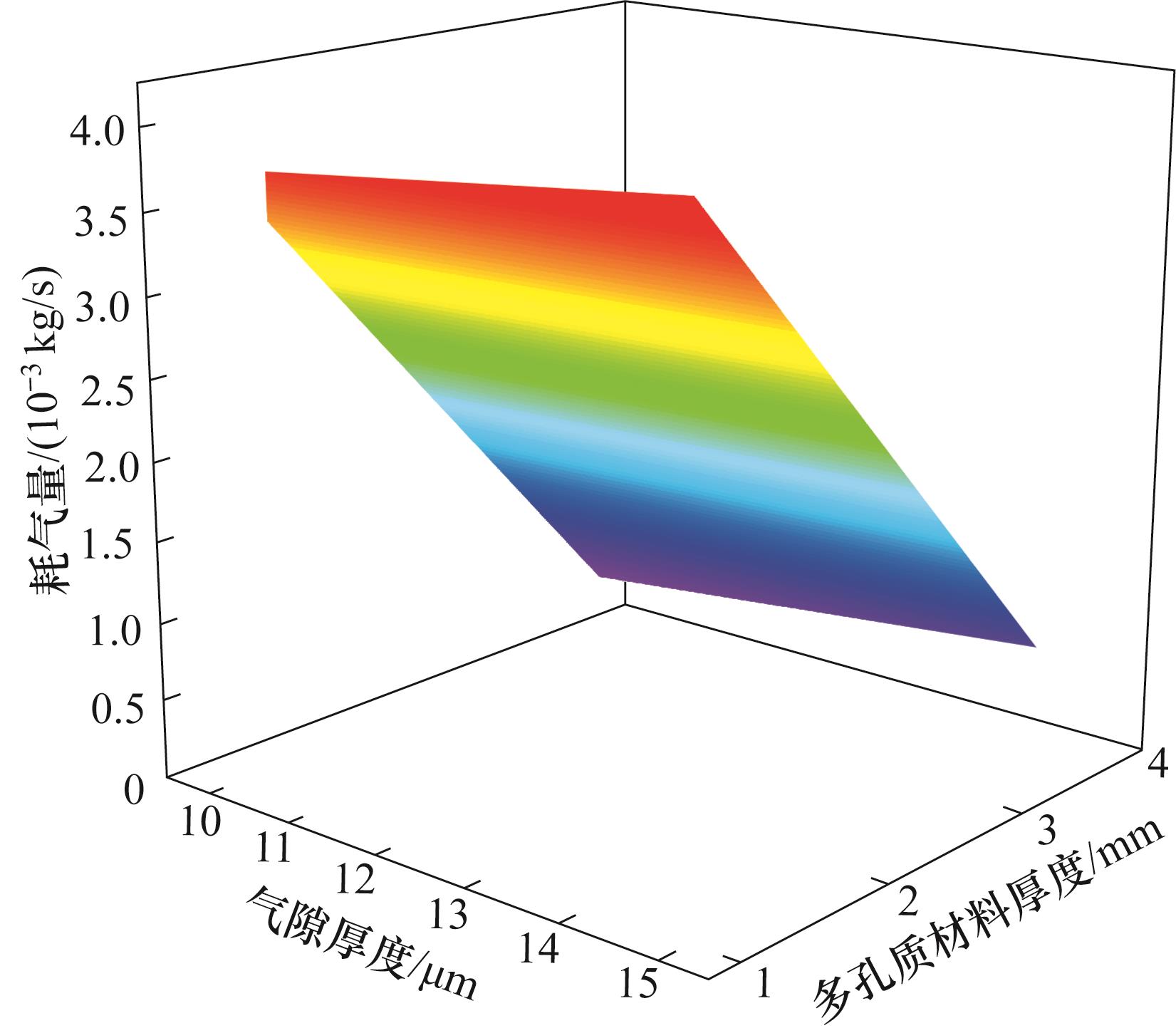
图12 气隙厚度和多孔质材料厚度对耗气量的影响
Fig.12 Effect of air gap thickness and porous material on gas consumption
| 12 | 邹慧明, 王英琳, 唐明生, 等. 直线压缩机用多孔质气体轴承的仿真与实验[J]. 制冷学报, 2021, 42(4): 122-129, 141. |
| Zou H M, Wang Y L, Tang M S, et al. Simulation and experimental investigation on porous gas bearings for linear compressor[J]. Journal of Refrigeration, 2021, 42(4): 122-129, 141. | |
| 13 | 王林, 江荣鼎, 张春晓, 等. 含R1234yf混合工质汽液相平衡的混合规则评估与预测研究[J]. 化工学报, 2024, 75(2): 475-483. |
| Wang L, Jiang R D, Zhang C X, et al. Evaluation and predictive study of the mixing rules for vapor-liquid equilibrium of R1234yf mixtures[J]. CIESC Journal, 2024, 75(2): 475-483. | |
| 14 | 董益秀, 王如竹. 高温热泵的循环、工质研究及应用展望[J]. 化工学报, 2023, 74(1): 133-144. |
| Dong Y X, Wang R Z. High temperature heat pump: cycle configurations, working fluids and application potentials[J]. CIESC Journal, 2023, 74(1): 133-144. | |
| 15 | 安青松, 侯佳鑫, 史琳, 等. 欧盟PFAS限制提案解读及其对制冷空调行业影响与应对[J]. 制冷学报, 2024, 45(2): 22-29. |
| An Q S, Hou J X, Shi L, et al. Interpretation of the EU PFAS restriction proposal and its impact on R&AC industry[J]. Journal of Refrigeration, 2024, 45(2): 22-29. | |
| 16 | Ma Y T, Liu Z Y, Tian H. A review of transcritical carbon dioxide heat pump and refrigeration cycles[J]. Energy, 2013, 55: 156-172. |
| 17 | Tang Z H, Zhang S, Zou H M, et al. Operational stability influenced by lubricant oil charge in the CO2 automotive air conditioning system[J]. International Journal of Refrigeration, 2024, 158: 58-67. |
| 18 | 袁昊瑞, 宋霞, 俞彬彬, 等. 带余热回收的CO2车用热泵系统实验研究[J]. 制冷学报, 2023, 44(2): 54-60. |
| Yuan H R, Song X, Yu B B, et al. Experimental research on the heating performance of waste heat recovery CO2 heat pumps for electric vehicles[J]. Journal of Refrigeration, 2023, 44(2): 54-60. | |
| 19 | Dilshad S, Kalair A R, Khan N. Review of carbon dioxide (CO2) based heating and cooling technologies: past, present, and future outlook[J]. International Journal of Energy Research, 2020, 44(3): 1408-1463. |
| 20 | Wang L, Linghu H F, Huang C J, et al. Performance investigation of a supergravity CO2 refrigeration cycle under off-design conditions[J]. Applied Thermal Engineering, 2024, 254: 123841. |
| 21 | Fomin Y D, Ryzhov V N, Tsiok E N, et al. Thermodynamic properties of supercritical carbon dioxide: widom and Frenkel lines[J]. Physical Review E: Statistical, Nonlinear, and Soft Matter Physics, 2015, 91(2): 022111. |
| 22 | 朱芝, 许恒杰, 陈维, 等. 超临界二氧化碳螺旋槽干气密封热流耦合润滑临界阻塞特性研究[J]. 化工学报, 2024, 75(2): 604-615. |
| Zhu Z, Xu H J, Chen W, et al. Study on critical chocked characteristics of supercritical carbon dioxide spiral groove dry gas seal under thermal-fluid coupling lubrication[J]. CIESC Journal, 2024, 75(2): 604-615. | |
| 23 | 李海宁, 张晓青, 李奎, 等. 动磁直线压缩机气体轴承特性的CFD模拟[J]. 工程热物理学报, 2013, 34(6): 1026-1030. |
| Li H N, Zhang X Q, Li K, et al. CFD simulation of gas bearing characteristic for a moving-magnet linear compressor[J]. Journal of Engineering Thermophysics, 2013, 34(6): 1026-1030. | |
| 24 | 洪昊, 赵志康, 陈曦, 等. 小型对置式直线压缩机模拟及实验研究[J]. 能源研究与信息, 2021, 37(4): 187-192, 206. |
| Hong H, Zhao Z K, Chen X, et al. Simulation and experimental research on small opposed linear compressor[J]. Energy Research and Information, 2021, 37(4): 187-192, 206. | |
| 25 | 李诚展, 李建国, 孙建, 等. 无油线性压缩机的频率特性和活塞偏移特性研究[J]. 振动与冲击, 2021, 40(3): 139-146. |
| Li C Z, Li J G, Sun J, et al. Frequency characteristics and piston offset characteristics of oil-free linear compressor[J]. Journal of Vibration and Shock, 2021, 40(3): 139-146. | |
| 26 | 杨明卓, 焦珂欣, 池春云, 等. 间隙密封高频往复运动活塞偏移特性研究[J]. 润滑与密封, 2024, 49(4): 81-86. |
| Yang M Z, Jiao K X, Chi C Y, et al. Study on the high frequency reciprocating piston offset character under clearance seal[J]. Lubrication Engineering, 2024, 49(4): 81-86. | |
| 1 | Liang K. A review of linear compressors for refrigeration[J]. International Journal of Refrigeration, 2017, 84: 253-273. |
| 2 | 邹慧明, 王英琳, 李旋, 等. R290直线压缩机变工况制冷性能[J]. 化工学报, 2021, 72(S1): 342-347. |
| Zou H M, Wang Y L, Li X, et al. R290 linear compressor under variable conditions[J]. CIESC Journal, 2021, 72(S1): 342-347. | |
| 3 | 邹慧明, 李旋, 唐明生, 等. R290工质直线压缩机的性能实验研究[J]. 化工学报, 2018, 69(S2): 480-484. |
| Zou H M, Li X, Tang M S, et al. Experimental investigation on refrigeration performance of R290 linear compressor[J]. CIESC Journal, 2018, 69(S2): 480-484. | |
| 4 | Kong F C, Tang M S, Zou H M, et al. Performance simulation analysis of a novel dual-piston two-stage carbon dioxide linear compressor[J]. International Journal of Refrigeration, 2024, 159: 185-194. |
| 5 | Li C Z, Zou H M, Cai J H, et al. Dynamic behavior analysis of a moving coil oil-free linear compressor in refrigeration system[J]. International Journal of Refrigeration, 2022, 133: 235-246. |
| 6 | 王天娜, 矫佳伟, 丁奕涵, 等. 气悬浮制冷压缩机的研究进展[J]. 制冷, 2024, 43(2): 90-94. |
| Wang T N, Jiao J W, Ding Y H, et al. Research progress of air suspension refrigeration compressors[J]. Refrigeration, 2024, 43(2): 90-94. | |
| 7 | 滕斌, 杨启超, 王春, 等. 以制冷剂为工作介质的止推气体轴承静态特性分析[J]. 润滑与密封, 2021, 46(8): 54-61. |
| Teng B, Yang Q C, Wang C, et al. Analysis of static characteristics of thrust air bearing of centrifugal refrigeration compressor[J]. Lubrication Engineering, 2021, 46(8): 54-61. | |
| 8 | 王青锋, 祁影霞, 潘帅, 等. 线性压缩机气体轴承数值模拟研究[J]. 制冷技术, 2019, 39(2): 29-33. |
| Wang Q F, Qi Y X, Pan S, et al. Numerical simulation of gas bearing for linear compressor[J]. Chinese Journal of Refrigeration Technology, 2019, 39(2): 29-33. | |
| 9 | 梁天晓, 陈曦, 洪昊, 等. 小型线性压缩机静压气体轴承的模拟分析[J]. 真空与低温, 2021, 27(3): 262-266. |
| Liang T X, Chen X, Hong H, et al. Simulation analysis of hydrostatic gas bearing of small linear compressor[J]. Vacuum and Cryogenics, 2021, 27(3): 262-266. | |
| 10 | 王春, 赵远扬, 衣可心, 等. R134a静压气体轴承静特性及其对制冷系统的影响研究[J]. 机床与液压, 2022, 50(15): 92-96. |
| Wang C, Zhao Y Y, Yi K X, et al. Gas bearing static pressure characteristics of refrigeration centrifugal compressor with R134a and its influence on refrigeration system[J]. Machine Tool & Hydraulics, 2022, 50(15): 92-96. | |
| 11 | Li J G, Wu J J, Fan J D, et al. Research on dynamic characteristics and structural optimization of porous gas bearings in linear compressors[J]. Scientific Reports, 2023, 13(1): 16507. |
| 27 | 邹慧明, 汤鑫斌, 唐明生, 等. CO2直线压缩机设计与变工况性能分析[J]. 压缩机技术, 2021(2): 9-17. |
| Zou H M, Tang X B, Tang M S, et al. Design of CO2 linear compressor and performance analysis with variable working conditions[J]. Compressor Technology, 2021(2): 9-17. | |
| 28 | Koohestanian E, Samimi A, Mohebbi-Kalhori D, et al. Sensitivity analysis and multi-objective optimization of CO2 CPU process using response surface methodology[J]. Energy, 2017, 122: 570-578. |
| 29 | Reihani A, Hoard J, Klinkert S, et al. Experimental response surface study of the effects of low-pressure exhaust gas recirculation mixing on turbocharger compressor performance[J]. Applied Energy, 2020, 261: 114349. |
| 30 | Redhwan A A M, Azmi W H, Najafi G, et al. Application of response surface methodology in optimization of automotive air-conditioning performance operating with SiO2/PAG nanolubricant[J]. Journal of Thermal Analysis and Calorimetry, 2019, 135(2): 1269-1283. |
| [1] | 沙鑫权, 胡然, 丁磊, 蒋珍华, 吴亦农. 空间用单机两级有阀线性压缩机研制及测试[J]. 化工学报, 2025, 76(S1): 114-122. |
| [2] | 燕子腾, 詹飞龙, 丁国良. 空调用套管式分流器结构设计及分流效果验证[J]. 化工学报, 2025, 76(S1): 152-159. |
| [3] | 汪思远, 刘国强, 熊通, 晏刚. 窗式空调器轴流风机的风速非均匀分布特性及其对冷凝器流路优化设计的影响规律[J]. 化工学报, 2025, 76(S1): 205-216. |
| [4] | 孙云龙, 徐肖肖, 黄永方, 郭纪超, 陈卫卫. 水平光滑管内CO2流动沸腾的非绝热可视化研究[J]. 化工学报, 2025, 76(S1): 230-236. |
| [5] | 郭纪超, 徐肖肖, 孙云龙. 基于植物工厂中的CO2浓度气流模拟及优化研究[J]. 化工学报, 2025, 76(S1): 237-245. |
| [6] | 郭明钢, 杨晓航, 代岩, 米盼盼, 马世鑫, 贺高红, 肖武, 崔福军. 贫氦管输天然气提氦多元化产品耦合工艺优化设计[J]. 化工学报, 2025, 76(5): 2251-2261. |
| [7] | 陈建兵, 常昊, 高明, 邢兵, 张磊, 刘奇磊. 基于反应模板与分子动力学的胺基相变吸收剂分相预测方法[J]. 化工学报, 2025, 76(5): 2387-2396. |
| [8] | 赵俊德, 周爱国, 陈彦霖, 郑家乐, 葛天舒. 吸附法CO2直接空气捕集技术能耗现状[J]. 化工学报, 2025, 76(4): 1375-1390. |
| [9] | 张赵雪, 李正宇, 崔文慧, 王倩, 王志平, 龚领会. 基于液氖液氮梯级蓄冷的液氢储能中冷能回收利用研究[J]. 化工学报, 2025, 76(4): 1731-1741. |
| [10] | 产文, 余万, 王岗, 苏华山, 黄芬霞, 胡涛. 改进回热布局的Allam循环热力、经济性能分析和双目标优化[J]. 化工学报, 2025, 76(4): 1680-1692. |
| [11] | 霍军良, 唐治国, 邱宗君, 冯玉华, 蒋旭, 王乐怡, 杨宇, 乔帆帆, 赫一凡, 喻健良. 节流作用下CO2管道放空过程的冻堵风险实验研究[J]. 化工学报, 2025, 76(4): 1898-1908. |
| [12] | 吴罗长, 杨泽宇, 颜建国, 朱旭涛, 陈阳, 王子辰. 微小方形通道内近超临界压力二氧化碳流动换热特性实验研究[J]. 化工学报, 2025, 76(4): 1583-1594. |
| [13] | 张翼辰, 张文彪, 李浩洋, 宁晓阳. 基于双差压模型的文丘里管气液两相CO2流量测量[J]. 化工学报, 2025, 76(4): 1493-1503. |
| [14] | 陈仲卿, 刘家旭, 王艳语, 井红权, 侯翠红, 屈凌波. K-B-Al体系对磷矿熔融特性及玻璃结构的影响[J]. 化工学报, 2025, 76(3): 1323-1333. |
| [15] | 伏遥, 邵应娟, 钟文琪. TiO2掺杂钙基材料加压碳酸化循环储热性能实验研究[J]. 化工学报, 2025, 76(3): 1180-1190. |
| 阅读次数 | ||||||
|
全文 |
|
|||||
|
摘要 |
|
|||||
 京公网安备 11010102001995号