CIESC Journal ›› 2025, Vol. 76 ›› Issue (7): 3246-3258.DOI: 10.11949/0438-1157.20241414
• Fluid dynamics and transport phenomena • Previous Articles Next Articles
Xi CHEN( ), Shuyan WANG(), Baoli SHAO, Nuo DING, Lei XIE
Received:2024-12-05
Revised:2025-01-23
Online:2025-08-13
Published:2025-07-25
Contact:
Shuyan WANG
陈曦(), 王淑彦(), 邵宝力, 丁诺, 谢磊
通讯作者:
王淑彦
作者简介:陈曦(1997—),女,博士研究生,chenxi123@stu.nepu.edu.cn
基金资助:CLC Number:
Xi CHEN, Shuyan WANG, Baoli SHAO, Nuo DING, Lei XIE. Numerical simulation study of liquid-solid fluidized beds based on second-order moment model of particle dynamic restitution coefficient[J]. CIESC Journal, 2025, 76(7): 3246-3258.
陈曦, 王淑彦, 邵宝力, 丁诺, 谢磊. 基于颗粒动态恢复系数二阶矩模型的液固流化床数值模拟研究[J]. 化工学报, 2025, 76(7): 3246-3258.
Add to citation manager EndNote|Ris|BibTeX
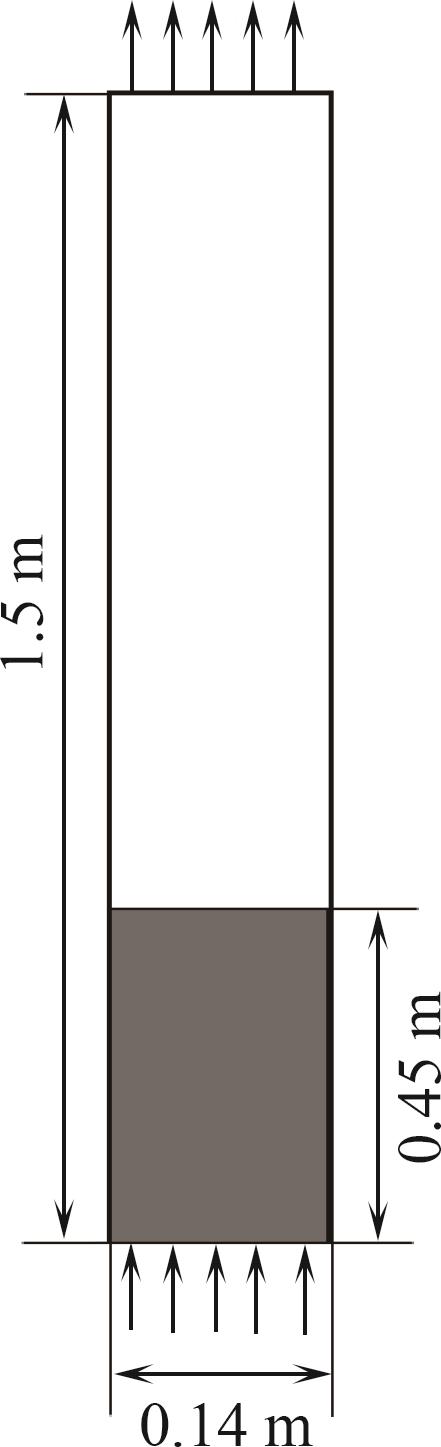
Fig.1 Structure scheme of liquid-solid fluidized bed
| 参数 | 实验 | 模拟 |
|---|---|---|
| 床高/m | 1.5 | 1.5 |
| 床宽/m | 0.14 | 0.14 |
| 初始床高/m | 0.45 | 0.45 |
| 初始颗粒堆积浓度 | 0.598 | 0.598 |
| 液体黏度/(Pa·s) | 0.001 | 0.001 |
| 液体密度/(kg/m3) | 994 | 994 |
| 流体进口速度/(m/s) | 0.07 | 0.07 |
| 颗粒密度/(kg/m3) | 2500 | 2500 |
| 颗粒直径/mm | 3 | 3 |
| 泊松比 | 0.25 | 0.25 |
| 杨氏模量/GPa | 70 | 70 |
Table 1 Simulated parameters of liquid-solid fluidized bed
| 参数 | 实验 | 模拟 |
|---|---|---|
| 床高/m | 1.5 | 1.5 |
| 床宽/m | 0.14 | 0.14 |
| 初始床高/m | 0.45 | 0.45 |
| 初始颗粒堆积浓度 | 0.598 | 0.598 |
| 液体黏度/(Pa·s) | 0.001 | 0.001 |
| 液体密度/(kg/m3) | 994 | 994 |
| 流体进口速度/(m/s) | 0.07 | 0.07 |
| 颗粒密度/(kg/m3) | 2500 | 2500 |
| 颗粒直径/mm | 3 | 3 |
| 泊松比 | 0.25 | 0.25 |
| 杨氏模量/GPa | 70 | 70 |
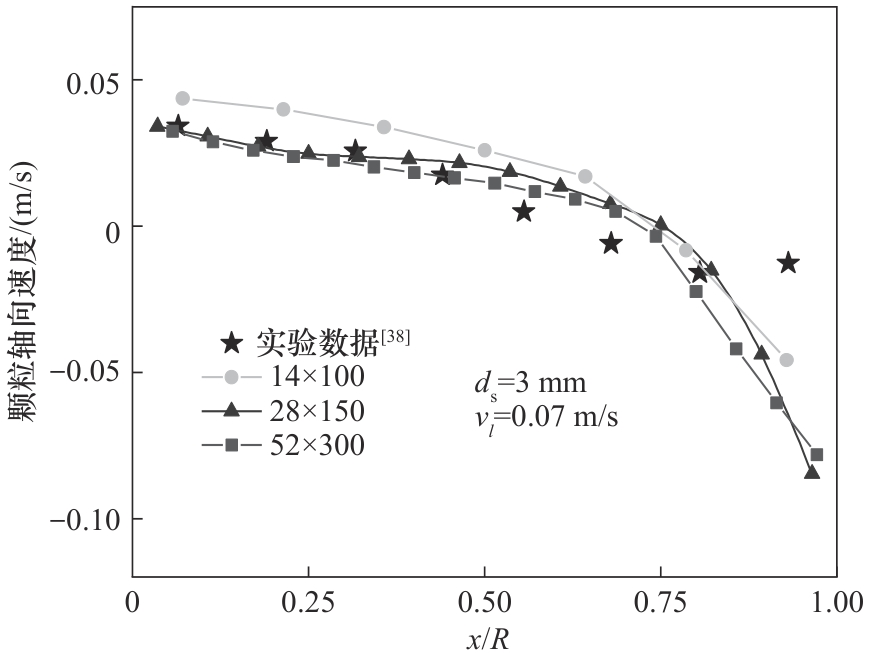
Fig.2 Distributions of particle axial velocity with different mesh sizes
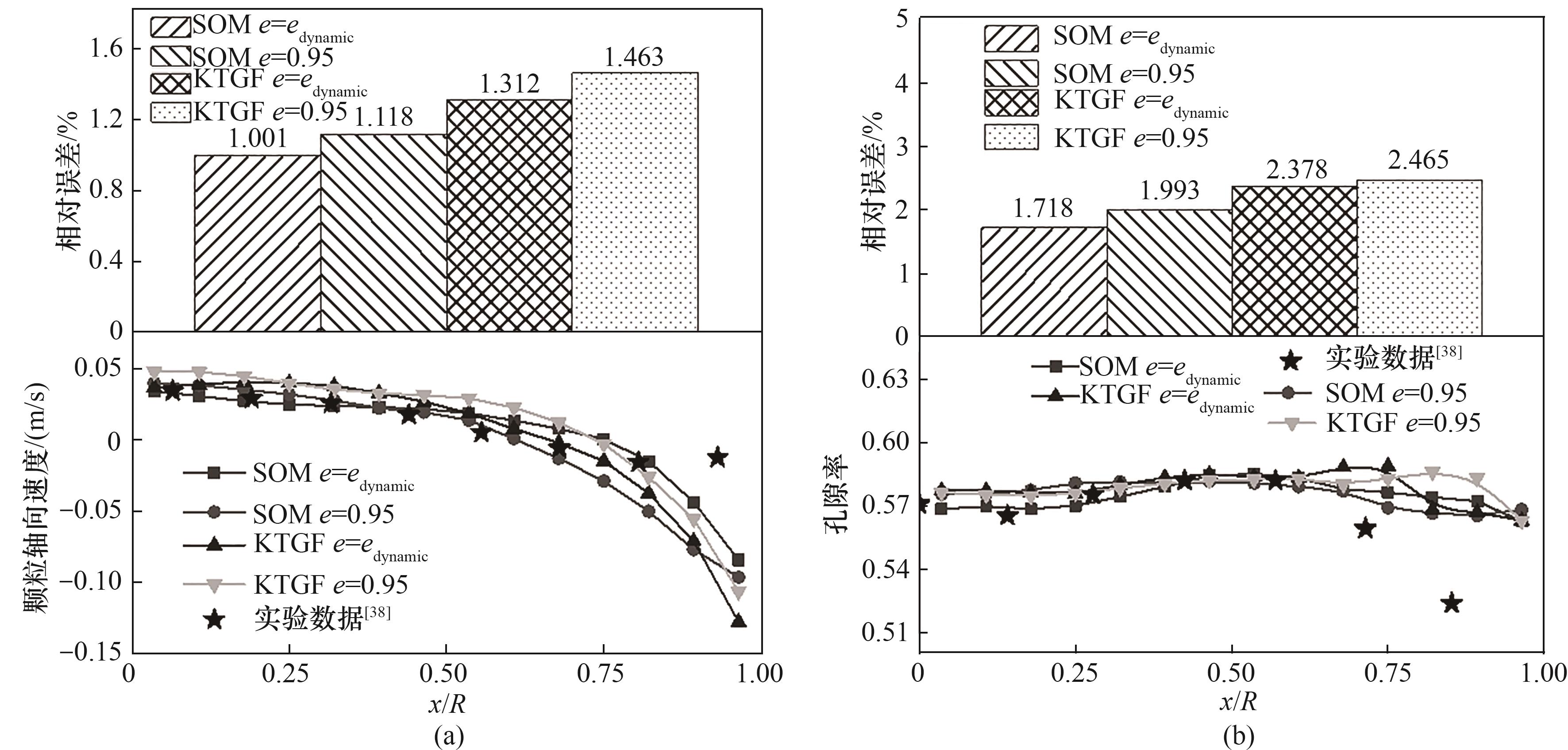
Fig.3 Comparison of simulated particle axial velocity and porosity values with experimental data
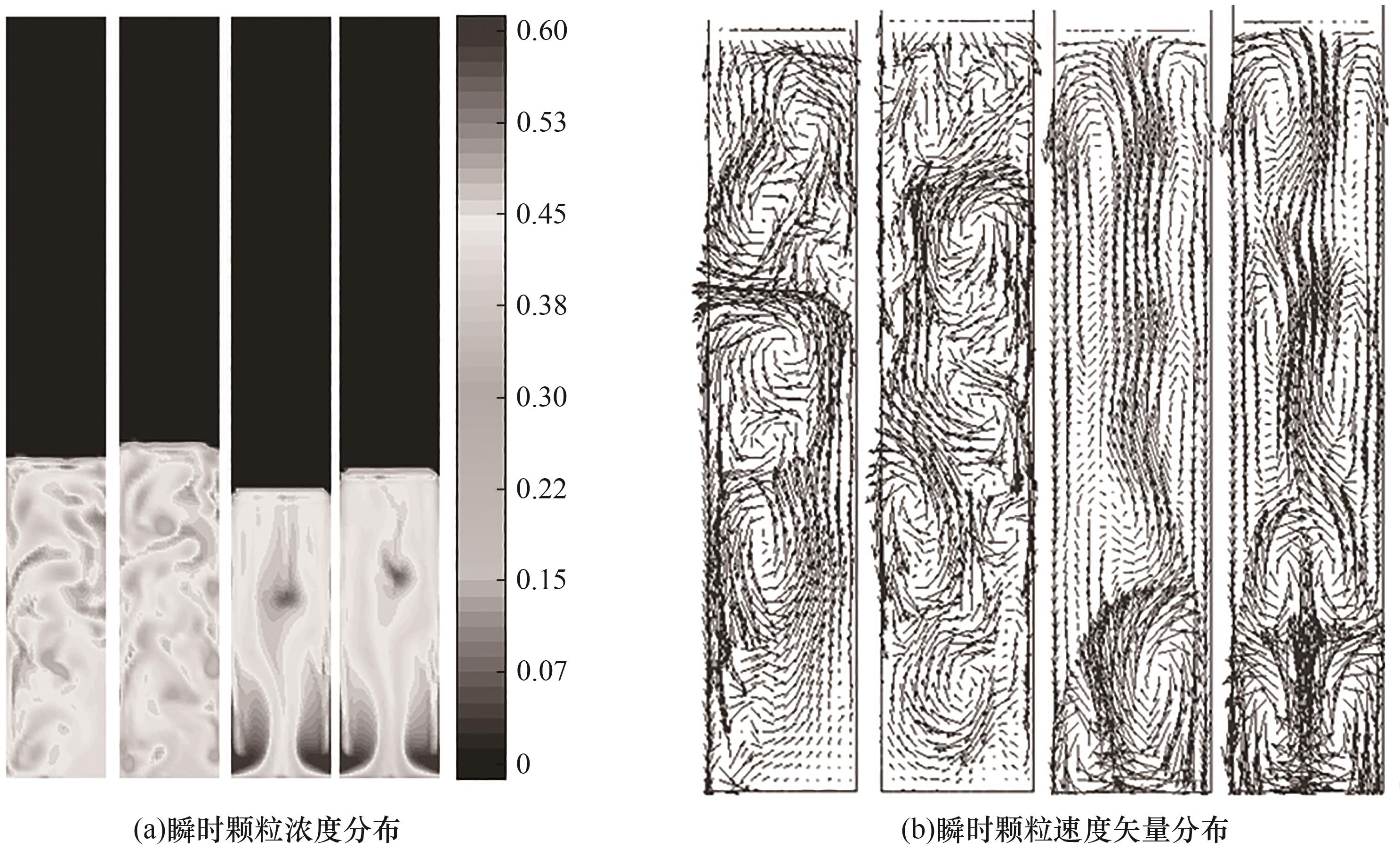
Fig.4 Distributions of instantaneous particle concentration and velocity vector (from left to right: SOM-edynamic, SOM, KTGF-edynamic, KTGF models)

Fig.5 Instantaneous axial velocity and concentration of particles in the center and near the wall
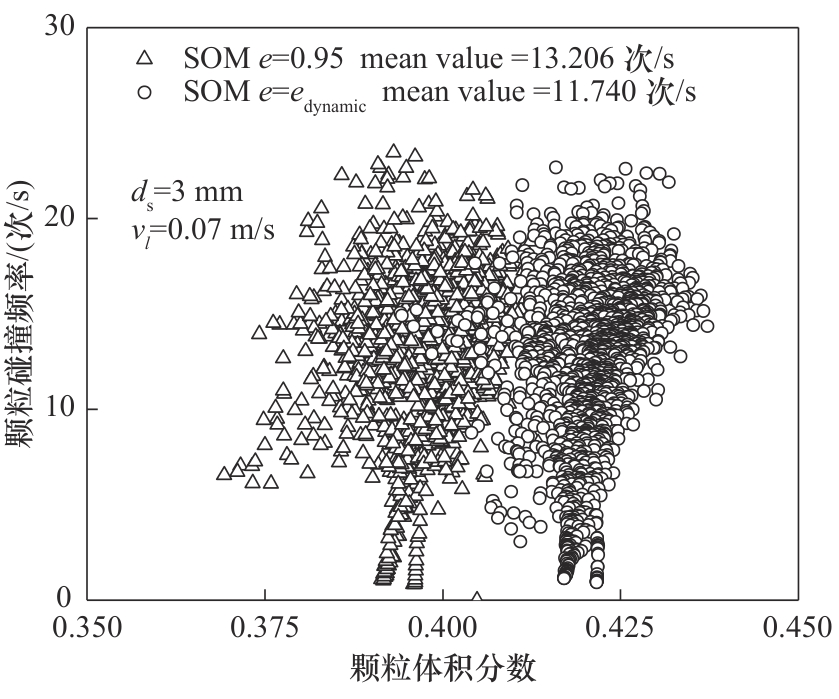
Fig.6 Collision frequency of particles as a function of particle concentration
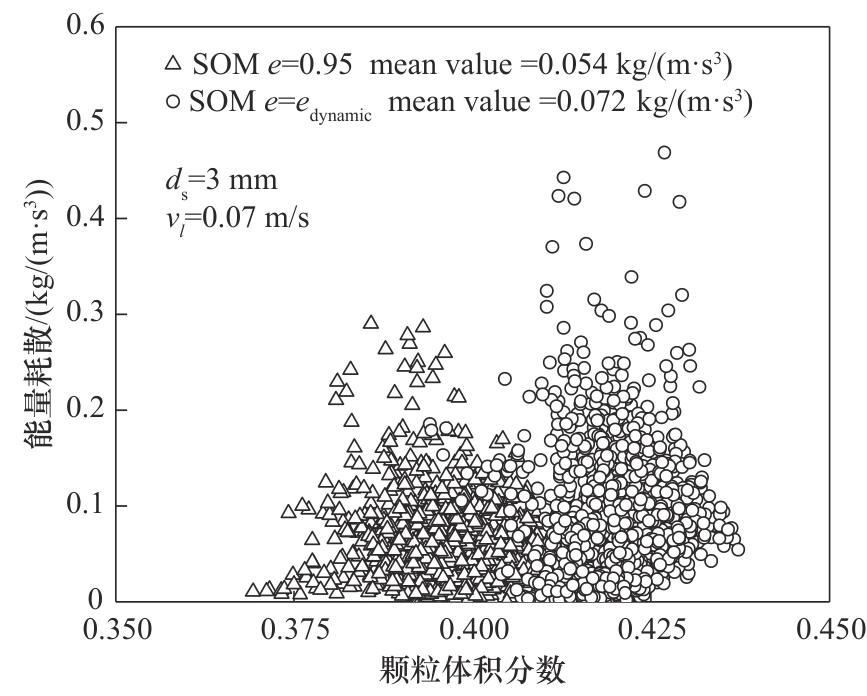
Fig.7 Collision energy dissipation of particles as a function of particle concentration
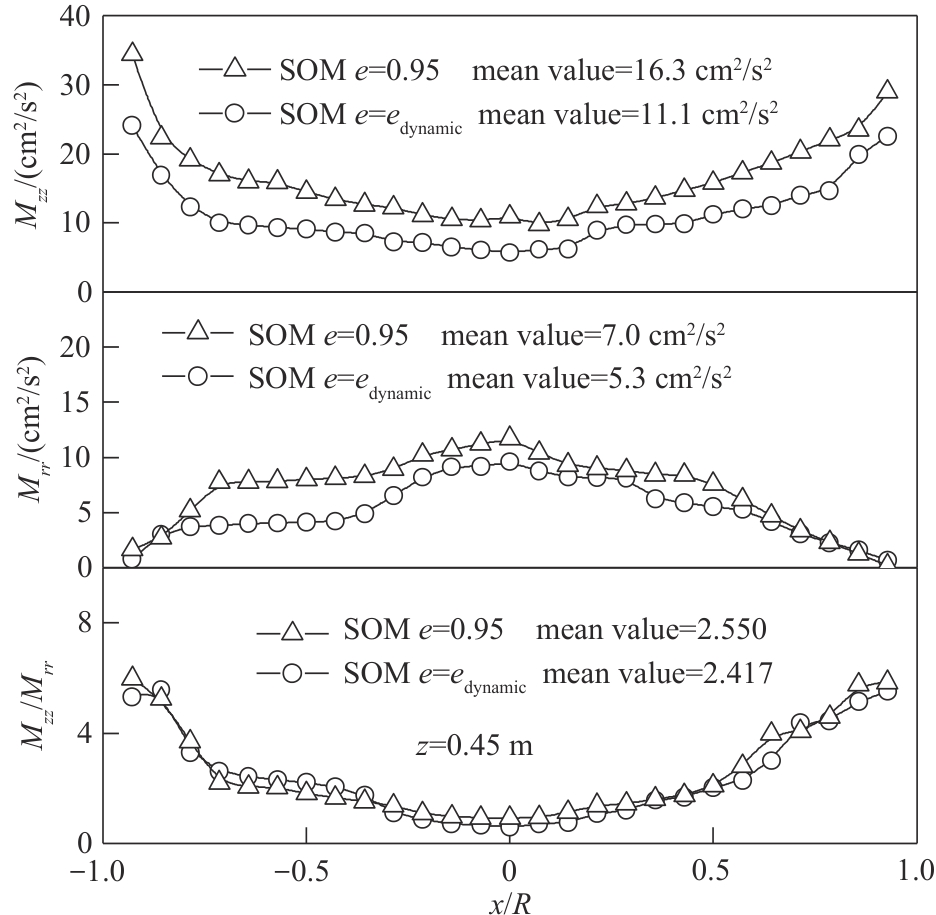
Fig.8 The radial distributions of the particle second-order moments
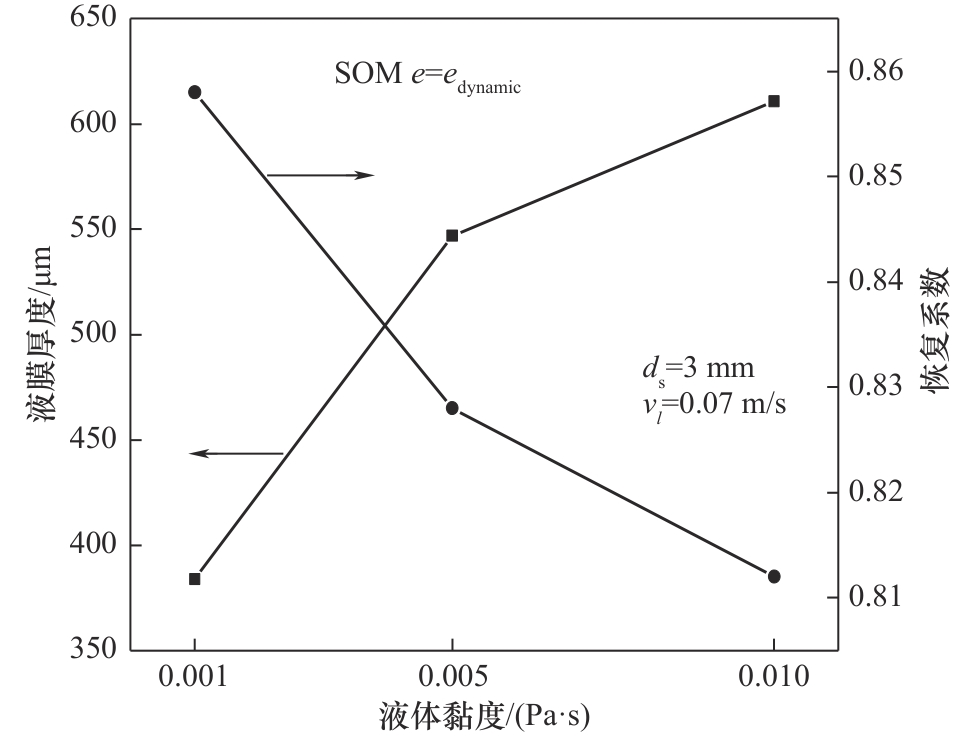
Fig.9 Liquid film thickness and restitution coefficient as a function of liquid viscosity
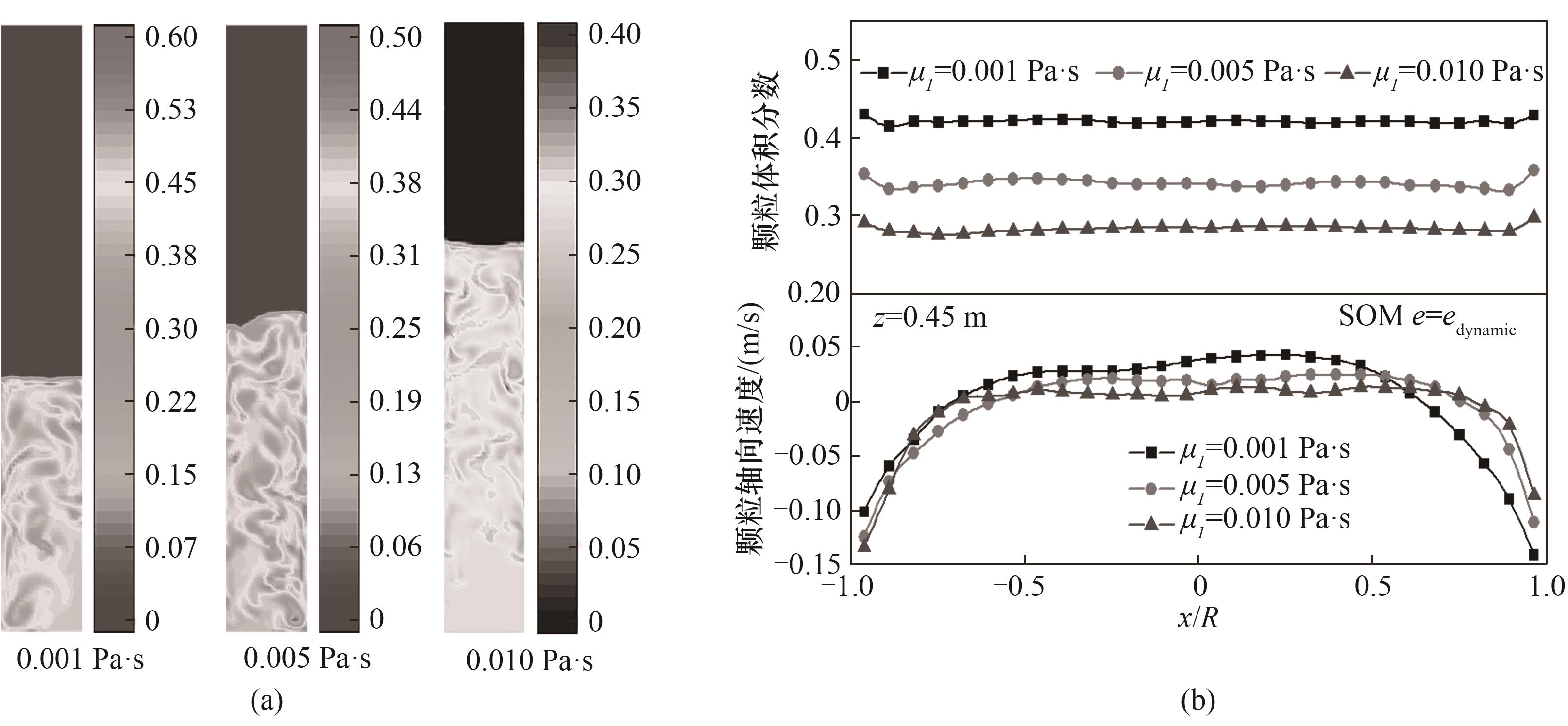
Fig.10 Effects of liquid viscosity on axial velocity and concentration of particles
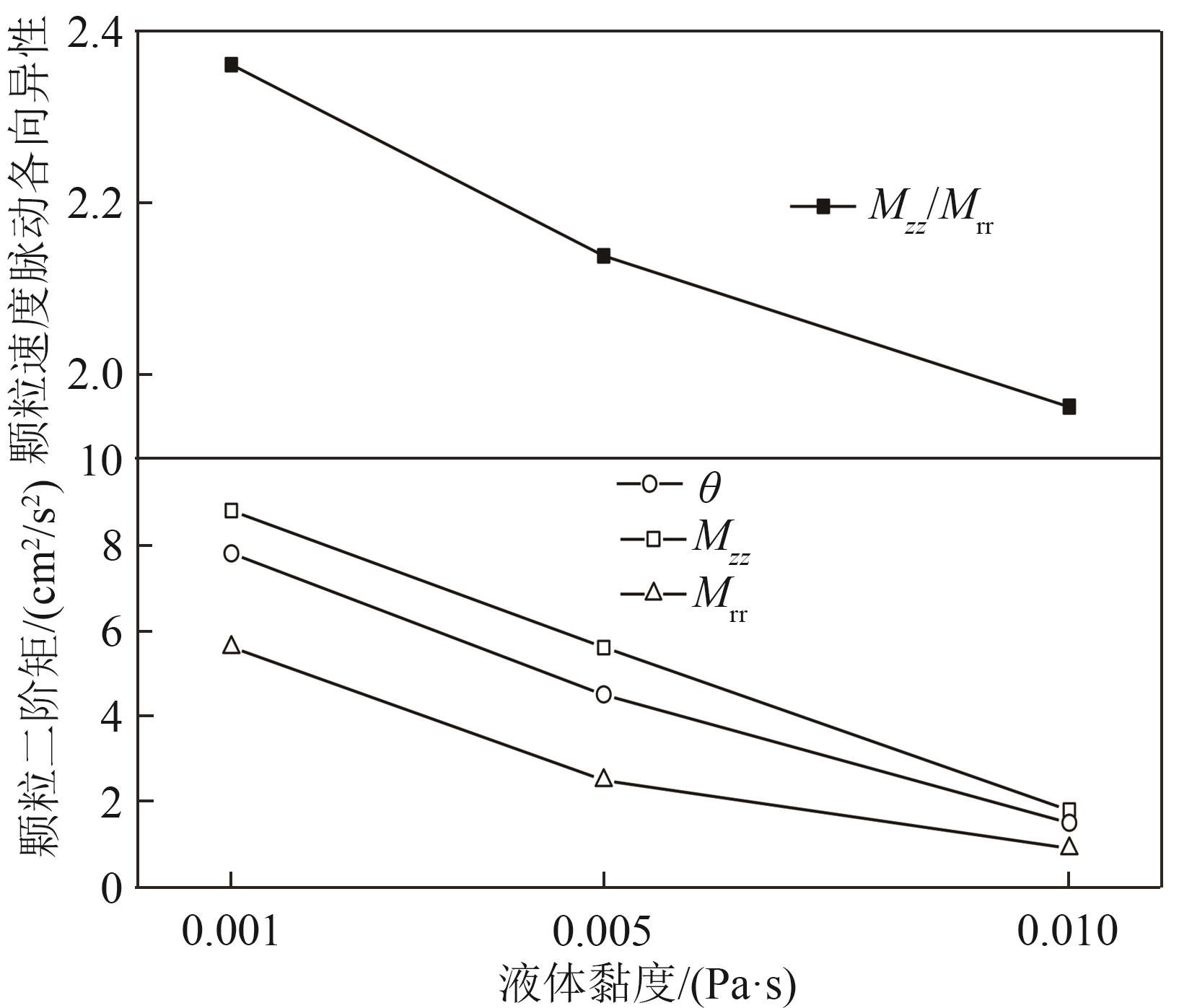
Fig.11 Effects of liquid viscosity on particle second-order moments
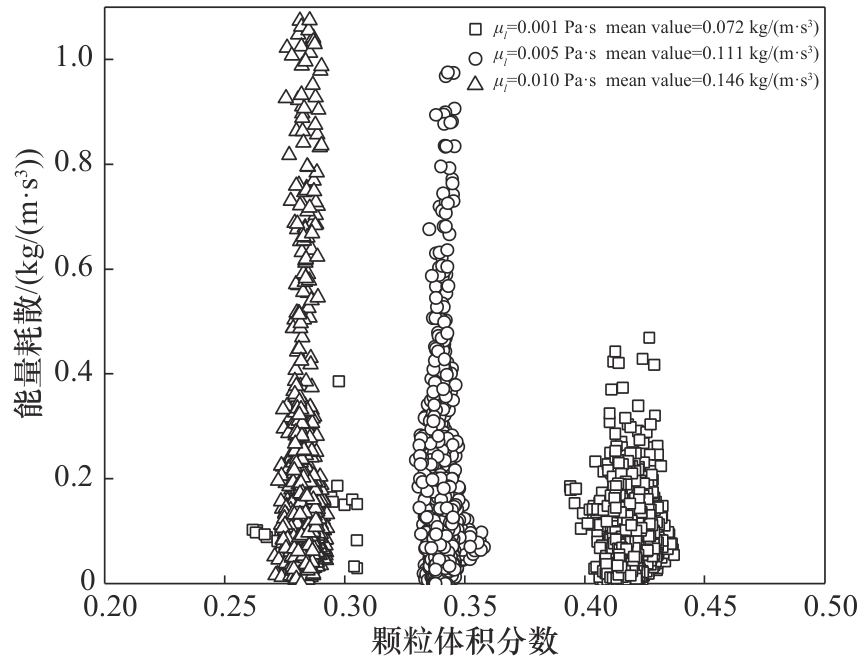
Fig.12 Effects of liquid viscosity on collision energy dissipation of particles
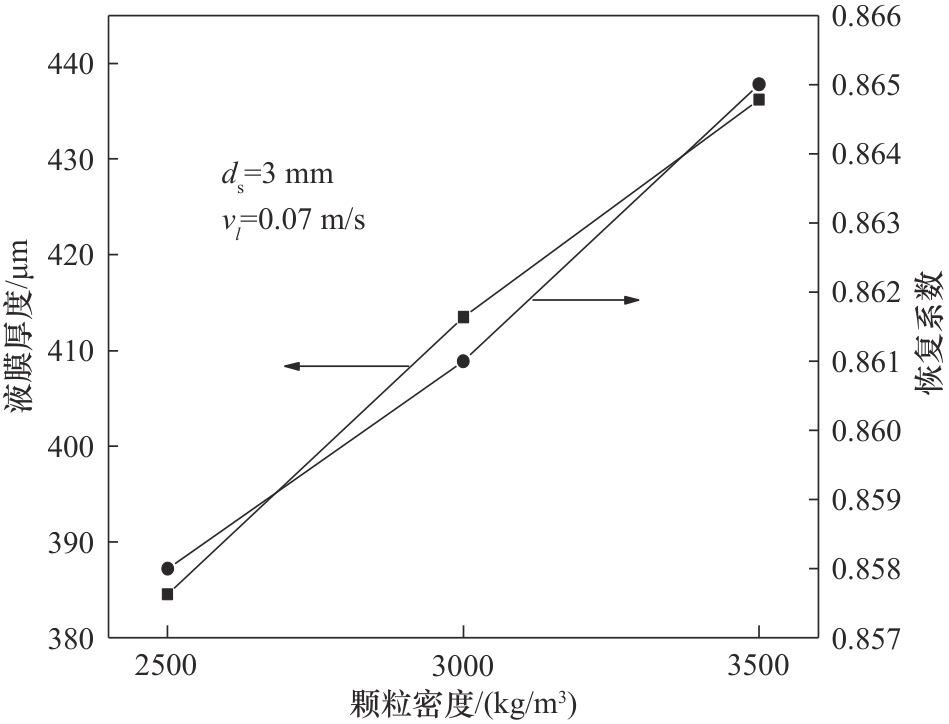
Fig.13 Liquid film thickness and restitution coefficient as a function of particle density
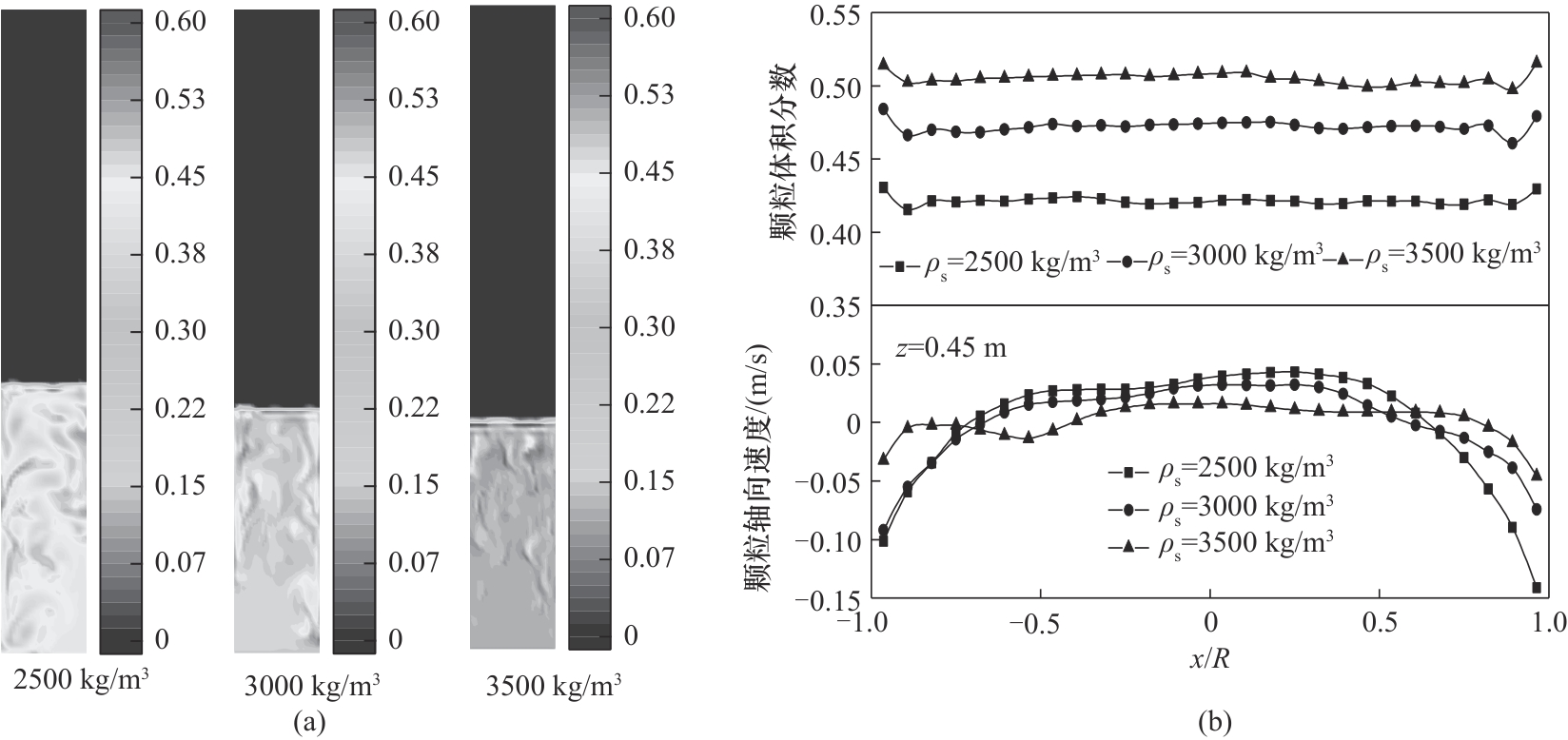
Fig.14 Effects of particle density on axial velocity and concentration of particles
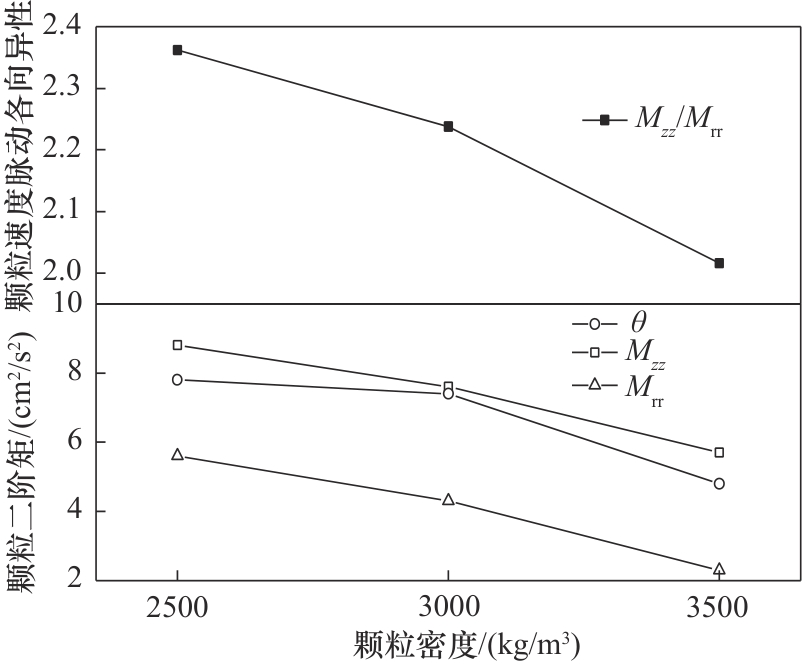
Fig.15 Effects of particle density on particle second-order moments
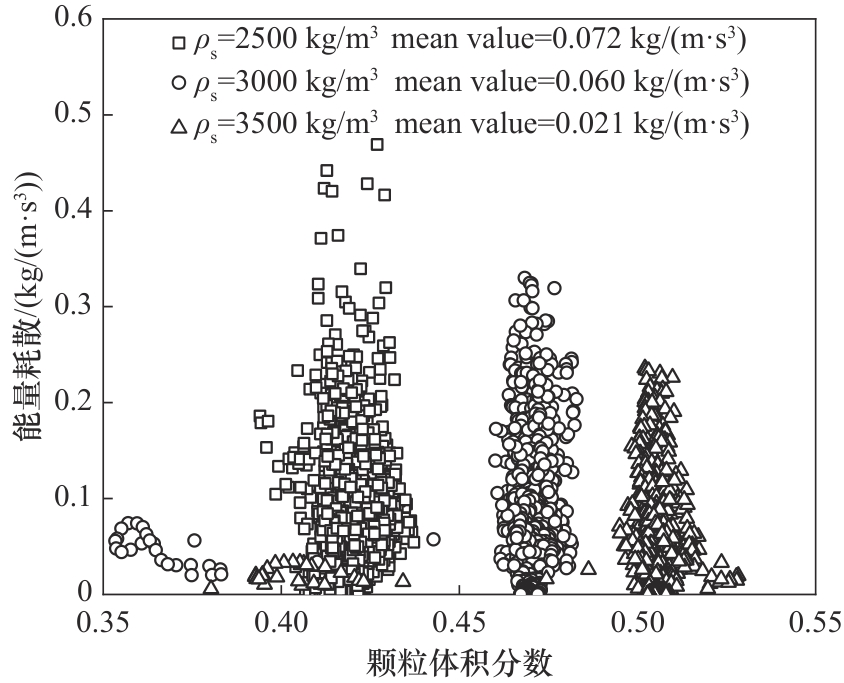
Fig.16 Effects of particle density on collision energy dissipation of particles
| [1] | Thombare M A, Chavan P V, Bankar S B, et al. Solid-liquid circulating fluidized bed: a way forward[J]. Reviews in Chemical Engineering, 2018, 35(1): 1-44. |
| [2] | Gui L T, Yang H T, Huang H, et al. Liquid solid fluidized bed crystallization granulation technology: development, applications, properties, and prospects[J]. Journal of Water Process Engineering, 2022, 45: 102513. |
| [3] | Dabbagh F, Schneiderbauer S. Anisotropy characterization of turbulent fluidization[J]. Physical Review Fluids, 2022, 7(9): 094301. |
| [4] | Jiang Z C, Hagemeier T, Bück A, et al. Experimental measurements of particle collision dynamics in a pseudo-2D gas-solid fluidized bed[J]. Chemical Engineering Science, 2017, 167: 297-316. |
| [5] | Vaidheeswaran A, Shaffer F, Gopalan B. Statistics of velocity fluctuations of Geldart A particles in a circulating fluidized bed riser[J]. Physical Review Fluids, 2017, 2(11): 112301. |
| [6] | Tartan M, Gidaspow D. Measurement of granular temperature and stresses in risers[J]. AIChE Journal, 2004, 50(8): 1760-1775. |
| [7] | Jung J, Gidaspow D, Gamwo I K. Measurement of two kinds of granular temperatures, stresses, and dispersion in bubbling beds[J]. Industrial & Engineering Chemistry Research, 2005, 44(5): 1329-1341. |
| [8] | Peng W G, He Y R, Wang T Y. Granular temperature with discrete element method simulation in a bubbling fluidized bed[J]. Advanced Powder Technology, 2014, 25(3): 896-903. |
| [9] | Gidaspow D, Jung J, Singh R K. Hydrodynamics of fluidization using kinetic theory: an emerging paradigm 2002 Flour-Daniel lecture[J]. Powder Technology, 2004, 148(2/3): 123-141. |
| [10] | Ng B H, Ding Y L, Ghadiri M. Assessment of the kinetic-frictional model for dense granular flow[J]. Particuology, 2008, 6(1): 50-58. |
| [11] | Liu Y, Liu J T, Li X L, et al. Large eddy simulation of particle hydrodynamic characteristics in a dense gas-particle bubbling fluidized bed[J]. Powder Technology, 2024, 433: 119285. |
| [12] | Sun D. Gas-particle flow of pneumatic conveying in vertical pipes simulated using four-way coupled second-order moment method[J]. Powder Technology, 2023, 416: 118225. |
| [13] | Chen J H, Shi X, Wang S, et al. Investigation into fluctuating anisotropy for biomass gasification in bubbling fluidized bed gasifier[J]. Applied Thermal Engineering, 2018, 138: 774-782. |
| [14] | Lu H, Chen J H, Liu G D, et al. Simulated second-order moments of clusters and dispersed particles in riser[J]. Chemical Engineering Science, 2013, 101: 800-812. |
| [15] | Liu H L, Li G H, Liu Y. Hydrodynamic predictions of the ultralight particle dispersions in a bubbling fluidized bed[J]. Processes, 2022, 10(7): 1390. |
| [16] | Zhong H B, Zhang Y N, Xiong Q G, et al. Two-fluid modeling of a wet spouted fluidized bed with wet restitution coefficient model[J]. Powder Technology, 2020, 364: 363-372. |
| [17] | Zhu L H, Zhao Z Y, Liu C, et al. CFD-DEM simulations of a gas-solid-liquid fluidization system: effects on the flow field and particle behavior of semi-dry desulfurization fluidized bed[J]. Journal of Environmental Chemical Engineering, 2023, 11(3): 109973. |
| [18] | Buck B, Heinrich S. Collision dynamics of wet particles: comparison of literature models to new experiments[J]. Advanced Powder Technology, 2019, 30(12): 3241-3252. |
| [19] | Pan S Y, Ma J L, Liu D Y, et al. Theoretical and experimental insight into the homogeneous expansion of wet particles in a fluidized bed[J]. Powder Technology, 2022, 397: 117016. |
| [20] | Tian R C, Wang S Y, Li X, et al. Hydrodynamics of wet particles in liquid-solid fluidized beds using kinetic theory of rough spheres model[J]. Powder Technology, 2021, 392: 524-535. |
| [21] | Ren A X, Tang T Q, He Y R. Evolution of mesoscale structure in fluidized beds with non-spherical dry and wet particles[J]. Advanced Powder Technology, 2022, 33(11): 103794. |
| [22] | Liu G D, Yu F, Lu H L, et al. CFD-DEM simulation of liquid-solid fluidized bed with dynamic restitution coefficient[J]. Powder Technology, 2016, 304: 186-197. |
| [23] | Gao Z Y, Liu G D, Guo X Y, et al. A dynamic coefficient of restitution applied to two-fluid model in liquid-solid fluidized bed[J]. Powder Technology, 2022, 402: 117335. |
| [24] | Yuan Z H, Wang S Y, Shao B L, et al. Simulation study on the flow behavior of wet particles in the power-law liquid-solid fluidized bed[J]. Powder Technology, 2023, 415: 118117. |
| [25] | Gollwitzer F, Rehberg I, Kruelle C A, et al. Coefficient of restitution for wet particles[J]. Physical Review E. Statistical, Nonlinear, and Soft Matter Physics, 2012, 86(1 Pt 1): 011303. |
| [26] | Davis R H, Serayssol J M, Hinch E J. The elastohydrodynamic collision of two spheres[J]. Journal of Fluid Mechanics, 1986, 163: 479-497. |
| [27] | Barnocky G, Davis R H. Elastohydrodynamic collision and rebound of spheres: experimental verification[J]. Physics of Fluids, 1988, 31(6): 1324-1329. |
| [28] | Davis R H, Rager D A, Good B T. Elastohydrodynamic rebound of spheres from coated surfaces[J]. Journal of Fluid Mechanics, 2002, 468(1): 107-119. |
| [29] | Sun D, Wang S Y, Lu H L, et al. A second-order moment method of dense gas-solid flow for bubbling fluidization[J]. Chemical Engineering Science, 2009, 64(23): 5013-5027. |
| [30] | Sun D, Wang J Z, Lu H L, et al. Numerical simulation of gas-particle flow with a second-order moment method in bubbling fluidized beds[J]. Powder Technology, 2010, 199(3): 213-225. |
| [31] | Grad H. On the kinetic theory of rarefied gases[J]. Communications on Pure and Applied Mathematics, 1949, 2(4): 331-407. |
| [32] | Jenkins J T, Richman M W. Grad's 13-moment system for a dense gas of inelastic spheres[J]. Archive for Rational Mechanics and Analysis, 1985, 87(4): 355-377. |
| [33] | Peirano E, Leckner B. Fundamentals of turbulent gas-solid flows applied to circulating fluidized bed combustion[J]. Progress in Energy and Combustion Science, 1998, 24(4): 259-296. |
| [34] | Gidaspow D. Multiphase Flow and Fluidization: Continuum and Kinetic Theory Descriptions[M]. Boston: Academic Press, 1994. |
| [35] | Koch D L, Sangani A S. Particle pressure and marginal stability limits for a homogeneous monodisperse gas-fluidized bed: kinetic theory and numerical simulations[J]. Journal of Fluid Mechanics, 1999, 400: 229-263. |
| [36] | Johnson P C, Nott P, Jackson R. Frictional-collisional equations of motion for participate flows and their application to chutes[J]. Journal of Fluid Mechanics, 1990, 210: 501-535. |
| [37] | Johnson P C, Jackson R. Frictional-collisional constitutive relations for granular materials, with application to plane shearing[J]. Journal of Fluid Mechanics, 1987, 176: 67-93. |
| [38] | Limtrakul S, Chen J W, Ramachandran P A, et al. Solids motion and holdup profiles in liquid fluidized beds[J]. Chemical Engineering Science, 2005, 60(7): 1889-1900. |
| [1] | Songyuan GUO, Xiaoqing ZHOU, Wubing MIAO, Bin WANG, Rui ZHUAN, Qingtai CAO, Chengcheng CHEN, Guang YANG, Jingyi WU. Numerical study on characteristics of pressurized discharge in liquid oxygen tank equipped with porous plate in the ascent period of rocket [J]. CIESC Journal, 2025, 76(S1): 62-74. |
| [2] | Tianwei XIA, Anci WANG, Zihan JU, Xiaoxia SUN, Dinghua HU. Study on thermal storage and release characteristics of TPMS-based high density thermal storage device [J]. CIESC Journal, 2025, 76(7): 3605-3614. |
| [3] | Jiangyue GUO, Shoujin CHANG, Haitao HU. Numerical simulation for flow condensation of methanol in horizontal tube [J]. CIESC Journal, 2025, 76(6): 2580-2588. |
| [4] | Lingban WANG, Yifei SUN, Yuhao BU, Zhenbin XU, Xian SUN, Hanfeng SHAO, Changyu SUN, Guangjin CHEN. Study on the methane hydrates exploitation by depressurization in a large-scale fan column-shaped reactor [J]. CIESC Journal, 2025, 76(6): 2958-2973. |
| [5] | Deyin GU, Hao YANG, Changshu LI, Zuohua LIU. Mixing behavior of pseudoplastic fluid in a fractal perforated impeller stirred tank [J]. CIESC Journal, 2025, 76(6): 2569-2579. |
| [6] | Fuyu WANG, Xuanyi ZHOU. Leakage estimation in a chemical tank farm with unsteady adjoint equation and genetic algorithm [J]. CIESC Journal, 2025, 76(6): 3104-3114. |
| [7] | Hongbin NIU, Li QIU, Jingxuan YANG, Zhonglin ZHANG, Xiaogang HAO, Zhongkai ZHAO, Abuliti ABUDULA, Guoqing GUAN. Effect of cylinder diameter on cyclone performance and its flow field mechanism [J]. CIESC Journal, 2025, 76(5): 2367-2376. |
| [8] | Guojia YAO, Zhi WANG, Ang SU, Dongge FENG, Hong TANG, Lingfang SUN. Investigation of the effect of air coefficient on the combustion characteristics of pulverized coal pre-pyrolysis [J]. CIESC Journal, 2025, 76(3): 1243-1252. |
| [9] | Xinyuan ZHANG, Chengxiang HE, Yating LI, Chunying ZHU, Youguang MA, Taotao FU. Advances in simulation and experimental research methods for mass transfer of liquid-liquid heterogeneous system in microchannels [J]. CIESC Journal, 2025, 76(2): 484-503. |
| [10] | Nannan XIE, He CHEN, Guanghua YE, Zhongming SHU, Songbao FU, Xinggui ZHOU. Interaction of multiple impellers for gas-liquid stirred tank and optimization of their combinations [J]. CIESC Journal, 2025, 76(2): 564-575. |
| [11] | Na HUANG, Yunlong JIANG, Donghan WANG, Mingting WU, Xueli JIANG, Yu ZHONG. Numerical study of influence of channel vibration frequency on flow and heat transfer of supercritical n-decane with pyrolysis reaction [J]. CIESC Journal, 2025, 76(1): 173-183. |
| [12] | Yan LI, Hongli GUO, Guoqing SU, Jianwen ZHANG. Gas-liquid two-phase flow and erosion-corrosion in air cooler of hydrogenation unit [J]. CIESC Journal, 2025, 76(1): 141-150. |
| [13] | Qirui GUO, Liyuan REN, Kang CHEN, Xiangyu HUANG, Weihua MA, Leqin XIAO, Weiliang ZHOU. Numerical simulation of static mixing tubes for HTPB propellant slurry [J]. CIESC Journal, 2024, 75(S1): 206-216. |
| [14] | Qian LI, Rongmin ZHANG, Zijie LIN, Qi ZHAN, Weihua CAI. Prediction and simulation of flow and heat transfer for printed circuit plate heat exchanger based on machine learning [J]. CIESC Journal, 2024, 75(8): 2852-2864. |
| [15] | Jialei CAO, Liyan SUN, Dewang ZENG, Fan YIN, Zixiang GAO, Rui XIAO. Numerical simulation of chemical looping hydrogen generation with dual fluidized bed reactors [J]. CIESC Journal, 2024, 75(8): 2865-2874. |
| Viewed | ||||||
|
Full text |
|
|||||
|
Abstract |
|
|||||