CIESC Journal ›› 2025, Vol. 76 ›› Issue (10): 5150-5161.DOI: 10.11949/0438-1157.20250317
• Catalysis, kinetics and reactors • Previous Articles Next Articles
Yuhan CUI1,2( ), Ziwen LIN1,2, Kun QIAN1,2, Cong CHEN1,2, Shenkan FANG4, Bing HE3, Ye WU1,2(), Dong LIU1,2
Received:2025-03-27
Revised:2025-05-14
Online:2025-11-25
Published:2025-10-25
Contact:
Ye WU
崔钰涵1,2(), 林子雯1,2, 钱坤1,2, 陈聪1,2, 方慎侃4, 何兵3, 吴烨1,2(), 刘冬1,2
通讯作者:
吴烨
作者简介:崔钰涵(1998—),女,硕士研究生,1254410162@qq.com
基金资助:CLC Number:
Yuhan CUI, Ziwen LIN, Kun QIAN, Cong CHEN, Shenkan FANG, Bing HE, Ye WU, Dong LIU. Machine learning-driven optimal design of iron-based catalysts and the catalytic oxidation characteristics for ammonia[J]. CIESC Journal, 2025, 76(10): 5150-5161.
崔钰涵, 林子雯, 钱坤, 陈聪, 方慎侃, 何兵, 吴烨, 刘冬. 机器学习驱动的铁基催化剂设计及其氨催化氧化特性研究[J]. 化工学报, 2025, 76(10): 5150-5161.
Add to citation manager EndNote|Ris|BibTeX
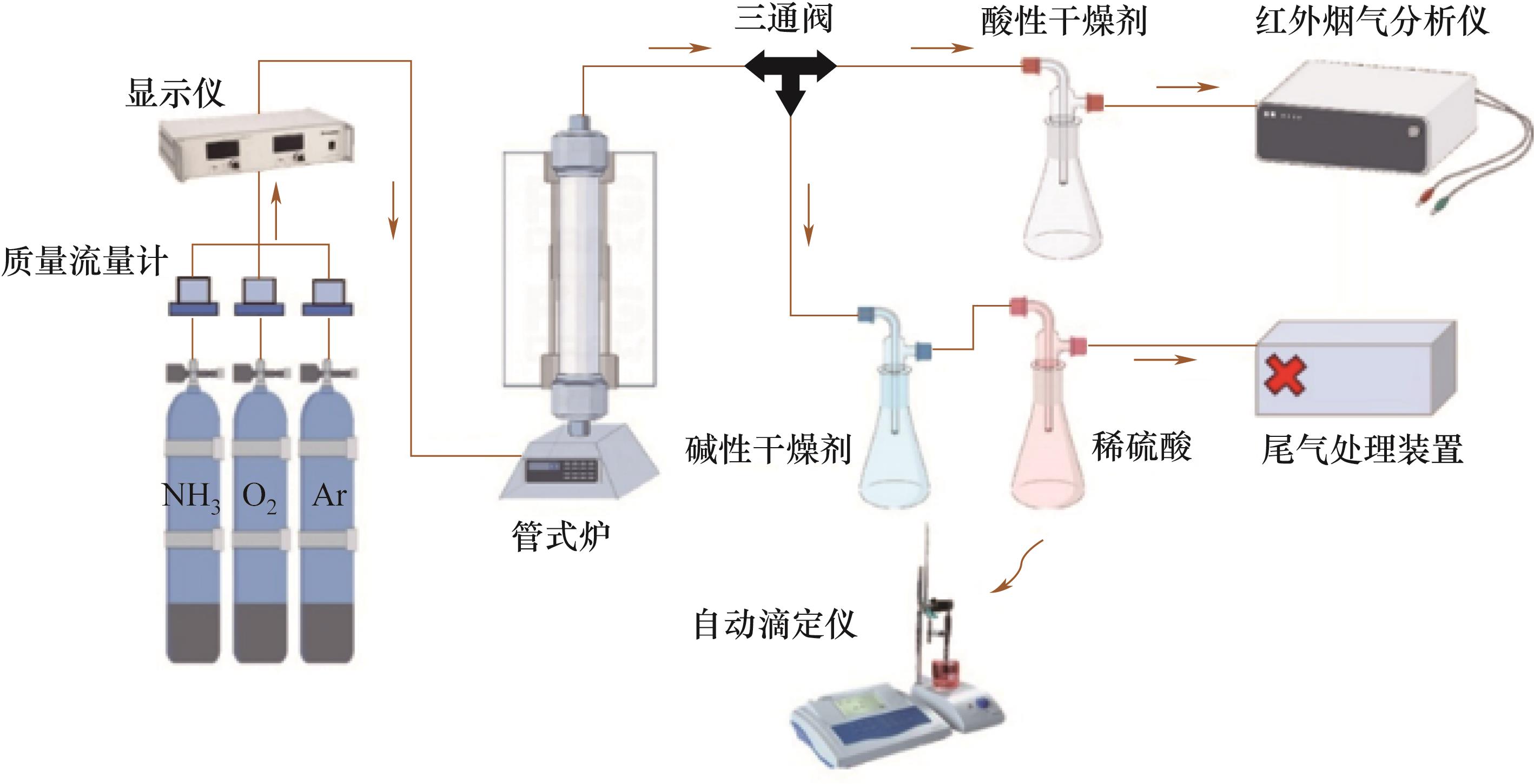
Fig.1 Experimental apparatus for catalytic oxidation of ammonia

Fig.2 Overall research workflow

Fig.3 Statistical distribution of raw data on catalytic oxidation conditions and properties of amino catalytic materials
| 特征变量类型 | 变量名称 | 变量含义 | 数据范围 | |
|---|---|---|---|---|
| 最大值 | 平均值 | |||
| 材料设计变量 | Fe2O3/% | 制备的催化剂中Fe的质量分数 | 100 | 20 |
| NiO/% | 制备的催化剂中Ni的质量分数 | 15 | 1.5 | |
| CuO/% | 制备的催化剂中Cu的质量分数 | 100 | 6.6 | |
| Cr2O3/% | 制备的催化剂中Cr的质量分数 | 40 | 1.7 | |
| CeO2/% | 制备的催化剂中Ce的质量分数 | 100 | 14.6 | |
| Ag/% | 制备的催化剂中Ag的质量分数 | 100 | 3.1 | |
| TiO2/% | 制备的催化剂中TiO2的质量分数 | 99 | 14.7 | |
| Al2O3/% | 制备的催化剂中Al2O3的质量分数 | 95 | 40.3 | |
| 实验制备变量 | 温度/℃ | 催化剂进行催化氧化反应的温度 | 1000 | 100 |
| NH3比例/% | NH3占气体总流量的百分比 | 15 | 0.000002 | |
| 当量比 | 完全氧化理论所需的氧气量与实际供给的氧气量之比 | 1.0 | 0.00000015 | |
| 目标性能变量 | NH3转化率/% | 已反应NH₃占总进料NH₃的百分比[ | 100 | 0 |
| N2选择性/% | 生成物N2占已反应NH₃的百分比[ | 100 | 0 | |
Table 1 Amino catalytic oxidation data set input and output characteristic variables, meaning and data range
| 特征变量类型 | 变量名称 | 变量含义 | 数据范围 | |
|---|---|---|---|---|
| 最大值 | 平均值 | |||
| 材料设计变量 | Fe2O3/% | 制备的催化剂中Fe的质量分数 | 100 | 20 |
| NiO/% | 制备的催化剂中Ni的质量分数 | 15 | 1.5 | |
| CuO/% | 制备的催化剂中Cu的质量分数 | 100 | 6.6 | |
| Cr2O3/% | 制备的催化剂中Cr的质量分数 | 40 | 1.7 | |
| CeO2/% | 制备的催化剂中Ce的质量分数 | 100 | 14.6 | |
| Ag/% | 制备的催化剂中Ag的质量分数 | 100 | 3.1 | |
| TiO2/% | 制备的催化剂中TiO2的质量分数 | 99 | 14.7 | |
| Al2O3/% | 制备的催化剂中Al2O3的质量分数 | 95 | 40.3 | |
| 实验制备变量 | 温度/℃ | 催化剂进行催化氧化反应的温度 | 1000 | 100 |
| NH3比例/% | NH3占气体总流量的百分比 | 15 | 0.000002 | |
| 当量比 | 完全氧化理论所需的氧气量与实际供给的氧气量之比 | 1.0 | 0.00000015 | |
| 目标性能变量 | NH3转化率/% | 已反应NH₃占总进料NH₃的百分比[ | 100 | 0 |
| N2选择性/% | 生成物N2占已反应NH₃的百分比[ | 100 | 0 | |
| 模型 | 优化参数 | N2选择性 | NH3转化率 |
|---|---|---|---|
| RFR | n_estimators | 200 | 50 |
| max_depth | 10 | 15 | |
| GBDT | n_estimators | 50 | 400 |
| max_depth | 9 | 7 | |
| learning_rate | 0.3 | 0.3 | |
| CatBoost | iterations | 200 | 100 |
| depth | 6 | 8 | |
| learning_rate | 0.2 | 0.2 |
Table 2 Parameter optimization results of three machine learning models
| 模型 | 优化参数 | N2选择性 | NH3转化率 |
|---|---|---|---|
| RFR | n_estimators | 200 | 50 |
| max_depth | 10 | 15 | |
| GBDT | n_estimators | 50 | 400 |
| max_depth | 9 | 7 | |
| learning_rate | 0.3 | 0.3 | |
| CatBoost | iterations | 200 | 100 |
| depth | 6 | 8 | |
| learning_rate | 0.2 | 0.2 |
| 统计参数 | 模型 | N2选择性 | NH3转化率 |
|---|---|---|---|
| R2 | RFR | 0.98464 | 0.97758 |
| GBDT | 0.90271 | 0.90841 | |
| CatBoost | 0.98911 | 0.98316 | |
| RMSE | RFR | 0.02521 | 0.04791 |
| GBDT | 0.06344 | 0.09684 | |
| CatBoost | 0.02123 | 0.04153 | |
| MAE | RFR | 0.01267 | 0.02370 |
| GBDT | 0.04178 | 0.05862 | |
| CatBoost | 0.01440 | 0.02352 |
Table 3 Predictive performance of three machine learning models training sets
| 统计参数 | 模型 | N2选择性 | NH3转化率 |
|---|---|---|---|
| R2 | RFR | 0.98464 | 0.97758 |
| GBDT | 0.90271 | 0.90841 | |
| CatBoost | 0.98911 | 0.98316 | |
| RMSE | RFR | 0.02521 | 0.04791 |
| GBDT | 0.06344 | 0.09684 | |
| CatBoost | 0.02123 | 0.04153 | |
| MAE | RFR | 0.01267 | 0.02370 |
| GBDT | 0.04178 | 0.05862 | |
| CatBoost | 0.01440 | 0.02352 |
| 统计参数 | 模型 | N2选择性 | NH3转化率 |
|---|---|---|---|
| R2 | RFR | 0.91808 | 0.91154 |
| GBDT | 0.76023 | 0.87058 | |
| CatBoost | 0.87416 | 0.91159 | |
| RMSE | RFR | 0.05929 | 0.09249 |
| GBDT | 0.10144 | 0.11187 | |
| CatBoost | 0.07349 | 0.09246 | |
| MAE | RFR | 0.03347 | 0.04747 |
| GBDT | 0.06190 | 0.06456 | |
| CatBoost | 0.04219 | 0.04859 |
Table 4 Predictive performance of three machine learning models test sets
| 统计参数 | 模型 | N2选择性 | NH3转化率 |
|---|---|---|---|
| R2 | RFR | 0.91808 | 0.91154 |
| GBDT | 0.76023 | 0.87058 | |
| CatBoost | 0.87416 | 0.91159 | |
| RMSE | RFR | 0.05929 | 0.09249 |
| GBDT | 0.10144 | 0.11187 | |
| CatBoost | 0.07349 | 0.09246 | |
| MAE | RFR | 0.03347 | 0.04747 |
| GBDT | 0.06190 | 0.06456 | |
| CatBoost | 0.04219 | 0.04859 |

Fig.4 Comparison of real values and predicted values of the test set data of three machine learning models
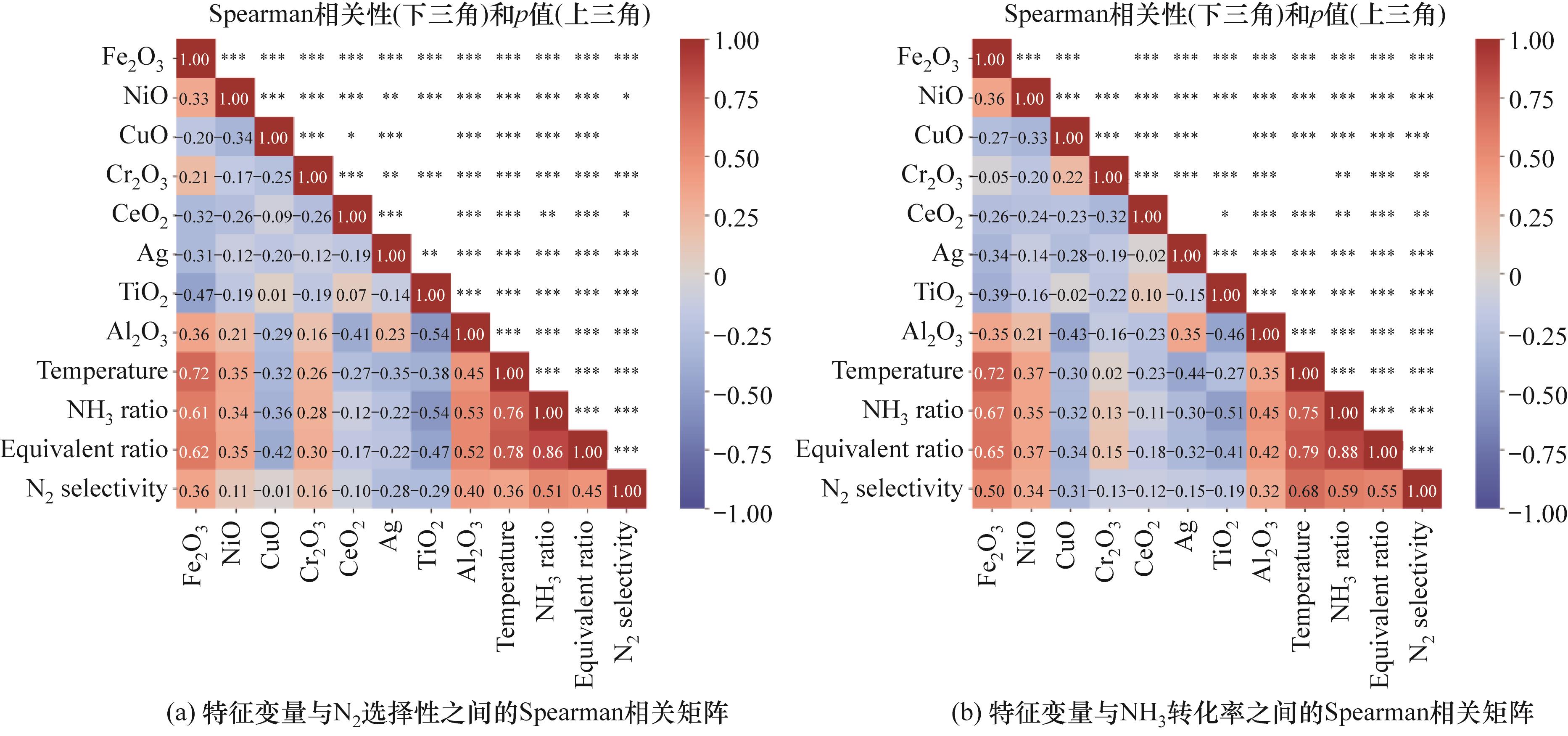
Fig.5 Correlation analysis of characteristic variables of catalytic oxidation of amino fuels

Fig.6 Analysis of the importance of characteristic variables in catalytic oxidation of amino fuels
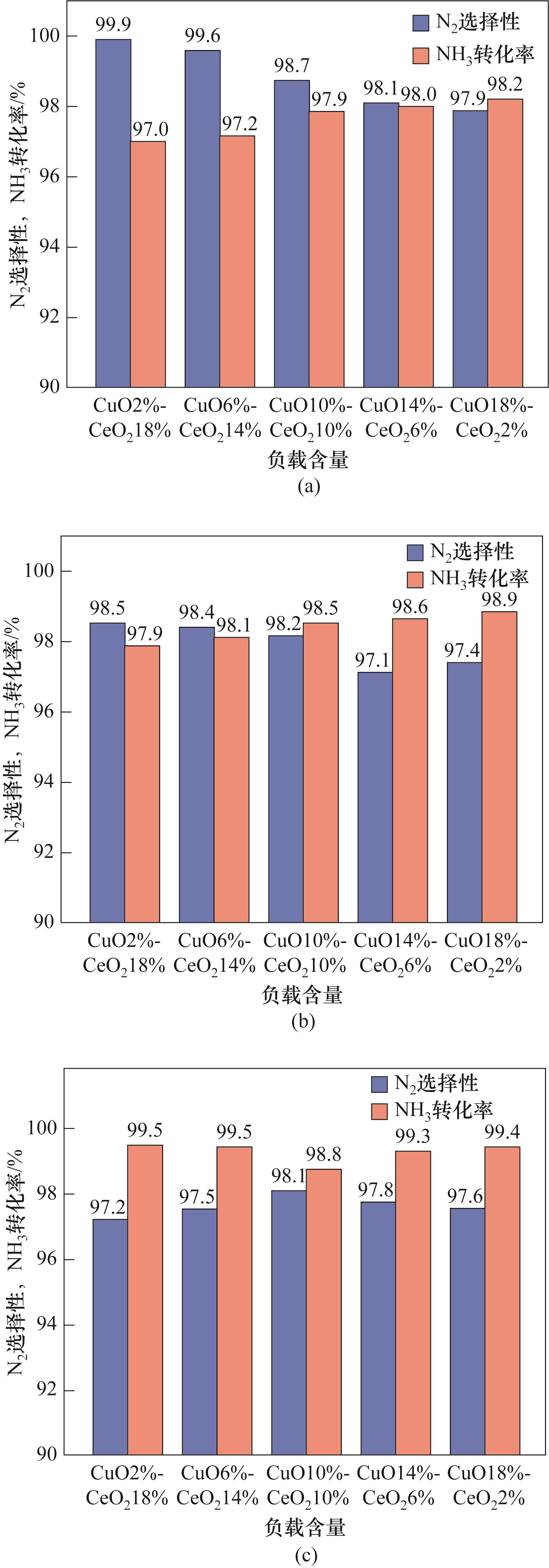
Fig.7 The synergistic effect of target features (CuO and CeO2) on N2 selectivity and NH3 conversion rate at different temperatures
| 实验参数 | CuO/% | CeO2/% |
|---|---|---|
| 温度(500、700、900℃) | 2 | 18 |
| 6 | 14 | |
| 10 | 10 | |
| 14 | 6 | |
| 18 | 2 |
Table 5 Experimental design parameters of amino catalytic oxidation
| 实验参数 | CuO/% | CeO2/% |
|---|---|---|
| 温度(500、700、900℃) | 2 | 18 |
| 6 | 14 | |
| 10 | 10 | |
| 14 | 6 | |
| 18 | 2 |
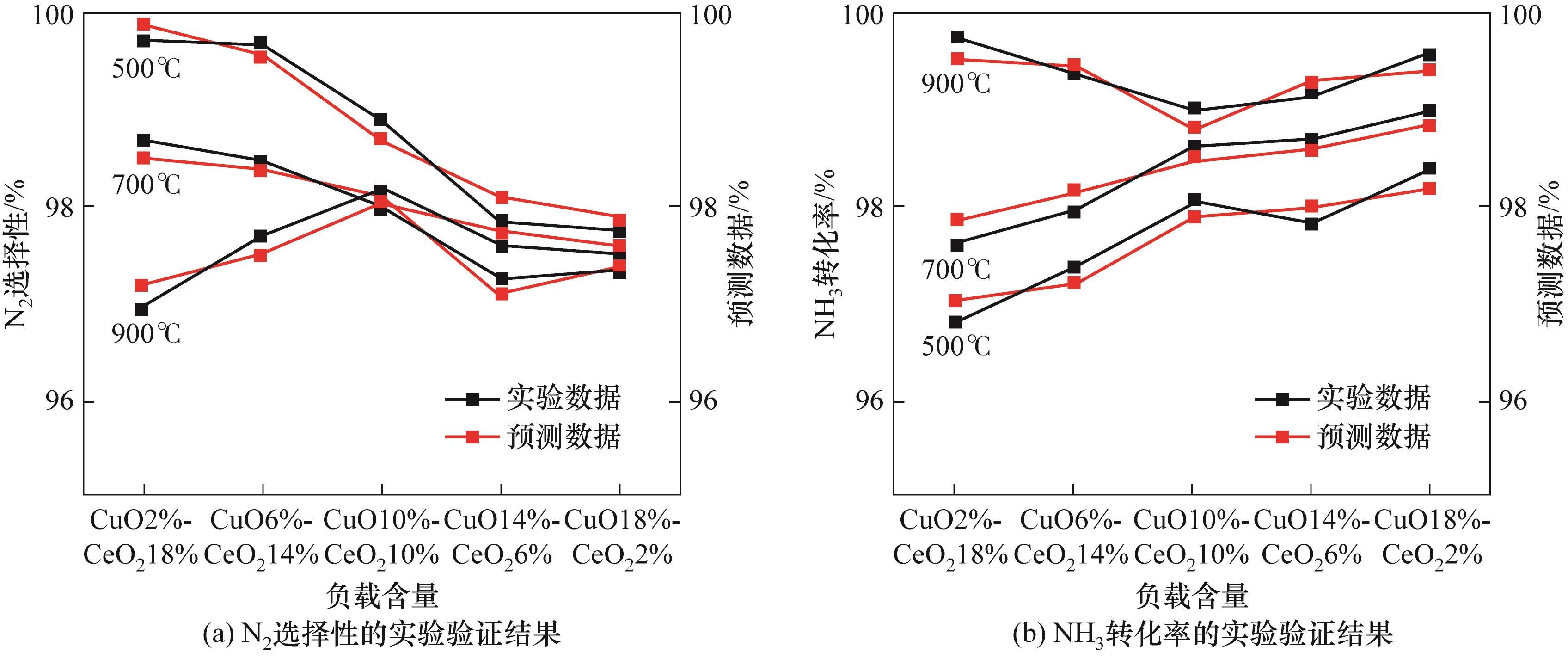
Fig.8 Verification results of catalytic performance of catalytic oxidation experiment of amino fuels
| [1] | Kang L W, Pan W G, Zhang J K, et al. A review on ammonia blends combustion for industrial applications[J]. Fuel, 2023, 332:126150. |
| [2] | Shi C, Zhang Z, Wang H Y, et al. Parametric analysis and optimization of the combustion process and pollutant performance for ammonia-diesel dual-fuel engines[J]. Energy, 2024, 296: 131171. |
| [3] | Valera-Medina A, Xiao H, Owen-Jones M, et al. Ammonia for power[J]. Progress in Energy and Combustion Science, 2018, 69: 63-102. |
| [4] | Chiong M C, Chong C T, Ng J H, et al. Advancements of combustion technologies in the ammonia-fuelled engines[J]. Energy Conversion and Management, 2021, 244: 114460. |
| [5] | Elbaz A M, Wang S X, Guiberti T F, et al. Review on the recent advances on ammonia combustion from the fundamentals to the applications[J]. Fuel Communications, 2022, 10: 100053. |
| [6] | Egerer J, Grimm V, Niazmand K, et al. The economics of global green ammonia trade—“Shipping Australian wind and sunshine to Germany”[J]. Applied Energy, 2023, 334: 120662. |
| [7] | Sabry Rashed E, Elwardany A E, Emam M, et al. 3D numerical study of NH3/H2 MILD combustion in a reversed flow MILD combustion furnace[J]. Applied Thermal Engineering, 2024, 252: 123610. |
| [8] | Wang H M, Zhang Q L, Zhang T X, et al. Structural tuning and NH3-SCO performance optimization of CuO-Fe2O3 catalysts by impact of thermal treatment[J]. Applied Surface Science, 2019, 485: 81-91. |
| [9] | Hinokuma S, Araki K, Iwasa T, et al. Ammonia-rich combustion and ammonia combustive decomposition properties of various supported catalysts[J]. Catalysis Communications, 2019, 123: 64-68. |
| [10] | Hinokuma S, Shimanoe H, Kawabata Y, et al. Supported and unsupported manganese oxides for catalytic ammonia combustion[J]. Catalysis Communications, 2018, 105: 48-51. |
| [11] | Yousefi Rizi H, Shin D. Green hydrogen production technologies from ammonia cracking[J]. Energies, 2022, 15(21): 8246. |
| [12] | Qu Z P, Fan R, Wang Z, et al. Selective catalytic oxidation of ammonia to nitrogen over MnO2 prepared by urea-assisted hydrothermal method[J]. Applied Surface Science, 2015, 351: 573-579. |
| [13] | Liang C X, Li X Y, Qu Z P, et al. The role of copper species on Cu/γ-Al2O3 catalysts for NH3-SCO reaction[J]. Applied Surface Science, 2012, 258(8): 3738-3743. |
| [14] | Wang Z, Qu Z P, Quan X, et al. Selective catalytic oxidation of ammonia to nitrogen over CuO-CeO2 mixed oxides prepared by surfactant-templated method[J]. Applied Catalysis B: Environmental, 2013, 134: 153-166. |
| [15] | Zhang X Y, Wang H, Wang Z, et al. Adsorption and surface reaction pathway of NH3 selective catalytic oxidation over different Cu-Ce-Zr catalysts[J]. Applied Surface Science, 2018, 447: 40-48. |
| [16] | Hinokuma S, Shimanoe H, Matsuki S, et al. Catalytic activity and selectivities of metal oxides and Pt/Al2O3 for NH3 combustion[J]. Chemistry Letters, 2016, 45(2): 179-181. |
| [17] | Liu H, Zhao Y, Zhang C H, et al. Evolution of reaction mechanism in the catalytic combustion of ammonia on copper-cerium mixed oxide[J]. Journal of Catalysis, 2023, 425: 20-31. |
| [18] | Hinokuma S, Iwasa T, Araki K, et al. Ammonia combustion properties of copper oxides-based honeycomb and granular catalysts[J]. Journal of the Japan Petroleum Institute, 2020, 63(5): 274-281. |
| [19] | Yue W R, Zhang R D, Liu N, et al. Selective catalytic oxidation of ammonia to nitrogen over orderly mesoporous CuFe2O4 with high specific surface area[J]. Chinese Science Bulletin, 2014, 59(31): 3980-3986. |
| [20] | Zhang Q L, Wang H M, Ning P, et al. In situ DRIFTS studies on CuO-Fe2O3 catalysts for low temperature selective catalytic oxidation of ammonia to nitrogen[J]. Applied Surface Science, 2017, 419: 733-743. |
| [21] | Pinaeva L G, Dovlitova L S, Isupova L A. Monolithic FeO x /Al2O3 catalysts for ammonia oxidation and nitrous oxide decomposition[J]. Kinetics and Catalysis, 2017, 58(2): 167-178. |
| [22] | Mai H X, Le T C, Chen D H, et al. Machine learning for electrocatalyst and photocatalyst design and discovery[J]. Chemical Reviews, 2022, 122(16): 13478-13515. |
| [23] | Guo W J, Shafizadeh A, Shahbeik H, et al. Machine learning for predicting catalytic ammonia decomposition: an approach for catalyst design and performance prediction[J]. Journal of Energy Storage, 2024, 89: 111688. |
| [24] | Ayodele B V, Ali Alsaffar M, Mustapa S I, et al. Carbon dioxide reforming of methane over Ni-based catalysts: modeling the effect of process parameters on greenhouse gasses conversion using supervised machine learning algorithms[J]. Chemical Engineering and Processing - Process Intensification, 2021, 166: 108484. |
| [25] | Chakkingal A, Janssens P, Poissonnier J, et al. Multi-output machine learning models for kinetic data evaluation: a Fischer-Tropsch synthesis case study[J]. Chemical Engineering Journal, 2022, 446: 137186. |
| [26] | Nandy A, Duan C R, Kulik H J. Audacity of huge: overcoming challenges of data scarcity and data quality for machine learning in computational materials discovery[J]. Current Opinion in Chemical Engineering, 2022, 36: 100778. |
| [27] | Jinnouchi R, Asahi R. Predicting catalytic activity of nanoparticles by a DFT-aided machine-learning algorithm[J]. The Journal of Physical Chemistry Letters, 2017, 8(17): 4279-4283. |
| [28] | Williams T, McCullough K, Lauterbach J A. Enabling catalyst discovery through machine learning and high-throughput experimentation[J]. Chemistry of Materials, 2020, 32(1): 157-165. |
| [29] | Saidi W A, Shadid W, Veser G. Optimization of high-entropy alloy catalyst for ammonia decomposition and ammonia synthesis[J]. The Journal of Physical Chemistry Letters, 2021, 12(21): 5185-5192. |
| [30] | Suvarna M, Pérez-Ramírez J. Embracing data science in catalysis research[J]. Nature Catalysis, 2024, 7: 624-635. |
| [31] | de Araujo L G, Vilcocq L, Fongarland P, et al. Recent developments in the use of machine learning in catalysis: a broad perspective with applications in kinetics[J]. Chemical Engineering Journal, 2025, 508: 160872. |
| [32] | Li J, Pan L J, Suvarna M, et al. Machine learning aided supercritical water gasification for H2-rich syngas production with process optimization and catalyst screening[J]. Chemical Engineering Journal, 2021, 426: 131285. |
| [33] | Vellayappan K, Yue Y F, Lim K H, et al. Impacts of catalyst and process parameters on Ni-catalyzed methane dry reforming via interpretable machine learning[J]. Applied Catalysis B: Environmental, 2023, 330: 122593. |
| [34] | Butler K T, Davies D W, Cartwright H, et al. Machine learning for molecular and materials science[J]. Nature, 2018, 559: 547-555. |
| [35] | He M Y, Wang P X, Ye J Q, et al. Enhanced acid-base synergistic effect of Cu x Fe0.5Ce0.5 metal oxide composite for highly efficient synthesis of N,N'-diphenylurea from CO2 and aniline[J]. Journal of Alloys and Compounds, 2025, 1022: 180059. |
| [36] | Kang R N, Zhang C H, Zhang Z R, et al. Distinct structure-activity relationship and reaction mechanism over CuO/CeO2 catalysts for NH3 self-sustained combustion[J]. Proceedings of the Combustion Institute, 2024, 40(1/2/3/4): 105647. |
| [37] | Du Y, Gao F Y, Zhou Y S, et al. Recent advance of CuO-CeO2 catalysts for catalytic elimination of CO and NO[J]. Journal of Environmental Chemical Engineering, 2021, 9(6): 106372. |
| [38] | Zhang Q L, Xu L S, Ning P, et al. Surface characterization studies of CuO-CeO2-ZrO2 catalysts for selective catalytic reduction of NO with NH3 [J]. Applied Surface Science, 2014, 317: 955-961. |
| [1] | Siyuan WANG, Guoqiang LIU, Tong XIONG, Gang YAN. Characteristics of non-uniform wind velocity distribution in window air conditioner axial fans and their impact on optimizing condenser circuit optimization [J]. CIESC Journal, 2025, 76(S1): 205-216. |
| [2] | Ziteng YAN, Feilong ZHAN, Guoliang DING. Structural design and effect verification of casing-type distributor used in air-conditioners [J]. CIESC Journal, 2025, 76(S1): 152-159. |
| [3] | Lili TONG, Ying CHEN, Minhua AI, Yumei SHU, Xiangwen ZHANG, Jijun ZOU, Lun PAN. ZnO/WO3 heterojunction modulated [2+2] photocycloaddition of cycloolefins for high-energy-density fuels production [J]. CIESC Journal, 2025, 76(9): 4882-4892. |
| [4] | Xiaofeng CAO, Huahai ZHANG, Jiangyun WANG, Limin WANG. Structural design and flow characteristics of conical gas laminar flow element [J]. CIESC Journal, 2025, 76(9): 4440-4448. |
| [5] | Huihui QIAN, Wenjie WANG, Wenyao CHEN, Xinggui ZHOU, Jing ZHANG, Xuezhi DUAN. Synergistic metal-zeolite catalysis for conversion of polypropylene into aromatics [J]. CIESC Journal, 2025, 76(9): 4838-4849. |
| [6] | Longyi LYU, Minglei TANG, Peng HAO, Minhao WU, Wenfang GAO, Guangming ZHANG. Progress on the performance and mechanism of high-solids anaerobic digestion enhanced by conductive materials [J]. CIESC Journal, 2025, 76(9): 4737-4751. |
| [7] | Wei ZHAO, Wenle XING, Zhaoxu HAN, Xingzhong YUAN, Longbo JIANG. Progress of g-C3N4-based metal-free heterojunction photocatalytic degradation of organic pollutants in water [J]. CIESC Journal, 2025, 76(9): 4752-4769. |
| [8] | Peng TIAN, Zhonglin ZHANG, Chao REN, Guochao MENG, Xiaogang HAO, Yegang LIU, Qiwang HOU, Abuliti ABUDULA, Guoqing GUAN. Modeling and optimization of rectisol process based on self-heat regeneration [J]. CIESC Journal, 2025, 76(9): 4601-4612. |
| [9] | Jing ZHAO, Shuchen DONG, Gaoyang LI, Youke HUANG, Haosen SHI, Shuwen MIAO, Chenyan TAN, Tangqi ZHU, Yongshuai LI, Hui PAN, Hao LING. Simulation and optimization of battery performance based on the electrochemical model [J]. CIESC Journal, 2025, 76(9): 4922-4932. |
| [10] | Xiayu FAN, Jianchen SUN, Keying LI, Xinya YAO, Hui SHANG. Machine learning drives system optimization of liquid organic hydrogen storage technology [J]. CIESC Journal, 2025, 76(8): 3805-3821. |
| [11] | Ning YANG, Haonan LI, Xiao LIN, Stella GEORGIADOU, Wen-Feng LIN. Application of plastic-derived carbon@CoMoO4 composites as an efficient electrocatalyst for hydrogen evolution reaction in water electrolysis [J]. CIESC Journal, 2025, 76(8): 4081-4094. |
| [12] | Zhihong CHEN, Jiawei WU, Xiaoling LOU, Junxian YUN. Recent advances in machine learning for biomanufacturing of chemicals [J]. CIESC Journal, 2025, 76(8): 3789-3804. |
| [13] | Ke LI, Haolin XIE, Jian WEN. Multi-objective genetic algorithm optimization for thermal insulation performance of liquid hydrogen tank with multiple vapor-cooled shields [J]. CIESC Journal, 2025, 76(8): 4217-4227. |
| [14] | Zheng GAO, Hui WANG, Zhiguo QU. Data-driven high-throughput screening of anion-pillared metal-organic frameworks for hydrogen storage [J]. CIESC Journal, 2025, 76(8): 4259-4272. |
| [15] | Xinyi CHAO, Wenyao CHEN, Jing ZHANG, Gang QIAN, Xinggui ZHOU, Xuezhi DUAN. Controlled preparation and performance regulation of catalysts for one-step synthesis of methyl propionate from methanol and methyl acetate [J]. CIESC Journal, 2025, 76(8): 4030-4041. |
| Viewed | ||||||
|
Full text |
|
|||||
|
Abstract |
|
|||||