化工学报 ›› 2025, Vol. 76 ›› Issue (12): 6562-6572.DOI: 10.11949/0438-1157.20250779
陆新宇( ), 朱少龙, 甘浩然, 王凯(), 邱利民, 包士然
收稿日期:2025-07-15
修回日期:2025-09-28
出版日期:2025-12-31
发布日期:2026-01-23
通讯作者:
王凯
作者简介:陆新宇(1999—),男,硕士,xinyulu1999@zju.edu.cn
基金资助:
Xinyu LU(), Shaolong ZHU, Haoran GAN, Kai WANG(), Limin QIU, Shiran BAO
Received:2025-07-15
Revised:2025-09-28
Online:2025-12-31
Published:2026-01-23
Contact:
Kai WANG
摘要:
低温液氢是重要的化工产品,作为未来低碳能源重要载体备受关注。液氢管道预冷是其液氢高效输运的关键一环。建立系统完善度较高的一维液氢流动模型,通过增加径向高真空多层绝热材料传热方案,应用合适压降、传热经验关联式,并设计适用大管径液氢输送管线的分阶段预冷方案。在对公称直径DN314、长度300 m的水平管预冷过程模拟中,气冷阶段降温平缓,内金属管壁面热通量低于1 kW/m2,预冷耗时37 h。液冷阶段降温速率先快后慢,两相流壁面热通量最大约9.4 kW/m2,耗时约0.45 h,对比常规恒流量预冷方案减小液氢质量消耗55%。管内最大压降60 kPa,呈现脉动动态变化,随流动趋于稳定脉动幅度减小稳定至40 kPa。研究结果可为长距离输运液氢高效预冷技术提供理论支撑。
中图分类号:
陆新宇, 朱少龙, 甘浩然, 王凯, 邱利民, 包士然. 大管径液氢输送管线分阶段预冷传热特性研究[J]. 化工学报, 2025, 76(12): 6562-6572.
Xinyu LU, Shaolong ZHU, Haoran GAN, Kai WANG, Limin QIU, Shiran BAO. Study on staged precooling heat transfer characteristics of large-diameter liquid hydrogen pipelines[J]. CIESC Journal, 2025, 76(12): 6562-6572.
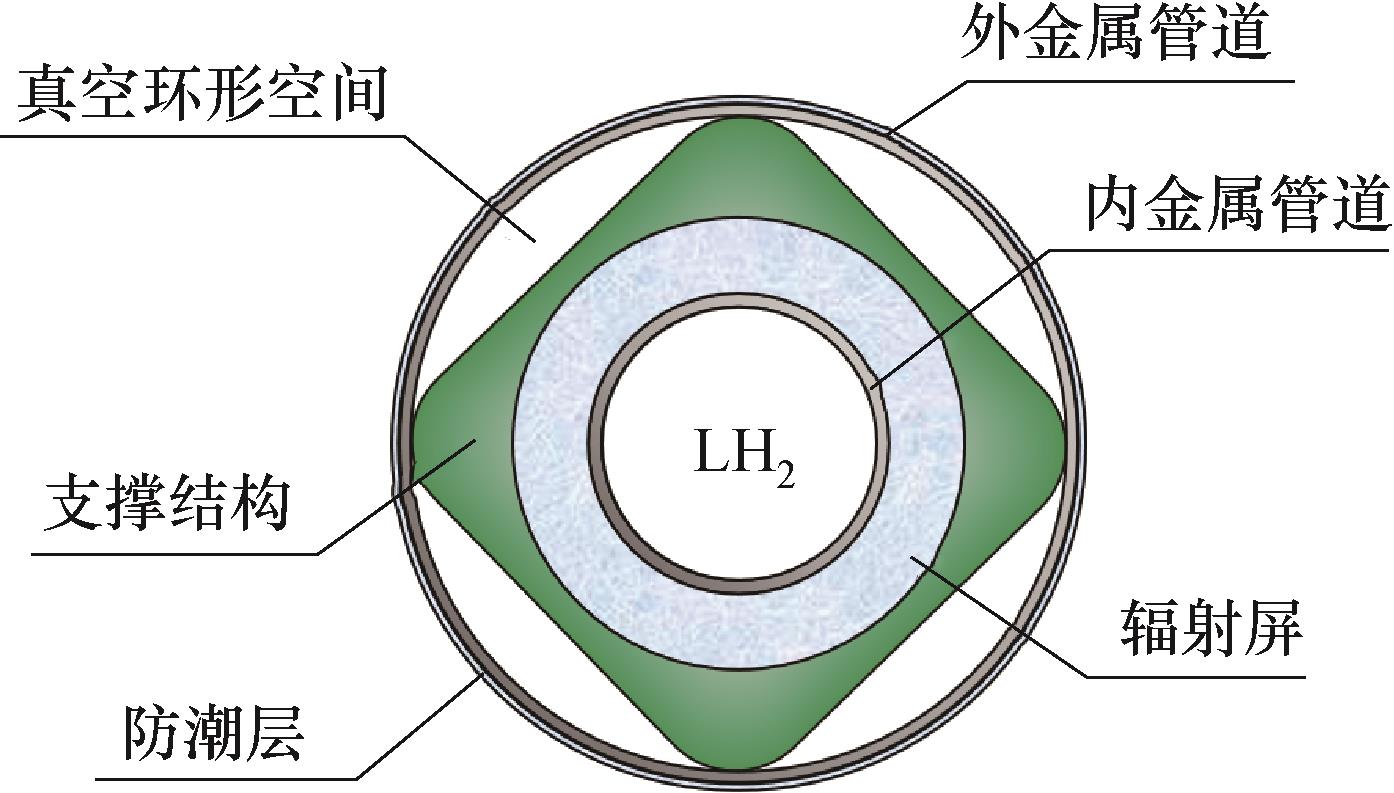
图1 绝热层结构示意图
Fig.1 Schematic diagram of insulation layer structure
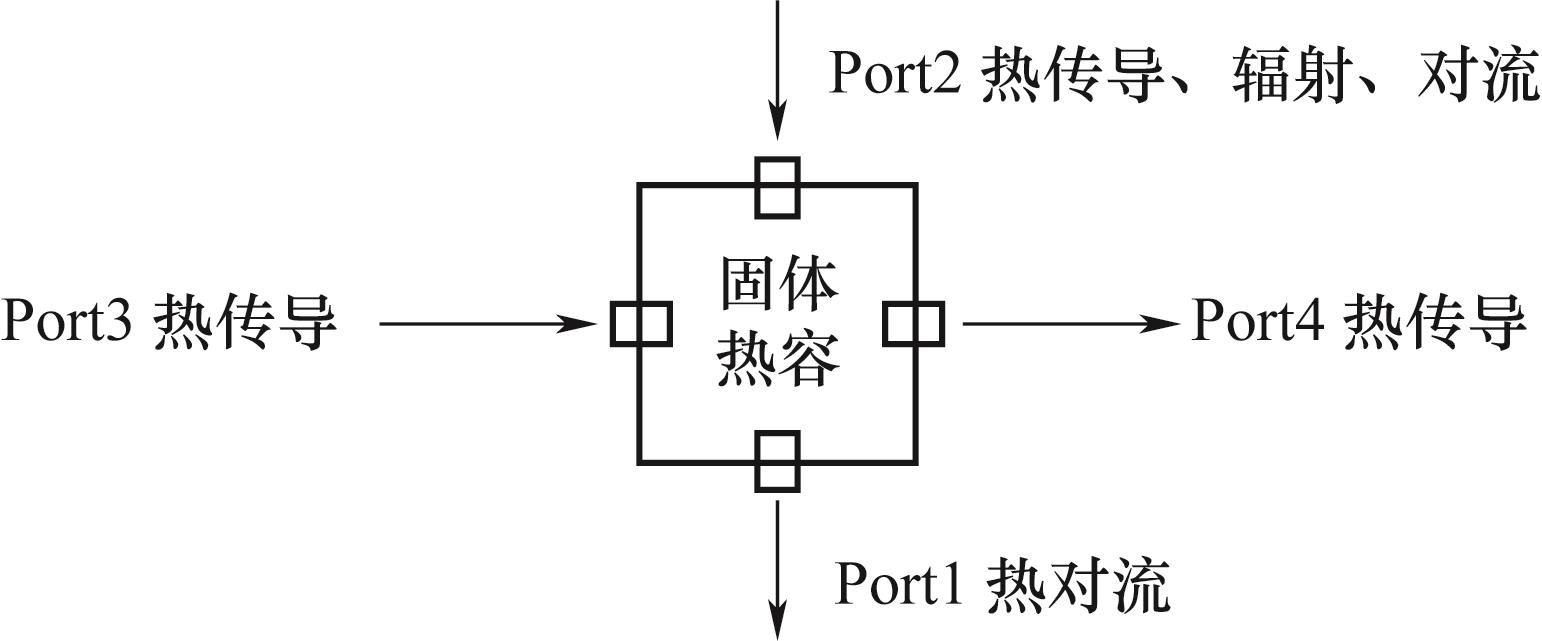
图2 内金属管段微元传热计算示意图
Fig.2 Heat transfer calculations of inner pipe microelement
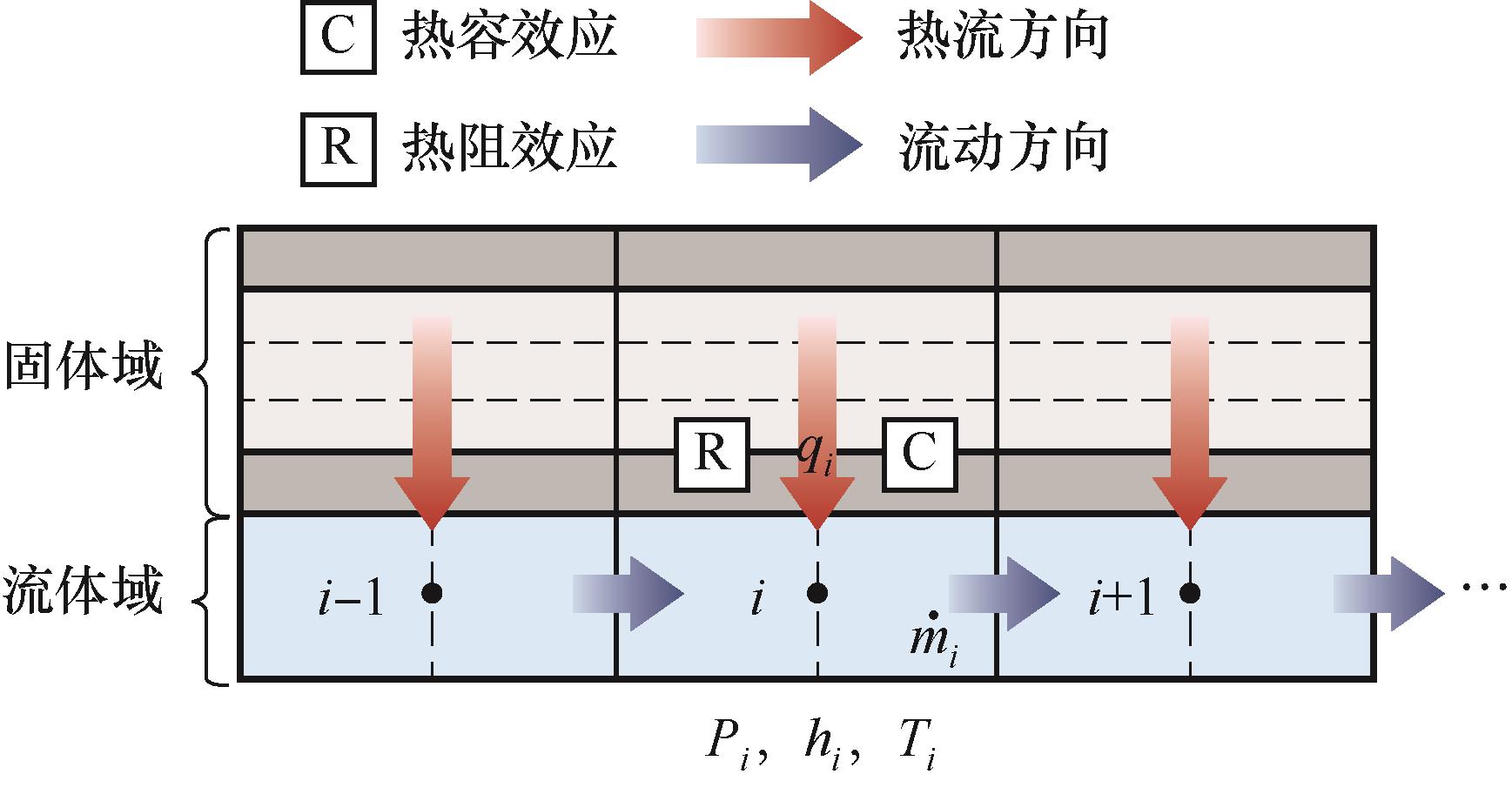
图3 管段微元离散方案示意图
Fig.3 Discrete scheme for pipeline segment elements
| 预冷阶段 | 工质种类 | 工质温度 | 流量 | |
|---|---|---|---|---|
| 气冷阶段 | 阶段一 | 氮气 | 110 K | 196~2457 L/min |
| 阶段二 | 氢气 | 120 K | 3000 L/min | |
| 阶段三 | 氢气 | 50 K | 523~1080 L/min | |
| 液冷阶段 | 阶段四 | 液氢 | 20.3 K | 2.7547 kg/s |
表1 分阶段预冷方案
Table 1 Staged chilldown process
| 预冷阶段 | 工质种类 | 工质温度 | 流量 | |
|---|---|---|---|---|
| 气冷阶段 | 阶段一 | 氮气 | 110 K | 196~2457 L/min |
| 阶段二 | 氢气 | 120 K | 3000 L/min | |
| 阶段三 | 氢气 | 50 K | 523~1080 L/min | |
| 液冷阶段 | 阶段四 | 液氢 | 20.3 K | 2.7547 kg/s |
| 几何尺寸与边界条件 | 数值 |
|---|---|
| 管道长度/m | 300 |
| 管道内径/mm | 314 |
| 管道外径/mm | 348 |
| 环境温度/K | 293.15 |
| 管道初始温度/K | 293.15 |
| 管内初始压力/kPa | 100 |
| 管内初始干度 | 1 |
表2 管线模型参数
Table 2 Pipeline geometric parameters
| 几何尺寸与边界条件 | 数值 |
|---|---|
| 管道长度/m | 300 |
| 管道内径/mm | 314 |
| 管道外径/mm | 348 |
| 环境温度/K | 293.15 |
| 管道初始温度/K | 293.15 |
| 管内初始压力/kPa | 100 |
| 管内初始干度 | 1 |
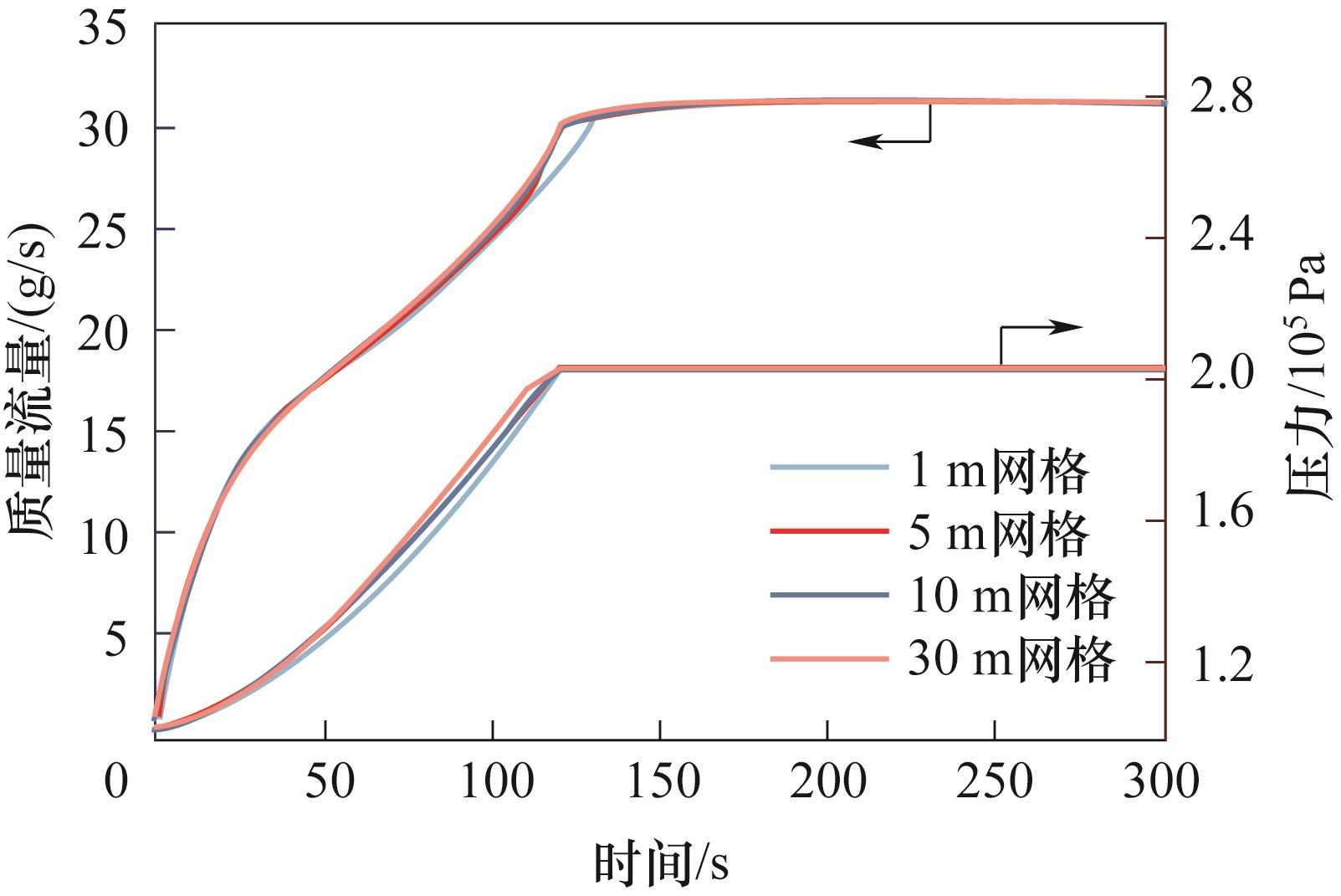
图4 网格无关性验证
Fig.4 Mesh irrelevance verification
| 预冷阶段 | 参数 | 数值 |
|---|---|---|
| 气冷阶段 | 体积流量/(L/min) | 2000~8000 |
| 来流温度/K | 193.15~253.15 | |
| 管线初始温度/K | 295.15 | |
| 管内初始压力/kPa | 100 | |
| 液冷阶段 | 质量流量/(kg/s) | 0.55 |
| 来流温度/K | 115.15 | |
| 管内初始温度 | 气冷阶段最终温度 | |
| 管内初始压力/kPa | 100 |
表3 LNG接收站预冷过程系统参数
Table 3 System parameters of liquid unloading process at LNG receiving terminal
| 预冷阶段 | 参数 | 数值 |
|---|---|---|
| 气冷阶段 | 体积流量/(L/min) | 2000~8000 |
| 来流温度/K | 193.15~253.15 | |
| 管线初始温度/K | 295.15 | |
| 管内初始压力/kPa | 100 | |
| 液冷阶段 | 质量流量/(kg/s) | 0.55 |
| 来流温度/K | 115.15 | |
| 管内初始温度 | 气冷阶段最终温度 | |
| 管内初始压力/kPa | 100 |
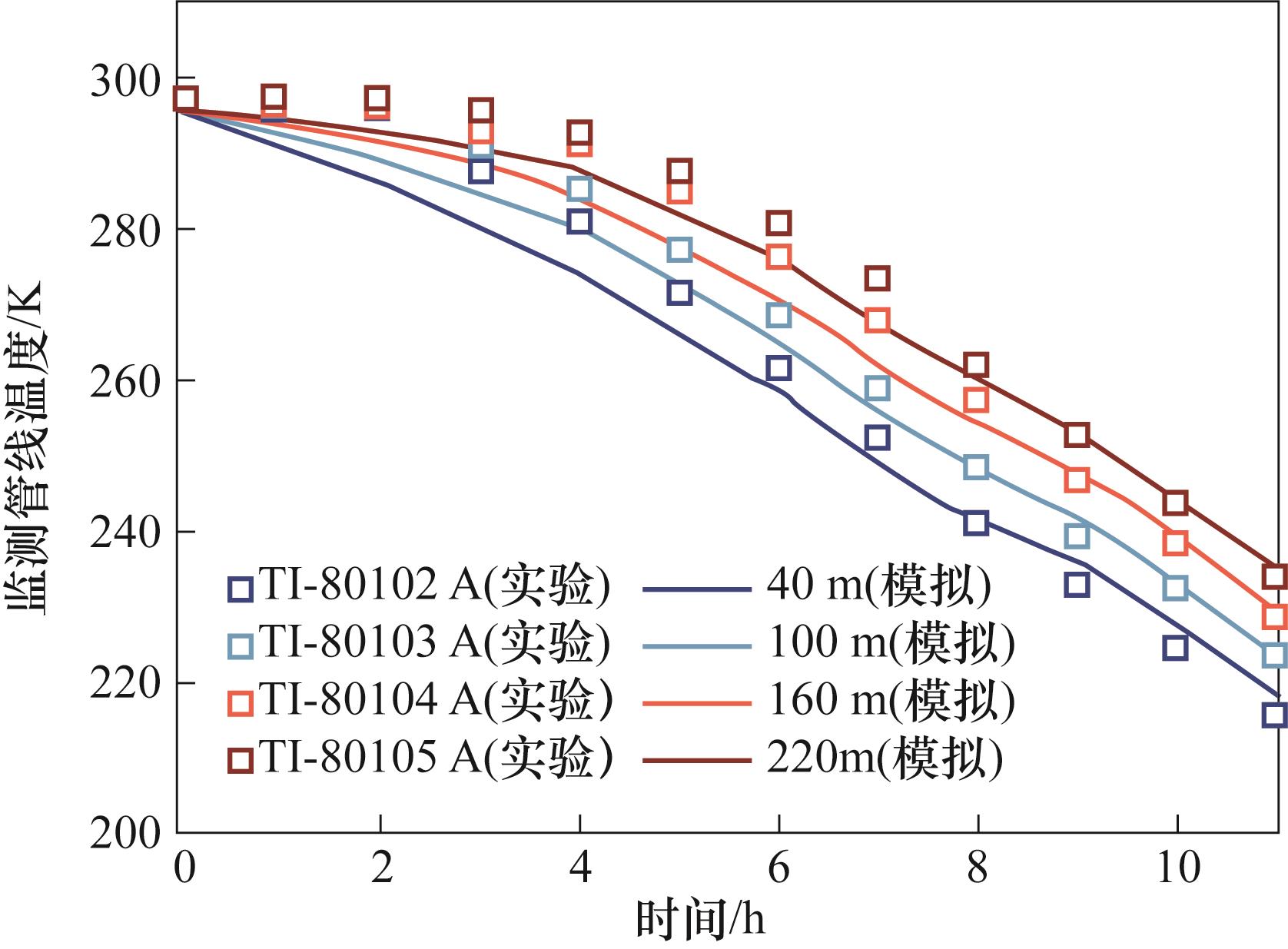
图5 气冷阶段实验值对比模拟值
Fig.5 Natural gas chilldown: comparison between experimental and simulated values
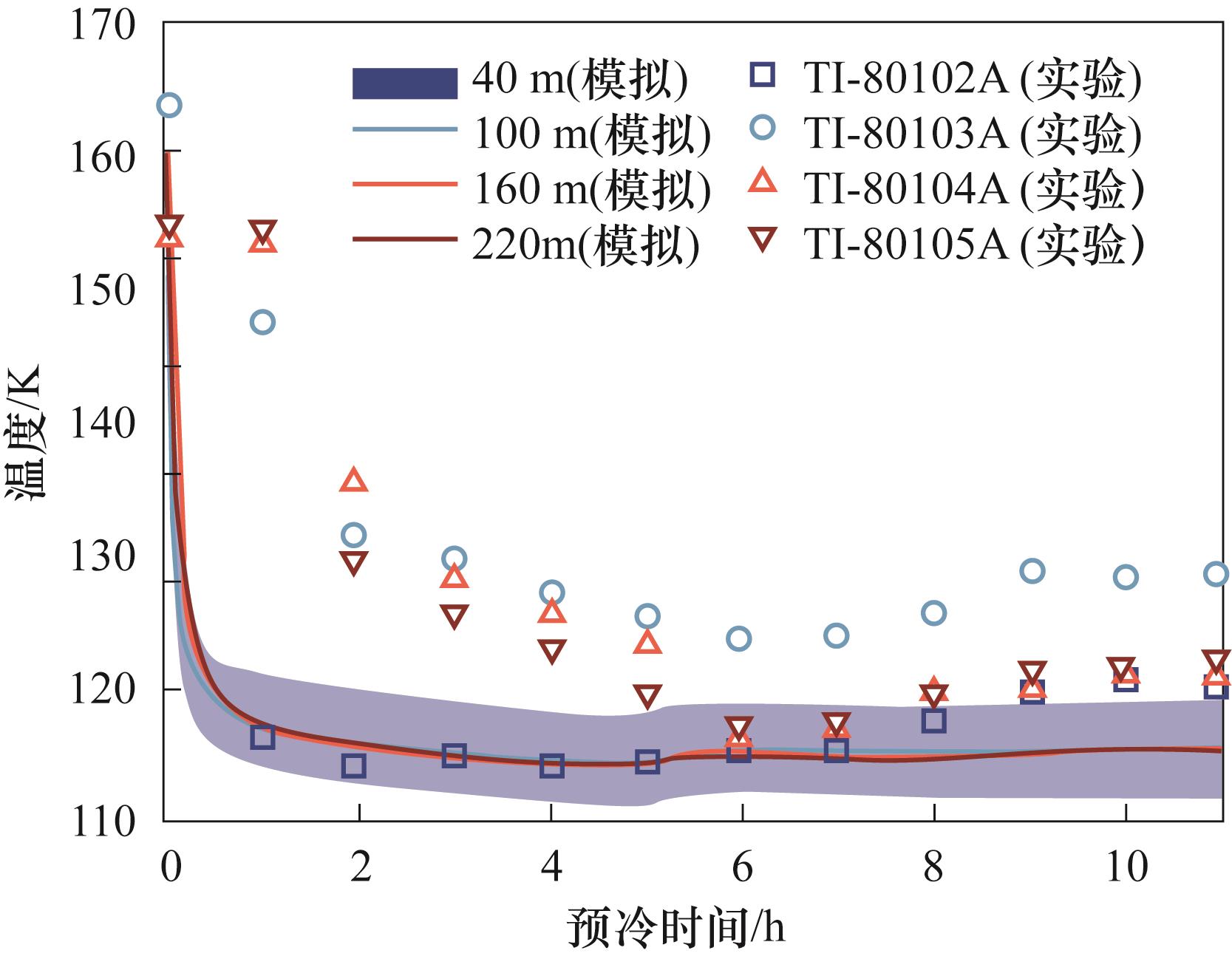
图6 液冷阶段实验值对比模拟值
Fig.6 LNG chilldown: comparison between experimental and simulated values
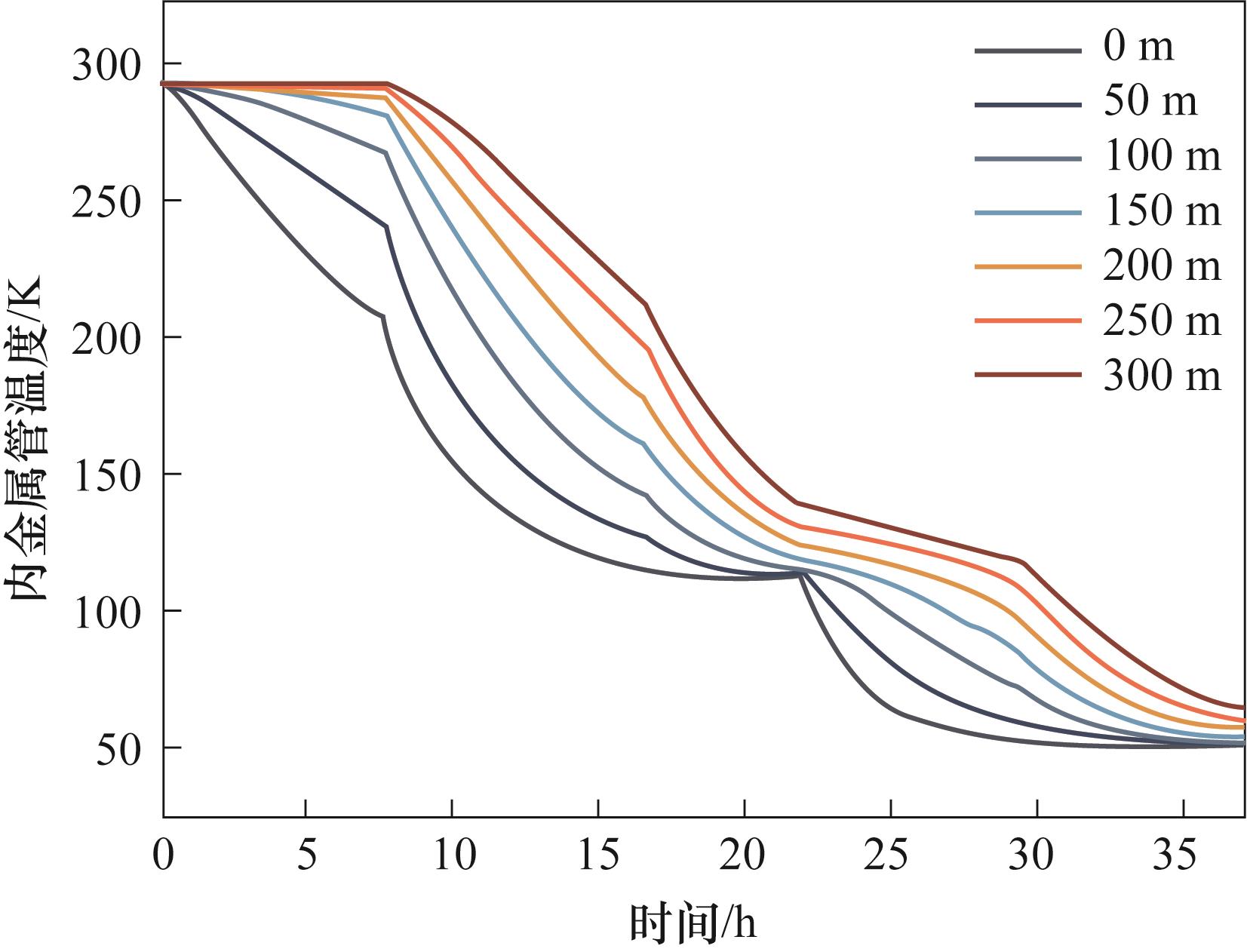
图7 气冷阶段不同管段温度变化
Fig.7 Temperature changes in different pipe sections during the vapor chilldown stage
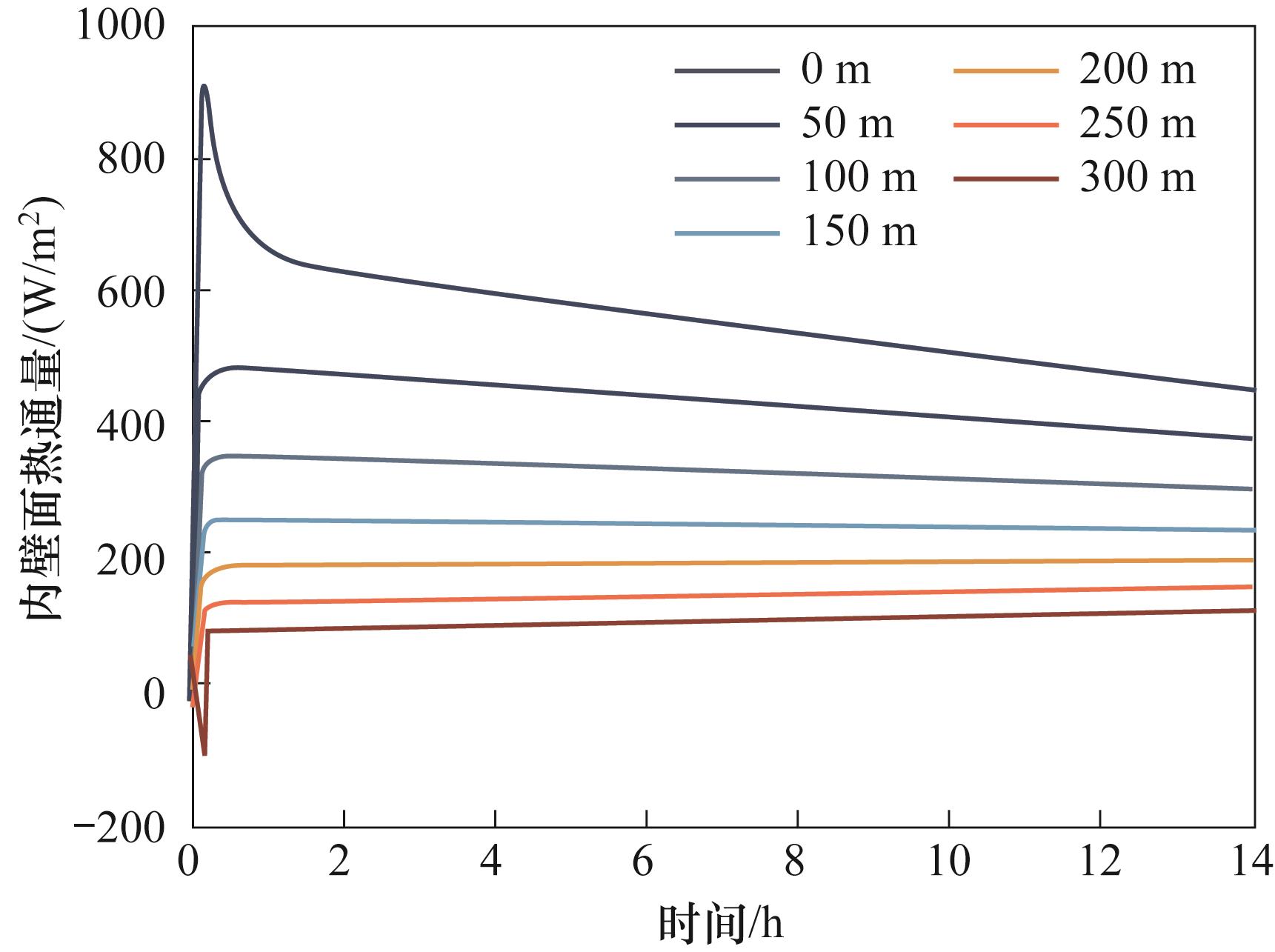
图8 气冷阶段不同管段内壁面热通量
Fig.8 Heat flux in different pipe sections during the vapor chilldown stage
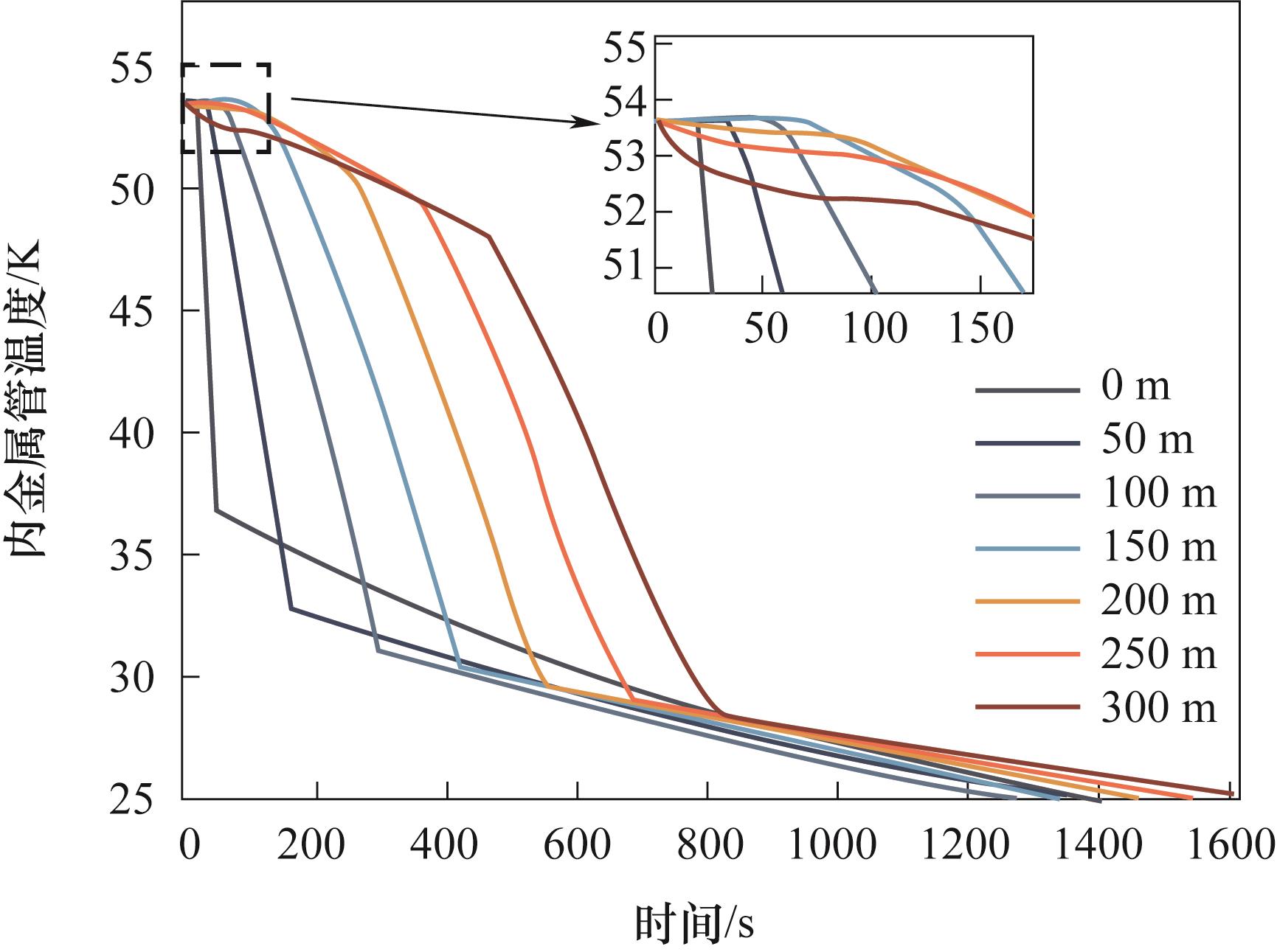
图9 液冷阶段不同管段温度变化
Fig.9 Temperature changes in different pipe sections during the liquid chilldown stage
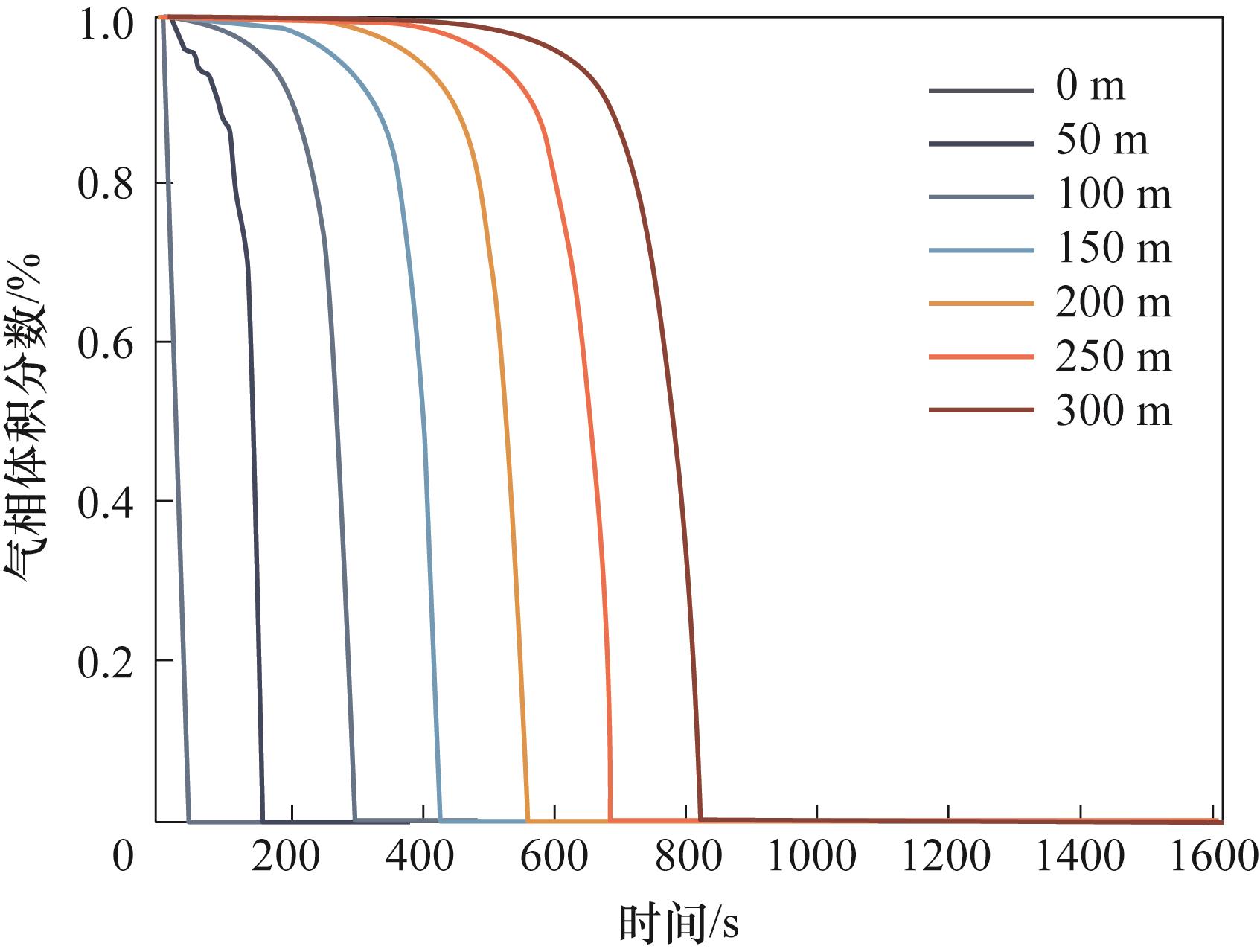
图10 不同管段内气相体积分数变化
Fig.10 Vapor phase volume fraction change in different pipe sections
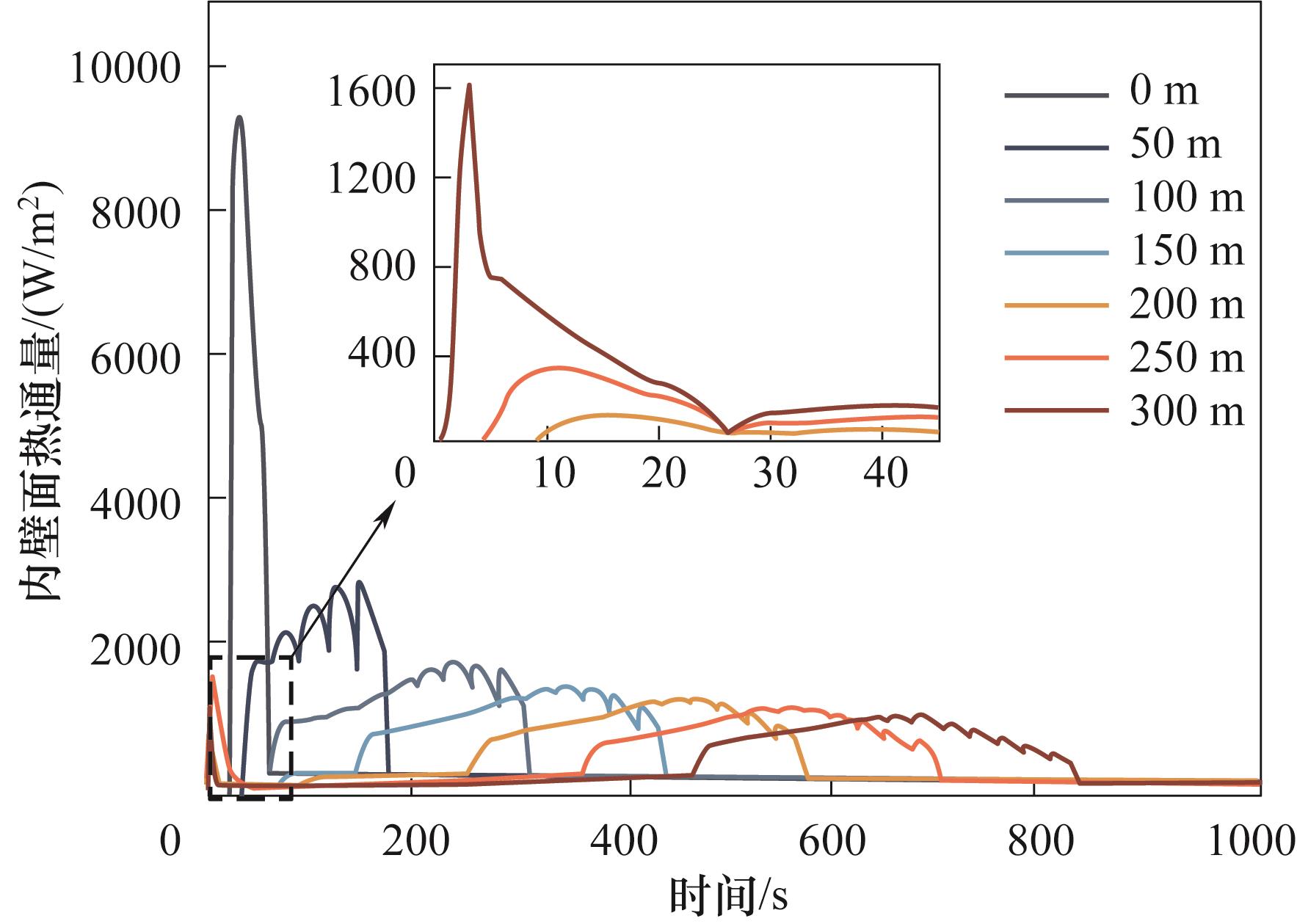
图11 液冷阶段不同管段内壁面热通量
Fig.11 Heat flux in different pipe sections during the liquid chilldown stage
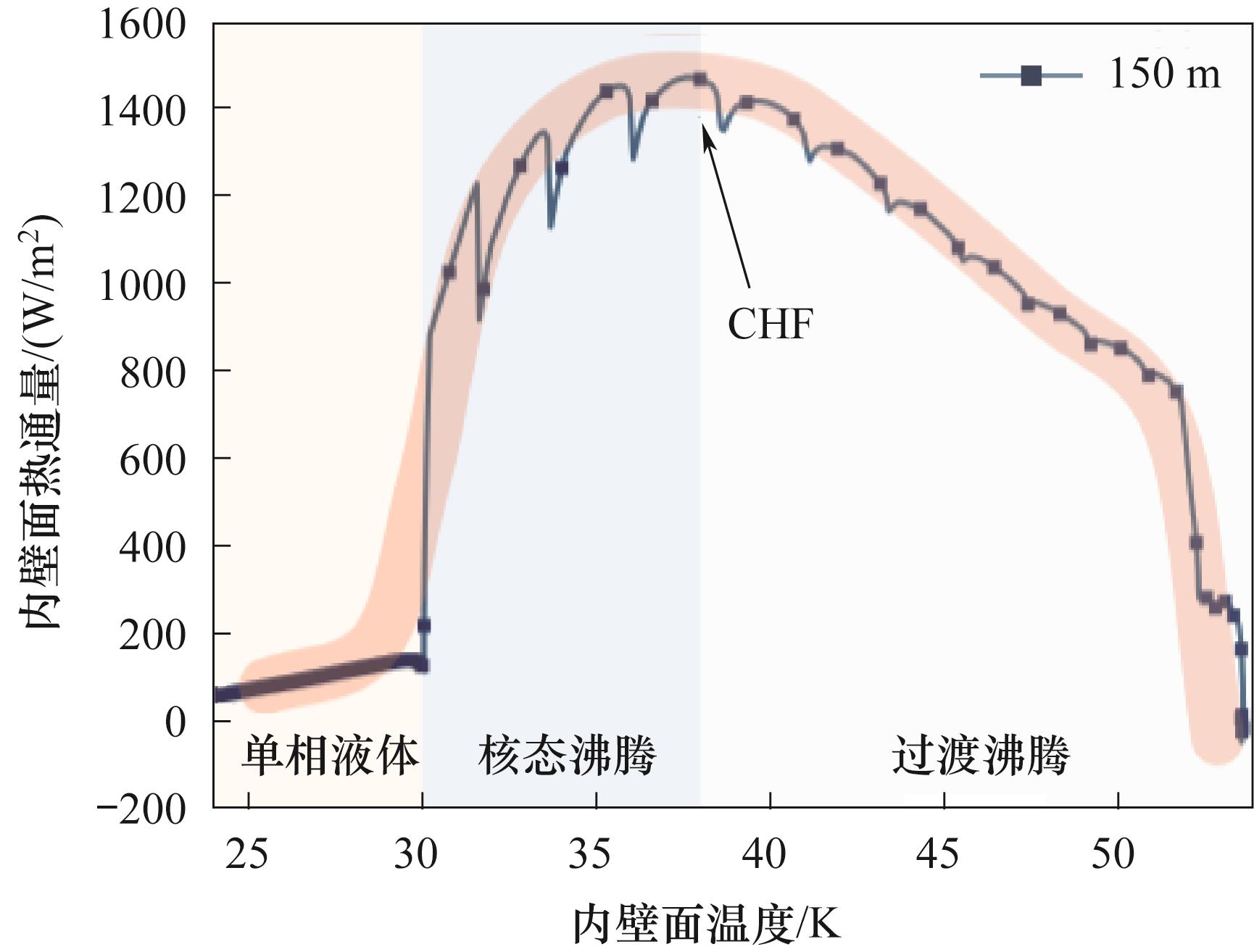
图12 150 m管段的沸腾特性曲线
Fig.12 Boiling characteristic curve at 150 m pipe section
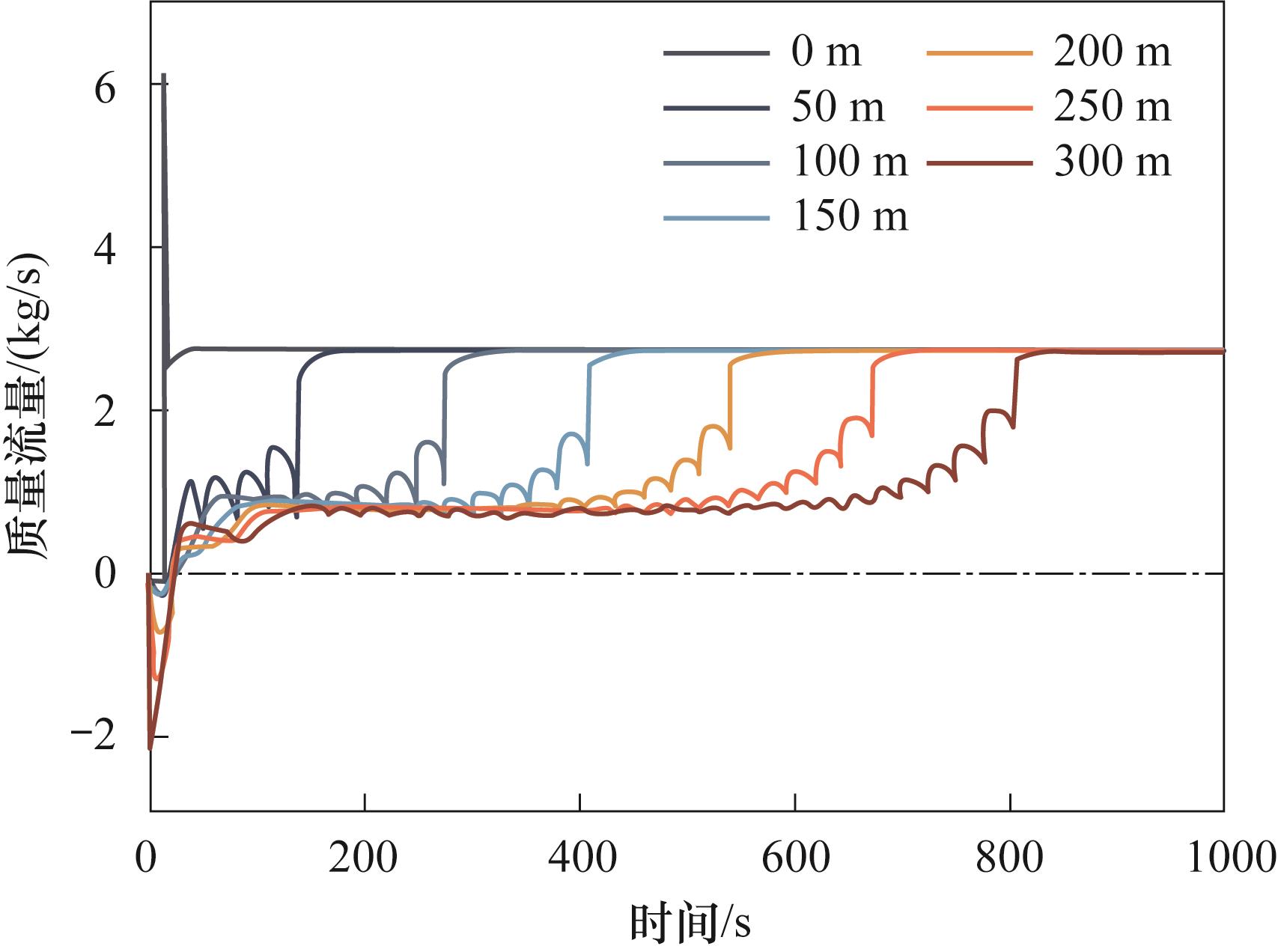
图13 不同管段质量流量
Fig.13 Mass flow rate in different pipe sections
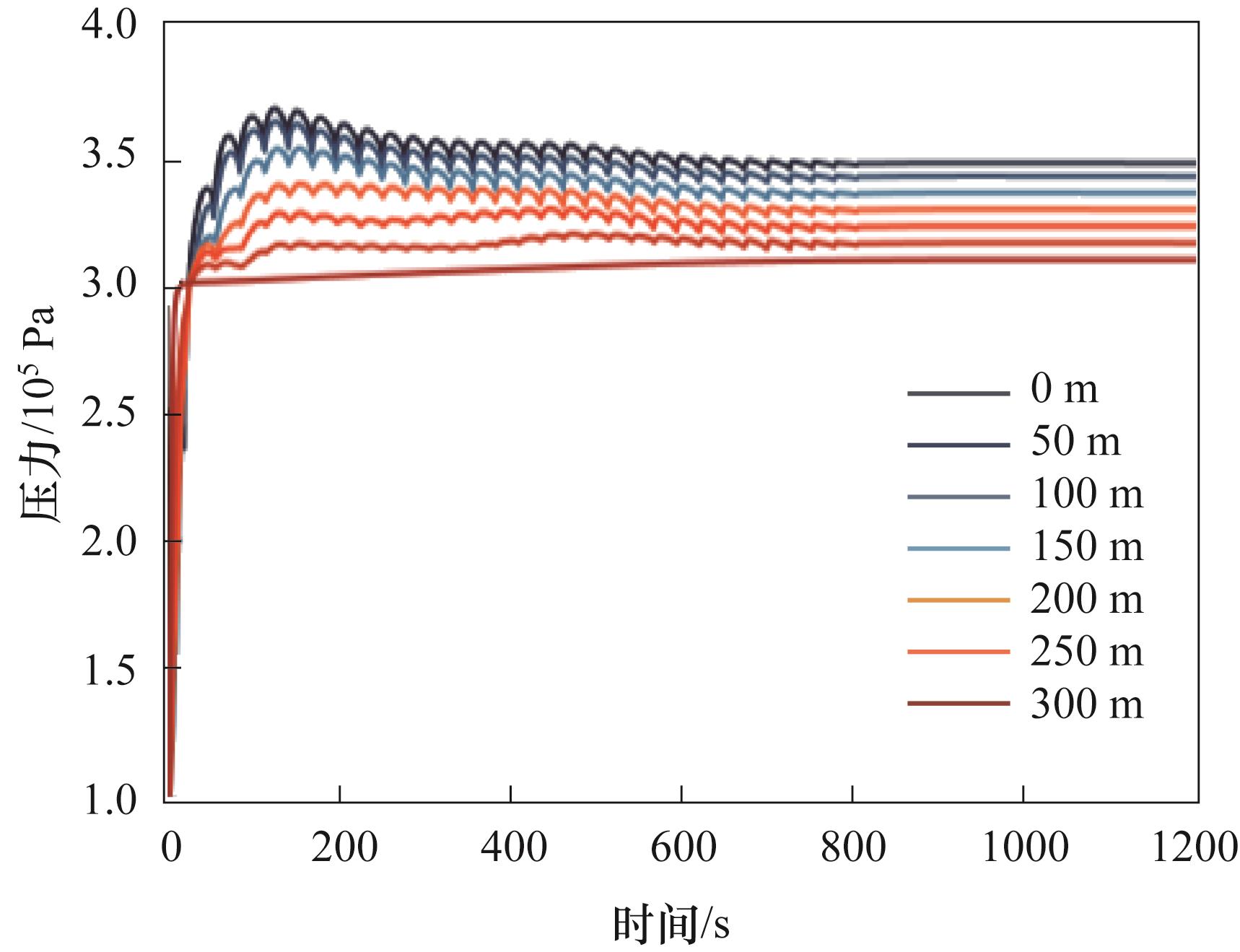
图14 不同管段压力
Fig.14 Pressure in different pipe sections
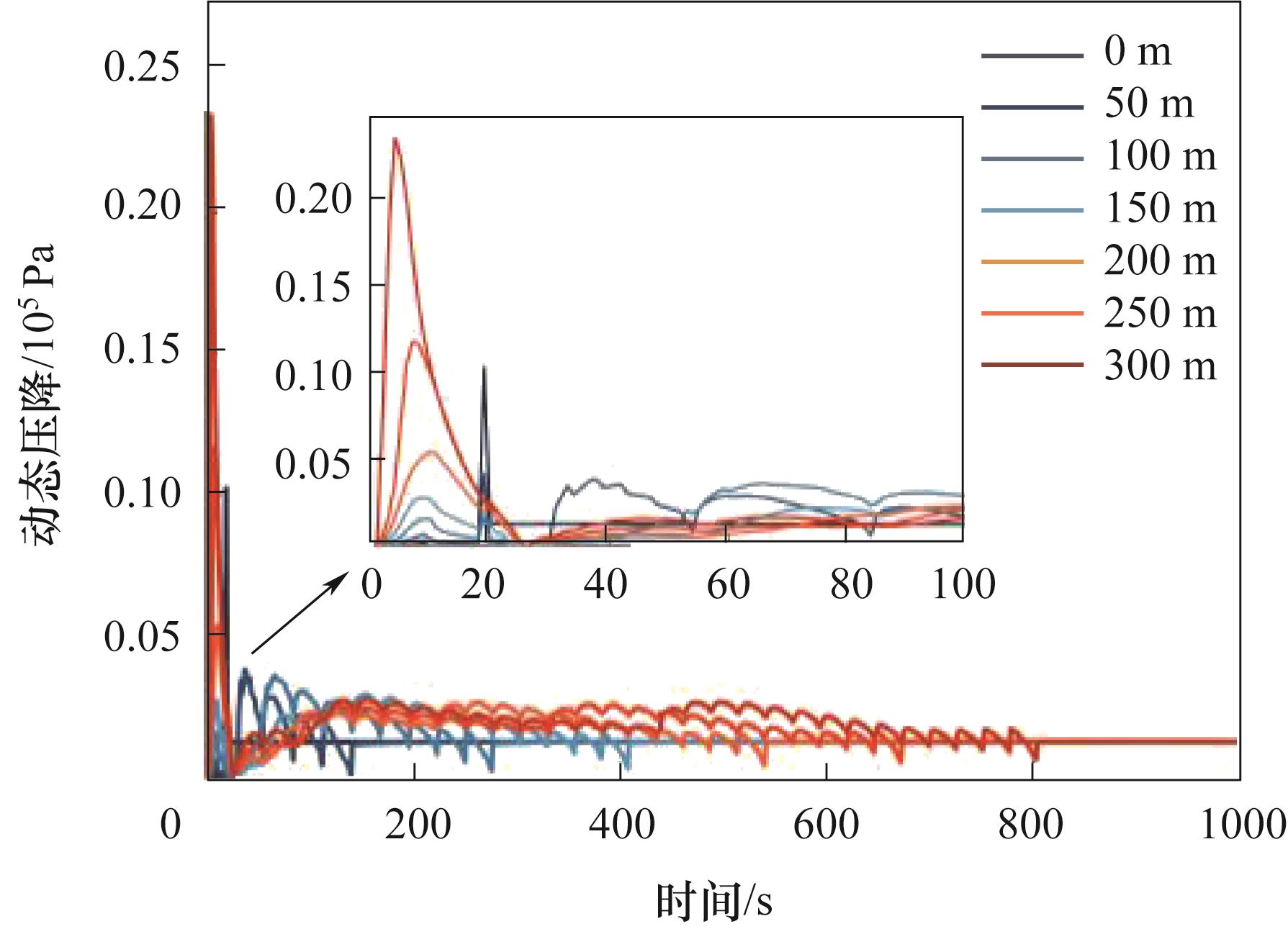
图15 不同管段动态压降
Fig.15 Dynamic pressure drop in different pipe sections
| [1] | Muhammed N S, Gbadamosi A O, Epelle E I, et al. Hydrogen production, transportation, utilization, and storage: recent advances towards sustainable energy[J]. Journal of Energy Storage, 2023, 73: 109207. |
| [2] | 吴朝玲. 氢气储存和输运[M]. 北京: 化学工业出版社, 2021. |
| Wu Z L. Hydrogen Storage and Transportation [M]. Beijing: Chemical Industry Press, 2021. | |
| [3] | Ikeuba A I, Sonde C U, Charlie D, et al. A review on exploring the potential of liquid hydrogen as a fuel for a sustainable future[J]. Sustainable Chemistry One World, 2024, 3: 100022. |
| [4] | Wallington T J, Woody M, Lewis G M, et al. Green hydrogen pathways, energy efficiencies, and intensities for ground, air, and marine transportation[J]. Joule, 2024, 8(8): 2190-2207. |
| [5] | 全国氢能标准化技术委员会. 液氢贮存和运输技术要求: [S]. 北京: 中国标准出版社, 2021. |
| National Technical Committee for Hydrogen Energy Standardization. Technical requirements for storage and transportation of liquid hydrogen: [S]. Beijing: China Standards Press, 2021. | |
| [6] | Mustafi S. High Reynolds number vertical up-flow parameters for cryogenic two-phase helium I[R]. Digital Repository at the University of Maryland, 2014. |
| [7] | Hartwig J, Styborski J, Stiegemeier B, et al. Liquid hydrogen line chilldown experiments at high Reynolds numbers(Ⅱ): Analysis[J]. International Journal of Heat and Mass Transfer, 2020, 156: 119805. |
| [8] | Hartwig J, Styborski J, McQuillen J, et al. Liquid hydrogen line chilldown experiments at high Reynolds numbers. Optimal chilldown methods[J]. International Journal of Heat and Mass Transfer, 2019, 137: 703-713. |
| [9] | Hartwig J, Chung J N, Dong J, et al. Nitrogen flow boiling and chilldown experiments in microgravity using pulse flow and low-thermally conductive coatings[J]. NPJ Microgravity, 2022, 8: 33. |
| [10] | Hartwig J, Hu H, Styborski J, et al. Comparison of cryogenic flow boiling in liquid nitrogen and liquid hydrogen chilldown experiments[J]. International Journal of Heat and Mass Transfer, 2015, 88: 662-673. |
| [11] | Hu H, Chung J N, Amber S H. An experimental study on flow patterns and heat transfer characteristics during cryogenic chilldown in a vertical pipe[J]. Cryogenics, 2012, 52(4/5/6): 268-277. |
| [12] | Shirai Y, Shiotsu M, Kobayashi H, et al. DNB heat flux in forced flow of subcooled liquid hydrogen under pressures[J]. AIP Conference Proceedings, 2012, 1434(1): 1067-1074. |
| [13] | Shirai Y, Tatsumoto H, Shiotsu M, et al. Forced flow boiling heat transfer of liquid hydrogen for superconductor cooling[J]. Cryogenics, 2011, 51(6): 295-299. |
| [14] | Sakamoto Y, Kobayashi H, Naruo Y, et al. Investigation of boiling hydrogen flow characteristics under low-pressure conditions — flow regime transition characteristics[J]. International Journal of Hydrogen Energy, 2021, 46(11): 8239-8252. |
| [15] | Sakamoto Y, Kobayashi H, Naruo Y, et al. Investigation of boiling hydrogen heat transfer characteristics under low-pressure conditions[J]. Cryogenics, 2023, 131: 103652. |
| [16] | Wang L, Shangguan S, Qu M, et al. Experimental study on cryogenic chilldown performance through a thick-wall tube[J]. Cryogenics, 2022, 122: 103436. |
| [17] | Mercado M, Wong N, Hartwig J, et al. Assessment of two-phase heat transfer coefficient and critical heat flux correlations for cryogenic flow boiling in pipe heating experiments[J]. International Journal of Heat and Mass Transfer, 2019, 133: 295-315. |
| [18] | Darr S R, Hartwig J W. Two-phase convection heat transfer correlations for liquid hydrogen pipe chilldown[J]. Cryogenics, 2020, 105: 102999. |
| [19] | Darr S, Hartwig J, Dong J, et al. Two-phase pipe quenching correlations for liquid nitrogen and liquid hydrogen[J]. American society of mechanical engineers, 2019, 141(4): 042901. |
| [20] | Broughton J, Joshi Y K. Flow boiling in geometrically modified microchannels[J]. Physics of Fluids, 2021, 33(10): 103308. |
| [21] | Chen J, Zeng R, Zhang X, et al. Numerical modeling of flow film boiling in cryogenic chilldown process using the AIAD framework[J]. International Journal of Heat and Mass Transfer, 2018, 124: 269-278. |
| [22] | Chen J Y, Zeng R, Chen H, et al. Effects of wall superheat and mass flux on flow film boiling in cryogenic chilldown process[J]. AIP Advances, 2020, 10: 015123. |
| [23] | 曾锐锐. 低温流体传输管预冷过程的两相流动与传热耦合数值研究[D]. 武汉: 华中科技大学, 2020. |
| Zeng R R. Numerical study on coupled two-phase flow and heat transfer in pre-cooling process of cryogenic fluid transfer pipes[D]. Wuhan: Huazhong University of Science and Technology, 2020. | |
| [24] | Kunniyoor K R, Ghosh P. Development of transient flow film boiling heat transfer correlations for energy efficient cryogenic fluid management during feed line quenching operation[J]. International Journal of Heat and Mass Transfer, 2023, 204: 123806. |
| [25] | Kunniyoor K R, Govind R, Venkateswaran K S, et al. Liquid hydrogen pipeline chill-down: mathematical modelling and investigation[J]. Cryogenics, 2021, 118: 103324. |
| [26] | Luchinsky D G, Khasin M, Timucin D, et al. Inferential framework for two-fluid model of cryogenic chilldown[J]. International Journal of Heat and Mass Transfer, 2017, 114: 796-808. |
| [27] | Majumdar A K, Steadman T E, Maroney J L, et al. Numerical modeling of propellant boil-off in a cryogenic storage tank[J]. AIP Conference Proceedings, 2008, 985(1): 1507-1514. |
| [28] | Collier J G, Thome J R. Convective Boiling and Condensation[M]. Oxford Engineering Science Series. Oxford: Clarendon Press, 1996. |
| [29] | Churchill S W. Friction factor equations spans all fluid-flow regimes[J]. Chemical Engineering, 1977, 84: 91-92. |
| [30] | Friedel L. Improved friction pressure drop correlations for horizontal and vertical two-phase pipe flow[C]// European Two-phase Group Meeting. Ispra, 1979. |
| [31] | Steiner D, Taborek J. Flow boiling heat transfer in vertical tubes correlated by an asymptotic model[J]. Heat Transfer Engineering, 1992, 13(2): 43-69. |
| [32] | Wang L, Wang J J, Huang X N, et al. Experimental investigation on cryogenic chilldown performance under high-Reynolds number condition and using interior micro-fin structure[J]. International Journal of Heat and Mass Transfer, 2022, 182: 121979. |
| [1] | 赵子祥, 段钟弟, 孙浩然, 薛鸿祥. 大温差两相流动诱导水锤冲击的数值模型[J]. 化工学报, 2025, 76(S1): 170-180. |
| [2] | 曹庆泰, 郭松源, 李建强, 蒋赞, 汪彬, 耑锐, 吴静怡, 杨光. 负过载下多孔隔板对液氧贮箱蓄液性能的影响研究[J]. 化工学报, 2025, 76(S1): 217-229. |
| [3] | 孙云龙, 徐肖肖, 黄永方, 郭纪超, 陈卫卫. 水平光滑管内CO2流动沸腾的非绝热可视化研究[J]. 化工学报, 2025, 76(S1): 230-236. |
| [4] | 燕子腾, 詹飞龙, 丁国良. 空调用套管式分流器结构设计及分流效果验证[J]. 化工学报, 2025, 76(S1): 152-159. |
| [5] | 段浩磊, 陈浩远, 梁坤峰, 王林, 陈彬, 曹勇, 张晨光, 李硕鹏, 朱登宇, 何亚茹, 杨大鹏. 纯电动车热管理系统低GWP工质替代方案性能分析与综合评价[J]. 化工学报, 2025, 76(S1): 54-61. |
| [6] | 王俊鹏, 冯佳琪, 张恩搏, 白博峰. 曲折式与阵列式迷宫阀芯结构内流动与空化特性研究[J]. 化工学报, 2025, 76(S1): 93-105. |
| [7] | 刘奕扬, 邢志祥, 刘烨铖, 彭明, 李玉洋, 李云浩, 沈宁舟. 加氢站液氢泄漏扩散特性与安全监测数值模拟研究[J]. 化工学报, 2025, 76(9): 4694-4708. |
| [8] | 梁晓江, 陈薇薇, 罗佳南, 费浩天, 叶雪蕾, 李文豪, 聂勇. 电分散管式填充床中荷电气泡的分散特性研究[J]. 化工学报, 2025, 76(8): 3915-3931. |
| [9] | 张淇栋, 艾立强, 马原, 吴胜宝, 王磊, 厉彦忠. 基于一维漂移流模型的低温管路预冷过程两相流动与换热特性研究[J]. 化工学报, 2025, 76(8): 3842-3852. |
| [10] | 米晓天, 刘宏臣, 王克军, 唐文娜, 徐永伟, 杨梅. 微通道内两相吸收剂TETA/DEEA吸收CO2过程的传质研究[J]. 化工学报, 2025, 76(6): 2667-2677. |
| [11] | 何昌秋, 田加猛, 陈义齐, 朱宇琛, 刘鑫, 王海, 王贞涛, 王军锋, 周致富, 陈斌. 电场-宏观结构表面协同强化薄液膜沸腾传热特性[J]. 化工学报, 2025, 76(6): 2589-2602. |
| [12] | 张翼辰, 张文彪, 李浩洋, 宁晓阳. 基于双差压模型的文丘里管气液两相CO2流量测量[J]. 化工学报, 2025, 76(4): 1493-1503. |
| [13] | 张亦鸣, 杨鹏, 纪献兵, 任纪星, 张磊, 苗政. 多回路平板式环路热管热性能[J]. 化工学报, 2025, 76(3): 1018-1028. |
| [14] | 戴晓宇, 徐强, 杨晨宇, 苏筱斌, 郭烈锦. 多级混流式混输泵气液两相增压特性[J]. 化工学报, 2025, 76(2): 554-563. |
| [15] | 黄云龙, 许剑, 刘通, 元昕彤, 徐强. 气藏水平井温度分布特征及流量测试实验研究[J]. 化工学报, 2025, 76(2): 612-622. |
| 阅读次数 | ||||||
|
全文 |
|
|||||
|
摘要 |
|
|||||
 京公网安备 11010102001995号