化工学报 ›› 2025, Vol. 76 ›› Issue (12): 6351-6365.DOI: 10.11949/0438-1157.20250443
孙菲雪( ), 刘宁, 刘文芳(), 孟子晖
收稿日期:2025-04-25
修回日期:2025-05-30
出版日期:2025-12-31
发布日期:2026-01-23
通讯作者:
刘文芳
作者简介:孙菲雪(2000—),女,硕士研究生,sfx001123tp@163.com
基金资助:
Feixue SUN(), Ning LIU, Wenfang LIU(), Zihui MENG
Received:2025-04-25
Revised:2025-05-30
Online:2025-12-31
Published:2026-01-23
Contact:
Wenfang LIU
摘要:
光催化辅酶再生对生物氧化还原反应具有重要意义。采用溶胶-凝胶法制备了多孔TiO2-60,经300℃煅烧获得TiO2-300,再与三聚氰胺混合煅烧得到多孔TiO2/g-C3N4异质结。考察了TiO2煅烧、三聚氰胺用量对催化剂结构和性能的影响,并优化了催化剂用量。结果表明:TiO2的煅烧使晶相从金红石相转变为锐钛矿晶型,制备的TiO2/g-C3N4具有高比表面积、宽吸收边、窄带隙及更好的电荷分离效率;随着三聚氰胺用量的增加,比表面积和孔体积先增加后减小,光吸收和电荷分离性能先上升后下降;优化后,催化活性和收率分别为4.8 mmol/(L·g·min)和72%,分别是g-C3N4的7.4倍和5.3倍,且在5次循环中性能稳定。
中图分类号:
孙菲雪, 刘宁, 刘文芳, 孟子晖. 多孔TiO2/g-C3N4异质结的制备及其光催化辅酶再生性能研究[J]. 化工学报, 2025, 76(12): 6351-6365.
Feixue SUN, Ning LIU, Wenfang LIU, Zihui MENG. Fabrication of porous TiO2/g-C3N4 heterojunction and investigation on its photocatalytic performance of coenzyme regeneration[J]. CIESC Journal, 2025, 76(12): 6351-6365.
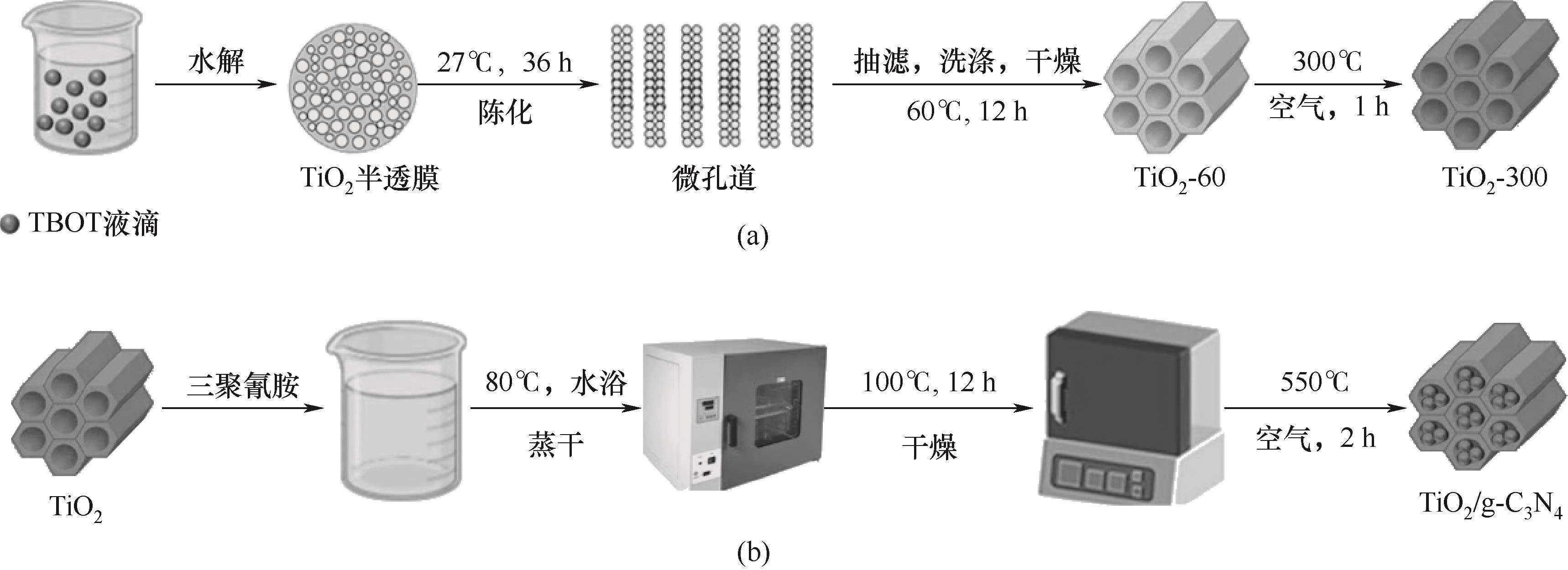
图1 多孔TiO2(a)和TiO2/g-C3N4(b)的制备流程图
Fig.1 Preparation routes of porous TiO2 (a) and TiO2/g-C3N4 (b)
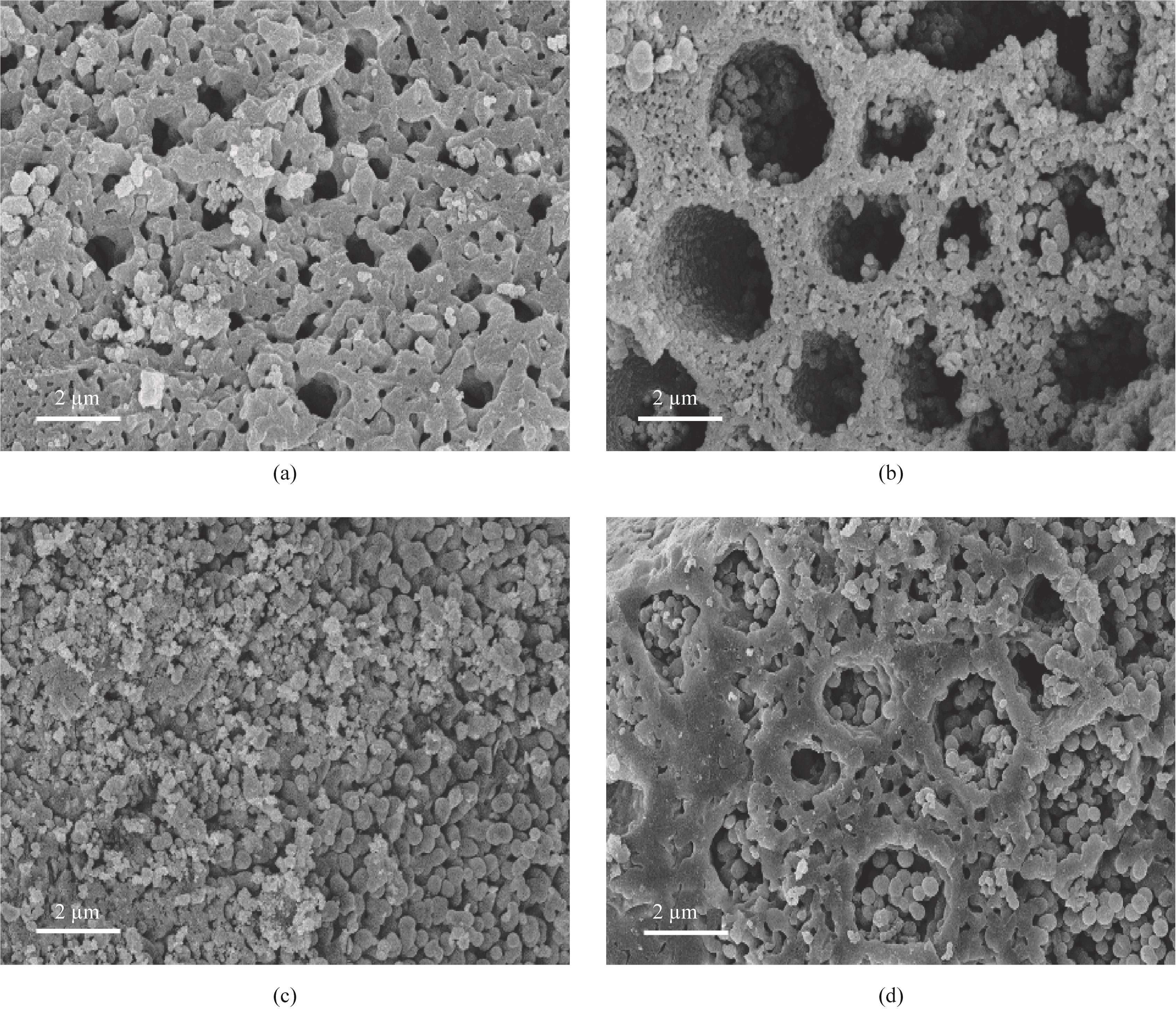
图2 TiO2-60(a),TiO2-300(b),TiO2-60/g-C3N4(c)和TiO2-300/g-C3N4(d)的SEM照片
Fig.2 SEM images of TiO2-60 (a), TiO2-300 (b), TiO2-60/g-C3N4 (c) and TiO2-300/g-C3N4 (d)
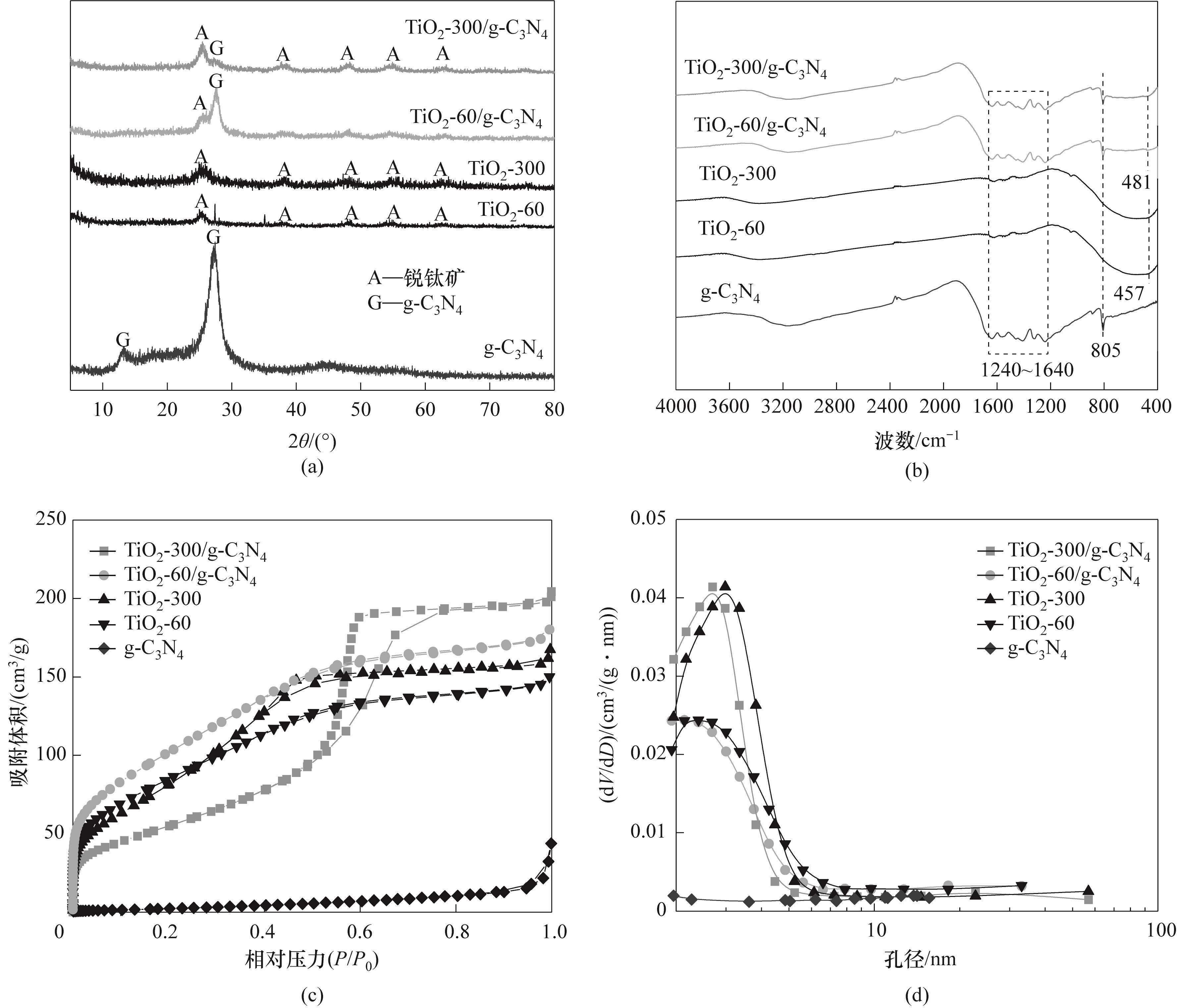
图3 TiO2-60/g-C3N4和TiO2-300/g-C3N4的XRD谱图(a)、FTIR谱图(b)、N2等温吸附-脱附曲线(c)和孔径分布曲线(d)
Fig.3 XRD patterns(a), FTIR spectra (b), N2 isothermal adsorption-desorption curves (c) and pore size distribution curves (d) of TiO2-60/g-C3N4 and TiO2-300/g-C3N4
| 样品 | SBET/(m2/g) | V/(cm3/g) | Dave/nm | Eg/eV | λg/nm |
|---|---|---|---|---|---|
| TiO2-300/g-C3N4 | 276 | 0.31 | 18.8 | 2.59 | 455 |
| TiO2-60/g-C3N4 | 108 | 0.18 | 16.7 | 2.63 | 440 |
| TiO2-300 | 226 | 0.28 | 23.6 | 2.85 | 410 |
| TiO2-60 | 128 | 0.21 | 21.4 | 2.90 | 400 |
| g-C3N4 | 13 | — | — | 2.65 | 450 |
表1 TiO2-60/g-C3N4和TiO2-300/g-C3N4的孔结构参数和光学性质
Table 1 Pore structure parameters and optical properties of TiO2-60/g-C3N4 and TiO2-300/g-C3N4
| 样品 | SBET/(m2/g) | V/(cm3/g) | Dave/nm | Eg/eV | λg/nm |
|---|---|---|---|---|---|
| TiO2-300/g-C3N4 | 276 | 0.31 | 18.8 | 2.59 | 455 |
| TiO2-60/g-C3N4 | 108 | 0.18 | 16.7 | 2.63 | 440 |
| TiO2-300 | 226 | 0.28 | 23.6 | 2.85 | 410 |
| TiO2-60 | 128 | 0.21 | 21.4 | 2.90 | 400 |
| g-C3N4 | 13 | — | — | 2.65 | 450 |
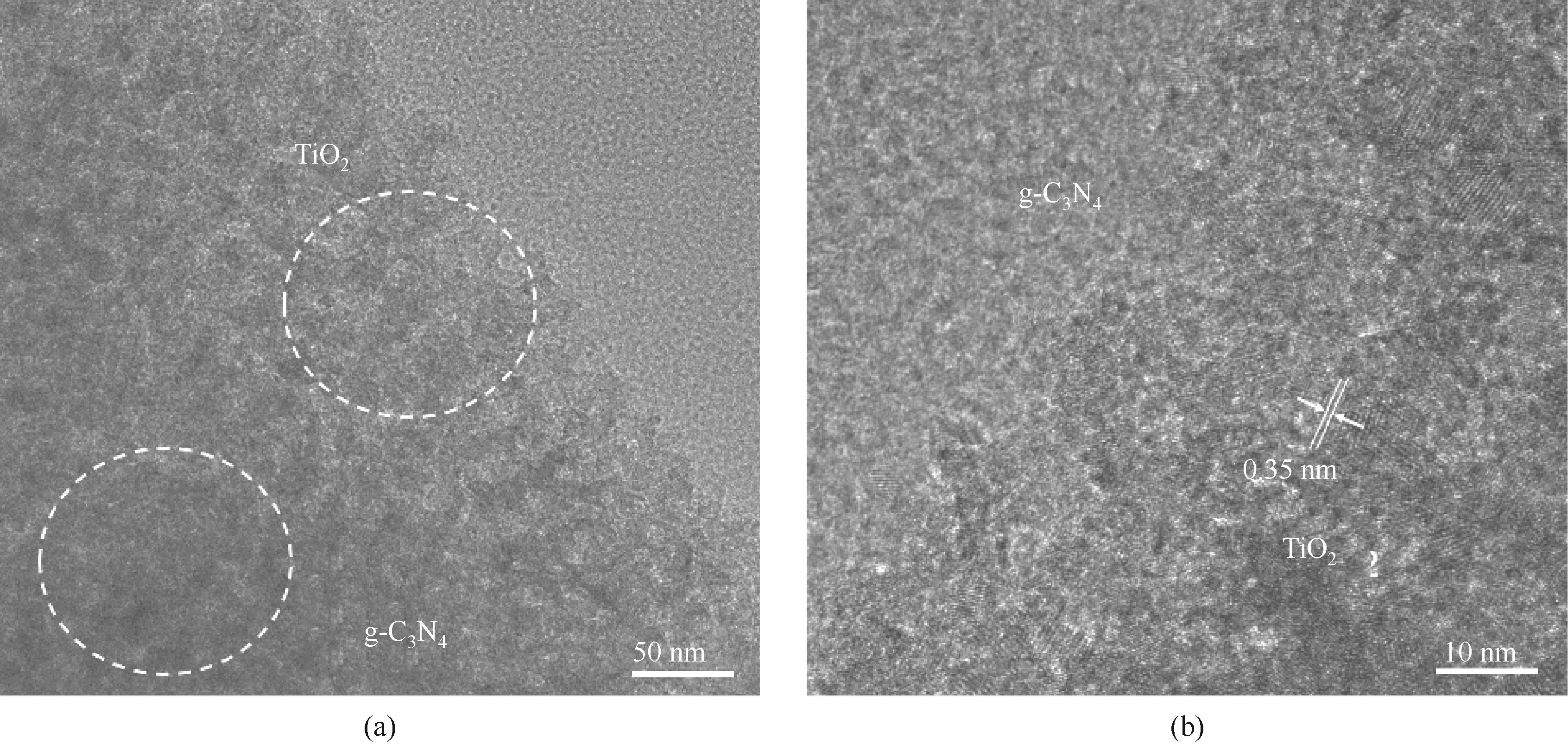
图4 TiO2-300/g-C3N4的TEM(a)和HRTEM(b)图像
Fig.4 TEM (a) and HRTEM (b) image of TiO2-300/g-C3N4
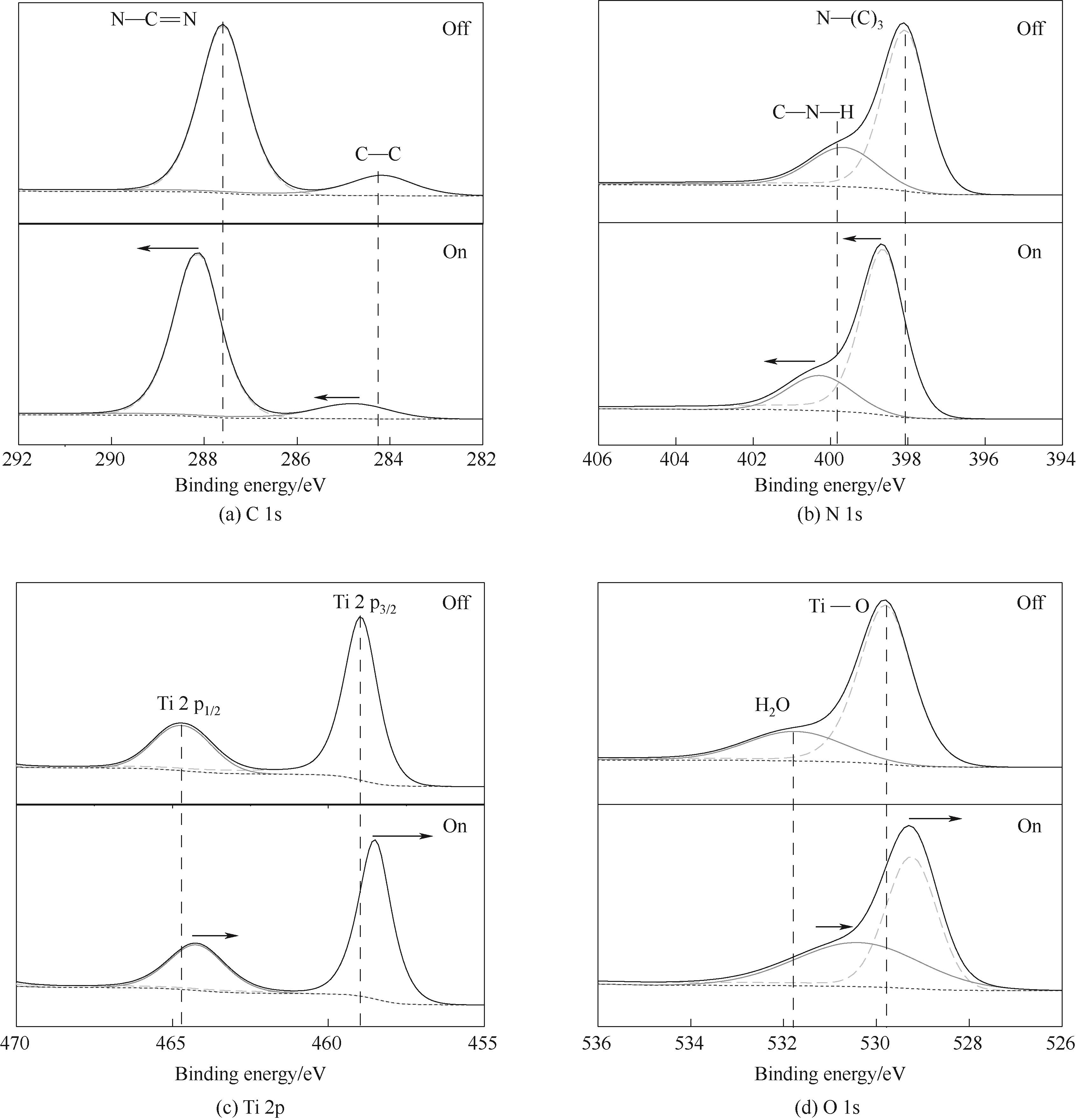
图5 TiO2-300/g-C3N4的原位XPS
Fig.5 In-situ XPS of TiO2-300/g-C3N4
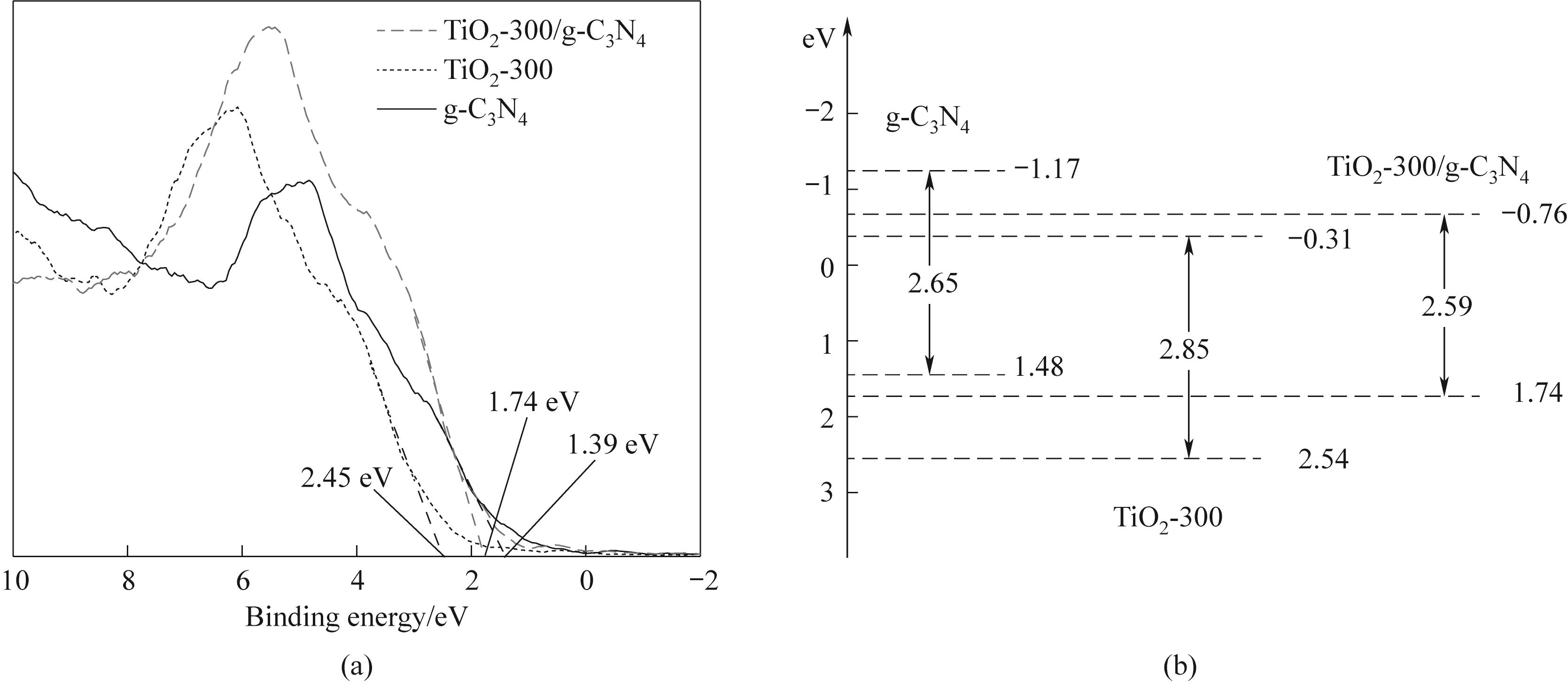
图6 g-C3N4、TiO2-300和TiO2-300/g-C3N4的XPS价带谱C 1s (a)和能带结构图(b)
Fig.6 VB XPS of g-C3N4, TiO2-300 and TiO2-300/g-C3N4(a) and band structure diagram (b)
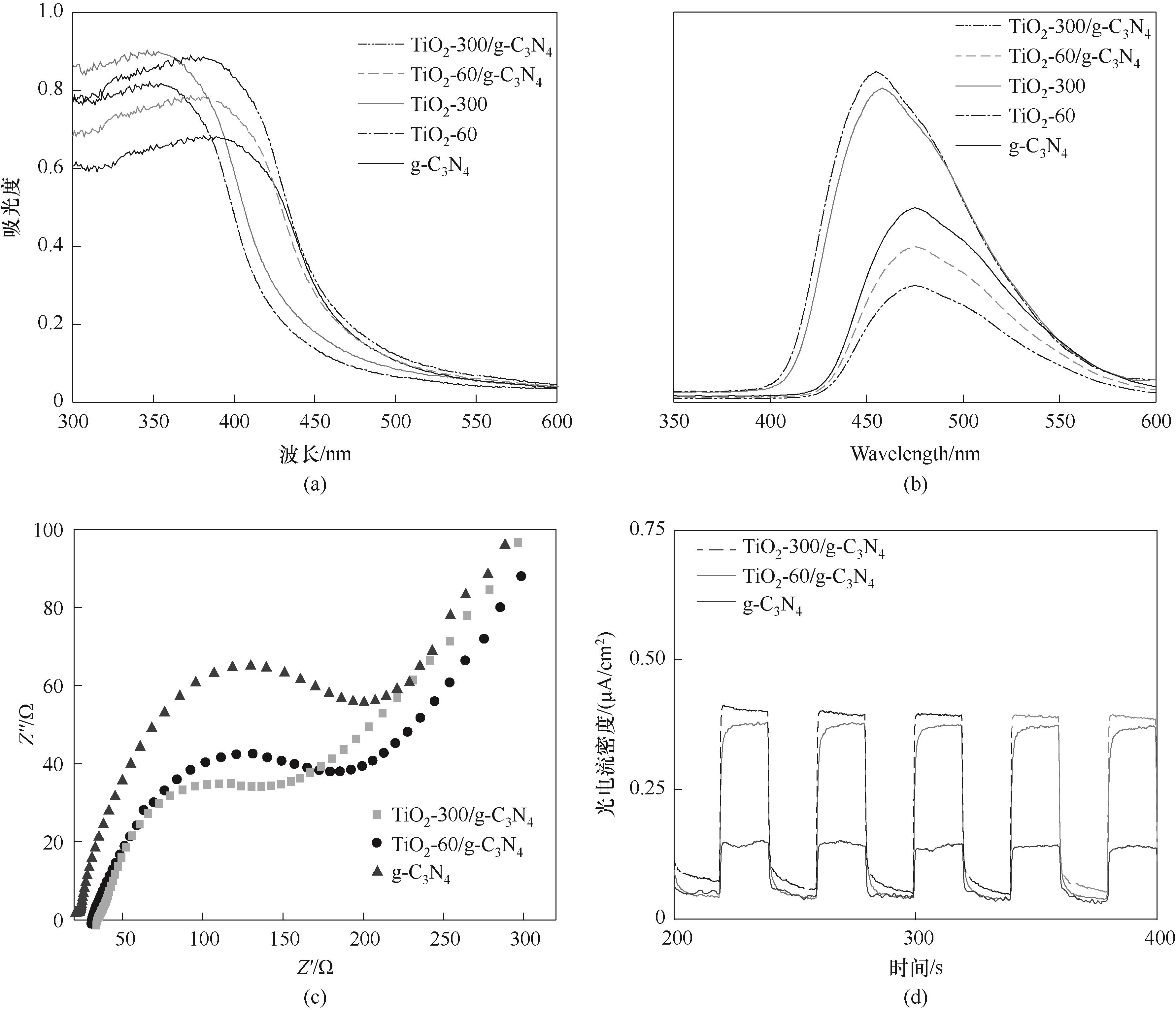
图7 TiO2-60/g-C3N4和TiO2-300/g-C3N4的UV-vis DRS(a)、PL光谱(b)、电化学阻抗(c)和光电流测试结果(d)
Fig.7 UV-vis DRS (a), PL spectra (b), electrochemical impedance (c) and photocurrent test results (d) of TiO2-60/g-C3N4 and TiO2-300/g-C3N4
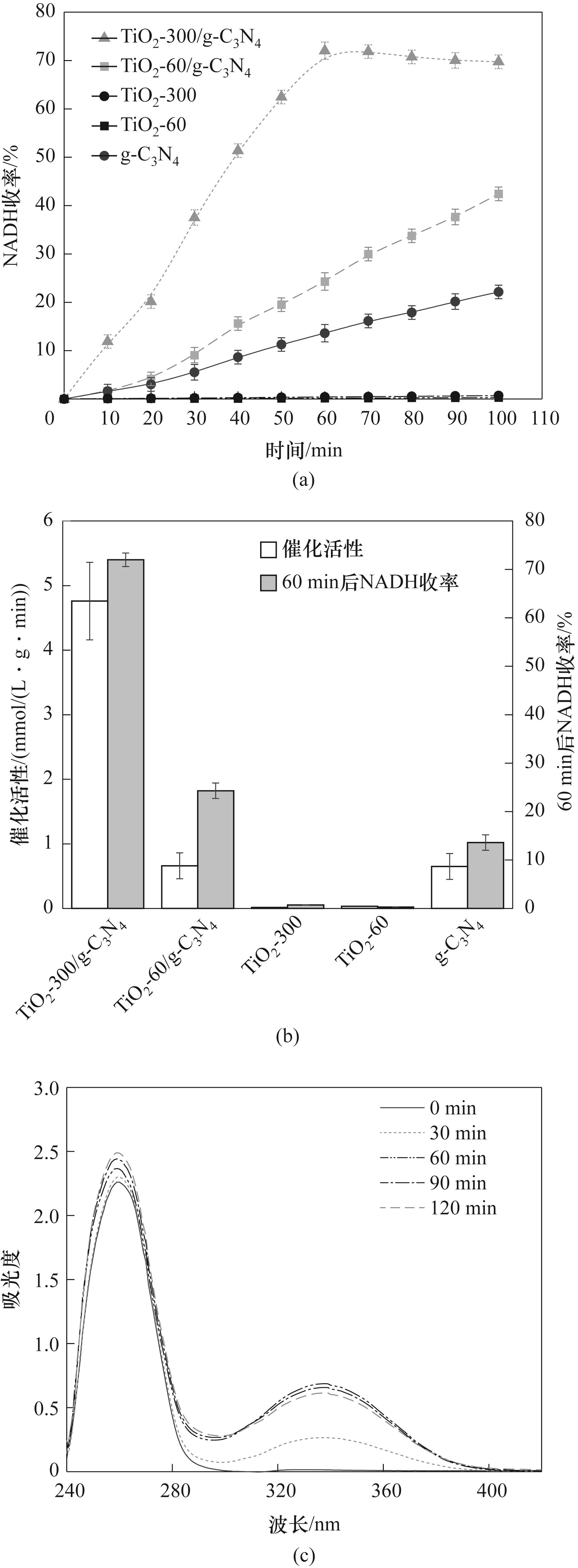
图8 TiO2-60/g-C3N4和TiO2-300/g-C3N4的反应动力学曲线(a),催化活性和NADH收率(b);TiO2-300/g-C3N4体系在不同光照时间下的紫外-可见吸收光谱(c)
Fig.8 Reaction kinetic curves (a) and catalytic activity and NADH yield (b) of TiO2-60/g-C3N4 and TiO2-300/g-C3N4; (c) UV-vis spectra of TiO2-300/g-C3N4 system under different illumination times
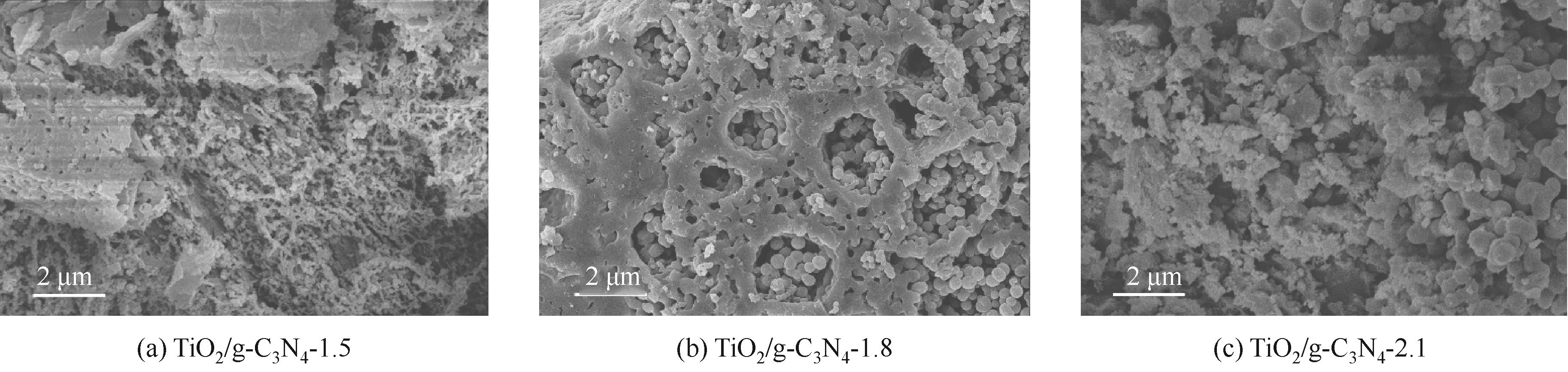
图9 TiO2/g-C3N4-m的SEM照片
Fig.9 SEM images of TiO2/g-C3N4-m
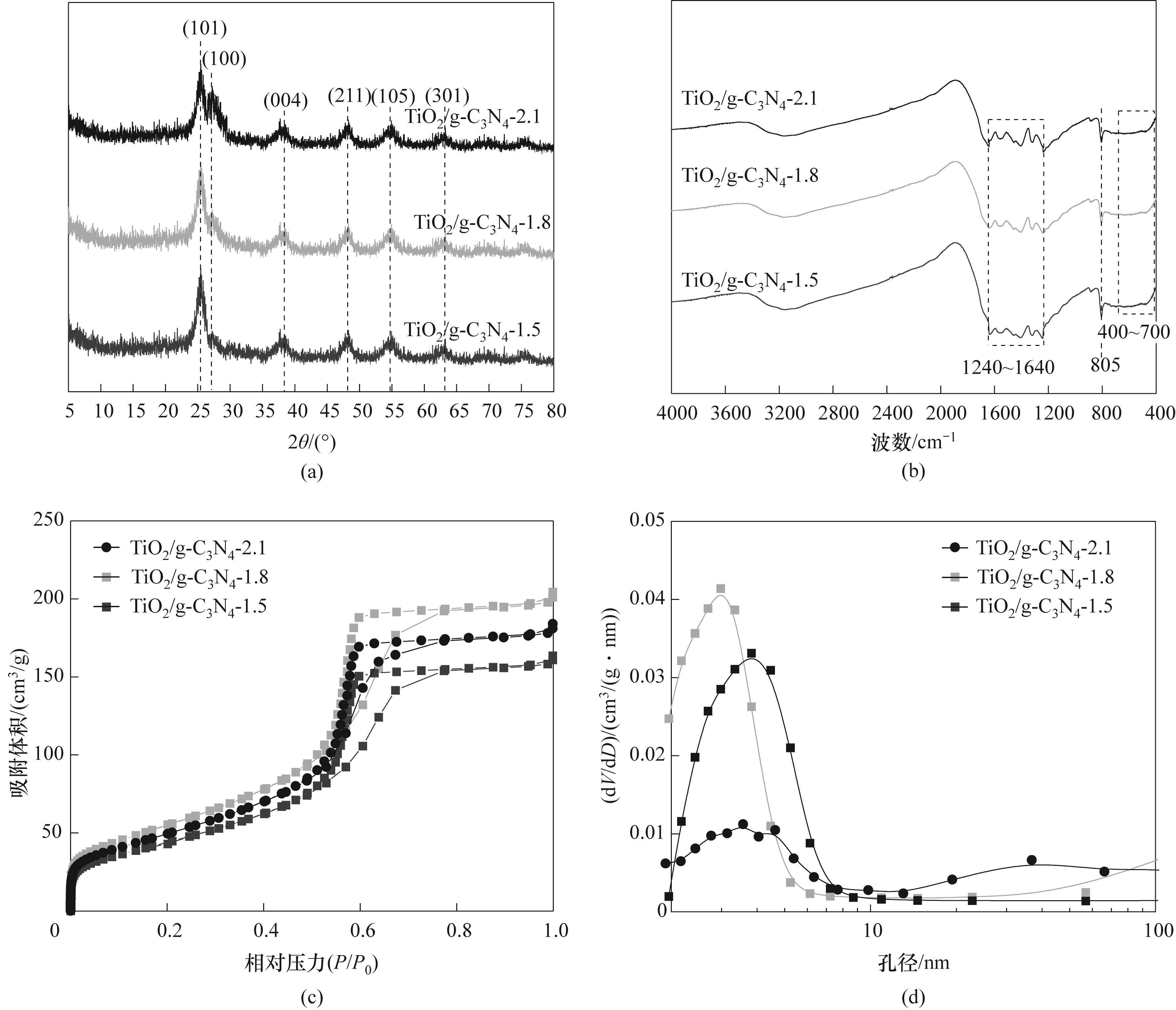
图10 TiO2/g-C3N4-m的XRD谱图(a); FTIR谱图(b); N2等温吸附-脱附曲线(c); 孔径分布曲线(d)
Fig.10 XRD patterns (a); FTIR spectra (b); N2 isothermal adsorption-desorption curves (c) and pore size distribution curves (d) of TiO2/g-C3N4-m
| 样品 | SBET/(m2/g) | V/(cm3/g) | Dave/nm | Eg/eV | λg/nm |
|---|---|---|---|---|---|
| TiO2/g-C3N4-1.5 | 243 | 0.29 | 17.5 | 2.71 | 430 |
| TiO2/g-C3N4-1.8 | 276 | 0.31 | 18.8 | 2.59 | 455 |
| TiO2/g-C3N4-2.1 | 176 | 0.28 | 13.2 | 2.64 | 450 |
表2 TiO2/g-C3N4-m的孔结构参数和光学性质
Table 2 Pore structure parameters and optical properties of TiO2/g-C3N4-m
| 样品 | SBET/(m2/g) | V/(cm3/g) | Dave/nm | Eg/eV | λg/nm |
|---|---|---|---|---|---|
| TiO2/g-C3N4-1.5 | 243 | 0.29 | 17.5 | 2.71 | 430 |
| TiO2/g-C3N4-1.8 | 276 | 0.31 | 18.8 | 2.59 | 455 |
| TiO2/g-C3N4-2.1 | 176 | 0.28 | 13.2 | 2.64 | 450 |
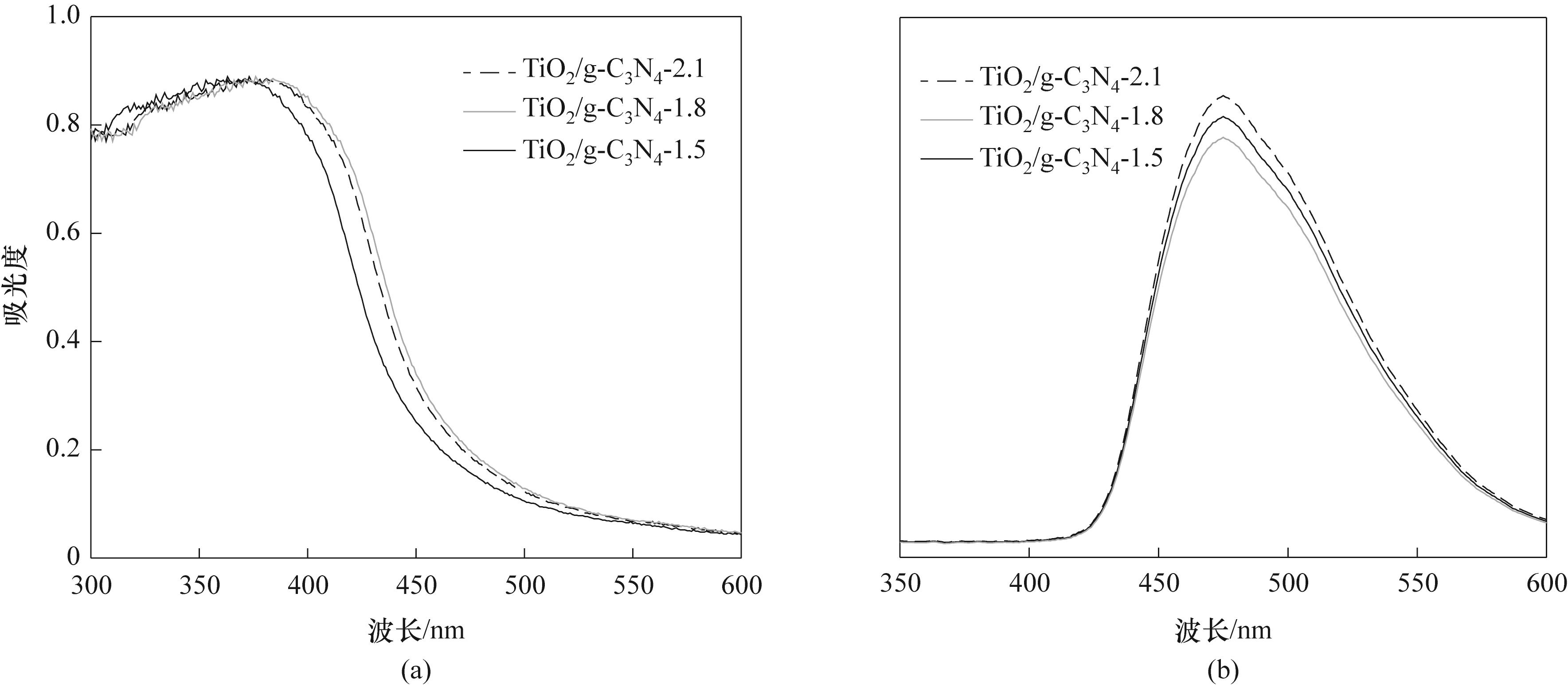
图11 TiO2/g-C3N4-m的UV-vis DRS(a)和PL光谱(b)
Fig.11 UV-vis DRS (a) and PL spectra (b) of TiO2/g-C3N4-m
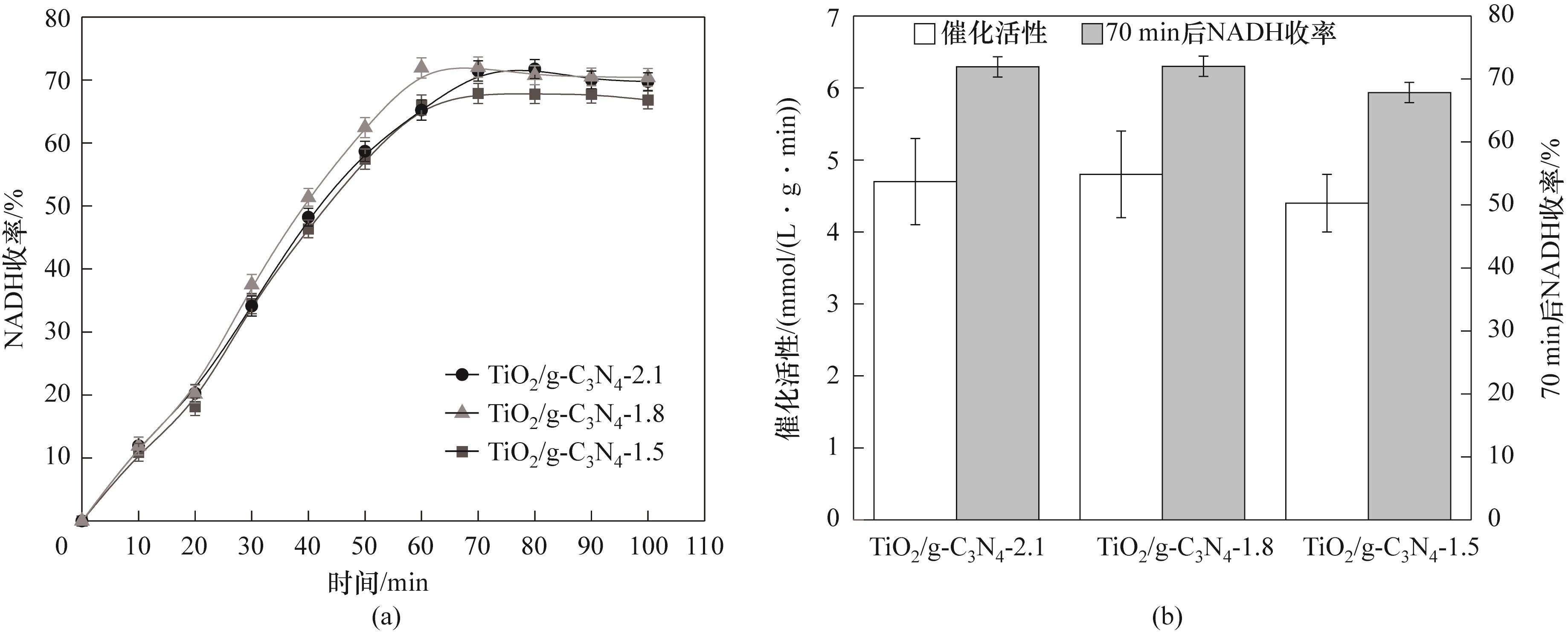
图12 TiO2/g-C3N4-m的反应动力学曲线(a)与催化活性和NADH收率(b)
Fig.12 Reaction kinetic curves (a) and catalytic activity and NADH yield (b) of TiO2/g-C3N4-m
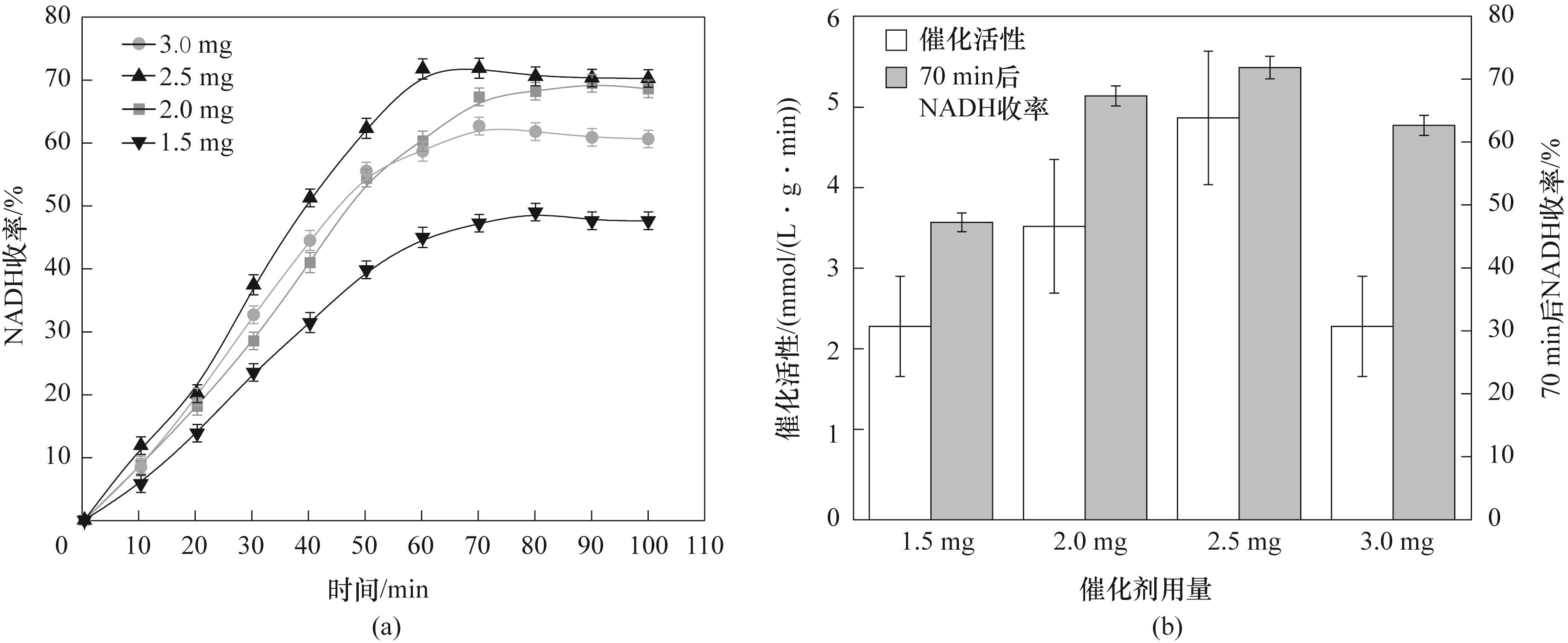
图13 不同TiO2/g-C3N4用量的反应动力学曲线(a)与催化活性和NADH收率(b)
Fig.13 Reaction kinetic curves (a) and catalytic activity and NADH yield (b) with different dosage of TiO2/g-C3N4
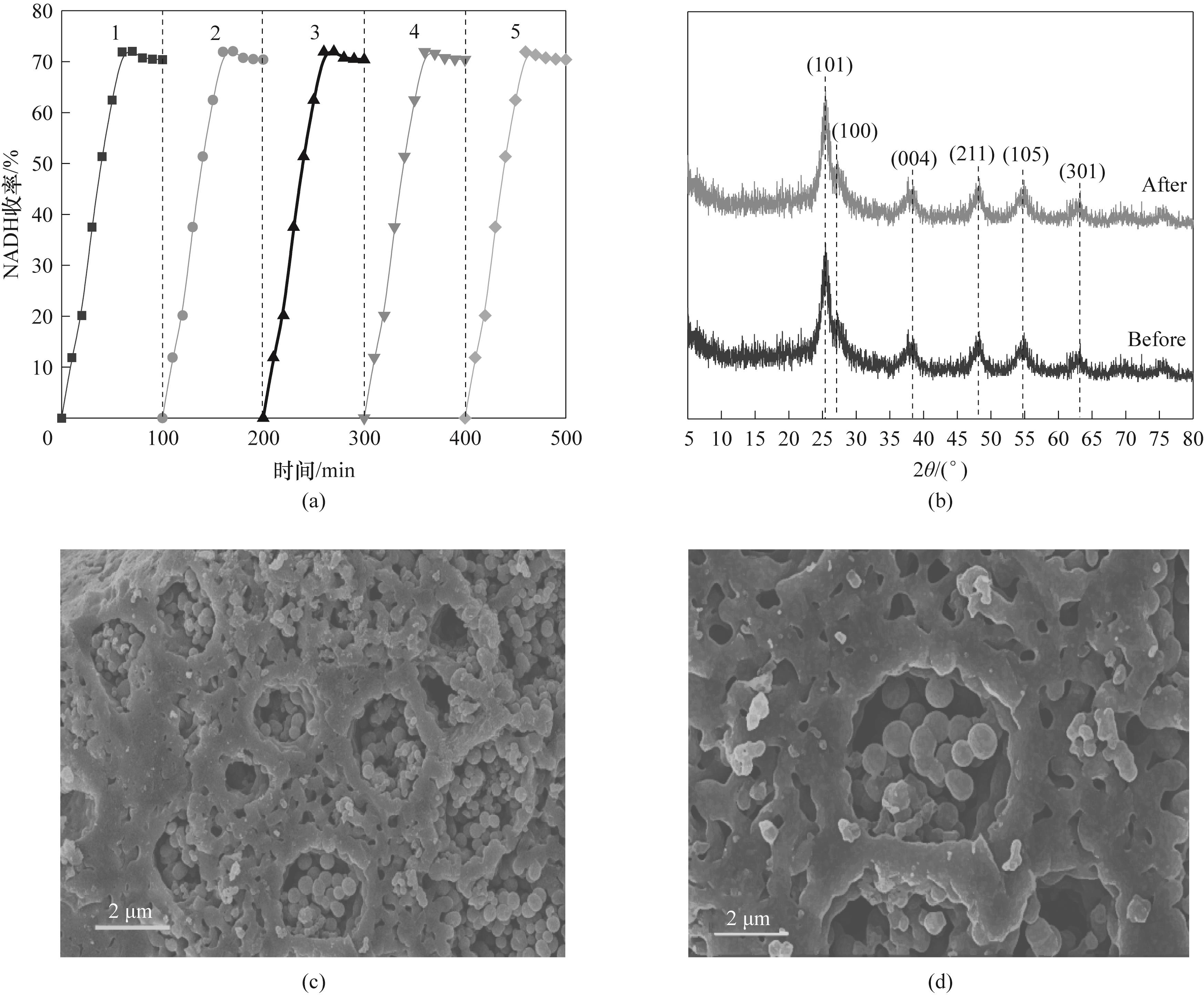
图14 TiO2/g-C3N4的重复利用性:反应动力学曲线(a); XRD谱图(b); SEM图(c),(d)
Fig.14 Reusability of TiO2/g-C3N4: reaction kinetic curves(a); XRD patterns(b); SEM photos(c),(d)
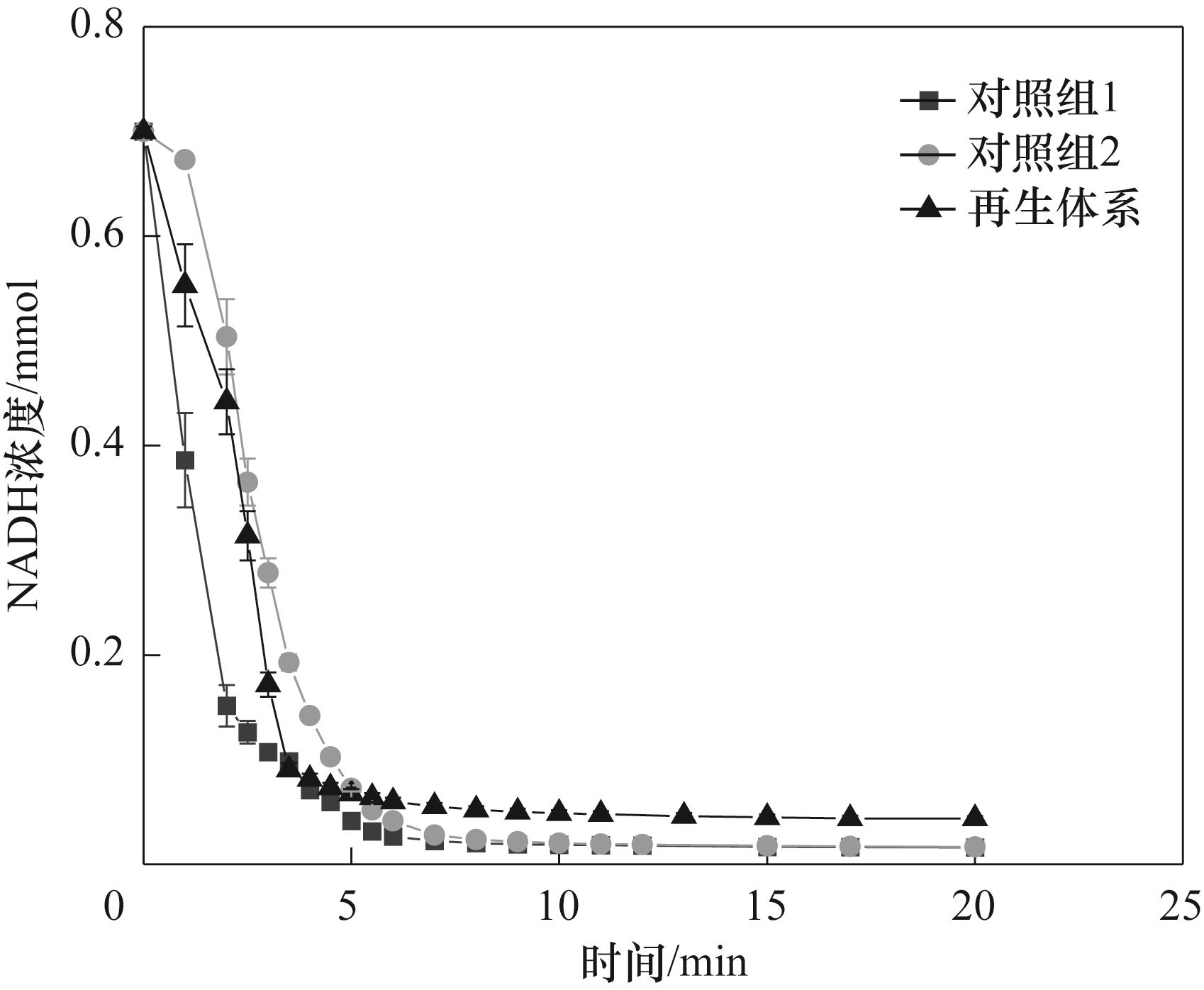
图15 再生NADH的生物活性
Fig.15 Biological activity of regenerated NADH
| [1] | Gupta N, Sarkar A, Biswas S K. In situ NADH regeneration coupled to enzymatic CO2 reduction: from fundamental concepts to recent advances[J]. Journal of Environmental Chemical Engineering, 2025, 13(3): 116657. |
| [2] | Zhao H, Wang L R, Liu G H, et al. Hollow Rh-COF@COF S-scheme heterojunction for photocatalytic nicotinamide cofactor regeneration[J]. ACS Catalysis, 2023, 13(10): 6619-6629. |
| [3] | Escaliante L C, de Jesus Pereira A L, Affonço L J, et al. MultilayeredTiO2/TiO2- x /TiO2 films deposited by reactive sputtering for photocatalytic applications[J]. Journal of Materials Research, 2021, 36(15): 3096-3108. |
| [4] | Batista J A F, Mendes J, Moretto W E, et al. Sunlight removal of diclofenac using g-C3N4, g-C3N4/Cl, g-C3N4/Nb2O5 and g-C3N4/TiO2 photocatalysts[J]. Journal of Environmental Chemical Engineering, 2024, 12(3): 113016. |
| [5] | Liu N, Jiang J L, Zhang S Q, et al. Arrangement of ordered D-a components in a metal-organic framework for cocatalyst-free photocatalytic hydrogen evolution with efficient proton conduction[J]. Angewandte Chemie International Edition, 2025, 64(19): e202501141. |
| [6] | Sun F X, Chong R Q, Yang J, et al. Activated-carbon supported two dimensional covalent organic frameworks for high-efficient coenzyme photo-regeneration[J]. Journal of Environmental Chemical Engineering, 2025, 13(1): 115142. |
| [7] | Li Z, Ao J L, Wang Z, et al. Boosting the photocatalytic CO2 reduction activity of g-C3N4 by acid modification[J]. Separation and Purification Technology, 2024, 338: 126577. |
| [8] | Lee J H, Jeong S Y, Son Y D, et al. Facile fabrication of TiO2 quantum dots-anchored g-C3N4 nanosheets as 0D/2D heterojunction nanocomposite for accelerating solar-driven photocatalysis[J]. Nanomaterials, 2023, 13(9): 1565. |
| [9] | Ismael M. A review on graphitic carbon nitride (g-C3N4) based nanocomposites: synthesis, categories, and their application in photocatalysis[J]. Journal of Alloys and Compounds, 2020, 846: 156446. |
| [10] | 孙世平. g-C3N4的制备、改性及其光催化性能研究[D]. 郑州: 郑州大学, 2019. |
| Sun S P. Preparation, modification and photocatalytic properties of g-C3N4 [D]. Zhengzhou: Zhengzhou University, 2019. | |
| [11] | Deng C H, Wang T, Ye F, et al. Construction of 0D/2D CuO/BiOBr hierarchical heterojunction for the enhanced photocatalytic degradation of benzene-containing pollutants under visible light[J]. Journal of Environmental Chemical Engineering, 2022, 10(3): 107365. |
| [12] | Yu C X, Li M X, Yang D C, et al. NiO nanoparticles dotted TiO2 nanosheets assembled nanotubes P-N heterojunctions for efficient interface charge separation and photocatalytic hydrogen evolution[J]. Applied Surface Science, 2021, 568: 150981. |
| [13] | Li J J, Guo C P, Li L H, et al. Construction of Z-scheme WO3-Cu2O nanorods array heterojunction for efficient photocatalytic degradation of methylene blue[J]. Inorganic Chemistry Communications, 2022, 138: 109248. |
| [14] | 孙萌, 周思源, 王涵, 等. 复合光催化剂TiO2/g-C3N4的光催化性能的研究[J]. 化学工程与技术, 2021, 11(2): 45-54. |
| Sun M, Zhou S Y, Wang H, et al. Study on photocatalytic performance of composites photocatalyst TiO2/g-C3N4 [J]. Hans Journal of Chemical Engineering and Technology, 2021, 11(2): 45-54. | |
| [15] | Qu A L, Xu X M, Xie H L, et al. Effects of calcining temperature on photocatalysis of g-C3N4/TiO2 composites for hydrogen evolution from water[J]. Materials Research Bulletin, 2016, 80: 167-176. |
| [16] | Deng Z J, Osuga R, Matsubara M, et al. Morphological effect of TiO2 nanoparticles in TiO2/g-C3N4 heterojunctions on photocatalytic dye degradation[J]. Chemistry Letters, 2024, 53(9): upae171. |
| [17] | Pestana C J, Hui J N, Camacho-Muñoz D, et al. Solar-driven semi-conductor photocatalytic water treatment (TiO2, g-C3N4, and TiO2+g-C3N4) of cyanotoxins: proof-of-concept study with microcystin-LR[J]. Chemosphere, 2023, 310: 136828. |
| [18] | Wu M, Gong Y S, Nie T, et al. Template-free synthesis of nanocage-like g-C3N4 with high surface area and nitrogen defects for enhanced photocatalytic H2 activity[J]. Journal of Materials Chemistry A, 2019, 7(10): 5324-5332. |
| [19] | Li L W, Cai Z X, Wu Q H, et al. Rational design of porous conjugated polymers and roles of residual palladium for photocatalytic hydrogen production[J]. Journal of the American Chemical Society, 2016, 138(24): 7681-7686. |
| [20] | Ceccio G, Vacik J, Siegel J, et al. Etching and doping of pores in polyethylene terephthalate analyzed by ion transmission spectroscopy and nuclear depth profiling[J]. Membranes, 2022, 12(11): 1061. |
| [21] | Ding Y, Yang G X, Xiang Z M, et al. Design of two-dimensional porous photocatalysts and their applications in solar fuel and valuable chemical production[J]. Journal of Environmental Chemical Engineering, 2024, 12(5): 113483. |
| [22] | Asasian-Kolur N, Sharifian S, Haddadi B, et al. Ordered porous carbon preparation by hard templating approach for hydrogen adsorption application[J]. Biomass Conversion and Biorefinery, 2024, 14(16): 18381-18416. |
| [23] | Zhang D Y, Huang G, Zhang H, et al. Soft template-induced self-assembly strategy for sustainable production of porous carbon spheres as anode towards advanced sodium-ion batteries[J]. Chemical Engineering Journal, 2024, 495: 153646. |
| [24] | Sun X, Shi L, Bai Q, et al. Synthesis of BiOCl/Bi3NbO7 heterojunction by in situ chemical etching with enhanced photocatalytic performance for the degradation of organic pollutants[J]. Applied Surface Science, 2022, 587: 152633. |
| [25] | Liao J Y, Jiang X H, Duan Y N, et al. Rational design and construction of novel hierarchical Au/BPNSs/ZnIn2S4 heterojunction photocatalyst for enhancing photocatalytic H2 production under visible light[J]. Journal of Alloys and Compounds, 2023, 938: 168501. |
| [26] | Hao R R, Wang G H, Tang H, et al. Template-free preparation of macro/mesoporous g-C3N4/TiO2 heterojunction photocatalysts with enhanced visible light photocatalytic activity[J]. Applied Catalysis B: Environmental, 2016, 187: 47-58. |
| [27] | Hong Z H, Shen B, Chen Y L, et al. Enhancement of photocatalytic H2 evolution over nitrogen-deficient graphitic carbon nitride[J]. Journal of Materials Chemistry A, 2013, 1(38): 11754-11761. |
| [28] | Yu J G, Su Y R, Cheng B. Template-free fabrication and enhanced photocatalytic activity of hierarchical macro-/ mesoporous titania[J]. Advanced Functional Materials, 2007, 17(12): 1984-1990. |
| [29] | Hussain H, Tocci G, Woolcot T, et al. Structure of a model TiO2 photocatalytic interface[J]. Nature Materials, 2017, 16(4): 461-466. |
| [30] | Wang X C, Yu J C, Ho C, et al. Photocatalytic activity of a hierarchically macro/mesoporous titania[J]. Langmuir, 2005, 21(6): 2552-2559. |
| [31] | Yu J G, Wang S H, Low J, et al. Enhanced photocatalytic performance of direct Z-scheme g-C3N4-TiO2 photocatalysts for the decomposition of formaldehyde in air[J]. Physical Chemistry Chemical Physics, 2013, 15(39): 16883-16890. |
| [32] | Yang D, Zhang Y S, Zou H J, et al. Phosphorus quantum dots-facilitated enrichment of electrons on g-C3N4 hollow tubes for visible-light-driven nicotinamide adenine dinucleotide regeneration[J]. ACS Sustainable Chemistry & Engineering, 2019, 7(1): 285-295. |
| [33] | Xiong X Y, Ding L Y, Wang Q Q, et al. Synthesis and photocatalytic activity of BiOBr nanosheets with tunable exposed {010} facets[J]. Applied Catalysis B: Environmental, 2016, 188: 283-291. |
| [34] | Liu Y Q, Ren M, Zhang X Y, et al. Ti—N coordination bonds boost Z-scheme interfacial charge transfer in TiO2/C-deficient g-C3N4 heterojunctions for enhanced photocatalytic phenolic pollutant degradation[J]. Applied Surface Science, 2023, 614: 156118. |
| [35] | Zhang L, Jing D W, She X L, et al. Heterojunctions in g-C3N4/TiO2(B) nanofibres with exposed (001) plane and enhanced visible-light photoactivity[J]. Journal of Materials Chemistry A, 2014, 2(7): 2071-2078. |
| [36] | Dong G H, Ho W, Li Y H, et al. Facile synthesis of porous graphene-like carbon nitride (C6N9H3) with excellent photocatalytic activity for NO removal[J]. Applied Catalysis B: Environment and Energy, 2015, 174: 477-485. |
| [37] | Huang Z A, Sun Q, Lv K L, et al. Effect of contact interface between TiO2 and g-C3N4 on the photoreactivity of g-C3N4/TiO2 photocatalyst: (001) vs (101) facets of TiO2 [J]. Applied Catalysis B: Environmental, 2015, 164: 420-427. |
| [38] | Chang F, Zhang J, Xie Y C, et al. Fabrication, characterization, and photocatalytic performance of exfoliated g-C3N4-TiO2 hybrids[J]. Applied Surface Science, 2014, 311: 574-581. |
| [39] | Yu J G, Ran J R. Facile preparation and enhanced photocatalytic H2-production activity of Cu(OH)2 cluster modified TiO2 [J]. Energy & Environmental Science, 2011, 4(4): 1364-1371. |
| [40] | Sing K S W. Reporting physisorption data for gas/solid systems with special reference to the determination of surface area and porosity (Recommendations 1984)[J]. Pure and Applied Chemistry, 1985, 57(4): 603-619. |
| [41] | Yu J G, Su Y R, Cheng B. Template-free fabrication and enhanced photocatalytic activity of hierarchical macro-/ mesoporous titania[J]. Advanced Functional Materials, 2007, 17(12): 1984-1990. |
| [42] | Wu Y Z, Ward-Bond J, Li D L, et al. G-C3N4@α-Fe2O3/C photocatalysts: synergistically intensified charge generation and charge transfer for NADH regeneration[J]. ACS Catalysis, 2018, 8(7): 5664-5674. |
| [43] | Singh S, Choi S Y, et al. Enhancing photocatalytic CO2 reduction and photo-oxidative coupling over CdS/S-g-C3N4 heterojunction interface into solar chemicals[J]. Energy & Fuels, 2025, 39(3): 1746-1758. |
| [44] | Biesinger M C, Lau L W M, Gerson A R, et al. Resolving surface chemical states in XPS analysis of first row transition metals, oxides and hydroxides: Sc, Ti, V, Cu and Zn[J]. Applied Surface Science, 2010, 257(3): 887-898. |
| [45] | Yang Y X, Guo Y N, Liu F Y, et al. Preparation and enhanced visible-light photocatalytic activity of silver deposited graphitic carbon nitride plasmonic photocatalyst[J]. Applied Catalysis B: Environmental, 2013, 142: 828-837. |
| [46] | Zang Y P, Li L P, Xu Y S, et al. Hybridization of brookite TiO2 with g-C3N4: a visible-light-driven photocatalyst for As3+ oxidation, MO degradation and water splitting for hydrogen evolution[J]. Journal of Materials Chemistry A, 2014, 2(38): 15774-15780. |
| [47] | Wang W G, Yu J G, Xiang Q J, et al. Enhanced photocatalytic activity of hierarchical macro/mesoporous TiO2-graphene composites for photodegradation of acetone in air[J]. Applied Catalysis B: Environmental, 2012, 119/120: 109-116. |
| [48] | Wang W G, Wang M X, Feng X J, et al. Effects of deposition temperature on the structural and optical properties of single crystalline rutile TiO2 films[J]. Materials Chemistry and Physics, 2018, 211: 172-176. |
| [49] | Xu J, Wang Y J, Zhu Y F. Nanoporous graphitic carbon nitride with enhanced photocatalytic performance[J]. Langmuir, 2013, 29(33): 10566-10572. |
| [50] | Zhang P Y, Hu J D, Shen Y B, et al. Photoenzymatic catalytic cascade system of a pyromellitic diimide/g-C3N4 heterojunction to efficiently regenerate NADH for highly selective CO2 reduction toward formic acid[J]. ACS Applied Materials & Interfaces, 2021, 13(39): 46650-46658. |
| [51] | Wang Y Z, Sun J, Zhang H H, et al. Tetra(4-carboxyphenyl)porphyrin for efficient cofactor regeneration under visible light and its immobilization[J]. Catalysis Science & Technology, 2018, 8(10): 2578-2587. |
| [52] | Poizat M, Arends I W C E, Hollmann F. On the nature of mutual inactivation between [Cp*Rh(bpy)(H2O)]2+ and enzymes-analysis and potential remedies[J]. Journal of Molecular Catalysis B: Enzymatic, 2010, 63(3/4): 149-156. |
| [1] | 佟丽丽, 陈英, 艾敏华, 舒玉美, 张香文, 邹吉军, 潘伦. ZnO/WO3异质结光催化环烯烃[2+2]环加成制备高能量密度燃料[J]. 化工学报, 2025, 76(9): 4882-4892. |
| [2] | 赵维, 邢文乐, 韩朝旭, 袁兴中, 蒋龙波. g-C3N4基非金属异质结光催化降解水中有机污染物的研究进展[J]. 化工学报, 2025, 76(9): 4752-4769. |
| [3] | 郭铮铮, 赵一丹, 王辅强, 裴璐, 靳彦岭, 任芳, 任鹏刚. 异质结构MoS2/RGO/NiFe2O4复合材料的构筑及电磁波吸收性能研究[J]. 化工学报, 2025, 76(7): 3719-3732. |
| [4] | 宋粉红, 王文光, 郭亮, 范晶. C元素修饰g-C3N4对TiO2的调控及复合材料光催化产氢性能研究[J]. 化工学报, 2025, 76(6): 2983-2994. |
| [5] | 卢丽丽, 李晨, 陈柳云, 谢新玲, 罗轩, 苏通明, 秦祖赠, 纪红兵. BiOBr的形貌调控及其光催化CO2还原性能的研究[J]. 化工学报, 2025, 76(6): 2687-2700. |
| [6] | 刘彦贝, 王若名, 刘娟, Raza Taimoor, 陆玉正, Raza Rizwan, 朱斌, 李松波, 安胜利, 云斯宁. CeO2@La0.6Sr0.4Co0.2Fe0.8O3-δ 电解质的制备及半导体离子燃料电池性能研究[J]. 化工学报, 2025, 76(3): 1353-1362. |
| [7] | 王三龙, 王跃霖, 曹宇. 基于相异质结的高效无机钙钛矿太阳能电池的性能研究[J]. 化工学报, 2025, 76(3): 1346-1352. |
| [8] | 李跃军, 曹铁平, 孙大伟. Bi调控S型异质结CeO2/PANI界面电荷分离增强CO2光还原性能[J]. 化工学报, 2025, 76(12): 6387-6397. |
| [9] | 赵亭亭, 鄢立祥, 唐福利, 肖敏之, 谭烨, 宋刘斌, 肖忠良, 李灵均. 光辅助锂-二氧化碳电池催化剂的设计策略与反应机理研究进展[J]. 化工学报, 2024, 75(5): 1750-1764. |
| [10] | 吴云, 龚海峰. 疏水改性羰基铁负载TiO2光催化降解石油烃污染物[J]. 化工学报, 2024, 75(12): 4555-4562. |
| [11] | 皮若冰, 周云龙. 直接Z型异质结体系光催化还原二氧化碳研究进展[J]. 化工学报, 2024, 75(10): 3379-3400. |
| [12] | 李勇, 高佳琦, 杜超, 赵亚丽, 李伯琼, 申倩倩, 贾虎生, 薛晋波. Ni@C@TiO2核壳双重异质结的构筑及光热催化分解水产氢[J]. 化工学报, 2023, 74(6): 2458-2467. |
| [13] | 肖川宝, 李林洋, 刘武锋, 钟年丙, 解泉华, 钟登杰, 常海星. 光催化与离子交换吸附耦合有效去除2,4,6-三氯苯酚[J]. 化工学报, 2023, 74(4): 1587-1597. |
| [14] | 徐银, 蔡洁, 陈露, 彭宇, 刘夫珍, 张晖. 异相可见光催化耦合过硫酸盐活化技术在水污染控制中的研究进展[J]. 化工学报, 2023, 74(3): 995-1009. |
| [15] | 梁梦欣, 郭艳, 王世栋, 张宏伟, 袁珮, 鲍晓军. 氮化碳负载钯催化剂的制备及对SBS选择性催化加氢性能的研究[J]. 化工学报, 2023, 74(2): 766-775. |
| 阅读次数 | ||||||
|
全文 |
|
|||||
|
摘要 |
|
|||||
 京公网安备 11010102001995号